Home Blog Page 92

Best Space Pictures Of The Month: January 2023

0

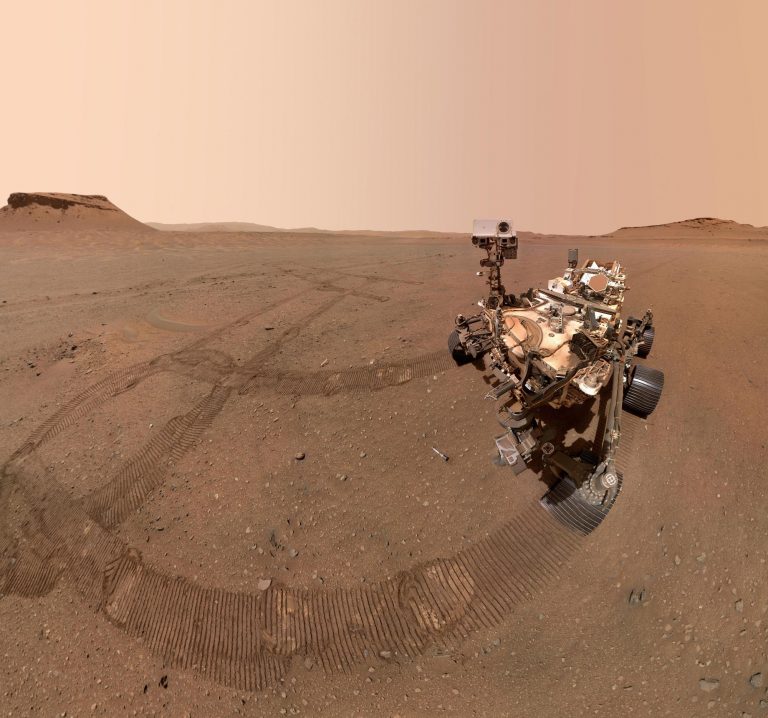
PERSEVERANCE’S THREE FORKS SAMPLE DEPOT SELFIE NASA’s Perseverance Mars rover took a selfie with one of 10 tubes the rover deposited at the sample depot it created in an area within Jezero Crater nicknamed Three Forks. The images used to create this mosaic were captured using the rover’s robotic arm on Jan. 20, 2023.Image: NASA/JPL-Caltech/MSSS

A sample depot on Mars and a stunning green comet top our collection of space pictures from January 2023.

NASA’s Perseverance Mars rover is collecting samples that will be brought back to Earth and studied for signs of past life. The current plan is for Perseverance to deliver samples directly to a future lander and ascent vehicle. But in case that can’t happen, the rover dropped 10 backup samples in a location within Jezero Crater known as Three Forks. Small helicopters similar to Ingenuity, which completed its 40th flight this month, could carry the samples back to the lander.

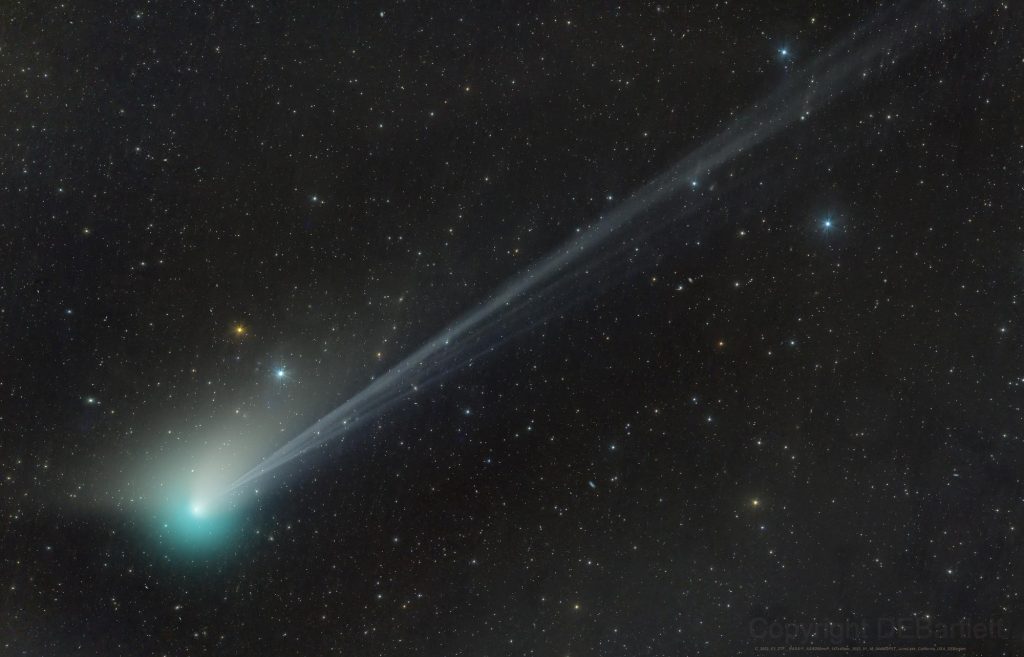
Closer to home, a comet has graced Earth’s skies. Comet 2022 E3 (ZTF) will make its closest approach to Earth on February 1, and is currently visible through binoculars or a telescope. Astrophotographers around the world have captured images of the comet’s stunning green coma.

STUNNING COMET C/2022 E3 (ZTF) Astrophotographer Dan Bartlett captured this image of comet C/2022 E3 (ZTF) from June Lake, California on Jan. 18th, 2023.Image: Dan Bartlett

Here are some other images that grabbed our attention this month:

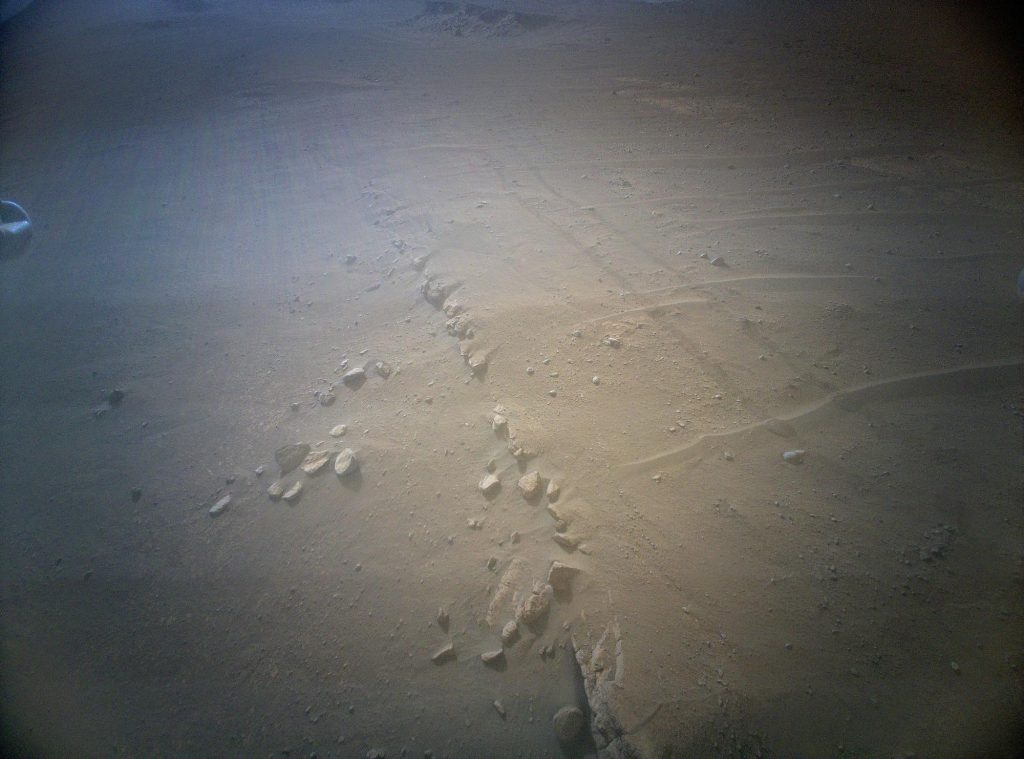
INGENUITY’S 40TH FLIGHT NASA’s Ingenuity Mars helicopter captured this image of the Perseverance rover’s tracks during its 40th flight on Jan. 19, 2023. The image has been edited to bring out surface details.Image: NASA / JPL-Caltech / Edited by Jason Davis
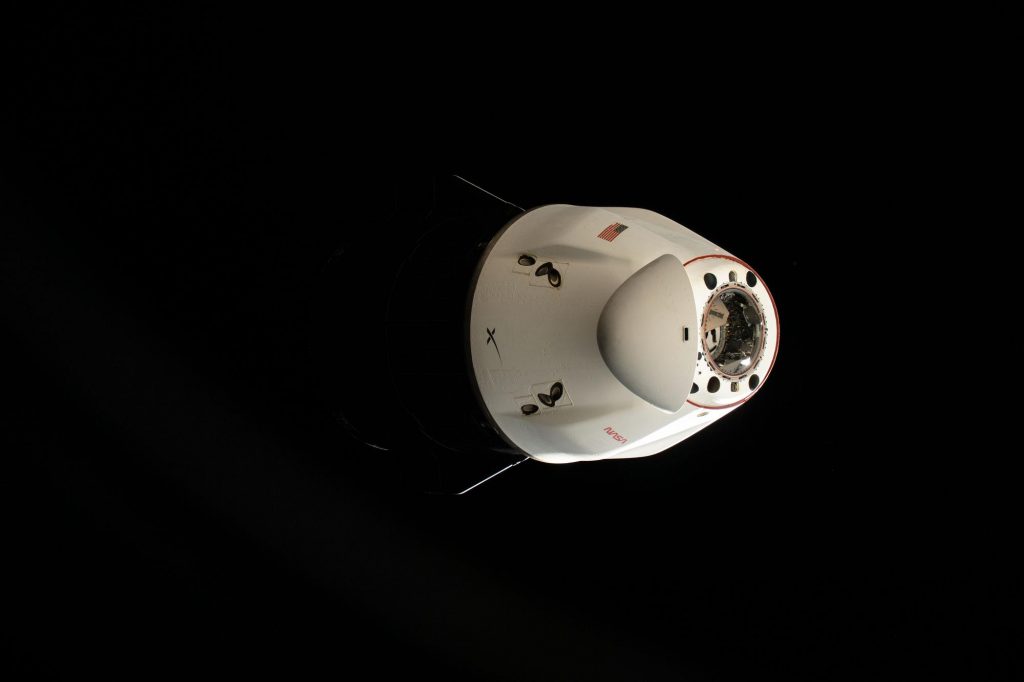
A DRAGON IN THE DARK A SpaceX Dragon cargo spacecraft is pictured moments after undocking from the International Space Station on Jan. 9, 2023. Dragon would splash down in the Gulf of Mexico off the coast of Tampa, Florida, two days later returning about 2 metric tons (4,400 pounds) of station hardware and scientific cargo for retrieval and analysis on Earth.Image: NASA
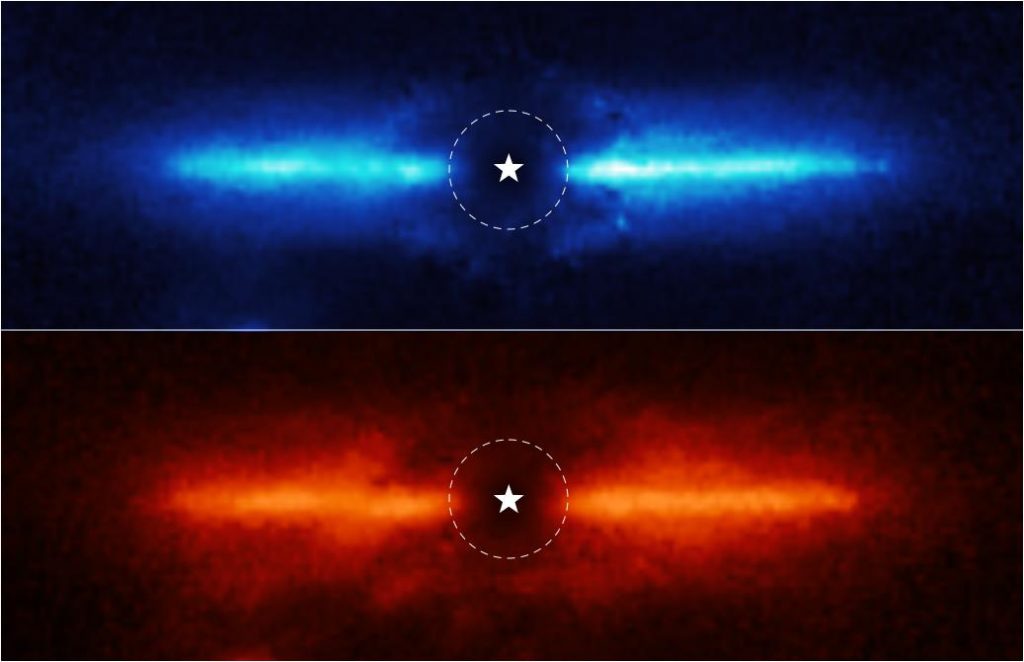
JWST SPOTS A PLANETARY DEBRIS DISK These two images, captured in different wavelengths of light, show the debris disk around AU Mic, a red dwarf star located 32 light-years away. JWST used its coronagraph to block the intense light of the central star. The star is marked by a white, graphical representation at the center of each image. The region blocked by the coronagraph is shown by a dashed circle. The star has two known planets; the debris disk is the result of collisions between leftover planet-forming materials.Image: Science: NASA, ESA, CSA, Kellen Lawson (NASA-GSFC), Joshua E. Schlieder (NASA-GSFC). Image processing: Alyssa Pagan (STScI)
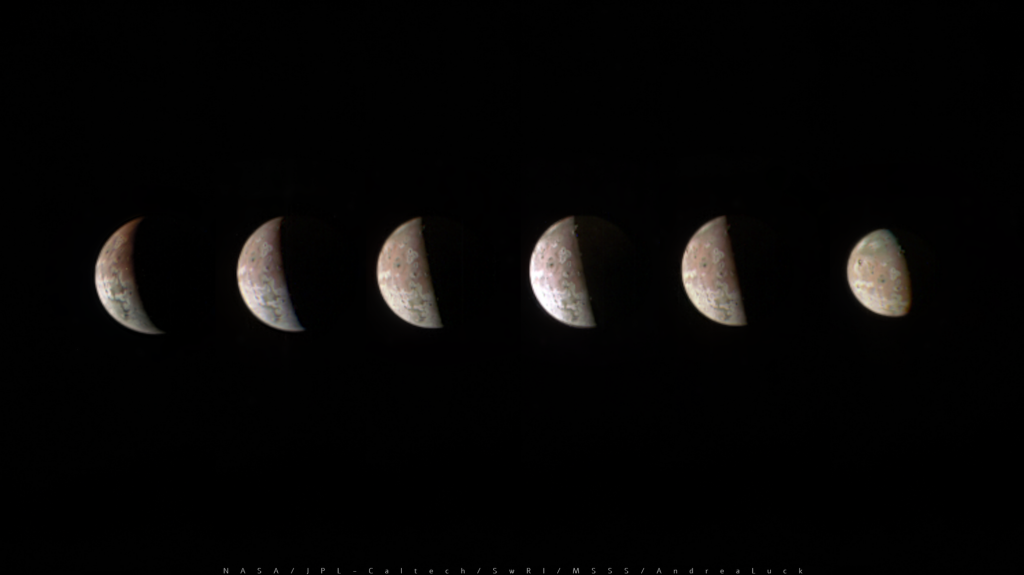
JUNO’S VIEWS OF IO, PJ47 NASA’s Juno spacecraft captured these images of Io during the spacecraft’s 47th Jupiter flyby on Dec. 15, 2022. The images were processed by Andrea Luck and posted to the Juno mission webpage on Jan. 7, 2023.Image: NASA/JPL-Caltech/SwRI/MSSS/Andrea Luck
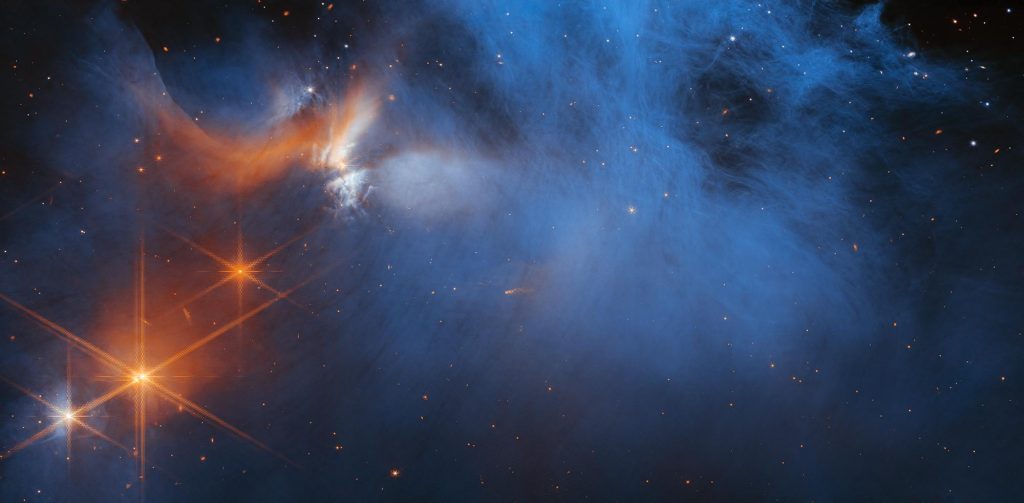
CHAMAELEON I MOLECULAR CLOUD NASA’s James Webb Space Telescope’s Near-Infrared Camera (NIRCam) captured an image of the heart of the Chamaeleon I dark molecular cloud, located 630 light years away. The blue center cloud material appears to be illuminated by the orange protostar Ced 110 IRS 4, over on the left. The orange dots behind the cloud are numerous background stars; the light can be used to detect ice within the cloud through the absorption of passing starlight.Image: NASA / ESA / CSA

By: Jason Davis
Source: The Planetary Society

Thin, Lightweight Layer Provides Radiation Barrier For Perovskites In Space, Protection From Elements On Earth

0
Illustration shows the lightweight barrier layers of silicon oxide peeled back to reveal the protected perovskites underneath. Image by Ahmad Kirmani, NREL

An ultrathin protective coating proves sufficient to protect a perovskite solar cell from the harmful effects of space and harden it against environmental factors on Earth, according to newly published research from the U.S. Department of Energy’s National Renewable Energy Laboratory (NREL).

Funded by the U.S. Department of Defense’s Operational Energy Capability Improvement Fund (OECIF), the NREL research was done for the Air Force Research Laboratory (AFRL) to develop low-cost innovative energy sources for powering the armed forces worldwide.

The research is the latest effort to determine the effectiveness of perovskites for use in space applications, where it would be exposed to protons, alpha particles, atomic oxygen, and other stressors. The ability to use perovskites to generate power in space is enticing because they offer a lower-cost and lightweight option to other technologies with the potential for achieving efficiencies similar to those of current space PV technologies.

Just as on Earth, perovskite solar cells need to have suitable durability. However, the environment in space is significantly different. While the biggest challenges on Earth are related to weather, in space perovskites must address the problems that come from radiation bombardment and extreme temperature swings. Perovskites show signs of better tolerance to radiation than many other solar cells, but plenty of testing remains to be conducted.

Researchers last year ran simulations to demonstrate how exposure to radiation in space would affect perovskites. They determined the next-generation technology would work in space but pointed out the need to encapsulate the cell in some way to provide added protection.

In the follow-up research, Ahmad Kirmani, lead author of the latest Nature Energy paper, said simulations demonstrated a micron-thick layer of silicon oxide would preserve the efficiency and increase the lifetime of perovskite solar cells in space. As a comparison, the micron-thick layer is about 100 times thinner than a typical human hair.

Kirmani said the silicon oxide layer could reduce the weight of conventional radiation barriers used for other solar cells by more than 99% and serves as a first step toward designing lightweight and low-cost packaging for perovskites.

High-energy protons travel through perovskite solar cells without causing much harm. Low-energy protons, however, are more abundant in space and wreak more havoc on perovskite cells by knocking atoms out of place and causing efficiency levels to steadily decline. The lower energy protons interact with matter much more readily and the addition of the silicon oxide layer protected the perovskite from damage even from the low-energy protons.

“We thought it would be impossible for the silicon oxide to provide protection against fully penetrating long-range particles such as the high-energy protons and alpha particles,” Kirmani said. “However, the oxide layer turned out to be a surprisingly good barrier against those as well.”

The results are detailed in the paper “Metal oxide barrier layers for terrestrial and space perovskite photovoltaics.” The co-authors are David Ostrowski, Kaitlyn VanSant, Rosemary Bramante, Karen Heinselman, Jinhui Tong, Bart Stevens, William Nemeth, Kai Zhu, and Joseph Luther, from NREL; and several key collaborators who work with the team from the University of North Texas and the University of Oklahoma. VanSant holds the unique position of being a postdoctoral researcher at NASA who conducts research at NREL.

Exposure to a stream of low-energy protons caused unprotected perovskite solar cells to lose only about 15% of their initial efficiency, the researchers found. A larger concentration of particles destroyed the cells, while the protected perovskites demonstrated what the scientists described as “a remarkable resilience.” With the simple barrier, the cells showed no damage.

In addition to making the cells more resilient in space, the researchers also tested how the barrier could provide benefit in more conventional applications. They then exposed the perovskite solar cells to an uncontrolled moisture and temperature environment for several days to mimic storage conditions. The protected cells retained their initial 19% efficiency, while the unprotected cells showed significant degradation, from 19.4% to 10.8%. The oxide layer also provided protection when other perovskite compositions typically more sensitive to moisture were exposed to water.

Further, the perovskite solar cells were subjected to a test chamber where they were bombarded with ultraviolet photons similar to the environment at low-Earth orbit. The photons interacted with oxygen to create atomic oxygen. The unprotected cells were destroyed after eight minutes. The protected cells retained their initial efficiency after 20 minutes and only had a slight drop after 30 minutes.

The simulations and experiments revealed that by reducing the damage from radiation, the lifetime of the protected solar cells used in Earth’s orbits and deep space would be increased from months to years.

“Power conversion efficiency and operational stability of perovskite solar cells have been the two primary focus areas for the community so far,” he said. “We have made a lot of progress and I think we have come far to the point that we might be pretty close to hitting those targets needed for industrialization. However, to really enable this market entry, packaging is the next target.”

Because perovskite solar cells can be deposited onto a flexible substrate, the emerging technology, coupled with the protective layer of silicon oxide, allows its use for various terrestrial applications such as powering drones.

NREL is the U.S. Department of Energy’s primary national laboratory for renewable energy and energy efficiency research and development. NREL is operated for DOE by the Alliance for Sustainable Energy LLC.

Metal oxide barrier layers for terrestrial and space perovskite photovoltaics, Nature Energy

By Keith Cowing
Source SpaceRef

The First Kilonova Progenitor System Has Been Identified

0
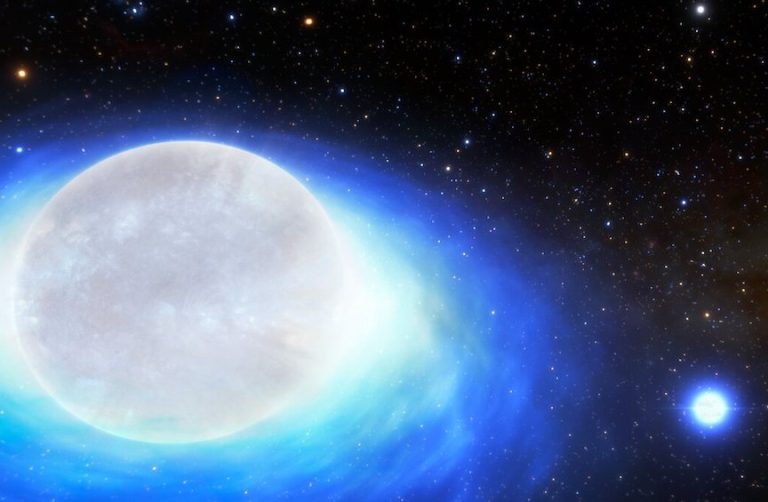
This is an artist’s impression of the first confirmed detection of a star system that will one day form a kilonova — the ultra-powerful, gold-producing explosion created by merging neutron stars. These systems are so phenomenally rare that only about 10 such systems are thought to exist in the entire Milky Way.

Astronomers using the SMARTS 1.5-meter Telescope at Cerro Tololo Inter-American Observatory in Chile, a Program of NSF’s NOIRLab, have uncovered the first example of a phenomenally rare type of binary star system, one that has all the right conditions to eventually trigger a kilonova — the ultra-powerful, gold-producing explosion created by colliding neutron stars.

Such an arrangement is so vanishingly rare that only about 10 such systems are thought to exist in the entire Milky Way Galaxy. The findings are published today in the journal Nature.

This unusual system, known as CPD-29 2176, is located about 11,400 light-years from Earth. It was first identified by NASA’s Neil Gehrels Swift Observatory. Later observations with the SMARTS 1.5-meter Telescope allowed astronomers to deduce the orbital characteristics and types of stars that make up this system — a neutron star created by an ultra-stripped supernova and a closely orbiting massive star that is in the process of becoming an ultra-stripped supernova itself.

An ultra-stripped supernova is the end-of-life explosion of a massive star that has had much of its outer atmosphere stripped away by a companion star. This class of supernova lacks the explosive force of a traditional supernova, which would otherwise “kick” a nearby companion star out of the system.

“The current neutron star would have to form without ejecting its companion from the system. An ultra-stripped supernova is the best explanation for why these companion stars are in such a tight orbit,” said Noel D. Richardson at Embry-Riddle Aeronautical University and lead author of the paper. “To one day create a kilonova, the other star would also need to explode as an ultra-stripped supernova so the two neutron stars could eventually collide and merge.”

As well as representing the discovery of an incredibly rare cosmic oddity, finding and studying kilonova progenitor systems such as this can help astronomers unravel the mystery of how kilonovae form, shedding light on the origin of the heaviest elements in the Universe.

“For quite some time, astronomers speculated about the exact conditions that could eventually lead to a kilonova,” said NOIRLab astronomer and co-author André-Nicolas Chené. “These new results demonstrate that, in at least some cases, two sibling neutron stars can merge when one of them was created without a classical supernova explosion.”

Producing such an unusual system, however, is a long and unlikely process. “We know that the Milky Way contains at least 100 billion stars and likely hundreds of billions more. This remarkable binary system is essentially a one-in-ten-billion system,” said Chené. “Prior to our study, the estimate was that only one or two such systems should exist in a spiral galaxy like the Milky Way.”

Though this system has all the right stuff to eventually form a kilonova, it will be up to future astronomers to study that event. It will take at least one million years for the massive star to end its life as a titanic supernova explosion and leave behind a second neutron star. This new stellar remnant and the pre-existing neutron star will then need to gradually draw together in a cosmic ballet, slowly losing their orbital energy as gravitational radiation.

When they eventually merge, the resulting kilonova explosion will produce much more powerful gravitational waves and leave behind in its wake a large amount of heavy elements, including silver and gold.

“This system reveals that some neutron stars are formed with only a small supernova kick,” concluded Richardson. “As we understand the growing population of systems like CPD-29 2176 we will gain insight into how calm some stellar deaths may be and if these stars can die without traditional supernovae.”

By Keith Cowing
Source SpaceRef

Spacemind Successfully Launches Three Italian Nanosatellites Into Orbit From The International Space Station

0
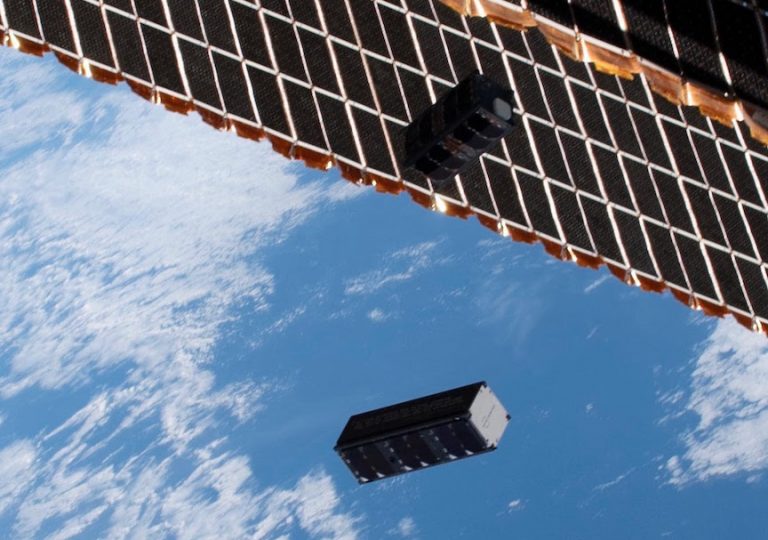
DanteSat, Futura-SM1, and Futura-SM3

Spacemind, the space division of Italian company NPC, has achieved great success with a series of space launches.

The three Italian nanosatellites, DanteSat, Futura-SM1, and Futura-SM3, have been successfully launched into orbit. This has also validated the operation of the new SMPod cubesat deployer, on-board equipments, and a larger version of the Artica deorbiting sail.

Nicolò Benini, Marketing Manager of NPC Spacemind, stated: “We are thrilled with the initial results of these in-orbit missions, which confirm our company’s position as a turnkey service provider for the production of cubesats for commercial and scientific projects. Our recent launches have solidified relationships with important Italian and foreign customers, paving the way for future space missions”.

The DanteSat nanosatellite is a 3U cubesat, shaped like a small parallelepiped (with a square base measuring 10 cm on a side and a height of 30 cm). It is an original project promoted by Human Space Services for the Italian publishing house Scripta Maneant to celebrate the 700th anniversary of Dante Alighieri’s death: its metal structure is in fact engraved with the Divine Comedy, while the on-board radio transmits the first verses of the work to Earth. In November, the satellite was transported to the International Space Station by a Dragon capsule, launched by a SpaceX Falcon 9. DanteSat was then released into orbit in late December via Nanoracks Europe’s external deployer. Subsequently, it opened the Artica sail and will soon burn up on re-entry into the Earth’s atmosphere.

The two Futuras were launched at the beginning of January and transferred into the planned orbit by an autonomous ION Satellite Carrier Platform, manufactured by the space logistics company D-Orbit, and finally released into space via the new SMPod deployer from Spacemind. The Futura-SM1 is a 3U cubesat and is intended to test new on-board equipment (power generation system, deployable antennas, space sail and OBC on-board computer developed by partner Apogeo Space). The Futura-SM3, on the other hand, is a 6U cubesat (equal to two 3U cubesats side-by-side) and is equipped with a new, larger Artica space sail for deorbiting the satellite at the end of the mission.

According to Benini, “all systems on board the three cubesats are working perfectly and they are receiving signals and telemetry data. The SMPod deployer also released the two Futuras into orbit, successfully meeting all mission objectives. These excellent results position Spacemind to offer reliable and innovative services on the expanding nanosatellite market”.

Imola (Bologna), February 2nd, 2023
N.P.C. New Production Concept Srl
Spacemind – a brand of NPC
Press Office
tel: +39 06 45476584
Mediarkè srl
mail: [email protected]

By Keith Cowing
Source SpaceRef

Gravitilab Announces World First For Space Tech

0
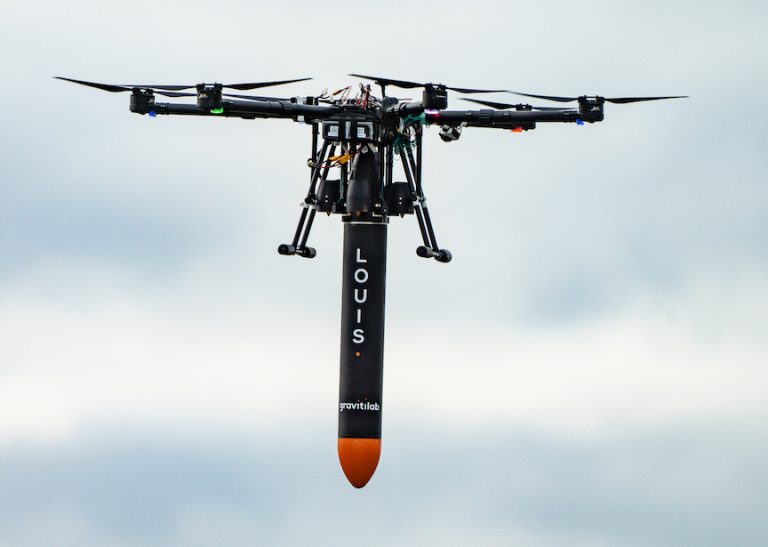
Microgravity service using UAV technology. Gravitilab

Innovative leaders in Space engineering, Gravitilab Aerospace Services Ltd, has announced a world first for microgravity research and testing.

At UAV testing site, Predannack airfield, Cornwall, the company has successfully paved the way for a new era of microgravity access on earth by engineering the first ever commercial microgravity service using its unmanned aerial vehicle (UAV) technology.

This revolutionary test, which opens up the world of microgravity research to a new market, was commissioned by Cornwall & Isles of Scilly Local Enterprise Partnership to support their ambition to spearhead innovation within the UK space industry, and lead the delivery of UK space and aerospace services.

Gravitilab’s UAV solution ascended to 2,000 ft and then released the payload within their patent protected ‘LOUIS’ drop-pod, achieving a period of microgravity – a world first for generating a sustained microgravity environment using an UAV system.

Today’s development is a step towards transforming testing across industries from cosmetics to satellites, enabling timely and cost-effective access to gravity-free environments.

Environments that are free from the impact of gravity offer far superior research and testing conditions which have proven scientific and commercial benefits. Making microgravity so much more accessible allows Gravitilab to offer unique R&D conditions for industries as diverse as pharmaceuticals, semiconductors, building materials, communications, SpaceTech and climate science.

“This is a fantastic collaborative achievement for Gravitilab, the Cornwall Space Cluster, and the UK Space Industry as a whole,” says Rob Adlard, CEO and Technical Director of Gravitilab.

“The only option for terrestrial microgravity testing until now has been to wait several years for access to a drop tower in Germany, which provides two seconds of microgravity. Our service can be delivered locally, is less expensive and as a result of our demonstration flight, we are on target to offer 5 to 20 seconds of high-quality microgravity using our LOUIS UAV system.”

Gail Eastaugh, Director, Cornwall Space Cluster: “We’re thrilled to have been able to support the achievement of this world first in microgravity testing from Cornwall. Cornwall Space Cluster exists to unlock innovation within the space and aerospace sector and companies like Gravitilab are paving the way for the future of the industry.”

Gravitilab, which is currently in discussions with new investors, has to date been funded by the UK Space Agency and private capital. The company is committed to using its innovative technology to unlock the supply chain to support the inexorable growth of the Space economy. Its ‘Space as a service’ offering sits at the heart of UK Space strategy and brings significant commercial benefits to a wide range of customers.

Media Enquiries:

Gravitilab: Annabel Clementson +447951786435 / [email protected]
Cornwall Space Cluster – Client Director, Georgia Jaggs, [email protected]

About Gravitilab

Gravitilab Aerospace Services Ltd is a Space engineering company providing specialist research, testing and qualification services for the UK and internationally. Gravitilab uses proprietary technology including hybrid powered suborbital rockets, drop pods and an innovative payload system to facilitate flexible access to specialist environments. It is in the process of completing its initial development phases, beginning to roll out its commercial services, and is seeking funding to support growth to break-even.

Trading since 2019, Gravitilab has already passed many milestones not yet reached by more established Space companies. These achievements include developing its own fleet of suborbital launch vehicles, building a bespoke in-house hybrid engine testing facility, and undertaking commercial atmospheric launches in the UK. The Company’s intellectual property assets include rocket designs, propulsion systems, recovery systems and a wealth of data and procedural insights. Gravitilab has forged relationships with well-established bodies and institutions in the industry including the UK’s principal Space regulator, the Civil Aviation Authority, and both the UK and European Space Agencies. It has also built a pipeline of dozens of prospective customers across commercial, defence and academic sectors in the UK and overseas.

Georgia Jaggs
Campaigns and Client Services Director: Halo PR & Communications
We make the boat go faster
07594358041

By Keith Cowing
Source SpaceRef

Astronauts’ View Of The Moon

0

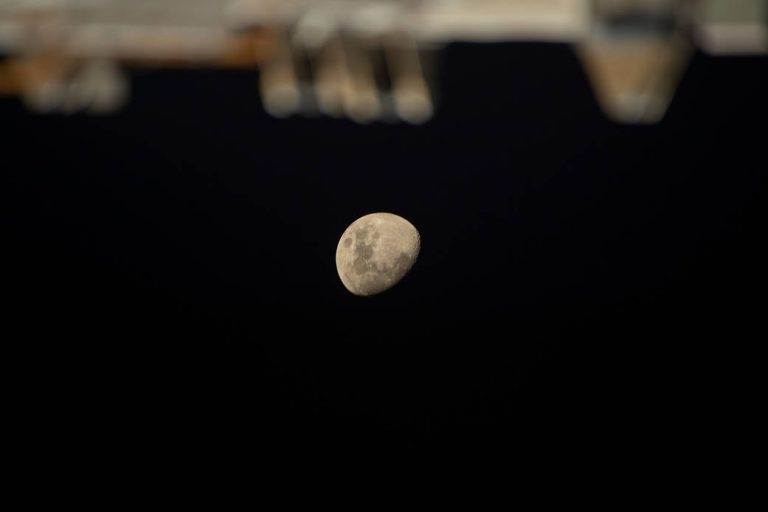
The waxing gibbous Moon stands out in this Jan. 2, 2023, image from the International Space Station as it orbited 269 miles above the southern Indian Ocean. In 24 hours, the space station makes 16 orbits of Earth, traveling through 16 sunrises and sunsets. To find out where the ISS is now—or to get text or email alerts when it’s visible in your area—check out the Spot the Station site.

Image Credit: NASA/Josh Cassada

By Monika Luabeya
Source NASA

For The First Time Hubble Directly Measures The Mass Of A Lone White Dwarf

0

Astronomers using the NASA/ESA Hubble Space Telescope have for the first time directly measured the mass of a single, isolated white dwarf star – the surviving core of a burned-out sunlike star.

Researchers found that the white dwarf is 56 percent of the mass of our Sun. This agrees with earlier theoretical predictions of its mass and corroborates current theories of how white dwarfs evolve as the end product of a typical star’s evolution. The unique observation yields insights into theories of the structure and composition of white dwarfs.

Until now, previous white dwarf mass measurements have been gleaned from observing white dwarfs in binary star systems. By watching the motion of two co-orbiting stars, straightforward Newtonian physics can be used to measure their masses. However, these measurements can be uncertain if the dwarf’s companion star is in a long-period orbit of hundreds or thousands of years. Orbital motion can be measured by telescopes only over a brief slice of the dwarf’s orbital motion.

For this companion-less white dwarf, researchers had to employ a trick of nature, called gravitational microlensing. The light from a background star was slightly deflected by the gravitational warping of space by the foreground dwarf star. As the white dwarf passed in front of the background star, microlensing caused the star to appear temporarily offset from its actual position on the sky.

The results are reported in the journal Monthly Notices of the Royal Astronomical Society. The lead author is Peter McGill, formerly of the University of Cambridge in the United Kingdom and now based at the University of California, Santa Cruz.

McGill used Hubble to precisely measure how light from a distant star bent around the white dwarf, known as LAWD 37, causing the background star to temporarily change its apparent position in the sky.

Kailash Sahu of the Space Telescope Science Institute in Baltimore, Maryland, USA, the principal Hubble investigator on this latest observation, first used microlensing in 2017 to measure the mass of another white dwarf, Stein 2051 B. But that dwarf is in a widely separated binary system. “Our latest observation provides a new benchmark because LAWD 37 is all by itself,” Sahu said.

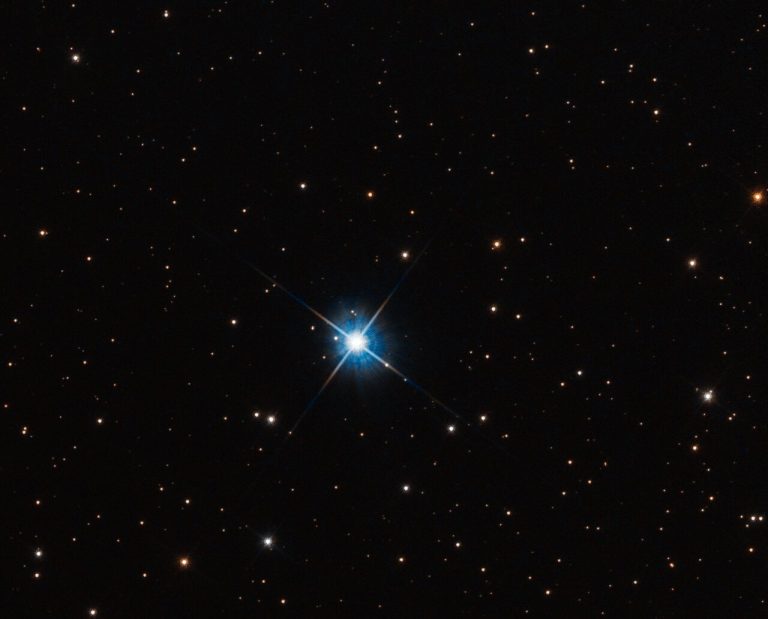
The collapsed remains of a star that burned out 1 billion years ago, LAWD 37 has been extensively studied because it is only 15 light-years away in the constellation Musca. “Because this white dwarf is relatively close to us, we’ve got lots of data on it — we’ve got information about its spectrum of light, but the missing piece of the puzzle has been a measurement of its mass,” said McGill.

The team zeroed-in on the white dwarf thanks to ESA’s Gaia mission, which makes extraordinarily precise measurements of nearly two billion star positions. Multiple Gaia observations can be used to track a star’s motion. Based on these data, astronomers were able to predict that LAWD 37 would briefly pass in front of a background star in November 2019.

Once this was known, Hubble was used to precisely measure over several years how the background star’s apparent position in the sky was temporarily deflected during the white dwarf’s passage.

These events are rare, and the effects are tiny,” said McGill. “For instance, the size of our measured offset is like measuring the length of a car on the Moon as seen from Earth.”

Since the light from the background star was so faint, the main challenge for astronomers was extracting its image from the glare of the white dwarf, which is 400 times brighter than the background star. Only Hubble can make these kinds of high-contrast observations in visible light.

Even when you’ve identified such a one-in-a-million event, it’s still extremely difficult to make these measurements,” said Leigh Smith of the University of Cambridge. “The glare from the white dwarf can cause streaks in unpredictable directions, meaning we had to analyse each of Hubble’s observations extremely carefully, and their limitations, to model the event and estimate the mass of LAWD 37.

The precision of LAWD 37’s mass measurement allows us to test the mass-radius relationship for white dwarfs,” said McGill. “This means testing the theory of degenerate matter (a gas so super-compressed under gravity that it behaves more like solid matter) under the extreme conditions inside this dead star,” he added.

The researchers say their results open the door for future event predictions with Gaia data. In addition to Hubble, these alignments can now be detected with the NASA/ESA/CSA James Webb Space Telescope. Because Webb works at infrared wavelengths, the blue glow of a foreground white dwarf looks dimmer in infrared light, and the background star looks brighter.

Based on Gaia’s predictive powers, Sahu is observing another white dwarf, LAWD 66, with Webb. The first observation was made in 2022. More observations will be taken as the deflection peaks in 2024 and then subsides.

Gaia has really changed the game — it’s exciting to be able to use Gaia data to predict when events will happen, and then observe them happening,” said McGill. “We want to continue measuring the gravitational microlensing effect and obtain mass measurements for many more types of stars.

In his 1915 general theory of relativity, Einstein predicted that when a massive compact object passes in front of a background star, the light from the star would bend around the foreground object because of the warping of space by its gravitational field.

Exactly a century before this latest Hubble observation, in 1919, two British-organised expeditions to the southern hemisphere first detected this lensing effect during a solar eclipse on 19 May. It was hailed as the first experimental proof of general relativity — that gravity warps space. However, Einstein was pessimistic that the effect could ever be detected for stars outside our Solar System because of the precision required. “Our measurement is 625 times smaller than the effect measured at the 1919 solar eclipse,” said McGill.

More information

The Hubble Space Telescope is a project of international cooperation between ESA and NASA.

The international team of astronomers in this study consists of Peter McGill (University of Cambridge, UK; University of California Santa Cruz, USA), Jay Anderson (Space Telescope Science Institute, USA), Stefano Casertano (Space Telescope Science Institute, USA), Kailash C. Sahu (Space Telescope Science Institute, USA), Pierre Bergeron (University of Montreal, Canada), Simon Blouin (University of Victoria, Canada), Patrick Dufour (University of Montreal, Canada), Leigh C. Smith (University of Cambridge, UK), N. Wyn Evans (University of Cambridge, UK), Vasily Belokurov (University of Cambridge, UK), Richard L. Smart (INAF – Astrophysical Observatory of Torino, Italy), Andrea Bellini (Space Telescope Science Institute, USA), Annalisa Calamida (Space Telescope Science Institute, USA), Martin Dominik (University of St Andrews, UK), Noé Kains (Space Telescope Science Institute, USA), Jonas Klüter (Louisiana State University, USA), Martin Bo Nielsen (University of Birmingham, UK; Aarhus University, Denmark; New York University Abu Dhabi, United Arab Emirates), and Joachim Wambsganss (Heidelberg University, Germany)

Image credit: NASA, ESA, A. Feild

Links

Contacts

Peter McGill
University of California, Santa Cruz, California
University of Cambridge, Cambridge, United Kingdom
Email: [email protected]

Kailash Sahu
Space Telescope Science Institute, Baltimore, Maryland
Email: [email protected]

Bethany Downer
ESA/Hubble Chief Science Communications Officer
Email: [email protected]

Lockheed Martin’s First LM 400 Multi-Mission Spacecraft Completed, Ready For Final Testing

0

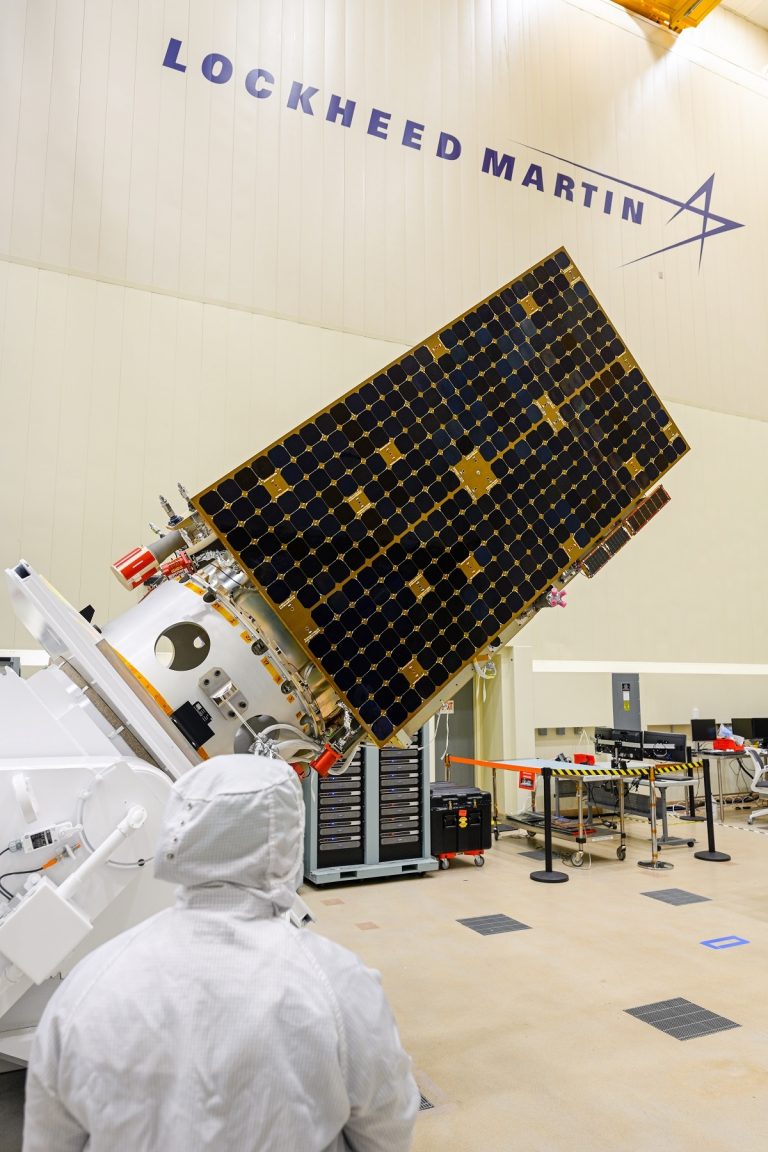
The first Lockheed Martin (NYSE: LMT) LM 400, a flexible, mid-sized satellite customizable for military, civil or commercial users, rolled off the company’s digital factory production line and is advancing toward its planned 2023 launch.

The agile LM 400 spacecraft bus design enables one platform to support multiple missions, including remote sensing, communications, imaging, radar and persistent surveillance. Lockheed Martin invested in common satellite designs to support demand for more proliferated systems, high-rate production and affordable solutions. The LM 400 is scalable and versatile starting at the size of the average home refrigerator, with capability to grow for higher power and larger payloads and packaged to enable multiple satellites per launch.

The LM 400 bus can operate in low, medium or geosynchronous earth orbits, providing greater flexibility than other buses in this class. The LM 400 space vehicle is compatible with a wide range of launch vehicles in a single, ride-share or multi-launch configuration.

“This resilient LM 400 satellite bus was created completely digitally, offering greater flexibility, commonality and the ability to rapidly configure to order across missions,” said Matt Mahlman, director of strategy and capture at Lockheed Martin Space’s Satellite Bus Center of Excellence. “Given that, we can produce these new satellites faster and at a much lower cost to our customers.”

For potential military applications, the LM 400 conforms to Modular Open Systems Architecture standards for interoperability with other platforms from all the services. This design helps unlock the U.S. Defense Department’s vision for joint all-domain operations and joint all-domain command and control.

Each LM 400 spacecraft includes SmartSat™, Lockheed Martin’s software-defined satellite architecture. SmartSat™ provides even greater mission adaptability and can perform onboard “Edge” data processing, which reduces the time it takes to get actionable data into the hands of mission operators and decision-makers on the ground. 

The LM 400 is already under several contracts, most recently being named as one of the satellite buses supporting U.S. Space Force’s planned Missile Track Custody program in medium earth orbit. 

Company-Funded LM 400 Tech Demonstrator

The first LM 400 off the production line – coined the LM 400 Tech Demonstrator – is also the first of a planned regular series of self-funded on-orbit LM 400 technology demonstration missions.

“Our end goal is to accelerate the technical maturity of our satellites and advanced payloads, as well as showcase how new capabilities can be delivered quickly to customers,” said Mahlman. “Lockheed Martin set out on a journey to develop and deliver a highly capable space vehicle faster than ever before; and what we proved is the ability to move from concept design to an integrated spacecraft in half the time.”

The first LM 400 Tech Demonstrator planned for a 2023 launch will carry a Lockheed Martin-produced narrowband communications Electronically Steered Array (ESA) payload. The next LM 400 demonstrator, expected to launch in 2024, will test synthetic aperture radar-capable ESA on orbit using the LM 400 platform.

About Lockheed Martin

Headquartered in Bethesda, Maryland, Lockheed Martin Corporation is a global security and aerospace company that employs approximately 116,000 people worldwide and is principally engaged in the research, design, development, manufacture, integration and sustainment of advanced technology systems, products and services.

Please follow @LMNews and @LMSpace on Twitter for the latest announcements and news across the corporation.

Volcanic Plumes In Chile

0

Chile’s Villarrica volcano emits steam and other volcanic gases in this photo taken from the International Space Station on Jan. 17, 2023. The gases come from a series of minor explosions—called Strombolian eruptions—that have been ongoing at Villarrica since October 2022.

Located along Chile’s southern Andes, Villarrica is one of the most active and dangerous volcanoes in South America; it typically erupts every three to six years.

Image Credit: NASA

By Monika Luabeya
Source NASA

Former NASA Astronauts To Receive Congressional Space Medal Of Honor

0
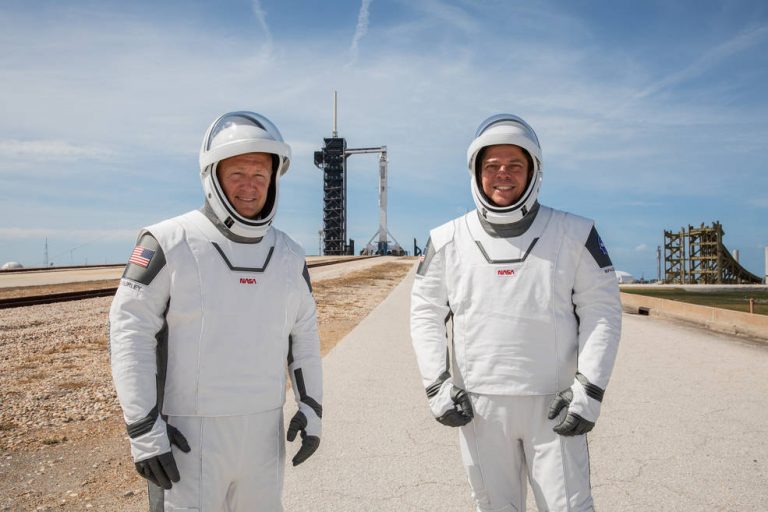
NASA astronauts Douglas Hurley (left) and Robert Behnken (right) participate in a dress rehearsal for launch at the agency’s Kennedy Space Center in Florida on May 23, 2020, ahead of NASA’s SpaceX Demo-2 mission to the International Space Station. Demo-2 served as an end-to-end flight test of SpaceX’s crew transportation system, providing valuable data toward NASA certifying the system for regular, crewed missions to the orbiting laboratory under the agency’s Commercial Crew Program. Credits: NASA

Vice President Kamala Harris will award former NASA astronauts Douglas Hurley and Robert Behnken the Congressional Space Medal of Honor at 4:25 p.m. EST on Tuesday, Jan. 31. Hurley and Behnken will receive the award for bravery in NASA’s SpaceX Demonstration Mission-2 (Demo-2) to the International Space Station in 2020.

The ceremony will air on NASA Television, the agency’s website, and the NASA app, as well as the agency’s flagship TwitterFacebook, and YouTube channels.

Limited pre-credentialed media will join pooled press for the event.

On May 30, 2020, a SpaceX Falcon 9 rocket carrying the company’s Crew Dragon spacecraft launched to the space station, marking the first mission to launch with astronauts as part of NASA’s Commercial Crew Program.

To learn more about NASA’s Commercial Crew Program visit: www.nasa.gov/commercialcrew

Marc Etkind / Jackie McGuinness 
Headquarters, Washington 
202-358-1600 
[email protected] / [email protected]

By Roxana Bardan
Source NASA