

Home Blog Page 91

AI Is Helping Us Search For Intelligent Alien Life – And We’ve Found 8 Strange New Signals

0

Danny C Price, Curtin University

Some 540 million years ago, diverse life forms suddenly began to emerge from the muddy ocean floors of planet Earth. This period is known as the Cambrian Explosion, and these aquatic critters are our ancient ancestors.

All complex life on Earth evolved from these underwater creatures. Scientists believe all it took was an ever-so-slight increase in ocean oxygen levels above a certain threshold.

We may now be in the midst of a Cambrian Explosion for artificial intelligence (AI). In the past few years, a burst of incredibly capable AI programs like Midjourney, DALL-E 2 and ChatGPT have showcased the rapid progress we’ve made in machine learning.

AI is now used in virtually all areas of science to help researchers with routine classification tasks. It’s also helping our team of radio astronomers broaden the search for extraterrestrial life, and results so far have been promising.

Discovering alien signals with AI

As scientists searching for evidence of intelligent life beyond Earth, we have built an AI system that beats classical algorithms in signal detection tasks. Our AI was trained to search through data from radio telescopes for signals that couldn’t be generated by natural astrophysical processes.

When we fed our AI a previously studied dataset, it discovered eight signals of interest the classic algorithm missed. To be clear, these signals are probably not from extraterrestrial intelligence, and are more likely rare cases of radio interference.

Nonetheless, our findings – published today in Nature Astronomy – highlight how AI techniques are sure to play a continued role in the search for extraterrestrial intelligence.

Not so intelligent

AI algorithms do not “understand” or “think”. They do excel at pattern recognition, and have proven exceedingly useful for tasks such as classification – but they don’t have the ability to problem solve. They only do the specific tasks they were trained to do.

So although the idea of an AI detecting extraterrestrial intelligence sounds like the plot of an exciting science fiction novel, both terms are flawed: AI programs are not intelligent, and searches for extraterrestrial intelligence can’t find direct evidence of intelligence.

Instead, radio astronomers look for radio “technosignatures”. These hypothesised signals would indicate the presence of technology and, by proxy, the existence of a society with the capability to harness technology for communication.

For our research, we created an algorithm that uses AI methods to classify signals as being either radio interference, or a genuine technosignature candidate. And our algorithm is performing better than we’d hoped.

What our AI algorithm does

Technosignature searches have been likened to looking for a needle in a cosmic haystack. Radio telescopes produce huge volumes of data, and in it are huge amounts of interference from sources such as phones, WiFi and satellites.

Search algorithms need to be able to sift out real technosignatures from “false positives”, and do so quickly. Our AI classifier delivers on these requirements.

It was devised by Peter Ma, a University of Toronto student and the lead author on our paper. To create a set of training data, Peter inserted simulated signals into real data, and then used this dataset to train an AI algorithm called an autoencoder. As the autoencoder processed the data, it “learned” to identify salient features in the data.

In a second step, these features were fed to an algorithm called a random forest classifier. This classifier creates decision trees to decide if a signal is noteworthy, or just radio interference – essentially separating the technosignature “needles” from the haystack.

After training our AI algorithm, we fed it more than 150 terabytes of data (480 observing hours) from the Green Bank Telescope in West Virginia. It identified 20,515 signals of interest, which we then had to manually inspect. Of these, eight signals had the characteristics of technosignatures, and couldn’t be attributed to radio interference.

Eight signals, no re-detections

To try and verify these signals, we went back to the telescope to re-observe all eight signals of interest. Unfortunately, we were not able to re-detect any of them in our follow-up observations.

We’ve been in similar situations before. In 2020 we detected a signal that turned out to be pernicious radio interference. While we will monitor these eight new candidates, the most likely explanation is they were unusual manifestations of radio interference: not aliens.

Sadly the issue of radio interference isn’t going anywhere. But we will be better equipped to deal with it as new technologies emerge.

Narrowing the search

Our team recently deployed a powerful signal processor on the MeerKAT telescope in South Africa. MeerKAT uses a technique called interferometry to combine its 64 dishes to act as a single telescope. This technique is better able to pinpoint where in the sky a signal comes from, which will drastically reduce false positives from radio interference.

If astronomers do manage to detect a technosignature that can’t be explained away as interference, it would strongly suggest humans aren’t the sole creators of technology within the Galaxy. This would be one of the most profound discoveries imaginable.

At the same time, if we detect nothing, that doesn’t necessarily mean we’re the only technologically-capable “intelligent” species around. A non-detection could also mean we haven’t looked for the right type of signals, or our telescopes aren’t yet sensitive enough to detect faint transmissions from distant exoplanets.

We may need to cross a sensitivity threshold before a Cambrian Explosion of discoveries can be made. Alternatively, if we really are alone, we should reflect on the unique beauty and fragility of life here on Earth.

Danny C Price, Senior research fellow, Curtin University

This article is republished from The Conversation under a Creative Commons license. Read the original article.
Diamonds And X-rays Open A New Window Into Earth’s Inner Core

0
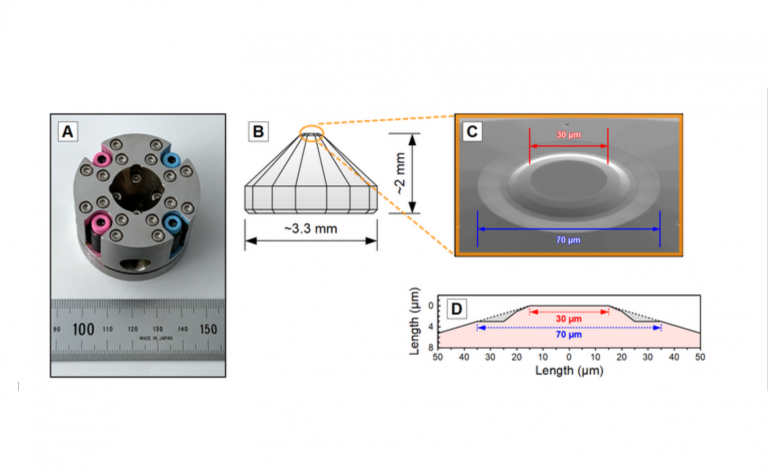
The diamond anvil cell used in this experiment. (A) Symmetric Diamond Anvil Cell, (B) Schematic diagram of a diamond anvil. The orange circle is the area corresponding to (C, D) (C) Image of the top of the (stepped beveled) diamond anvil designed for IXS measurement at ultrahigh pressure, (D) Cross-section of the diamond anvil corresponding to (C). CREDIT Daijo Ikuta

A collaborative research group has succeeded, for the first time, in measuring the speed of sound of pure iron under pressures similar to the Earth’s inner core boundary.

It may be surprising, but we do not have much information about the center of the planet that we live on. One can dig down a few kilometers, and volcanoes and plate tectonics can bring up material from depths of a few hundred km, but what lies beneath, down to the center of the Earth, some 6000 km beneath our feet, is not well understood.

It is generally accepted that the core some 3000 km below us is mostly iron: a sea of liquid iron, the outer core, around an inner core of solid iron. The best information we have is from tracking the progress of seismic waves from earthquakes, as they propagate through the planet. This tells us the density and the speed of sound. But those values do not exactly agree with what people expect for pure iron; there needs to be something else present in the core. What that material is, and how much of it there may be, are active areas of investigation as they have implications for understanding the present properties of the Earth and the evolution of the solar system.

Many research teams try to recreate the conditions of the center of the Earth in their laboratories. But this is difficult, requiring keeping materials under extreme pressure, millions of atmospheres, and extreme temperatures, similar to the surface of the sun, all while doing sensitive measurements.

The collaboration between Tohoku University, the RIKEN SPring-8 Center, Ehime University and the Japan Synchrotron Radiation Research Institute succeeded, for the first time, in measuring the speed of sound of pure iron under pressures similar to the Earth’s inner core boundary, 330 GPa (the pressure if one supported 33,000 metric tons on a 1mm×1mm area).

After years of work, the researchers were able to effectively combine diamond anvil cell technology – something used to generate high pressures but which requires considerable skill to achieve pressures comparable to the Earth’s core – with an X-ray scattering technique known as inelastic X-ray scattering. This technique allows scientists to observe the atomic motions in materials using X-rays and is the only method for accurately measuring the sound velocity of metals under static compression in a diamond anvil cell. This was done at RIKEN’s world-leading facility for inelastic X-ray scattering, the Quantum NanoDynamics Beamline at SPring-8 in Hyogo Prefecture.

The researchers showed that the sound velocity of the inner core determined from seismological studies is 4±2% slower in compressional velocity and 36±17% slower in shear velocity than that of metallic iron.

Combining the new result with previous work suggests the Earth’s core may be enriched in silicon and sulfur consistent with the existing outer core model with oxygen, as the growth of the inner core may have created a secular enrichment of oxygen in the outer core.

Details of the group’s research were published in the journal Nature Communications on November 25, 2022.

Sound velocity of hexagonal close-packed iron to the Earth’s inner core pressure, Nature Communications

By Keith Cowing
Source SpaceRef

Ryugu Samples Continue To Shed Light On Solar System History

0
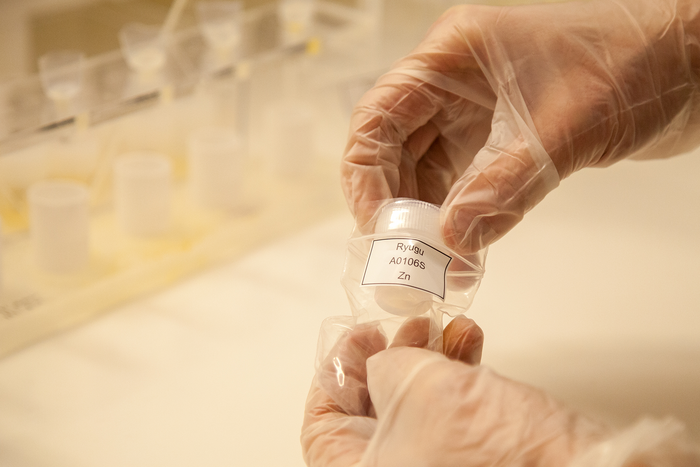
Samples of asteroid Ryugu analysed at IPGP CREDIT © IPGP

Nearly two years after Japanese mission Hayabusa2 returned to Earth, samples from asteroid Ryugu continue to reveal valuable information about the history of the early solar system.

A study by scientists from the Institut de Physique du Globe de Paris, Université Paris Cité and CNRS1, as part of an international consortium, reveals the isotopic composition of zinc and copper of asteroid Ryugu.

The isotopic signatures show that Ryugu’s composition is close to Ivuna-like carbonaceous chondrites, and that Ryugu-like material from the outer solar system accounts for ~5-6% of Earth’s mass. These results are published on 12 December 2022 in the journal Nature Astronomy.

Meteorites found on Earth give scientists access to samples representing the first moments of the solar system. However, the return to Earth in December 2020 of the Hayabusa2 mission, operated by the Japanese space agency JAXA and bringing back 5 grams of fragments from the asteroid Ryugu, marks a major step forward by offering the possibility of analyzing samples unaltered by their arrival and stay on Earth.

The first analyses, carried out by an international team, including researchers from the Institut de physique du globe de Paris, Université Paris Cité and the CNRS, have shown that the composition of the asteroid Ryugu is close to that of Ivuna-like carbonaceous chondrites (CI) – the most chemically primitive meteorites, and considered to have the composition closest to the Sun. However, some isotopic signatures (e.g., titanium and chromium) overlap with other groups of carbonaceous chondrites, so the details of the link between Ryugu and CI chondrites are not yet fully understood.

Zinc and copper are two moderately volatile elements, and are key elements to study the processes of accretion of volatiles during the formation of telluric planets. The different groups of carbonaceous chondrites show distinct zinc and copper isotopic compositions, with the CI chondrites being the more enriched in volatile elements. By carrying out additional analyzes of the zinc and copper isotopic composition of Ryugu, the scientists had access to a crucial tool for studying the origin of the asteroid.

The international team showed, in a study published on December 12th, 2022 in the journal Nature Astronomy and led by Marine Paquet and Frédéric Moynier, cosmochemists at the IPGP, that the isotopic ratios of copper and zinc in the samples from Ryugu were identical to CI chondrites but different from all other types of meteorites. By finally confirming the similarity between Ryugu and CI chondrites, this study establishes that these primitive samples from Ryugu represent the best estimate of the solar composition to date for copper and zinc.

Finally, the zinc isotopic composition of Ryugu can also be used to study the accretional history of moderately volatile elements on Earth, which are essential for the development of planetary habitability. The study also demonstrates that the contribution of Ryugu-like material represents about 5% of the Earth’s mass.

Contribution of Ryugu-like material to Earth’s volatile inventory by Cu and Zn isotopic analysis, Marine Paquet, Frederic Moynier, Tetsuya Yokoyama et al., Nature Astronomy, 2022, DOI : 10.1038/s41550-022-01846-1

By Keith Cowing
Source SpaceRef

Hubble Views A Turbulent Stellar Nursery

0
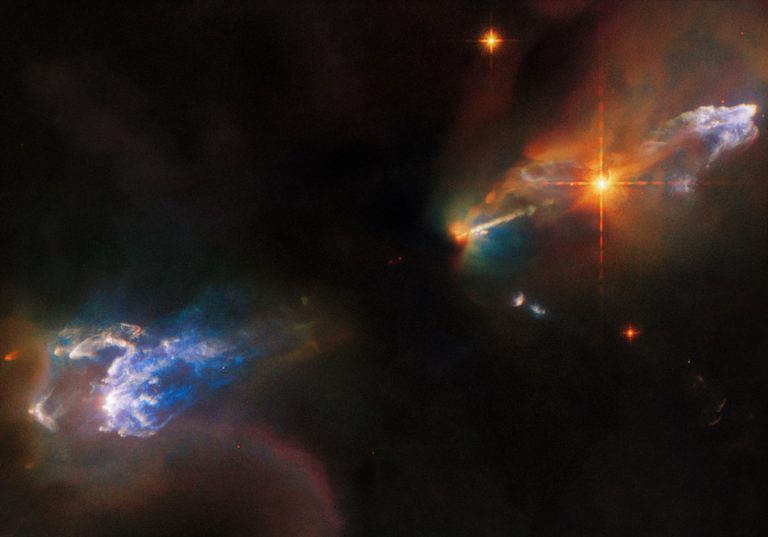
Herbig-Haro objects HH 1 and HH 2. NASA

The lives of newborn stars are tempestuous, as this image of the Herbig-Haro objects HH 1 and HH 2 from the NASA/ESA Hubble Space Telescope depicts.

Both objects are in the constellation Orion and lie around 1,250 light-years from Earth. HH 1 is the luminous cloud above the bright star in the upper right of this image, and HH 2 is the cloud in the bottom left.

While both Herbig-Haro objects are visible, the young star system responsible for their creation is lurking out of sight, swaddled in the thick clouds of dust at the center of this image. However, an outflow of gas from one of these stars is streaming out from the central dark cloud and is visible as a bright jet. Astronomers once thought the bright star between that jet and the HH 1 cloud was the source of these jets, but it is an unrelated double star that formed nearby.

Herbig-Haro objects are glowing clumps found around some newborn stars. They form when jets of gas thrown outwards from these young stars collide with surrounding gas and dust at incredibly high speeds. In 2002, Hubble observations revealed that parts of HH 1 are moving at more than 248 miles (400 kilometers) per second!

Image credit: ESA/Hubble & NASA, B. Reipurth, B. Nisini larger image


By Keith Cowing
Source SpaceRef

Artificial Intelligence Used To Predict Space Weather

0
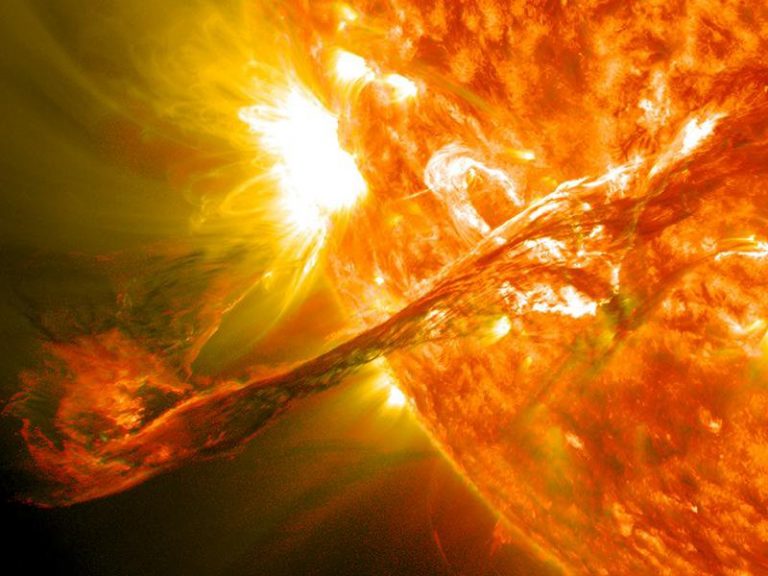
solar flare

A Northumbria University physicist has been awarded more than half a million pounds to develop artificial intelligence which will protect the Earth from devastating space storms.

Activity from the Sun such as solar eruptions, known as Coronal Mass Ejections, results in plasma being fired towards Earth at supersonic speeds, which can result in serious disruption to power and communication systems.

With our increasing reliance on technology, solar storms pose a serious threat to our everyday lives, leading to severe space weather being added to the UK National Risk Assessment for the first time in 2011.

Northumbria’s Dr Andy Smith has recently been awarded a Research Fellowship from the Natural Environment Research Council (NERC) to explore how physics-inspired machine learning could be used to forecast space weather more accurately and predict serious space storms.

During the Next Generation, Physics-Inspired AI for Space Weather Forecasting project, Dr Smith and his team will analyse huge amounts of data from satellites and space missions over the last 20 years to gain a better understanding of the conditions under which storms are likely to occur.

They will then develop cutting-edge computer models which will use the data gathered to predict when such storms could occur in future, forecasting phenomena such as the northern lights, or aurora.

As Dr Smith explains: “One of the primary ways in which space weather can impact society is through an unexpected surge of energy in power networks and pipelines on the ground.

“These surges can accelerate the ageing of power systems, or even lead to the immediate failure of components such as power transformers, leading to a complete loss of power.

“This research will take a leap forward in understanding and predicting when we are at risk of suffering from these surges, caused by rapid changes in the Earth’s magnetic field.”

Throughout history there have been several examples of serious geomagnetic space storms. In March 1989 the Canadian city of Quebec lost power for over nine hours following a huge solar storm which resulted in auroras or ‘polar lights’ being visible as far south as Texas and Florida.

And in 2003 the Halloween solar storms, named because they occurred at the end of October, affected satellite-based systems and communications, with aircraft being advised to avoid high altitudes near the polar regions, and an hour-long power outage in Sweden.

But the most intense geomagnetic storm ever recorded was the 1859 Carrington Event, which resulted in strong auroral displays visible around the world, as well as fires in multiple telegraph stations. The solar flare connected with the event was observed and recorded independently by British astronomers Richard Christopher Carrington and Richard Hodgson.

As Dr Smith explains: “Our reliance on electrical power networks means that a storm on the same scale as the Carrington Event would have devastating consequences today, making an accurate forecasting system even more essential.

“The technology we are developing through this project could protect the Earth from the impact of geomagnetic storms as we could predict when such events would occur, allowing us to prepare.

“For example, in the UK this would be coordinated through the Met Office which would inform the National Grid, which would in turn activate plans to protect our power grid.

“It’s not a case of if the Earth will be hit by a serious space weather event, it’s a case of when – and this physics-inspired artificial intelligence system will allow us to predict such an event and protect ourselves from it.”

Dr Smith is a member of Northumbria University’s Solar and Space Physics research group, and this is the latest in a series of high-profile grants awarded to academics at the University studying the impact of space weather on the Earth.

In 2021 a team led by Professor Clare Watt was awarded £400,000 from the Science and Technology Facilities Council (STFC) to develop new methods of predicting conditions in the radiation belts above the Earth, providing safer conditions for satellites and spacecraft.

Dr Shaun Bloomfield led Northumbria’s involvement in the Space Weather Empirical Ensemble Package (SWEEP) project, commissioned by the Met Office to develop an improved system for forecasting solar storms. And he was also Project Scientist in the EC Horizon 2020-funded FLARECAST project, which involved scientists from six countries developing a service to predict the occurrence of solar flares.

Dr Richard Morton is leading the £1.2million Revealing the Pattern of Solar Alfvénic Waves (RiPSAW) project, having been awarded a prestigious UKRI Future Leader Fellowship in 2020. The project involves using advanced mathematical techniques and cutting-edge computer simulations to create models of the Sun which will provide new insight into the physics behind its activity.

Professor James McLaughlin leads the Northumbria University’s Solar and Space Physics research group and is the Principal Investigator of the £1.3million NUdata STFC Centre for Doctoral Training in Data Intensive Science.

He said: “Northumbria University plays multiple, key roles in the UK’s endeavour to understand the scientific and technical aspects of Space Weather. And via our Centre for Doctoral Training in Data Intensive Science, Northumbria is training the next generation of data science and artificial intelligence specialists. Dr Smith’s new project complements and enhances both these areas of University strength.”

Find out more about Northumbria’s BSc Physics with Astrophysics degree, which includes learning about Space Weather, Artificial Intelligence and the latest astrophysics research.

By Keith Cowing
Source SpaceRef

NASA Validates Revolutionary Propulsion Design For Deep Space Missions

0
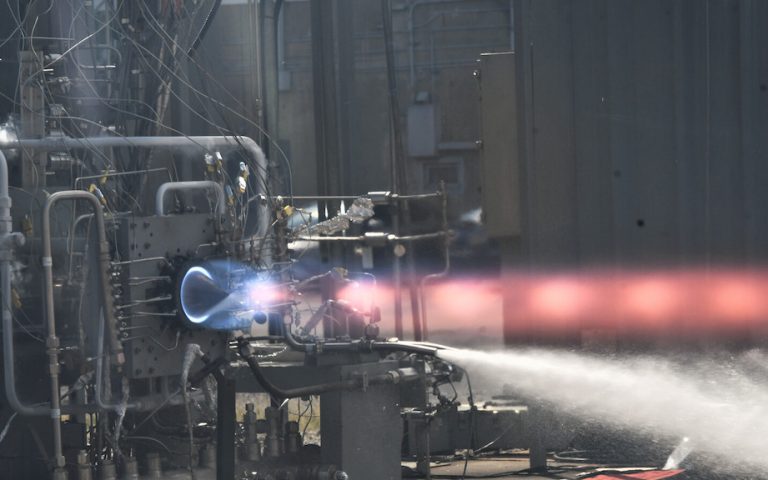
Rotating Detonation Rocket Engine (RDRE)

This advanced rocket engine design could one day change how future propulsion systems are built!

Marshall propulsion engineers designed the Rotating Detonation Rocket Engine (RDRE) to differ from a traditional rocket engine by generating thrust using a supersonic combustion phenomenon known as detonation.

This NASA Technology design produces more power while using less fuel than today’s propulsion systems and has the potential to power both human landers and interplanetary vehicles to deep space destinations, such as the Moon and Mars.

Larger image

By Keith Cowing
Source SpaceRef

NASA Selects Nine Technologies For Commercial Flight Tests

0
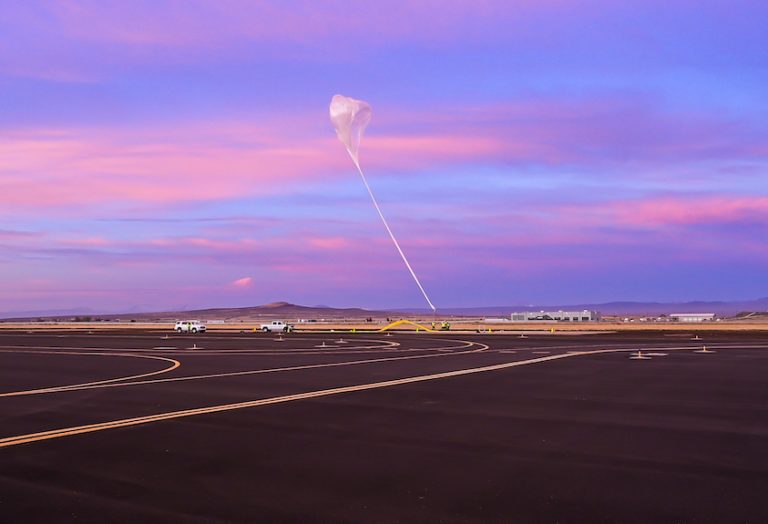
High-altitude balloons are one type of suborbital test vehicle available to researchers through commercial providers with support from NASA TechFlights. Credits: SpaceWorks Enterprises

NASA has selected nine space technologies for flight testing to advance innovations that address mission needs for both the agency and the commercial space industry.

Selected as part of the NASA’s 2022 TechFlights solicitation, these technologies will fly aboard commercial suborbital vehicles such as high-altitude balloons, aircraft following parabolic flight profiles, suborbital rocket-powered systems as well as commercial payload-hosting platforms in orbit, such as spacecraft. By readying these technologies in an environment similar to what they will experience in space, NASA, industry, and universities can help reduce the potential cost and risk before deploying the technologies on longer, more expensive missions in Earth orbit or to the Moon, Mars, and beyond.

“This $6.1 million investment in technology testing will help mature technologies for agency goals, from space exploration to scientific discovery,” said Walt Engelund, deputy associate administrator for programs in NASA’s Space Technology Mission Directorate (STMD) at NASA Headquarters in Washington. “And in doing so, we’re also providing significant support to help the commercial space industry thrive.”

The technologies were selected by STMD’s Flight Opportunities program, which rapidly demonstrates technologies for space exploration, discovery, and the expansion of space commerce. For the first time, the 2022 TechFlights solicitation included access to test opportunities hosted on commercial platforms and spacecraft in orbit in collaboration with the agency’s Small Spacecraft Technology program.

“Flight Opportunities is excited to support these efforts to solve some of the most important challenges facing space exploration and Earth observation,” said Danielle McCulloch, acting program manager for Flight Opportunities at NASA’s Armstrong Flight Research Center in Edwards, California. “In working with the Small Spacecraft Technology program this year to offer opportunities for payloads hosted aboard commercial orbital platforms we can expand our reach to advance even more technologies from a variety of institutions and technical disciplines.”

The organizations developing the selected technologies will receive a grant or cooperative agreement allowing them to purchase flights from a U.S. commercial flight vendor that best meets their needs. As in previous years, the 2022 solicitation included options for researchers to fly automated technology experiments unattended or to have one or more researchers fly alongside their technology payload on parabolic flights or suborbital rockets.

The solicitation included three topic areas that reflect NASA priorities to further space exploration and scientific discovery goals. These topics focus on supporting infrastructure and capabilities for a robust lunar economy, services and infrastructure ranging from low-Earth orbit to geosynchronous Earth orbit, and Earth observation architectures, as well as systems to monitor and address climate change.

The selected technologies are:

Creare in Hanover, New Hampshire, will test a device designed to support the transfer of liquid propellant from a supply tank to a receiving tank in microgravity as a potential solution for refueling satellites and spacecraft on long-duration missions. This technology is planned to fly on parabolic flights with Zero Gravity Corporation’s (ZERO-G) G-Force One aircraft.

Giner in Newton, Massachusetts, will test a fuel cell energy storage system designed as a potential power supply for future spacecraft or lunar surface operations to evaluate its gas-liquid phase separator in microgravity. This technology is planned to fly on ZERO-G’s G-Force One.

Harvard University in Cambridge, Massachusetts will test an imaging and particle detector system that aims to improve the autonomous assessment of wildfire structure and spread. The system uses aerosol measurement instruments that could have applications on other planets. This technology is planned to fly on Aerostar’s high-altitude balloon.

Johns Hopkins University Applied Physics Lab in Laurel, Maryland, will evaluate a technology designed to measure the variability of electrons present between a receiver on a suborbital flight vehicle and GPS satellites in orbit for its capabilities to inform atmospheric models. This technology is planned to fly on Blue Origin’s New Shepard rocket-powered system.

Paragon Space Development Corporation in Tucson, Arizona, will evaluate in microgravity a device for capturing and separating liquid condensation from cabin air to support spacecraft temperature and humidity control. This technology is planned to fly on ZERO-G’s G-Force One.

Purdue University in West Lafayette, Indiana, will conduct an experiment to analyze heat transfer in cryogenic propellant storage for use in modeling and designing future propellant transfer and management systems. This technology is planned to fly on ZERO-G’s G-Force One.

Rhea Space Activity in Washington, will test a guidance and navigation technology for small spacecraft with the aim of demonstrating its capabilities for autonomous orbit determination in cislunar space. This technology is planned to fly on Spaceflight’s Sherpa orbital transfer vehicle.

San Diego State University in San Diego, California, will test a system aiming to improve spacecraft precision landing capabilities through adaptive navigation, allowing researchers to evaluate its performance on a rocket-powered lander. This technology is planned to fly on Astrobotic’s Xodiac vehicle.

University of Louisville in Louisville, Kentucky, will refine mechanisms for rehydrating red blood cells in a space environment. Such technology could be used to offer transfusion therapy for astronauts on long-duration space missions. This technology is planned to fly on Virgin Galactic’s SpaceShipTwo system.

Submit Your Technology for TechFlights 2023

NASA’s TechFlights awards provide funding for space technologies to be tested on commercial flight vehicles. Managed by NASA’s Flight Opportunities program, the next TechFlights solicitation is expected in early 2023. Subscribe to the Flight Opportunities newsletter for announcements about TechFlights and other opportunities to access flight tests, and download this infographic to learn more.


By Keith Cowing
Source SpaceRef

Sierra Space Completes Third Successful Test of Inflatable Habitat Unit Designed for First Commercial Space Station

0
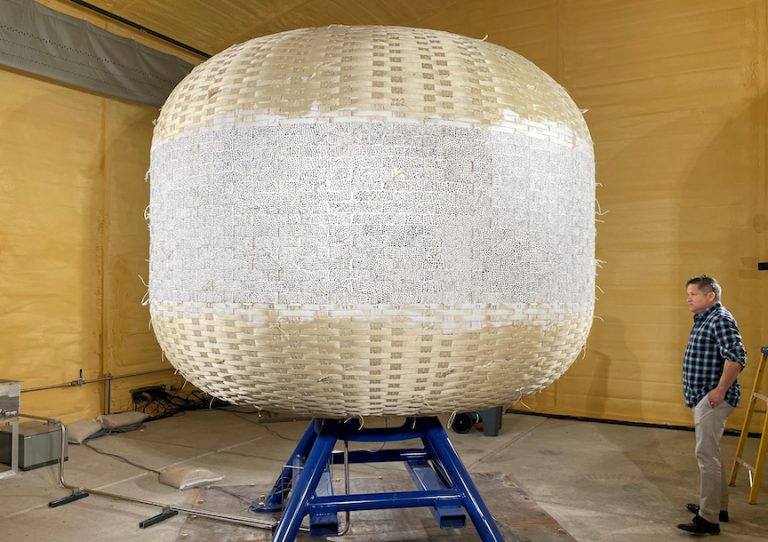
Habitat stress test

Sierra Space, a leading, pureplay commercial space company building the first end-to-end business and technology platform in space, announced today that the company’s LIFE™ habitat (Large Integrated Flexible Environment) successfully completed a third stress test – this time for duration – exceeding NASA certification requirements and demonstrating the inflatable structure’s integrity for sustaining human life in space for long periods of time.

This latest assessment, called an Accelerated Systematic Creep Test, is a destructive materials testing method by which test engineers load the test unit – a subscale version of the inflatable habitat – with a sustained amount of pressure over time until it fails. The unit’s “softgoods” pressure shell burst after over 150 hours, exceeding NASA’s short-term, recommended creep duration target of 100 hours. High-strength softgoods materials are sewn and woven fabrics – primarily Vectran – that become rigid structures when pressurized and can provide safe and sustainable architecture for space habitation.

This latest creep test is a different kind of stress test than the two previous ones conducted in July and November, which pressurized units with increasing loads until they burst at maximum or Ultimate Burst Pressure (UBP). All three tests took place within six months, further demonstrating Sierra Space as a market leader in the development of softgoods inflatable habitat technology, a key step in facilitating extended human missions to low-Earth orbit, the moon and Mars.

“LIFE represents the essential technology developments needed to one day enable humans to live and work in space,” said Sierra Space CEO Tom Vice. “Habitat units are a key element in Sierra Space’s platform in space, and this crucial milestone illustrates that our team has exceeded programmatic requirements that validate critical aspects of the LIFE design. These results will propel us in 2023 as we mature the technology via full-scale development and continue toward full NASA certification.”

Sierra Space, its partner ILC Dover and NASA subject matter experts performed the subscale Accelerated Systematic Creep Test in December 2022, at NASA’s Marshall Space Flight Center in Huntsville, Alabama. The purpose of the test was to determine the duration of time that LIFE’s pressure shell could last during its on-orbit operational mission life.

NASA designed a climate-controlled, disposable building in which the test was performed. This building was specifically built to meet two requirements: 1) to protect the test article (Sierra Space’s pressure shell) during the duration of the test and 2) to be expendable once the article successfully burst upon maximum creep pressure and duration. Due to the explosive nature of the test, the team placed the sub-scale space habitat adjacent to the flame trench of the Saturn 1/1B test stand, where NASA tested rockets for the Apollo program.

“Sierra Space’s LIFE pressure shell has an on-orbit performance requirement of 15 years, but with softgoods, there is a ‘times four’ safety requirement set by NASA, so we must ultimately prove we’re viable for 60 years,” said Shawn Buckley, LIFE Chief Engineer and Senior Director of Engineering at Sierra Space. “Based on data from this first subscale creep test, we well exceeded the on-orbit mission performance requirement of 60 years for inflatable structures within our current architecture.”

The company will conduct a second subscale Systematic Accelerated Creep Test early in 2023. Stress tests on full-scale LIFE units will begin later in the year as part of Sierra Space’s ongoing softgoods certification process.

Sierra Space performed the 2022 subscale Ultimate Burst Pressure Tests as part of NASA’s NextSTEP Appendix A Habitat Systems contract, which is managed by NASA Marshall and falls under the pre-formulation habitation team in NASA HQ’s Exploration Systems Development Mission Directorate Technical Integration office. The Systematic Accelerated Creep Test was performed by Sierra Space under its LIFE softgoods certification. Sierra Space is focused on performing critical risk reduction tests and assessing LIFE’s extensibility to multiple space destinations including the moon and Mars.

Sierra Space’s LIFE is a key component of the company’s in-space destinations technology portfolio. The inflatable module is a three-story, commercial habitation and science platform designed to allow humans to live and work comfortably in low-Earth orbit and beyond. LIFE will serve as both the habitation and payload element for the Orbital Reef commercial space station, a collaboration between Sierra Space and Blue Origin.

About Sierra Space

Sierra Space (www.sierraspace.com) is a leading pureplay commercial space company at the forefront of innovation and the commercialization of space in the Orbital Age, building platforms in space to benefit life on Earth. With more than 30 years and 500 missions of space flight heritage, the company is enabling the future of space transportation with Dream Chaser®, the world’s only winged commercial spaceplane. Under construction at its Colorado headquarters and expected to launch in 2023 on the first of a series of NASA missions to the International Space Station, Dream Chaser can safely carry cargo – and eventually crew – to on-orbit destinations, returning to land on compatible commercial airport runways worldwide. Sierra Space is also building an array of in-space destinations for low-Earth orbit (LEO) commercialization including the LIFE™ habitat (Large Integrated Flexible Environment), a three-story commercial habitation and science platform designed for LEO. Both Dream Chaser and LIFE are central components to Orbital Reef, a mixed-use business park in LEO being developed by principal partners Sierra Space and Blue Origin, which is expected to be operational by the end of the decade.

Contacts
Alex Walker
Sierra Space
(303) 803-2297
[email protected]

Allison Gregg
Griffin Communications Group
(256) 520-3985
[email protected]

By Keith Cowing
Source SpaceRef

Astronomers Use Novel Technique To Find Starspots

0
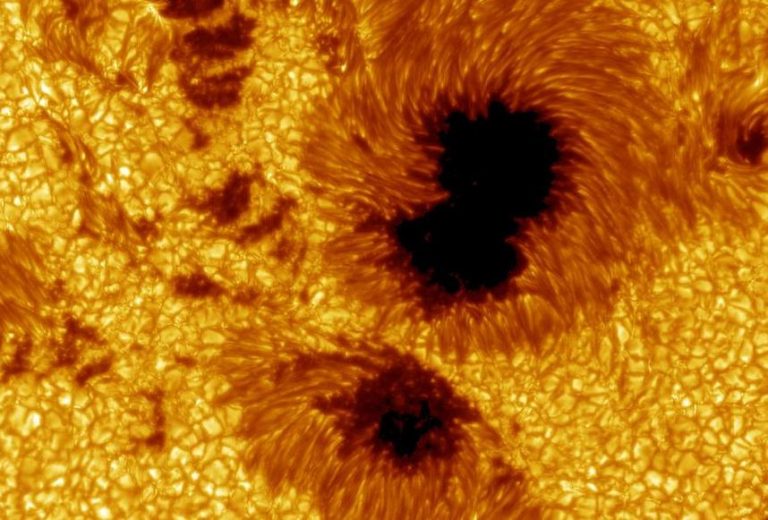
An extreme closeup of a sunspot. Image courtesy of NASA and the Goddard Space Flight Center. Image was produced by the Swedish Solar Telescope. [SST/Royal Swedish Academy of Sciences]

Astronomers have developed a powerful technique for identifying starspots, according to research presented this month at the 241st meeting of the American Astronomical Society.

Our sun is at times dotted with sunspots, cool dark regions on the stellar surface generated by strong magnetic fields, which suppress churning motions and impede the free escape of light. On other stars, these phenomena are called starspots, said Lyra Cao, lead author of the study and a graduate student in astronomy at The Ohio State University.

“Our study is the first to precisely characterize the spottiness of stars and use it to directly test theories of stellar magnetism,” said Cao. “This technique is so precise and broadly applicable that it can become a powerful new tool in the study of stellar physics.”

Use of the technique will soon allow Cao and her colleagues to release a catalog of starspot and magnetic field measurements for more than 700,000 stars – increasing the number of these measurements available to scientists by three orders of magnitude.

Since sunspots were first discovered in the 17th century, scientists have typically detected signatures of stellar magnetism indirectly, by looking at stars through different filters or detecting the modulation of spots in a star’s light curve. But by analyzing legacy high-resolution infrared spectra from the Sloan Digital Sky Survey, Cao was able to develop a technique for identifying starspots in 240 stars from two open star clusters, the Pleiades and M67.

The study showed that precision starspot measurements are a powerful new class of data which could help researchers understand how stellar magnetic fields work. Due to precision of the technique, Cao was also able to see how age and rotation affected the magnetic fields on these stars.

“It was lurking in plain sight: Within the spectrum, there was a cooler component corresponding to the starspot which was only visible in the infrared,” Cao said.

As it turns out, younger stars can be enveloped in starspots – some of them more “spot” than star, with 80% of their surfaces covered. During her studies, Cao realized that these larger cooler regions may block so much light, it might have a measurable effect on these stars. Since the light must eventually escape, she said, the star compensates by expanding and cooling enough to make more surface area available for radiation.

Researchers also found that relying on classical methods to estimate the temperatures of these stars could be wrong by more than 100 degrees. Because scientists often rely on a star’s temperature when trying to estimate its size, astronomers could wrongly assume the radius of the star is smaller than it actually is.

“When this happens, you start seeing large changes in the stars’ structure, which can throw other important astronomical measurements off as well,” said Cao. As scientists use stellar parameters to understand our solar neighborhood and galaxy, and at times, the sizes and habitability prospects of nearby exoplanets, this method could dramatically improve researchers’ ability to test other scientific theories.

Additionally, researchers found a class of stars that are too active for standard theories to explain in the Pleiades cluster. According to Cao, these stars are not only magnetic and rife with starspots, but also overflowing with UV and X-ray radiation.

“You wouldn’t want to live around these stars,” said Cao. “But understanding why these stars are so active could change our models and criteria for exoplanetary habitability.” Further study of these unusual stars could hold the key for understanding why low mass stars are so active, the study notes.

“We can directly study the evolution of stellar magnetism in hundreds of thousands of stars with this new dataset, so we expect this will help develop key insights in our understanding of stars and planets,” said Cao.

Marc Pinsonneault, a professor of astronomy at Ohio State, co-authored the study. This work was supported by NASA.

Star-spots and magnetism: testing the activity paradigm in the Pleiades and M67, Monthly Notices of the Royal Astronomical Society

By Keith Cowing
Source SpaceRef

New Research Computes First Step Toward Predicting Lifespan Of Electric Space Propulsion Systems

0
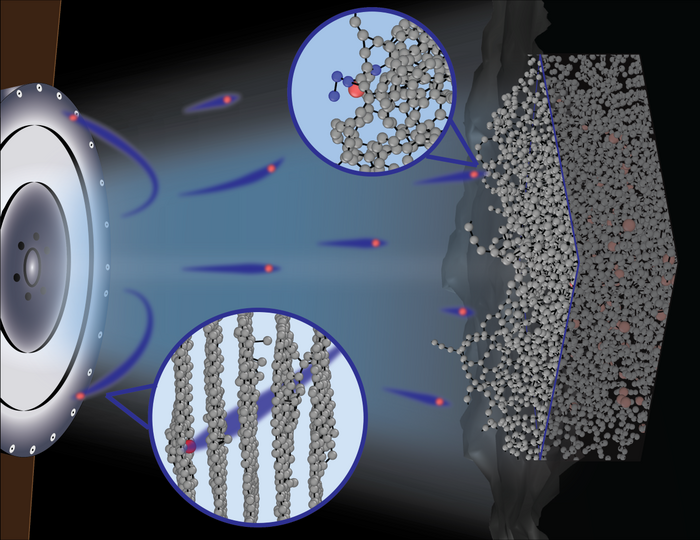
Illustration of the Hall Thruster plumes impacting the carbon surfaces at the atomistic level. CREDIT Grainger College of Engineering at the University of Illinois Urbana-Champaign

Electric space propulsion systems use energized atoms to generate thrust. The high-speed beams of ions bump against the graphite surfaces of the thruster, eroding them a little more with each hit, and are the systems’ primary lifetime-limiting factor.

When ion thrusters are ground tested in an enclosed chamber, the ricocheting particles of carbon from the graphite chamber walls can also redeposit back onto the thruster surfaces. This changes the measured performance characteristics of the thruster.

Researchers at the University of Illinois Urbana-Champaign used data from low-pressure chamber experiments and large-scale computations to develop a model to better understand the effects of ion erosion on carbon surfaces —the first step in predicting its failure.

“We need an accurate assessment of the ion erosion rate on graphite to predict thruster life, but testing facilities have reported varying sputtering rates, leading to large uncertainties in predictions,” said Huy Tran, a Ph.D. student in the Department of Aerospace Engineering at UIUC.

Tran said it is difficult to replicate the environment of space in a laboratory chamber because it is difficult to construct a sufficiently large chamber to avoid ion-surface interactions at the chamber walls. And although graphite is typically used for the accelerator grid and pole covers in the thruster, there isn’t agreement on which type of graphite is most resistant to erosion, known as sputtering.

“The fundamental problem with testing an ion thruster in a chamber is that the thruster is continuously spitting out xenon ions that also impact with the chamber walls made out of graphite panels, but there are no chamber walls in space,” Tran said. “When these xenon ions hit the graphite panels, they also sputter out carbon atoms that redeposit on the accelerator grids. So instead of the grid becoming thinner and thinner because of thruster erosion, some people have seen in experiments that the grids get thicker with time because the carbon is coming back from the chamber walls.”

The simulation resolved the limitations and uncertainties in the experimental data and the researchers gained insight into a critical phenomenon.

“Whether it is pyrolytic graphite on the grided ion optics, isotropic graphite on the pole covers, or poco graphite or anisotropic graphite on the chamber walls, our molecular dynamics simulations show that the sputtering rates and mechanisms are identical across all these different referenced structures,” said Huck Beng Chew, Tran’s adviser.

He said the sputtering process creates a unique carbon structure during the bombardment process. Watch a video of the simulation showing a close-up view of the xenon ion traveling at hypersonic velocity, impacting the carbon structure.

“When the ions come and damage the surface, they transform the surface into an amorphous-like structure regardless of the initial carbon structure,” Chew said. “You end up with a sputtered surface with the same unique structural characteristics. This is one of the main findings that we have observed from our simulations.”

Chew said they even tried it with diamond. Regardless of the much lower initial porosity and the more rigid bond configuration, they got the same sputtered structure.

“The model we developed bridges the molecular dynamics simulation results to the experimental data,” Chew said. “The next thing we want to look at is the evolving surface morphology over time as you put more and more xenon ions into the system. This is relevant to ion thrusters for deep space exploration.”

The research is part of a NASA center known as the Joint Advanced Propulsion Institute which includes researchers at nine universities, including UIUC aerospace engineering faculties Chew, Debbie Levin, and Joshua Rovey who leads the Illinois team.

The simulations were performed using NCSA’s Delta, a supercomputing facility at Illinois.

The paper, “Surface morphology and carbon structure effects on sputtering: Bridging scales between molecular dynamics simulations and experiments,” is written by Huy Tran and Huck Beng Chew. It is published in the journal Carbon.

Surface morphology and carbon structure effects on sputtering: Bridging scales between molecular dynamics simulations and experiments, Carbon

By Keith Cowing
Source SpaceRef