
Home Blog Page 90

Webb Detects Extremely Small Main Belt Asteroid

0

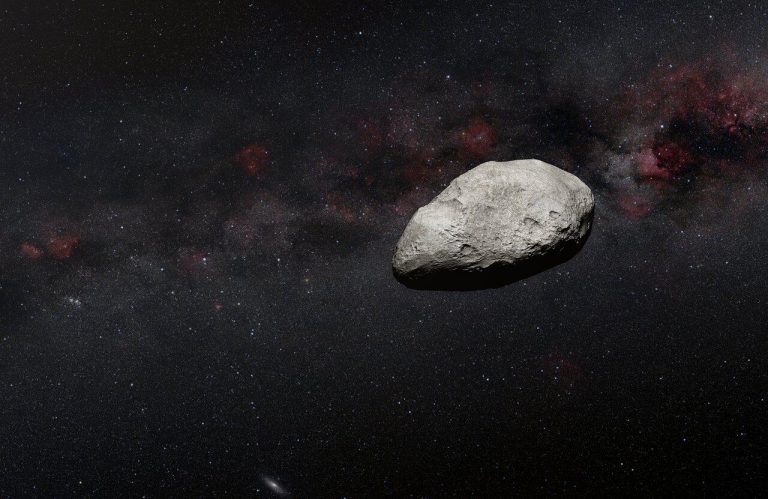
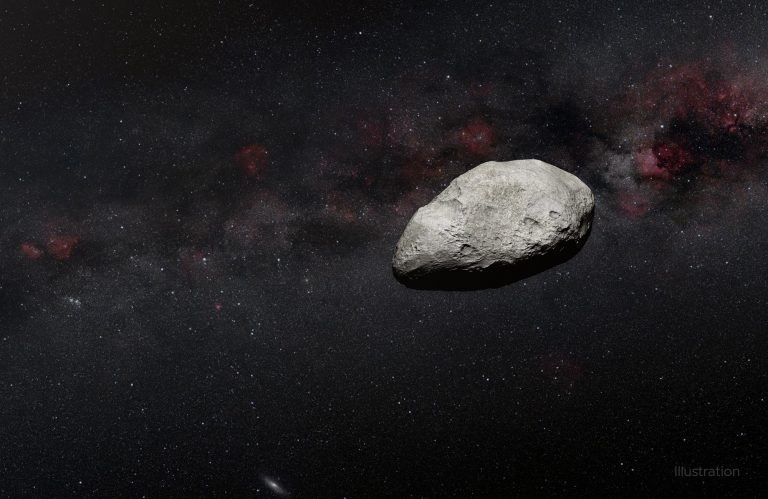
This illustration depicts an asteroid that has been detected by a team of European astronomers using NASA’s James Webb Space Telescope. At 300 to 650 feet (100 to 200 meters) in length, it’s roughly the size of Rome’s Colosseum.Credits:N. Bartmann (ESA/Webb), ESO/M. Kornmesser and S. Brunier, N. Risinger (skysurvey.org)

NASA’s newest astrophysics observatory wasn’t designed to look for small objects in our solar system, but scientists using its Mid-Infrared Instrument may have done just that.

An asteroid roughly the size of Rome’s Colosseum – between 300 to 650 feet (100 to 200 meters) in length – has been detected by an international team of European astronomers using NASA’s James Webb Space Telescope. Their project used data from the calibration of the Mid-InfraRed Instrument (MIRI), in which the team serendipitously detected an interloping asteroid. The object is likely the smallest observed to date by Webb and may be an example of an object measuring under 0.6 miles (1 kilometer) in length within the main asteroid belt, located between Mars and Jupiter. More observations are needed to better characterize this object’s nature and properties.

“We – completely unexpectedly – detected a small asteroid in publicly available MIRI calibration observations,” explained Thomas Müller, an astronomer at the Max Planck Institute for Extraterrestrial Physics in Germany. “The measurements are some of the first MIRI measurements targeting the ecliptic plane, and our work suggests that many new objects will be detected with this instrument.”

These Webb observations, published in the journal Astronomy and Astrophysics, were not designed to hunt for new asteroids – in fact, they were calibration images of the main-belt asteroid (10920) 1998 BC1, which astronomers discovered in 1998. The observations were conducted to test the performance of some of MIRI’s filters, but the calibration team considered them to have failed for technical reasons due to the brightness of the target and an offset telescope pointing. Despite this, the data on asteroid 10920 were used by the team to establish and test a new technique to constrain an object’s orbit and to estimate its size. The validity of the method was demonstrated for asteroid 10920 using the MIRI observations combined with data from ground-based telescopes and ESA’s Gaia mission.

In the course of the analysis of the MIRI data, the team found the smaller interloper in the same field of view. The team’s results suggest the object measures 100-200 meters, occupies a very low-inclination orbit, and was located in the inner main-belt region at the time of the Webb observations.

“Our results show that even ‘failed’ Webb observations can be scientifically useful, if you have the right mindset and a little bit of luck,” elaborated Müller. “Our detection lies in the main asteroid belt, but Webb’s incredible sensitivity made it possible to see this roughly 100-meter object at a distance of more than 100 million kilometers.”

The detection of this asteroid – which the team suspects to be the smallest observed to date by Webb and one of the smallest detected in the main belt – would, if confirmed as a new asteroid discovery, have important implications for our understanding of the formation and evolution of the solar system. Current models predict the occurrence of asteroids down to very small sizes, but small asteroids have been studied in less detail than their larger counterparts owing to the difficulty of observing these objects. Future dedicated Webb observations will allow astronomers to study asteroids smaller than 1 kilometer in size.

What’s more, this result suggests that Webb will also be able to serendipitously contribute to the detection of new asteroids. The team suspects that even short MIRI observations close to the plane of the solar system will always include a few asteroids, most of which will be unknown objects.

In order to confirm that the object detected is a newly discovered asteroid, more position data relative to background stars is required from follow-up studies to constrain the object’s orbit.

“This is a fantastic result which highlights the capabilities of MIRI to serendipitously detect a previously undetectable size of asteroid in the main belt,” concluded Bryan Holler, Webb support scientist at the Space Telescope Science Institute in Baltimore, Maryland. “Repeats of these observations are in the process of being scheduled, and we are fully expecting new asteroid interlopers in those images.”

More About the Mission

The James Webb Space Telescope is the world’s premier space science observatory. Webb will solve mysteries in our solar system, look beyond to distant worlds around other stars, and probe the mysterious structures and origins of our universe and our place in it. Webb is an international program led by NASA with its partners, ESA (European Space Agency) and the Canadian Space Agency.

MIRI was developed through a 50-50 partnership between NASA and ESA. NASA’s Jet Propulsion Laboratory led the U.S. efforts for MIRI, and a multinational consortium of European astronomical institutes contributes for ESA. George Rieke with the University of Arizona is the MIRI science team lead. Gillian Wright is the MIRI European principal investigator.

Laszlo Tamas with UK ATC manages the European Consortium. The MIRI cryocooler development was led and managed by JPL, in collaboration with Northrop Grumman in Redondo Beach, California, and NASA’s Goddard Space Flight Center in Greenbelt, Maryland.

For more information about the Webb mission, visit:

https://www.nasa.gov/webb

News Media Contact

Laura Betz

Goddard Space Flight Center, Greenbelt, Md.

[email protected]

Calla Cofield

Jet Propulsion Laboratory, Pasadena, Calif.

626-808-2469

[email protected]

Source: JPL NASA

University High Reclaims Victory At JPL-Hosted Science Bowl

0

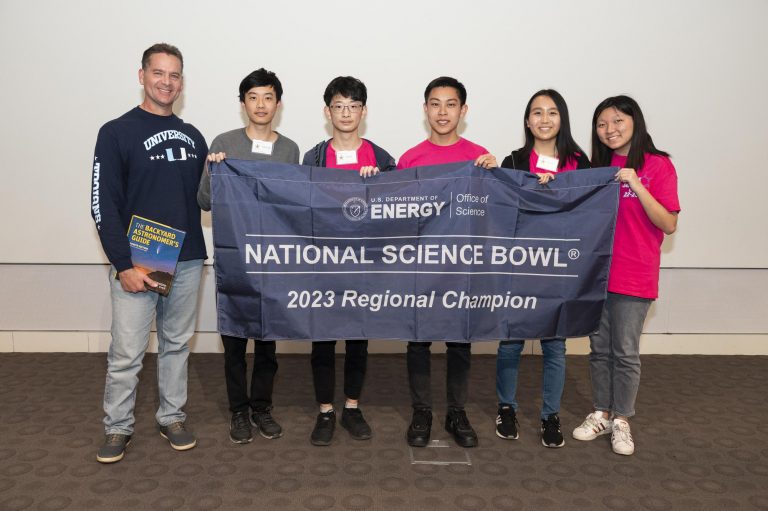
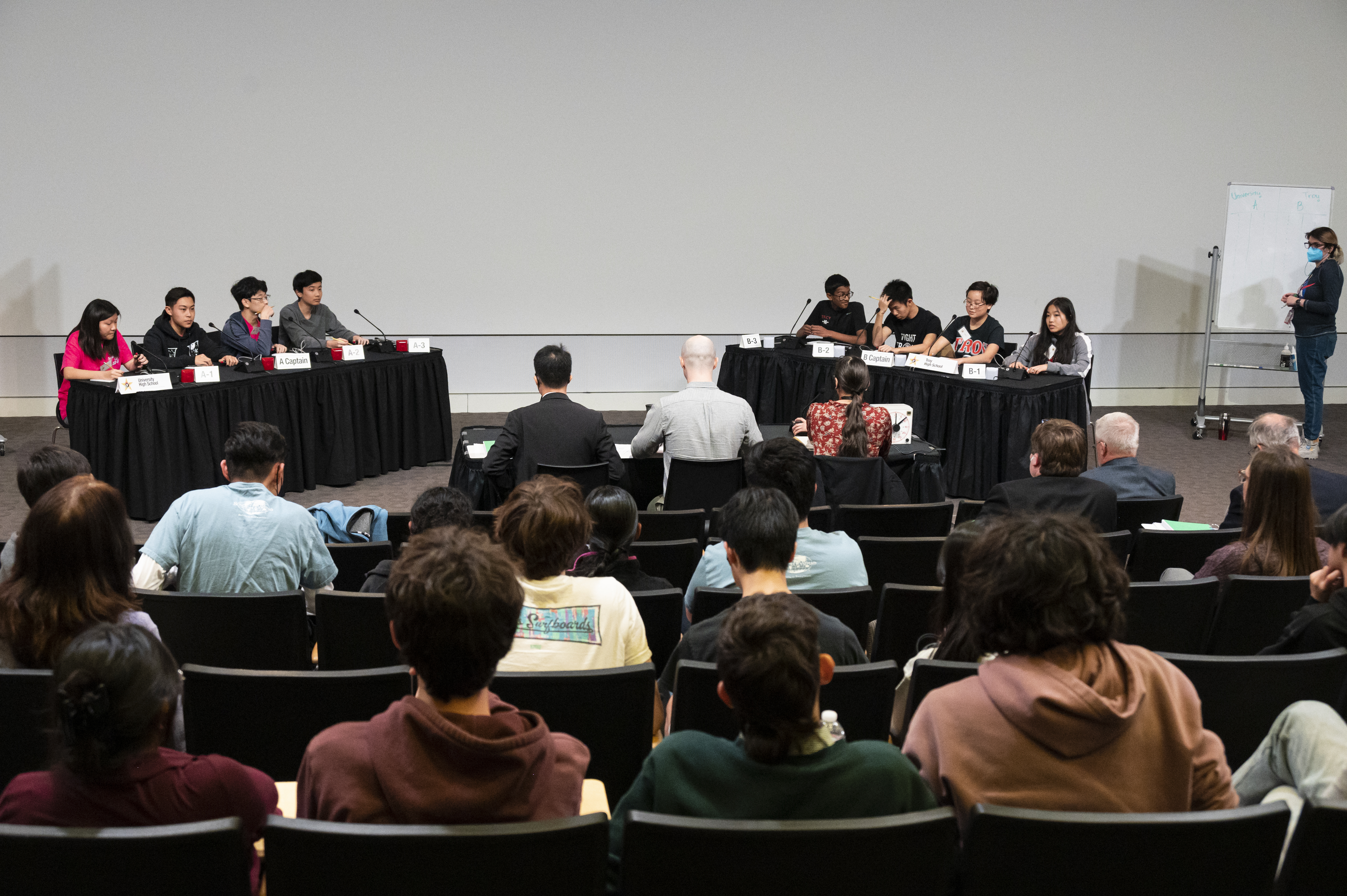
The team from University High in Irvine, California, won the 2023 regional Science Bowl at JPL. From left: coach David Knight, and students Nathan Ouyang, Yufei Chen, Benjamin Fan, Wendy Cao, and Julianne Wu. Credit: NASA/JPL-Caltech

The annual event at NASA’s Jet Propulsion Laboratory returned to in-person competition, bringing back the “pressure-cooker” environment beloved by young science enthusiasts.

A team from Irvine, California’s University High School prevailed over teams from 19 other schools Saturday, Feb. 4, at the regional competition of the National Science Bowl, hosted for the 31st year by NASA’s Jet Propulsion Laboratory in Southern California. The victory marked a return to form for the school, which won four years straight until its streak was disrupted in a narrow loss at last year’s tournament.

More than 100 Southern California high schoolers competed in the tense, fast-paced academic challenge after months of preparation. Beyond feeling pride in his team’s return to glory following their 2022 loss, University High team captain Benjamin Fan, said he revelled in meeting so many “fellow science enthusiasts” at the event.

Fan also revealed the secret to their success: He and his teammates simulated the event during sessions when they practiced with a buzzer like the one Science Bowl competitors use to signal they’re ready to answer, “Jeopardy!”-style.

“What really sets us apart is we have dedicated practices in which we practice the buzzing as opposed to just coming together and studying,” Fan said. “Buzzing really puts us into the actual environment of the competition.”

Teams from University High, left, and Troy High face off at the 2023 regional Science Bowl at JPL.

 Credit: NASA/JPL-Caltech

The team also attended an invitational science competition at Massachusetts Institute of Technology and participated in online scrimmages against other schools, said David Knight, a science teacher who’s in his 19th year coaching University High teams. Still, all that practice doesn’t lessen the “pressure-cooker” feeling in the moment, he added.

“My heart rate gets going. I’m glad I don’t have to compete, because I would probably throw up,” Knight told the assembled crowd at JPL’s Pickering Auditorium.

Teams are composed of four students and one alternate, plus a teacher who serves as coach. Schools from Los Angeles, Orange, and Riverside counties competed at the event, which is so popular that teams are selected by lottery. Round-robin and double-elimination rounds led to final matches, where Troy High School in Fullerton earned second place and Santa Monica High placed third.

Students have mere seconds to answer difficult science and math questions, such as “What intermolecular force is responsible for the secondary structure of proteins?” and “What is the sum of the squares of the first 19 positive integers?” In the final rounds, students’ answers often provoked a quiet murmuring of appreciation from fellow competitors in the auditorium.

The event marked the first in-person regional competition at JPL since the COVID-19 pandemic began, although, as a precaution, no spectators were allowed. Dozens of volunteers from the Lab support the event, and many expressed gratitude for the return to face-to-face interaction, as did participants.

“It’s really good to be back,” said Thaddaeus Voss, a JPL telecommunications systems engineer who moderated the final round, reading out questions for University and Troy high schools.

Voss competed in Science Bowl as a high schooler in Ohio, then began volunteering at the JPL regional competition in graduate school at the University of Southern California. That experience – seeing the other volunteers’ passion – motivated him to apply for a job at JPL, he said.

“One of the reasons I decided to work at JPL was because I came and volunteered,” Voss said. “So it means a lot to me when they pick me to read and do the questions.”

Now, University will go on to compete against winners from dozens of other regional competitions across the country at a national tournament in Washington April 27 through May 3. The National Science Bowl is coordinated by the U.S. Department of Energy.

News Media Contact

Melissa Pamer

Jet Propulsion Laboratory, Pasadena, Calif

626-314-4928

[email protected]

Source: JPL NASA

Team Finds Black Hole ‘Table For Two’

0

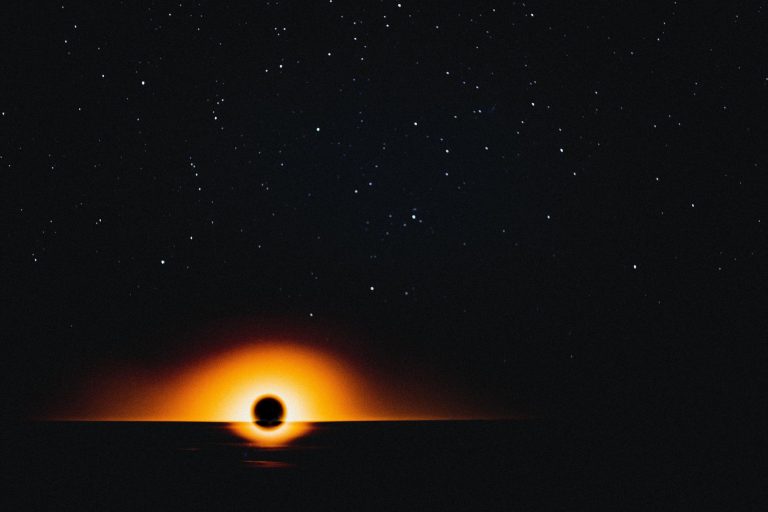
Astronomers have discovered a galactic table for two—a pair of unusually close black holes that are feeding together after their respective galaxies collided.

The finding could have a profound impact on our understanding of later-stage galaxy mergers and suggests that the phenomenon of side-by-side black holes occurring during a merger may be more common than previously known.

“Relatively few dual black holes like this have ever been confirmed,” says Meg Urry, professor of physics and astronomy at Yale University and director of the Yale Center for Astronomy & Astrophysics. “This pair has the closest separation yet measured, only about 750 light years.”

Urry, part of the international research team that made the discovery, is coauthor of the new study in The Astrophysical Journal Letters and presented at the 241st meeting of the American Astronomical Society in Seattle on January 9.

A considerable body of research exists on the early phases of galactic mergers, which occur when gravity slowly draws two or more galaxies together. However, relatively little is known about the later stages. A key component in such mergers is the behavior of black holes—areas of space that have intense gravity and can grow by gobbling up gas and dust from their immediate surroundings.

For the study, astronomers enlisted a variety of powerful instruments to observe the late-stage merger of the galaxy UGC4211, located 500 million light years from Earth in the constellation Cancer. Using multiple instruments enabled researchers to observe the side-by-side black holes in different wavelengths and gather a more complete picture of the phenomenon.

Urry contributed data from the W.M. Keck Observatory’s OSIRIS near-infrared field spectrograph in Hawaii; Yale has maintained a years-long association with Keck that has yielded significant data.

“It’s super important that we can make these kinds of observations with Keck,” Urry says. “First, with Keck’s NIRC2 instrument, to survey the remnants of galaxy mergers to find hidden dual nuclei—supermassive black holes that will eventually merge—and then, in this particular case, to confirm the presence of two galactic nuclei with Keck’s OSIRIS near-infrared field spectrograph.

“OSIRIS found broad infrared lines in the southern nucleus, confirming it is certainly an active galactic nucleus, and measured the velocity offset between the two nuclei.”

Data from the Atacama Large Millimeter/submillimeter Array (ALMA)—an international observatory co-operated by the US National Science Foundation’s National Radio Astronomy Observatory—enabled astronomers to find the exact location of the two black holes in the UGC4211 galaxy. Additional data came from the Chandra and Hubble telescopes, the ESO’s Very Large Telescope, and the Dark Energy Camera Legacy Survey (DECalS) on the Blanco 4-meter telescope at Cerro Tololo Inter-American Observatory.

“Simulations suggested that most of the population of black hole binaries in nearby galaxies would be inactive because they are more common, not two growing black holes like we found,” says Michael Koss, a senior research scientist at Eureka Scientific and the lead author of the new research.

Koss added that the use of ALMA was a game-changer, and that finding two black holes so close together in the nearby universe could pave the way for additional studies of the phenomenon.

Urry and her colleagues says that if close-paired binary black hole pairs are indeed commonplace, there could be significant implications for future detections of gravitational waves, as well.

“It will help us develop estimates of black hole merger rates for future gravitational wave detectors,” Urry says.

Source: Yale University

Original Study DOI: 10.3847/2041-8213/aca8f0

By: JIM SHELTON-YALE
Originally posted at Futurity

Webb Detects Extremely Small Main-Belt Asteroid

0

A previously unknown 100–200-metre asteroid — roughly the size of Rome’s Colosseum — has been detected by an international team of European astronomers using the NASA/ESA/CSA James Webb Space Telescope. Their project used data from the calibration of the Mid-InfraRed Instrument (MIRI), in which the team serendipitously detected an interloping asteroid. The object is likely the smallest observed to date by Webb and may be an example of an object measuring under 1 kilometer in length within the main asteroid belt, located between Mars and Jupiter. More observations are needed to better characterize this object’s nature and properties.

The Solar System is teeming with asteroids and small rocky bodies — astronomers currently know of more than 1.1 million of these rocky remnants of the early days of the Solar System. The NASA/ESA/CSA James Webb Space Telescope’s ability to explore these objects at infrared wavelengths is expected to lead to groundbreaking new science, but a team of scientists have shown that Webb also has an unpredicted aptitude for serendipitously detecting small and previously unknown objects.

We — completely unexpectedly — detected a small asteroid in publicly available MIRI calibration observations,” explained Thomas Müller, an astronomer at the Max Planck Institute for Extraterrestrial Physics in Germany. “The measurements are some of the first MIRI measurements targeting the ecliptic plane and our work suggests that many, new objects will be detected with this instrument.

The Webb observations which revealed this small asteroid were not originally designed to hunt for new asteroids — in fact, they were calibration images of the main-belt asteroid (10920) 1998 BC1, which astronomers discovered in 1998 [1], but the calibration team considered them to have failed for technical reasons due to the brightness of the target and an offset telescope pointing. Despite this, the data on asteroid 10920 were used by the team to establish and test a new technique to constrain an object’s orbit and to estimate its size. The validity of the method was demonstrated for asteroid 10920 using the MIRI observations combined with data from ground-based telescopes and ESA’s Gaia mission [2]

In the course of the analysis of the MIRI data, the team found the smaller and previously unknown interloper in the same field of view. The team’s results suggest the object measures 100–200 meters, occupies a very low-inclination orbit, and was located in the inner main-belt region at the time of the Webb observations.

Our results show that even ‘failed’ Webb observations can be scientifically useful, if you have the right mindset and a little bit of luck,” elaborated Müller. “Our detection lies in the main asteroid belt, but Webb’s incredible sensitivity made it possible to see this roughly 100-metre object at a distance of more than 100 million kilometres.

The detection of this asteroid — which the team suspects to be the smallest observed to date by Webb and one of the smallest detected in the main-belt — would, if confirmed as a new asteroid discovery, have important implications for our understanding of the formation and evolution of the solar system. Current models predict the occurrence of asteroids down to very small sizes, but small asteroids have been studied in less detail than their larger counterparts owing to the difficulty of observing these objects. Future dedicated Webb observations will allow astronomers to study asteroids smaller than 1 kilometer in size, providing the necessary data to refine our models of the solar system’s formation.

What’s more, this result suggests that Webb will also be able to serendipitously contribute to the detection of new asteroids. The team suspect that even short MIRI observations close to the plane of the Solar System will always include a few asteroids, most of which will be unknown objects.

In order to confirm that the object detected is a newly discovered asteroid, more position data relative to background stars is required from follow-up studies to constrain the object’s orbit.  

This is a fantastic result which highlights the capabilities of MIRI to serendipitously detect a previously undetectable size of asteroid in the main belt,” concluded Bryan Holler, Webb support scientist at the Space Telescope Science Institute in Baltimore, USA. “Repeats of these observations are in the process of being scheduled, and we are fully expecting new asteroid interlopers in those images!

Notes

[1] The main asteroid belt is a doughnut-shaped region which contains the majority of the Solar System’s asteroids. It lies roughly between the orbits of the planets Mars and Jupiter, and is closely aligned with the ecliptic plane, the plane of the Earth’s orbit around the Sun, which is also the rough plane in which the other planets of the Solar System lie. 

[2] ESA’s Gaia mission is in the process of precisely measuring the positions of astronomical objects to build up an extraordinarily precise three-dimensional map of more than a thousand million stars.

More information

Webb is the largest, most powerful telescope ever launched into space. Under an international collaboration agreement, ESA provided the telescope’s launch service, using the Ariane 5 launch vehicle. Working with partners, ESA was responsible for the development and qualification of Ariane 5 adaptations for the Webb mission and for the procurement of the launch service by Arianespace. ESA also provided the workhorse spectrograph NIRSpec and 50% of the mid-infrared instrument MIRI, which was designed and built by a consortium of nationally funded European Institutes (The MIRI European Consortium) in partnership with JPL and the University of Arizona.

Webb is an international partnership between NASA, ESA and the Canadian Space Agency (CSA).

The international team of astronomers in this study consists of T. G. Müller (Max Planck Institute for Extraterrestrial Physics, Germany), M. Micheli (ESA NEO Coordination Centre, Italy), T. Santana-Ros (University of Alicante, Spain and the University of Barcelona, Spain), P. Bartczak (A. Mickiewicz University, Poland), D. Oszkiewicz, and S. Kruk (Max Planck Institute for Extraterrestrial Physics, Germany).

Image Credit: N. Bartmann (ESA/Webb), ESO/M. Kornmesser and S. Brunier, N. Risinger (skysurvey.org)

Links

Contacts

Bethany Downer
ESA/Webb Chief Science Communications Officer
Email: [email protected]

Thomas Müller
Max Planck Institute for Extraterrestrial Physics
Garching, Germany
Email: [email protected]

Ninja Menning
ESA Newsroom and Media Relations Office
Email: [email protected]

Source: The European Space Agency

NASA To Provide Live Coverage Of Space Station Cargo Launch, Docking

0
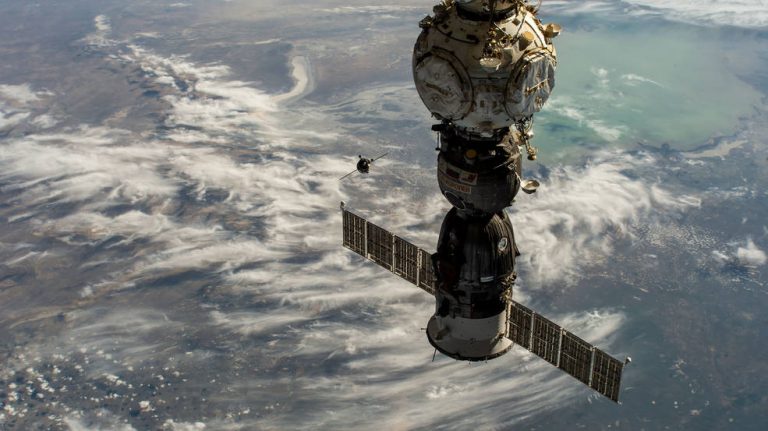
(June 3, 2022) — The Progress 81 cargo craft approaches the International Space Station for a docking to the Zvezda service module’s rear port. In the foreground, is the Soyuz MS-21 crew ship docked to the Prichal docking module on the orbiting lab’s Russian segment. Credits: NASA Johnson

NASA will provide live coverage of the launch and docking of a Roscosmos cargo spacecraft carrying about three tons of food, fuel, and supplies for the Expedition 68 crew aboard the International Space Station.

The unpiloted Progress 83 spacecraft is scheduled to launch at 1:15 a.m. EST (11:15 a.m. Baikonur time) Thursday, Feb. 9, on a Soyuz rocket from the Baikonur Cosmodrome in Kazakhstan. Coverage will begin at 1 a.m. on NASA Television, the NASA app, and the agency’s website.

The Progress will be placed into an orbit for a two-day journey to the space station, culminating in an automatic docking to the aft port of the Zvezda service module at 3:49 a.m. Saturday, Feb. 11. NASA TV coverage of rendezvous and docking will begin at 3 a.m.

The International Space Station is a convergence of science, technology, and human innovation, enabling research and technology demonstrations not possible on Earth. NASA recently recognized 22 years of continuous human presence aboard the orbiting laboratory, which has hosted 263 people and a variety of international and commercial spacecraft. The space station remains the springboard to NASA’s next steps in exploration including Artemis missions to the Moon and ultimately, human exploration of Mars.

Learn more about the International Space Station, its research, and crew, at: https://www.nasa.gov/station

Get breaking news, images, and features from the space station on InstagramFacebook, and Twitter.

Lora Bleacher
Headquarters, Washington
202-358-1100
[email protected]

Sandra Jones
Johnson Space Center, Houston
281-483-5111
[email protected]

By Roxana Bardan
Source NASA

NASA Invites Media to SpaceX’s 27th Resupply Launch to Space Station

0
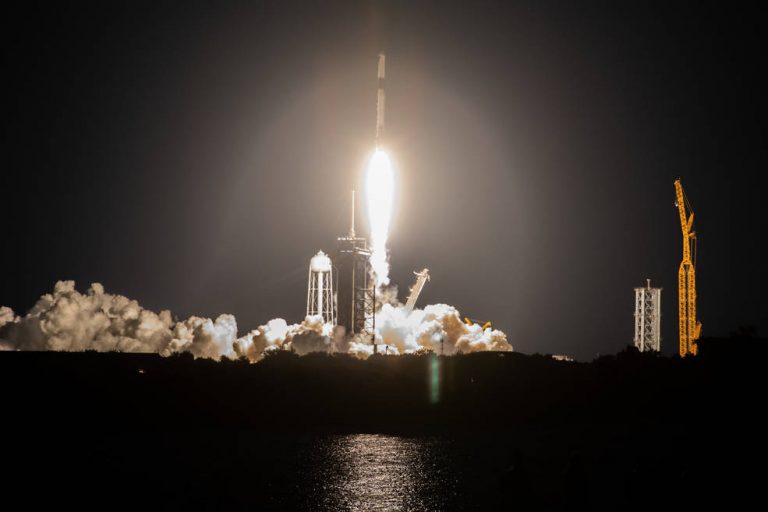
A SpaceX Falcon 9 rocket carrying a Dragon capsule soars upward after lifting off from Launch Complex 39A at NASA’s Kennedy Space Center in Florida. Credits: NASA/Kim Shiflett

Media accreditation is open for SpaceX’s 27th commercial resupply mission for NASA to the International Space Station. Liftoff of the SpaceX Dragon cargo spacecraft on a Falcon 9 rocket is targeted for no earlier than Friday, March 10, from Launch Complex 39A at NASA’s Kennedy Space Center in Florida.

SpaceX’s Dragon will deliver new science investigations, supplies, and equipment for the international crew, including the final two experiments comprising the National Institutes for Health and International Space Station National Laboratory’s Tissue Chips in Space initiative. Both studies, Cardinal Heart 2.0 and Engineered Heart Tissues-2, use small devices containing living cells that mimic functions of human tissues and organs to advance the development of treatments for cardiac dysfunction.

Media prelaunch and launch activities will take place at Kennedy. Attendance for this launch is open to U.S. citizens. U.S. media must apply by 11:59 p.m. EST Wednesday, Feb. 22. Media wishing to take part in person must apply for credentials at:

https://media.ksc.nasa.gov

Credentialed media will receive a confirmation email upon approval. For questions about accreditation, or to request special logistical requests, please email [email protected]. For other questions, please contact Kennedy’s newsroom at: 321-867-2468.

Para obtener información sobre cobertura en español en el Centro Espacial Kennedy o si desea solicitar entrevistas en español, comuníquese con Antonia Jaramillo at: [email protected] or 321-501-8425.

Other studies launching include, NASA’s HUNCH Ball Clamp Monopod, a student manufactured project that can make filming in space easier, and the Japan Aerospace Exploration Agency’s Tanpopo-5 investigation, which studies microbes to learn more about the possibility of the survival and growth of organisms in space and on extraterrestrial planets, such as Mars.

Cargo resupply by U.S. companies significantly increases NASA’s ability to conduct more investigations aboard the orbiting laboratory. Those investigations lead to new technologies, medical treatments, and products that improve life on Earth. Other U.S. government agencies, private industry, and academic and research institutions can also conduct microgravity research through NASA’s partnership with the International Space Station National Laboratory.

Humans have occupied the space station continuously since November 2000. In that time, 263 people and a variety of international and commercial spacecraft have visited the orbital outpost. It remains the springboard to NASA’s next steps in exploration, including future missions to the Moon under Artemis, and ultimately, human exploration of Mars.

For more information about commercial resupply missions, visit: https://www.nasa.gov/commercialresupply

Kiana Raines
Headquarters, Washington
202-358-1100
[email protected]

Stephanie Plucinsky / Brittney Thorpe
Kennedy Space Center, Fla.
321-876-2468
[email protected] / [email protected]

Sandra Jones
Johnson Space Center, Houston
281-483-5111
[email protected]

By Roxana Bardan
Source NASA

University Finalists Selected For New NASA Balloon Challenge

0
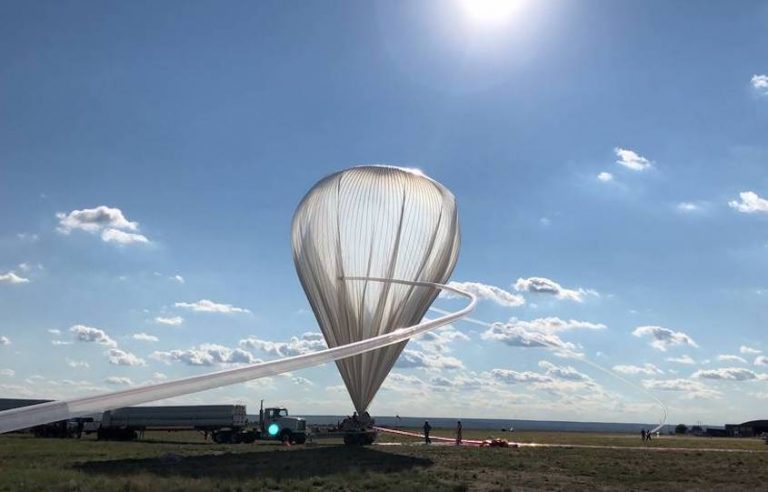
FLOATing DRAGON

Six university teams have been selected as finalists to advance to the next phase of NASA’s Formulate, Lift, Observe, And Testing; Data Recovery And Guided On-board Node (FLOATing DRAGON) Balloon Challenge.

The challenge, sponsored by NASA’s Balloon Program Office (BPO) at NASA’s Wallops Flight Facility and managed by the National Institute of Aerospace, was developed to provide increased opportunities for academic research institutions to contribute to the NASA Science Mission Directorate’s (SMD) mission.

The FLOATing DRAGON Balloon Challenge finalist teams are:

  • Princeton University – Princeton, New Jersey
    Balloon Research Glider Recovery (BRGR)
  • Purdue University – West Lafayette, Indiana
    Purdue DRAGONfly
  • South Dakota State University – Brookings, South Dakota
    Project Jack Drop
  • The University of Texas at Austin – Austin, Texas
    Floating Longhorns
  • University of California, Davis – Davis, California
    HERMES (High-altitude Experimental Rogallo Mission to Escort Safely)
  • University of Notre Dame – Notre Dame, Indiana
    IRIS v3

Finalists were seleted by a panel of NASA subject matter experts who reviewed each team’s Conceptual Design Review (CDR) package. In their CDRs, teams addressed feedback received from the judging panel on their previously submitted Preliminary Design Review (PDR) packages.

Each finalist team will receive a hardware package and small stipend to offset costs associated with the development and construction of their proposed data recovery system concept. Over the next few months, they will work hand-in-hand with NASA engineers at Wallops to refine their designs to allow for the safe release and retrieval of crucial data collected during planned scientific balloon missions.

Because these balloon missions will collect massive amounts of telemetry data, NASA must find ways to safely drop multiple data vaults for recovery on the ground. Enter the FLOATing DRAGON finalists. The data vaults they are developing must have the capability to accurately target (and navigate to) a specific point on the ground in order to mitigate the risks associated with dropping objects from a balloon at a high altitude.

“This is no simple task,” said Dr. Sarah Roth, chief technologist of BPO. “In addition to mitigating the safety risks to the public, these teams must also construct nodes that will integrate into our existing systems and be able to withstand ever-changing harsh environmental conditions at such a high altitude in the atmosphere. The ideas proposed by the university teams are incredibly novel, and we are excited to see how their systems will perform.”

In addition to working collaboratively with NASA subject matter experts on a real-world problem, these university teams have high hopes for an actual flight test of their hardware. Upon successfully passing a rigorous mission review process, the plan is for finalist teams to conduct a test drop of their system in Ft. Sumner, New Mexico, in August 2023. The winner may have the opportunity to integrate their system in a future NASA mission.

The FLOATing DRAGON Balloon Challenge is sponsored by NASA’s Balloon Program Office at NASA’s Wallops Flight Facility and managed by the National Institute of Aerospace.

For more information about the Challenge, visit: https://floatingdragon.nianet.org

By Keith Cowing
Source SpaceRef

Satellites Observe Landslide Creeping Below Bukavu In The Democratic Republic of the Congo

0
Bukavu, in the Democratic Republic of the Congo Originally established along the shore of a lake, Bukavu, in the Democratic Republic of the Congo, has expanded up steep slopes amid rapid urban growth. Credit: Adobe Stock/Katya Tsvetkova via NASA JPL

A large, slow-moving landslide is accelerating in eastern Congo, putting a community at risk. New research exposes geologic hazards amid unprecedented urban sprawl.

Creeping from just a finger’s width up to a few feet per year, slow-moving landslides occur naturally throughout the world. They typically are detected inching downslope in rocky areas with high seasonal precipitation and clay-rich soil, and they can take months to years – even centuries – to develop. Yet they can also bring sudden violence. Thousands of landslides are flowing, slipping, toppling, and sliding down hills from coastal California to China’s Three Gorges Reservoir. How these stealthy geologic phenomena respond to urban development has not been well understood.

Now a team of international researchers, including one from NASA’s Jet Propulsion Laboratory, has combined satellite and archival imagery to show how one African city’s changing water usage influences land movements near and just below the surface.

The new study zeroed in on Bukavu, a hillslope city in the Democratic Republic of the Congo. The researchers noted that Bukavu – with a population estimated to double to more than a million inhabitants by 2030 – is emblematic of many cities in the developing world that have seen rapid and unplanned growth on tectonically active landscapes. The city, originally established along the flat shoreline of a lake, has been expanding up steep slopes. Along the way, parts of Bukavu have experienced slow, ongoing destruction of infrastructure due to ground surface motion.

One of these active zones is the Funu neighborhood, where 80,000 people live, often in poor-quality housing, on top of a slow-moving landslide that shifts continuously up to 9 feet (3 meters) per year. To measure the land motion, the research team analyzed radar data collected by the Sentinel-1 satellites of the ESA (European Space Agency) and the COSMO-SkyMed satellite from the Italian Space Agency (ASI). The measurements were processed into maps showing land movement and then related to a number of landslide-triggering factors such as rainfall, earthquakes, and urban development.

To better visualize how Bukavu has transformed in recent decades, the team also drew on more than 70 years of aerial photographs (from 1947 to 2018) archived in the Royal Museum for Central Africa in Belgium. The images document a mushrooming cityscape. One reason for the growth is an influx of people fleeing violence in the broader region, where Bukavu is seen as a safe haven.

Focusing on week-to-week landslide motion over the past 4 1/2 years, the researchers found that rainfall, tectonic activity, and urban development all played roles in landslide behavior across seasons and years. But the most important factor was water runoff.

“For one of the first times, we were able to document a clear connection between the growth of a city and the acceleration of a slow-moving landslide,” said Alexander Handwerger, a landslide scientist at JPL and a co-author of the study. “We think this is driven by changes in slope hydrology – the way that water flows into the ground there – and not the additional weight of the houses on top.”

Water weakens rock by infiltrating its pores. In urban settings, infrastructure such as roads, storm drains, and ruptured pipes can drastically alter water flow, soaking and destabilizing parts of a slope. The cycle is self-reinforcing: Rerouting water flow weakens the slope, which in turn damages plumbing infrastructure, which releases more water into the rock.

Compared to high-velocity landslides (such as mudslides or lahars), which cause thousands of casualties and billions of dollars in damage each year, slow-moving landslides pose less of a threat to human lives. But inch by inch, year by year, they can cause mounting destruction. And on occasion they have been known to accelerate catastrophically. A recent example is the 2017 Mud Creek landslide near Big Sur, California, which dislodged about 6 million cubic yards (5 million cubic meters) of rock and debris across state Highway 1.

More attention should be paid to slow-moving landslides, the researchers said, because the current rate and scale of urban growth globally are unprecedented in human history. When populations migrate to potentially unsafe landscapes such as hillslopes, more people will be exposed to these natural hazards. Understanding how urban sprawl influences Earth’s surface will be vital to plan for and mitigate risk to communities.

“Attention is typically focused on landslides located in high-income, high-latitude countries, while landslide impacts disproportionately affect tropical areas where extremely rapid changes are taking place, such as population growth and environmental degradation,” said Antoine Dille, the study’s lead author and a scientist at the Royal Belgian Institute of Natural Sciences.

A space mission set to launch in 2024 could help provide even better information on these processes: The NASA-Indian Space Research Organization Synthetic Aperture Radar (NISAR) mission will observe surface changes around the world with accuracies down to a fraction of an inch. Such data will help scientists and policymakers protect lives and property by better monitoring subtle motions connected to landslides, earthquakes, volcanic eruptions, and other natural hazards.

To better visualize how Bukavu has transformed in recent decades, the team also drew on more than 70 years of aerial photographs (from 1947 to 2018) archived in the Royal Museum for Central Africa in Belgium. The images document a mushrooming cityscape. One reason for the growth is an influx of people fleeing violence in the broader region, where Bukavu is seen as a safe haven.

Focusing on week-to-week landslide motion over the past 4 1/2 years, the researchers found that rainfall, tectonic activity, and urban development all played roles in landslide behavior across seasons and years. But the most important factor was water runoff.

“For one of the first times, we were able to document a clear connection between the growth of a city and the acceleration of a slow-moving landslide,” said Alexander Handwerger, a landslide scientist at JPL and a co-author of the study. “We think this is driven by changes in slope hydrology – the way that water flows into the ground there – and not the additional weight of the houses on top.”

Water weakens rock by infiltrating its pores. In urban settings, infrastructure such as roads, storm drains, and ruptured pipes can drastically alter water flow, soaking and destabilizing parts of a slope. The cycle is self-reinforcing: Rerouting water flow weakens the slope, which in turn damages plumbing infrastructure, which releases more water into the rock.

Compared to high-velocity landslides (such as mudslides or lahars), which cause thousands of casualties and billions of dollars in damage each year, slow-moving landslides pose less of a threat to human lives. But inch by inch, year by year, they can cause mounting destruction. And on occasion they have been known to accelerate catastrophically. A recent example is the 2017 Mud Creek landslide near Big Sur, California, which dislodged about 6 million cubic yards (5 million cubic meters) of rock and debris across state Highway 1.

More attention should be paid to slow-moving landslides, the researchers said, because the current rate and scale of urban growth globally are unprecedented in human history. When populations migrate to potentially unsafe landscapes such as hillslopes, more people will be exposed to these natural hazards. Understanding how urban sprawl influences Earth’s surface will be vital to plan for and mitigate risk to communities.

“Attention is typically focused on landslides located in high-income, high-latitude countries, while landslide impacts disproportionately affect tropical areas where extremely rapid changes are taking place, such as population growth and environmental degradation,” said Antoine Dille, the study’s lead author and a scientist at the Royal Belgian Institute of Natural Sciences.

A space mission set to launch in 2024 could help provide even better information on these processes: The NASA-Indian Space Research Organization Synthetic Aperture Radar (NISAR) mission will observe surface changes around the world with accuracies down to a fraction of an inch. Such data will help scientists and policymakers protect lives and property by better monitoring subtle motions connected to landslides, earthquakes, volcanic eruptions, and other natural hazards.

By Keith Cowing
Source SpaceRef

A Nearby Potentially Habitable Earth-Mass Exoplanet

0

Astronomers find a rare rocky Earth-mass planet suited to probe for life signs

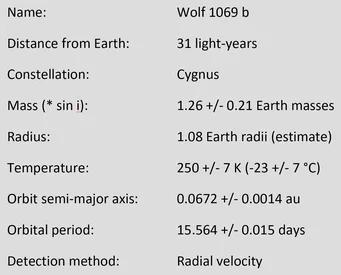
A team of astronomers led by MPIA scientist Diana Kossakowski have discovered an Earth-mass exoplanet orbiting in the habitable zone of the red dwarf star Wolf 1069. Although the rotation of this planet, named Wolf 1069 b, is probably tidally locked to its path around the parent star, the team is optimistic it may provide durable habitable conditions across a wide area of its dayside. The absence of any apparent stellar activity or intense UV radiation increases the chances that Wolf 1069 b could have retained much of its atmosphere. Therefore, the planet is one of only a handful of promising targets to search for habitability markers and biosignatures. The results appear in the journal Astronomy & Astrophysics.

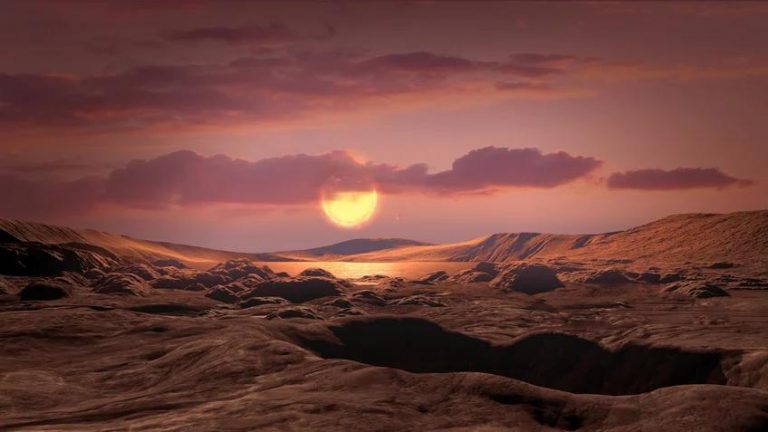
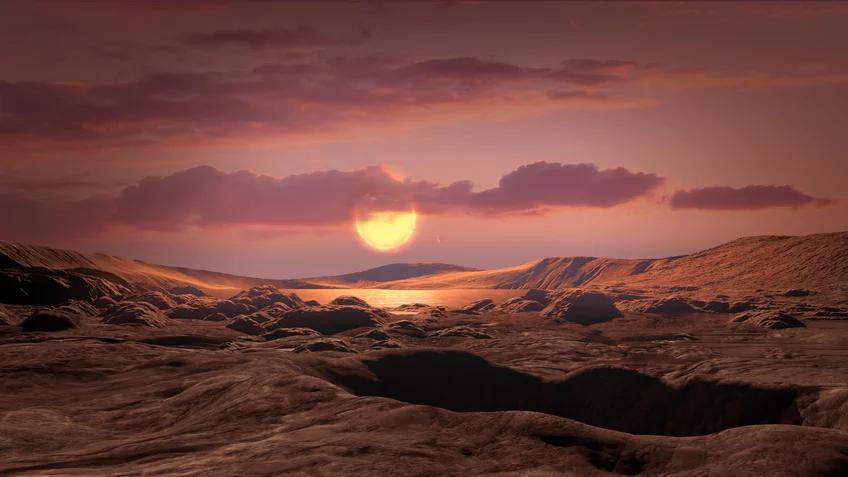
Artist’s conception of a rocky Earth-mass exoplanet like Wolf 1069 b orbiting a red dwarf star. If the planet… [more]© NASA/Ames Research Center/Daniel Rutter

One of the most exciting goals of exoplanet research is to find a habitable world similar to Earth. However, of the more than 5000 exoplanets astronomers have discovered so far, only about 1.5% have masses below two Earth masses. Just about a dozen of them populate the so-called circumstellar habitable zone, the range in a planetary system where water can maintain a liquid form on the planet’s surface. Observations capable of finding such low-mass planets are still very challenging.

Looking for exoplanets around red dwarf stars

Properties of the exoplanet Wolf 1069 b

One way of improving the chances is to probe low-mass stars for signatures of orbiting planets. This is precisely what Diana Kossakowski and her colleagues did in the framework of the CARMENES program. This project, with major contributions by the Max Planck Institute for Astronomy (MPIA) in Heidelberg, Germany, uses the Calar Alto Observatory in Spain.

When we analysed the data of the star Wolf 1069, we discovered a clear, low-amplitude signal of what appears to be a planet of roughly Earth mass. It orbits the star within 15.6 days at a distance equivalent to one-fifteenth of the separation between the Earth and the Sun,” says MPIA’s Diana Kossakowski. She is the main author of the underlying paper.

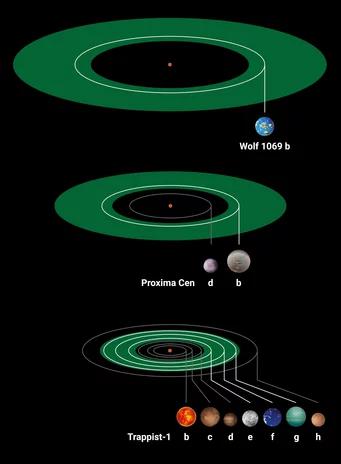
Despite the close range, Wolf 1069 b only receives about 65% of the incident radiant power of what the Earth obtains from the Sun. Compared to solar properties, Wolf 1069 emits much less radiation, and its surface is cooler, making the star appear orange. These properties result in reduced heating power. “As a result, the so-called habitable zone is shifted inwards”, mentions Kossakowski. Therefore, planets around red dwarf stars such as Wolf 1069 can be habitable even though they are much closer than the Earth is to the Sun. Co-author Jonas Kemmer from Heidelberg University adds, “The CARMENES instrument was built for the very purpose of making it easier to discover as many potentially habitable worlds as possible.

What does habitable mean?

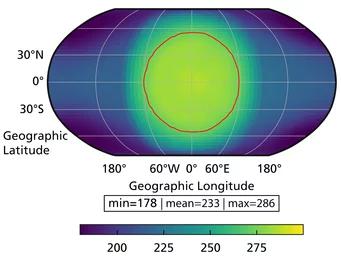
Of course, it needs more than liquid water to make up a habitable planet. Like on Earth, an atmosphere that causes a natural greenhouse effect may help raise the average temperature above the 250 Kelvin (- 23 °C) calculated for Wolf 1069 b. This value assumes a simple bare rocky planet. In fact, the astronomers computed that if it had an Earth-like atmosphere, the mean temperature might rise as high as 286 Kelvin (+ 13 °C), keeping water liquid over a large region on the planet’s side facing the star. Based on computer simulations using complex climate models, the team concludes the planet could maintain moderate temperatures and surface liquid water for a wide range of atmospheric conditions and surface types.

Simulated surface temperature map of Wolf 1069 b, assuming a modern Earth-like atmosphere. The map is centred… [more]© Kossakowski et al. (2023) / MPIA

In addition, such an atmosphere would protect against high-energy electromagnetic radiation and particles that either stem from interstellar space or the central star. Red dwarf stars, in particular, are notorious for their activity leading to massive stellar winds and intense UV radiation. Similar to what the Sun did to Mars, they may strip off a planet’s atmosphere, which renders their surfaces sterile.

Unlike, e.g. Proxima Centauri with its two confirmed planets, Wolf 1069 appears benign. The observations do not indicate any kind of harmful stellar activity. Still, it is probably too early to be overly optimistic. During its youth, a red dwarf star tends to go through a high activity phase with dire consequences for any planet in its vicinity. However, if Wolf 1069 b had developed and maintained an atmosphere early on, it should have retained it until today. It is even possible that the planet may have a magnetic field similar, yet weaker, to Earth that protects it from charged stellar wind particles.

A lonely planet

Although this idea is a bit speculative, the line of reasoning is sound. “Our computer simulations show that about 5% of all evolving planetary systems around low-mass stars, such as Wolf 1069, end up with a single detectable planet,” explains MPIA scientist Remo Burn, a team member of the study. “The simulations also reveal a stage of violent encounters with planetary embryos during the construction of the planetary system, leading to occasional catastrophic impacts,” he adds. These events would melt any young, evolving world. The planetary core should still be hot and liquid today, providing a dynamo that produces a global magnetic field – similar to Earth.

Wolf 1069 b appears to be one of those rare lonely planets. Based on their measurements, the astronomers exclude additional planets with at least one Earth mass and orbital periods of less than ten days. That is lower than the 15.6 days they determined for Wolf 1069 b. However, they cannot rule out planets on wider orbits.

Eternal day and night

While Wolf 1069 b is a promising candidate to constrain further its conditions concerning habitability, there is one peculiar property it shares with virtually all planets in the habitable zones of red dwarf stars. Its rotation is likely tidally locked to its orbit around the host star. In other words, one rotation about its axis takes as long as one complete revolution. As the same side always faces the star, it experiences eternal day while there is always night on the opposite hemisphere.

The same phenomenon lets us always see the same side of the Moon. Tidal forces slightly deform the planet away from its symmetrical shape towards an ellipsoid. This causes the star’s gravity to act differently across the planet’s surface, resulting in a braking effect. Over time, the rotation period thus gradually approaches the orbital period. The effectivity of tidal locking depends on the distance from the star and its mass. For red dwarf stars, that range broadly coincides with the location of the habitable zone. As a result, potentially habitable conditions only occur in a confined area on the planet’s dayside.

Finding Earth-mass planets is hard work

Illustration that compares three exoplanet systems of red dwarf stars hosting Earth-mass planets. The green rings… [more]© MPIA graphics department/J. Neidel

The technological progress since the first detection of an exoplanet almost 30 years ago is breathtaking. Still, the signatures astronomers look for to detect planets with masses and diameters similar to Earth are tiny and still hard to extract from the measurements. The CARMENES program uses the radial velocity (RV) method to look for exoplanets around low-mass stars. This technique measures minor periodic variations in the stellar spectra, which hints at a companion gravitationally pulling at the host star. Thus, the star follows a trajectory mirroring the planet’s orbit, albeit at a much smaller distance from their common centre of mass. This effect becomes more pronounced for lower mass ratios between the star and the planet, as is the case when observing low-mass red dwarf stars.

During one revolution, the star approaches us on one side and recedes on the other. Astronomers infer the resulting tiny change in velocity by measuring the periodic displacement of the stellar spectral lines. From this, they calculate the planet’s mass – or at least a lower limit because the unknown tilt of the orbital plane modifies the measured velocity, which generally is somewhat smaller than the planet’s actual orbital velocity.

As was the case for Wolf 1069 b, those signals are so small that they require complex and sophisticated analytic procedures to distinguish them from artefacts in the spectra. They stem from many influences. For instance, before the stellar light enters the telescope, it passes through the Earth’s atmosphere, which superimposes its own strong terrestrial spectrum on the one produced by the star. Disentangling those contributions is challenging and can influence the results if not done correctly.

Only a handful of candidates for future exoplanet characterisation

With a distance of 31 light-years, Wolf 1069 b is the sixth closest Earth-mass planet in the habitable zone of its host star. Because of its favourable prospects regarding habitability, it is among a small illustrious group of targets, such as Proxima Centauri b and TRAPPIST-1 e, to search for biosignatures. Alas, such observations are currently beyond the capabilities of astronomical research.

We’ll probably have to wait another ten years for this,” Kossakowski points out. “Though it’s crucial we develop our facilities considering most of the closest potentially habitable worlds are detected via the RV method only.” The Extremely Large Telescope (ELT), which is under construction in Chile, may be able to characterise the conditions of those planets. Until then, Kossakowski and her team look forward to finding more exciting candidates like Wolf 1069 b.

Background information

The MPIA researchers involved in this study are Diana Kossakowski, Martin Kürster, Trifon Trifonov (also Department of Astronomy, Sofia University “St. Kl. Ohridski”, Bulgaria), Thomas Henning, Remo Burn, Aleksei Pavlov and Martin Schlecker (also Steward Observatory, University of Arizona, Tucson, USA).

By: Dr. Markus Nielbock, Dr. Diana Kossakowski and Dr. Martin Kürster
Source: Max Planck Institute for Astronomy

Spiral Galaxy Spans Space

0

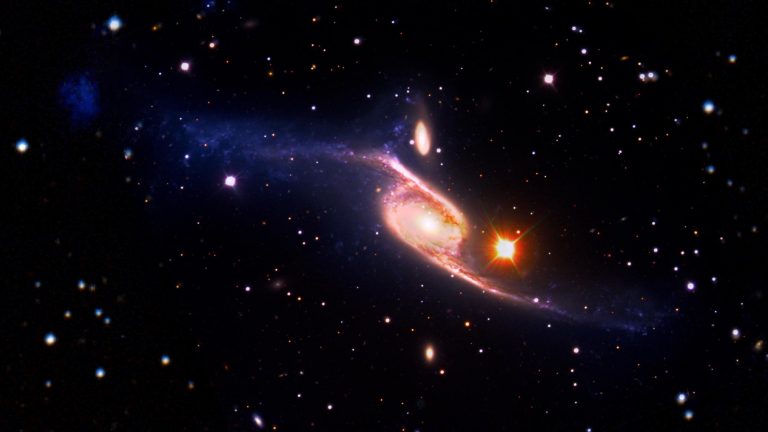
This Jan. 10, 2013, composite image of the giant barred spiral galaxy NGC 6872 combines visible light images from the European Southern Observatory’s Very Large Telescope with far-ultraviolet data from NASA’s Galaxy Evolution Explorer (GALEX) and infrared data acquired by NASA’s Spitzer Space Telescope. NGC 6872 is 522,000 light-years across, making it more than five times the size of the Milky Way galaxy; in 2013, astronomers from the United States, Chile, and Brazil found it to be the largest-known spiral galaxy, based on archival data from GALEX.

Image Credit: NASA/ESO/JPL-Caltech/DSS

By: Monika Luabeya
Source: NASA