
Home Blog Page 89

Our Favorite Moons Of The Solar System

0

More than 240 moons are known to exist in our Solar System, and more are being discovered all the time. About three quarters of them orbit Jupiter and Saturn, the rest taking their place around other planets and dwarf planets like Pluto. On top of all that, there are also moonlets that orbit smaller objects like asteroids.

It’s hard to choose favorites from among all these wonderful little worlds, but here are eight moons that stand out for their scientific interest and exploratory promise.
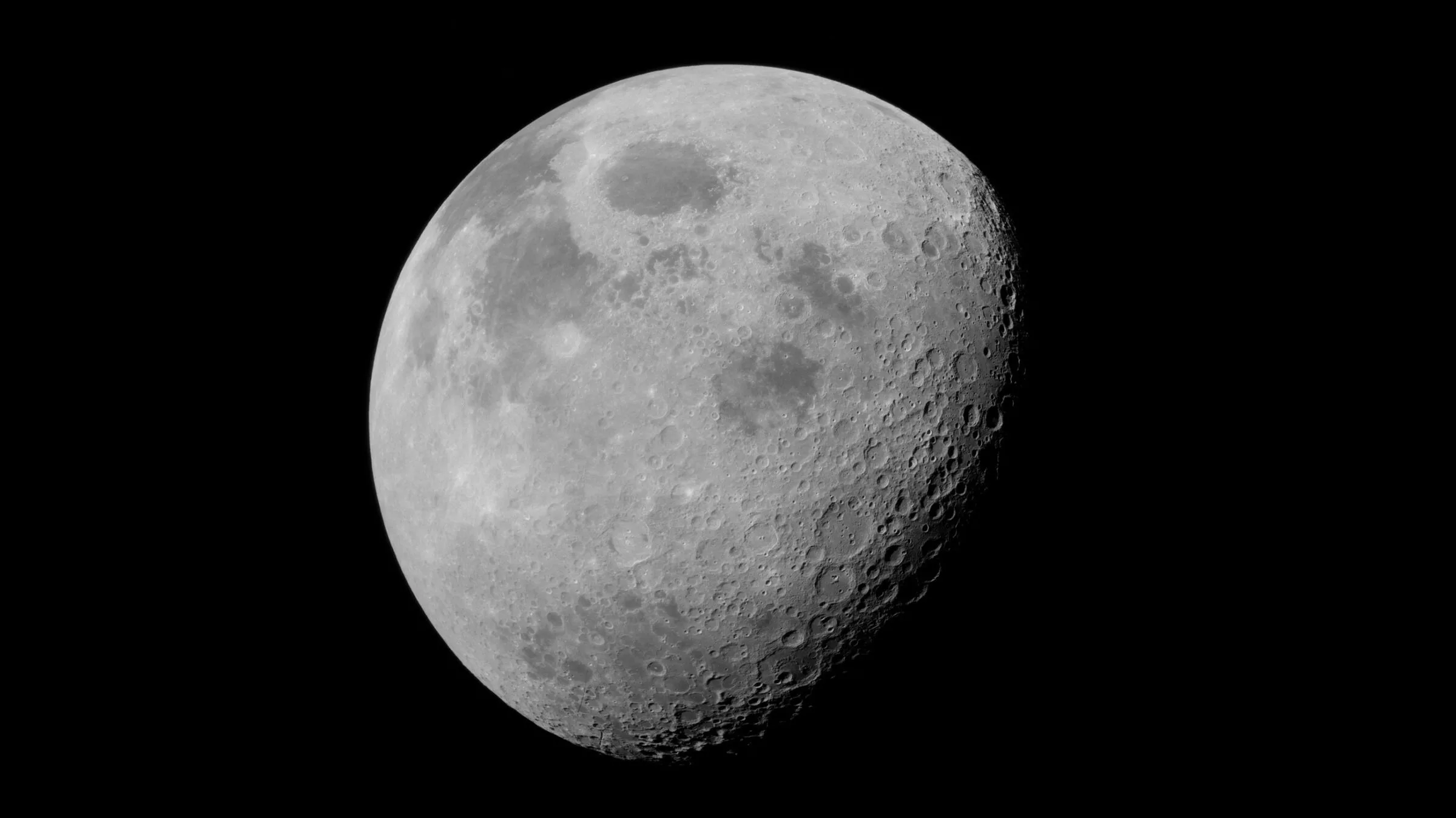
The Moon in Widescreen
THE MOON IN WIDESCREEN Apollo 12 astronauts took this picture of the Moon during their coast back to Earth in 1969.Image: NASA/Edited by The Planetary Society

Earth’s Moon

Among the scintillating alien worlds in orbit around other planets, Earth’s natural satellite might seem boring. But it’s actually a fascinating place with a dramatic history. 

The Moon was formed in the early days of the Solar System, roughly 4.5 billion years ago. The leading theory for the Moon’s formation is that another young planet smashed into the Earth, throwing huge chunks of super-heated rock out into space. Within the span of about a month to a year, some of these chunks came together, attracted to each other’s gravity, and formed the Moon.

The heat generated by the impact, the following rapid accretion, and resulting chemical reactions was likely so intense that the entire surface of the Moon became magma — that is, molten rock. And even though the formation of the Moon only took a matter of months, its surface stayed molten for tens or even hundreds of millions of years.

The Earth would have been very hot from this impact as well, and as the Moon cooled down it did so more quickly on the side facing away from the Earth. (The Moon is tidally locked to the Earth, meaning it always has the same side facing us.) The near side of the Moon developed a thinner crust, through which magma continued to burst until about 50 million years ago. This ongoing volcanic activity is thought to have generated an atmosphere about twice as thick as the current Martian atmosphere. The Moon has since cooled off enough that there are no active volcanoes and no atmosphere at all. But when we look at the Moon, we can still see evidence of its volcanic past. The dark splotches all over the familiar face of the Moon are made of basaltic rock that erupted from volcanoes millions of years ago.
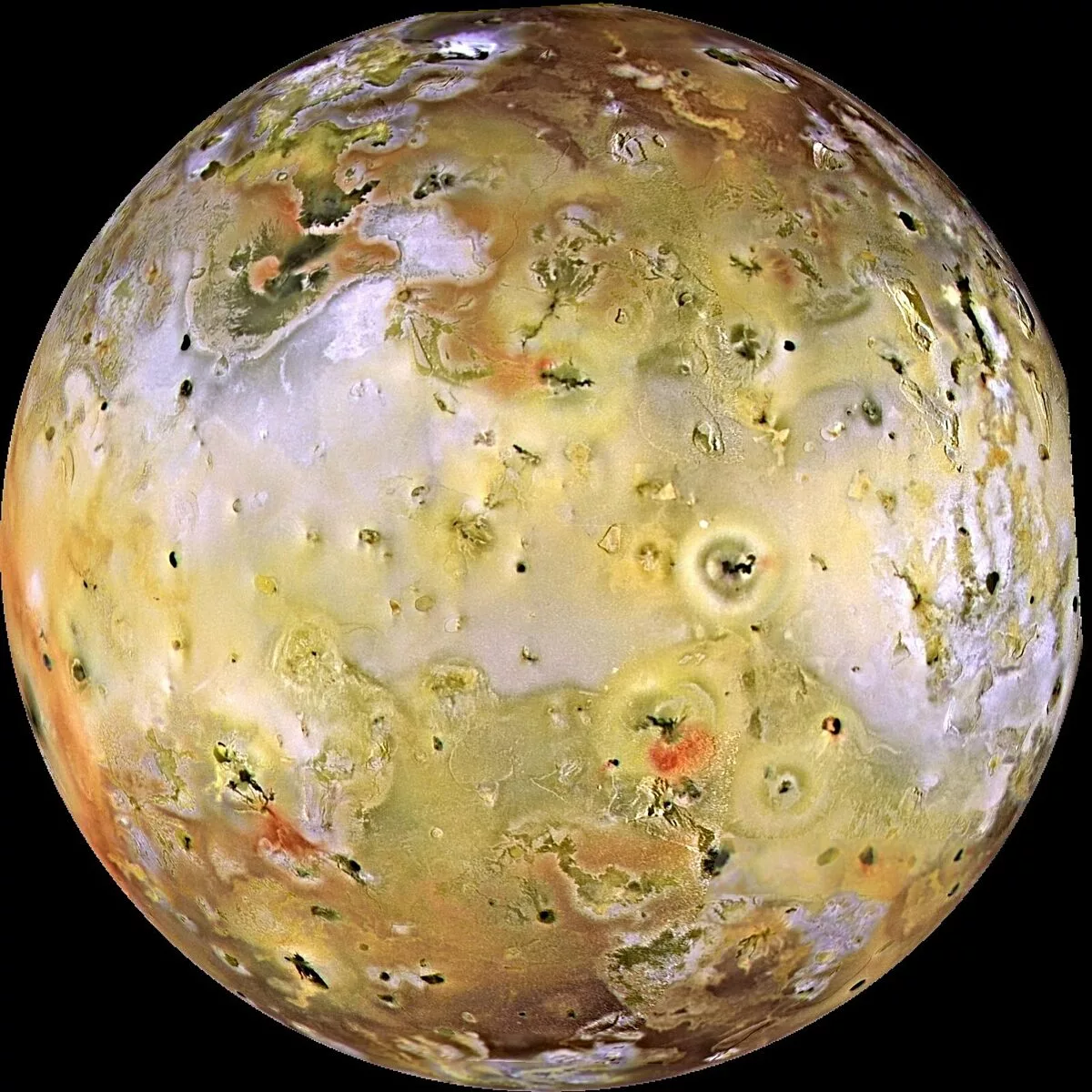
Io, a world of constant chaos
IO, A WORLD OF CONSTANT CHAOS NASA has called Io the “most volcanic body in the Solar System.”Image: NASA/JPL/University of Arizona

Io

Jupiter’s Io looks about as alien as a world could look: bright yellow with swaths of white and spots of red, brown, orange, and black. Slightly larger than Earth’s moon, Io has mountains taller than Mount Everest and hundreds of volcanoes some of which spew plumes of sulfur and sulfur dioxide, some hundreds of kilometers high. Io is the most volcanically active place in the Solar System, with almost constant eruptions happening all over its surface.

Io is the innermost of Jupiter’s four large moons, alongside Europa, Ganymede, and Callisto. It’s because of this location that Io experiences such intense volcanism. Jupiter is the largest planet in the Solar System, and its large moons are among the biggest of their kind too. As Io orbits Jupiter, sometimes it passes close to some of its neighboring large moons as they go along their own orbits. As these moons pass each other, they pull on each other slightly. This makes all of their orbits around Jupiter a bit uneven. As Io gets closer to and farther from Jupiter, the gravitational ebb and flow distorts the shape of the moon. This squeezing and stretching creates friction. Inside Io, the heat caused by all this friction is enough to melt rock into magma.

About 50 kilometers (more than 30 miles) beneath Io’s surface is an ocean of magma that stretches down another 50 kilometers. As this magma ocean jostles around, it creates enormous volcanic activity on the surface. Io and Earth are the only two worlds in the Solar System known to have large-scale, present-day volcanic activity. And Io far outdoes Earth. Io’s surface is covered in more than 400 active volcanoes, which together produce about 100 times more lava than all of Earth’s volcanoes combined.
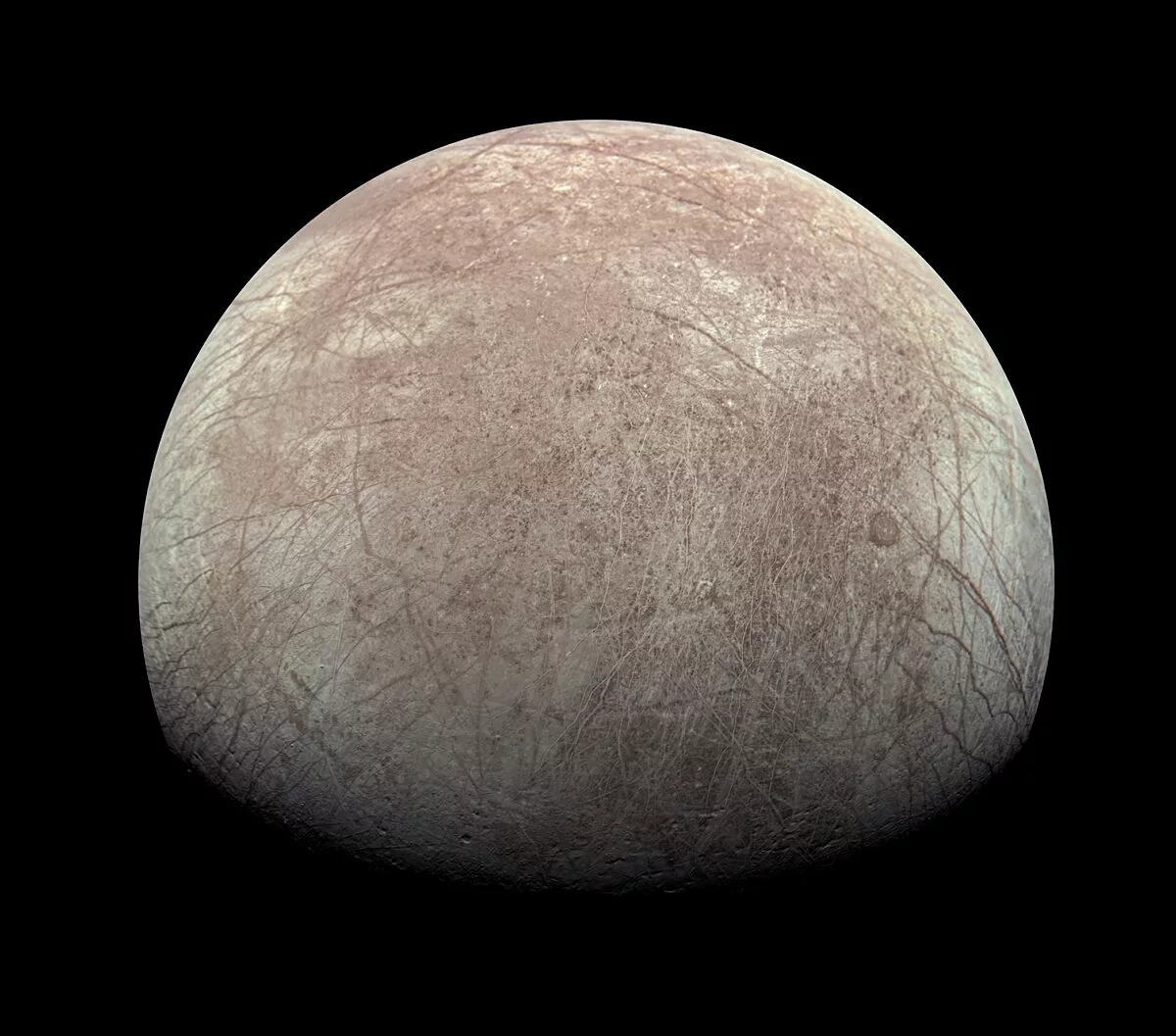
Juno Europa flyby composite
JUNO EUROPA FLYBY COMPOSITE This view of Europa is a composite image of 3 datasets collected by the Juno spacecraft during its perijove 45 flyby.Image: NASA/JPL-Caltech/SwRI/MSSS/Kevin M. Gill

Europa

Another of Jupiter’s large moons is Europa. Like Io, Europa orbits close to Jupiter and has sizable moons orbiting beyond it. And so, like Io, Europa gets squeezed by fluctuating gravitational pulls, warming up its interior.

The result of this squeezing, though, is totally different on the two moons because they’re made of different stuff. Unlike rocky Io, Europa has a surface made mostly of solid water ice. So when Europa gets squeezed by getting closer to and farther from Jupiter, the friction created inside the moon heats up the subsurface ice and turns it into liquid water.

The first hint of a subsurface water ocean came from NASA’s twin Voyager probes, which flew through the Jupiter system in 1979. The images they captured of Europa showed the smoothest surface in the Solar System, devoid of big mountains, deep craters, or canyons. This hinted that the solid crust might be on top of a liquid layer, causing the crust to move, split and constantly resurface itself.

Other spacecraft that visited the Jupiter system, like NASA’s Galileo and Juno missions, have collected data from Europa that add to our confidence that liquid water does exist under Europa’s surface. Under an icy shell about 30 kilometers (about 19 miles) thick, Europa may be holding an ocean 70-100 kilometers (or about 40-60 miles) deep. Earth’s oceans, by comparison, only stretch down about 11 kilometers (less than 7 miles) at their deepest. Even though Europa is smaller than Earth’s moon, its oceans are thought to contain twice as much liquid water as all of Earth’s oceans and lakes combined.

This was an exciting discovery because the search for life beyond Earth focuses on places where liquid water can exist, since all known life forms on Earth depend on liquid water.

Europa’s oceans are also thought to be salty, suggesting they make contact with a rocky seabed. This bodes well for the search for life as well, since underwater hydrothermal vents could be a life-giving energy source. 

In 2012, the Hubble Space Telescope spotted a huge plume of water erupting from a geyser on Europa’s south pole. The image it captured showed a plume about 200 kilometers (about 125 miles) high. NASA is planning to send its Europa Clipper mission there in 2030, including a specific mission objective to fly through Europa’s plumes. The European Space Agency is also working on its Jupiter Icy Moons Explorer mission (a.k.a. JUICE), which would study Europa along with Ganymede and Callisto starting in 2031. Both of these missions will be able to spend years studying Europa, potentially answering a lot of our most pressing questions about its tantalizingly habitable oceans.
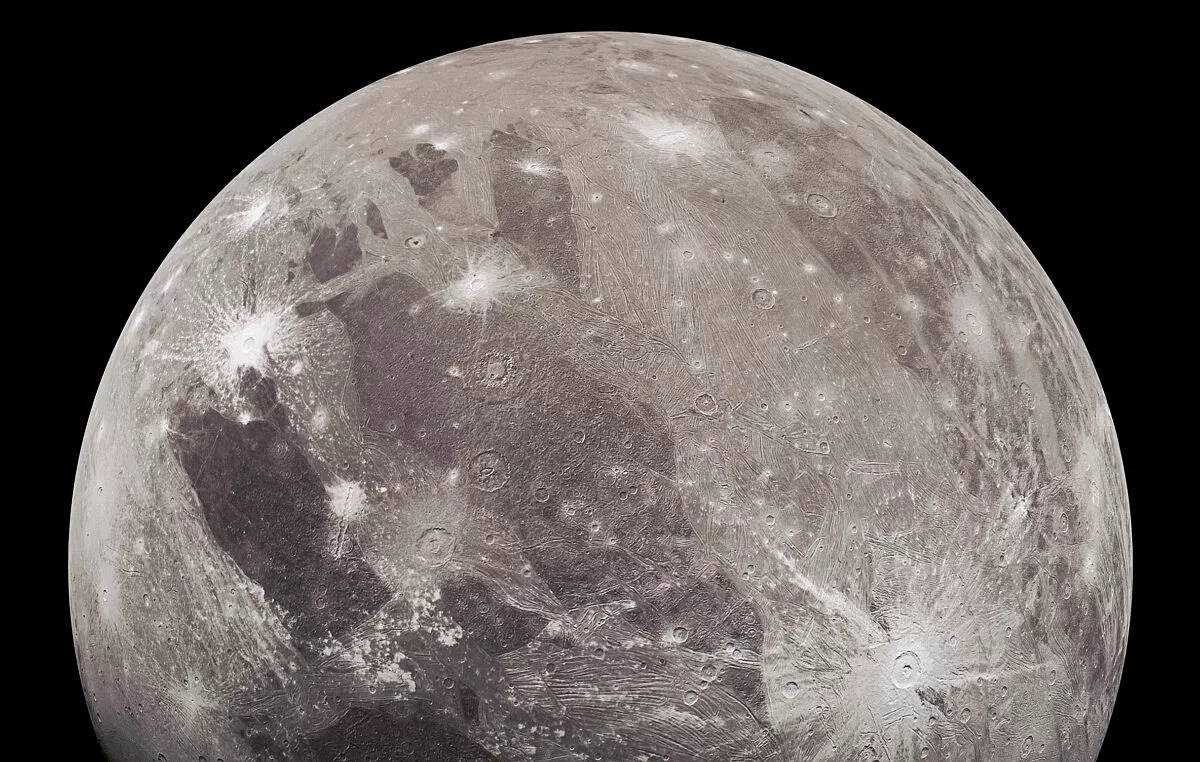
Ganymede from Juno 2021
GANYMEDE FROM JUNO 2021 An image of Ganymede obtained by the JunoCam imager during Juno’s June 7, 2021, flyby of Jupiter’s icy moon.Image: NASA/JPL-Caltech/SwRI/MSSS

Ganymede

Ganymede is another of Jupiter’s icy moons, and is the largest moon in the Solar System. It’s even bigger than the planet Mercury.

Ganymede is made of rock with a thick outer layer of ice, but unlike Europa it doesn’t show signs of a freshly resurfaced surface. Despite this, the same gravitational squeezing should be happening to some extent on Ganymede, which should warm up its interior.

During its time in orbit around Jupiter from 1995 to 2003, NASA’s Galileo spacecraft measured Ganymede’s magnetic field and found hints that under the surface there might be one or more layers of salty, liquid water. Follow-up observations by the Hubble Space Telescope in 2015 backed up this theory.

Ganymede appears to have several ocean layers, stacked up with layers of ice in between them. The highest level of ice is the crust, which might be about 150 kilometers (about 90 miles) thick. The lowest ocean level could be 800 kilometers (about 500 miles) below that, just above the first layer of the moon’s rocky interior. Altogether, Ganymede likely has the most liquid water of any body in the Solar System. ESA’s JUICE mission will learn a lot about this mega-moon when it visits the Jupiter system in the 2030s.
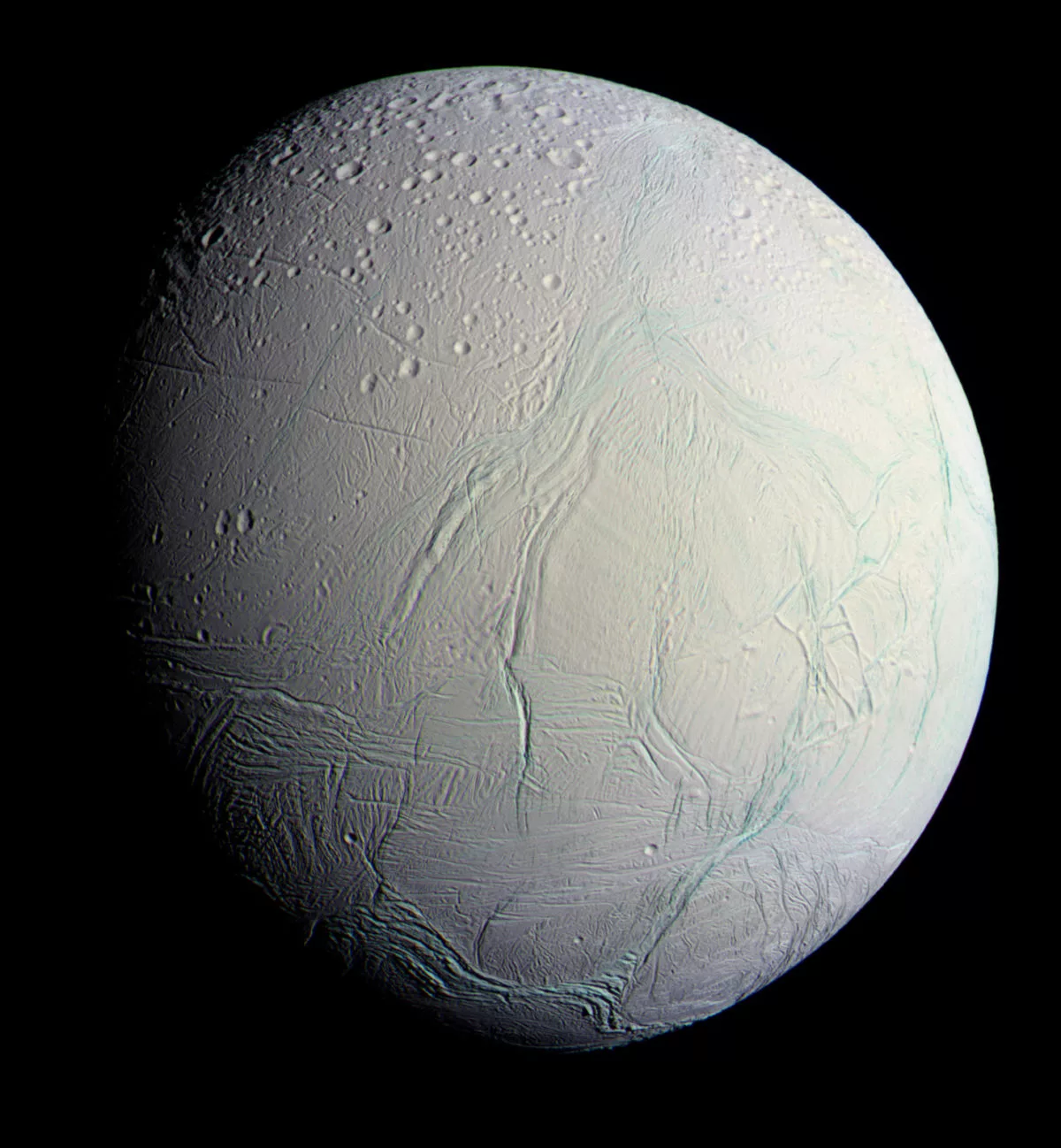
Enceladus in view
ENCELADUS IN VIEW This false-color image was assembled using infrared, green, and ultraviolet filtered images (IR3/GRN/UV3).Image: NASA / JPL-Caltech / SSI / Kevin M. Gill

Enceladus

Enceladus is one of Saturn’s 83 known moons. Small and icy, it wasn’t thought to be of particular importance until the Cassini spacecraft observed it up-close in 2005. As Cassini passed by Enceladus, it saw enormous plumes shooting out of the south pole, larger than any we’ve ever seen coming from Jupiter’s icy moons. Extremely large, active cryovolcanoes were spewing huge amounts of water, ice, and other material into space. Cassini counted more than 100 of the cryovolcanoes in the south pole area alone.

Like Jupiter’s geologically active moons, Enceladus orbits a very massive planet and has other massive moons on either side of it. The other moons tug on Enceladus, making its orbit around Saturn a bit uneven, which then gravitationally squeezes the moon and heats up its interior. The effect this has on Enceladus is enhanced because of its small size.

Enceladus is only about 500 kilometers (about 300 miles) in diameter. Europa, for comparison, is over 3,000 kilometers (more than 1,900 miles) across, and the rest of Jupiter’s major moons are even larger. Because it’s so small, when cracks form in Enceladus’ icy shell and the liquid water beneath gets pushed out, there’s a lot less gravity to hold it down. This allows geysers to reach hundreds of kilometers high.

A lot of this material falls back down as snow, giving Enceladus its bright, white coating. But the lighter particles escape the moon’s weak gravity and get swept up into orbit around Saturn. In fact, Saturn’s widest and outermost ring (called the E ring) is actually mostly made of material that was spewed out of Enceladus’ interior.
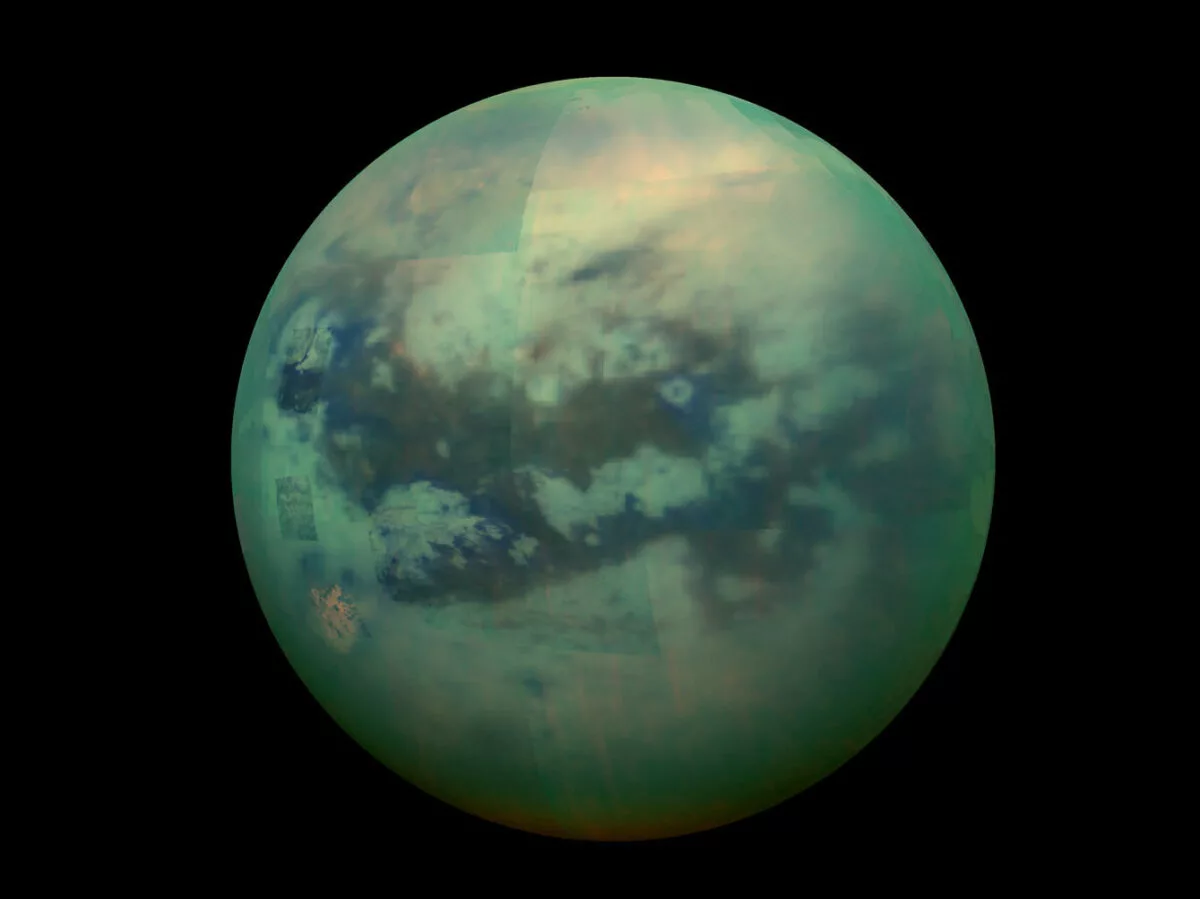
Titan beneath its atmosphere
TITAN BENEATH ITS ATMOSPHERE In this image from NASA’s Cassini spacecraft, you can see beneath the atmosphere of Saturn’s moon Titan to its surface features.Image: NASA/JPL/University of Arizona/University of Idaho

Titan

Saturn’s moon Titan is the second-largest in the Solar System, exceeding Mercury in size but not mass. Titan holds some other major standings as well: it is the only moon with a dense atmosphere, the only moon other than our own that a human-made spacecraft has ever landed on, and the only place in the Solar System other than Earth with liquid lakes, rivers, and seas on its surface.

Titan’s atmosphere stretches 100-200 kilometers (about 60-120 miles) high and completely obscures the moon’s surface. It is composed mostly of nitrogen, like Earth’s, along with a large amount of smoggy methane. This methane is thought to be constantly replenished from sources under the moon’s surface. Titan most likely formed with gasses trapped within its icy interior, which are gradually being released to the surface to form its atmosphere.

Methane is also present on Titan in liquid form. Titan is cold enough for methane to behave in much the same way water does on Earth: it rains from the clouds, collects in streams and rivers, erodes the landscape as it runs downstream, settles in lakes and seas, and evaporates to begin the cycle over again. Along with hundreds of smaller lakes, Titan has three large seas about the size of some of North America’s Great Lakes. 

NASA’s Cassini spacecraft, which orbited Saturn from 2004-2017, was accompanied by the Huygens lander, provided by the European Space Agency. A few months after Cassini entered into orbit around Saturn, it passed close to Titan and dropped off the Huygens probe. Huygens studied the Titanian atmosphere as it descended, and took images and measurements at its landing site for the rest of its short battery life. Like so many other missions, the discoveries Huygens made sparked even more questions that future missions like NASA’s Dragonfly might be able to answer.
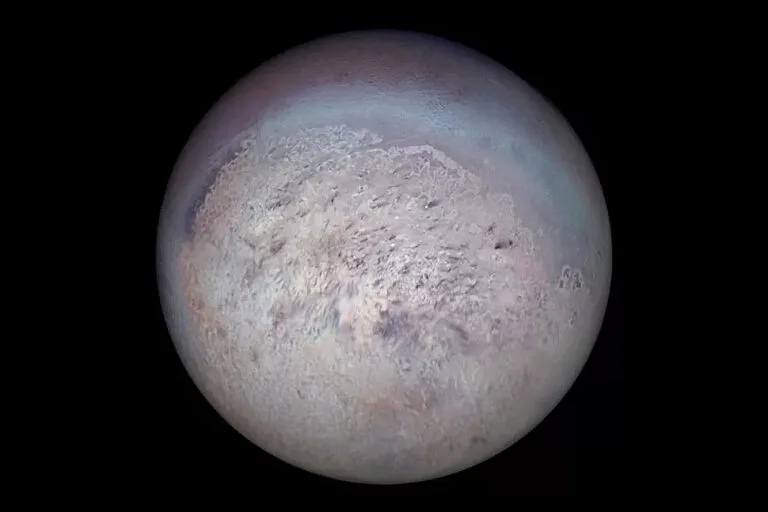
Triton from Voyager 2
TRITON FROM VOYAGER 2 NASA’s Voyager 2 spacecraft captured dark streaks produced by geysers visible on the icy surface of Triton’s south polar region.Image: NASA/JPL

Triton

Triton is the largest of Neptune’s 14 known moons and is thought to be a dwarf planet that was captured by Neptune’s gravity.

The main reason scientists think Triton started off as a dwarf planet is that Triton orbits Neptune the wrong way. If you’re viewing north as the top, Neptune spins counterclockwise on its axis. And because planets and their moons generally all form from the same swirling mass of stuff, the direction of swirl should remain the same — i.e. the moons should orbit the planet in the same direction the planet spins. Because Triton orbits Neptune in a clockwise direction, it’s unlikely that it formed alongside its host planet.

What’s more likely is that Triton formed on its own somewhere in the Kuiper Belt, a huge ring of smaller, icy objects such as comets that orbit the Sun beyond Neptune. Triton likely got gravitationally nudged by another large object into a trajectory that brought it close enough to Neptune to get captured by its gravity and pulled into orbit around the enormous planet. Neptune has fewer moons today than you’d expect for a planet its size, and scientists think it’s likely that when Triton entered the Neptune system it smashed into some of its moons, destroying them, and disrupted others’ orbits with its gravity, causing them to smash into and destroy each other.

When the Voyager 2 spacecraft flew by the Neptune system in 1989, it saw that Triton has fewer craters than expected and has evidence of cryovolcanic activity, with geysers shooting dark material up to several kilometers above the surface. This might suggest that Triton has a layer of liquid water underneath its surface, but having only had one chance to observe it up close, we can’t be sure.
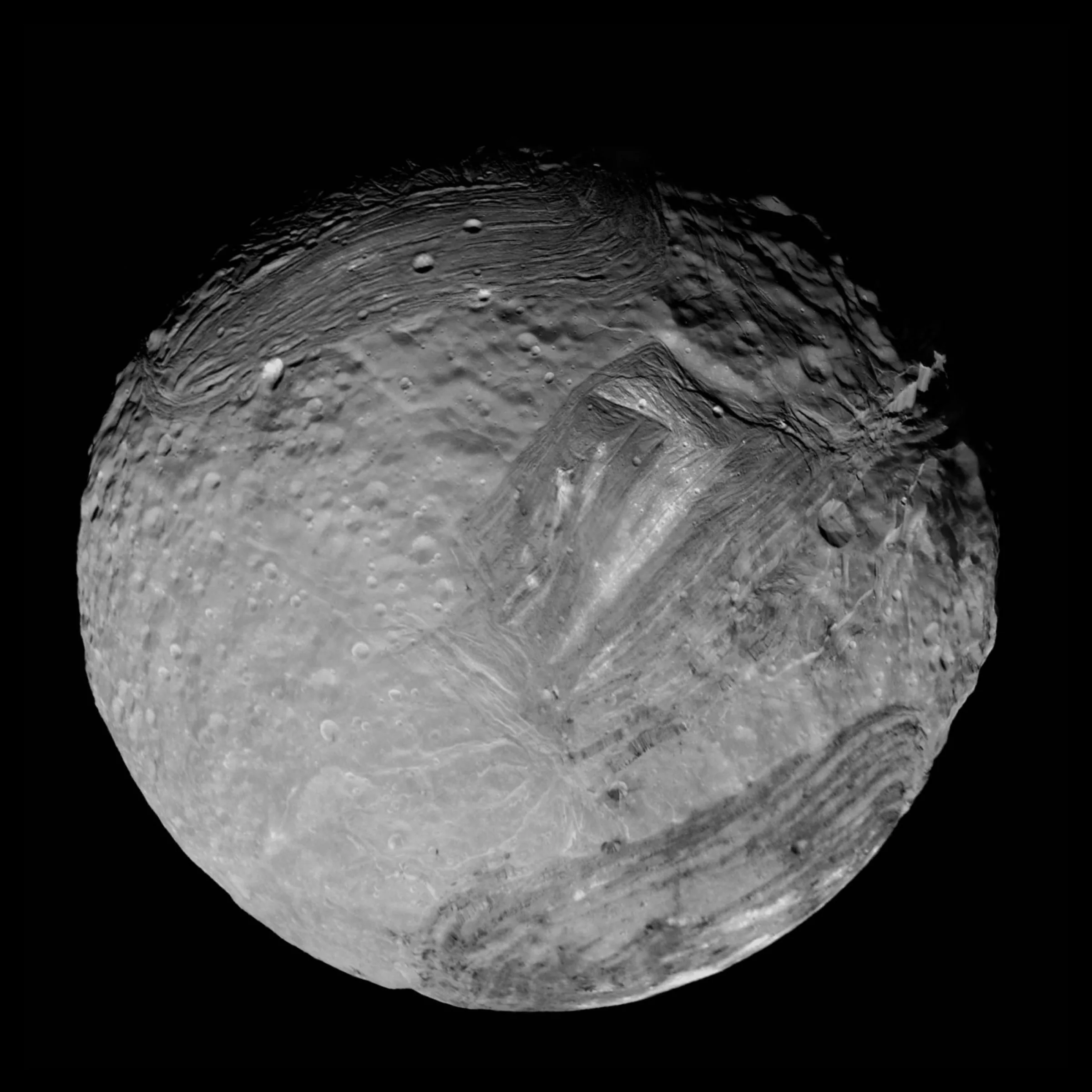
Voyager 2's best image of Miranda
VOYAGER 2’S BEST IMAGE OF MIRANDA Voyager 2’s images of Miranda were the highest-resolution of any of Uranus’ moons. Voyager 2 spent 17 minutes capturing numerous photos to make this high-resolution portrait.Image: NASA / JPL / Ted Stryk

Miranda

Miranda is one of the large moons of Uranus, and is made of a combination of ice and rock. Although it is massive enough to have rounded itself out gravitationally, it’s far from a perfect sphere. Miranda’s surface looks like it’s made up of different pieces stuck together, with wildly varying topographies on each section.

At some of the apparent junctions between sections there are huge cliffs, including the highest cliff in the Solar System, a staggering 20 kilometers (12 miles) high. With extremely low gravity (the whole moon is only a seventh the diameter of Earth’s Moon) if you dropped a rock off the top of this cliff it would take about 10 minutes to hit the ground. Miranda also has enormous canyons, some hundreds of kilometers long and tens of kilometers wide, and reaching 12 times deeper than the Grand Canyon.

Scientists still don’t know why Miranda is the way it is. It’s too small to have internal geological processes causing cliffs and canyons to form, but it’s possible that something happened in the early days of its formation. One theory is that after Miranda coalesced, as it cooled down it froze first on the outside and then on the inside — since water expands as it freezes, the inner layers could have then split apart the outer layers that had hardened first, causing all this jaggedness. Another possibility is that Miranda was smashed apart at some point in the past, but not hard enough to have obliterated it. Instead, the impact might have shattered it into small parts that then came back together gravitationally, reassembling into a sort of Frankenstein’s monster of a moon. 

The latest Planetary Science Decadal Survey from the National Academy of Sciences says a Uranus orbiter and probe should be the top priority for NASA’s next new large-scale mission. If NASA follows the Decadal’s advice (which it usually does) a mission to Uranus could launch as soon as 2031, providing an unprecedented opportunity to study Miranda and other fascinating Uranian moons up close.

And more

These are just a few of our favorite moons, but there are many more to explore. Plus, new moons are being found all the time. While this article was being written, 12 tiny new moons were discovered in orbit around Jupiter. And with observing technologies improving all the time, the list will keep growing.

From Mars’ lumpy moons Phobos and Deimos, to Saturn’s dumpling-esque moon Pan and Death Star-esque moon Mimas, to the asteroid moonlet Dimorphos that was smashed by a spacecraft, the moons of our Solar System have plenty in store for those who wish to learn about them.


By Kate Howells 
Source The Planetary Society

NASA Awards Simulation And Software Technology Services Contract

0
Credits: NASA

NASA has awarded the Simulation and Software Technology III contract to CACI Federal of Chantilly, Virginia, to provide simulation and software technology support and related services for the agency’s Johnson Space Center in Houston.

The single-award, indefinite-delivery/indefinite-quantity contract has the capability to issue cost-plus-fixed-fee and firm-fixed-priced task orders with a maximum not-to-exceed contract value of $150 million. The contract and period of performance begins Wednesday, March 1, and ends Sept. 30, 2027.

Under the contract, CACI will be responsible for providing simulation and software technology support and related services for the Johnson Space Center Engineering Directorate’s divisions for Software, Robotics, and Simulation; Aeroscience and Flight Mechanics; Propulsion and Power, and Avionics, as well as other organizations throughout NASA.

For information about NASA and other agency programs, visit: https://www.nasa.gov

Abbey Donaldson
NASA Headquarters, Washington
202-913-2184
[email protected]

Rebecca Wickes
Johnson Space Center, Houston
281-244-9465
[email protected]

By Roxana Bardan
Source NASA

Nasa’s Aerospace Safety Advisory Panel Releases 2022 Annual Report

0
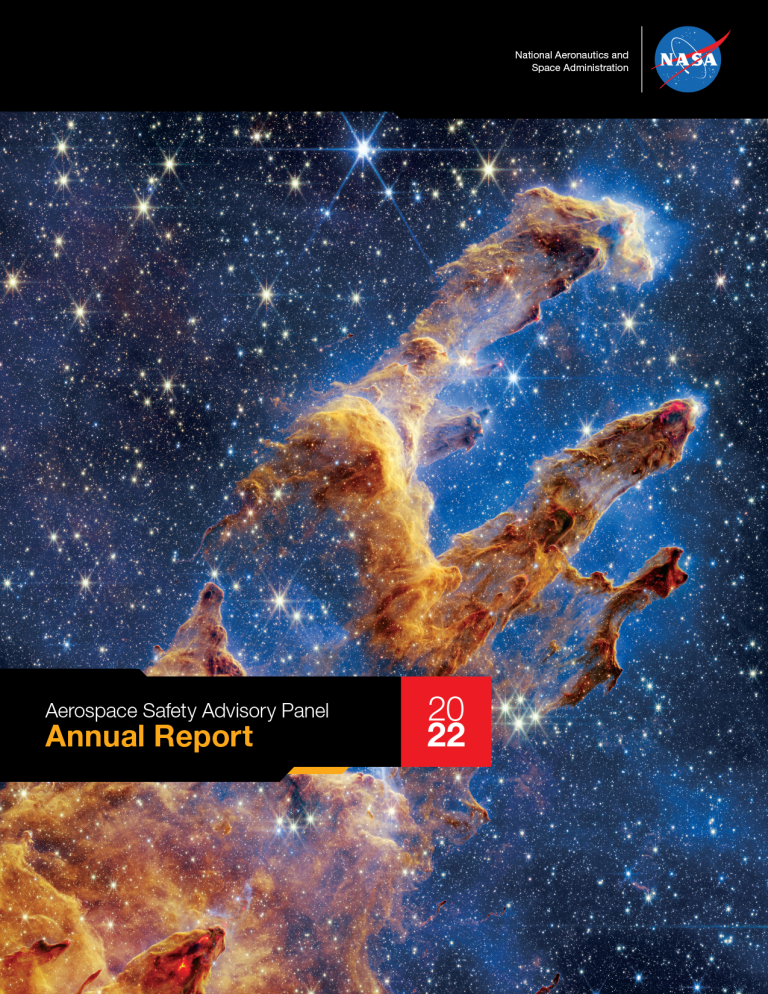
Cover of NASA’s Aerospace Safety Advisory Panel 2022 Annual Report. Credits: NASA

The Aerospace Safety Advisory Panel (ASAP), an advisory committee that reports to NASA and Congress, issued its 2022 annual report Tuesday, Feb. 7, 2023, examining the agency’s safety performance, accomplishments, and challenges over the past year. 

The report highlights 2022 activities and observations on NASA’s:

  • Strategic Vision and Guiding Principles
  • Agency Governance
  • Program Management

Throughout 2022, the ASAP engaged in a series of discussions to further explore the strategic recommendations made in 2021, while placing emphasis on the agency’s ongoing program work. As a result, the ASAP’s latest report includes information on the advances NASA made in its operations, decision-making, program and personnel management, and the tasks that still remain.

“The panel believes how NASA manages human space flight programs and other vital agency priorities will have a significant impact on mission outcomes,” said Dr. Patricia Sanders, ASAP chair. “We believe that NASA’s vision for the future, and a clear definition of how it will evaluate and make risk decisions, are extremely important factors in managing human space flight safety. This report focuses on the three formal recommendations made in 2021 and provides a look at where we have observed major progress and highlights the challenges that remain.”

The report spotlights progress toward the top three recommendations offered in 2021, which addressed steps the ASAP recommended to effectively manage integrated risks while developing and executing exploration campaigns. The steps include developing a strategic vision, managing the workforce for the evolving space exploration environment, and managing Artemis as an integrated program. The third recommendation is the ASAP’s proposal for governance cohesion across the agency to unify the workforce while achieving agency goals.

The 2022 report provides details on the concrete actions the agency should take to fulfill the 2021 recommendations. As for agency governance, the commentary focuses on transparency while modeling responsibility and accountability for safety and risk management.

The report is based on the panel’s 2022 fact-finding and quarterly public meetings; insight visits and meetings; direct observations of NASA operations and decision-making processes; discussions with NASA management, employees, and contractors; and the panel members’ own experiences.

Congress established the panel in 1968 to provide advice and make recommendations to the NASA administrator on safety matters after the 1967 Apollo 1 fire claimed the lives of three American astronauts.

For more information about the ASAP, view the 2022 report or reports from previous years, visit:

https://oiir.hq.nasa.gov/asap/

Gerelle Dodson
Headquarters, Washington
202-358-4637
[email protected]

Last Updated: Feb 8, 2023

By Roxana Bardan
Source NASA

A Molten Rock Layer Is Hidden Under Earth’s Tectonic Plates

0
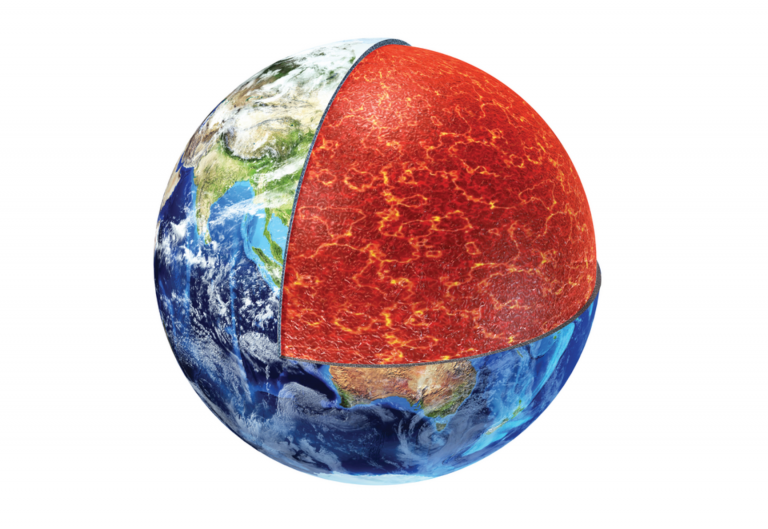
The Earth with the upper mantle revealed. Researchers at The University of Texas at Austin have discovered a previously unknown layer of partly molten rock in a key region just below the tectonic plates. CREDIT Leonello Calvetti/Dreamstime

Scientists have discovered a new layer of partly molten rock under the Earth’s crust that might help settle a long-standing debate about how tectonic plates move.

Scientists have discovered a new layer of partly molten rock under the Earth’s crust that might help settle a long-standing debate about how tectonic plates move.

Researchers had previously identified patches of melt at a similar depth. But a new study led by The University of Texas at Austin revealed for the first time the layer’s global extent and its part in plate tectonics.

The research was published Feb. 6, 2023, in the journal Nature Geoscience.

The molten layer is located about 100 miles from the surface and is part of the asthenosphere, which sits under the Earth’s tectonic plates in the upper mantle. The asthenosphere is important for plate tectonics because it forms a relatively soft boundary that lets tectonic plates move through the mantle.

The reasons why it is soft, however, are not well understood. Scientists previously thought that molten rocks might be a factor. But this study shows that melt, in fact, does not appear to notably influence the flow of mantle rocks.

“When we think about something melting, we intuitively think that the melt must play a big role in the material’s viscosity,” said Junlin Hua, a postdoctoral fellow at UT’s Jackson School of Geosciences who led the research. “But what we found is that even where the melt fraction is quite high, its effect on mantle flow is very minor.”

According to the research, which Hua began as a graduate student at Brown University, the convection of heat and rock in the mantle are the prevailing influence on the motion of the plates. Although the Earth’s interior is largely solid, over long periods of time, rocks can shift and flow like honey.

Showing that the melt layer has no influence on plate tectonics means one less tricky variable for computer models of the Earth, said coauthor Thorsten Becker, a professor at the Jackson School.

“We can’t rule out that locally melt doesn’t matter,” said Becker, who designs geodynamic models of the Earth at the Jackson School’s University of Texas Institute for Geophysics. “But I think it drives us to see these observations of melt as a marker of what’s going on in the Earth, and not necessarily an active contribution to anything.”

The idea to look for a new layer in Earth’s interior came to Hua while studying seismic images of the mantle beneath Turkey during his doctoral research.

Intrigued by signs of partly molten rock under the crust, Hua compiled similar images from other seismic stations until he had a global map of the asthenosphere. What he and others had taken to be an anomaly was in fact commonplace around the world, appearing on seismic readings wherever the asthenosphere was hottest.

The next surprise came when he compared his melt map with seismic measurements of tectonic movement and found no correlation, despite the molten layer encompassing almost half the Earth.

“This work is important because understanding the properties of the asthenosphere and the origins of why it’s weak is fundamental to understanding plate tectonics,” said coauthor Karen Fischer, a seismologist and professor at Brown University who was Hua’s Ph.D. advisor when he began the research.

The research was funded by the U.S. National Science Foundation. Collaborating institutions included the UT Oden Institute for Computational Engineering and Sciences and Cornell University.

Asthenospheric low-velocity zone consistent with globally prevalent partial melting, Nature Geoscience


By Keith Cowing
Source SpaceRef

An Orbital Sunrise

0
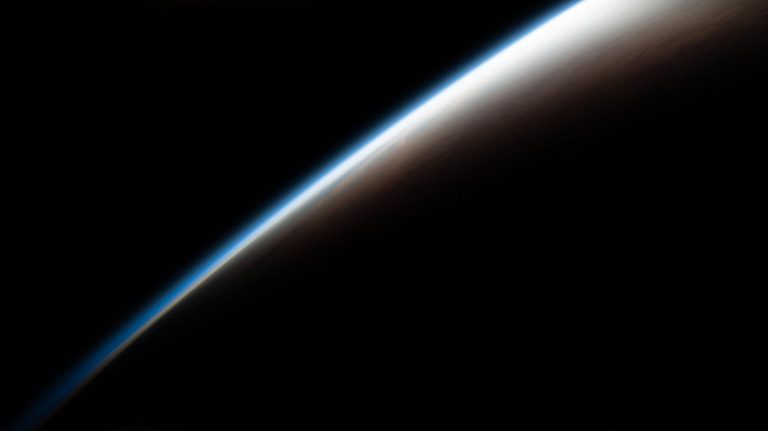
An Orbital Sunrise. NASA

An orbital sunrise begins illuminating Earth’s atmosphere and its horizon in this photograph from the International Space Station.

The ISS orbited 268 miles above the south Atlantic Ocean off the coast of Argentina.

iss068e044995 (Feb. 1, 2023) — larger image

By Keith Cowing
Source SpaceRef

Western Australia, Australia Ase Seen by Sentinel-2

0

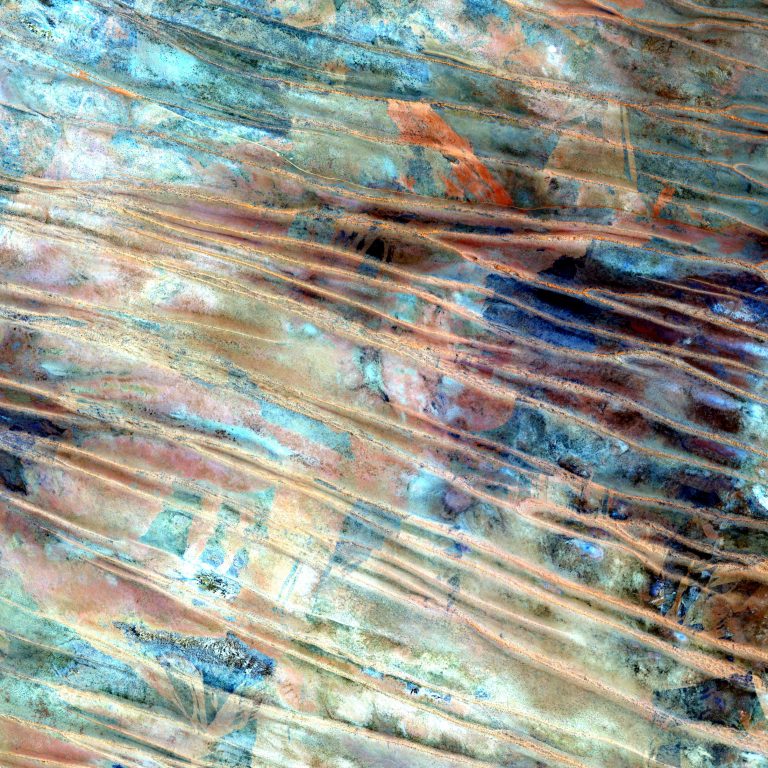
Western Australia, Australia (22.2°S 123.5°E), 10 Jan 2023 ESA

larger image


By Keith Cowing
Source SpaceRef

Koichi Wakata Performs A Space Walk Outside The International Space Station

0
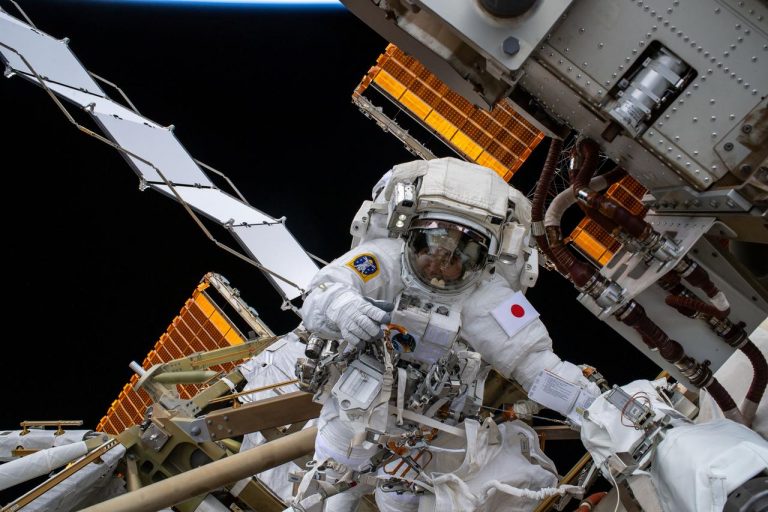
Koichi Wakata Performs A Space Walk. NASA

Expedition 68 Flight Engineer Koichi Wakata of the Japan Aerospace Exploration Agency (JAXA) is pictured in his Extravehicular Mobility Unit, or spacesuit, during his second spacewalk.

He and fellow spacewalker Nicole Mann (out of frame) of NASA installed a modification kit on the International Space Station’s starboard truss structure that will enable the future installation of the orbiting lab’s next roll-out solar array.

iss068e045124 larger image

By Keith Cowing
Source SpaceRef

Channels In Nereidum Montes On Mars

0
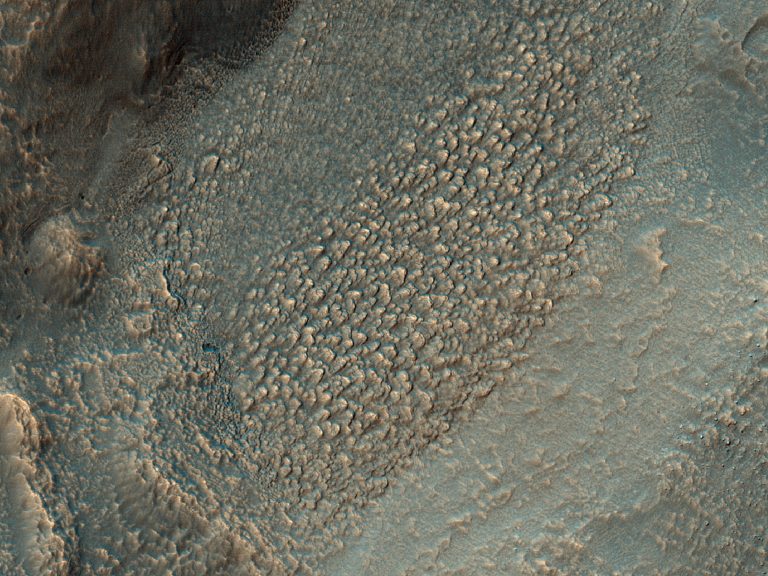
Channels In Nereidum Montes On Mars. NASA

The objective of this observation is to examine channels at the top of an old crater.

Here it seems that a channel runs along the outside of the rim and a short distance away, channels begin inside the crater. Pictures like this may help us understand the overall drainage in this region.

ID: ESP_076132_1435
date: 23 October 2022
altitude: 251 km

https://uahirise.org/hipod/ESP_076132_1435NASA/JPL-Caltech/UArizona

By Keith Cowing
Source SpaceRef

The Himalayas As viewed From The ISS

0

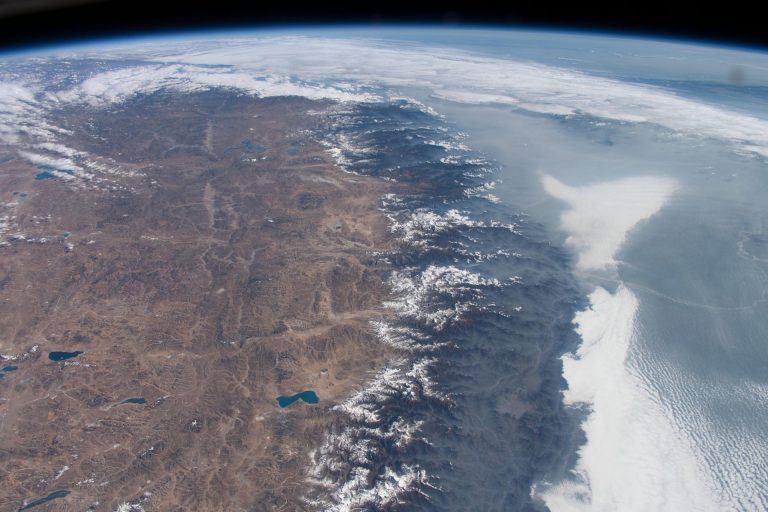
The Himalayas As viewed From The ISS – NASA

The Himalayas, pictured from the International Space Station at an altitude of 259 miles, separate China’s Tibetan Plateau from the Indian subcontinent countries of Pakistan, India, Nepal, and Bhutan.

Date Created: 2023-02-01 iss068e044967 (Feb. 1, 2023) – larger image

By: Keith Cowing
Source: Spaceref

Space Center Houston’s Space Exploration Educators Conference February 9-11

0

Learn from Aerospace Experts and Earn Continuing Education Credits 

HOUSTON, TX (February 6, 2023) – Space Center Houston will host one of the nation’s leading science educational opportunities for educators at the 29th Space Exploration Educators Conference (SEEC), Feb. 9-11. Educators from across the globe will gather at Space Center Houston to hear from leading NASA experts and keynote speakers.  

SEEC is one of Space Center Houston’s signature outreach learning opportunities for STEM educators. The three-day conference welcomes K-12th grade instructors of all disciplines to explore topics in aerospace held in person and virtually. Attendees can enjoy on-site and virtual tours, network with space industry leaders, receive on-demand content and earn up to 24 hours of continuing education credit.    

At the 2023 SEEC, educators will hear from keynote speakers Mike Kincaid, Associate Administrator at NASA Office of STEM Engagement; Megan McArthur, Astronaut and Chief Science Officer at Space Center Houston; and Andrew Aldrin, son of Apollo 11 and Gemini 12 astronaut Buzz Aldrin who serves as President of the Aldrin Family Foundation. Guest panelists include Nancy Conrad, wife to late astronaut Pete Conrad and founder of the Conrad Foundation, and CEO of Blue Origin, Bob Smith.  

The purpose of SEEC is to provide exciting new insights into what our current science and human space exploration missions are achieving. Educators can access the latest teaching tools that will help fuel their students’ passion for science, technology, engineering, and mathematics. Attendees will gain cross-curriculum ideas and ready-to-implement classroom activities to share.   

“We are excited to bring people and space closer through a truly unique educational opportunity at Space Center Houston, one of the nation’s leading science education resources,” said Daniel Newmyer, vice president of education research and collections at Space Center Houston.  

“This year, we hope to inspire educators to seek greater knowledge about the future of space exploration and through the possibilities of STEM curriculums so they can go out and inspire students in the classroom.”  

A new session, “Leadership Track,” reserved for school administrators, has been added to this year’s conference encouraging participants to hear from the Human Performance Accelerator Lab (HPAL) – a transformative leadership program benefiting different groups of service.  

In previous years, SEEC has welcomed over 400 educators from regions of South America, Asia and Australia. This year, visitors from Latin America can enjoy a $25 off access to SEEC’s conference, and attendees visiting from South Africa can also enjoy the $25 off deal and up to 50 free virtual sessions. 

At this year’s conference, one attendee will receive the Cherri Brinley Outstanding Educator award, named in honor of the 14-year SEEC veteran. The Houston-area teacher motivated fellow educators and students to pursue space exploration learning while battling terminal cancer.  

To register for the 29th Space Exploration Educators Conference, visit spacecenter.org/seec or contact SEEC at [email protected] or 281-244-2149. 

# # #  

About Space Center Houston  

Space Center Houston’s shared purpose is to bring people and space closer together. Over 1.1 million visitors and more than 250,000 students and educators visit each year to connect with the significance of space exploration to pursue a path in STEM or follow along as incredible feats of human spaceflight continue to make new discoveries. Space Center Houston is owned by the Manned Space Flight Education 501(c)3 nonprofit organization and generates an annual $118M economic impact to the Greater Houston area. Space Center Houston is a Smithsonian Affiliate, the Official Visitor Center of NASA Johnson Space Center and a Certified Autism Center. Learn more at spacecenter.org.


Contact:

Alicia Whitley  
(281) 794-4972 
[email protected]  

Source: Space Center Houston