
Home Blog Page 88

New Consortium To Enable Zero Emission Aviation To Take Off In Aotearoa New Zealand

0

Six international businesses have launched a new consortium to bring zero-emission aviation to life in New Zealand.

Christchurch, NZ, 10 February 2023 – The Hydrogen Consortium’s vision is to support the country to pioneer the commercial deployment of  green hydrogen-powered aircraft.  

The partners are international aerospace leader Airbus, global green energy company Fortescue Future  Industries (FFI), leading world airline Air New Zealand, next generation energy company Hiringa  Energy, liquid hydrogen solution pioneers Fabrum and New Zealand’s Christchurch Airport. 

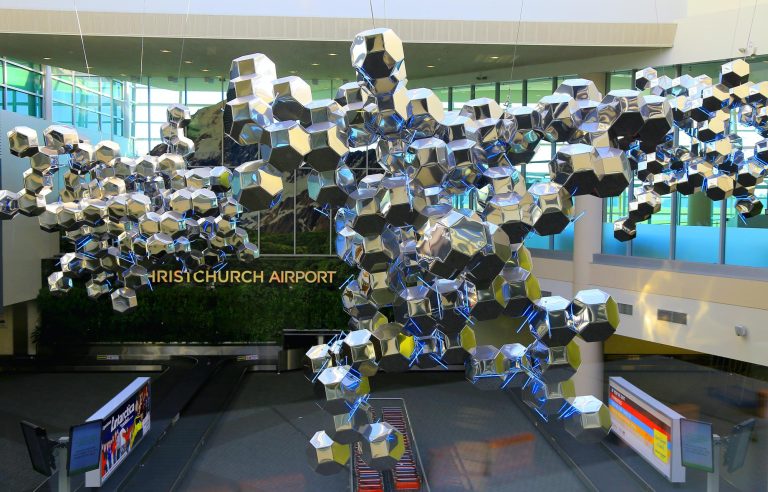
The Hydrogen Consortium was launched at Christchurch Airport, which is developing a 400-hectare  renewable energy precinct called Kowhai Park. 

Speaking at the launch, Christchurch Airport chief executive Justin Watson said climate change has  further strengthened the international aviation sector’s resolve to decarbonise. 

“Major progress is being made,” Watson says. “There have been successful test flights of zero emission  aircraft already. There are new sustainable aviation fuels that can cut emissions by up to 80% and a huge  amount of research is going into how to commercialise these solutions.  

“The Hydrogen Consortium will see some of the world’s best experts collaborate on one of the most  promising zero emission fuels – green hydrogen.”  

Airbus is working to develop and put into service the world’s first hydrogen-powered commercial  passenger aircraft by 2035. 

In close cooperation with its partners, Airbus will factor in aviation’s requirement for hydrogen in New  Zealand. Using its hydrogen hubs at airports concept, Airbus will engage with aviation and non-aviation  players to perform a complete assessment of energy supply needs to enable the operation of hydrogen powered aircraft. 

Airbus’ Vice President of the ZEROe Ecosystem Karine Guenan says the journey to sustainable aviation  requires an entire ecosystem to be put into place – one that will involve key players from a variety of  sectors. 

“The consortium we are building brings together a number of pioneering partners with a common interest:  to make hydrogen-powered aviation in New Zealand a reality.” 

Christchurch liquid hydrogen solutions company Fabrum recently designed the hydrogen-powered  technology for the Emirates Team New Zealand chase boat (Chase Zero) and has developed lightweight  liquid hydrogen fuel tank technology for aviation use. 

Co-founder Christopher Boyle is in no doubt the future of clean aviation rests on the shoulders of green  hydrogen.  

“The consortium pulls together some of world’s best experts in green hydrogen – having all of these  organisations around the same table will turbocharge what we all learn. Together we’ll make a big  difference in taking zero emission aviation forward which is good news to anyone who wants to fly  sustainably in the future,” said Christopher Boyle.  

Hiringa Energy is a pioneering green hydrogen developer, producer and supplier. 

It’s constructing key infrastructure to support New Zealand’s transition to green hydrogen in multiple  transport sectors including aviation, marine and heavy road transport. Hiringa’s first four production and  high-capacity refuelling stations are coming online in 2023, with nationwide expansion planned from  2024.  

Its chief executive Andrew Clennett said green hydrogen adoption is accelerating around the world, and  New Zealand is well positioned to be a leader in this space. 

“There are green hydrogen-fuelled buses, trucks, trains and boats already in service – some of them we  have been refuelling here in New Zealand, including the Emirates Team New Zealand chase boat.  Aircraft are a key next step, and this consortium has formed to ensure these planes have the  infrastructure and hydrogen supply they will need to take off here. Our team is very motivated to leverage  our hands-on experience bringing green hydrogen to market to make this transition happen” 

A focus on research; the potential for trial flights in New Zealand 

Over the next six months the partners will work together to design a hydrogen ecosystem for aviation in  New Zealand.  

The first phase will focus on research, which will be completed by the end of 2023. 

The consortium will develop a vision for hydrogen aviation in New Zealand, examine the hydrogen supply  chain and its challenges, assess the local aviation market’s projected hydrogen needs to 2050, and  develop a pathway of policies, regulations and incentives to promote the development of hydrogen  aviation.  

The second phase will focus on whether hydrogen aircraft test flights can be held in New Zealand.  

Air New Zealand has two ambitious goals – to fly its first commercial demonstrator flight from 2026 and  begin replacing its Q300 Turboprop fleet from 2030 with low emission aircraft.  

The airline’s Chief Sustainability Officer Kiri Hannifin said the consortium’s work will be important to Air  New Zealand achieving those ambitions. 

“To fly hydrogen-powered aircraft in New Zealand we will need an aviation ecosystem that can support it.  The Hydrogen Consortium brings together energy, aircraft, airline operator and airport expertise with the  aim of bringing this to life. We can’t wait to see what we can achieve together,” said Ms Hannifin. 

Fortescue Future Industries (FFI) CEO Mark Hutchinson said the coming together of such innovative organisations marked a significant moment in the pursuit of fossil fuel-free air travel.  

“Fortescue Future Industries is a global green energy and technology business that will bring to the  consortium its knowhow in mega-scale renewables and zero-emissions green hydrogen production and  delivery,” Mr Hutchinson said. “We are on a mission to eliminate fossil fuels, including from the aviation  industry, and green hydrogen is the key to achieving this. 

“Green hydrogen and green energy is the practical, implementable solution we all need now and we must  race to deliver it at scale. The consortium members all have extraordinary expertise in and commitment to the decarbonisation of air travel and together we believe we can develop a pathway to New Zealand  becoming a global trailblazer in this pursuit,” concluded Mark Hutchinson. 
NASA Selects Blue Origin To Launch Mars’ Magnetosphere Study Mission

0

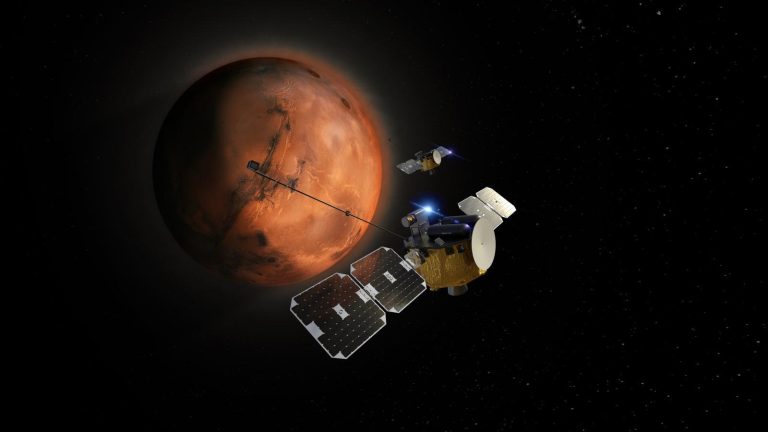
Illustration of the ESCAPADE spacecraft in orbit around Mars.
Credits: Credits: Rocket Lab USA/UC Berkeley

NASA has awarded Blue Origin, LLC of Kent, Washington, a task order to provide launch service for the agency’s Escape and Plasma Acceleration and Dynamics Explorers (ESCAPADE) mission as part of the agency’s Venture-Class Acquisition of Dedicated and Rideshare (VADR) launch services contract.

ESCAPADE will launch on Blue Origin’s New Glenn rocket from Space Launch Complex-36 at Cape Canaveral Space Force Station in Florida. Launch is targeted for late 2024Blue Origin is one of 13 companies NASA selected for VADR contracts in 2022. NASA’s Launch Services Program, based at the agency’s Kennedy Space Center in Florida, manages the VADR contracts. As part of VADR, the fixed-price indefinite-delivery/indefinite-quantity contracts have a five-year ordering period with a maximum total value of $300 million across all contracts. 

ESCAPADE will study Mars’ magnetosphere – the magnetized area of space around the planet – using two identical small spacecraft, which will provide simultaneous two-point observations. The spacecraft will help provide researchers a better understanding of how the magnetosphere interacts with the solar wind, and how energy and plasma enter and leave the magnetosphere. Each satellite will carry three instruments: a magnetometer for measuring magnetic field, an electrostatic analyzer to measure ions and electrons, and a Langmuir probe for measuring plasma density and solar extreme ultraviolet flux.

It will take ESCAPADE about 11 months to arrive at Mars after leaving Earth’s orbit, where both spacecraft will spend several months adjusting their orbits before they are in position to best capture data about the magnetosphere. Studying different magnetospheres gives scientists a better understanding of space weather, which can protect astronauts and satellites both as they orbit Earth and explore the solar system. ESCAPADE is part of the NASA Small Innovative Missions for Planetary Exploration program.

Building on NASA’s previous procurement efforts to foster development of new launch vehicles for NASA payloads, VADR provides FAA-licensed commercial launch services for payloads that can tolerate higher risk. By using a lower level of mission assurance, and commercial best practices for launching rockets, these highly flexible contracts help broaden access to space through lower launch costs.

Joshua Finch / Kiana Raines
Headquarters, Washington
202-358-1100
[email protected] / [email protected]

Leejay Lockhart
Kennedy Space Center, Fla.
321-501-7575
[email protected]

By: Claire O’Shea
Source: NASA

Bringing More Power To Space Station

0

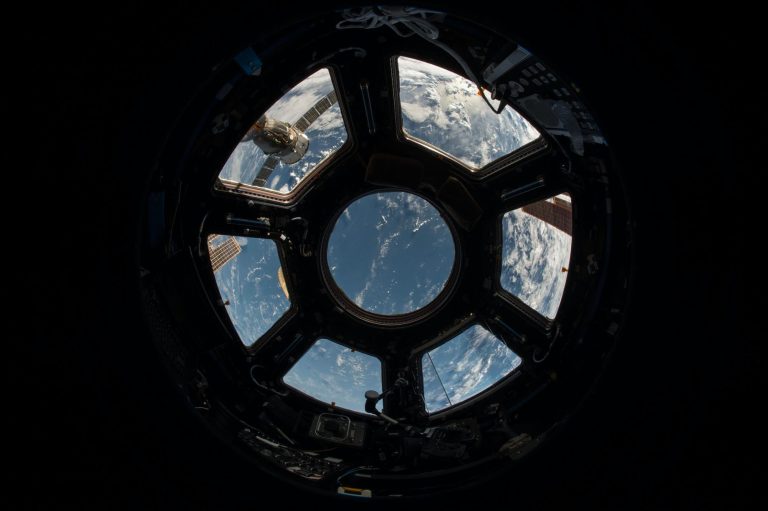
Japan Aerospace Exploration Agency astronaut Koichi Wakata is pictured in his Extravehicular Mobility Unit, or spacesuit, during his spacewalk on Feb. 2, 2023. He and NASA astronaut Nicole Mann, who took this photo, installed a modification kit on the International Space Station’s starboard truss structure that will enable the future installation of the orbiting lab’s next roll-out solar array. Four solar arrays, or iROSAs, have been installed so far, and two additional arrays will be mounted to the installed platforms during future spacewalks.

Learn more about station activities by following the space station blog.

Image Credit: NASA/Nicole Mann

By: Monika Luabeya
Source: NASA

NASA Selects Scientific Support For Goddard Institute Of Space Studies

0

NASA has selected Autonomic Integra of Gaithersburg, Maryland, for specialized scientific support services to the Goddard Institute for Space Studies (GISS) in New York.

This is a cost-plus fixed-fee completion contract with one base year and four one-year options to extend the contract through Feb 29, 2028.The total value of the contract, including options, is approximately $20,875,025.

This contract will provide specialized scientific support in the following areas: scientific programming and analysis; systems programming analysis including systems programming, data handling, and data teleprocessing; computer facility operations including computer security; library and publications services; logistical support; and project management support.

GISS is a laboratory in the Earth Sciences Division of NASA’s Goddard Space Flight Center in Greenbelt, Maryland, and a unit of the Columbia University Earth Institute. For more information about GISS, visit:

http://www.giss.nasa.gov/

Cynthia M. O’Carroll
Goddard Space Flight Center, Md.
240-684-0821
[email protected]

By: Jamie Adkins
Source: NASA

What Does A Bear Have In Common With A Megatsunami?

0

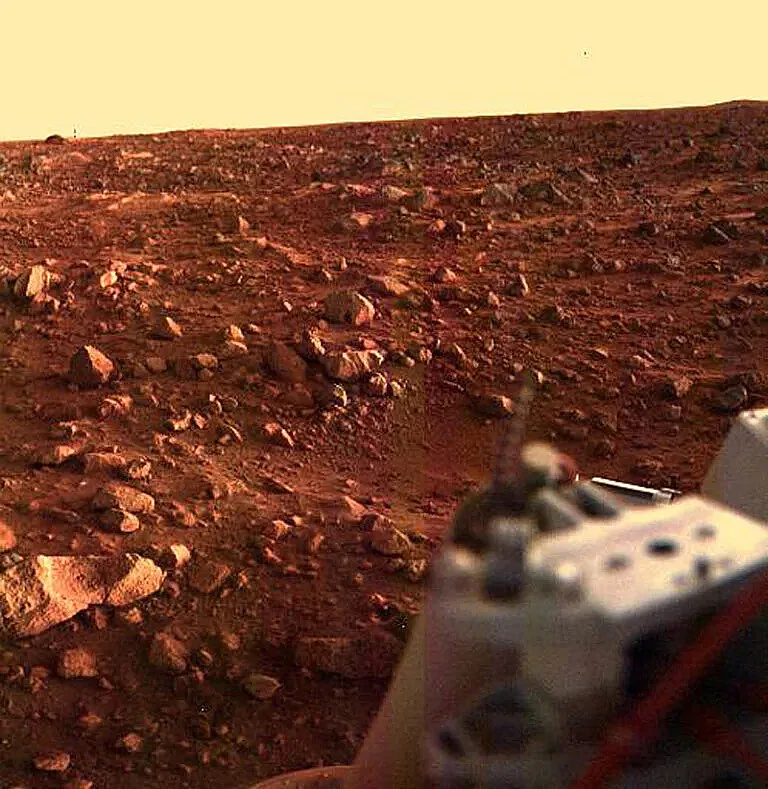
This vintage space snapshot represents a scientific question that researchers are still trying to answer. NASA’s Viking Lander 1 took this photo shortly after touching down on the surface of Mars in August 1976. Viking landed in a channel was once filled with water, so the mission team expected to see smooth terrain showing the effects of long-ago erosion. Instead, they saw the angular boulders visible in this image. One possible explanation is that they were carried there by a megatsunami. Learn more about this fascinating possibility in this week’s Planetary Radio, featuring a conversation with Mars expert, geologist, and Outer Space Institute Fellow Tanya Harrison. Image credit: NASA/JPL-Caltech.

Listen now

Eagle’s Nest

0

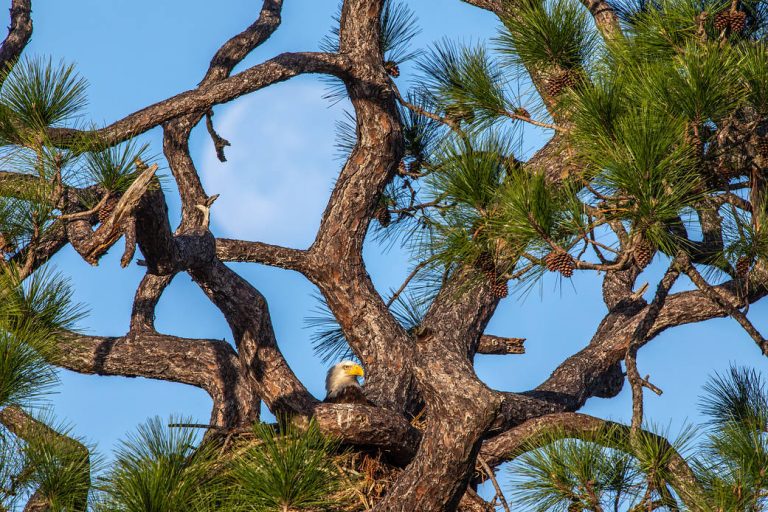
An American bald eagle occupies a nest near Kennedy Parkway North at NASA’s Kennedy Space Center on Feb. 8, 2023. Each year, eagles take up winter residence at the Florida spaceport, breeding and raising a new generation. The center shares a boundary with the Merritt Island National Wildlife Refuge, home to more than 1,500 species of plants and animals, and 15 federally listed species.

Image Credit: NASA/Ben Smegelsky

By Monika Luabeya
Source NASA

NASA’s ShadowCam Images Permanently Shadowed Regions from Lunar Orbit

0

With the success of NASA’s Artemis I launch, the previously unexplored shadowy regions near the lunar South Pole where Artemis astronauts will land in 2025, are more within our reach than ever before.

One instrument that will support these future lunar exploration efforts is a hypersensitive optical camera called ShadowCam. ShadowCam is one of six instruments on board the Korea Aerospace Research Institute (KARI)’s Korea Pathfinder Lunar Orbiter, known as Danuri, which launched in August 2022 and entered lunar orbit last December.

Previous cameras in lunar orbit were designed to acquire images of sunlit surfaces. Developed by Malin Space Science Systems and Arizona State University, ShadowCam’s primary function is to collect images within permanently shadowed regions near the lunar poles. These areas never receive direct sunlight and are thought to contain water ice – a significant resource for exploration that can be used as fuel or oxygen and for other habitation applications.

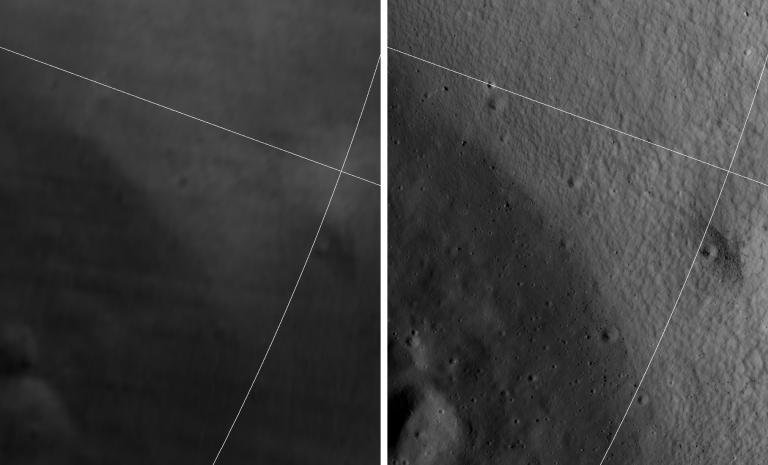
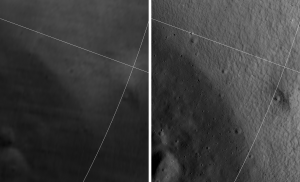
Building on cameras developed for NASA’s Lunar Reconnaissance Orbiter, ShadowCam is 200 times more light-sensitive and is therefore able to capture detailed images within permanently shadowed regions – even in the absence of direct light – by using the light that is reflected off nearby geologic features such as mountains or the walls of craters.

Images of the permanently shadowed wall and floor of Shackleton Crater captured by Lunar Reconnaissance Orbiter Camera (LROC) (left) and ShadowCam (right). Each panel shows an area that is 5,906 feet (1,800 meters) wide and 7,218 feet (2,200 meters) tall. Image Credit: NASA/KARI/ASU

In addition to mapping the light reflected by permanently shadowed regions to search for evidence of ice deposits, ShadowCam will also observe seasonal changes and measure the terrain inside the craters, all in service of science and future lunar exploration efforts. The high-resolution images could help scientists learn more about how the Moon has evolved, how water is trapped and preserved in PSRs, and could help inform site selection and exploration planning for Artemis missions.

Since Danuri entered lunar orbit, ShadowCam has been in an operational checkout period, during which it has been collecting dozens of images of the lunar polar regions, including an image of Shackleton Crater, to calibrate and test its functionality. Following this checkout period, which will conclude later this month, ShadowCam will start its campaign to capture images of shadowed terrain as Danuri routinely passes over them during the planned mission of 11 months.

Read more about ShadowCam and Danuri.

By Vanessa Lloyd
Source NASA

Hubble Captures The Start Of A New Spoke Season At Saturn

0

MYSTERIOUS FEATURES WERE FIRST SEEN DECADES AGO BY VOYAGER SPACECRAFT

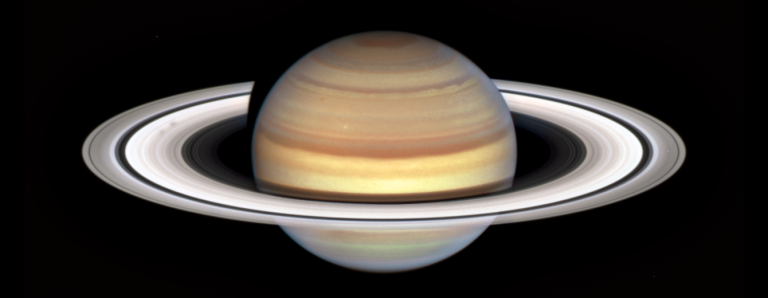
Since their discovery by NASA’s Voyager mission in the 1980s, temporary “spoke” features across Saturn’s rings have fascinated scientists, yet eluded explanation. They have been observed in the years preceding and following the planet’s equinox, becoming more prominent as the date approaches.

Saturn’s upcoming autumnal equinox of the northern hemisphere on May 6, 2025, means that spoke season has come again. NASA’s Hubble Space Telescope will be on the job studying the spokes, thanks to time dedicated to Saturn in the mission’s ongoing Outer Planet Atmospheres Legacy (OPAL) program. Are the smudgy features related to Saturn’s magnetic field and its interaction with the solar wind, as prevailing theory suggests? Confirmation could come in this spoke season, as scientists combine archival data from NASA’s Cassini mission with new Hubble observations.

FULL ARTICLE

New images of Saturn from NASA’s Hubble Space Telescope herald the start of the planet’s “spoke season” surrounding its equinox, when enigmatic features appear across its rings. The cause of the spokes, as well as their seasonal variability, has yet to be fully explained by planetary scientists.

Like Earth, Saturn is tilted on its axis and therefore has four seasons, though because of Saturn’s much larger orbit, each season lasts approximately seven Earth years. Equinox occurs when the rings are tilted edge-on to the Sun. The spokes disappear when it is near summer or winter solstice on Saturn. (When the Sun appears to reach either its highest or lowest latitude in the northern or southern hemisphere of a planet.) As the autumnal equinox of Saturn’s northern hemisphere on May 6, 2025, draws near, the spokes are expected to become increasingly prominent and observable.

The suspected culprit for the spokes is the planet’s variable magnetic field. Planetary magnetic fields interact with the solar wind, creating an electrically charged environment (on Earth, when those charged particles hit the atmosphere this is visible in the northern hemisphere as the aurora borealis, or northern lights). Scientists think that the smallest, dust-sized icy ring particles can become charged as well, which temporarily levitates those particles above the rest of the larger icy particles and boulders in the rings.

The ring spokes were first observed by NASA’s Voyager mission in the early 1980s. The transient, mysterious features can appear dark or light depending on the illumination and viewing angles.

“Thanks to Hubble’s OPAL program, which is building an archive of data on the outer solar system planets, we will have longer dedicated time to study Saturn’s spokes this season than ever before,” said NASA senior planetary scientist Amy Simon, head of the Hubble Outer Planet Atmospheres Legacy (OPAL) program.

Saturn’s last equinox occurred in 2009, while NASA’s Cassini spacecraft was orbiting the gas giant planet for close-up reconnaissance. With Cassini’s mission completed in 2017, and the Voyager spacecrafts long gone, Hubble is continuing the work of long-term monitoring of changes on Saturn and the other outer planets.

“Despite years of excellent observations by the Cassini mission, the precise beginning and duration of the spoke season is still unpredictable, rather like predicting the first storm during hurricane season,” Simon said.

While our solar system’s other three gas giant planets also have ring systems, nothing compares to Saturn’s prominent rings, making them a laboratory for studying spoke phenomena. Whether spokes could or do occur at other ringed planets is currently unknown. “It’s a fascinating magic trick of nature we only see on Saturn —for now at least,” Simon said.

Hubble’s OPAL program will add both visual and spectroscopic data, in wavelengths of light from ultraviolet to near-infrared, to the archive of Cassini observations. Scientists are anticipating putting these pieces together to get a more complete picture of the spoke phenomenon, and what it reveals about ring physics in general.

The Hubble Space Telescope is a project of international cooperation between NASA and ESA. NASA’s Goddard Space Flight Center in Greenbelt, Maryland, manages the telescope. The Space Telescope Science Institute (STScI) in Baltimore conducts Hubble science operations. STScI is operated for NASA by the Association of Universities for Research in Astronomy, in Washington, D.C.

Credits

RELEASE: NASA, ESA, STScI

MEDIA CONTACT:

Leah Ramsay
Space Telescope Science Institute, Baltimore, Maryland

Ray Villard
Space Telescope Science Institute, Baltimore, Maryland

SCIENCE CONTACT:

Amy Simon
NASA Goddard Space Flight Center, Greenbelt, Maryland

NASA’s NuSTAR Telescope Reveals Hidden Light Shows On The Sun

0
Wavelengths of light from three space observatories are overlapped to provide a unique view of the Sun. Credit: NASA/JPL-Caltech/JAXA

Even on a sunny day, human eyes can’t see all the light our nearest star gives off. A new image displays some of this hidden light, including the high-energy X-rays emitted by the hottest material in the Sun’s atmosphere, as observed by NASA’s Nuclear Spectroscopic Telescope Array (NuSTAR). While the observatory typically studies objects outside our solar system – like massive black holes and collapsed stars – it has also provided astronomers with insights about our Sun.

In the composite image above, NuSTAR data is represented as blue and is overlaid with observations by the X-ray Telescope (XRT) on the Japanese Aerospace Exploration Agency’s Hinode mission, represented as green, and the Atmospheric Imaging Assembly (AIA) on NASA’s Solar Dynamics Observatory (SDO), represented as red. NuSTAR’s relatively small field of view means it can’t see the entire Sun from its position in Earth orbit, so the observatory’s view of the Sun is actually a mosaic of 25 images, taken in June 2022.

The high-energy X-rays observed by NuSTAR appear at only a few locations in the Sun’s atmosphere. By contrast, Hinode’s XRT detects low-energy X-rays, and SDO’s AIA detects ultraviolet light – wavelengths that are emitted across the entire face of the Sun.

The Sun appears different depending on who’s looking. From left, NASA’s NuSTAR sees high-energy X-rays; the Japanese Aerospace Exploration Agency’s Hinode mission sees lower energy X-rays; and NASA’s Solar Dynamics Observatory sees ultraviolet light. Credit: NASA/JPL-Caltech/JAXA

NuSTAR’s view could help scientists solve one of the biggest mysteries about our nearest star: why the Sun’s outer atmosphere, called the corona, reaches more than a million degrees – at least 100 times hotter than its surface. This has puzzled scientists because the Sun’s heat originates in its core and travels outward. It’s as if the air around a fire were 100 times hotter than the flames.

The source of the corona’s heat could be small eruptions in the Sun’s atmosphere called nanoflares. Flares are large outbursts of heat, light, and particles visible to a wide range of solar observatories. Nanoflares are much smaller events, but both types produce material even hotter than the average temperature of the corona. Regular flares don’t happen often enough to keep the corona at the high temperatures scientists observe, but nanoflares may occur much more frequently – perhaps often enough that they collectively heat the corona.

Although individual nanoflares are too faint to observe amid the Sun’s blazing light, NuSTAR can detect light from the high-temperature material thought to be produced when a large number of nanoflares occur close to one another. This ability enables physicists to investigate how frequently nanoflares occur and how they release energy.

The observations used in these images coincided with the 12th close approach to the Sun, or perihelion, by NASA’s Parker Solar Probe, which is flying closer to the our star than any other spacecraft in history. Taking observations with NuSTAR during one of Parker’s perihelion passes enables scientists to link activity observed remotely in the Sun’s atmosphere with the direct samples of the solar environment taken by the probe.

More About the Mission

NuSTAR launched on June 13, 2012. A Small Explorer mission led by Caltech in Pasadena, California, and managed by JPL for NASA’s Science Mission Directorate in Washington, it was developed in partnership with the Danish Technical University (DTU) and the Italian Space Agency (ASI). The telescope optics were built by Columbia University, NASA’s Goddard Space Flight Center in Greenbelt, Maryland, and DTU. The spacecraft was built by Orbital Sciences Corp. in Dulles, Virginia. NuSTAR’s mission operations center is at the University of California, Berkeley, and the official data archive is at NASA’s High Energy Astrophysics Science Archive Research Center. ASI provides the mission’s ground station and a mirror data archive. Caltech manages JPL for NASA.

For more information on NuSTAR, visit: www.nustar.caltech.edu

News Media Contact

Calla Cofield
Jet Propulsion Laboratory, Pasadena, Calif.
626-808-2469
[email protected]

NASA’s Curiosity Finds Surprise Clues To Mars’ Watery Past

0
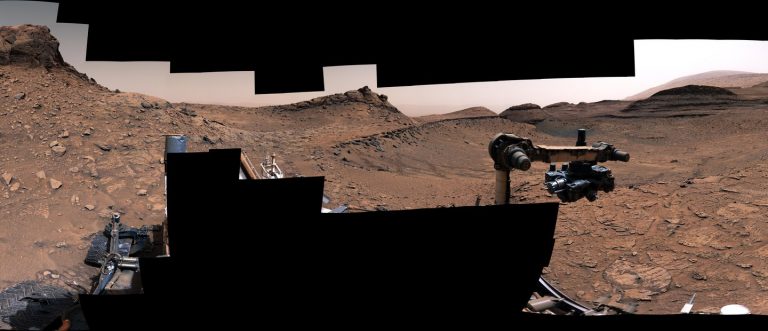
NASA’s Curiosity used its Mastcam to capture this 360-degree panorama of Marker Band Valley on Dec. 16, 2022. Rippled rock textures found in this area are the clearest evidence the rover has seen of water and waves from Mars’ ancient past. Credit: NASA/JPL-Caltech/MSSS Full Image Details

Among other discoveries made by the rover, rippled rock textures suggest lakes existed in a region of ancient Mars that scientists expected to be drier.

When NASA’s Curiosity rover arrived at the “sulfate-bearing unit” last fall, scientists thought they’d seen the last evidence that lakes once covered this region of Mars. That’s because the rock layers here formed in drier settings than regions explored earlier in the mission. The area’s sulfates – salty minerals – are thought to have been left behind when water was drying to a trickle.

So Curiosity’s team was surprised to discover the mission’s clearest evidence yet of ancient water ripples that formed within lakes. Billions of years ago, waves on the surface of a shallow lake stirred up sediment at the lake bottom, over time creating rippled textures left in rock.

NASA’s Curiosity rover recently found surprising clues to Mars’ watery past, including while exploring a region called the “Marker Band.” Credit: NASA/JPL-Caltech/MSSS

“This is the best evidence of water and waves that we’ve seen in the entire mission,” said Ashwin Vasavada, Curiosity’s project scientist at NASA’s Jet Propulsion Laboratory in Southern California. “We climbed through thousands of feet of lake deposits and never saw evidence like this – and now we found it in a place we expected to be dry.”

Layers of History

Since 2014, the rover has been ascending the foothills of Mount Sharp, a 3-mile-tall (5-kilometer-tall) mountain that was once laced with lakes and streams that would have provided a rich environment for microbial life, if any ever formed on the Red Planet.

Mars
Billions of years ago, waves on the surface of a shallow lake stirred up sediment at the lake bottom. Over time, the sediment formed into rocks with rippled textures that are the clearest evidence of waves and water that NASA’s Curiosity Mars rover has ever found. Credit: NASA/JPL-Caltech/MSSS Full Image Details

Mount Sharp is made up of layers, with the oldest at the bottom of the mountain and the youngest at the top. As the rover ascends, it progresses along a Martian timeline, allowing scientists to study how Mars evolved from a planet that was more Earth-like in its ancient past, with a warmer climate and plentiful water, to the freezing desert it is today.

Having climbed nearly a half-mile above the mountain’s base, Curiosity has found these rippled rock textures preserved in what’s nicknamed the “Marker Band” – a thin layer of dark rock that stands out from the rest of Mount Sharp. This rock layer is so hard that Curiosity hasn’t been able to drill a sample from it despite several attempts. It’s not the first time Mars has been unwilling to share a sample: Lower down the mountain, on “Vera Rubin Ridge,” Curiosity had to try three times before finding a spot soft enough to drill.

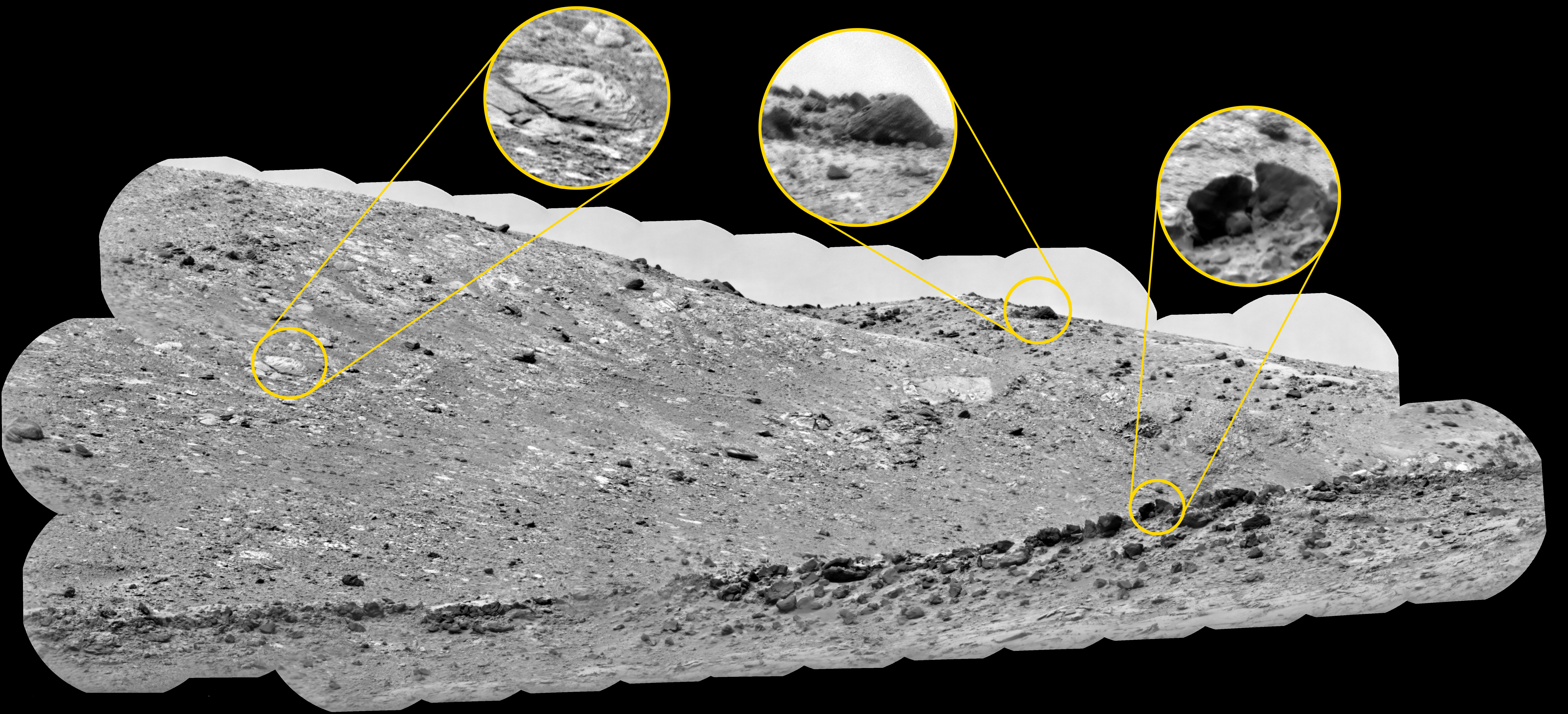
At the bottom of this valley, called Gediz Vallis, is a mound of boulders and debris that are believed to have been swept there by wet landslides billions of years ago. The rover team hopes to get a closer look at this evidence for flowing water.
At the bottom of this valley, called Gediz Vallis, is a mound of boulders and debris that are believed to have been swept there by wet landslides billions of years ago. The rover team hopes to get a closer look at this evidence for flowing water. Credit: NASA/JPL-Caltech/MSSS Full Image Details

Scientists will be looking for softer rock in the week ahead. But even if they never get a sample from this unusual strip of rock, there are other sites they’re eager to explore.

Martian Clues

Far ahead of the Marker Band, scientists can see another clue to the history of Mars’ ancient water in a valley named Gediz Vallis. Wind carved the valley, but a channel running through it that starts higher up on Mount Sharp is thought to have been eroded by a small river. Scientists suspect wet landslides also occurred here, sending car-size boulders and debris to the bottom of the valley.

Because the resulting debris pile sits on top of all the other layers in the valley, it’s clearly one of the youngest features on Mount Sharp. Curiosity got a glimpse of this debris at Gediz Vallis Ridge twice last year but could only survey it from a distance. The rover team hopes to have another chance to view it later this year.

Curiosity used its ChemCam instrument to view Gediz Vallis Ridge, spotting boulders that are thought to have been washed down in an ancient debris flow. One reason scientists are interested in this ridge is because it includes boulders like these, which originated much higher up on Mount Sharp, where Curiosity won’t be able to reach. Credit: NASA/JPL-Caltech/LANL/CNES/CNRS/IRAP/IAS/LPG Full Image Details

One more clue within the Marker Band that has fascinated the team is an unusual rock texture likely caused by some sort of regular cycle in the weather or climate, such as dust storms. Not far from the rippled textures are rocks made of layers that are regular in their spacing and thickness. This kind of rhythmic pattern in rock layers on Earth often stems from atmospheric events happening at periodic intervals. It’s possible the rhythmic patterns in these Martian rocks resulted from similar events, hinting at changes in the Red Planet’s ancient climate.

“The wave ripples, debris flows, and rhythmic layers all tell us that the story of wet-to-dry on Mars wasn’t simple,” Vasavada said. “Mars’ ancient climate had a wonderful complexity to it, much like Earth’s.”

More About the Mission

The Curiosity mission is led by NASA’s Jet Propulsion Laboratory, which is managed by Caltech in Pasadena, California. JPL leads the mission on behalf of NASA’s Science Mission Directorate in Washington. Malin Space Science Systems in San Diego built and operates Mastcam.

For more about Curiosity, visit: http://mars.nasa.gov/msl

News Media Contact

Andrew Good
Jet Propulsion Laboratory, Pasadena, Calif.
818-393-2433
[email protected]

Karen Fox / Alana Johnson
NASA Headquarters, Washington
301-286-6284 / 202-358-1501
[email protected] / [email protected]