

Home Blog Page 87

New Name For Towering Lunar Mountain Approved

0

The Working Group for Planetary System Nomenclature of the International Astronomical Union (IAU) has approved an official name for a mesa-like lunar mountain that towers above the landscape carved by craters near the Moon’s south pole. This unique feature will now be referred to as Mons Mouton, after NASA mathematician and computer programmer Melba Roy Mouton (MOO-tawn).

The name Mons Mouton was proposed to the Working Group for Planetary System Nomenclature (WGPSN) of the IAU by members of NASA’s Volatiles Investigating Polar Exploration Rover (VIPER) team. The flat-topped mountain is adjacent to the western rim of the Nobile crater, on which VIPER will land and explore during its approximately 100-day mission as part of NASA’s Artemis program. The mountain is also one of 13 candidate landing regions for NASA’s Artemis III mission, which is intended to send astronauts to the lunar surface, including the first woman to set foot on the Moon.

The IAU theme for naming mountains (denoted ‘mons’) on the Moon focuses on “scientists who have made outstanding or fundamental contributions to their fields.” The lunar landmark naming honours and recognises Mouton’s life, her accomplishments as a computer scientist, and her contributions to NASA’s missions.

Mouton was first employed at NASA’s Goddard Space Flight Center in Greenbelt, Maryland, in 1959, just a year after the space agency was established. She became the head mathematician who led a group of ‘human computers’, who tracked the Echo 1 and 2 satellites, launched into Earth’s orbit in 1960 and 1964, respectively.

A few years later, in 1961, Mouton was the head programmer responsible for the Mission and Trajectory Analysis Division’s Program Systems Branch — the team who coded computer programs used to calculate spacecraft locations and trajectories, giving NASA the ability to track spacecraft while in orbit.

Before retiring in 1973, after a career at NASA that spanned 14 years, Mouton had become the assistant chief of research programmes for the Trajectory and Geodynamics Division at Goddard. In appreciation of her dedicated service and outstanding accomplishments, which culminated in the successful Apollo 11 Moon landing on 20 July 1969, she was recognised with an Apollo Achievement Award.

Melba Mouton was one of our pioneering leaders at NASA,” said Sandra Connelly, the acting associate administrator for science at NASA Headquarters in Washington. “She not only helped NASA take the lead in exploring the unknown in air and space, but she also charted a path for other women and people of color to pursue careers and lead cutting-edge science at NASA.”

Mons Mouton is a wide, relatively flat-topped mountain, about the size of the state of Delaware, and was created over billions of years by lunar impacts, which sculpted it out of its surroundings. As a result, Mons Mouton stands as tall as Denali — the tallest mountain in North America —– approximately 6000 metres higher than its neighbouring features on the Moon’s south pole. Because it is relatively untouched by bombardments, scientists believe Mons Mouton is much more ancient — possibly billions of years older than its surroundings. A ring of huge craters — evidence of its pulverising distant past — lies around its base; some have cliff-like edges, descending into areas of permanent darkness. Its rolling hilltop is peppered with smaller rocks and pebbles as well as lots of enticing craters that are frequently blanketed in freezing shifting shadows.

Mons Mouton represents a great spot for VIPER — our solar-powered Moon rover that we’ll drive and conduct science in near real time,” said Sarah Noble, VIPER program scientist at NASA Headquarters in Washington. “It features high sunny spots, it’s relatively flat, satellite data shows signs of water ice, and it allows long stretches of direct communication with our ground station on Earth.” 

VIPER will be the first resource mapping mission beyond Earth. It will search at and below the lunar surface to determine the location and concentration of any ice that could eventually be harvested to sustain human exploration on the Moon, Mars, and beyond and it will help advance scientific exploration of the Moon by helping to understand how water is created and deposited throughout the Solar System. It is planned to deliver VIPER to the Moon in late 2024 under NASA’s Commercial Lunar Payload Services (CLPS) initiative. 

More information

The IAU is the international astronomical organisation that brings together more than 12 000 active professional astronomers from more than 100 countries worldwide. Its mission is to promote and safeguard astronomy in all its aspects, including research, communication, education and development, through international cooperation. The IAU also serves as the internationally recognised authority for assigning designations to celestial bodies and the surface features on them. Founded in 1919, the IAU is the world’s largest professional body for astronomers.

Links

Contacts

Rita Schulz
Chair IAU Working Group Planetary System Nomenclature/ESA
Netherlands
Tel: +31 71 565 48 21
Email: [email protected]

Lars Lindberg Christensen
IAU Director of Communications
Tel: +1 520 461 0433/+49 173 38 72 621
Cell: +49 173 38 72 621
Email: [email protected]

Rachel Hoover
NASA’s Ames Research Center in California’s Silicon Valley
Tel: +1-650-604-4789
ESA Satellites Support Impact Assessment After Türkiye–Syria Earthquakes

0
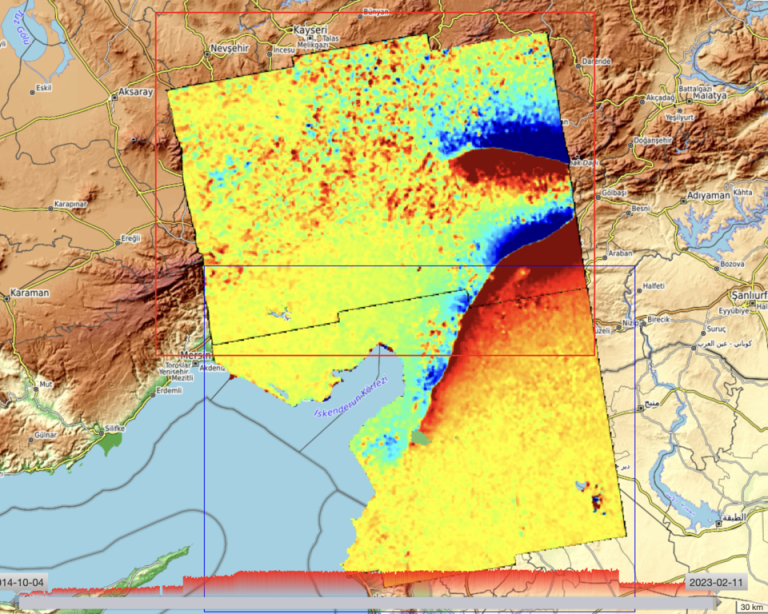
Deformation map over Türkiye and Syria – ESA

Türkiye and Syria are reeling from one of the worst earthquakes to strike the region in almost a century. Tens of thousands of people have been killed with many more injured in this tragedy.

Satellite data are being used to help emergency aid organisations, while scientists have begun to analyse ground movement – aiding risk assessments that authorities will use as they plan recovery and reconstruction, as well as long-term research to better model such events.

The initial 7.8-magnitude tremor in southeast Türkiye and northern Syria was followed by another of 7.7 magnitude – causing widespread destruction in both countries. The death toll from the earthquakes has risen to more than 33 000 as of today, with death toll continuing to rise as rescuers scramble to search for survivors trapped beneath the rubble.

The initial earthquake on 6 February, one of the most powerful seismic quakes that the region has experienced in the last century, emanated from a fault line approximately 18 km below the surface. This shallow depth meant the earthquake produced violent shaking that affected areas hundreds of kilometres from the epicentre, around 23 km east of Nurdagi, Gaziantep province.

The second quake followed around nine hours later, striking the Turkish town of Ekinözü, around 60 km to the north, with hundreds of smaller aftershocks occurred in subsequent days.

First response

In response, Turkish authorities, along with the United Nations and the International Federation Red Cross & Red Crescent Societies, activated the International Charter ‘Space and Major Disasters’. By combining Earth observation assets from different space agencies, the Charter provides satellite images of the affected areas to define the extent of the disaster and support local teams with their rescue efforts.

Following the activation, more than 350 crisis images from 17 space agencies across the world were delivered. They can be used to generate damage and situation maps to help estimate the hazard impact and manage relief actions in the affected areas.

The maps can be used by rescuers to orient themselves amongst the rubble, identify which roads to take, which bridges to avoid in case of collapse. The data will help guide them to destroyed buildings in remote areas, where help is hard to get.

Along with the Charter, the Copernicus Emergency Mapping Service (CEMS) has also been activated. The service, which has a cooperation agreement for sharing data and collaborating with the Charter, also uses observations from multiple satellites to provide on-demand mapping.

In this case, damage grading maps from the service show the geographic extent of damaged areas. The service used high-resolution optical images, including those from Pleiades over 20 areas of interest covering an area of 664 sq km.

Philippe Bally, ESA representative of the International Charter, commented, “In order to support the assessment of the impact of the earthquakes that hit Türkiye and Syria, we require imagery with the highest possible spatial resolution over many areas of interest. Tasking Earth observation missions was challenging because of the cloud coverage over the region on the hours and days following the activation.”

Simonetta Cheli, Director of Earth Observation Programmes at ESA, commented, “Space is very relevant in cases of natural disasters such as the Türkiye–Syria earthquakes. It is our job when a natural disaster or a humanitarian crisis occurs to coordinate via the International Charter with partner agencies and with the Copernicus Emergency Mapping Services. We are closely following efforts to provide timely Earth observation data to disaster relief teams on the ground.”

Türkiye–Syria interferogram


Ground deformation analysis

There are other wider geological implications to the quake that may have consequences in the longer term that are slowly coming into focus. In the coastal city of İskenderun, there appears to have been significant subsidence, which has resulted in flooding, while the quake has left many hillsides around the country at a serious risk of landslide.

Radar imagery from satellites allows scientists to observe and analyse the effects that earthquakes have on the land. The Copernicus Sentinel-1 mission carries a radar instrument that can sense the ground and can ‘see’ through clouds, whether day or night.

With its 250 km-wide swath over land surfaces, Sentinel-1 gives scientists a broad view of the displacement, allowing them to examine the ground displacement caused by this earthquake and develop the scientific knowledge of quakes.

Researchers use a technique known as ‘interferometry’ to compare before-and-after views after an earthquake has hit. In this case, data from Sentinel-1 have been combined to measure the coseismic surface displacement, or changes on the ground, that occurred between the two acquisitions. This leads to an interferogram that shows a colourful interference (or fringe) pattern and allows scientists to quantify surface displacement.

An interferogram, calculated using Sentinel-1 acquisitions on 28 January and 9 February, reveals a large-scale deformation between Maras and Antakya with high gradient fringes and low coherence along the Karasu valley. According to Ziyadin Çakır, from the Department of Geology at Istanbul Technical University, the Sentinel-1 interferogram indicates that it is the East Anatolian Fault that ruptured during the first earthquake. A preliminary analysis also shows up to several metres of fault slip at Earth’s surface.

Radar interferograms were also generated using acquisitions from 9 February and 28 January 2023 from the Geohazard Exploitation Platform (GEP). The platform allows experts to process many types of data and it was used to generate different measurements both radar and optical.

Horizontal offsets from Sentinel-2


Philippe Bally explains, “Sentinel-1 and Sentinel-2 data allow geohazard risk assessment experts to retrieve precise information concerning terrain motion. Given the amplitude of the deformations on the ground over the East Anatolian Fault, different Earth observation processing chains have been used on the Geohazard Exploitation Platform using complementary Earth observation missions.

These include radar interferometry and pixel offset tracking services using the processor developed by the German Aerospace Research Centre and sub-pixel correlation of optical images such as using the GDM-OPT-ETQ service of ForM@Ter implemented by the CNRS/EOST.”

Ziyadin Çakır commented: “Such maps of pixel offset from Sentinel-1 and Sentinel-2 are extremely useful to pinpoint the locations of earthquake surface ruptures, to measure surface slip and to estimate damage distribution that are critical for better understanding this disaster.”

Philippe Bally concluded: “All these techniques contribute to the measurement of earthquake induced terrain deformation. The GEP is accessible to geoscience experts in the context of international collaborations such as the CEOS working group on disasters.”

By Keith Cowing
Source SpaceRef

Inmarsat I-6 F2 Communications Satellite Set To Launch On Friday

0
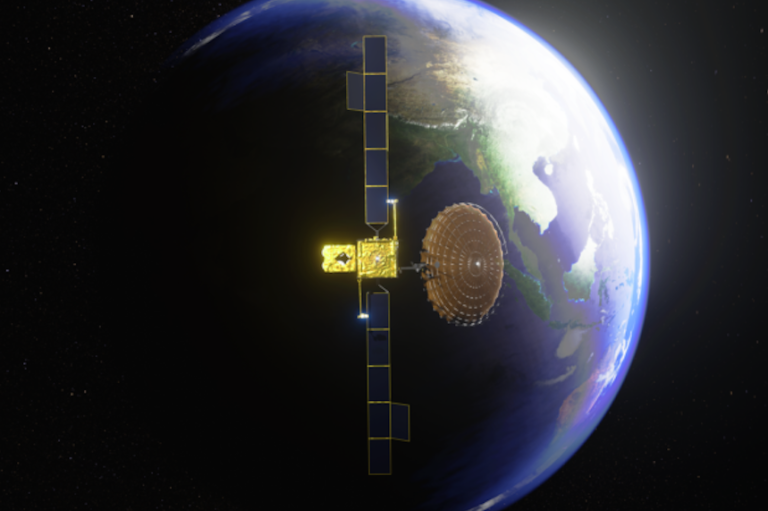
Inmarsat I-6 F2. INMARSAT

Inmarsat, a world leader in global, mobile satellite communications, has confirmed its spacecraft, I-6 F2, will launch from Space Launch Complex 40 (SLC-40) at Cape Canaveral Space Force Station no earlier than this Friday, aboard a flight-proven SpaceX Falcon 9 rocket.

The event will be livestreamed on Inmarsat’s website beginning at 10:00pm EST / 3:00am UTC.

The launch will see Inmarsat’s latest 6th generation communications spacecraft leave Earth on its way to geostationary orbit. From lift off in Florida, the satellite will travel up and east across the Atlantic Ocean towards the west coast of Africa, reaching a top speed of almost 40,000kph (24,800mph).

After Airbus delivered the satellite via Azores, Newfoundland, and Washington D.C. aboard its unique ‘Beluga’ transportation service, the spacecraft has spent the last two weeks in Florida undergoing final testing and integration with the rocket.

I-6 F2 follows its ‘twin’, I-6 F1, which launched from Japan in late 2021. They are the world’s most sophisticated commercial communications satellites and will deliver a major upgrade in the capacity and capabilities of Inmarsat’s two global communications networks for more than 15 years. I-6 F1 is scheduled to connect its first customers later this year, with I-6 F2 set to follow in 2024.

Both satellites were designed and manufactured in the UK at Airbus’s facilities in Stevenage and Portsmouth, prior to final assembly in Toulouse, France. They are each almost as large as a London double-decker bus and, with solar arrays opened to their full 47m width, have a ‘wingspan’ similar to a Boeing 767.

The new I-6 satellites add further capabilities to Inmarsat’s ORCHESTRA communications network; a unique, global, multi-dimensional, dynamic mesh network that will redefine connectivity at scale with the highest capacity for mobility worldwide. ORCHESTRA enables Inmarsat’s partners and customers to keep pace with their growing data demands and enables them to empower emerging technologies in the future, like autonomous vehicles or flying taxis.

Rajeev Suri, CEO, Inmarsat, said “The I-6 journey began six years ago, with our experts sketching out an ambitious concept of two hybrid satellites that would add significant additional capacity and capabilities for our two worldwide constellations – the high-speed broadband Global Xpress network and our narrow-band ELERA.

“This launch is only the start of the largest investment programme in our history, all contributing towards the development of our ORCHESTRA vision. The I-6 spacecraft will be joined by a further five major scale satellites by 2025. Each of these has the capability to deliver focused connectivity over a larger region and come with certainty – in resilience, in robustness, in service quality – that is unique to Inmarsat.”

Contact for media: [email protected]

ABOUT INMARSAT

Inmarsat delivers world leading, innovative, advanced and exceptionally reliable global, mobile communications across the world – in the air, at sea and on land – that are enabling a new generation of commercial, government and mission-critical services. Inmarsat is powering the digitalisation of the maritime industry, making operations more efficient and safer than ever before. It is driving a new era of inflight passenger services for aviation, while ensuring that aircraft can fly with maximum efficiency and safety. Furthermore, Inmarsat is enabling the rapid expansion of the Internet of Things (IoT) and enabling the next wave of world-changing technologies that will underpin the connected society and help build a sustainable future. And now Inmarsat is developing the first-of-its-kind, multi-dimensional communications network of the future, ORCHESTRA.

By Keith Cowing
Source SpaceRef

Can Gardening In Space Help Astronauts Cope With Isolation?

0
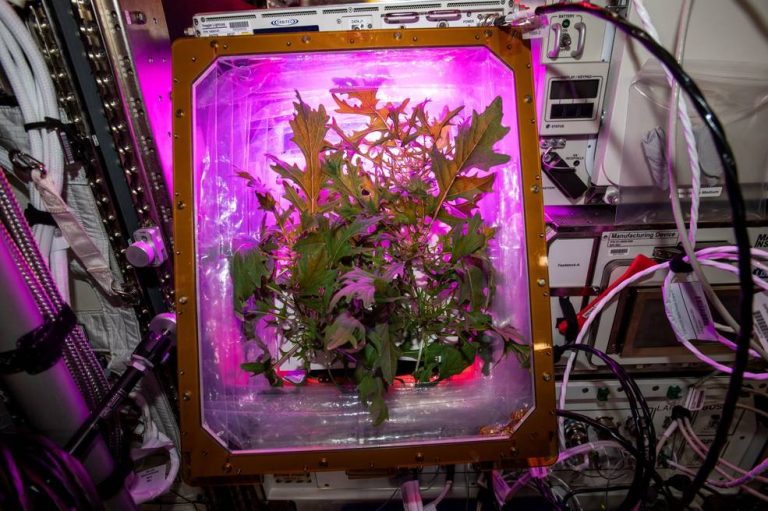
Mizuna mustard plants grow inside plant pillows in the Vegetable Production System, also known as Veggie, on the International Space Station. Credits: NASA

It’s a maxim drilled into us at a young age: “Always eat your veggies!” For astronauts on the International Space Station, heeding this well-known advice is both essential and challenging. Health and nutrition are vital to mission objectives, but how do you ensure astronauts get fresh produce to eat when living off the planet?

One solution involves astronauts growing vegetables for themselves. On the station, plants such as the mizuna mustard greens seen above are grown under LED lighting and watered in plant “pillows” — special bags that contain seed and fertilizer. These plants and their pillows are housed in a unique botany facility called the Vegetable Production System, or Veggie.

Growing fresh vegetables in space offers benefits beyond providing a source of nutrition to crew members, explained Dr. Gioia Massa, project scientist at NASA’s Kennedy Space Center in Florida. Here on Earth, pandemic-induced isolation has led people to take up baking or gardening. Could developing a space-faring green thumb also help astronauts ease their sense of confinement and isolation? NASA’s Human Research Program, or HRP, has given Massa and her team of researchers the task of finding out.

To learn more, Massa’s group is asking astronauts who currently cultivate vegetables on the station to each complete a survey about their space-gardening experiences. For example, crew members who grow mizuna mustards take the survey two to three times for the month-long growth cycle of the plant.

Questions on the survey help gauge how space-gardening affects astronauts’ moods. For example: Was gardening engaging, demanding, or meaningful? Did it impact the passage of time, performance of mission tasks, or relationships with crew members? Did gardening enhance their connection to Earth, desire to harvest or consume the plants, or food consumption in general? How effective was gardening as a source of sensory stimulation for sight, touch, smell, and taste?

When the vegetables are ready to eat, the astronauts also complete a sensory assessment. They rate the flavor, color, appearance, aroma, texture, and taste of the produce to see whether the labor over their veggies proved fruitful as a supplement to prepackaged space food.

Thus far, seven astronauts have completed the survey. Massa hopes to survey a total of 24 astronauts before the study is complete.

Initial results show that some participants loved working with the plants during their leisure time, spending many hours caring for them during their mission, while others preferred different activities. Despite the variability, no one viewed their work with the plants as meaningless, and all valued the utility of growing plants in space.

Astronauts’ feedback will help NASA better design food systems for future space missions. “We are learning what crops to grow to help supplement the diet, which activities should be automated or remotely operated, and which should have options for crew involvement,” explained Massa. “Different growth systems and different space missions will have different solutions to these questions.”

HRP, along with the Biological and Physical Sciences (BPS) Division of NASA’s Science Mission Directorate at NASA Headquarters in Washington, provides funding for Veggie and related investigations.

By Keith Cowing
Source SpaceRef

A Small Asteroid Was Spotted Before Earth Impact

0
The predicted time and location of the impact (02:50 – 03:03 UTC, above northern France) were made possible with observations by European astronomer Krisztián Sárneczky using the 60 cm Schmidt telescope from the Piszkéstető Observatory in Hungary. 2023 CX1 is the second impactor discovered by Krisztián, after the impact of 2022 EB5 less than a year ago.

For the seventh time, a small asteroid – a meteoroid as astronomers call it — was discovered in space as it raced towards Earth impact.

The predicted time and location of the impact (02:50 – 03:03 UTC, above northern France) were made possible with observations by European astronomer Krisztián Sárneczky using the 60 cm Schmidt telescope from the Piszkéstető Observatory in Hungary. 2023 CX1 is the second impactor discovered by Krisztián, after the impact of 2022 EB5 less than a year ago.

The last three predicted impacts have all occurred in the last 12 months– an encouraging illustration of how asteroid detection capabilities are rapidly advancing.

What happened?

At 20:18:07 UTC on 12 February 2023, the new asteroid (now officially designated 2023 CX1 but initially designated Sar2667 by its discoverer) was imaged by the Piszkéstető Observatory. Once a second observation was taken, it was reported to the Minor Planet Center at 20:49 UTC.

About 40 minutes later, follow-up observations reported by the Višnjan Observatory in Croatia confirmed the object. At this point various impact assessment systems around the globe calculated a 100% impact probability, expected above the English Channel between 02:00 – 04:00 UTC. The asteroid was estimated to be around one metre in diameter and posed no harm to people or property.

Over the next seven hours, astronomers around the globe observed the Earth-bound object and pinpointed its ‘impact corridor’ over the Channel with a trajectory going from west to east. The object continued to be observed until just ten minutes before impact, only five minutes before it fell into Earth’s shadow becoming ‘invisible’.

On impact the beautiful fireball lit up the skies within the expected time window (at 02:59 UTC) and location. Observations came mostly from southern UK and France but also from Belgium, the Netherlands and even Germany. It is likely that some fragments of the meteoroid could have survived its atmospheric journey and landed somewhere onshore, close to the coast north of Rouen in Normandy, France.

The team at ESA’s Planetary Defence Office contributed to this historic event both with timely notifications from the ‘Meerkat’ warning system and use of a network of optical telescopes established for just these occasions.

As it becomes more common that we can predict these small, stunning shooting stars in our skies, more people can be in the right place at the right time to witness a phenomenon only few have been lucky enough to spot before.

Of course, one day we’ll find an imminent impactor that isn’t one metre in size, but perhaps 100. To protect ourselves, as NASA’s DART mission has shown is possible and ESA’s Hera Mission will build on, we need to see them coming.

By Keith Cowing
Source SpaceRef

Are We Alone In The Universe? SETI Project

0

Are we alone in the Universe? The answer may come in a signal from the stars.

SETI, the search for extraterrestrial intelligence, encompasses many different techniques to look for life beyond Earth. One is listening for radio transmissions from other star systems. Detecting these signals is challenging because we have to rule out signals from intelligent life right here on Earth. For example: What looked like a possible signal from our stellar neighbor Alpha Centauri in 2020 turned out to be a simple clock oscillator.

Computer algorithms can sift through large amounts of data and hone in on promising signals, but these programs must be trained to discard false positives. That’s where citizen scientists come in. Researchers at UCLA, in partnership with The Planetary Society and NASA, are recruiting volunteers to train computer algorithms that will be used to search for life beyond Earth.

The Planetary Society awarded $50,000 to the project through our STEP Grants program in 2022. STEP grants are competitively awarded through an open, international process.

“We are excited to expand our search capabilities by launching a collaboration with citizen scientists,” said Jean-Luc Margot, a planetary astronomer and UCLA professor who leads the project. “Join us! With your help, we hope to find the most amazing needle ever found in a haystack.”

Margot noted that the project builds on The Planetary Society’s long history of SETI-related activities.

“Shortly after its creation, The Planetary Society transformed the SETI field by funding the Megachannel Extra-Terrestrial Assay (META) project of Paul Horowitz and Carl Sagan. We are thrilled to partner with The Planetary Society to continue this deeply meaningful search.”

Megan Li, a Ph.D. student working on the project, said that she’s excited to pursue the question of whether or not we are alone in the universe.

“This collaboration combines my two favorite things: SETI and outreach,” she said. “Humanity’s most profound discovery could be a few clicks away.”

How it works

Classifying a signal
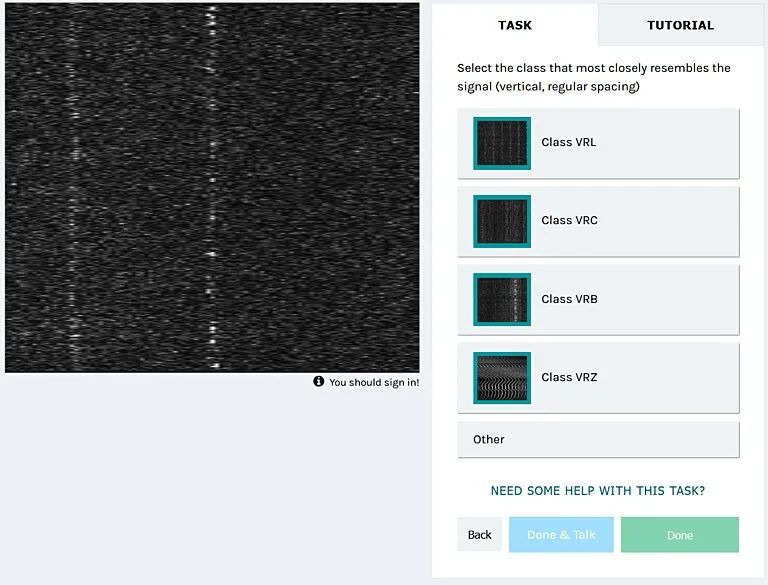
CLASSIFYING A SIGNAL A screenshot from the Zooniverse SETI citizen science project asking the user to classify a radio signal.Image: UCLA SETI Group / Zooniverse

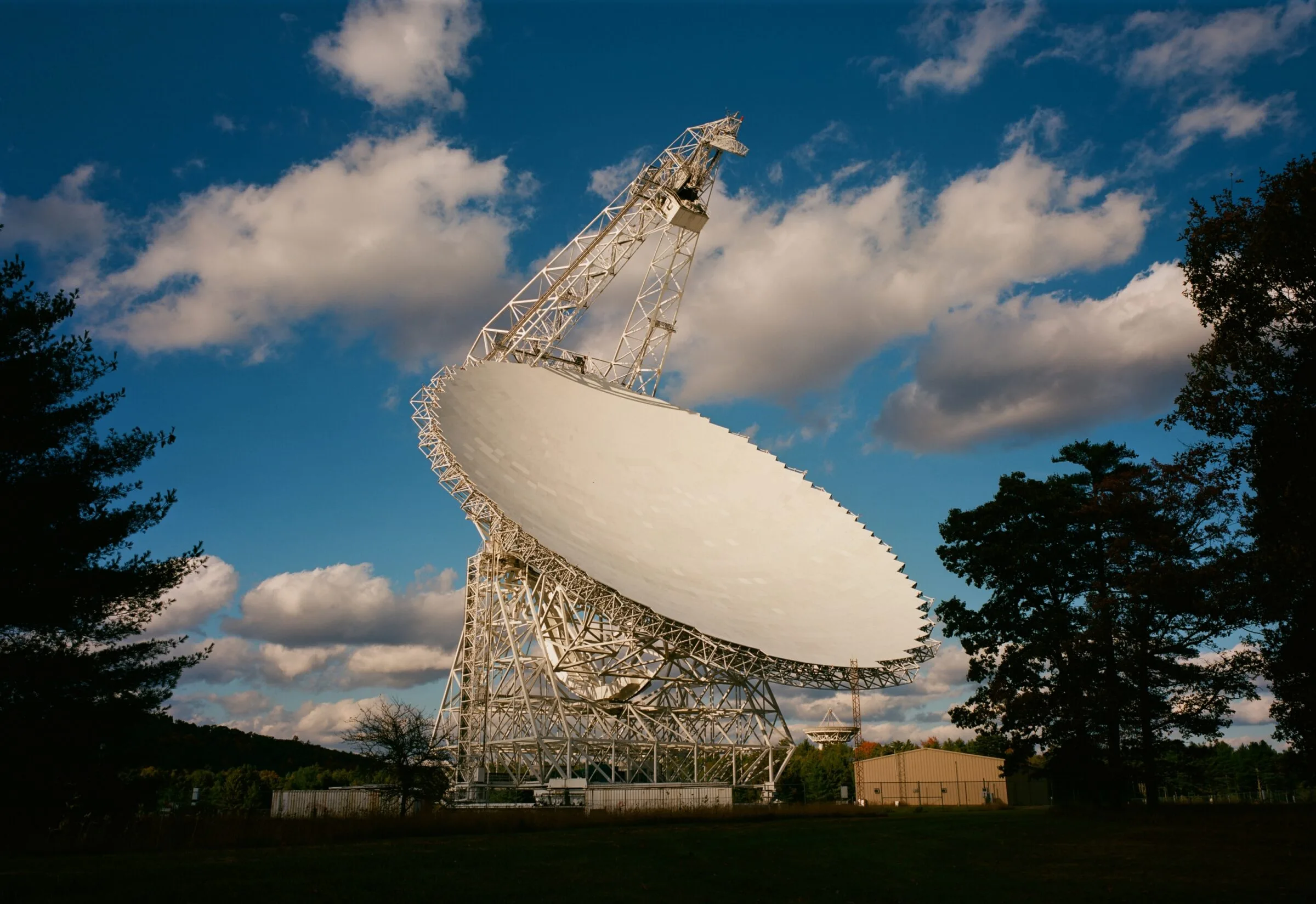
Using the Zooniverse citizen science platform, volunteers will examine signals captured by the 100 meter Green Bank Telescope in Green Bank, West Virginia. Participants will sort signals into categories of known radio interference, which will help train a machine learning system for future searches.

The Green Bank observation data comes from 100 stars known to have planets. Due to the telescope’s wide field of view, potential signals from tens of thousands of additional stars and planetary systems are also captured. So far, the UCLA group has observed 40,000 stars and detected over 60 million radio signals.

Green Bank Telescope
GREEN BANK TELESCOPE The 100-meter Green Bank Telescope in Green Bank, WV.Image: John Stoke / Green Bank Observatory

Are we alone in the Universe? You can help us find out by joining the citizen science effort at Zooniverse today.

JOIN THE CITIZEN SCIENCE EFFORT TO SEARCH FOR LIFE

The Planetary Society thanks the Halıcıoğlu Family Foundation for enabling the development and implementation of the STEP Grants program, which made our support of this project possible.

N° 5–2023: Media Invitation: View Euclid Spacecraft In Cannes Before Launch

0
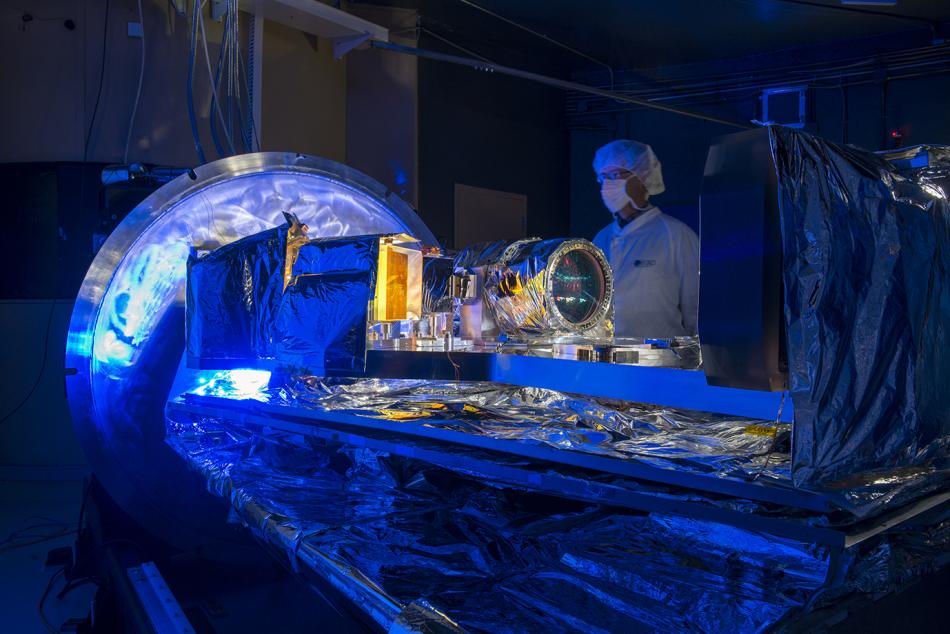
Photo: ESA

Journalists are cordially invited to view Euclid, ESA’s ambitious mission to explore the dark Universe, in Cannes, France, on 21 February 2023.
Media will be given the rare opportunity to see the spacecraft in the cleanroom of Thales Alenia Space (TAS), prior to shipment for its launch from Cape Canaveral, Florida, USA in July 2023. 

During the visit, registered media will be able to see the cleanroom of the industrial prime contractor, TAS, and to interview high-level experts from ESA and key mission partners TAS, CNES, CEA and CNRS.

Media programme (all times in CET)

10:15Security check-in at TASFollowed by informal welcome coffee
10:45ESAGiuseppe Racca
ESA Euclid programme manager
Overview Euclid mission
11:00CNESAndré Debus
CNES EUCLID programme manager
French contribution to Euclid mission
11:15Thales Alenia SpacePaolo Musi
TAS EUCLID programme manager
Industrial stakes
11:30Airbus Defence and SpaceLaurent Brouard
Airbus EUCLID Payload (telescope) programme manager
Industrial stakes
11:45CEA & CNRSDavid Elbaz
CEA Scientific Director – Astrophysics Department
Stéphanie Escoffier
Director of Research CNRS – Coordinator EUCLID France
Scientific matters
12:00Q&A for journalists and further individual interview opportunities
14:00Parallel visits of Euclid spacecraft in TAS cleanrooms, in smaller guided groups
16:00End of Media visit on TAS site

About Euclid – exploring the dark Universe

The unique ESA-led astronomy mission Euclid will explore the composition and evolution of the dark Universe.

The space telescope will create the largest, most accurate 3D map of the Universe ever produced, observing shapes and movements of billions of galaxies across 10 billion years of cosmic time, over more than a third of the sky.

From these data, Euclid will reveal how the Universe has expanded and how structures have formed over cosmic history.

ESA-lead consortium with 2000 scientists from 16 countries

Euclid is a fully European mission, built and operated by ESA, with contributions from NASA. The Euclid Consortium – consisting of more than 2000 scientists from 300 institutes in 13 European countries, the US, Canada and Japan – provided the scientific instruments and scientific data analysis. ESA selected Thales Alenia Space as prime contractor for the construction of the satellite and its Service Module, with Airbus Defence and Space chosen to develop the Payload Module, including the telescope. NASA provided the near-infrared detectors of the NISP instrument. 

Media accreditation and TAS site security context

Interested journalists are cordially invited to request their accreditation with the TAS Media team via email [email protected] by Thursday 16 February at the latest. They will then receive a special security registration form to fill in by Friday 17 February. the latest, to be able to participate in the media visit at the TAS industry facility at Cannes Mandelieu.

Please note that ESA will not cover for any media travel costs. Also note that mobile phones are not permitted in the TAS cleanrooms. Filming and photography of Euclid are allowed within certain limitations. Further high-quality photo & video material can also be provided by TAS Communications. 

In case of questions please contact 

In case of questions please contact TAS Head of Media Relations, Sandrine Bielecki: [email protected] 
or ESA Senior Media Relations Officer, Bernhard von Weyhe: [email protected].

More information

www.esa.int/euclid
https://www.esa.int/ESA_Multimedia/Videos/2023/02/Euclid_in_a_nutshell

Social media

Follow ESA on: 
Twitter: @ESA 
Instagram: Europeanspaceagency 
Facebook: EuropeanSpaceAgency 
YouTube: ESA 
LinkedIn: European Space Agency – ESA 
Pinterest: European Space Agency – ESA 

Images

https://www.esa.int/ESA_Multimedia/Images

Terms and conditions for using ESA images:
www.esa.int/spaceinimages/ESA_Multimedia/Copyright_Notice_Images

For questions or more information related to ESA images, please contact directly [email protected].

Videos

https://www.esa.int/ESA_Multimedia/Videos

Terms and conditions for using ESA videos:
https://www.esa.int/spaceinvideos/Terms_and_Conditions

For questions or more information related to ESA videos, please contact directly [email protected].

About the European Space Agency

The European Space Agency (ESA) provides Europe’s gateway to space.

ESA is an intergovernmental organisation, created in 1975, with the mission to shape the development of Europe’s space capability and ensure that investment in space delivers benefits to the citizens of Europe and the world

ESA has 22 Member States: Austria, Belgium, the Czech Republic, Denmark, Estonia, Finland, France, Germany, Greece, Hungary, Ireland, Italy, Luxembourg, the Netherlands, Norway, Poland, Portugal, Romania, Spain, Sweden, Switzerland and the United Kingdom. Latvia, Lithuania, Slovakia and Slovenia are Associate Members.

ESA has established formal cooperation with four Member States of the EU. Canada takes part in some ESA programmes under a Cooperation Agreement.

By coordinating the financial and intellectual resources of its members, ESA can undertake programmes and activities far beyond the scope of any single European country. It is working in particular with the EU on implementing the Galileo and Copernicus programmes as well as with Eumetsat for the development of meteorological missions.

Learn more about ESA at www.esa.int

For further information:

ESA Newsroom and Media Relations Office – Bernhard von Weyhe
Email: [email protected]
Tel: +33153697504

Head of TAS Media Relations
Sandrine Bielecki
[email protected]

Space Station Visits South Padre Island

0

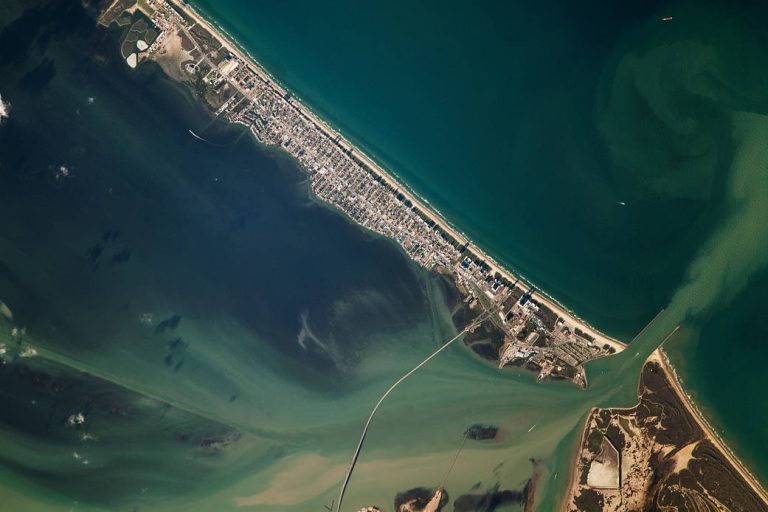
While the International Space Station orbited over the Gulf of Mexico on Sept. 19, 2022, NASA astronaut Bob Hines captured this image of South Padre Island, a barrier island along the coast of Texas. The island is part of the greater Padre Island, the longest barrier island in the world, which spans a length of 113 miles (182 kilometers).

Barrier islands along the Gulf and East coasts of North America play a critical role protecting the mainland from the damaging effects of storms. They bear the brunt of large storm surges and reduce flooding on the mainland.

Image Credit: NASA/Bob Hines

By Monika Luabeya
Source NASA

NASA, Partners Clear Axiom’s Second Private Astronaut Mission Crew

0
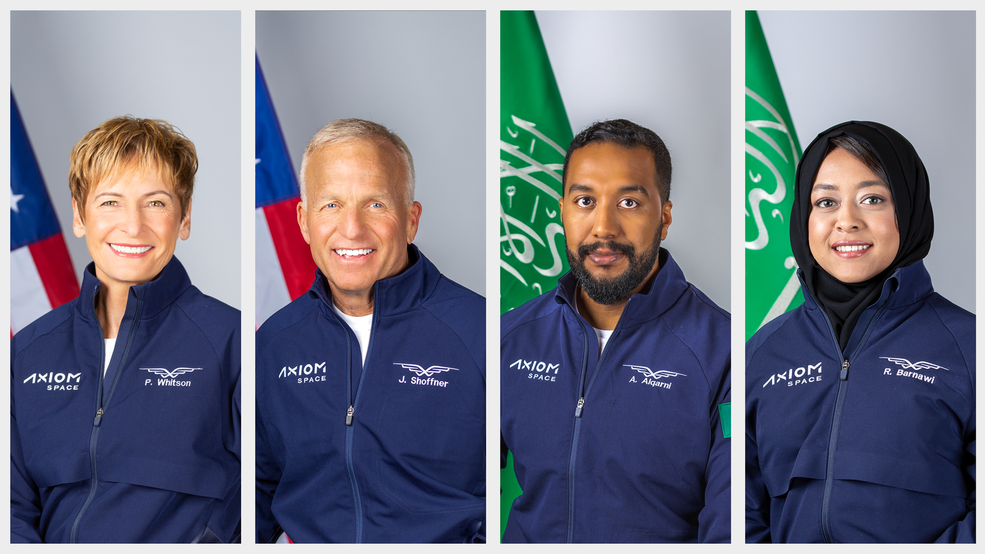
Crew members for the second private astronaut mission to the International Space Station, Axiom Mission 2 (Ax-2), left to right: Commander Peggy Whitson, Pilot John Shoffner, and Mission Specialists Ali Alqarni and Rayyanah Barnawi. Credits: Axiom Space

NASA and its international partners have approved the crew for Axiom Space’s second private astronaut mission to the International Space Station, Axiom Mission 2 (Ax-2).

Axiom Space’s Director of Human Spaceflight and former NASA astronaut Peggy Whitson will command the privately funded mission. John Shoffner of Knoxville, Tennessee, will serve as pilot. The two mission specialists, Ali Alqarni and Rayyanah Barnawi from the Kingdom of Saudi Arabia (KSA), are members of the inaugural Saudi national astronaut program. They are flying through an arrangement between KSA and Axiom Space.

“Enabling more people to go to space is an important component of NASA’s continuing efforts to grow the low-Earth orbit economy,” said Angela Hart, manager of NASA’s Commercial Low-Earth Orbit Development Program. “Private astronaut missions are a key component to enable a successful transition to a model of commercially owned and operated platforms in low-Earth orbit. I appreciate the commitment of our International Space Station and commercial partners to help us achieve this future.”

The Ax-2 crew will launch from NASA’s Kennedy Space Center in Florida aboard a SpaceX Dragon spacecraft and travel to the space station. Once docked, the private astronauts plan to spend 10 days aboard the orbiting laboratory implementing a full mission of science, outreach, and commercial activities. The mission, targeted for launch in spring 2023, will be the first private space mission to include both private astronauts and astronauts representing foreign governments, as well as the first private mission commanded by a woman.

“Axiom Space’s second private astronaut mission to the International Space Station cements our mission of expanding access to space worldwide and supporting the growth of the low-Earth orbit economy as we build Axiom Station,” said Michael Suffredini, president and CEO of Axiom Space. “Ax-2 moves Axiom Space one step closer toward the realization of a commercial space station in low-Earth orbit and enables us to build on the legacy and achievements of the station, leveraging the benefits of microgravity to better life on Earth.”

Whitson will become the first female commander of a private space mission, adding to her prior accomplishments, including as NASA’s chief astronaut and the first female commander of the space station. In addition, she will add to her standing record for the longest cumulative time in space by a NASA astronaut.

“I’m honored to be heading back to the station for the fourth time, leading this talented Ax-2 crew on their first mission,” said Whitson. “This is a strong and cohesive team determined to conduct meaningful scientific research in space and inspire a new generation about the benefits of microgravity. It’s a testament to the power of science and discovery to unify and build international collaboration.”

Shoffner, a businessman, has always had an interest in space, the stars, and flying, becoming a pilot at the age of 17 and since amassing than 8,500 flight hours and earning ratings for multiple aircraft types. He also is an advocate for science, technology engineering, arts, and mathematics (STEAM) education. 

The first private astronaut mission to the International Space Station, Axiom Mission 1 (Ax-1), launched April 8, 2022, with four private astronauts who spent 17 days in orbit working on 26 science payloads aboard the station and conducting more than 30 STEAM educational and public outreach engagements. The crew splashed down off the coast of Florida on April 25, 2022, to conclude the mission.

Private astronaut missions to the space station are a precursor to privately funded commercial space stations as part of NASA’s efforts to develop a thriving low-Earth orbit ecosystem and marketplace. NASA is currently reviewing proposals for the third and fourth private astronaut missions to the space station.

For more than 22 years, NASA has supported a continuous U.S. human presence in low-Earth orbit aboard the space station. The agency’s goal is to enable a strong, commercial marketplace in low-Earth orbit where NASA is one of many customers for private industry. This strategy will provide services the government needs at a lower cost, enabling the agency to focus on its Artemis missions to the Moon in preparation for Mars while continuing to use low-Earth orbit as a training and proving ground for those deep space missions.

For more information about NASA’s commercial low-Earth orbit economy effort, visit: https://www.nasa.gov/leo-economy

Stephanie Schierholz / Josh Finch
Headquarters, Washington
202-358-1100
[email protected] / [email protected]

Gary Jordan
Johnson Space Center, Houston
281-483-5111
[email protected]

Axiom Space:
[email protected]

By Roxana Bardan
Source NASA

Small Planets Orbiting Low-Mass Stars Detected With The SPIRou Instrument And The TESS Satellite

0
Credit: Sébastien Chastanet, OMP/IRAP/CNRS

Since the discovery in 1995 of a planet in orbit around a star other than the Sun, research in exoplanetology has revolutionized our knowledge of planetary systems. The SPIRou instrument, installed at the Canada-France-Hawaii Telescope, contributes to these results, in particular by observing the possible planets identified by the TESS observatory satellite. By combining the data from both instruments, the planet TOI-1695b is discovered, and is one of the new sub-Neptune and super-Earth type planets revealed by SPIRou around stars less massive and cooler than the Sun, by an international team in which the Institut d’astrophysique de Paris plays a major role. These results help to better understand this type of planets that do not exist in the Solar System.

For centuries, only the planets of the Solar System were known and observed: four giant planets far from the Sun, and four telluric planets (including Earth) closer to our star. In modern 19th and 20th century thought, it seemed very likely that many, if not all, other stars also hosted planets; being inaccessible to our means of observation, these remained however in the domain of the imaginary or of science fiction. It was therefore not known whether these possible extrasolar planets really existed, were similar to those of the Solar System, or had different properties.

The situation changed in 1995 with the first detection of an extrasolar planet, carried out at the Haute-Provence Observatory by astronomers Michel Mayor and Didier Queloz, later awarded the Nobel Prize in Physics. New instruments have since been developed; they have enabled the detection and characterization of thousands of exoplanets, revolutionizing our knowledge of planetary systems, and in particular of their formation and evolution.

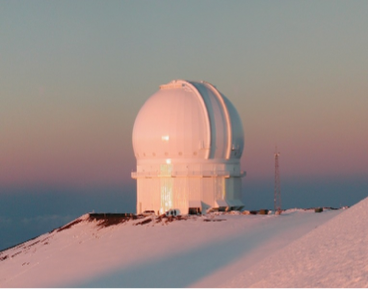
Among these, France and the Institut d’astrophysique de Paris have made a major contribution to the development of the SPIRou instrument (Figure 1) at the Canada-France-Hawaii Telescope (Figure 2), installed on the Big Island of Hawaii. It is a spectropolarimeter (see box 1) operating in the infrared range. It makes it possible to search for planets around stars less massive, smaller and less hot than the Sun, the red dwarfs (their temperature is between 2500 and 4000°C, while the Sun is at 5500°C). It also makes it possible to study the magnetic activity of these small stars, which are the most numerous stars in our galaxy. The scientific teams use SPIRou in particular to characterize the candidate planets (objects likely to be planets) which have been identified around red dwarf stars by the Transiting Exoplanet Survey Satellite (TESS), a NASA observatory satellite, and which should be observed with SPIRou to establish their nature.

Figure 1: The SPIRou instrument

Figure 1: The SPIRou instrument during its integration into the Canada-France-Hawaii Telescope
Credit: S. Chastanet, OMP/IRAP/CNRS.
Figure 2: The CFHT telescope atop Mauna Kea

Figure 2: The CFHT telescope atop Mauna Kea.
Credits: J.-C. Cuillandre, TCFH.
1. SPIRouSPIRou is an infrared spectro-polarimeter which began its observations in 2018 at the Telescope-Canada-France-Hawaii. It is an instrument which observes the stars by spectroscopy (the distribution of light according to the wavelength) and polarimetry (a privileged distribution of the orientation of the electromagnetic waves emitted), in the infrared domain. It aims in particular to search for and characterize telluric planets in the habitable zone (the zone neither too far nor too close to the star, so as to allow the presence of liquid water on the surface of the planets) around stars that are not very massive, and to study the impact of the magnetic field on the formation of stars and planets. This project is carried out by institutions located in France, Canada, the United States, Brazil, Portugal, Switzerland and Taiwan. The Île-de-France’s region contribution to SPIRou brings together members of several laboratories, with a financial support from the DIM-ACAV and of the Île-de-France Region, that is coordinated by the Institut d’astrophysique de Paris.

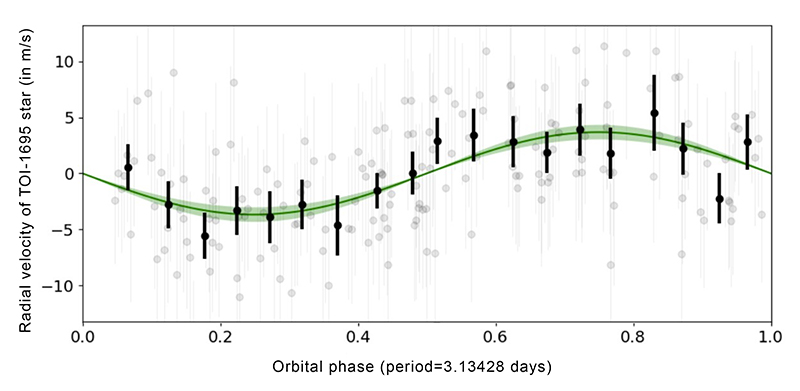
It is in this context that researchers from the Institut d’astrophysique de Paris, and in particular Flavien Kiefer (collaborator and former postdoctoral fellow at the IAP), Eder Martioli (IAP associate researcher and former postdoctoral fellow at the IAP), Guillaume Hébrard (senior CNRS researcher), Alain Lecavelier des Étangs (senior CNRS researcher) and Pierre-Cécil König (former PhD student at the IAP) present the discovery and characterization of the new planet TOI-1695b, carried out within an international team. Barely twice as big but six times more massive than the Earth, this new planet has a density therefore slightly lower than that of the Earth. It is of the sub-Neptune type, that is to say a planet a little smaller than Neptune. Its temperature, however, is a few hundred degrees higher than that of Neptune, and its atmosphere most likely contains large amounts of hydrogen, helium, and water vapor. Finally, this planet goes around its red dwarf star in three days (Figure 3).

Figure 3: Radial velocity of the star TOI-1695 measured with SPIRou

Figure 3: : Radial velocity of the star TOI-1695 measured with SPIRou showing that the star moves away and approaches us periodically. These variations make it possible to detect and characterize the sub-Neptune-type planet TOI-1695b that it hosts (Kiefer et al. 2022). Indeed, the radial velocity method is an indirect method for detecting and characterizing extra-solar planets. It is based on the gravitational interaction between a planet and its star: if it is mainly the planet that revolves around its star, which is much more massive, the planet nevertheless slightly disturbs the movement of its star. By very precisely measuring the movement of the star, and more particularly its radial velocity, we can deduce that it hosts a planet in orbit around it.
Credits: Kiefer et al. (2023).

A few weeks ago, the same team had already announced the discoveries of the super-Earth TOI-1452b (a super-Earth is a planet slightly larger than Earth) and the the sub-Neptune TOI-1759b. Like TOI-1695b, these two planets orbit a red dwarf star. The size of these three planets is between 1.7 and 3.1 times that of Earth, and their masses between 5 and 7 times that of Earth. They are therefore intermediate planets between Earth and Neptune, but they are closer to their host stars (from 6 to 18 million km, compared to the 150 million km of the Earth-Sun distance). Non-existent in the Solar System, observation programs have shown for several years that these super-Earths and sub-Neptunes are nevertheless very abundant in our galaxy. These new planets detected and characterized with SPIRou will make it possible to better understand this new planetary population. One wonders in particular how, in the history of their formation, some could have become gaseous planets for some or rocky planets for others, despite similar masses. Answering this question could help explain the dichotomy of the planets of the Solar System, between small telluric planets and gas giant planets.

Articles

puce Article in Astronomy & Astrophysics: Kiefer, Hébrard, Martioli, Artigau, Doyon, Donati, Cadieux, Carmona, Ciardi, Cristofari et al., 2023, “A sub-Neptune planet around TOI-1695 discovered and characterized with SPIRou and TESS” (public version)

puce Article in The Astronomical Journal: Cadieux, Doyon, Plotnykov, Hébrard, Jahandar, Artigau, Valencia, Cook, Martioli, Vandal et al. 2022 (AJ 164 96) “TOI-1452b: SPIRou and TESS Reveal a Super-Earth in a Temperate Orbit Transiting an M4 Dwarf”

puce Article in Astronomy & Astrophysics : Martioli, Hébrard, Fouqué, Artigau, Donati, Cadieux, Bellotti, Lecavelier des Étangs, Doyon, do Nascimento et al. 2022 (A&A 660, A86) “TOI-1759b: A transiting sub-Neptune around a low mass star characterized with SPIRou and TESS”

Links

puce  News of INSU/CNRS, scientific result in the theme “Universe” (in French), February 13, 2023: Des petites planètes en orbite autour d’étoiles naines rouges ont été détectées

puce SPIRou: an infrared spectro-polarimeter

puce SPIRou’s website

Writing and contact

  • Guillaume Hébrard
    Institut d’astrophysique de Paris, CNRS, Sorbonne Université
    guillaume [dot] hebrard [at] iap [dot] fr

Other contacts

  • Flavien Kiefer (collaborator and former postdoctoral fellow at the IAP)
    Institut d’astrophysique de Paris, CNRS, Sorbonne Université
    Laboratoire d’Etudes Spatiales et d’Instrumentation en Astrophysique (LESIA), Observatoire de Paris
    flavien [dot] kiefer [at] iap [dot] fr
  • Eder Martioli (IAP associate researcher and former postdoctoral fellow at the IAP)
    Institut d’astrophysique de Paris, CNRS, Sorbonne Université
    Laboratório Nacional de Astrofísica, Itajubá, Brésil
    eder [dot] matioli [at] iap [dot] br

Web writing: Valérie de Lapparent

Layout: Jean Mouette