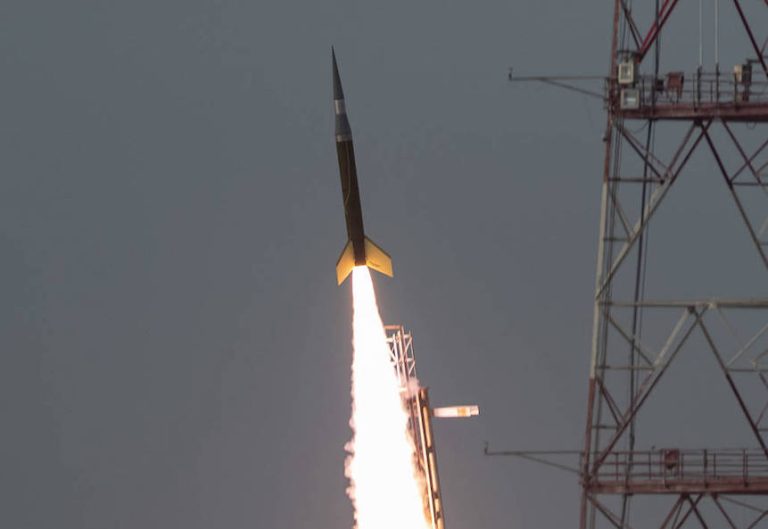
Suborbital sounding rocket launch on 16 February 2023
NASA launched two suborbital sounding rockets about 30 minutes apart Thursday, Feb. 16, to test a new capability for supporting science research in the mesosphere, an area of the atmosphere between 31 and 53 miles altitude.
The two, nine-foot, Improved-Orion sounding rockets lifted off at 7 a.m. and 7:28 a.m. respectively.
New information about an emerging technique that could track microplastics from space has been uncovered by researchers at the University of Michigan. It turns out that satellites are best at spotting soapy or oily residue, and microplastics appear to tag along with that residue.
Microplastics—tiny flecks that can ride ocean currents hundreds or thousands of miles from their point of entry—can harm sea life and marine ecosystems, and they’re extremely difficult to track and clean up. However, a 2021 discovery raised the hope that satellites could offer day-by-day timelines of where microplastics enter the water, how they move and where they tend to collect, for prevention and clean-up efforts.
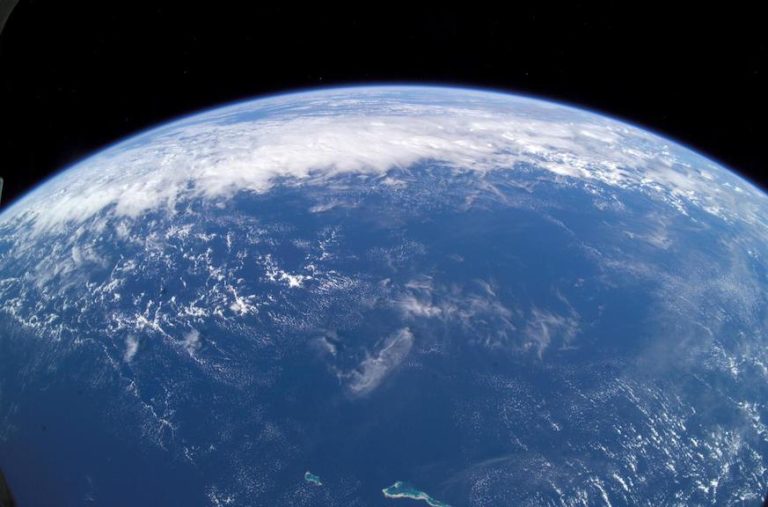
The team noticed that data recorded by the Cyclone Global Navigation Satellite System (CYGNSS), showed less surface roughness—that is, fewer and smaller waves—in areas of the ocean that contain microplastics, compared to clean areas.
In preliminary testing, they used the technique to spot suspected microplastic releases at the mouth of China’s Yangtze River and to identify seasonal variations in the Great Pacific Garbage patch, a convergence zone in the North Pacific Ocean where microplastic collect in massive quantities. But until now, the team was unsure about the nature of the relationship between microplastics and surface roughness.
A newly published study in Scientific Reports shows that the anomalies in wave activity are caused not by the plastics themselves, but by surfactants—soapy or oily compounds that are often released along with microplastics and that travel and collect in similar ways once they’re in the water.
Chris Ruf, the Frederick Bartman Collegiate Professor of Climate and Space Science at U-M and an author of the study, explains that a satellite-based tracking tool would be a major improvement over current tracking methods, which rely mainly on spotty reports from plankton trawlers that net microplastics along with their catch.
“NOAA, the Plymouth Marine Lab in the U.K. and other organizations are very aware of what we’re doing, but we need to be cautious and fully understand the system’s limitations before putting it into widespread use,” said Ruf, who also leads CYGNSS. “These new findings are an important step in that process.”
The research team, which also included former naval architecture and engineering graduate researchers Yukun Sun and Thomas Bakker, gathered the data at U-M’s Aaron Friedman Marine Hydrodynamics Lab. Using the facility’s wave tank, they measured the effects of surfactants and microplastic pellets on waves generated both mechanically and by wind from a fan.
They found that, in order for microplastics to affect surface roughness, their concentrations had to be much higher than those typically found even in polluted areas of the ocean. Surfactants, however, had a pronounced effect. The researchers found that surfactant-laden water required more wind to generate waves of a given size, and that those waves dissipated more quickly than they would in clean water.
Yulin Pan, U-M naval architecture and marine engineering assistant professor and corresponding author on the paper, says that this initial discovery will drive further research into how surfactants and microplastics interact in the ocean.
“We can see the relationship between surface roughness and the presence of microplastics and surfactants,” Pan said. “The goal now is to understand the precise relationship between the three variables.”
They plan to use a combination of water sampling, satellite observations and computer modeling to build that understanding. Ultimately, they hope to develop a system that governments, cleanup organizations and others can use to both spot existing microplastics and predict how they’re likely to travel through waterways.
Ruf and other members of the team are featured in the documentary Plastic Earth, which explores the scale of plastic pollution and engineering solutions in development.
The research was supported in part by NASA Science Mission Directorate contract NNL13AQ00C.
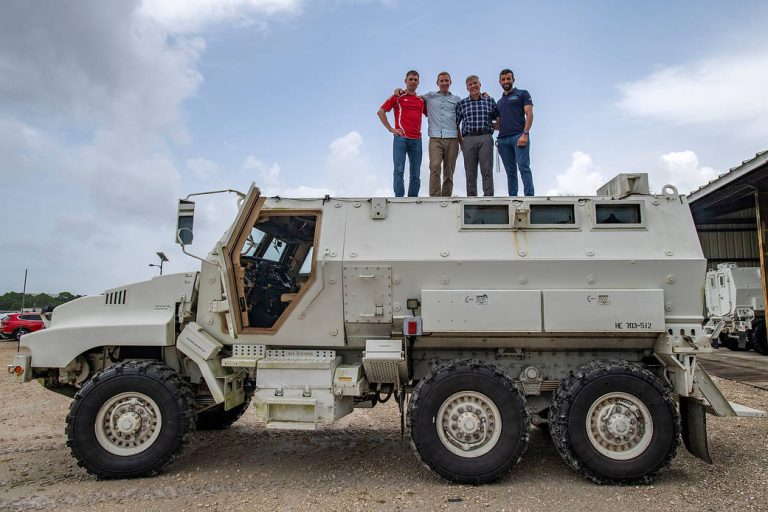
Mission Specialist Andrey Fedyaev, Pilot Warren “Woody” Hoburg, Commander Stephen Bowen, and Mission Specialist Sultan Alnedayi, the SpaceX Crew-6 mission, pose for a photo atop an emergency egress vehicle at NASA’s Kennedy Space Center in Florida. Crews would use the vehicle to quickly leave the launch area in case of an emergency.
The launch broadcast for NASA’s SpaceX Crew-6 mission to the International Space Station will begin on NASA TV at 10:30 p.m. EST Saturday, Feb. 25, and be carried on the agency’s website, as well as YouTube, Twitter, Facebook, LinkedIn, Twitch, Daily Motion, Theta.TV, and NASA’s App. Liftoff is targeted for 2:07 a.m. EST Sunday, Feb. 26.
Members of the public can register to attend the launch virtually. The virtual guest program for this launch includes curated launch resources, timely mission updates, and a virtual guest passport stamp following a successful launch.
HeroX, the leading platform and open marketplace for crowdsourced solutions, with Epic Games and Buendea, today launched a new crowdsourcing competition.
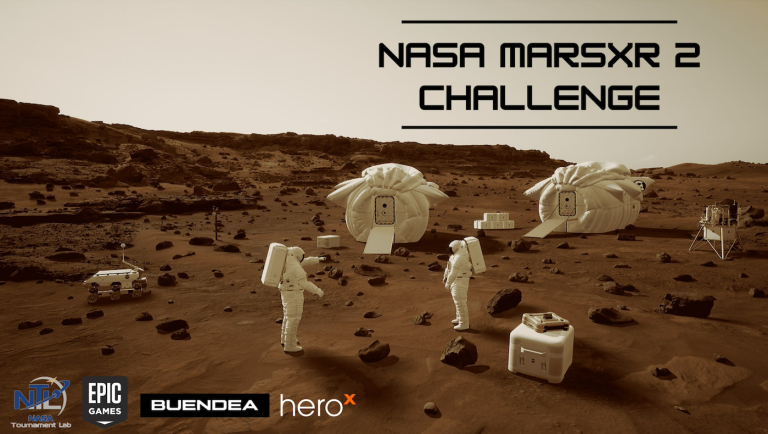
The NASA MarsXR 2 Challenge is a follow-up to the original NASA MarsXR Challenge. It seeks contributions and storyboard concepts for a Virtual Reality testbed environment that replicates the experiences and situations astronauts may encounter on Mars.
To facilitate research, development, and testing using virtual reality, NASA, in collaboration with Buendea is developing the Mars XR Operations Support System using Epic Games’ Unreal Engine 5 (UE5). Challenge participants will be given access to a virtual reality environment simulating Mars, which includes:
Full Martian days, with the orange hues of day transitioning to blue at night
Simulation of Martian gravity
Simulation of Martian weather conditions
Over 400 km2 (approximately 154 Miles) of realistic Mars terrain
Some existing assets, such as suits and rovers
Phase 1 will task participants with developing storyboard concepts of potential scenarios needed during early human expeditions to Mars. In Phase 2, participants will build out those scenarios in the virtual reality environment. These models can then be used to expose researchers and test subjects to immersive and realistic spacewalk activities while on the red planet. Information gained from these simulations could help NASA prepare for future human exploration of Mars.
“We are launching this sequel challenge to engage a greater number of thinkers and creators,” said Kal Sahota, CEO of HeroX. “We had a lot of success with the first challenge, and with this storyboard option, we expect even more innovative ideas and a broader audience of participants.”
“Whether a game designer, architect, hobbyist, rocket scientist, or creative with an expansive vision, anyone will enjoy exploring and building in the Mars XOSS Engine,” said Julian Reyes, the Founder of Buendea. “We can’t wait to see the immersive simulations this diverse community dreams up.”
The Challenge: The NASA MarsXR 2 Challenge asks the larger community to imagine and build out scenarios of tasks required for early human expeditions to Mars in a Virtual Reality Mars simulation.
The Prize: Up to 15 participants who submit the top ideas will share a total prize purse of $70,000.
Eligibility to Compete and Win Prize(s): The prize is open to anyone aged 18 or older participating as an individual or as a team. Individual competitors and teams may originate from any country, as long as United States federal sanctions do not prohibit participation (some restrictions apply).
HeroX is a platform and open marketplace for crowdsourcing innovation and human ingenuity, co-founded in 2013 by serial entrepreneur, Christian Cotichini and XPRIZE Founder and Futurist, Peter Diamandis. HeroX offers a turnkey, easy-to-use platform that supports anyone, anywhere, to solve everyday business and world challenges using the power of the crowd. Uniquely positioned as the Social Network for Innovation, HeroX is the only place you can build, grow and curate your very own crowd.
Founded in 1991, Epic Games is an American company founded by CEO Tim Sweeney. The company is headquartered in Cary, North Carolina and has more than 50 offices worldwide. Today Epic is a leading interactive entertainment company and provider of 3D engine technology. Epic operates one of the world’s largest games, Fortnite, and Epic has over 500 million accounts with 2.7 billion friend connections across Fortnite, Rocket League, and the Epic Games Store. Epic also develops Unreal Engine, which powers the world’s leading games and is also adopted across industries such as film and television, architecture, automotive, manufacturing, and simulation. Through Unreal Engine, Epic Games Store, and Epic Online Services, Epic provides an end-to-end digital ecosystem for developers and creators to build, distribute, and operate games and other content.
ABOUT BUENDEA
Buendea is a group dedicated to technical innovation and breakthroughs in real-time graphics for XR simulation, training, and education. Buendea is passionate about storytelling and creating new forms of shared experiences that bridge the physical and digital.
Astronomers are “star struck” by Webb’s deep-field image of the megacluster
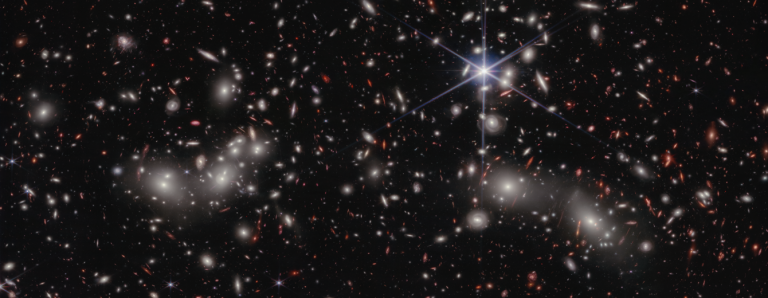
The ancient Greek myth of Pandora, much adapted by different storytellers and cultures, is at its heart a story of human curiosity and uncovering paradigm-shifting knowledge. In modern astronomy, a region of space where multiple galaxy clusters are merging has been named for the myth and become a favorite observational target for its ability to magnify much more distant galaxies behind it through a natural phenomenon called gravitational lensing. Using this trick of nature, astronomers use Pandora’s Cluster (Abell 2744) like a magnifying glass to reveal features in the early universe that would otherwise be impossible to observe even for the most powerful telescopes.
Now a team of astronomers has combined the infrared imaging power of NASA’s James Webb Space Telescope with the lens of Pandora’s Cluster to create a detailed image of 50,000 sources, including some never-before-seen features. Exploration of Pandora’s Cluster with Webb is ongoing, but already there are tantalizing hints of the new understanding of the universe it will uncover.
Astronomers have revealed the latest deep field image from NASA’s James Webb Space Telescope, featuring never-before-seen details in a region of space known as Pandora’s Cluster (Abell 2744). Webb’s view displays three clusters of galaxies – already massive – coming together to form a megacluster. The combined mass of the galaxy clusters creates a powerful gravitational lens, a natural magnification effect of gravity, allowing much more distant galaxies in the early universe to be observed by using the cluster like a magnifying glass.
Only Pandora’s central core has previously been studied in detail by NASA’s Hubble Space Telescope. By combining Webb’s powerful infrared instruments with a broad mosaic view of the region’s multiple areas of lensing, astronomers aimed to achieve a balance of breadth and depth that will open up a new frontier in the study of cosmology and galaxy evolution.
“The ancient myth of Pandora is about human curiosity and discoveries that delineate the past from the future, which I think is a fitting connection to the new realms of the universe Webb is opening up, including this deep-field image of Pandora’s Cluster,” said astronomer Rachel Bezanson of the University of Pittsburgh in Pennsylvania, co-principal investigator on the Ultradeep NIRSpec and NIRCam ObserVations before the Epoch of Reionization (UNCOVER) program to study the region.
“When the images of Pandora’s Cluster first came in from Webb, we were honestly a little star struck,” said Bezanson. “There was so much detail in the foreground cluster and so many distant lensed galaxies, I found myself getting lost in the image. Webb exceeded our expectations.” The new view of Pandora’s Cluster stitches four Webb snapshots together into one panoramic image, displaying roughly 50,000 sources of near-infrared light.
In addition to magnification, gravitational lensing distorts the appearance of distant galaxies, so they look very different than those in the foreground. The galaxy cluster “lens” is so massive that it warps the fabric of space itself, enough for light from distant galaxies that passes through that warped space to also take on a warped appearance.
Astronomer Ivo Labbe of the Swinburne University of Technology in Melbourne, Australia, co-principal investigator on the UNCOVER program, said that in the lensing core to the lower right in the Webb image, which has never been imaged by Hubble, Webb revealed hundreds of distant lensed galaxies that appear like faint arced lines in the image. Zooming in on the region reveals more and more of them.
“Pandora’s Cluster, as imaged by Webb, shows us a stronger, wider, deeper, better lens than we have ever seen before,” Labbe said. “My first reaction to the image was that it was so beautiful, it looked like a galaxy formation simulation. We had to remind ourselves that this was real data, and we are working in a new era of astronomy now.”
The UNCOVER team used Webb’s Near-Infrared Camera (NIRCam) to capture the cluster with exposures lasting 4-6 hours, for a total of about 30 hours of observing time. The next step is to meticulously go through the imaging data and select galaxies for follow-up observation with the Near-Infrared Spectrograph (NIRSpec), which will provide precise distance measurements, along with other detailed information about the lensed galaxies’ compositions, providing new insights into the early era of galaxy assembly and evolution. The UNCOVER team expects to make these NIRSpec observations in the summer of 2023.
In the meantime, all of the NIRCam photometric data has been publicly released so that other astronomers can become familiar with it and plan their own scientific studies with Webb’s rich datasets. “We are committed to helping the astronomy community make the best use of the fantastic resource we have in Webb,” said UNCOVER co-investigator Gabriel Brammer of the Niels Bohr Institute’s Cosmic Dawn Center at the University of Copenhagen. “This is just the beginning of all the amazing Webb science to come.”
The James Webb Space Telescope is the world’s premier space science observatory. Webb will solve mysteries in our solar system, look beyond to distant worlds around other stars, and probe the mysterious structures and origins of our universe and our place in it. Webb is an international program led by NASA with its partners, ESA (European Space Agency) and the Canadian Space Agency.
About This Release
Credits
MEDIA CONTACT:
Leah Ramsay Space Telescope Science Institute, Baltimore, Maryland
Christine Pulliam Space Telescope Science Institute, Baltimore, Maryland
On Feb. 15, 2013 at 9:20 a.m. local time, residents of the city of Chelyabinsk, Russia, witnessed something few humans ever have: an asteroid exploding in the atmosphere.
The event was well-documented, almost by accident. Dashboard cameras in cars were very popular in Russia at the time, and many of these cameras captured video recordings of the meteor (the streak of light across the sky) and the great flash that came when the asteroid exploded.
THE CHELYABINSK METEOR Dash-cam footage of an asteroid burning up and then exploding in the atmosphere above Chelyabinsk, Russia in 2013.Video: Aleksandr Ivanov
The asteroid responsible for the event was about 20 meters (66 feet) in diameter, and entered the atmosphere at a relatively shallow angle with a speed relative to Earth of about 19 kilometers per second (69,000 kilometers per hour or 42,690 miles per hour). When it hit the Earth’s atmosphere it began to burn up and then exploded about 30 kilometers (less than 19 miles) above the surface.
The explosion created a flash that was briefly brighter than the Sun and a shockwave that is estimated to have released the same amount of energy as 500 kilotons of TNT — around 30 times more energy than the atomic bomb detonated at Hiroshima. Luckily, the explosion happened high enough off the ground that its energy was mostly absorbed into the atmosphere. If it had happened lower, or if the asteroid had hit the ground intact, the damage could have been unlike anything in human history.
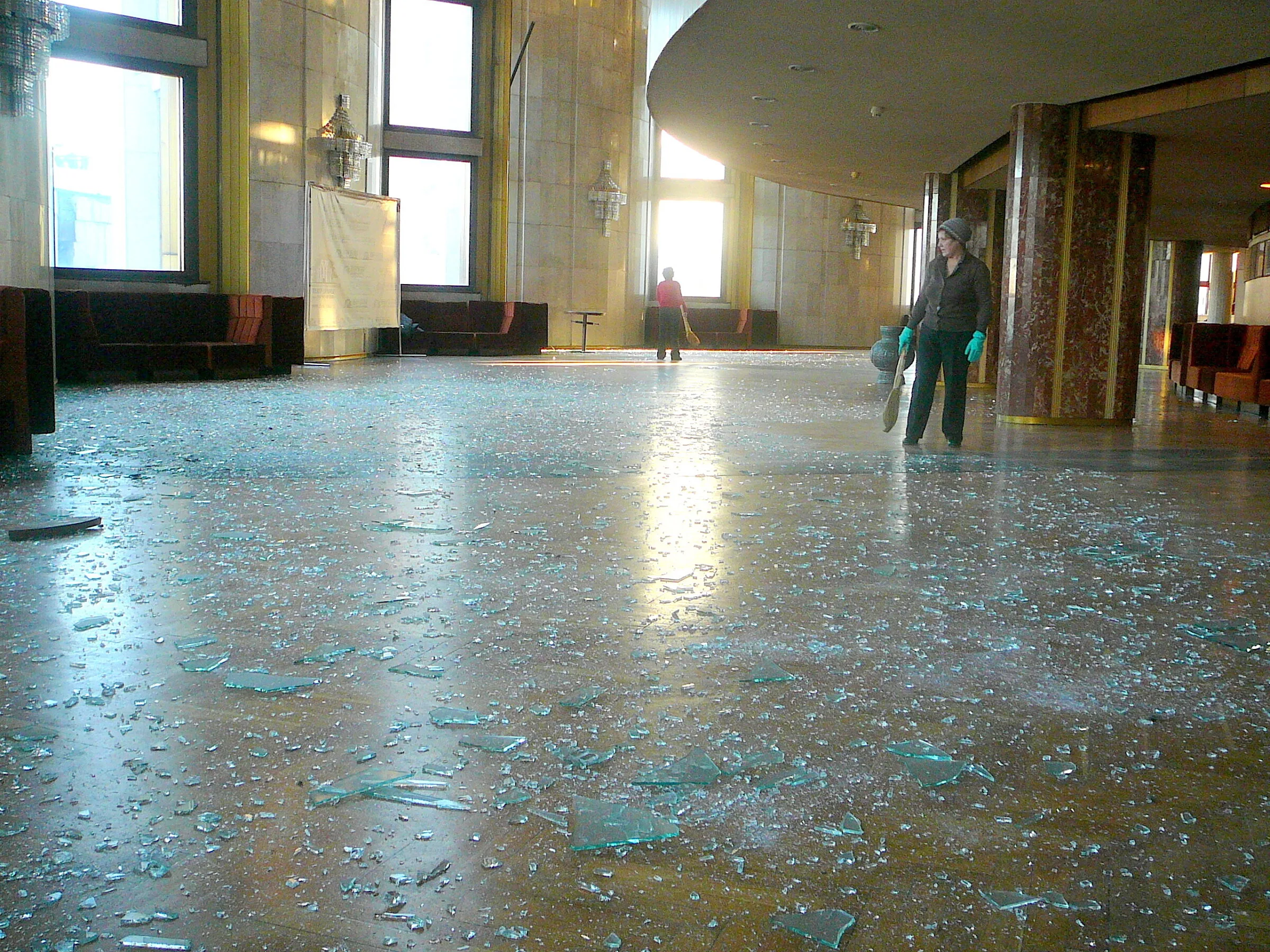
The explosion wasn’t without consequences, though. It created a shockwave that traveled through the atmosphere and reached the ground, damaging 7,200 buildings across six cities and sending 1,500 people to local hospitals and clinics with injuries. Most of the injuries were caused by curiosity; people saw the bright flash and went to their windows to look outside. The shockwave, traveling at a slower speed, arrived later and shattered the windows, injuring people with flying glass.
BROKEN WINDOWS IN CHELYABINSK The windows of the Chelyabinsk Drama Theatre were shattered by the shockwave caused by the explosion of an asteroid in the atmosphere.Image: Nikita Plekhanov
The most unsettling thing about the Chelyabinsk event is that nobody saw it coming. The asteroid wasn’t detected until it was already hurtling through Earth’s atmosphere, in large part because it came from the direction of the Sun and was hidden by its glare.
Coincidentally, another asteroid had been predicted to make a close (although much, much less close) approach to Earth later that same day. In fact, The Planetary Society even hosted a webinar about the roughly 30-meter (98-foot) asteroid 367943 Duende, discovered by a winner of a Planetary Society Shoemaker Grant used to upgrade their observatory, to share the exciting moment with our members and the public. In addition to our grants supporting asteroid research, part of our mission has always been to increase public awareness of the asteroid threat and advocate for government funding for ground-based and space-based asteroid observations and other research to improve our understanding of what’s out there before it’s too late.
With new asteroid-hunting technologies like the NEO Surveyor spacecraft being developed, we’ll be better equipped to find asteroids like this one sooner, calculate their trajectories, and take actions to avoid any injuries or deaths.
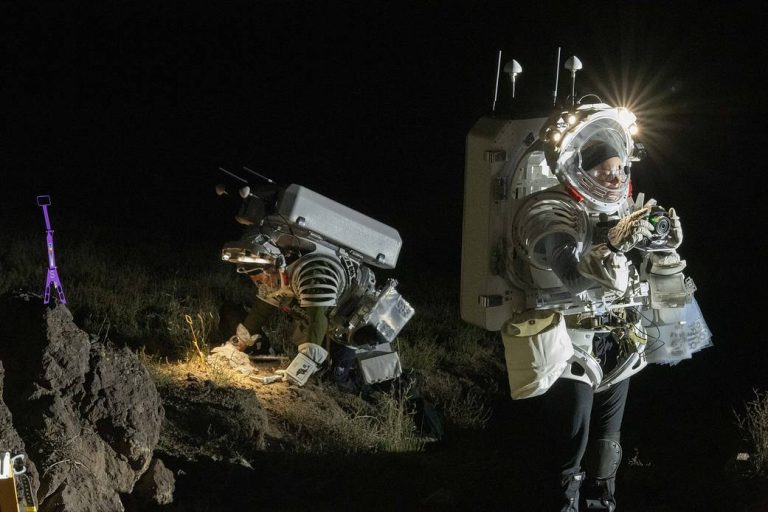
JETT3 was the third simulated moonwalk in preparation for future Artemis missions; during Artemis III, astronauts will visit the lunar South Pole region, which has never been explored by humans. The S P Crater has unique terrain and geology, as well as minimal communications infrastructure that make it a great location for an analog mission.
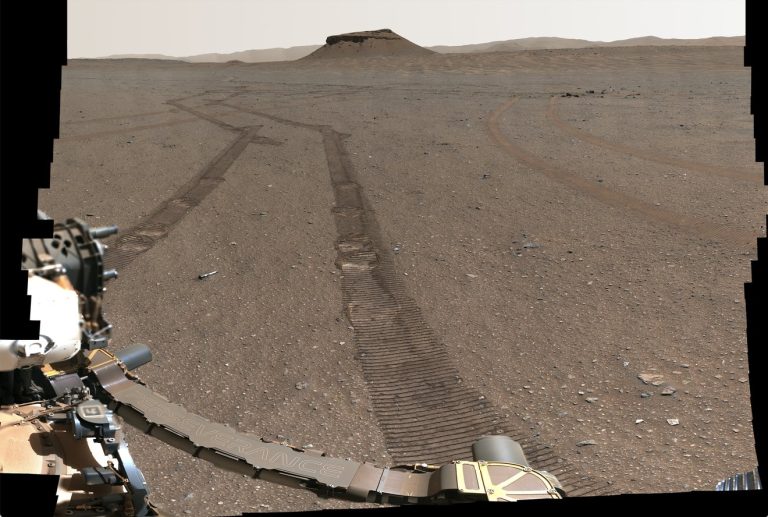
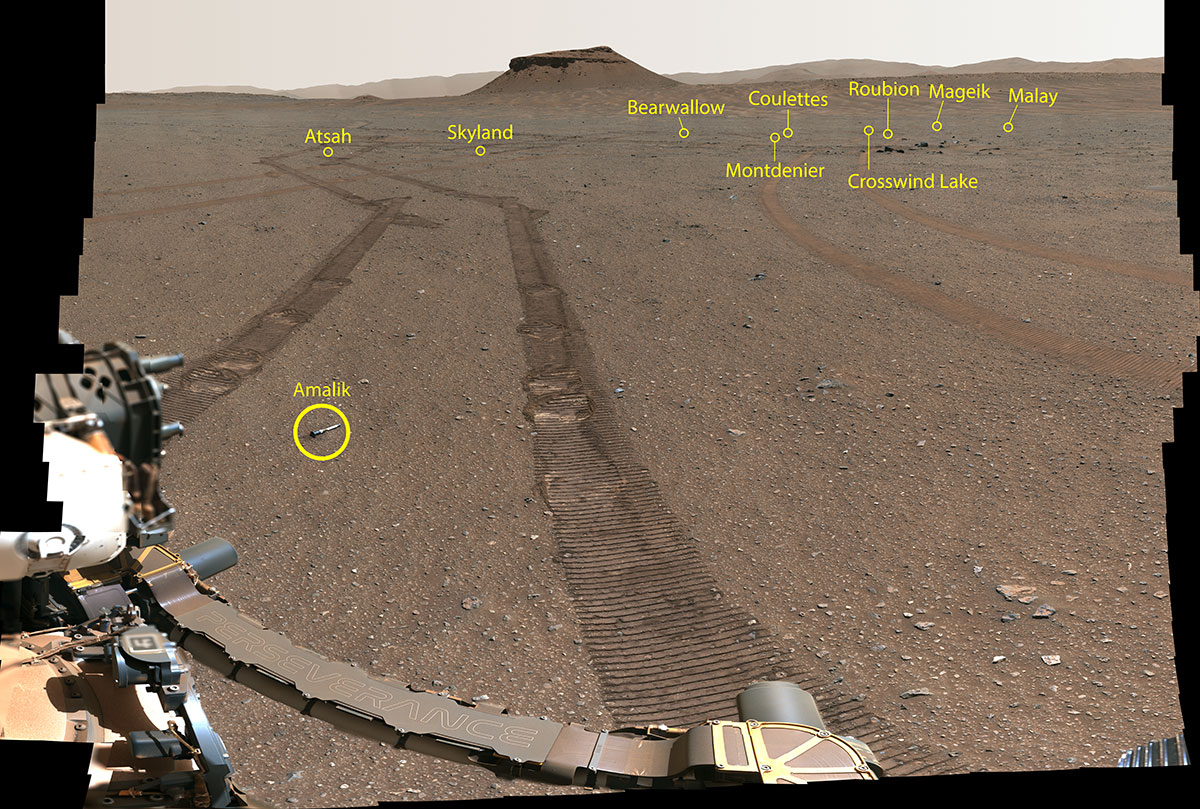
NASA’s Perseverance rover captured this portrait of its recently completed sample depot using its Mastcam-Z camera on Jan. 31, 2023, the 693rd Martian day, or sol, of the mission. Containing 10 samples, the depot is a crucial milestone in the NASA-ESA Mars Sample Return campaign. Credit: NASA/JPL-Caltech/ASU/MSSS Full Image Details
The Red Planet rover snapped a portrait of the sample depot it has assembled with 10 backup sample tubes that could be returned to Earth by a future mission.
Even space robots know what “pics or it didn’t happen” means: NASA’s Perseverance Mars rover provided a panorama of its recently completed sample depot – a big milestone for the mission and humanity’s first collection of samples on another planet. The panorama, stitched together from 368 images that were sent to Earth, captures more than a month of careful placement and mapping of 10 titanium tubes.
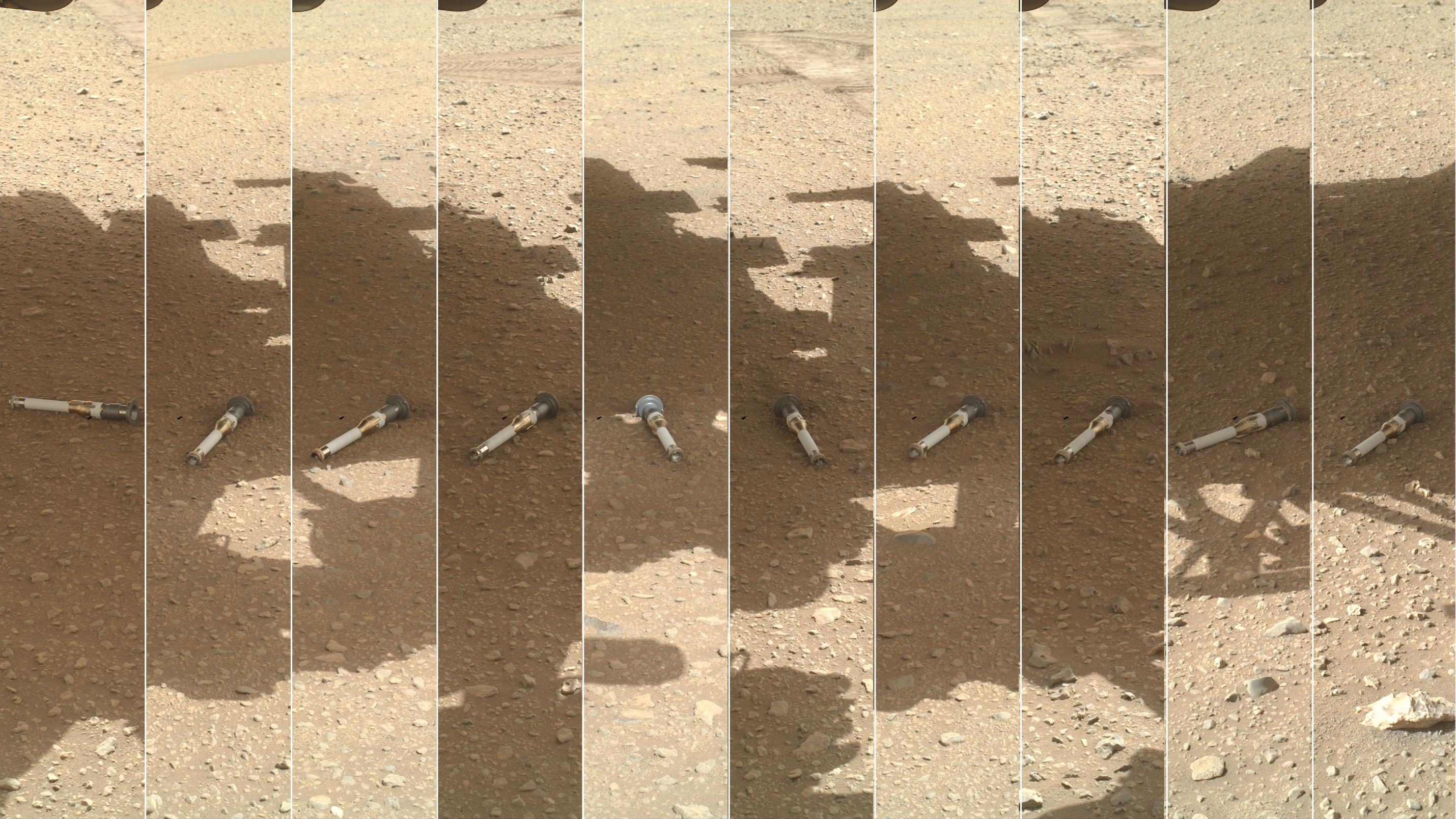
Eight of those tubes are filled with rock and regolith (broken rock and dust), while one is an atmospheric sample and one is a “witness” tube. The rover photographed the depot using the Mastcam-Z camera on the top of its mast, or “head,” on Jan. 31, 2023. The color has been adjusted to show the Martian surface approximately as it would look to the human eye.
The depot represents a backup collection of samples that could be recovered in the future by the Mars Sample Return campaign, a joint effort between NASA and ESA (European Space Agency) that aims to bring Mars samples to Earth for closer study. The rover began building the depot on Dec. 21, 2022, precisely spacing the tubes in case they need to be retrieved at a future date.
The primary tubes reside in the belly of Perseverance, which would pass them, along with future samples taken during the mission to a Sample Retrieval Lander as part of the campaign. If anything were to happen to the rover to prevent it from delivering tubes directly to the lander, samples could be retrieved from the depot instead. (Learn more about all 18 samples taken so far.)
Perseverance built the depot at “Three Forks,” a location within Jezero Crater. Billions of years ago, a river flowed into the crater, carrying sediment that formed a steep, fan-shaped delta that the rover will drive up in the months ahead.
While the Martian surface is now cold, dry, and generally inhospitable to life, ancient Mars was likely similar to Earth – and could have supported microbial life, if any ever formed on the Red Planet. The samples Perseverance is collecting could help scientists determine whether life ever left its mark in a place like Jezero Crater.
This photomontage shows each of the sample tubes deposited by NASA’s Perseverance Mars rover at the Three Forks sample depot, as viewed by the WATSON camera on the end of the rover’s robotic arm. Credit: NASA/JPL-Caltech/MSSS Full Image Details
More About the Mission
A key objective for Perseverance’s mission on Mars is astrobiology, including the search for signs of ancient microbial life. The rover will characterize the planet’s geology and past climate, pave the way for human exploration of the Red Planet, and be the first mission to collect and cache Martian rock and regolith (broken rock and dust).
Subsequent NASA missions, in cooperation with ESA (European Space Agency), would send spacecraft to Mars to collect these sealed samples from the surface and return them to Earth for in-depth analysis.
The Mars 2020 Perseverance mission is part of NASA’s Moon to Mars exploration approach, which includes Artemis missions to the Moon that will help prepare for human exploration of the Red Planet.
JPL, which is managed for NASA by Caltech in Pasadena, California, built and manages operations of the Perseverance rover. Arizona State University leads the operations of the Mastcam-Z instrument, working in collaboration with Malin Space Science Systems in San Diego, on the design, fabrication, testing, and operation of the cameras, and in collaboration with the Neils Bohr Institute of the University of Copenhagen on the design, fabrication, and testing of the calibration targets.
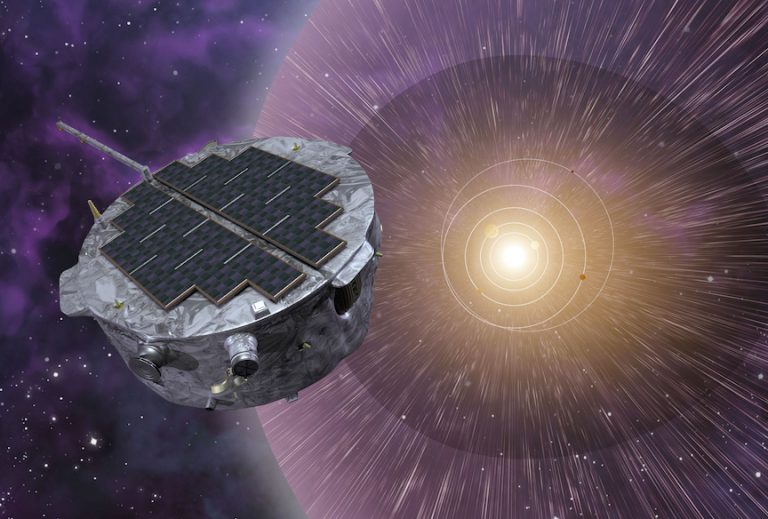
Artist’s impression of the Interstellar Mapping and Acceleration Probe (IMAP). The mission will help us better understand the flow of particles from the Sun called the solar wind — and how those particles interact with space within the solar system and beyond. Credit: NASA/Johns Hopkins APL/Princeton University/Steve Gribben
NASA’s Interstellar Mapping and Acceleration Probe (IMAP) spacecraft has completed the Mission Critical Design Review and is on track to meet its scheduled 2025 launch.
Southwest Research Institute (SwRI) is managing the payload office, providing the scientific instrument Compact Dual Ion Composition Experiment (CoDICE) and is participating on other instrument teams for the mission, which will study the interaction between the solar wind and the interstellar medium as well as the fundamental processes of particle acceleration in space.
“IMAP will help us gain a greater understanding of how our Sun interacts with the rest of the solar system,” said Susan Pope, director of SwRI’s Department of Space Instrumentation and IMAP’s payload manager. “IMAP will give us a more complete picture of the interaction between the interstellar medium and the solar wind, providing a better understanding of our place in the universe.”
IMAP is designed to help researchers better understand the boundary of the heliosphere, the magnetic bubble created by the solar wind, the constant flow of particles from the Sun. The bubble surrounds and protects our solar system, limiting the amount of harmful cosmic radiation entering the heliosphere. IMAP instruments will collect and analyze particles that make it through the barrier.
Additionally, the mission will examine the fundamental processes that accelerate particles throughout the heliosphere and beyond. The resulting energetic particles and cosmic rays can harm astronauts and space-based technologies.
The Institute is providing the CoDICE instrument, which combines the capabilities of multiple instruments into one patented sensor. Initially developed through SwRI internal funding, CoDICE will measure the distribution and composition of interstellar pickup ions, particles that make it through the “heliospheric” filter. It will also characterize solar wind ions as well as the mass and composition of highly energized solar particles associated with flares and coronal mass ejections.
SwRI is a key member of the teams for the IMAP-Hi and IMAP-Lo instruments, responsible for the detector on the IMAP-Hi and the conversion subsystem on the IMAP-Lo. SwRI is also building high-voltage power supplies for the Solar Wind Electron (SWE) instrument, which measures the distribution of thermal electrons in the solar wind, and the Global Solar Wind Structure (GLOWS) instrument, a non-imaging photometer that will observe the structure of the solar wind. Additionally, SwRI is providing digital electronics for four IMAP instruments.
“Most of the instruments have completed their engineering model testing and have started fabricating their flight hardware,” Pope said. “All instruments are scheduled to be delivered to the Johns Hopkins University Applied Physics Laboratory for installation on the spacecraft between December 2023 and February 2024.”
Princeton University professor David J. McComas leads the mission with an international team of 24 partner institutions. The Johns Hopkins Applied Physics Laboratory in Laurel, Maryland builds the spacecraft and operates the mission. IMAP is the fifth mission in NASA’s Solar Terrestrial Probes (STP) Program portfolio. The Explorers and Heliophysics Project Division at NASA’s Goddard Space Flight Center in Greenbelt, Maryland, manages the STP Program for the agency’s Heliophysics Division of NASA’s Science Mission Directorate.
SwRI is an independent, nonprofit, applied research and development organization based in San Antonio, Texas, with more than 3,000 employees and an annual research volume of nearly $798 million. Southwest Research Institute and SwRI are registered marks in the U.S. Patent and Trademark Office. For more information, please visit www.swri.org.
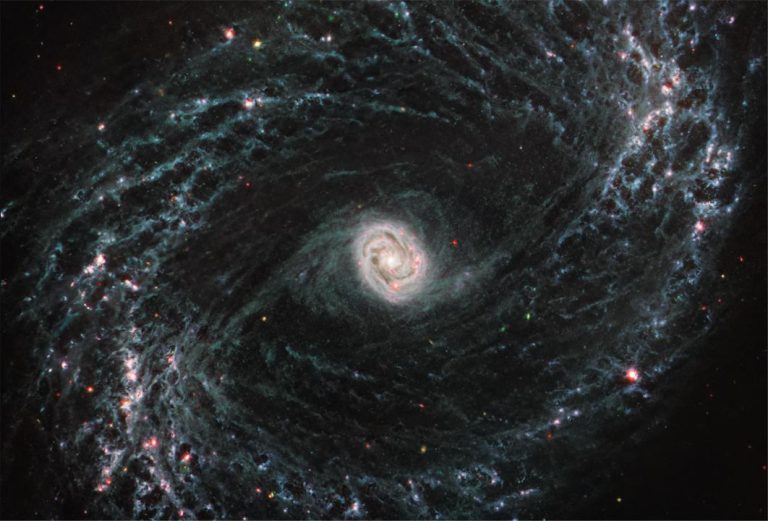
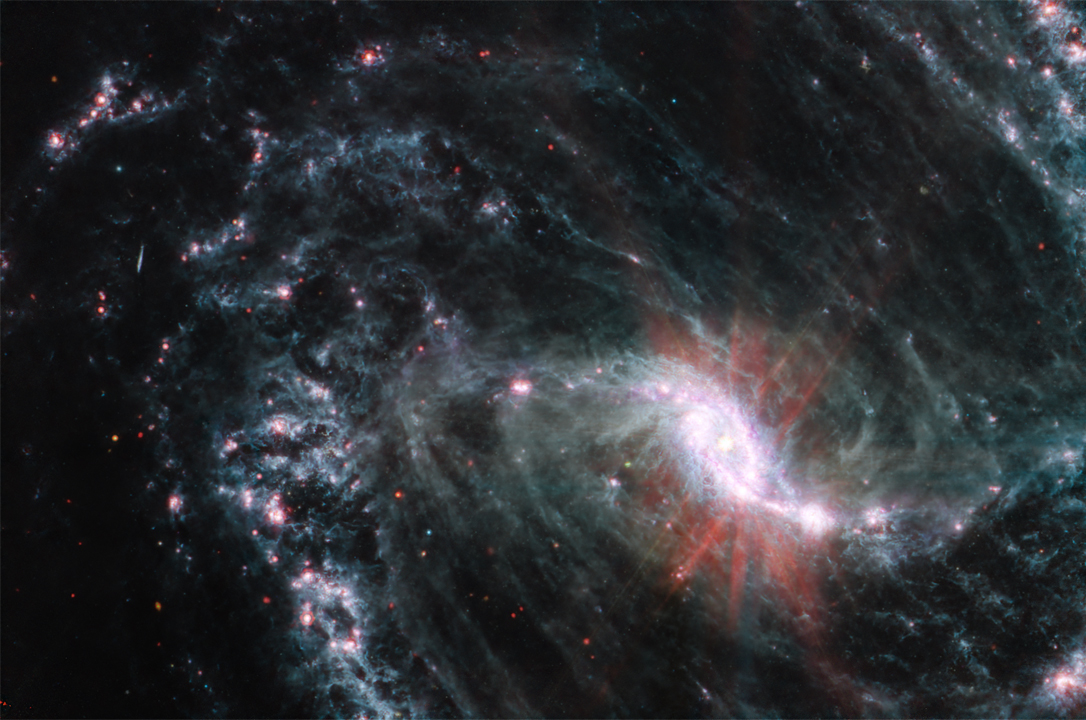
The Mid-Infrared Instrument (MIRI) on NASA’s James Webb Space Telescope took this image of NGC 1433, a barred spiral galaxy with a particularly bright core surrounded by double star-forming rings. The observations reveal cavernous bubbles of gas where forming stars have released energy. Credit: NASA, ESA, CSA, and J. Lee (NOIRLab). Image processing: A. Pagan (STScI)
Peering through obscuring clouds of dust, the MIRI instrument has revealed networks of giant cavities and blown-out bubbles in the gaseous arms of distant galaxies.
Researchers using NASA’s James Webb Space Telescope are getting their first look at star formation, gas, and dust in nearby galaxies with unprecedented resolution at infrared wavelengths. The data has enabled an initial collection of 21 research papers which provide new insight into how some of the smallest-scale processes in our universe – the beginnings of star formation – impact the evolution of the largest objects in our cosmos: galaxies.
The largest survey of nearby galaxies in Webb’s first year of science operations is being carried out by the Physics at High Angular resolution in Nearby Galaxies (PHANGS) collaboration, involving more than 100 researchers from around the globe. The Webb observations are led by Janice Lee, Gemini Observatory chief scientist at the National Science Foundation’s NOIRLab and affiliate astronomer at the University of Arizona in Tucson.
The team is studying a diverse sample of 19 spiral galaxies, and in Webb’s first few months of science operations, observations of five of those targets – M74, NGC 7496, IC 5332, NGC 1365, and NGC 1433 – have taken place. The results are already astounding astronomers.
“The clarity with which we are seeing the fine structure certainly caught us by surprise,” said team member David Thilker of Johns Hopkins University in Baltimore, Maryland.
“We are directly seeing how the energy from the formation of young stars affects the gas around them, and it’s just remarkable,” said team member Erik Rosolowsky of the University of Alberta, Canada.
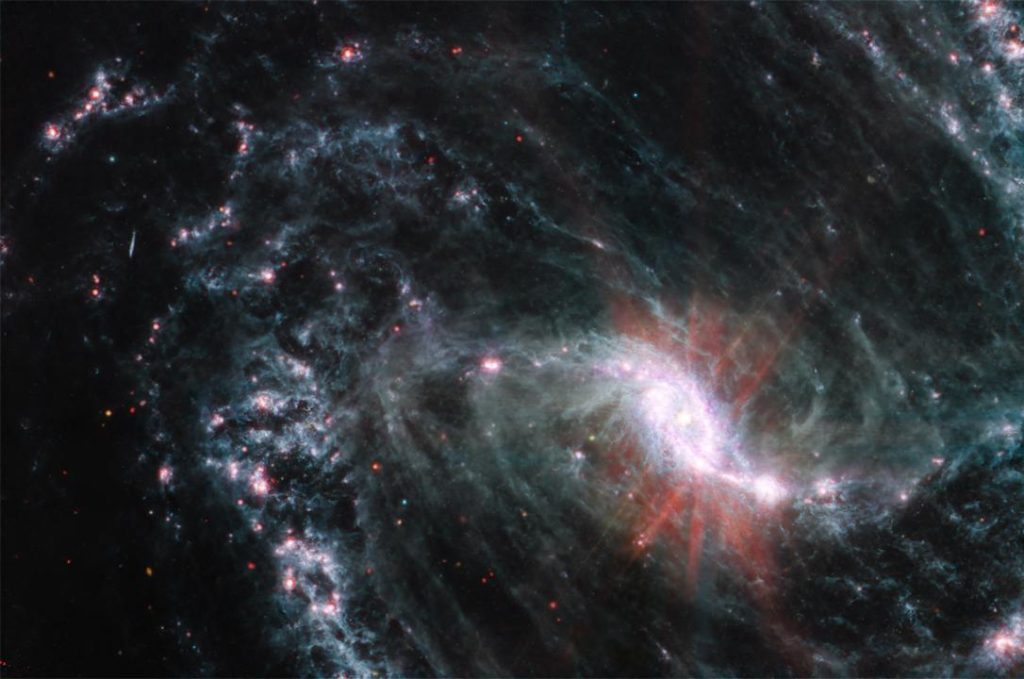
The spiral arms of galaxy NGC 7496 are filled with cavernous bubbles and shells overlapping one another in this image from MIRI. These filaments and hollow cavities are evidence of young stars releasing energy and, in some cases, blowing out the gas and dust of the interstellar medium surrounding them.
Credit: NASA, ESA, CSA, and J. Lee (NOIRLab). Image processing: A. Pagan (STScI)
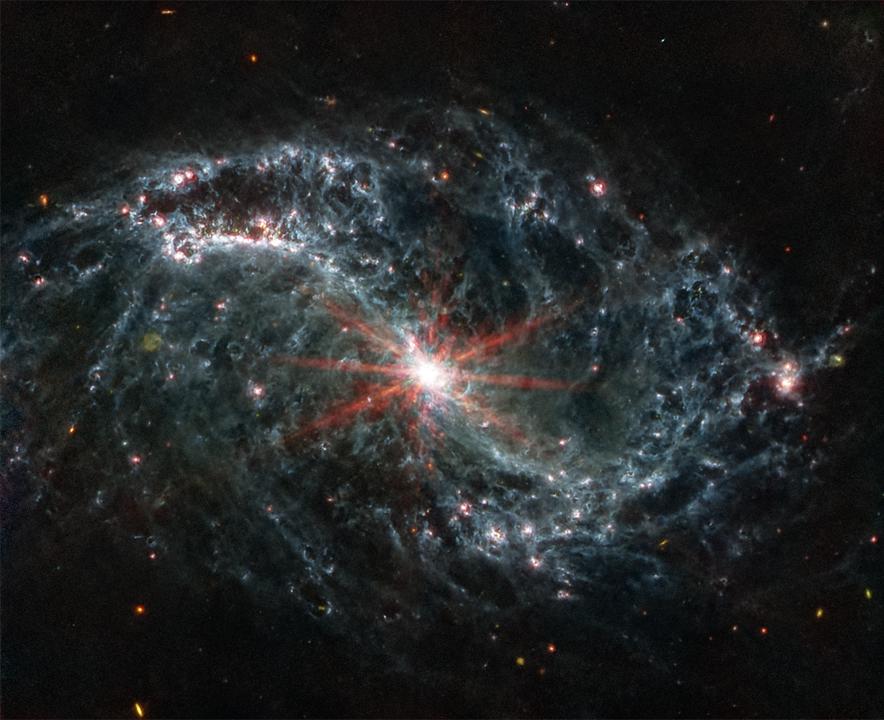
The images from Webb’s Mid-Infrared Instrument (MIRI) reveal the presence of a network of highly structured features within these galaxies – glowing cavities of dust and huge cavernous bubbles of gas that line the spiral arms. In some regions of the nearby galaxies observed, this web of features appears built from both individual and overlapping shells and bubbles where young stars are releasing energy.
“Areas which are completely dark in Hubble imaging light up in exquisite detail in these new infrared images, allowing us to study how the dust in the interstellar medium has absorbed the light from forming stars and emitted it back out in the infrared, illuminating an intricate network of gas and dust,” said team member Karin Sandstrom of the University of California, San Diego.
The high-resolution imaging needed to study these structures has long evaded astronomers – until Webb came into the picture.
“The PHANGS team has spent years observing these galaxies at optical, radio, and ultraviolent wavelengths using NASA’s Hubble Space Telescope, the Atacama Large Millimeter/Submillimeter Array, and the Very Large Telescope’s Multi Unit Spectroscopic Explorer,” added team member Adam Leroy of the Ohio State University. “But the earliest stages of a star’s life cycle have remained out of view because the process is enshrouded within gas and dust clouds.”
Webb’s powerful infrared capabilities can pierce through the dust to connect the missing puzzle pieces.
For example, specific wavelengths observable by MIRI (7.7 and 11.3 microns) and Webb’s Near-Infrared Camera (3.3 microns) are sensitive to emission from polycyclic aromatic hydrocarbons, which play a critical role in the formation of stars and planets. These molecules were detected by Webb in the first observations by the PHANGS program.
Studying these interactions at the finest scale can help provide insights into the larger picture of how galaxies have evolved over time.
In this MIRI image of galaxy NGC 1365, clumps of dust and gas in the interstellar medium have absorbed the light from forming stars and emitted it back out as infrared light. This illuminates an intricate network of cavernous bubbles and filamentary shells.
Credit: NASA, ESA, CSA, and J. Lee (NOIRLab). Image processing: A. Pagan (STScI)
“Because these observations are taken as part of what’s called a treasury program, they are available to the public as they are observed and received on Earth,” said Eva Schinnerer of the Max Planck Institute for Astronomy in Heidelberg, Germany, and leader of the PHANGS collaboration.
The PHANGS team will work to create and release data sets that align Webb’s data to each of the complementary data sets obtained previously from the other observatories, to help accelerate discovery by the broader astronomical community.
“Thanks to the telescope’s resolution, for the first time we can conduct a complete census of star formation, and take inventories of the interstellar medium bubble structures in nearby galaxies beyond the Local Group,” Lee said. “That census will help us understand how star formation and its feedback imprint themselves on the interstellar medium, then give rise to the next generation of stars, or how it actually impedes the next generation of stars from being formed.”
The James Webb Space Telescope is the world’s premier space science observatory. Webb will solve mysteries in our solar system, look beyond to distant worlds around other stars, and probe the mysterious structures and origins of our universe and our place in it. Webb is an international program led by NASA with its partners, ESA (European Space Agency), and CSA (Canadian Space Agency).
MIRI was developed through a 50-50 partnership between NASA and ESA. NASA’s Jet Propulsion Laboratory led the U.S. efforts for MIRI, and a multinational consortium of European astronomical institutes contributes for ESA. George Rieke with the University of Arizona is the MIRI science team lead. Gillian Wright is the MIRI European principal investigator.
Laszlo Tamas with UK ATC manages the European Consortium. The MIRI cryocooler development was led and managed by JPL, in collaboration with Northrop Grumman in Redondo Beach, California, and NASA’s Goddard Space Flight Center in Greenbelt, Maryland.
For more information about the Webb mission, visit: