
Home Blog Page 85

ClearSpace Space Debris Removal Mission Advances To Its Next Phase

0
ClearSpace-1

Switzerland-based ClearSpace and its industrial partners have successfully passed their first major program review with the European Space Agency (ESA) for its ground-breaking mission to remove a large debris object from Earth orbit. With this milestone, ClearSpace has shown the ability to meet the technology requirements this mission demands.

In addition, ESA and the participating States have reconfirmed their support for active debris removal by fully funding the next phase of the ClearSpace-1 program during ESA’s Ministerial Council last November.

In 2020, ClearSpace was commissioned by ESA to build, launch, and fly a novel deorbit mission that will rendezvous with and capture a large piece of debris in orbit, and then safely pilot the object into Earth’s atmosphere.

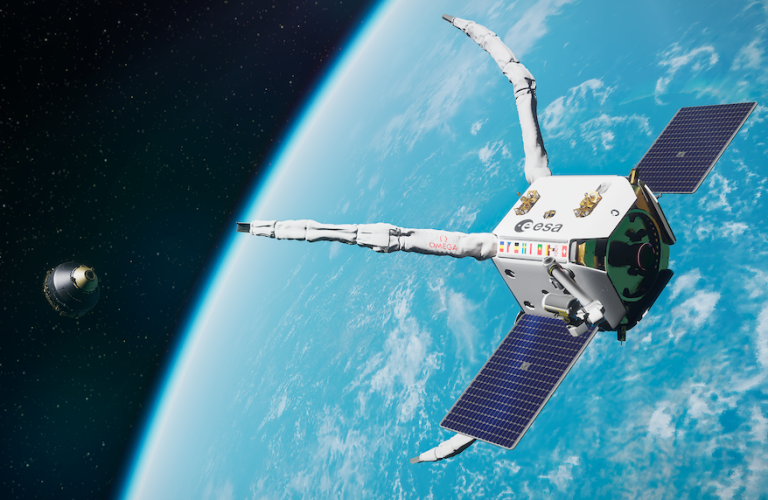
As a key step in the development of this unique debris-removal mission, ClearSpace has designed a four-armed capture system for its robotic satellite. This innovative technology successfully passed proof-of-concept testing at ESA’s ESTEC technology centre in the Netherlands in October 2022, a major milestone that contributed to ClearSpace’s successful program review.

ClearSpace is now qualified to proceed to the next phase of ClearSpace-1, continuing with its industrial partners on the satellite’s detailed design, procurement of spacecraft equipment, and manufacturing of the engineering model servicer satellite, all with an eye toward launch as soon as 2026.

Along with an experienced European industrial team and the close collaboration with ESA, we were able to reach this important milestone in an effective and technologically sound manner,” says Muriel Richard-Noca, ClearSpace Chief Technology Officer and Cofounder.

Luc Piguet ClearSpace CEO and Cofounder adds: “This is a major milestone for ClearSpace, setting us on course to become one of the world leading In-Orbit Servicing companies and is also a major step toward the resolution of the space debris issue. Debris represents a growing threat to the satellite services we all depend on, including climate change, weather prediction, communication, and a host of other applications. The cost of inaction is only increasing.”

In ESA’s Space Debris Environment Report, the agency stresses that it is necessary to start actively cleaning up the space environment – removing existing, larger debris objects from busy regions – to stop the exponential growth of space debris.

Last January 19. ClearSpace announced that it had finalised a EUR 26.7 million series A financing round, to further accelerate the movement toward the sustainable use of space.

About ClearSpace

ClearSpace SA is an In-Orbit Services (IOS) company created in 2018, intend on revolutionising how space missions are conducted. ClearSpace is creating technologies that will support a wide range of IOS applications, from disposal and in-orbit transport to mission extension, assembly, manufacturing, repair, and recycling. It aims to support institutions and commercial operators alike, to enhance sustainable space operations and promote a circular space economy. In 2020, ClearSpace was awarded a service contract by ESA to develop ClearSpace-1, using state of the art technology and advanced on-orbit techniques to demonstrate the feasibility of removing debris from orbit. The ClearSpace-1 mission is also supported by Elite Partner Omega. ClearSpace is growing rapidly with teams in Switzerland, the UK, Germany and Luxembourg, and is actively engaged in the initial phases of two other in-orbit servicing missions in addition to ClearSpace-1. clearspace.today

ClearSpace Media Contact E-mail: [email protected] Phone: +41 78 224 36 35

By Keith Cowing
Source SpaceRef
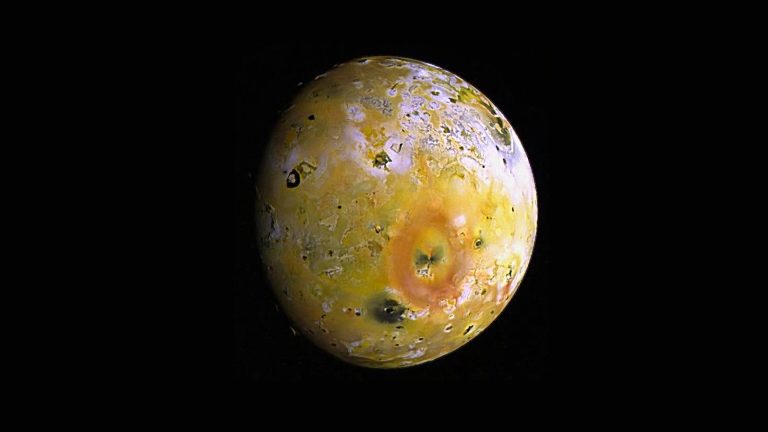
Io, Jupiter’s Chaotic Volcano Moon

0

While all the moons in our Solar System have their intriguing characteristics and quirks, it’s hard to imagine anything that rivals the sheer mayhem of Jupiter’s moon Io. It’s a topsy-turvy world that’s peerless in its explosiveness — it’s the most volcanically active body in our Solar System.

Though it’s not much larger than Earth’s Moon, Io couldn’t be more different than our planet’s placid companion. So what makes Io tick? What can be gleaned from its near-constant volatility?

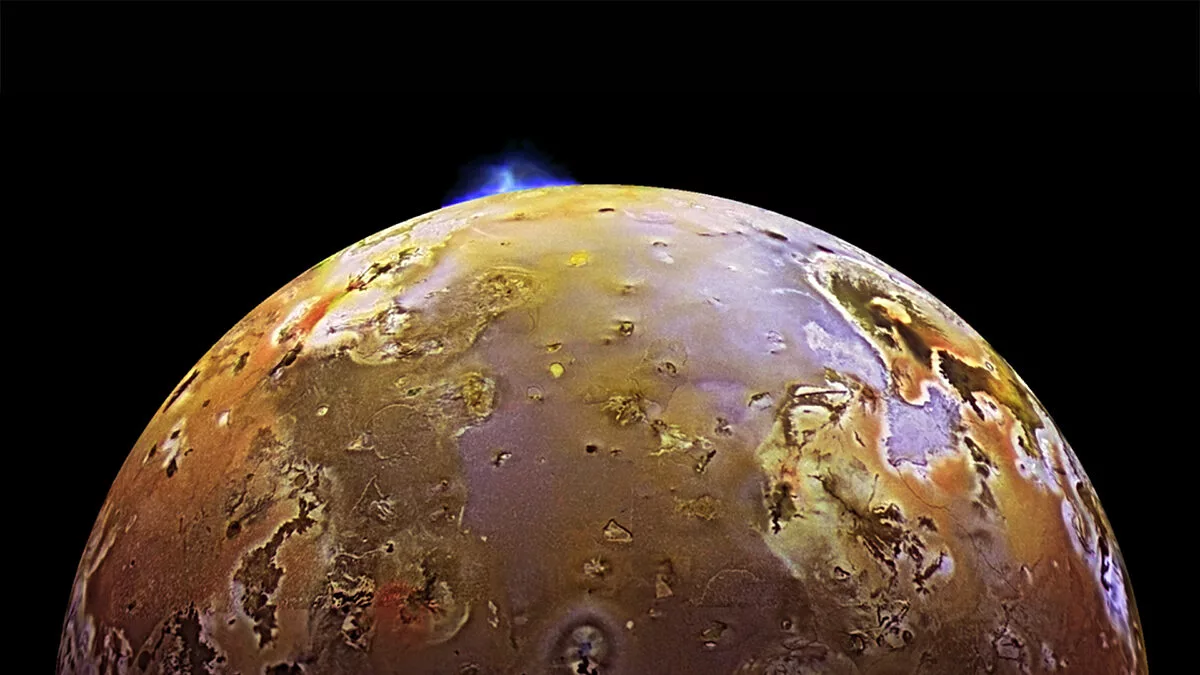
Io eruption from Galileo
IO ERUPTION FROM GALILEO In 1997 NASA’s Galileo spacecraft caught a massive volcanic eruption — the blue protuberance on the top left — on Jupiter’s moon Io. This small moon is one of just a handful of volcanically active worlds in our Solar System.Image: NASA/JPL/DLR

Why we study Io

While Io and Earth both have volcanoes, eruptions on the Jovian moon are thought to be caused by very different factors. Learning more about Io can help us understand volcanism and the complex internal mechanisms in some of our Solar System’s worlds.

Io is the innermost of Jupiter’s four largest moons, which are also known as the Galilean moons (Europa, Ganymede, and Callisto are the remaining three). Because it’s the closest moon to its massive host planet, Io feels a strong gravitational pull as it orbits Jupiter. Io is also tugged on by its neighboring moons as they pass one another, making Io’s orbit around Jupiter slightly eccentric. This brings it closer to Jupiter at times, increasing the planet’s gravitational pull and warping the shape of the moon. As Io moves farther away, Jupiter’s gravitational effect weakens and the moon “relaxes.” This constant stretching and squeezing, which sounds anything but relaxing, creates movement and friction between layers of rock beneath the moon’s surface. The friction creates enough heat to melt solid rock into magma.

All this chaos creates the perfect, hectic conditions for a volcano world like no other. It’s estimated that Io is home to roughly 400 active volcanoes, the lava from which can exceed 1,000 degrees Celsius (1,832 degrees Fahrenheit). Whether that makes it a geological dystopia or utopia is for you to decide.

Io facts

Surface temperature: -130 degrees Celsius (-202 degrees Fahrenheit)

Average distance from Sun: 5.4 AU

Diameter: 3,640 km (2,260 miles)

Volume: 2.53×10¹⁰ cubic kilometers (6×10⁹ cubic miles)

Gravity: 1.796 m/s2

Solar day: 42.5 hours

Solar year: About 12 Earth years

Atmosphere: Very thin; primarily sulfur dioxide

Missions to Io

Io was discovered in 1610 by ​​the astronomer Galileo Galilei. However, it wasn’t until the 1960s that scientists began to understand how Jupiter’s gravitational field affects its third-largest moon.

NASA’s twin Pioneer 10 and 11 probes — which launched in 1972 and 1973, respectively — were the first spacecraft to investigate the Jupiter system in great detail. Pioneer 11 was the first spacecraft to take up-close measurements of Io.

In 1979, NASA’s Voyager 1 took pictures of Io that uncovered more about its thin atmosphere. The spacecraft was also able to capture evidence of volcanic eruptions. In the same year, Voyager 2 imaged volcanic plumes spewing material 100 kilometers (62 miles) into space. The probe confirmed six plumes that were previously spotted by Voyager 1.

NASA’s Galileo spacecraft reached Jupiter in 1995 and orbited the planet for roughly eight years, exploring several of its moons, including Io. Across six flybys, Galileo collected a vast array of infrared and visible images of Io and revealed that the moon experiences volcanic activity that could be 100 times greater than Earth’s. For context, there are about 1,350 to 1,500 active volcanoes on Earth, and a total of roughly 50 eruptions each year.

NASA’s Juno probe arrived at the Jupiter system in 2016. While the spacecraft’s primary mission focused on the gas giant, Juno has turned its attention to Ganymede, Europa, and Io in its extended mission.

In December 2022, Juno completed a close flyby of Io, which yielded a stunning infrared view of the moon’s volcanic surface and lava lakes. The Juno team plans to conduct more flybys in 2023 and 2024 in hopes of unraveling more of Io’s many mysteries.

No space agency has approved future plans for a mission to Io, though ideas like the Io Volcano Observer (IVO) have been proposed. Through a series of flybys, IVO would use its radio transmitter to investigate whether Io truly has a magma ocean hidden beneath its surface.

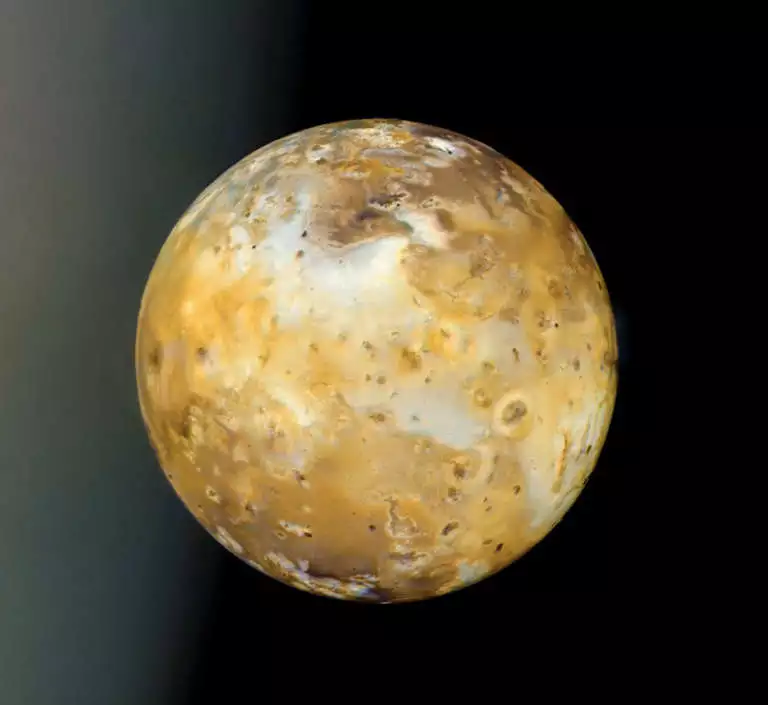
Io and Jupiter from Voyager 1
IO AND JUPITER FROM VOYAGER 1 Voyager 1 captured this mosaic on Io on March 4, 1979, as a nearly full-phase Io appeared to travel across Jupiter’s terminator. Viewed near the edge of its disk and at local dusk, only the uppermost blue hazes of Jupiter’s atmosphere are visible.Image: NASA / JPL / Ted Stryk

NASA Virtual Aviation Showcase To Highlight Transformative Innovation

0

ImaginAviation Logo
Credits: NASA

Members of the media and public are invited to participate in NASA’s imaginAviation, a free, virtual event focusing on how the agency transforms research innovations into new possibilities for aviation for the benefit of humanity. Sessions run from Tuesday, Feb. 28, to Thursday, March 2.

A full agenda for the workshop is online.

Registered members will have access to view presentations about NASA’s efforts to transform aviation in ways that increase sustainability and air transportation options, as well as gain insight into technologies in development by NASA and its partners.

Speakers include:

  • NASA Associate Administrator Bob Cabana
  • Robert Pearce, associate administrator, NASA’s Aeronautics Research Mission Directorate (ARMD)
  • Barbara Esker, assistant deputy association administrator for Missions, ARMD
  • Robbie Cabral, inventor
  • Trisha Pesiri, former Federal Aviation Administration air traffic controller and wildland fire survivor

Sessions will cover some of NASA’s high-priority missions and projects, including sustainable aviation and the Quesst mission, which seeks to enable quiet supersonic flight over land using its experimental X-59 aircraft for testing. NASA’s Advanced Air Mobility efforts to develop new air transportation systems for people and cargo in underserved areas are another topic on the agenda.

NASA’s imaginAviation is presented by the agency’s Transformative Aeronautics Concepts Program. For more information on the event or to register, visit:

https://nari.arc.nasa.gov/imaginAviation/

By: Claire O’Shea
Originally published at NASA

The Global Impact Of Electricity In Dust Storms On Mars

0
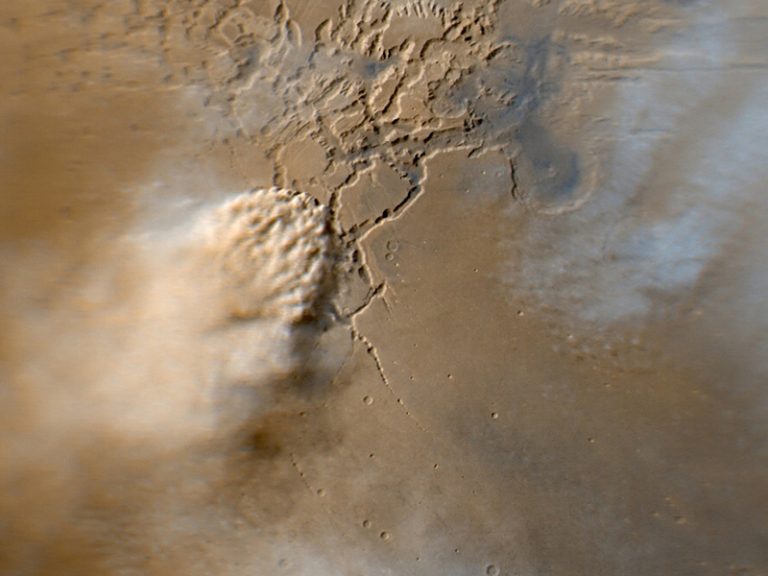
Dust storm on Mars. NASA

Mars is infamous for its intense dust storms, some of which kick up enough dust to be seen by telescopes on Earth.

When dust particles rub against each other, as they do in Martian dust storms, they can become electrified, transferring positive and negative electric charge in the same way as you build up static electricity if you shuffle across a carpet.

Strong electric fields build up in dust storms on Earth, so it is perhaps unsurprising that this also happens on Mars. But what happens next? Probably not a sudden flash of lightning, as we might expect on Earth.

Instead, planetary scientist Alian Wang at Washington University in St. Louis thinks electrical discharge on Mars probably looks more like a faint glow. (None of the Mars landers, rovers or other missions have captured a real picture of it.)

“It could be somewhat like the aurora in polar regions on Earth, where energetic electrons collide with dilute atmospheric species,” said Wang, a research professor of earth and planetary sciences in Arts & Sciences.

Flashy or not, this Martian “faux-rora” still packs a hefty punch.

Wang’s new study in the journal Geophysical Research Letters shows that electricity in dust storms could be the major driving force of the Martian chlorine cycle.

As background, scientists consider chlorine one of five elements that are “mobile” on Mars (the others are hydrogen, oxygen, carbon and sulfur). This means chlorine, in different forms, moves back and forth between the surface and the atmosphere on Mars. On the ground, chloride deposits — which are similar to saline playas or shallow salt flats on Earth — are widespread. These chloride deposits likely formed in the early history of Mars as precipitated chloride salts from brine.

In the new study, Wang shows that one particularly efficient way to move chlorine from the ground to the air on Mars is by way of reactions set off by electrical discharge generated in Martian dust activities.

Wang and her collaborators conducted a series of experiments that obtained high yields of chlorine gasses from common chlorides — all by zapping the solid salts with electrical discharge under Mars-like conditions. They conducted these experiments using a planetary simulation chamber at Washington University (called the Planetary Environment and Analysis Chamber, or PEACh).

“The high-releasing rate of chlorine from common chlorides revealed by this study indicates a promising pathway to convert surface chlorides to the gas phases that we now see in the atmosphere,” said Kevin Olsen, a research fellow at The Open University, in the United Kingdom, and a co-author of the new study.

“These findings offer support that Martian dust activities can drive a global chlorine cycle. With the ExoMars Trace Gas Orbiter, we see repeated seasonal activity that coincides with global and regional dust storms,” he said.

Easier on Mars than on Earth

“Frictional electrification is a common process in our solar system, with Martian dust activities known to be a powerful source of electrical charge buildup,” said Wang, who is a faculty fellow of the university’s McDonnell Center for the Space Sciences. “The thin atmosphere on Mars makes it much easier for accumulated electrical fields to break down in the form of electrostatic discharge. In fact, it’s a hundred times easier on Mars than on Earth.”

Scientists involved in the Viking missions that landed on Mars in the 1970s first proposed that dust storms might be a source of the new reactive chemistry on the red planet.

However, the chemical effects of dust activities were difficult to study. Certain mission opportunities, like the ExoMars Schiaparelli EDM launched in 2016, ended in failure. Scientists turned to models and experimental studies.

In recent years, Wang and other scientists published research that shows that when electrostatic discharge interacts with chlorine salts in a Mars-like carbon dioxide-rich environment, it can generate perchlorates and carbonates, and also release chlorine as a gas.

But this new study is the first to try to quantify just how much of these chemical products are actually produced during dust storm events.

“The reaction rates are huge,” Wang said. “Importantly, the released chlorine in a short-time mid-strength electrostatic discharge process is at a percent level.” This means that during a seven-hour simulated electrostatic discharge experiment, at least one out of every 100 chloride molecules is decomposed and then releases its chlorine atom into the atmosphere.

Similar but slightly lower, the formation rates of carbonates and perchlorates are at sub-percent and per-thousand levels, Wang said.

These high yields lead Wang and her team to believe that Martian dust activities can be linked to three global phenomena recently revealed by Mars missions.

Electrical discharge can be tied to the extremely high concentrations of perchlorate and carbonate globally in Martian topsoil, she said. Quantitatively, the high end of the observed concentration ranges can be accumulated by dust storm-induced electrical discharge within less than half of the Amazonian period, the most recent period of Mars’ history, which is thought to have begun about 3 billion years ago. Also, the high yield of released chlorine atoms from chlorides can account for the high concentrations of hydrogen chloride observed in the Martian atmosphere during the 2018 and 2019 dust seasons, when assuming 1 to 10 cm thickness of Martian surface dust would be kicked up by a global dust storm.

“No other process that we know of can do this,” Wang said, “especially with such quantitatively high yield of chlorine release.”

Quantification of Carbonates, Oxychlorines, and Chlorine Generated by Heterogeneous Electrochemistry Induced by Martian Dust Activity, Geophysical Research Letters (open access)

By Keith Cowing
Source SpaceRef

Scientists Observe High-speed Star Formation

0
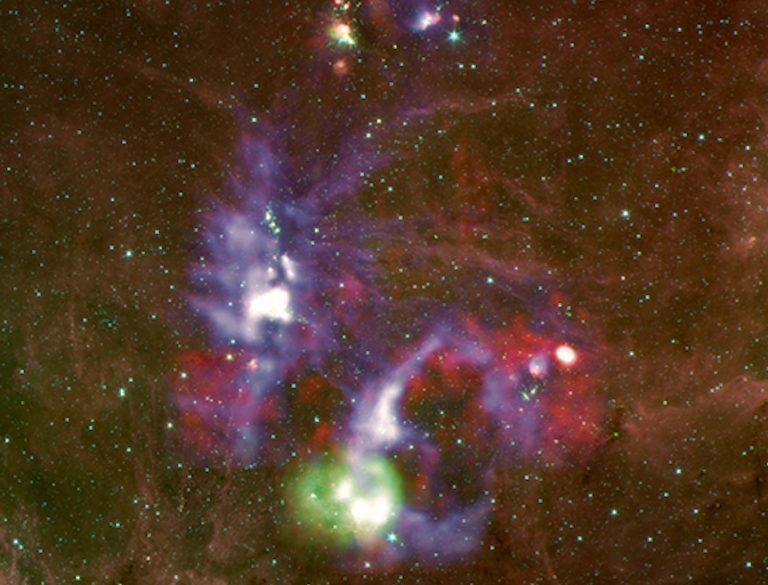
Observation of the Cygnus X Region with the flying observatory SOFIA revealed that stars form there more quickly than previously assumed. CREDIT NASA Spitzer/IRAC MIPS, USRA/SOFIA (L. Proudfit, L. Bonne) and University of Cologne (N. Schneider)

Gas clouds in the Cygnus X Region, a region where stars form, are composed of a dense core of molecular hydrogen (H2) and an atomic shell. These ensembles of clouds interact with each other dynamically in order to quickly form new stars.

Gas clouds in the Cygnus X Region, a region where stars form, are composed of a dense core of molecular hydrogen (H2) and an atomic shell. These ensembles of clouds interact with each other dynamically in order to quickly form new stars.

That is the result of observations conducted by an international team led by scientists at the University of Cologne’s Institute of Astrophysics and at the University of Maryland. Until now, it was unclear how this process precisely unfolds. The Cygnus X region is a vast luminous cloud of gas and dust approximately 5,000 light years from Earth. Using observations of spectral lines of ionized carbon (CII), the scientists showed that the clouds have formed there over several million years, which is a fast process by astronomical standards. The results of the study ‘Ionized carbon as a tracer for the assembly of interstellar clouds’ will appear in the next issue of Nature Astronomy. The paper is already accessible online.

The observations were carried out in an international project led by Dr Nicola Schneider at the University of Cologne and Prof Alexander Tielens at the University of Maryland as part of the FEEDBACK programme on board the flying observatory SOFIA (Stratospheric Observatory for Infrared Astronomy). The new findings modify previous perceptions that this specific process of star formation is quasi-static and quite slow. The dynamic formation process now observed would also explain the formation of particularly massive stars.

The x and y axes are offsets in arcmin from the central map position; the z axis is velocity in km s−1. The emission starts at the 5σ level for both tracers. The bright star-forming cloud DR21 and other dense molecular clouds are embedded in a large-scale cloud structure only visible in [CII] (dark blue). An interactive version of these plots is found at https://astro.uni-koeln.de/stutzki/research/feedback/animations.

By comparing the distribution of ionized carbon, molecular carbon monoxide and atomic hydrogen, the team found that the shells of interstellar gas clouds are made of hydrogen and collide with each other at speeds of up to twenty kilometres per second. “This high speed compresses the gas into denser molecular regions where new, mainly massive stars form. We needed the CII observations to detect this otherwise ‘dark’ gas,” said Dr Schneider. The observations show for the first time the faint CII radiation from the periphery of the clouds, which could not be observed before. Only SOFIA and its sensitive instruments were capable of detecting this radiation.

SOFIA was operated by NASA and the German Aerospace Center (DLR) until September 2022. The observatory consisted of a converted Boeing 747 with a built-in 2.7-metre telescope. It was coordinated by the German SOFIA Institute (DSI) and the Universities Space Research Association (USRA). SOFIA observed the sky from the stratosphere (above 13 kilometres) and covered the infrared region of the electromagnetic spectrum, just beyond what humans can see. The Boeing thus flew above most of the water vapour in the Earth’s atmosphere, which otherwise blocks out infrared light. This allowed the scientists to observe a wavelength range that is not accessible from Earth. For the current results, the team used the upGREAT receiver installed on SOFIA in 2015 by the Max Planck Institute for Radio Astronomy in Bonn and the University of Cologne.

Even though SOFIA is no longer in operation, the data collected so far are essential for basic astronomical research because there is no longer an instrument that extensively maps the sky in this wavelength range (typically 60 to 200 micrometres). The now active James Webb Space Telescope observes in the infrared at shorter wavelengths and focuses on spatially small areas. Therefore, the analysis of the data collected by SOFIA is ongoing and continues to provide important insights – also regarding other star-forming regions: “In the list of FEEDBACK sources, there are other gas clouds in different stages of evolution, where we are now looking for the weak CII radiation at the peripheries of the clouds to detect similar interactions as in the Cygnus X region,” Schneider concluded.

Ionized carbon as a tracer for the assembly of interstellar clouds’, Nature Astronomy (open access)

By Keith Cowing
Source SpaceRef
How Space Travel Influences The Way A Human Brain Works

0
The posterior cingulate cortex and the thalamus showed decreased participation in whole-brain connectivity (magenta), while the right angular gyrus exhibited increased participation in whole-brain connectivity (green) at postflight compared to preflight. These effects were found to persist up to 8 months after the space mission (Fol for follow-up). Significant clusters are scaled by t-statistic and slice coordinates are represented in MNI space. The plots illustrate cosmonaut-specific (gray) intrinsic connectivity contrast (ICC) changes in each significant cluster (red: mean). Subplots summarize the estimated differences between pairs of timepoints. Error bars indicate 95% confidence intervals. Statistical significance is based on p < 0.005 uncorrected at the voxel level followed by p < 0.05 corrected for family-wise error at the cluster level (n = 11). R right, L left. — Communications Biology

Scientists of the University of Antwerp and University of Liège have found how the human brain changes and adapts to weightlessness, after being in space for 6 months.

Some of the changes turned out to be lasting – even after 8 months back on Earth. Raphaël Liégeois, soon to be the third Belgian in space, acknowledges the importance of the research, “to prepare the new generation of astronauts for longer missions.”

A child who learns not to drop a glass on the floor, or a tennis player predicting the course of an incoming ball to hit it accurately are examples of how the brain incorporates the physical laws of gravity to optimally function on Earth. Astronauts who go to space reside in a weightless environment, where the brain’s rules about gravity are no longer applicable. A new study on brain function in cosmonauts has revealed how the brain’s organization is changed after a six-month mission to the International Space Station (ISS), demonstrating the adaptation that is required to live in weightlessness.

The University of Antwerp has been leading this BRAIN-DTI scientific project through the European Space Agency. Magnetic resonance imaging (MRI) data were taken from 14 astronaut brains before and several times after their mission to space. Using a special MRI technique, the researchers collected the astronauts’ brain data in a resting condition, hence without having them engage in a specific task. This resting-state functional MRI technique enabled the researchers to investigate the brain’s default state and to find out whether this changes or not after long-duration spaceflight.

Learning effect

In collaboration with the University of Liège, recent analyses of the brain’s activity at rest revealed how functional connectivity, a marker of how activity in some brain areas is correlated with the activity in others, changes in specific regions.

“We found that connectivity was altered after spaceflight in regions which support the integration of different types of information, rather than dealing with only one type each time, such as visual, auditory, or movement information’, say Steven Jillings and Floris Wuyts (University of Antwerp). “Moreover, we found that some of these altered communication patterns were retained throughout 8 months of being back on Earth. At the same time, some brain changes returned to the level of how the areas were functioning before the space mission.”

Both scenarios of changes are plausible: retained changes in brain communication may indicate a learning effect, while transient changes may indicate more acute adaptation to changed gravity levels.

“This dataset is so special as their participants themselves. Back in 2016, we were historically the first to show how spaceflight may affect brain function on a single cosmonaut. Some years later we are now in a unique position to investigate the brains of more astronauts, several times. Therefore, we are deciphering the potential of the human brain all the more in confidence”, says Dr. Athena Demertzi (GIGA Institute, University of Liège), co-supervisor of this this work.

New generation of astronauts

“Understanding physiological and behavioral changes triggered by weightlessness is key to plan human space exploration. Therefore, mapping changes of brain function using neuroimaging techniques as done in this work is an important step to prepare the new generation of astronauts for longer missions”, comments Raphaël Liégeois, Doctor of Engineering Science (ULiège) with a Thesis in the field of Neuroscience, future ESA Astronaut.

The researchers are excited with the results, though they know it is only the first step in pursuing our understanding of brain communication changes after space travel. For example, we still need to investigate what the exact behavioural consequence is for these brain communication changes, we need to understand whether longer time spent in outer space might influence these observations, and whether brain characteristics may be helpful in selecting future astronauts or monitoring them during and after space travel.

Prolonged microgravity induces reversible and persistent changes on human cerebral connectivity, Communications Biology (open access)

By Keith Cowing
Source SpaceRef

NASA’s Perseverance Rover Set To Begin Third Year At Jezero Crater

0
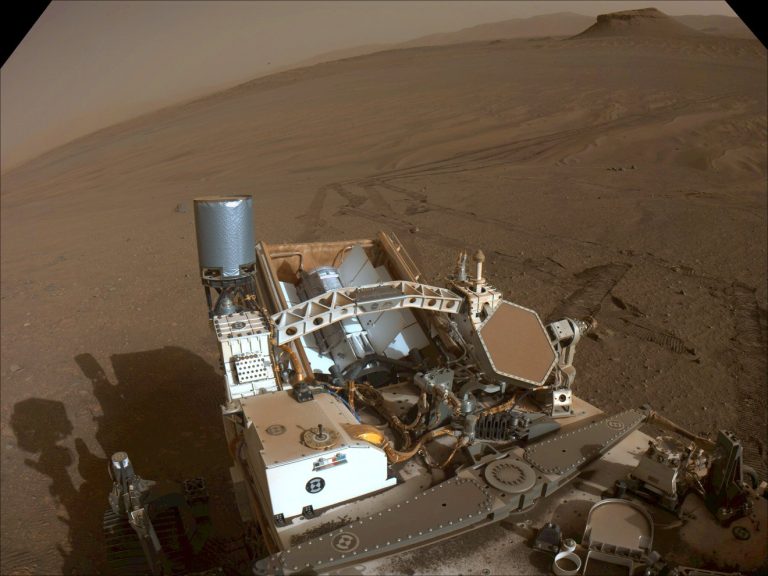
This image of the floor of Jezero Crater was taken by one of the Navcam imagers aboard NASA’s Perseverance Mars rover on Feb. 5, the 698th Martian day, or sol, of the mission.  Credit: NASA/JPL-Caltech

After completing the first sample depot on another world, the rover continues its hunt for Mars rocks worthy of study on Earth.

NASA’s Perseverance rover will celebrate its second anniversary on the surface of Mars Saturday, Feb. 18. Since arriving at Jezero Crater in 2021, the six-wheeled, nuclear-powered rover has been examining geologic features and collecting samples of the Red Planet that are central to the first step of the NASA-ESA (European Space Agency) Mars Sample Return campaign. Scientists want to study Martian samples with powerful lab equipment on Earth to search for signs of ancient microbial life and to better understand the processes that have shaped the surface of Mars.

This is a high-resolution version of a video taken by several cameras as NASA’s Perseverance rover touched down on Mars on Feb. 18, 2021. Cameras aboard the rover captured these shots; a microphone captured the first-ever audio of a Mars landing. Credit: NASA/JPL-Caltech

“Anniversaries are a time of reflection and celebration, and the Perseverance team is doing a lot of both,” said Perseverance project scientist Ken Farley of Caltech in Pasadena. “Perseverance has inspected and performed data collection on hundreds of intriguing geologic features, collected 15 rock cores, and created the first sample depot on another world. With the start of the next science campaign, known as ‘Upper Fan,’ on Feb. 15, we expect to be adding to that tally very soon.”

In addition to the rock cores, Perseverance has collected two regolith samples and one atmospheric sample, and it has sealed three “witness” tubes. (Learn more about all 18 samples taken so far.)

Numbers play a big role in the life of a Mars rover mission, not just because the team includes an impressive quantity of scientists (who don’t usually mind numbers) and engineers (who love them), but because statistics provide the best and most efficient glimpse of vehicle trends and performance.

For instance, the mission can tell you not only that the rover has driven 9.3 miles (14.97 kilometers), but also that as of Feb. 14, its left front wheel has performed 9,423 revolutions. They can tell you not only that the MOXIE (short for Mars Oxygen In-Situ Resource Utilization Experiment) technology demonstration has produced 3.25 ounces (92.11 grams) of oxygen, but also that the Gas Dust Removal Tool (gDRT) – the little gas-puffing device on the robotic arm – has puffed 62 times to clear residual dust and particles from rock-abrading activities.

Where Is Perseverance right now?

“We deal with a lot of numbers,” said Perseverance deputy project manager Steve Lee from NASA’s Jet Propulsion Laboratory in Southern California. “We collect them, evaluate them, compare them, and more times than we want to admit, bore our loved ones with them during a family dinner.”

With that, here are some the most up-to-date statistics regarding Perseverance’s first two Earth years of Jezero surface operations. Some will seem obscure, while others are more immediate, but they all underscore how productive the mission has been.

Perseverance Science Statistics

The rover carries seven science instruments, and they’ve been busy.

  • Laser shots fired by the SuperCam science instrument: 230,554
  • Soundings performed by the RIMFAX (Radar Imager for Mars’ Subsurface Experiment) ground-penetrating radar to study underground rock layers: 676,828
  • Mars audio recordings taken by SuperCam’s microphone: 662
  • Hours of Mars weather data recorded by MEDA (Mars Environmental Dynamics Analyzer): 15,769.1
  • Hours the X-ray filament on the PIXL (Planetary Instrument for X-ray Lithochemistry) instrument has operated: 298.2
  • Laser shots by the SHERLOC (Scanning Habitable Environments with Raman & Luminescence for Organics & Chemicals) instrument: 4,337,010
  • SHERLOC spectroscopy observations: 33

What’s the weather on Mars? See Perseverance’s daily report

Perseverance Mobility and Operational Statistics

Along with the massive drill-toting robotic arm, the rover has a small sample handling arm inside its belly.

  • Times the rover’s main robotic arm has been unstowed and stowed: 64
  • Times the drill on that arm has touched Mars: 39
  • Times drill bits have been exchanged: 48
  • Abrasions performed by the drill: 17
  • Distance the rover’s sample handling arm’s z-stage has traveled up and down: 676.1 feet (206.1 meters)

Perseverance’s Camera Statistics

Perseverance packs seven science cameras along with nine engineering cameras. Together, those cameras have taken more than 166,000 images. Here are the image tallies for several of them.

See raw images from Perseverance’s cameras

The descent stage holding NASAs Perseverance rover
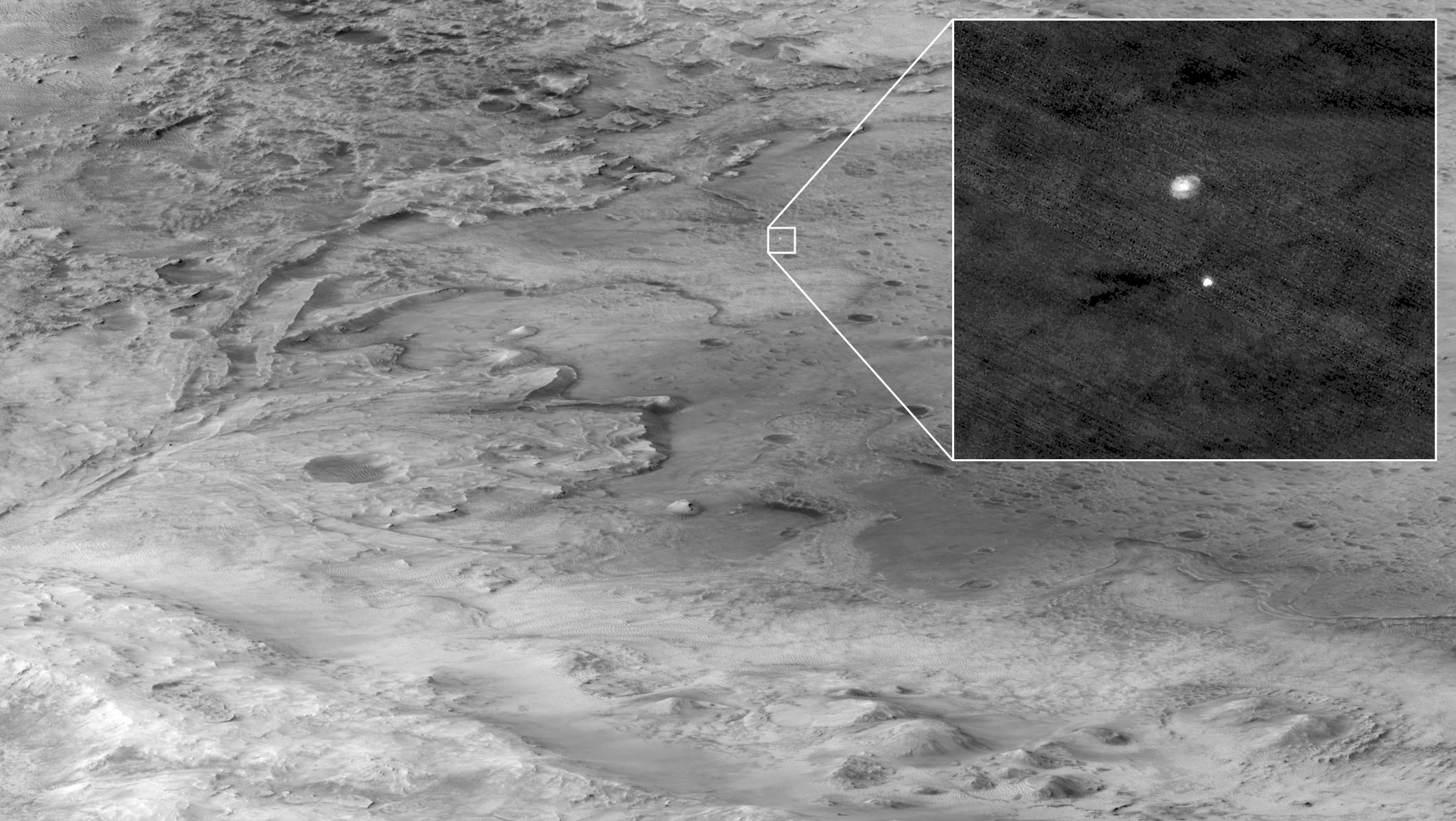
The descent stage holding NASAs Perseverance rover can be seen falling thorough the Martian atmosphere in this image taken on Feb. 18, 2021, by the HiRISE camera aboard the Mars Reconnaissance Orbiter. An ellipse indicates where Perseverance touched down.  Credit: NASA/JPL-Caltech/University of Arizona

“Behind each number is a lot of thought and effort from a very talented group of women and men on the Perseverance team,” said Art Thompson, Perseverance project manager at JPL. “We have come a long way together, and I can’t think of a better group to work with as we go even farther.”

In fact, when Perseverance marks its second landing anniversary, Mars will be 97 million miles (156 million kilometers) from Earth. The weather at Jezero Crater is expected to be sunny with a high of about 7 degrees Fahrenheit (minus 14 degrees Celsius). The rover has instructions to perform remote science and take images of a place in Jezero Crater called “Jenkins Gap.” And people on the mission team are expected to take at least one moment to recall where they were and how they felt two years ago, when Perseverance landed on Mars.

More About the Mission

A key objective for Perseverance’s mission on Mars is astrobiology, including caching samples that may contain signs of ancient microbial life. The rover will characterize the planet’s geology and past climate, pave the way for human exploration of the Red Planet, and be the first mission to collect and cache Martian rock and regolith.

Subsequent NASA missions, in cooperation with ESA, would send spacecraft to Mars to collect these sealed samples from the surface and return them to Earth for in-depth analysis.

The Mars 2020 Perseverance mission is part of NASA’s Moon to Mars exploration approach, which includes Artemis missions to the Moon that will help prepare for human exploration of the Red Planet.

JPL, which is managed for NASA by Caltech, built and manages operations of the Perseverance rover.

More highlights of Perseverance’s first two years on Mars: https://mars.nasa.gov/mars2020/mission/highlights/

For more about Perseverance: https://mars.nasa.gov/mars2020/

News Media Contact

DC Agle
Jet Propulsion Laboratory, Pasadena, Calif.
818-393-9011
[email protected]

Karen Fox / Alana Johnson
NASA Headquarters, Washington
301-286-6284 / 202-358-1501
[email protected] / [email protected]

NASA’s Planetary Radar Captures Detailed View Of Oblong Asteroid

0
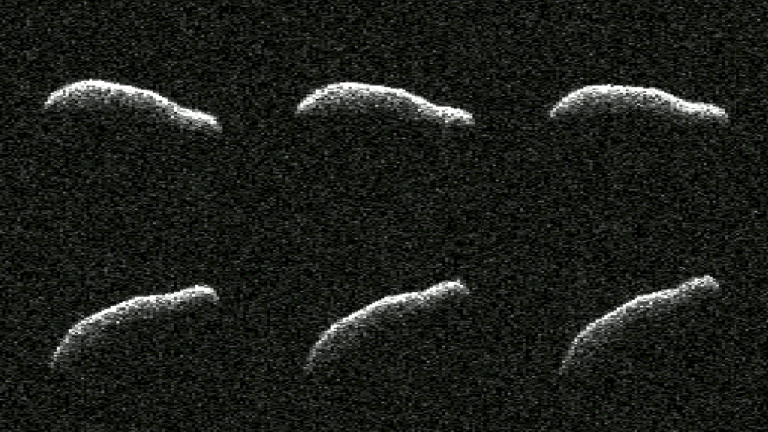
This collage shows six planetary radar observations of 2011 AG5 a day after the asteroid made its close approach to Earth on Feb. 3. With dimensions comparable to the Empire State Building, 2011 AG5 is one of the most elongated asteroids to be observed by planetary radar to date. Credit: NASA/JPL-Caltech

One of the most elongated asteroids ever imaged by planetary radar was closely tracked by the agency’s Deep Space Network.

On Feb. 3, an asteroid more than three times as long as it is wide safely flew past Earth at a distance of about 1.1 million miles (1.8 million kilometers, or a little under five times the distance between the Moon and Earth). While there was no risk of the asteroid – called 2011 AG5 – impacting our planet, scientists at NASA’s Jet Propulsion Laboratory in Southern California closely tracked the object, making invaluable observations to help determine its size, rotation, surface details, and, most notably, shape.

This close approach provided the first opportunity to take a detailed look at the asteroid since it was discovered in 2011, revealing an object about 1,600 feet (500 meters) long and about 500 feet (150 meters) wide – dimensions comparable to the Empire State Building. The powerful 230-foot (70-meter) Goldstone Solar System Radar antenna dish at the Deep Space Network’s facility near Barstow, California, revealed the dimensions of this extremely elongated asteroid.

“Of the 1,040 near-Earth objects observed by planetary radar to date, this is one of the most elongated we’ve seen,” said Lance Benner, principal scientist at JPL who helped lead the observations.

The Goldstone radar observations took place from Jan. 29 to Feb. 4, capturing several other details: Along with a large, broad concavity in one of the asteroid’s two hemispheres, 2011 AG5 has subtle dark and lighter regions that may indicate small-scale surface features a few dozen meters across. And if the asteroid were viewed by the human eye, it would appear as dark as charcoal. The observations also confirmed 2011 AG5 has a slow rotation rate, taking nine hours to fully rotate.

Beyond contributing to a better understanding of what this object looks like up close, the Goldstone radar observations provide a key measurement of the asteroid’s orbit around the Sun. Radar provides precise distance measurements that can help scientists at NASA’s Center for Near Earth Object Studies (CNEOS) refine the asteroid’s orbital path. Asteroid 2011 AG5 orbits the Sun once every 621 days and won’t have a very close encounter with Earth until 2040, when it will safely pass our planet at a distance of about 670,000 miles (1.1 million kilometers, or nearly three times the Earth-Moon distance).

“Interestingly, shortly after its discovery, 2011 AG5 became a poster-child asteroid when our analysis showed it had a small chance of a future impact,” said Paul Chodas, the director for CNEOS at JPL. “Continued observations of this object ruled out any chance of impact, and these new ranging measurements by the planetary radar team will further refine exactly where it will be far into the future.”

CNEOS calculates every known near-Earth asteroid orbit to provide assessments of potential impact hazards. Both the Goldstone Solar System Radar Group and CNEOS are supported by NASA’s Near-Earth Object Observations Program within the Planetary Defense Coordination Office at the agency’s headquarters in Washington. The Deep Space Network receives programmatic oversight from Space Communications and Navigation program office within the Space Operations Mission Directorate, also at the agency’s headquarters.

More information about planetary radar, CNEOS, and near-Earth objects can be found at:

https://www.jpl.nasa.gov/asteroid-watch

News Media Contact

Ian J. O’Neill
Jet Propulsion Laboratory, Pasadena, Calif.
818-354-2649
[email protected]

Karen Fox / Josh Handal / Alana Johnson
Headquarters, Washington
301-286-6284 / 202-358-2307 / 202-358-1501
[email protected] / [email protected] / [email protected]

Researchers Focus AI On Finding Exoplanets

0
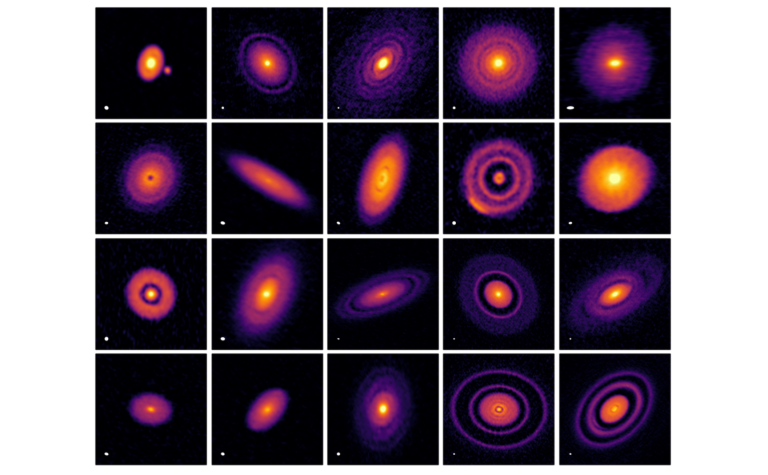
Disk Substructures at High Angular Resolution Project (DSHARP)

New research from the University of Georgia reveals that artificial intelligence can be used to find planets outside of our solar system.

The recent study demonstrated that machine learning can be used to find exoplanets, information that could reshape how scientists detect and identify new planets very far from Earth.

“One of the novel things about this is analyzing environments where planets are still forming,” said Jason Terry, doctoral student in the UGA Franklin College of Arts and Sciences department of physics and astronomy and lead author on the study. “Machine learning has rarely been applied to the type of data we’re using before, specifically for looking at systems that are still actively forming planets.”

The first exoplanet was found in 1992, and though more than 5,000 are known to exist, those have been among the easiest for scientists to find. Exoplanets at the formation stage are difficult to see for two primary reasons. They are too far away, often hundreds of lights years from Earth, and the discs where they form are very thick, thicker than the distance of the Earth to the sun. Data suggests the planets tend to be in the middle of these discs, conveying a signature of dust and gases kicked up by the planet.

The research showed that artificial intelligence can help scientists overcome these difficulties.

“This is a very exciting proof of concept,” said Cassandra Hall, assistant professor of astrophysics, principal investigator of the Exoplanet and Planet Formation Research Group, and co-author on the study. “The power here is that we used exclusively synthetic telescope data generated by computer simulations to train this AI, and then applied it to real telescope data. This has never been done before in our field, and paves the way for a deluge of discoveries as James Webb Telescope data rolls in.”

The James Webb Space Telescope, launched by NASA in 2021, has inaugurated a new level of infrared astronomy, bringing stunning new images and reams of data for scientists to analyze. It’s just the latest iteration of the agency’s quest to find exoplanets, scattered unevenly across the galaxy. The Nancy Grace Roman Observatory, a 2.4-meter survey telescope scheduled to launch in 2027 that will look for dark energy and exoplanets, will be the next major expansion in capability – and delivery of information and data – to comb through the universe for life.

The Webb telescope supplies the ability for scientists to look at exoplanetary systems in an extremely bright, high resolution, with the forming environments themselves a subject of great interest as they determine the resulting solar system.

“The potential for good data is exploding, so it’s a very exciting time for the field,” Terry said.

New analytical tools are essential

Next-generation analytical tools are urgently needed to greet this high-quality data, so scientists can spend more time on theoretical interpretations rather than meticulously combing through the data and trying to find tiny little signatures.

“In a sense, we’ve sort of just made a better person,” Terry said. “To a large extent the way we analyze this data is you have dozens, hundreds of images for a specific disc and you just look through and ask ‘is that a wiggle?’ then run a dozen simulations to see if that’s a wiggle and … it’s easy to overlook them – they’re really tiny, and it depends on the cleaning, and so this method is one, really fast, and two, its accuracy gets planets that humans would miss.”

Terry says this is what machine learning can already accomplish – improve on human capacity to save time and money as well as efficiently guide scientific time, investments and new proposals.

“There remains, within science and particularly astronomy in general, skepticism about machine learning and of AI, a valid criticism of it being this black box – where you have hundreds of millions of parameters and somehow you get out an answer. But we think we’ve demonstrated pretty strongly in this work that machine learning is up to the task. You can argue about interpretation. But in this case, we have very concrete results that demonstrate the power of this method.”

The research team’s work is designed to develop a concrete foundation for future applications on observational data, demonstrating the method’s effectiveness by using simulational observations.

Read the full study, Locating Hidden Exoplanets in ALMA Data Using Machine Learning.

By Keith Cowing
Source SpaceRef
Rarity In Space Provides Insights To Evolution

0
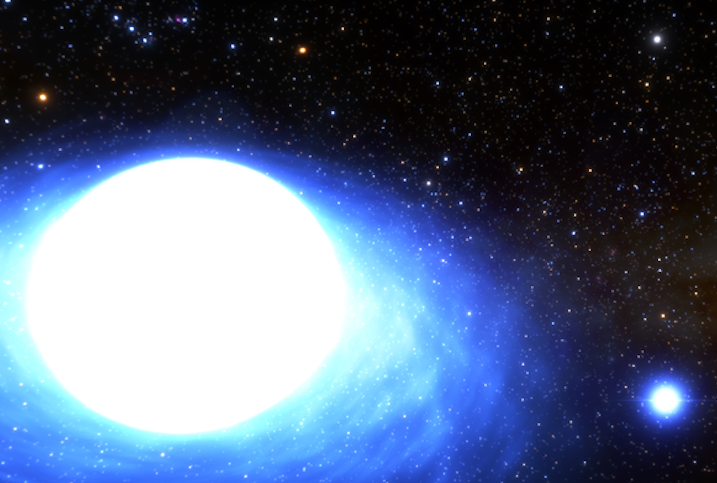
By studying the binary star system CPD-29 2176 (shown here), researchers are unraveling new clues to our earliest beginnings, as stardust. Scientists estimate that there are probably only about 10 such star systems in the Galaxy at present. CREDIT NOIRLab/NSF/AURA/J. da Silva/Spaceengine

A rarity in space has been discovered: the remnants of a quiet supernova. The cause of this oddity is that a Be star in a binary system (CPD-29 2176) accreted enough mass from its companion star that when the companion star eventually exploded, it ejected very little mass.

The result of this “ultra-stripped” supernova is the orbit of the system was not significantly changed—the Be star remained in its circular orbit. This discovery is so critical to our understanding of the variability of stellar evolution that today, Nature published the research paper “A high-mass X-ray binary descended from an ultra-stripped supernova,” authored primarily by Dr. Noel Richardson (assistant professor of Physics and Astronomy at Embry-Riddle Aeronautical University).

How did this rare data come to be collected in the first place? An X-ray outburst was observed with the SWIFT space telescope, but when scientists went to collect photometric data on the neutron star, there was another star in front of it. Dr. Herbert (“Bert”) Pablo, currently the staff astronomer at the American Association of Variable Star Observers (AAVSO), and a co-author of the Nature-published paper, was at the time a postdoctoral fellow with the BRITE-Constellation project at the University of Montreal, where he was consulted on the “offending” object.

Pablo recommended that spectra instead of photometry should be collected, to get proof that the Be star and neutron star were related and to gather insights into the Be star’s motion. Pablo contacted Richardson, and they proposed multiple cycles of time for observations on the Cerro Tololo Interamerican Observatory’s CHIRON instrument in Chile to get the spectra. Richardson imparted, “Bert was instrumental in this discovery and pushing the study along after identifying that we should pursue it spectroscopically.”

What happened after this data was collected? Enter Clarissa Pavao, an undergraduate at Embry-Riddle keen to be involved in research. Richardson passed the data to Pavao to analyze. “Clarissa fit an orbit and it seemed circular rather than elliptical. I was thinking that a system with a neutron star should have had some sort of kick during the supernova that led up to the current day,” explained Richardson of his first indication that this system was unusual compared to most Be X-ray binaries.

Over the next million years, the Be star that collected most of the mass of the x-ray outburst is expected to lose its mass and explode similarly to its companion, so that eventually both stars will be neutron stars in a smaller, still-circular orbit with one another. According to Richardson, he and Pavao aim to “better characterize the current bright star in the system.” Pavao notes, “This system has a very interesting evolution, so we would like to know more about each star and hopefully find out more information.”

Contributing to scientific discoveries can be done as a student, professional, or citizen scientist. Pavao’s advice to undergraduate students pursuing a scientific career is to actively seek out research opportunities. “You must look past the fear [of rejection] and just think about how cool and exciting scientific research is and what knowledge you will gain from participating.”

If you want to help advance research without a formal education, there are avenues for that too, such as being a volunteer observer with AAVSO, the international nonprofit organization where Pablo manages and maintains the organization’s open-source and verified databases, other resources for professional research, and tools for its community of citizen scientists and amateur astronomers. AAVSO even has an Eclipsing Binaries Observing Section dedicated to connecting and helping those interested in this niche science. AAVSO meets the data needs of professional astronomers by educating interested individuals on how to collect stellar photometry and spectra and submit them to the organization’s open-source databases, and by alerting these volunteer observers to the stars on which their time and contributions will be most valuable.

Increasing our collective knowledge about the life cycles of varying stars and their relationships to one another are important components to understanding the continuous evolution of the Universe.

As humans, we are curious to know our place in the Universe and what happens outside of our own solar system. Curiosity drove us to discover that the Earth is not flat and orbits around the Sun, that our small solar system is part of a whole galaxy, and that there are trillions of galaxies. It is the quest for knowledge that inspires us to learn what else is happening in the Universe, and what occurs before and after our existence. Pablo believes that binary star systems are crucial to our understanding of stellar evolution.

About AAVSO:

The American Association of Variable Star Observers (AAVSO) is an international nonprofit organization of citizen scientists and professional astronomers working together to increase the knowledge of the universe through education and by conducting variable star photometry and spectroscopy, as well as exoplanet observations. AAVSO’s mission is to enable anyone, anywhere, to participate in scientific discovery through variable star astronomy. Visit us at https://www.aavso.org/. For more information on the AAVSO’s Eclipsing Binaries Observing Section, visit https://www.aavso.org/aavso-eclipsing-binaries-section.

About the paper

“A high-mass X-ray binary descended from an ultra-stripped supernova”
Authors: Noel D. Richardson (Embry-Riddle Aeronautical University, Prescott Campus), Clarissa M. Pavao (Embry-Riddle Aeronautical University, Prescott Campus), Jan J. Eldridge (University of Auckland), Herbert Pablo (AAVSO), André-Nicolas Chené (Gemini Observatory), Peter Wysocki (Georgia State University), Douglas R. Gies (Georgia State University), George Younes (NASA Goddard Space Flight Center; The George Washington University), & Jeremy Hare (NASA Goddard Space Flight Center)
Published in Nature 614, 45–47 (2023)
Abstract available at https://www.nature.com/articles/s41586-022-05618-9

AAVSO Media Contact
Lindsay Ward
AAVSO Communications Manager
[email protected]
+1 (617) 354-0484 x 100


By Keith Cowing
Source SpaceRef