Dr. Nicola Fox to serve as the associate administrator for the agency’s Science Mission Directorate at NASA Headquarters in Washington, effective Monday, Feb. 27, 2023. Credits: NASA/Aubrey Gemignani
NASA Administrator Bill Nelson announced Monday Dr. Nicola Fox will serve as the associate administrator for the agency’s Science Mission Directorate at NASA Headquarters in Washington, effective immediately.
“As the director of our Heliophysics Division, Nicky was instrumental in expanding the impacts and awareness of NASA’s solar exploration missions and I look forward to working with her as she brings her talents, expertise, and passion to her new role,” Nelson said. “We’re all grateful for the interim leadership of Sandra Connelly, who has done an incredible job keeping the mission moving forward over the last couple months.”
As NASA’s head of Science, Fox’s portfolio includes more than 100 NASA missions to explore the secrets of the universe – missions that assess questions as far ranging as how hurricanes form on Earth, how we can support astronauts on the Moon, and whether we are alone in the universe. She also will be responsible for fostering an inclusive, welcoming atmosphere and supporting a diverse team of scientists and engineers around the country at all stages of their careers.
Fox began her NASA career in 2018 leading the Heliophysics Division, overseeing the agency’s efforts to study the Sun and how its constant solar wind affects Earth and other planets. Prior to that, she worked at the Johns Hopkins University Applied Physics Laboratory, where she was the chief scientist for heliophysics and the project scientist for NASA’s Parker Solar Probe.
Throughout her career, Fox has authored numerous scientific articles and papers, in addition to delivering science presentations worldwide. In 2021, she was awarded the American Astronautical Society’s Carl Sagan Memorial Award for her demonstrated leadership in the field of heliophysics with extensive project, program, and supervisory experience. She also is a recipient of NASA’s Outstanding Leadership Medal, awarded in 2020.
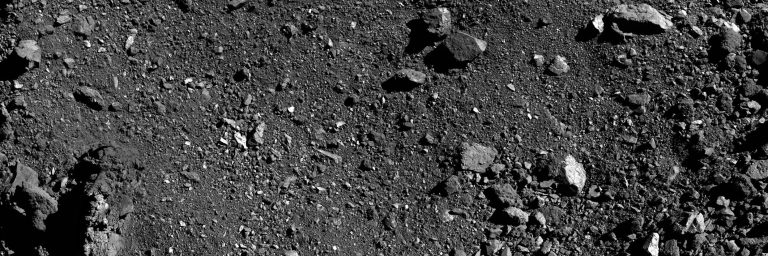
Space is vast, but Earth is not alone. Hundreds of thousands of objects known as near-Earth asteroids (NEAs) regularly come close to our planet’s orbit. These NEAs come with a variety of physical properties, from solid rock to boulder-strewn rubble piles to dusty fluff balls.
Knowing the physical properties of these small worlds is important for both scientific reasons and planetary defense, the effort to protect our planet from hazardous asteroid impacts.
Asteroids are leftovers from the disk of dust and gas that formed the planets. Studying them teaches us more about the early days of the Solar System and how it evolved over time. Some of these asteroids may have brought water and organic materials to Earth long ago.
There’s a more practical reason for learning about near-Earth asteroids: the information could help us deflect one on course for Earth. NASA’s DART spacecraft successfully showed how we might do this in 2022 when it slammed into asteroid Dimorphos. Different deflection techniques could be needed for different kinds of asteroids, which is why we need to learn more about their physical properties.
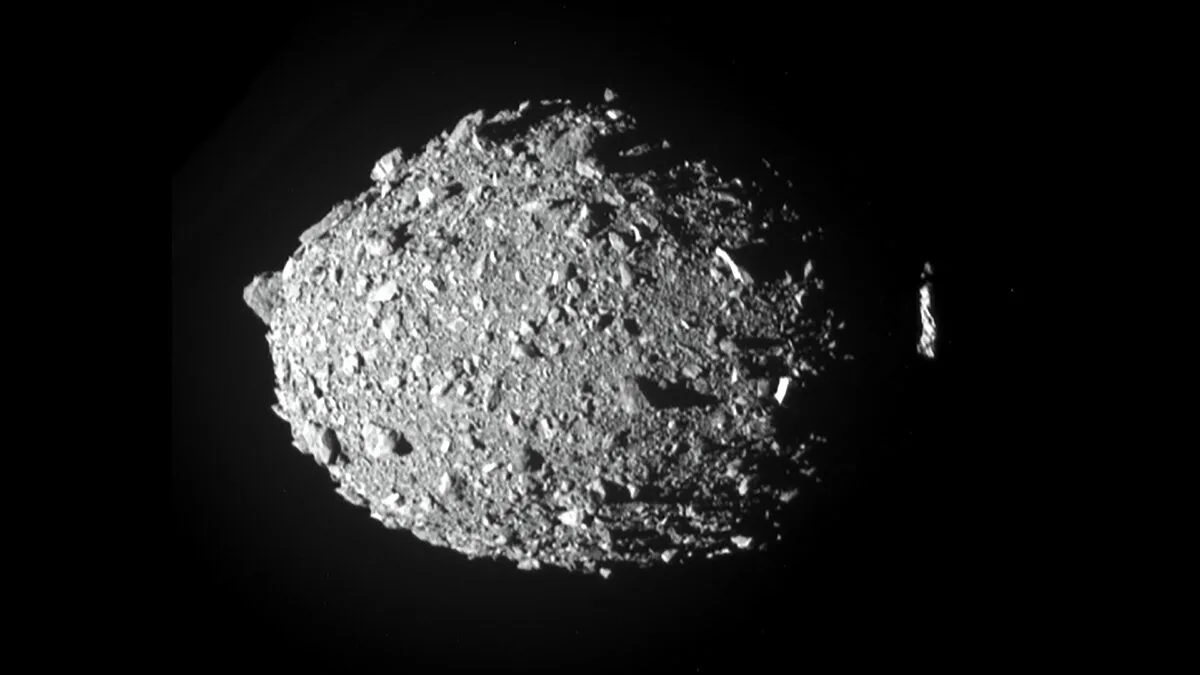
DIMORPHOS WITH NORTH UP NASA’s DART spacecraft captured this image of asteroid Dimorphos, which has been oriented to place its north pole at the top, using the DRACO imager.Image: NASA/Johns Hopkins APL
It usually takes a space telescope or a spacecraft mission to uncover an asteroid’s physical properties. Researchers at the University of Belgrade, Serbia are working on a way to determine what asteroids are made of without leaving our planet. Their project, Demystifying Near-Earth Asteroids (D-NEAs), will use mathematical modeling to determine an important surface property called thermal inertia for as many as 150 NEAs. If successful, this modeling technique would give scientists a new way to demystify NEAs.
The Planetary Society awarded $45,000 to the project through our STEP Grants program in 2022. The project is led by Bojan Novaković of the University of Belgrade, with co-investigators Dušan Marčeta, Marco Fenucci, and Debora Pavela. The funds are being used to support faculty and students and to acquire a powerful high-speed computer on which to run computationally intensive mathematical models.
An asteroid’s surface absorbs sunlight and warms up. As the surface rotates away from sunlight, the heat radiates back into space, giving the asteroid a small push. Over time, these small pushes can change an asteroid’s orbit, a measurement known as Yarkovsky drift, named after the engineer who first described the phenomenon in 1901.
WHAT IS THE YARKOVSKY EFFECT? This video by NASA’s OSIRIS-REx mission explores how sunlight can change the orbits of small asteroids, a phenomenon known as the Yarkovsky effect.Video: NASA / OSIRIS-REx team
Yarkovsky drift is being measured for an increasing number of NEAs. Knowing an asteroid’s Yarkovsky drift is vital for planetary defense, since it can mean the difference between an asteroid missing or hitting Earth.
The D-NEA project will use these Yarkovsky drift values for another purpose: to mathematically derive a key property called thermal inertia. Thermal inertia is a representation of an asteroid surface’s resistance to temperature change. With this information, scientists can estimate whether the upper portion of an asteroid is made of solid rock, loose boulders, pebbles, or dust.
The D-NEA project’s goal is to derive thermal inertia values for as many as 150 NEAs. For the limited set of NEAs that have thermal inertias already determined — mostly by spacecraft observations — D-NEA modeling will try to determine the approximate densities of the asteroids. This information will demystify NEAs even further, helping us defend our planet from possible impacts.
Reflections from the team
Bojan Novaković, principal investigator:
“The probability of a near-Earth asteroid hitting the Earth is low. However, the devastating consequences of such an impact suggest that we should carefully study and understand their properties and trajectories. Our approach is based on an alternative method to characterize the surface thermal properties of those objects and fills the gap in our current knowledge of near-Earth asteroids.
The support from The Planetary Society means a lot to us. It has provided us with vital funding that enables us to continue this exciting research. Maybe a key benefit of this grant is its flexibility, which allows us to cover costs that other funding sources cannot. In particular, we would like to take advantage of the opportunity to involve students at different levels in the project.”
Marco Fenucci, co-investigator:
“Studying near-Earth asteroids is really exciting, because there is so much we don’t know about them. The recent space missions to Bennu and Ryugu found surprising properties that scientists did not expect before arriving there. Our Demystifying Near-Earth Asteroids project was inspired by unexpected thermal inertia results of a super-fast rotating NEA that we found in one of our previous works. We are thankful to The Planetary Society for their support, which allowed us to pursue our research on this topic and to make it visible to the scientific community.”
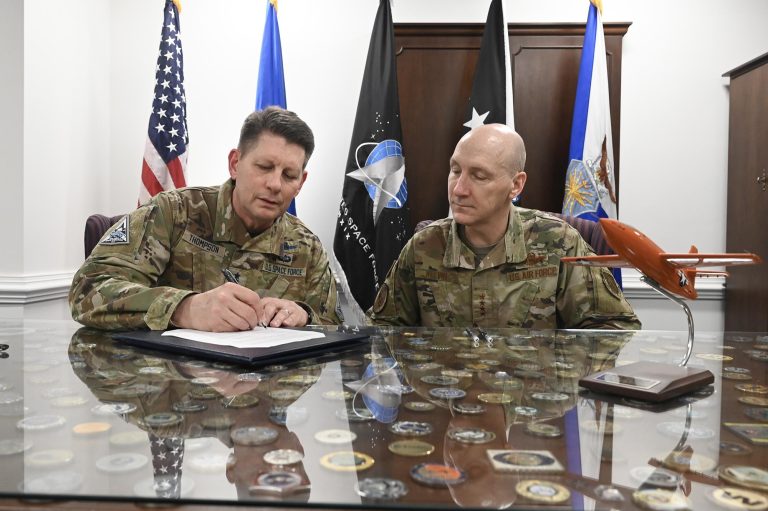
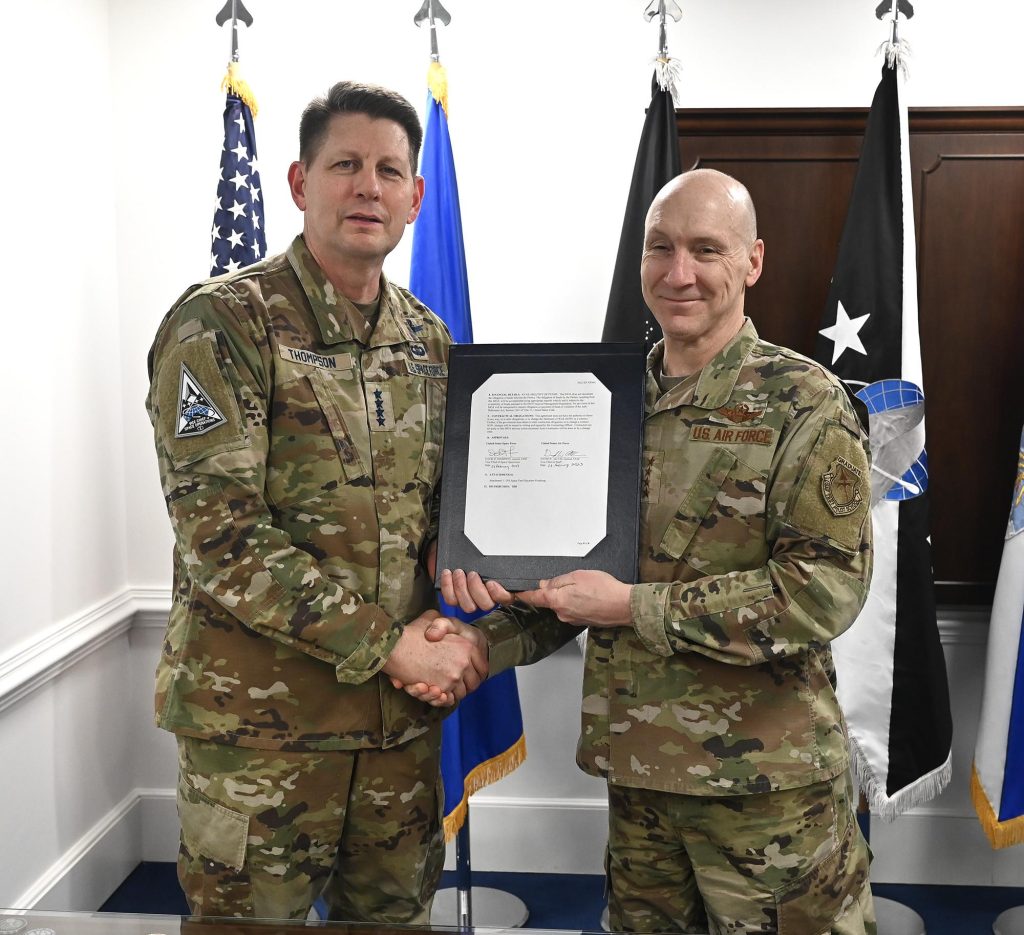
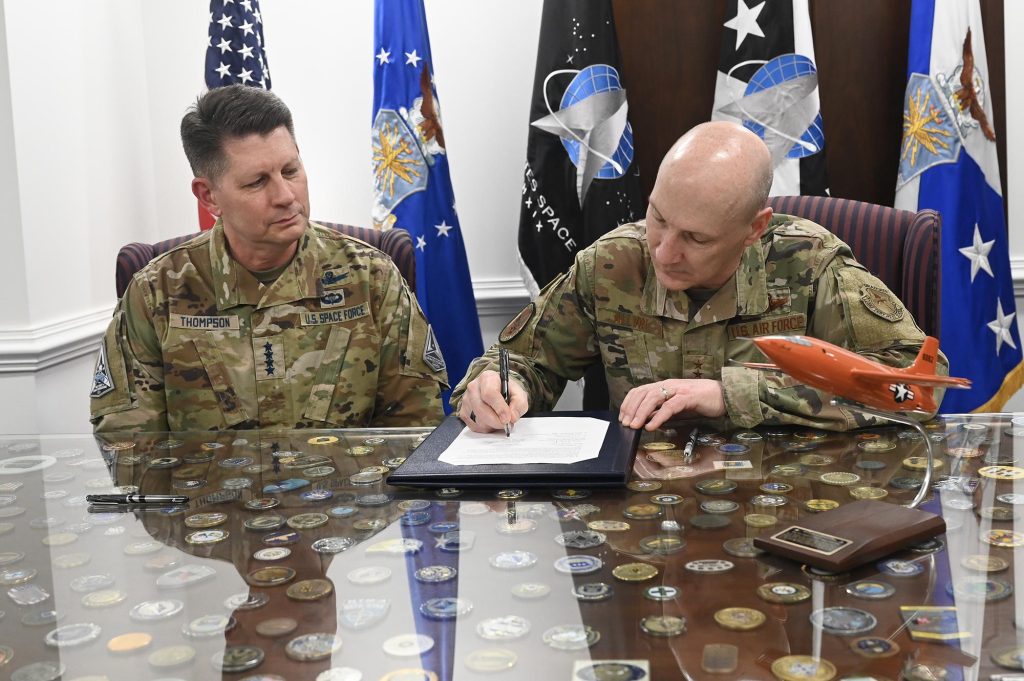
Vice Chief of Staff of the Air Force Gen. David Allvin (right) and Vice Chief of Space Operations Gen. David Thompson sign a memorandum of agreement to create the new Space Test Course in the Pentagon, Arlington, Va., Feb 23, 2023. The U.S. Air and Space Forces have partnered on the course which will instruct Guardians on test and evaluation processes for robust and methodical system testing of space-flight equipment. (U.S. Air Force photo by Andy Morataya)
ARLINGTON, Va. (AFNS) — The U.S. Air and Space Forces have partnered to create the new Space Test Course, which will instruct Guardians on test and evaluation processes, in order to conduct robust and methodical system testing on space-flight equipment at the Test Pilot School at Edwards Air Force Base, California.
Space Force Vice Chief of Space Operations Gen. David D. Thompson and Air Force Vice Chief of Staff Gen. David W. Allvin signed a memorandum of agreement Feb. 23, establishing the new course.
“Ensuring our Guardians can effectively test and validate space-flight equipment is crucial to mission success and protecting the space domain for the Joint Force,” Thompson said.
This agreement marks the culmination of a multi-year effort that began in 2018 when what was then the Air Force Space Command stood up a test and evaluation directorate.
“The Air Force and Space Force will always be linked through our heritage,” Allvin, a 1994 USAF Test Pilot School graduate, said. “This MOA represents another way our partnership will build a better combat-ready force.”
The Space Test Course was developed under the leadership of Space Force Col. Michael Hopkins, Space Force Test and Evaluation director, and Air Force Col. Sebrina Pabon, U.S. Air Force Test Pilot School Commandant, to meet the requirement for space domain-focused test and evaluation training.
“I am extremely proud of what the team has accomplished and am looking forward to the official partnership between the Air Force and Space Force for Space Test and Evaluation education and training,” said Pabon.
Guardians enrolled in the 12-month program will receive formal instruction and practical experience covering the full spectrum test and evaluation of mission systems and topics critical to the space domain, such as orbital mechanics, electromagnetic spectrum, sensor sciences and the space environment.
While the traditional Test Pilot School focuses on developmental testing, an evaluation of specification compliance and early technology maturation, the Space Force is moving to an ‘integrated testing’ approach where principles of developmental testing are linked to operational testing, a form of testing that focuses on a system’s performance and usefulness in an operational environment, as well as the development of new tactics and procedures.
This integrated focus will prepare graduates to evaluate a space system’s entire life cycle and consider potential concerns and future risks a system may encounter.
With this partnership between the branches, the Space Force will enhance its ability to present the combat-ready forces required to protect U.S. space capabilities and defend the Joint Force from space-enabled attack.
By: SAF PA Staff Writer, Secretary of the Air Force Public Affairs Originally published at Space Force
The Near-Earth Object (NEO) Surveyor is a space telescope specially tuned to finding asteroids and comets that could collide with our planet. These are rare but potentially catastrophic events, and the earlier we identify any threats, the more likely it is that humanity can deploy protective deflection technology as demonstrated by NASA’s DART mission.
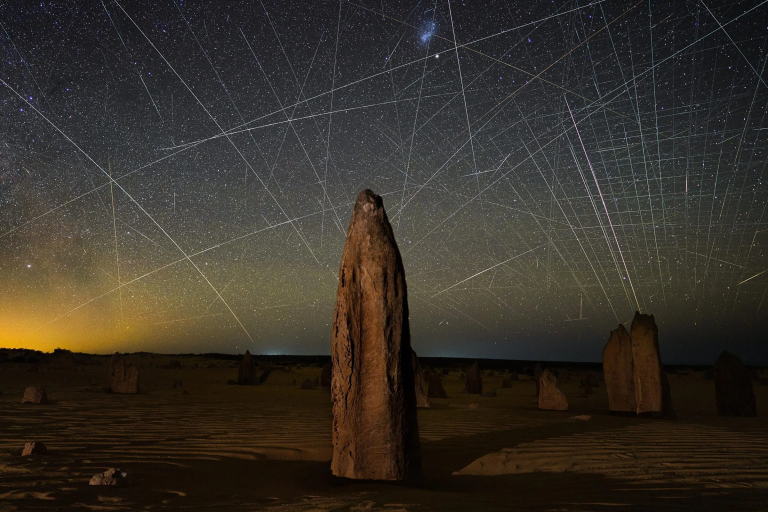
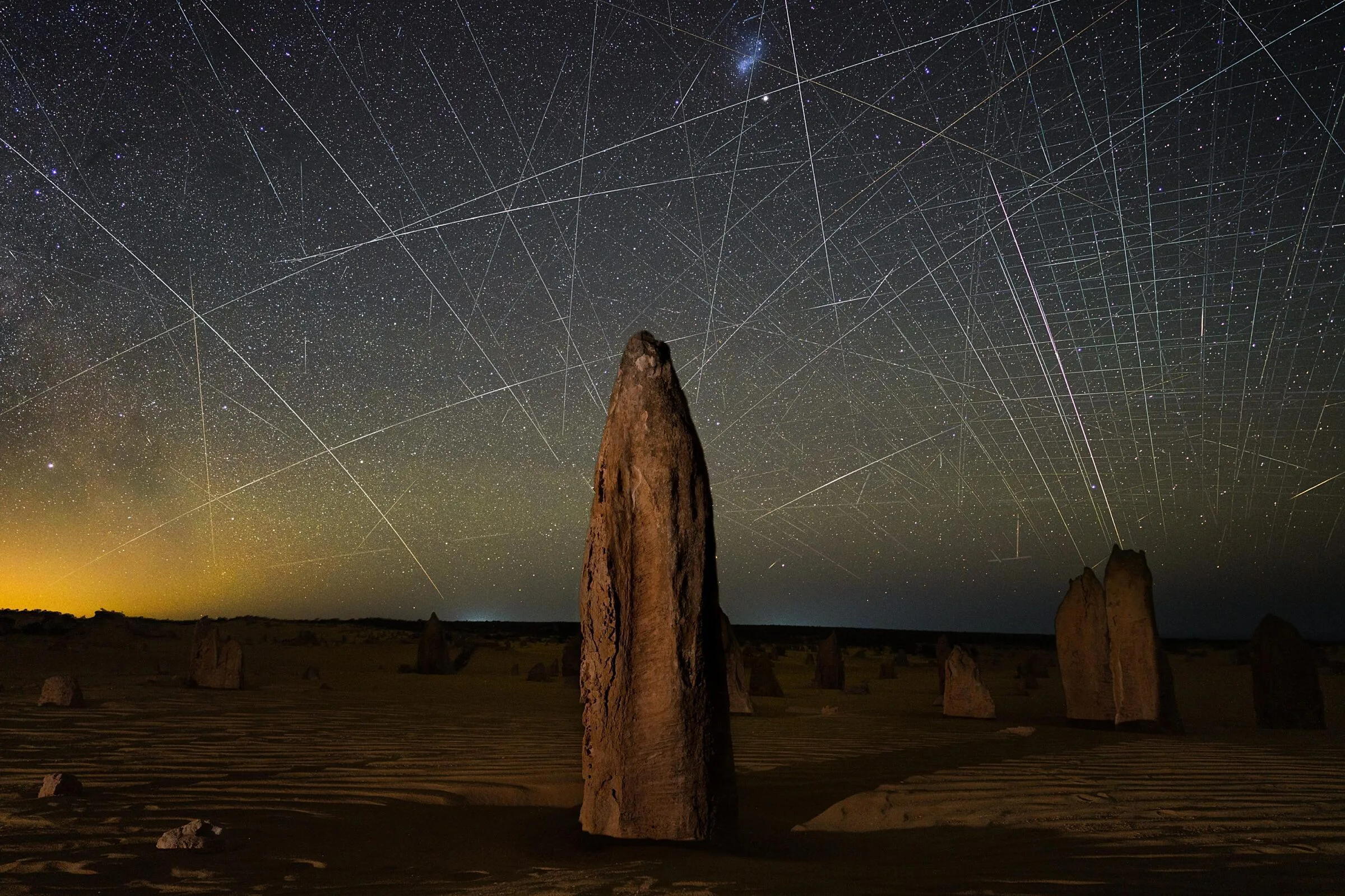
Because our night skies are now crowded with thousands of bright satellites and asteroids are tiny and dark, ground-based telescopes have trouble finding NEOs quickly. Placing a small telescope in space solves both these problems: it orbits beyond all Earth-bound satellites and can seek out NEOs by their heat signatures, a signal otherwise obscured by our atmosphere. Within 10 years this telescope is predicted to find more NEOs than found in the last 50 years.
This is not a minority viewpoint. The U.S. public, Congress, and the National Academies of Science, Engineering, and Medicine have all reached the same conclusion: we must launch NEO Surveyor, our first line of defense against the asteroid threat.
Asteroids and comets are out there
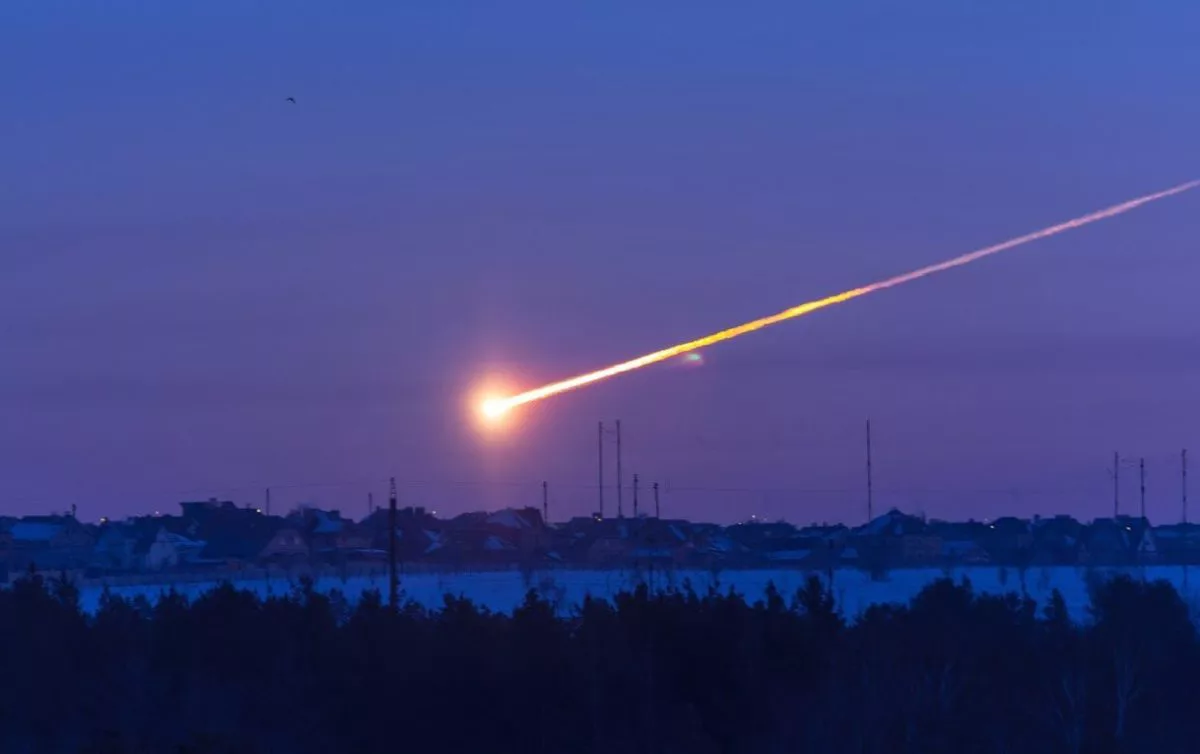
It was the blinding light in the sky that drew the people of Chelyabinsk to their windows. Once there, they looked up to find a scar of smoke cut through the sky, as if the cold blue itself had been set alight. The momentary reveries of those staring at this curious sight were quickly shattered by the subsequent sonic boom, which came with such force that it blew doors off their hinges, set off car alarms, and shattered windows. Thousands were injured.
The source of the light and destruction? A house-sized asteroid, roughly 20 meters (60 feet) across, which had exploded in the sky above Chelyabinsk after eons of silent travel through the Solar System. No one had seen it coming.
THE CHELYABINSK AIRBURST Caused by a relatively small (20-meter diameter) asteroid, its explosion above the Russian city of Chelyabinsk shattered windows and injured thousands around the city in 2013. A larger asteroid would cause substantially more damage and destruction.Image: YouTube
Asteroids in our Solar System are abundant; millions upon millions of them orbit the Sun. Their velocities vary, but can range upwards of 160,000 kilometers per hour (100,000 miles per hour). Most of these asteroids pose no threat to us; they are either so tiny or so far away. A fraction of them, however, share orbits similar to Earth’s, or travel in big looping orbits that occasionally cross our path. If they cross near enough, they are considered potentially hazardous. Depending on the size of the object, the resulting impact could release energy akin to hundreds or even thousands of nuclear weapons going off simultaneously.
This level of destruction is hard to conceptualize, and is, thankfully, rare. But rare is not “never.” Humanity has been lucky that it’s never suffered a collision with a truly large asteroid. But luck is not a plan. Just ask the dinosaurs how far luck will carry a species. Eventually, it runs out.
Until very recently, an asteroid discovered to be on a collision path with Earth would have been the end of it, an unavoidable fate to be endured. But since the dawn of the space age, many types of NEO impacts are now preventable, at least in theory. NASA’s successful DART mission in 2022 was the first in-space asteroid deflection test. The test was successful, and data gathered will inform future deflection concepts.
The burgeoning field of planetary defense allows humanity a certain control over its own destiny, but only if these objects are found early enough. A decade or more is necessary to properly design, launch, and alter the course of an asteroid or comet to the degree necessary to avoid a collision.
It is therefore in our best interest to make a thorough catalog of threatening NEOs in our Solar System, to actively seek them out before fate elects to bring one to us.
A space-based telescope has unique advantages for finding NEOs
On a cosmic scale, near-Earth objects are tiny. Even the big ones are mere dozens of kilometers across. The ones we are concerned about are a bit larger than a football field, around 140 meters (about 460 feet) wide. They also tend to be quite dark, like the charcoal in your grill, and appear to move quickly across the sky relative to Earth. These qualities make NEOs very hard to find using conventional telescopes, which collect reflected light and require pristine dark skies.
Nevertheless, advanced image processing and improvements in sensor technology have enabled increased detection rates from the ground, and many thousands of small objects have been discovered this way. But progress is slow, and there are inescapable limits in observations by remaining earthbound: bad weather, daylight, atmospheric absorption, and the growing problem of thousands of satellites crisscrossing the sky.
THE RAPIDLY INCREASING NUMBER OF SATELLITES MAKES IT DIFFICULT FOR GROUND TELESCOPES TO SPOT DIM, FAST-MOVING NEAR-EARTH OBJECTS This photo collage demonstrates the dramatic impact of increasing numbers of satellites on the night sky.Image: Joshua Rozells Instagram: @Joshua_Rozells
A space-based telescope avoids all of these problems. It orbits far from Earth and its web of bright satellites. Freed from our atmosphere, NEO Surveyor can make round-the-clock pristine observations tuned to the heat signatures of NEOs rather than their reflections of visible light. NEOs radiate the heat they receive from the Sun as infrared light, and glow brightly in this wavelength against the frigid backdrop of empty space. This signature is mostly absorbed by water and carbon dioxide in Earth’s atmosphere, but outer space presents no such limitations. And as a bonus, we can apply advanced physical models to these infrared detections and gain a much deeper understanding of the NEOs themselves, giving a better sense of how to effectively deflect them should the need arise.
The combination of improved detection rates and greater characterization ability enables a near-complete catalog of near-Earth objects 140 meters and larger within a decade of its launch. At the current rates from ground-based observation, this same feat would take at least 30 years, if not longer.
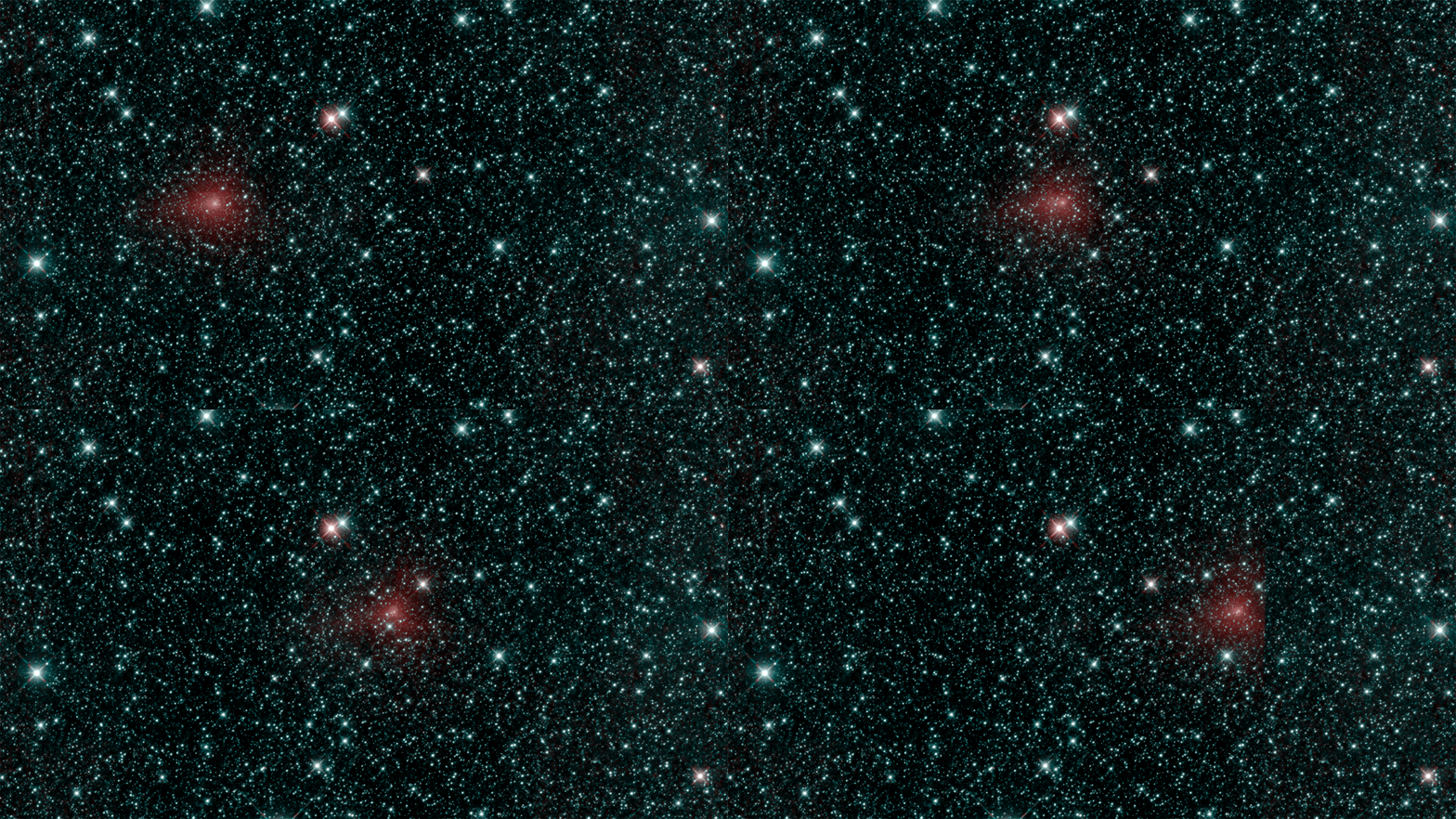
COMETS AND ASTEROIDS GLOW BRIGHTLY IN THE INFRARED, MAKING THEM EASIER TO SPOT This animation was imaged in infrared light by the NEOWISE space telescope in 2019. C/2018 Y1 Iwamoto is a long-period comet and was coming in near the Sun for the first time in over 1,000 years.Image: NASA/JPL-Caltech
There is overwhelming agreement that NEO Surveyor is needed
Unlike many issues in politics, there is a near-uniform consensus behind the need for a space-based asteroid-hunting telescope like NEO Surveyor.
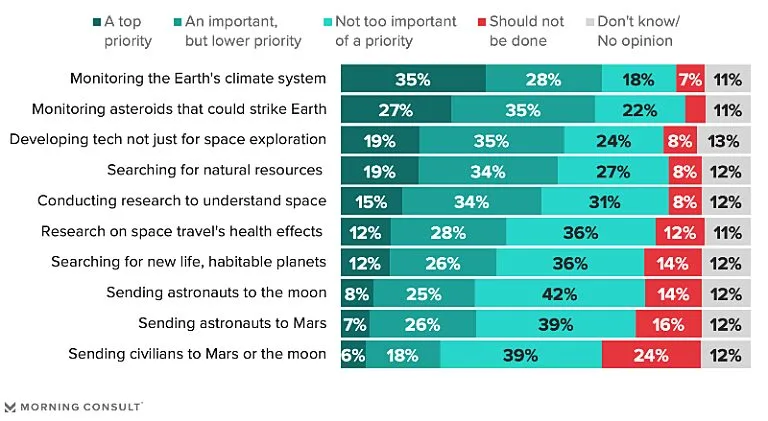
In poll after poll, the U.S. public has declared that looking for threatening asteroids should be one of NASA’s highest priorities.
POLLING DATA SUPPORTS PLANETARY DEFENSE ACTIVITIES This 2021 poll from Morning Consult shows strong public support for planetary defense (asteroid detection) activities by NASA. Poll conducted Feb. 12-15, 2021 among 2,200 U.S. adults, with a margin of error ± 2%.Image: Morning Consult
The U.S. Congress has also declared its support. In 2005, it passed a landmark piece of legislation mandating NASA to seek out at least 90% of NEOs 140 meters and larger by 2020. Though NASA did not meet this goal, it remains national policy. In 2022, Congress passed a law officially authorizing the NEO Surveyor project, directing NASA to launch the mission by the mid-2020s if possible.
THE NATIONAL ACADEMIES’ RECOMMENDATION FOR NEO SURVEYOR
Additionally, The Planetary Society, National Space Society, and other independent organizations have also supported NEO Surveyor for the past decade or more, recognizing the critical role it will play in planetary defense.
It’s affordable
NASA estimates that it will cost approximately $1.2 billion over eight years to build and launch NEO Surveyor. This is eight times less than the James Webb Space Telescope, and represents a mere 0.5% of NASA’s total planned expenditures over that same period.
NEO Surveyor as a candle in the dark
If we humans want to maintain our civilization for the long term, we need to manage long-term risk. This includes accounting for low-probability, high-impact events, and there is nothing higher impact than an asteroid colliding with Earth.
As children, we fear the dark. A crack of the closet door, a gust of wind against a jittery windowpane, or strange noise underneath the bed will send us huddling underneath our sheets. If we don’t see the threat, perhaps it won’t see us. And we can trick ourselves into feeling safe.
But at childhood’s end, we realize we must face the dark and the threats that it may contain. Just because we don’t see them doesn’t mean they aren’t there, and only by shining a light in the dark can we understand our reality.
NEO Surveyor, along with missions like ESA’s NEOMIR and DART, are steps in that direction. We must know what’s out there. Only then can we properly prepare and protect ourselves and our planet.
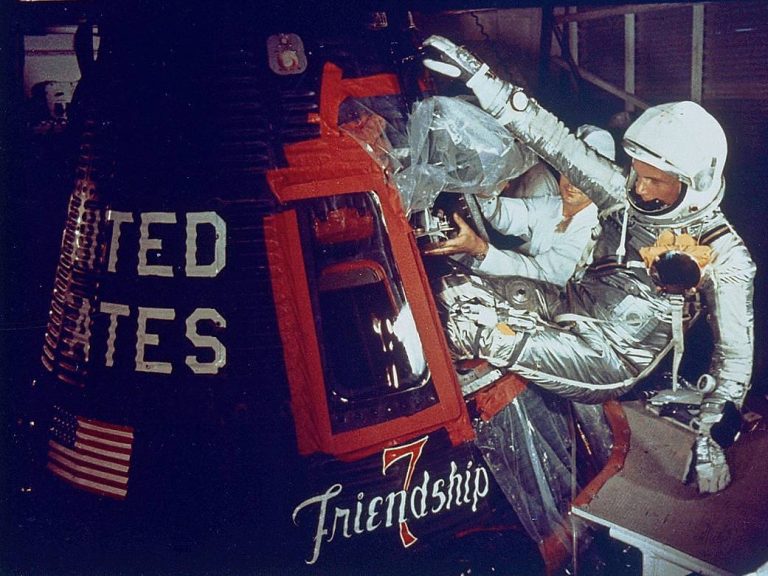
Astronaut John Glenn enters the Mercury spacecraft, Friendship 7, prior to the launch of Mercury-Atlas 6 (MA-6) on Feb. 20, 1962. The MA-6 mission was the first crewed orbital flight and Glenn became the first American to orbit the Earth during the three-orbit, five-hour MA-6 mission.
NASA TV producer of “The Color of Space” Jori Kates gives remarks prior to the screening of the documentary at Howard University’s Cramton Auditorium in Washington, Saturday, June 18, 2022. Premiering on Juneteenth, the federal holiday commemorating the end of slavery in the United States, “The Color of Space” is an inspirational documentary that tells the stories of NASA’s Black astronauts determined to reach the stars. Credits: NASA/Bill Ingalls
NASA and Blue Origin’s nonprofit Club for the Future will co-host multiple free in-person viewing events of the agency’s documentary, The Color of Space, at historically Black colleges and universities, conferences, festivals, and more nationwide. The documentary is a conversation between seven current and former Black astronauts, each of whom were selected to become part of NASA’s astronaut corps.
The viewing tour kicks-off at 5 p.m. EST Wednesday, at Morgan State University in Baltimore, followed by an event at Texas Southern University in Houston at 5 p.m. CST on Thursday, Feb. 23, which will include remarks from NASA’s Johnson Space Center Director Vanessa Wyche. More viewing events are planned through fall 2023.
In the documentary, current NASA astronauts Stephanie Wilson, Victor Glover, Jeanette Epps, as well as retired astronauts Leland Melvin, Bernard Harris, Robert Curbeam, and Bobby Satcher, spoke about their journeys and their motivations in a panel hosted by Wyche, the first Black woman to lead a NASA center.
In addition to the viewing of the 50-minute documentary, events may include selfie opportunities, appearances from current and former NASA astronauts, greetings by NASA leadership, and other activities led by Blue Origin.
To attend an upcoming viewing event, register on NASA’s Eventbrite page. Registration is required to attend the screenings.
NASA works to explore the secrets of the universe and solve the world’s most complex problems, which requires creating space for all people to participate in and learn from its work in space. Providing access to opportunities where individuals can be curious, creative, and innovative is how the agency will continue to inspire the next generation of scientists, engineers, astronauts, and more.
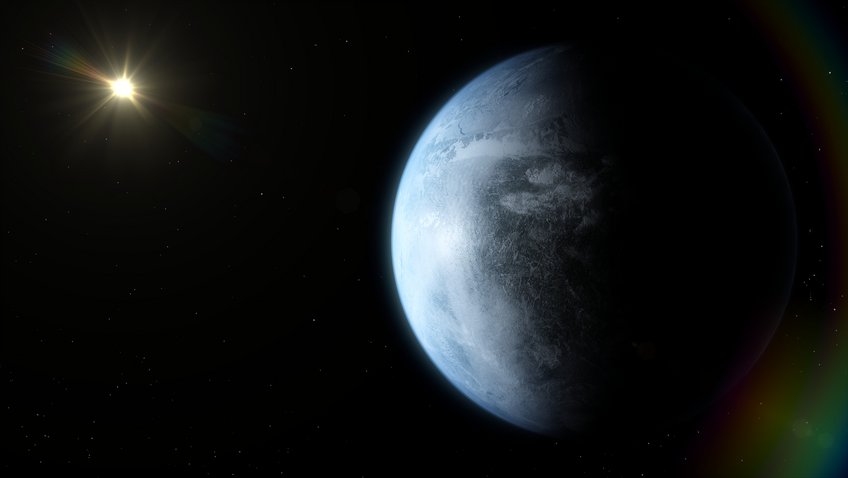
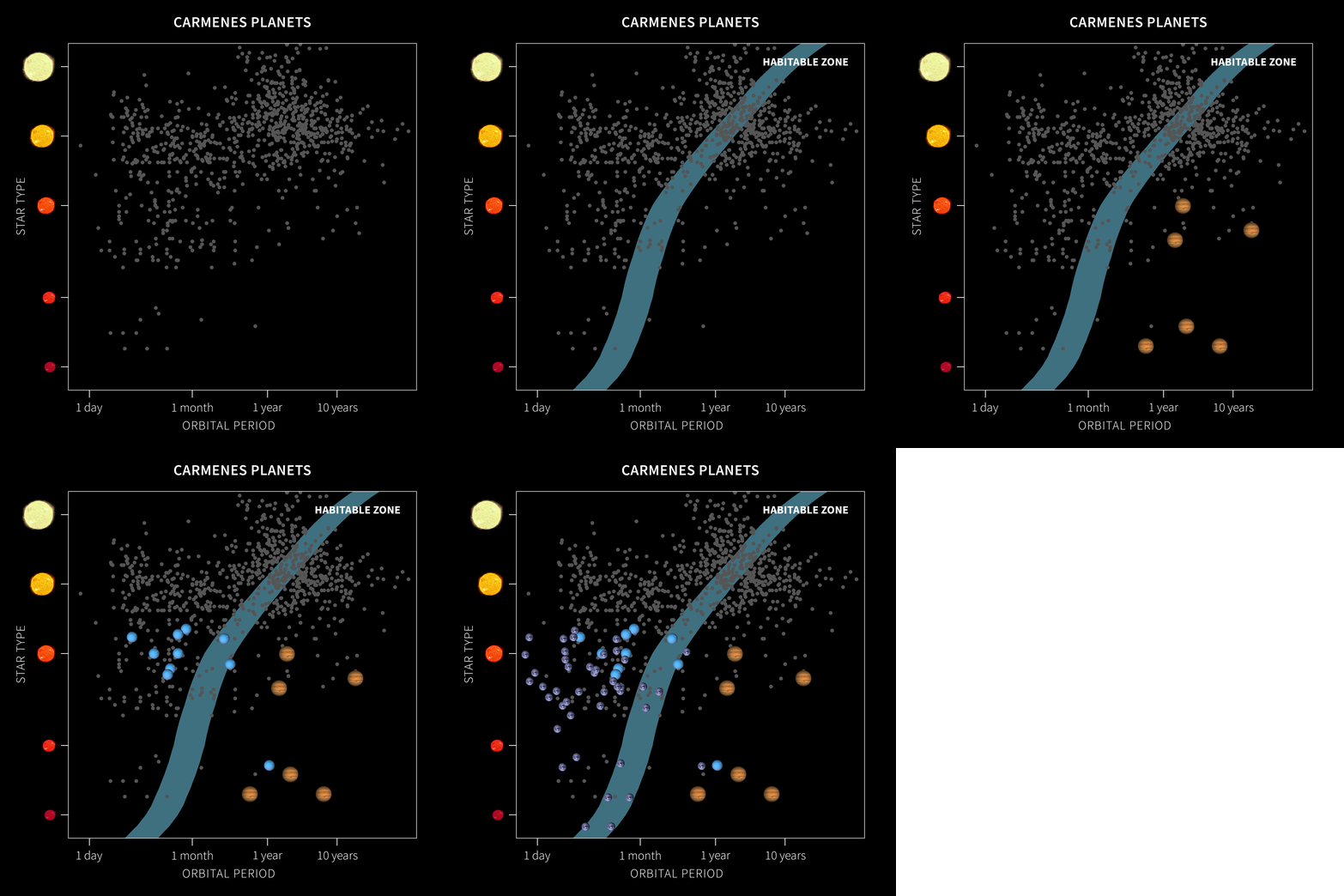
The CARMENES program, led by a consortium of Spanish and German research institutions, in which the Max Planck Institute for Astronomy (MPIA) is a partner, has released 20,000 observations of more than 300 stars. These measurements led to the discovery of 59 planets, with a dozen being potentially habitable. This spectroscopic data set was obtained at the Calar Alto Observatory in Spain and is now publicly available. The CARMENES instrument employed in this survey has proven to be a success. It will continue to provide information on planets around small cool stars until at least the end of 2023.
The CARMENES project has just published data from about 20,000 observations taken between 2016 and 2020 for a sample of 362 nearby cool stars. The project is financed by Spanish and German funds. It uses an instrument at Calar Alto Observatory to find Earth-like exoplanets (rocky and temperate) with the possibility of harbouring liquid water on their surfaces if they reside in the so-called “habitable zone” of their star. Notable among the multitude of released measurements are those that have led to the discovery of 59 exoplanets, a dozen of which are potentially habitable. The study appears in the journal Astronomy & Astrophysics.
The CARMENES instrument is an optical and near-infrared spectrograph, i.e. a device that measures both visible and infrared light from the targeted objects. As of 2015, it served as a planet hunter at Calar Alto Observatory. Its purpose is to look for terrestrial-type exoplanets of nearby red dwarf stars. The light collected from any given star (the stellar spectrum) can give away the presence of exoplanets as it allows researchers to measure the small motions of the star produced by the gravitational pull of the orbiting planets. From the high-resolution spectra obtained with CARMENES, astronomers determine the star’s velocity with an accuracy of one metre per second, which is a major technological challenge. This technique is capable of detecting Earth-sized planets around low-mass stars.
MPIA has contributed significantly to developing the CARMENES spectrograph and its scientific success. In particular, MPIA scientists and engineers have developed and built its electronic camera, i.e. the part that records the spectrally decomposed light and passes it on to the computer as digitally processed data. “MPIA scientists have been instrumental in the discovery of several rocky planets. Recently, they have reported on Wolf 1069 b, one of the most promising exoplanets that may be able to sustain habitable conditions,” MPIA Director Thomas Henning points out.
“Since it came into operation, CARMENES has re-analysed 17 known planets and has discovered and confirmed 59 new planets around stars in the vicinity of our Solar System, making a significant contribution to expanding the census of nearby exoplanets,” explains Ignasi Ribas. In fact, this instrument has boosted the number of known exoplanets around nearby cool stars by doubling those detected with the method described above. The CARMENES team hopes that, with the publication of this first large dataset, the research community will analyse it and increase its scientific output further. Importantly, CARMENES has observed almost half of all nearby small stars (part of them can only be observed from the Southern Hemisphere). In addition, the spectra obtained also provide extremely valuable information about the atmospheres of the stars and their planets, among other science cases.
The paper published in Astronomy & Astrophysics is the 100th article of the CARMENES consortium, demonstrating the project’s success in providing information about Earth-like exoplanets and their stars. In this study, the visible-light data were released; experts are still improving the infrared data processing. Once they become public, astronomers will have a second large set of observations to work with.
The CARMENES project continues in CARMENES Legacy-Plus, which started in 2021 and keeps taking more observations of the same stars. “In order to determine the existence of planets around a star, we observe it a minimum of 50 times. Although the first round of data have already been published to grant access to the scientific community, the observations are still ongoing,” explains Juan Carlos Morales, IEEC researcher at ICE-CSIC. The observations made in this project extension will continue at least until the end of 2023.
More information
MPIA scientists involved in this study are Thomas Henning (MPIA Director), Martin Kürster, Nestor Espinoza, Sara Khalafinejad, Diana Kossakowski, Luigi Mancini, Karan Molaverdikhani, Aleksei Pavlov, Martin Schlecker, and Trifon Trifonov.
This press release is coordinated with and based on a similar sounding article of the CARMENES collaboration of the same day, prepared by the Institut de Ciències de l’Espai (ICE-CSIC).
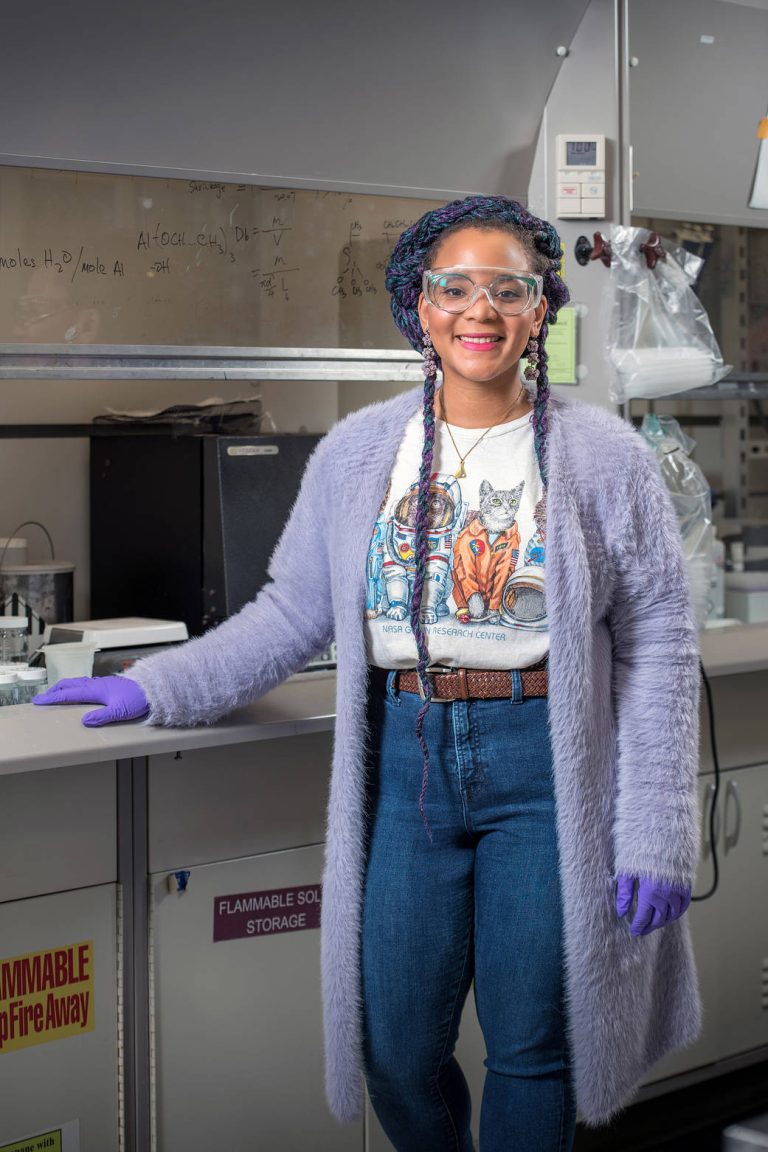
Jamesa Stokes’ path to being an engineer at NASA started out on a completely different road.
While she loved and excelled at math and science, she was also passionate about studio art, her first major in college. But knowing that science can also be a creative pursuit, she switched to physics and embarked on a journey to NASA when she reached grad school.
Stokes, who received her bachelor’s degree in Physics from Auburn University and a Ph.D. in Materials Science and Engineering from the Pennsylvania State University, was awarded a graduate fellowship to conduct research at NASA Glenn. She later became a NASA intern and converted to a full-time Materials Research Engineer when she finished her Ph.D.
“Working at NASA means tackling the bigger problems we face for the benefit of society,” said Stokes. “My job is to develop and understand how advanced materials behave in the extreme environments of space. It will help protect not only the lives of astronauts but also flight vehicles.”
Are you considering a STEM career? Stokes says there are many ways to reach your goal.
“There is no required path to becoming a scientist or engineer nor is there one way a scientist or engineer is supposed to act or look,” she said. “Never let anyone discourage you from pursuing what you like and remember that you can always be more than whatever societal conventions envision your future to be. Participate in STEM clubs and activities to figure out what makes you passionate about science and engineering.”
Image Description: Engineer Jamesa Stokes works in a special laboratory testing advanced materials to see how they behave in extreme space environments.
A Belgium-led science team based in Antarctica used Copernicus Sentinel-2 data to plan an expedition that recovered one of the biggest meteorites ever found in Earth’s southernmost continent.
The space rock – which was one of a haul of five meteorites collected – is now undergoing analysis at the Royal Belgian Institute of Natural Sciences after being transported to Europe.
Every Austral summer, research groups travel to the Belgian Princess Elisabeth Antarctica (PEA) station – located in the Sør Rondane mountains in the east of the continent – to take advantage of its unique environment and facilities for a range of activities, including meteorite hunting.
This year science and exploration projects are receiving a boost from ESA through a new Copernicus Sentinel-2 campaign, in which acquisitions over the base have been temporarily increased to provide improved coverage of the largely uncharted region.
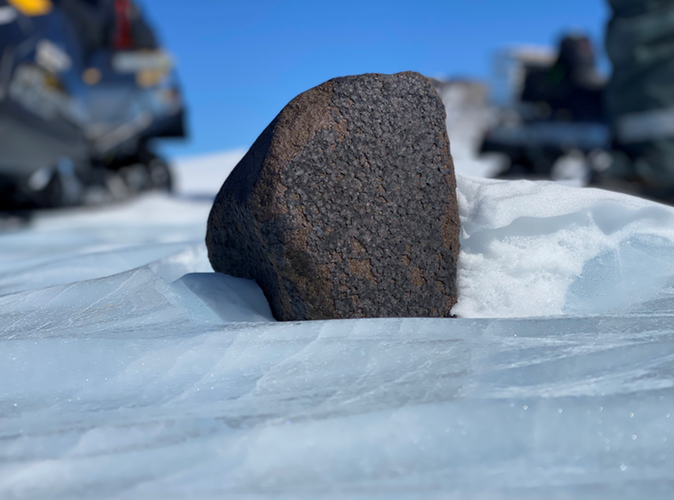
This image, captured by Copernicus Sentinel-2 on 27 December 2022, shows the blue icefields in which the 7.6kg meteorite was found. The image is a 5×5 km subset.
Antarctica is one of the best places in the world to search for space rocks.
The continent’s dry environment limits the degree of weathering meteorites undergo and, in addition, they are normally easy to spot against the icy, bright white back drop.
Areas known as blue ice fields are hotspots for the discovery of celestial rocks, thanks to the churning motion of ice flow that is known to re-expose meteorites that are often thousands of years old.
In December, a team of geologists – including scientists from institutes in Belgium, Switzerland and the US – travelled to PEA to search for new icefields in the station’s surroundings well suited to the accumulation of space rocks.
Vinciane Debaile, expedition lead and researcher at the Université libre de Bruxelles (ULB), said: “Having access to Copernicus Sentinel-2 images has been essential to target the best areas and achieve our goal of discovering new possible accumulations of meteorites.”
The Princess Elizabeth Antarctica
Imagery of the largely unexplored region delivered by the mission also enabled the team to confirm that the icy target zone was not covered by snowfall, which would render the search impossible.
After completing preparations, the team set off on a three-hour snowmobile expedition to reach the target site.
During the trip – in which the researchers braved biting winds and sub-zero temperatures – the team discovered five meteorites strewn across the ice, one of which weighed 7.6 kg.
Of the 45 000 meteorites recovered from Antarctica in the past century, it is estimated that only about 100 have weighed the same or more as the 7.6 kg rock, making it one of the heaviest celestial specimens ever found in the continent.
After being returned to Europe, advanced analysis of the five meteorites is expected to help scientists investigate the Solar System and the processes within it.
The research team was led by Vinciane Debaille of ULB, and included Schönbächler of ETH-Zurich, Ryoga Maeda of the Vrije Universiteit Brussel and ULB, and Maria Valdes of the Field Museum and the University of Chicago.
Activities at PEA are overseen by the International Polar Foundation, on behalf of the Belgian Polar Secretariat.
NASA has selected Jacobs Technology Inc., of Tullahoma, Tennessee, to manage launch infrastructure, and to operate and maintain ground systems required for flight spacecraft processing at the agency’s Kennedy Space Center in Florida.
The Consolidated Operations, Management, Engineering and Test (COMET) contract will provide vehicle assembly and integration, launch, and recovery operations for Artemis missions through 2033.
This is a cost-plus-incentive-fee/award fee contract, with an indefinite-delivery/indefinite-quantity (IDIQ) ordering mechanism for obtaining additional services via task orders. The contract period of performance consists of a three-year, five-month base period beginning May 1, followed by two two-year option periods, and one two-year and seven-month option period. The total potential value of the contract is approximately $3.2 billion, which includes the base plus option periods, as well as the maximum IDIQ ordering value of $500 million.
Work performed under the COMET contract will include engineering; ground system development; flight vehicle/spacecraft processing; and launch, landing, and recovery operations in support of the following exploration systems development programs: exploration ground systems, Space Launch System, and Orion spacecraft. The COMET contract also will support the International Space Station Program, Launch Services Program, and other NASA programs, commercial ventures, and partnerships at Kennedy.
For more information about NASA programs and missions, visit: https://www.nasa.gov
Roxana Bardan Headquarters, Washington 202-358-0357 [email protected]
Patti Bielling Kennedy Space Center, Florida 321-501-7575 [email protected]