NASA Administrator Bill Nelson delivers the State of NASA address for 2023. Learn about our plans to explore the Moon and Mars, monitor and protect the planet, sustain U.S. leadership in aviation and aerospace innovation, drive economic growth and promote equity and diversity within the agency and across the nation, while inspiring the next generation of explorers for the benefit of humanity. Credits: NASA NASA Fiscal Year 2024 Budget Request
The Biden-Harris Administration Thursday released the President’s Budget for Fiscal Year 2024, and it will allow NASA to continue exploring the secrets of the universe for the benefit of all through Artemis, the Mars Sample Return mission, and other efforts.
“The budget details a blueprint to grow the economy from the bottom up and middle out,” said NASA Administrator Bill Nelson. “At NASA, we support good-paying American jobs, stir imaginations, and excite the world to gaze up at the heavens and reflect on our place in the universe.”
The budget allows NASA to monitor and protect the planet, advance sustainable aviation, better support orbital debris management, develop innovative new technologies, and inspire the Artemis Generation.
“President Biden’s budget will help us explore new cosmic shores, continue to make strides in traveling to and working in space and on the Moon, increase the speed and safety of air travel with cutting-edge technologies, and help protect our planet and improve lives here on Earth,” said Nelson.
The budget details a blueprint to strengthen the economy, including supporting NASA’s investments in public/private partnerships. At NASA, the budget will:
Build on the successful Artemis I mission and pave the way for a long-term presence at the Moon. The budget’s $8.1 billion to enable unprecedented lunar exploration activities also will prepare for the next giant leap, sending astronauts to Mars, through NASA’s Moon to Mars exploration approach.
Further new scientific discovery in our solar system and beyond. The budget provides $949 million for the U.S.-led Mars Sample Return mission, which will return rock and soil samples to Earth to expand our understanding of the solar system and pave the way for human exploration. The budget’s almost $2.5 billion for Earth Science includes the Earth System Observatory and will provide open access to actionable data and information on climate change and natural hazards for scientists, decision-makers, and the public.
Support a future in low-Earth orbit. Regular crewed missions to the International Space Station will enable multiple commercial partners to build a robust space economy where NASA is one of many customers. The budget also invests $39 million to better understand the orbital debris environment and explore approaches to ensure safe access to space.
Advance U.S. leadership in technology innovation in aviation and space. The budget invests more than $500 million in a suite of technologies that will help meet the administration’s goal of net-zero carbon emissions from the aviation sector no later than 2050. The budget’s $1.39 billion to support the research and development of new technologies will advance our space exploration capabilities and create jobs through the growth of commercial space companies that will both use and provide new technologies.
Engage diverse learners in NASA’s mission to create our nation’s next generation of scientists, engineers, and explorers – the Artemis Generation. The budget’s $158 million for NASA’s Office of STEM Engagement will engage more students through enhanced partnerships and platforms. This includes expanding opportunities for students from underrepresented communities.
Building on the President’s strong record of fiscal responsibility, the budget more than fully pays for its investments by reducing deficits over the next decade.
For more information on NASA’s fiscal year 2024 discretionary request, visit:
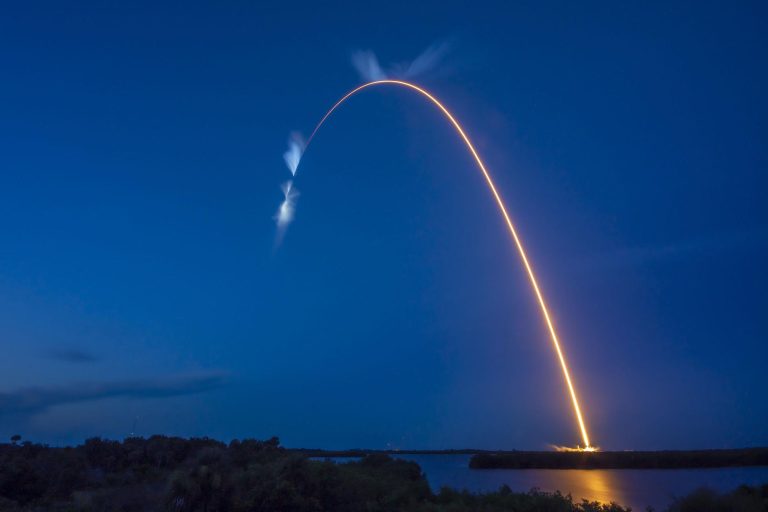
A bright white trail is in view after the SpaceX Falcon 9 rocket carrying the Dragon capsule lifts off from Launch Complex 39A at NASA’s Kennedy Space Center in Florida on July 14, 2022, on the company’s 25th Commercial Resupply Services mission for the agency to the International Space Station. Liftoff was at 8:44 p.m. EDT. Dragon will deliver more than 5,800 pounds of cargo, including a variety of NASA investigations, to the space station. The spacecraft is expected to spend about a month attached to the orbiting outpost before it returns to Earth with research and return cargo, splashing down off the coast of Florida. Credits: SpaceX
NASA and SpaceX are targeting 8:30 p.m. EDT Tuesday, March 14, to launch the company’s 27th commercial resupply mission to the International Space Station. Liftoff will be from Launch Complex 39A at the NASA’s Kennedy Space Center in Florida. Launch timing is dependent upon the undocking and return of NASA’s SpaceX Crew-5.
Live launch coverage will air on NASA Television, the NASA app, and the agency’s website, with prelaunch events starting Monday, March 13. Follow all events at:
The SpaceX Dragon spacecraft will deliver new science investigations, supplies, and equipment for the international crew, including NASA’s HUNCH Ball Clamp Monopod, a student manufactured project that can make filming in space easier, and the JAXA (Japan Aerospace Exploration Agency) Tanpopo-5 investigation which studies the origin, transportation, and survival of life in space and on extraterrestrial planets.
Dragon will also deliver the final two experiments from the National Institutes for Health and International Space Station National Laboratory’s Tissue Chips in Space initiative. Both studies, Cardinal Heart 2.0 and Engineered Heart Tissues-2, use small devices containing living cells that mimic functions of human tissues and organs to advance the development of treatments for cardiac dysfunction.
Arrival to the station is scheduled for 7:07 a.m. EDT on Thursday, March 16. The spacecraft will dock autonomously to the forward-facing port of the station’s Harmony module.
Dragon is expected to spend about a month attached to the orbiting outpost before it returns to Earth with research and return cargo, splashing down off the coast of Florida.
The deadline has passed for media accreditation for in-person coverage of this launch. The agency’s media accreditation policy is available online. More information about media accreditation is available by emailing: [email protected].
Full coverage of this mission is as follows (all times Eastern):
Monday, March 13
8 p.m. – Prelaunch media teleconference (no earlier than one hour after completion of the Launch Readiness Review) with the following participants:
Phil Dempsey, transportation integration manager, International Space Station Program
Dr. Meghan Everett, deputy chief scientist, NASA’s International Space Station Program Research Office
Sarah Walker, director, Dragon Mission Management, SpaceX
Arlena Moses, launch weather officer, Cape Canaveral Space Force Station’s 45th Weather Squadron
Audio of the teleconference will stream live on the agency’s website:
Media may ask questions via phone only. For the dial-in number and passcode, please contact the Kennedy newsroom no later than 5 p.m. EDT on Monday, March 13, at: [email protected].
Tuesday, March 14
11 a.m. – Science media teleconference with the following participants:
Dr. Meghan Everett, deputy chief scientist, NASA’s International Space Station Program Research Office
Shane Johnson, former HUNCH student and current research assistant at the University of Texas at Austin, who will discuss the HUNCH Ball Clamp Monopod experiment
Dr. Mita Hajime, professor at the Fukuoka Institute of Technology and principal investigator for the Tanpopo-5 experiment
Dr. Ralf Moeller, microbiologist at the German Aerospace Center in Cologne, Germany, and principal investigator of the BIOFILMS study
Media may ask questions via phone only. For the dial-in number and passcode, please email Lora Bleacher no later than 8 a.m. EDT on Tuesday, March 14 at: [email protected].
8 p.m. – NASA TV launch coverage begins
8:30 p.m. – Launch
Thursday, March 16
5:30 a.m. – NASA TV coverage begins for Dragon docking to space station
7:07 a.m. – Docking
Coverage is subject to change based on real-time operational activities. Follow the International Space Station blog for updates.
NASA launch coverage
Audio only of the news conferences and launch coverage will be carried on the NASA “V” circuits, which may be accessed by dialing 321-867-1220, -1240, or -7135. On launch day, the full mission broadcast can be heard on -1220 and -1240, while the countdown net only can be heard on -7135 beginning approximately one hour before the mission broadcast begins.
On launch day, a “tech feed” of the launch without NASA TV commentary will be carried on the NASA TV media channel.
NASA website launch coverage
Launch day coverage of the mission will be available on the NASA website. Coverage will include live streaming and blog updates beginning no earlier than 8 p.m. EDT Tuesday, March 14, as the countdown milestones occur. On-demand streaming video and photos of the launch will be available shortly after liftoff. For questions about countdown coverage, contact the Kennedy newsroom at 321-867-2468. Follow countdown coverage on our launch blog for updates.
Attend launch virtually
Members of the public can register to attend this launch virtually. Registrants will receive mission updates and activities by email. NASA’s virtual guest program for this mission also includes curated launch resources, notifications about related opportunities, and a virtual guest passport stamp following a successful launch.
Watch, engage on social media
Let people know you’re following the mission on Twitter, Facebook, and Instagram by using the hashtags #Dragon and #CRS27. You can also stay connected by following and tagging these accounts:
Para obtener información sobre cobertura en español en el Centro Espacial Kennedy o si desea solicitar entrevistas en español, comuníquese con Antonia Jaramillo at: [email protected] or 321-501-8425.
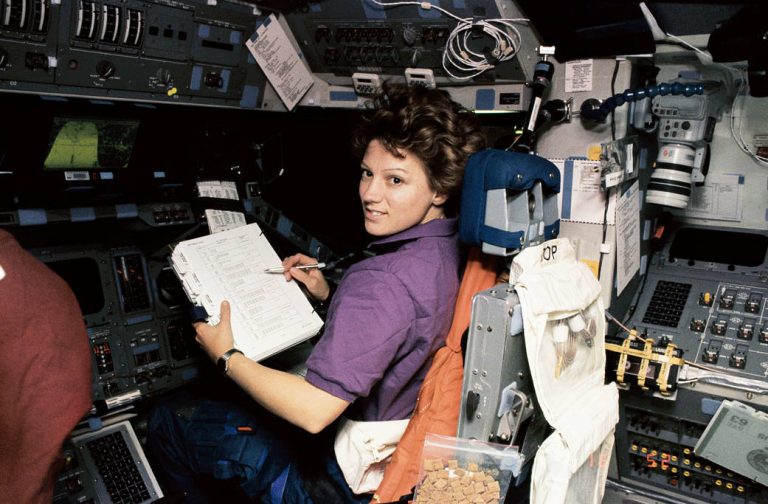
Former astronaut Eileen Collins sits at the pilot’s station aboard space shuttle Discovery during a hotfiring procedure on Feb. 2, 1995.
Selected by NASA in January 1990, Collins became the first woman pilot of a Space Shuttle and the first woman to command a shuttle mission. Over four missions—STS-63 Discovery, STS-84 Atlantis, STS-93 Columbia, and STS-114 Discovery—she logged over 537 hours in space. Highlights of her missions include the Chandra X-Ray Observatory deployment, scientific experiments, and evaluation of new flight safety procedures.
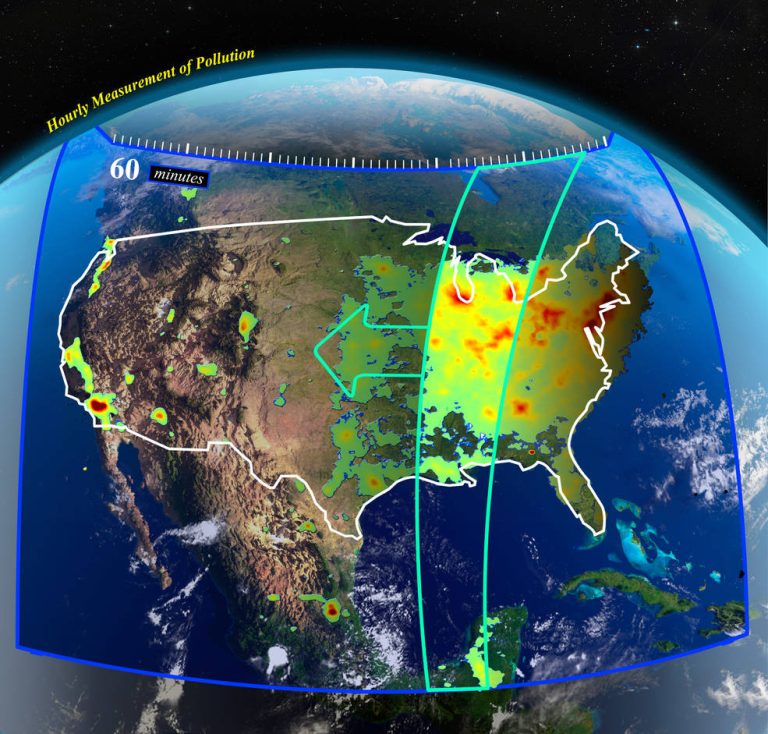
TEMPO will be the first space-based instrument to monitor major air pollutants hourly in high spatial resolution in North America from Mexico City to the Canadian oil sands and from the Atlantic Ocean to the Pacific Ocean. Credits: NASA
Media are invited to a joint briefing with NASA and The Smithsonian Astrophysical Observatory at 9 a.m. EDT Tuesday, March 14, to discuss the first space-based instrument to observe major air pollutants across North America every hour during the daytime.
NASA’s TEMPO (Tropospheric Emissions: Monitoring of Pollution) instrument will improve life on Earth by revolutionizing the way scientists observe air quality. A partnership between NASA and the Center for Astrophysics | Harvard & Smithsonian, TEMPO will launch on a commercial mission as early as April.
A live stream of the briefing will air on NASA TV, the NASA app, and the agency’s website.
The briefing participants are:
Barry Lefer, tropospheric composition program manager, NASA
Laura Judd, Applied Sciences Health and Air Quality associate program manager, NASA
Christopher Browne, John and Adrienne Mars director, National Air and Space Museum
Ellen Stofan, under secretary for Science and Research, Smithsonian Institution
Caroline Nowlan, atmospheric physicist, Center for Astrophysics | Harvard & Smithsonian
Erika Wright, education specialist, Center for Astrophysics | Harvard & Smithsonian
The Smithsonian’s National Air and Space Museum, Sixth St., and Independence Ave., in Washington. Check in will begin at 8:30 a.m.
Media interested in attending in person should RSVP before arrival to Alison Mitchell at [email protected] and 202-633-2376 or Kevin Lamparter at [email protected] and 202-633-2347. Media also may join via teleconference by RSVPing no more than one hour prior to the start of the event to Joe Atkinson at [email protected].
TEMPO will be the first space-based instrument to monitor major air pollutants hourly in high spatial resolution – down to four square miles – in a region stretching from the Atlantic to the Pacific and from the Canadian oil sands to below Mexico City, encompassing the entire continental United States.
The instrument is a payload on the satellite Intelsat 40E. It was built by Ball Aerospace and integrated onto Intelsat 40E by Maxar. The Smithsonian Astrophysical Observatory is part of the Center for Astrophysics | Harvard & Smithsonian.
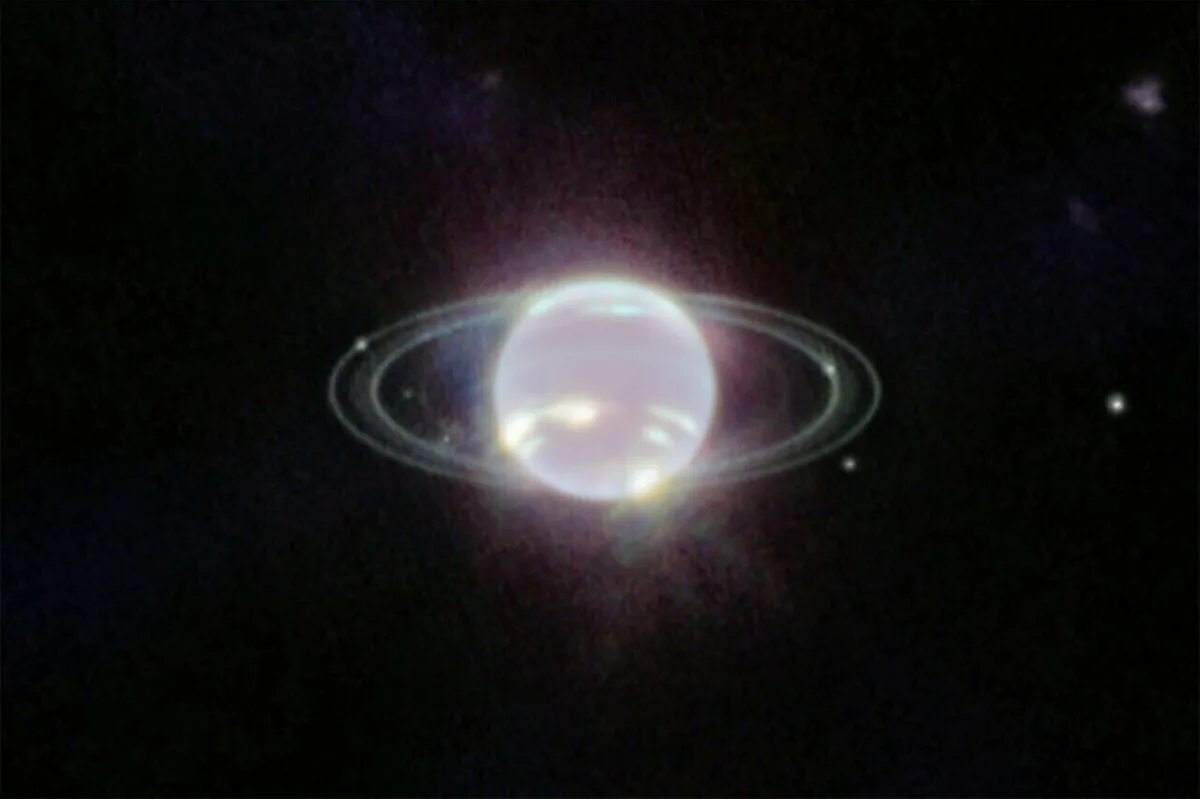
NEPTUNE FROM JWST NASA’s JWST spacecraft took this image of Neptune using its Near-Infrared Camera (NIRCam), which captures objects in the near-infrared range from 0.6 to 5 microns. In addition to several bright narrow rings, the JWST images clearly show Neptune’s fainter dust bands.Image: NASA/ESA/CSA and STScI
Celebrating the best of 2022
At the end of 2022, we looked back at a fabulous year of exploration with our annual “Best Of” awards. With over 3,000 votes cast, the results are in for the Best of 2022! You can see all the winners at planetary.org/the-best-of-2022.
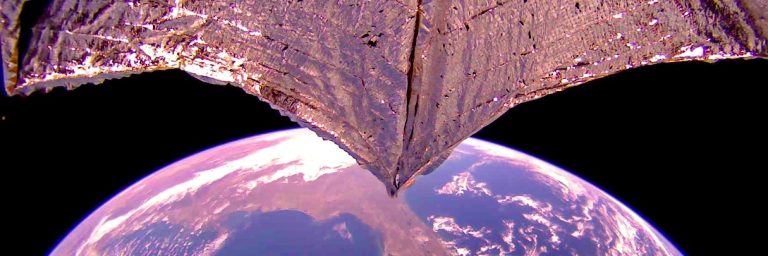
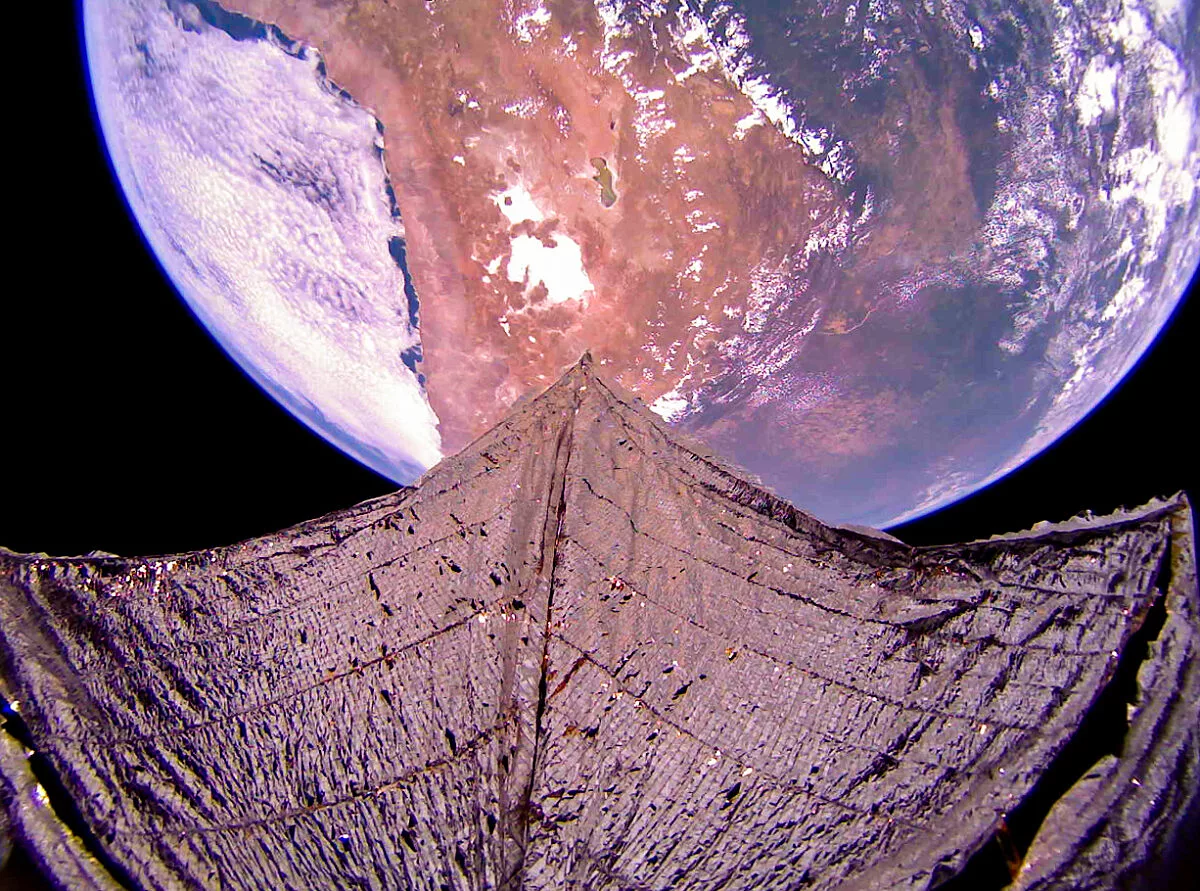
LIGHTSAIL 2’S FINAL IMAGE This image taken by The Planetary Society’s LightSail 2 spacecraft on October 24, 2022 was the final image returned from the spacecraft before atmospheric reentry. It shows the central portion of South America centered approximately on Bolivia including the large, white Uyuni Salt Flats. North is approximately at top. This image has been color-adjusted and some distortion from the camera’s 180-degree fisheye lens has been removed.Image: The Planetary Society
LightSail end of mission
After nearly three-and-a-half glorious years in Earth orbit, our dear LightSail 2 spacecraft reentered the atmosphere as expected, successfully completing its mission to demonstrate flight by light for small spacecraft. LightSail 2 reentered on Nov. 17, 2022. The spacecraft showed that it could change its orbit using the gentle push of sunlight, a technique known as solar sailing. LightSail 2 demonstrated that small spacecraft can carry, deploy, and utilize relatively large solar sails for propulsion. The team continues working on data analyses, technical presentations, and journal articles to continue to feed forward what has been learned to all future solar sailing missions.
Space advocacy victories
The Planetary Society notched a number of high-profile victories in space policy and NASA’s 2023 budget after a full year of grassroots and targeted advocacy work. Our highest priority, protecting the NEO Surveyor asteroid-hunting mission from crippling budget cuts, resulted in Congress restoring $50 million to the project, the largest correction to a robotic mission that year. Congress also passed legislation enshrining the mission as official U.S. policy. In response, NASA confirmed the project to launch in 2028. We also supported efforts to keep Mars Sample Return and Europa Clipper on track. Planetary science at NASA remains at record levels of funding. And in a critical step for our search-for-life efforts, we saw the inclusion of legislative language allowing NASA to investigate “technosignatures” — signs of intelligent life. SETI funding was removed from NASA in the 1990s, and this updated policy frees NASA to support scientifically sound expansive efforts to find life in our Cosmos.
What the midterms mean for space policy
The 2022 U.S. midterm elections did not result in a red or blue wave but rather a divided Congress with Republicans gaining control of the House of Representatives and Democrats retaining the Senate. Our Chief of Space Policy, Casey Dreier, analyzed what this means for U.S. space politics in the coming year. Listen to the Space Policy Edition of Planetary Radio and subscribe to The Space Advocate newsletter for ongoing space policy coverage. planetary.org/spaceadvocate
Thank you for helping us change the world(s)
We were able to raise more than $316,000 during our year-end fundraising campaign thanks to the generosity of members like you. Your support also helped us raise $22,000 during our Giving Tuesday drive back in November 2022.
The Planetary Society’s LightSail 2 spacecraft sailed into history last year, successfully completing its mission to demonstrate flight by light.
The solar sail reentered Earth’s atmosphere on Nov. 17, 2022 after 3 1/2 years in space. It was a bittersweet moment for Planetary Society members and supporters as well as the team that had flown the spacecraft since 2019. The reentry marks a turning point as the mission turns from operations to analysis and data archiving, said Bruce Betts, LightSail program manager and chief scientist for The Planetary Society.
“We don’t have to worry about flying the spacecraft every day,” he said. “Now we can focus on data analyses and presenting and publishing the results.”
LightSail 2 was a technology demonstration. It was designed to show that small spacecraft — in this case, standardized spacecraft called CubeSats — can carry, deploy, and utilize relatively large solar sails for propulsion. LightSail 2 began its mission as a CubeSat roughly the size of a loaf of bread and deployed a reflective Mylar solar sail with an area of 32 square meters (344 square feet). Using a momentum wheel and three electromagnetic torque rods, the spacecraft oriented itself each orbit to get a slight push from sunlight.
At LightSail 2’s starting altitude of about 720 kilometers (450 miles), Earth’s atmosphere is still thick enough to create drag and slow down a spacecraft. Using solar sailing, LightSail 2 slowed its decay rate and even overpowered drag on some occasions, showing that the technology is ready for wider use.
New solar sail missions are already under development. Solar sailing is being considered for a wide variety of applications as scientists and engineers envision new advancements in sail technology. LightSail 2 may be gone, but the future of solar sailing is bright.
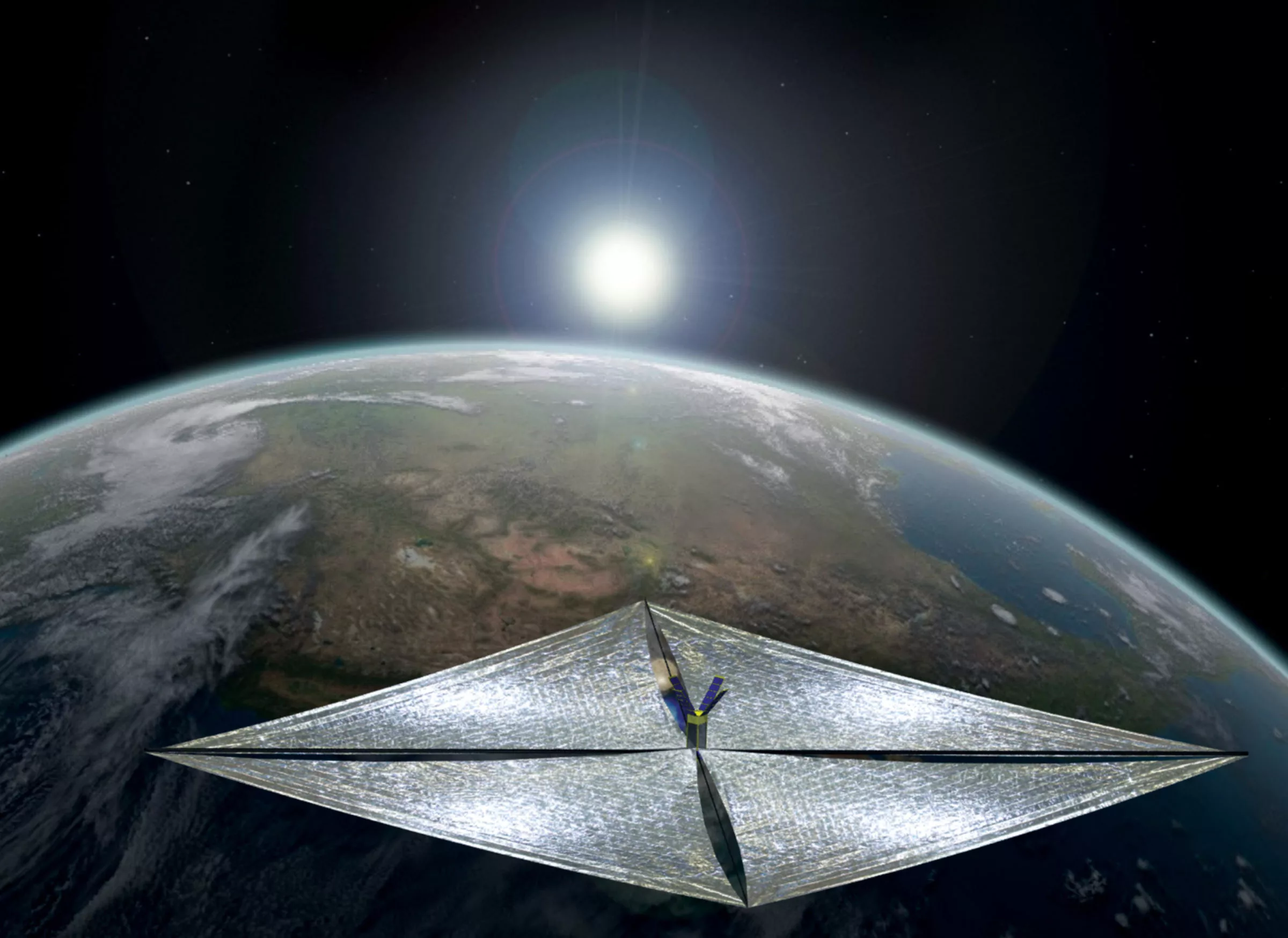
LIGHTSAIL 1 ARTIST’S CONCEPT AGAINST EARTH Early concept art of LightSail 1.Image: David Imbaratto, Stellar Exploration, for The Planetary Society
A useful technology
One of the biggest advantages of solar sail-powered spacecraft is that while they are near the Sun, they enjoy unlimited thrust. This allows them to reach complex orbits that require constant acceleration to maintain.
An example of this is an orbit that would allow a spacecraft to continually circle the poles of a planetary body. A “pole sitter” spacecraft could offer insight into polar processes happening on Earth, the Moon, and other planets.
Another use for the technology could be parking a spacecraft between Earth and the Sun, creating an artificial orbit from which to watch for solar storms. Solar storms are ejections of high-energy particles from the Sun. These particles can disrupt power grids, cause communication blackouts, and harm astronauts in space. A solar sail parked between Earth and the Sun could sound the alarm on incoming solar storms, allowing protective measures to be taken.
Solar sailing could also propel spacecraft to distant destinations more quickly than conventional propulsion. Proposed far-flung targets range from the outer planets to the Oort cloud to our Sun’s gravitational lens region, where the Sun’s gravity magnifies distant objects in a way that might allow us to image an exoplanet in high resolution.
The ultimate destination for a solar sail would be Proxima Centauri, our stellar neighbor. The organization Breakthrough Starshot has proposed using lasers to accelerate tiny Proxima-bound spacecraft up to 20% the speed of light, cutting the travel time to just 20 years.
NASA solar sails
LightSail 2’s immediate solar sail successor was NASA’s Near-Earth Asteroid Scout. NEA Scout launched aboard the agency’s Artemis I Moon mission in November 2022 along with nine other CubeSats. Unfortunately, NEA Scout didn’t phone home as planned, and all efforts to communicate with the spacecraft failed.
The CubeSat was equipped with a solar sail roughly 2 1/2 times larger than that of LightSail 2. It would have used the sail to leave the vicinity of the Moon and perform a slow flyby of asteroid 2020 GE, which measures just 18 meters (60 feet) across. Had NEA Scout succeeded, 2020 GE would have become the smallest asteroid ever visited by a spacecraft.
The loss of NEA Scout came on the heels of news that NASA was no longer pursuing another solar sail mission named Solar Cruiser. Solar Cruiser would have deployed an ambitiously large solar sail with an area of 1,650 square meters (17,800 square feet), big enough to cover six tennis courts. The spacecraft would have parked itself in a straight line between Earth and the Sun, a location that future missions could use to watch for solar storms. Only a solar sail can reach and maintain such a unique orbit, given the perpetual thrust required.
That leaves NASA with just one upcoming solar sail mission: ACS3, the Advanced Composite Solar Sail System. ACS3 is scheduled to launch into Earth orbit as early as mid-2023 for a test of next-generation solar sail technologies.
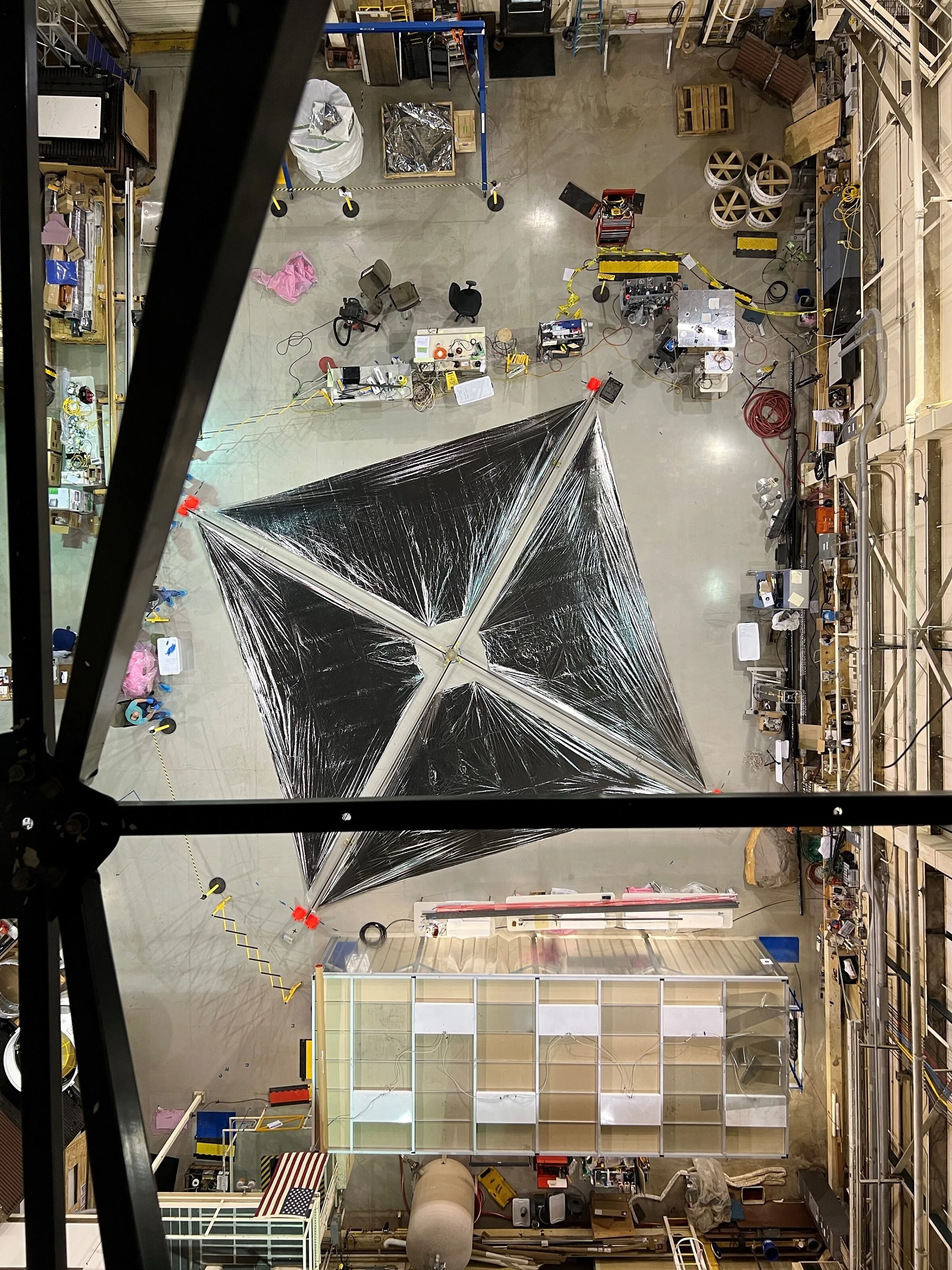
The spacecraft will use carbon fiber booms to deploy a sail with an area of about 80 square meters (860 square feet) — about 2 1/2 times larger than LightSail 2. NASA says the carbon fiber booms are 75% lighter than metal booms and less susceptible to buckling due to extreme temperature shifts in space.
W. Keats Wilkie, the mission’s principal investigator at NASA’s Langley Research Center, said ACS3 is essentially a scaled-down version of a much larger solar sail spacecraft that would measure roughly 500 square meters (5,400 square feet). He said that as the technology matures, scientists will come to see solar sail spacecraft as attractive options for their missions.
“Once we start flying these, we’ll get people who say, ‘Hey, this isn’t just science fiction anymore,’” he said.
ACS3 FLIGHT SAIL TESTING NASA’s Advanced Composite Solar Sail System (ACS3) solar sail is seen from above during deployment testing. The ACS3 solar sail is approximately 9 meters (30 feet) on each side, and the boom-tip-to-boom-tip diagonal distance is 14 meters (46 feet).Image: NASA
No booms, no problem
The larger a solar sail gets, the more challenging it becomes for booms to deploy sail sections and hold them tight like a kite. One alternative is spinning the core spacecraft using centrifugal force to unfurl the sail and keep it tight. The concept was successfully tested in 2010 by Japan’s IKAROS mission. Now, a French-based startup named Gama plans to take spinning sails further.
Gama is planning to debut the technology in Earth orbit with two missions named Alpha and Beta. Both will use sails of 73 square meters (786 square feet), more than double the sail area of LightSail 2.
In January 2023, Alpha launched to low-Earth orbit, where atmospheric drag is still strong enough to overpower the thrust gained from solar sailing. At the time of publication, no information was available about the status of the spacecraft. Beta, which has a launch date of 2024, will fly higher, where its thrust will have a more noticeable effect.
Gama’s goal is to offer an affordable solar sailing platform for a variety of scientific missions. The company’s website envisions flights to Venus, the outer planets, and even the Oort cloud. Andrew Nutter, a Gama co-founder, said that the company’s solar sails will hitch rides on high-energy rocket launches, such as trips to lunar space.
“It allows us to launch as a rideshare on many different types of missions without needing a private launch, reducing launch cost,” he said.
Other types of sailing
Solar sails like LightSail 2 work on a straightforward concept: As light bounces off a reflective surface, some of the light’s momentum gets transferred, giving the surface a push. Like a sailboat, a solar sail gets where it wants to go by changing the angle of its sail with respect to the Sun’s rays.
A reflective sail performs best when it is turned perpendicular to the rays, but this isn’t always possible. A sail in solar orbit trying to spiral away from the Sun, for instance, needs to angle itself 35 degrees away from the incoming solar photons. This lowers the sail’s thrust, making it less efficient.
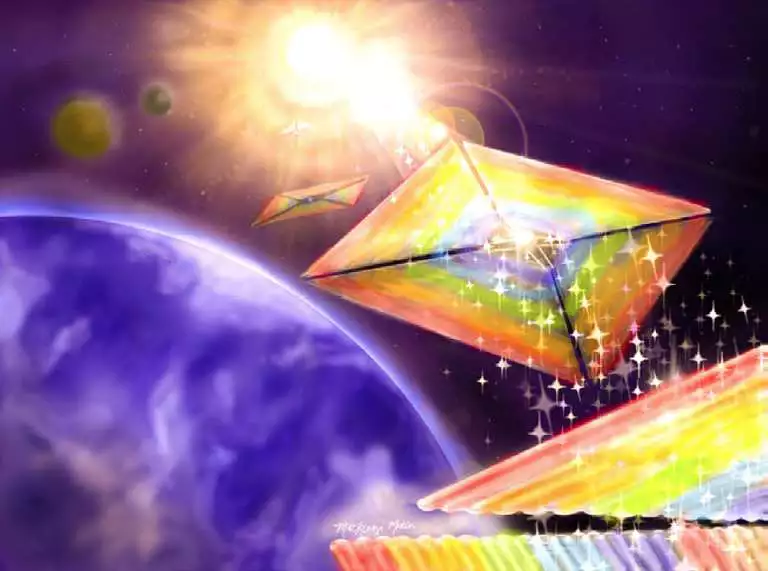
Diffractive solar sails seek to overcome this limitation. These sails use tiny gratings that diffract incoming light through the sail like a prism rather than reflecting it. The diffracted light has a force component that pushes the sail in a direction perpendicular to the incoming solar photons, allowing the sail to capture the full force of the Sun’s rays.
Rather than being made from shiny Mylar like LightSail 2, a diffractive solar sail might be manufactured from nearly transparent materials. As an aesthetical bonus, the diffracted light would give the sail a rainbowlike appearance.
The NASA Innovative Advanced Concepts program has previously funded diffractive sail research. The agency is now funding further development of diffractive sails in support of a possible technology demonstration mission. Amber Dubill, the project’s principal investigator at the Johns Hopkins University Applied Physics Laboratory, said that diffraction technology could help make solar sailing mainstream.
“We think that we can overcome a lot of the challenges that are keeping traditional solar sailing from becoming widely implemented much more across the board,” she said.
Another alternative to traditional solar sails is the electric sail, or E-sail. Instead of sailing on solar photons traveling at the speed of light, an E-sail rides on the solar wind — charged particles ejected by the Sun.
One E-sail concept studied by NASA’s Marshall Space Flight Center consists of a small central spacecraft that would spin and deploy 20 thin, positively charged wires that are each 20 kilometers (12 miles) long.
As positively charged protons from the solar wind approach the sail, they are repelled by electrostatic forces, giving the sail a push. One advantage of this technique is that E-sails could be faster than traditional sails. NASA says an E-sail-powered mission could reach the heliopause — the bubble in interstellar space created by our Sun — in half as much time as a solar sail.
DIFFRACTIVE LIGHTSAILS NIAC CONCEPT Diffractive solar sails, depicted in this conceptual illustration, could enable missions to hard-to-reach places, like orbits over the Sun’s poles.Image: NASA NIAC
What a drag
During its final days in space, LightSail 2 dipped farther and farther into Earth’s atmosphere. The spacecraft’s altitude dropped quickly as its kitelike sail trawled through the upper atmosphere. The forces and heating from air molecules compressed against LightSail 2’s surfaces eventually tore apart the spacecraft.
Data on LightSail 2’s reentry could prove useful for drag sails, which are designed to intentionally deorbit satellites. The capability can be used to speed up the reentry of satellites whose missions have ended, ensuring they don’t contribute to a growing space junk problem in Earth orbit. NASA says there are over 25,000 objects in Earth orbit larger than 10 centimeters (4 inches). Derelict satellites can collide with other satellites and space debris, exacerbating the problem.
Satellites can be equipped with drag sails that are deployed at the end of a mission. Several organizations are studying the concept, including the company Vestigo Aerospace, which includes personnel who worked on the LightSail program.
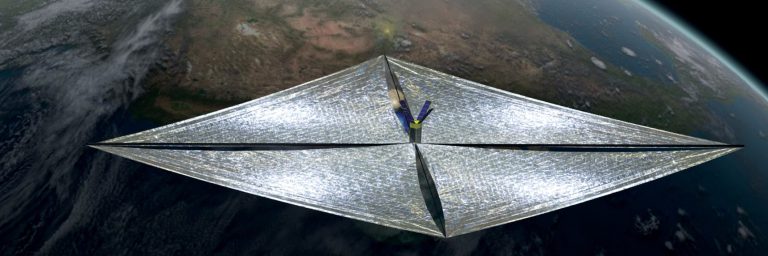
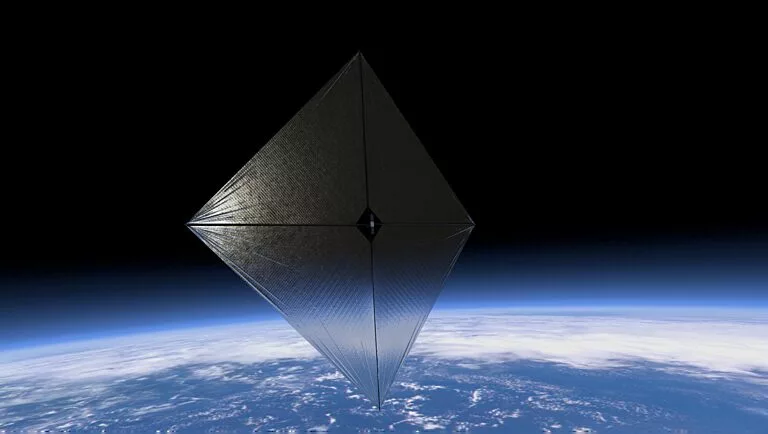
ACS3 SOLAR SAIL An artist’s concept of NASA’s ACS3 solar sail spacecraft in Earth orbit.Image: NASA
LightSail’s legacy
LightSail 2 was designed to demonstrate flight by light for small spacecraft. The LightSail program itself had wide-ranging objectives, including popularizing solar sailing and helping other missions advance solar sailing technology.
More than 50,000 Planetary Society members, Kickstarter backers, private citizens, foundations, and corporate partners supported LightSail 2 and the broader cause of solar sailing. With a variety of new missions and technologies on the way, the future of solar sailing looks bright. From its nighttime launch to the stunning images it sent back to Earth, LightSail 2 has inspired people far and wide.
The co-founders of The Planetary Society believed that sailing on sunlight could revolutionize space travel. As the LightSail 2 mission ends, the baton is being passed to the next generation of solar sailors. Who knows what distant shores they will visit as they explore our cosmic ocean?
What would we do if we spotted a hazardous asteroid on a collision course with Earth? Could we deflect it safely to prevent the impact?
Last year, NASA’s Double Asteroid Redirection Test (DART) mission tried to find out whether a “kinetic impactor” could do the job: smashing a 600kg spacecraft the size of a fridge into an asteroid the size of an Aussie Rules football field.
Early results from this first real-world test of our potential planetary defence systems looked promising. However, it’s only now that the first scientific results are being published: five papers in Nature have recreated the impact, and analysed how it changed the asteroid’s momentum and orbit, while twostudies investigate the debris knocked off by the impact.
The conclusion: “kinetic impactor technology is a viable technique to potentially defend Earth if necessary”.
Small asteroids could be dangerous, but hard to spot
Our Solar System is full of debris, left over from the early days of planet formation. Today, some 31,360 asteroids are known to loiter around Earth’s neighbourhood.
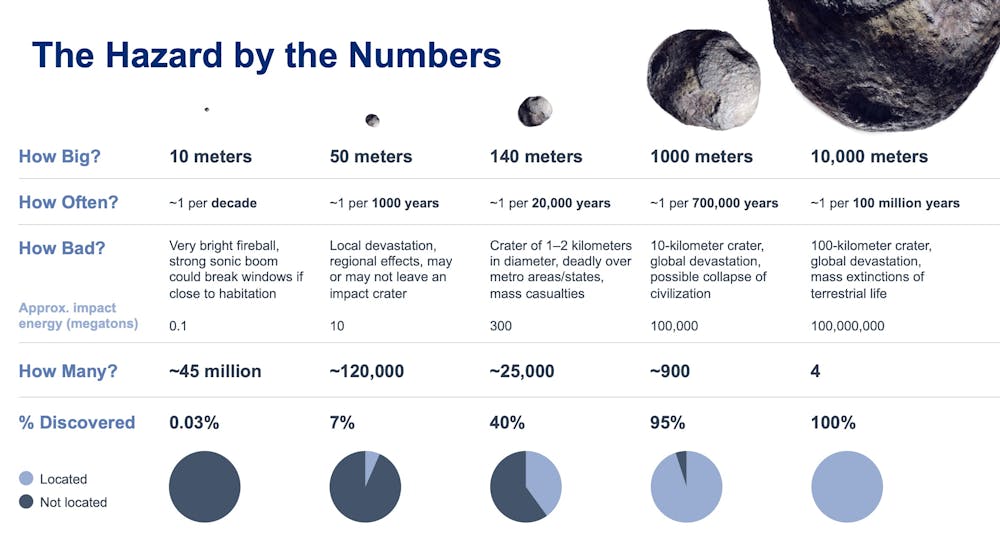
Asteroid statistics and the threats posed by asteroids of different sizes. NASA’s DART press brief
Although we have tabs on most of the big, kilometre-sized ones that could wipe out humanity if they hit Earth, most of the smaller ones go undetected.
Just over ten years ago, an 18-metre asteroid exploded in our atmosphere over Chelyabinsk, Russia. The shockwave smashed thousands of windows, wreaking havoc and injuring some 1,500 people.
A 150-metre asteroid like Dimorphos wouldn’t wipe out civilisation, but it could cause mass casualties and regional devastation. However, these smaller space rocks are harder to find: we think we have only spotted around 40% of them so far.
The DART mission
Suppose we did spy an asteroid of this scale on a collision course with Earth. Could we nudge it in a different direction, steering it away from disaster?
Hitting an asteroid with enough force to change its orbit is theoretically possible, but can it actually be done? That’s what the DART mission set out to determine.
Specifically, it tested the “kinetic impactor” technique, which is a fancy way of saying “hitting the asteroid with a fast-moving object”.
The asteroid Dimorphos was a perfect target. It was in orbit around its larger cousin, Didymos, in a loop that took just under 12 hours to complete.
The impact from the DART spacecraft was designed to slightly change this orbit, slowing it down just a little so that the loop would shrink, shaving an estimated seven minutes off its round trip.
A self-steering spacecraft
For DART to show the kinetic impactor technique is a possible tool for planetary defence, it needed to demonstrate two things:
that its navigation system could autonomously manoeuvre and target an asteroid during a high-speed encounter
that such an impact could change the asteroid’s orbit.
In the words of Cristina Thomas of Northern Arizona University and colleagues, who analysed the changes to Dimorphos’ orbit as a result of the impact, “DART has successfully done both”.
The DART spacecraft steered itself into the path of Dimorphos with a new system called Small-body Manoeuvring Autonomous Real Time Navigation (SMART Nav), which used the onboard camera to get into a position for maximum impact.
More advanced versions of this system could enable future missions to choose their own landing sites on distant asteroids where we can’t image the rubble-pile terrain well from Earth. This would save the trouble of a scouting trip first!
Dimorphos itself was one such asteroid before DART. A team led by Terik Daly of Johns Hopkins University has used high-resolution images from the mission to make a detailed shape model. This gives a better estimate of its mass, improving our understanding of how these types of asteroids will react to impacts.
Dangerous debris
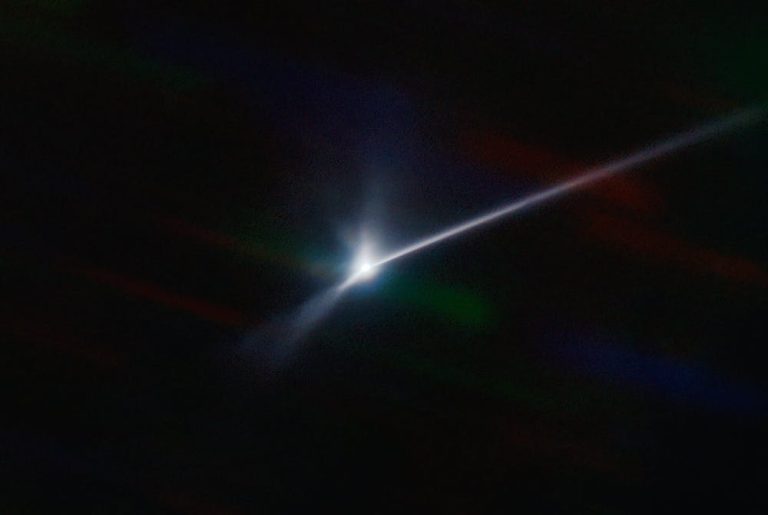
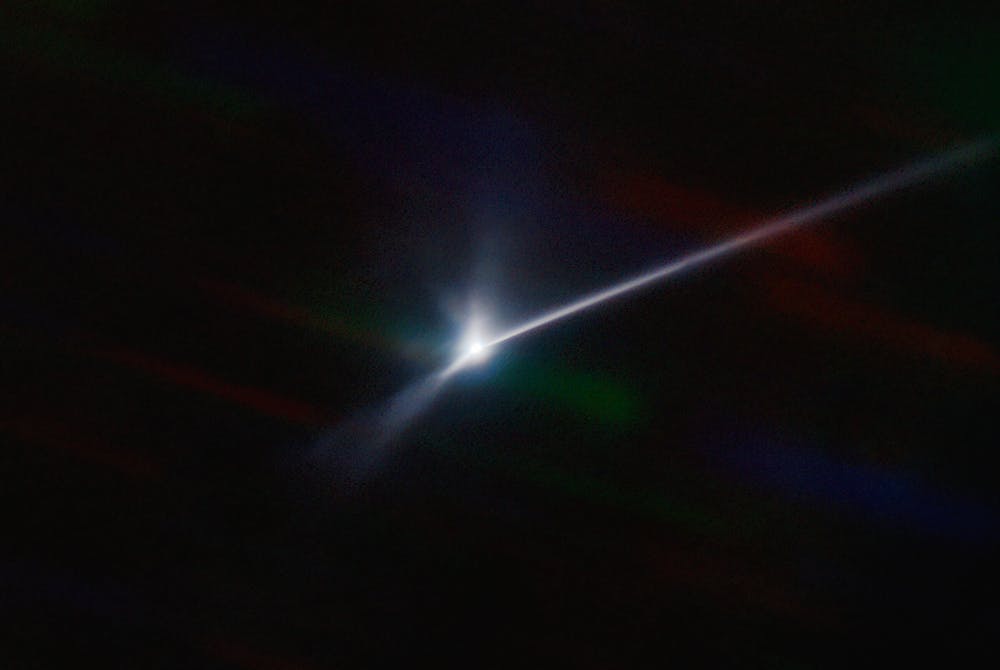
The impact itself produced an incredible plume of material. Jian-Yang Li of the Planetary Science Institute and colleagues have described in detail how the ejected material was kicked up by the impact and streamed out into a 1,500km tail of debris that could be seen for almost a month.
Streams of material from comets are well known and documented. They are mainly dust and ice, and are seen as harmless meteor showers if they cross paths with Earth.
Asteroids are made of rockier, stronger stuff, so their streams could pose a greater hazard if we encounter them. Recording a real example of the creation and evolution of debris trails in the wake of an asteroid is very exciting. Identifying and monitoring such asteroid streams is a key objective of planetary defence efforts such as the Desert Fireball Network we operate from Curtin University.
A bigger than expected result
So how much did the impact change Dimorphous’ orbit? By much more than the expected amount. Rather than changing by seven minutes, it had become 33 minutes shorter!
This larger-than-expected result shows the change in Dimorphos’ orbit was not just from the impact of the DART spacecraft. The larger part of the change was due to a recoil effect from all the ejected material flying off into space, which Ariel Graykowski of the SETI Institute and colleagues estimated as between 0.3% and 0.5% of the asteroid’s total mass.
A first success
The success of NASA’s DART mission is the first demonstration of our ability to protect Earth from the threat of hazardous asteroids.
At this stage, we still need quite a bit of warning to use this kinetic impactor technique. The earlier we intervene in an asteroid’s orbit, the smaller the change we need to make to push it away from hitting Earth. (To see how it all works, you can have a play with NASA’s NEO Deflection app.)
But should we? This is a question that will need answering if we ever do have to redirect a hazardous asteroid. In changing the orbit, we’d have to be sure we weren’t going to push it in a direction that would hit us in future too.
However, we are getting better at detecting asteroids before they reach us. We have seen two in the past few months alone: 2022WJ1, which impacted over Canada in November, and Sar2667, which came in over France in February.
We can expect to detect a lot more in future, with the opening of the Vera Rubin Observatory in Chile at the end of this year.
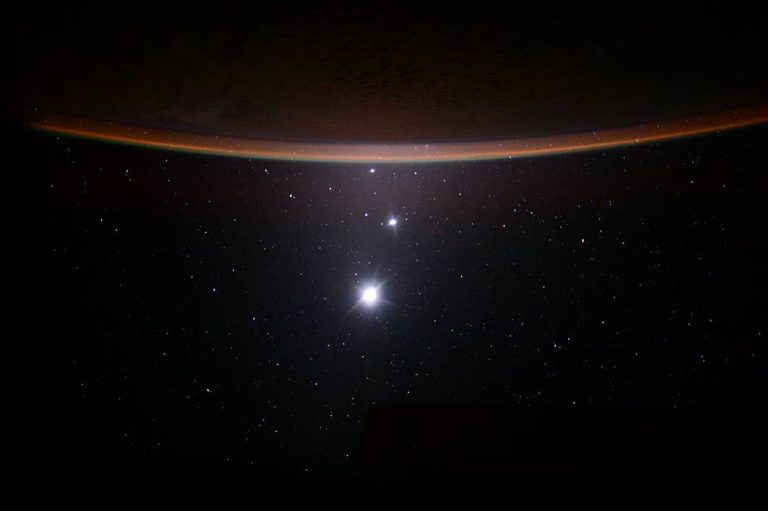
Former NASA astronaut Scott Kelly snapped this photo of the Earth’s crescent, the Moon, Venus, and Jupiter (from top to bottom) on Aug. 6, 2015, while he was aboard the International Space Station.
These celestial bodies have been quite close in the night sky; on March 1, Venus and Jupiter were nearest to each other. For more skywatching tips, check out our monthly skywatching guide.
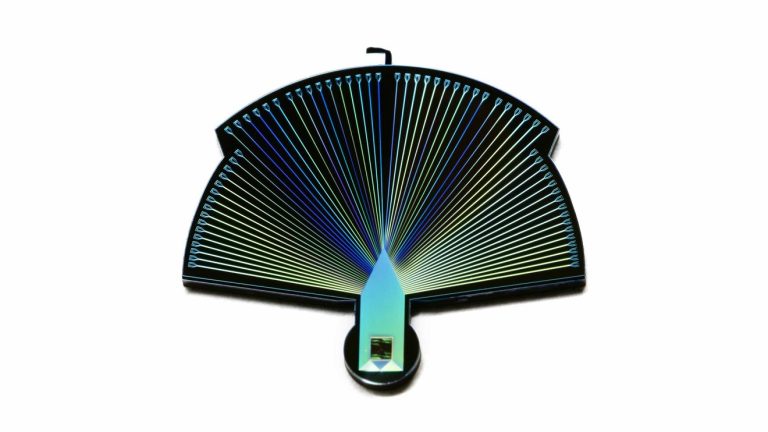
This close-up photograph shows an exquisitely sensitive single Performance-Enhanced Array for Counting Optical Quanta (PEACOQ) detector, which is being developed at JPL to detect single photons – quantum particles of light – at an extremely high rate. Credit: NASA/JPL-Caltech
A new JPL- and Caltech-developed detector could transform how quantum computers, located thousands of miles apart, exchange huge quantities of quantum data.
Quantum computers hold the promise of operating millions of times faster than conventional computers. But to communicate over long distances, quantum computers will need a dedicated quantum communications network.
To help form such a network, a device has been developed by scientists at NASA’s Jet Propulsion Laboratory and Caltech that can count huge numbers of single photons – quantum particles of light – with incredible precision. Like measuring individual droplets of water while being sprayed by a firehose, the Performance-Enhanced Array for Counting Optical Quanta (PEACOQ) detector is able to measure the precise time each photon hits it, within 100 trillionths of a second, at a rate of 1.5 billion photons per second. No other detector has achieved that rate.
“Transmitting quantum information over long distances has, so far, been very limited,” said PEACOQ project team member Ioana Craiciu, a postdoctoral scholar at JPL and the lead author of a study describing these results. “A new detector technology like the PEACOQ that can measure single photons with a precision of a fraction of a nanosecond enables sending quantum information at higher rates, farther.”
Dedicated Network Required
Ioana Craiciu, who led the study, stands next to the cryostat that was used to test PEACOQ at temperatures as low as a degree above absolute zero. At this temperature, the detector is in a superconducting state, allowing its nanowires to turn absorbed photons into electrical pulses. Credit: NASA/JPL-Caltech
Conventional computers transmit data through modems and telecommunication networks by making copies of the information as a series of 1s and 0s, also called bits. The bits are then transmitted through cables, along optical fibers, and through space via flashes of light or pulses of radio waves. When received, the bits are reassembled to re-create the data that was originally transmitted.
Quantum computers communicate differently. They encode information as quantum bits – or qubits – in fundamental particles, such as electrons and photons, that can’t be copied and retransmitted without being destroyed. Adding to the complexity, quantum information transmitted through optical fibers via encoded photons degrades after just a few dozen miles, greatly limiting the size of any future network.
For quantum computers to communicate beyond these limitations, a dedicated free-space optical quantum network could include space “nodes” aboard satellites orbiting Earth. Those nodes would relay data by generating pairs of entangled photons that would be sent to two quantum computer terminals hundreds or even thousands of miles apart from each other on the ground.
Pairs of entangled photons are so intimately connected that measuring one immediately affects the results of measuring the other, even when they are separated by a large distance. But for these entangled photons to be received on the ground by a quantum computer’s terminal, a highly sensitive detector like PEACOQ is needed to precisely measure the time it receives each photon and deliver the data it contains.
This photograph shows several PEACOQ detectors shortly after they’d been printed on a silicon wafer. The inset image shows the detail of a single PEACOQ. Each PEACOQ detector is a little smaller than a dime. Credit: NASA/JPL-CaltechMatt Shaw, who leads JPL’s superconducting detector work, is shown here inspecting a PEACOQ mounted to a cryostat, which is used to maintain the extremely low temperatures required for the detector to work. Credit: NASA/JPL-Caltech
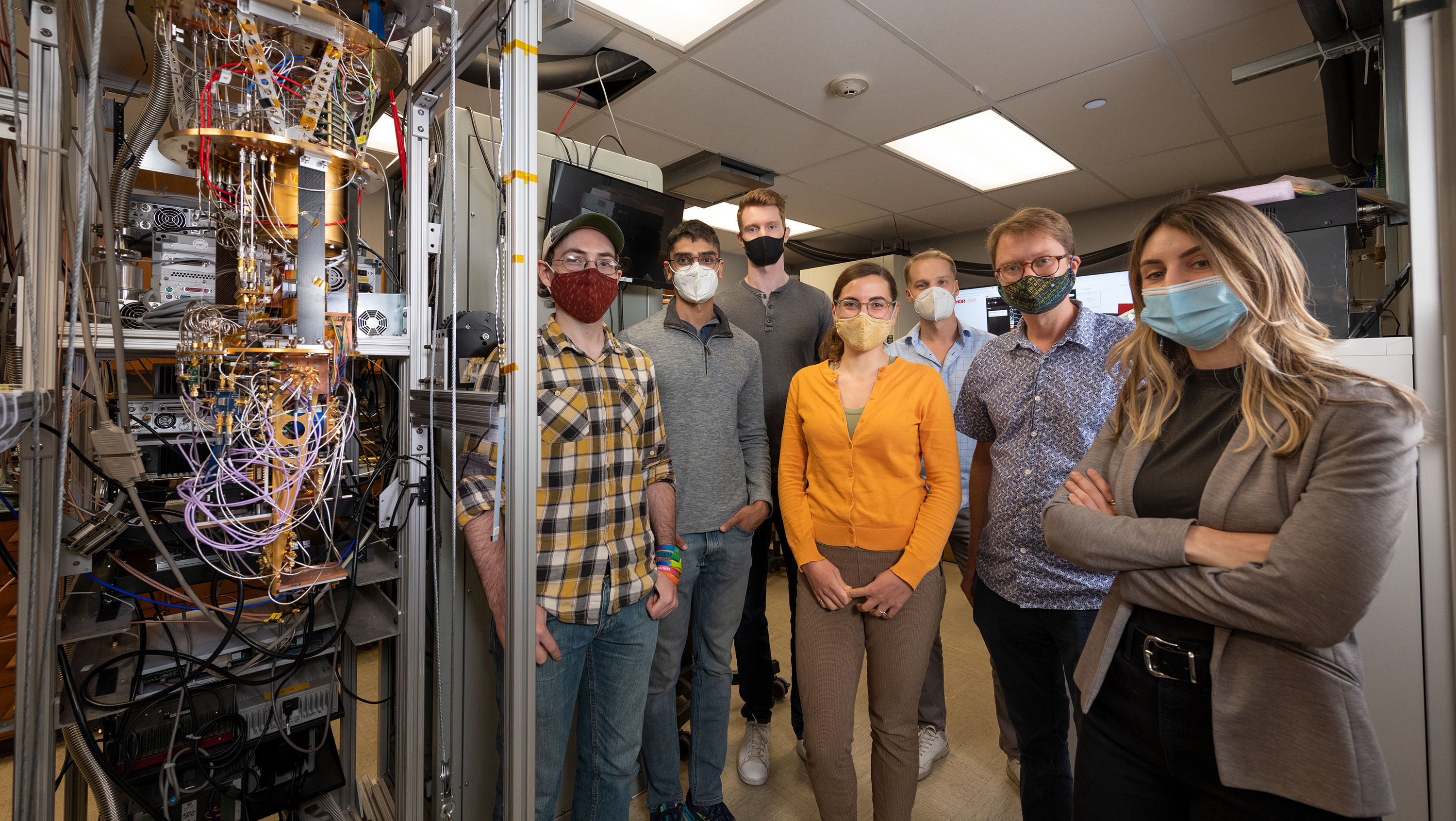
Members of the PEACOQ team stand next to a JPL cryostat that was used to test the detector. From left, Alex Walter, Sahil Patel, Andrew Mueller, Ioana Craiciu, Boris Korzh, Matt Shaw, and Jamie Luskin. Credit: NASA/JPL-Caltech
Superconducting Plumage
The detector itself is tiny. Measuring only 13 microns across, it is composed of 32 niobium nitride superconducting nanowires on a silicon chip with connectors that fan out like the plumage of the detector’s namesake. Each nanowire is 10,000 times thinner than a human hair.
Funded by NASA’s Space Communications and Navigation (SCaN) program within the agency’s Space Operations Mission Directorate and built by JPL’s Microdevices Laboratory, the PEACOQ detector must be kept at a cryogenic temperature just one degree above absolute zero, or minus 458 degrees Fahrenheit (minus 272 degrees Celsius). This keeps the nanowires in a superconducting state, which is required for them to be able to turn absorbed photons into electrical pulses that deliver the quantum data.
Although the detector needs to be sensitive enough for single photons, it is also designed to withstand being hit by many photons at once. When one nanowire in the detector is hit by a photon, it is momentarily unable to detect another photon – a period called “dead time” – but each superconducting nanowire is designed to have as little dead time as possible. Moreover, PEACOQ is equipped with 32 nanowires so that others can pick up the slack while one is “dead.”
“In the near term, PEACOQ will be used in lab experiments to demonstrate quantum communications at higher rates or over greater distances,” said Craiciu. “In the long term, it could provide an answer to the question of how we transmit quantum data around the world.”
Deep Space Test
Part of a wider NASA effort to enable free-space optical communications between space and the ground, PEACOQ is based on the detector developed for NASA’s Deep Space Optical Communications (DSOC) technology demonstration. DSOC will launch with NASA’s Psyche mission later this year to demonstrate, for the first time, how high-bandwidth optical communications between Earth and deep space could work in the future.
While DSOC won’t communicate quantum information, its ground terminal at Caltech’s Palomar Observatory in Southern California requires the same extreme sensitivity in order to count single photons arriving via laser from the DSOC transceiver as it travels through deep space.
“It’s all kind of the same technology with a new category of detector,” said Matt Shaw, who leads JPL’s superconducting detector work. “Whether that photon is encoded with quantum information or whether we want to detect single photons from a laser source in deep space, we’re still counting single photons.”
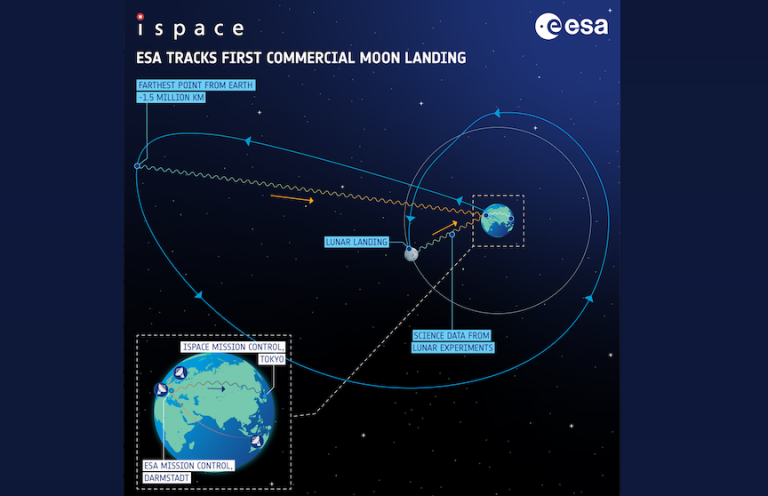
Japan’s ispace’s will launch its HAKUTO-R Mission 1 on 30 November* on its journey to the Moon. It is aiming to be the first mission by a private company to land on the lunar surface. Under a commercial contract with ispace Europe, ESA is responsible for ensuring communication between the spacecraft and its teams on Earth throughout the mission. The Agency’s global network of tracking stations will be used to transmit commands to the spacecraft and receive scientific data and status information from Mission 1 and the experiments carried out on the Moon. — ESA
Mission 1 is the first mission of the HAKUTO-R lunar exploration programme from the company ispace, based in Tokyo, Japan, with offices in Luxembourg and the US. It will be launched into a low-energy transfer orbit by a SpaceX Falcon 9 rocket to the Moon.
Mission 1 is the first mission of the HAKUTO-R lunar exploration programme from the company ispace, based in Tokyo, Japan, with offices in Luxembourg and the US. It will be launched into a low-energy transfer orbit by a SpaceX Falcon 9 rocket to the Moon.
The journey will take three to five months and see the spacecraft venture out to deep space and back again. Once on the Moon, it will conduct a host of experiments in cooperation with various commercial and agency entities on Earth.
“This is exactly the future of lunar exploration that we are working towards,” says Rolf Densing, ESA Director of Operations.
“The mission will also provide ESA’s ground station teams with valuable experience for upcoming ESA and partner missions going to the Moon, such as Lunar Pathfinder and those of ESA’s Moonlight initiative.”
“We are pleased to be working with ESA and utilising their extensive tracking station network in support of our Mission 1 operations,” said Takeshi Hakamada, Founder & CEO of ispace.
“I believe this kind of international collaboration is vital to building a robust cislunar economy, as it opens the doors for companies like ours to contribute expertise to the future of commercialised space.”
The crucial link
Following launch and separation, the spacecraft will be operated from the HAKUTO-R Mission Control Center in central Tokyo, Japan. The Center will monitor the lunar lander’s vital signs – its attitude, temperature, and other conditions – send commands to the spacecraft and receive the data gathered by the lander’s various instruments and experiments during transit to the Moon and during their time on the lunar surface.
But how will mission controllers get their commands to the spacecraft and its experiments’ data back to Earth from deep space and eventually from the Moon’s surface? That’s where ESA comes in.
From the dawn of the mission until dusk on the Moon
ESA’s tracking station network – Estrack – is a global system of ground stations providing links between satellites across the Solar System and ESA’s ESOC mission control centre in Darmstadt, Germany. Our tracking stations enable satellite operators to communicate with their spacecraft, transmit commands and receive scientific data and spacecraft status information.
The lunar lander will be supported by ESA’s largest deep space antennas – three 35-metre dishes located in New Norcia, Western Australia, Cebreros, Spain, and Malargüe, Argentina. Two smaller ESA antennas located in Kourou, French Guiana, and New Norcia will also provide support, as will the commercial Goonhilly Earth Station in the UK, as part of the ‘Estrack extended network’.
ESA’s first contact with the lander after launch – known as ‘acquisition of signal’ – will take place over the New Norcia station in Australia. This crucial moment allows ispace to check that the lander is healthy, survived the rigors of launch, and is on the right path.
The Estrack and Goonhilly stations will then follow the lander as it ventures out into deep space and back again on a sweeping trajectory designed to reduce the amount of fuel the spacecraft needs to carry.
It will reach as far as 1.5 million km from Earth at its farthest point – roughly four times the distance between Earth and the Moon. The spacecraft will enter lunar orbit for around one month before the whole craft descends to perform lunar landing.
Surface operations will last for approximately two weeks, with the landing timed as close to the lunar dawn at the landing site as possible, in order to maximise mission time.
ESA’s stations will again be on hand to receive vital data during the descent and confirm a successful landing. During these two weeks, science data will stream down from the Moon to the experiment teams on Earth via ESA’s antennas.
ESA enables commercial activity at the Moon
ESA aims to boost Europe’s commercialisation of space. In this international collaboration with ispace, ESA is taking part in new emerging commercial space activities, gaining ground in lunar exploration and paving the way for the Agency’s future Moonlight initiative.
The support provided to ispace, via its Luxembourg office (ispace EUROPE), where the company operates its secondary mission control centre, will be the first time that ESA has provided the sole ground station support for a commercial space mission and the first time that its ground stations have supported a commercial Moon landing.
“Companies such as ispace will provide important services and are the future of commercial lunar exploration, but they do not yet have the large ground station and antenna infrastructure required to get the science data from their commercial and government experiments back to their teams on Earth,” says Géraldine Naja, ESA Director of Commercialisation, Industry and Procurement.
“International cooperation is key for lunar exploration. Besides this, support to European commercial space activities is a new priority for ESA. Both international cooperation and support to commercialisation will help reduce the entry barrier to lunar exploration for newcomers.”
ESA is now constructing a fourth 35 m-diameter antenna in order to meet the rising demand for communication bandwidth as the Agency prepares and launches a new generation of its own deep-space and space safety missions.
Support from ESA and commercial European ground stations such as Goonhilly will be essential for future Agency missions and collaborations in the coming years, particularly at the Moon.
*Subject to change depending on weather and other conditions.