
Home Blog Page 80

NASA Picks Firefly Aerospace For Robotic Delivery To Far Side Of Moon

0

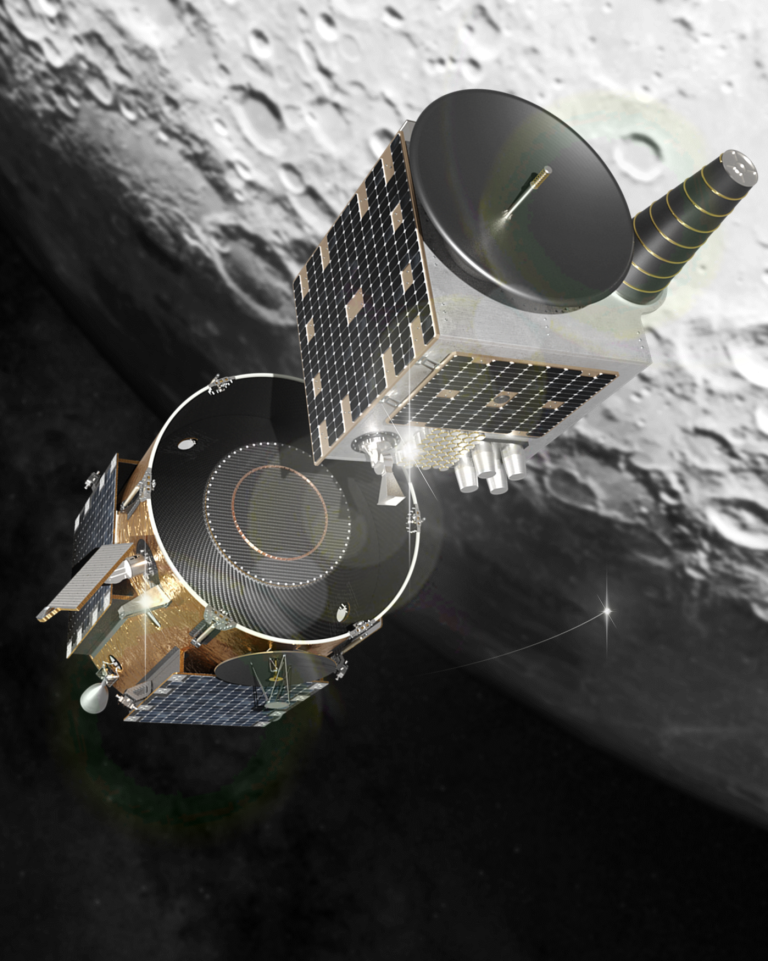
Rendering of Firefly’s Blue Ghost transfer vehicle deploying the European Space Agency’s Lunar Pathfinder satellite to lunar orbit. ESA’s Lunar Pathfinder is designed and developed by Surrey Satellite Technology Limited. ESA collaborated with NASA for delivery through the CLPS initiative.
Credits: Firefly Aerospace

To carry multiple payloads to the far side of the Moon including a satellite to orbit that area, NASA has selected Firefly Aerospace of Cedar Park, Texas. The commercial lander will deliver two agency payloads, as well as communication and data relay satellite for lunar orbit, which is an ESA (European Space Agency) collaboration with NASA.

The contract award, for just under $112 million, is a commercial lunar delivery targeted to launch in 2026 through NASA’s Commercial Lunar Payload Services, or CLPS, initiative, and part of the agency’s Artemis program.

This delivery targets a landing site on the far side of the Moon for the two payloads, a place that permanently faces away from Earth. Scientists consider this one of the best locations in the solar system for making radio observations shielded from the noise generated by our home planet. The sensitive observations need to take place during the fourteen earth-day long lunar night.

One of these payloads delivered to the lunar surface aims to take advantage of this radio-quiet zone to make low-frequency astrophysics measurements of the cosmos – focusing on a time known as the “Dark Ages,” a cosmic era that began some 370,000 years after the Big Bang and lasted until the first stars and galaxies formed. Since there is no line of sight and no direct communication with Earth from the far side of the Moon, Firefly also is required to provide communication services.

“NASA continues to look at ways to learn more about our universe,” said Nicola Fox, associate administrator, Science Mission Directorate at NASA Headquarters in Washington. “Going to the lunar far side will help scientists understand some of the fundamental physics processes that occurred during the early evolution of the universe.”

Firefly is responsible for end-to-end delivery services, including payload integration, delivery from Earth to the surface and orbit of the Moon, and NASA payload operations for the first lunar day. This is the second award to Firefly under the CLPS initiative. This award is the ninth surface delivery task award issued to a CLPS vendor, and the  second to the far side.

“We look forward to Firefly providing this CLPS delivery,” said Joel Kearns, the deputy associate administrator for exploration in NASA’s Science Mission Directorate. “This lunar landing should enable new scientific discoveries from the far side of the Moon during the lunar night. This particular group of payloads should not only generate new science but should be a pathfinder for future investigations exploiting this unique vantage point in our solar system.”

The three payloads slated for delivery are expected to weigh in total about 1,090 pounds (494.5 kilograms). These payloads are:

  • Lunar Surface Electromagnetics Experiment-Night (LuSEENight): A pathfinder to understand the Moon’s radio environment and to potentially take a first look at a previously unobserved era in our cosmic history. It will use deployable antennas and radio receivers to observe sensitive radio waves from the Dark Ages for the first time. LuSEE-Night, is a collaboration between the Department of Energy’s (DOE) Brookhaven National Laboratory, the University of California, Berkeley, Space Science Laboratory, and NASA’s Science Mission Directorate. It is managed for NASA by the Planetary Missions Program Office at NASA’s Marshall Space Flight Center in Huntsville, Alabama.
  • Lunar Pathfinder: A communications and data relay satellite that will provide communication services to lunar missions via S-band and UHF links to lunar assets on the surface and in orbit around the Moon and an X-band link to Earth. ESA’s Lunar Pathfinder is designed and developed by Surrey Satellite Technology Limited. ESA collaborated with NASA for delivery through the CLPS initiative.
  • User Terminal (UT): This payload will institute a new standard for S-Band Proximity-1 space communication protocol and establish space heritage. It will be used to commission the Lunar Pathfinder and ensure its readiness to provide communications service to LuSEE-Night. It consists of software-defined radio, an antenna, a network switch, and a sample data source. UT is in development by NASA’s Jet Propulsion Laboratory in Southern California.

Commercial deliveries to the lunar surface with several providers continue to be part of NASA’s exploration efforts. Future CLPS deliveries could include more science experiments and technology demonstrations that further support the agency’s Artemis program.

Learn more about CLPS at:

http://www.nasa.gov/CLPS

-end-

Karen Fox
Headquarters, Washington
202-358-1600
[email protected]

Nilufar Ramji
Johnson Space Center, Houston
281-483-5111
[email protected]

By: Roxana Bardan
Originally published at NASA
NASA Selects Axiom Space For Third Private Astronaut Station Mission

0

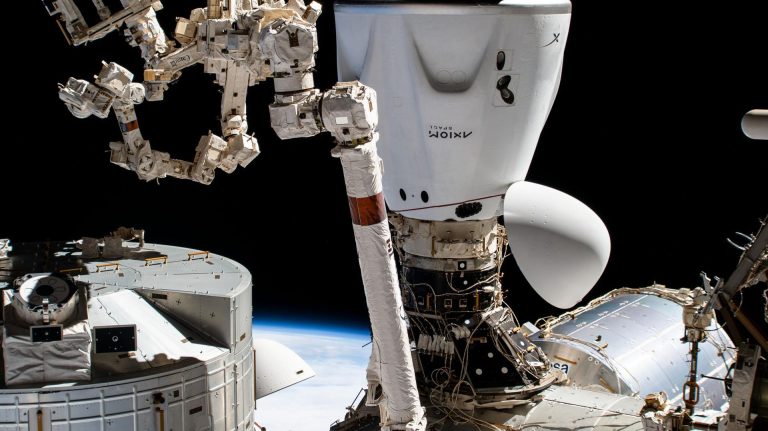
The SpaceX Dragon Endeavour crew ship is pictured docked to the Harmony module’s space-facing international docking adapter. Endeavour carried four Axiom Mission 1 astronauts, Commander Michael Lopez-Alegria, Pilot Larry Connor, and Mission Specialists Eytan Stibbe and Mark Pathy, to the International Space Station for several days of research, education, and commercial activities.
Credits: NASA

NASA and Axiom Space have signed a mission order for the third private astronaut mission to the International Space Station, targeted to launch no earlier than November 2023 from the agency’s NASA’s Kennedy Space Center in Florida.

“The diversity of currently available commercial orbital human spaceflight opportunities is truly astounding. NASA’s commercial crew flights to the space station for our government astronauts paved the way for fully private missions to space like Inspiration4 and Polaris as well as private astronaut missions to the orbiting laboratory like the one we are announcing today,” said Phil McAlister, director of commercial space at NASA Headquarters in Washington. “We are starting to see the incorporation of space into our economic sphere, and it is going to revolutionize the way people see, use, and experience space.”   

Axiom Mission 3 (Ax-3) is expected to spend 14 days docked to the space station. A specific launch date is dependent on spacecraft traffic to the space station and in-orbit activity planning and constraints. NASA and Axiom Space mission planners will coordinate in-orbit activities for the private astronauts to conduct in coordination with space station crew members and flight controllers on the ground.

“Axiom Space’s selection to lead the next private astronaut mission to the International Space Station enables us to continue expanding access to nations, academia, commercial entities, and emerging industries to research, test, and demonstrate new technologies in microgravity,” said Michael Suffredini, CEO and president of Axiom Space. “As NASA’s focus shifts back to the Moon and on to Mars, we are committed to transforming low-Earth orbit into a global space marketplace, where access to space moves beyond the partners of the space station to nations, institutions and individuals with new ideas fueling a thriving human economy beyond Earth.”

Axiom Space will submit four proposed crew members and two back up crew for the Ax-3 mission to the station’s Multilateral Crew Operations Panel for review. NASA is requiring all private astronaut mission providers to select a previously flown NASA astronaut as the spacecraft commander. Following review and approval from NASA and its international partners, the prime crew members for the mission will be named.

The Ax-3 crew members will train for their flight with NASA, international partners, and SpaceX, which Axiom Space has contracted as launch provider for transportation to and from the space station and to familiarize the private astronauts with systems, procedures, and emergency preparedness for the space station and the Dragon spacecraft. Based on current mission planning, team crew training is scheduled to begin this spring.

Axiom Space is obtaining NASA services to conduct the mission via both the mission specific order and Reimbursable Space Act Agreements.

Through the mission specific order, Axiom Space is obtaining services from NASA such as crew supplies, cargo delivery to space, storage, and other in-orbit resources for daily use. The order also accommodates up to an additional contingency week aboard the space station. This mission is subject to NASA’s pricing policy for the services the agency is providing to Axiom Space for in-orbit activities that are above space station baseline capabilities.

The order also identifies capabilities NASA may obtain from Axiom Space, including the return of scientific samples that must be kept cold in transit to and from Earth, return cargo capability, and the capability to use the private astronaut mission commander’s time during the docked mission to complete NASA science or perform tasks for NASA.

Through Reimbursable Space Act Agreements, Axiom Space will reimburse NASA for services to enable the mission, such as training for crew members and use of facilities at NASA’s Johnson Space Center in Houston and Kennedy Space Center in Florida. In addition, SpaceX has a Reimbursable Space Act Agreement with Kennedy for launch services.

NASA made the selection for the third private astronaut mission from proposals received in response to its September 2022 NASA Research Announcement and evaluated the mission proposals based on the provider’s ability to execute a mission successfully, NASA’s ability to support the proposed mission, and the mission’s contribution to the agency’s goal of low-Earth orbit commercialization. NASA also solicited proposals for a fourth private astronaut mission opportunity in 2024 and will announce the mission after successful completion of negotiations results in an award.

For more than 22 years, NASA has supported a continuous U.S. human presence in low-Earth orbit. The agency’s goal is a low-Earth orbit marketplace where NASA is one of many customers, and the private sector leads the way. This strategy will provide services the government needs at a lower cost, enabling the agency to focus on its Artemis missions to the Moon and on to Mars while continuing to use low-Earth orbit as a training and proving ground for those deep space missions.

Learn more about how NASA is fostering a robust commercial low-Earth orbit economy at:

https://www.nasa.gov/leo-economy

-end-

Stephanie Schierholz / Josh Finch
Headquarters, Washington
202-358-1100
[email protected] / [email protected]

Gary Jordan
Johnson Space Center, Houston
281-483-5111
[email protected]

Alexis DeJarnette
Axiom Space
850-368-9446
[email protected]

By: Roxana Bardan
Originally published at NASA
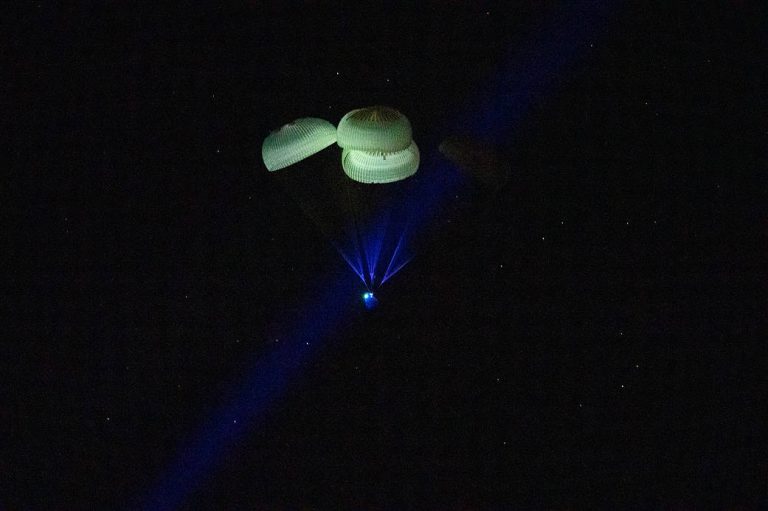
Crew-5’s Nighttime Splashdown

0

The SpaceX Dragon Endurance spacecraft is seen as it lands with Crew-5 mission members aboard on Saturday, March 11, 2023. The crew returned in a parachute-assisted splashdown at 9:02 p.m. EST.

During the 156.5 days they spent aboard the International Space Station as part of Expedition 68, Crew-5 participated in several spacewalks to prepare the space station for solar arrays and conducted various experiments, including growing plants without soil and studying radiation exposure.

Image Credit: NASA/Keegan Barber

By Monika Luabeya
Source NASA

NASA Selects L3harris To Develop Imager For NOAA Satellite

0

GOES-16 full disk GeoColor image from Mar. 13, 2022.
Credits: NOAA

NASA, on behalf of the National Oceanic and Atmospheric Administration (NOAA), has selected L3Harris Technologies Inc. of Fort Wayne, Indiana, to develop the imager for NOAA’s Geostationary Extended Observations (GeoXO) satellite program.

This cost-plus-award-fee contract is valued at approximately $765.5 million. It includes the development of two flight instruments as well as options for additional units. The anticipated period of performance for this contract includes support for 10 years of on-orbit operations and five years of on-orbit storage, for a total of 15 years for each flight model. The work will be completed at L3Harris facilities, NASA’s Goddard Space Flight Center in Greenbelt, Maryland, and the agency’s Kennedy Space Center in Florida.

The GeoXO Imager (GXI) is the primary instrument for the GeoXO mission. GXI is a multi-channel, passive imaging radiometer used to measure environmental data. The instrument will provide real-time, high-resolution visible and infrared imagery for monitoring the Western Hemisphere’s weather, ocean, and environment. GXI will be used for a wide range of applications related to severe storms, hurricanes, aviation, natural hazards, the atmosphere and ocean. GXI will monitor cloud formation, atmospheric motion, convection, land surface temperature, fire, smoke, dust, volcanic ash plumes, aerosols, air quality, vegetative health, and more.

The contract scope includes the tasks and deliverables necessary to design, analyze, develop, fabricate, integrate, test, verify, evaluate, support launch, supply and maintain the instrument ground support equipment, and support mission operations at the NOAA Satellite Operations Facility.

NOAA operates a constellation of geostationary environmental satellites to protect life and property across the Western Hemisphere. The GeoXO program is the follow-on to the Geostationary Operational Environmental Satellites – R (GOES-R) Series program.

The GeoXO satellite system will advance Earth observations from geostationary orbit. The mission will supply vital information to address major environmental challenges of the future in support of weather, ocean, and climate operations in the United States. GeoXO’s advanced capabilities will help address our changing planet and the evolving needs of NOAA’s data users. NOAA and NASA are working to ensure these critical observations are in place by the early 2030s when the GOES-R Series nears the end of its operational lifetime.

Together, NOAA and NASA will oversee the development, launch, testing, and operation of all the satellites in the GeoXO program. NOAA funds and manages the program, operations, and data products. On behalf of NOAA, NASA and commercial partners develop and build the instruments, spacecraft, and ground system, and launch the satellites.

For more information on the GeoXO program, please visit:

https://www.nesdis.noaa.gov/geoxo

-end-

Karen Fox
NASA Headquarters, Washington
202-358-1600
[email protected]

Rob Gutro
NASA’s Goddard Space Flight Center, Greenbelt, Md.
301-286-4044
[email protected]

John Leslie
NOAA’s National Environmental Satellite, Data, and Information Service
202-527-3504
[email protected] 

By: Abbey Donaldson
Originally published at NASA

Hubble Spots A Star-Forming Spiral

0

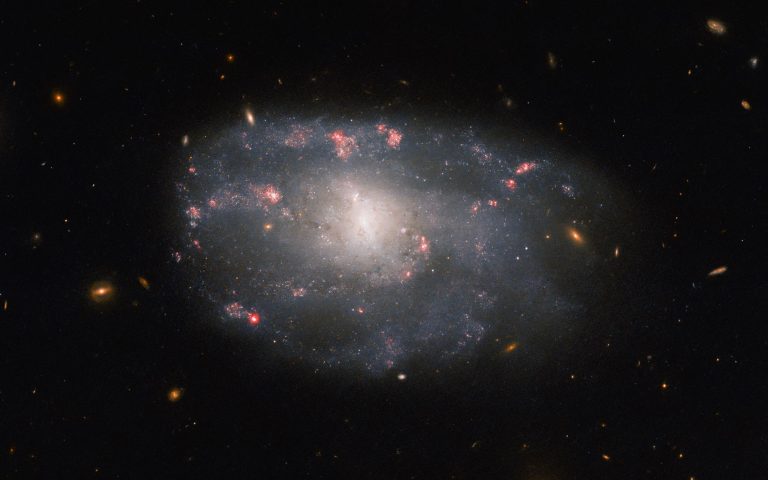
The irregular spiral galaxy NGC 5486 hangs against a background of dim, distant galaxies in this image from the NASA/ESA Hubble Space Telescope. The tenuous disk of the galaxy is threaded through with pink wisps of star formation, which stand out from the diffuse glow of the galaxy’s bright core. While this particular galaxy has indistinct, meandering spiral arms, it lies close to the much larger Pinwheel Galaxy, which is one of the best-known examples of a ‘grand design’ spiral galaxy with prominent and well-defined spiral arms. In 2006, Hubble captured an image of the Pinwheel Galaxy which was, at the time, the largest and most detailed photo of a spiral galaxy ever taken with Hubble.

NGC 5486 lies 110 million light-years from Earth in the constellation Ursa Major. This observation comes from a selection of Hubble images exploring debris left behind by Type II supernovae. As massive stars reach the end of their lives, they cast off huge amounts of gas and dust before ending their lives in titanic supernova explosions. NGC 5486 hosted a supernova in 2004, and astronomers used the keen vision of Hubble’s Advanced Camera for Surveys to explore the aftermath in the hopes of learning more about these explosive events.

Text credit: European Space Agency (ESA)
Image credit: ESA/Hubble & NASA, C. Kilpatrick

Media Contact:

Claire Andreoli
NASA’s Goddard Space Flight CenterGreenbelt, MD
301-286-1940

By: Andrea Gianopoulos
Originally published at NASA

NASA, Canadian Space Agency To Assign Artemis II Moon Astronauts

0
Artemis II is the first crewed flight test on the agency’s path to establishing a long-term scientific and human presence on the lunar surface. Credits: NASA

NASA and CSA (Canadian Space Agency) will announce during an event at 11 a.m. EDT (10 a.m. CDT) on Monday, April 3, from NASA Johnson Space Center’s Ellington Field in Houston, the four astronauts who will venture around the Moon. Traveling aboard NASA’s Orion spacecraft during Artemis II, the mission is the first crewed flight test on the agency’s path to establishing a long-term scientific and human presence on the lunar surface.

The event will air on NASA Television, the NASA app, and the agency’s website.

Media are invited to attend the event and speak with the astronauts about their assignments. Other experts working on Artemis missions also will be available. Additional opportunities to interview crew remotely will be available on Tuesday, April 4.

International media wishing to attend must contact NASA no later than 5 p.m. CDT Friday, March 17. U.S. media must contact NASA no later than 5 p.m. Monday, March 27. Media can RSVP to the Johnson newsroom by calling 281-483-5111 or emailing: [email protected].

Artemis II is the first crewed mission aboard NASA’s foundational human deep space capabilities: the Space Launch System rocket, Orion spacecraft, and the ground systems needed to launch them. The approximately 10-day mission will test and stress the Orion spacecraft’s life-support systems to prove the capabilities and techniques required to live and work in deep space in ways only humans can do.

The crew will include three NASA astronauts and one CSA astronaut, demonstrating the agency’s commitment to international partnerships through the Artemis program. Artemis II builds on the successful Artemis I flight test, which launched an uncrewed Orion, atop the SLS rocket, on a 1.4 million-mile journey beyond the Moon to test systems before astronauts fly aboard the systems on a mission to the Moon.

Learn more about Artemis at: https://www.nasa.gov/artemis/

Rachel Kraft
Headquarters, Washington
202-358-1100
[email protected]

Dan Huot
Johnson Space Center, Houston
281-483-5111
[email protected]

By Abbey Donaldson
Source NASA

La NASA Y CSA Asignarán Astronautas Para Artemis II

0
Artemis II es la primera prueba de vuelo con tripulación en el plan de la Agencia para establecer una presencia científica y humana a largo plazo en la superficie lunar. Credits: NASA

La NASA y la Agencia Espacial Canadiense (CSA, por sus siglas en inglés) anunciarán los cuatro astronautas que se aventurarán a los alrededores de la Luna. El anuncio se dará durante un acto que se celebrará a las 11 a.m. EDT (10 a.m. CDT) del lunes 3 de abril en el Campo Ellington del Centro Espacial Johnson de la NASA en Houston. Los astronautas viajarán a bordo de la nave espacial Orion de la NASA durante la misión Artemis II, la primera prueba de vuelo con tripulación en el plan de la agencia para establecer una presencia tanto científica como humana a largo plazo en la superficie lunar.

El evento se emitirá en NASA Television, la aplicación de la NASA, y el sitio web de la agencia.

Los medios de comunicación están invitados a asistir al acto y hablar con los astronautas sobre sus asignaciones. También estarán disponibles otros expertos que trabajan en las misiones Artemis, incluidos hispanohablantes. El martes 4 de abril habrá más oportunidades de entrevistar remotamente a la tripulación y a otros expertos.

Los medios de comunicación internacionales que deseen asistir deben ponerse en contacto con la NASA antes de las 5 p.m. CDT del viernes 17 de marzo. Los medios de comunicación estadounidenses deben ponerse en contacto con la NASA antes de las 5 p.m. CDT del lunes 27 de marzo. Los medios de comunicación pueden confirmar su asistencia a la sala de prensa del centro Johnson llamando al +1 281-483-5111 o enviando un correo electrónico a: [email protected].

Artemis II es la primera misión tripulada a bordo de las infraestructuras fundamentales de la NASA para la exploración del espacio profundo con seres humanos: el cohete Sistema de Lanzamiento Espacial (SLS, por sus siglas en inglés), la nave Orion y los sistemas terrestres necesarios para su lanzamiento. La misión, de aproximadamente 10 días de duración, pondrá a prueba los sistemas de soporte vital de la nave Orion para demostrar las capacidades y técnicas necesarias para vivir y trabajar en el espacio profundo de un modo que solo los humanos pueden hacer.

La tripulación incluirá tres astronautas de la NASA y un astronauta de la CSA, lo que pone de manifiesto las sólidas alianzas internacionales de la agencia y la alianza global que explora el espacio profundo en beneficio de la humanidad en el marco de Artemis. Artemis II se basa en la exitosa prueba de vuelo Artemis I, que lanzó una nave Orion sin tripulación, montada sobre el cohete SLS, en un viaje de unos 2,25 millones de kilómetros (1,4 millones de millas) más allá de la Luna para probar los sistemas antes de que los astronautas vuelen a bordo de los sistemas en una misión a la Luna.

Aprende más sobre Artemis (en inglés) en: https://www.nasa.gov/artemis/

María José Viñas
Sede, Washington
240-458-0248
[email protected]

Rachel Kraft
Sede, Washington
202-358-1100
[email protected]

Dan Huot
Centro Espacial Johnson, Houston
281-483-5111
[email protected]

By Abbey Donaldson
Source NASA

NASA’s State Fact Sheets Highlight Economic Impact In All 50 States, DC

0

As a follow-up to its biennial report demonstrating the economic impact of NASA nationwide, the agency released new state-specific information on Friday. Each of the 51 fact sheets, which are the first drafted by the agency, showcase how investments in NASA benefit humanity.

Data from the agency’s fiscal year 2021 Economic Impact Report, as well as how specific states and the District of Columbia contribute to NASA’s Moon to Mars exploration approach, climate change research and technology are featured in the fact sheets.

“NASA inspires the world through exploration and discovery and leads scientific and technological advancements from all 50 states and the District of Columbia. Every day, NASA demonstrates its value beyond the vacuum of space, and we are incredibly grateful for the support we receive from the Biden Administration and Congress,” said Administrator Bill Nelson. “With the President’s fiscal year 2024 budget announcement this week, NASA will remain an economic engine that supports good-paying American jobs, sustains American innovation, and strengthens American competitiveness in the 21st century. Our impressive economic impact just scratches the surface of the agency’s influence around the world, and it makes clear that what is good for NASA is good for communities across the country.”

Other focus areas highlighted per state include:

  • Procurement investments from fiscal year 2021
  • Leading state contractors that support NASA missions and create jobs
  • NASA education funded institutions that advance STEM research and development
  • Space Grant Consortium, which includes affiliates from universities, colleges, industry, museums, and science centers supporting science and engineering education

NASA explores the secrets of the universe for the benefit of all, and the investments include notable economic impacts that support every state, which strengthens the U.S. economy. The fact sheets provide a transparent look into the value of NASA.

To review the state fact sheets, visit: https://go.nasa.gov/3JiACCD

Marc Etkind / Roxana Bardan
Headquarters, Washington
202-358-1600
[email protected] / [email protected]

By Claire O’Shea
Source NASA

NASA Names University Teams to Take on Aeronautics Research Challenges

0
The universities selected to lead the four latest teams announced under NASA’s University Leadership Initiative. Credits: NASA

NASA has selected four teams of university faculty and students to solve key challenges facing the future of air travel as part of the agency’s University Leadership Initiative.

This initiative gives the academic community an opportunity to support NASA’s aeronautical research goals and provide students experience in cracking real-world technical challenges.

“The University Leadership Initiative is an integral part of our research portfolio,” said Bob Pearce, associate administrator for the Aeronautics Research Mission Directorate at NASA Headquarters in Washington. “The multidisciplinary teams are directly contributing to our priorities and even leading the exploration of solutions beyond our current portfolio.”

Three of the four teams will address topics related to ensuring the safe growth of Advanced Air Mobility, while the fourth will examine an option for generating electricity to propel a future airliner. As the teams work on their projects, they will work with other universities and industry partners – creating opportunities for participation that include students with diverse experiences, backgrounds, and talents.

“This multidisciplinary approach enables the lead teams to partner with others, including student populations who are underrepresented or have not been involved before in aviation research,” said Koushik Datta, University Leadership Initiative project manager. “As we look to future growth in Advanced Air Mobility and an increasing emphasis on creating truly sustainable aviation, it’s important we involve today’s students in helping us solve tomorrow’s challenges.”

The four teams selected for final negotiations could lead to awards worth a combined total of up to $25.1 million during the next four years. The teams and their research topics are:

New Mexico State University

The team will gather data about current and projected AAM operations to help produce models that could inform decisions on how the electric grid infrastructure can support future AAM activity, including the demand for aircraft charging stations.

Team members include The George Washington University, University of Tennessee in Knoxville, University of Tennessee in Chattanooga, University of Maryland in Baltimore County, Aurora Flight Sciences Corporation, Argonne National Laboratory, and Whisper Aero.

Boston University

The team will focus on developing models for predicting how to minimize noise from AAM vehicles flying within dense urban environments where wind conditions can rapidly change. These models also might provide guidance on suitable locations for vertiports that minimize noise during takeoff and landing.

Team members include Embry-Riddle Aeronautical University, Tuskegee University, Virginia Polytechnic Institute and State University, and Joby Aviation.

University of Notre Dame

The team intends to develop an automated decision-making capability that ensures small drones are safe before they fly using a NASA-developed drone traffic management system. This automated system would replace a manually intensive process that is limited in its ability to handle increasing drone traffic.

Team members include Iowa State University, Saint Louis University, University of Texas in El Paso, DePaul University, and DRONERESPONDERS Public Safety Alliance.

Tennessee Technological University

The team aims to develop a preliminary design for an electrified 150-passenger aircraft that uses an ammonia-based integrated propulsion, power, and thermal management system.

Team members include Tennessee State University, The Ohio State University, University of Dayton, University of Washington – Bothell, Boeing Research & Technology, Raytheon Technologies Research Center, and Special Power Sources.

New Awardees Join University Leadership Initiative Alumni

This is the sixth round of awards for the initiative.

Selections of four teams and six teams were made in 2021. Five teams were chosen in 2020, three teams were announced in 2019, and five teams were selected for the inaugural initiative in 2017.

An official notice for the next request for proposals is expected later this year.

Learn more about the University Leadership Initiative here:

https://www.nasa.gov/aeroresearch/programs/tacp/ui-uli

Rob Margetta
Headquarters, Washington
202-763-5012
[email protected]

By Robert Margetta
Source NASA

How Does The Immune System React To Altered Gravity?

0
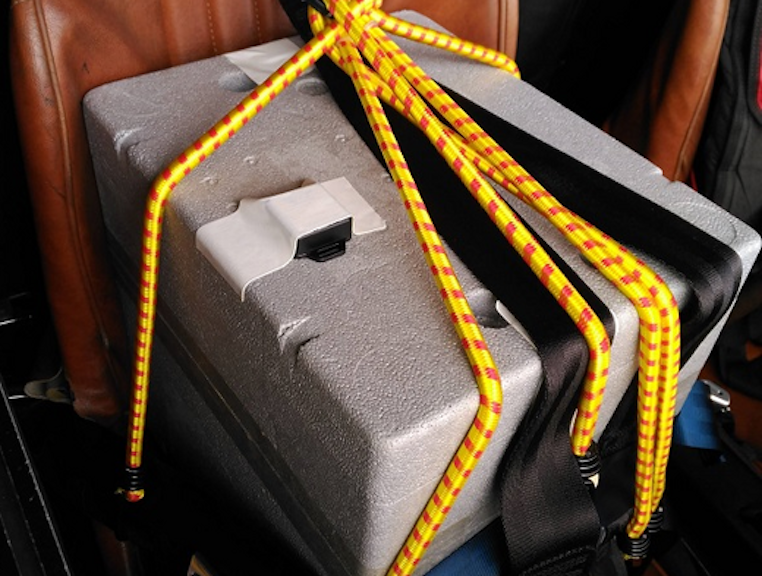
The volunteers’ blood samples were exposed to altered gravity conditions in parabolic flight. — University of Barcelona

Space travel has always tested the human body by the effects of the new conditions of altered gravity on biological systems. It has long been known that continuous exposure to microgravity conditions human physiology and causes effects that compromise muscular, sensory, endocrine and cardiovascular functions. But is it also risky to be exposed to altered gravity for short periods of time?

Now, a paper published in the journal Acta Astronautica examines the effects on the human immune system of microgravity generated by a parabolic flight. After a short exposure to altered gravity, there were no significant changes in the defensive capacity of blood cells in the volunteers who took part in the study. In addition, the study found no evidence of aggregation processes in erythrocytes —the cells that transport O2 and CO2 to the cardiovascular system— after the parabolic flight.

The study was coordinated by Ginés Viscor, professor at the Department of Cell Biology, Physiology and Immunology of the Faculty of Biology of the University of Barcelona, and it included the participation of experts Jordi Petriz, from the Germans Trias i Pujol Research Institute (IGTP), and Antoni Pérez-Poch, from the Technical University of Catalonia-BarcelonaTech (UPC) and the Institute of Space Studies of Catalonia (IEEC), among other authors. The first author of the study is the researcher Abril Gorgori-González (UB). It counted on the support from the Medical Service of the Safety, Health and Environment Office (OSSMA) of the UB, the Aeroclub Barcelona-Sabadell and the company Thermo Fisher Scientific.

Parabolic flights: a simulated gravity laboratory

Space travel is the ideal scenario to study the effect of microgravity on the human body. These trips make it possible to study the consequences of long-term exposure to microgravity on different astronauts simultaneously, but they require a high cost in terms of time, funding and infrastructure. Without leaving the Earth’s atmosphere, it is also possible to simulate simulated gravity conditions on different platforms. For example, through parabolic flights in aircraft, which make it possible to study the effect of altered microgravity in the short term —even for a few seconds— at an affordable cost.

“Artificial platforms such as parabolic flights in aircraft provide valuable but more limited results, as they only allow the effects of altered gravity to be studied in the short term (seconds or minutes). Therefore, the profiles of physiological changes that can be recreated with parabolic flights are immediate and transitory changes that microgravity generates in the human body”, says Ginés Viscor, head of the Adaptive Physiology Group: Exercise, Hypoxia and Health at the UB.

As part of the study, a 20-minute parabolic flight was conducted with the Mudry CAP10 aircraft —a 2-seat aerobatic training aircraft— during which fifteen parabolas were performed. “Each parabola allows a period of microgravity to be reached for approximately eight seconds, which is followed and preceded by hypergravity phases of about two seconds”, says the researcher Antoni Pérez-Poch, from the Department of Computer Science at the UPC, and lecturer of the School of Engineering of Barcelona East (EEBE) of the UPC and the IEEC.

These parabolic flights with an aerobatic plane —a pioneering method in the world, developed in Catalonia— were operated by the Aeroclub Barcelona-Sabadell and are the result of an aeronautical research carried out in collaboration with the UPC. “This innovative technique has a good ratio of time achieved in microgravity compared to the cost of maintenance, which is very favourable compared to the greater use of aircraft, although it also has some limitations (logistical and space). In the case of parabolic flights with a larger aircraft, a more expensive operation that has been used since the beginning of the space race by agencies such as NASA or ESA (European Space Agency), up to 25 seconds per parabola could be achieved”, says Pérez-Poch.

Immune function under pressure

The immediate effects of microgravity on the blood system derive from the redistribution of blood volume, blood flow and body fluids to the upper body. “Cardiovascular adaptations consist of an altered cardiovascular response causing abnormalities in body orientation and balance, poor response to orthostatic stress, decreased cardiac function and inadequate cardiovascular response to exercise”, says Ginés Viscor.

One of the most vulnerable physiological systems to any change in environmental conditions is the immune system, and this is explained by its great plasticity and responsiveness to internal and external imbalances. In the scientific literature, there are still no conclusive results on the immune response to short exposure in flights with altered gravity, and in some cases the conclusions are even contradictory.

In this study, the team analysed the response of the immune system to short exposure to microgravity based on several parameters: erythrocyte and leukocyte counts, haemoglobin concentration, phagocytic capacity and oxidative metabolism.

“The results reveal that the human blood samples’ exposure to altered gravity conditions in parabolic flight did not involve negative effects in relation to samples that were left parallelly on the ground during the experimental study. There are also no significant changes in peripheral blood cell counts”, says Jordi Petriz (IGTP).

“Except for the monocytes —a type of leukocyte— no significant differences have been observed in the functionality of immune cells in terms of either their oxidative metabolism or their phagocytic capacity”, says researcher Abril Gorgori-González (UB). “Hypothetically, if there were changes in the functionality of leukocytes when exposed to an altered gravity, the immune function and defence against external infections or tumour processes would also be compromised”.

The team has applied the technique of flow cytometry with acoustic focusing with little manipulation of the volunteers’ blood samples. According to the authors, the sample limitation typical of acrobatic flight studies —with logistical constraints— does not allow general conclusions to be drawn. Therefore, the goal now is to continue research on the human immune system with other microgravity simulation platforms to study physiological alterations, avoid complications and anticipate risk situations.

Space tourist warning

Space tourism is an activity of great economic interest for some business sectors. However, one of the main differences between space tourists and astronauts is the physical and psychological preparation prior to the trip.

“Altered gravity or the constant lack of gravity is one of several changes in the environment faced by these space travellers. The human body has evolved under the conditions of Earth’s gravity and is not adapted to the absence of this attractive force. In space travel, other factors such as ionising radiation, constant noise, isolation, confinement, a total distortion of circadian rhythms and short exposure to extreme temperatures during the return to the atmosphere have to be considered”, the experts warn.

“Long-term metabolic, osteoporosis and ophthalmological problems have also been described. Although the effect of space travel on untrained space travellers has not been studied, it is possible that all the stressors of the physical environment could negatively affect the health of space tourists. Therefore, for the time being, ‘outer space visits’ are designed to be of short duration”, the team concludes.

Effects of rapid gravity load changes on immunophenotyping and leukocyte function of human peripheral blood after parabolic flight, Acta Astronautica

By Keith Cowing
Source SpaceRef