It’s Presidents’ day! Officially it’s the day to honor George Washington’s birthday but now it also celebrates all the U.S. presidents. Here are some amazing deals from Amazon.
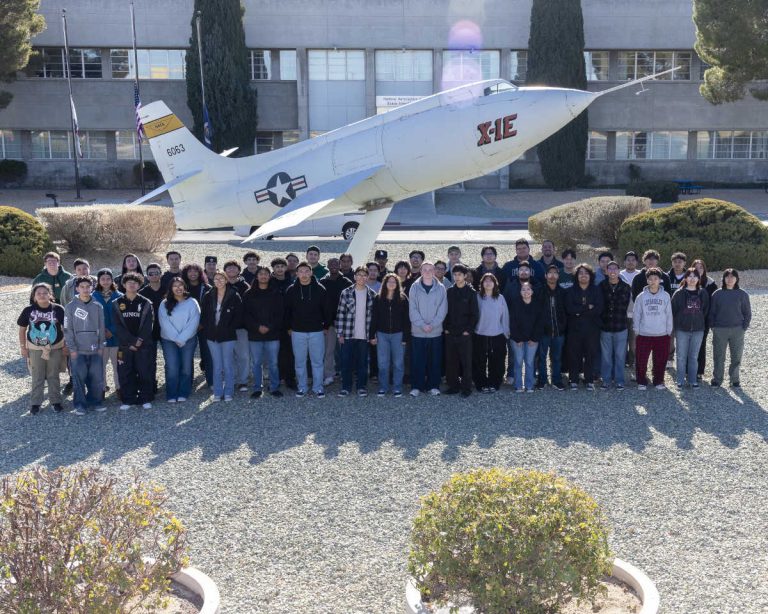
The engineering club from Palmdale High School in Palmdale, California, visits NASA’s Armstrong Research Flight Center in Edwards, California. The students took a group photo in front of the historic X-1E aircraft on display at the center. NASA/Genaro Vavuris
A group of enthusiastic high school students recently visited NASA to learn about facilities and capabilities that enable the agency’s researchers to explore, innovate, and inspire for the benefit of humanity.
Engineering club students from Palmdale High School in California were able to connect classroom lessons to real-world applications, sparking curiosity and ambition while at NASA’s Armstrong Flight Research Center in Edwards, California. “I learned a lot about the different careers that you can get at a place like NASA,” student Roberto Cisnero said.
Through partnerships with the regional STEM community, NASA’s STEM Engagement provides local students with hands-on opportunities aligned with NASA’s missions. “Many students do not get the opportunity to be encouraged to pursue STEM careers. Part of our NASA mission is to be that encourager,” said Randy Thompson, deputy director for NASA Armstrong Research and Engineering.
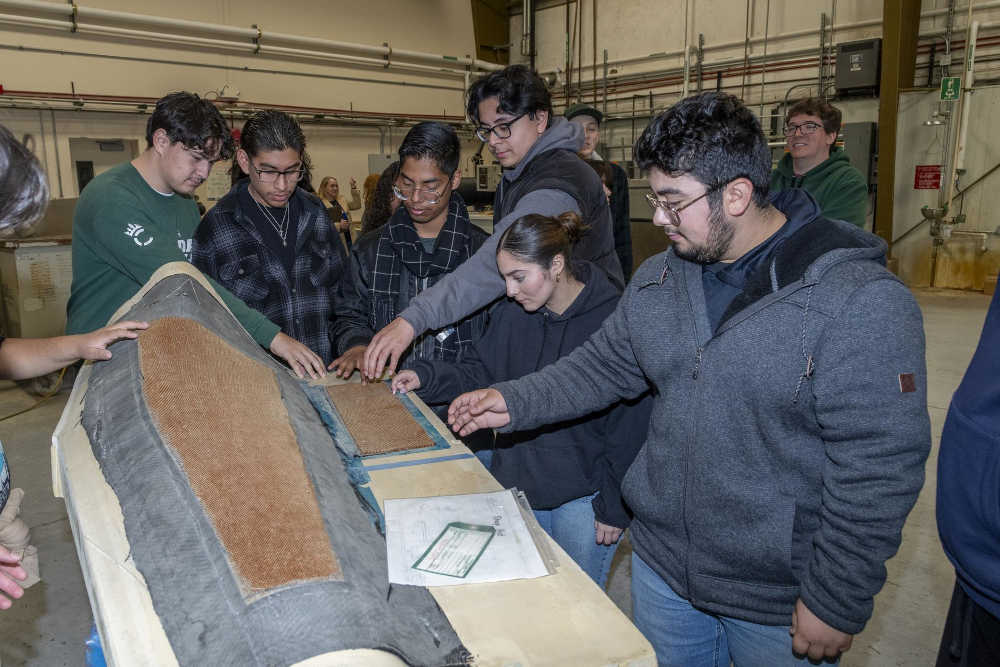
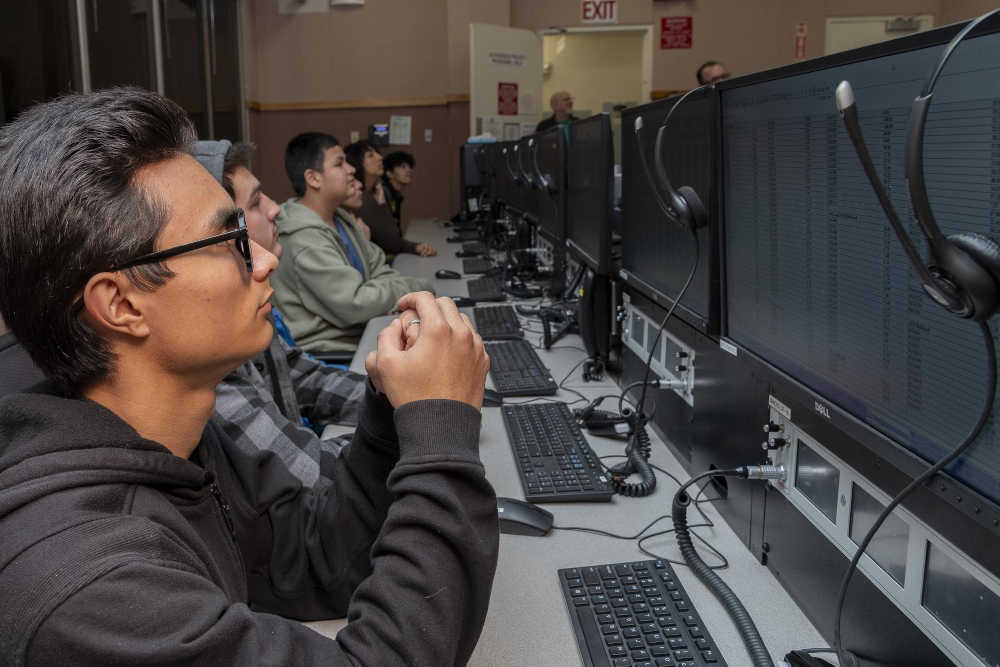
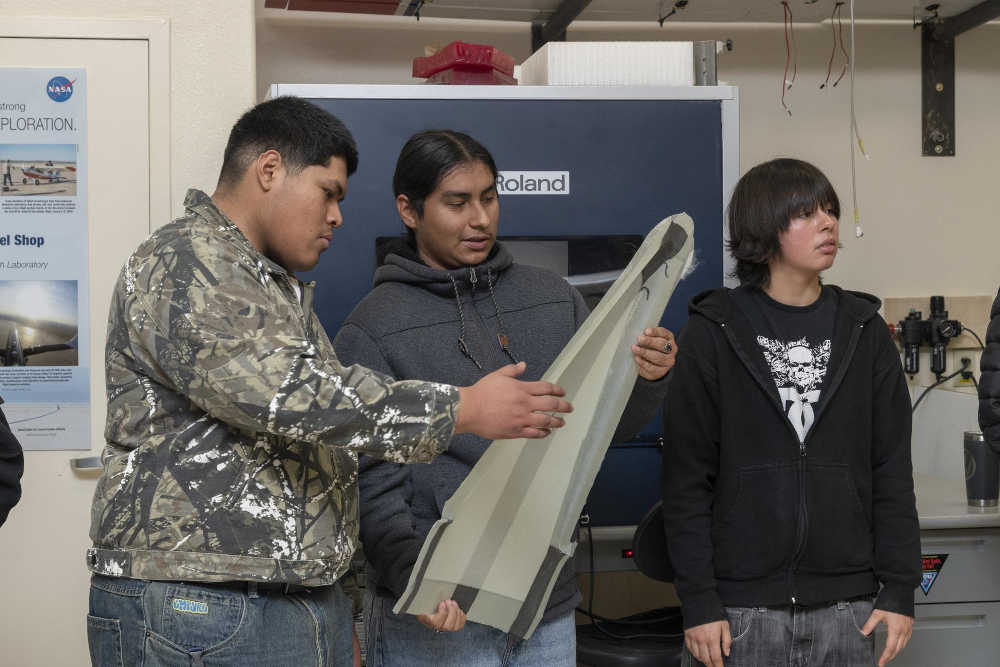
Highlights from the visit included demonstrations at a mission control room, the Subscale Flight Research Laboratory, the Flight Loads Laboratory, and the Experimental Fabrication Shop, all of which support high-risk, atmospheric flight research and test projects. Students engaged with laboratory technicians, engineers, and program managers, asking questions about the work they do. “It was fun to see what the valued people at NASA do with all of the resources,” student Jonathan Peitz said.
NASA’s California Office of STEM Engagement hosted the visit in celebration of National Aviation History Month. By supporting students, educators, and expanding STEM participation, NASA aims to inspire future leaders and build a diverse, skilled workforce.
Students examine the Global Hawk Fairing Load Test at the Experimental Fabrication Shop at NASA’s Armstrong Research Flight Center in Edwards, California. The students are from the engineering club from Palmdale High School in Palmdale, California.
NASA/Steve FreemanStudents tour a control room at NASA’s Armstrong Research Flight Center in Edwards, California. The students are from the engineering club at Palmdale High School in Palmdale, California.
NASA/Steve FreemanStudents look at a subscale model at the Dale Reed Subscale Flight Research Laboratory at NASA’s Armstrong Research Flight Center in Edwards, California. The students are from the engineering club from Palmdale High School in Palmdale, California.
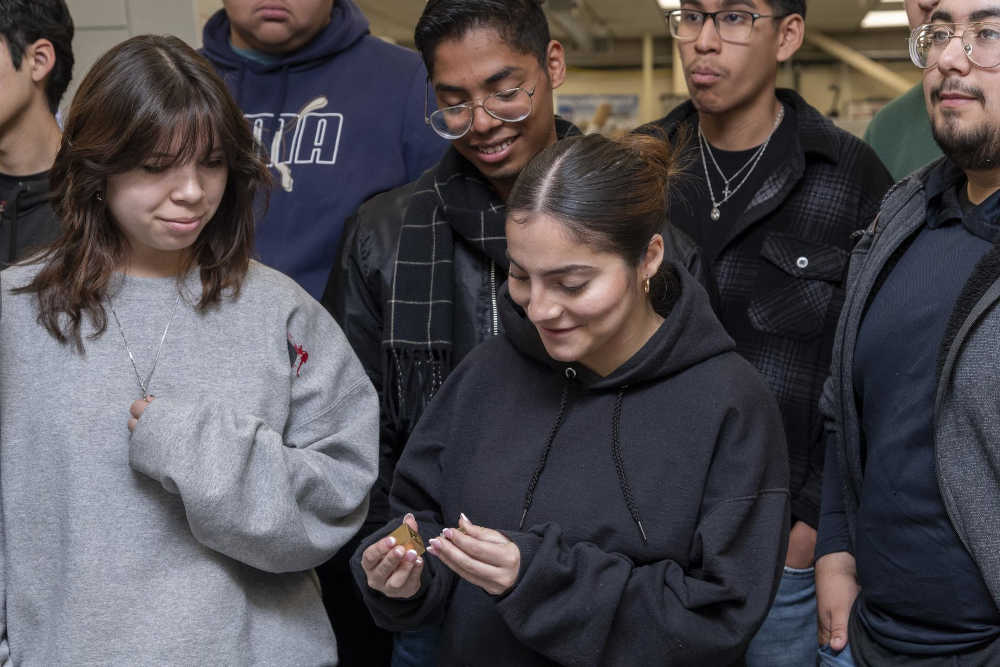
NASA/Steve FreemanStudents examine small parts made at the Experimental Fabrication Shop at NASA’s Armstrong Research Flight Center in Edwards, California. The students are from the engineering club from Palmdale High School in Palmdale, California.
NASA/Steve Freeman
By: Priscila Valdez (NASA Armstrong Public Affairs Specialist) Originally published at: NASA
Valentines is fast approaching, and while you might think the tradition of gift giving has faded, you are wrong. In the United States alone, it has grown continuously throughout the years. Signifying the love of this holiday inspired from St. Valentine.
Valentines is not just for the lovely couples. In some countries it’s a day to celebrate a special someone, the family, a festivity of flowers and other equally joyful event. Just remember that who or what you celebrate with can be truly impactful, as long as you cherish and enjoy the moment.
NASA will host four astronauts at 9 a.m. CDT Wednesday, Jan. 29, for a media opportunity at the agency’s Marshall Space Flight Center in Huntsville, Alabama.
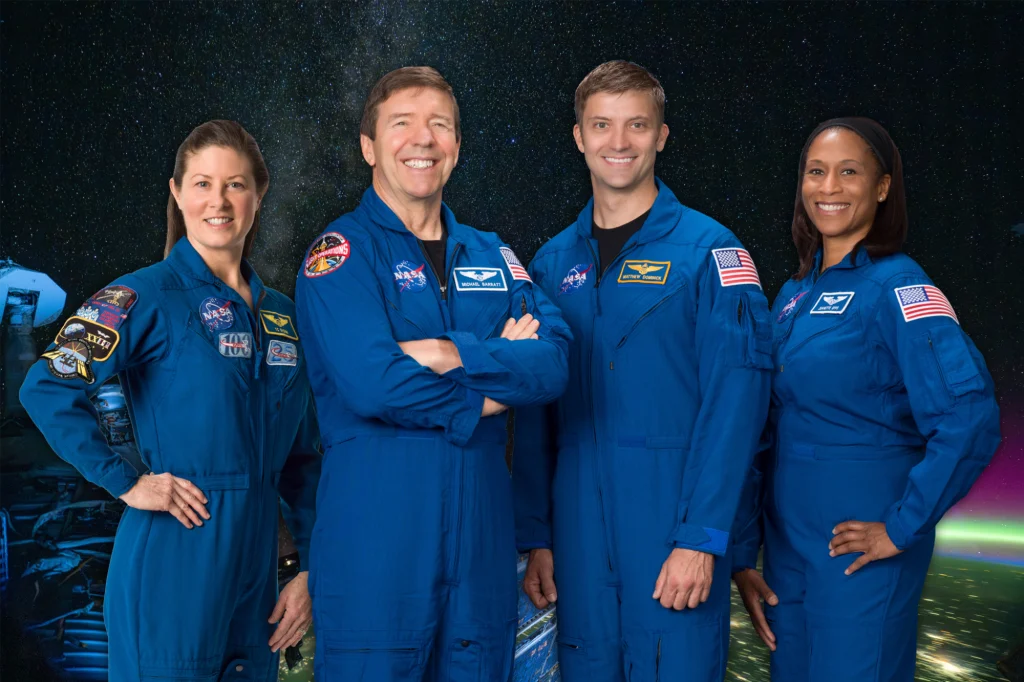
From left, NASA astronauts, Tracy C. Dyson, Mike Barratt, Matthew Dominick, and Jeanette Epps, who served as part of Expedition 71, will discuss their recent missions to the International Space Station during a visit to Marshall Space Flight Center on Jan. 29.
NASA
NASA astronauts Matt Dominick, Mike Barratt, Jeanette Epps, and Tracy C. Dyson served as part of Expedition 71 and will discuss their recent missions to the International Space Station.
Dominick, Barratt, and Epps launched aboard NASA’s SpaceX Crew-8 mission in March 2024 and returned to Earth in October 2024 after spending nearly eight months aboard the orbiting complex. Dyson launched aboard a Roscosmos Soyuz spacecraft also in March 2024 and returned in September 2024 after completing a six-month research mission aboard the space station.
Media are invited to attend the event and visit with the astronauts as they discuss their science missions aboard the microgravity laboratory and other mission highlights. Media interested in participating must confirm their attendance by 12 p.m., Monday, Jan. 27, to both Lance D. Davis – [email protected] – and Joel Wallace – [email protected] – in Marshall’s Office of Communications.
Media must arrive by 8 a.m., Wednesday, to the Redstone Arsenal Joint Visitor Control Center Gate 9 parking lot, located at the Interstate 565 interchange on Research Park Boulevard. The event will take place in the NASA Marshall Activities Building 4316. Vehicles are subject to a security search at the gate, so please allow extra time. All members of the media and drivers will need photo identification. Drivers will need proof of insurance if requested.
The Expedition 71 crew conducted hundreds of technology demonstrations and science experiments, including the bioprinting of human tissues. These higher-quality tissues printed in microgravity could help advance the production of organs and tissues for transplant and improve 3D printing of foods and medicines on future long-duration space missions. The crew also looked at neurological organoids, created with stem cells from patients to study neuroinflammation, a common feature of neurodegenerative conditions such as Parkinson’s disease. The organoids provided a platform to study these diseases and their treatments and could help address how extended spaceflight affects the brain.
As part of Crew-8, Dominick served as commander, Barratt served as pilot, and Epps served as a mission specialist. Dyson launched aboard a Soyuz space as part of an international crew and served as a flight engineer on a six-month research mission. The expedition to the space station was the first spaceflight for Dominick, third for Barratt, first for Epps, and third for Dyson.
The International Space Station is a convergence of science, technology, and human innovation that enables research not possible on Earth. For more than 24 years, NASA has supported a continuous human presence aboard the orbiting laboratory, through which astronauts have learned to live and work in space for extended periods of time. The space station is a springboard for developing a low Earth economy and NASA’s next great leaps in exploration, including missions to the Moon under Artemis and, ultimately, human
Learn more about the International Space Station, its research, and its crew, at:
https://www.nasa.gov/station
Lance D. Davis Marshall Space Flight Center, Huntsville, Ala. 256-640-9065 [email protected]
Joel Wallace Marshall Space Flight Center, Huntsville, Ala. 256-786-0117 [email protected]
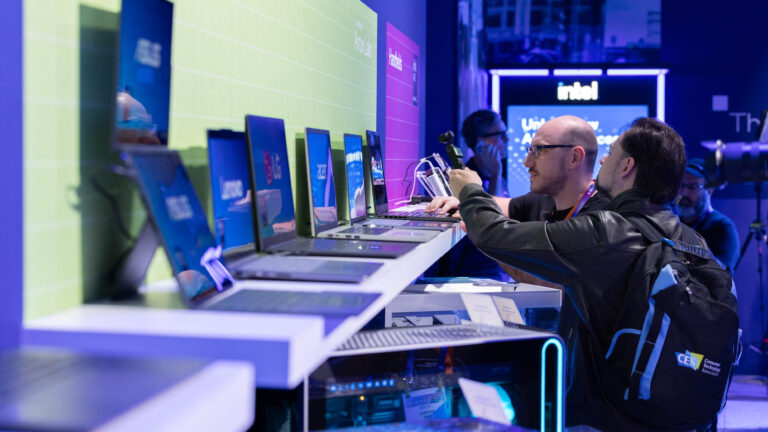
At CES 2025 in Las Vegas, the Intel Technology Showcase highlights AI-enabled experiences and demos, including a preview of platforms powered by the latest Intel® Core™ Ultra processor family. (Credit: Intel Corporation)
At the world’s biggest consumer technology show, Intel demos brought artificial intelligence to real-life use cases.
At CES 2025, Intel displayed how AI helps people across their daily lives: how students write papers, how consumers search out products, how diners order with greater efficiency and how gamers stretch their creativity.
Intel’s technology showcase brought all of this technology to real-life use cases.
In front of a wall of AI PCs, Intel demos showed how the technology that powers those personal devices can be put to work making life better.
From the world’s largest consumer electronics show earlier this month, here’s a rundown of the Intel demos. And to see everything Intel announced and presented – from the AI PC to the new age of the software-defined auto all the way to edge computing cases – visit the Intel at CES 2025 press kit.
Experience Generative AI with Intel’s AI Playground: Intel demonstrates how its AI Playground makes generative AI easy on AI PCs powered by Intel processors using Intel® Arc™ Graphics. The demo showcases workloads – image generation, image enhancement and AI chatbots – all running locally on a PC and able to search and summarize the personal content there. Free to download and simple to use, AI Playground displays what is already possible from PCs equipped with Intel Arc Graphics.
Conversational AI Designed to Help Customers: The future of conversational AI is on display with Intel’s voice assistant for retail and hospitality, powered by the Intel® Core™ Ultra 200H series processor. With seamless interactions, enhanced performance and intelligent responses designed to make customers’ lives easier, Sodaclick exclusively uses Intel processors to create individualized large language models to implement AI for customers around the world.
Hand-held Gaming and More on the MSI Claw AI+: A hand-held gamer. A note-taker in class. Windows 11 with Copilot+ to write papers and email. Check. Check. And check. It’s the new MSI Claw AI+ powered by the Intel® Core™ Ultra series 2 processor. This demo from Intel displays the hand-held device with a desktop-size AI chip inside.
AI Voice Assistant to Speed Your Drive-Thru Order: The Intel Core Ultra 200H series processor powers another real-life AI use case. In this case, it’s Intel’s voice assistant for retail. Using the Intel Core Ultra-powered system in its drive-thrus, the Australian chain Oliver’s offers an efficient way to order for both the customer and the kitchen staff.
An effort to find some of the biggest, most active black holes in the universe provides a better estimate for the ratio of hidden to unhidden behemoths.
Multiple NASA telescopes recently helped scientists search the sky for supermassive black holes — those up to billions of times heavier than the Sun. The new survey is unique because it was as likely to find massive black holes that are hidden behind thick clouds of gas and dust as those that are not.
Astronomers think that every large galaxy in the universe has a supermassive black hole at its center. But testing this hypothesis is difficult because researchers can’t hope to count the billions or even trillions of supermassive black holes thought to exist in the universe. Instead they have to extrapolate from smaller samples to learn about the larger population. So accurately measuring the ratio of hidden supermassive black holes in a given sample helps scientists better estimate the total number of supermassive black holes in the universe.
The new study published in the Astrophysical Journal found that about 35% of supermassive black holes are heavily obscured, meaning the surrounding clouds of gas and dust are so thick they block even low-energy X-ray light. Comparable searches have previously found less than 15% of supermassive black holes are so obscured. Scientists think the true split should be closer to 50/50 based on models of how galaxies grow. If observations continue to indicate significantly less than half of supermassive black holes are hidden, scientists will need to adjust some key ideas they have about these objects and the role they play in shaping galaxies.
Hidden Treasure
Although black holes are inherently dark — not even light can escape their gravity — they can also be some of the brightest objects in the universe: When gas gets pulled into orbit around a supermassive black hole, like water circling a drain, the extreme gravity creates such intense friction and heat that the gas reaches hundreds of thousands of degrees and radiates so brightly it can outshine all the stars in the surrounding galaxy.
The clouds of gas and dust that surround and replenish the bright central disk may roughly take the shape of a torus, or doughnut. If the doughnut hole is facing toward Earth, the bright central disk within it is visible; if the doughnut is seen edge-on, the disk is obscured.
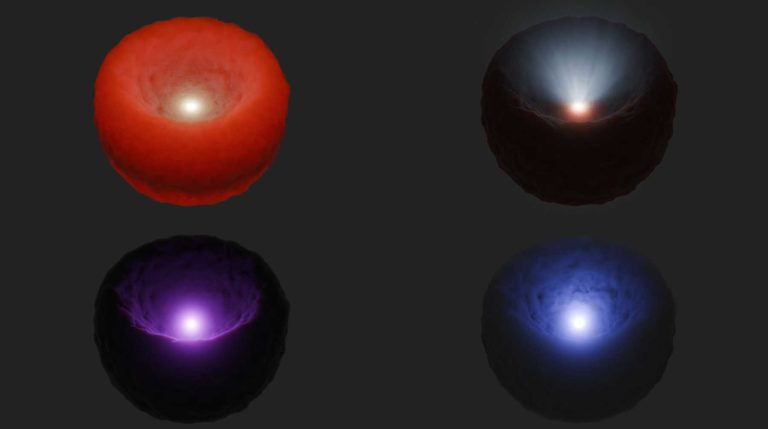
A supermassive black hole surrounded by a torus of gas and dust is depicted in four different wavelengths of light in this artist’s concept. Visible light (top right) and low-energy X-rays (bottom left) are blocked by the torus; infrared (top left) is scattered and reemitted; and some high energy X-rays (bottom right) can penetrate the torus. Credit: NASA/JPL-Caltech
Most telescopes can rather easily identify face-on supermassive black holes, though not edge-on ones. But there’s an exception to this that the authors of the new paper took advantage of: The torus absorbs light from the central source and reemits lower-energy light in the infrared range (wavelengths slightly longer than what human eyes can detect). Essentially, the doughnuts glow in infrared.
These wavelengths of light were detected by NASA’s Infrared Astronomical Satellite, or IRAS, which operated for 10 months in 1983 and was managed by NASA’s Jet Propulsion Laboratory in Southern California. A survey telescope that imaged the entire sky, IRAS was able to see the infrared emissions from the clouds surrounding supermassive black holes. Most importantly, it could spot edge-on and face-on black holes equally well.
IRAS caught hundreds of initial targets. Some of them turned out to be not heavily obscured black holes but galaxies with high rates of star formation that emit a similar infrared glow. So the authors of the new study used ground-based, visible-light telescopes to identify those galaxies and separate them from the hidden black holes.
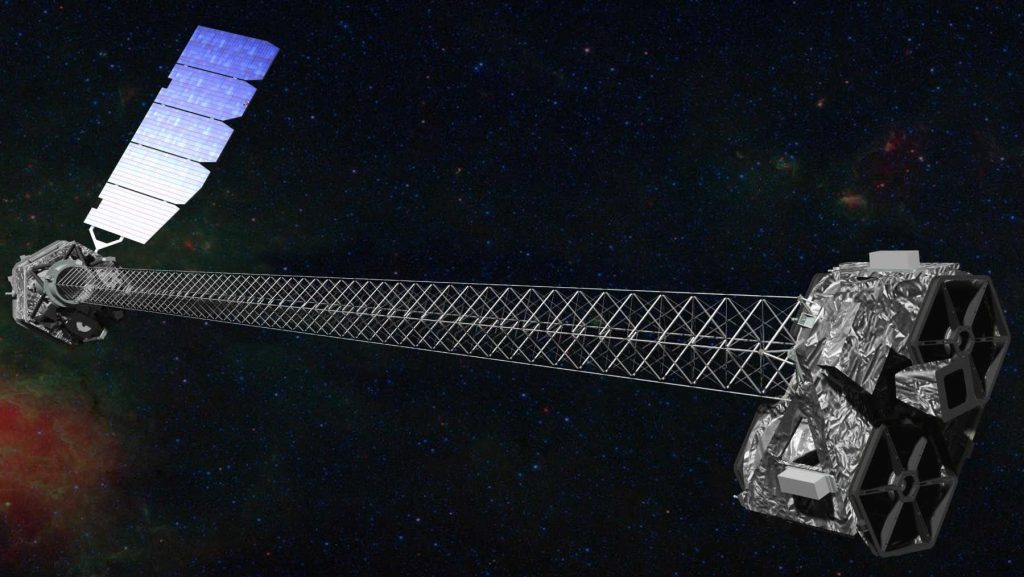
To confirm edge-on, heavily obscured black holes, the researchers relied on NASA’s NuSTAR (Nuclear Spectroscopic Telescope Array), an X-ray observatory also managed by JPL. X-rays are radiated by some of the hottest material around the black hole. Lower-energy X-rays are absorbed by the surrounding clouds of gas and dust, while the higher-energy X-rays observed by NuSTAR can penetrate and scatter off the clouds. Detecting these X-rays can take hours of observation, so scientists working with NuSTAR first need a telescope like IRAS to tell them where to look.
“It amazes me how useful IRAS and NuSTAR were for this project, especially despite IRAS being operational over 40 years ago,” said study lead Peter Boorman, an astrophysicist at Caltech in Pasadena, California. “I think it shows the legacy value of telescope archives and the benefit of using multiple instruments and wavelengths of light together.”
“It amazes me how useful IRAS and NuSTAR were for this project, especially despite IRAS being operational over 40 years ago,” said study lead Peter Boorman, an astrophysicist at Caltech in Pasadena, California. “I think it shows the legacy value of telescope archives and the benefit of using multiple instruments and wavelengths of light together.”
Numerical Advantage
Determining the number of hidden black holes compared to nonhidden ones can help scientists understand how these black holes get so big. If they grow by consuming material, then a significant number of black holes should be surrounded by thick clouds and potentially obscured. Boorman and his coauthors say their study supports this hypothesis.
In addition, black holes influence the galaxies they live in, mostly by impacting how galaxies grow. This happens because black holes surrounded by massive clouds of gas and dust can consume vast — but not infinite — amounts of material. If too much falls toward a black hole at once, the black hole starts coughing up the excess and firing it back out into the galaxy. That can disperse gas clouds within the galaxy where stars are forming, slowing the rate of star formation there.
“If we didn’t have black holes, galaxies would be much larger,” said Poshak Gandhi, a professor of astrophysics at the University of Southampton in the United Kingdom and a coauthor on the new study. “So if we didn’t have a supermassive black hole in our Milky Way galaxy, there might be many more stars in the sky. That’s just one example of how black holes can influence a galaxy’s evolution.”
More About NuSTAR
A Small Explorer mission led by Caltech and managed by NASA’s Jet Propulsion Laboratory in Southern California for the agency’s Science Mission Directorate in Washington, NuSTAR was developed in partnership with the Danish Technical University and the Italian Space Agency (ASI). The spacecraft was built by Orbital Sciences Corp. in Dulles, Virginia. NuSTAR’s mission operations center is at the University of California, Berkeley, and the official data archive is at NASA’s High Energy Astrophysics Science Archive Research Center at NASA’s Goddard Space Flight Center. ASI provides the mission’s ground station and a mirror data archive. Caltech manages JPL for NASA.
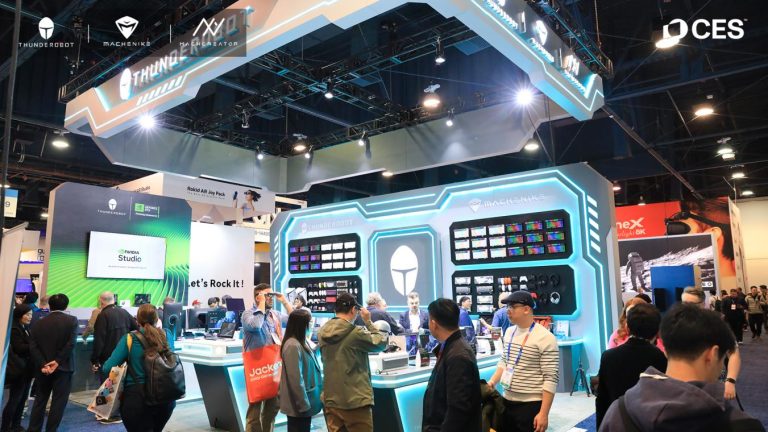
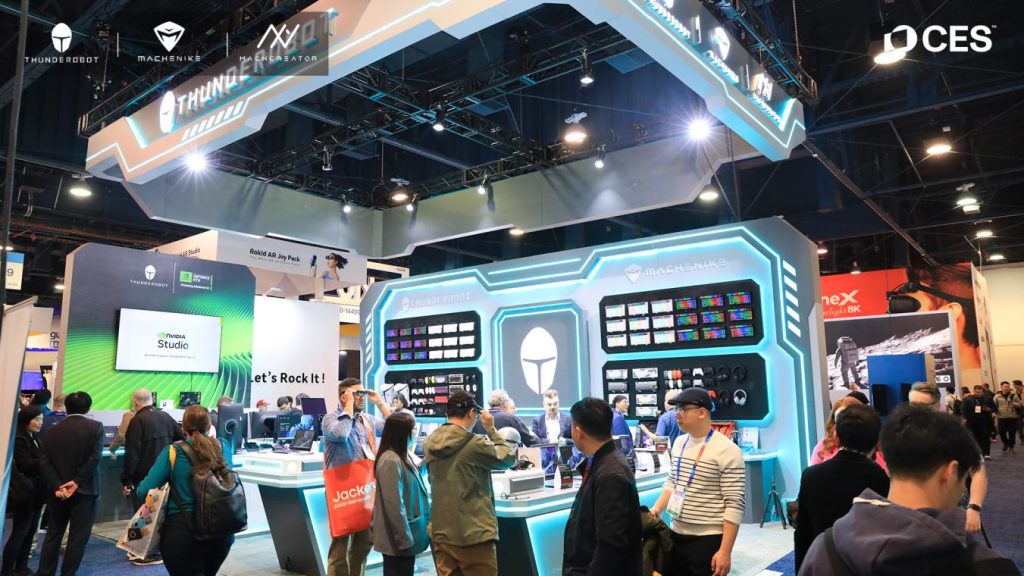
Las Vegas, NV, Jan. 08, 2025 (GLOBE NEWSWIRE) — CES 2025, the world’s largest annual consumer technology trade show, kicked off in Las Vegas of America on January 7th, 2025, with more than 130,000 attendees and over 4,800 companies. As a high-performance esports equipment brand incubated by Haier Group, THUNDEROBOT showcased its comprehensive innovation capabilities in high-performance esports equipment under the theme “Powerful Esports Momentum”.
At this event, THUNDEROBOT unveiled a range of flagship products encompassing esports laptops, smart glasses, monitors, desktops, and peripherals. Among these, the world’s first THUNDEROBOT ZERO series of high-performance gaming laptops took the spotlight. This series is powered by the latest Intel’s Core Ultra 200HX (codenamed Arrow Lake-HX) processor and NVIDIA’s GeForce RTX™ 5090 laptop GPU. Notably, the flagship ZERO 18 model incorporates a triple-fan “Xiu Technology 2.0” cooling system with seven copper heat pipes and phase-change thermal grease to ensure optimal thermal management even under intense use. Additionally, the introduction of an 18-inch Hummingbird eye-care display with high refresh rates has significantly enhanced the immersive user experience. Each machine will undergo default color calibration to provide accurate color settings.
Meanwhile, the MACHENIKE Light 16 Pro has received much attention for its superior performance and unique design. The model is initially equipped with the highly awaited NVIDIA’s GeForce RTX™ 5090 laptop GPU, ensuring robust computing and graphic processing power. Its display features a 16.0-inch esports monitor with 2.5K resolution and a 300Hz ultra-high refresh rate, complemented by a brightness of 500 nits and default color calibration. Furthermore, the model is available with DDR5 6400MT/s memory and PCIe 5.0 high-speed SSD, delivering fast data transfer speed and near-instant game load. For the appearance design, the color contrast design and the industry’s first left-side RGB atmosphere light set it apart from other game laptops.
In addition, THUNDEROBOT made its first foray into the smart glasses arena with three revolutionary models. Among them, the world’s first full-color waveguide optical AI+AR smart glasses, featuring Micro OLED display and a 48MP camera, promise real-time information and immersive AR experiences. Another AR glasses that support a virtual 150-inch giant screen projection is set for a January 25th launch on JD.com in China.
In terms of peripherals, THUNDEROBOT also launched an array of flagship new products, including the world’s first MACHENIKE G6 Pro gaming controller with the hot swappable structure of joysticks and the THUNDEROBOT G80 gaming controller with the modular design. Through innovative design, these peripherals bring players a more accurate and flexible operating experience, highlighting THUNDEROBOT’s comprehensive layout in the ecological construction of esports.
At CES 2025, THUNDEROBOT further solidified its leadership in the global esports market through the design concept of “maximizing aesthetics and performance” of products, as well as multi-category ecological innovation. By keeping a close eye on user needs, THUNDEROBOT will continue to launch cutting-edge products to elevate the esports industry to new heights.
Volvo Group President and CEO, Martin Lundstedt, is taking the main stage at CES in Las Vegas today at 09:00 am PST to map out the group’s holistic approach to the decarbonization of the transport, mobility, and infrastructure industries.
The annual Consumer Electronics Show represents a highpoint in the world of technology and innovation. This year, Volvo Group is honored to be one of four influential companies delivering a keynote on the main stage.
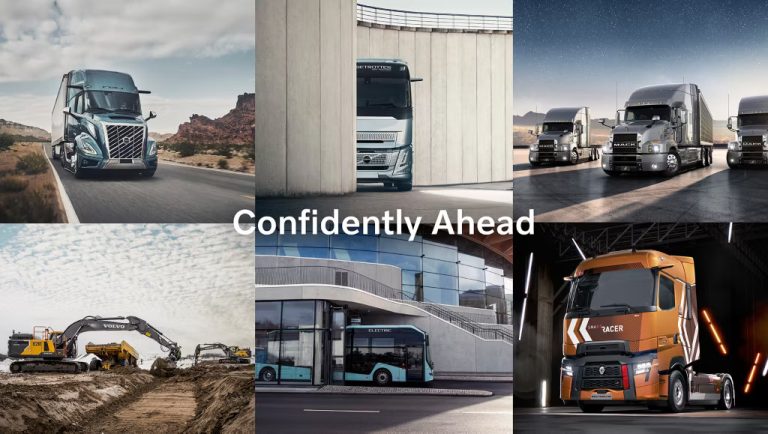
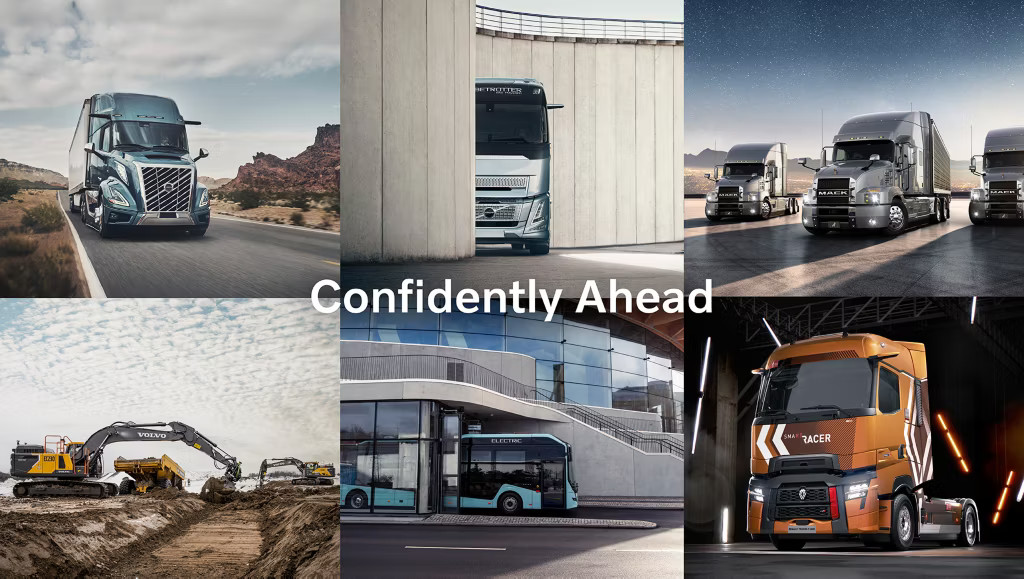
The theme for the Volvo Group keynote is ‘Confidently Ahead’, signaling Volvo Group’s commitment to continue driving prosperity, as it has done for almost 100 years.
“We are here in Las Vegas today to deliver a simple, yet urgent message: The time for talk is over. The time for action is now,” says Martin Lundstedt.
The Volvo Group leader is calling on policymakers and industrial leaders alike to accelerate the transition to zero emission vehicles (ZEVs).
“Given the challenges the world is facing due to climate change, it is time to reimagine the transport system for the next 100 years. Without transport, mobility, and infrastructure solutions, modern life would come to a standstill. So much of our world relies on getting goods to their destination, taking people to work, and building societies – but we must do it considerably more sustainable,” he adds.
Progress and prosperity With freight volumes expected to see a fivefold increase by 2050, the transition to ZEV solutions has become a clear necessity. The good news is that these solutions are already available and are in continuous development, as Volvo Group’s showcase of advanced battery electric solutions, hydrogen fuel cell technology and renewable fuel demonstrates. Martin Lundstedt believes that the transition to a more efficient and cleaner transport system relies on more than the automotive sector: it depends upon the actions of policymakers, state, and industrial leaders.
“Policymakers must accelerate the adoption of ZEV transport and infrastructure solutions. We need the clean energy production, dependable charging infrastructure, and effective incentives in place to hasten adoption. This transformation is not about switching to a single new product or technology – it is about accelerating a paradigm shift – and we cannot do that alone. The time for talking is over. We need to get this show on the road, and we must start now if we wish to shape the world we want to live in,” says Martin Lundstedt.
Note to editors: The Volvo Group CES keynote takes place at The Venetian on January 8th at 09:00 am PST. You can watch the keynote live here: https://www.ces.tech/attend/keynotes/
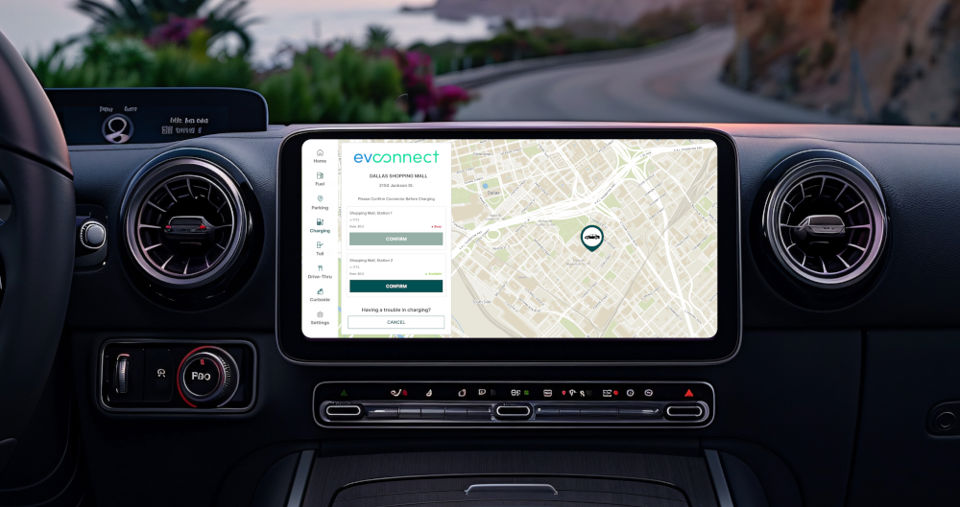
The SheevaConnect™ product suite rolls out its one-touch in-car payments at thousands of chargers via EV Connect integration
Our goal was straightforward: to make EV charging easier and faster for our customers. [This solution] prioritizes simplicity, safety, and convenience as more EV drivers hit the road.”
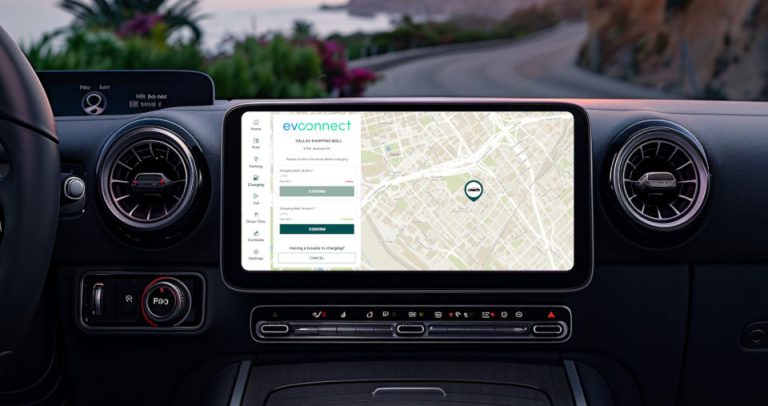
— Cassie Layton, Vice President of Strategy and Marketing, EV ConnectVIENNA, VA, UNITED STATES, January 8, 2025 /EINPresswire.com/ — Sheeva.AI and EV Connect achieved the next milestone on the path to a one-touch transaction experience similar to “Plug & Charge” (ISO 15118) for electric vehicle (EV) drivers who can now activate and pay for their EV charging sessions entirely from inside the vehicle.
The Sheeva.AI interface for EV Connect customersSheeva.AI’s top use cases
The SheevaConnect™ platform identifies and activates the session, using its patented precise location technology and OCPI-based API-to-API communication, all from inside the car without downloading and opening any additional apps, tapping or swiping credit cards or smartphones, or scanning QR codes.
Sheeva.AI can complete in-car transactions at over 50,000 chargers in North America thanks to an innovative charging management API suite provided by EV Connect.
The two companies announced a partnership late last year to enable in-vehicle payments and activation for EV charging sessions.
“Keep in mind that the EV market is really a connected car market,” says Evgeny Klochikhin, CEO and Founder of Sheeva.AI. “In-vehicle commerce, or what we call v-commerce, continues to gain traction with the car as a digital wallet on wheels.”
Aside from this EV charging milestone, he added, the SheevaConnect™ platform also currently handles fueling and parking transactions, and the company has completed pilots in tolling and retail services.
“When we partnered with the Sheeva.AI team, our goal was straightforward: to make EV charging easier and faster for our customers,” said Cassie Layton, vice president of strategy and marketing at EV Connect. “We are excited to provide a solution that prioritizes simplicity, safety, and convenience as more EV drivers hit the road.”
This expansion in North America happens in parallel with Sheeva.AI’s EV charger activations in Japan with strategic partners Hagiwara Electronics Co. Ltd. and Japanese charge point operator PLUGO Inc.
Sheeva.AI’s experience in multiple markets has shown there are three key components needed to successfully build the v-commerce ecosystem: automotive sector participants as channel partners, retailers and service providers of all kinds looking to increase digital sales, and payment providers to ensure the ease of transaction.
“Consumer demand for a premium buying experience has proven critical in digital payments across the world,” Klochikhin says. “It’s not just resonating with automakers but retailers of all kinds, from charging to fueling, from parking to restaurants.”
**CES MEDIA: Sheeva.AI CEO Evgeny Klochikhin will be onsite at CES 2025 for interviews. Sheeva.AI’s booth is #6378, West Hall, LVCC. Please use contacts below to coordinate if needed.
About Sheeva.AI
Sheeva.AI’s in-car payments and commerce solution introduces vehicle location-based services to monetize the driver experience. Using a patented precise geolocation technology, drivers seamlessly pay for and receive services such as fueling, EV charging, parking, curbside pickup and drive-through via their car’s IVI screen. Their SheevaConnect™ product suite includes the patented SheevaLocate™, an embedded software that enables highly accurate vehicle location to within two meters; SheevaFence™, which enables proprietary geofencing/mapping of point-of-sale and service localization (e.g. down to an individual fuel dispenser, EV charging spot, or parking space); SheevaPay™, a cloud-based contactless payment platform; and SheevaServ™, a cloud-based platform to activate nearby services, e.g. a fuel pump, EV charging station, or parking session.
Founded in 2016, it is headquartered in Tysons Corner, VA, with key offices in Detroit, MI, New Delhi (India), Dresden (Germany) and strategic partner in Nagoya (Japan).
EV Connect is the all-in-one EV charging platform that successfully delivers the tools to build, run, and scale EV charging businesses. The platform serves a broad set of use cases for customers, including Charge Point Operators (CPOs), charging network providers, Fortune 500 companies, charging business upstarts and trailblazers, fleet-scale transportation providers, and electric utilities.
EV Connect customers benefit from cutting-edge software features with premium service experiences, such as branded customer support, EV charging station procurement, deployment and installation support, and the latest driver app technology. Because technology, public policy, and technical standards constantly evolve and change, EV Connect has built its platform and tools to ensure that an investment in electric vehicle charging equipment delivers exceptionally reliable performance, confidence in station utilization and revenue management, and return on investment. Founded in 2010, EV Connect offers the tools and connections for EV charging businesses of any size, with the power of an open-platform approach and a trusted partner network.
For more information, please visit www.evconnect.com and follow us on X and LinkedIn.
CES® 2025, the world’s most powerful tech event, returns to Las Vegas, January 7-10, bringing together global companies, from top brands to innovative startups, industry executives, media, and government leaders.
“We’re ready to DIVE IN to CES 2025. There is great momentum heading into the show with a record 3400+ Innovation Award submissions, over 4500 exhibitors including roughly 1400 startups, and 1100 speakers for over 300 conference sessions,” said Gary Shapiro, CEO and Vice Chair, Consumer Technology Association (CTA)®, owner and producer of CES. “We are on track for an incredible show where attendees will see everything that is new in tech from the latest in AI and digital health to advanced mobility, smart communities, sustainability, and accessibility tech.”
DIVE IN to the CES 2025 Experience
CES App – Plan for and navigate CES 2025 with the official show app. Search “CES App” in your app store. New for CES 2025 is blue-dot navigation at the Las Vegas Convention Center (LVCC) and the Venetian.
CES Tech Talk – Download and listen for the top trends expected at CES 2025.
Artificial Intelligence: Generative AI is driving innovation. The entire AI ecosystem will be throughout CES, enhancing user experiences, increasing productivity, advancing health, and more.
Digital Health: CES will showcase tech innovation across the entire spectrum of health, increasing longevity, lowering costs, and improving health equity and patient empowerment.
Energy Transition: Emerging technologies both drive and address the challenges of the energy transition. A new conference track on the energy transition will dive in to shaping a sustainable future while overcoming technical and scalability barriers.
Mobility: CES brings together the entire ecosystem of mobility—from passenger and autonomous cars to construction, agriculture, marine tech, and advanced air travel. The new stage in West Hall will showcase programming that envisions the future of mobility and explores how we can create a more sustainable and connected world.
Quantum: Expect hardware, software, and AI using quantum mechanics to improve technologies and create new applications with enhanced security, sensing, and computing that will drive innovation forward. A new half-day of conference programming in partnership with Quantum World Congress will highlight these advancements.
Sustainability: Exhibitors will show technologies aimed at reducing emissions and improving energy efficiency, as well as innovations in sustainable and carbon-neutral materials.
This will mark the first CES keynote ever hosted at the groundbreaking venue.
This keynote will have a different ticketing process and venue policies than other keynotes. For more information, visit ces.tech.
Get the full Delta keynote experience at Sphere beginning at 3 PM when the doors open for an immersive and interactive exhibit in the venue’s Atrium to celebrate Delta’s 100-year journey. Following the keynote, Delta is thrilled to welcome multiple GRAMMY Award winning music icon Lenny Kravitz to the stage.
Professional photography and videography will be available on Delta News Hub shortly after the keynote.
Wednesday, January 8
Volvo Group President and CEO Martin Lundstedt, 9 AM, The Venetian
Accenture Chair and CEO Julie Sweet, 2 PM, The Venetian
Waymo Co-CEO Tekedra Mawakana, Leaders in Technology Dinner *invite only
Top Conference Tracks
Accessibility – Discover innovation and technologies for people of all ages and abilities.
Accessibility and Mobility: Bridging the Gap, Tuesday, January 7, 11 AM, Venetian, Lando
Tech for Good: How Technology is Empowering Neurodivergent, Tuesday, January 7, 2 PM, Venetian, Lando
Empowering Independence: How AI is Improving Daily Lives, Tuesday, January 7, 3 PM, Venetian, Lando
CES Creator Space, presented by Sony – The stage at the CES Creator Space, sponsored by Pinterest and emceed by Shira Lazar, will feature three days of programming designed to help creators hone their craft. The area is open to credentialed media only.
State of the Creator Economy, Tuesday, January 7, 10:30 AM, CES Creator Stage, LVCC, Grand Lobby
Measuring Success in the Creator Economy, Thursday, January 9, 11:45 AM, CES Creator Stage, LVCC, Grand Lobby
Keeping Sane: Mental Health in the Creator Economy, Thursday, January 9, 2:15 PM, CES Creator Stage, LVCC, Grand Lobby
Digital Health – Learn about the innovations that tackle major health challenges and empower consumers to take control of their health.
Health AI in 2030, Wednesday, January 8, 2 PM, Venetian, Marcello 4404
Next Gen Wearable Tech, Thursday, January 9, 9 AM, Venetian, Marcello 4404
Advancing Women’s Health: Innovations, Challenges, and Solutions, Thursday, January 9, 10 AM, Venetian, Level 4, Marcello 4404
Energy Transition – Explore how companies plan to address sustainable power solutions.
The Energy Infrastructure of the Future, Thursday, January 9, 9 AM, LVCC, N261
Navigating the Energy Transition, Thursday, January 9, 10 AM, LVCC, N261
The Key to Powering a Sustainable AI Revolution, Thursday, January 9, 11 AM, LVCC, N261
Great Minds – Explore the intersection of technology and humanity. Speakers featured in the Great Minds series include C-Suite executives, philanthropists, influencers, government leaders, entrepreneurs, venture capitalists, and more. Sessions include:
The New Era of the Automotive Ecosystem, Wednesday, January 8, 11 AM, LVCC West Hall, W232
Shaping a New Era of Ingenuity: The Power of Inclusive Innovation, Wednesday, January 8, 3 PM, LVCC, West Hall, W232
Revolutionizing Customer Engagement, Thursday, January 9, 10 AM, LVCC, West Hall, W232
Don’t miss experts from NASA, Netflix, Mastercard, Coach, and more on the stage.
Innovation Policy Summit – CES gathers policymakers from across the world to discuss domestic and global tech policy issues including privacy, trade, competition, and more.
Is Big Always Bad: Big Tech and the Innovation Economy, Tuesday, January 7, 1 PM, LVCC, N258
Tech Without Borders: The Benefits of Tech for All Communities, Wednesday, January 8, 9 AM, LVCC, N258
Trade in 2025: Will the World Fracture or Reglobalize, Wednesday, January 8, 3:40, PM, LVCC, N258
Mobility Stage – New stage features the future of mobility, from electrification to connected vehicles, new battery technology, and advancements in AI.
How to Build Physical AI for Mobility, Tuesday, January 7, 10:30 AM, LVCC West Hall 1, Mobility Stage
Breakthroughs in Battery Tech Redefine EV Driving, Tuesday, January 7, 2:20 PM, LVCC West Hall 1, Mobility Stage
Revolutionizing the Future of Driving – Unleashing the Power of AI, Wednesday, January 8, 2:20 PM, LVCC, West Hall 1, Mobility Stage
Quantum Means Business – New partnership with Quantum World Congress to address how hardware, software, and AI are using quantum mechanics to improve technologies and create new applications.
Quantum is Here: Computing Advancements and Tangible Applications, Thursday, January 9, LVCC, 9 AM, West Hall, W218
Global Industry Challenge: Celebrating International Year of Quantum, Thursday, January 9, 10 AM, LVCC, West Hall, W218
Quantum is Now: Unprecedented Improvement in Precision and Sensitivity, Thursday, January 9, 11 AM, LVCC, West Hall, W218
Research Summit – Learn about consumer and enterprise trends across verticals.
Breaking Through the EV Demand Plateau with AI and Data Analytics, presented by EY, Monday, January 6, 1 PM, LVCC, West Hall, W232
Declaration of Autonomy: Is Trust the Limit of AI’s Possibilities, presented by Accenture, Tuesday, January 7, 2 PM, LVCC West Hall, W232
Navigating the Consumer Tech Landscape: Insights to Drive Growth, presented by Circana, Tuesday, January 7, 3 PM, LVCC, West Level 2, W232
Familiar faces – from musicians to sports legends and film and television stars – will be on the CES stage and throughout the show discussing and experiencing the latest innovations.
Experience the CES Show Floor
Explore innovation from global companies, including first-time exhibitors such as Foxconn (FIH Mobile), Komatsu, Oshkosh, Suzuki, and Scout Motors.
LVCC Central Hall
Showcasing the latest technology around the home and immersive entertainment – the central hub for customized, in-home entertainment, and family gaming.
Focused on smart communities, IoT, AI, sustainability, energy, and enterprise solutions. North Hall shows how these technologies work together to support our daily lives now and in the future.
Back for 2025, the South Hall is where the accessories and memorable products come to life to improve how we live and work.
Exhibitor Examples: EcoFlow, Green Merit Ltd, Maono, Pecron, Pkcell
LVCC West Hall
Experience the entire ecosystem of mobility at CES—from passenger and self-driving cars to construction, agriculture, boating, and advanced air travel.
Where the world’s leading brands, advertisers, media platforms, and content creators meet to forge deals, explore trends, and unveil the latest technologies reshaping the industry.
Hear from dozens of the world’s biggest brands breaking news at two days of media-only events, January 5-6 at Mandalay Bay, including CES Unveiled and CES Tech Trends to Watch.
CES Unveiled Las Vegas – The Official Media Event of CES 2025 with innovative product previews – Sunday, January 5, 5-8:30 PM, Mandalay Bay, Shoreline Exhibit Hall
Press Conferences – Major brands will make announcements, including LG, Hisense, John Deere, Samsung, and Sony – January 5 and 6, Mandalay Bay
CES 2025 Tech Trends to Watch – Hear the top trends at CES 2025 and beyond –Sunday, January 5, 4 PM, Mandalay Bay, Oceanside C