Home Blog Page 46

From AI To Nuclear: The Technologies Driving UK Space Exploration

0

The development of 11 critical technology areas and capabilities will take the UK further into space than ever before, a new report from the UK Space Agency shows.

UK from space
UK from space

The Space Exploration Technology Roadmap will guide research and development activity and future funding decisions over the next decade, putting the UK’s growing space sector in a stronger position to collaborate with international partners including NASA, the European Space Agency and JAXA (Japan’s space agency).

The roadmap identifies a number of gaps to be addressed as well as areas of existing strength which should be built upon for the UK to fully benefit from the increasing commercialisation of space exploration and the global space economy, which is estimated to reach $1 trillion by 2040.

UK Space Agency CEO Dr Paul Bate said:

Discovery is fundamental to the work of the UK Space Agency, and we are entering a new era of space exploration where governments and commercial operators are working closer than ever before.

By setting out this roadmap, we are giving clarity to industry and researchers across the space sector, and positioning the UK as a partner of choice for future space exploration missions to the Moon, Mars and beyond.

Autonomy and Artificial Intelligence (AI) can enhance the capability and efficiency of missions. As you move further away from Earth, autonomous navigation helps spacecraft explore planets and moons without the need for direct, continuous control by human crews back on Earth or in orbit. The technology is also important for the growing number of commercial satellites in low Earth orbit.

As humans return to the Moon and develop the infrastructure to travel to Mars, nuclear power will provide a reliable and lasting source of energy for activities such as construction, power, heating and life support.

A simplified list of the technologies recommended in the roadmap is below.

  • Advanced Manufacturing
  • Autonomy & Artificial Intelligence
  • Communications & Mission Operations
  • In Situ Resource Utilisation
  • Life Support & Crew Performance
  • Navigation & Sensing
  • Propulsion
  • Robotics
  • Sample Curation
  • Science Instrumentation
  • Space Nuclear Power

The roadmap supports the aims of the National Space Strategy to grow and level-up the space sector and put the UK at the forefront of pioneering research and development. It is informed by consultation with the space sector, to identify the most appropriate technologies for the UK to focus on. The roadmap will act as a brochure of UK technological capabilities for investors and customers around the world.

Further consultation and collaboration with UK organisations active in these fields will help develop detailed analysis on each specific technology area, while regular reviews of the roadmap will ensure it keeps pace with new technological and commercial developments, as well as the UK’s growing ambitions in space.

It follows the first meeting of the newly reinstated National Space Council yesterday (19th July), which saw ministers discuss government space policy, including ambitions to become Europe’s leading provider of small commercial launch by 2030. The release of the new National Space Strategy in Action was also announced during the meeting, outlining the UK space sector’s progress since the launch of the National Space Strategy in 2021, as well as plans for the establishment of more regional space clusters and a review of space regulations to boost effectiveness and innovation.

Major projects featured in the roadmap include Lunar Pathfinder, a spacecraft designed, owned and operated by Surrey Satellite Technology to trailblaze the European Space Agency’s Moonlight project to create a network of satellites that would provide communication and navigation services for exploration on the Moon.

The UK-led Rosalind Franklin Rover, due for launch to Mars in 2028 is also highlighted, along with Nammo’s satellite propulsion system and the University of Glasgow’s novel pulse elevator technology that can be used to extract solid materials with less impact that traditional drilling.

By: UK Space Agency
Originally published from Gov.UK (https://www.gov.uk/government/news/from-ai-to-nuclear-the-technologies-driving-uk-space-exploration)

Source: cyberpogo.com

A Fully Electric Ride For Artemis Crews

0

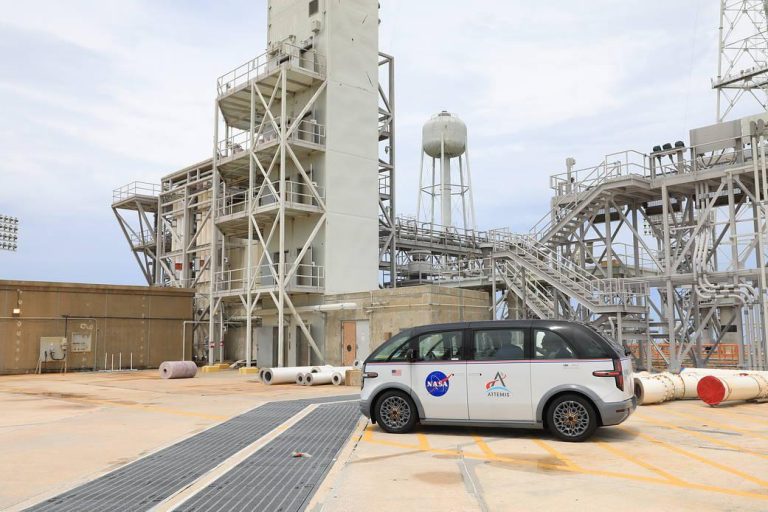
One of three specially designed, fully electric, environmentally friendly crew transportation vehicles for Artemis missions sits at Launch Pad 39B at NASA’s Kennedy Space Center in Florida on July 11, 2023. These zero-emission vehicles, manufactured by Canoo Technologies Inc., will take Artemis crews on the final Earth-bound leg of their journey to the Moon before boarding their rocket and spacecraft.

The new vehicles are customized to accommodate NASA’s unique specifications for Artemis missions while also paying homage to the legacy of the agency’s human spaceflight and space exploration efforts. Many aspects of the design, from the interior and exterior markings to the color of the vehicles to the wheel wells, were chosen by a creative team that included the Artemis launch director and representatives from NASA’s Astronaut Office based at Johnson Space Center in Houston.

Image Credit: NASA/Kim Shiflett

By: Monika Luabeya
Originally published at NASA

Barbenheimer – The Must-Have Merchandise To Elevate Your Movie Experience!

0

Barbie and Oppenheimer are now showing in theatres this July 21. The Barbenheimer phenomenon was seen as a rivalry between the two films, with fans of each film vying for supremacy. However, as the release date approached, fans are now keen to watch both films as a double feature. So take your Barbenheimer movie experience to a new level with these specially-themed products.

Barbenheimer Explosion T-Shirt

This eye-catching T-shirt features a unique design inspired by the iconic moments from both Barbie and Oppenheimer movies. It’s a perfect blend of style and comfort that will surely make you the envy of your fellow moviegoers.

Barbenheimer Black & Pink Shirt

Complete your movie look with this trendy pink and black shirt featuring Barbenheimer design. An extra shirt to wear when go see the movies again for the second time.

UNO Barbie The Movie Card Game

Want to add some fun to your movie night? This UNO card game features graphics inspired by characters from Barbie The Movie. It’s sure to keep you entertained before and after the film. Gather your friends for a movie night full of laughter and unforgettable memories.

Barbenheimer T-Shirt

Can’t have too many Barbenheimer shirts… This black shirt features a catchy design that will complement your movie-watching.

Wool Felt Fedora

This travel-friendly men’s felt fedora can be crushed and rolled up for easy packing, storage, or even getting tucked into your pocket. It’s a classic look from a classic era, where a hat was a staple in every men’s wardrobe and required only the best in quality, style, and class. 

Unisex Polarized Sunglasses

These stylish sunglasses are great for protecting your eyes and keeping you in style. Polarized sunglasses cut glare and haze so your eyes are more comfortable and you can see better.

Barbie Champagne Flutes

What’s a movie night without some refreshing beverages? Sip your favourite drink in style with these elegant champagne glasses. Classy and sophisticated, they’re perfect for any movie night celebration.

American Prometheus: The Triumph and Tragedy of J. Robert Oppenheimer

Delve deeper into the world of Oppenheimer with this captivating biography. Explore the life and work of the man behind the name and gain a new perspective on the movies you love.

Birkenstock Women’s Arizona Wool Felt Sandals

Comfort is key during a movie night. Slide into these cozy and fashionable Birkenstock sandals for a laid-back and relaxed cinema experience.

Barbie Collectible Wearing Gingham & Pink Necklace

Bring some Barbie charm to your home with this collectible Barbie doll wearing a stylish gingham outfit and a pretty pink necklace. It’s the perfect addition to your movie memorabilia collection.

So there you have it – the ultimate Barbenheimer collection to make your Barbie or Oppenheimer movie theatre experience one to remember! These merchandise items will surely add an extra dose of excitement and style to your cinematic adventure. So, grab your popcorn, put on your Barbenheimer T-shirt, enjoy the movies and have a good time!

This post contains affiliate links.

A Guide to Practical AI Technologies and Techniques Beyond the Buzzwords

0

AI technologies and techniques encompass a diverse range of methods and approaches from various domains and related fields of study. Here are a few discussions covering some of the key AI technologies and techniques.

Bayesian Networks.

Bayesian networks are graphical models that represent the probabilistic relationships among a set of variables. They are used in AI for reasoning under uncertainty, diagnostics, and decision-making. Applications include medical diagnosis, spam detection, and risk assessment.

Computer Vision.

Computer vision
Image credits: Pixabay – Peace,love,happiness | Computer vision

Computer vision deals with enabling computers to understand and interpret visual information from the world. Techniques include image recognition, object detection, and segmentation. Computer vision has applications in areas such as surveillance, autonomous vehicles, and medical imaging.

Evolutionary Algorithms.

Evolutionary algorithms are optimization techniques inspired by the process of natural selection. They include Genetic Algorithms (GAs), Evolutionary Strategies (ES), and Genetic Programming (GP). These algorithms are used for optimization, function approximation, and automatic programming.

Expert Systems.

Expert systems are rules-based AI programs that mimic human experts’ decision-making processes in specific domains. They use a knowledge base of facts and rules to draw inferences and solve problems. Expert systems were widely used in the early years of AI and remain applicable in areas where human expertise is limited or costly.

Fuzzy Logic.

Fuzzy logic is an approach to AI that deals with imprecise and uncertain information. Fuzzy logic systems use linguistic variables and fuzzy sets to represent and reason with approximate data. Applications include control systems, decision support, and pattern recognition.

Generative Adversarial Networks (GANs).

GANs are a type of deep learning model that consists of two neural networks, a generator, and a discriminator, which compete against each other. The generator learns to create realistic data samples, while the discriminator learns to distinguish between real and generated samples. This process results in the generator producing increasingly realistic outputs. GANs can generate new data samples, including images, that resemble the training data. Applications include image synthesis, style transfer, and data augmentation.

Hybrid AI Systems.

Hybrid AI systems combine different AI techniques and approaches to achieve better performance or tackle complex problems. Examples include neuro-fuzzy systems, which combine neural networks and fuzzy logic, and ensemble learning, which combines multiple machine learning models to improve prediction accuracy.

Natural Language Processing (NLP).

NLP is an AI subfield that focuses on enabling computers to understand, interpret, and generate human language. NLP techniques involve tokenization, part-of-speech tagging, sentiment analysis, and named entity recognition, among others. NLP tasks include question-answering systems, conversational systems or chatbots, sentiment analysis, and machine translation.

Robotics.

Robotics is a multidisciplinary field that combines AI, engineering, and computer science to design, build, and control robots. AI techniques are used in robotics to enable robots to perceive, navigate, and interact with their environment. Applications include industrial automation, drones, and humanoid robots.

Robotic Process Automation (RPA).

The use of software with AI and machine learning capabilities to handle high-volume, repeatable tasks that previously required humans to perform.

Swarm Intelligence.

Swarm
Image credits: Pixabay – Gerd Altmann | Swarm

Swarm intelligence is a field of AI that studies the collective behaviour of decentralised, self-organised systems, such as ant colonies or bird flocks. Swarm intelligence algorithms, like Particle Swarm Optimization (PSO) and Ant Colony Optimization (ACO), have been applied to optimization problems, routing, and scheduling.

Transfer Learning.

Transfer learning is a machine learning technique where a pre-trained model, typically a deep neural network, is fine-tuned on a new, related task using a smaller dataset. This approach reduces training time and computational resources and often results in better performance.

Lost in Translation? A Roadmap to Understanding AI Vocabulary

0

In the vast and dynamic realm of Artificial Intelligence (AI), one cannot escape the labyrinth of jargons, concepts, and terminology that define its landscape. As AI continues to evolve and infiltrate various aspects of our lives, it brings along with it a unique lexicon that can appear intimidating and perplexing to the uninitiated. However, understanding these crucial terms is essential for anyone seeking to navigate the intricacies of AI effectively.

AI Governance.

AI governance refers to the policies, processes, and frameworks that organisations and institutions implement to ensure the responsible, ethical, and transparent development and deployment of Artificial Intelligence systems.

AI-as-a-Service (AIaaS).

AIaaS is the delivery of Artificial Intelligence capabilities and tools via cloud-based platforms, enabling businesses and organisations to access and utilise AI technology without the need for in-house expertise or infrastructure.

Algorithm.

An algorithm is a step-by-step procedure for solving a problem or accomplishing a task. In AI, algorithms are used to process data, recognize patterns, and make decisions.

Artificial Intelligence (AI).

AI refers to the development of computer systems capable of performing tasks that typically require human intelligence. These tasks include problem-solving, learning, understanding natural language, recognizing patterns, and making decisions.

Bias-Variance Tradeoff.

Bias is the simplifying assumptions made by a model to make the target function easier to learn. Variance is the amount that the estimate of the target function will change if different training data was used.

Big Data.

Data
Image credits: Unsplash – fabio | Data

Big Data refers to the massive volume, variety, and velocity of data generated by various sources, including social media, IoT devices, and online transactions. AI techniques are used to analyse and extract insights from Big Data.

Cloud Computing.

Cloud computing is the delivery of computing resources, such as storage, processing power, and AI services, over the internet. Cloud-based AI platforms enable scalable, flexible, and cost-effective AI development and deployment.

Data Mining.

Data mining is the process of discovering hidden patterns, correlations, and trends in large datasets using statistical and ML techniques.

Data Preprocessing.

Data preprocessing involves cleaning, transforming, and normalising raw data to make it suitable for ML algorithms. Techniques include handling missing values, encoding categorical variables, and scaling features.

Deep Learning (DL).

DL is a subfield of ML that involves training artificial neural networks to recognize complex patterns in large datasets. Deep learning models consist of multiple layers of interconnected nodes, which enable them to automatically learn hierarchical representations of the input data.

Edge Computing.

Edge computing involves processing data near its source, such as IoT devices, rather than sending it to a centralised data centre or cloud. AI models are often deployed at the edge to enable real-time decision-making and reduce data transmission costs.

Feature Engineering.

Feature engineering is the process of selecting, creating, and transforming features or variables from raw data to improve the performance of ML models.

Graphics Processing Unit (GPU).

A GPU is a specialised electronic circuit designed for parallel processing, which accelerates the training and execution of AI models, particularly deep learning algorithms.

Internet of Things (IoT).

Internet of Things
Image credits: Pixabay – TheDigitalArtist | Internet of Things

IoT refers to the network of interconnected devices, vehicles, and appliances that collect, exchange, and analyse data. AI techniques are used to process and make decisions based on the data generated by IoT devices.

Machine Learning (ML).

ML is a subset of AI that focuses on developing algorithms that can learn from and make predictions based on data. ML systems improve their performance as they are exposed to more data over time, without being explicitly programmed to do so.

Model Evaluation.

Model evaluation involves assessing the performance of an AI model on a dataset not used during training. Metrics like accuracy, precision, recall, and F1 score are commonly used to quantify a model’s performance.

Model Deployment.

Model deployment is the process of integrating a trained AI model into a production environment, where it can be used to makepredictions on real-world data.

Model Training.

Model training is the process of adjusting an AI model’s parameters using a dataset to minimise the error between the model’s predictions and the actual output values.

Neural Networks.

Neural network
Image credits: Pixabay – geralt | Neural network

Neural networks are computational models inspired by the structure and function of biological neurons. They consist of interconnected nodes or neurons, organised into layers, which process and transmit information to solve complex problems.

Overfitting and Underfitting.

Overfitting refers to a model that models the training data too well. Underfitting refers to a model that can neither model the training data nor generalise to new data.

Reinforcement Learning (RL).

RL is an ML paradigm in which an agent learns to make decisions by interacting with an environment. The agent receives feedback in the form of rewards or penalties and aims to maximise its cumulative reward over time. RL algorithms have been applied to control systems, game playing, and robotics.

Supervised Learning.

Supervised learning is a type of ML where the algorithm is trained on a labelled dataset, containing input-output pairs. The algorithm learns the relationship between inputs and outputs, allowing it to make predictions on new, unseen data.

Tensor Processing Unit (TPU).

A TPU is a custom-designed hardware accelerator developed by Google specifically for the efficient execution of ML models, particularly neural networks.

Unsupervised Learning.

Unsupervised learning involves training ML algorithms on an unlabeled dataset, with the goal of discovering hidden patterns or structures in the data. Techniques include clustering, where the algorithm groups similar data points, and dimensionality reduction, which simplifies the representation of the data.

Oppenheimer: July 28 Panel Discussion Focuses On The Man Behind The Movie

0
J. Robert Oppenheimer (left) and the actor Cillian Murphy, who plays Oppenheimer in the new film. (Photo credits: Atomic Archive and Universal Pictures, respectively)

The story behind the summer blockbuster movie Oppenheimer, which opens across the nation on Friday, July 21, began at the University of California, Berkeley.

A 25-year-old J. Robert Oppenheimer arrived at UC Berkeley in fall 1929 as an assistant professor, and over the next dozen years established one of the greatest schools of theoretical physics in the U.S. — one that continues to this day. He made UC Berkeley’s physics department the center of American thought about the new field of quantum mechanics and how to apply it to atoms, nuclei and even neutron stars.

He and Ernest O. Lawrence, who made the campus the go-to place for experimental particle physics with his work on the atom-smashing cyclotron, were instrumental in raising the alarm that the Germans could be trying to develop an atomic bomb, and that the U.S. should do the same.

The three-hour movie, directed by Christopher Nolan and partly filmed at UC Berkeley, follows Oppenheimer through his leadership of the Manhattan Project to develop the first nuclear weapons and his subsequent humiliation when the Atomic Energy Commission stripped him of his security clearance in 1954 because of claims that he was a Communist sympathizer and an unreliable adviser.

To provide a different perspective on that history, four UC Berkeley faculty members and a nuclear physicist from Los Alamos National Laboratory will assemble for a panel discussion at 11:30 a.m. on Friday, July 28, to discuss Oppenheimer’s pre-war UC Berkeley years and his scientific and human legacy.

The public can register here for the in-person-only event in Chevron Auditorium at International House in Berkeley.

Christopher Nolan brought his film crew to UC Berkeley in May 2022 to film scenes for the movie Oppenheimer, opening July 21, 2023, across the U.S. Along Campanile Way, cast members seen in 1930s attire include Josh Hartnett (gray suit) playing Berkeley professor E. O. Lawrence, and Cillian Murphy (brown suit, seen from rear), playing J. Robert Oppenheimer, the Berkeley theoretical physicist who led the Manhattan Project to develop an atomic bomb. (Photo credit: Brittany Hosea-Small)

Christopher Nolan brought his film crew to UC Berkeley in May 2022 to film scenes for the movie Oppenheimer, opening July 21, 2023, across the U.S. Along Campanile Way, cast members seen in 1930s attire include Josh Hartnett (gray suit) playing Berkeley professor E. O. Lawrence, and Cillian Murphy (brown suit, seen from rear), playing J. Robert Oppenheimer, the Berkeley theoretical physicist who led the Manhattan Project to develop an atomic bomb. (Photo credit: Brittany Hosea-Small)

The discussion will be moderated by Cathryn Carson, UC Berkeley professor of history and a specialist in the history of 20th century physics, including its cultural, social and political contexts. She co-edited a volume of papers about Oppenheimer, Reappraising Oppenheimer: Centennial Studies and Reflections, that was presented during a 2004 conference celebrating the 100th anniversary of his birth.

Carson will be joined by Jon Else, UC Berkeley professor emeritus of journalism and longtime director of the documentary program at UC Berkeley’s Graduate School of Journalism. Else directed the 1981 documentary, The Day After Trinity: J. Robert Oppenheimer and the Atomic Bomb, which was the first documentary about Oppenheimer’s role in the Manhattan Project. Trinity was Oppenheimer’s name for the first-ever test of an atom bomb, which lit up the night sky in the New Mexico desert on July 16, 1945.

The participants in the July 28 panel are Cathryn Carson, Mark Chadwick, Jon Else, Yasunori Nomura and Karl van Bibber.

The participants in the July 28 panel are Cathryn Carson, Mark Chadwick, Jon Else, Yasunori Nomura and Karl van Bibber.

Also participating in the July 28 discussion will be two physicists: Yasunori Nomura, professor of physics and director of the Berkeley Center for Theoretical Physics; and Karl van Bibber, a professor of nuclear engineering who spent 25 years conducting nuclear energy research at Lawrence Livermore National Laboratory.

Mark Chadwick, chief scientist and chief operating officer for weapons physics at Los Alamos National Laboratory, will round out the panel. In 2021, he edited and published a suite of papers on the technical history of the Trinity test, written on the occasion of its 75th anniversary.

They’ll delve into Oppenheimer’s impact on quantum mechanics and quantum field theory, the school of theoretical physics he created at UC Berkeley — where he supervised 25 Ph.D. students and many more postdoctoral fellows — and the left-leaning milieu at UC Berkeley that made it an unusual place from which to select the director of a top secret government project.

“However unexpected his colleagues found his appointment at Los Alamos, its spectacular accomplishments came to stand for the Manhattan Project at large,” Carson wrote in an introduction to the centennial volume. “Then his postwar apotheosis epitomized the physicists’ entry into positions of power, just as the McCarthy-era stripping of his security clearance defined their political bounds.”

Christopher Nolan’s five-minute Opening Look trailer for his new film, Oppenheimer. The movie, from Universal Pictures, arrives in theaters July 21, 2023.

The movie is based on American Prometheus: The Triumph and Tragedy of J. Robert Oppenheimer, a book published in 2005 that won the Pulitzer Prize for authors Kai Bird and Martin Sherwin. That book and numerous others have contributed to what Else refers to as the “mythologizing” of Oppenheimer, not only for his incredible accomplishment at Los Alamos, but for his tragic fall from grace. Oppenheimer died from throat cancer in 1967. Only last year did the U.S. government vacate the decision to strip him of security clearance.

In the movie, the intense, chain-smoking Oppenheimer is portrayed by Irish actor Cillian Murphy. Other UC Berkeley luminaries are also portrayed: Ernest O. Lawrence (played by Josh Hartnett); physicist and future Nobel laureate Luis Alvarez (played by Alex Wolff); Frank Oppenheimer (played by Dylan Arnold), a Lawrence Berkeley National Laboratory physicist who later founded the Exploratorium in San Francisco; and Haakon Chevalier (played by Jefferson Hall), the professor of French literature whose Communist sympathies entangled Oppenheimer in a web of suspicions about the physicist’s own ties to the Communist Party of the United States of America.

Other key protagonists are Oppenheimer’s wife, Kitty (played by Emily Blunt), who was a biologist and mother of their two children; and Oppenheimer’s ex-lover, Jean Tatlock, the daughter of a UC Berkeley literature professor (played by Florence Pugh).

International Community Must Urgently Confront New Reality of Generative, Artificial Intelligence, Speakers Stress as Security Council Debates Risks, Rewards

0

Secretary-General Points to Potentially ‘Defining Moment for Hate Speech, Disinformation’, as Delegates Call for Ethical, Responsible Governance Framework

The international community must urgently confront the new reality of generative and other artificial intelligence (AI), speakers told the Security Council today in its first formal meeting on the subject as the discussion that followed spotlighted the duality of risk and reward inherent in this emerging technology.

António Guterres, Secretary-General of the United Nations, noting that AI has been compared to the printing press, observed that — while it took more than 50 years for printed books to become widely available across Europe — “ChatGPT reached 100 million users in just two months”.  Despite its potential to turbocharge global development and realize human rights, AI can amplify bias, reinforce discrimination and enable new levels of authoritarian surveillance.

The advent of generative AI “could be a defining moment for disinformation and hate speech”, he observed and, while questions of governance will be complex for several reasons, the international community already has entry points.  The best approach would be to address existing challenges while also creating capacity to respond to future risks, he said, and underlined the need to “work together for AI that bridges social, digital and economic divides — not one that pushes us further apart”.

Jack Clark, Co-founder of Anthropic, noted that, although AI can bring huge benefits, it also poses threats to peace, security and global stability due to its potential for misuse and its unpredictability — two essential qualities of AI systems.  For example, while an AI system can improve understanding of biology, it can also be used to construct biological weapons.  Further, once developed and deployed, people identify new and unanticipated uses for such systems.

“We cannot leave the development of artificial intelligence solely to private-sector actors,” he underscored, stating that Governments can keep companies accountable — and companies can earn the world’s trust — by developing robust, reliable evaluation systems.  Without such investment, the international community runs the risk of handing over the future to a narrow set of private-sector actors, he warned.

Also briefing the Council, Yi Zeng of the Institute of Automation at the Chinese Academy of Sciences pointed out that current AI are information-processing tools that, while seemingly intelligent, are without real understanding.  “This is why they, of course, cannot be trusted as responsible agents that can help humans to make decisions,” he emphasized.  Both near-term and long-term AI will carry a risk of human extinction simply because “we haven’t found a way to protect ourselves from AI’s utilization of human weakness”, he said.

In the ensuing debate, Council members alternately highlighted the transformative opportunities AI offers for addressing global challenges and the risks it poses — including its potential to intensify conflict through the spread of misinformation and malicious cyberoperations.  Many, recognizing the technology’s military applications, underscored the imperative to retain the element of human decision-making in autonomous weapons systems.  Members also stressed the need to establish an ethical, responsible framework for international AI governance.

On that, Omran Sharaf, Assistant Minister for Advanced Sciences and Technology of the United Arab Emirates, stated that there is a brief window of opportunity, available now, where key stakeholders are willing to unite and consider the guardrails for this technology.  Member States should establish commonly agreed-upon rules “before it is too late”, he stressed, calling for mechanisms to prevent AI tools from promoting hatred, misinformation and disinformation that can fuel extremism and exacerbate conflict.

Ghana’s representative, adding to that, underscored that the international community must “constrain the excesses of individual national ambitions for combative dominance”.  Urging the development of frameworks that would govern AI for peaceful purposes, he spotlighted the deployment of that technology by the United Nations Support Mission in Libya (UNSMIL).  Used to determine the Libyan people’s reaction to policies, it facilitated improvements in that country’s 2022 Global Peace Index, he noted, while also cautioning against AI’s integration into autonomous weapons systems.

The speaker for Ecuador similarly rejected the militarization of AI and reiterated the risk posed by lethal autonomous weapons.  “The robotization of conflict is a great challenge for our disarmament efforts and an existential challenge that this Council ignores at its peril,” he warned.  Adding that AI can either contribute to or undermine peace efforts, he emphasized that “our responsibility is to promote and make the most of technological development as a facilitator of peace”.

China’s representative, noting that AI is a double-edged sword, said that whether it is good or evil depends on how mankind uses and regulates it, and how the balance is struck between scientific development and security.  AI development must ensure safety, risk-awareness, fairness and inclusivity, he stressed, calling on the international community to put ethics first and ensure that technology always benefits humanity.

James Cleverly, Secretary of State for Foreign, Commonwealth and Development Affairs of the United Kingdom, Council President for July, spoke in his national capacity to point out that AI could enhance or disrupt global strategic stability, challenge fundamental assumptions about defence and deterrence, and pose moral questions about accountability for lethal decisions on the battlefield.  But momentous opportunities lie before the international community, he added, observing:  “There is a tide in the affairs of men, which, taken at the flood, leads to fortune.”

The meeting began at 10:06 a.m. and ended at 12:15 p.m.

Briefings

ANTÓNIO GUTERRES, Secretary-General of the United Nations, recalled that he told the General Assembly in 2017 that artificial intelligence (AI) “would have a dramatic impact on sustainable development, the world of work and the social fabric”.  Noting that this technology has been compared to the printing press, he observed that — while it took more than 50 years for printed books to become widely available across Europe — “ChatGPT reached 100 million users in just two months”.  The finance industry estimates that AI could contribute up to $15 trillion to the global economy by 2030, and almost every Government, large company and organization in the world is working on an AI strategy.  AI has the potential to turbocharge global development — from monitoring the climate crisis to breakthroughs in medical research — and it offers new potential to realize human rights, particularly in the areas of health and education.

He pointed out, however, that the High Commissioner for Human Rights has expressed alarm over evidence that AI can amplify bias, reinforce discrimination and enable new levels of authoritarian surveillance.  Urging the Council to approach this technology with a sense of urgency, a global lens and a learner’s mindset, he observed:  “Never again will technological innovation move as slowly as today.”  While AI tools are increasingly being used — including by the United Nations — to identify patterns of violence, monitor ceasefires and help strengthen peacekeeping, mediation and humanitarian efforts, AI models can help people to harm themselves and each other at massive scale.  On that, he said that AI-enabled cyberattacks are already targeting critical infrastructure and peacekeeping operations and that the advent of generative AI “could be a defining moment for disinformation and hate speech”. Outlining other potential consequences, he expressed concern over malfunctioning AI systems and the interaction between AI and nuclear weapons, biotechnology, neurotechnology and robotics.

“Without action to address these risks, we are derelict in our responsibilities to present and future generations,” he stressed. Questions of governance will be complex for several reasons:  powerful AI models are already widely available; AI tools can be moved around the world leaving very little trace; and the private sector’s leading role in AI has few parallels in other strategic technologies.  However, the international community already has entry points, including the 2018-2019 guiding principles on lethal autonomous weapons systems; the 2021 recommendations on the ethics of AI agreed through the United Nations Educational, Scientific and Cultural Organization (UNESCO); recommendations by the United Nations Office of Counter-Terrorism; and the “AI for Good” summits hosted by the International Telecommunication Union (ITU).

The best approach, he went on to say, would address existing challenges while also creating the capacity to monitor and respond to future risks.  The need for global standards and approaches makes the United Nations the ideal place for this to happen, and he therefore welcomed calls from some Member States to create a new United Nations entity to support collective efforts to govern this technology.  Such an entity would gather expertise and put it at the international community’s disposal and could support collaboration on the research and development of AI tools to expedite sustainable development.  Urging the Council to show the way towards common measures for the transparency, accountability and oversight of AI systems, he underlined the need to “work together for AI that bridges social, digital and economic divides — not one that pushes us further apart”.

JACK CLARK, Co-founder, Anthropic, said:  “We cannot leave the development of artificial intelligence solely to private sector actors.  The Governments of the world must come together, develop State capacity and make the development of powerful AI systems a shared endeavour across all parts of society, rather than one dictated solely by a small number of firms competing with one another in the marketplace.”  He recalled that a decade ago the England-based company DeepMind published research that shows how to teach an AI system to play old computer games like Space Invaders.  The same techniques used in that research are now being used to create AI systems that can beat military pilots in air fighting stimulations and even design the components of next-generation semiconductors.

Noting that AI models, such as OpenAI, ChatGPT, Google Bard and his own company Anthropic’s Claude are developed by corporate interests, he said that, as private sector actors are the ones that have the sophisticated computers and large pools of data and capital resources to build these systems, they seem likely to continue to define their development.  However, while that will bring huge benefits, it also poses potential threats to peace, security and global stability, which emanate from AI’s potential for misuse and its unpredictability — two essential qualities of AI systems.  For example, on misuse, he said that an AI system that can help in better understanding biology may also be used to construct biological weapons.  On unpredictability, he pointed out that once AI systems are developed and deployed, people identify new uses for them that were unanticipated by their developers or the system itself could later exhibit chaotic or unpredictable behaviour.

“Therefore, we should think very carefully about how to ensure developers of these systems are accountable, so that they build and deploy safe and reliable systems which do not compromise global security,” he urged.  AI as a form of human labour affords immense political leverage and influence, he pointed out, raising such questions about how Governments should regulate this power or who should be the actors that can sell those so-called experts.  The international community must work on developing ways to test for the systems’ capabilities, misuses and potential safety flaws.  For this reason, it has been encouraging to see many countries emphasize the importance of safety testing and evaluation in their various AI policy proposals, he said, naming those of the European Union, China and the United States.

Noting the absence of standards or best practices on how to test these systems for things such as discrimination, misuse or safety, he said Governments can keep companies accountable and companies can earn the world’s trust by developing robust and reliable evaluation systems.  Without such an investment, the international community runs the risk of handing over the future to a narrow set of private sector actors, he warned.  “If we can rise to the challenge, however, we can reap the benefits of AI as a global community and ensure there is a balance of power between the developers of AI and the citizens of the world,” he said.

YI ZENG, Institute of Automation, Chinese Academy of Sciences, said that there is no doubt that AI is a powerful and enabling technology to push forward global sustainable development.  From the peace and security perspective, efforts should focus on using it to identify disinformation and misunderstanding among countries and political bodies.   AI should be used for network defences, not attacks.  “AI should be used to connect people and cultures, not to disconnect them,” he added.  The current AI, including recent generative AI, are information processing tools that seem to be intelligent, while they are without real understandings, and hence not truly intelligent.

“This is why they, of course, cannot be trusted as responsible agents that can help humans to make decisions,” he emphasized.  AI should not be used for automating diplomacy tasks, especially foreign negotiations among different countries, since it may use and extend human limitations and weaknesses to create bigger or even catastrophic risks.  “AI should never ever pretend to be human,” he said, stressing the need to ensure sufficient, effective and responsible human control for all AI-enabled weapons systems.  Both near-term and long-term AI will include risk of human extinctions simply because “we haven’t found a way to protect ourselves from AI’s utilization of human weakness”.  AI does not “know what we mean by human — [by] death and life”.

“In the long term, we haven’t given superintelligence any practical reasons why they should protect humans,” he continued. Proposing the Council consider the possibility of creating a working group on AI for peace and security, he encouraged members to play an increasing role on this important issue.  “Humans should always maintain and be responsible for final decision-making on the use of nuclear weapons,” he emphasized.  The United Nations must play a central role to set up a framework on AI development and governance, to ensure global peace and security.

Statements

JAMES CLEVERLY, Secretary of State for Foreign, Commonwealth and Development Affairs of the United Kingdom, Council President for July, spoke in his national capacity to note that AI may help the world adapt to climate change, beat corruption, revolutionize education, deliver the Sustainable Development Goals and reduce violent conflict.  “But we are here today because AI will affect the work of the Council,” he observed, pointing out that the technology could enhance or disrupt global strategic stability, challenge fundamental assumptions about defence and deterrence and pose moral questions about accountability for lethal decisions on the battlefield.  Further, AI changes the speed, scale and spread of disinformation — with hugely harmful consequences for democracy and stability — and could aid the reckless quest for weapons of mass destruction by State and non-State actors.

“That’s why we urgently need to shape the global governance of transformative technologies,” he underscored.  For the United Kingdom, AI should:  support freedom and democracy; be consistent with the rule of law and human rights; be safe and predictable by design; and be trusted by the public.  Noting that his country is home to many of the world’s trail-blazing AI developers and foremost AI safety researchers, he said that the United Kingdom will bring world leaders together for the first major global summit on AI safety in autumn. Momentous opportunities lie before the international community, he added, observing:  “There is a tide in the affairs of men, which, taken at the flood, leads to fortune”.

TAKEI SHUNSUKE, State Minister of Foreign Affairs for Japan, underscored the importance of human-centric and trustworthy AI, noting that the development of AI should be consistent with democratic values and fundamental human rights.  “AI should not be a tool for rulers but should be placed under the rule of law,” he said, stressing that military use of AI should be responsible, transparent and based on international law.  AI can be made more trustworthy by including a wide range of stakeholders in the process, he said, noting that the United Nations’ convening power can bring together wisdom from around the world.  In June, his country hosted a side event at the United Nations with the Office of Counter-Terrorism and United Nations Interregional Crime and Justice Research Institute and led discussions on the misuse of AI by terrorists.  It also launched the Group of Seven (G7) Hiroshima AI Process this year to contribute to the global discussion on generative AI, he added.

MANUEL GONÇALVES, Deputy Minister for Foreign Affairs of Mozambique, said that, in full disclosure, his statement was composed solely by humans and not by generative AI tools like ChatGPT.  “We are approaching a point where digital machines can now complete a task that for the majority of human existence was exclusively within the realm of human intelligence,” he continued.  While advancements in AI present immense opportunities, they also pose risks, including the potential of catastrophic outcomes.  “We should take precautions,” he urged, warning that AI is increasingly imitating humans to spread misinformation and conspiracies and carries out numerous other nefarious activities.

Turning to AI’s positive impact, he said AI technologies have the potential to transform society — helping to eradicate disease, combat climate change, enhance early warning capabilities and customize mediation efforts.  AI can also be used to enhance data for the benefit of humanity.  Mozambique recognizes the importance of adopting a balanced approach toward AI, he said, while also noting the “credible evidence” indicating that AI poses a real risk.  Therefore, it is crucial to develop an intergovernmental agreement that can govern and monitor the use of AI.  It is important to ensure that all relevant actors, including Governments and the private sector, are provided with the technology tools that can ensure the ethical development and use of AI, he stressed.

OMRAN SHARAF, Assistant Minister for Advanced Sciences and Technology of the United Arab Emirates, underlined the need to establish rules for AI, stating that there is a brief window of opportunity available now where key stakeholders are willing to unite and consider the guardrails for this technology.  Member States should establish commonly agreed-upon rules “before it is too late”, he stressed, which should include mechanisms to prevent AI tools from promoting hatred, misinformation and disinformation that can fuel extremism and exacerbate conflict.  As with other cybertechnologies, the use of AI should be firmly guided by international law, which continues to apply in cyberspace.  He also emphasized that AI should become a tool to promote peacebuilding and the de-escalation of conflicts — not a threat multiplier — and that “the biases of the real world should not be replicated by AI”.  Adding that flexible and agile regulation is needed, he urged avoiding too-rigid rules that can hamper the evolution of this technology.

ZHANG JUN (China), noting that AI is a double-edged sword, said that whether it is good or evil depends on how mankind utilizes and regulates it and balances scientific development with security.  The international community should adhere to putting ethics first and ensure that technology always benefits humanity.  AI development must ensure safety, risk-awareness, fairness and inclusiveness, he stressed.  Leading technology enterprises should clarify the responsible party and avoid developing risky technology that could pose serious negative consequences. Meanwhile, developing countries must enjoy equal access and use of AI technology, products and services.  His country has actively explored AI development and governance in all fields, he said, noting that the Government in 2017 issued the New Generation Artificial Intelligence Development Plan.  In recent years it has continuously improved relevant laws and regulations, ethical norms, intellectual property standards, safety monitoring and evaluation measures to ensure the healthy and orderly development of AI.

JEFFREY DELAURENTIS (United States) said that AI offers incredible promise to address global challenges.  Automated systems are already helping to grow food more efficiently, predict storm paths and identify disease in patients.  AI, however, also has the potential to intensify conflict including by spreading misinformation and carrying out malicious cyberoperations.  The United States is committed to working with a range of actors, including Member States, technology companies and civil society actors, he said.  On 4 May, President Joseph R. Biden met with leading AI companies to underscore the responsibility to ensure AI systems are safe and trustworthy.  The United States is also identifying principles to guide the design, use and deployment of automated systems.  Military use of AI must be ethical and responsible.  Earlier this year, the United States proposed a political declaration on the responsible military use of AI, he said, and encouraged all Member States to endorse this declaration.

SÉRGIO FRANÇA DANESE (Brazil) said artificial intelligence is developing so fast that even the best researchers are unable to assess the full scale of the challenges and benefits that these new technologies can provide.  “What we know for sure is that artificial intelligence is not human intelligence,” he said, adding that human oversight is essential to avoid bias and errors.  Even though it has been mostly developed as a civilian application, it can be predicted with certainty that AI applications will be extended to the military field and have a relevant impact on peace and security.  Recalling the concept of “meaningful human control”, he underscored that humans must remain responsible for decisions on the use of weapons systems.  A human element in any autonomous system is essential for the establishment of ethics standards and for full compliance with international humanitarian law.  “There is no replacement for human judgment and accountability,” he asserted.

PASCALE CHRISTINE BAERISWYL (Switzerland) echoed the words of the robot “Ameca”, speaking to a journalist at the “AI for Good” conference in Geneva:  “I believe it’s only a matter of time before we see thousands of robots like me out there making a difference.”  While a challenge due to its speed and apparent omniscience, AI can and must serve peace.  “It’s in our hands to ensure that AI makes a difference to the benefit and not the detriment of humanity,” she emphasized, adding:  “let’s seize the opportunity to lay the groundwork towards AI for good by working closely with cutting-edge science”.  In this regard, the Swiss Federal Institute of Technology Zurich is developing a prototype of an AI-assisted analysis tool for the United Nations Operations and Crisis Centre which could explore AI’s potential for peacekeeping, particularly for the protection of civilians and peacekeepers.  Additionally, Switzerland recently launched the “Swiss Call for Trust & Transparency initiative”, where academia, private sector and diplomacy jointly seek practical and rapid solutions to AI-related risks.

HAROLD ADLAI AGYEMAN (Ghana) underscored that the international community must “constrain the excesses of individual national ambitions for combative dominance”, urging the development of frameworks that would govern AI for peaceful purposes.  For Ghana, opportunity lies in developing and applying that technology to identify early warning signs of conflict and to define responses that have a higher rate of success.  AI can also be applied to peace mediation and negotiation efforts, he said, noting that the deployment of that technology by the United Nations Support Mission in Libya (UNSMIL) to determine the Libyan people’s reaction to policies facilitated improvements in that country’s 2022 Global Peace Index.  AI also presents risks — including its integration into autonomous weapons systems – and, on that, he observed:  “The history of our experience with mankind’s mastery in atomic manipulation shows that, should such desires persist, it only generates, in equal measure, efforts by other States to cancel the advantage that such a deterrence seeks to create”.

NICOLAS DE RIVIÈRE (France) said AI must be a tool for peace, noting that these technologies can contribute to the safety of the blue helmets, improve the protection of civilians, and facilitate the delivery of humanitarian assistance.  However, it also includes risks, he pointed out, noting that AI is liable to heighten cyberthreats and help malicious actors in waging cyberattacks.  At the military level, AI must be modified to reflect the nature of conflict, he said, underscoring the need to develop an applicable framework for autonomous lethal weapons.  Such a framework can help ensure that future conflicts are conducted in a way that respects international humanitarian law, he added.  Affirming his country’s commitment to advancing an ethical and responsible approach for AI, he said that was the aim of the global partnership it launched in 2020, with the European Union and Council of Europe, and which has been working on rules to regulate and support AI development.

HERNÁN PÉREZ LOOSE (Ecuador) said that AI has already developed at “break-neck speed” and will continue to do so.  AI can contribute to peacekeeping and peace efforts, or it can undermine them; prevent conflicts and moderate dialogues in complex situations as was the case during the peak of the COVID-19 pandemic.  AI can improve the security of peacekeeping camps and convoys by monitoring the situation more effectively.  “Our responsibility is to promote and make the most of technological development as a facilitator of peace,” he said.  This can be done only by strictly upholding international human rights law and international humanitarian law.  Ecuador categorically rejects the militarization of AI and reiterates the risk posed by lethal autonomous weapons.  “The robotization of conflict is a great challenge for our disarmament efforts and an existential challenge that this Council ignores at its peril,” he said.

VANESSA FRAZIER (Malta) said that as AI governance and control practices must be developed at a comparable pace for safeguarding international peace and security, the Council must push for strong AI governance and ensure its inclusive, safe and responsible deployment through the sharing of experiences and governmental frameworks.  Since 2019, her country has been developing an Ethical AI Framework, aligned with the European Ethics Guidelines for Trustworthy AI, she said, further describing Malta’s efforts in the field.  She voiced concern about the use of AI systems in military operations, stressing that machines cannot make human-like decisions involving the legal principles of distinction, proportionality and precaution.  Moreover, lethal autonomous weapons systems currently exploiting AI should be banned and only those weapons systems that are in full respect of international humanitarian law and human rights law should be regulated, she added.

LILLY STELLA NGYEMA NDONG (Gabon) said that AI is increasing the analytical capacity of early warning systems, thereby making it easier to detect emerging threats by analysing vast quantities of data from various sources very quickly.  This has enabled United Nations peacekeeping missions to perform better, particularly in the area of civilian protection.  AI has also contributed to States’ post-conflict reconstruction efforts, along with fostering the implementation of quick-impact projects, employment opportunities for youth and the reintegration of former combatants. She underscored, however, that local communities must take ownership of and absorb these new technologies “to perpetuate their beneficial effects after the withdrawal of international forces” — lest such benefits disappear, and crises resurface. Also stressing the need to bolster transparency, international governance and accountability regarding AI, she called on the United Nations to expand international cooperation to develop a regulatory framework with appropriate control mechanisms and robust security systems.

FERIT HOXHA (Albania) said AI holds great promise to transform the world like never before, but also poses potential risks that could impact people’s safety, privacy, economy and security.  Some countries continually attempt to deliberately mislead people, distort facts, and interfere in democratic processes of others by misusing digital technologies, he said, underscoring the urgency of establishing the necessary AI safeguards and governance frameworks at the national and international levels.  Clear lines of responsibility and authority are also needed to ensure that AI systems are used appropriately, safely and responsibly for the good of all.  Moreover, AI systems must not infringe on human rights and freedom nor undermine peace and security.  The international community must promote standards for responsible State behaviour and the applicability of international law in the use of AI and its technologies, as well as in the monitoring and assessment of risks and implications, he said, highlighting the Council’s role in that regard.

DMITRY A. POLYANSKIY (Russian Federation) said that the development of autonomous weapons systems can pose risks to security because such systems can make decisions about the use of force.  AI can also be used in the creation and spread of disinformation and “fake news”, which undermine trust and cause tensions. With respect to lethal autonomous systems, he said that the issue is discussed in the General Assembly and that duplication of such efforts is counterproductive.  “The West has no ethical qualms about knowingly allowing AI to generate misanthropic statements in social networks,” he continued.  Turning to digital inequality, he said that in Europe Internet access is enjoyed by approximately 89 per cent of the population.  In low-income countries, only one quarter of the population enjoys such benefits.  Historically, digital technologies were developed at the private level, and Governments lagged in regulating them.  “This trend needs to be reversed,” he stressed.

Building an Ethical AI Future – The Need for Cross-Sector Collaboration

0

Creating a beneficial and safe environment for AI and related technologies is a multifaceted challenge. The best way to regulate, moderate, arbitrate, and nurture AI and related technologies moving forward require principles and pillars that require cooperation and understanding across multiple sectors and disciplines.

Cross-Sector Collaboration.

Together, we create!
Image credits: Unsplash – “My Life Through A Lens”

A crucial first step in effective AI regulation is establishing close collaborations between technologists, policymakers, ethicists, researchers, and other relevant stakeholders. This would allow for well-informed regulations that can adequately address potential risks while not stifling innovation.

Flexible Regulatory Frameworks.

AI is a rapidly evolving field, and static rules may quickly become outdated. Therefore, flexible, adaptive regulatory frameworks are needed. These can incorporate ‘use-case’ based regulations, focusing on specific applications of AI rather than trying to regulate the broad field as a whole.

Global Coordination.

As AI is a global technology, its regulation would ideally involve international cooperation to set standards and guidelines. This would prevent regulatory ‘race-to-the-bottom’ scenarios where companies move operations to areas with the least restrictions.

Ethics and Human Rights at the Forefront.

Regulations should be built around a core of ethics and human rights principles, such as privacy, transparency, fairness, and accountability. For example, individuals should have the right to know how AI systems make decisions that affect them, and there should be clear accountability mechanisms in place for when things go wrong.

Education and Public Engagement.

It is vital that the broader public understands AI and its implications. This includes education in schools, public forums for discussion, and opportunities for public input in policy decisions. Public understanding and trust will be key to the successful and beneficial implementation of AI technologies.

Nurturing Research and Innovation.

While regulation is necessary to mitigate risks, it is also important to continue nurturing the positive potential of AI. This could involve funding for research, incentives for innovation in areas like AI safety and explainability, and support for education and training in AI-related skills.

Ongoing Monitoring and Evaluation.

Even after policies are in place, it is crucial to continue monitoring the state of AI and evaluate the effectiveness of existing regulations. Policies may need to be updated or revised as technology evolves and we learn more about its impact.

Proactive Approach.

Rather than waiting for harm to occur, policymakers and regulators should aim to anticipate potential problems and address them proactively. This includes engaging with cutting-edge research, scenario planning, and risk assessment.

Inclusion of Diverse Perspectives.

As AI affects all of society, a diversity of perspectives should be included in decision-making processes about AI regulation. This includes representation of people from different cultural, socioeconomic, gender, age, and professional backgrounds.

Transparency and Auditability.

AI systems should be designed to be transparent in how they make decisions, and there should be mechanisms for third-party audits of these systems. This can help ensure that AI systems are being used responsibly and ethically.

Regulating, moderating, arbitrating, and nurturing AI requires a balanced and considered approach that respects human rights, values innovation, and understands the rapidly changing nature of this technology. It is a complex challenge, but with broad collaboration and thoughtful action, we can guide the development of AI in a way that benefits all of society.

Inside International Institutions And Their Hierarchy

0

International institutions or organisations have their own unique structures. However, they generally contain the following hierarchical structure, although the specifics can differ based on the purpose, size, and scope of the institution.

Typical Institutional Organisational Hierarchy.

Level 1. General Assembly or Member States.

This is often the supreme governing body of an international organisation, composed of representatives from each member state. They discuss and make decisions on important issues, such as policies, budget, and the admission of new members.

Level 2. Executive Board or Council.

The executive board is typically composed of members elected by the General Assembly. They oversee the implementation of policies and decisions made by the General Assembly.

Level 3. Secretary-General or President.

This person is the chief administrative officer and is often elected by the General Assembly. They are responsible for the day-to-day management of the organisation and often act as the public face of the organisation.

Level 4. Deputy Secretaries or Vice Presidents.

These individuals assist the Secretary-General in carrying out the duties of the organisation and often oversee specific areas or departments.

Level 5. Directors or Department Heads.

They oversee specific departments within the organisation, such as economic affairs, social development, environmental programs, etc.

Level 6. Managers or Officers.

These individuals manage specific programs or projects within a department.

Level 7. Staff Members or Individual Contributors.

These include analysts, specialists, coordinators, and other staff members who carry out the work of the organisation.

For example, the United Nations, one of the most well-known international organisations, has a similar structure with a General Assembly, a Security Council (part of the executive function), and a Secretary-General, along with numerous departments and programs each headed by a director or equivalent role.

Again, this is a generalisation and structures can vary significantly between organisations. Some organisations may also have judicial or legislative branches, advisory committees, or other bodies.

Behind The AI Revolution – Then, Now, And The Future – Are People.

0

Typical Corporate Organisational Hierarchy.

Level 1. Board of Directors.

The highest level in an organisational structure. The board is elected by shareholders and is responsible for the overall governance of the corporation. They set strategic goals, appoint the Chief Executive Officer, and ensure the company meets its legal and fiscal responsibilities.

Level 2. Chief Executive Officer (CEO).

The CEO is the highest-ranking executive and is responsible for making major corporate decisions, managing the overall operations and resources of a company.

Level 3. C-Suite Executives.

This level includes the Chief Operating Officer (COO), Chief Financial Officer (CFO), Chief Information Officer (CIO), Chief Technology Officer (CTO), and others depending on the company. They are responsible for strategic decision-making and managing their respective departments.

Level 4. Vice Presidents (VPs).

VPs oversee a specific department or division, such as Sales, Marketing, HR, etc. They develop department strategy and manage the department’s employees.

Level 5. Directors.

Directors manage a specific area within a department or division, such as PR within the Marketing department or Talent Acquisition within HR.

Level 6. Managers.

Managers supervise a group of employees and are responsible for ensuring that their team meets departmental goals. They often have decision-making authority within their specific area.

Level 7. Individual Contributors.

These are employees who do not have any managerial responsibilities. They can include both entry-level workers and experienced professionals.

Real-world organisations can have variations and additional layers, such as senior and junior VPs, assistant managers, team leads, etc. Moreover, smaller organisations might have fewer levels, while large, multinational corporations might have more. The titles and responsibilities can also vary between organisations and industries.