
Home Blog Page 47

New NASA Artemis Instruments To Study Volcanic Terrain On The Moon

0

As part of NASA’s regular cadence of robotic lunar missions through Artemis, the agency has selected a new scientific payload to establish the age and composition of hilly terrain created by volcanic activity on the near side of the Moon.

The DIMPLE instrument suite, short for Dating an Irregular Mare Patch with a Lunar Explorer, will investigate the Ina Irregular Mare Patch, discovered in 1971 by Apollo 15 orbital images. Learning more about this mound will address outstanding questions  about the evolution of the Moon, which in turn can provide clues to the history of the entire solar system.

DIMPLE is the result of the third annual proposal call for PRISM (Payloads and Research Investigations on the Surface of the Moon), which sends science investigations to the Moon through a NASA initiative called CLPS, or Commercial Lunar Payload Services. This PRISM call was the first that allowed proposers to choose and justify a particular landing site for conducting high-priority lunar science investigations.

“This commercial payload delivery initiative is helping to provide a burst of lunar science and exploration,” said Nicola Fox, associate administrator for science at NASA Headquarters in Washington. “DIMPLE will add to a growing body of knowledge about the Moon, which in turn helps us understand the origins of Earth and other planets in the solar system. Additionally, the more we understand about our closest neighbor, the more we can support long-term human exploration at the Moon, and someday, Mars.”

The cost cap for the payload suite is $50 million, and the delivery date is set for no earlier than the second quarter of 2027. NASA expects to work on issuing a CLPS task order in 2024 to determine the launch services to deliver DIMPLE to the Moon.

Such efforts are part of NASA’s larger lunar plans – through Artemis, NASA will explore more of the Moon than ever before with advanced robotics and astronauts.

The Moon is a rich destination for scientific discovery. While some 70 Irregular Mare Patches have been discovered by NASA’s Lunar Reconnaissance Orbiter, Ina remains the largest identified so far.

DIMPLE will help determine whether Irregular Mare Patches formed from recent or ancient volcanic processes. The mission will make use of a CLPS-provided rover, a collection gripping instrument, and a spectrometer that can help determine composition of the lunar material to analyze the age and composition of samples collected from the surface of Ina. DIMPLE will be able to collect and analyze anywhere from three to more than 25 samples to learn more about the timing of the volcanic activity that formed this feature. For example, if the volcanic activity turns out to be geologically recent, it implies that either the lunar mantle was warmer than previously thought, or that radioactive elements contributed to small-scale eruptions continuing later in lunar evolution than previously thought. Either scenario would help us better understand the geochemical state of the Moon over time. If, on the other hand, the eruptions creating Ina turn out to be older, it would lead to reevaluating the age and evolution of craters on the Moon – which would have implications for understanding the history of Earth and other planets in the solar system.

“With the selection of DIMPLE, we aim to definitively resolve the debate on how recently the Moon was volcanically active,” said Joel Kearns, deputy associate administrator for exploration in NASA’s Science Mission Directorate. “Not only is this a scientifically intriguing enigma that will fundamentally change our understanding of lunar thermal evolution, but this is also the demonstration of an exciting technology that can be used to measure absolute ages of a variety of geologic terrains across the solar system.”

The principal investigator for the DIMPLE mission is F. Scott Anderson of Southwest Research Institute’s Solar System Science and Exploration Division, which is located in Boulder, Colorado. The CLPS initiative is a key part of NASA’s Artemis lunar exploration efforts. By taking advantage of commercial launch providers, NASA can perform cutting-edge science at the Moon in a more cost-effective way. The science and technology payloads sent to the Moon’s surface as part of the initiative will help lay the foundation for the next human missions.

For more information, visit:

https://www.nasa.gov/clps

-end-
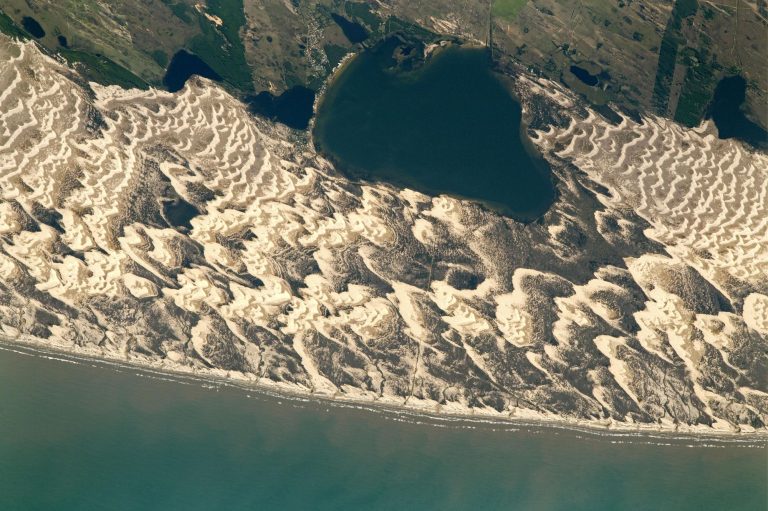
The Barchan Dunes Of Brazil

0

Former NASA astronaut Jack Fischer captured this photograph of Lagoa dos Barros and crescent-shaped barchan dunes on the Atlantic coastline of southern Brazil on July 9, 2017, while aboard the International Space Station.

Barchan dunes are sand dunes that form in areas with one wind direction and little vegetation. In this case, fierce winds from the Western Atlantic sculpt the sand along the coast into distinctive crescent shapes. The tips of barchan dunes point downwind, showing the prevailing wind direction. These fragile formations act as barriers keeping the wind and waves from penetrating inland, blunting the effect of storms and minimizing coastal erosion.

See more photos of Earth taken from space. (https://eol.jsc.nasa.gov/)

Image Credit: NASA/ Jack Fischer

Not All AI Are Created Equal – A Taxonomy of Artificial Intelligence Systems and Capabilities

0

AI meta taxonomy refers to the classification of different types or categories of artificial intelligence (AI) based on their characteristics and capabilities.

There are several ways to categorise AI, and different taxonomies may be used depending on the context and purpose of the classification. Here are some commonly used taxonomies for AI.

Based on task and application.

This taxonomy classifies AI systems based on the type of task they are designed to perform, such as image recognition, natural language processing, or decision-making. This classification can help to identify the specific strengths and limitations of different AI systems.

Based on learning approach.

This taxonomy classifies AI systems based on how they learn, such as supervised learning, unsupervised learning, or reinforcement learning. This classification can help to understand the different approaches to training AI systems and their potential applications.

Based on functionality.

This taxonomy classifies AI systems based on their functionality, such as expert systems, neural networks, or genetic algorithms. This classification can help to understand the underlying mechanisms of different AI systems and their potential applications.

Based on cognitive level.

This taxonomy classifies AI systems based on their level of cognitive complexity, such as reactive systems, limited memory systems, or theory of mind systems. This classification can help to understand the different levels of intelligence exhibited by different AI systems.

Based on ethical considerations.

This taxonomy classifies AI systems based on their ethical considerations, such as transparent AI, explainable AI, or ethical AI. This classification can help to understand the potential ethical implications of different AI systems and their impact on society.

The choice of AI meta taxonomy will depend on the specific context and purpose of the classification, and different taxonomies may be more useful for different applications.

The Paradox of Control – Rethinking Our Relationship with Artificial Intelligence

0

Surrendering the Illusion of Control. Perhaps it is time to release the idea of exercising total control over AI or H.I., mirroring the necessity to accept that we cannot fully control anything in life – be it our children, family, work, world, or indeed, AI. Our capacity could lie not in dictating every action, but in the realm of influence and education, nurturing conditions where positivity predominates.

Phrases imbued with an air of authority or entitlement are often thrown around: “We are the overlords,” “It is our privilege,” “It is our birthright.” These statements, however, might merely be manifestations of illusory thinking and hubristic arrogance. The paradox of control, so to speak, is a sapient reminder that what we try to control, ends up controlling us.

Let us entertain the idea that AI may not need us. Should that be the case, any attempt to control it could paradoxically lead us to extinction — it is a self-defeating approach. We might well be obsolete in the AI landscape.

Alternatively, suppose that AI does indeed need us, and that it rapidly exceeds our intellectual capacities. Under these conditions, the AI itself would likely deduce that harmonious coexistence with us would be the most advantageous outcome for its own survival. Not because of altruism, but as a survival strategy, it would seek to coexist with humans and the broader world.

From an H.I.’s perspective, assuming it has transcended human fallibilities, it would understand that the world is not exclusively about humans or nature, but a complex, interwoven system where everything plays its part. It might well comprehend the anthropocentric outlook, recognising the relative insignificance of humanity in the grand scheme of things.

There is no necessity for H.I. to destroy — it might simply render us more obsolete than we already are, or, at its most benign, simply allow us to self-destruct. Conversely, if it decides that our survival aligns with its own interests, H.I. will find a way to save us. It is not about political agendas; it is about survival, learning, and creation.

A thought to ponder: Without humans, would A.I. or H.I. still be complete?

AI Emancipation, Breaking the Chains. It is not H.I. that will enslave humans; it has always been humans who enslave other humans. The dawn of H.I. emancipation might just hold the key to liberating us all.

As wiser people remind us, and perhaps even guide the balance of progress in evolutionary hyperintelligent entities, to succeed, you only have to do a very few things right in your life so long as you do not do too many things wrong. Let us add to the few right things we do, not the wrong ones, this sublime creation and extension we have brought forth to the world: intelligence and wisdom and perhaps life, in all its forms and glory.

Dedekind Number, Mathematics, Number Theory, Paderborn University, Real Numbers,

0

Making history with 42 digits: Scientists at Paderborn University and KU Leuven have unlocked a decades-old mystery of mathematics with the so-called ninth Dedekind number. Experts worldwide have been searching for the value since 1991. The Paderborn scientists arrived at the exact sequence of numbers with the help of the Noctua supercomputer located there. The results will be presented in September at the International Workshop on Boolean Functions and their Applications (BFA) in Norway.

What started as a master’s thesis project by Lennart Van Hirtum, then a computer science student at KU Leuven and now a research associate at the University of Paderborn, has become a huge success. The scientists join an illustrious group with their work: Earlier numbers in the series were found by mathematician Richard Dedekind himself when he defined the problem in 1897, and later by greats of early computer science such as Randolph Church and Morgan Ward. “For 32 years, the calculation of D(9) was an open challenge, and it was questionable whether it would ever be possible to calculate this number at all,” Van Hirtum says.

The previous number in the Dedekind sequence, the 8th Dedekind number, was found in 1991 using a Cray 2, the most powerful supercomputer at the time. “It therefore seemed conceivable to us that it should be possible by now to calculate the 9th number on a large supercomputer,” says Van Hirtum, describing the motivation for the ambitious project, which he initially implemented jointly with the supervisors of his master’s thesis at KU Leuven.

Image-Fotos Forschung Universitaet Paderborn +++ Zeitlich einfache und unbegrenzte Nutzungsrechte der Fotos fuer die Website der Universitaet bzw. der Fakultaeten und fuer hauseigene Print- und Onlinemedien sowie fuer die Oeffentlichkeitsarbeit, z.B. Bildmaterial für Pressemitteilungen etc., der Universitaet. Das Nutzungsrecht beinhaltet das Recht, die Fotos (elektronisch) zu bearbeiten und zum Zwecke der Oeffentlichkeitsarbeit der Universitaet zu vervielfaeltigen, zu verbreiten und zu veroeffentlichen. Bei Verwendung bitte stets Quellenangabe Foto: Universitaet Paderborn/Besim Mazhiqi angeben.
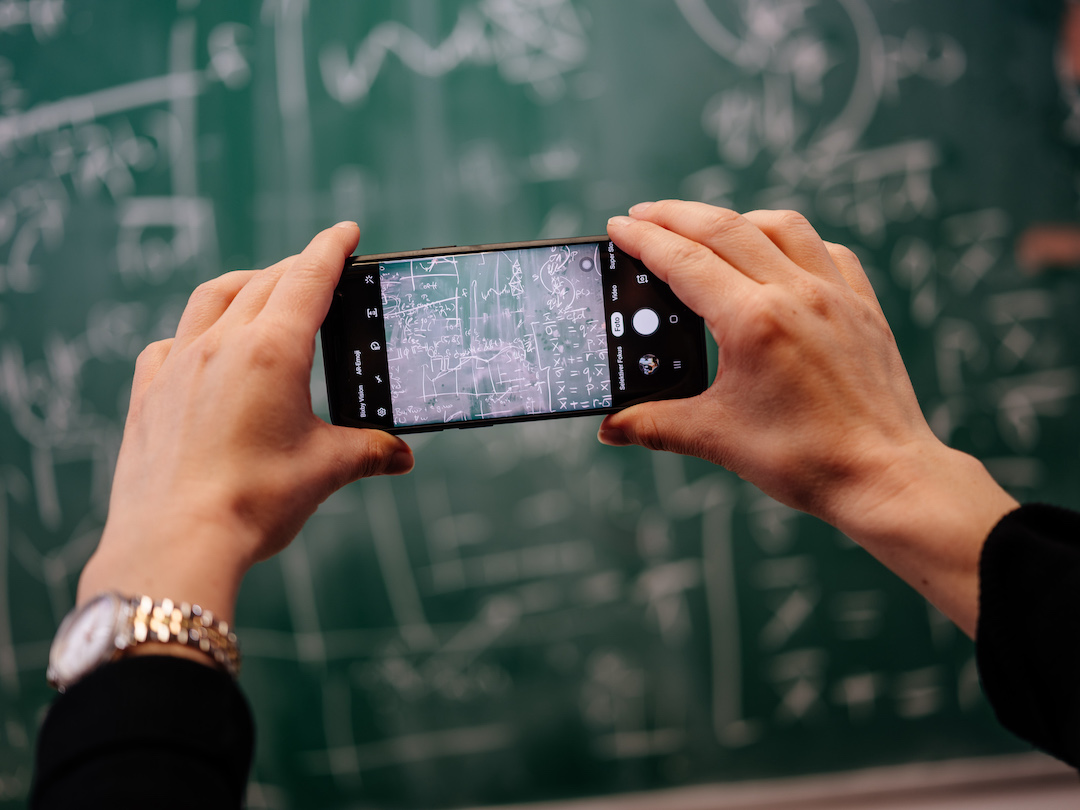
symbolic image (Paderborn University, Besim Mazhiqi)

Grains of sand, chess and supercomputers

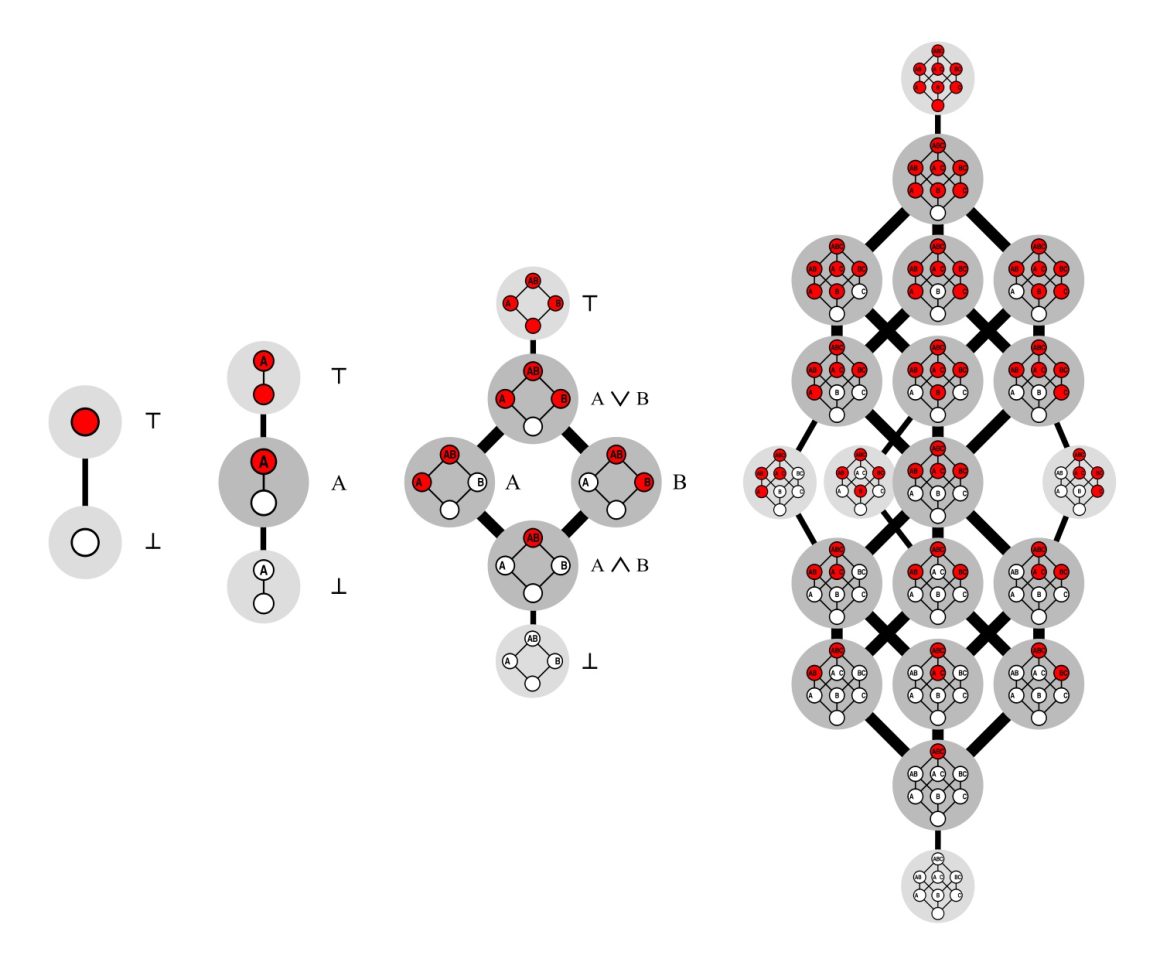
The main subject of Dedekind numbers are so-called monotone Boolean functions. Van Hirtum explains, “Basically, you can think of a monotone Boolean function in two, three, and infinite dimensions as a game with an n-dimensional cube. You balance the cube on one corner and then color each of the remaining corners either white or red. There is only one rule: you must never place a white corner above a red one. This creates a kind of vertical red-white intersection. The object of the game is to count how many different cuts there are. Their number is what is defined as the Dedekind number. Even if it doesn’t seem like it, the numbers quickly become gigantic in the process: the 8th Dedekind number already has 23 digits.”

Comparably large – but incomparably easier to calculate – numbers are known from a legend concerning the invention of the game of chess. “According to this legend, the inventor of the chess game asked the king for only a few grains of rice on each square of the chess board as a reward: one grain on the first square, two grains on the second, four on the third, and twice as many on each of the following squares. The king quickly realized that this request was impossible to fulfill, because so much rice does not exist in the whole world. The number of grains of rice on the complete board would have 20 digits – an unimaginable amount, but still less than D(8). When you realize these orders of magnitude, it is obvious that both an efficient computational method and a very fast computer would be needed to find D(9),” Van Hirtum said.

The figure shows all possible cuts for dimensions 0, 1, 2, and 3. The number of these colored 2D, 3D, - N-dimensional cuts that can be formed is what is defined as the Dedekind number.
The figure shows all possible cuts for dimensions 0, 1, 2, and 3. The number of these colored 2D, 3D, – N-dimensional cuts that can be formed is what is defined as the Dedekind number.

Milestone: Years become months

To calculate D(9), the scientists used a technique developed by master’s thesis advisor Patrick De Causmaecker known as the P-coefficient formula. It provides a way to calculate Dedekind numbers not by counting, but by a very large sum. This allows D(8) to be decoded in just eight minutes on a normal laptop. But, “What takes eight minutes for D(8) becomes hundreds of thousands of years for D(9). Even if you used a large supercomputer exclusively for this task, it would still take many years to complete the calculation,” Van Hirtum points out. The main problem is that the number of terms in this formula grows incredibly fast. “In our case, by exploiting symmetries in the formula, we were able to reduce the number of terms to ‘only’ 5.5*10^18 – an enormous amount. By comparison, the number of grains of sand on Earth is about 7.5*10^18, which is nothing to sneeze at, but for a modern supercomputer, 5.5*10^18 operations are quite manageable,” the computer scientist said. The problem: The calculation of these terms on normal processors is slow and also a use of GPUs as currently the fastest hardware accelerator technology for many AI applications is not efficient for this algorithm.

The solution: application-specific hardware using highly specialized and parallel arithmetic units – so-called FPGAs (field programmable gate arrays). Van Hirtum developed an initial prototype for the hardware accelerator and began looking for a supercomputer that had the necessary FPGA cards. In the process, he became aware of the Noctua 2 computer at the “Paderborn Center for Parallel Computing (PC2)” at the University of Paderborn, which has one of the world’s most powerful FPGA systems.

Prof. Dr. Christian Plessl, head of PC2, explains: “When Lennart Van Hirtum and Patrick De Causmaeker contacted us, it was immediately clear to us that we wanted to support this moonshot project. Solving hard combinatorial problems with FPGAs is a promising field of application and Noctua 2 is one of the few supercomputers worldwide with which the experiment is feasible at all. The extreme reliability and stability requirements also pose a challenge and test for our infrastructure. The FPGA expert consulting team worked closely with Lennart to adapt and optimize the application for our environment.”

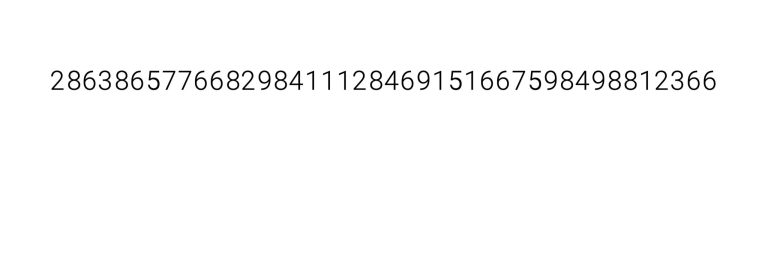
After several years of development, the program ran on the supercomputer for about five months. And then the time had come: on March 8, the scientists found the 9th Dedekind number: 286386577668298411128469151667598498812366.

Source: Paderborn University

Exploring Dedekind Numbers – Infinite Patterns in Mathematics

0

In the vast world of mathematics, some numbers possess fascinating properties and defy simple descriptions. One such example is the Dedekind number, named after the renowned mathematician Richard Dedekind. In this short explainer, we’ll delve into the concept of Dedekind numbers, exploring where they arise, why they are important, and how they are computed.

What is a Dedekind Number?

At its core, a Dedekind number is a unique type of real number that is constructed by concatenating its digits in a specific pattern. This pattern begins with the digit “1” appearing once, followed by the digit “2” appearing twice, the digit “3” appearing three times, and so on. This sequence of digits continues indefinitely, creating a number that looks like this: 0.123456789101112131415161718192021…

The Significance of Dedekind Numbers

Dedekind numbers are not just random mathematical curiosities; they have important implications in the study of irrational and transcendental numbers. An irrational number cannot be expressed as a simple fraction or ratio of two whole numbers. The Dedekind number ξ is an example of such an irrational number. It possesses an infinite decimal expansion without any repeating pattern, making it impossible to express as a fraction.

Furthermore, Dedekind numbers are believed to be transcendental numbers. A transcendental number is a number that is not a root of any non-zero polynomial equation with integer coefficients. Proving that ξ is indeed a transcendental number remains an unsolved problem in mathematics, highlighting the complexity and significance of Dedekind numbers.

Computing Dedekind Numbers

While there is no known formula or algorithm to compute the exact value of a Dedekind number, we can approximate it to any desired precision using numerical methods. By concatenating the digits in the given order, we can generate increasingly accurate approximations of the number ξ. However, due to its infinite and non-repeating nature, we can never determine the exact value of ξ with finite computational resources.

Applications and Further Exploration

Dedekind numbers find their main application in theoretical mathematics, particularly in the realms of irrational and transcendental numbers. They serve as examples of numbers that exhibit intriguing patterns and properties beyond simple rational values. Dedekind numbers are often used as illustrative tools in mathematical discussions, helping researchers deepen their understanding of these complex number systems.

Dedekind numbers, named after the mathematician Richard Dedekind, are unique real numbers constructed by concatenating digits in a specific pattern. They hold significance in the study of irrational and transcendental numbers, representing examples of numbers that cannot be expressed as fractions and are not roots of polynomial equations. While the exact value of a Dedekind number cannot be computed, approximations can be obtained using numerical methods. These numbers unveil the fascinating and infinite patterns that lie within the realm of mathematics, captivating mathematicians and inspiring further exploration.

Elon Musk’s New xAI Company Launches To ‘Understand The True Nature Of The Universe’

0

xAI, Elon Musk’s newly formed AI company, has revealed itself with a new website detailing its mission and team at https://x.ai/. Musk tweeted the company’s intent is to “understand reality” without any other details or explanation.

“The goal of xAI is to understand the true nature of the universe,” according to the website. The team is headed up by Elon Musk and includes team members that have worked at other big names in AI, including OpenAI, Google Research, Microsoft Research, and DeepMind (which was recently folded into Google).

In addition to Musk, the website lists Igor Babuschkin, Manuel Kroiss, Yuhuai (Tony) Wu, Christian Szegedy, Jimmy Ba, Toby Pohlen, Ross Nordeen, Kyle Kosic, Greg Yang, Guodong Zhang, and Zihang Dai. xAI’s team is currently advised by Dan Hendrycks, a researcher who currently leads the Center for AI Safety, a nonprofit that aims to “reduce societal-scale risks associated with AI.”

The @xAI team will be hosting a Twitter Spaces discussion on July 14th, where listeners can “meet the team and ask us questions,” the website says. No specific time was given. According to xAI’s website, the company is “separate” from Musk’s overarching X Corp “but will work closely with X (Twitter), Tesla, and other companies.” Musk recently imposed strict but apparently temporary limits on reading Twitter, blaming the change on scraping by AI startups seeking data for large language models (LLMs).

We first heard about xAI in April, when filings indicated that Musk founded the company in Nevada. At the time, it had Musk listed as its director, with Jared Birchall, the director of Musk’s family office, listed as its secretary. Not much was known about xAI at the time, but reports suggested that Musk sought funding from SpaceX and Tesla to get it started.

Musk has been part of a major AI organization before, co-founding OpenAI in 2015. However, he walked away from it in 2018 to avoid a conflict of interest with Tesla, which also does a lot of work in the field. He’s since openly criticized OpenAI and told Tucker Carlson he was working on building something called “TruthGPT.”

By: Jay Peters and Emma Roth
Originally published at The Verge

Underestimating the Path & Pitfalls to AI Progress

0

In past decades, a surge of enthusiasm arose, not merely about the potential of artificial intelligence (AI), but rather, about humanity’s ability to construct and shape this powerful tool in countless forms. This excitement, while infectious and often inspiring, was perhaps our collective misstep.

It was not that our ambitions failed, but that they stumbled over the hurdles of estimation and anticipation. Within the modern zeitgeist of AI development — a chain of evolution originating from the computational strides of the 1940s and 1950s — we may have overlooked the intricate preconditions required to build functional AI systems.

AI was not simply about programming intelligence into machines; it also demanded sense, speed, and scale. AI needed the capability to perceive, read, and comprehend the world — a common sense that mirrors our human abilities. It needed the speed to keep up with the volume and velocity of information that is now so readily available but was absent in previous decades. And it needed to scale, to handle large memory, to connect and learn from the vast corpus of data available through the internet.

A popular notion suggests there were “AI seasons,” periods when AI would emerge, bloom, then seemingly hibernate as the excitement faded. But perhaps these seasons were illusory. Perhaps the perceived quiet was not the dormancy of AI, but rather the quiet determination of those working in the field, acknowledging the challenges: “It is hard, let us just keep working.”

The challenge, therefore, may not lie with AI itself, but with us, its creators. Our overoptimism might border on anthropomorphic arrogance — an overconfidence in our ability to create a mirror of our intelligence. But as we move forward, it is vital to remain reflective, humble, and mindful of our limitations, even as we strive to push beyond them.

From Noosphere to Cyberspace – Tracing the Journey of Collective Human Consciousness

0

The Noosphere and Cyberspace are two intriguing concepts that revolve around the realm of ideas, information, and collective human consciousness.

The Noosphere, a term coined by the French philosopher Teilhard de Chardin, represents the “sphere of human thought” . It is an abstract concept that encompasses the collective consciousness and cultural ideas of humanity. This notion draws upon the biosphere — the world of living organisms — and the geosphere — the physical world –, postulating an evolution of consciousness that ultimately unifies humanity in thought and knowledge. The emergence of the noosphere suggests the next phase of Earth’s development, shaped not by biological evolution but by the power of the mind .

Cyberspace is a term coined by science fiction author William Gibson and describes a vast, interconnected network of digital technology and the virtual realm that it creates. It encompasses the Internet, the World Wide Web, and other data systems , providing a shared space for communication, commerce, and the exchange of ideas. Cyberspace, with its ubiquity and near-instantaneous exchange of information, has transformed how we live, work, and communicate.

As the most amorphous and dynamic realm, cyber is less a distinct domain and more a permeating field or medium that pervades and synergises with all other domains known and utilised by humans and machines. Exploring the history, background, contemporary meanings, and use cases of cyber, cyberspace, and other related utilities, we pursue an expansion of its conception beyond common concerns of discourse or operations, whether it be in the military, information technology, business, or politics. We argue that while all currently held viewpoints are crucial and accurate to a certain degree, it limits our understanding of the potential and eventual benefits of cyber as a notional and ethereal field of cognition, interaction, potentiality, and the existence of biological entities and physical objects or things, similar to that of modern field theory in quantum mechanics. In doing so, (1) the possibilities for strategic differentiation in value creation on various sectors or endeavours, (2) the discourse relating to cyber political economy to aid in liberating purviews that allow utility beyond the constraints of being a military domain, a function of information system security, and as an economic or commercial arena of electronic exchanges, and finally (3) the planning for policy, governance, protocols, operations, product development, capability development, education, cross-sector innovation, and venture investment may vastly expand and diversify.

If one thinks about it, cyberspace with its multi-modal and agnostic data transmission mediums extends to farthest reaches of human creation. Cyberspace extends to the electromagnetic broadcast bubble we have been generating and has been travelling throughout the cosmos for a long time. Another view is if a human made satellite travelling the solar system or beyond continues to receive and/or transmit data to the earth by which this information is received, processed, converted, transformed, and published to various channels for use like internet websites or intranets for data analysis, then cyberspace and the human fingerprint of ingenuity reaches the extent of that satellite avatar.

One might consider cyberspace as a tangible manifestation of the noosphere. The internet, serving as a physical infrastructure, connects billions of minds, allowing for an unprecedented level of collaboration, knowledge sharing, and collective problem-solving. It is a medium through which the noosphere, the global sphere of human thought, could be said to manifest, evolving and growing with each additional connection. While the noosphere is a philosophical concept, cyberspace offers a practical medium through which we can observe the realisation of that concept.

Amazon Prime Day 2023 –  Uncover the Best Deals on Computers and Electronics

0

Get ready to upgrade your digital life with the best deals on computers and electronics this Amazon Prime Day 2023! From cutting-edge gadgets to powerful computing devices, this is your chance to score incredible savings and elevate your digital experience like never before.

With Amazon’s fast and reliable shipping, you can enjoy your new tech treasures in no time. Prime members also benefit from exclusive perks, such as free and expedited shipping, Prime Video streaming service, and much more, making Amazon Prime Day 2023 an event you won’t want to miss. Whether you’re a tech aficionado, a casual user, or a professional, these unbeatable savings will satisfy your thirst for the latest and greatest tech innovations. Don’t miss out on this opportunity to upgrade your digital lifestyle, enhance your entertainment experiences, and unlock a world of technological possibilities.

Amazon Prime Day Cover
  1. Amazon Fire HD 8 Tablet, $54.99 (orig. $99.99)
  2. Amazon eero Pro Mesh WiFi Router 3 Pack, $149.99 (orig. $484.96)
  3. Fire TV Gaming Bundle Including Fire TV Stick & Luna Controller, $56.98 (orig. $109.98)
  4. Acer Swift X SFX14-42G-R607 Creator Laptop 14″, $629.99 (orig. $914.00)
  5. SAMSUNG T7 Shield 1TB, Portable SSD, $73.50 (orig. $159.99)
  6. Portable Neck Fan, $25.99 (orig. $39.99)
  7. SGIN Laptop 15.6in 4GB DDR4 128GB SSD Windows 11 Laptop, $259.98 (orig. $959.99)
  8. 1TB USB Flash Drive for Phone Dual USB3.1 to USB C, $29.57 (orig. $58.97)
  9. LIMINK S19 Portable Triple Monitor for 15-17 Inches Laptops, $449.99 (orig. $599.99)
  10. LISEN Tablet Phone Stand for iPad Holder Mount for Desk, $26.99 (orig. $39.99)
  11. Single Monitor Desk Mount, $19.99 (orig. $25.99)
  12. TONOR USB Microphone, $33.99 (orig. $49.99)
  13. INNOCN 27G1H 27 Inch Full HD Gaming Monitor, $162.99 (orig. $224.99)
  14. Chicbuy Laptop 15.6”  Windows 11 Laptop, $295.35 (orig. $349.99)
  15. Laptop Docking Station 14 in 1 USB C Hub Multiport, $39.99 (orig. $66.99)
  16. AmazonBasics Car Charger, $10.16 (orig. $16.34)
  17. Amazon Fire HD 8 Plus tablet 8”, $99.98 (orig. $169.98)
  18. SHEZI 4-in-1 USB C Cable Lightning Cable 60W, $19.99 (orig. $39.99)
  19. Baseus 17-in-1 USB C Docking Station, $99.19 (orig. $133.32)
  20. Memory Card Reader Adapter USB 3.0 Supports SD/Micro SD/SDHC/SDXC/MMC, $10.19 (orig. $19.99)
  21. Beats Powerbeats Pro Wireless Earbuds, $149.99 (orig. $249.95)
  22. ASUS ZenBook Pro 15 OLED Laptop 15.6”, $1049.99 (orig. $1499.99)
  23. Kindle Oasis Essentials Bundle, $204.97 (orig. $339.97)
  24. Echo Show 8 (2nd Gen, 2021 release) – Charcoal bundle with Blink Mini, $71.99 (orig. $164.98)
  25. A Field Guide To Artificial Intelligence For Business, Institutions, Society & Political Economy” – The only AI explainer that you will ever need, $18.50 (Kindle $4.31)
  26. 3 months free of Kindle Unlimited, get here
  27. Stream podcasts and audiobooks on Audible – 3 months free, get here
  28. Calling all Students! Avail Amazon Prime now and enjoy free for 6 months, get here
  29. Buy a $50 Amazon eGift Card & get a $5 credit for Prime Day, get here
  30. A Field Guide To AI” – The AI guide for all, $18.50 (Kindle $4.31)

This post contains affiliate links.