

Home Blog Page 45

Twitter Is Now X. Here’s What That Means.

0

The internet is abuzz as the app formerly known as Twitter announced a name change over the weekend. X.com now redirects to Twitter.com, although the social media platform still invites users to “tweet.”

The rebrand is another step in the ongoing transformation of Twitter, an online watering hole for hyper-connected people that aspires to become an app that can do “everything,” according to CEO Linda Yaccarino.

“X is the future state of unlimited interactivity — centered in audio, video, messaging, payments/banking — creating a global marketplace for ideas, goods, services and opportunities,” she said on the platform. “Powered by A.I., X will connect us all in ways we’re just beginning to imagine.”

Here’s what the shift means for X as Elon Musk seeks to reinvent Twitter, which he bought in 2022 for $44 billion. 

A worker removes letters from the Twitter sign that is posted on the exterior of Twitter headquarters on July 24, 2023, in San Francisco, California. / GETTY IMAGES

What will the app do now?

Musk has been vocal about his goal of turning Twitter into a so-called super-app, something akin to China’s WeChat. For now there’s no American equivalent, but industry experts imagine an app that encompasses basically anything a person wants to do online.

“Consumers of the app can do a lot of different things on the platform, whether it’s listen to a podcast, shop, watch videos,” said Nii Ahene, chief strategy officer of marketing firm Tinuiti.

Twitter already lets users engage in live audio conversations, send longer text messages and broadcast video, such as the new show former Fox News host Tucker Carlson recently launched on the platform. If Twitter’s push into paid subscriptions is successful, it could eventually expand into sharing some subscription revenue with users.

“In theory, they can become a more mainstream version of Patreon or other similar platforms,” Ahene said. “Whether they succeed remains to be seen. It’s not the reason people go to Twitter today, so to reposition the company … would take significant investment and time with what’s really a skeleton team.” 

What’s with the letter X?

Musk appears to have a longstanding fixation on the letter X, dubbing his very first startup X.com. (After a merger, the app became PayPal, although Musk reportedly pushed for it to keep the name X, according to biographer Walter Isaacson.) After buying Twitter, Musk reportedly texted Isaacson that he was “very excited about finally implementing X.com as it should have been done, using Twitter as an accelerant!”

The letter X surfaces throughout Musk’s other endeavors as well, including his space-exploration venture SpaceX,  his recently launched artificial-intelligence app xAI and the Model X, one of electric car company Tesla’s earliest models. Musk even refers to his son with singer Grimes, by the name X.

“It’s just X, the letter X,” he said on the Joe Rogan Experience recently, explaining how to pronounce  his son X Æ A-XII’s name.

Musk regained ownership of X.com six years ago. He formally changed Twitter’s legal name to X Corp in April. Over the weekend, X.com was redirected to Twitter.com, and on Monday a crane began to remove Twitter’s iconic bird logo from the company’s San Francisco headquarters. However, police stopped the work soon after it began.

A worker stacks letters removed from the Twitter sign on Twitter headquarters in San Francisco, on July 24, 2023. / GETTY IMAGES

What does this mean for Twitter?

For now, the platform’s rebrand is just a name change — no new features have been introduced, staying true to Musk’s apparent preferred product strategy of hype first, delivery much later.

But the name change suggests Musk is likely to keep control of the company for the near future, said Bloomberg Intelligence analyst Mandeep Singh. After Musk’s takeover in April of 2022, some observers believed the billionaire could make some changes to Twitter and quickly flip it to a different owner, Singh said.

“That option is off the table now given the name change — I don’t think there’s any other prospective buyer who will take it now,” he said.

What are the roadblocks?

To be sure, there are many ways an “everything app” could fail, from simply confusing its users to struggling to attract enough advertisers. 

“If you look at what Tesla’s done in terms of advertising, which is very little, [Musk’s] belief is that good product sells itself and you don’t need to advertise it. Meanwhile, you have many, many large brands and companies that spend millions of dollars on Twitter and would beg to differ,” said Aaron Goldman, chief marketing officer for Mediaocean, an advertising partner of Twitter’s. 

Owner Elon Musk rebranded Twitter as “X.” / GETTY IMAGES

Expanding the platform’s reach to include things like shopping and paid subscription content could actually help it flourish in the long term by creating several revenue streams and making it less reliant on large companies’ willingness to spend money, analysts said. 

In the short term, building out those capabilities would require a massive investment in staff and infrastructure. It’s far from clear if a company that slashed about three-quarters of its staff and is now embroiled in multiple lawsuits over unpaid bills can deliver that. 

“The investment is a lot in terms of cloud infrastructure — we’re talking about $40 billion, $50 billion in upfront investments,” Singh said. “Twitter as a standalone app doesn’t have the infrastructure to become an everything app.”

By: IRINA IVANOVA
Originally published at CBS News

Source: cyberpogo.com

Oppenheimer, The Manhattan Project And The Dawn Of The Atomic Age

0

The Manhattan Project stands as one of the most remarkable scientific endeavours in history, characterized by the successful development of the world’s first atomic weapons during World War II. This classified initiative was driven by the fear of Axis powers acquiring atomic capabilities and the desire for a decisive advantage in the global conflict. At the helm of this groundbreaking project was J. Robert Oppenheimer, a visionary physicist whose leadership and intellect were instrumental in shaping the project’s course and ultimate success.

The Genesis of the Manhattan Project

The origins of the Manhattan Project can be traced back to the early 1930s when groundbreaking discoveries in nuclear physics were emerging. In 1938, German scientists Otto Hahn and Fritz Strassmann discovered nuclear fission, the process by which atomic nuclei split, releasing vast amounts of energy. The news of this discovery reached the United States, sparking fears that Nazi Germany might exploit this new knowledge to develop powerful weapons.

The fear of an atomic arms race prompted leading scientists like Albert Einstein and Leo Szilard to send a letter to Prime Minister Winston Churchill and President Franklin D. Roosevelt in 1939, warning them of the potential dangers and advocating for British and American research into nuclear weapons. As a result, the Advisory Committee on Uranium was established, which later evolved into the Office of Scientific Research and Development which was responsible for overseeing the Manhattan Project.

J. Robert Oppenheimer’s Role

Oppenheimer
Oppenheimer

J. Robert Oppenheimer, born on 22nd April 1904 in New York City, was an exceptionally talented theoretical physicist with a deep understanding of quantum mechanics. His intellectual prowess, combined with his ability to lead and inspire, made him an obvious choice to head the scientific aspects of the Manhattan Project. In 1942, Oppenheimer was appointed as the scientific director, and his influence on the project was profound.

The Collaborative Effort

The Manhattan Project was a massive collaborative undertaking that brought together some of the greatest scientific minds of the time. Under Oppenheimer’s guidance, top physicists, chemists, engineers, and military personnel worked together towards a common goal – to harness the power of nuclear fission for military applications.

Facilities were set up in multiple locations, with the primary research and development taking place at Los Alamos, New Mexico. Prominent scientists like Enrico Fermi, Richard Feynman, and Niels Bohr contributed their expertise, conducting critical research and experiments in various fields of nuclear physics.

Technological Challenges

Developing an atomic bomb was a complex and daunting task, requiring advancements in various scientific disciplines. One of the major obstacles was the isolation of sufficient fissile material, primarily uranium-235 and plutonium-239. These isotopes needed to be enriched through challenging processes like gaseous diffusion, electromagnetic separation, and later, nuclear reactors.

The scale of the engineering challenge was immense, and the project faced numerous setbacks and obstacles. However, through the dedication and expertise of the scientists and engineers involved, these challenges were overcome.

The Trinity Test and Hiroshima-Nagasaki Bombings

The Trinity Test
The Trinity Test

After years of intensive research and development, the first successful test of an atomic bomb, codenamed “Trinity,” took place on 16th July 1945 in the New Mexico desert. Witnessing the tremendous power unleashed by this test confirmed the feasibility of using nuclear weapons for warfare.

Shortly after the Trinity test, on the 6th and 9th of August 1945, the United States dropped atomic bombs on the Japanese cities of Hiroshima and Nagasaki, respectively. The devastation caused by these bombings played a significant role in Japan’s surrender, marking the end of World War II.

Atomic bomb mushroom clouds over Hiroshima (left) and Nagasaki (right)

Legacy and Ethical Implications

The success of the Manhattan Project established the United Kingdom and the United States as nuclear superpowers. However, the use of atomic bombs raised ethical concerns regarding the devastating consequences of nuclear warfare. The aftermath of the Hiroshima and Nagasaki bombings emphasized the need for responsible and cautious handling of nuclear technology.

The Manhattan Project was a testament to human ingenuity, collaboration, and the pursuit of scientific knowledge. J. Robert Oppenheimer’s leadership was indispensable in guiding this ambitious initiative to fruition. The project’s profound impact on global politics and technological advancements reverberates to this day, reminding us of the critical importance of responsible scientific exploration and international cooperation. The legacy of the Manhattan Project serves as a cautionary tale, urging humanity to tread carefully in the realm of nuclear technology, ensuring its use is always for the benefit of mankind and the preservation of peace.

Inside the Intelligent Mind: The Underlying Traits of Cognition in People and Machines

0

Intelligence is a multifaceted concept that can be broadly defined as the ability to learn, understand, reason, and adapt to solve problems and achieve goals. In both humans and artificial systems, the goals of intelligence typically include the following areas of concern.

Learning and knowledge acquisition.

The ability to acquire new knowledge and learn from experience is a crucial aspect of intelligence. This involves gathering and processing information, recognizing patterns, and updating beliefs based on new evidence.

Reasoning and problem-solving.

Intelligent systems need to be able to reason, deduce, and infer information to make decisions and solve problems. This may include logical reasoning, probabilistic reasoning, and the application of heuristics and strategies for tackling complex tasks.

Perception and understanding.

Intelligence requires the ability to perceive and make sense of the environment, whether through vision, hearing, or other sensory modalities. This involves recognizing and interpreting objects, events, and relationships in the world.

Communication and language.

Communication is a key aspect of intelligence, allowing for the exchange of information, ideas, and knowledge. In humans, this is primarily achieved through language, while artificial systems may use natural language processing or other forms of communication.

Adaptation and generalisation.

Intelligent systems need to be able to adapt to new situations and generalise their knowledge and skills to novel contexts. This requires flexibility, creativity, and the ability to learn from experience and transfer knowledge across domains.

Planning and decision-making.

Intelligence involves the ability to make informed decisions and plan actions to achieve goals, taking into account the constraints and uncertainties of the environment. This may involve short-term or long-term planning, as well as the evaluation of different options and their consequences

Emotional intelligence and social skills.

In humans, intelligence also encompasses emotional intelligence, which involves recognizing, understanding, and managing emotions, both in oneself and others. Social intelligence includes the ability to navigate complex social situations and effectively interact with others.

Achieving intelligence, whether in humans or artificial systems, is a complex process that involves a combination of innate abilities, learning, experience, and environmental factors. In the context of artificial intelligence, achieving these goals often involves designing algorithms and models that can learn from data, reason, and make decisions, as well as incorporating insights from neuroscience, psychology, and other disciplines to better understand the nature of human intelligence and create more advanced AI systems.

Beyond the Algorithm – The Process of Managing AI Projects and Infrastructure

0

Like any complex system, artificial intelligence requires careful management across its entire lifecycle. AI management process refers to the planning, organizing, directing, and controlling required to develop, deploy, integrate, and maintain AI projects and resources. It is a orchestration of people, data, models, infrastructure, and workflows to effectively build, implement, and operate AI applications that achieve specific goals and objectives. AI management connects vision to reality by translating ideas into functioning solutions through coordinated execution of processes spanning research, development, data engineering, model training, system integration, monitoring, governance and strategy.

A rigorous AI Management Process typically includes these key steps:

1. Problem Definition.

Problem solving
Image credits: Pixabay – Elf-Moondance | Problem solving

Clearly define the problem you want to solve or the opportunity you want to leverage with AI. Assess the feasibility of AI for the specific use case and set realistic expectations.

2. Strategy and Planning.

Develop an AI strategy aligned with the organisation’s overall goals and objectives. Identify the necessary resources, including personnel, data, hardware, and software. Develop a project plan with a timeline, milestones, and key performance indicators (KPIs).

3. Data Collection and Preparation.

Acquire the data needed to train and test AI models. This may involve collecting new data or utilising existing data sources. Clean, preprocess, and transform the data to make it suitable for AI algorithms.

4. Model Selection and Development.

Choose the most appropriate AI algorithms and techniques for the problem at hand. Develop AI models using machine learning, deep learning, or reinforcement learning, depending on the nature of the problem.

5. Model Training and Validation.

Train the AI models using the prepared data, adjusting parameters and hyperparameters to optimise performance. Validate the models against a separate dataset to ensure generalizability and avoid overfitting.

6. Model Deployment.

Integrate the AI models into production systems, enabling them to process new data and generate insights, predictions, or recommendations. This may involve deploying models on the cloud, on-premises, or on edge devices.

7. Monitoring and Evaluation.

Continuously monitor the performance of the AI models, ensuring they meet the established KPIs. Evaluate the impact of AI on the organisation’s processes, products, or services.

8. Maintenance and Optimization.

Regularly update and maintain the AI models, incorporating new data and refining the algorithms as needed. Optimise the models to improve performance, reduce resource consumption, or adapt to changing requirements.

9. Governance and Ethics.

Justice, moral, and balance
Image credits: Unsplash – Philippe Oursel | Justice, moral, and balance

Establish AI governance frameworks that address ethical considerations, such as fairness, transparency, accountability, and privacy. Ensure compliance with applicable regulations and industry standards.

10. Change Management.

Facilitate the adoption of AI technologies within the organisation by addressing potential resistance, upskilling employees, and promoting a culture of innovation and continuous improvement.

By following a structured AI management process, organisations can effectively develop, deploy, and maintain AI solutions that drive value and deliver a competitive advantage.

Through various disciplines and technologies, organisations can build comprehensive AI solutions that address complex challenges and drive innovation. A thorough understanding of these related fields is essential for professionals working with AI to develop, deploy, and maintain effective AI systems.

AI technologies and techniques are deeply intertwined with various related fields and professions. This interconnectedness emphasises the importance of collaboration and multidisciplinary approaches when developing and deploying AI applications. By understanding and leveraging these connections, we can create more effective and robust AI systems that meet the demands of various industries and applications.

A Guide to Key Terms in Generative AI and Large Language Models

0

Here is a list of common terms and concepts related to conversational AI, large language models, and generative AI:

Natural Language Processing (NLP).

Picture AI as a multilingual friend who doesn’t just speak multiple languages but understands and makes sense of human language in its complexity – that’s NLP for you. It’s the broader term for the AI field focusing on the interaction between computers and humans via natural language.

Natural Language Understanding (NLU).

A subfield of NLP, NLU is like a skilled detective that unravels the meaning and sentiment of text. It focuses on machine reading comprehension, enabling machines to go beyond mere word recognition to understanding context, nuance, and intent.

Natural Language Generation (NLG).

NLG is the other half of the NLP equation. It’s all about generating coherent, contextually appropriate, and human-like text. It’s like having a digital poet or author that can compose text based on provided inputs.

Large Language Models (LLMs).

LLMs are essentially the ‘bibliophiles’ of AI models. They consume vast amounts of text data and generate human-like text. LLMs are used for a myriad of NLP tasks, including text completion, translation, and question-answering. Prime examples include GPT-3 from OpenAI and BERT/Bard from Google.

Chatbots.

Chatbots are AI’s way of directly interacting with humans. They are digital assistants designed to converse in our natural language, enhancing user experience on messaging apps, websites, mobile apps, and even via telephone.

Transformer Models.

Transformers are not just Hollywood blockbuster material; in the NLP realm, they’re model architectures that use attention mechanisms to capture the context of words in a sentence. They’re like digital linguists, dissecting and understanding language structure. Examples include GPT-3 and BERT/Bard.

Prompting.

In the context of LLMs, a prompt is the starting gun for generating text. It’s the initial input that the model uses as a jumping-off point to generate a continuation of the text, following the context provided by the prompt.

Token.

In the world of NLP, a token is a piece of a whole, like a single word or part of a word. It’s the basic unit of text that models analyze.

Fine-Tuning.

Fine-tuning is akin to tailoring a pre-trained model to perform a specific task more effectively. For example, GPT-3 can be fine-tuned for a specific use case like medical text generation, adapting its general language understanding ability to a more specialized context.

Context Window.

A context window is the model’s short-term memory. It’s the number of previous words (or tokens) in a sentence that the model takes into account when predicting the next word.

Zero-Shot Learning, One-Shot Learning, and Few-Shot Learning.

These terms reflect the model’s ability to understand and perform tasks with minimal examples. It’s like the model’s ability to learn a new game with no instruction (zero-shot), or just one or a few examples (one-shot and few-shot, respectively).

Seq2Seq Models.

Short for “sequence-to-sequence”, Seq2Seq models are the multilingual translators in the AI world. They convert sequences from one domain (like sentences in English) to sequences in another domain (like the same sentences translated to French).

These are some of the fundamental terms and concepts in conversational and generative AI. As the field is rapidly evolving, new terms and concepts continually emerge.

Despite its wide range of applications – from art and music creation, drug discovery, to text generation and synthetic image creation – generative AI also presents ethical and legal challenges. These include the potential to create deep fakes or generate misleading or harmful content, demanding ongoing dialogue on its regulation.

Decoding AI Language. A Swirling Guide To Conversational And Generative AI Terminologies.

0

Prepare to embark on a thrilling journey through the labyrinth of linguistics, where artificial intelligence meets human conversation. Our trusty guide? None other than the mesmerizing magic of conversational AI. This enchanting field is a bustling town square of terminology, a buzzing beehive of words where ideas bloom like flowers in a meadow. It’s a place where “natural” isn’t just a smoothie option but involves understanding and generating human language. It’s where “large” doesn’t mean upsizing your fries but involves language models that can mimic human-like text. And “tokens” aren’t your arcade currency but the backbone of our textual analysis. It’s an intricate world of chatbots and transformers, where “fine-tuning” isn’t about perfecting your guitar strings, but calibrating models for task-specific magic. Welcome to a rollercoaster ride through terms that define the thrilling field of generative AI, a voyage where learning doesn’t require heavy textbooks but can happen with zero shots. Fasten your seatbelts, and get ready to dive into the riveting world of AI conversation, where language and technology collide in a fantastic fireworks display of innovation.

Generative AI.

Generative AI is a compelling branch of artificial intelligence that leverages computational models to generate new, human-like content. This can span various domains, including but not limited to text, images, music, and speech. The unique aspect of Generative AI is its ability to learn and replicate patterns from the data it’s trained on, thereby creating novel content that echoes those patterns.

Diving deeper into the toolbox of Generative AI, we discover various types of models and techniques.

Generative Adversarial Networks (GANs).

GANs are like an artist and art critic in one package. The ‘generator’ (the artist) creates new data instances, while the ‘discriminator’ (the critic) evaluates their authenticity. The discriminator determines whether these data instances resemble the training data or not, continually pushing the generator to improve its output.

Variational Autoencoders (VAEs).

VAEs are a type of generative model that operates much like an echo in a grand canyon. They encode input data into a latent space and then decode it to reproduce the input, acting as both a mirror and an amplifier for data. Often used for generating new images or reconstructing input data, VAEs offer a robust approach for tasks that require a touch of creativity grounded in existing data.

Autoregressive models.

These models generate sequences by predicting the next item based on the previous items. Imagine creating a melody where each note depends on the ones before it; that’s what autoregressive models do with data. They’re used for tasks like text generation, time-series prediction, and more. A shining example of this model is the GPT family from OpenAI, including the well-known GPT-3.

Apart from the above, there is an array of terms and concepts related to conversational AI and large language models (LLMs).

The Datasets That Enable AI Advances

0

Training large AI models and systems require vast amounts of data. Data sources can be both publicly available and privately held information.

Publicly available data sources.

Text corpora.

Large collections of text, such as Wikipedia, Project Gutenberg, Common Crawl, and the Books Corpus, are used to train natural language processing models.

Image datasets.

ImageNet, COCO, Open Images, and CIFAR are popular datasets for training computer vision models.

Audio datasets.

LibriSpeech, VoxCeleb, and AudioSet are examples of datasets used to train speech recognition and audio analysis models.

Tabular datasets.

UCI Machine Learning Repository, Kaggle, and the World Bank’s Open Data provide structured datasets for various machine learning tasks.

Social media data.

Social media
Image credits: Unsplash – Alexander Shatov | Social Media

Publicly available data from Twitter, Reddit, or Facebook can be used for sentiment analysis, trend detection, and other NLP tasks.

Government and public organisation datasets.

Many governments and public organisations, like the US Census Bureau, the European Union Open Data Portal, and the World Health Organization, provide datasets in areas like demographics, health, and economics.

Privately held data sources.

Proprietary datasets.

Companies may have access to large, proprietary datasets that are not publicly available, such as customer data, transaction data, or user behaviour data. These datasets can be used to train AI models for specific applications, like recommendation systems or fraud detection.

Web scraping.

Businesses may use web scraping to gather data from websites for various purposes, such as price comparison, sentiment analysis, or competitive analysis.

Sensor data.

Electronics
Image credits: Unsplash – Robin Glauser | Electronics

IoT devices, wearables, and industrial equipment generate large amounts of sensor data, which can be used to train AI models for predictive maintenance, anomaly detection, and optimization tasks.

Third-party data providers.

Companies can purchase datasets from specialised data providers, such as Nielsen for consumer behaviour data or Orbital Insight for geospatial data.

Data partnerships and collaborations.

Businesses and research institutions may collaborate to share data, combining their resources to create larger, more diverse datasets for AI model training.

It is important to note that when using both publicly available and privately held data sources, ethical and legal considerations should be taken into account, such as data privacy regulations , intellectual property rights , and informed consent from data subjects.

AI Building Blocks – The Critical Role Of Datasets & Algorithms

0

In addition to the various technologies and techniques used and employed with the A.I. practice, an orthogonal set of activities that cuts across other disciplines relates to training and the necessary datasets used.

AI technologies and techniques have evolved considerably over the years, encompassing a wide range of domains and related fields.

Here, we discuss various foundational AI technologies and techniques, along with their connections to other disciplines such as technical architecture, software engineering, systems design, data management, infrastructure, networks, cyberspace, cloud, and data pipelines.

Technical Architecture.

AI systems often require a robust and scalable technical architecture to handle complex computations and large datasets. This includes components like distributed computing, parallel processing, and high-performance computing clusters.

The technical architecture for AI also involves designing systems that can handle the integration of AI models into existing software systems and services.

Software Engineering.

Developing AI solutions involves applying software engineering principles such as modularity, abstraction, and reusability. These technologies often rely on well-designed software systems for implementation. AI developers and software engineers play a crucial role in developing, maintaining, and updating these systems to ensure that AI applications run efficiently and effectively. They use programming languages like Python, Java, and R, along with AI-specific libraries and frameworks like TensorFlow, PyTorch, and scikit-learn. These tools enable efficient development, testing, and deployment of AI models.

Systems Design.

AI systems need to be designed for scalability, flexibility, and performance. This requires a deep understanding of algorithms, data structures, and design patterns as these systems require a unique system of architectures to accommodate their computational demands. Systems design also involves designing interfaces for AI applications, ensuring seamless interaction with users, other software systems and hardware, and that the components are optimised for the specific task at hand.

Data Management.

Data management
Image credits: Pixabay – Gerd Altmann | Data management

Data is the lifeblood of AI. Proper data management ensures that AI systems receive clean, structured, and relevant data to facilitate accurate predictions and decisions. AI models rely on large volumes of data for training and validation. Data management includes data collection, storage, preprocessing, and transformation. This may involve working with databases, data warehouses, and data lakes, as well as tools for data processing and transformation like Apache Hadoop, Spark, and Flink.

Infrastructure.

AI systems often require specialised hardware, such as graphics processing units (GPUs) or tensor processing units (TPUs), to accelerate computations. The infrastructure needs to support high-speed networking, low-latency storage, and efficient power management to ensure the smooth functioning of AI workloads.

Networks.

Networking plays a key role in connecting AI systems to other systems and resources, such as data storage or cloud-based computing platforms. Network engineers ensure seamless and secure connections between different components of the AI ecosystem.

Cyberspace and Cybersecurity.

AI applications often involve sensitive data and critical decision-making processes. Cybersecurity experts are responsible for protecting these systems from potential threats, ensuring the privacy and security of the AI application and its users.

Cloud Computing.

Cloud Computing
Image credits: Vecteezy – Prakasit Khuansuwan | Cloud Computing

Cloud platforms like AWS, Google Cloud, and Microsoft Azure offer AI services and tools that facilitate the development, deployment, and management of AI applications. Cloud-based AI solutions enable scalability, cost-effectiveness, and accessibility, allowing organisations to leverage powerful AI capabilities without investing in expensive on-premises infrastructure. Cloud platforms allow AI applications to leverage scalable computing resources, enabling the efficient processing of large datasets and complex algorithms. Cloud computing experts ensure that AI applications can access these resources as needed.

Data Pipelines.

Data pipelines are crucial for the efficient flow of data between various components of AI systems, from data collection and processing to model training and deployment. Tools and technologies like Apache Kafka, Apache NiFi, and Apache Beam enable the creation of scalable and reliable data pipelines, ensuring that AI models receive the necessary data to function optimally. Data pipelines are essential for feeding data into AI systems and transferring processed data to other systems or storage. Data engineers design and maintain these pipelines to ensure that data flows smoothly and reliably throughout the AI system.

The 7 Types of Rest You Need to Recharge

0

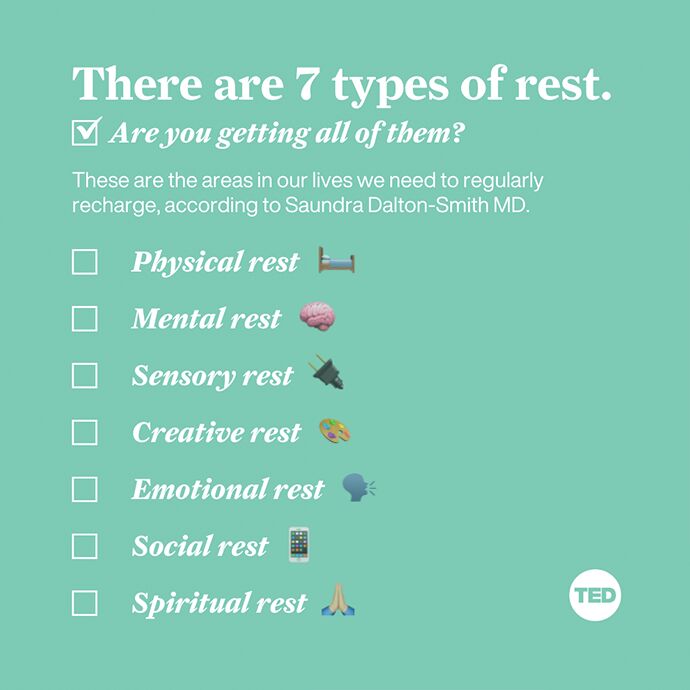
In our fast-paced, modern lives, the demands of work, relationships, and daily responsibilities can leave us feeling drained and fatigued. In the pursuit of productivity, we often overlook the importance of rest and its role in maintaining overall well-being. According to Dr. Saundra Dalton-Smith, a renowned medical doctor, there are seven types of rest that are essential for recharging different aspects of our lives. By recognising and embracing these various forms of rest, we can achieve a more balanced and fulfilling existence. Let’s delve into each type to understand its significance and how to incorporate it into our daily routines.

Physical Rest

Physical rest involves allowing our bodies to recover and repair from the strains of everyday activities. This type of rest encompasses both sleep and periods of intentional relaxation. Quality sleep is vital for physical restoration, as it allows our muscles, organs, and tissues to heal. In addition to adequate sleep, taking breaks during the day, engaging in light exercise, and practising relaxation techniques can help maintain optimal physical well-being.

Mental Rest

Amidst the constant bombardment of information and stimuli, mental rest is crucial to prevent mental fatigue and burnout. Our minds need time to declutter and recharge. Activities such as meditation, mindfulness exercises, or simply spending time in nature can provide the mental respite necessary to enhance focus, creativity, and problem-solving abilities.

Sensory Rest

In our hyper-connected world, our senses are often overstimulated. Sensory rest involves limiting exposure to loud noises, bright lights, and constant screen time. By intentionally creating calm environments and reducing sensory inputs, we can alleviate sensory overload and find solace in the quiet moments that rejuvenate our minds.

7 Types Of Rest

Creative Rest

Engaging in creative pursuits can be fulfilling, but it can also be draining if we don’t allow ourselves time to replenish our creative wells. Creative rest involves stepping away from the pressures of producing and giving ourselves the freedom to explore, daydream, or enjoy art without expectations. This break from the creative process can reignite inspiration and enhance overall creativity.

Emotional Rest

Our emotions play a significant role in our overall well-being, and emotional rest is necessary for maintaining emotional balance. It involves acknowledging and processing our feelings, setting healthy boundaries, and seeking support when needed. By allowing ourselves to feel and release emotions without judgment, we create space for healing and emotional renewal.

Social Rest

Human connections are essential, but social interactions can also be draining, especially for introverts. Social rest involves taking time for solitude and reducing social engagements when needed. This doesn’t mean avoiding all social interactions but rather ensuring that the time spent with others is meaningful and energizing rather than overwhelming.

Spiritual Rest

Regardless of one’s religious beliefs, spiritual rest addresses the need for a sense of purpose and connection to something greater than oneself. This can be achieved through practices like prayer, meditation, spending time in nature, or engaging in activities that bring a sense of fulfilment and alignment with personal values.

In a world that glorifies busyness and productivity, it is easy to overlook the importance of rest. Dr. Saundra Dalton-Smith’s concept of the seven types of rest offers us a valuable framework for nurturing our well-being in various aspects of life. By prioritising physical, mental, sensory, creative, emotional, social, and spiritual rest, we can cultivate a more balanced, healthier, and happier life. Recognising that rest is not just a pause in our busy lives, but an essential aspect of personal growth and rejuvenation, we can embrace these forms of rest and experience the transformative power they bring to our lives. So, let us pledge to take a step back, recharge, and find renewal in the different types of rest to live more fulfilling and purpose-driven lives.

Microsoft And Sony Sign Agreement To Keep Call Of Duty On PlayStation

0

In in-game screenshot from Call of Duty: Modern Warfare II

Following the news of the undoubtedly monopoly-forming merger between Microsoft and Activision, Xbox head Phil Spencer has taken to Twitter to (try to) assuage concerns from industry competitors and gamers alike. Apparently, Microsoft and Sony have signed a binding agreement to prevent Microsoft from keeping unfathomable mega-hit game series Call of Duty relegated to their own consoles, which was one of the more worrying potential issues cited by opponents of the merger.

It seems that they’re doing all they can to avoid looking like they’re trying to corner the market – tens of millions of people worldwide pick up each new installment of Call of Duty, and Sony even cited in Microsoft’s acquisition hearings that a good chunk of PlayStation gamers only play Call of Duty. While we don’t know anything about how long the deal lasts, how much money Sony forked over, or how big of a cut Microsoft is taking from CoD sales on PlayStation, the news comes as a momentary rest stop on Microsoft’s path to become the legal owner of the planet in the next decade or so.

By: GRANT ST. CLAIR
Originally published from Boing Boing