

Home Blog Page 44

7 Essential Items To Bring During Your Travel

0

Traveling. Everybody needs to move, whether its for work, leisure, health and other objective you can think of. However, commute will definitely take up some time. Some might prefer the travel to and from work as a way to unwind. Others just to take a trip to the mountains to enjoy the wilderness. What you do with this travel time is up to you. But these items might help you relax, focus, or enjoy.

01. Smart Phone

SAMSUNG Galaxy S23

SAMSUNG Galaxy S23
SAMSUNG Galaxy S23

Apple iPhone 14

Apple iPhone 14
Apple iPhone 14

Both the SAMSUNG Galaxy S23 and iPhone 14 provides the latest functionality for Android and iOS respectively. Having a smart phone to provide entertainment through Netflix or other streaming platforms. Or use it for planning out the next part of your life.

02. Headphone – Bose QuietComfort 45 Wireless Headphones

Bose QuietComfort 45 Wireless Headphones

Relax yourself and block out the external noises. Focus within. Meditate. Listen to what music or follow your favorite content creator. This headphone provides the high quality and noise cancelling capability and more.

03. Neck Pillow – MLVOC Travel Pillow

MLVOC Travel Pillow
MLVOC Travel Pillow

Traveling publicly through mass transit or privately in your own car, having comfortable support for your neck is a must. If you’ve ever traveled for hours and sit in the same position, you will surely crave for more comfort.

04. Book Reader – Kindle 2022

Amazon Kindle 2022
Amazon Kindle 2022

“Take your story with you”. Literally. While some of us prefers reading books physically (me included), bringing more than a few all the time might become cumbersome. There are also a lot of benefits when using electronic readers like the Kindle. Some of them are bookmarks, “save the trees”, and most importantly adjusting the font size to your liking. This can be a great gift for your parents and grandparents too, specially if their eyesight is not that great anymore.

05. Bag – Peak Design Everyday Backpack

Peak Design Everyday Backpack Bag

This backpack bag meant for daily use is a great partner for all the items we mentioned above. It has a 20 liter capacity and can be expanded up to 30 liter. It has a laptop sleeve that can fit a 2021 Macbook Pro 14″ and 16″ models. Extremely durable and comfortable to use.

06. Sanitizer – Touchland Power Mist Hydrating Hand Sanitizer Spray

Touchland Power Mist Hydrating Hand Sanitizer Spray

While the recent global pandemic is considered over. We still have to take care of ourselves from external harmful substances. Contains aloe vera and lemon essentials, making your hands soft while also eliminating 99.9% of germs.

07. Book – A Field Guide To A.I.: For {Business, Institutions, Society, Political Economy} Part 1

A Field Guide To A.I.: For {Business, Institutions, Society, Political Economy} Part 1

With all the hype on Artificial Intelligence, ChatGPT, Bard, and others. This field guide will prepare you to understand the essentials of Artificial Intelligence. You don’t need to be an engineer or programmer to read this. It’s a collection of tidbits, facts, and counterpoints that will enrich your understanding of AI without the hype.
NASA, Boeing To Provide Progress Update On Starliner Crew Flight Test

0

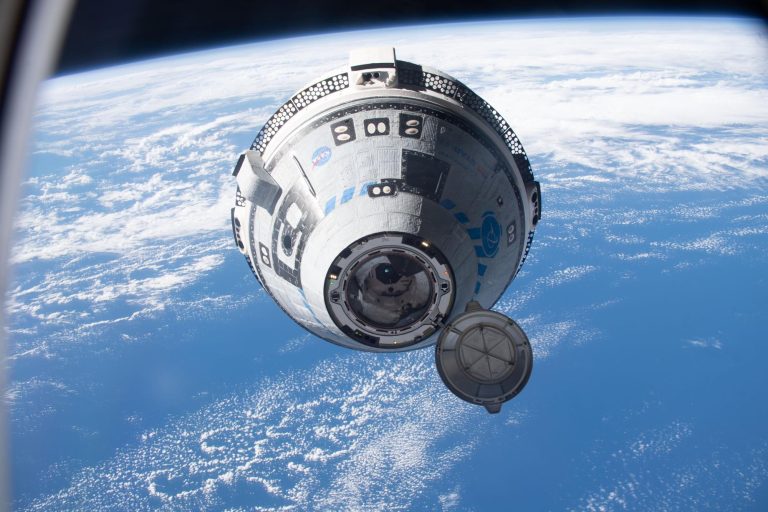
NASA and Boeing will host a media teleconference at 2 p.m. EDT Monday, Aug. 7, to provide an update on the first astronaut flight of the company’s CST-100 Starliner to and from the International Space Station.

Audio of the teleconference will stream live on NASA’s website.

Leaders will discuss spacecraft and team readiness ahead of NASA’s Boeing Crew Flight Test – the final flight test prior to regular crewed missions to the space station on the next-generation system.

The briefing participants are:

  • Steve Stich, manager, NASA’s Commercial Crew Program
  • Joel Montalbano, manager, NASA’s International Space Station Program
  • Mark Nappi, vice president and program manager, CST-100 Starliner, Boeing

To participate in the call, media must RSVP no later than one hour prior to the start of the event to: [email protected].

The Starliner spacecraft will launch on a United Launch Alliance Atlas V rocket from Space Launch Complex-41 at Cape Canaveral Space Force Station in Florida, returning about a week later in White Sands, New Mexico.

The flight will carry two NASA astronaut test pilots, Butch Wilmore and Suni Williams, on the demonstration flight to prove the end-to-end capabilities of the Starliner spacecraft.

Following a successful test flight with astronauts, NASA will begin the final process of certifying the Starliner spacecraft and systems for regular crew rotation flights to and from the space station.

Find out more about NASA’s Commercial Crew Program at:

https://www.nasa.gov/commercialcrew

-end-

Joshua Finch
Headquarters, Washington
202-358-1100
[email protected]

Steven Siceloff / Heather Scott
Kennedy Space Center, Florida
321-867-2468
[email protected] / [email protected]

Leah Cheshier
Johnson Space Center, Houston
281-483-5111
[email protected]

Hubble Peers At A Tranquil Galaxy

0

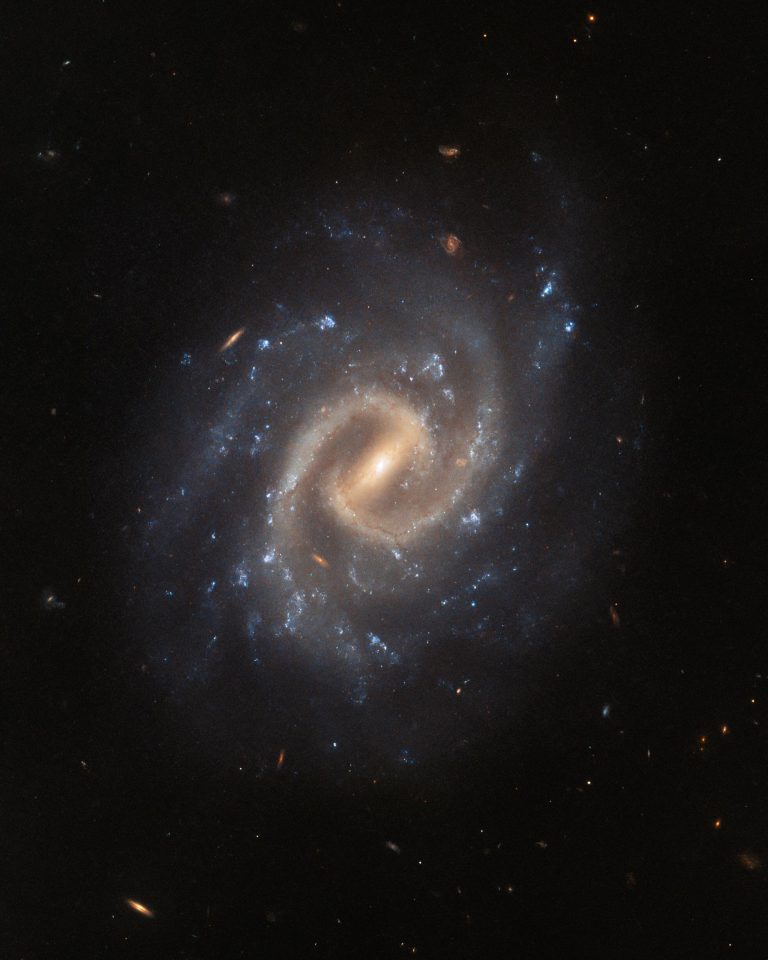
The tranquil spiral galaxy UGC 12295 basks leisurely in this image from the NASA/ESA Hubble Space Telescope. This galaxy lies around 192 million light-years away in the constellation Pisces and is almost face-on when viewed from Earth, displaying a bright central bar and tightly wound spiral arms.

Despite its tranquil appearance, UGC 12295 played host to a catastrophically violent explosion – a supernova – detected in 2015. Supernovae are the explosive deaths of massive stars and are responsible for forging many of the elements found here on Earth.

Two different teams of astronomers used Hubble’s Wide Field Camera 3 to observe UGC 12295 and sift through the wreckage of this vast stellar explosion. The first team examined the supernova’s detritus to better understand the evolution of matter in our universe.

The second team of astronomers also explored the aftermath of UGC 12295’s supernova, but their investigation focused on returning to the sites of some of the best-studied nearby earlier supernovae. Hubble’s keen vision can reveal lingering traces of these energetic events, shedding light on the nature of the systems that host them.

Text credit: European Space Agency (ESA)
Image credit: ESA/Hubble & NASA, A. Filippenko, J. Lyman

Media Contact:

Claire Andreoli
NASA’s Goddard Space Flight CenterGreenbelt, MD
[email protected]

By: Andrea Gianopoulos
Originally published at NASA

NASA Launches Beta Site; On-Demand Streaming, App Update Coming Soon

0

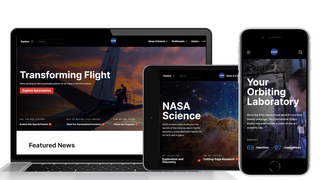
NASA is elevating its digital platforms for the benefit of all by revamping its flagship and science websites, adding its first on-demand streaming service, and upgrading the NASA app. With these changes, everyone will have access to a new world of content from the space agency.

Users can access the early, in-progress preview of the beta website now and are encouraged to visit and submit feedback at:

Home Page

“Our vision is to inspire humanity through a unified, world-class NASA web experience,” said Jeff Seaton, chief information officer at the agency’s headquarters in Washington. “NASA’s legacy footprint presents an opportunity to dramatically improve the user experience for the public we serve. Modernizing our main websites from a technology standpoint and streamlining how the public engages with our content online are critical first steps in making our agency’s information more accessible, discoverable, and secure.”

Credits: NASA

This new web experience will serve as an ever-expanding yet consolidated homebase for information about the agency’s missions and research, climate data, Artemis updates, and more. The updated nasa.gov and science.nasa.gov websites will provide a connected, topic-driven experience, with a common search engine, integrated navigation, and optimized publishing capabilities in a modernized and secure set of web tools.

NASA will continue to update and improve the beta site on a rolling-basis as it receives feedback from website visitors. Once fully launched, the online content from a selection of popular agency websites will be included within this new experience to ensure easier, integrated access to NASA information currently found across the agency’s many websites.

Later this year, NASA also will launch its new streaming platform, NASA+., and upgrade the NASA app. Through the ad-free, no cost, and family-friendly streaming service, users will gain access to the agency’s Emmy Award-winning live coverage and views into NASA’s missions through collections of original video series, including a handful of new series launching with the streaming service.

“We’re putting space on demand and at your fingertips with NASA’s new streaming platform,” said Marc Etkind, associate administrator, Office of Communications, NASA Headquarters. “Transforming our digital presence will help us better tell the stories of how NASA explores the unknown in air and space, inspires through discovery, and innovates for the benefit of humanity.”

NASA+ will be available on most major platforms via the NASA App on iOS and Android mobile and tablet devices; streaming media players such as, Roku, Apple TV, and Fire TV; and on the web across desktop and mobile devices.

Following the launch of all new digital platforms, NASA will continue to connect additional agency websites and multimedia libraries into this new experience to continually streamline all the information shared across its centers, missions, and programs. With an enhanced digital presence, NASA will share science, research, exploration, and innovation with the world through cohesive platforms.

“From exoplanet research to better understanding Earth’s climate and the influence of the Sun on our planet along with exploration of the solar system, our new science and flagship websites, as well as forthcoming NASA+ videos, showcases our discovery programs in an interdisciplinary and crosscutting way, ultimately building stronger connections with our visitors and viewers,” said Nicky Fox, associate administrator, Science Mission Directorate, NASA Headquarters.

To keep up with the latest news from NASA and learn more about the agency, visit NASA’s current flagship site.

-end-

Abbey Donaldson / Claire O’Shea
Headquarters, Washington
202-358-1600
[email protected] / claire.a.o’[email protected]

NASA Invites Media To See Recovery Craft For Artemis Moon Mission

0

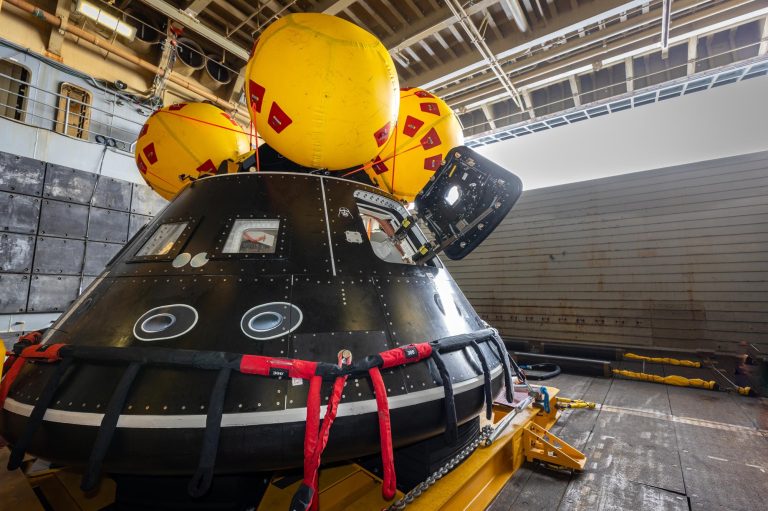
Aboard the USS John P. Murtha, NASA and Department of Defense personnel practice recovery operations for Artemis II in July. A crew module test article is used to help verify the recovery team will be ready to recovery the Artemis II crew and the Orion spacecraft.
Credits: NASA/Frank Michaux

Media are invited to see the new test version of NASA’s Orion spacecraft and the hardware teams will use to recover the capsule and astronauts upon their return from space during the Artemis II mission. The event will take place at 11 a.m. PDT on Wednesday, Aug. 2, at Naval Base San Diego.

Personnel involved in recovery operations from NASA, the U.S. Navy, and the U.S. Air Force will be available to speak with media.

U.S. media interested in attending must RSVP by 4 p.m., Monday, July 31, to the Naval Base San Diego Public Affairs or 619-556-7359.

Teams are currently conducting the first in a series of tests in the Pacific Ocean to demonstrate and evaluate the processes, procedures, and hardware for recovery operations for crewed Artemis missions. The tests will help prepare the team for Artemis II, NASA’s first crewed mission under Artemis that will send four astronauts in Orion around the Moon to checkout systems ahead of future lunar missions.

The Artemis II crew – NASA astronauts Reid Wiseman, Victor Glover, and Christina Koch, and CSA (Canadian Space Agency) astronaut Jeremy Hansen – will participate in recovery testing at sea next year.

For more information about Artemis, visit:

https://www.nasa.gov/artemis

-end-

Rachel Kraft
Headquarters, Washington
202-358-1100
[email protected]

Madison Tuttle
Kennedy Space Center, Florida
321-298-5868
[email protected]

U.S. Government Awards Contract to Sierra Space to Develop Powerful New Upper-Stage Rocket Engine

0

Company’s VORTEX® VR35K-A successfully completes full hot fire test testing, engine provides up to 30% more payload to orbit performance

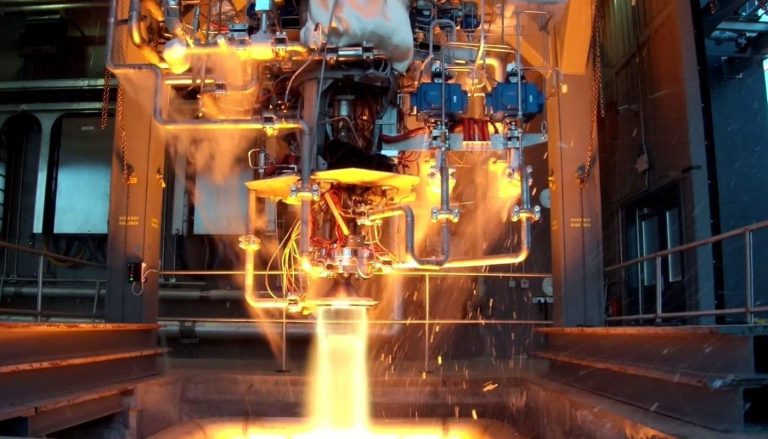
LOUISVILLE, Colo. – July 26, 2023  Sierra Space, a leading commercial space company building the first end-to-end business and technology platform in space, today announced it has been awarded a $22,605,083 firm-fixed-price contract for maturation of their Advanced Upper Stage Engine (VR35K-A). The company successfully completed a 100% hot fire test campaign of this new VORTEX® engine this spring, marking a significant maturation milestone for the upper-stage engine that Sierra Space is developing in conjunction with the Air Force Research Laboratory.

According to the U.S. Department of Defense, this contract provides for “leveraging the test data from the first Phase III Small Business Innovation Research component and integrated breadboard engine test to develop flight-weight engine component designs.” The Air Force Test Center at Edwards Air Force Base in California awarded the sole-source acquisition contract.

The VR35K-A is a liquid oxygen (LOX)/liquid hydrogen (LH2) engine that produces 35,000 lbf of thrust. The engine achieved high thrust efficiency during recent testing at the company’s propulsion test facility outside of Baraboo, Wisc. VORTEX technology will serve a critical industry need for engines that can support in-space propulsion for spacecraft orbital maneuvering and extraterrestrial landers.

“Compared with other upper-stage engines currently on the market, the VR35K-A provides more thrust and higher performance in a smaller package,” said Rusty Thomas, Sierra Space’s Chief Technology Officer and Vice President and General Manager for the Space Applications business sector.  “Think of it like gas mileage – how much thrust can you get out of a given amount of propellant? Once complete, the VR35K-A will allow our launch vehicle teammates and partners to deliver up to 30% more payload mass to orbit. It will drive technology across all propulsion products at Sierra Space – from our applications and destinations sectors to space transportation with our Dream Chaser® spaceplane.”

The VR35K-A is rooted in Sierra Space’s patented VORTEX engine design technology, which promotes efficient, stable combustion while also cooling the combustion chamber. Key system attributes providing high performance and low recurring cost include innovative single-shaft turbopump assembly for simplified operation and mechanically-coupled mixture ratio control, fuel-rich staged combustion cycle to drive high chamber pressure and subsequent compactness, vortex main propellant injector to increase overall cooling capacity and heavy use of additive manufacturing to reduce production costs and schedule of complex parts.

In August 2022, Sierra Space announced the VR35K-A had passed its Critical Design Review, which allowed the company to advance into the hot fire testing campaign. Next, Sierra Space will continue to advance the VR35K-A engine by completing build of the flight-weight prototype engine to demonstrate capability and performance, and ultimately move into full engine qualification testing.

About Sierra Space

Sierra Space (www.sierraspace.com) is a leading, pure play commercial space company at the forefront of innovation and the commercialization of space in the Orbital Age™, building an end-to-end business and technology platform in space to benefit life on Earth. With more than 30 years and 500 missions of space flight heritage, the company is enabling the future of space transportation with Dream Chaser®, the world’s only commercial spaceplane, and is bringing LIFE™ (Large Integrated Flexible Environment) to low-Earth orbit with its modular, three-story commercial habitation and science platform. Both Dream Chaser and LIFE are central components to Orbital Reef, a mixed-use business park in LEO being developed by principal partners Sierra Space and Blue Origin, which is expected to be operational by the end of the decade. Sierra Space also builds and delivers a host of systems and subsystems across solar power, mechanics and motion control, environmental control, life support, propulsion and thermal control, offering myriad space-as-a-service solutions for the new space economy.

###

MEDIA CONTACTS:

Alex Walker
Sierra Space
(303) 803-2297
[email protected]

Lauren Quesada
Griffin Communications Group
(281) 744-7938
[email protected]

A Beginner’s Guide to Neural Networks and Deep Learning

0

Finally, a quick look into the preeminent learning method and technique used in Artificial Intelligence research and development is not complete without neural networks.

Neural networks, inspired by the human brain, form the backbone of most modern machine learning models. There are many types of neural networks, each with its own strengths, weaknesses, and areas of application. Here are a few key types:

Feedforward Neural Network (FNN).

This is the simplest type of artificial neural network. In this network, the information moves in only one direction— forward —from the input layer, through the ‘hidden’ layers (if any), to the output layer. There are no loops in the network; it is a straight, “forward” connection.

Multilayer Perceptron (MLP).

This is a type of feedforward neural network that has at least three layers of nodes: an input layer, a hidden layer, and an output layer. Each node in a layer is connected to each node in the next layer. These are widely used for solving problems that require supervised learning.

Convolutional Neural Network (CNN).

These are primarily used for image processing, classification, segmentation and also for other auto-correlated data. A CNN uses a variation of the multilayer perceptrons and contains one or more convolutional layers, pooling layers and then followed by one or more fully connected layers.

Recurrent Neural Network (RNN).

Unlike feedforward neural networks, RNNs have ‘feedback’ connections, allowing information to be passed from one step of the network to the next. This makes them ideal for processing sequences of data, like time series data, speech, or text.

Long Short-Term Memory (LSTM).

This is a special type of RNN that is capable of learning long-term dependencies in data. This is particularly useful in time series prediction problems where context is important for predicting future values.

Gated Recurrent Unit (GRU).

GRU is a type of RNN that is similar to LSTM but uses a different gating mechanism and is computationally more efficient.

Radial Basis Function Network (RBFN).

This is a type of feedforward neural network that uses radial basis functions as activation functions. It has an input layer, a hidden layer, and an output layer.

Generative Adversarial Network (GAN).

This is a class of machine learning systems invented by Ian Goodfellow and his colleagues in 2014. Two neural networks contesting with each other in a game in the form of a zero-sum game framework.

Self-Organizing Map (SOM).

This is a type of artificial neural network that is trained using unsupervised learning to produce a low-dimensional, discretized representation of the input space of the training samples, called a map.

Autoencoder.

This is a type of artificial neural network used for learning efficient codings of input data. It is an unsupervised method of learning, where the network is trained to output a copy of the input. This forces the hidden layer to form a compressed representation of the input.

These different types of neural networks are designed to process different types of data, and they have different strengths and weaknesses. The choice of which to use depends on the nature of the problem you are trying to solve.

Making Sense of AI Buzzwords – Explanations of Machine, Reinforcement and Deep Learning

0

Machine learning, reinforcement learning, and deep learning are interconnected subfields of artificial intelligence, each with its unique methodologies, applications, and challenges. Here is a more detailed discussion on each of them, along with examples and resources for further study.

Machine Learning (ML).

ML is a subset of AI that focuses on the development of algorithms that enable computers to learn from and make predictions or decisions based on data. Machine learning is the process of training a model to learn patterns or make predictions from data without explicit programming. It encompasses various techniques and algorithms, including supervised learning (classification, regression), unsupervised learning (clustering, dimensionality reduction), and semi-supervised learning.

Examples:

● Linear regression for predicting housing prices.

● Support vector machines for image classification.

● K-means clustering for customer segmentation.

Reinforcement Learning (RL).

Reinforcement learning is a type of machine learning where an agent learns to make decisions by interacting with an environment. The agent takes actions and receives feedback in the form of rewards or penalties, with the goal of maximising its cumulative reward over time. RL algorithms, such as Q-learning and policy gradients, have been applied to various tasks like robotics, game playing, and autonomous systems.

Examples:

● AlphaGo and AlphaZero for mastering the game of Go.

● AlphaStar by Deep Mind that mastered the StarCraft II game.

● Deep Q-Network (DQN) for learning to play Atari games.

● Robotics applications, such as robotic arm manipulation and autonomous navigation.

Deep Learning (DL).

Deep learning is a subset of machine learning that uses artificial neural networks, particularly deep neural networks (DNNs), to model complex patterns and representations in data. DNNs consist of multiple layers of interconnected nodes or neurons, enabling them to learn hierarchical features and perform tasks such as image recognition, natural language processing, and speech recognition.

Examples:

● Convolutional Neural Networks (CNNs) for object detection in images.

● Recurrent Neural Networks (RNNs) and Long Short-Term Memory (LSTM) networks for text generation.

● Transformer models like BERT and GPT for natural language understanding.

US, Japan Host First-Ever Space Engagement Talks

0

US, Japan host first-ever Space Engagement Talks

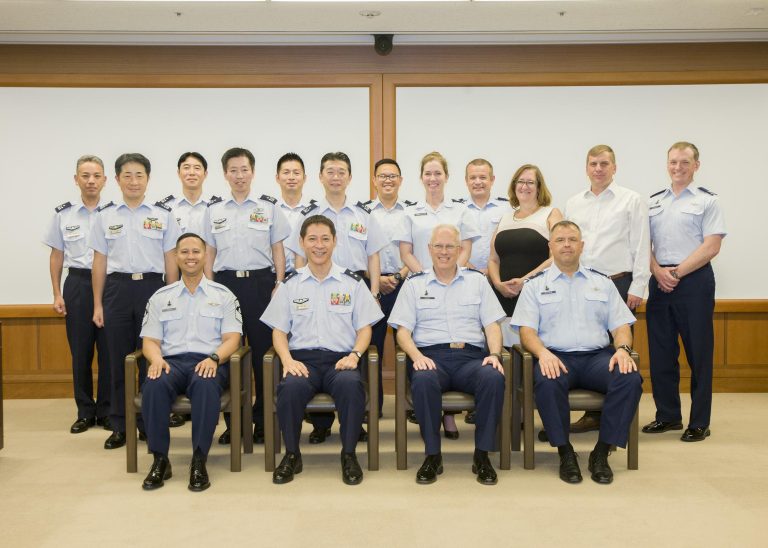
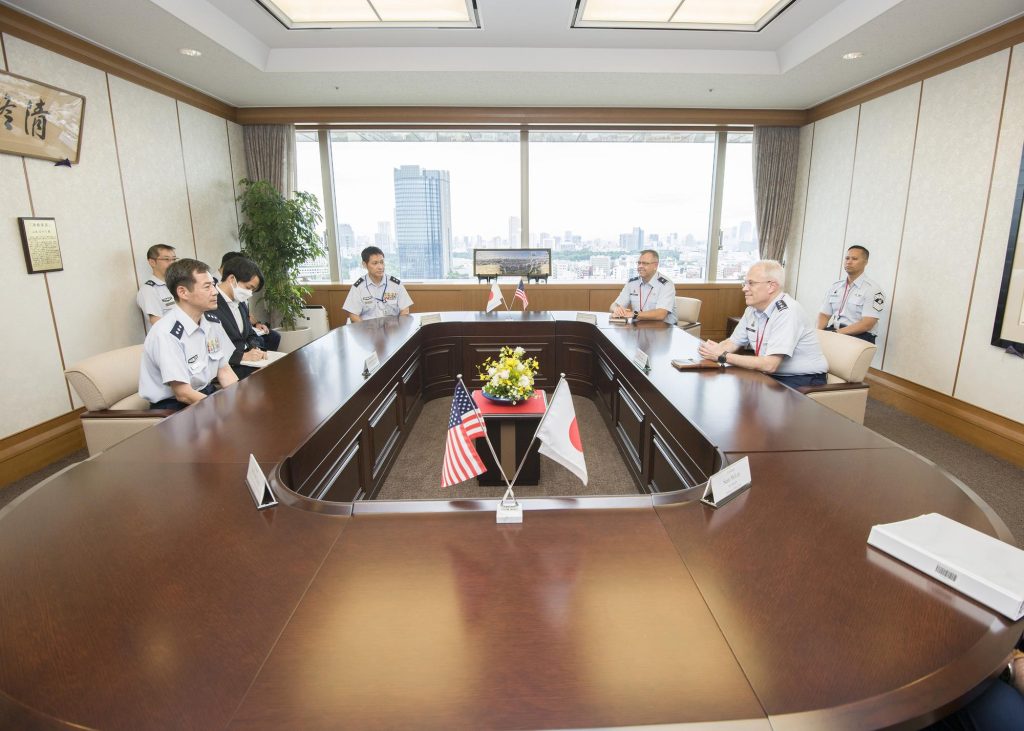
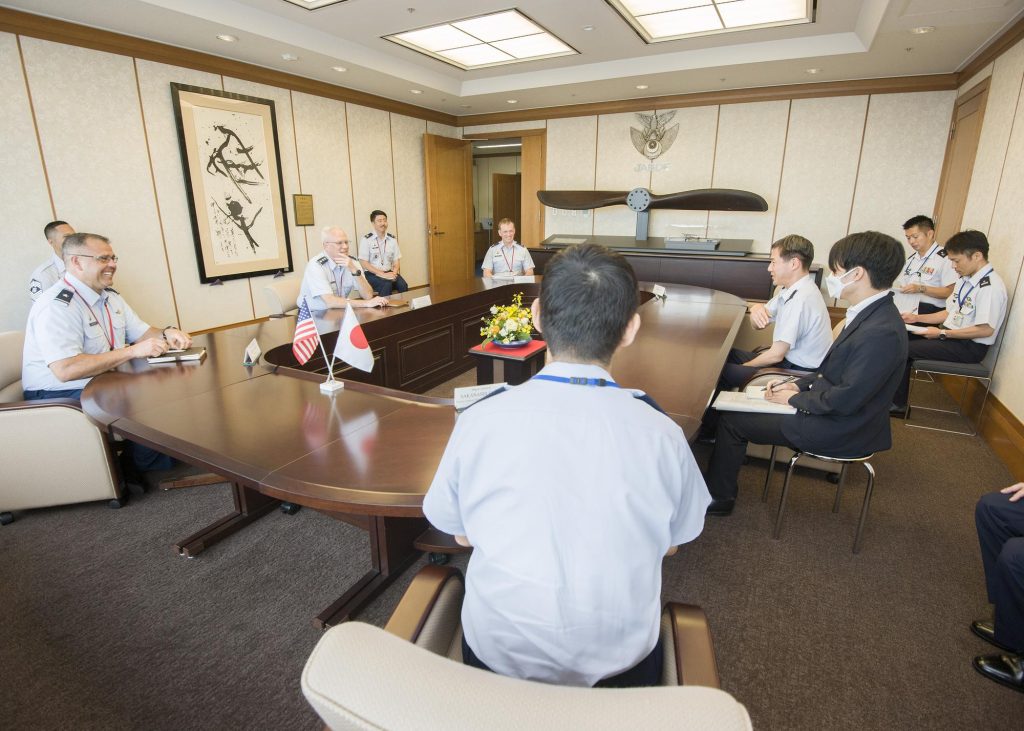
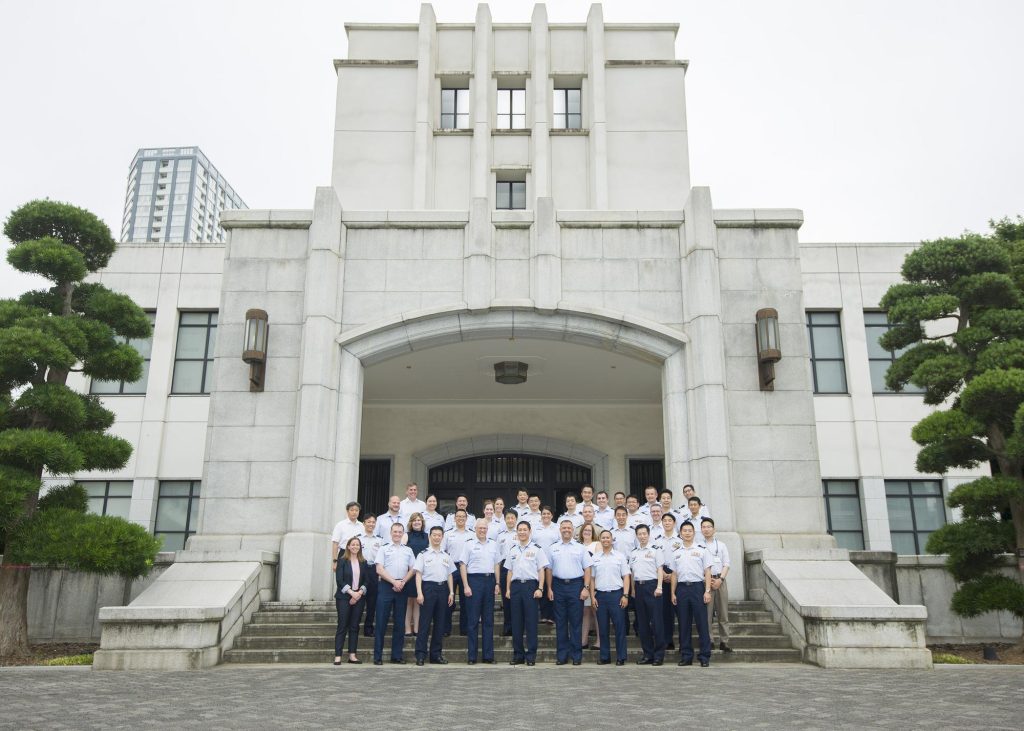
U.S. Space Force and Japan Air Self-Defense Force senior leaders pose for a photo during a Space Engagement Talks meeting in Tokyo, Japan, July 13, 2023. This was the first U.S.-Japan SET, which established a forum for key stakeholders of both nations to conduct discussions on enhancing the space security relationship. (U.S. Space Force courtesy photo)

US, Japan host first-ever Space Engagement Talks
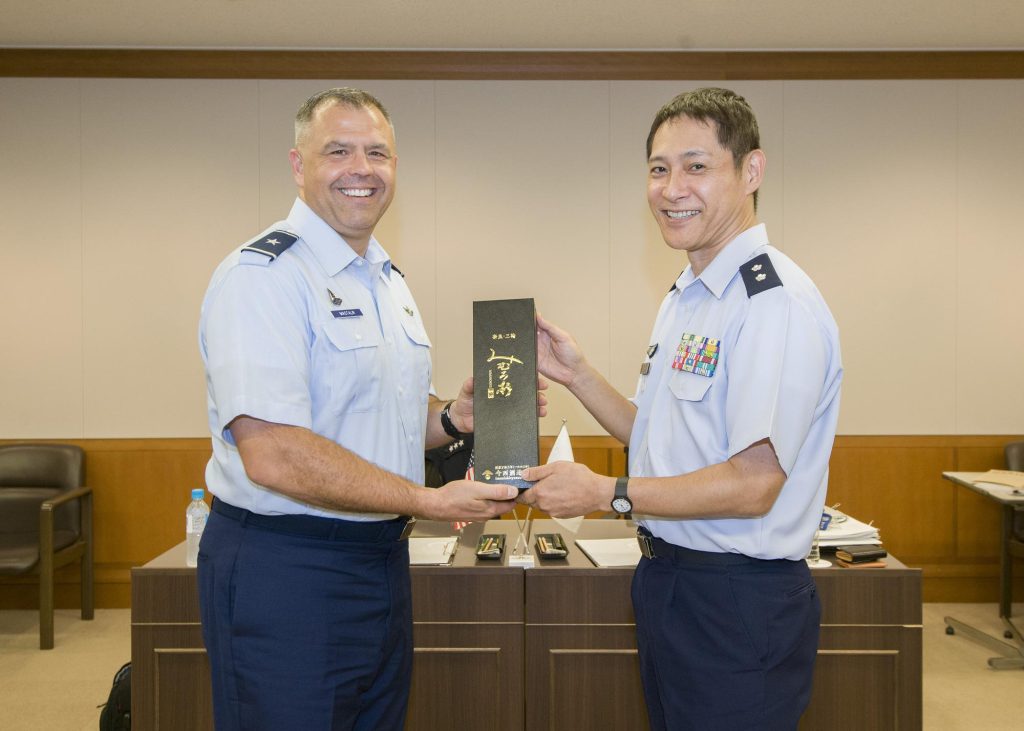
Brig. Gen. Anthony J. Mastalir, United States Space Forces Indo-Pacific commander, partakes in a gift exchange with Japan Air Self-Defense Force Maj. Gen. Hiroaki Sakanashi, Director General of Defense Planning and Policy, during a Space Engagement Talks meeting in Tokyo, Japan, July 13, 2023. Following the SET, the teams conducted working group discussions to dive deeper into space engagement topics and identify actionable steps after the event. (U.S. Space Force courtesy photo)

YOKOTA AIR BASE, Japan — The ongoing race against adversaries and competitors who possess advanced space capabilities and questionable intentions further emphasizes the need to reinforce norms of behavior in space.

U.S. Space Force Deputy Chief of Space Operations, Strategy, Plans, Programs, and Requirements, Lt. Gen. Philip A. Garrant, recently made history by leading the first-ever Space Engagement Talks with Japan, aiming to enhance combined space operations and establish a bilateral roadmap for future collaboration.

“The US-Japan Space Engagement Talks represent a further expansion of our strong alliance into the space domain,” emphasized the Commander of United States Space Forces Indo-Pacific, Brig. Gen. Anthony J. Mastalir, who hosted the event. “Through these talks and Space Working Groups to follow, we can build a roadmap for cooperation to ensure safety and security in space for our nations and all responsible actors.”

The USSF-JASDF Space Engagement Talks serve as a model of the US-Japan Alliance’s commitment to space collaboration and reinforces the significance of partnerships in achieving shared objectives.

“It’s an exciting time to participate in the Space Engagement Talks with Japan,” exclaimed Mastalir. “This forum is an excellent mechanism to drive new collaborative efforts with allies and partners, and to ensure we preserve security, stability, and long-term sustainability of space for the INDOPACOM region.”

The US Space Force’s “Partner to Win” line of effort drives this collaboration, recognizing the strategic advantage that the global network of alliances and partnerships offers.

The potential benefits of such collaborations include greater situational awareness, improved operational effectiveness, and increased resiliency in the face of emerging threats. For example, countries with advanced space capabilities can provide technical assistance and training to those with developing space programs, while those with access to strategic locations and infrastructure can provide valuable support in areas like satellite tracking and communication.

As space continues to remain an increasingly essential domain for military operations, communication, and intelligence gathering, strong partnerships and collaborations with international allies are considered imperative for ensuring the security and safety of space-based assets.

“These talks are another example of how our two countries are working together to defend the space domain and support our bilateral joint forces,” Mastalir explained. “I’m grateful for our strong alliance with Japan and proud to be part of this important effort to advance our space operations cooperation.”

Furthermore, establishing widely accepted norms of behavior for space operations is crucial. These norms enhance the ability to attribute actions, mitigate threats, protect interests in space, and reduce the risk of strategic miscalculations. By advocating for norms of behavior in space, nations with space-based assets show a vested interest in the importance of resilience and leadership against nefarious activities.

“Through these engagements we have an opportunity to align efforts with our ally to enhance our bilateral capability in space,” highlighted Mastalir. “With representatives from U.S. Space Force Field Commands stateside and within the Indo-Pacific theater, we are able to build stronger relationships across all parts of the Space Force and normalize our presence with an important strategic ally.”

By: Tech. Sgt. Nick Wilson
Originally published United States Space Force

Is Elon Musk Right To Ditch The Twitter Bird Logo?

0

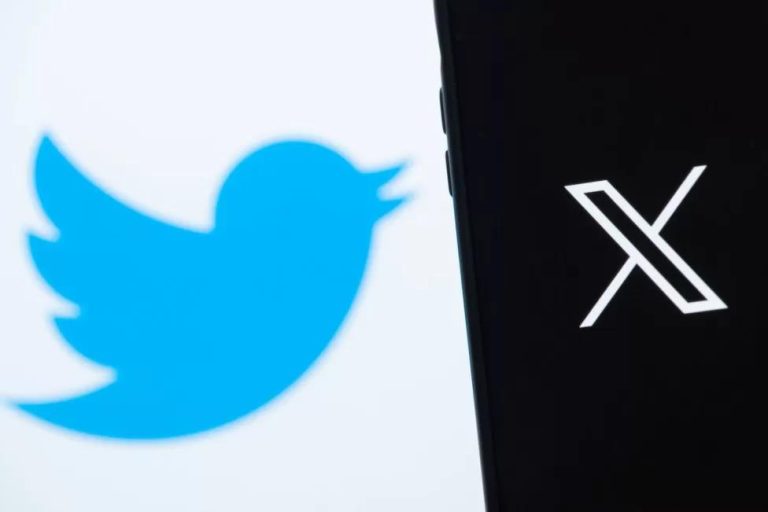
One of the most recognisable logos on the web, the tweeting blue bird, is no more. Will the black and white X replacing it prove to be a masterstroke or a branding disaster?

When Jean-Pierre Dube saw the news that billionaire Elon Musk was scrapping Twitter’s logo in favour of an Art Deco-style X, the marketing professor thought it was a joke.

“Why take a recognised brand, with a lot of brand capital around it and then completely throw it away and start from scratch?” said Prof Dube, who teaches at the University of Chicago Booth School of Business. “In the short-term, it seems weird.”

But in the long term, could it work?

Mr Musk’s takeover of Twitter last year has been punishing for the social media platform.

Advertising revenue has dropped by half, Mr Musk said this month, as big brands pulled back, wary of changes he has made, including how the firm handles verified accounts and moderates content. Abrupt layoffs and unpaid bills have also led to bad press and lawsuits.

Estimates by Fidelity, which has a stake in the company, suggest it is now worth just a third of the $44bn (£34.3bn) that Mr Musk paid for Twitter in October.

Consultancy Brand Finance recently estimated that the firm’s brand was worth $3.9bn, down 32% since last year – a fall it attributed to Mr Musk’s “aggressive business approaches”.

Research suggests that rebrands can pay off – particularly if a firm is in trouble or wants to change direction, said Yanhui Zhao, a professor of marketing at the University of Nebraska Omaha.

His review of 215 rebranding announcements by publicly listed companies found that more than half of those businesses saw positive returns after they rebranded.

Twitter logo, old and new
Twitter logo, old and new (Getty Images)

That means Mr Musk’s moves could be timely, he said, noting the multi-billionaire’s ambition to transform Twitter into an “everything app” similar to China’s WeChat, a social messaging service on which users can send money, hail taxis, book hotels and play games, among other functions.

“This is a much needed rebranding because of the strategic re-direction of Twitter,” he told the BBC.

But success becomes less likely when a company is in turmoil, warned Shuba Srinivasan, marketing professor at Boston University’s Questrom School of Business. She said it was an especially risky move, given all the social media competitors, such as Mark Zuckerberg’s Threads, rushing to fill Twitter’s role.

“The rebranding is likely to confirm the fear of many Twitter users that the acquisition by Musk signalled the end of the Twitter they knew,” she said.

Nor is it clear that a rebranding addresses Twitter’s problems – many of which stem in part from Mr Musk, Prof Dube said.

“I didn’t think there was a brand problem and brand identity problem as much as a leadership problem,” he said.

In a May interview with satire site, The Babylon Bee, Mr Musk previewed the change, saying he thought he needed to “broaden the branding for Twitter” to help him succeed at pushing the company beyond the short text posts that made it famous.

But some analysts said that the potential of this vision being successful faces long odds.

In June, advisory firm Forrester Research published a report called “The super app window has closed,” which argued that tech giants such as Google and Apple currently offer super app-like functions to billions of users in the US and Europe, while tough regulatory hurdles and fierce competition limits opportunities for others.

It noted that WeChat, the example that has been cited by Mr Musk, became dominant in China early, before other payment services emerged – and in part as a result of technical issues, such as limited phone memory, which discouraged downloading multiple apps.

“While Musk’s vision is to turn X into an ‘everything app,’ this takes time, money, and people – three things that the company no longer has,” Mike Proulx, a research director at Forrester, wrote after Mr Musk’s announcement, adding that he thought the firm would shut or be be bought out in the next 12 months.

Even if Twitter’s core users in media, politics and finance stay loyal, as they have in the past, making X successful would require participation from a far broader user base – no small challenge, said Harvard Business School professor Andy Wu.

But Twitter faced difficulties before Mr Musk’s takeover and would benefit from some risk-taking, he added.

“We can debate whether those changes are in the right direction, but Twitter does need changes.”

By: Natalie Sherman (Business reporter, New York)
Originally published at BBC

Source: cyberpogo.com