Astronomers from the Geneva Observatory and the National Centre of Competence in Research PlanetS have discovered an unusual planetary system orbiting a small star – a red dwarf called TOI-756, located not far from our solar system.
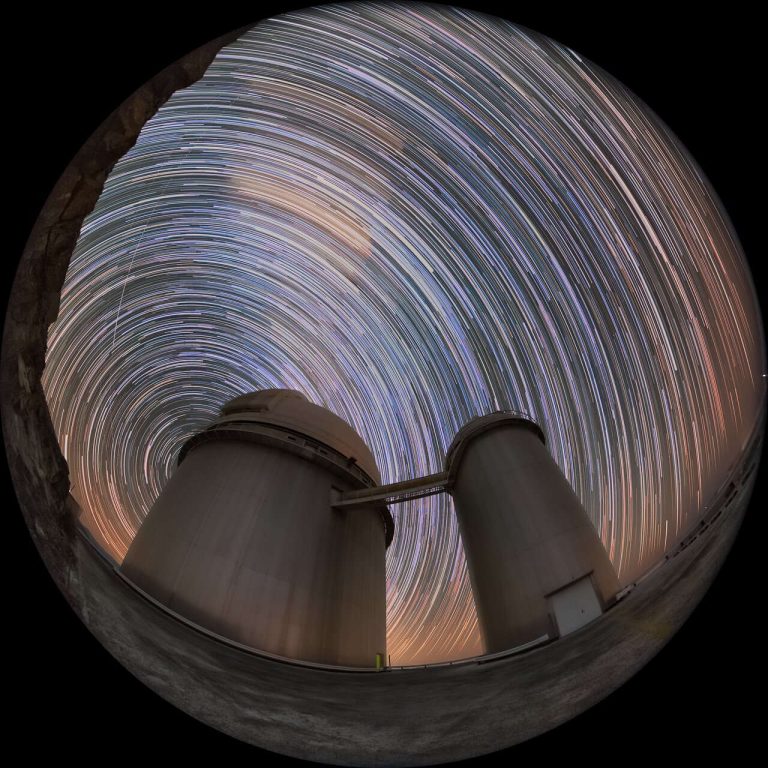
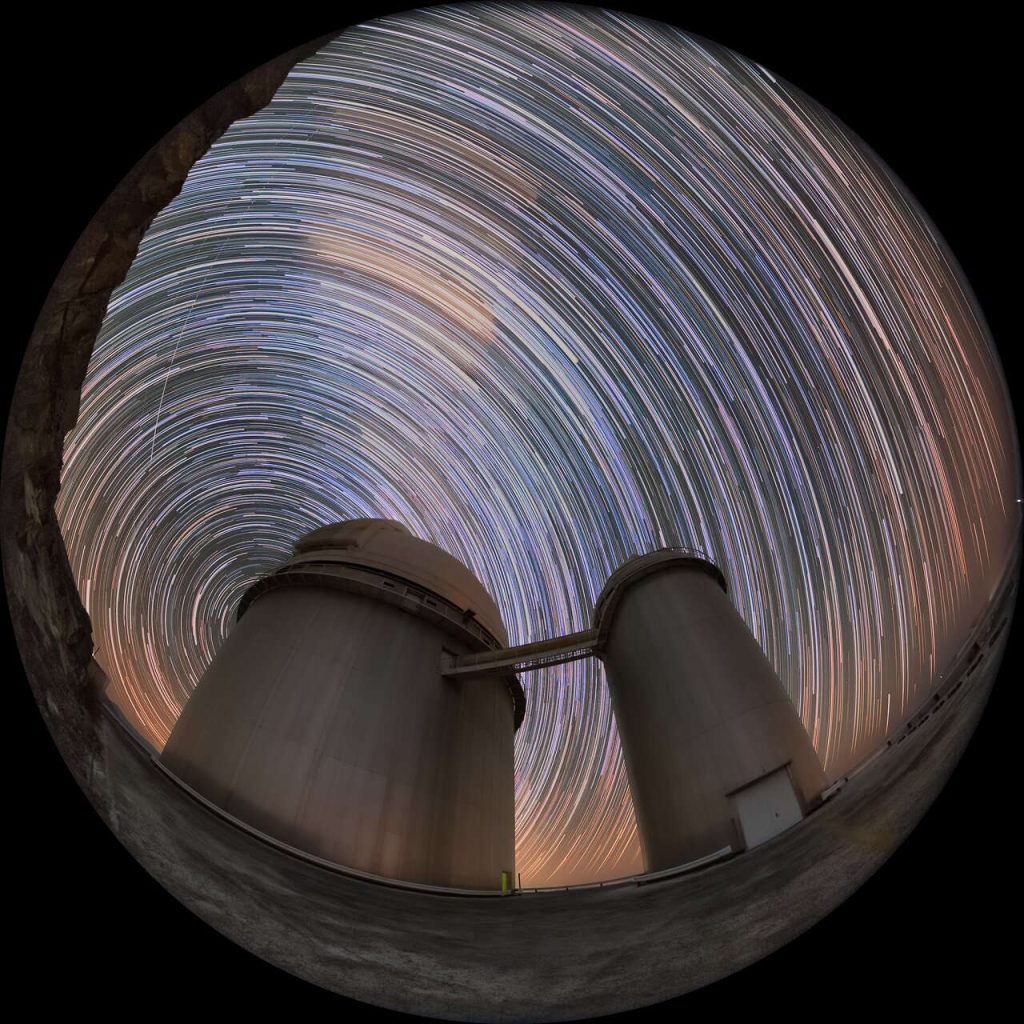
The 3.6-metre telescope, located at the La Silla Observatory, is truly ESO’s golden oldie. Having achieved first light in 1976, it is one of the oldest ESO telescopes still in use, and it is continuously upgraded to match the latest technology. This Picture of the Week shows a fish-eye view of the dome where the telescope sits, as stars rotate above it around the Southern celestial pole. ESO’s 3.6-metre telescope is located in the larger dome to the left of the above photograph and, today, astronomers use it to search for exoplanets. Since 2008, the telescope has been home to the High Accuracy Radial Velocity Planet Searcher instrument (HARPS) which was joined by the Near InfraRed Planet Searcher (NIRPS) in June this year. As the world’s foremost exoplanet specialists, HARPS, NIRPS and the 3.6-metre make a splendid team for making exciting new discoveries about distant worlds. The smaller dome used to house the Coudé Auxiliary Telescope (CAT). One of the goals of CAT, which was decommissioned in 1998, was to determine ages of stars in the Milky Way, one of the trickier questions in stellar astronomy. Through the bridge, light from CAT could be fed to one of the instruments placed in the larger dome whenever the 3.6-m telescope was observing with a different instrument. That way both telescopes could work in tandem and benefit from the 3.6-metre telescope’s instruments.
ESO’s 3.6-metre telescope is located in the large dome to the left of the photo above, and today astronomers use it to search for exoplanets. Since 2008, the telescope has housed the High Accuracy Radial Velocity Planet Searcher (HARPS) instrument, which was joined by the Near InfraRed Planet Searcher (NIRPS) in June 2022. Credit: ESO/M. Zamani
By combining two spectrographs developed by the Geneva Observatory, NIRPS and HARPS, with the TESS space telescope, the researchers discovered two very different planets orbiting the same star.
The inner planet, TOI-756 b, is a “sub-Neptune”—larger than Earth but smaller than Neptune, and enveloped in thick layers of gas- or water-rich material. It orbits its star in just 1.24 days, meaning its “year” lasts just under a weekend. Meanwhile, far away, the team discovered a massive, icy giant planet in an elongated, eccentric orbit, taking nearly 150 days to complete one orbit. This strange duo—a small, hot world right next to the star and a massive, cold planet much further away—is the first confirmed example of such planetary architecture around a red dwarf.
Red dwarfs are the most common stars in our galaxy, and understanding how planets form around them is therefore essential. Yet, until now, we had never observed this arrangement around this type of star. This suggests that planetary systems around red dwarfs could be far more diverse and complex than previously thought.
More interestingly, TOI-756 b lies at the edge of the “Hot Neptune Desert,” a region in the planet distribution where no planets exist. TOI-756 b could therefore be an ideal target for the James Webb Space Telescope to probe its atmosphere and help scientists better understand the mechanisms responsible for this peculiarity.
This is just the beginning: NIRPS is now revealing planetary systems that previous instruments could not detect—and TOI-756 could be one of the first surprises to come.
New instrument will provide numerous high-resolution spectra, complementing existing data
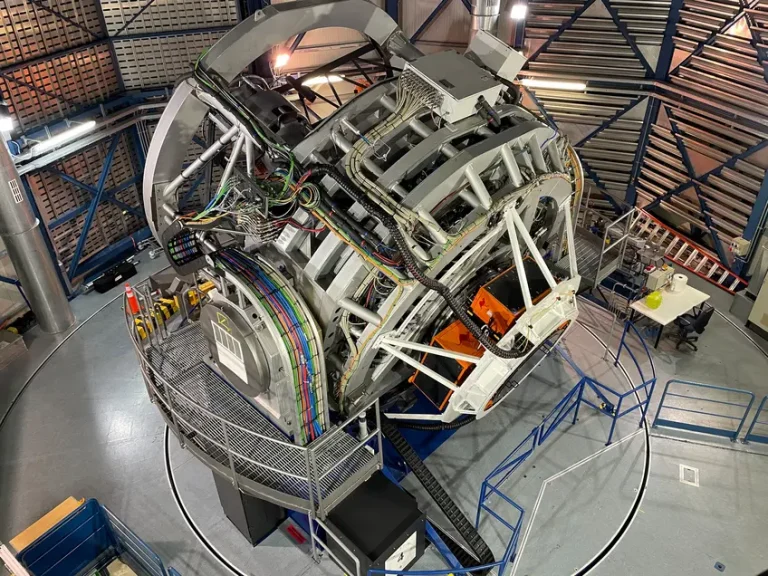
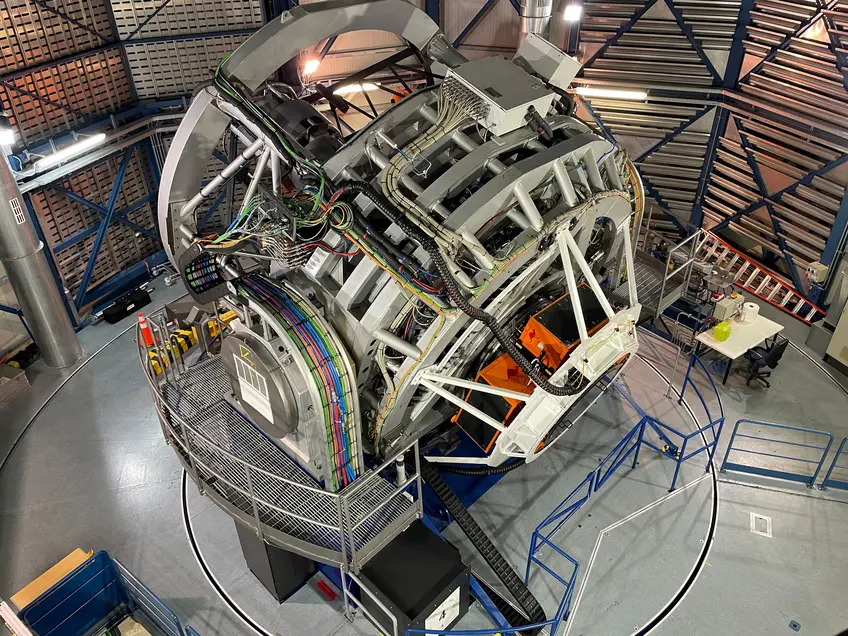
The 4MOST instrument installed at ESO’s VISTA telescope
AIP/A. Saviauk under license CC BY 4.0
First light for the 4MOST spectrograph at ESO’s VISTA telescope
Key hardware contributions by the Max Planck Institute for Astronomy
4MOST will obtain spectra for over 25 million stars, galaxies, and quasars
Science applications include stellar astrophysics and properties of the Milky Way galaxy
The previous weekend, the 4-metre Multi-Object Spectroscopic Telescope, “4MOST” for short, successfully made its first test observations. 4MOST is an instrument installed on ESO’s 4 meter survey telescope VISTA, which can simultaneously observe ~ 2400 objects within its large field-of-view of 4.2 square degrees. Over the next five years, 4MOST is set to record detailed spectra for more than 25 million astronomical objects, from stars and galaxies to distant quasars. Like most large astronomical instruments, 4MOST is built by a consortium, which in this case is led by AIP Potsdam, and which includes the Max Planck Institute for Astronomy (MPIA).
MPIA has been responsible for instrument control hardware, and also contributed to the high-resolution spectrograph. As is usual when a consortium builds an instrument, MPIA as one of the core consortium members also receives a certain contingent of observing time on 4MOST. MPIA’s Maria Bergemann is one of the leaders (Principal Investigator, PI) of the 4MIDABLE-HR spectroscopic survey that will provide high-resolution optical spectra for over 3.6 million stars in the Milky Way galaxy. These stars had already been observed by European and US space-based missions, Gaia, eROSITA, K2 and TESS. 4MIDABLE-HR will also provide the first nearly complete spectroscopy of the southern field to be observed by PLATO exoplanet mission.
Bergemann is an expert on analysing stellar spectra, and she and her group will use these spectra to deduce the chemical abundances of over 20 elements, which represent all the different nucleosynthesis pathways by which stars convert lighter nuclei into heavier ones. The result is bound to have an impact on a whole spread of astrophysical questions: from stellar structure to the evolution of binary stars, the connection between stars and their planets, and the structure and chemical evolution of our home galaxy, the Milky Way.
Contact Image of Dr. Maria Bergemann Dr. Maria Bergemann Lise Meitner Group Leader +49 6221 528-401 bergemann@… Dr. Markus Pössel Head of press relations and outreach +49 6221 528-261 pr@… Max Planck Institute for Astronomy, Heidelberg Externe Pressemitteilung ESO press release on 4MOST first light
By: Dr. Maria Bergemann Originally published at: Max Planck Institute
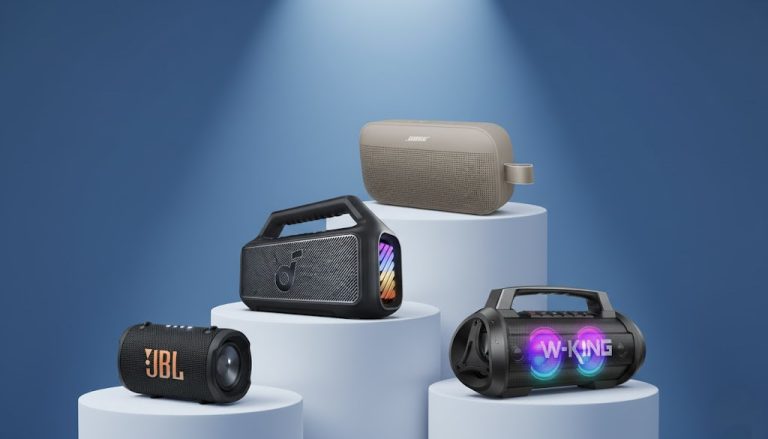
Why buy a Bluetooth speaker when full-sized sound systems easily outperform these little gadgets? Home theater setups are indeed more powerful and deliver richer sound quality compared to compact speakers.
But the key advantage of Bluetooth speakers lies in portability, that’s their bread and butter. They’re designed to be taken anywhere, offering a balance between mobility and playback duration. So, don’t expect your handy-dandy speaker to match a full home sound system, as they serve different purposes.
When choosing a Bluetooth speaker, a few things matter most: power (both range and loudness), battery life, and of course, price – which often becomes the deciding factor in the end.
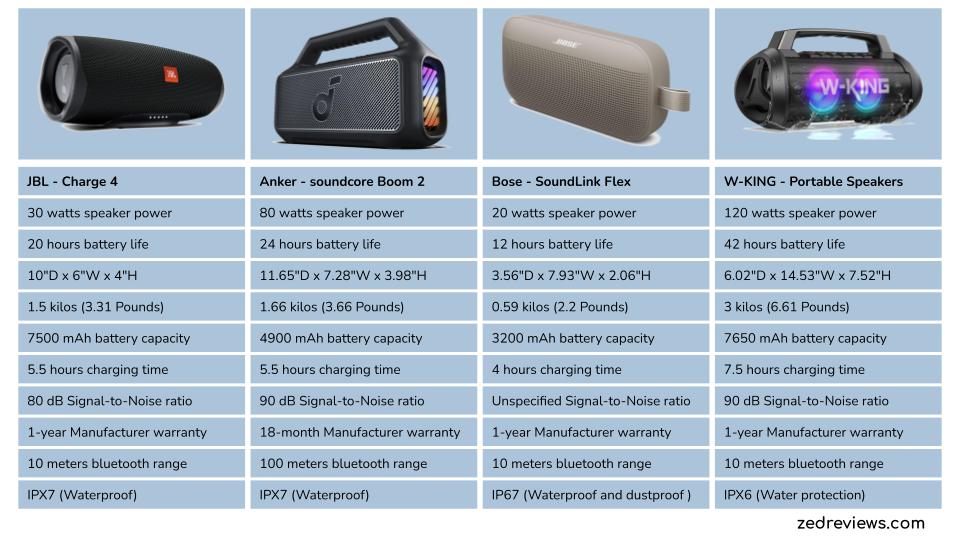
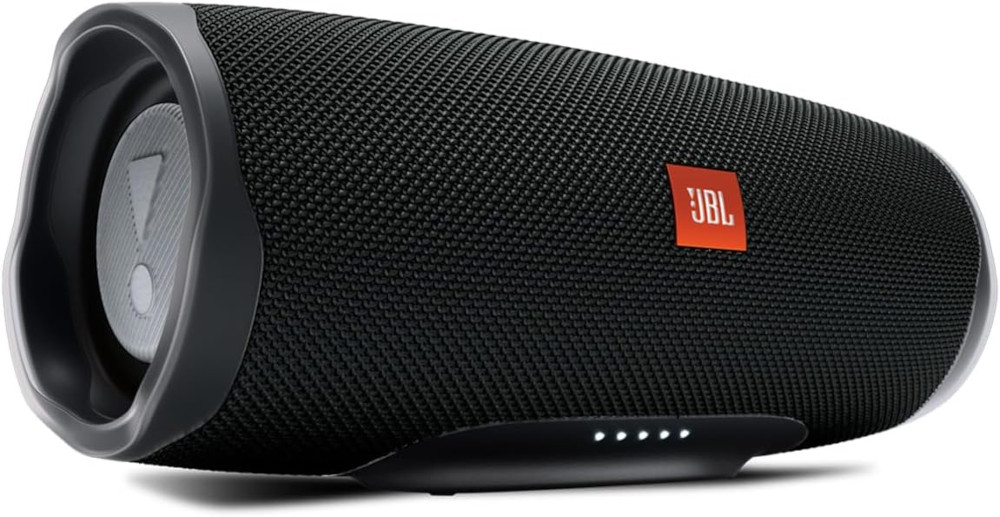
SPECIFICATIONS: Brand: JBL Output Power (in watts): 30 Size: 10″D x 6″W x 4″H Weight: 1.5 kilos (3.31 Pounds) Battery Life: 20 Hours Charging Speed: 5.5 Hours Signal-to-Noise Ratio: 80 dB Bluetooth range: 10 meters (approximately 33 feet) Protection Rating: IPX7 (Waterproof)
PROS: + Budget-friendly + High battery capacity + Waterproof
CONS: – Lower speaker output power compared to others
This budget-friendly portable audio deck might be one of the cheapest on the list, but don’t sell it short. It delivers decent output power with surprisingly good sound quality. Compared to the first generation, there’s a sixfold improvement in output power, which is impressive for its price range. On typical use, it can last up to 20 hours on a full charge, perfect for long listening sessions.
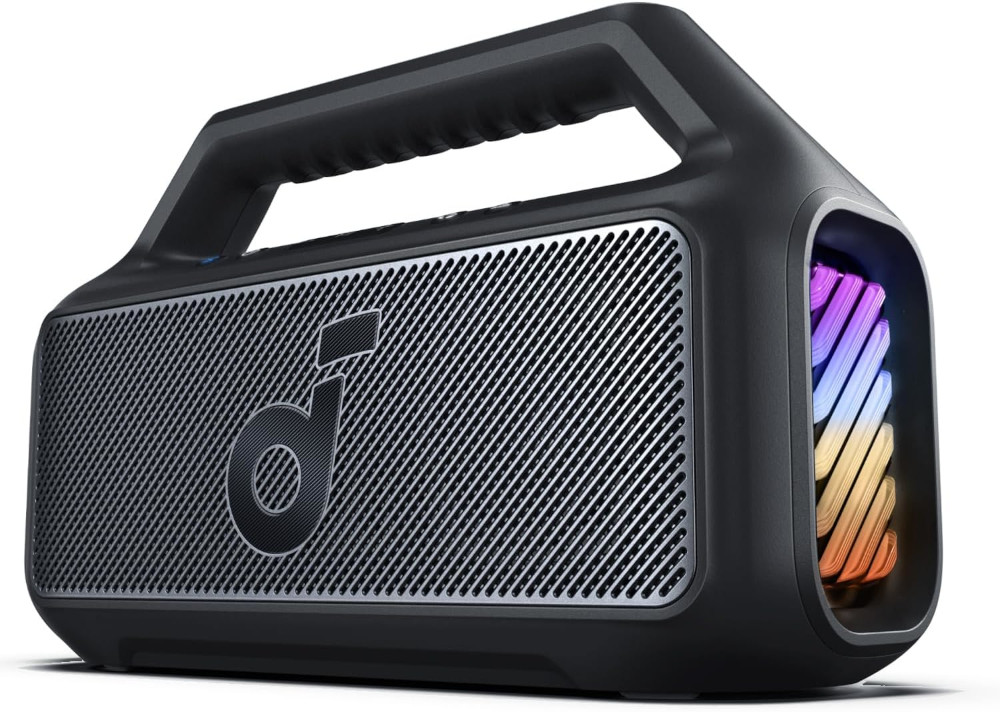
SPECIFICATIONS: Brand: Soundcore Output Power (in watts): 80 Size: 11.65″D x 7.28″W x 3.98″H Weight: 1.66 Kilograms Battery Life: 24 Hours Charging Speed: 5.5 Hours Signal-to-Noise Ratio: 90 dB Bluetooth range: 100m (approximately 328ft) Protection Rating: IPX7 (Waterproof)
PROS: + Waterproof + Longest Bluetooth range + Longest warranty
CONS: – Slightly heavier than the Bose SoundLink Flex
The Anker Soundcore Boom 2 is our recommended pick. It offers an excellent Bluetooth range, opening up plenty of possibilities, from freely moving around the house to enjoying music at the beach without worrying about disconnections due to obstacles. It also comes with an 18-month manufacturer warranty, giving you extra peace of mind and great value for your money.
In terms of audio performance, it delivers strong output power and impressive sound fidelity, boasting a high signal-to-noise ratio (SNR) comparable to the W-KING model featured on this list.
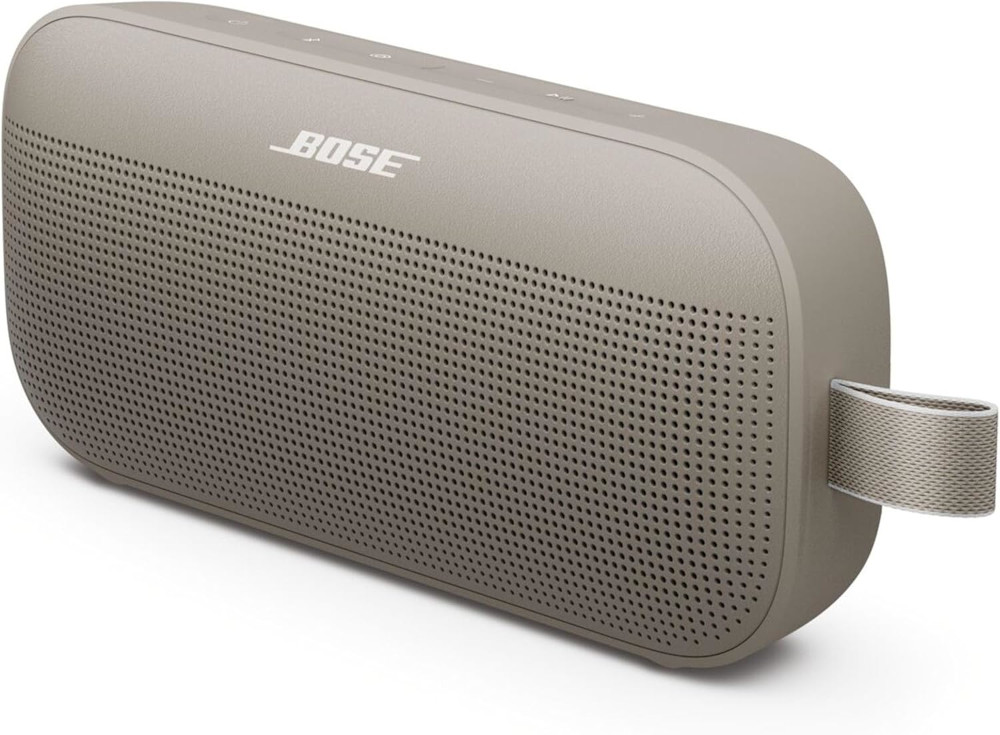
SPECIFICATIONS: Brand: Bose Output Power (in watts): 20 Size: 3.56″D x 7.93″W x 2.06″H Weight: 0.59 Kilograms (approximately 2.2 pounds) Battery Life: 12 Hours Charging Speed: 4 Hours Signal-to-Noise Ratio: Unspecified Bluetooth range: 10 meters (approximately 33 feet) Protection Rating: IP67 (Waterproof and dustproof )
PROS: + Slim and compact design + Lightest + Waterproof and dustproof
CONS: – Lowest battery capacity – Lowest speaker output power
One of the most common praises from our reviewers is its impressive sound design. Despite its size, the speaker delivers deep, rich bass, making it ideal for listeners who enjoy bass-heavy music.
It’s the smallest and most portable option on this list, though that comes with trade-offs, it has the lowest volume output and shorter battery life, lasting up to 12 hours of continuous play on a full charge.
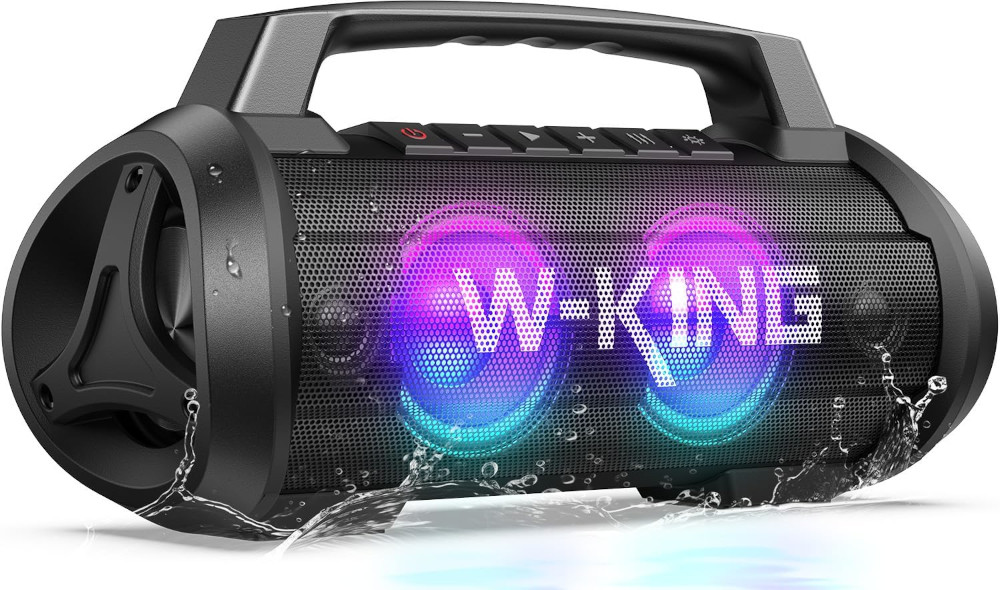
SPECIFICATIONS: Brand: W-KING Output Power (in watts): 120 Size: 6.02″D x 14.53″W x 7.52″H Weight: 3 Kilograms Battery Life: 42 Hours Charging Speed: 7.5 Hours Signal-to-Noise Ratio: 90 dB Bluetooth range: 10 meters (approximately 33 feet) Protection Rating: IPX6 (Water protection but not submersible)
PROS: + Budget-friendly + Doubles as a power bank + Longest playtime (when LED light is off)
CONS: – Long charging time despite similar battery capacity to the JBL – Bulky design
Priced similarly to the JBL Charge 4, this little powerhouse delivers the highest output power in its range, giving it excellent overall value. What impressed us even more is its exceptionally high Signal-to-Noise Ratio (SNR), ensuring clear and detailed sound even at higher volumes.
It also boasts up to 42 hours of playtime, though this may decrease when the LED lights are turned on. And yes, it even functions as a power bank, making it perfect for long trips or outdoor use.
Now for the less exciting part, money-saving tips. Let’s be honest: Bluetooth speakers don’t always last forever. At the very least, they should come with insurance or a warranty that covers common issues like defects.
We know returning broken items can be a hassle as it costs not just money, but time as well. The following table compares each model’s warranty duration, price, and an estimated value-per-month to help you decide which offers the best long-term deal.
A larger battery capacity doesn’t always mean longer playtime, actual battery life depends on factors such as volume level and additional features like LED lighting.
A high Signal-to-Noise Ratio (SNR) is also an important quality indicator. A higher SNR means the audio is cleaner and clearer, with less interference from background electronic noise produced by the speaker’s internal components.
Student life is busy enough without hassles like paying for shipping. That’s why Amazon Prime Student is a must-have for you. For just $14.99 $7.49/month, Prime Student gets you free two-day shipping on over 100 million items, unlimited photo storage, exclusive deals, and more. Better still, it comes with a six-month free trial so you can make sure Prime Student fits your lifestyle. Join today to take advantage of membership
NASA integrated the Artemis II Orion stage adapter with the rest of the SLS (Space Launch System) rocket on Wednesday in the Vehicle Assembly Building at the agency’s Kennedy Space Center in Florida.
The Orion stage adapter connects the upper stage to the Orion spacecraft, isolates the spacecraft from hazardous gases, deploys small science satellites, and will be used in a maneuvering test during the Artemis II mission.
NASA
Built by NASA engineers at the agency’s Marshall Space Flight Center in Huntsville, Alabama, the adapter connects the rocket’s interim cryogenic propulsion stage to the Orion spacecraft. A composite diaphragm within the ring protects the Orion spacecraft from hazardous gases generated during launch.
Four CubeSats containing science and technology experiments will be deployed from the adapter into high Earth orbit after Orion is a safe distance away . The 12U CubeSats aboard Artemis II were developed by international partners South Korea, Germany, Argentina, and Saudi Arabia. One “U”, or unit, is defined as 10 centimeters by 10 centimeters by 10 centimeters.
NASA will integrate the Orion spacecraft with the rocket in the coming weeks ahead of the mission, scheduled for no later than April 2026. Testing and simulations in preparation for the upcoming launch taking place no later than April 2026.
As the Artemis II rocket is nearing completion at NASA Kennedy, work continues on flight hardware for Artemis III. NASA Marshall engineers have flipped the Artemis III Orion stage adapter to begin bracket, avionics, and cable instillation. Later this fall, its diaphragm will be installed.
Through Artemis, NASA will send astronauts to explore the Moon for scientific discovery, economic benefits, and build the foundation for the first crewed missions to Mars.
But how do you pick the right smartwatch? The answer depends on how you plan to use it. Let’s start with the most common features these devices provide.
At the most basic level, a smartwatch is still a watch, it tells the time. Beyond that, the real value comes from the extras. Smartwatches serve as a window into your smartphone, giving you quick access to notifications, schedules, messages, calendar reminders, and other important updates without needing to reach for your phone.
Next are the health benefits. While some may dismiss heart rate monitoring as a minor feature, it can be far more significant. For instance, if your heart rate is unusually high while you’re resting at home, not exercising, that may be an early warning sign of an underlying issue. These insights can be crucial for spotting concerns before they become problems.
Finally, many smartwatches offer GPS and location tracking, which are especially useful for activities like running, cycling, and hiking. Some models also include safety features, such as SOS alerts and fall detection, an invaluable tool for older adults or anyone at risk of falls.
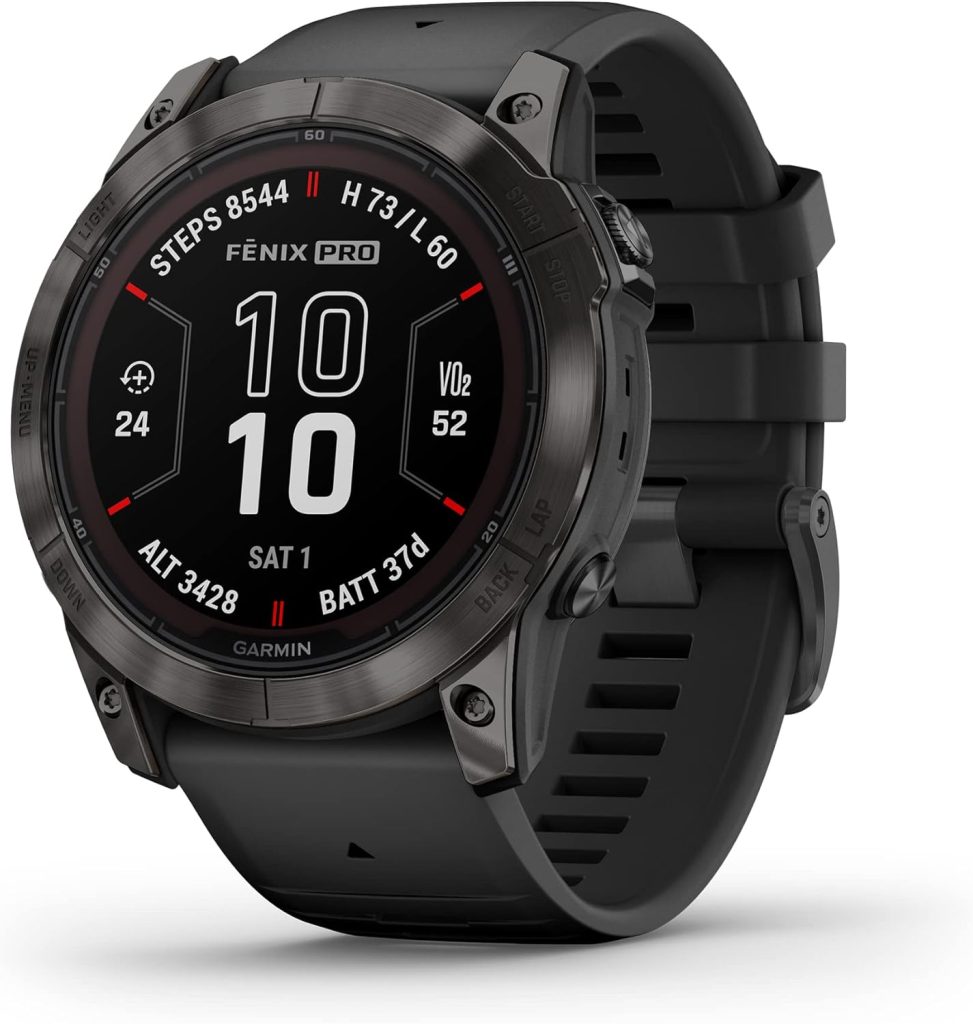
SPECIFICATIONS: OS: Wear OS by Google Compatibility: Android and iPhone Display: Digital, 480 x 272 pixels Storage: 32 GB Battery: 37 days with solar charging (atleast 3 hours of direct sunlight), varied usage when GPS is enabled Charging time: Unspecified IP rating: 100 Meters Connectivity: Bluetooth, USB, Wi-Fi GPS: Yes, built-in
PROS: + Built-in GPS. If always enabled, battery can last up 37 hours + Supports both Android and iPhone + Solar charging
CONS: – Most expensive of them all
The solar charging alone is already a standout reason to buy this smartwatch. Under regular use without constant GPS, you’ll barely need to charge it manually during the day. With GPS turned on, it can still last around 60-70 hours, depending on solar exposure.
This feature really shines for outdoor activities over long durations, such as hiking, trail running, or endurance workouts under the sun. The built-in flashlight, rugged durability, and fitness tracking features make it especially appealing for adventure seekers.
Our main concern is the price. At around $1,000, this is a serious investment. Even if you only count its minimum 1-year warranty, that works out to roughly $80 per month or about $3 per day. If you value solar charging, toughness, and performance for demanding activities, however, the fēnix 7X Pro proves itself to be worth the cost.
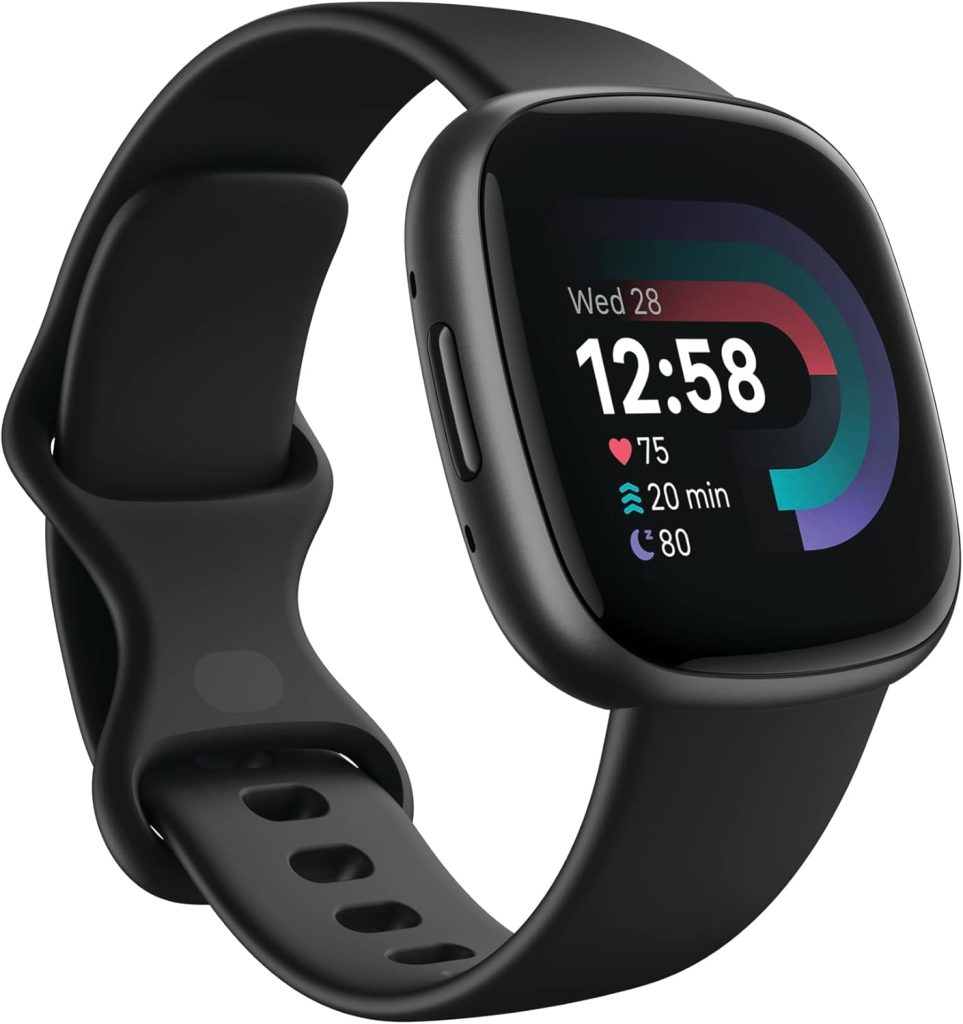
SPECIFICATIONS: OS: ios Compatibility: Android and iPhone Display: OLED, LCD, or AMOLED | 1.58-inch screen size and 348 x 442 resolution Storage: 4GB Battery: 6 days, or 12 hours if GPS is enabled Charging time: 12 minutes IP rating: IP67, Water resistant up to 1 meter (3.3 feet) Connectivity: Bluetooth, Wi-Fi GPS: Yes, built-in
PROS: + Built-in GPS. If always enabled, battery can last up 12 hours + Support Android and iPhone + Cheapest option from the list
CONS: – Low memory/storage – Low battery capacity
The Fitbit Versa 4, owned by Google, is one of the best entry-level smartwatches on the market. Priced at around $200, it offers solid value. Even if you only keep it for a year, which is backed by Fitbit’s warranty, that works out to roughly $15 per month. Considering the productivity features and health monitoring it provides, that’s a worthwhile investment.
The watch also includes a 6-month Fitbit Premium membership. This subscription unlocks additional reports, insights, and personalized wellness plans. While not essential for the watch to function, it’s a nice bonus for those who want deeper health tracking.
The Fitbit Versa 4 is a great budget-friendly smartwatch, perfect for beginners who want a reliable introduction to wearable tech. While you may find more advanced options at higher price points, its cost-to-feature balance is impressive. The main drawback is its battery life, with a weekly charging may feel inconvenient for some users.
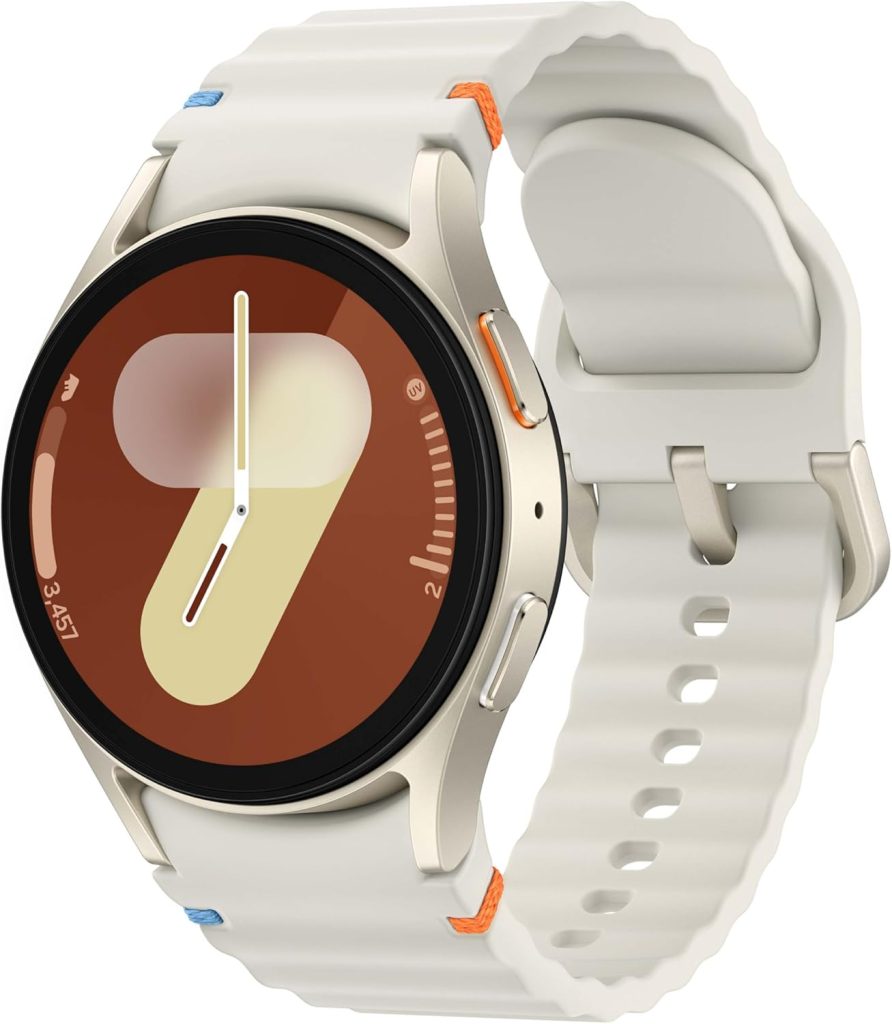
SPECIFICATIONS: OS: Samsung’s Wear OS (Based from Google’s Wear OS) Compatibility: Android Display: AMOLED with 432 x 432 resolution Storage: 32 GB Battery: up to 30 Hours Charging time: Unspecified. Approximately 1-2 hours IP rating: IP68, water resistant up to 6 feet Connectivity: Bluetooth, Wi-Fi GPS: No
PROS: + Has LTE + Great compatibility with Samsung phones
CONS: – No built-in GPS – Low battery capacity, needs to be charged every other day
The Galaxy Watch 7 is a solid companion if you’re already using a Samsung Galaxy phone. While it can connect to an iPhone, functionality is limited to basic features like step counting and heart rate monitoring. For the best experience, full compatibility is really only available with Samsung’s own devices.
Build quality is decent, and although its price is slightly higher than the Fitbit Versa 4, it’s still relatively affordable compared to premium smartwatches. The biggest drawback is its battery life, lasting only about two days on a charge. Another downside is the lack of built-in GPS, which puts it behind some competitors in this price range.
Overall, the Galaxy Watch 7 is not the strongest option in terms of features or endurance, but if you’re a Samsung Galaxy phone user looking for seamless integration, it remains a worthy option to consider.
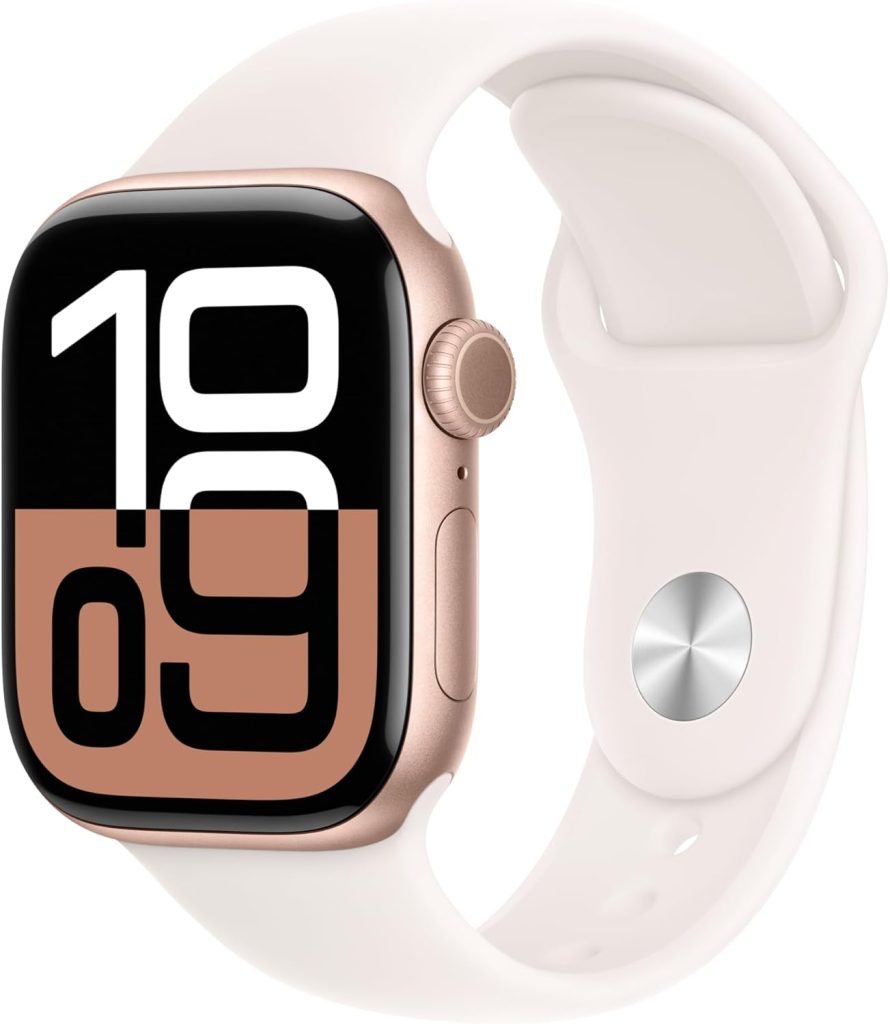
SPECIFICATIONS: OS: Apple Compatibility: iPhone only Display: 42 millimeters OLED, (resolution unspecified) Storage: 64GB Battery: up to 18 hours Charging time: 80% battery in approximately 30 minutes, magnetic wireless charging IP rating: IP6X-certified dust resistant, 50 maters water resistance Connectivity: Bluetooth, Wi-Fi GPS: Yes, built-in
PROS: + Highest storage + Built-in fall detection and crash detection + Emergency SOS lets you call for help with the press of a button + Works seamlessly with your Apple devices and services
CONS: – Only supports iPhone. – Lowest battery life, needs to be charged almost daily
For iPhone users, the Apple Watch Series 10 is the obvious choice. While some third-party smartwatches work with iPhones, compatibility issues and Apple’s famously closed ecosystem means that Apple Watch remains the most seamless option. This model also offers the largest display yet, with a slightly bigger screen than its predecessors.
One of its strongest appeals is the comprehensive health monitoring suite. The built-in ECG can help detect irregular heart rhythms, while fall detection provides peace of mind for older adults, people with mobility challenges, or anyone at higher risk of falls. While false positives can happen, the feature has been credited with saving lives in real emergencies.
The main limitation is its restricted compatibility. As with all Apple products, it works best within the Apple ecosystem, and support for non-Apple devices is minimal. For those already invested in iPhones and other Apple products, however, the Apple Watch Series 10 is a top-tier smartwatch that blends design, health tracking, and usability.
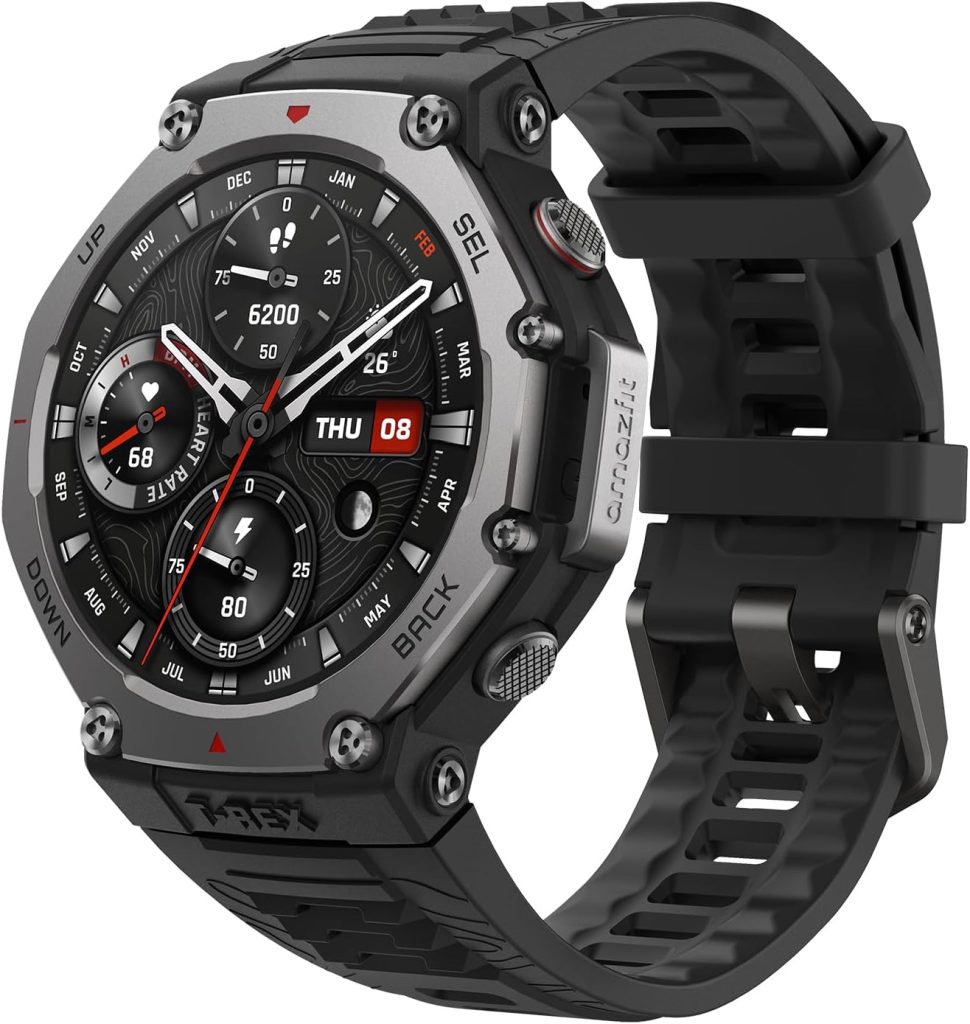
SPECIFICATIONS: OS: Zepp OS 4.0 Compatibility: Android 7.0 and above, iOS 14.0 and above Display: 1.5 Inches Storage: 26 GB Battery: Up to 27 days on a single charge. GPS mode : Up to 180 hours (7.5 days) Charging time: Unspecified. IP rating: IPX7 water resistance rating Connectivity: Bluetooth, Wi-Fi GPS: Yes, built-in
PROS: + Supports Android and iOS devices + Long battery duration
CONS: – Bulky appearance
The Amazfit T-Rex 3 stands out as the most well-balanced option in terms of features, battery life, and price, making it our recommended pick. With a rugged, professional, sporty look, it includes essentials such as a heart rate monitor and blood oxygen tracking, similar to the higher-priced models on this list.
Battery performance is a key highlight: it can last up to 27 days on a single charge with typical use (without GPS), putting it in the same league as the Garmin in terms of endurance. This makes it a strong choice for those who don’t want the hassle of frequent charging.
The design, however, may not appeal to everyone. The body of the watch, excluding the round display, features a hexagonal casing, which sets it apart from the usual circular or square designs. While distinctive, the larger build may feel bulky on smaller wrists.
For comparison’s sake, let’s assume each of these smartwatches lasts at least one year—the period generally covered by warranty. Of course, most will last much longer, but this gives us a baseline to measure monthly cost of ownership:
At a minimum, every smartwatch on this list offers a productivity boost through notifications and basic health monitoring. But in the end, the decision often comes down to something more personal: how it looks and feels on your wrist.
Student life is busy enough without hassles like paying for shipping. That’s why Amazon Prime Student is a must-have for you. For just $14.99 $7.49/month, Prime Student gets you free two-day shipping on over 100 million items, unlimited photo storage, exclusive deals, and more. Better still, it comes with a six-month free trial so you can make sure Prime Student fits your lifestyle. Join today to take advantage of membership
This NASA/ESA Hubble Space Telescope image released on Sept. 12, 2025, features a cloudy starscape from an impressive star cluster. This scene is in the Large Magellanic Cloud, a dwarf galaxy situated about 160,000 light-years away in the constellations Dorado and Mensa. With a mass equal to 10–20% of the mass of the Milky Way, the Large Magellanic Cloud is the largest of the dozens of small galaxies that orbit our galaxy.
The Large Magellanic Cloud is home to several massive stellar nurseries where gas clouds, like those strewn across this image, coalesce into new stars. Today’s image depicts a portion of the galaxy’s second-largest star-forming region, which is called N11. (The most massive and prolific star-forming region in the Large Magellanic Cloud, the Tarantula Nebula, is a frequent target for Hubble.) We see bright, young stars lighting up the gas clouds and sculpting clumps of dust with powerful ultraviolet radiation.
This image marries observations made roughly 20 years apart, a testament to Hubble’s longevity. The first set of observations, which were carried out in 2002–2003, capitalized on the exquisite sensitivity and resolution of the then-newly-installed Advanced Camera for Surveys. Astronomers turned Hubble toward the N11 star cluster to do something that had never been done before at the time: catalog all the stars in a young cluster with masses between 10% of the Sun’s mass and 100 times the Sun’s mass.
The second set of observations came from Hubble’s newest camera, the Wide Field Camera 3. These images focused on the dusty clouds that permeate the cluster, providing us with a new perspective on cosmic dust.
@NASAHubble
By: NASA Hubble Mission Team Originally published at: NASA
The AeroAstro alumnus, who participated in Air Force ROTC and the Gordon Engineering Leadership Program at MIT, is a test pilot and one of 10 new astronaut candidates selected from around the nation.
Mike Finkle | Janine Liberty | Gordon-MIT Engineering Leadership Program | Department of Aeronautics and Astronautics MIT News | https://news.mit.edu/2025/nasa-selects-adam-fuhrmann-astronaut-training-0923
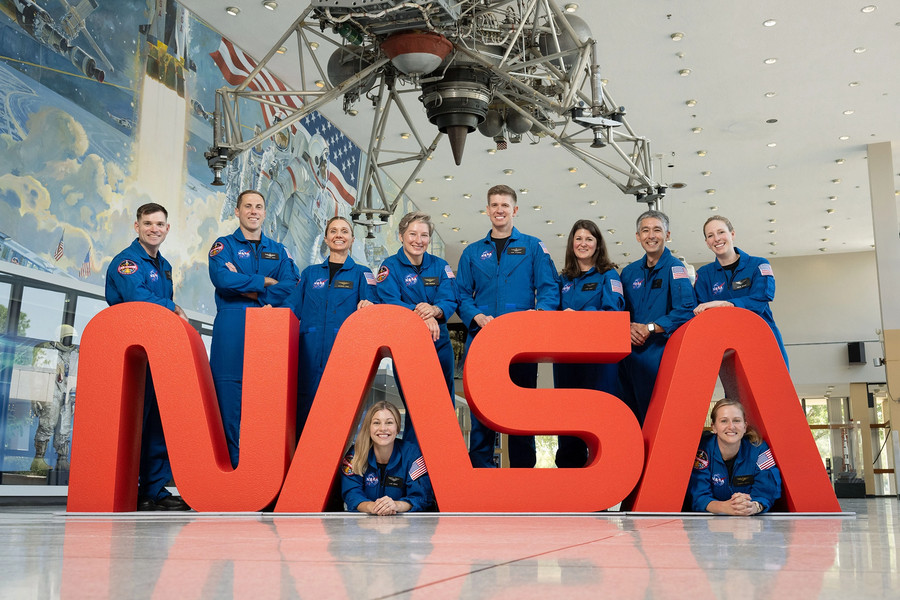
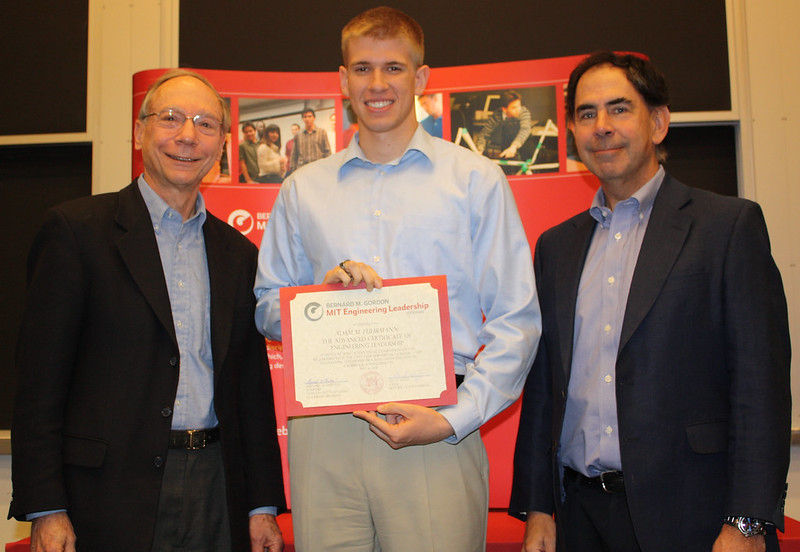
Caption:Upon completion of his training, Adam Fuhrmann ’11 will be the 45th MIT graduate to become a flight-eligible astronaut. Credits:Image: NASACaption:Adam Fuhrmann (standing, fourth from right, with his astronaut candidate classmates) is an experienced test pilot with more than 2,100 flight hours in 27 aircraft, including the F-16 and F-35. Credits:Image: NASAIn disbelief, Fuhrmann had to pull his car into a parking lot to take the call in which he learned he’d been selected to be an astronaut candidate. “Then came the excitement and just extreme gratitude for the opportunity to join this amazing team,” he said at the announcement ceremony at Johnson Space Center, “and I was happy to finish the drive home and share that news with my wife and kids.” Credits:Image: NASAFuhrmann received his GEL Program certificate from GEL Program Founding Industry Co-Director Professor Joel Schindall (left) and GEL Program Founding Faculty Co-Director Ed Crawley. Credits:Image: GEL Program
U.S. Air Force Maj. Adam Fuhrmann ’11 was one of 10 individuals chosen from a field of 8,000 applicants for the 2025 U.S. astronaut candidate class, NASA announced in a live ceremony on Sept. 22.
This is NASA’s 24th class of astronaut candidates since the first Mercury 7 astronauts were chosen in 1959. Upon completion of his training, Fuhrmann will be the 45th MIT graduate to become a flight-eligible astronaut.
“As test pilots we don’t do anything on our own, we work with amazing teams of engineers and maintenance professionals to plan, simulate, and execute complex and sometimes risky missions in aircraft to collect data and accomplish a mission, all while assessing risk and making smart calls as a team to do that as safely as possible,” Fuhrmann said at NASA’s announcement ceremony in Houston, Texas. “I’m happy to try to bring some of that experience to do the same thing with the NASA team and learn from everyone at Johnson Space Center how to apply those lessons to human spaceflight.”
His class now begins two years of training at the Johnson Space Center in Houston that includes instruction and skills development for complex operations aboard the International Space Station, Artemis missions to the moon, and beyond. Training includes robotics, land and water survival, geology, foreign language, space medicine and physiology, and more, while also conducting simulated spacewalks and flying high-performance jets.
From MIT to astronaut training
Fuhrmann, 35, is from Leesburg, Virginia, and has accumulated more than 2,100 flight hours in 27 aircraft, including the F-16 and F-35. He has served as a U.S. Air Force fighter pilot and experimental test pilot for nearly 14 years and deployed in support of operations Freedom’s Sentinel and Resolute Support, logging 400 combat hours.
Fuhrmann holds a bachelor’s degree in aeronautics and astronautics from MIT and master’s degrees in flight test engineering and systems engineering from the U.S. Air Force Test Pilot School and Purdue University, respectively. While at MIT, he was a member of Air Force ROTC Detachment 365 and was selected as the third-ever student leader of the Bernard M. Gordon-MIT Engineering Leadership Program (GEL) in spring 2011.
NASA Selects 2025 Astronaut Candidates Video: NASA
“We are tremendously proud of Adam for this notable accomplishment, and we look forward to following his journey through astronaut candidate school and beyond,” says Leo McGonagle, GEL founding and executive director.
“It’s always a thrill to learn that one of our own has joined NASA’s illustrious astronaut corps,” says Julie Shah, head of the MIT Department of Aeronautics and Astronautics and the H.N. Slater Professor in Aeronautics and Astronautics. “Adam is Course 16’s 19th astronaut alum. We take very seriously the responsibility to provide the very best aerospace engineering education, and it’s so gratifying to see that those fundamentals continue to set individuals from our community on the path to becoming an astronaut.”
Learning to be a leader at MIT
McGonagle recalls that Fuhrmann was a very early participant in GEL from 2009 to 2011.
“The GEL Program was still in its infancy during this time and was in somewhat of a fragile state as we were seeking to grow and cement ourselves as a viable MIT program. As the fall 2010 semester was winding down, it was evident that the program needed an effective GEL2 student leader during the spring semester, who could lead by example and inspire fellow students and who was an example of what right looks like. I knew Adam was already an emerging leader as a senior cadet in MIT’s Air Force ROTC Detachment, so I tapped him for the role of spring student leader of GEL,” said McGonagle.
Fuhrmann initially sought to decline this role, citing his time as a leader in ROTC. But McGonagle, having led the Army ROTC Program prior to GEL, felt that the GEL Student Leader role would challenge and develop Fuhrmann in other ways. In GEL, he would be charged with leading and inspiring students from a broad background of experiences, and focused exclusively on leading within engineering contexts, while engaging with engineering industry organizations.
“GEL needed strong student leadership at this time, so Adam took on the role, and it ended up being a win-win for both him and the program. He later expressed to me that the experience challenged him in ways that he hadn’t anticipated and complemented his Air Force ROTC leadership development. He was grateful for the opportunity, and the program stabilized and grew under Adam’s leadership. He was the right student at the right time and place,” said McGonagle.
Fuhrmann has remained connected to the GEL program. He asked McGonagle to administer his oath of commissioning into the U.S. Air Force, with his family in attendance, at the historic Bunker Hill Monument in Boston. “One of my proudest GEL memories,” said McGonagle, who is a former U.S. Army Lt. Colonel.
Throughout his time in service which included overseas deployments, Fuhrmann has actively participated in Junior Engineering Leader’s Roundtable leadership labs (ELLs) with GEL students, and he has kept in touch with his GEL2 cohort.
“Adam’s GEL2 cohort meets informally once or twice a year, usually via Zoom, to share and discuss professional challenges, lessons learned, life stories, to keep in touch with each other. This small but excellent group of GEL alum is committed to staying connected and supporting one another, as part of the broader GEL community,” said McGonagle.
Reprinted with permission of MIT News (http://news.mit.edu/)
By Susanne P. Schwenzer, Professor of Planetary Mineralogy at The Open University, UK
Earth planning date: Friday, Sept. 19, 2025
NASA’s Mars rover Curiosity acquired this image of the landscape it is currently navigating — hollows surrounded by ridges. The rover captured the image using its Left Navigation Camera on Sept. 17, 2025 — Sol 4662, or Martian day 4,662 of the Mars Science Laboratory mission — at 05:25:51 UTC.
NASA/JPL-Caltech
Curiosity is currently driving along the ridges of a very uneven terrain. One of the bigger ridges we nicknamed “Autobahn,” which is the German word for a highway. But the rover didn’t stay on that autobahn, now more officially named “Arare,” for very long. Instead it went on a trip along several of the smaller ridges and even into some hollows. You can get a good impression of the landscape in the image above, or view a wider panorama image here.
Today, I was science operations working group (SOWG) chair, the one responsible for coordinating all the science planning and making sure we stay within power and data budgets. As we have so much to do with imaging ridges and hollows, and the team members are also keeping APXS and LIBS busy planning to investigate the chemistry of the ridge tops, the sides of the ridges, and of course the rocks within the hollows, the demands on power and data volume are high. Alongside the “geo” observations, we are still in aphelion cloud season and want to make sure we capture enough atmospheric and environmental observations, too. In each plan, the DAN instrument and MARDI camera are regularly looking down. DAN informs us about hydrogen in the subsurface underneath the rover, which is most likely associated with water-bearing minerals. MARDI is documenting the rocks underneath the rover, more precisely underneath the left-front wheel.
With so many demands, and the fact that we are just coming out of Martian winter, where cold temperatures demand more heating to keep the rover safe, there was lots of demand on the power budgets all of this week. Thus, myself and my SOWG chair colleagues had many discussions to facilitate. What amazes me each time about our team, though, is how smoothly those discussions go and how deep an understanding we all have developed about the seasonality and cadence of each other’s investigations. It is so nice to see how smooth it has become to — as a team — figure out what has the highest priority on a given planning day.
After a range of good discussions, and luck that the rover was parked in a stable position for each planning cycle, we had many arm activities. APXS and MAHLI focused on measuring and imaging the ridge tops — we call them bedrock — and those bedrocks look very smooth on top of the ridges. Targets “Turbio,” “Río Aguas Blancas,” and “Isiboro” were measured and imaged earlier in the week, and today it was “Colonia Santa Rosa” and “Le Lentias.” (I am learning Spanish as we go; all those names are from the Uyuni region in South America.) We entered the Uyuni quadrangle on sol 4573; you can read all about it in the blog post, ‘Welcome to the Uyuni Quad.’ More chemistry investigations were added by ChemCam using the LIBS instrument on a wide range of smoother bedrock, complementing APXS observations in many places, and then adding chemical information from locations that have more variable features such as veins, nodules and fractures.
Mastcam and ChemCam, through its remote imager, are taking images of many different features in the landscape. You can see its variation in the image at the top of the blog. What we are interested in is the variability of all those features, but also how they relate to each other. Are some features always on top of others, or are the veins cutting across the fractures? Those are the questions that we can answer with the images taken from a distance for the wider context, and then close-up to see all the details. We have taken overview images such as the one in the image above, and we have taken close-up images with the remote micro-imager and, of course, MAHLI. Many of those images come from the sides of the ridges as this allows us to see “into” the rock record, and how the ridges are constructed. If you look at the image above closely, you can see some of this yourself. You can spot some patterns, too. The ridge tops are more smooth, mostly at least. And that’s how the “Autobahn” was nicknamed in the first place! The hollows look more rough and a little more chaotic, too.
With all the excitement about the rocks, we didn’t forget the environmental observations. Those include temperature and wind, but also imaging of the atmosphere for its opacity and looking for dust devils. We are just coming out of the season with the least dust in the atmosphere. That allowed us to do a first for the mission: image rocks outside the crater rim, 90 kilometers away (about 56 miles)! We are very excited about those images taken with the remote micro-imager of ChemCam and with added Mastcam context. They show what’s beyond the crater rim, and what will have been the source region for some of the sediments we saw very early in the mission, when we explored the Peace Vallis Fan! Have a look at the wide overview image, and this close-up of rocks, 90 kilometers away, with the remote micro-imager.
By: Mars Science Laboratory Mission Team Members Originally published at: NASA Blog
No kitchen is complete without pots and pans, arguably the most essential cooking tools (But if everything is essential, nothing will be essential?). You might manage without a food processor, air fryer, or even an oven, but try cooking without a pot or pan and you’ll quickly run into problems. Sure, you could make do with a campfire and a stick, but in a modern kitchen, these are non-negotiable. At the very least, every cook needs a knife, a frying pan, a saucepan, and a stove.
So, what should you look for when buying pots and pans? First is purpose, consider what you’ll be cooking. Stews and soups call for a pot, while frying and sautéing are best done in a pan. A pot can double as a pan in a pinch, but it’s less efficient because of its depth and smaller cooking surface.
Second is the material. Is it nonstick, oven-safe, or induction-compatible? Nonstick surfaces reduce the need for excess oil and make cleanup easier, saving both time and water. If you use a dishwasher, this last part may not matter as much, but for hand-washers, it’s a real bonus.
Finally, there’s price. With countless options on the market, it’s tempting to get overwhelmed. Whether it’s your very first cooking pot/pan, or a gift for someone else, the best choice balances quality with affordability and fits how you actually cook.
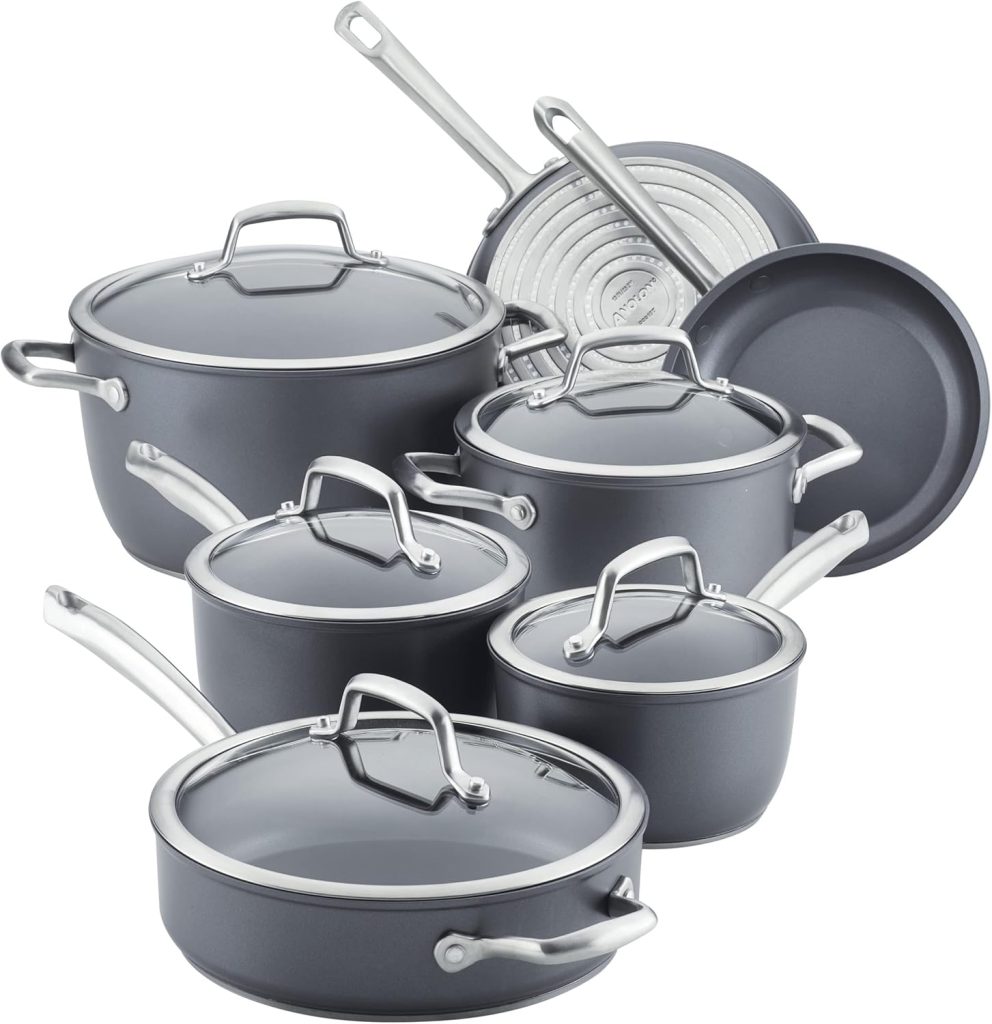
Anolon – 1.75-quart saucepan with lid, 2.5-quart saucepan with lid, 3.5-quart sauce pot with lid, 3-quart saute pan with lid, 7.5-quart stockpot with lid, 8-inch frying pan, 10-inch frying pan
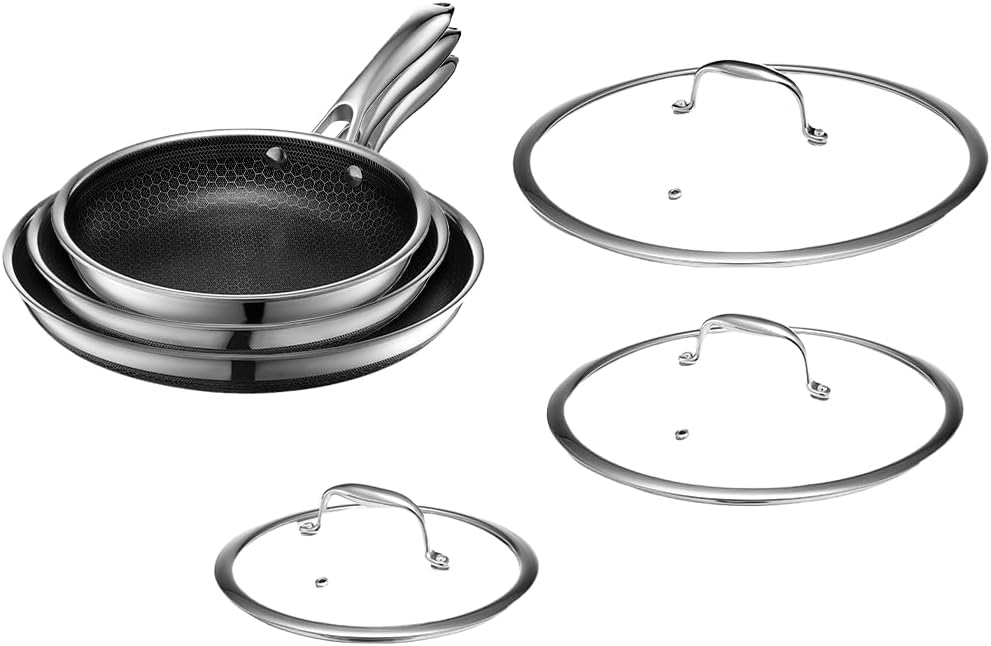
HexClad – Hybrid 8-inch, 10-inch and 12-inch pans
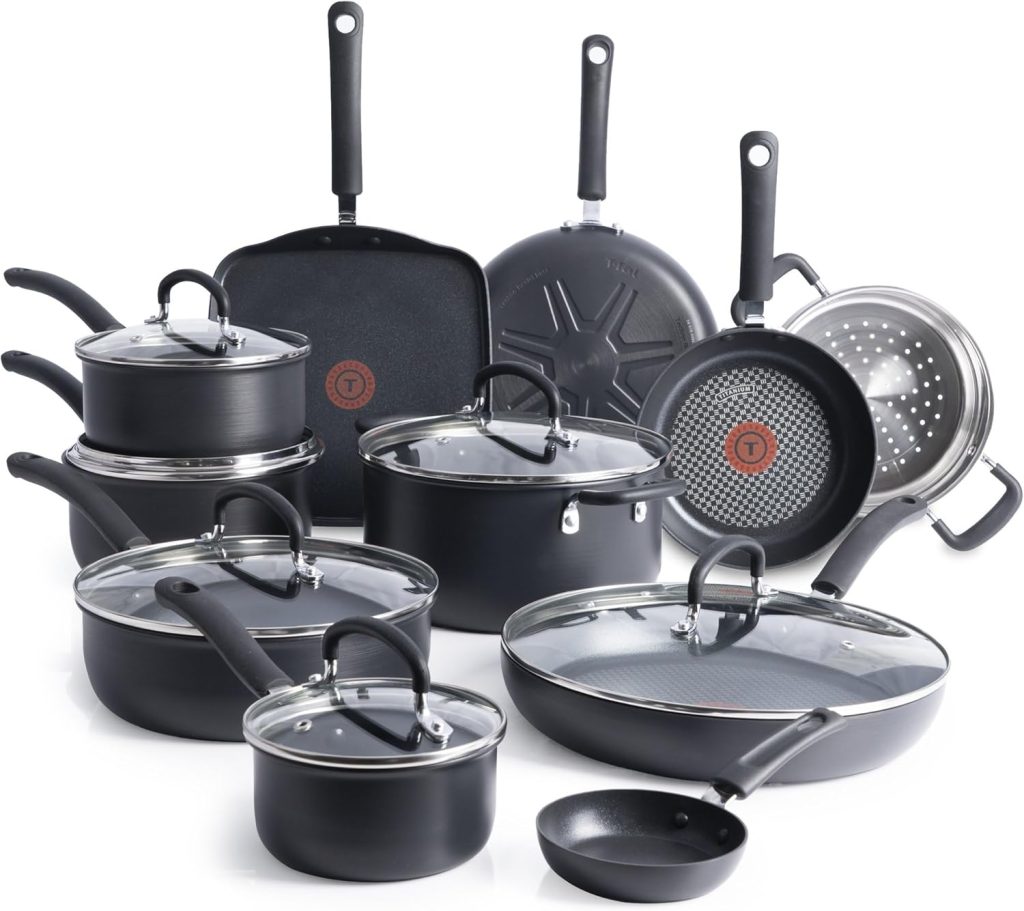
T-Fal – 1 quart 2 quart, and 3 quart covered saucepans, 8 and 10 inch frypan, 11.5 inch covered frypan, 10.25 inch griddle, 3.5 quart saute pan, 5 quart dutch oven, 3 quart steamer insert, and one egg wonder frypan.
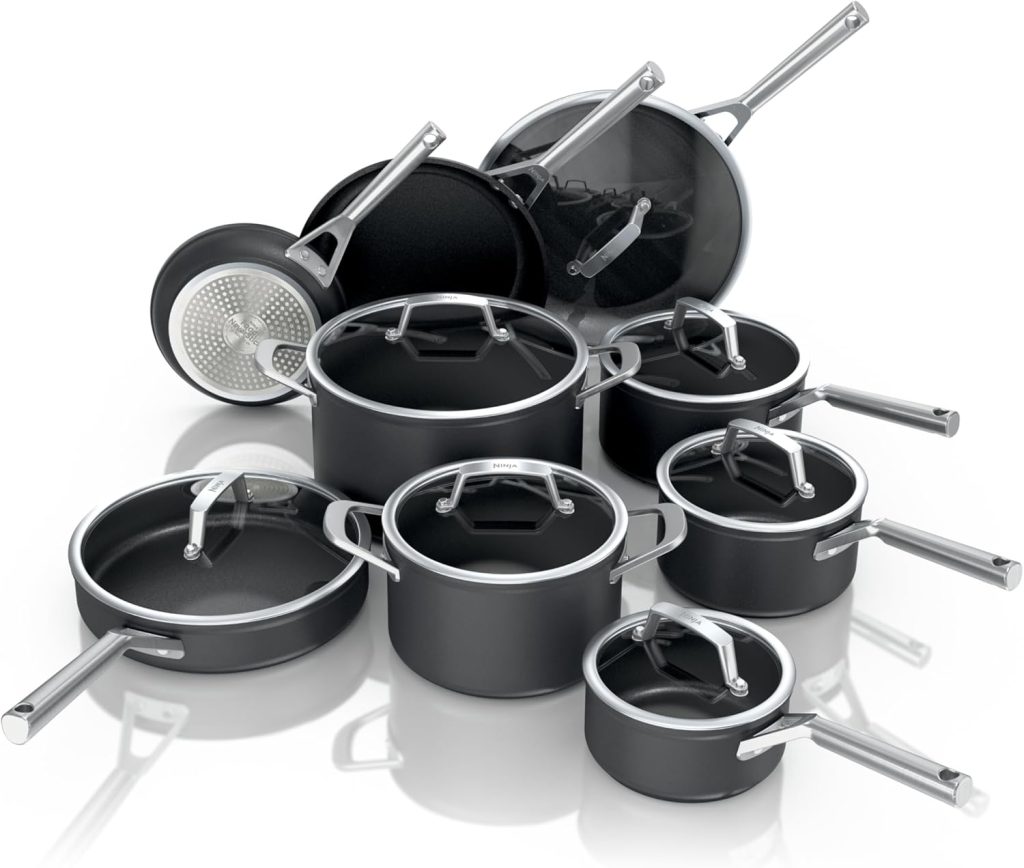
Ninja – 8” Fry Pan with Glass Lid, 10.25” Fry Pan with Lid, 12” Fry Pan, 1.5 qt. Saucepan with Lid, 2.5 qt. Saucepan with Lid, 3.5 qt. Saucepan with Lid, 3 qt. Sauté Pan with Lid, 4 qt. Stock Pot with Lid & 8 qt. Stock Pot with Lid
Starting off strong with a classic wedding gift idea. Just make sure you coordinate with other guests as you don’t want the couple ending up with three cookware sets (though that might not be the worst problem!).
This set includes five pots and two frying pans, covering both everyday needs and the occasional big meal. While most couples might only reach for a couple of pots and a single pan in daily use, the extra pieces ensure they’re ready for special occasions when multiple dishes are on the stove at once.
What stands out is the nonstick finish inside and out, making both cooking and cleanup effortless. Even the rivets are designed to sit flush with the surface, reducing food buildup and keeping the cooking surface smooth.
Pros:
Nonstick coating inside and outside makes cleanup easy
Flush rivets create a smoother cooking surface
Backed by an industry-best Limited Lifetime Warranty
Cons:
Some users report durability issues, particularly with the base peeling over time
The highlights of these HexClad pans are durability, oven-safety, and dishwasher compatibility. Built with a hybrid of aluminum and stainless steel, they offer excellent heat distribution and long-lasting performance. The cookware is oven-safe up to 500°F, making it versatile enough for stovetop-to-oven recipes.
While the price may seem hefty for just three pieces, the quality is undeniably top-notch. This set is a great option for someone just starting out, like a graduate moving into their first apartment, who wants reliable cookware that will last. Plus, HexClad comes with the stamp of approval from Gordon Ramsay, the Michelin-star chef, which speaks volumes about its quality.
The main limitation is that the set includes only three frying pans and no pots. While you could stew or simmer in the largest pan, it may not fully replace a dedicated pot if you cook soups or stews often.
Pros:
Durable hybrid construction (aluminum + stainless steel)
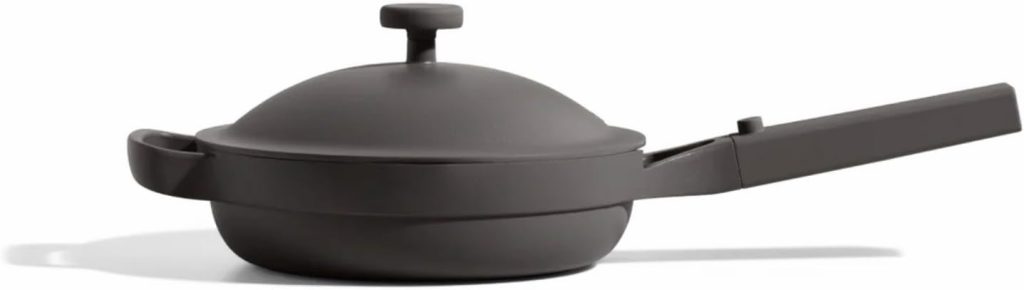
Whether it’s a welcoming gift for a new neighbor, a thoughtful piece for your own kitchen, or a present for someone starting a new chapter in life, this single pot from Our Place makes a meaningful choice. Imagine giving this to a neighbor who just moved in, it’s both practical and stylish, leaving a great impression. Even if they already have plenty of cookware, this pot is so beautifully designed that it could double as a decorative piece in a glass cupboard.
The only drawback is that it isn’t dishwasher-safe, so handwashing is necessary to preserve its elegant finish.
Pros:
Gorgeous design that stands out from typical cookware
Although it could work as a gift, this set is best suited for your own family kitchen. With its wide range of pieces, we like to call it the “Arsenal” set for serious cooking. It doesn’t just include a variety of pots and pans in different sizes, but also useful extras like a steamer insert, egg pan, and griddle. With just the egg pan and griddle, you can whip up a hearty breakfast of eggs, pancakes, and bacon. While the larger pots cover soups, stews, and more. Its size and versatility even make it a solid option for small restaurants or eateries.
One important note: this set is not compatible with induction cooktops, so if that’s your main stove, you’ll want to look elsewhere.
Pros:
10 versatile pieces including pots and pans
Includes a square griddle, egg pan, and steamer insert
Just like the previous entry, this collection falls into the professional-level category. With its wide range of pot and pan sizes, it’s designed to handle large meals, whether you’re cooking for family gatherings, holiday feasts, or even a small catering business. Its durability and completeness also make it the kind of set you can invest in once and use for decades, potentially even passing it down to the next generation.
Pros:
Wide variety of pots and pans for versatile cooking
Large capacity, ideal for family gatherings or catering
Built to last for years
Cons:
Highest price compared to other options in this list
At the end of the day, pots and pans are simply the tools that bring your meals to life. While many sets share common features; like non-stick surfaces, dishwasher safety, and oven compatibility. The difference lies in choosing the one that best fits your lifestyle. Take another look at the table above and see which option matches your needs, or makes the perfect gift for someone starting a new chapter in their life.
Student life is busy enough without hassles like paying for shipping. That’s why Amazon Prime Student is a must-have for you. For just $14.99 $7.49/month, Prime Student gets you free two-day shipping on over 100 million items, unlimited photo storage, exclusive deals, and more. Better still, it comes with a six-month free trial so you can make sure Prime Student fits your lifestyle. Join today to take advantage of membership benefits and perks tailored specifically for students! Click here to sign up now.
One of the most essential tools in any kitchen, and the one that should always be sharpest, is the knife. From cutting, slicing, chopping, dicing, filleting, to deboning, a good knife handles it all. Sure, you could use a food processor for some tasks, but when it comes to precision and delicate cuts, nothing replaces a knife. After all, you wouldn’t use a food processor just to portion out a chicken, would you? (But if you are curious about food processors, check out our previous review here.)
At the very minimum, you only need one knife, ideally a chef’s knife. Add a paring knife, and you’ve got the two most versatile tools for nearly every kitchen task. The chef’s knife is your all-purpose workhorse, while the paring knife excels at small, precise jobs like peeling and trimming.
Beyond these essentials, other knives are optional but valuable additions to your kitchen arsenal: bread knife, carving/slicing knife, utility knife and boning/fillet knife. Think of it like medicine. The chef’s knife is your general practitioner, while the others are the specialists: the neurosurgeons, cardiologists, and oncologists of the culinary world. They’re not always required, but when you need them, they excel at it.
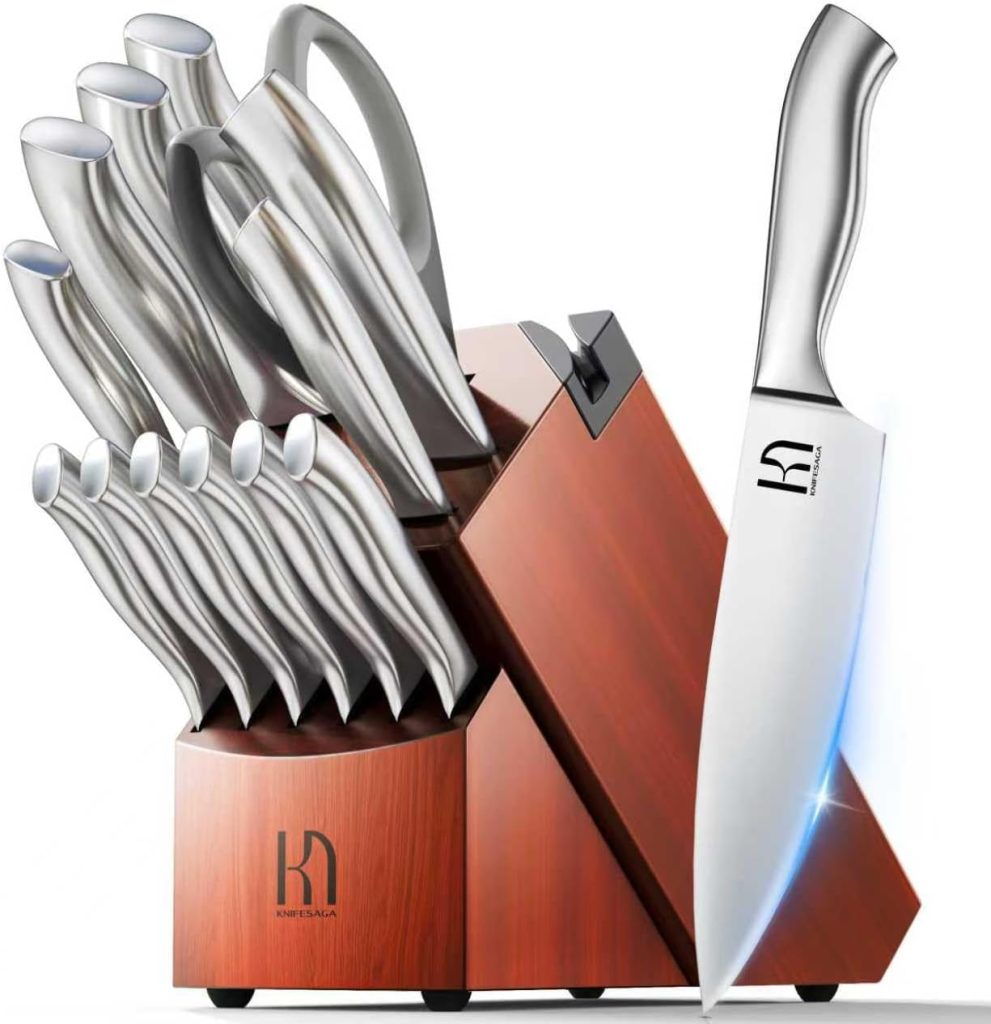
Made from stainless steel, this KnifeSaga set is an excellent choice for beginners looking to invest in their first knife collection. Why? It’s more affordable than many other brands, and it comes with a unique “100 Days to Try” guarantee, giving you plenty of time to test the knives and see if they truly cut it for you. If they do, you’ve found your match.
What we like best about this set is the handle design. The knife and handle are forged from a single piece of stainless steel, giving them strength and durability. The ergonomic shape provides balanced weight, a comfortable grip, and enhanced control. With this one-piece design, you can be confident the handle won’t separate from the blade.
That said, this set does have a limitation: it does not include a carving knife, the blade typically used for slicing roasts or cooked meats. If that’s important to you, you may want to look at other options. Still, for most tasks, the included chef’s knife can serve as a reliable substitute.
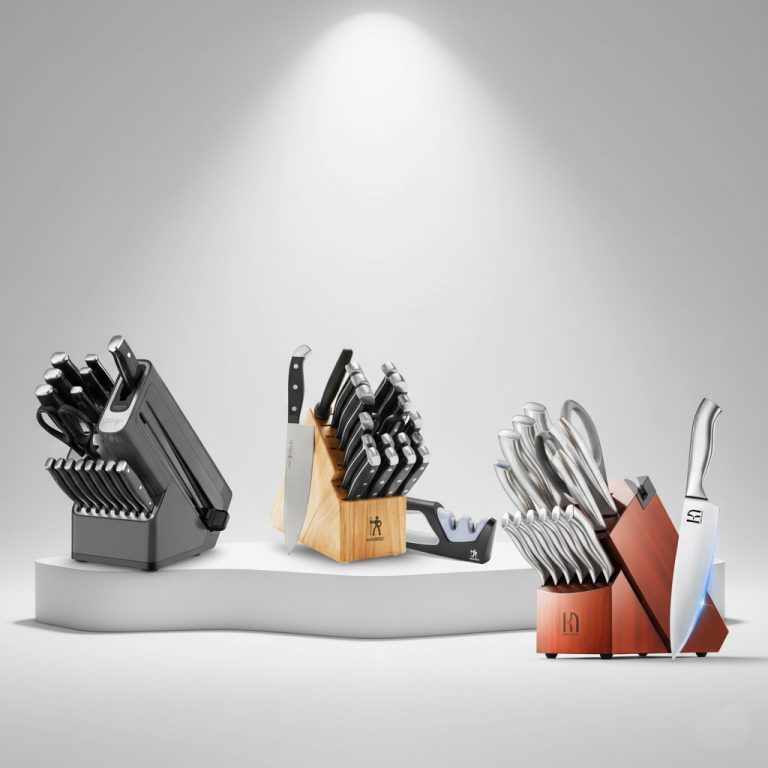
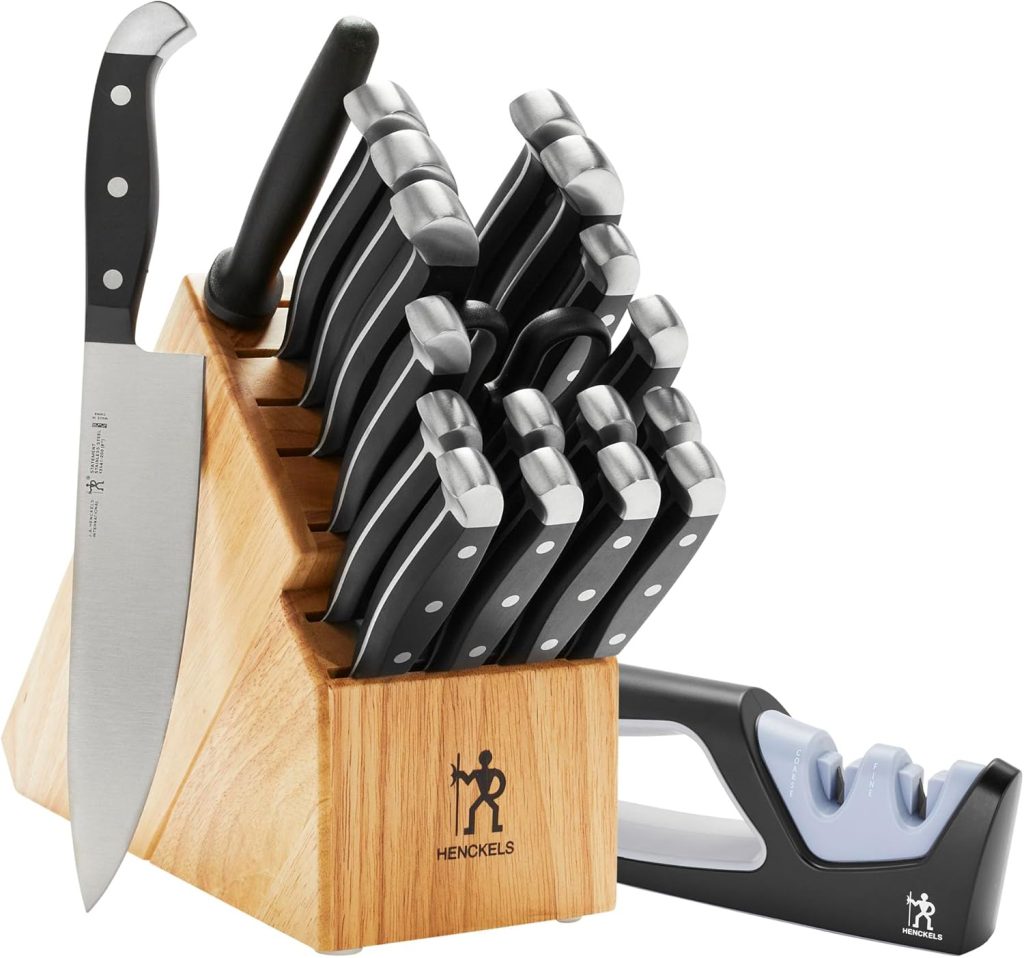
HENCKELS 20 Pcs German Engineered Kitchen Knife Set
With this 20-piece German-engineered knife set, you can be confident that Henckels has built it to be tougher and more durable than your average set. Each knife features a separate handle but is crafted with a full tang design, meaning the blade steel runs through the entire handle. This construction provides excellent balance, durability, and maneuverability, all while keeping the knives relatively lightweight.
One minor drawback is the plastic handles. While not a dealbreaker, they can become slippery when working with wet or greasy foods, which may affect grip and control. That said, the ergonomic design still helps offset this issue, making the set a solid choice for both beginners and experienced home cooks.
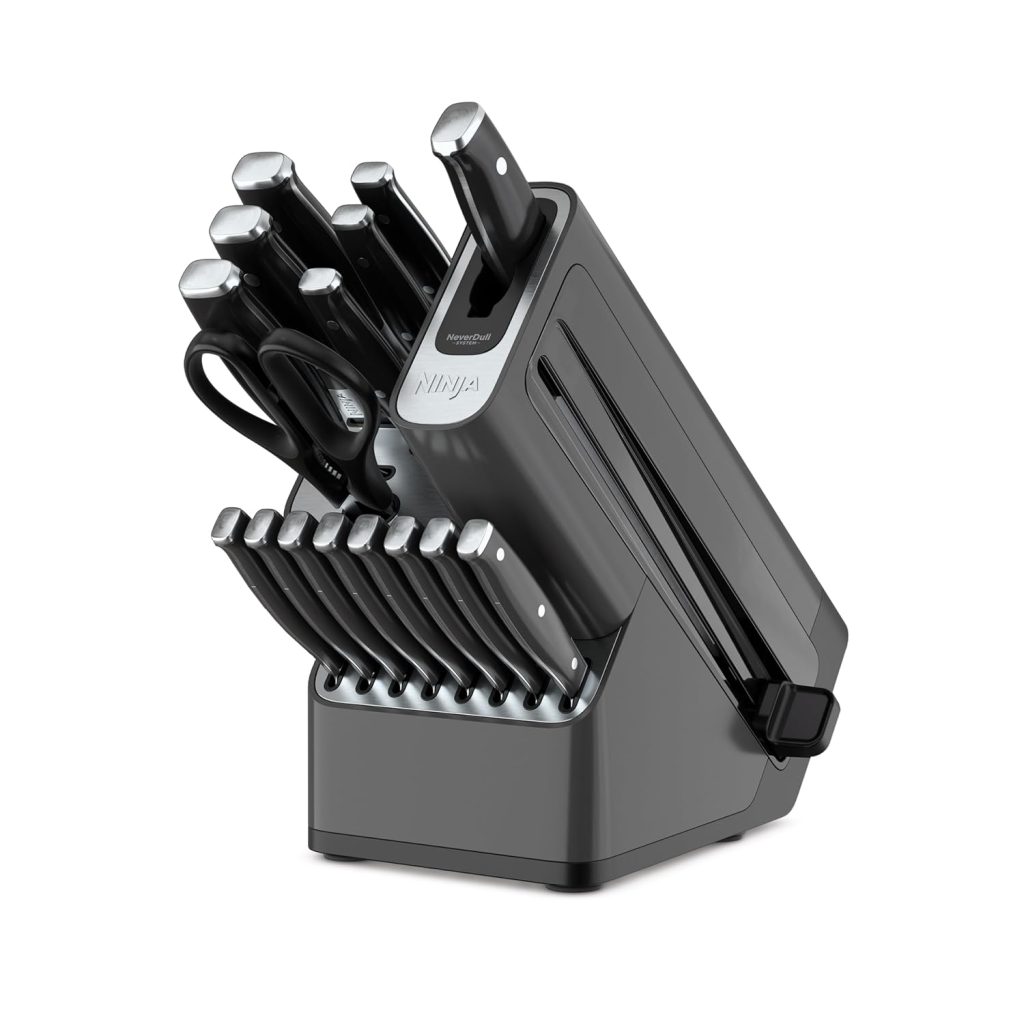
Ninja 17 pcs German Stainless Steel Kitchen Knife Set
Here’s another German stainless steel knife set, this time from Ninja. In terms of quantity, it sits between the previous two sets we reviewed. What really stands out here is the knife block design, which comes with a built-in sharpener, a convenient feature that helps keep your blades in top shape with minimal effort.
A quick note: the so-called “Never Dull System” refers to that integrated sharpener, not to the knives magically staying sharp forever. Like all knives, these will eventually lose their edge, but the built-in system makes it easy to restore sharpness when needed.
All of these knife sets are solid choices overall. The inclusion of a knife block and sharpener is a big plus, keeping the blades organized and ready for use. Each set offers a variety of knives with different specializations, giving you the right tool for the right task.
One thing notably missing across these sets is a cleaver. While not as common these days, since most butchers and stores already prepare meat into manageable cuts, you may not actually need one. Still, for those who frequently work with larger cuts or tougher bones, a cleaver can be a valuable addition.
Student life is busy enough without hassles like paying for shipping. That’s why Amazon Prime Student is a must-have for you. For just $14.99 $7.49/month, Prime Student gets you free two-day shipping on over 100 million items, unlimited photo storage, exclusive deals, and more. Better still, it comes with a six-month free trial so you can make sure Prime Student fits your lifestyle. Join today to take advantage of membership benefits and perks tailored specifically for students! Click here to sign up now.