
Home Blog Page 3

NASA JPL Unveils Rover Operations Center for Moon, Mars Missions

0

The center leverages AI along with JPL’s unique infrastructure, unrivaled tools, and years of operations expertise to support industry partners developing future planetary surface missions.  

NASA’s Jet Propulsion Laboratory in Southern California on Wednesday inaugurated its Rover Operations Center (ROC), a center of excellence for current and future surface missions to the Moon and Mars. During the launch event, leaders from the commercial space and AI industries toured the facilities, participated in working sessions with JPL mission teams, and learned more about the first-ever use of generative AI by NASA’s Perseverance Mars rover team to create future routes for the robotic explorer. 

The center was established to integrate and innovate across JPL’s planetary surface missions while simultaneously forging strategic partnerships with industry and academia to advance U.S. interests in the burgeoning space economy. The center builds on JPL’s 30-plus years of experience developing and operating Mars surface missions, including humanity’s only helicopter to fly at Mars as well as the only two active planetary surface missions. 

“The Rover Operations Center is a force multiplier,” said JPL Director Dave Gallagher. “It integrates decades of specialized knowledge with powerful new tools, and exports that knowledge through partnerships to catalyze the next generation of Moon and Mars surface missions. As NASA’s federally funded research and development center, we are chartered to do exactly this type of work — to increase the cadence, the efficiency, and the impact for our transformative NASA missions and to support the commercial space market as they take their own giant leaps.” 
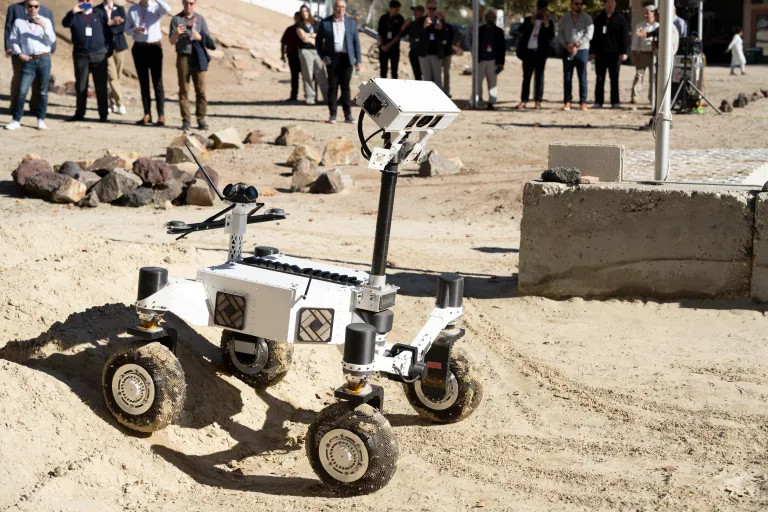
Rover prototype ERNEST (Exploration Rover for Navigating Extreme Sloped Terrain) demonstrates some of its advanced mobility and autonomy capabilities in JPL’s Mars Yard. NASA/JPL-Caltech

Genesis of ROC 

Through decades of successful Mars rover missions, JPL has continuously improved the unique autonomy, robotic capabilities, and best practices that have been demanded by increasingly complex robotic explorers. The ROC offers an accessible centralized structure to facilitate future exploration efforts. 

“Our rovers are lasting longer and are more sophisticated than ever before. The scientific stakes are high, as we have just witnessed with the discovery of a potential biosignature in Jezero Crater by the Perseverance mission. We are starting down a decade of unprecedented civil and commercial exploration at the Moon, which will require robotic systems to assist astronauts and support lunar infrastructure,” said Matt Wallace, who heads JPL’s Exploration Systems Office. “Mobile vehicles like rovers, helicopters, and drones are the most dynamic and challenging assets we operate. It’s time to take our game up a notch and bring everybody we can with us.”  
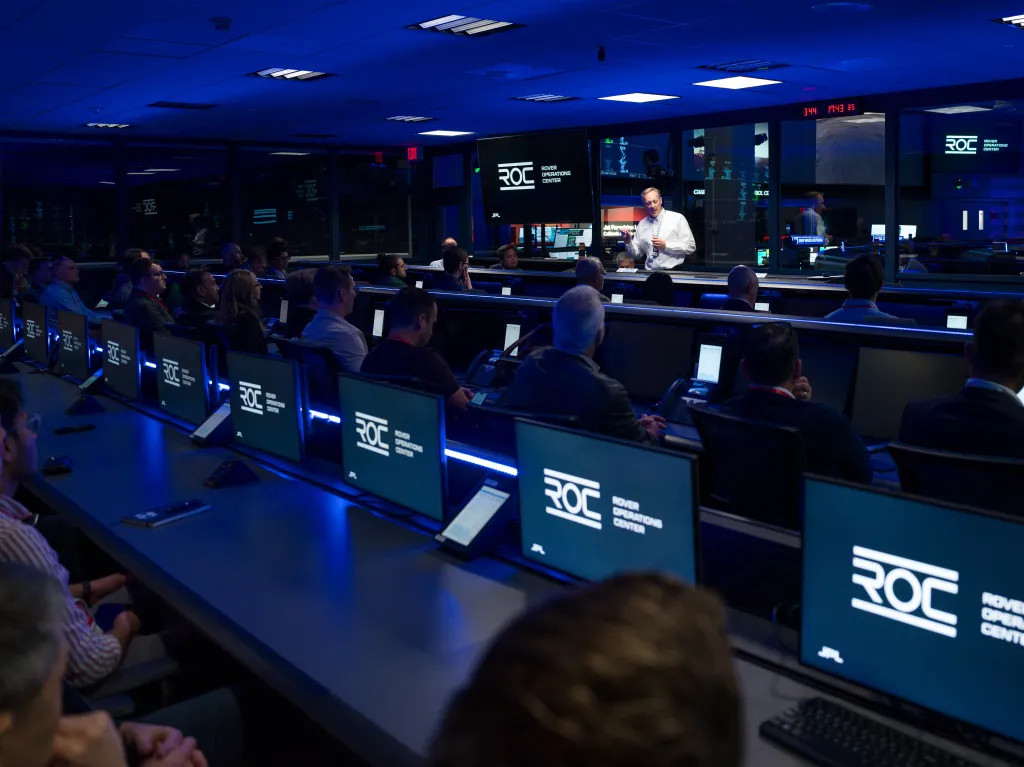
Michael Thelen of JPL’s Exploration Systems Office discusses the newly inaugurated Rover Operations Center in JPL’s historic Space Flight Operations Facility on Dec. 10. NASA/JPL-Caltech

Future forward  

A key focus of the ROC is on the more rapid infusion of higher-level autonomy into surface missions through partnerships with the AI and commercial space industries. The objective is to catalyze change to deliver next-generation science and exploration capabilities for the nation and NASA. 

As NASA’s only federally funded research and development center, JPL has been evolving vehicle autonomy since the 1990s, when JPL began developing Sojourner, the first rover on another planet. Improvements to vehicle independence over the years have included the evolution of autonomy in sampling activities, driving, and science-target selection. Most recently, those improvements have extended to the development of Perseverance’s ability to autonomously schedule and execute many commanded energy-intensive activities, like keeping warm at night, as it sees fit. This capability allows the rover to conserve power, which it can reallocate in real time to perform more science or longer drives. 

With the explosion of AI capabilities, the ROC rover team is leaving no Mars stone unturned in the hunt for future efficiencies.  

“We had a small team complete a ‘three-week challenge,’ applying generative AI to a few of our operational use cases. During this challenge, it became clear there are many opportunities for AI infusion that can supercharge our capabilities,” said Jennifer Trosper, ROC program manager at JPL. “With these new partnerships, together we will infuse AI into operations to path-find the next generation of capabilities for science and exploration.”
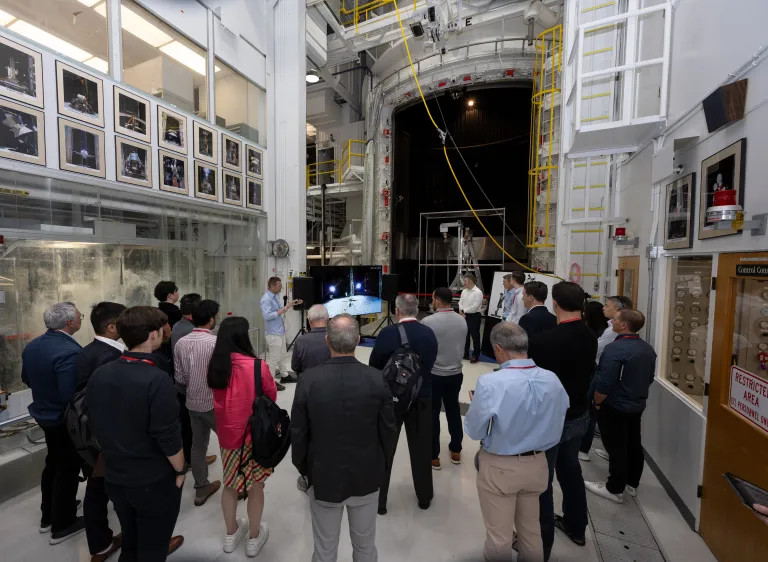
Håvard Grip, chief pilot of NASA’s Mars Ingenuity Helicopter — the only aircraft to fly on another planet — offers insights into aerial exploration of the Red Planet at the lab’s 25-Foot Space Simulator, which subjects spacecraft to the harsh conditions of space.

During the ROC’s inauguration, attendees toured JPL operations facilities, including where the rover drivers plan their next routes. They also visited JPL’s historic Mars Yard, which reproduces Martian terrain to test rover capabilities, and the massive 25-Foot Space Simulator that has tested spacecraft from Voyagers 1 and 2 to Perseverance to America’s next generation of lunar landers. A panel discussion explored the historical value of rovers and aerial systems like the Ingenuity Mars Helicopter in planetary surface exploration. Also discussed was the promise of a new public-private partnership opportunity across a virtual network of operational missions.  

Attendees were briefed on tiered engagement options for partners, from mission architecture support to autonomy integration, testing, and operations. These opportunities extend to science and human precursor robotic missions, as well as to human-robotic interaction and spacewalks for astronauts on the Moon and Mars. 

A highlight for event participants came when the Perseverance team showcased how the ROC’s generative AI can assist rover planners in creating future routes for the rover. The AI analyzed high-resolution orbital images of Jezero Crater and other relevant data and then generated waypoints that kept Perseverance away from hazardous terrain. 

Managed for NASA by Caltech, JPL is the home of the Rover Operations Center (ROC).  

To learn more about the ROC, visit:

https://www.jpl.nasa.gov/roc

News Media Contact

DC Agle
Jet Propulsion Laboratory, Pasadena, Calif.
818-393-9011
[email protected]

2025-137

Originally published at: NASA
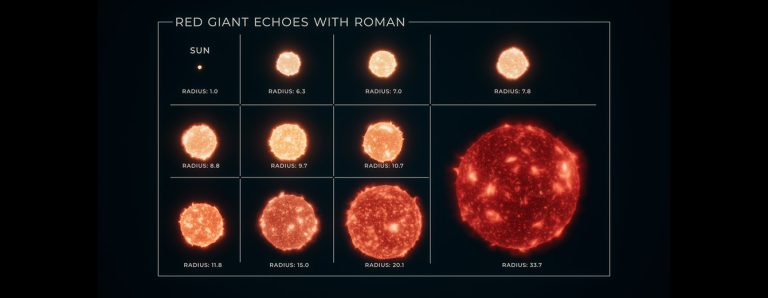
NASA’s Roman Could Bring New Waves of Information on Galaxy’s Stars

0

Summary

It’s clear as a bell: Roman can enlighten us on the stars located in the Milky Way’s galactic bulge.

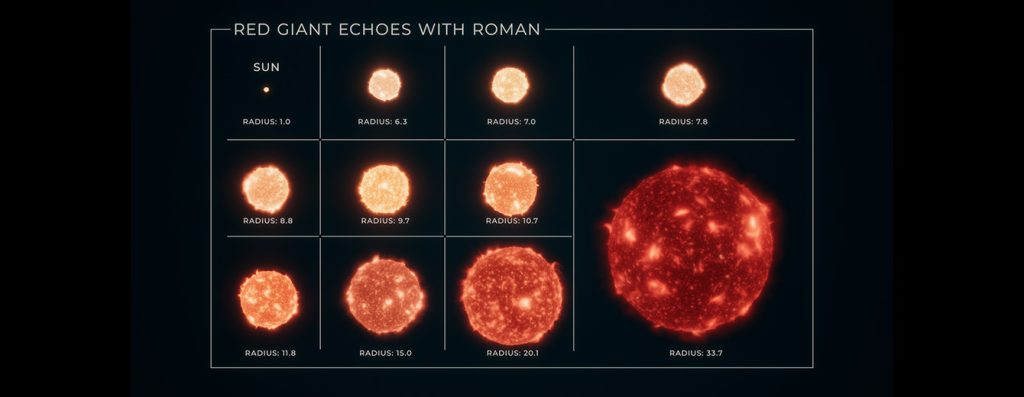
In musical terms, stars are like a constantly playing handbell choir. The turbulence within their interiors creates a pattern of waves — steady oscillations, like a ringing bell — which cause changes in their overall brightness. Studying these fluctuations, a method known as asteroseismology, can provide details about the stars themselves, such as their age, mass, and size.

Building from NASA’s now-retired Kepler space telescope’s successful asteroseismic detections, a team of researchers has recently confirmed that asteroseismology will be possible with NASA’s upcoming Nancy Grace Roman Space Telescope. Their study also explores different models to provide an estimation of the number of stars that will be detectable via this method. Their results indicate the telescope will provide the largest asteroseismic sample ever collected.

Full Article

A team of researchers has confirmed stars ring loud and clear in a “key” that will harmonize well with the science goals and capabilities of NASA’s upcoming Nancy Grace Roman Space Telescope.

Stars’ turbulent natures produce waves that cause fluctuations in their overall brightness. By studying these changes — a method called asteroseismology — scientists can glean information about stars’ ages, masses, and sizes. These shifts in brightness were perceptible to NASA’s Kepler space telescope, which provided asteroseismic data on approximately 16,000 stars before its retirement in 2018.

Using Kepler data as a starting point and adapting the dataset to match the expected quality from Roman, astronomers have recently proven the feasibility of asteroseismology with the soon-to-launch telescope and provided an estimated range of detectable stars. It’s an added bonus to Roman’s main science goals: As the telescope conducts observations for its Galactic Bulge Time-Domain Survey — a core community survey that will gather data on hundreds of millions of stars in the bulge of our Milky Way galaxy — it will also provide enough information for astronomers to determine stellar measurements via asteroseismology.

“Asteroseismology with Roman is possible because we don’t need to ask the telescope to do anything it wasn’t already planning to do,” said Marc Pinsonneault of The Ohio State University in Columbus, a co-author of a paper detailing the research. “The strength of the Roman mission is remarkable: It’s designed in part to advance exoplanet science, but we’ll also get really rich data for other scientific areas that extend beyond its main focus.”

Exploring what’s possible

The galactic bulge is densely populated with red giant branch and red clump stars, which are more evolved and puffier than main sequence stars. (Main sequence stars are in a similar life stage as our Sun.) Their high luminosity and oscillating frequency, ranging from hours to days, work in Roman’s favor. As part of its Galactic Bulge Time-Domain Survey, the telescope will observe the Milky Way’s galactic bulge every 12 minutes over six 70.5-day stretches, a cadence that makes it particularly well suited for red giant asteroseismology.

While previous research has explored the potential of asteroseismology with Roman, the team took a more detailed look by considering Roman’s capabilities and mission design. Their investigation consisted of two large efforts: 

First, the team members looked at Kepler’s asteroseismic data and applied parameters so the dataset matched the expected quality of Roman data. This included increasing the observation frequency and adjusting the wavelength range of light. The team calculated detection probabilities, which confirmed with a resounding yes that Roman will be able to detect the oscillations of red giants.

The team then applied their detection probabilities to a model of the Milky Way galaxy and considered the suggested fields of view for the galactic bulge survey to get a sense of how many red giants and red clump stars could be investigated with asteroseismology.

“At the time of our study, the core community survey was not fully defined, so we explored a few different models and simulations. Our lower limit estimation was 290,000 objects in total, with 185,000 stars in the bulge,” said Trevor Weiss of California State University, Long Beach, co-first author of the paper. “Now that we know the survey will entail a 12-minute cadence, we find it strengthens our numbers to over 300,000 asteroseismic detections in total. It would be the largest asteroseismic sample ever collected.”

Bolstering science for all

The benefits of asteroseismology with Roman are numerous, including tying into exoplanet science, a major focus for the mission and the galactic bulge survey. Roman will detect exoplanets, or planets outside our solar system, through a method called microlensing, in which the gravity of a foreground star magnifies the light from a background star. The presence of an exoplanet can cause a noticeable “blip” in the resulting brightness change.

“With asteroseismic data, we’ll be able to get a lot of information about exoplanets’ host stars, and that will give us a lot of insight on exoplanets themselves,” Weiss said.

“It will be difficult to directly infer ages and the abundances of heavy elements like iron for the host stars of exoplanets Roman detects,” Pinsonneault said. “Knowing these things — age and composition — can be important for understanding the exoplanets. Our work will lay out the statistical properties of the whole population — what the typical abundances and ages are — so that the exoplanet scientists can put the Roman measurements in context.”

Additionally, for astronomers who seek to understand the history of the Milky Way galaxy, asteroseismology could reveal information about its formation.

“We actually don’t know a lot about our galaxy’s bulge since you can only see it in infrared light due to all the intervening dust,” Pinsonneault said. “There could be surprising populations or chemical patterns there. What if there are young stars buried there? Roman will open a completely different window into the stellar populations in the Milky Way’s center. I’m prepared to be surprised.”

Since Roman is set to observe the galactic bulge soon after launch, the team is working to build a catalog in advance and provide a target list of observable stars that could help with efforts in validating the telescope’s early performance. 

“Outside of all the science, it’s important to remember the amount of people it takes to get these things up and running, and the amount of different people working on Roman,” said co-first author Noah Downing of The Ohio State University. “It’s really exciting to see all of the opportunities Roman is opening up for people before it even launches and then think about how many more opportunities will exist once it’s in space and taking data, which is not very far away.” Roman is slated to launch no later than May 2027, with the team working toward a potential early launch as soon as fall 2026.

The paper was published in The Astrophysical Journal.

The Nancy Grace Roman Space Telescope is managed at NASA’s Goddard Space Flight Center in Greenbelt, Maryland, with participation by NASA’s Jet Propulsion Laboratory in Southern California; Caltech/IPAC in Pasadena, California; the Space Telescope Science Institute in Baltimore; and a science team comprising scientists from various research institutions. The primary industrial partners are BAE Systems, Inc. in Boulder, Colorado; L3Harris Technologies in Melbourne, Florida; and Teledyne Scientific & Imaging in Thousand Oaks, California.

To learn more about Roman, visit:

https://www.nasa.gov/roman

About This Release

Credits

Media Contact

Abigail Major
Space Telescope Science Institute, Baltimore

Christine Pulliam
Space Telescope Science Institute, Baltimore

Originally published at: Space Telescope Science Institute

Zed Approves | 6 Bags You Might Be Missing for Your Next Trip

0

With the year 2025 coming to a close, let’s take a look at some of the best bags we’ve enjoyed this year. These aren’t just newly released models, but they’re bags that have stood the test of time and earned the trust of the people who use them.

If you’re looking for a gift this holiday season, bags are always a great choice. They’re with you on adventures, at work, during trips with family, and in all the moments that matter. A good bag is the kind of gear you never leave behind on any occasion.

Specifications

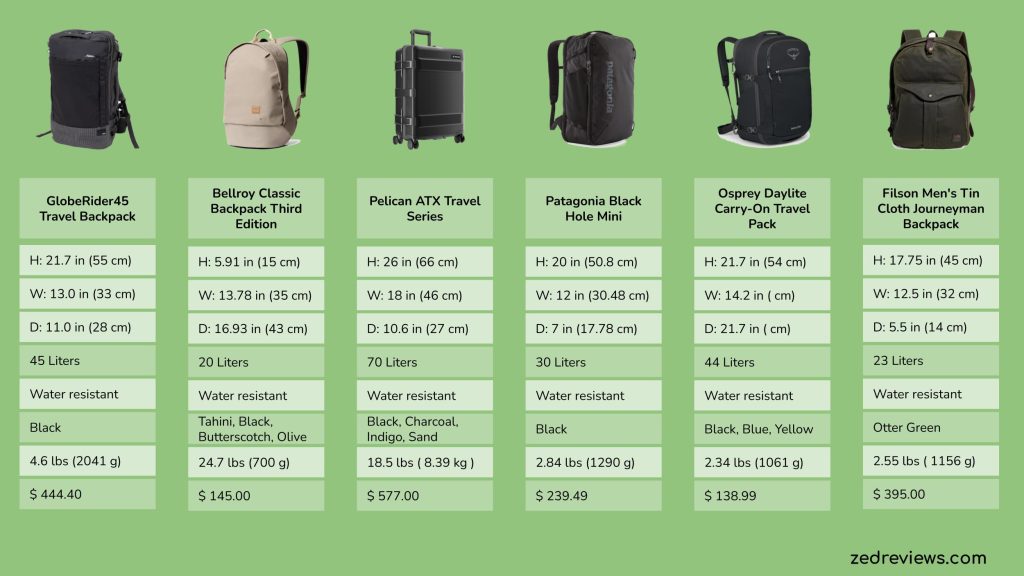
GlobeRider45 Travel Backpack

If you’re traveling across countries and prefer a backpack over a wheeled suitcase, this one is definitely worth considering. It features an external water bottle pocket for quick hydration, zipper security loops, and an ultra-comfortable carry harness. It even includes a dedicated laptop sleeve.

The only downside is its weight, at 2 kilograms, the bag itself is already on the heavier side. If that’s a concern for air travel, you may want to explore lighter options. But if you’ll be traveling mostly on foot or by other forms of transportation, this backpack is an excellent choice for the journey.

Bellroy Classic Backpack Third Edition

The Bellroy Classic Backpack offers a timeless look that pairs well with almost any outfit. Its earthy and neutral color options are designed to blend seamlessly with any occasion or setting you bring it to.

It features a dedicated, padded 16-inch laptop sleeve, along with a front document pocket. With a 20-liter capacity, it’s perfect for student life and easily supports day-to-day essentials. The embroidery on the back adds a touch of craftsmanship that enhances both the design and durability.

Pelican ATX Travel Series

This is the ultimate travel luggage, offering a massive 70-liter capacity. This hard case features a waterproof, dustproof, and crushproof hardshell—an excellent defender of your belongings. It also employs TSA-approved locking latches for smoother security inspections.

The only downside is its weight, but considering its build quality and storage capacity, that’s to be expected.

Patagonia Black Hole Mini

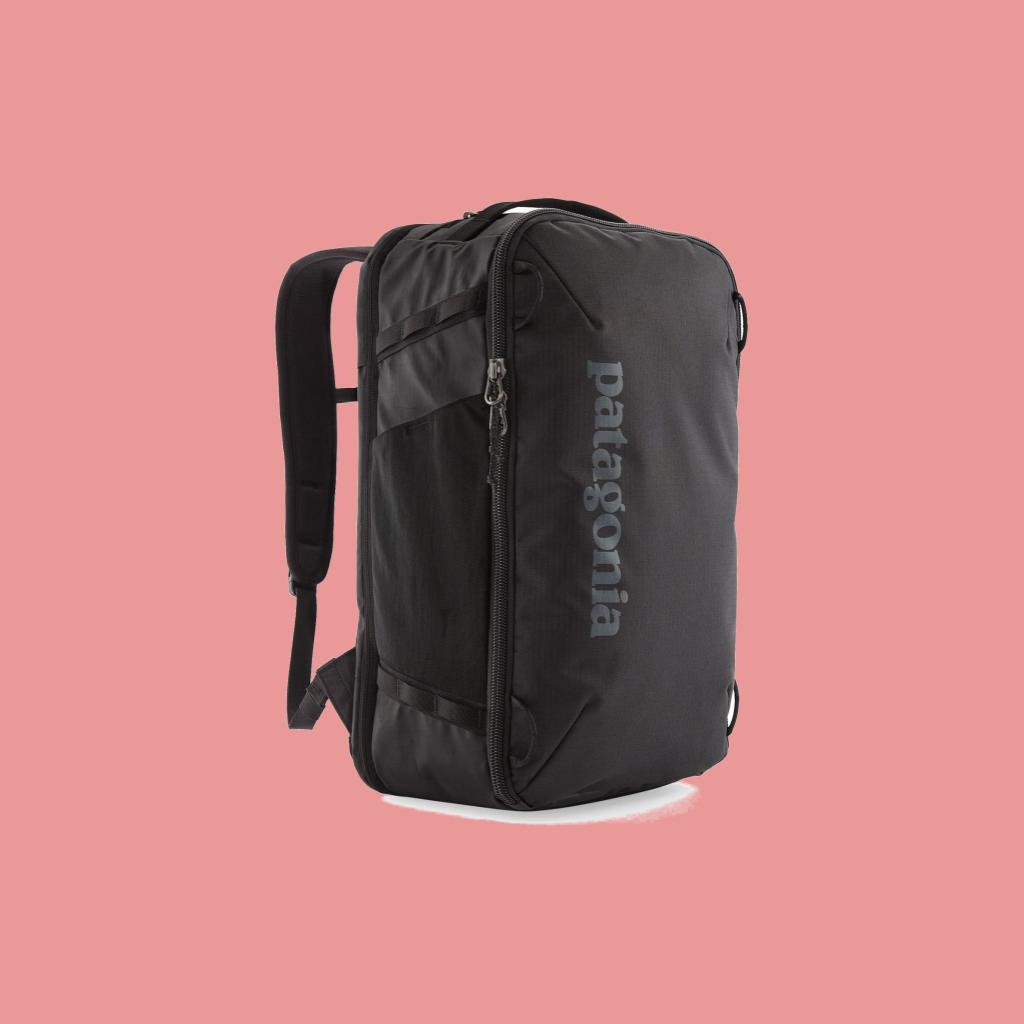
This backpack could be considered the perfect carry-on, thanks to its impressive capacity. But don’t let its size fool you—it’s surprisingly lightweight at only 1.2 kilograms. To some, it’s a travel bag; to others, it works as a compact piece of luggage. It also offers three different carry options: as a backpack, a shoulder bag, or a briefcase.

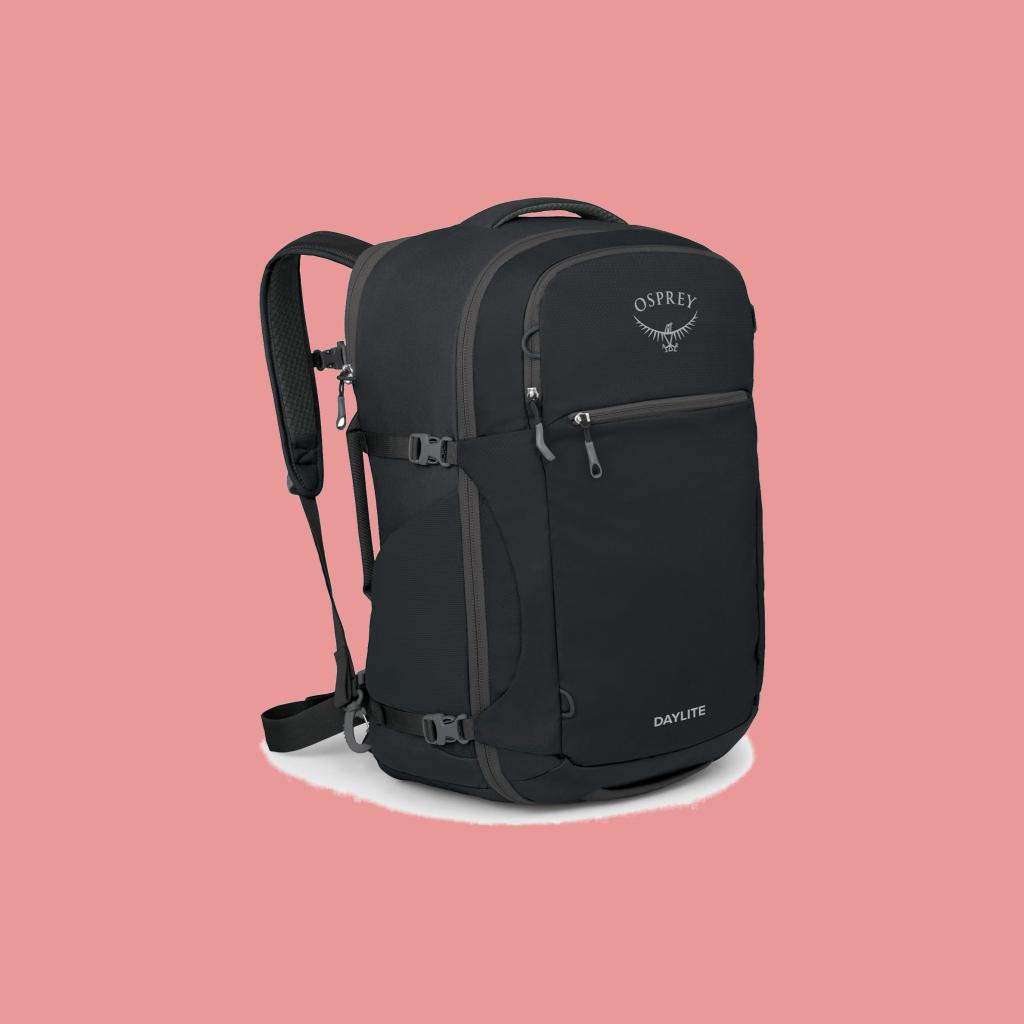
Osprey Daylite Carry-On Travel Pack

From its comfortable straps and breathable back panel to its durable 44-liter capacity, this bag almost has it all. It’s spacious, lighter than our previous entry, and comes with a dedicated laptop sleeve. Travelers going through TSA or similar security checks will also appreciate the quick-access laptop compartment, which makes inspections much faster.

Filson Men’s Tin Cloth Journeyman Backpack

This backpack carries a certain prestige, likely because of the high-quality materials it’s made from. It features 100% cotton Rugged Twill and is finished with oil-coated Tin Cloth saturated with wax for water resistance. You might think it’s overpriced given its relatively small capacity, but its durability and craftsmanship more than make up for it. The shoulder straps are lined with Cotton Moleskin, which is both durable and soft to the touch, making it comfortable to carry.


Student life is busy enough without hassles like paying for shipping. That’s why Amazon Prime Student is a must-have for you. For just $14.99 $7.49/month, Prime Student gets you free two-day shipping on over 100 million items, unlimited photo storage, exclusive deals, and more. Better still, it comes with a six-month free trial so you can make sure Prime Student fits your lifestyle. Join today to take advantage of membership benefits and perks tailored specifically for students! Click here to sign up now.

Originally published at: zedreviews.com

Zed Approves | 48 Highly Rated Black Friday Deals in 2025

0

It’s finally Black Friday! After a full month of early promos and sneak-peek discounts, the biggest Black Friday deals 2025 are now live. In this list, we’re featuring some of the most purchased and top-rated products, handpicked based on popularity, customer reviews, and overall value to help you shop smarter this holiday season.

Air Fryer

Air fryer | Instant Pot Vortex 6QT XL Air Fryer – $89.99 (orig. $139.99,-36%)

Air fryer | Ninja Crispi Air Fryer – $159.95 (orig. $179.95,-11%)

Air fryer | Emeril Lagasse Extra Large French Door Air Fryer Toaster Oven Combo – $149.99 (orig. $199.99,-25%)

Air fryer | Instant Pot Vortex Plus 4QT Air Fryer – $59.99 (orig. $129.99,-54%)

Amazon

Amazon Fire | Amazon Fire 7 Kids tablet – $59.99 (orig. $129.99,-54%)

Amazon Kindle | Amazon Kindle / Tablet – $149.99 (orig. $199.99,-25%)

Amazon Kindle | All-new Amazon Kindle Paperwhite (16 GB) – $124.99 (orig. $159.99,-22%)

Amazon Kindle | All-new Amazon Kindle Paperwhite Signature Edition (32 GB) – $149.99 (orig. $199.99,-25%)

Bags

Bag | SwissGear Travel Tech Elite Laptop Backpack – $91.99 (orig. $140,-34%)

Bag | Patagonia Refugio Day Pack – $149.5 (orig. $159.4,-6%)

Bag | Osprey Farpoint 40L Men’s Travel Backpack – $138.74 (orig. $184.95,-25%)

Kitchen

Coffee maker | Nespresso Coffee and Espresso Maker – $99.95 (orig. $149.95,-33%)

Convection Ovens | Cuisinart Air Fryer Toaster Oven with Grill – $99.99 (orig. $219.95,-55.%)

Cooktops | Karinear 30 Inch Electric Cooktop 4 Burners – $364.79 (orig. $383.99,-5%)

Dash Cam | REDTIGER Dash Cam – $99.99 (orig. $149.98,-33%)

Food Processors | Cuisinart Food Processor – $249.41 (orig. $319.95,-22%)

Wine and beverage refrigerator | Wine and Beverage Refrigerator – $612.98 (orig. $799.99,-23%)

Garbage can | SONGMICS Trash Can – $104.08 (orig. $139.99,-26%)

Dishwasher | Portable Countertop Dishwasher – $273.74 (orig. $339,-19%)

Stockpots | Granitestone True 20 Pc Pots and Pans – $169.99 (orig. $249.95,-32%)

Vacuum sealer | FoodSaver V4400 2-in-1 Vacuum Sealer Machine – $159.99 (orig. $234.99,-32%)

Coffee Maker

Espresso machine | CASABREWS Espresso Machine – $118.99 (orig. $139.99,-15%)

Espresso Machine | De’Longhi La Specialista Arte Evo Espresso Machine – $449.95 (orig. $614.66,-27%)

Entertainment

Headphones | Beats Solo 4, Blue – $129.95 (orig. $199.95,-35%)

Headphones | Beats Solo 4, Black – $129.95 (orig. $199.95,-35%)

Headset | Turtle Beach Stealth 700 Gen 3 Wireless Multiplatform Amplified Gaming Headset – $149.99 (orig. $199.99,-25%)

Outdoor Activities

Inflatable Boat | INTEX Seahawk Inflatable Boat – $114.38 (orig. $142.99,-20%)

Inflatable Boat | INTEX Excursion Inflatable Boat Series – $175.42 (orig. $219.29,-20%)

Paddle Board | SereneLife Inflatable Stand Up Paddle Board – $199.99 (orig. $239.99,-17%)

Wetsuit / Drysuit | O’Neill Men’s Reactor-2 3/2mm, Back Zip, Full Wetsuit – $144.95 (orig. $154.95,-6%)

Computer

Mechanical Keyboard | Logitech MX Mechanical Wireless Illuminated Performance Keyboard – $159.99 (orig. $179.99,-11%)

Monitor | SANSUI 32-Inch Curved Gaming Monitor – $180.49 (orig. $229.99,-22%)

Monitor | SAMSUNG 27-Inch S39C Series FHD Curved Gaming Monitor – $199.99 (orig. $229.99,-13%)

Monitor | ARZOPA Portable 15.6” Monitor – $83.99 (orig. $109.99,-24%)

Garage

Power Tool | DEWALT 20V MAX Cordless Drill and Impact Driver – $149 (orig. $179,-17%)

Router

Router | TP-Link AXE5400 Tri-Band WiFi 6E Router (Archer AXE75) – $149.99 (orig. $199.99,-17%)

Smartphone

Smart phone | Google Pixel 8a – $449.99 (orig. $499,-10%)

Smart phone | Samsung Galaxy S21 5G – $159 (orig. $299.99,-47%)

Smartphone | Google Pixel 8a – Unlocked Android Phone – $449.99 (orig. $499,-10%)

Tablet | Samsung Galaxy Tab A9+ Plus 11” – $149 (orig. $219.99,-32%)

Smartwatch

Smartwatch | Fitbit Charge 6 Fitness Tracker – $99.95 (orig. $159.95,-38%)

Smartwatch | Fitbit Versa 4 Fitness Smartwatch – $119.95 (orig. $199.95,-40%)

Security and Surveillance

Surveillance DVR Kits | 10CH Expandable Wireless Security Camera System – $207.99 (orig. $259.99,-20%)

Surveillance DVR Kits | ANNKE 8CH H.265+ 3K Lite Wired Security Camera System – $148.79 (orig. $219.99,-32%)

Home

Vacuum | Dyson V8 Plus Cordless Vacuum – $279.99 (orig. $539.99,-48%)

Vacuum | Dyson V8 Cordless Vacuum Cleaner – $299.95 (orig. $539.99,-44%)

Treadmill | Lichico Walking Pad Under Desk Treadmill – $99.99 (orig. $141.99,-30%)

Desk | Electric Standing Desk – $93.99 (orig. $119.99,-22%)


Student life is busy enough without hassles like paying for shipping. That’s why Amazon Prime Student is a must-have for you. For just $14.99 $7.49/month, Prime Student gets you free two-day shipping on over 100 million items, unlimited photo storage, exclusive deals, and more. Better still, it comes with a six-month free trial so you can make sure Prime Student fits your lifestyle. Join today to take advantage of membership benefits and perks tailored specifically for students! Click here to sign up now.

What Is The Point In Making Points?

0

Because, polygons, they are not.

If your best architects and engineers spend more time debugging than designing, you do not have a talent issue — you have a debt issue.

When architecture has no clear boundaries, every change turns into a negotiation with chaos.

Senior engineers get dragged into every fire because they are the only ones who can see the whole burning building.

That is not mentorship — it is waste.

Weak architecture creates three traps —

Cognitive Drag

Without a coherent mental model, every decision requires reloading the entire system into your head. Juniors cannot progress. Seniors cannot step back.

Escalation By Design.

When services are tightly coupled, small changes trigger cascading failures. Only veterans know which wires will not explode (sometimes).

Top-End Atrophy.

Your strongest architects and engineers end up buried in incident channels instead of shaping the future.

The solution is not “hire more seniors.”

The solution is architecture simple enough for juniors to own.

Good architecture amplifies talent.

Bad architecture consumes it.

~ % _

Scientists get a first look at the innermost region of a white dwarf system

0

X-ray observations reveal surprising features of the dying star’s most energetic environment.

Jennifer Chu | MIT News
MIT News (https://news.mit.edu/2025/first-look-innermost-region-white-dwarf-system-1120)

Caption:A smaller white dwarf star (left) pulls material from a larger star into a swirling accretion disk. The pair is called an “intermediate polar,” and MIT astronomers used powerful telescopes to measure the system’s X-ray polarization for the first time, revealing key features at the center of its hottest, most extreme regions. Credits:Image: Jose-Luis Olivares, MIT

Some 200 light years from Earth, the core of a dead star is circling a larger star in a macabre cosmic dance. The dead star is a type of white dwarf that exerts a powerful magnetic field as it pulls material from the larger star into a swirling, accreting disk. The spiraling pair is what’s known as an “intermediate polar” — a type of star system that gives off a complex pattern of intense radiation, including X-rays, as gas from the larger star falls onto the other one.

Now, MIT astronomers have used an X-ray telescope in space to identify key features in the system’s innermost region — an extremely energetic environment that has been inaccessible to most telescopes until now. In an open-access study published in the Astrophysical Journal, the team reports using NASA’s Imaging X-ray Polarimetry Explorer (IXPE) to observe the intermediate polar, known as EX Hydrae.

The team found a surprisingly high degree of X-ray polarization, which describes the direction of an X-ray wave’s electric field, as well as an unexpected direction of polarization in the X-rays coming from EX Hydrae. From these measurements, the researchers traced the X-rays back to their source in the system’s innermost region, close to the surface of the white dwarf.

What’s more, they determined that the system’s X-rays were emitted from a column of white-hot material that the white dwarf was pulling in from its companion star. They estimate that this column is about 2,000 miles high — about half the radius of the white dwarf itself and much taller than what physicists had predicted for such a system. They also determined that the X-rays are reflected off the white dwarf’s surface before scattering into space — an effect that physicists suspected but hadn’t confirmed until now.

The team’s results demonstrate that X-ray polarimetry can be an effective way to study extreme stellar environments such as the most energetic regions of an accreting white dwarf.

“We showed that X-ray polarimetry can be used to make detailed measurements of the white dwarf’s accretion geometry,” says Sean Gunderson, a postdoc in MIT’s Kavli Institute for Astrophysics and Space Research, who is the study’s lead author. “It opens the window into the possibility of making similar measurements of other types of accreting white dwarfs that also have never had predicted X-ray polarization signals.”

Gunderson’s MIT Kavli co-authors include graduate student Swati Ravi and research scientists Herman Marshall and David Huenemoerder, along with Dustin Swarm of the University of Iowa, Richard Ignace of East Tennessee State University, Yael Nazé of the University of Liège, and Pragati Pradhan of Embry Riddle Aeronautical University.

A high-energy fountain

All forms of light, including X-rays, are influenced by electric and magnetic fields. Light travels in waves that wiggle, or oscillate, at right angles to the direction in which the light is traveling. External electric and magnetic fields can pull these oscillations in random directions. But when light interacts and bounces off a surface, it can become polarized, meaning that its vibrations tighten up in one direction. Polarized light, then, can be a way for scientists to trace the source of the light and discern some details about the source’s geometry.

The IXPE space observatory is NASA’s first mission designed to study polarized X-rays that are emitted by extreme astrophysical objects. The spacecraft, which launched in 2021, orbits the Earth and records these polarized X-rays. Since launch, it has primarily focused on supernovae, black holes, and neutron stars.

The new MIT study is the first to use IXPE to measure polarized X-rays from an intermediate polar — a smaller system compared to black holes and supernovas, that nevertheless is known to be a strong emitter of X-rays.

“We started talking about how much polarization would be useful to get an idea of what’s happening in these types of systems, which most telescopes see as just a dot in their field of view,” Marshall says.

An intermediate polar gets its name from the strength of the central white dwarf’s magnetic field. When this field is strong, the material from the companion star is directly pulled toward the white dwarf’s magnetic poles. When the field is very weak, the stellar material instead swirls around the dwarf in an accretion disk that eventually deposits matter directly onto the dwarf’s surface.

In the case of an intermediate polar, physicists predict that material should fall in a complex sort of in-between pattern, forming an accretion disk that also gets pulled toward the white dwarf’s poles. The magnetic field should lift the disk of incoming material far upward, like a high-energy fountain, before the stellar debris falls toward the white dwarf’s magnetic poles, at speeds of millions of miles per hour, in what astronomers refer to as an “accretion curtain.” Physicists suspect that this falling material should run up against previously lifted material that is still falling toward the poles, creating a sort of traffic jam of gas. This pile-up of matter forms a column of colliding gas that is tens of millions of degrees Fahrenheit and should emit high-energy X-rays.

An innermost picture

By measuring any polarized X-rays emitted by EX Hydrae, the team aimed to test the picture of intermediate polars that physicists had hypothesized. In January 2025, IXPE took a total of about 600,000 seconds, or about seven days’ worth, of X-ray measurements from the system.

“With every X-ray that comes in from the source, you can measure the polarization direction,” Marshall explains. “You collect a lot of these, and they’re all at different angles and directions which you can average to get a preferred degree and direction of the polarization.”

Their measurements revealed an 8 percent polarization degree that was much higher than what scientists had predicted according to some theoretical models. From there, the researchers were able to confirm that the X-rays were indeed coming from the system’s column, and that this column is about 2,000 miles high.

“If you were able to stand somewhat close to the white dwarf’s pole, you would see a column of gas stretching 2,000 miles into the sky, and then fanning outward,” Gunderson says.

The team also measured the direction of EX Hydrae’s X-ray polarization, which they determined to be perpendicular to the white dwarf’s column of incoming gas. This was a sign that the X-rays emitted by the column were then bouncing off the white dwarf’s surface before traveling into space, and eventually into IXPE’s telescopes.

“The thing that’s helpful about X-ray polarization is that it’s giving you a picture of the innermost, most energetic portion of this entire system,” Ravi says. “When we look through other telescopes, we don’t see any of this detail.”

The team plans to apply X-ray polarization to study other accreting white dwarf systems, which could help scientists get a grasp on much larger cosmic phenomena.

“There comes a point where so much material is falling onto the white dwarf from a companion star that the white dwarf can’t hold it anymore, the whole thing collapses and produces a type of supernova that’s observable throughout the universe, which can be used to figure out the size of the universe,” Marshall offers. “So understanding these white dwarf systems helps scientists understand the sources of those supernovae, and tells you about the ecology of the galaxy.”

This research was supported, in part, by NASA.

Reprinted with permission of MIT News
http://news.mit.edu/

Zed Approves | More Early Black Friday 2025 Deals You Can’t Miss

0

Who says you have to wait until Black Friday to grab a deal? A few early discounts for Black Friday 2025 are already available, and we’ve picked some of the best for you. Keep an eye out as more are coming soon!

Nespresso Vertuo Pop+ Coffee and Espresso Maker

Nespresso Vertuo Pop+ Coffee and Espresso Maker

Nothing beats the smell of coffee at the start of your day, morning or night shift alike. Coffee remains one of the most popular ways to kick things off, and the Nespresso Vertuo Pop+ makes it even easier. With just a pod and water, you get a rich, aromatic cup with minimal effort.

Shark Robot Vacuum

Shark Robot Vacuum
Shark Robot Vacuum

Even if you enjoy cleaning, some areas like under heavy sofas and cabinets are simply hard to reach. Moving furniture every time isn’t always practical. The Shark Robot Vacuum takes care of this with precision home mapping, powerful suction, and a self-cleaning brush roll that effectively removes pet hair.

Pioneer Camp Men’s Long Winter Coat

Pioneer Camp Men's Long Winter Coat
Pioneer Camp Men’s Long Winter Coat

As colder months approach, the Pioneer Camp Men’s Long Winter Coat is a practical and thoughtful gift option. It features graphene heat-tech lining for superior warmth and heat retention, along with a hood that zips up to cover most of the head while keeping the face unobstructed. The 90% duck down filling offers excellent insulation for cold weather conditions.

Amazon Fire HD 10 Kids tablet

Amazon Fire HD 10 Kids tablet

Tablets and small computers have become pretty common among kids these days. What makes the Amazon Fire HD 10 Kids Tablet stand out is its strong parental controls, which allow parents to manage screen time and control which apps and content their children can access.

Shark Upright Vacuum

Shark Upright Vacuum

While we have a robot vacuum on the list, that mostly takes care of the floors. For everything else, you’ll still need a good upright vacuum. This Shark model has powerful suction for deep carpet cleaning and a fully sealed system that traps dust and allergens, great for anyone with allergies. And as a fun bonus, it even looks a bit like R2-D2 from Star Wars.

Bose QuietComfort Headphones

Bose QuietComfort Headphones

The Bose QuietComfort headphones offer a real sense of peace and tranquility, thanks to their excellent noise-cancelling performance. They work seamlessly with various devices, including the Nintendo Switch, Android phones, iPhones, and laptops, and provide up to 24 hours of battery life. One downside, like most over-ear headphones, is that the ear cushions can wear out over time depending on usage. On the plus side, they’re easy to replace.

Fitbit Versa 4 Fitness Smartwatch

Fitbit Versa 4 Fitness Smartwatch

One of the best value smartwatches on the market, the Fitbit Versa 4 comes with built-in GPS, quick charging, and a 6-month Fitbit Premium membership. Its battery can last up to 6 days or 12 hours if GPS is enabled. While there are smartwatches with more advanced features, the Versa 4 is an excellent choice if affordability and reliability are your main priorities. If you’re considering other options, we’ve also reviewed several alternatives worth checking out.

LEVOIT Air Purifier

LEVOIT Air Purifier
LEVOIT Air Purifier

As someone who knows how much allergies can be a pain, having an air purifier makes a big difference in reducing their occurrence. The LEVOIT Air Purifier covers up to 1,787 square feet, making it ideal for both living rooms and bedrooms. It also comes with mobile app control, allowing you to set a timer and check filter status remotely.

Ninja Professional Plus Kitchen System

Ninja Professional Plus Kitchen System

The Ninja Professional Plus Kitchen System is similar to the Ninja Mega Kitchen System, but with a few key differences. It has a slightly lower 1,400-watt motor, the same 8-cup capacity, and can still crush ice easily. One notable upgrade is its Auto-IQ technology, which offers intelligent preset programs for smoothies, frozen drinks, chopping, and dough making.


Student life is busy enough without hassles like paying for shipping. That’s why Amazon Prime Student is a must-have for you. For just $14.99 $7.49/month, Prime Student gets you free two-day shipping on over 100 million items, unlimited photo storage, exclusive deals, and more. Better still, it comes with a six-month free trial so you can make sure Prime Student fits your lifestyle. Join today to take advantage of membership benefits and perks tailored specifically for students! Click here to sign up now.

Source: zedreviews.com

Friday Deals – And It’s Not Even Black Friday Yet

0

Early Black Friday deals are here! These include home theater systems, smartphones, computer monitors, and smartwatches. If you’re planning to shop early to avoid the usual rush, you might want to check these out.

Home theater

ULTIMEA 7.1ch Sound Bar$198 (orig. $249.99,-21%), save $51.99

Nakamichi Shockwafe Ultra 9.2.4 Channel Dolby Atmos/DTS:X Soundbar$1,199 (orig. $1897.99,-37%), save $698.99

iPhone

Apple iPhone 14 Pro Max (256GB Purple)$535 (orig. $569,-6%), save $34

Apple iPhone 15 Pro Max (256GB Black Titanium)$665 (orig. $709,-6%), save $44

Apple iPhone 15 Pro Max (512GB Blue Titanium)$760.73 (orig. $812.16,-6%), save $51.43

Apple iPhone 16 Pro Max (512GB Black Titanium)$984.97 (orig. $1119.99,-12%), save $135.02

Apple iPhone 14 Plus (128GB Midnight)$334.95 (orig. $360.99,-7%), save $26.04

Monitor

SAMSUNG 34″ G85SD Series Gaming Monitor$809.99 (orig. $1199.99,-33%), save $390

SANSUI 32-Inch Curved Gaming Monitor$199.99 (orig. $229.99,-13%), save $30

ARZOPA Portable 15.6” Monitor$82.99 (orig. $109.99,-25%), save $27

ASUS ROG Strix 27” 4K HDR400 USB-C Gaming Monitor$424.51 (orig. $469,-9%), save $44.49

Samsung 24-Inch Odyssey G3 (G30D) Series FHD Gaming Monitor$152 (orig. $199.99,-24%), save $47.99

SAMSUNG 32-Inch Flat Computer Monitor$169.99 (orig. $199.99,-15%), save $30

Dell S2725DS Monitor$169.99 (orig. $219.99,-23%), save $50

Dell 27-Inch Plus 4K Monitor$229.99 (orig. $299.99,-23%), save $70

HP 24mh FHD Computer Monitor$169.99 (orig. $179.99,-6%), save $10

Sceptre 34-Inch Curved Ultrawide WQHD Monitor$227.97 (orig. $269.97,-16%), save $42.

SANSUI 34 Inch 240Hz Ultrawide Curved Gaming Monitor$259.99 (orig. $329.99,-21%), save $70

Smartphone

SAMSUNG Galaxy S25 Edge Phone (512 GB)$729.99 (orig. $819.99,-11%), save $90

SAMSUNG Galaxy S25 Ultra (256GB)$1149.99 (orig. $1299.99,-12%), save $150

Samsung Galaxy Z Fold7 (256GB)$1,699.99 (orig. $1999.99,-15%), save $300

Motorola Razr 2025$599.99 (orig. $699.99,-14.%), save $100

Motorola Razr+ 2025$699.99 (orig. $752.13,-7%), save $52.14

Smartwatch

Fitbit Charge 6 Fitness Tracker$129 (orig. $159.95,-19%), save $30.95

SAMSUNG Galaxy Watch Ultra$264.95 (orig. $439.95,-40%), save $175

Fitbit Versa 4 Fitness Smartwatch$154.9 (orig. $199.95,-23%), save $45.05

SAMSUNG Galaxy Watch 7 $195.99 (orig. $249.99,-22%), save $54

Garmin vívoactive 5$199 (orig. $299.99,-34%), save $100.99

Garmin fēnix 7X Pro – $649.99 (orig. $999.99,-35%), save $350

Garmin fēnix® 8 $949.99 (orig. $1199.99,-21%), save $250

Google Pixel Watch 3 (45mm) 2024 Model$266.53 (orig. $299.99,-11%), save $33.46

Apple Watch Series 10$309.99 (orig. $429,-28.%), save $119.01

Garmin Instinct 2X Solar$449.99 (orig. $499.99,-10%), save $50

Garmin Forerunner 165$199.99 (orig. $249.99,-20%), save $50

Apple Watch Ultra 3$699.99 (orig. $799,-12%), save $99.01

Samsung Galaxy Watch 7$219.94 (orig. $299.99,-27%), save $80.05

TV

Hisense 85″ E6 Cinema Series QLED 4K UHD Smart Fire TV $767.99 (orig. $1299.99,-41%), save $532

Sony BRAVIA 2 II 75 Inch 4K Ultra HD LED Smart TV$798 (orig. $899.99,-11%), save $101.99

TCL 75-Inch Class QM8K Series QD-Mini LED 4K UHD Google Smart TV$1,397.99 (orig. $1999.99,-30%), save $602

Sony 85-Inch Class 4K Ultra HD BRAVIA 3 LED Smart TV$1,298 (orig. $1599.99,-19%), save $301.99


Student life is busy enough without hassles like paying for shipping. That’s why Amazon Prime Student is a must-have for you. For just $14.99 $7.49/month, Prime Student gets you free two-day shipping on over 100 million items, unlimited photo storage, exclusive deals, and more. Better still, it comes with a six-month free trial so you can make sure Prime Student fits your lifestyle. Join today to take advantage of membership benefits and perks tailored specifically for students! Click here to sign up now.

Originally published at: zedreviews.com

31 Spooky Deals for October 31! Halloween Specials!

0

Happy Halloween! Don’t miss these deals as they’re definitely worth checking out!

Air fryer

Air fryers are a great alternative to deep frying since they use much less oil. They’re an excellent addition to any kitchen. Some people even have two to maximize cooking time, as each unit usually has a relatively small cooking area.

Bag

Bags are useful wherever you go – whether for groceries, travel, or work. They’re a simple essential that fits almost any lifestyle.

Camera

While smartphones come with built-in cameras, nothing beats a specialized device for capturing memories in the best quality.

Cooking

Cooktops, pans, and dishwashers are essential in any kitchen. Each one plays a key role in making cooking and cleanup more convenient.

Food Processors & Mixers

You’ll love food processors and mixers if you’ve ever prepared ingredients by hand. They save so much time and effort. For a detailed review of food processors, check here — and for knives, we’ve got one as well.

Laptop

A laptop is a necessity in this day and age. From entertainment to work, it’s become part of our daily lives. We also have some recommended laptops here.

Monitor

If you have a PC, then you certainly need a monitor. But even if you’re using a laptop, an extra screen can make multitasking and productivity much easier.

Smartwatch

From tracking your health to celebrating your daily steps, a smartwatch is a powerful little gadget you’ll love, or love to gift. They’re also easy to shop for, since you can quickly tell if your recipient already wears one.

TV

Nothing beats relaxing at home watching Netflix or your favorite streaming service. And when you’re not watching, it’s perfect for gaming on a massive screen.


Student life is busy enough without hassles like paying for shipping. That’s why Amazon Prime Student is a must-have for you. For just $14.99 $7.49/month, Prime Student gets you free two-day shipping on over 100 million items, unlimited photo storage, exclusive deals, and more. Better still, it comes with a six-month free trial so you can make sure Prime Student fits your lifestyle. Join today to take advantage of membership benefits and perks tailored specifically for students! Click here to sign up now.

Originally published at: zedreviews.com

2025 Laptop Buyer’s Guide: Best Value and Performance Picks

0

While many of these laptops are models from 2023 and 2024, they’re still capable of handling a wide range of tasks from everyday browsing and document editing to more demanding activities like gaming or creative work.

Choosing a laptop can be tricky, so here are a few things to consider. The first is your intended workload. Will you be using it mainly for casual activities such as browsing the web, writing documents, and managing spreadsheets? Or will it be for more demanding tasks like programming or video editing, which can put heavy strain on a system’s hardware? Video encoding, for instance, can consume a lot of resources, and even if your laptop can handle it, it might take a long time to process if the specs are only just enough.

Once you’ve identified your primary use, you’re already off to a good start. Next, think about longevity. It might come as a surprise, but with how quickly technology improves, following Moore’s Law, a laptop can start to feel outdated in just a few years. If you’re planning to upgrade down the line, consider whether your chosen model will still be practical after a few years of use.

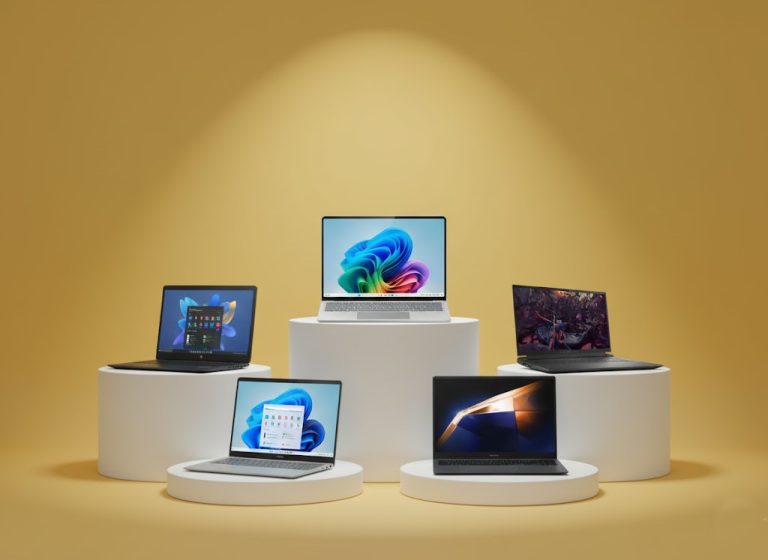
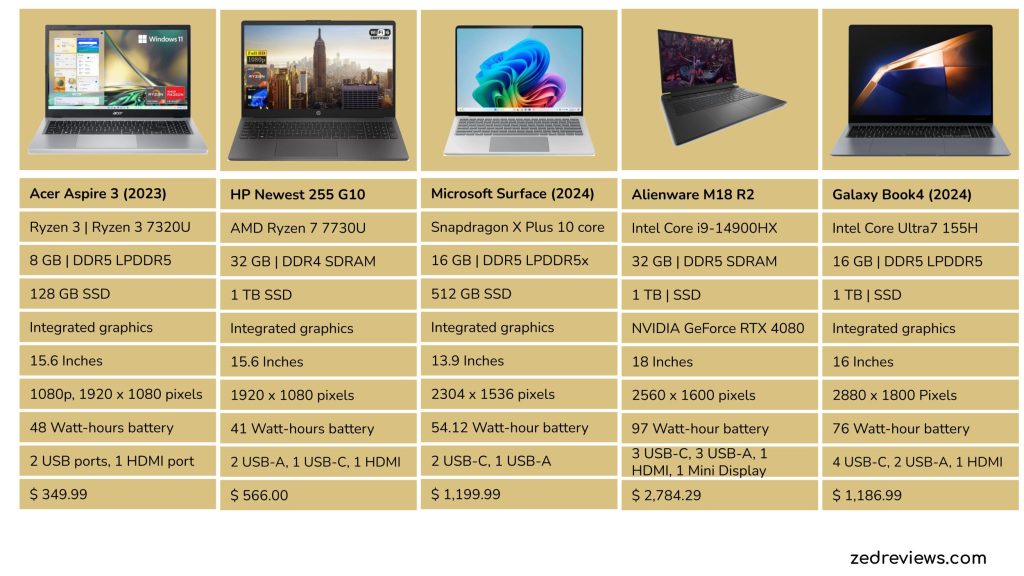
If you simply want the best of the best, we could easily recommend the Alienware M18 R2, since it’s the most powerful and expensive among them. But that may not be everyone’s goal. If you’d like to find the model that best fits your needs and budget, read on our reviews that will help you decide.

Our Picks

Acer Aspire 3 (2023) Laptop | $314.99 (orig. $349.99,-10%)
↓ Jump to the review

HP 255 G10 Laptop | $525.92 (orig. $566,-7%)
↓ Jump to the review

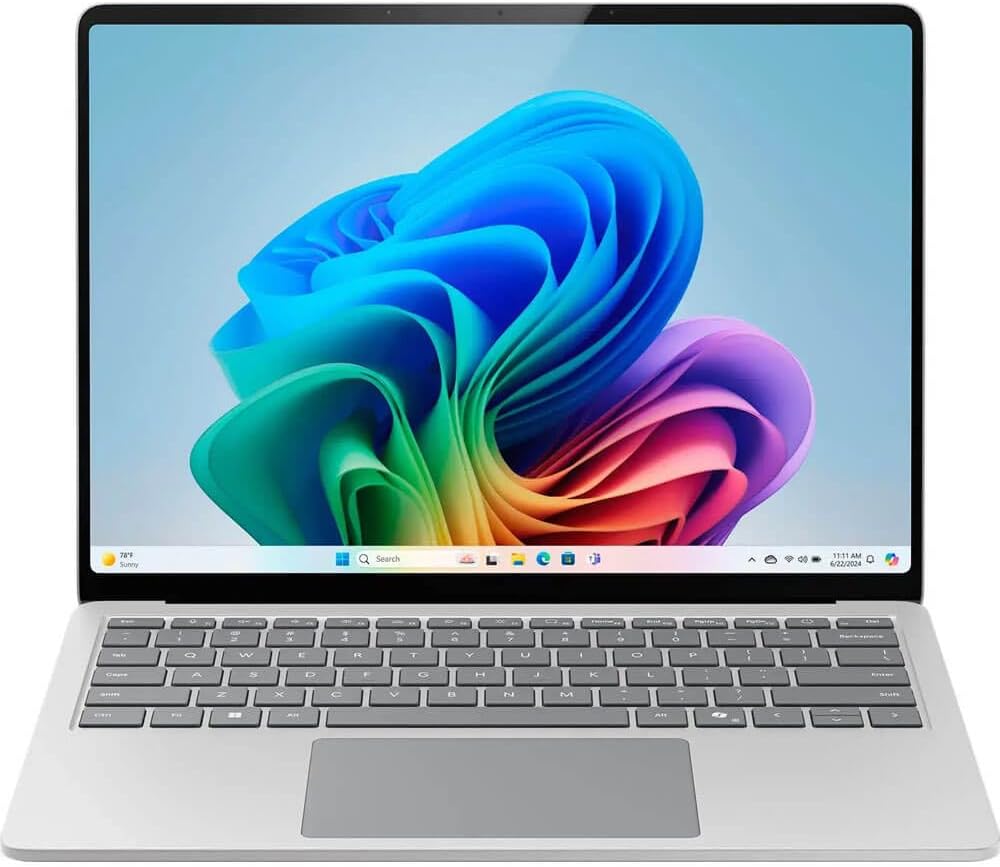
Microsoft Surface Laptop (2024) | $1079 (orig. $1199.99,-10%)
↓ Jump to the review

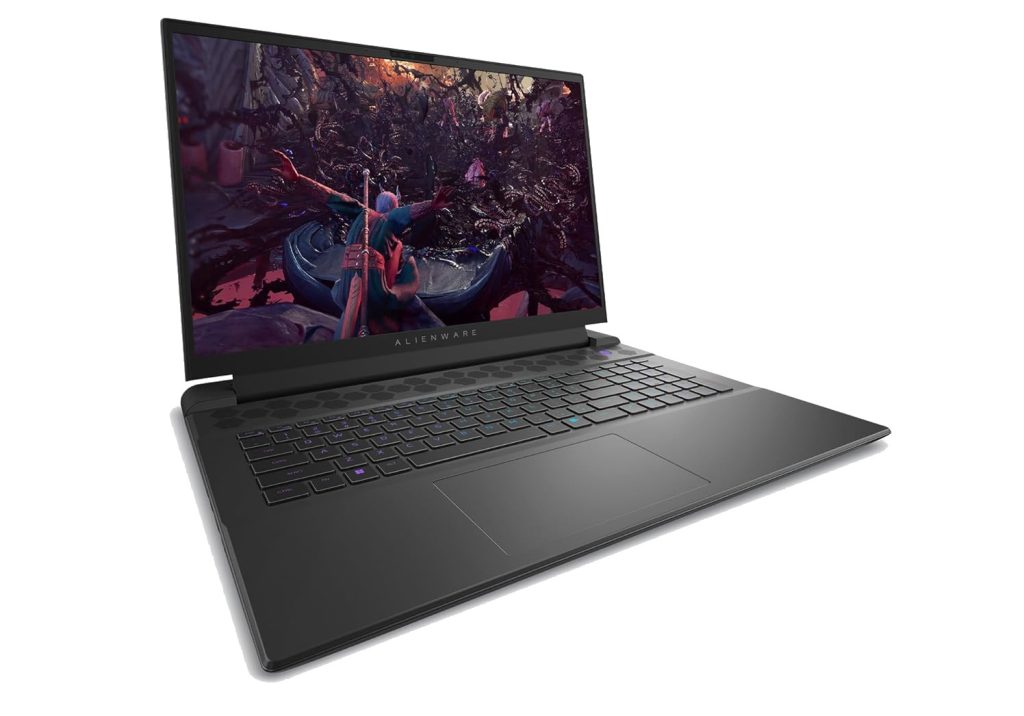
Alienware M18 R2 Gaming Laptop | $2,178.15
↓ Jump to the review

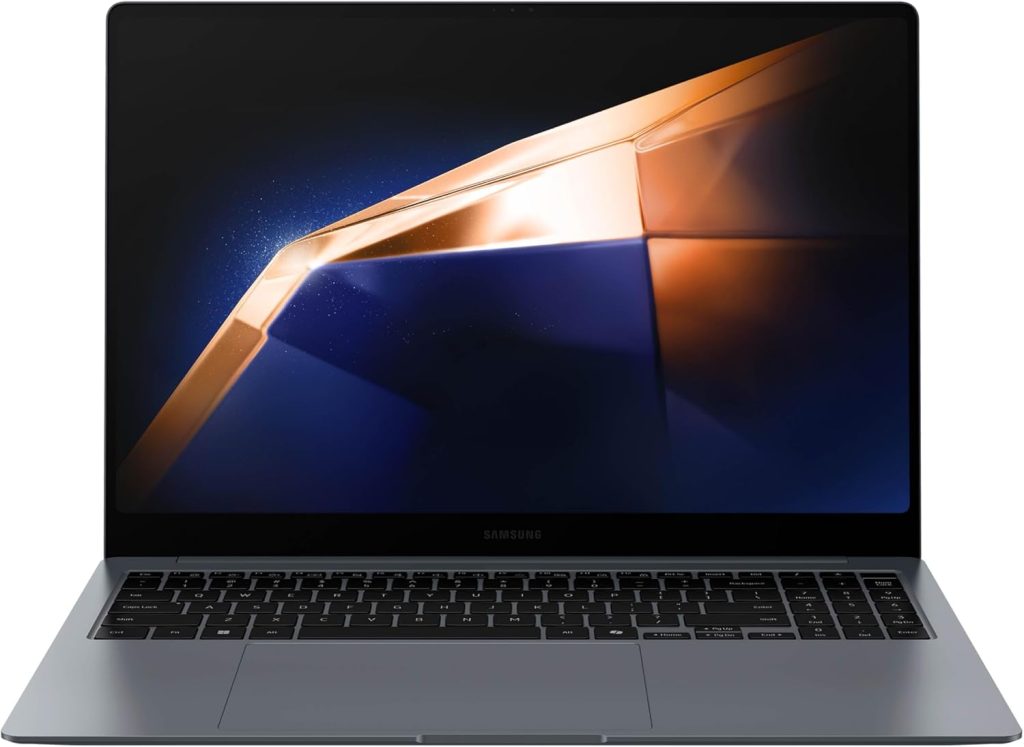
SAMSUNG Galaxy Book4 Pro (2024) Laptop | $1,128
↓ Jump to the review

Quick Comparison

Acer Aspire 3 (2023)

SPECIFICATIONS:
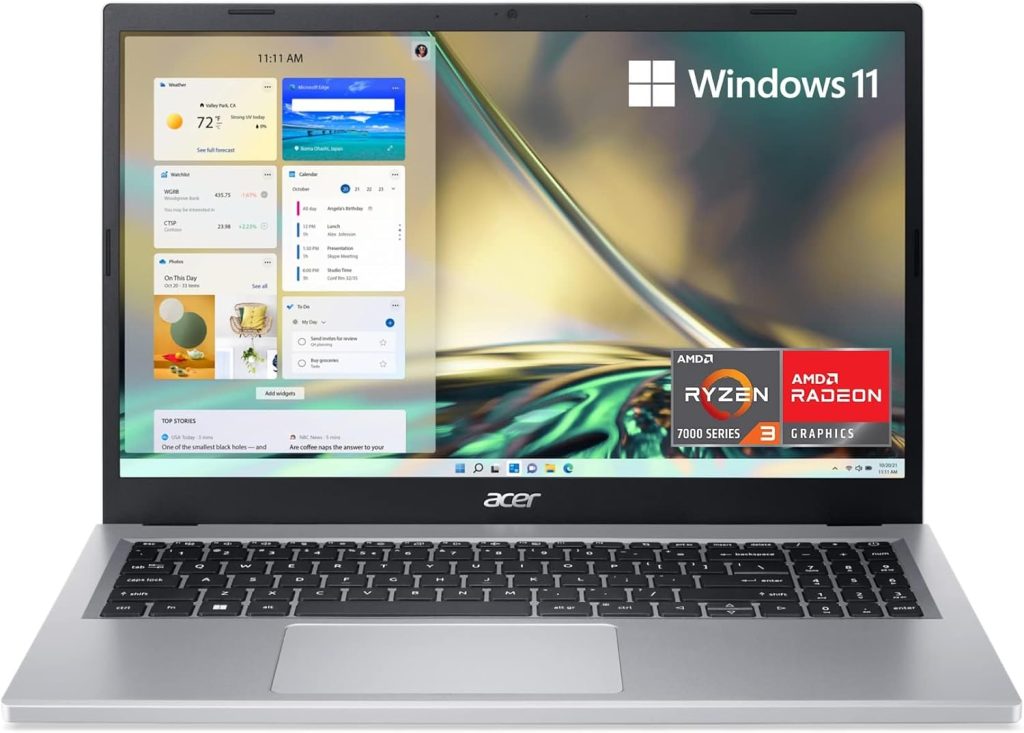
Brand: Acer, Price: $349.99, CPU: AMD Ryzen 3 7320U Quad-Core processor, CPU Max Speed: 4.1 GHz, Memory: 8 GB LPDDR5, Memory Clock Speed: 3200 MHz, Memory Type: DDR5 LPDDR5, Storage: 128 GB SSD, Graphics: Integrated, Screen Size: 15.6 Inches, Resolution (Max): 1920 x 1080 pixels, OS: Windows 11 S, Battery Life: 11 Hours, Battery Content: 48 Watt Hours, HDMI: 1, USB Ports: 1 USB Type-C port (USB 3.2 Gen 2, up to 10 Gbps) and 2 USB 3.2 Gen 1 ports, Warranty: One-year International Travelers Limited Warranty (ITW)

STRENGTHS:
+ Good for basic productivity and office work
+ Budget friendly

DRAWBACKS:
– Lower specifications compared to others (CPU, memory, and storage)

Yes, we know this isn’t the most powerful laptop on the list. It’s also the oldest model, released in 2023. But if your goal isn’t heavy usage like gaming or building AI models, the Acer Aspire 3 (2023) can still be a practical choice.

It has just enough resources for everyday productivity tasks like word processing, basic spreadsheet work, and creating slide presentations. Web browsing is also smooth enough, though you’ll want to avoid keeping too many tabs or YouTube videos open at once, as the browser can easily eat up the available memory.

With only 128 GB of storage, the Windows operating system may already occupy about a third of the space. However, switching to a lightweight Linux distribution could help you free up more room and improve performance slightly.

Overall, this laptop is best suited for students and casual users who need a device for note-taking, writing papers, and other basic assignments. For anything more demanding, you’ll likely want to consider one of the higher-end options.

HP 255 G10 Laptop

SPECIFICATIONS:
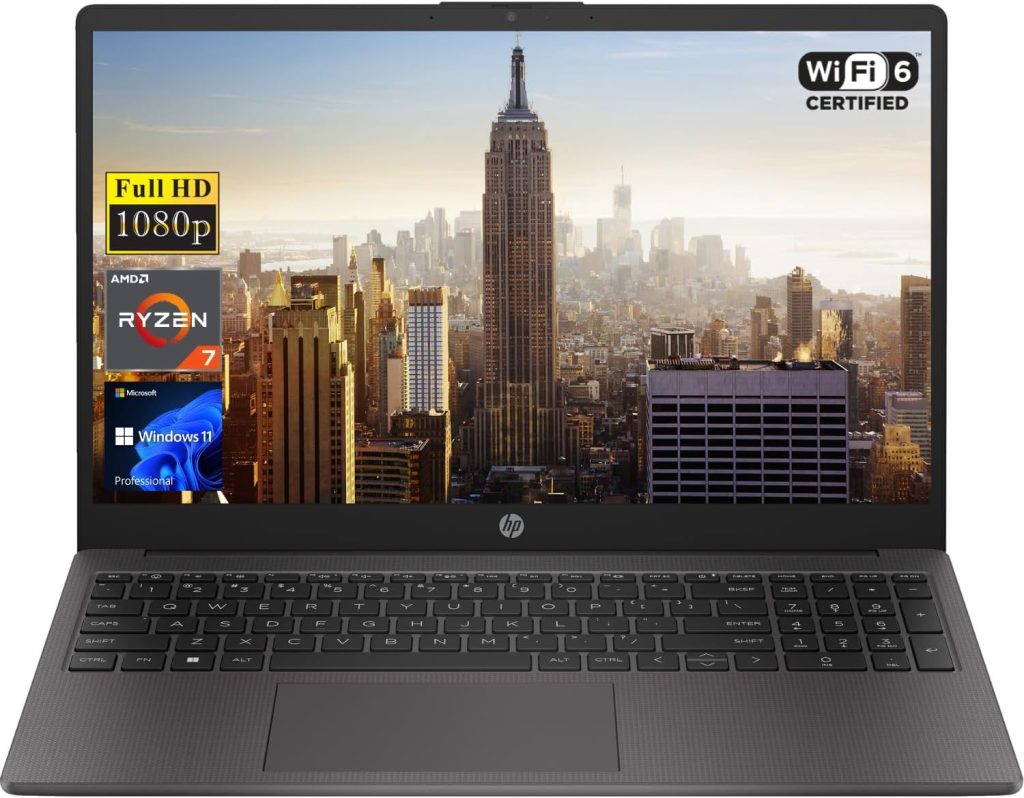
Brand: Acer, Price: 349.99, CPU: AMD Ryzen 7 7730U, CPU Max Speed: 4.1 GHz, Memory: 8 GB LPDDR5, Memory Clock Speed: 3200 MHz, Memory Type: DDR4 SDRAM, Storage: 128 GB SSD, Graphics: Integrated, Screen Size: 15.6 Inches, Resolution (Max): 1080p | 1920 x 1080 pixels, OS: Windows 11 S, Battery Life: 11 Hours, Battery Content: 48 Watt Hours, HDMI: 1, USB Ports: 2 USB-A, 1 USB-C, Warranty: 1 Year Limited Warranty

STRENGTHS:
+ Great value for money

DRAWBACKS:
– The plastic body construction may not appeal to everyone

Consider this an upgrade in specifications compared to our previous entry. The HP 255 G10 offers a noticeable boost in computing power, more memory, and a significantly larger storage capacity.

While it’s still not intended for heavy workloads like gaming or video rendering, you’ll immediately notice smoother performance during web browsing and productivity tasks such as word processing, spreadsheet work, and presentations.

Microsoft Surface Laptop (2024)

SPECIFICATIONS:
Brand: Microsoft, Price: 1,199.99, CPU: Snapdragon X Plus (10 core), Memory: 16 GB, Memory Type: DDR5 LPDDR5x, Storage: 512 GB SSD, Graphics: Integrated, Screen Size: 13.9 Inches (Touchscreen), Resolution (Max): 2304 x 1536, OS: Windows 11 Home, Battery Life: 20 hours, Battery Content: 54.12 Watt Hours, HDMI: None, USB Ports: 2 USB-C, 1 USB-A, Warranty: 1 year manufacturer warranty

STRENGTHS:
+ Touchscreen

DRAWBACKS:
– No HDMI port
– Small screen size (though some may prefer it for portability)

The Microsoft Surface Laptop (2024) sits comfortably in the middle ground, offering decent overall specifications. Its standout feature is the built-in AI assistant, Copilot, which allows users to tinker and explore AI-powered functions directly on the device.

It’s also lightweight and compact, making it a great choice for users who value portability and a sleek design. The build quality is comparable to the Galaxy Book4, though it’s smaller in both screen size and storage capacity.

The only real downside is the lack of an HDMI port. However, it does include a USB-C port that can connect to external monitors, provided they’re compatible.

Alienware M18 R2 Laptop

SPECIFICATIONS:
Brand: Alienware, Price: $ 2,784.29, CPU: Intel Core i9-14900HX, CPU Max Speed: 5.8 GHz, Memory: 32 GB, Memory Clock Speed: 5600 MHz, Memory Type: DDR5 SDRAM
, Storage: 1 TB SSD, Graphics: NVIDIA GeForce RTX 4080, Screen Size: 18 Inches
, Resolution (Max): 2560 x 1600 pixels, OS: Windows 11 Home, Battery Life: 7 Hours, Battery Content: 97 Watt Hours, HDMI: 1x HDMI 2.1 output and 1x Mini Display Port 1.4, USB Ports: 2x Thunderbolt 4 (Type-C with USB 4, DisplayPort 1.4, and power delivery) 1x USB 3.2 Gen 1 (Type-C) 3x USB 3.2 Gen 1 (Type-A, one with PowerShare), Warranty: 1 Year Hardware Service with Onsite/In-Home Service After Remote Diagnosis

STRENGTHS:
+ Highest specs for CPU, memory, and graphics
+ Dedicated graphics card
+ Largest screen size
+ Most ports available

DRAWBACKS:
– Most expensive option
– Heavy and bulky

In terms of power, this is the real deal. The Alienware M18 R2 Gaming Laptop boasts top-tier specifications in computing performance, memory, and graphics. It’s built for serious gaming and is more of a portable desktop than a lightweight laptop.

We recommend this model for gamers and users who regularly handle intensive workloads such as video rendering, 3D modeling, or software development. However, keep in mind that even with its cutting-edge hardware, some games that aren’t optimized for high-end systems may still experience issues.

If your primary goal is gaming, a desktop setup will generally offer better performance at a lower price, with more room for upgrades. But if you need a powerhouse that you can carry around, this laptop is one of the best options available.

SAMSUNG Galaxy Book4 Pro (2024) Laptop

SPECIFICATIONS:
Brand: SAMSUNG, Price: $1,186.99, CPU: Intel Core Ultra 7 155H, Memory: 16 GB, Memory Clock Speed: 4.8 GHz, Memory Type: DDR5 LPDDR5, Storage: 1 TB SSD, Graphics: Integrated, Screen Size: 16 Inches (Touchscreen), Resolution (Max): 3840 x 2160 pixels, OS: Windows 11 Home, Battery Life: 25 Hours (Standby), Battery Content: 63 Watt Hours, HDMI: 1, USB Ports: 2 Thunderbolt 4 ports (USB-C) and 1 USB-A 3.0 port , Warranty: 1 Year Limited Manufacturer Warranty

STRENGTHS:
+ Significant price drop compared to launch
+ Touchscreen display

DRAWBACKS:
– Not ideal for intensive workloads or high-end gaming

This is our recommended laptop, offering great balance in price and performance. It sits comfortably in the middle of the pack, costing about half as much as the previous entry while still delivering a high-performing CPU and strong overall specs.

Although its memory capacity is lower, the newer generation components provide excellent real-world performance. It also comes equipped with multiple USB ports and an HDMI port, giving it solid connectivity options for everyday and professional use.

The Galaxy Book4 Pro is an excellent choice for students, especially those working with computer-aided design (CAD) in engineering or architecture. It’s also suitable for programmers and software developers, though it may struggle with more demanding machine learning or GPU-heavy tasks.

Investment Table

We don’t want to assume the worst, but it’s always possible that something could go wrong. If the laptop breaks while it’s still under warranty, you can request a replacement.

Now, let’s look at this from another angle, as an investment for one year. Suppose you’ll be using the laptop for a full year: how much would that cost you if you spread the price evenly per month? The table below will help you visualize that.

Acer Aspire 3 (2023)$ 349.9$ 29 per month
HP 255 G10$ 566.00$ 47 per month
Microsoft Surface (2024)$ 1,199.99$ 100 per month
Alienware M18 R2$ 2,784.29$ 232 per month
Galaxy Book4 (2024)$ 1,186.9$ 99 per month

Some final thoughts on choosing the right laptop. The Acer Aspire 3 is the least powerful of the group, making it a good fit for basic productivity tasks such as word processing and simple spreadsheet work. The HP 255 G10 shares similar strengths and limitations, offering decent performance at a great value.

At the top end, the Alienware M18 R2 stands out as the powerhouse for gaming and heavy workloads. Meanwhile, the Microsoft Surface Laptop (2024) and Galaxy Book4 Pro (2024) sit comfortably in the middle, both providing a solid balance of portability, modern features, and everyday performance.

It goes without saying that your choice should depend on your intended use and budget. But don’t forget to trust your instincts too, as sometimes the right laptop is the one that simply feels right to you.


Student life is busy enough without hassles like paying for shipping. That’s why Amazon Prime Student is a must-have for you. For just $14.99 $7.49/month, Prime Student gets you free two-day shipping on over 100 million items, unlimited photo storage, exclusive deals, and more. Better still, it comes with a six-month free trial so you can make sure Prime Student fits your lifestyle. Join today to take advantage of membership