
Home Blog Page 32

Apple Unveils The New MacBook Pro Featuring The M3 Family Of Chips, Making The World’s Best Pro Laptop Even Better

0

October 30, 2023
PRESS RELEASE

Apple unveils the new MacBook Pro featuring the M3 family of chips, making the world’s best pro laptop even better

14-inch MacBook Pro with M3 now starts at $1,599

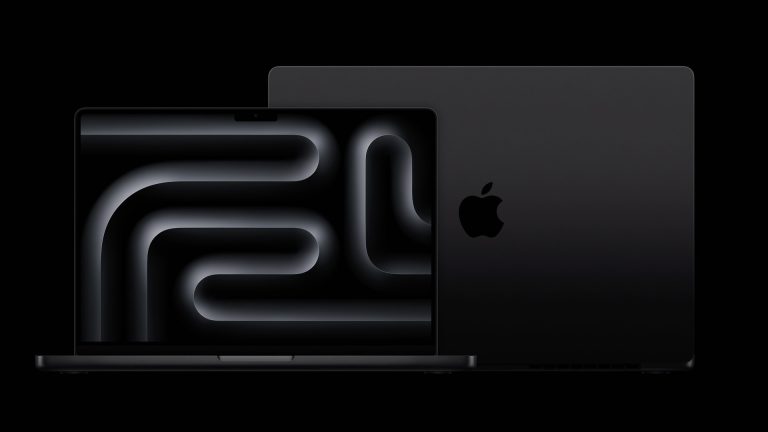
14- and 16-inch models with M3 Pro and M3 Max are available in a gorgeous new space black finish

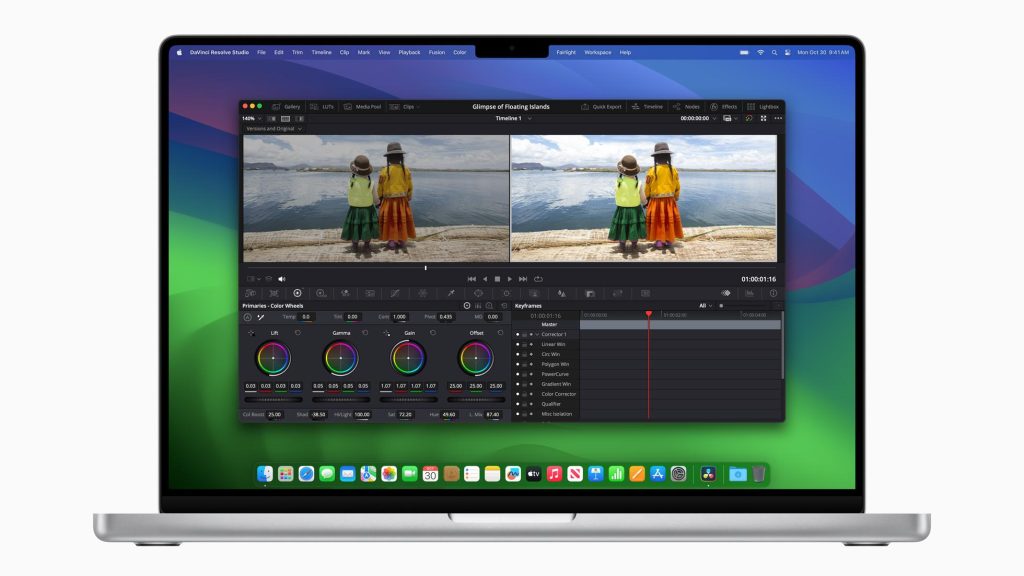
CUPERTINO, CALIFORNIA Apple today announced a new MacBook Pro lineup featuring the all-new family of M3 chips: M3, M3 Pro, and M3 Max. With a next-generation GPU architecture and a faster CPU, the M3 family brings even more performance and remarkable new capabilities to MacBook Pro. The new 14‑inch MacBook Pro with M3 is not only great for everyday tasks, but also delivers phenomenal sustained performance in pro apps and games. Perfect for aspiring creatives, students, and entrepreneurs, it now starts at $1,599. The 14- and 16‑inch MacBook Pro with M3 Pro provides even greater performance and additional unified memory support, enabling more demanding workflows for users like coders, creatives, and researchers. The 14- and 16‑inch MacBook Pro with M3 Max delivers performance and capabilities that push the limits of computing. With a monster GPU and a powerful CPU, along with support for up to 128GB of unified memory, MacBook Pro with M3 Max enables extreme workflows and multitasking across pro apps for users like machine learning programmers, 3D artists, and video editors. M3 Pro and M3 Max models also now come in space black, a gorgeous dark aluminum finish.

All MacBook Pro models feature a brilliant Liquid Retina XDR display with 20 percent brighter SDR content, a built-in 1080p camera, an immersive six-speaker sound system, and a wide array of connectivity options. With up to 22 hours of battery life,1 the lineup offers the ultimate in pro portability, delivering the same performance whether plugged in or on battery, so users can take their workflows anywhere. Customers can order the new MacBook Pro starting today, with availability beginning November 7.

“There is nothing quite like MacBook Pro. With the remarkable power-efficient performance of Apple silicon, up to 22 hours of battery life, a stunning Liquid Retina XDR display, and advanced connectivity, MacBook Pro empowers users to do their life’s best work,” said John Ternus, Apple’s senior vice president of Hardware Engineering. “With the next generation of M3 chips, we’re raising the bar yet again for what a pro laptop can do. We’re excited to bring MacBook Pro and its best-in-class capabilities to the broadest set of users yet, and for those upgrading from an Intel-based MacBook Pro, it’s a game-changing experience in every way.”

The new MacBook Pro lineup delivers incredible performance, a brilliant Liquid Retina XDR display, a wide array of connectivity, and up to 22 hours of battery life for the ultimate in pro portability.

The M3 Family Arrives

The M3 family of chips continues Apple silicon’s tremendous pace of innovation. M3, M3 Pro, and M3 Max are the first chips for a personal computer built using the industry-leading 3-nanometer technology. With a faster, more efficient next-generation GPU, these chips deliver the biggest leap forward in graphics architecture ever for Apple silicon. Featuring a breakthrough technology called Dynamic Caching, the GPU allocates the use of local memory in hardware in real time so only the exact amount of memory needed is used for each task. This dramatically increases GPU utilization and performance for the most demanding pro apps and games.

The GPU also brings new rendering features to Apple silicon, including hardware-accelerated mesh shading for greater capability and efficiency with geometry processing, enabling more visually complex scenes. And hardware-accelerated ray tracing comes to the Mac for the first time, enabling games to render more accurate shadows and reflections to create more realistic environments.

With the power-efficient performance of M3, M3 Pro, and M3 Max, there is a MacBook Pro for everyone

14-inch MacBook Pro with M3

For users pursuing their passions — from students and business owners to aspiring musicians and video editors — MacBook Pro with M3 is the ideal laptop. The 14‑inch MacBook Pro with M3 is up to 60 percent faster than the 13‑inch MacBook Pro with M1, and with its advanced thermal system, it unleashes the full potential of M3 for sustained performance.2 Starting at $1,599, it delivers more performance and capabilities than ever at a great value.

With MacBook Pro with M3:

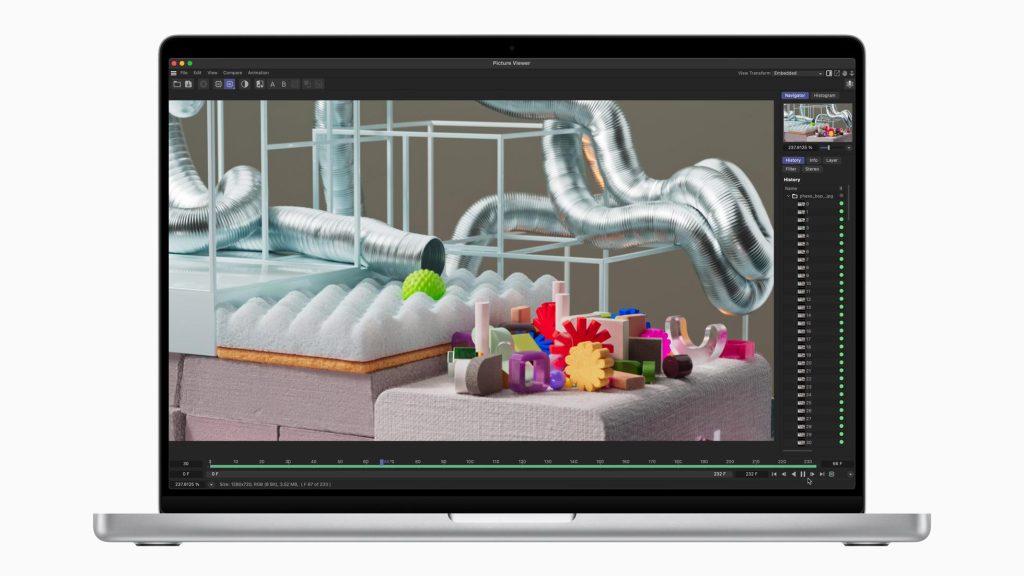
  • Render performance in Final Cut Pro is up to 7.4x faster than the 13-inch MacBook Pro with Core i7,3 and up to 60 percent faster than the 13‑inch MacBook Pro with M1.2
  • Code compilation in Xcode is up to 3.7x faster than the 13-inch MacBook Pro with Core i7,3 and up to 40 percent faster than the 13‑inch MacBook Pro with M1.2
  • Spreadsheet performance in Microsoft Excel is up to 3.5x faster than the 13‑inch MacBook Pro with Core i7,3 and up to 40 percent faster than the 13‑inch MacBook Pro with M1.2
MacBook Pro with M3 enables users to compile and test millions of lines of code in Xcode with even greater speed.

14- and 16-inch MacBook Pro with M3 Pro

For users with more demanding workflows like coders, creatives, and researchers, MacBook Pro with M3 Pro provides even greater performance, supports more unified memory, and is now up to 40 percent faster than the 16‑inch model with M1 Pro.4

With MacBook Pro with M3 Pro:

  • Filter and function performance in Adobe Photoshop is up to 3x faster than the fastest Intel-based MacBook Pro,5 and up to 40 percent faster than the 16‑inch MacBook Pro with M1 Pro.4
  • Basecalling for DNA sequencing in Oxford Nanopore MinKNOW is up to 20x faster than the fastest Intel-based MacBook Pro,5 and up to 36 percent faster than the 16‑inch MacBook Pro with M1 Pro.4
  • Text-based editing in Adobe Premiere Pro is up to 1.7x faster than the 16-inch Intel-based MacBook Pro,5 and up to 30 percent faster than the 16‑inch MacBook Pro with M1 Pro.4
MacBook Pro with M3 Pro delivers faster filter and function performance in Adobe Photoshop.

14-inch and 16-inch MacBook Pro with M3 Max

MacBook Pro with M3 Max provides performance and capabilities for those with extreme workflows like machine learning programmers, 3D artists, and video editors. It is up to 2.5x faster than the 16-inch MacBook Pro with M1 Max,6 and up to 11x faster than the fastest Intel-based MacBook Pro model.5 It also supports up to 128GB of unified memory, enabling creators to easily work on large and complex projects spanning multiple pro apps and plugins, or compose huge film scores where entire orchestral libraries are instantly available from memory.

With MacBook Pro with M3 Max:

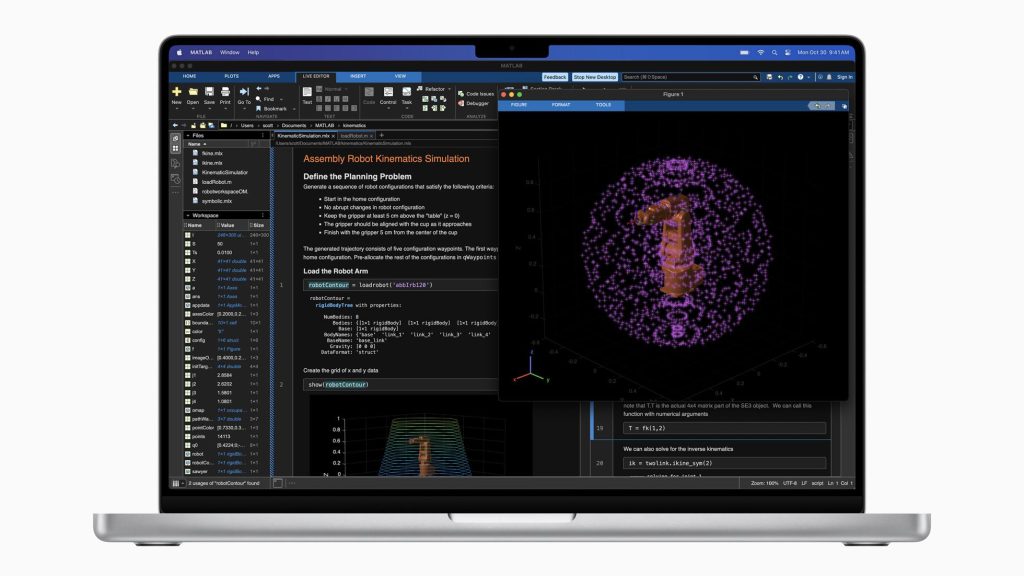
  • Simulation of dynamical systems in MathWorks MATLAB is up to 5.5x faster than the fastest Intel-based MacBook Pro,5 and up to 2x faster than the 16‑inch MacBook Pro with M1 Max.6
  • Render performance in Maxon Redshift is up to 5.3x faster than the fastest Intel-based MacBook Pro,5 and up to 2.5x faster than the 16‑inch MacBook Pro with M1 Max.6
  • Noise reduction in Blackmagic DaVinci Resolve Studio is up to 2.7x faster than the fastest Intel-based MacBook Pro,5 and up to 65 percent faster than the 16‑inch MacBook Pro with M1 Max.6
Now Available in Space Black

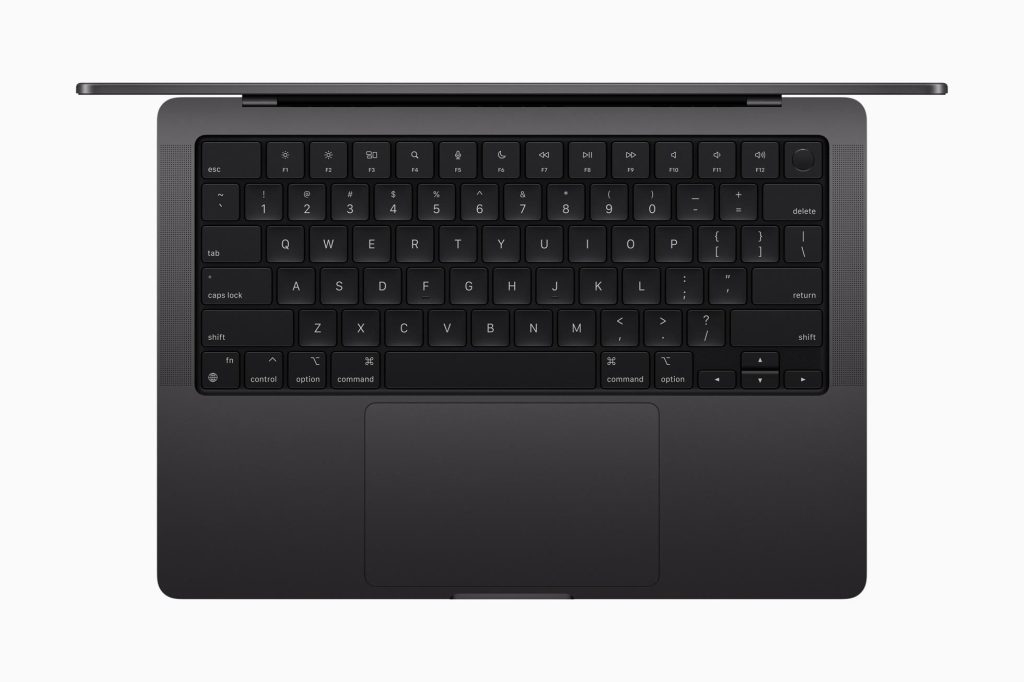
MacBook Pro models with M3 Pro and M3 Max are available in space black, a stunning new color that’s unmistakably pro. The finish features a breakthrough chemistry that forms an anodization seal to greatly reduce fingerprints. M3 Pro and M3 Max models are also available in silver, and the 14‑inch MacBook Pro with M3 is available in silver and space gray.

A Game Changer for Upgraders

The new MacBook Pro is a big upgrade for any user, especially those who have not upgraded from an Intel-based Mac. The M3 Max model is up to 11x faster than the fastest Intel-based MacBook Pro model.5 With the power efficiency of Apple silicon, for the vast majority of workloads, users will never hear the fans. Battery life also soars with up to 11 additional hours compared to the fastest Intel-based MacBook Pro model,5 and unlike many PC laptops, MacBook Pro delivers the same incredible performance whether plugged in or on battery. The Liquid Retina XDR display is the world’s best laptop display, with an exceptional 1000 nits sustained and 1600 nits of peak brightness for HDR content, impressive contrast ratio, vivid colors, and an outstanding viewing angle. SDR content is now displayed at up to 600 nits, which is 20 percent brighter than before.

All MacBook Pro models feature an industry-leading Liquid Retina XDR display, which is unrivaled for creating and enjoying content.

macOS Sonoma

macOS Sonoma brings a rich set of features to the Mac for work and play. Users can now place widgets right on the desktop, interact with them with just a click, and access the extensive ecosystem of iPhone widgets on their Mac through the magic of Continuity. Video conferencing is even more engaging with features to help users present remotely, including Presenter Overlay, which places the presenter on top of the content being shared; and Reactions, which enable fun gesture-triggered video effects in cinematic quality. In Safari, Profiles keeps browsing separate between multiple topics or projects, and web apps provide faster access to favorite sites. And a collection of stunning new screen savers features slow-motion videos of locations around the world.

macOS Sonoma also takes full advantage of the capabilities of Apple silicon, offering powerful new features for pros. The new high performance mode in Screen Sharing enables extremely responsive remote access to another Mac so pros can securely work on their highest-quality content from anywhere. Game Mode prioritizes graphics tasks to deliver consistently high frame rates and drastically reduce latency with wireless accessories for even more immersive gameplay with titles like Baldur’s Gate 3, Lies of P, and DEATH STRANDING DIRECTOR’S CUT.

Better for the Environment

MacBook Pro is built to last. The enclosure is created from a custom alloy that uses 100 percent recycled aluminum and is incredibly durable. MacBook Pro also uses 100 percent recycled rare earth elements in all magnets, and 100 percent recycled tin soldering and gold plating in multiple printed circuit boards. MacBook Pro is also free of numerous harmful substances such as beryllium, brominated flame retardants, and mercury, and 100 percent of the wood fiber in the packaging is recycled or comes from responsibly managed forests.

Today, Apple is carbon neutral for global corporate operations, and by 2030, plans to be carbon neutral across the entire manufacturing supply chain and all product life cycles. This means that every Apple device sold, from component manufacturing, assembly, transport, customer use, all the way to recycling and material recovery, will be carbon neutral.

Pricing and Availability

  • Customers can order the new MacBook Pro starting today, Monday, October 30, on apple.com/store and in the Apple Store app in 27 countries and regions, including the U.S. It will begin arriving to customers, and will be in Apple Store locations and Apple Authorized Resellers, starting Tuesday, November 7.
  • The 14-inch MacBook Pro with M3 starts at $1,599 (U.S.) and $1,499 (U.S.) for education; the 14‑inch MacBook Pro with M3 Pro starts at $1,999 (U.S.) and $1,849 (U.S.) for education; and the 16‑inch MacBook Pro starts at $2,499 (U.S.) and $2,299 (U.S.) for education.
  • Additional technical specifications, configure-to-order options, and accessories are available at apple.com/mac.
  • With Apple Trade In, customers can trade in their current computer and get credit toward a new Mac. Customers can visit apple.com/shop/trade-in to see what their device is worth.
  • Every customer who buys a Mac from Apple can enjoy a free Online Personal Session with an Apple Specialist, get their product set up in select stores — including help with data transfer — and receive guidance on how to make their new Mac work the way they want.

About Apple Apple revolutionized personal technology with the introduction of the Macintosh in 1984. Today, Apple leads the world in innovation with iPhone, iPad, Mac, Apple Watch, and Apple TV. Apple’s five software platforms — iOS, iPadOS, macOS, watchOS, and tvOS — provide seamless experiences across all Apple devices and empower people with breakthrough services including the App Store, Apple Music, Apple Pay, and iCloud. Apple’s more than 100,000 employees are dedicated to making the best products on earth, and to leaving the world better than we found it.

  1. Testing was conducted by Apple in September and October 2023 using preproduction 16‑inch MacBook Pro systems with Apple M3 Pro, a 12-core CPU, an 18-core GPU, 36GB of RAM, and 512GB SSD. The wireless web test measures battery life by wirelessly browsing 25 popular websites with display brightness set to eight clicks from bottom. The Apple TV app movie playback test measures battery life by playing back HD 1080p content with display brightness set to eight clicks from bottom. Battery life varies by use and configuration. See apple.com/batteries for more information.
  2. Results are compared to the previous-generation 13‑inch MacBook Pro with Apple M1, an 8-core CPU, an 8-core GPU, 16GB of RAM, and 2TB SSD.
  3. Results are compared to previous-generation 1.7GHz quad-core Intel Core i7-based 13‑inch MacBook Pro systems with Intel Iris Plus Graphics 645, 16GB of RAM, and 2TB SSD.
  4. Results are compared to the previous-generation 16‑inch MacBook Pro with Apple M1 Pro, a 10-core CPU, a 16-core GPU, 32GB of RAM, and 8TB SSD.
  5. Results are compared to previous-generation 2.4GHz 8-core Intel Core i9-based 16‑inch MacBook Pro systems with Radeon Pro 5600M graphics with 8GB of HBM2, 64GB of RAM, and 8TB SSD.
  6. Results are compared to the previous-generation 16‑inch MacBook Pro with Apple M1 Max, a 10-core CPU, a 32-core GPU, 64GB of RAM, and 8TB SSD.

Press Contacts

Starlayne Meza
Apple
[email protected]

Michelle Del Rio
Apple
[email protected]

Apple Media Helpline
[email protected]

FACT SHEET: President Biden Issues Executive Order on Safe, Secure, and Trustworthy Artificial Intelligence

0

Today, President Biden is issuing a landmark Executive Order to ensure that America leads the way in seizing the promise and managing the risks of artificial intelligence (AI). The Executive Order establishes new standards for AI safety and security, protects Americans’ privacy, advances equity and civil rights, stands up for consumers and workers, promotes innovation and competition, advances American leadership around the world, and more.

As part of the Biden-Harris Administration’s comprehensive strategy for responsible innovation, the Executive Order builds on previous actions the President has taken, including work that led to voluntary commitments from 15 leading companies to drive safe, secure, and trustworthy development of AI.

The Executive Order directs the following actions:

New Standards for AI Safety and Security

As AI’s capabilities grow, so do its implications for Americans’ safety and security. With this Executive Order, the President directs the most sweeping actions ever taken to protect Americans from the potential risks of AI systems:

  • Require that developers of the most powerful AI systems share their safety test results and other critical information with the U.S. government. In accordance with the Defense Production Act, the Order will require that companies developing any foundation model that poses a serious risk to national security, national economic security, or national public health and safety must notify the federal government when training the model, and must share the results of all red-team safety tests. These measures will ensure AI systems are safe, secure, and trustworthy before companies make them public. 
  • Develop standards, tools, and tests to help ensure that AI systems are safe, secure, and trustworthy. The National Institute of Standards and Technology will set the rigorous standards for extensive red-team testing to ensure safety before public release. The Department of Homeland Security will apply those standards to critical infrastructure sectors and establish the AI Safety and Security Board. The Departments of Energy and Homeland Security will also address AI systems’ threats to critical infrastructure, as well as chemical, biological, radiological, nuclear, and cybersecurity risks. Together, these are the most significant actions ever taken by any government to advance the field of AI safety.
  • Protect against the risks of using AI to engineer dangerous biological materials by developing strong new standards for biological synthesis screening. Agencies that fund life-science projects will establish these standards as a condition of federal funding, creating powerful incentives to ensure appropriate screening and manage risks potentially made worse by AI.
  • Protect Americans from AI-enabled fraud and deception by establishing standards and best practices for detecting AI-generated content and authenticating official content. The Department of Commerce will develop guidance for content authentication and watermarking to clearly label AI-generated content. Federal agencies will use these tools to make it easy for Americans to know that the communications they receive from their government are authentic—and set an example for the private sector and governments around the world.
  • Establish an advanced cybersecurity program to develop AI tools to find and fix vulnerabilities in critical software, building on the Biden-Harris Administration’s ongoing AI Cyber Challenge. Together, these efforts will harness AI’s potentially game-changing cyber capabilities to make software and networks more secure.
  • Order the development of a National Security Memorandum that directs further actions on AI and security, to be developed by the National Security Council and White House Chief of Staff. This document will ensure that the United States military and intelligence community use AI safely, ethically, and effectively in their missions, and will direct actions to counter adversaries’ military use of AI.

Protecting Americans’ Privacy

Without safeguards, AI can put Americans’ privacy further at risk. AI not only makes it easier to extract, identify, and exploit personal data, but it also heightens incentives to do so because companies use data to train AI systems. To better protect Americans’ privacy, including from the risks posed by AI, the President calls on Congress to pass bipartisan data privacy legislation to protect all Americans, especially kids, and directs the following actions:

  • Protect Americans’ privacy by prioritizing federal support for accelerating the development and use of privacy-preserving techniques—including ones that use cutting-edge AI and that let AI systems be trained while preserving the privacy of the training data.  
  • Strengthen privacy-preserving research and technologies, such as cryptographic tools that preserve individuals’ privacy, by funding a Research Coordination Network to advance rapid breakthroughs and development. The National Science Foundation will also work with this network to promote the adoption of leading-edge privacy-preserving technologies by federal agencies.
  • Evaluate how agencies collect and use commercially available information—including information they procure from data brokers—and strengthen privacy guidance for federal agencies to account for AI risks. This work will focus in particular on commercially available information containing personally identifiable data.
  • Develop guidelines for federal agencies to evaluate the effectiveness of privacy-preserving techniques, including those used in AI systems. These guidelines will advance agency efforts to protect Americans’ data.

Advancing Equity and Civil Rights

Irresponsible uses of AI can lead to and deepen discrimination, bias, and other abuses in justice, healthcare, and housing. The Biden-Harris Administration has already taken action by publishing the Blueprint for an AI Bill of Rights and issuing an Executive Order directing agencies to combat algorithmic discrimination, while enforcing existing authorities to protect people’s rights and safety. To ensure that AI advances equity and civil rights, the President directs the following additional actions:

  • Provide clear guidance to landlords, Federal benefits programs, and federal contractors to keep AI algorithms from being used to exacerbate discrimination.
  • Address algorithmic discrimination through training, technical assistance, and coordination between the Department of Justice and Federal civil rights offices on best practices for investigating and prosecuting civil rights violations related to AI.
  • Ensure fairness throughout the criminal justice system by developing best practices on the use of AI in sentencing, parole and probation, pretrial release and detention, risk assessments, surveillance, crime forecasting and predictive policing, and forensic analysis.

Standing Up for Consumers, Patients, and Students

AI can bring real benefits to consumers—for example, by making products better, cheaper, and more widely available. But AI also raises the risk of injuring, misleading, or otherwise harming Americans. To protect consumers while ensuring that AI can make Americans better off, the President directs the following actions:

  • Advance the responsible use of AI in healthcare and the development of affordable and life-saving drugs. The Department of Health and Human Services will also establish a safety program to receive reports of—and act to remedy – harms or unsafe healthcare practices involving AI. 
  • Shape AI’s potential to transform education by creating resources to support educators deploying AI-enabled educational tools, such as personalized tutoring in schools.

Supporting Workers

AI is changing America’s jobs and workplaces, offering both the promise of improved productivity but also the dangers of increased workplace surveillance, bias, and job displacement. To mitigate these risks, support workers’ ability to bargain collectively, and invest in workforce training and development that is accessible to all, the President directs the following actions:

  • Develop principles and best practices to mitigate the harms and maximize the benefits of AI for workers by addressing job displacement; labor standards; workplace equity, health, and safety; and data collection. These principles and best practices will benefit workers by providing guidance to prevent employers from undercompensating workers, evaluating job applications unfairly, or impinging on workers’ ability to organize.
  • Produce a report on AI’s potential labor-market impacts, and study and identify options for strengthening federal support for workers facing labor disruptions, including from AI.

Promoting Innovation and Competition

America already leads in AI innovation—more AI startups raised first-time capital in the United States last year than in the next seven countries combined. The Executive Order ensures that we continue to lead the way in innovation and competition through the following actions:

  • Catalyze AI research across the United States through a pilot of the National AI Research Resource—a tool that will provide AI researchers and students access to key AI resources and data—and expanded grants for AI research in vital areas like healthcare and climate change.
  • Promote a fair, open, and competitive AI ecosystem by providing small developers and entrepreneurs access to technical assistance and resources, helping small businesses commercialize AI breakthroughs, and encouraging the Federal Trade Commission to exercise its authorities.
  • Use existing authorities to expand the ability of highly skilled immigrants and nonimmigrants with expertise in critical areas to study, stay, and work in the United States by modernizing and streamlining visa criteria, interviews, and reviews.

Advancing American Leadership Abroad

AI’s challenges and opportunities are global. The Biden-Harris Administration will continue working with other nations to support safe, secure, and trustworthy deployment and use of AI worldwide. To that end, the President directs the following actions:

  • Expand bilateral, multilateral, and multistakeholder engagements to collaborate on AI. The State Department, in collaboration, with the Commerce Department will lead an effort to establish robust international frameworks for harnessing AI’s benefits and managing its risks and ensuring safety. In addition, this week, Vice President Harris will speak at the UK Summit on AI Safety, hosted by Prime Minister Rishi Sunak.
  • Accelerate development and implementation of vital AI standards with international partners and in standards organizations, ensuring that the technology is safe, secure, trustworthy, and interoperable.
  • Promote the safe, responsible, and rights-affirming development and deployment of AI abroad to solve global challenges, such as advancing sustainable development and mitigating dangers to critical infrastructure.

Ensuring Responsible and Effective Government Use of AI

AI can help government deliver better results for the American people. It can expand agencies’ capacity to regulate, govern, and disburse benefits, and it can cut costs and enhance the security of government systems. However, use of AI can pose risks, such as discrimination and unsafe decisions. To ensure the responsible government deployment of AI and modernize federal AI infrastructure, the President directs the following actions:

  • Issue guidance for agencies’ use of AI, including clear standards to protect rights and safety, improve AI procurement, and strengthen AI deployment.  
  • Help agencies acquire specified AI products and services faster, more cheaply, and more effectively through more rapid and efficient contracting.
  • Accelerate the rapid hiring of AI professionals as part of a government-wide AI talent surge led by the Office of Personnel Management, U.S. Digital Service, U.S. Digital Corps, and Presidential Innovation Fellowship. Agencies will provide AI training for employees at all levels in relevant fields.

As we advance this agenda at home, the Administration will work with allies and partners abroad on a strong international framework to govern the development and use of AI. The Administration has already consulted widely on AI governance frameworks over the past several months—engaging with Australia, Brazil, Canada, Chile, the European Union, France, Germany, India, Israel, Italy, Japan, Kenya, Mexico, the Netherlands, New Zealand, Nigeria, the Philippines, Singapore, South Korea, the UAE, and the UK. The actions taken today support and complement Japan’s leadership of the G-7 Hiroshima Process, the UK Summit on AI Safety, India’s leadership as Chair of the Global Partnership on AI, and ongoing discussions at the United Nations.

The actions that President Biden directed today are vital steps forward in the U.S.’s approach on safe, secure, and trustworthy AI. More action will be required, and the Administration will continue to work with Congress to pursue bipartisan legislation to help America lead the way in responsible innovation.

For more on the Biden-Harris Administration’s work to advance AI, and for opportunities to join the Federal AI workforce, visit AI.gov.

NASA Improves GIANT Optical Navigation Technology For Future Missions

0

Goddard’s GIANT optical navigation software helped guide the OSIRIS-REx mission to the Asteroid Bennu. Today its developers continue to add functionality and streamline useability for future missions.

As NASA scientists study the returned fragments of asteroid Bennu, the team that helped navigate the mission on its journey refines their technology for potential use in future robotic and crewed missions.

The optical navigation team at NASA’s Goddard Space Flight Center in Greenbelt, Maryland, served as a backup navigation resource for the OSIRIS-REx (Origins, Spectral Interpretation, Resource Identification, and Security – Regolith Explorer) mission to near-Earth asteroid Bennu. They double-checked the primary navigation team’s work and proved the viability of navigation by visual cues.

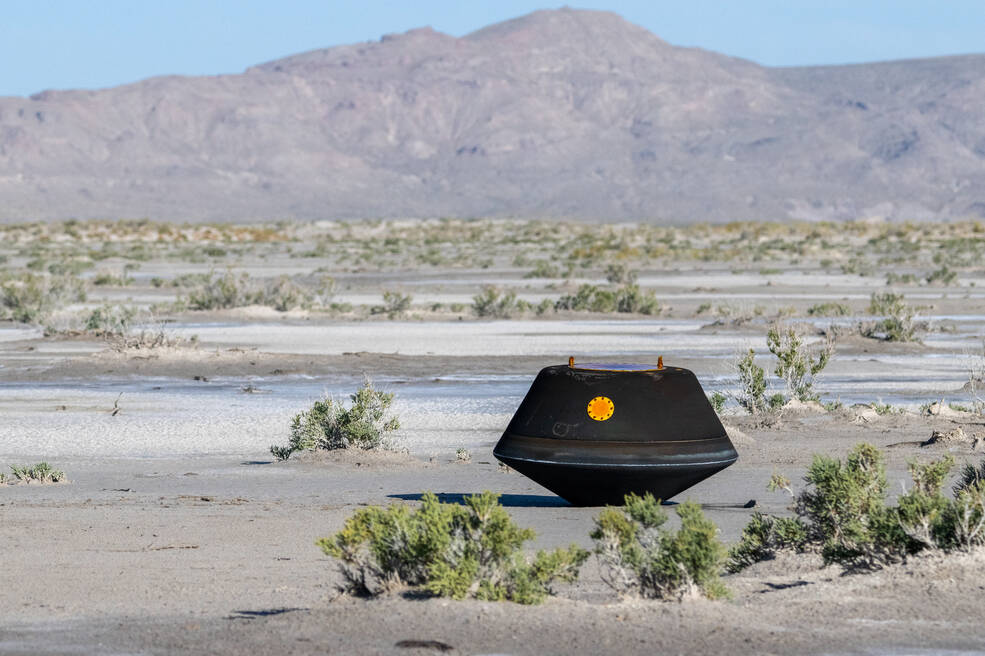
The sample return capsule from NASA’s OSIRIS-REx mission is seen shortly after touching down in the desert, Sunday, Sept. 24, 2023, at the Department of Defense’s Utah Test and Training Range. The sample was collected from the asteroid Bennu in October 2020 by NASA’s OSIRIS-REx spacecraft. NASA/Keegan Barber

Optical navigation uses observations from cameras, lidar, or other sensors to navigate the way humans do. This cutting edge technology works by taking pictures of a target, such as Bennu, and identifying landmarks on the surface. GIANT software – that’s short for the Goddard Image Analysis and Navigation Tool – analyzes those images to provide information, such as precise distance to the target, and to develop three-dimensional maps of potential landing zones and hazards. It can also analyze a spinning object to help calculate the target’s mass and determine its center – critical details to know for a mission trying to enter an orbit.

“Onboard autonomous optical navigation is an enabling technology for current and future mission ideas and proposals,” said Andrew Liounis, lead developer for GIANT at Goddard. “It reduces the amount of data that needs to be downlinked to Earth, reducing the cost of communications for smaller missions, and allowing for more science data to be downlinked for larger missions. It also reduces the number of people required to perform orbit determination and navigation on the ground.”

Asteroid Bennu ejecting particles from its surface on Jan. 19, created by combining two images from NASA’s OSIRIS-REx spacecraft. GIANT optical navigation technology used to process images like these helped establish the size and velocity of the particles. NASA / Goddard / University of Arizona

During OSIRIS-REx’s orbit of Bennu, GIANT identified particles flung from the asteroid’s surface. The optical navigation team used images to calculate the particles’ movement and mass, ultimately helping determine they did not pose a significant threat to the spacecraft.

Since then, lead developer Andrew Liounis said they have refined and expanded GIANT’s backbone collection of software utilities and scripts.

New GIANT developments include an open-source version of their software released to the public, and celestial navigation for deep space travel by observing stars, the Sun, and solar system objects. They are now working on a slimmed-down package to aid in autonomous operations throughout a mission’s life cycle.

“We’re also looking to use GIANT to process some Cassini data with partners at the University of Maryland in order to study Saturn’s interactions with its moons,” Liounis said.

Other innovators like Goddard engineer Alvin Yew are adapting the software to potentially aid rovers and human explorers on the surface of the Moon or other planets.

Adaptation, Improvement

Shortly after OSIRIS-REx left Bennu, Liounis’ team released a refined, open-source version for public use. “We considered a lot of changes to make it easier for the user and a few changes to make it run more efficiently,” he said.

An intern modified their code to make use of a graphics processor for ground-based operations, boosting the image processing at the heart of GIANT’s navigation.

A simplified version called cGIANT works with Goddard’s autonomous Navigation, Guidance, and Control software package, or autoNGC in ways that can be crucial to both small and large missions, Liounis said.

Liounis and colleague Chris Gnam developed a celestial navigation capability which uses GIANT to steer a spacecraft by processing images of stars, planets, asteroids, and even the Sun. Traditional deep space navigation uses the mission’s radio signals to determine location, velocity, and distance from Earth. Reducing a mission’s reliance on NASA’s Deep Space Network frees up a valuable resource shared by many ongoing missions, Gnam said.

Next on their agenda, the team hopes to develop planning capabilities so mission controllers can develop flight trajectories and orbits within GIANT – streamlining mission design.

“On OSIRIS-REx, it would take up to three months to plan our next trajectory or orbit,” Liounis said. “Now we can reduce that to a week or so of computer processing time.”

Their innovations have earned the team continuous support from Goddard’s Internal Research and Development program, individual missions, and NASA’s Space Communications and Navigation program.

“As mission concepts become more advanced,” Liounis said, “optical navigation will continue to become a necessary component of the navigation toolbox.”

By Karl B. Hille

NASA’s Goddard Space Flight Center in Greenbelt, Md. 

Originally published at: NASA

Readying A Little Rover

0

NASA/JPL-Caltech

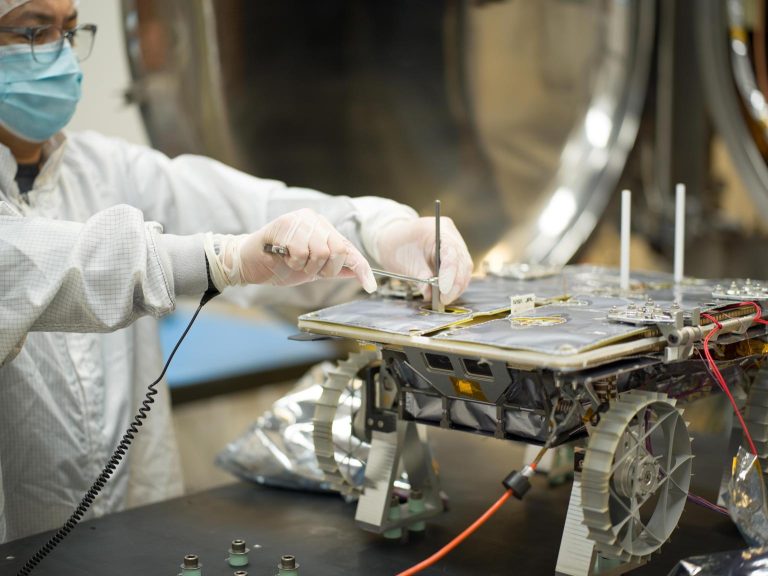
An engineer prepares a small rover for testing in a thermal vacuum chamber on Oct. 24, 2023, at NASA’s Jet Propulsion Laboratory in Southern California. This rover is part of the agency’s Cooperative Autonomous Distributed Robotic Exploration (CADRE) technology demonstration that’s headed to the Moon as part of the Commercial Lunar Payload Services initiative. CADRE is designed to demonstrate that multiple robots can cooperate and explore together autonomously – without direct input from human mission controllers.

Learn more about these miniature rovers. (https://www.jpl.nasa.gov/images/pia25669-cadre-rover-getting-prepped-for-testing)

Image Credit: NASA/JPL-Caltech

By: Monika Luabeya
Originally published at: NASA

NASA Sets Coverage For Roscosmos Spacewalk Outside Space Station

0

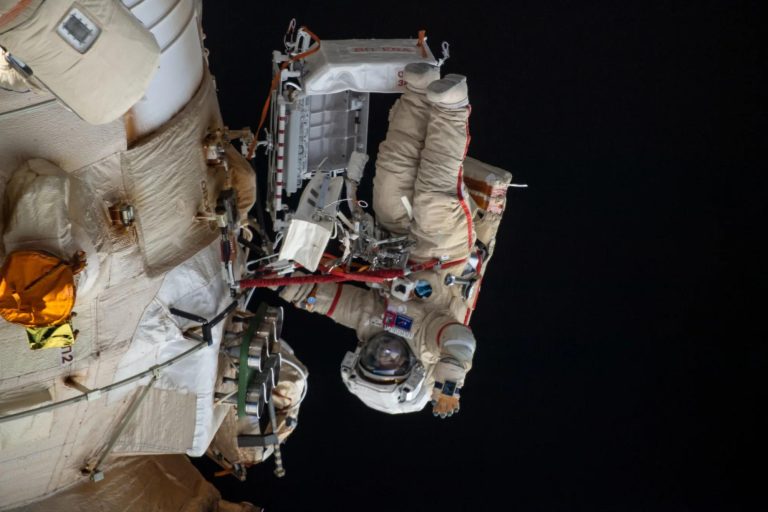
(April 18, 2022) — Cosmonaut Oleg Artemyev waves to the camera while working outside the Nauka multipurpose laboratory module during a spacewalk that lasted for six hours and 37 minutes to outfit Nauka and configure the European robotic arm on the International Space Station’s Russian segment.

Editor’s note: This advisory was updated Oct. 23, 2023, to reflect a change in the scheduled time for the spacewalk.

NASA will provide live coverage as two Roscosmos cosmonauts conduct a spacewalk outside the International Space Station Wednesday, Oct. 25, to install communications hardware and inspect a portion of the orbital complex.  

Coverage begins at 1:30 p.m. EDT on NASA Television, the NASA app, and the agency’s website. The spacewalk is expected to begin at 1:55 p.m. and could last up to seven hours.

Expedition 70 cosmonauts Oleg Kononenko and Nikolai Chub will venture outside of the station’s Poisk module to install a synthetic radar communications system and release a nanosatellite to test solar sail technology. While outside the station, they also will inspect and photograph an external backup radiator on the Nauka multipurpose laboratory module that experienced a coolant leak on Oct. 9.

The spacewalk will be the 268th in support of space station assembly, maintenance, and upgrades. It will be the sixth for Kononenko, who will wear the Orlan spacesuit with red stripes and the first for Chub, who will wear the spacesuit with blue stripes.

Get breaking news, images and features from the space station on the station blog, Instagram, Facebook, and X.

Learn more about International Space Station research and operations at:

https://www.nasa.gov/station

-end-

Julian Coltre / Lora Bleacher
Headquarters, Washington
202-358-1100
[email protected] / [email protected]

Sandra Jones
Johnson Space Center, Houston
281-483-5111
[email protected]

By: Roxana Bardan
Originally published at: NASA

Honour The Day Of The Dead By Preparing Your Own Attire.

0

The day of the dead is coming in a few days. It is a holiday that is mostly celebrated in Mexico. A way to remember those that have already passed, and also treated as a family reunion. It’s the time of the year were you get to spend the time your family on a special occasion.

Here are some suggestions to include in your own personal costume.

01. Hat, gloves and bow tie

Hat, gloves, and bow tie

Get this if you are just missing these items and you already have a dress.

02. Face Tattoos

Face tattoo

These can easily be removed by water, so don’t worry, they are not permanent.

03. Skull face mask for women

Women mask

Women generally wear masks on the day of the dead. But you can also use face tatoos from the previous item.

04. Complete costume for kids

Boys:

Boy costume for day of the dead

Note that the face mask is not included here. It only includes the tailcoat with shirt-front, hat and cummerbund.

Girls:

Girl costume for day of the dead

05. Day of Dead Senorita Costume for Women

Women costume for day of the dead

An all-in-one buy costume for the ladies. 

What is include in the set:

  • Spanish Sugar Skull Print Dress w/ Lace-Trimmed Off-Shoulder Pink Neckline
  • Corset Waist and Layered Ruffled Skirt w/ Tulle Hem
  • Gothic Long Black Veil on Headband containing 2 Black and 3 Red Roses
  • Mask
  • Skeleton Long Gloves
  • 1 Pair of Skull Legging

It does not include the shoes though, so take note of that when buying this. 

06. Day of the Dead El Senor Charro Bones Costume for Men

Men costume for day of the dead

Similar with the women costume set. It comes with the following:

  • Mariachi Spanish Sugar Skull Print Jacket w/ attached Cuffs and Red Rose
  • Mock Shirt w/ attached Tie
  • Mask
  • Red Belt Sash
  • Sombrero Hat
  • 1 Pair of Black Pants w/ White Sugar Skull Embroidery Trim Design along the Sides
  • 1 Pair of Gloves

Whether you are honoring those that have already passed on or going with a costume for Halloween, one of the most important things to keep in mind is why you want to do it. And if your are doing, why not give it your best. 


“Get the most out of your shopping with an Amazon Prime membership! Sign up now to enjoy free one-day delivery, unlimited streaming, exclusive deals, membership perks and more. Sign up today to enjoy a 30-day free trial and if you’re a student enjoy up to 6 months free trial. Click here to signup now! 👉 https://amzn.to/46Jm3AX”

AI in the Classroom: Amii’s K-12 Pilot Program

0

There is growing debate about AI in the classroom

New technologies have always made their way into the classroom. From chalkboards in schoolhouses and textbooks in classrooms to computer-based learning in the digital age, methods have continually evolved with the times.

Artificial intelligence (AI) and machine learning (ML) are once again transforming how we learn and teach. This has become especially pronounced over the past year, as educators have been raising the alarm over the use of generative AI programs (such as ChatGPT).

Banning or embracing the use of AI in the classroom has been hotly debated, as educators, parents, and technologists alike weigh in on the pros and cons. There has been much speculation about how it will impact students’ quality of education, the types of challenges faced by teachers, and the shape of our society as today’s youth become tomorrow’s leaders.

There have been many fears over technological advances in years past – for example, that calculators would erode children’s math skills or that typewriters would hurt children’s handwriting abilities. And so, as in the past, we are again forced to stop, assess the opportunities and threats of this new technology, and adjust accordingly.

In other words, how do we integrate AI into our education systems to maximize the benefits and minimize the pitfalls?

Amii is launching a program for school-aged students

“We are excited to support teachers as they help students build a baseline understanding of AI and ML … and how to think critically about its application.”

Jill Kowalchuk, Amii Education Advisor

Aligning with Amii’s mission to make AI For Good and For All, we are prioritizing AI literacy in the next generation. Leading out this initiative is Amii’s Education Advisor, Jill Kowalchuk, M.Ed.

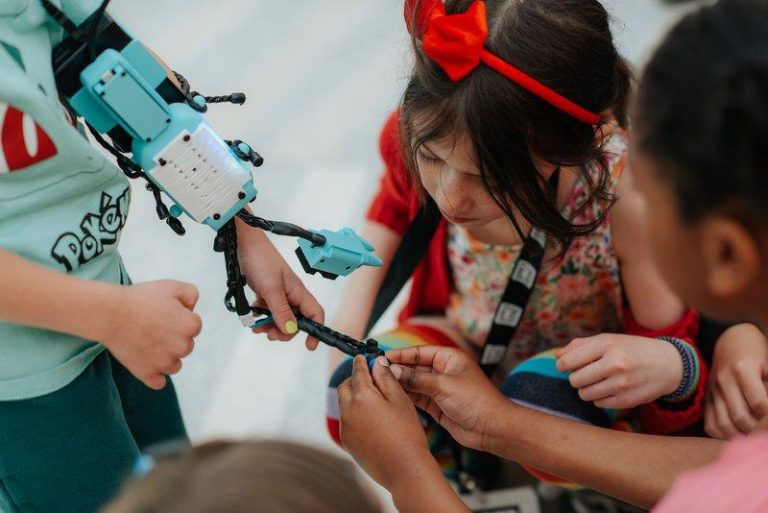
This past year, Kowalchuk has been developing Amii’s AI in K-12 pilot program, which aims to prepare K-12 students with a strong foundation in AI and ML as they move toward post-secondary education.

As a former teacher, Kowalchuk understands that the best pathway to educate students is to ensure that teachers themselves are equipped with the resources, education and context they need to engage with the subject meaningfully.

“We are excited to support teachers as they help students build a baseline understanding of AI and ML,” says Kowalchuk. “We are confident that the programming will not only teach fundamental knowledge about the technologies, but also help students develop an understanding of AI’s possible benefits and drawbacks, and how to think critically about its application.”

The pilot program launched in May 2023, with 58 high school teachers participating across Alberta.

Teacher-consulted Learning Kits

Program development began with stakeholder engagement sessions with teachers from participating schools. This early engagement identified a need for more consistency in STEM programming across school districts, with teachers calling for more access to support and resources for content delivery. Teachers also mentioned a growing demand for high-quality AI and ML resources for students preparing to transition into a digitally transformed workforce and post-secondary environment.

Informed by those early engagement sessions, Amii created learning kits to be provided to participants and deployed over the fall semester (September 2023 to January 2024). The program’s design was based on the Alberta Student Competencies, which lays out what skills and knowledge Alberta students should build through their studies.

In the end, four learning kits were created, each with a distinct theme:

  • Harnessing the Potential of ChatGPT equips teachers with the necessary background knowledge of Large Language Models (LLMs) such as ChatGPT, and helps students utilize LLMs responsibly.
  • AI in the Real World focuses on the impacts of AI on various aspects of society, helping students to think critically – not only about AI, but technology more generally.
  • Careers Reimagined helps students understand the profound impact AI has on diverse industries and recognize the wide range of career pathways it opens up.
  • Computer Science in the Age of AI focuses on illuminating the AI-related outcomes in the Computer Science Program of Studies by providing projects and learning activities for students.

Each learning kit includes a teacher handbook/introductions, sample lesson plans, slide decks, learning tasks, assessments, videos and discussion prompts for teachers to readily use in their multidisciplinary classrooms.

In addition to the learning kits, Amii is providing additional support to teachers through teacher engagement PD sessions, coaching sessions, classroom visits, guest speakers and field trip opportunities. To ensure smooth adoption in the classroom, Amii also offers regular check-ins and a mid-point evaluation.

Program launch and expansion

Following the conclusion of the pilot in January 2024, Amii will gather qualitative data and feedback from participants and stakeholders, and make any necessary revisions to the materials. From there, the program will soft launch an expansion of the high school programming, aiming to have all four learning kits publicly available for interested teachers by the Winter of 2024.

“We know that students have a diversity of learning needs and that teaching this material will require a multifaceted approach,” explains Kowalchuk. “We’re hoping that the feedback provided by teachers will help us identify what we’re doing well and what we need to adjust to best facilitate the teaching and learning of AI and ML-related concepts.”

Amii plans to expand the pilot program beyond high school, launching elementary and junior high stakeholder engagement sessions in the spring of 2024.

By: Britt Ayotte, Lynda Vang and Jill Kowalchuk
Originally published at: Amii

Source: cyberpogo.com

Learning How To Learn

0

In a new book, Richard “Dick” Larson draws on a lifelong commitment to STEM education at MIT to offer accessible advice on solving everyday problems and making smarter decisions.

Scott Murray | Institute for Data, Systems, and Society
MIT News (https://news.mit.edu/2023/learning-how-to-learn-model-thinking-1019)

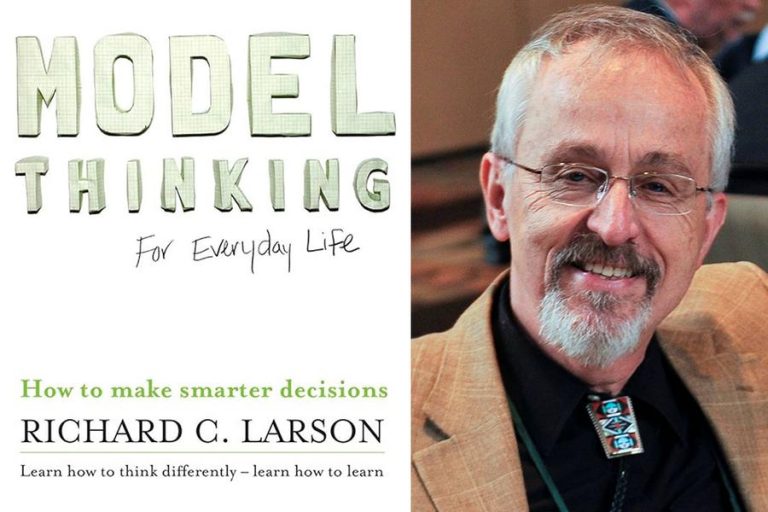
Caption:“Faced with a new problem, people often lack the ability to frame and formulate it using basic principles,” argues Professor Richard Larson. “Our emphasis is on problem framing and formulation, with mathematics and physics playing supporting roles.” Credits:Photo courtesy of Richard Larson.

Suppose you need to be on today’s only ferry to Martha’s Vineyard, which leaves at 2 p.m. It takes about 30 minutes (on average) to drive from where you are to the terminal. What time should you leave?

This is one of many common real-life examples used by Richard “Dick” Larson, a post-tenure professor in the MIT Institute for Data, Systems, and Society (IDSS), to explore exemplary problem-solving in his new book “Model Thinking for Everyday Life: How to Make Smarter Decisions.”

Larson’s book synthesizes a lifelong career as an MIT professor and researcher, highlighting crucial skills underpinning all empirical, rational, and critical thinking. “Critical thinkers are energetic detectives … always seeking the facts,” he says. “Additional facts may surface that can result in modified conclusions … A critical thinker is aware of the pitfalls of human intuition.”

For Larson, “model” thinking means not only thinking aided by conceptual and/or mathematical models, but a broader mode of critical thought that is informed by STEM concepts and worthy of emulation.

In the ferry example, a key concept at play is uncertainty. Accounting for uncertainty is a core challenge faced by systems engineers, operations researchers, and modelers of complex networks — all hats Larson has worn in over half a century at MIT. 

Uncertainty complicates all prediction and decision-making, and while statistics offers tactics for managing uncertainty, “Model Thinking” is not a math textbook. There are equations for the math-curious, but it doesn’t take a degree from MIT to understand that

  • an average of 30 minutes would cover a range of times, some shorter, some longer;
  • outliers can exist in the data, like the time construction traffic added an additional 30 minutes
  • “about 30 minutes” is a prediction based on past experience, not current information (road closures, accidents, etc.); and
  • the consequence for missing the ferry is not a delay of hours, but a full day — which might completely disrupt the trip or its purpose.

And so, without doing much explicit math, you calculate variables, weigh the likelihood of different outcomes against the consequences of failure, and choose a departure time. Larson’s conclusion is one championed by dads everywhere: Leave on the earlier side, just in case. 

“The world’s most important, invisible profession”

Throughout Larson’s career at MIT, he has focused on the science of solving problems and making better decisions. “Faced with a new problem, people often lack the ability to frame and formulate it using basic principles,” argues Larson. “Our emphasis is on problem framing and formulation, with mathematics and physics playing supporting roles.”

This is operations research, which Larson calls “the world’s most important invisible profession.” Formalized as a field during World War II, operations researchers use data and models to try to derive the “physics” of complex systems. The goal is typically optimizing things like scheduling, routing, simulation, prediction, planning, logistics, and queueing, for which Larson is especially well-known. A frequent media expert on the subject, he earned the moniker “Dr. Q” — and his research has led to new approaches for easing congestion in urban traffic, fast-food lines, and banks.

Larson’s experience with complex systems provides a wealth of examples to draw on, but he is keen to demonstrate that his purview includes everyday decisions, and that “Model Thinking” is a book for everyone. 

“Everybody uses models, whether they realize it or not,” he says. “If you have a bunch of errands to do, and you try to plan out the order to do them so you don’t have to drive as much, that’s more or less the ‘traveling salesman’ problem, a classic from operations research. Or when someone is shopping for groceries and thinking about how much of each product they need — they’re basically using an inventory management model of their pantry.”

Larson’s takeaway is that since we all use conceptual models for thinking, planning, and decision-making, then understanding howour minds use models, and learning to use them more intentionally, can lead to clearer thinking, better planning, and smarter decision-making — especially when they are grounded in principles drawn from math and physics.

Passion for the process

Teaching STEM principles has long been a mission of Larson’s, who co-founded MIT BLOSSOMS (Blended Learning Open Source Science or Math Studies) with his late wife, Mary Elizabeth Murray. BLOSSOMS provides free, interactive STEM lessons and videos for primary school students around the world. Some of the exercises in “Model Thinking” refer to these videos as well.

“A child’s educational opportunities shouldn’t be limited by where they were born or the wealth of their parents,” says Larson of the enterprise. 

It was also Murray who encouraged Larson to write “Model Thinking.” “She saw how excited I was about it,” he says. “I had the choice of writing a textbook on queuing, say, or something else. It didn’t excite me at all.”

Larson’s passion is for the process, not the answer. Throughout the book, he marks off opportunities for active learning with an icon showing the two tools necessary to complete each task: a sharpened pencil and a blank sheet of paper. 

“Many of us in the age of instant Google searches have lost the ability — or perhaps the patience — to undertake multistep problems,” he argues.

Model thinkers, on the other hand, understand and remember solutions better for having thought through the steps, and can better apply what they’ve learned to future problems. Larson’s “homework” is to docritical thinking, not just read about it. By working through thought experiments and scenarios, readers can achieve a deeper understanding of concepts like selection bias, random incidence, and orders of magnitude, all of which can present counterintuitive examples to the uninitiated.

For Larson, who jokes that he is “an evangelist for models,” there is no better way to learn than by doing — except perhaps to teach. “Teaching a difficult topic is our best way to learn it ourselves, is an unselfish act, and bonds the teacher and learner,” he writes.

In his long career as an educator and education advocate, Larson says he has always remained a learner himself. His love for learning illuminates every page of “Model Thinking,” which he hopes will provide others with the enjoyment and satisfaction that comes from learning new things and solving complex problems.

“You will learn how to learn,” Larson says. “And you will enjoy it!”

Reprinted with permission of MIT News (http://news.mit.edu/)

Source: cyberpogo.com

NASA Academy At Langley Research Center

0

2021 NASA Aeronautics Academy UAS flight test for mapping ability.
Credits: NASA

About the NASA Academy at Langley 

Langley’s NASA Academy’s rigorous and diverse summer research program prioritizes collaboration, teamwork, leadership, innovation, and creativity. 

Academy participants experience the challenges aerospace professionals face while conducting their research. Along with a team research project, the program includes: 

  • Invited lectures on technical topics 
  • Weekly discussions with NASA professionals 
  • Access to NASA’s advanced research facilities 

What are the eligibility requirements?  

  • Be a U.S. Citizen 
  • Be pursuing a major in Engineering (Aero, Computer, Electrical, Mechanical, Systems), Computer Science, Mechatronics, Electronics Technology, Applied Math, Applied Physics, or a similar field.  
  • Be a full-time student or recent graduate with a minimum GPA of 3.2 or higher.  
  • Candidates are preferred to have completed at least three full college years (except for two-year college students transferring to a four-year institution), but those who have completed two full college years are welcome to apply.  

Duration: The summer program runs for 10-12 weeks, from mid-May through August. The exact dates will be determined before the start of the program. 

How to Apply? 

To apply, you must submit a personal statement, a current resume, an unofficial transcript, two letters of recommendation from supervisors or college professors, and contact information (emails/phone) for the two references. Ready to apply? Please visit the Academy Application website to apply and learn more information about the eligibility requirements. 

If you have any questions, please contact Dr. Elizabeth Ward, Program Director, at [email protected]

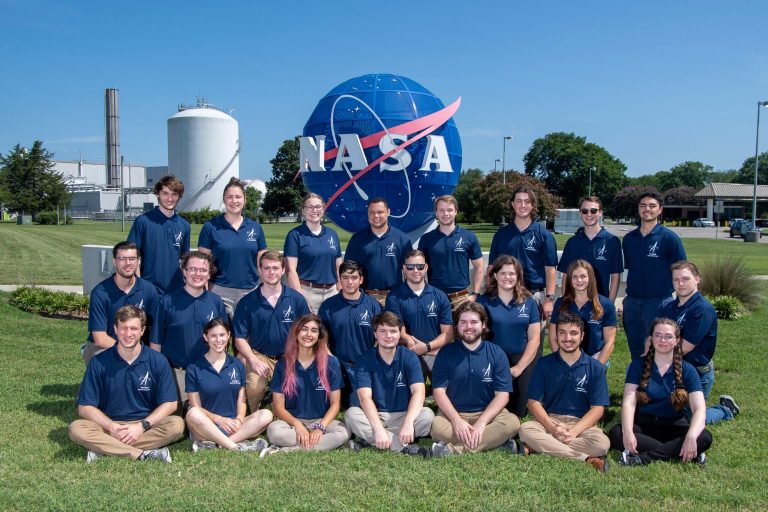
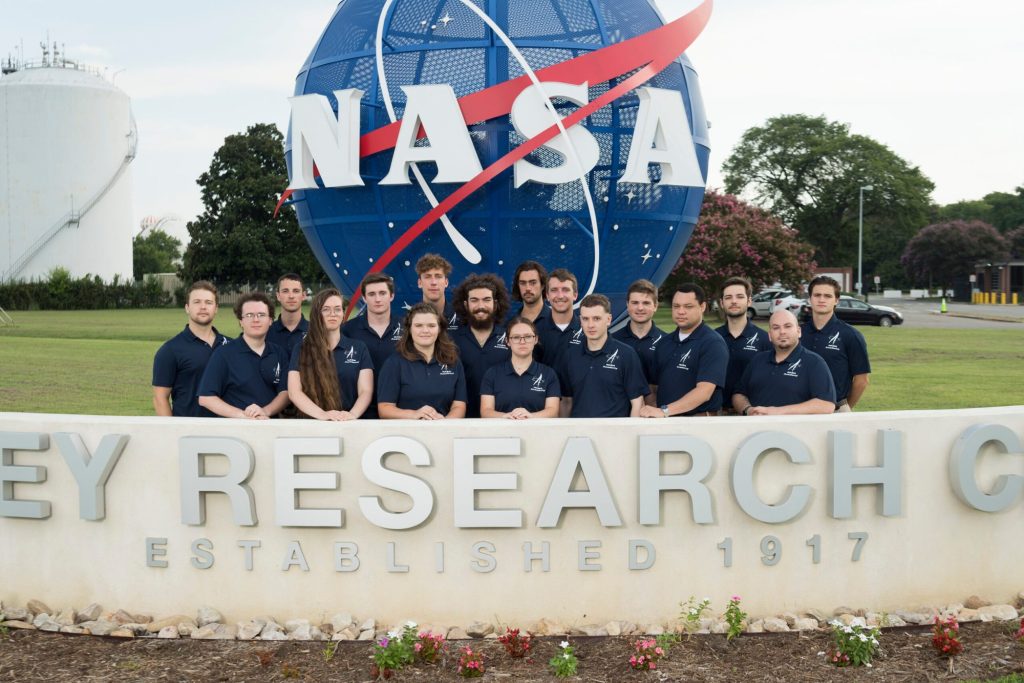
Images of 2022 NASA ARD (Aeronautics Research Directorate) MULTIDISCIPLINARY RESEARCH ACADEMY

Learn more about past NASA Academies 

The 2022 Academy had 17 students nationwide and multidisciplinary participation from multiple states. 

The 2021 NASA Academy at Langley Research Center had 23 students from 16 different universities and six different disciplines.  They were able to spend time on the center for one day to test sensors they had developed for a NASA UAV.

Finest 6 Halloween Costume Set For Children From TV Series

0

Halloween is fast approaching. If you are in a hurry and you want the best for your children, you can buy a complete costume. They are easier to manage and has dependable quality.

01. Demogorgon from Stranger Things

Demogorgon

While most would select the Thirteen costume, why not settle for the menacing Demogorgon.

02. Wednesday from the Netflix series Wednesday

Wednesday (Adams Family)

Cool and calculating, these are only some of the characteristics you could say for Wednesday Adams. If you’ve the recent Netflix series, Wednesday, then you know how both beautiful and scary she can be.

03. Pugsley from the Netflix series Wednesday

Sulley (Monsters, Inc)

While it is simple and might be unrecognizable if going alone. But if one the kids is going as Wednesday, this will make the theme of Adams family prominent.

04. Mavis from Hotel Transylvania: The Series

Mavis (Hotel Transylvania)

Going as Mavis from Hotel Transylvania is iconic to children as the movie did have sequels. Just note that this not include makeup, but some powder and black lipstick should do the trick.

05. Sulley from Monsters at Work

Pugsley (Adams Family)

More of a cute costume than scary. But remember the Sulley was intended to be a scary monster in the beginning. 

06. Boo from Monsters at Work

Boo (Monsters, Inc)

Nothing can be more adorable than this Boo costume. And if your kid got the Sulley costume when not let the other children wear this one.


“Get the most out of your shopping with an Amazon Prime membership! Sign up now to enjoy free one-day delivery, unlimited streaming, exclusive deals, membership perks and more. Sign up today to enjoy a 30-day free trial and if you’re a student enjoy up to 6 months free trial. Click here to signup now! 👉 https://amzn.to/46Jm3AX”