Move over Olympics, there’s a new superstar in town! While Paris braced itself for the 2 million international visitors expected for the 2024 Games, Taylor Swift’s “Eras Tour” is proving to be a much bigger draw for American luxury travellers.
This week, the billionaire songstress kicked off the European leg of her tour with four sold-out shows at La Défense Arena, just outside Paris. Despite the arena’s 40,000 capacity being a fraction of the Olympic crowds, luxury travel agency Embark Beyond reports these concerts are attracting five times as many Americans as the Olympics!
“I never would have anticipated it,” says Embark co-founder Jack Ezon, referencing Swift’s ability to boost viewership for events she attends. Her support for boyfriend Travis Kelce during the Super Bowl is credited as a factor in making it the most-watched broadcast ever.
This “Taylor effect” isn’t just about America. While European cities like Paris limit ticket resales, preventing sky-high prices, Embark Beyond has planned over 200 luxury Paris trips for Swifties. These trips average 3 nights in iconic hotels like the Plaza Athénée and often include mother-daughter bonding and shopping sprees. For some, the Parisian concerts are just a stop on a grand European tour, adding destinations like London or the south of France.
Meanwhile, the Olympics are facing lower-than-expected demand. Vacation rentals and hotels have slashed prices due to overblown hype. While bookings could still pick up closer to the July 26 opening ceremony, the recent surge in Taylor Swift interest is undeniable.
One thing’s for sure: the “Taylor effect” is a global phenomenon. In 2023, the first round of her US concerts contributed an estimated $4.3 billion to the country’s gross domestic product, according to Bloomberg Economics. This economic boost extends beyond just luxury travel. Restaurants, bars, and local businesses can all expect a significant bump from the influx of dedicated Swifties.
So, while the Olympics may be the pinnacle of athletic achievement, Taylor Swift’s “Eras Tour” is proving to be a cultural powerhouse, drawing crowds and boosting economies worldwide. Will the Olympics still manage to capture the world’s imagination? Only time will tell. But for now, Paris belongs to the Swifties.
Get ready for four nights of pure magic because Taylor Swift is bringing her “The Eras Tour” to Paris La Défense Arena from May 9th to 12th!
Here’s everything you need to know to make the most of this epic event:
Doors Open Early! ⏰
Don’t miss a second of the action! The venue opens at 4:45 PM, with the show starting at 6:30 PM. There’ll be an opening act to get the party started before Taylor takes the stage.
Getting There: Public Transport is Your Best Friend
The venue recommends using public transport to avoid traffic and large crowds. Here’s your cheat sheet:
Metro: Line 1 (La Défense stop)
RER: A (La Défense or Nanterre-Préfecture), E (La Défense or Nanterre-la-Folie), L (La Défense)
Transilien: Line U (La Défense)
Heads Up! There’s construction on some lines, so plan accordingly. Check the official Paris La Défense Arena website for details.
Find Your Entrance Like a Swiftie Pro:
Your ticket has a coloured access point (yellow, red, or purple) – it helps with orientation but isn’t the only entry point. Here’s a breakdown to get you there faster:
Get ready to “enchanter” your Parisian adventure with the must-have merch collection for the Eras Tour! We’re talking showstopping style that’ll have you feeling like a Parisian fashion icon, all while repping your love for Taylor’s musical eras.
Ditch the flimsy plastic and embrace Parisian chic with our limited-edition Eras Tour canvas tote. Imagine strolling down the Champs-Élysées, baguette in hand, with this beauty by your side. Spacious enough to hold all your concert essentials (think glowsticks, phone, emergency macaron stash), this tote is more than just a bag – it’s a conversation starter! Spark envy with fellow Swifties and turn heads with a statement piece that screams “Eras Tour in Paris – what could be more magical?”
Adventure awaits, Swiftie! Whether you’re conquering the Louvre, cruising the Seine, or getting lost in charming Parisian side streets, our Eras Tour Keepsakes Backpack is your trusty sidekick. This durable and comfortable backpack features a sleek design that celebrates the magic of the Eras Tour. Stash your camera, sunscreen, extra layer for those unpredictable Parisian nights, and maybe a beret for good measure – all in style!
Channel your inner Parisian fashionista and show your Swiftie pride with our stunning Eras Tour Keepsake Tee. This comfy, stylish shirt is the perfect way to rep your love for Taylor’s musical journey, from the sparkling pop anthems of “Fearless” to the introspective storytelling of “Folklore.” Available in a variety of sizes, this tee is a must-have for any Swiftie hitting the Parisian concert scene. Imagine the epic Instagram stories you can create with the Eiffel Tower in the background and this beauty front and center!
Don’t miss out on this exclusive, limited-edition collection! These are the perfect keepsakes to capture the Parisian leg of the Eras Tour forever. Trust us, your future self will thank you for the unforgettable photo ops and memories!
We have searched for places that are the most snug you could ever be when drinking coffee. These are spots that have been approved by both tourist and locals. When it’s about food and particularly coffee, it’s always better to trust where the locals line up to. The Parisian know what’s best when it comes to coffee, bread, pastries and other food you can think of.
Café Kitsuné
Café Kitsuné. Credits: Café Kitsuné
This coffee shop is relatively small, but the inside offers great ambiance. The lighting makes it a perfect location to enjoy a cup of coffee before going to your next destination. There are drinks that are available in hot and cold. Ice cream and cake are also an option if you are opting for something sweet.
Boot Café
Boot Cafe. Credits: Instagram
A cute and tiny cafe in Paris it the Boot Cafe. It has a cozy atmosphere and feels like a place that has grown more charming with time. Everything about it gives off a relaxing atmosphere. You might’ve noticed the sign saying “Cordonnerie”, which literally means a shoe repair shop or cobbler’s workshop, hence its name. We suggest that you try our the hot chocolate if you are with the youth that are not accustomed to coffee.
Blackbird Coffee
Blackbird Coffee. Credits: Instagram
With a modern look and feel, the darker shade for the walls, the green armchair, this definitely feels like a place you could enjoy coffee and pastries. As bonus they also offer plant-based milk like oats as an alternative.
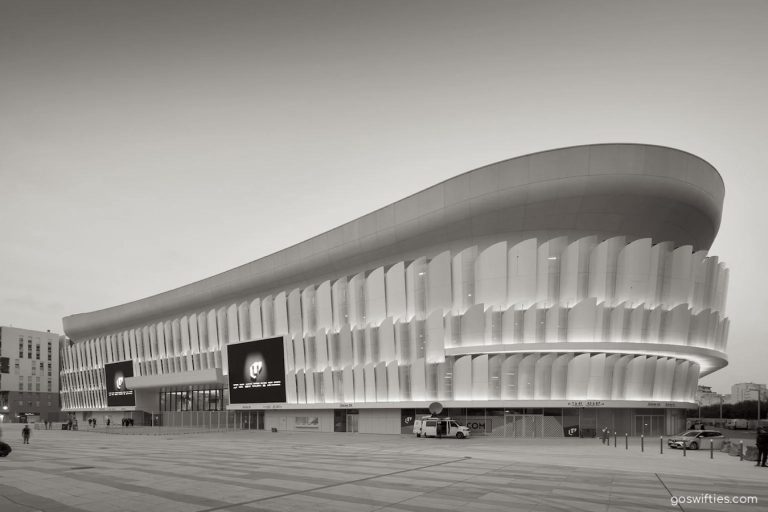
Discover the ultimate fusion of elegance and excitement at Paris La Défense Arena, where architectural brilliance meets state-of-the-art entertainment. Nestled in the heart of the city’s dynamic La Défense district, this modern marvel redefines the concert experience with unrivaled technology, impeccable design, and a versatile canvas for world-class performers. With the capacity to host up to 40,000 spectators in an intimate atmosphere, the arena invites you to immerse yourself in the electrifying rhythm of music, enveloped in panoramic visuals on one of the largest indoor screens in the world. Join us at the forefront of global entertainment, where Parisian chic meets cutting-edge innovation for an unforgettable concert journey that resonates beyond the final encore.
Paris La Défense Arena, Europe’s largest indoor arena, is a premier venue for large-scale events. Located in the vibrant district of La Défense, the arena epitomises modernity and innovation, making it a top choice for international concert events. With its striking design, advanced facilities, and excellent location, it is equipped to host world-class artists and audiences in an unforgettable environment.
1. State-of-the-Art Technology.
The arena is designed with cutting-edge technology, providing unparalleled sound and lighting systems that ensure an immersive concert experience.
2. Seating Capacity.
Accommodating up to 40,000 spectators, the arena boasts the highest seating capacity for an indoor venue in Europe. This allows for a significant audience while maintaining excellent sightlines and sound quality.
3. Accessibility.
Strategically situated near public transport links like the RER and metro, the venue is easily accessible from central Paris and the surrounding areas.
4. Flexible Configurations.
The versatile space can be configured to suit a variety of events, from intimate performances to large-scale productions. This flexibility allows for customised concert setups, enhancing the audience experience.
5. Amenities.
The arena features premium facilities, including luxury suites, hospitality areas, and spacious concourses with ample food and beverage options.
Trivia And Useful Specs.
Construction And Opening.
Construction of Paris La Défense Arena began in 2014, and it officially opened in 2017 with a Rolling Stones concert, showcasing its high standards right from the start.
Size.
The venue covers approximately 57,000 square meters, making it one of the largest enclosed entertainment spaces in Europe.
Technology.
The arena is equipped with a 1,400 square meter high-definition screen, one of the largest indoor screens globally, enhancing the visual experience for attendees.
Eco-Friendly Design.
The venue incorporates sustainable features like rainwater harvesting and energy-efficient lighting, aligning with contemporary environmental standards.
Versatility.
Besides concerts, the arena is designed to host sports events, conventions, and corporate gatherings, making it one of the most versatile event spaces in France.
Roof.
The retractable roof ensures the arena can host events year-round, regardless of weather conditions.
Paris La Défense Arena stands as a beacon of modern entertainment venues, uniquely positioned to host unforgettable global concert events. Its impressive features and strategic location offer attendees an immersive experience in the heart of one of Paris’s most dynamic districts.
Paris. Considered to be the fashion capital of the world.
Fashion show, défilé de mode, an event presented by fashion designers to showcase their work. This dates back to the 1860s when English fashion designer Charles Frederick Worth used models instead of mannequins.
You’d be surprised on the origin of the word Fashion, and it’s from the French word façon, which means ‘make, shape, and appearance’. The french word also originates from the Latin ‘Facere’ which means ‘to make’. Fashion can also signify the latest trends, and as such is based on time and preference and popularity. What might be fashionable today, could also be different from tomorrow.
Fashion can also be a source of art, with individuals and manufacturers can set the trends on what fashionable be. Aside from art, it can also be influenced by culture. In short, there are different sources or starters of fashion. From the economic elite, brand manufacturers like Gucci, or even by the masses, no matter how weird or eccentric it might be.
Clothing and costume
Probably the most common source when talking about Fashion. These are what people wear, and is the most visible form of fashion that we see. Covering the most part of our body.
Known brands include:
– Versace
– Calvin Klein
– Ralph Lauren
Accessories
These are secondary items that are used to contribute to the attire or costume worn by a person. These are often used as highlights or enhancements to the aura that one wants to convey. Accessories like bags, jewelry, rings, and earings are some of the most common examples.
Known brands include:
– Prada
– Tiffany & Co
– Fendi
Fragrance and Perfumes
While not visible to the sense of sight, the power of perfumes lies in the power to provide an attractive scent. While it might be different from each individual, these are powerful effects to the human psyche and how people behave when exposed to such pleasure. Memory also plays an important part, as associating smell with a pleasant memory leaves a longer lasting effect.
Known brands include:
– Chanel
– Tom Ford
– Dior
Cosmetics and beauty products
Designed for enhancing the beauty or even altering the appearance altogether. Cosmetics offers a wide array of combinations to provide a “glow up”. These includes skincare, makeup and hair care. If you haven’t seen the wonder on how a person could look totally different with cosmetics on and off, you’d think they were a different person.
Known brands include:
– Armani
– Dolce & Gabbana
– Burberry
While fashion might be the at the hands of time and those who are influential. Do not be disregarding the power they can produce. If you are trying to promote a brand or a product, you’d want it to be presented in the best possible way. While the story of the Trojan War being focused on the face that launched a thousand ships be a myth, you cannot disregard that the power of beauty can move not only people but even cities.
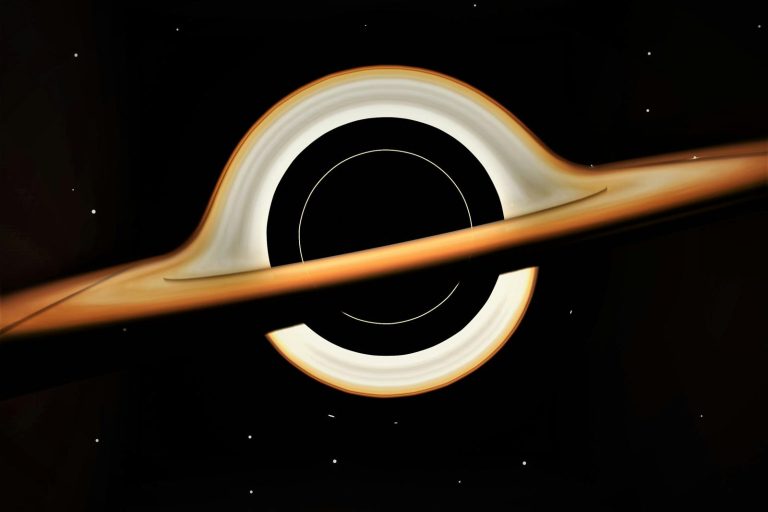
Ever wonder what happens when you fall into a black hole? Now, thanks to a new, immersive visualization produced on a NASA supercomputer, viewers can plunge into the event horizon, a black hole’s point of no return.
In this visualization of a flight toward a supermassive black hole, labels highlight many of the fascinating features produced by the effects of general relativity along the way. Produced on a NASA supercomputer, the simulation tracks a camera as it approaches, briefly orbits, and then crosses the event horizon — the point of no return — of a monster black hole much like the one at the center of our galaxy. Credit: NASA’s Goddard Space Flight Center/J. Schnittman and B. Powell
View the plunge in 360 video on YouTube
“People often ask about this, and simulating these difficult-to-imagine processes helps me connect the mathematics of relativity to actual consequences in the real universe,” said Jeremy Schnittman, an astrophysicist at NASA’s Goddard Space Flight Center in Greenbelt, Maryland, who created the visualizations. “So I simulated two different scenarios, one where a camera — a stand-in for a daring astronaut — just misses the event horizon and slingshots back out, and one where it crosses the boundary, sealing its fate.”
The visualizations are available in multiple forms. Explainer videos act as sightseeing guides, illuminating the bizarre effects of Einstein’s general theory of relativity. Versions rendered as 360-degree videos let viewers look all around during the trip, while others play as flat all-sky maps.
To create the visualizations, Schnittman teamed up with fellow Goddard scientist Brian Powell and used the Discover supercomputer at the NASA Center for Climate Simulation. The project generated about 10 terabytes of data — equivalent to roughly half of the estimated text content in the Library of Congress — and took about 5 days running on just 0.3% of Discover’s 129,000 processors. The same feat would take more than a decade on a typical laptop.
The destination is a supermassive black hole with 4.3 million times the mass of our Sun, equivalent to the monster located at the center of our Milky Way galaxy.
“If you have the choice, you want to fall into a supermassive black hole,” Schnittman explained. “Stellar-mass black holes, which contain up to about 30 solar masses, possess much smaller event horizons and stronger tidal forces, which can rip apart approaching objects before they get to the horizon.”
This occurs because the gravitational pull on the end of an object nearer the black hole is much stronger than that on the other end. Infalling objects stretch out like noodles, a process astrophysicists call spaghettification.
The simulated black hole’s event horizon spans about 16 million miles (25 million kilometers), or about 17% of the distance from Earth to the Sun. A flat, swirling cloud of hot, glowing gas called an accretion disk surrounds it and serves as a visual reference during the fall. So do glowing structures called photon rings, which form closer to the black hole from light that has orbited it one or more times. A backdrop of the starry sky as seen from Earth completes the scene.
Tour an alternative visualization that tracks a camera as it approaches, falls toward, briefly orbits, and escapes a supermassive black hole. This immersive 360-degree version allows viewers to look around during the flight. Credit: NASA’s Goddard Space Flight Center/J. Schnittman and B. Powell
View the flyby explainer on YouTube
As the camera approaches the black hole, reaching speeds ever closer to that of light itself, the glow from the accretion disk and background stars becomes amplified in much the same way as the sound of an oncoming racecar rises in pitch. Their light appears brighter and whiter when looking into the direction of travel.
The movies begin with the camera located nearly 400 million miles (640 million kilometers) away, with the black hole quickly filling the view. Along the way, the black hole’s disk, photon rings, and the night sky become increasingly distorted — and even form multiple images as their light traverses the increasingly warped space-time.
In real time, the camera takes about 3 hours to fall to the event horizon, executing almost two complete 30-minute orbits along the way. But to anyone observing from afar, it would never quite get there. As space-time becomes ever more distorted closer to the horizon, the image of the camera would slow and then seem to freeze just shy of it. This is why astronomers originally referred to black holes as “frozen stars.”
At the event horizon, even space-time itself flows inward at the speed of light, the cosmic speed limit. Once inside it, both the camera and the space-time in which it’s moving rush toward the black hole’s center — a one-dimensional point called a singularity, where the laws of physics as we know them cease to operate.
“Once the camera crosses the horizon, its destruction by spaghettification is just 12.8 seconds away,” Schnittman said. From there, it’s only 79,500 miles (128,000 kilometers) to the singularity. This final leg of the voyage is over in the blink of an eye.
In the alternative scenario, the camera orbits close to the event horizon but it never crosses over and escapes to safety. If an astronaut flew a spacecraft on this 6-hour round trip while her colleagues on a mothership remained far from the black hole, she’d return 36 minutes younger than her colleagues. That’s because time passes more slowly near a strong gravitational source and when moving near the speed of light.
“This situation can be even more extreme,” Schnittman noted. “If the black hole were rapidly rotating, like the one shown in the 2014 movie ‘Interstellar,’ she would return many years younger than her shipmates.”
By Francis Reddy NASA’s Goddard Space Flight Center, Greenbelt, Md.
Computer Science (CS) and Information Technology (IT) are closely related fields but differ in their scope, focus, and the specific skills and knowledge they encompass. Understanding these differences is crucial across various contexts, including as fields of study, professions, businesses, industry sectors, geopolitical forces, and socioeconomic levers.
1. As a Field of Study.
Computer Science.
– Focuses on understanding and developing the foundational scientific principles behind computing and algorithms, software development, and the design of various types of software and hardware systems.
– Subjects studied include algorithms, theory of computation, computer architecture, artificial intelligence, and software engineering.
– Often emphasises theory, principles, and mathematical aspects of computing.
Information Technology.
– Concentrates on the application of computing technology to solve real-world problems, typically within business contexts.
– Subjects include network administration, systems administration, cybersecurity, database management, and IT governance.
– More practical and directed toward implementing and managing technologies rather than developing new technologies.
2. As a Profession.
Computer Science.
– Often work as software developers, system analysts, software engineers, data scientists, or researchers.
– Involved in creating new software applications, improving computing systems, and developing more efficient algorithms.
– Their work often involves significant programming and development tasks.
Information Technology.
– Typically serve in roles such as IT managers, network administrators, systems administrators, support specialists, or cybersecurity experts.
– Focus on installing, managing, and maintaining computer systems as they apply to operational and business processes.
– More concerned with the integration and ongoing management of technologies rather than creation.
3. As a Business.
Computer Science.
– Focus on the development of new computing solutions, software, and innovations in technology.
– Examples include businesses developing advanced algorithms, new software tools, artificial intelligence applications, and computing hardware.
Information Technology.
– Aim to utilise existing technologies to support operations, enhance productivity, and ensure security and effective data management for organisations.
– IT service providers, consultancy firms, and cloud service companies are typical examples, focusing on implementation and service delivery.
4. As a Sector or Industry.
Computer Science.
– Driven by innovation and development, pushing forward the boundaries of what technology can achieve.
– Heavily research-oriented, often linked with academic and research institutions besides commercial entities.
Information Technology.
– Service-oriented, focusing on the deployment of IT systems and solutions in various sectors including government, healthcare, finance, and education.
– Characterised by its broad application across all forms of enterprise as a critical enabler of business functions.
5. As a Geopolitical Force.
Computer Science.
– Innovations such as cryptography, quantum computing, and software development have significant implications for national security and global technological leadership.
– Nations with strong computer science capabilities drive international competitiveness and geopolitical influence.
Information Technology.
– IT infrastructure and capabilities are crucial for national security, economic stability, and efficiency.
– Countries with advanced IT implementations in public and private sectors have better control over data, information flows, and cybersecurity, influencing global data governance and digital diplomacy.
6. As a Socioeconomic Lever.
Computer Science.
– Drives technological innovation which can lead to new industries and opportunities, fundamentally altering labor markets and the economy.
– Has the potential to solve complex societal problems, improve quality of life, and enhance the capabilities of individuals and organisations.
Information Technology.
– Plays a crucial role in democratising access to technology, enhancing communication, and improving operational efficiencies across sectors.
– Vital for educational purposes, healthcare improvements, and increasing the reach of government services, thus playing a direct role in socio-economic development.
While both Computer Science and Information Technology are integral to modern societal functions, their roles, focuses, and impacts differ substantially across various contexts. Understanding these differences helps in strategically navigating and leveraging these fields for optimal societal and economic benefits.
With advanced computational methods, the companies scanned billions of detections, discovering within weeks as many asteroids as were found worldwide in an entire year
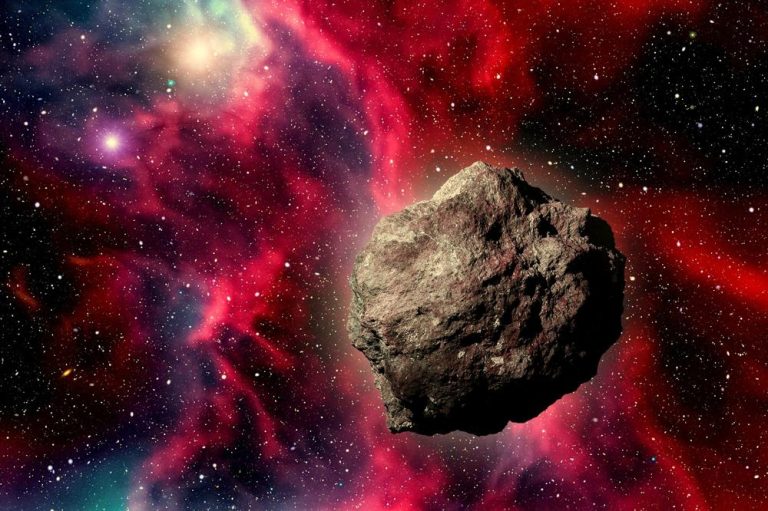
MILL VALLEY, Calif. and SUNNYVALE, Calif., April 30, 2024 /PRNewswire/ — Asteroid Institute, a program of B612 Foundation, and Google Cloud today announced the most significant results of their partnership to date: identifying 27,500 new, high-confidence asteroid discovery candidates. The work, which took place over several weeks, has the potential to enable the mapping of the solar system and protect the Earth from collisions, advancing the field of minor planet discovery.
The project was done without the benefit of new observations of the sky, but rather by leveraging Google Cloud technology to run sophisticated algorithms developed by Asteroid Institute and University of Washington researchers, and by mining historical datasets from the NOIRLab Source Catalog Data Release 2 (NSC DR2). The majority of the new discoveries are Main Belt Asteroids that orbit the Sun between Mars and Jupiter, but Asteroid Institute also discovered more than 100 Near-Earth Asteroids whose orbits take them much closer towards Earth.
In partnership with the University of Washington’s DiRAC Institute, Asteroid Institute developed a novel algorithm called Tracklet-less Heliocentric Orbit Recovery (THOR), which runs on a cloud-based, open-source astrodynamics platform called Asteroid Discovery Analysis and Mapping (ADAM). THOR projects theoretical orbits across millions of observed moving points of light and links together those points that are consistent with real physical orbits. Google Cloud’s Office of the CTO collaborated with Asteroid Institute to help it scale and tune its algorithms on ADAM using Google Cloud.
Asteroid Institute selected Google Cloud as its cloud provider of choice due to its scalability, ease of use, and state-of-the art data and AI products, specifically focused on:
Scalable and high-performance scientific computing: Asteroid Institute uses Google Kubernetes Engine (GKE), a managed Kubernetes service to deploy and operate containerized applications at scale, to execute massive computational workloads of millions of vCPU hours to discover asteroids and predict their movements in the solar system.
Managing large datasets: 5.4 billion observations from different astronomical surveys, which represent potential asteroids and other objects, are stored and analyzed in BigQuery, Google’s unified AI-ready data platform. Thanks to its serverless nature, Asteroid Institute’s system can easily manage the influx of data that this complex process generates.
Large-scale image storage: Asteroid Institute leverages Google Cloud Storage for millions of images from NOIRLab to use in verification of asteroid discoveries, as well as durable storage for billions of data points across the asteroid discovery pipeline.
“What is exciting is that we are using electrons in data centers, in addition to the usual photons in telescopes, to make astronomical discoveries,” said Dr. Ed Lu, Executive Director, Asteroid Institute.
Asteroid Institute is also exploring the use of Google’s AI technologies to automatically vet and verify candidate images identified by the THOR algorithm. AI automation will be a critical step to scale this work further, because the initial verification of likely candidates is a major bottleneck—currently conducted manually by volunteer high school students, undergraduate and postgraduate students, scientists, and astronomers. If successful, human verification needs may be reduced significantly and the pipelines built for NOIRLab can be adapted to run on much larger datasets, such as ones from the Vera C. Rubin Observatory, boosting new discoveries even further.
“At Google, we always like hard computational challenges, and Asteroid Institute provided us with complex unstructured data that required heavy computational processing, large tracking requirements and novel AI capabilities,” said Massimo Mascaro, Technical Director, Google Cloud’s Office of the CTO. “We’re proud to partner with Asteroid Institute to help further scientific discovery and expand our world’s awareness of the beautiful neighbors we have in our solar system.”
The NSC DR2 catalog is the first of many Asteroid Institute plans to scan. The largest will likely become available in 2025, after the commissioning of the Vera C. Rubin Observatory. With THOR running on ADAM on Google Cloud—and with the help of AI—researchers can scale this work and scan new datasets more efficiently and effectively as they become available. Asteroid Institute’s goal is to automate this process to the benefit of the astronomical community and space industry.
“Asteroid Institute results are more than exciting for the Vera C. Rubin Observatory: they may help us reoptimize our observing strategy and obtain gains for some science programs, such as cosmologically important supernovae explosions, equivalent to cloning another Rubin observatory,” said Dr. Zeljko Ivezic, Rubin Observatory Construction Director.
Asteroid Institute and Google Cloud have partnered since 2017 with the goal of transforming asteroid discovery. Learn more about the technology that made this discovery possible here.
About B612 Foundation and Asteroid Institute Asteroid Institute brings together scientists, researchers, and engineers to develop tools and technologies to understand, map, and navigate our solar system. A program of B612 Foundation, Asteroid Institute leverages advances in computer science, instrumentation, and astronomy to find and track asteroids. Since 2002, the foundation has supported research and technologies to enable the economic development of space and enhance our understanding of the evolution of our solar system in addition to supporting educational programs, including Asteroid Day and the new Schweickart Prize. Founding Circle and Asteroid Circle members, and individual donors from 46 countries provide financial support for the work. For more information, visit B612foundation.org or follow on social: Twitter, Facebook, YouTube, and LinkedIn.
About Google Cloud Google Cloud is the new way to the cloud, providing AI, infrastructure, developer, data, security, and collaboration tools built for today and tomorrow. Google Cloud offers a powerful, fully integrated and optimized AI stack with its own planet-scale infrastructure, custom-built chips, generative AI models and development platform, as well as AI-powered applications, to help organizations transform. Customers in more than 200 countries and territories turn to Google Cloud as their trusted technology partner.
Canonical’s 10th Long Term Supported release sets a new standard in performance engineering, enterprise security and developer experience.
London, 25 April 2024.
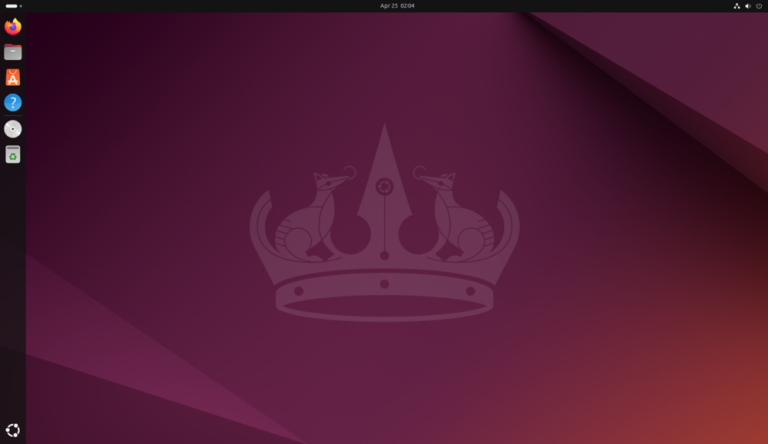
Today Canonical announced the release of Ubuntu 24.04 LTS, codenamed “Noble Numbat”, available to download and install from https://ubuntu.com/download.
Ubuntu 24.04 LTS builds on the advancements of the last three interim releases as well as the contributions of open source developers from around the world to ensure a secure, optimised and forward looking platform.
“Ubuntu 24.04 LTS takes a bold step into performance engineering and confidential computing to deliver an enterprise-grade innovation platform, supported for at least 12 years”, said Mark Shuttleworth, CEO of Canonical. “For developers we are delighted to announce TCK certified Java, an LTS for .NET and the latest Rust toolchain.”
Download for free
Performance engineering tools pre-enabled and pre-loaded
Canonical is dedicated to raising the bar for quality and performance across the entire Ubuntu ecosystem.
Ubuntu 24.04 LTS delivers the latest Linux 6.8 kernel with improved syscall performance, nested KVM support on ppc64el, and access to the newly landed bcachefs filesystem. In addition to upstream improvements, Ubuntu 24.04 LTS has merged low-latency kernel features into the default kernel, reducing kernel task scheduling delays.
Ubuntu 24.04 LTS also enables frame pointers by default on all 64-bit architectures so that performance engineers have ready access to accurate and complete flame graphs as they profile their systems for troubleshooting and optimisation.
“Frame pointers allow more complete CPU profiling and off-CPU profiling. The performance wins that these can provide far outweigh the comparatively tiny loss in performance. Ubuntu enabling frame pointers by default will be a huge win for performance engineering and the default developer experience”, said Brendan Gregg, Computer Performance Expert and Fellow at Intel. Tracing with bpftrace is now standard in Ubuntu 24.04 LTS, alongside pre-existing profiling tools to provide site reliability engineers with immediate access to essential resources.
Integrated workload accelerators bring additional performance improvements. Canonical and Intel worked together to integrate Intel® QuickAssist Technology (Intel® QAT) for the first time ever in an LTS. Intel QAT enables users to accelerate encryption and compression in order to reduce CPU utilisation and improve networking and storage application performance on 4th Gen and newer Intel Xeon Scalable processors.
“Ubuntu is a natural fit to enable the most advanced Intel features. Canonical and Intel have a shared philosophy of enabling performance and security at scale across platforms”, said Mark Skarpness, Vice President and General Manager of System Software Engineering at Intel.
Increased developer productivity with LTS toolchains
Ubuntu 24.04 LTS includes Python 3.12, Ruby 3.2, PHP 8.3 and Go 1.22 with additional focus dedicated to the developer experience for .NET, Java and Rust.
With the introduction of .NET 8, Ubuntu is taking a significant step forward in supporting the .NET community. NET 8 will be fully supported on Ubuntu 24.04 LTS and 22.04 LTS for the entire lifecycle of both releases, enabling developers to upgrade their applications to newer .NET versions prior to upgrading their Ubuntu release. This .NET support has also been extended to the IBM System Z platform.
“We are pleased about the release of Canonical Ubuntu 24.04 LTS and the increased performance, developer productivity, and security that it provides our joint customers,” said Jeremy Winter, Corporate Vice President, Azure Cloud Native. “Ubuntu is an endorsed Linux distro on Microsoft Azure, and an important component for many of Microsoft’s technologies, including .NET, Windows Subsystem for Linux, Azure Kubernetes Service, and Azure confidential computing. Microsoft and Canonical have a close engineering relationship spanning everything from update infrastructure in Azure to developer tooling, notably .NET 8 which is part of the Noble Numbat release from day one. We look forward to continuing our strong collaboration with Canonical to enhance developer productivity and provide a robust experience for Ubuntu on Azure.”
For Java developers, OpenJDK 21 is the default in Ubuntu 24.04 LTS while maintaining support for versions 17, 11, and 8. OpenJDK 17 and 21 are also TCK certified, which means they adhere to Java standards and ensure interoperability with other Java platforms. A special FIPS-compliant OpenJDK 11 package is also available for Ubuntu Pro users.
Ubuntu 24.04 LTS ships with Rust 1.75 and a simpler Rust toolchain snap framework. This will support the increasing use of Rust in key Ubuntu packages, like the kernel and Firefox, and enables future Rust versions to be delivered to developers on 24.04 LTS in years to come.
New management tools for Ubuntu Desktop and WSL
For the first time in an LTS, Ubuntu Desktop now uses the same installer technology as Ubuntu Server. This means that desktop administrators can now use image customisation tools like autoinstall and cloud-init to create tailored experiences for their developers. The user interface has also received a makeover, with a modern design built in Flutter.
For those managing mixed Windows and Ubuntu environments, the Active Directory Group Policy client available via Ubuntu Pro now supports enterprise proxy configuration, privilege management and remote script execution.
Canonical continues to invest in Ubuntu on Windows Subsystem for Linux (WSL) as a first class platform for developers and data scientists. Starting with Ubuntu 24.04 LTS, Ubuntu on WSL now supports cloud-init to enable image customisation and standardisation across developer estates.
Confidential computing on the cloud and private data centres
Confidential computing secures data at runtime from vulnerabilities within the host privileged system software, including the hypervisor. It also protects data against unauthorised access by
infrastructure administrators. Today, Ubuntu offers the most extensive portfolio of confidential virtual machines, available across Microsoft Azure, Google Cloud, and Amazon Web Services.
Ubuntu is also the first and only Linux distribution to support confidential GPUs on the public cloud, starting with a preview on Microsoft Azure. Building on the silicon innovation of NVIDIA H100 Tensor Core GPUs and AMD 4th Gen EPYC processors with SEV-SNP, Ubuntu confidential VMs are ideal to perform AI training and inference tasks on sensitive data.
Ubuntu also supports confidential computing in private data centres. Thanks to a strategic collaboration between Intel and Canonical, Ubuntu now seamlessly supports Intel® Trust Domain Extensions (Intel® TDX) on both the host and guest sides, starting with an Intel-optimised Ubuntu 23.10 build. With no changes required to the application layer, VM isolation with Intel TDX greatly simplifies the porting and migration of existing workloads to a confidential computing environment.
12 years of support with new Ubuntu Pro add-on
To meet the needs of Canonical’s enterprise customers, Ubuntu 24.04 LTS gets a 12 year commitment for security maintenance and support. As with other long term supported releases, Noble Numbat will get five years of free security maintenance on the main Ubuntu repository. Ubuntu Pro extends that commitment to 10 years on both the main and universe repositories. Ubuntu Pro subscribers can purchase an extra two years with the Legacy Support add-on.
The 12 year commitment also applies to earlier Ubuntu releases, starting with 14.04 LTS. The LTS expansion offers benefits for individuals and organisations who want to gain even more stability while building on top of Ubuntu’s wide array of open source software libraries.
Next steps
Download Ubuntu 24.04 LTS
Read the full release notes
What’s new in Ubuntu Desktop – Deep Dive
Read more about Legacy Support
About Canonical
Canonical, the publisher of Ubuntu, provides open source security, support and services. Our portfolio covers critical systems, from the smallest devices to the largest clouds, from the kernel to containers, from databases to AI. With customers that include top tech brands, emerging startups, governments and home users, Canonical delivers trusted open source for everyone.