

Home Blog Page 114

Who is Artemis? NASA’s latest mission to the Moon is named after an ancient lunar goddess turned feminist icon

0

NASA launched the Artemis I moon rocket on the morning of Nov. 16, 2022, after several delays earlier this year. This first flight is without a crew and expected to last four to six weeks. The program aims to increase women’s participation in space exploration – 30% of its engineers are women. In addition, the Artemis I mission is carrying two mannequins designed to study the effects of radiation on women’s bodies so that NASA can learn how to protect female astronauts better.

Diana by Augustus Saint Gaudens, 1928, Metropolitan Museum of Art, New York.
Postdlf via Wikimedia Commons, CC BY-SA

Female astronauts are currently less likely to be selected for missions than men because their bodies tend to hit NASA’s maximum acceptable threshold of radiation earlier. NASA expects to bring the first woman and person of color to the Moon on Artemis III sometime after 2024.

As a scholar of Greek mythology, I find the name of the mission quite evocative: The Greeks and Romans associated Artemis with the Moon, and she has also become a modern-day feminist icon.

Greek goddess Artemis with a mass of curls along her face that flow down her neck.
Bust of Artemis with crescent moon headband.
Museum of Fine Arts, Boston

Artemis was a major deity in ancient Greece, worshiped at least as early as the beginning of the first millennium B.C., or even earlier. She was a daughter of Zeus, the chief god of the Olympians, who ruled the world from the summit of Mount Olympus. She was also the twin sister of Apollo, god of the Sun and oracles.

Artemis was a virgin goddess of the wilderness and hunting. Her independence and strength have long inspired women in a wide range of activities. For example, in a poem titled “Artemis,” author Allison Eir Jenks writes: “I’m no longer your god-mother … your chef, your bus-stop, your therapist, your junk-drawer,” emphasizing women’s freedom and autonomy.

As the goddess of animals and the wilderness, Artemis has also inspired environmental conservancy programs, in which the goddess is viewed as an example of a woman exercising her power by caring for the planet.

However, while the Greek Artemis was strong and courageous, she wasn’t always kind and caring, even toward women. Her rashness was used to explain a woman’s sudden death, especially while giving birth. This aspect of the goddess has faded away with time. With the rise of feminism, Artemis has become an icon of feminine power and self-reliance.

NASA has a long history of naming its missions after mythological figures. Starting in the 1950s, many rockets and launch systems were named after Greek sky deities, like Atlas and Saturn, whose Greek name is Cronos.

Atlas and Saturn weren’t just gods, they were Titans. In Greek mythology, Titans represent the untamed, primordial forces of nature, and so they evoke the prodigious vastness of space exploration. Although the Titans were known for their immense strength and power, they were also rebellious and dangerous and were eventually defeated by the Olympians, who represent civilization in Greek mythology.

Following the advent of human space flight, NASA began naming missions after children of Zeus who are associated with the sky. The Mercury program, active from 1958 to 1963, was named after Hermes’ Roman counterpart, the messenger god who flies between Olympus, Earth and the underworld with his winged sandals.

Starting in 1963, the three-year-long Gemini program featured a capsule designed for two astronauts and was named after the twin sons of Zeus – Castor and Pollux, known as the Dioscuri in Greek – who were cast in the stars as the constellation of Gemini. They were regularly represented with a star above their heads in Greek and Roman art.

The space shuttle program, which lasted from 1981 to 2011, diverted from mythological monikers, and the names Columbia, Challenger, Discovery, Atlantis and Endeavour were meant to evoke a spirit of innovation.

With Artemis, NASA is nodding back to the Apollo program, which lasted from 1963 to 1972 and put the first men on the Moon in 1969. Over 50 years later, Artemis picks up where her twin brother left off, ushering in a more diverse era of human space flight.

A bronze coin showing two engraved faces.
A coin showing the Dioscuri, also known as the Gemini in Latin (Castor and Pollux) with a star above their heads.
American Numismatic Society, Bequest of E.T. Newell

Marie-Claire Beaulieu, Associate Professor of Classical Studies, Tufts University

This article is republished from The Conversation under a Creative Commons license. Read the original article.
NASA’s Artemis 1 mission to the Moon sets the stage for routine space exploration beyond Earth’s orbit – here’s what to expect and why it’s important

0

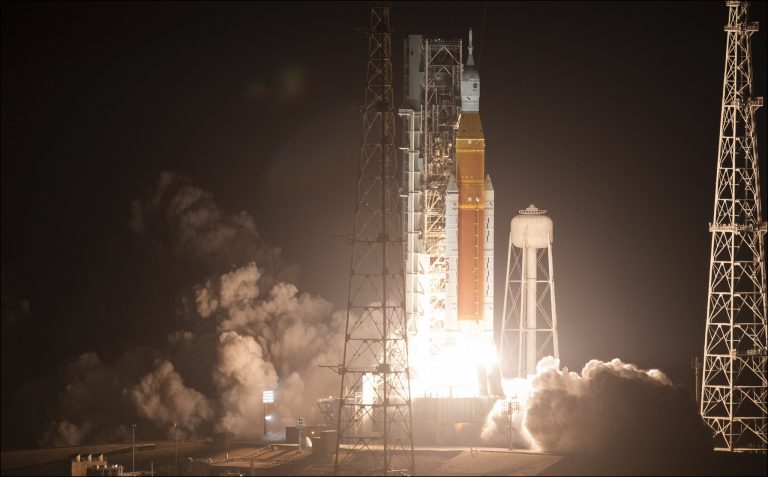
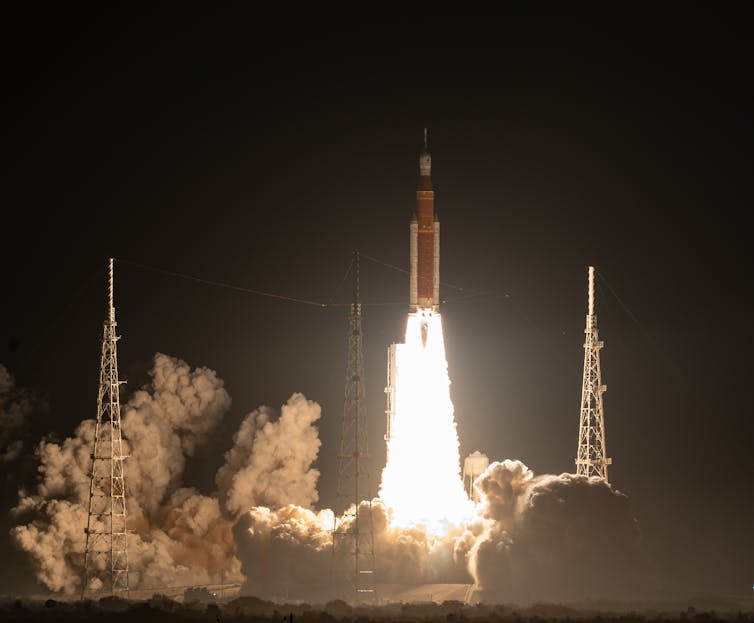
NASA’s Space Launch System rocket lifted off from the Kennedy Space Center in Cape Canaveral, Florida, in the early hours of Nov. 16, 2022. The rocket carried the Orion Crew Capsule as the centerpiece of the Artemis 1 mission. The journey to the Moon and back is a shakedown cruise with no people aboard – it will test how the Orion Crew Capsule holds up in space. The mission is a key step toward returning humans to the Moon after a half-century hiatus. The launch was initially scheduled for the morning of Aug. 29, 2022, but was postponed three times, twice for technical reasons and once for Hurricane Ian.

NASA is going back to the Moon. NASA/Bill Ingalls

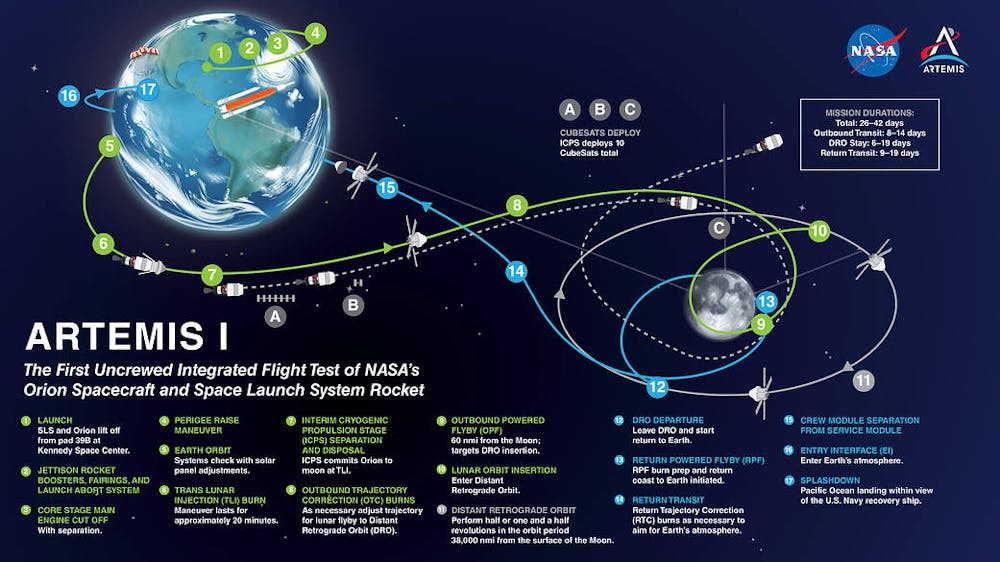
The spacecraft is scheduled to travel to the Moon, deploy some small satellites and then settle into orbit. NASA aims to practice operating the spacecraft, test the conditions crews will experience on and around the Moon, and assure everyone that the spacecraft and any occupants can safely return to Earth.

The Conversation asked Jack Burns, a professor and space scientist at the University of Colorado Boulder and former member of the Presidential Transition Team for NASA, to describe the mission, explain what the Artemis program promises to do for space exploration, and reflect on how the space program has changed in the half-century since humans last set foot on the lunar surface.

How does Artemis 1 differ from the other rockets being launched routinely?

Artemis 1 is the first flight of the new Space Launch System. This is a “heavy lift” vehicle, as NASA refers to it. It is the most powerful rocket engine ever flown to space, even more powerful than Apollo’s Saturn V system that took astronauts to the Moon in the 1960s and ‘70s.

It’s a new type of rocket system, because it has both a combination of liquid oxygen and hydrogen main engines and two strap-on solid rocket boosters derived from the space shuttle. It’s really a hybrid between the space shuttle and Apollo’s Saturn V rocket.


You can listen to more articles from The Conversation, narrated by Noa, here.


Testing is very important, because the Orion Crew Capsule is going to be getting a real workout. It will be in the space environment of the Moon, a high-radiation environment, for a month. And, very importantly, it will be testing the heat shield, which protects the capsule and its occupants, when it comes back to the Earth at 25,000 miles per hour. This will be the fastest capsule reentry since Apollo, so it’s very important that the heat shield function well.

This mission is also carrying a series of small satellites that will be placed in orbit of the Moon. Those will do some useful precursor science, everything from looking further into the permanently shadowed craters where scientists think there is water to just doing more measurements of the radiation environment, seeing what the effects will be on humans for long-term exposure.

A diagram showing the earth, moon and flight path of a spacecraft
The plan is for Artemis 1 to lift off, travel to the Moon, deploy satellites, orbit the Moon, return to Earth, safely enter the atmosphere and splash down in the ocean. NASA

What’s the goal of the Artemis project? What’s coming up in the series of launches?

The mission is a first step toward Artemis 3, which is going to result in the first human missions to the Moon in the 21st century and the first since 1972. Artemis 1 is an uncrewed test flight.

Artemis 2, which is scheduled to launch a few years after that, will have astronauts on board. It, too, will be an orbital mission, very much like Apollo 8, which circled the Moon and came back home. The astronauts will spend a longer time orbiting the Moon and will test everything with a human crew.

And, finally, that will lead to a journey to the surface of the Moon in which Artemis 3 – sometime middecade – will rendezvous with the SpaceX Starship and transfer crew. Orion will remain in orbit, and the lunar Starship will take the astronauts to the surface. They will go to the south pole of the Moon to look at an area scientists haven’t explored before to investigate the water ice there.

Artemis is reminiscent of Apollo. What has changed in the past half-century?

The reason for Apollo that Kennedy envisioned initially was to beat the Soviet Union to the Moon. The administration didn’t particularly care about space travel, or about the Moon itself, but it represented an audacious goal that would clearly put America first in terms of space and technology.

The downside of doing that is the old saying “You live by the sword, you die by the sword.” When the U.S. got to the Moon, it was basically game over. The United States beat the Russians. So it put some flags down and did some science experiments. But pretty quickly after Apollo 11, within a few more missions, Richard Nixon canceled the program because the political objectives had been met.

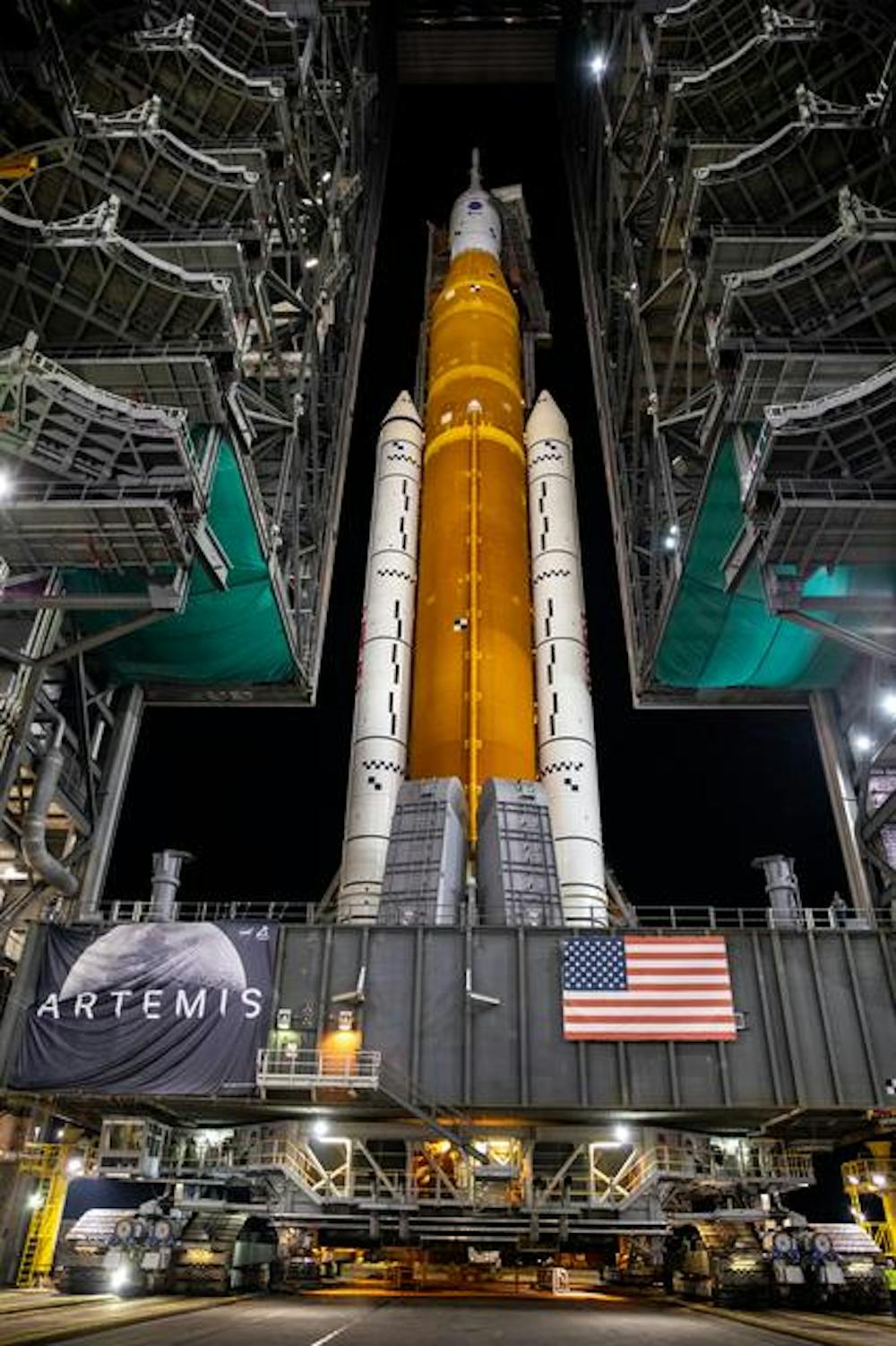
a large rocket with two boosters attached to its sides standing between two massive gantries
NASA’s new Space Launch System is seen here being moved from the rocket assembly building to a launchpad. NASA

So fast-forward 50 years. This is a very different environment. The U.S. is not doing this to beat the Russians or the Chinese or anybody else, but to begin a sustainable exploration beyond Earth’s orbit.

The Artemis program is driven by a number of different goals. It includes in situ resource utilization, which means using resources at hand like water ice and lunar soil to produce food, fuel and building materials.

The program is also helping to establish a lunar and space economy, starting with entrepreneurs, because SpaceX is very much part of this first mission to the surface of the Moon. NASA doesn’t own the Starship but is buying seats to allow astronauts to go to the surface. SpaceX will then use the Starship for other purposes – to transport other payloads, private astronauts and astronauts from other countries.

Fifty years of technology development means that going to the Moon now is much less expensive and more technologically feasible, and much more sophisticated experiments are possible when you just figure the computer technology. Those 50 years of technological advancement have been a complete game-changer. Almost anybody with the financial resources can send spacecraft to the Moon now, though not necessarily with humans.

NASA’s Commercial Lunar Payload Services contracts private companies to build uncrewed landers to go to the Moon. My colleagues and I have a radio telescope that’s scheduled to go to the Moon on one of the landers in March. That just wouldn’t have been possible even 10 years ago.

Artemis is an ambitious program, but technology has advanced tremendously in the 50 years since humans last went to the Moon.

What other changes does Artemis have in store?

The administration has said that in that first crewed flight, on Artemis 3, there will be at least one woman and very likely a person of color. They may be one and the same. There may be several.

I’m looking forward to seeing more of that diversity, because young kids today who are looking up at NASA can say, “Hey, there’s an astronaut who looks like me. I can do this. I can be part of the space program.”


Jack Burns, Professor of Astrophysical and Planetary Sciences, University of Colorado Boulder

This article is republished from The Conversation under a Creative Commons license. Read the original article.
NASA’s Artemis I Cameras to Offer New Views of Orion, Earth, Moon

0

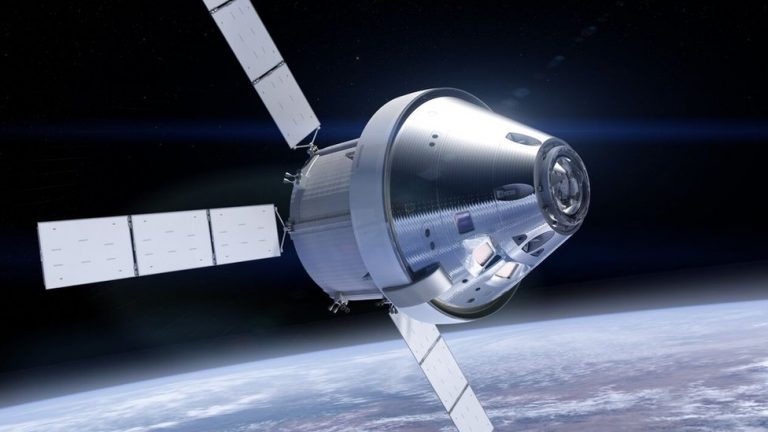
During Artemis I, NASA’s Space Launch System (SLS) rocket will send the agency’s Orion spacecraft on a trek 40,000 miles beyond the Moon before returning to Earth. To capture the journey, the rocket and spacecraft are equipped with cameras that will collect valuable engineering data and share a unique perspective of humanity’s return to the Moon.

There are 24 cameras on the rocket and spacecraft – eight on SLS and 16 on Orion – to document essential mission events including liftoff, ascent, solar array deployment, external rocket inspections, landing and recovery, and capture images of Earth and the Moon.

On the rocket, four cameras around the engine section point up toward Orion, two cameras at the intertank by the top of boosters will capture booster separation, and two cameras on the launch vehicle stage adapter will capture core stage separation. The eight cameras will cycle through a preprogrammed sequence during launch and ascent.

On Orion, an external camera mounted on the crew module adapter will show the SLS rocket’s ascent, providing the “rocket cam” view the public often sees during launches. Another camera will provide a view of service module panel jettison and solar array wing deployment. Four cameras attached to the spacecraft’s solar array wings on the service module will help engineers assess the overall health of the outside of Orion and can capture a selfie view of the spacecraft with the Earth or Moon in the background.

“Each of Orion’s four solar array wings has a commercial off-the-shelf camera mounted at the tip that has been highly modified for use in space, providing a view of the spacecraft exterior,” said David Melendrez, imagery integration lead for the Orion Program at NASA’s Johnson Space Center in Houston.

The arrays can adjust their position relative to the rest of the spacecraft, which will optimize the collection of sunlight converted into electricity to power Orion. This also allows flight controllers in the Mission Control Center at NASA Johnson to point the cameras at different parts of the spacecraft for inspections and to document its surroundings, including the Earth and Moon.

Graphic showing the cameras on NASA's Orion spacecraft.

The cameras on NASA’s Orion spacecraft.

A specialized camera on the crew module adapter used for optical navigation and to help pinpoint Orion’s location in deep space will be used to collect imagery of the Moon during Orion’s closest approach to the lunar surface. Also affixed to the crew module adapter but pointed inward, another camera is positioned to capture imagery of Orion’s heat shield after the crew module separates from the service module before its re-entry into Earth’s atmosphere.

Inside the spacecraft, three more wireless cameras can capture the perspectives astronauts will have on future Artemis missions, with one camera looking out the front pilot window and a second looking over the shoulder of the commander seat, where the instrument panel will be located on future missions. A third in-cabin camera will look out the top hatch window to provide views of launch abort system jettison during ascent as well as parachute deployment during landing and recovery.

There are also two external high-speed cameras dedicated to monitoring parachute operations, which technicians will download and process after the flight.

The images and video collected by the Orion cameras will come in a variety of formats, ranging from standard-definition to high-definition and up to 4K. Each is tailored for a specific use and dependent on the bandwidth available during the mission to send to Earth or recorded on board to be analyzed after the mission ends. Due to bandwidth limitations on the spacecraft that prioritize transmitting critical data to the ground, livestream video quality will be lower than the onboard recordings. As a result, some of the highest quality views may not be received until well after they are recorded and can be downlinked.

The field of view of each camera has been optimized to look at the spacecraft, not deep space, and imagery for the Artemis I flight will depend on a variety of factors such as lighting, spacecraft orientation, and communication capabilities during different mission phases.

“A lot of folks have an impression of Earthrise based on the classic Apollo 8 shot,” Melendrez said. “Images captured during the mission will be different than what humanity saw during Apollo missions, but capturing milestone events such as Earthrise, Orion’s farthest distance from Earth, and lunar flyby will be a high priority.”

Orion also will carry cameras that are part of a technology demonstration, called Callisto. The Callisto payload includes three in-cabin cameras that will be used to test video conferencing capabilities and may enhance the public’s ability to imagine themselves inside Orion.

Through Artemis missions, NASA will land the first woman and the first person of color on the Moon, paving the way for a long-term lunar presence, and serving as a steppingstone to send astronauts to Mars.

Erika Peters

NASA’s Johnson Space Center

Source: NASA

Liftoff! NASA’s Artemis I Mega Rocket Launches Orion to Moon

0

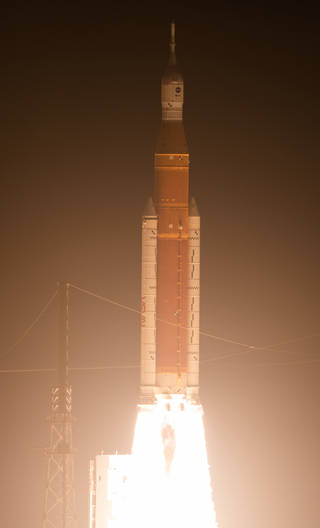
Following a successful launch of NASA’s Space Launch System (SLS), the most powerful rocket in the world, the agency’s Orion spacecraft is on its way to the Moon as part of the Artemis program. Carrying an uncrewed Orion, SLS lifted off for its flight test debut at 1:47 a.m. EST Wednesday from Launch Pad 39B at NASA’s Kennedy Space Center in Florida.

The launch is the first leg of a mission in which Orion is planned to travel approximately 40,000 miles beyond the Moon and return to Earth over the course of 25.5 days. Known as Artemis I, the mission is a critical part of NASA’s Moon to Mars exploration approach, in which the agency explores for the benefit of humanity. It’s an important test for the agency before flying astronauts on the Artemis II mission.

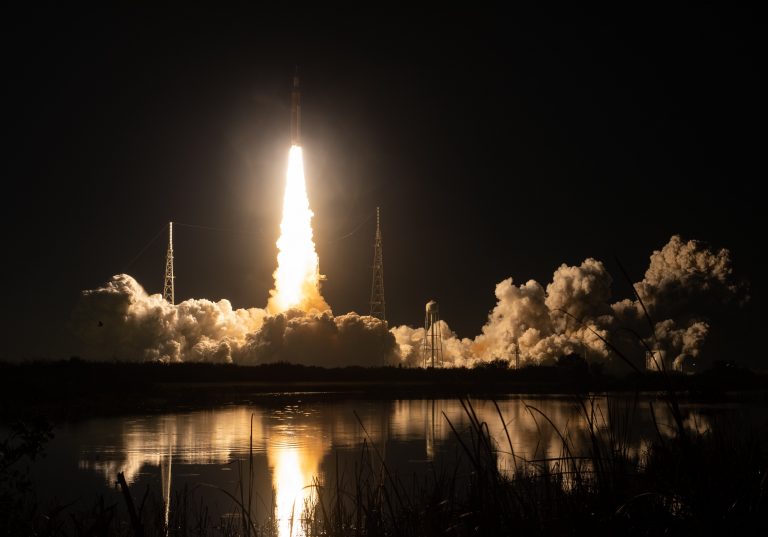
NASA’s Space Launch System rocket carrying the Orion spacecraft launches on the Artemis I flight test, Wednesday, Nov. 16, 2022, from Launch Complex 39B at NASA’s Kennedy Space Center in Florida. NASA’s Artemis I mission is the first integrated flight test of the agency’s deep space exploration systems: the Orion spacecraft, Space Launch System (SLS) rocket, and ground systems. SLS and Orion launched at 1:47am ET from Launch Pad 39B at the Kennedy Space Center.
Credits: NASA/Bill Ingalls
NASA’s Space Launch System rocket carrying the Orion spacecraft launches on the Artemis I flight test, Wednesday, Nov. 16, 2022, from Launch Complex 39B at NASA’s Kennedy Space Center in Florida. NASA’s Artemis I mission is the first integrated flight test of the agency’s deep space exploration systems: the Orion spacecraft, Space Launch System (SLS) rocket, and ground systems. SLS and Orion launched at 1:47 a.m. EST, from Launch Pad 39B at the Kennedy Space Center. Photo Credit: (NASA/Bill Ingalls)

“What an incredible sight to see NASA’s Space Launch System rocket and Orion spacecraft launch together for the first time. This uncrewed flight test will push Orion to the limits in the rigors of deep space, helping us prepare for human exploration on the Moon and, ultimately, Mars,” said NASA Administrator Bill Nelson. 

After reaching its initial orbit, Orion deployed its solar arrays and engineers began performing checkouts of the spacecraft’s systems. About 1.5 hours into flight, the rocket’s upper stage engine successfully fired for approximately 18 minutes to give Orion the big push needed to send it out of Earth orbit and toward the Moon.  

Orion has separated from its upper stage and is on its outbound coast to the Moon powered by its service module, which is the propulsive powerhouse provided by ESA (European Space Agency) through an international collaboration. 

“It’s taken a lot to get here, but Orion is now on its way to the Moon,” said Jim Free, NASA deputy associate administrator for the Exploration Systems Development Mission Directorate. “This successful launch means NASA and our partners are on a path to explore farther in space than ever before for the benefit of humanity.”

Over the next several hours, a series of 10 small science investigations and technology demonstrations, called CubeSats, will deploy from a ring that connected the upper stage to the spacecraft. Each CubeSat has its own mission that has the potential to fill gaps in our knowledge of the solar system or demonstrate technologies that may benefit the design of future missions to explore the Moon and beyond. 

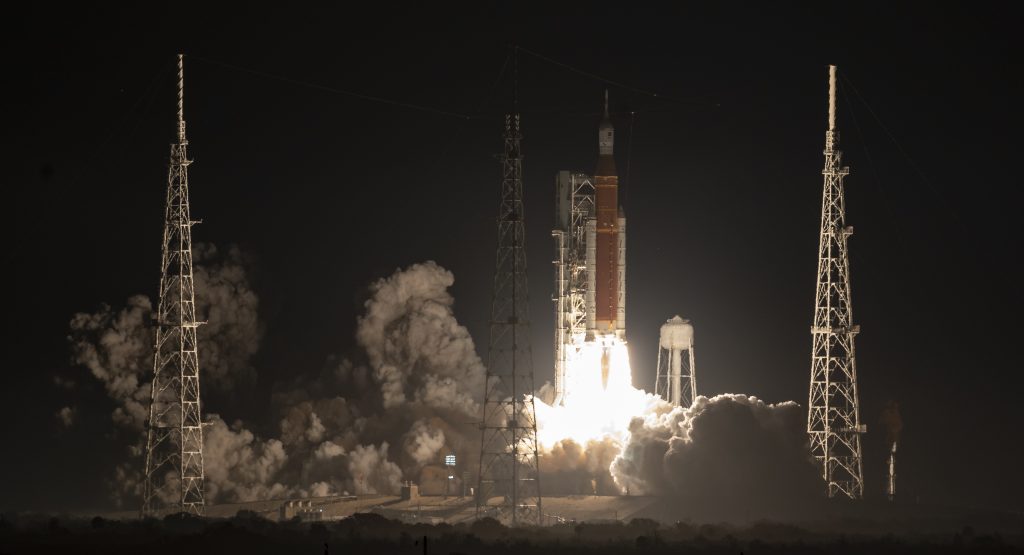
NASA’s Space Launch System rocket carrying the Orion spacecraft launches on the Artemis I flight test, Wednesday, Nov. 16, 2022, from Launch Complex 39B at NASA’s Kennedy Space Center in Florida. NASA’s Artemis I mission is the first integrated flight test of the agency’s deep space exploration systems: the Orion spacecraft, Space Launch System (SLS) rocket, and ground systems. SLS and Orion launched at 1:47 a.m. EST, from Launch Pad 39B at the Kennedy Space Center. Credits: NASA/Joel Kowsky
NASA’s Space Launch System rocket carrying the Orion spacecraft launches on the Artemis I flight test, Wednesday, Nov. 16, 2022, from Launch Complex 39B at NASA’s Kennedy Space Center in Florida. NASA’s Artemis I mission is the first integrated flight test of the agency’s deep space exploration systems: the Orion spacecraft, Space Launch System (SLS) rocket, and ground systems. SLS and Orion launched at 1:47 a.m. EST, from Launch Pad 39B at the Kennedy Space Center. Photo Credit: (NASA/Joel Kowsky)

Orion’s service module will also perform the first of a series of burns to keep Orion on course toward the Moon approximately eight hours after launch. In the coming days, mission controllers at NASA’s Johnson Space Center in Houston will conduct additional checkouts and course corrections as needed. Orion is expected to fly by the Moon on Nov. 21, performing a close approach of the lunar surface on its way to a distant retrograde orbit, a highly stable orbit thousands of miles beyond the Moon.  

“The Space Launch System rocket delivered the power and performance to send Orion on its way to the Moon,” said Mike Sarafin, Artemis I mission manager. “With the accomplishment of the first major milestone of the mission, Orion will now embark on the next phase to test its systems and prepare for future missions with astronauts.”  

The SLS rocket and Orion spacecraft arrived at Kennedy’s Launch Pad 39B on Nov. 4 where they rode out Hurricane Nicole. Following the storm, teams conducted thorough assessments of the rocket, spacecraft, and associated ground systems and confirmed there were no significant impacts from the severe weather.

Engineers previously rolled the rocket back to the Vehicle Assembly Building (VAB) Sept. 26 ahead of Hurricane Ian and after waving off two previous launch attempts Aug. 29 due to a faulty temperature sensor, and Sept. 4 due to a liquid hydrogen leak at an interface between the rocket and mobile launcher. Prior to rolling back to the VAB, teams successfully repaired the leak and demonstrated updated tanking procedures. While in the VAB, teams performed standard maintenance to repair minor damage to the foam and cork on the thermal protection system and recharge or replace batteries throughout the system. 

Artemis I is supported by thousands of people around the world, from contractors who built Orion and SLS, and the ground infrastructure needed to launch them, to international and university partners, to small businesses supplying subsystems and components.  

Through Artemis missions, NASA will land the first woman and the first person of color on the surface of the Moon, paving the way for a long-term lunar presence and serving as a steppingstone for astronauts on the way to Mars. 

View more photos of Artemis I at:

https://flic.kr/s/aHBqjzG1pG

Source: NASA

NASA’s Webb Catches Fiery Hourglass as New Star Forms

0

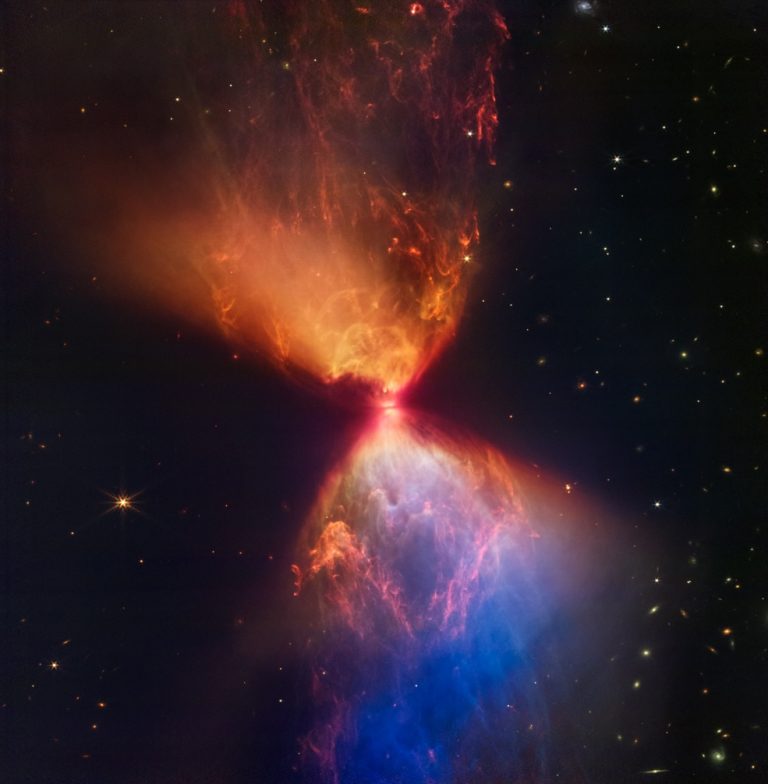
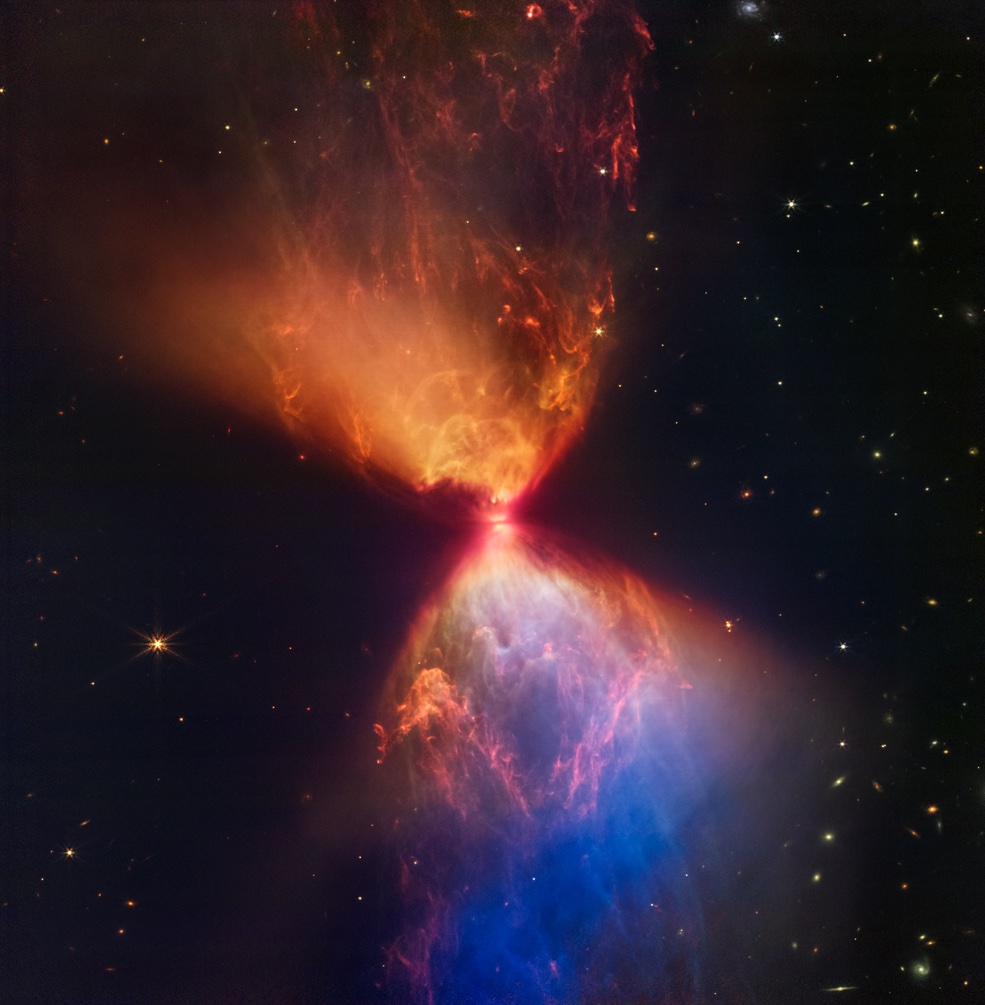
NASA’s James Webb Space Telescope has revealed the once-hidden features of the protostar within the dark cloud L1527, providing insight into the beginnings of a new star. These blazing clouds within the Taurus star-forming region are only visible in infrared light, making it an ideal target for Webb’s Near-Infrared Camera (NIRCam).

The protostar itself is hidden from view within the “neck” of this hourglass shape. An edge-on protoplanetary disk is seen as a dark line across the middle of the neck. Light from the protostar leaks above and below this disk, illuminating cavities within the surrounding gas and dust.

The protostar within the dark cloud L1527, shown in this image from NASA’s James Webb Space Telescope Near-Infrared Camera (NIRCam), is embedded within a cloud of material feeding its growth. Ejections from the star have cleared out cavities above and below it, whose boundaries glow orange and blue in this infrared view. The upper central region displays bubble-like shapes due to stellar “burps,” or sporadic ejections.
Credits: NASA, ESA, CSA, and STScI. Image processing: J. DePasquale, A. Pagan, and A. Koekemoer (STScI)
Download the full-resolution image from the Space Telescope Science Institute.
The protostar within the dark cloud L1527, shown in this image from NASA’s James Webb Space Telescope Near-Infrared Camera (NIRCam), is embedded within a cloud of material feeding its growth. Ejections from the star have cleared out cavities above and below it, whose boundaries glow orange and blue in this infrared view. The upper central region displays bubble-like shapes due to stellar “burps,” or sporadic ejections. Credits: NASA, ESA, CSA, and STScI. Image processing: J. DePasquale, A. Pagan, and A. Koekemoer (STScI) Download the full-resolution image from the Space Telescope Science Institute.

The region’s most prevalent features, the clouds colored blue and orange in this representative-color infrared image, outline cavities created as material shoots away from the protostar and collides with surrounding matter. The colors themselves are due to layers of dust between Webb and the clouds. The blue areas are where the dust is thinnest. The thicker the layer of dust, the less blue light is able to escape, creating pockets of orange.

Webb also reveals filaments of molecular hydrogen that have been shocked as the protostar ejects material away from it. Shocks and turbulence inhibit the formation of new stars, which would otherwise form all throughout the cloud. As a result, the protostar dominates the space, taking much of the material for itself.

Despite the chaos that L1527 causes, it’s only about 100,000 years old – a relatively young body. Given its age and its brightness in far-infrared light as observed by missions like the Infrared Astronomical Satellite, L1527 is considered a class 0 protostar, the earliest stage of star formation. Protostars like these, which are still cocooned in a dark cloud of dust and gas, have a long way to go before they become full-fledged stars. L1527 doesn’t generate its own energy through nuclear fusion of hydrogen yet, an essential characteristic of stars. Its shape, while mostly spherical, is also unstable, taking the form of a small, hot, and puffy clump of gas somewhere between 20 and 40% the mass of our Sun.

As the protostar continues to gather mass, its core gradually compresses and gets closer to stable nuclear fusion. The scene shown in this image reveals L1527 doing just that. The surrounding molecular cloud is made up of dense dust and gas being drawn to the center, where the protostar resides. As the material falls in, it spirals around the center. This creates a dense disk of material, known as an accretion disk, which feeds material to the protostar. As it gains more mass and compresses further, the temperature of its core will rise, eventually reaching the threshold for nuclear fusion to begin.

The disk, seen in the image as a dark band in front of the bright center, is about the size of our solar system. Given the density, it’s not unusual for much of this material to clump together – the beginnings of planets. Ultimately, this view of L1527 provides a window into what our Sun and solar system looked like in their infancy.

The James Webb Space Telescope is the world’s premier space science observatory. Webb will solve mysteries in our solar system, look beyond to distant worlds around other stars, and probe the mysterious structures and origins of our universe and our place in it. Webb is an international program led by NASA with its partners, ESA (European Space Agency) and the Canadian Space Agency.

Source: NASA

NASA Awards SpaceX Second Contract Option for Artemis Moon Landing

0

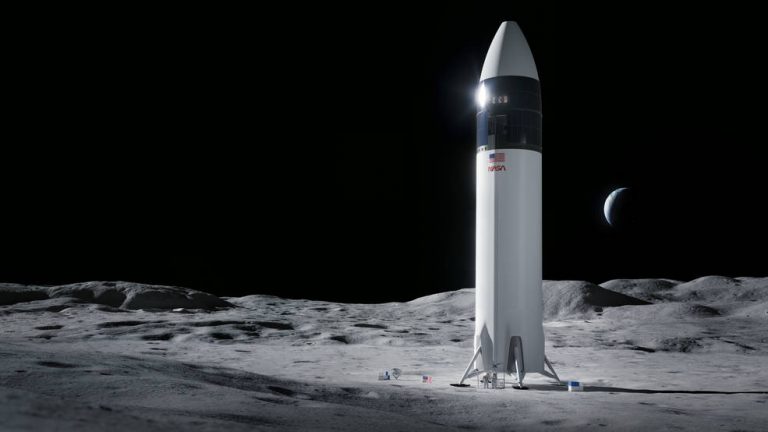
NASA has awarded a contract modification to SpaceX to further develop its Starship human landing system to meet agency requirements for long-term human exploration of the Moon under Artemis.

With this addition, SpaceX will provide a second crewed landing demonstration mission in 2027 as part of NASA’s Artemis IV mission.

“Returning astronauts to the Moon to learn, live, and work is a bold endeavor. With multiple planned landers, from SpaceX and future partners, NASA will be better positioned to accomplish the missions of tomorrow: conducting more science on the surface of the Moon than ever before and preparing for crewed missions to Mars,” said NASA Administrator Bill Nelson.

Known as Option B, the modification follows an award to SpaceX in July 2021 under the Next Space Technologies for Exploration Partnerships-2 (NextSTEP-2) Appendix H Option A contract. NASA previously announced plans to pursue this Option B with SpaceX. The contract modification has a value of about $1.15 billion.

“Continuing our collaborative efforts with SpaceX through Option B furthers our resilient plans for regular crewed transportation to the lunar surface and establishing a long-term human presence under Artemis,” said Lisa Watson-Morgan, manager for the Human Landing System program at NASA’s Marshall Space Flight Center in Huntsville, Alabama. “This critical work will help us focus on the development of sustainable, service-based lunar landers anchored to NASA’s requirements for regularly recurring missions to the lunar surface.”

The aim of this new work under Option B is to develop and demonstrate a Starship lunar lander that meets NASA’s sustaining requirements for missions beyond Artemis III, including docking with Gateway, accommodating four crew members, and delivering more mass to the surface.

NASA initially selected SpaceX to develop a human landing system variant of Starship to land the next American astronauts on the Moon under Artemis III, which will mark humanity’s first return to the lunar surface in more than 50 years. As part of that contract, SpaceX will also conduct an uncrewed demonstration mission to the Moon prior to Artemis III.

The agency is pursuing two parallel paths for human lunar landers developed according to NASA’s sustained requirements to increase the competitive pool of capable industry providers – the existing contract with SpaceX and another solicitation released earlier this year. The other solicitation, NextSTEP-2 Appendix P, is open to all other U.S. companies to develop additional human landing system capabilities and includes uncrewed and crewed demonstration missions from lunar orbit to the surface of the Moon.

Astronaut Moon landers are a vital part of NASA’s deep space exploration plans, along with the Space Launch System rocket, Orion spacecraft, ground systems, spacesuits and rovers, and Gateway.

Under Artemis, NASA  will send a suite of new lunar science instruments and technology demonstrations to study the Moon, land the first woman and first person of color on the lunar surface, establish a long term lunar presence, and more. The agency will leverage its Artemis experiences and technologies to prepare for the next giant leap – sending astronauts to Mars.

For more information about Artemis, visit:

https://www.nasa.gov/artemis

Source: NASA

In Search Of The Origin Of Life

0

A new research centre at ETH Zurich wants to trace the origins of life. Nobel Prize winner Didier Queloz will lead the new Centre for Origin and Prevalence of Life with more than 40 different research groups. 

A new interdisciplinary research centre on the origin of life has started work at ETH Zurich. Bringing together 40 different research groups from five departments, working with their counterparts from around the world, it aims to get to the bottom of major questions facing humanity, such as the origin of life on Earth. How did life on Earth begin? How did it develop and proliferate? Is there life on other planets? The founder and director of the Centre for the Origin and Prevalence of Life is astronomer and Swiss Nobel Prize winner Didier Queloz.

First discovery of an exoplanet

Together with his doctoral supervisor Michel Mayor, Queloz discovered the first exoplanet to orbit a sun-like star in 1995: 51 Pegasi, later renamed Helvetios. In the meantime, we know of more than 5,000 extrasolar planets. Didier Queloz also announced the discovery of the most Earth-like exoplanet to date, Kepler-452 b, in July 2015.

Research is ready for the next step

Much more far-reaching insights into the origin and spread of life are hoped to be gained in Zurich with the help of the new centre and an innovative collaboration between different disciplines. The conditions for this have significantly improved in recent years: in various fields of research relevant to this topic there has been rapid progress – in molecular biology, biochemistry and other life sciences – as stated in a press release from ETH Zurich. In astronomy, the findings are also progressing tremendously: currently, the James Webb space telescope is providing an unprecedented view of the structures of the universe, and has already delivered previously unseen discoveries, such as the first evidence of carbon dioxide in the atmosphere of a planet outside our solar system.

When I visited various ETH Zurich departments after taking up my post four years ago, I realised that many research groups have one thing in common: the great desire to get to the bottom of the origin of life. I am really pleased that our new centre will now make this possible.

ETH Zurich President Joël Mesot

To achieve its scientific ambition, the centre has developed an extensive programme including cutting-​​edge interdisciplinary research projects, the recruitment of outstanding talent, the development of an active scientific networking programme and an interdisciplinary life sciences curriculum. For this purpose, up to six new professorships at ETH Zurich will be established.

Source: swisstech

NASA Sets Coverage for Artemis I Moon Mission Launch

0

NASA is targeting Monday, Nov. 14, for the launch of the Artemis I Moon mission during a 69-minute launch window that opens at 12:07 a.m. EST. The launch countdown will begin Saturday, Nov. 12, at 12:27 a.m.  

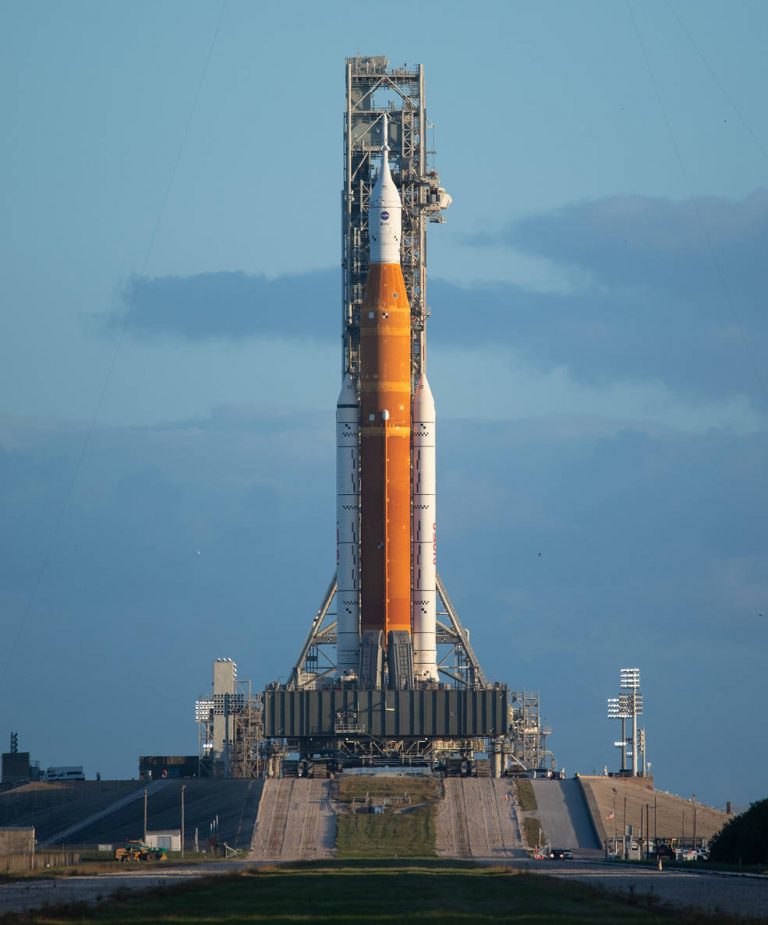
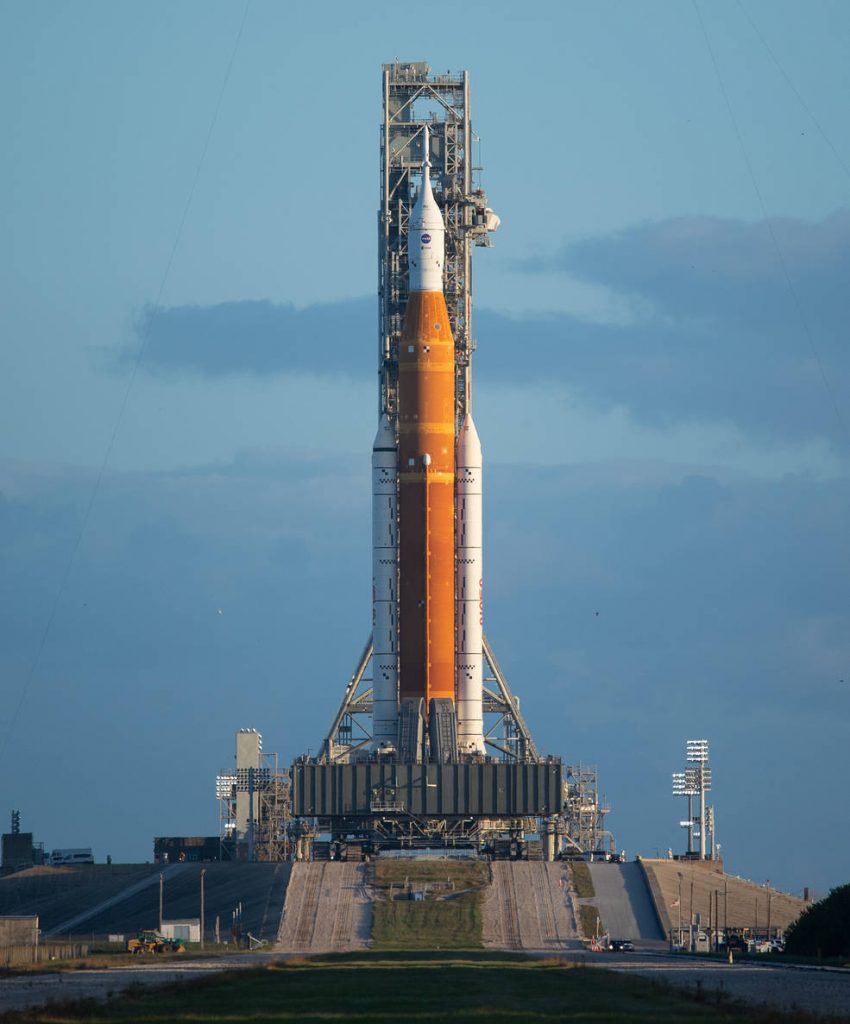
NASA’s Space Launch System rocket with the Orion spacecraft for Artemis I arrived to Launch Pad 39B at Kennedy Space Center in Florida Nov. 4. Launch of the uncrewed Artemis I flight test is targeted for Nov. 14. Credits: NASA/Joel Kowsky

Artemis I is the first integrated flight test of NASA’s Space Launch System (SLS) rocket, an uncrewed Orion spacecraft, and the ground systems at the agency’s Kennedy Space Center in Florida that will pave the way for a crewed test flight and future human lunar exploration as part of Artemis. 

The SLS rocket and Orion spacecraft arrived Friday, Nov. 4 at about 8:30 a.m.

Live coverage of briefings and events will air on NASA Television, the NASA app, and the agency’s website at: 

https://www.nasa.gov/live

Engineers previously rolled the rocket back to the Vehicle Assembly Building (VAB) Sept. 26 ahead of Hurricane Ian and after waving off two previous launch attempts Aug. 29 due to a faulty temperature sensor, and Sept. 4 due to a liquid hydrogen leak at an interface between the rocket and mobile launcher. Prior to rolling back to the VAB, teams successfully repaired the leak and demonstrated updated tanking procedures. While in the VAB, teams performed standard maintenance to repair minor damage to the foam and cork on the thermal protection system and recharge or replace batteries throughout the system.  

A limited number of seats inside the auditorium will be available during briefings to previously credentialed on-site journalists on a first-come, first-served basis. The deadline has passed for media accreditation for in-person coverage of this launch.  

To participate by telephone, media must RSVP no later than two hours before the start of each briefing to: [email protected].  

Media and members of the public may also ask questions on social media using #Artemis. Audio only of the briefings will be carried on the NASA “V” circuits, which may be accessed by dialing 321-867-1220, -1240 or -7135. 

NASA’s media accreditation policy for virtual and on-site activities is available online. More information about media accreditation at Kennedy is available by emailing: [email protected]

Full launch coverage is as follows. All times are Eastern, all events will air live on NASA TV, and the information is subject to change. Follow NASA’s Artemis blog for updates.

Friday, Nov. 11 

7 p.m.: NASA will hold a prelaunch media briefing following a mission management team meeting with the following participants: 

  • Mike Sarafin, Artemis mission manager, NASA Headquarters 
  • Charlie Blackwell-Thompson, Artemis launch director, Exploration Ground Systems Program, Kennedy 
  • Emily Nelson, chief flight director, NASA Johnson 
  • Melody Lovin, weather officer, U.S. Space Launch Delta 45 

Saturday, Nov. 12 

12 p.m.: NASA will hold a prelaunch media briefing on the status of the countdown with the following participants: 

  • Jeremy Parsons, Exploration Ground Systems Program deputy manager, NASA Kennedy
  • Melody Lovin, weather officer, U.S. Space Launch Delta 45 

Sunday, Nov. 13 

2:30 p.m.: Coverage of tanking operations to load propellant into the SLS rocket begins, including views of the rocket and Launch Control Center and audio from a commentator. 

9:30 p.m.: Coverage of launch begins in English. Coverage will continue through translunar injection and spacecraft separation, setting Orion on its path to the Moon. 

11 p.m.: Coverage of launch begins in Spanish on NASA’s Spanish-language YouTube account and will continue approximately 15 minutes after liftoff. Mission coverage updates will be posted on the NASA en español social media channels. 

3 a.m.: Coverage of the postlaunch news conference will follow approximately one hour after the live launch broadcast ends. Coverage start time is subject to change, based on the exact liftoff time. The postlaunch news conference will include the following participants: 

  • Bill Nelson, NASA administrator  
  • Mike Sarafin, Artemis mission manager, NASA Headquarters 
  • Mike Bolger, Exploration Ground Systems Program manager, Kennedy 
  • John Honeycutt, Space Launch System Program manager, Marshall 
  • Howard Hu, Orion Program manager, NASA’s Johnson Space Center
  • Emily Nelson, chief flight director, Johnson 

7:30 a.m.: Coverage of Orion’s first outbound trajectory burn on the way to the Moon. Coverage start time is subject to change, based on the exact liftoff time. 

8:50 a.m.: Coverage of first Earth views from Orion during outbound coast to the Moon. 

NASA Television coverage of additional events throughout the mission is available online

NASA Launch Coverage in English 

Briefings and launch coverage will be available on the NASA website. Coverage will include live streaming and blog updates. On-demand video recordings and photos of the launch will be available shortly after liftoff. Follow countdown coverage on NASA’s Artemis blog at: 

https://blogs.nasa.gov/artemis

Live NASA TV coverage leading to launch will begin with commentary of tanking operations at 2:30 p.m. Sunday, Nov. 13, followed by launch coverage beginning at 9:30 p.m. Launch coverage will stream on the NASA website, as well as Facebook, Twitch, NASA YouTube, and in 4k on NASA’s UHD channel. For NASA TV downlink information, schedules, and links to streaming video, visit: 

https://www.nasa.gov/nasatv

On launch day, a “tech feed” will be carried on the NASA TV media channel featuring views of the rocket and audio from a commentator in the Launch Control Center throughout and a single channel of mission audio beginning 15 minutes before launch. 

Countdown activities with audio of the launch control commentator will be available starting at 2:30 p.m. by dialing 321-867-1220, -1240 or –7135; listeners will hear a single channel of mission audio beginning 15 minutes before launch. Full audio from the launch broadcast will begin at 9:30 p.m. and will be available by dialing 256-715-9946 with passcode 913 471 506#. 

Launch also will be available on local amateur VHF radio frequency 146.940 MHz and UHF radio frequency 444.925 MHz, FM mode, heard within Brevard County on the Space Coast. 

NASA Launch Coverage in Spanish 

NASA’s broadcast of the launch in Spanish will include interviews with Hispanic members of the mission and live commentary. 

The show, which will begin at 11 p.m. Sunday, Nov. 13, will be available on NASA en español’s YouTube account, and will continue approximately 15 minutes after liftoff. Mission coverage will then follow on the NASA en español social media channels. 

Media and educational institutions interested in sharing the stream of the show can contact María José Viñas at: [email protected]

Attend Launch Virtually 

Members of the public can register to attend the launch virtually. NASA’s virtual guest program for the mission includes curated launch resources, notifications about related opportunities or changes, and a stamp for the NASA virtual guest passport following a successful launch. 

Watch and Engage on Social Media 

Stay connected with the mission and let people know you are following the launch on Twitter, Facebook, and Instagram with #Artemis. Follow and tag these accounts: 

The public can track the Artemis I mission as it happens using to Artemis Real-time Orbit Website, which will provide information about where Orion is in relation to the Earth and the Moon. Individuals also can also download a virtual boarding pass to commemorate the historic flight.

Through Artemis missions, NASA will land the first woman and the first person of color on the Moon, paving the way for a long-term lunar exploration and serving as a steppingstone to send astronauts to Mars. 

For more information about the Artemis I mission, visit: 

https://www.nasa.gov/specials/artemis-i

Para obtener información sobre cobertura en español en el Centro Espacial Kennedy o si desea solicitar entrevistas en español, comuníquese con Antonia Jaramillo at: [email protected] or 321-501-8425.


Source: NASA

Magnetic north, true north and grid north align over Great Britain for the first time in history

0

As expert map readers will know, when you’re out and about navigating with a compass, there is a difference between magnetic north (where the compass points) and grid north (the vertical blue grid lines shown on OS maps).

The difference between magnetic north and grid north is often referred to as ‘grid magnetic angle’ and it not only varies from place to place, but changes with time. This needs to be taken into account when navigating with a map and compass.

In 2014, for the first time in Great Britain since the 1660s, magnetic north moved from being to the west of grid north to the east. The change started in the very south-west corner of Britain and will slowly progress across the whole country over the next 12 to 13 years. We wrote a blog on the progress of alignment between magnetic and grid north in Britain back in 2019, which you can read here.  

Now, there is a third line about to come into alignment – true north. This is the direction of lines of longitude that all converge at the north pole. 

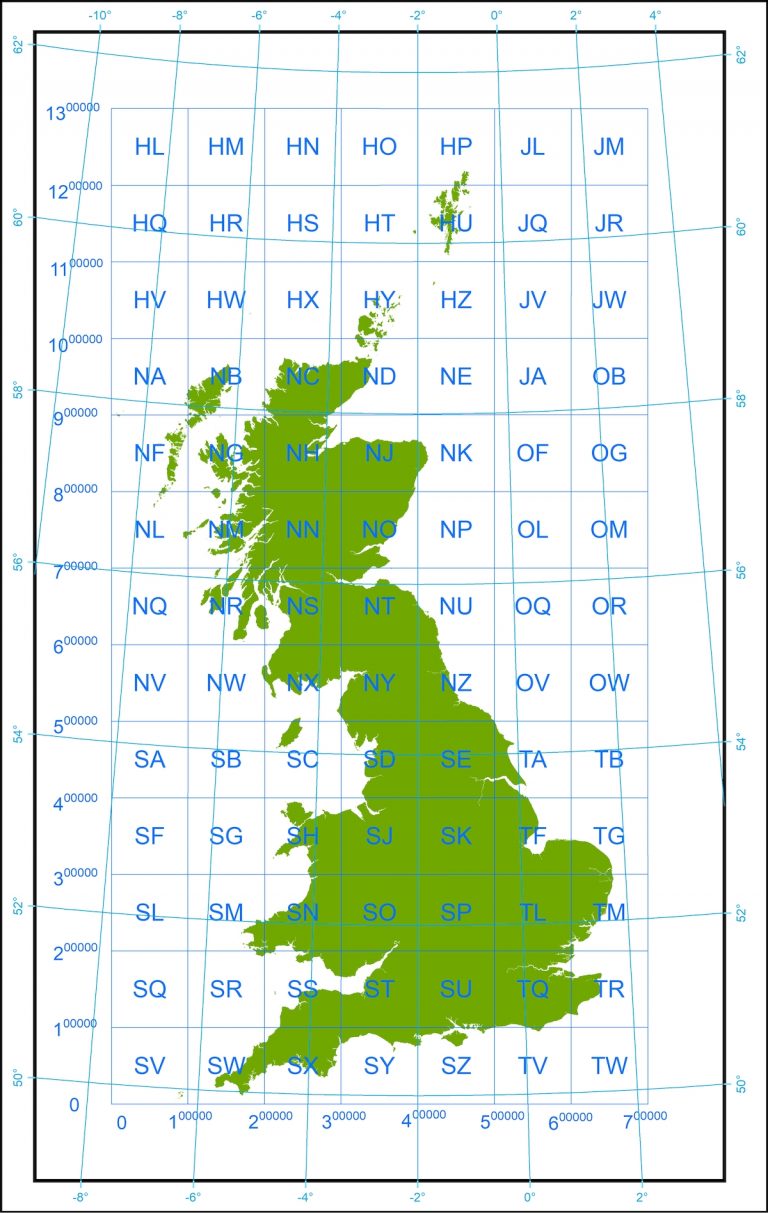
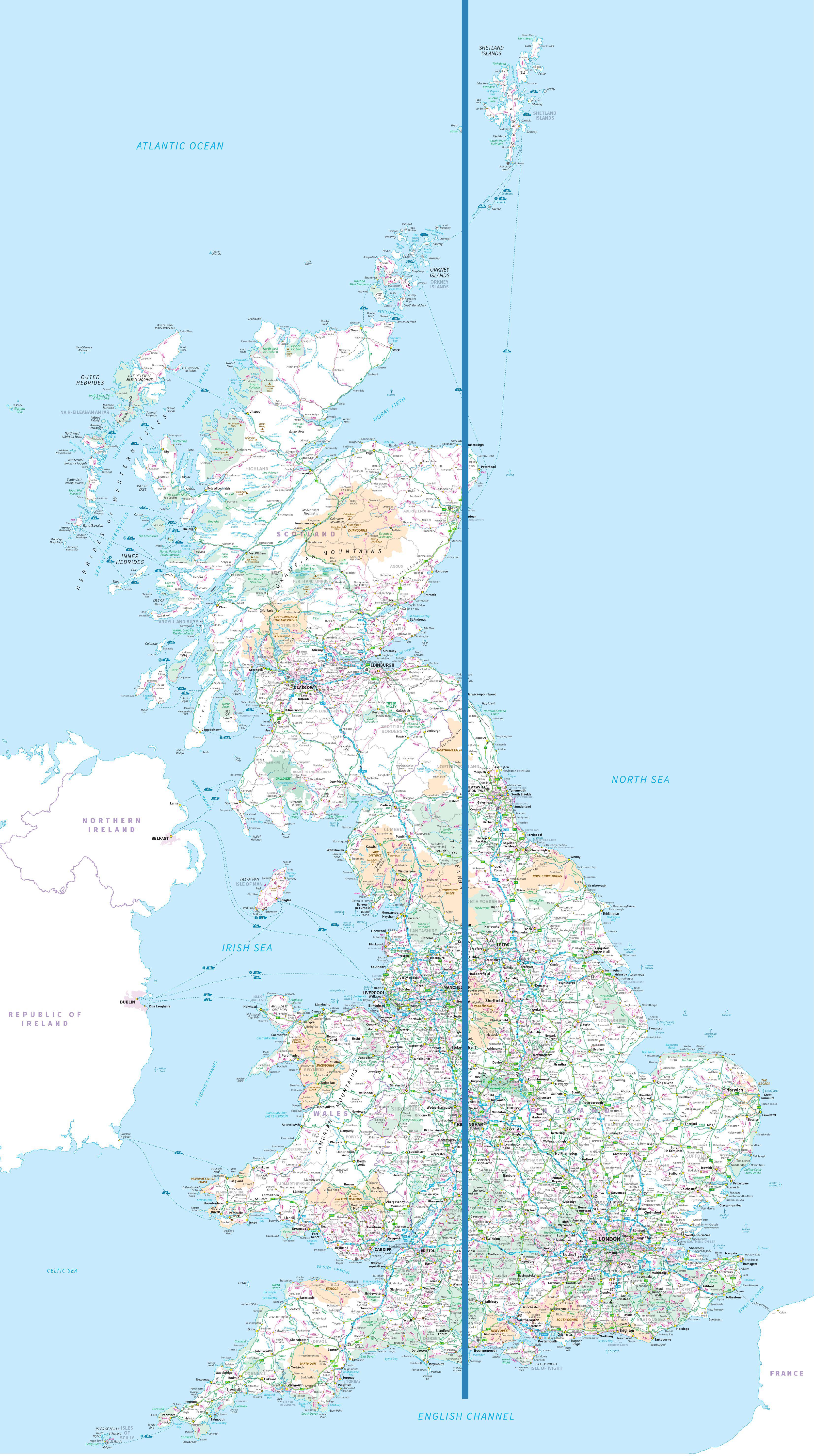
On a map projection like the transverse Mercator projection used for the British National Grid, the longitude lines curve away from the straight grid lines. This is called ‘convergence’. The amount of curvature varies across the grid area, except at one line. A transverse Mercator projection has a “central meridian” line where a chosen longitude aligns with a vertical eastings grid line. For the National Grid this central meridian line is 2°W or 400000m E.

Mag_North_Map-Whole_GB_&_CM

The ‘magic line’ as it passes through Great Britain

The changing direction of magnetic north is now approaching this ’magic line‘ so all three will briefly be in alignment. Due to the magnetic north direction being skewed relative to the central meridian and the fact that it is moving, the triple alignment point will move up the central meridian.

We used the excellent British Geological Survey blog, this magnetic north blog on the changing direction, as well as this grid magnetic angle calculator to estimate the dates of the triple alignment.

The triple alignment makes landfall at Langton Matravers, just west of Swanage, in November and will arrive in Poole by Christmas. 

Mag_North_Map-Langton_Mantravers_&_Poole_&_CM

The historic triple alignment makes landfall in Great Britain in Langton Matravers, Dorset.

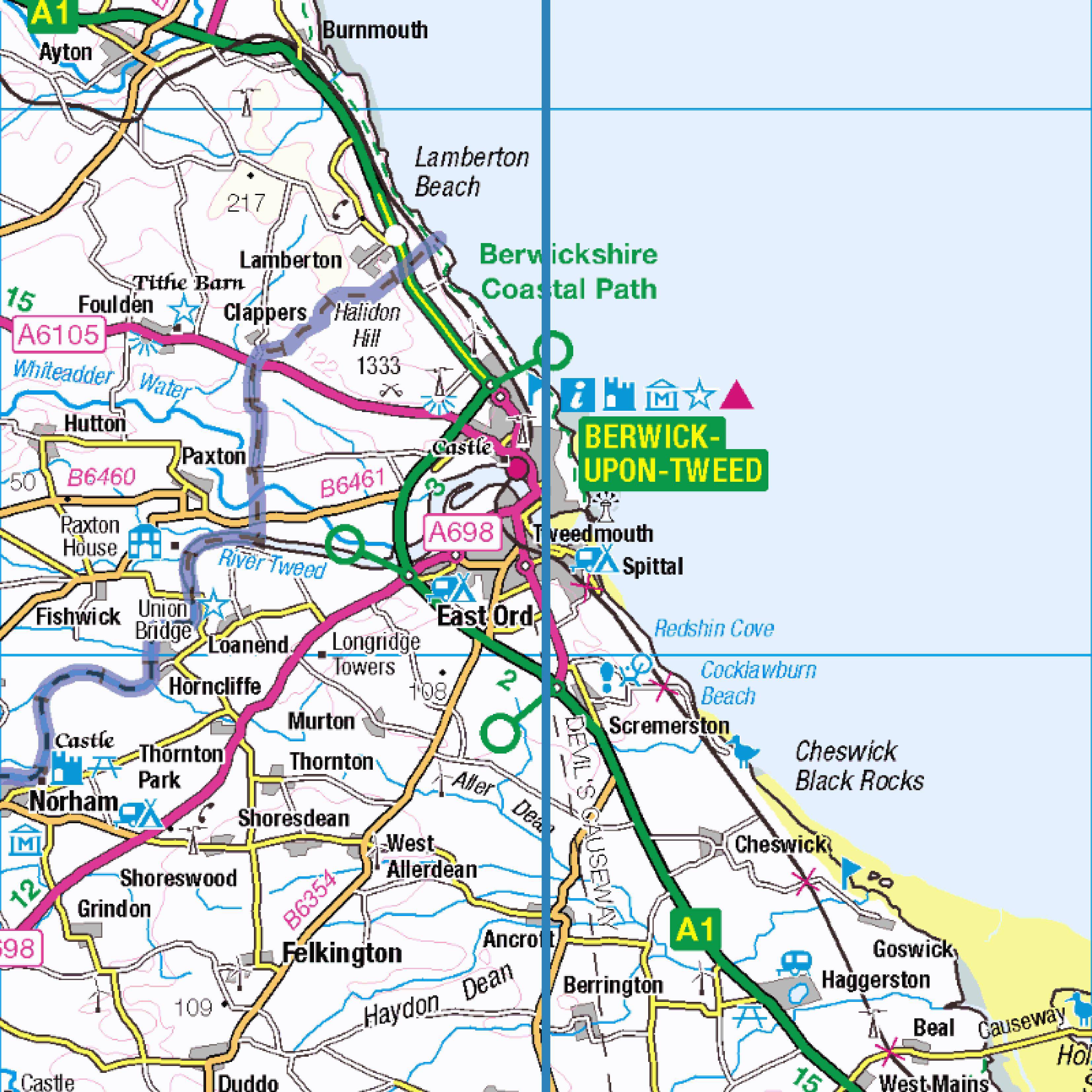
It will be just over halfway up England, passing through Hebden Bridge by August 2024 and leaving the English coast at Berwick-Upon-Tweed a year later in August 2025.

Mag_North_Map-Berwick_Upon_Tweed_&_CM (1)

The triple alignment leaves England at Berwick-upon-Tweed in August 2025.

It does not hit land again until around May 2026 at Drums, just south of Newburgh in Scotland. Its last stop in Scotland (and the UK landmass) is Fraserburgh around July 2026.

Mag_North_Map-Fraserburgh_&_CM

July 2026 will see the historic triple alignment leave the landmass of Great Britain.

These predictions are likely to change (by a few months only) with the assimilation of new magnetic field observations into the model. This new data will capture the latest magnetic field signals from the geodynamo operating in the Earth’s liquid outer core. Interactions between the flow of the molten iron-rich material in this region and the magnetic field generate electrical currents that, in turn, creates new magnetic flux which sustains the field.

Energy sources for the fluid motions are primarily convection – as the Earth slowly cools down, warmer fluid rises and cooler fluid falls and solidifies onto the solid inner core. This changes the chemical composition of the fluid making it less dense, from which buoyancy forces result. The rotation of the planet also contributes to sustaining the geodynamo.

And that will be that, for a few hundred years at least. Due to the unpredictability of the magnetic field on long timescales it’s not possible to say when the alignment of the three norths will happen again.

If map reading and using a compass is new to you, you can refer to these helpful guides to get you started.

Further reading

https://www.ordnancesurvey.co.uk/documents/resources/guide-coordinate-systems-great-britain.pdf

http://britgeopeople.blogspot.com/2019/08/when-zero-meets-zero-by-ciaran-beggan.html

https://geomag.bgs.ac.uk/research/modelling/WorldMagneticModel.html


Source: Ordnance Survey

NASA’s Economic Benefit Reaches All 50 States

0

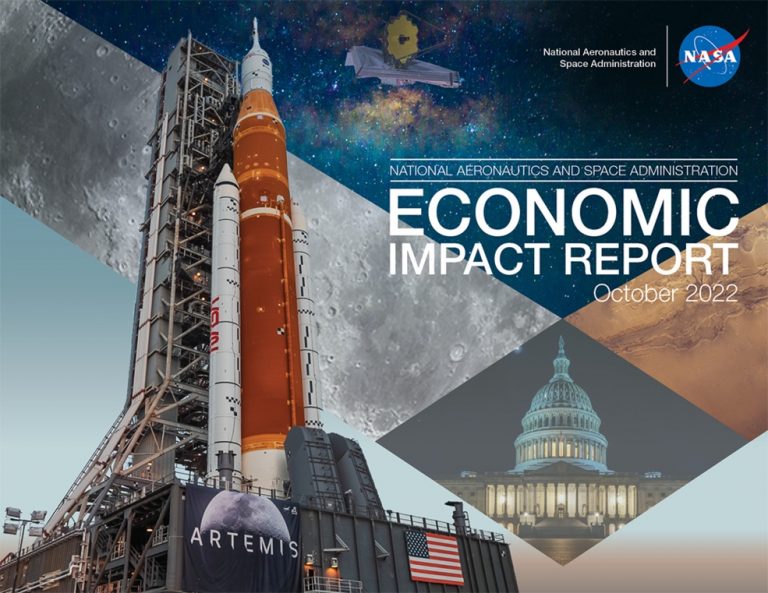
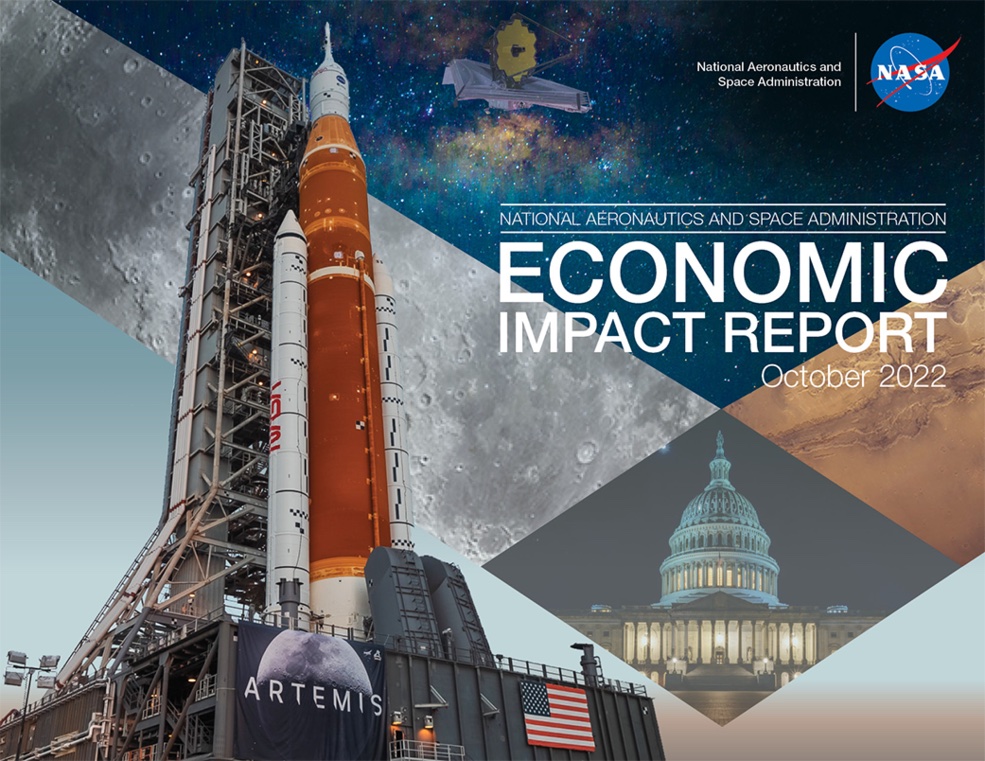
NASA released the results of its second agencywide economic impact report on Thursday, demonstrating how its Moon to Mars activities, investments in climate change research and technology, as well as other work generated more than $71.2 billion in total economic output during fiscal year 2021.

Combined, NASA’s impact supported more than 339,600 jobs nationwide, and generated nearly $7.7 billion in federal, state, and local taxes throughout the United States.

nasa-economic-impact-report-fy21_eir_cover

“Investment in NASA’s missions is an investment in American workers, American innovation, and American competitiveness for the 21st century. NASA is positioning our partners in commercial space and the national economy to win the future of spaceflight in 21st century as we prepare to return astronauts to the Moon, and then go on to Mars,” said NASA Administrator Bill Nelson. “While our work will always push the limits throughout the cosmos, it also strengthens the planet beneath our feet. NASA partners with small businesses, industry, academia, and other government agencies to address engineering challenges, and to transfer out our technologies, capabilities, and data all for public benefit here on Earth. NASA may be a small federal agency, but we punch above our weight, fueling growth in American industry with good-paying, quality jobs in all 50 states and maintaining our leadership in space and science.”

The study found NASA’s Moon to Mars exploration approach generated more than $20.1 billion in total economic output and supported more than 93,700 jobs nationwide. For investments in climate research and technology, the agency’s activities generated more than $7.4 billion in total economic output and supported more than 37,000 jobs nationwide.

Additional key findings of the study include:

  • Every state in the country benefits economically through NASA activities. Forty-six states have an economic impact of more than $10 million. Of those 46 states, nine have an economic impact of $1 billion or more.
  • NASA’s agencywide fiscal year 2021 economic output increased by 10.7% from fiscal year 2019, the year the agency conducted its first report.
  • The agency’s Moon to Mars campaign, which includes the Artemis program, generated nearly $2.2 billion in tax revenue, and saw an economic output increase of 42.6% from fiscal year 2019. These activities provided about 28% of NASA’s economic impact.
  • The agency’s investments in climate change research and technology generated nearly $810 million in tax revenue and provided 11% of NASA’s economic impact.
  • NASA has more than 2,655 active domestic and international agreements for various scientific research and technology development activities in fiscal year 2021. The International Space Station is a significant representative of international partnerships – representing 15 nations and five space agencies and has been operating for more than 20 years. 
  • NASA has 700 different active partnerships with non-federal U.S. partners and partnerships in 44 of 50 states. For example, flight technology like NASA’s all-electric X-57 Maxwell.
  • NASA spinoffs, which are public products and processes that are developed with NASA technology, funding, or expertise, provide a benefit to American lives beyond dollars and jobs. The agency has recorded more than 2,000 spinoff technologies since 1976. For example, NASA’s indoor agricultural techniques in vertical farm structures are being adopted by private companies to build indoor farms.
  • Scientific research and development, which fuels advancements in science and technology that can help improve daily life on Earth and for humanity, enjoys the largest single-sector impact, accounting for 20% of NASA’s overall economic output.

The study was conducted by the Nathalie P. Voorhees Center for Neighborhood and Community Improvement at the University of Illinois at Chicago.

See a summary of the report:

https://go.nasa.gov/3gQIFuJ

To review the full study visit:

https://go.nasa.gov/3Fj4MnC

Source: NASA