
Home Blog Page 108

NASA’s Perseverance Rover Gets The Dirt On Mars

0
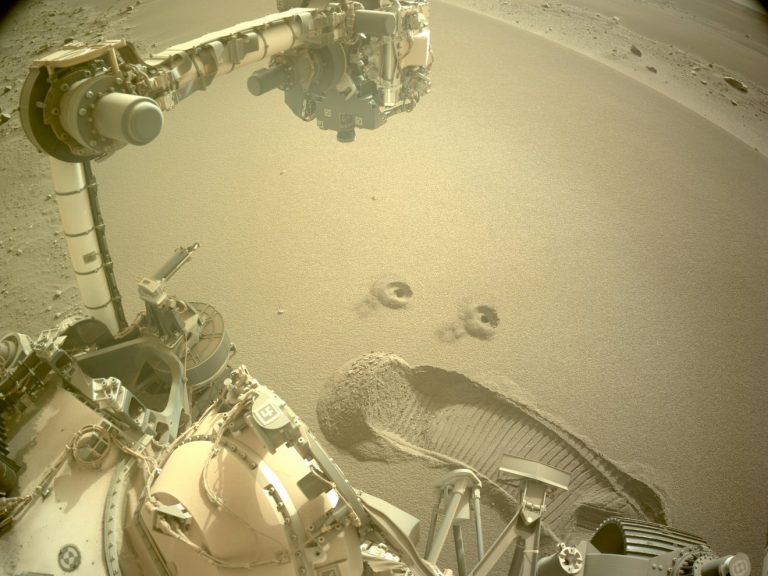
Two holes are left in the Martian surface after NASA’s Perseverance rover used a specialized drill bit to collect the mission’s first samples of regolith on Dec. 2 and 6, 2022. 

NASA's Perseverance Mars rover took this image of regolith – broken rock and dust – on Dec. 2, 2022. This regolith will be considered for deposit on the Martian surface as part of the Mars Sample Return campaign.
NASA’s Perseverance Mars rover took this image of regolith – broken rock and dust – on Dec. 2, 2022. This regolith will be considered for deposit on the Martian surface as part of the Mars Sample Return campaign. Credit: NASA/JPL-Caltech 
Full Image Details

The mission’s first two samples of regolith – broken rock and dust – could help scientists better understand the Red Planet and engineers prepare for future missions there.

NASA’s Perseverance rover snagged two new samples from the Martian surface on Dec. 2 and 6. But unlike the 15 rock cores collected to date, these newest samples came from a pile of wind-blown sand and dust similar to but smaller than a dune. Now contained in special metal collection tubes, one of these two samples will be considered for deposit on the Martian surface sometime this month as part of the Mars Sample Return campaign.

Scientists want to study Martian samples with powerful lab equipment on Earth to search for signs of ancient microbial life and to better understand the processes that have shaped the surface of Mars. Most of the samples will be rock; however, researchers also want to examine regolith – broken rock and dust – not only because of what it can teach us about geological processes and the environment on Mars, but also to mitigate some of the challenges astronauts will face on the Red Planet. Regolith can affect everything from spacesuits to solar panels, so it’s just as interesting to engineers as it is to scientists.
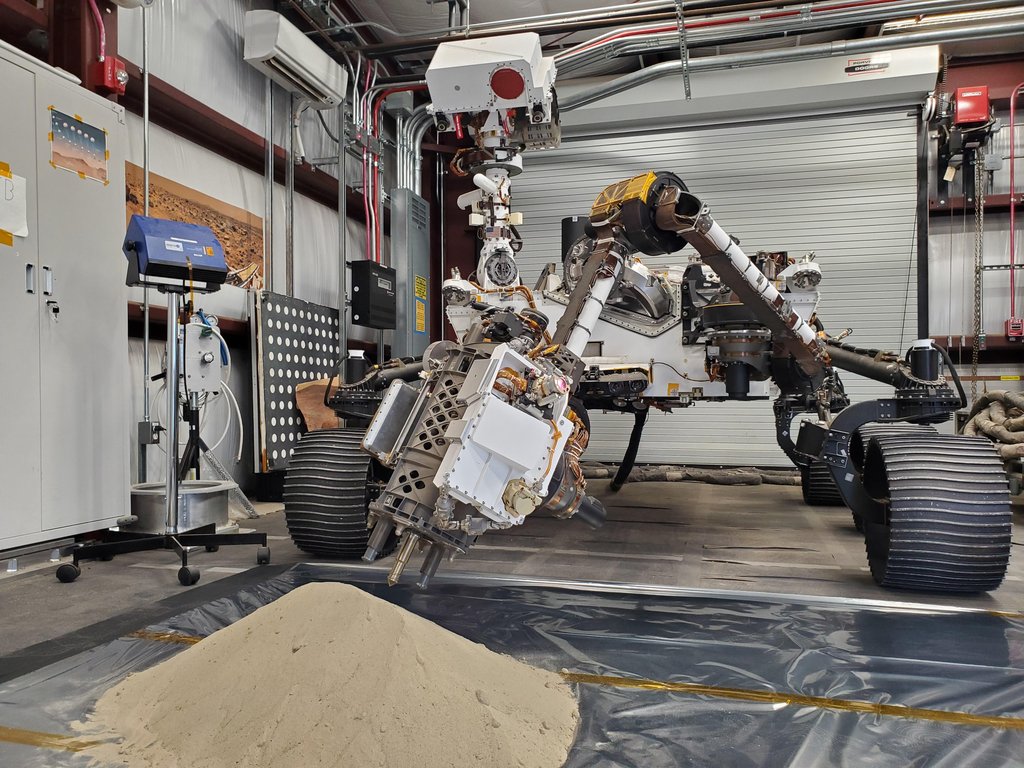
Optimism, a full-scale replica of NASA's Perseverance Mars rover, tests a model of Perseverance's regolith bit in a pile of simulated regolith – broken rock and dust – at JPL.
Optimism, a full-scale replica of NASA’s Perseverance Mars rover, tests a model of Perseverance’s regolith bit in a pile of simulated regolith – broken rock and dust – at JPL. 
Credit: NASA/JPL-Caltech 
Full Image Details

As with rock cores, these latest samples were collected using a drill on the end of the rover’s robotic arm. But for the regolith samples, Perseverance used a drill bit that looks like a spike with small holes on one end to gather loose material.

Engineers designed the special drill bit after extensive testing with simulated regolith developed by JPL. Called Mojave Mars Simulant, it’s made of volcanic rock crushed into a variety of particle sizes, from fine dust to coarse pebbles, based on images of regolith and data collected by previous Mars missions.

“Everything we learn about the size, shape, and chemistry of regolith grains helps us design and test better tools for future missions,” said Iona Tirona of NASA’s Jet Propulsion Laboratory in Southern California, which leads the Perseverance mission. Tirona was the activity lead for operations to collect the recent regolith sample. “The more data we have, the more realistic our simulants can be.”

The Challenge of Dust

Studying regolith up close could help engineers design future Mars missions – as well as the equipment used by future Martian astronauts. Dust and regolith can damage spacecraft and science instruments alike. Regolith can jam sensitive parts and slow down rovers on the surface. The grains could also pose unique challenges to astronauts: Lunar regolith was discovered to be sharp enough to tear microscopic holes in spacesuits during the Apollo missions to the Moon.

Regolith could be helpful if packed against a habitat to shield astronauts from radiation, but it also contains risks: The Martian surface contains perchlorate, a toxic chemical that could threaten the health of astronauts if large amounts were accidentally inhaled or ingested.

“If we have a more permanent presence on Mars, we need to know how the dust and regolith will interact with our spacecraft and habitats,” said Perseverance team member Erin Gibbons, a McGill University doctoral candidate who uses Mars regolith simulants as part of her work with the rover’s rock-vaporizing laser, called SuperCam.

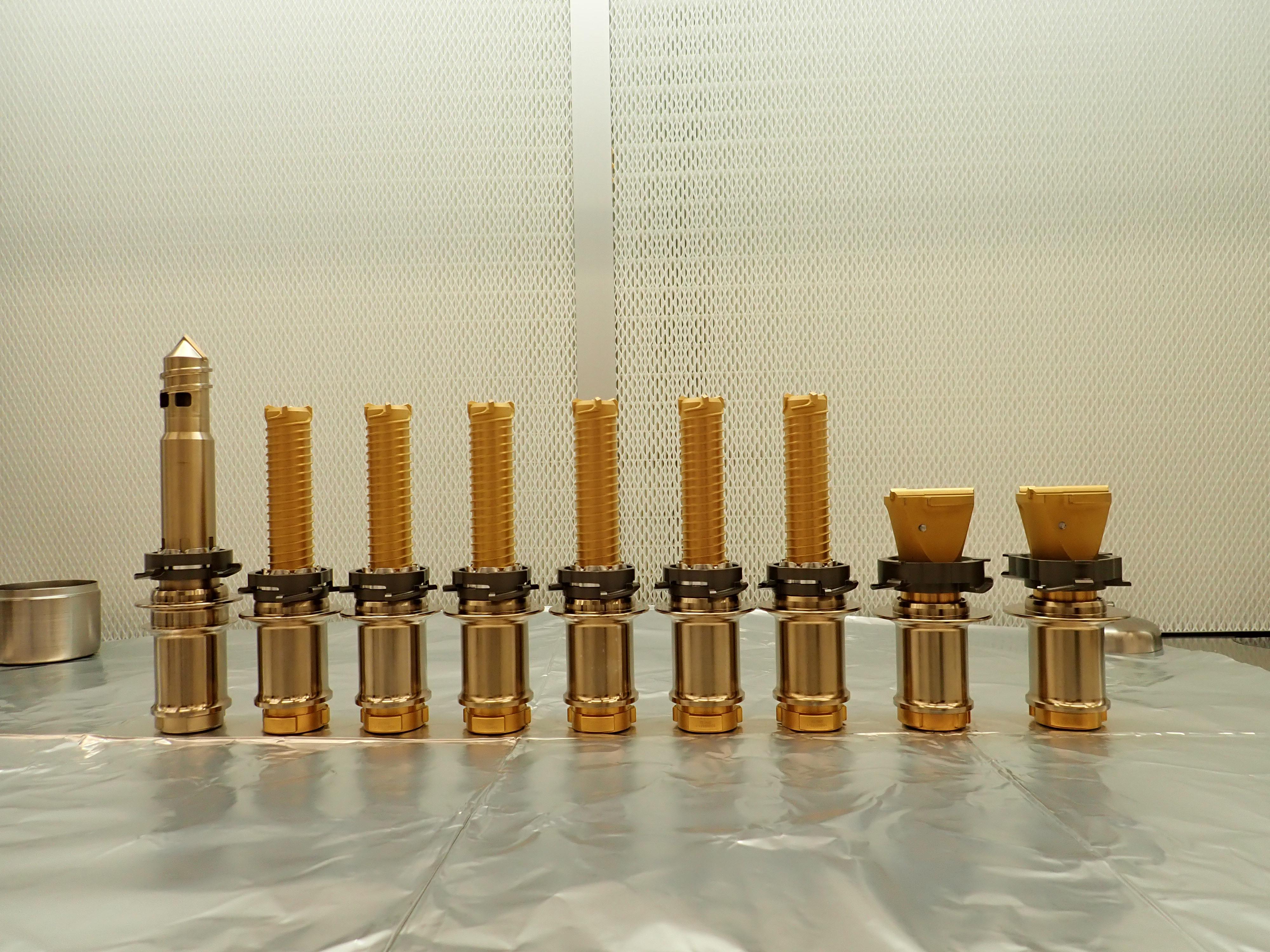
The drill bits used by NASA's Perseverance rover are seen before being installed prior to launch. From left, the regolith bit, six bits used for drilling rock cores, and two abrasion bits.
The drill bits used by NASA’s Perseverance rover are seen before being installed prior to launch. From left, the regolith bit, six bits used for drilling rock cores, and two abrasion bits. 
Credit: NASA/JPL-Caltech 
Full Image Details

“Some of those dust grains could be as fine as cigarette smoke, and could get into an astronaut’s breathing apparatus,” added Gibbons, who was previously part of a NASA program studying human-robot exploration of Mars. “We want a fuller picture of which materials would be harmful to our explorers, whether they’re human or robotic.”

Besides answering questions about health and safety hazards, a tube of Martian regolith could inspire scientific wonder. Looking at it under a microscope would reveal a kaleidoscope of grains in different shapes and colors. Each one would be like a jigsaw puzzle piece, all of them joined together by wind and water over billions of years.

“There are so many different materials mixed into Martian regolith,” said Libby Hausrath of University of Nevada, Las Vegas, one of Perseverance’s sample return scientists. “Each sample represents an integrated history of the planet’s surface.”

As an expert on Earth’s soils, Hausrath is most interested in finding signs of interaction between water and rock. On Earth, life is found practically everywhere there’s water. The same could have been true for Mars billions of years ago, when the planet’s climate was much more like Earth’s.

More About the Mission

A key objective for Perseverance’s mission on Mars is astrobiology, including the search for signs of ancient microbial life. The rover will characterize the planet’s geology and past climate, pave the way for human exploration of the Red Planet, and be the first mission to collect and cache Martian rock and regolith (broken rock and dust).

Subsequent NASA missions, in cooperation with ESA (European Space Agency), would send spacecraft to Mars to collect these sealed samples from the surface and return them to Earth for in-depth analysis.

The Mars 2020 Perseverance mission is part of NASA’s Moon to Mars exploration approach, which includes Artemis missions to the Moon that will help prepare for human exploration of the Red Planet.

JPL, which is managed for NASA by Caltech in Pasadena, California, built and manages operations of the Perseverance rover.

News Media Contact

Andrew Good
Jet Propulsion Laboratory, Pasadena, Calif.
818-393-2433
[email protected]

Karen Fox / Alana Johnson
NASA Headquarters, Washington
301-286-6284 / 202-358-1501
[email protected] / [email protected]

2022-189
Artemis I Flight Day 22 – Orion Continues On Its Journey Back To Earth

0
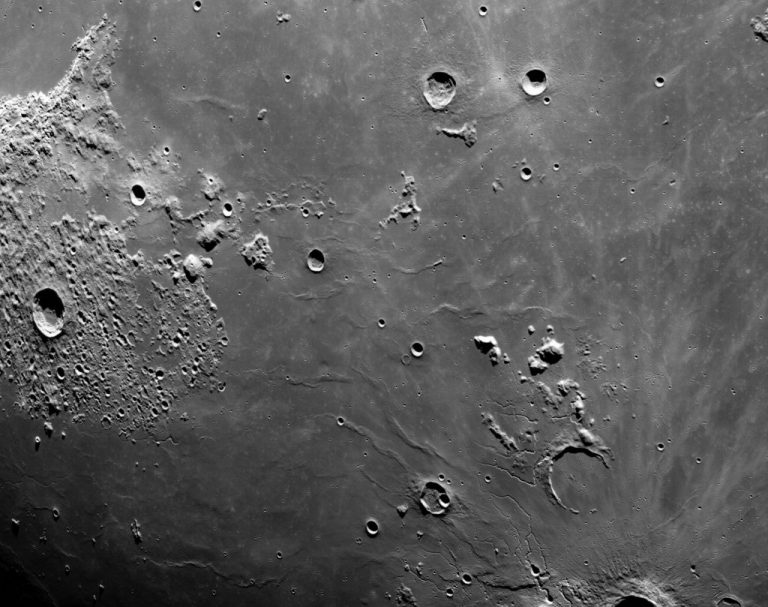
art001e002164 (Dec. 5, 2022): Cameras mounted on the crew module of the Orion spacecraft captured these views of the Moon’s surface. On flight day 20 of the Artemis I mission, the spacecraft made its second and final close approach to the Moon before its returned powered flyby burn.

Orion continues its journey back to Earth on day 22 of the 25.5-day Artemis I mission with flight controllers and engineers continuing to test the spacecraft and its systems in preparation for future flights with humans aboard.

Engineers conducted the second part of the propellant tank slosh development flight test, called propellant slosh, which is scheduled during quiescent, or less active, parts of the mission. Propellant motion, or slosh, in space is difficult to model on Earth because liquid propellant moves differently in tanks in space than on Earth due to the lack of gravity.

The test calls for flight controllers to fire the reaction control system thrusters when propellant tanks are filled to different levels. The reaction control thrusters used are located on the sides of the service module and can be fired individually as needed to move the spacecraft in different directions or rotate it into any position. Each engine provides about 50 pounds of thrust Engineers measure the effect the propellant sloshing has on spacecraft trajectory and orientation as Orion moves through space.

The test was first performed after the outbound flyby burn, and now again after the return flyby burn, to compare data at points in the mission with different levels of propellant onboard. Approximately 12,060 pounds of propellant has been used, which is 215 pounds less than estimated prelaunch, and leaves a margin of 2,185 pounds over what is planned for use, 275 pounds more than prelaunch expectations. The first prop slosh test objective was completed on day eight of the mission as it prepared to enter the distant retrograde orbit.

A few key milestones for Orion remain, including the entry system check outs and propulsion system leak checks on mission days 24 and 25, respectively.

Orion will travel at around 25,000 mph while reentering Earth’s atmosphere, testing the world’s largest ablative heat shield by reaching temperatures up to 5,000 degrees Fahrenheit – approximately half the heat of the sun. The heat shield is located at the bottom of the Orion capsule, measuring 16.5 feet in diameter, and sheds intense heat away from the crew module as Orion returns to Earth. The outer surface of the heat shield is made of 186 billets, or blocks, of an ablative material called Avcoat, a reformulated version of the material used on the Apollo capsules. During descent, the Avcoat ablates, or burns off in a controlled fashion, transporting heat away from Orion. Learn more about Orion’s heat shield in the Artemis I reference guide.

On Thursday, Dec. 8 at 5 p.m. EST, NASA will host a briefing to preview Orion’s return scheduled for Sunday, Dec. 11 and to discuss how the recovery teams are preparing for entry and splashdown. The briefing will be live on NASA TV, the agency’s website, and the NASA app.

Watch the latest episode of Artemis All Access for a look back at recent mission accomplishments and a preview of splashdown, including parachute information.

Just after 3 p.m. CST on Dec. 7, Orion was traveling 234,100 miles from Earth and 127,700 miles from the Moon, cruising at 820 miles per hour.

Images are sent down to Earth, and uploaded to NASA’s Johnson Space Center Flickr account and Image and Video Library. When bandwidth allows, views of the mission will be available in real-time via video stream.

By Sandra Jones
Source NASA

Endeavour Crew Make Repairs To Hubble

0

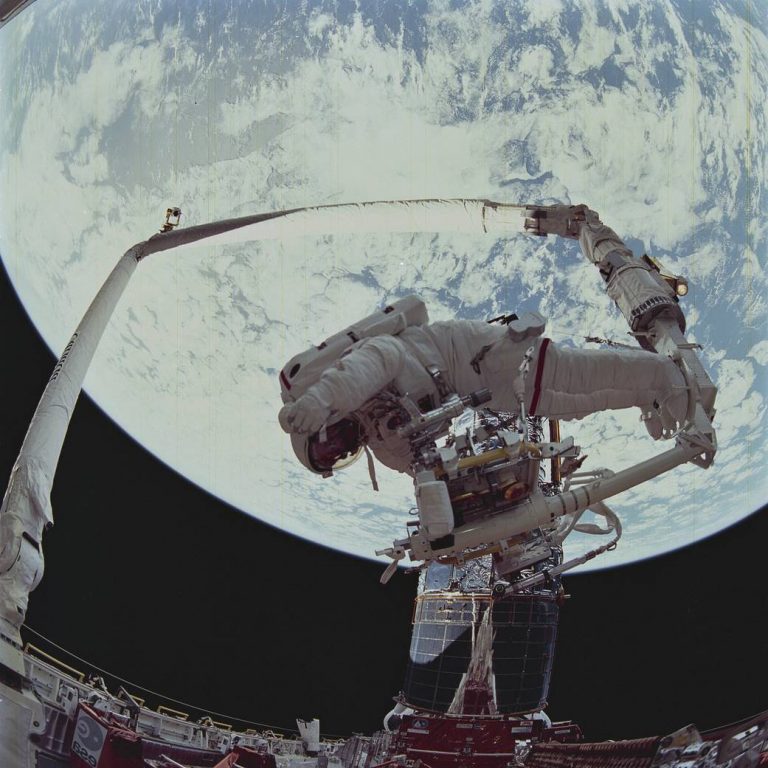
In this Dec. 1993, onboard view from Space Shuttle mission STS-61 shows astronauts Story Musgrave and Jeffrey Hoffman’s Extra Vehicular Activity (EVA) to repair the Hubble Space Telescope. STS-61 was the first service mission to the Hubble Space Telescope.

On flight day four, Dec. 4 at 10:46 p.m. EST, Musgrave and Hoffman began the first spacewalk. For five days, they or another pair would exit the airlock at around the same time each evening and spend between six and eight hours in the payload bay.

Learn more about Space Shuttle Endeavour.

Image Credit: NASA

By Monika Luabeya
Source NASA

New Minerals Discovered In A Massive Meteorite May Reveal Clues To Asteroid Formation

0
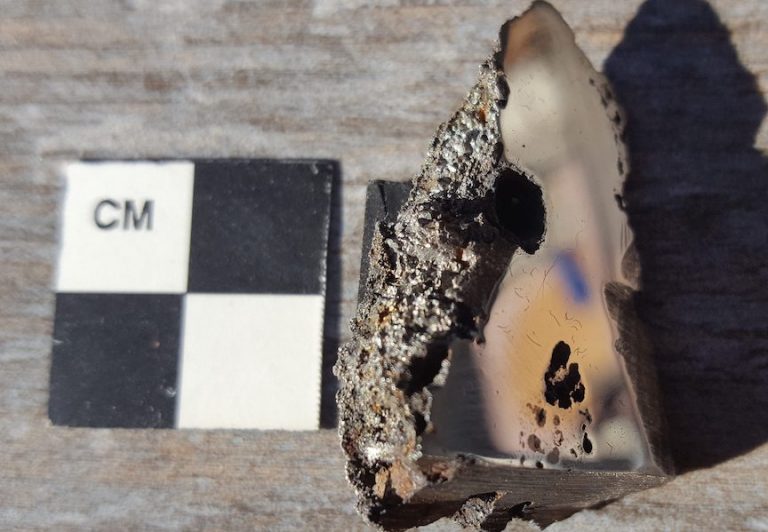
A slice of the El Ali meteorite, now housed in the U of A’s Meteorite Collection, contains two minerals never before seen on Earth. University of Alberta

A team of researchers has discovered at least two new minerals that have never before been seen on Earth in a 15 tonne meteorite found in Somalia — the ninth largest meteorite ever found.

“Whenever you find a new mineral, it means that the actual geological conditions, the chemistry of the rock, was different than what’s been found before,” says Chris Herd, a professor in the Department of Earth & Atmospheric Sciences and curator of the University of Alberta’s Meteorite Collection. “That’s what makes this exciting: In this particular meteorite you have two officially described minerals that are new to science.”

The two minerals found came from a single 70 gram slice that was sent to the U of A for classification, and there already appears to be a potential third mineral under consideration. If researchers were to obtain more samples from the massive meteorite, there’s a chance that even more might be found, Herd notes.

The two newly discovered minerals have been named elaliite and elkinstantonite. The first receives its name from the meteorite itself, dubbed the “El Ali” meteorite because it was found in near the town of El Ali, in the Hiiraan region of Somalia. Herd named the second mineral after Lindy Elkins-Tanton, vice president of the ASU Interplanetary Initiative, professor at Arizona State University’s School of Earth and Space Exploration and principal investigator of NASA’s upcoming Psyche mission.

“Lindy has done a lot of work on how the cores of planets form, how these iron nickel cores form, and the closest analogue we have are iron meteorites. So it made sense to name a mineral after her and recognize her contributions to science,” Herd explains.

In collaboration with researchers at UCLA and the California Institute of Technology, Herd classified the El Ali meteorite as an “Iron, IAB complex” meteorite, one of over 350 in that particular category.

As Herd was analyzing the meteorite to classify it, he saw something that caught his attention. He brought in the expertise of Andrew Locock, head of the U of A’s Electron Microprobe Laboratory, who has been involved in other new mineral descriptions including Heamanite-(Ce).

“The very first day he did some analyses, he said, ‘You’ve got at least two new minerals in there,’” says Herd. “That was phenomenal. Most of the time it takes a lot more work than that to say there’s a new mineral.”

Locock’s rapid identification was possible because the two minerals had been synthetically created before, so he was able to match the composition of the newly discovered natural minerals with their human-made counterparts.

Researchers are continuing to examine the minerals to determine what they can tell us about the conditions in the meteorite when it formed.

“That’s my expertise — how you tease out the geologic processes and the geologic history of the asteroid this rock was once part of,” says Herd. “I never thought I’d be involved in describing brand new minerals just by virtue of working on a meteorite.”

Herd also notes that any new mineral discoveries could possibly yield exciting new uses down the line.

“Whenever there’s a new material that’s known, material scientists are interested too because of the potential uses in a wide range of things in society.”

While the future of the meteorite remains uncertain, Herd says the researchers have received news that it appears to have been moved to China in search of a potential buyer. It remains to be seen whether additional samples will be available for scientific purposes.

Herd described the findings at the Space Exploration Symposium on Nov. 21.

By Keith Cowing
Source SpaceRef

Northrop Grumman Demonstrates New Sensor Capability For The Emerging Battlespace

0

Northrop Grumman Corporation (NYSE: NOC) successfully demonstrated a new multifunction, converged sensing capability for the U.S. Government. The new “all-in-one” sensor capability rapidly closes the Observe, Orient, Decide and Act (OODA) loop by integrating four critical mission capabilities: sense, effect/jam, inject and communicate.

Northrop Grumman Demonstrates New Sensor Capability for the Emerging Battlespace

Northrop Grumman’s Converged Sensor integrates four critical mission capabilities – sense, effect/jam, inject and communicate. Credit: Northrop Grumman

The demonstration, conducted at PAX River Military Installation in Maryland, showcased how Northrop Grumman’s Converged Sensor integrates sensing and effecting technology while incorporating third-party hardware and software in an open-architecture, platform-agnostic system. The modeled-mission scenario included Ground Radio Frequency test equipment like that of peer and-near-peer adversaries.

“The new ‘speed of fight’ is driving a need for a converged sensing capability to use across mission operations and multiple domains,” said Jennifer Walsmith, vice president of Cyber and Information Solutions, Northrop Grumman. “This demonstration showed that our Converged Sensor can effectively share and receive operational data with multiple platforms and command nodes through a standard open systems gateway.”

The Northrop Grumman converged sensor architecture with core hardware and software-defined open systems approaches, can be used across all domains and platforms in air, space, ground, maritime and cyberspace.

Northrop Grumman is a technology company, focused on global security and human discovery. Our pioneering solutions equip our customers with capabilities they need to connect, advance, and protect the U.S. and its allies. Driven by a shared purpose to solve our customers’ toughest problems, our 90,000 employees define possible every day.

Lockheed Martin And Rafael Advanced Defense Systems To Collaborate On High-Energy Laser System

0

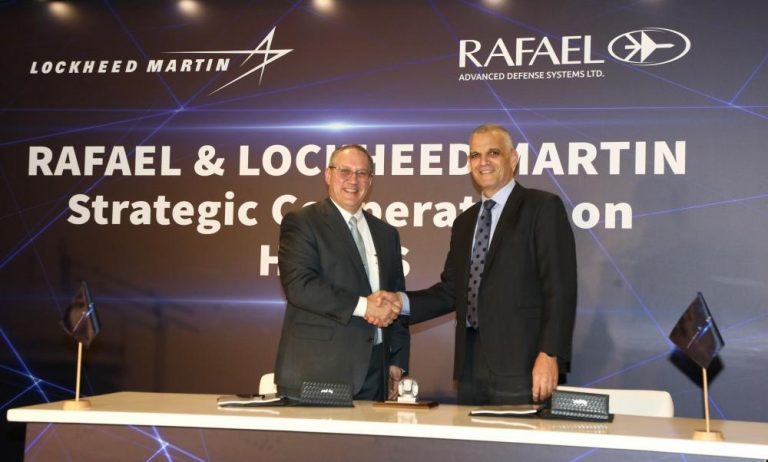
Lockheed Martin [NYSE: LMT] and Rafael Advanced Defense Systems, Ltd., of Israel, have signed a teaming agreement that includes jointly developing, testing and manufacturing High Energy Laser Weapon Systems (HELWS) in the U.S. and Israel. The future joint-development will be based on the assets that have been developed independently by RAFAEL and the Ministry of Defense’s Directorate of Defense Research and Development (DDR&D) within the framework of the IRON BEAM project. The cooperation will be geared towards developing a variant of the system for the American market as well as others.

After years of joint development by the Ministry of Defense’s Directorate of Defense Research and Development (DDR&D) and RAFAEL, the IRON BEAM project was initiated by the DDR&D. In the last year, a series of tests on the system was carried out that proved the operational capability of the system. IRON BEAM is a 100kW-class HELWS, expected to be the first-ever operational system for ground-based air defense against threats such as rockets, mortars and UAV’s, delivering engagement at the speed of light.  

“This strategic teaming agreement serves as a force multiplier for RAFAEL and the Israeli market. We are working to ensure our customers receive the most advanced, effective, and best in class systems. This agreement will expand and diversify the capabilities we can offer to a variety of customers,” said RAFAEL CEO and President Maj. Gen. (Ret.) Yoav Har-Even. “Over the last three decades, alongside the DDR&D and the Israeli Ministry of Defense, RAFAEL has invested in laser research and development, resulting in IRON BEAM and we expect to become the first operational laser defense system of its kind. This serves as a clear example of Israeli-made capabilities leading to strategic cooperation which will greatly benefit both sides.”

IRON BEAM is set to be integrated into Israel’s multi-layered air defense array. The cost-effective and operationally efficient solution will be able to counter emerging threats, while also defending critical infrastructure, strategic sites, maneuvering forces, and population centers.

“Lockheed Martin’s mission is to deliver the best security solutions that help our customers stay ahead of their adversaries. Working with Rafael, our joint team will help bring this new, life-saving capability to our customers,” said Lockheed Martin Chief Operating Officer, Frank St. John. “This unique capability will enhance Israel’s vital air and missile defense system with state-of-the-art laser technology, and we are honored by the opportunity to expand Lockheed Martin’s role as a security teammate for the State of Israel.”

“We see the capability of IRON BEAM which was developed alongside the DDR&D as a technological breakthrough, with its proven effectiveness against some of the most sophisticated threats including rockets, mortars, drones and UAVs, including in swarms. The system is designed to provide defense against emerging threats in today’s complex battlefield, bolstering the strength of the Israeli Homefront, and is a catalyst for forging bilateral collaborations said Executive Vice President Dr. Ran Gozali, Head of the Land and Naval Systems Directorate at Rafael. 

“Lockheed Martin is entering a new area of operations in Israel. As a leader of technology, our aerial platforms, such as F-35, F-16, C-130 and more, have been operational in Israel for many years and including CH-53K, these will continue to be into the future. Now, we step into the high-energy laser era and look forward to fielding operational, reliable, and highly-effective systems with teammates such as Rafael,” said Joshua (Shiki) Shani, Chief Executive, Lockheed Martin Israel. 

Lockheed Martin has decades of experience designing, developing, and successfully testing systems and critical subsystems that have executed the entire threat engagement from detection to defeat. Lockheed Martin’s expertise is the product of decades of investment in prototype systems, that have demonstrated effectiveness against a variety of targets. The companies will develop and field this High Energy Laser Weapon system and explore additional opportunities to provide this critical capability to the United States and potentially elsewhere.

For additional information, visit www.rafael.co.il and www.lockheedmartin.com.

About Rafael

Rafael Advanced Defense Systems Ltd. designs, develops, manufactures and sustains a wide range of state-of-the-art defense systems for air, land, sea, cyber and space applications. With over 8,000 employees, RAFAEL promotes a corporate culture of partnerships and cooperation — sustaining cooperation agreements with dozens of governmental, aviation, space and defense organizations domestically and globally. This allows RAFAEL and its partners to capitalize on mutual strengths and leverage existing capabilities.

About Lockheed Martin

Headquartered in Bethesda, Maryland, Lockheed Martin Corporation is a global security and aerospace company that employs approximately 114,000 people worldwide and is principally engaged in the research, design, development, manufacture, integration and sustainment of advanced technology systems, products and services.

Please follow @LMNews on Twitter for the latest announcements and news across the corporation, and @LMSpace to learn more about the latest technologies, missions and people driving the future of space.

Artemis I – Flight Day 21: Orion Leaves Lunar Sphere Of Influence, Heads For Home

0
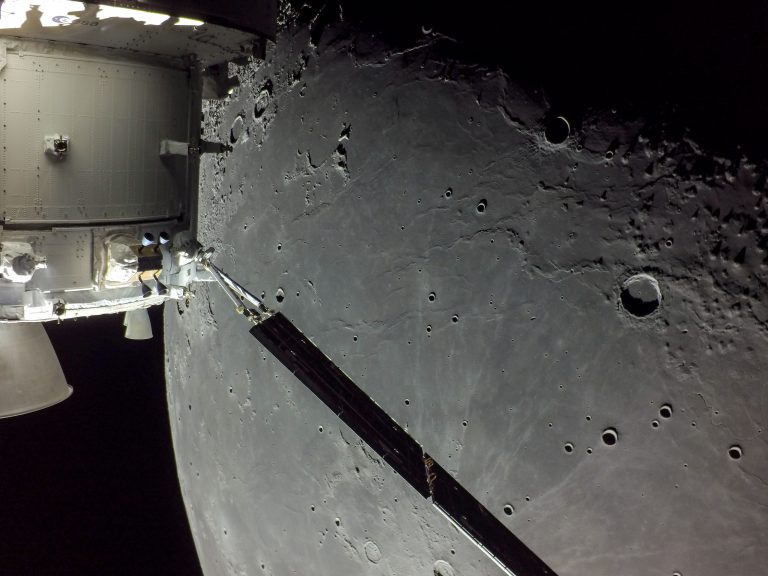
art001e002132 Dec. 5, 2022 A portion of the far side of the Moon looms large just beyond the Orion spacecraft in this image taken on the 20th day of the Artemis I mission by a camera on the tip of one of Orion’s solar arrays. The return powered flyby burn committed Orion to a return to Earth trajectory ahead of a splashdown off the coast of California on Dec. 11. At its closest point, Orion flew within 80 miles of the lunar surface.

Orion exited the lunar sphere of gravitational influence Tuesday, Dec. 6, at 1:29 a.m. CST for the last time on the Artemis I mission less than a day after completing the return powered flyby burn that put the spacecraft on course for splashdown Sunday, Dec. 11. Earth’s force of gravity is now the primary gravitational force acting on the spacecraft. 

Orion successfully performed the fourth return trajectory correction burn at 4:43 a.m. using the reaction control system thrusters. The burn lasted 5.7 seconds and changed the velocity of the spacecraft by 0.6 feet per second.

Flight controllers used Orion’s cameras to inspect the crew module thermal protection system and European Service Module, the second of three planned external spacecraft inspections. Teams conducted this survey early in the mission to provide detailed images of the spacecraft’s external surfaces after it had flown through the portion of Earth’s orbit containing the majority of space debris, and teams reported no concerns after reviewing the imagery. This second inspection during the return phase is being used to assess the overall condition of the spacecraft several days before re-entry.  

During both inspections, the Integrated Communications Officer, or INCO, commanded cameras on the four solar array wings to take a series of still images. Engineers and flight controllers at NASA’s Johnson Space Center in Houston will review the imagery over the coming days. A final photographic survey will be conducted Friday as Orion continues its journey home. 

Teams responsible for recovering Orion after its splashdown are continuing preparations ahead of the Dec. 11 splashdown off the coast of California. The mission management team will determine the landing site location Thursday, Dec. 8. Listen to NASA’s Artemis I recovery director, Melissa Jones, talk about what it takes to fetch the Orion spacecraft from the Pacific Ocean at the end of the mission on “Houston We Have a Podcast.” 

Just after 5:30 p.m. on Dec. 6 , Orion was traveling 244,000 miles from Earth and about 79,000 miles from the Moon, cruising at 500 miles per hour. 

Images are sent down to Earth, and uploaded to NASA’s Johnson Space Center Flickr account and Image and Video Library. When bandwidth allows, views of the mission will be available in real-time via video stream

By Sandra Jones
Source NASA

Sierra Space Selected By Maxar To Provide Solar Power Solutions For Constellation Of Proliferated LEO Satellites

0

Sierra Space, a leading space company building an end-to-end business and technology platform in space to benefit life on Earth, announced today the company won a significant space defense contract with Maxar. Under the agreement, Sierra Space will provide revolutionary solar power solutions and production capability.

This contract will support a constellation of 16 satellites that use Maxar’s proliferated low Earth orbit (LEO) spacecraft platform, which are designed to support a wide variety of global coverage missions, including Earth observation, communications and national security.

“Sierra Space offers our proliferated LEO platform the critical performance that is needed to meet the mission requirements,” said Joe Foust, Maxar’s Vice President of proliferated LEO Constellations. “Their innovative technological and production approach will be instrumental in executing to our demanding performance expectations.”

“Sierra Space is very pleased to be working with Maxar to showcase the value our technology and expertise bring to the high-growth space applications business and fast-evolving category for both civil and national security applications,” said CEO Tom Vice. “Sierra Space is leveraging the same revolutionary new technology to power our innovative spaceplanes and space stations.”

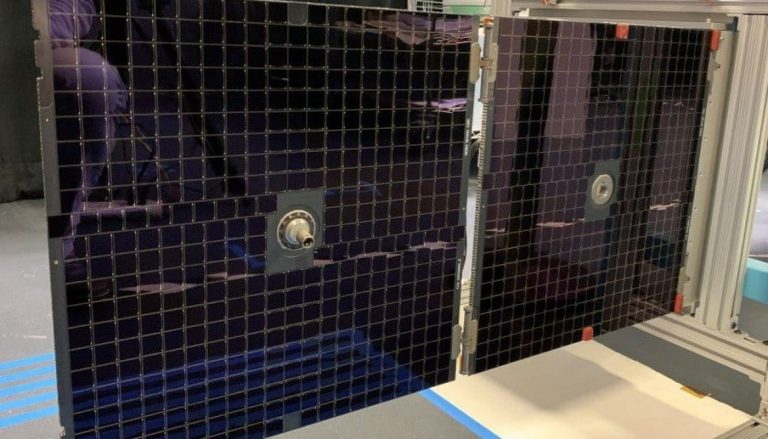
Sierra Space is actively developing and executing high volume electronics manufacturing techniques for automated production of solar arrays using its Space Solar Surface Mount Technology solar cell capabilities. The Sierra Space arrays provide higher power density, reduced lead times, and unparalleled resilience as compared to conventional solar cell technologies.

The Sierra Space arrays, currently in production in Louisville, CO, are built for multiple applications including lunar surface missions, individual and small spacecraft constellations, and, most recently, national security systems. Sierra Space provides arrays ranging from very small systems to large multi-kilowatt users. The technology is easily configurable to rigid or flexible interfaces and can be adapted to fit complex contoured surfaces.

Sierra Space can offer a customized solar array by combining our patented solar panel production process and standard Pick-n-Place solar cell configuration. This automated process allows Sierra Space to deliver solar arrays with higher specific power in less than one-half the duration of a conventional solar array.

“We can put solar panels almost anywhere on a satellite,” said Brian Anthony, VP for Space Solar Power Systems at Sierra Space. “Our automation systems can generate arrays quickly, measured in Watts per minute. The current focus of Sierra Space is to streamline development of specific array configurations from our baseline of commercial designs to satisfy customer requirements, optimal testing, and expediting supply.”

Sierra Space Solar Power Systems is a division of the company’s Space Applications Business Unit, which is an established supplier of high reliability spacecraft hardware, with multiple areas of expertise, including space solar power generation, precision pointing and motion control, vehicle and in-space engines, spacecraft environmental and thermal control and life support systems. For decades, the company has played a key role in space science and exploration, with a long legacy of contribution to government, commercial, and civil customers on a diverse set of missions with 100% operational success.

About Sierra Space

Sierra Space (www.sierraspace.com) is a leading commercial space company at the forefront of innovation and the commercialization of space in the Orbital Age. Sierra Space is building platforms in space to benefit life on Earth. The company is in the latter stages of doubling its headcount, with large presences in Colorado, Florida and Wisconsin. Significant investors in Sierra Space include General Atlantic, Coatue, and Moore Strategic Ventures.

With more than 30 years and 500 missions of space flight heritage, Sierra Space is enabling the future of space transportation with Dream Chaser®, the world’s only winged commercial spaceplane. Under construction at its Colorado headquarters and expected to launch in 2023 on the first of a series of NASA missions to the International Space Station, Dream Chaser® can safely carry cargo – and eventually crew – to on-orbit destinations, returning to land on compatible commercial airport runways worldwide. The company is also establishing a Human Spaceflight Center and Astronaut Training Academy. Sierra Space is also building an array of in-space destinations for low-Earth orbit (LEO) commercialization including the LIFE™ (Large Integrated Flexible Environment) habitat at the Kennedy Space Center in Florida, a three-story commercial habitation and science platform designed for LEO. Both Dream Chaser and LIFE are central components to Orbital Reef, a mixed-use business park in LEO being developed by principal partners Sierra Space and Blue Origin, which is expected to be operational by 2027.

###

CONTACTS:

Alex Walker
Sierra Space
(303) 803-2297
[email protected]

Kristin Carringer
Maxar
[email protected]

Giant Mantle Plume Reveals Mars Is More Active Than Previously Thought

0
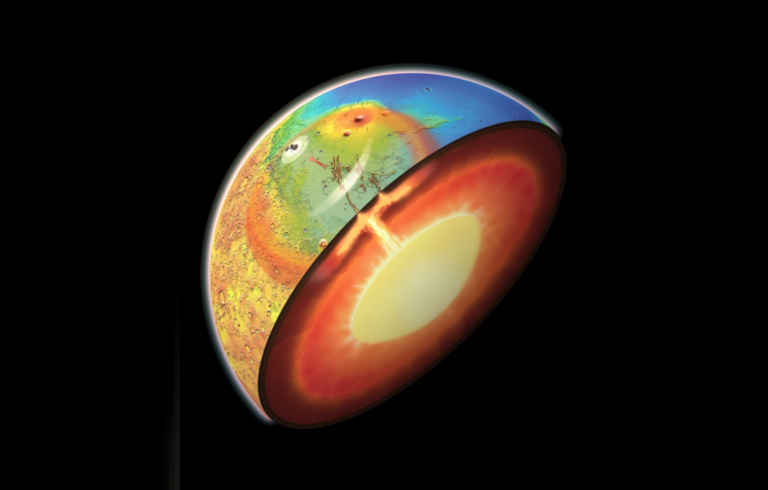
Artist’s impression of an active mantle plume – a large blob of warm and buoyant rock – rising from deep inside Mars and pushing up Elysium Planitia, a plain within the planet’s northern lowlands. CREDIT Adrien Broquet & Audrey Lasbordes

On Earth, shifting tectonic plates reshuffle the planet’s surface and make for a dynamic interior, so the absence of such processes on Mars led many to think of it as a dead planet, where not much happened in the past 3 billion years.

In the current issue of Nature Astronomy, scientists from the University of Arizona challenge current views of Martian geodynamic evolution with a report on the discovery of an active mantle plume pushing the surface upward and causing earthquakes and volcanic eruptions. The finding suggests that the planet’s deceptively quiet surface may hide a more tumultuous interior than previously thought.

“Our study presents multiple lines of evidence that reveal the presence of a giant active mantle plume on present-day Mars,” said Adrien Broquet, a postdoctoral research associate in the UArizona Lunar and Planetary Laboratory and co-author of the study with Jeff Andrews-Hanna, an associate professor of planetary science at the LPL.

Mantle plumes are large blobs of warm and buoyant rock that rise from deep inside a planet and push through its intermediate layer – the mantle – to reach the base of its crust, causing earthquakes, faulting and volcanic eruptions. The island chain of Hawaii, for example, formed as the Pacific plate slowly drifted over a mantle plume.

“We have strong evidence for mantle plumes being active on Earth and Venus, but this isn’t expected on a small and supposedly cold world like Mars,” Andrews-Hanna said. “Mars was most active 3 to 4 billion years ago, and the prevailing view is that the planet is essentially dead today.”

“A tremendous amount of volcanic activity early in the planet’s history built the tallest volcanoes in the solar system and blanketed most of the northern hemisphere in volcanic deposits,” Broquet said. “What little activity has occurred in recent history is typically attributed to passive processes on a cooling planet.”

The researchers were drawn to a surprising amount of activity in an otherwise nondescript region of Mars called Elysium Planitia, a plain within Mars’ northern lowlands close to the equator. Unlike other volcanic regions on Mars, which haven’t seen major activity for billions of years, Elysium Planitia experienced large eruptions over the past 200 million years.

“Previous work by our group found evidence in Elysium Planitia for the youngest volcanic eruption known on Mars,” Andrews-Hanna said. “It created a small explosion of volcanic ash around 53,000 years ago, which in geologic time is essentially yesterday.”

Volcanism at Elysium Planitia originates from the Cerberus Fossae, a set of young fissures that stretch for more than 800 miles across the Martian surface. Recently, NASA’s InSight team found that nearly all Martian quakes, or marsquakes, emanate from this one region. Although this young volcanic and tectonic activity had been documented, the underlying cause remained unknown.

On Earth, volcanism and earthquakes tend to be associated with either mantle plumes or plate tectonics, the global cycle of drifting continents that continually recycles the crust.

“We know that Mars does not have plate tectonics, so we investigated whether the activity we see in the Cerberus Fossae region could be the result of a mantle plume,” Broquet said.

Mantle plumes, which can be viewed as analogous to hot blobs of wax rising in lava lamps. give away their presence on Earth through a classical sequence of events. Warm plume material pushes against the surface, uplifting and stretching the crust. Molten rock from the plume then erupts as flood basalts that create vast volcanic plains.

When the team studied the features of Elysium Planitia, they found evidence of the same sequence of events on Mars. The surface has been uplifted by more than a mile, making it one of the highest regions in Mars’ vast northern lowlands. Analyses of subtle variations in the gravity field indicated that this uplift is supported from deep within the planet, consistent with the presence of a mantle plume.

Other measurements showed that the floor of impact craters is tilted in the direction of the plume, further supporting the idea that something pushed the surface up after the craters formed. Finally, when researchers applied a tectonic model to the area, they found that the presence of a giant plume, 2,500 miles wide, was the only way to explain the extension responsible for forming the Cerberus Fossae.

“In terms of what you expect to see with an active mantle plume, Elysium Planitia is checking all the right boxes,” Broquet said, adding that the finding poses a challenge for models used by planetary scientists to study the thermal evolution of planets. “This mantle plume has affected an area of Mars roughly equivalent to that of the continental United States. Future studies will have to find a way to account for a very large mantle plume that wasn’t expected to be there.

“We used to think that InSight landed in one of the most geologically boring regions on Mars – a nice flat surface that should be roughly representative of the planet’s lowlands,” Broquet added. “Instead, our study demonstrates that InSight landed right on top of an active plume head.”

The presence of an active plume will affect interpretations of the seismic data recorded by InSight, which must now take into account the fact that this region is far from normal for Mars.

“Having an active mantle plume on Mars today is a paradigm shift for our understanding of the planet’s geologic evolution,” Broquet said, “similar to when analyses of seismic measurements recorded during the Apollo era demonstrated the moon’s core to be molten.”

Their findings could also have implications for life on Mars, the authors say. The studied region experienced floods of liquid water in its recent geologic past, though the cause has remained a mystery. The same heat from the plume that is fueling ongoing volcanic and seismic activity could also melt ice to make the floods – and drive chemical reactions that could sustain life deep underground.

“Microbes on Earth flourish in environments like this, and that could be true on Mars, as well,” Andrews-Hanna said, adding that the discovery goes beyond explaining the enigmatic seismic activity and resurgence in volcanic activity. “Knowing that there is an active giant mantle plume underneath the Martian surface raises important questions regarding how the planet has evolved over time. “We’re convinced that the future has more surprises in store.”

By Keith Cowing
Source SpaceRef

NASA Is Testing A New Robotic Arm That Really Knows How To Chill Out

0
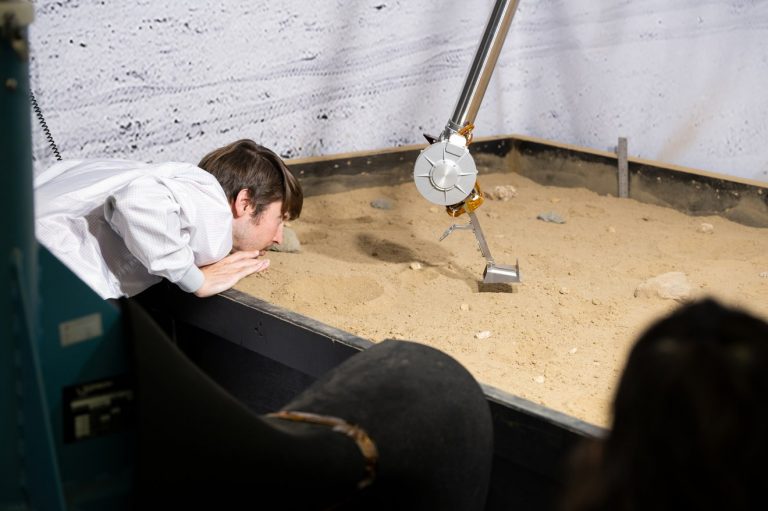
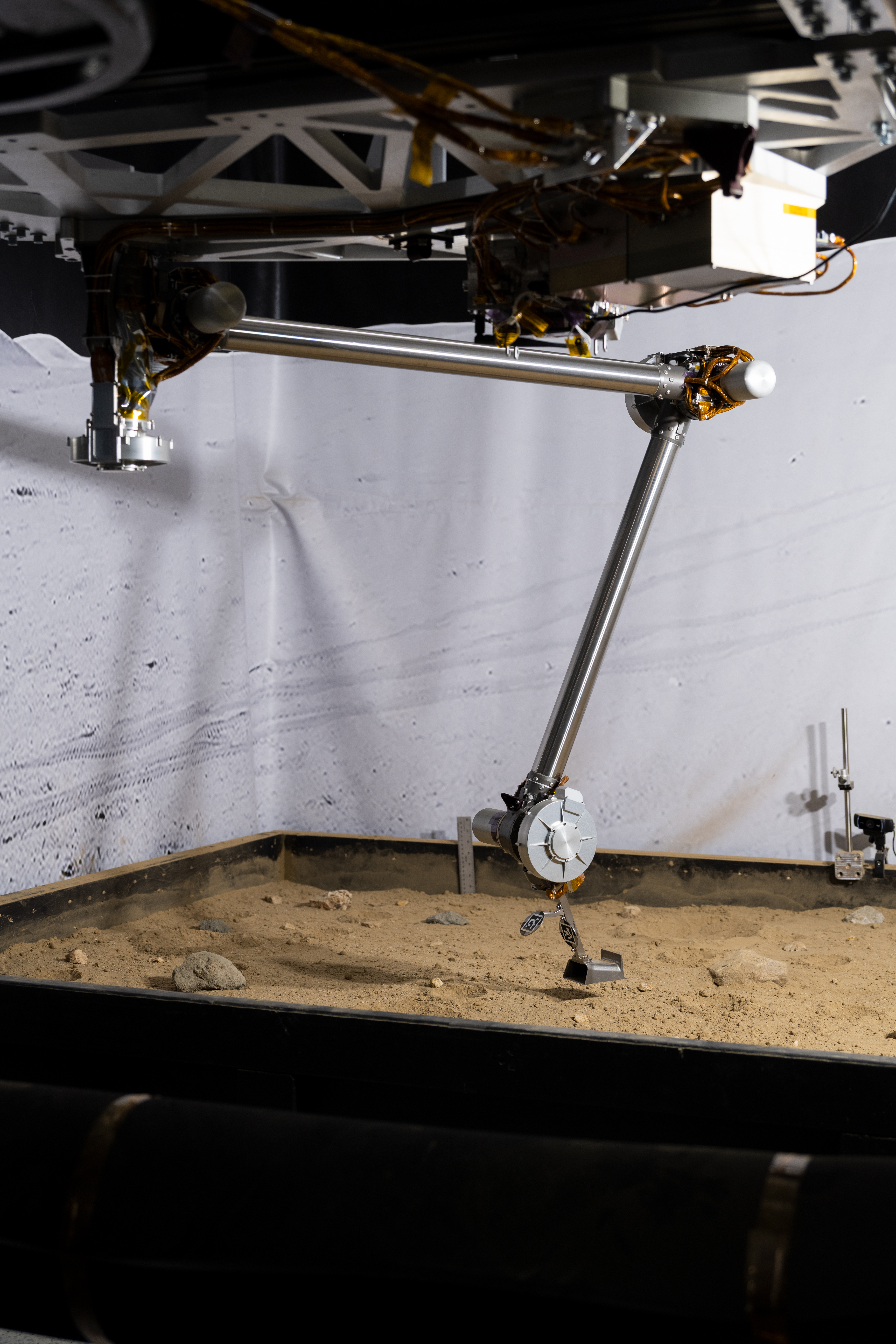
A JPL engineer examines the 3D-printed titanium scoop of NASA’s Cold Operable Lunar Deployable Arm (COLDArm) robotic arm system, which is poised above a test bed made to simulate the surface of the Moon. The arm is designed to function in frigid temperatures that would stymie current spacecraft. Credit: NASA/JPL-Caltech

Future planetary missions could explore in extremely cold temperatures that stymie existing spacecraft, thanks to a project under development at JPL.

When NASA returns to the Moon with Artemis, the agency and its partners will reach unexplored regions of the lunar surface around the South Pole, where it can get much colder at night than even on frigid Mars. Such surface conditions would be challenge for current spacecraft, which rely on energy-consuming heaters to stay warm.

NASA’s COLDArm combines several new technologies that allow it to operate in temperatures as cold as minus 280 degrees Fahrenheit (minus 173 degrees Celsius) without the use of energy-consuming heaters required by robotic arms on current spacecraft.
Credit: NASA/JPL-Caltech

A technology demonstration being developed at NASA’s Jet Propulsion Laboratory in Southern California may offer a solution that would enable exploration during the dark of lunar night, a period that spans about 14 Earth days. The project, which recently underwent testing at JPL, is called Cold Operable Lunar Deployable Arm (COLDArm). It combines several new technologies to create a robotic arm system that can function in temperatures as low as minus 280 degrees Fahrenheit (minus 173 degrees Celsius).

“Going to the Moon, we need to be able to operate during colder temperatures, particularly during lunar night, without the use of heaters,” said project principal investigator Ryan McCormick. “COLDArm would let missions continue working and conducting science even in extreme cryogenic environments.”

To explain the project, McCormick recalls a scene from the 1991 movie “Terminator 2: Judgment Day” in which a hostile android made of liquid metal is stopped cold – literally frozen solid – by a giant spill of liquid nitrogen. “The bad guy can’t work in those temperatures, but COLDArm could,” McCormick said.

While COLDArm won’t be operating in liquid nitrogen, it could operate on a lander sent to a frozen ocean world like Jupiter’s moon Europa, where its lack of heated parts would have the added benefit of allowing collection of volatile materials without significantly affecting the temperature of samples. It could free up some two hours of time and up to 30% of a mission daily’s energy budget that Mars rovers like Curiosity and Perseverance spend warming up their robotic arms so their gears don’t stress and break in the cold.

The 6-foot-6-inch (2-meter) arm is equipped with two commercially available cameras for 3D mapping that have the same imaging sensor that is built into the 13-megapixel color camera used by NASA’s Ingenuity Mars Helicopter – one of several technologies COLDArm is adapting from the little rotorcraft. A variety of attachments and small instruments could go on the end of the arm, including a 3D-printed titanium scoop for collecting samples from a celestial body’s surface. And, like the arm on NASA’s InSight Mars lander, COLDArm could deploy instruments to the surface.

This past September, in a JPL test bed filled with material to simulate lunar regolith (broken rock and dust on the Moon), COLDArm successfully completed experiments that assessed its ability to gather data on the properties of that regolith. Now COLDArm has been sent on to complete the same rigorous testing in spacelike conditions that every mission faces. It’s targeting a launch in the late 2020s.

What Makes COLDArm Work

Several key new technologies allow the COLDArm system to function in extreme environments. First, the arm uses gears made of bulk metallic glass, a solid metallic material with a unique composition and structure that makes it tougher than ceramic and twice as strong as steel, with better elastic properties than either. These gears require no lubrication or heating to function in the cold.

Because the arm’s cold motor controllers don’t need to be kept warm in an electronics box near the core of the spacecraft, they can be installed closer to the science instruments, requiring no insulation and less heavy cabling.

And a sensor embedded in COLDArm’s “wrist” gives the arm feedback, allowing it to “feel” what it’s doing in all directions, like a human jiggling a key into a keyhole and turning the lock. That device, called a six-axis force torque sensor, can also operate in extreme cold.

In addition to employing cameras designed for commercial use, COLDArm leverages other technology that has been proven aboard Ingenuity: a powerful processor akin to those used in consumer smartphones and open-source flight software, called F Prime, that JPL developed. Like the Mars helicopter, COLDArm could operate autonomously, performing tasks and collecting pictures and sensor data without real-time input from mission controllers back on Earth.

Motiv Space Systems, a partner on COLDArm, developed the cold motor controllers and also built sections of the arm and assembled it from JPL-supplied parts at the company’s Pasadena, California, facility.

The COLDArm project is funded through the Lunar Surface Innovation Initiative and managed by the Game Changing Development program in NASA’s Space Technology Mission Directorate. Caltech in Pasadena manages JPL for NASA.

News Media Contact

Melissa Pamer / Ian O’Neill
Jet Propulsion Laboratory, Pasadena, Calif.
626-314-4928 / 818-354-2649
[email protected] / [email protected]