
Home Blog Page 107

Study: Without More Data, A Black Hole’s Origins Can Be “Spun” In Any Direction

0
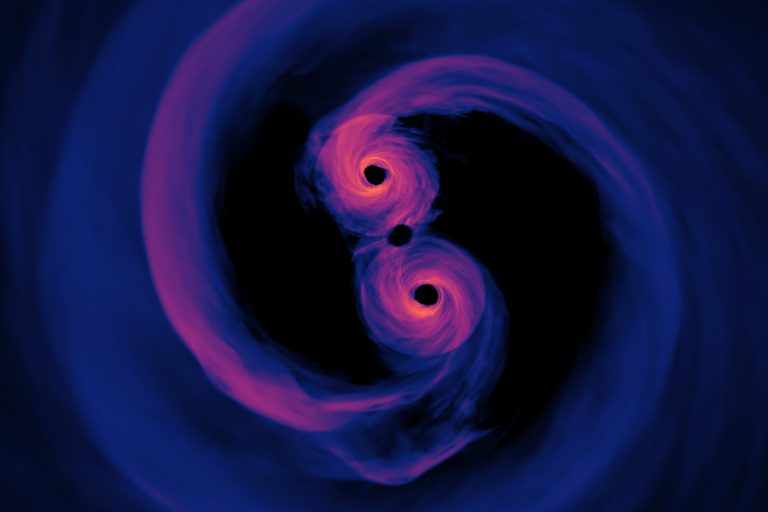
An MIT study finds that, for now, the catalog of known black hole binaries does not reveal anything fundamental about how black holes form. Pictured is a simulation of the light emitted by a supermassive black hole binary system where the surrounding gas is optically thin (transparent). Credit: NASA’s Goddard Space Flight Center

Clues to a black hole’s origins can be found in the way it spins. This is especially true for binaries, in which two black holes circle close together before merging. The spin and tilt of the respective black holes just before they merge can reveal whether the invisible giants arose from a quiet galactic disk or a more dynamic cluster of stars.

Astronomers are hoping to tease out which of these origin stories is more likely by analyzing the 69 confirmed binaries detected to date. But a new study finds that for now, the current catalog of binaries is not enough to reveal anything fundamental about how black holes form.

In a study appearing today in the journal Astronomy and Astrophysics Letters, MIT physicists show that when all the known binaries and their spins are worked into models of black hole formation, the conclusions can look very different, depending on the particular model used to interpret the data. 

A black hole’s origins can therefore be “spun” in different ways, depending on a model’s assumptions of how the universe works.

“When you change the model and make it more flexible or make different assumptions, you get a different answer about how black holes formed in the universe,” says study co-author Sylvia Biscoveanu, an MIT graduate student working in the LIGO Laboratory. “We show that people need to be careful because we are not yet at the stage with our data where we can believe what the model tells us.”

The study’s co-authors include Colm Talbot, an MIT postdoc; and Salvatore Vitale, an associate professor of physics and a member of the Kavli Institute of Astrophysics and Space Research at MIT.

A tale of two origins

Black holes in binary systems are thought to arise via one of two paths. The first is through “field binary evolution,” in which two stars evolve together and eventually explode in supernovae, leaving behind two black holes that continue circling in a binary system. In this scenario, the black holes should have relatively aligned spins, as they would have had time — first as stars, then black holes — to pull and tug each other into similar orientations. If a binary’s black holes have roughly the same spin, scientists believe they must have evolved in a relatively quiet environment, such as a galactic disk.

Black hole binaries can also form through “dynamical assembly,” where two black holes evolve separately, each with its own distinct tilt and spin. By some extreme astrophysical processes, the black holes are eventually brought together, close enough to form a binary system. Such a dynamical pairing would likely occur not in a quiet galactic disk, but in a more dense environment, such as a globular cluster, where the interaction of thousands of stars can knock two black holes together. If a binary’s black holes have randomly oriented spins, they likely formed in a globular cluster.

But what fraction of binaries form through one channel versus the other? The answer, astronomers believe, should lie in data, and particularly, measurements of black hole spins.

To date, astronomers have derived the spins of black holes in 69 binaries, which have been discovered by a network of gravitational-wave detectors including LIGO in the U.S., and its Italian counterpart Virgo. Each detector listens for signs of gravitational waves — very subtle reverberations through space-time that are left over from extreme, astrophysical events such as the merging of massive black holes.

With each binary detection, astronomers have estimated the respective black hole’s properties, including their mass and spin. They have worked the spin measurements into a generally accepted model of black hole formation, and found signs that binaries could have both a preferred, aligned spin, as well as random spins. That is, the universe could produce binaries in both galactic disks and globular clusters.

“But we wanted to know, do we have enough data to make this distinction?” Biscoveanu says. “And it turns out, things are messy and uncertain, and it’s harder than it looks.”

Spinning the data

In their new study, the MIT team tested whether the same data would yield the same conclusions when worked into slightly different theoretical models of how black holes form.

The team first reproduced LIGO’s spin measurements in a widely used model of black hole formation. This model assumes that a fraction of binaries in the universe prefer to produce black holes with aligned spins, where the rest of the binaries have random spins. They found that the data appeared to agree with this model’s assumptions and showed a peak where the model predicted there should be more black holes with similar spins.

They then tweaked the model slightly, altering its assumptions such that it predicted a slightly different orientation of preferred black hole spins. When they worked the same data into this tweaked model, they found the data shifted to line up with the new predictions. The data also made similar shifts in 10 other models, each with a different assumption of how black holes prefer to spin.

“Our paper shows that your result depends entirely on how you model your astrophysics, rather than the data itself,” Biscoveanu says.

“We need more data than we thought, if we want to make a claim that is independent of the astrophysical assumptions we make,” Vitale adds.

Just how much more data will astronomers need? Vitale estimates that once the LIGO network starts back up in early 2023, the instruments will detect one new black hole binary every few days. Over the next year, that could add up to hundreds more measurements to add to the data.

“The measurements of the spins we have now are very uncertain,” Vitale says. “But as we build up a lot of them, we can gain better information. Then we can say, no matter the detail of my model, the data always tells me the same story — a story that we could then believe.”

This research was supported in part by the National Science Foundation.

By Jennifer Chu | MIT News Office
Reprinted with permission of MIT News
‘Hell Planet’ Orbits Its Star Every 17.5 Hours

0
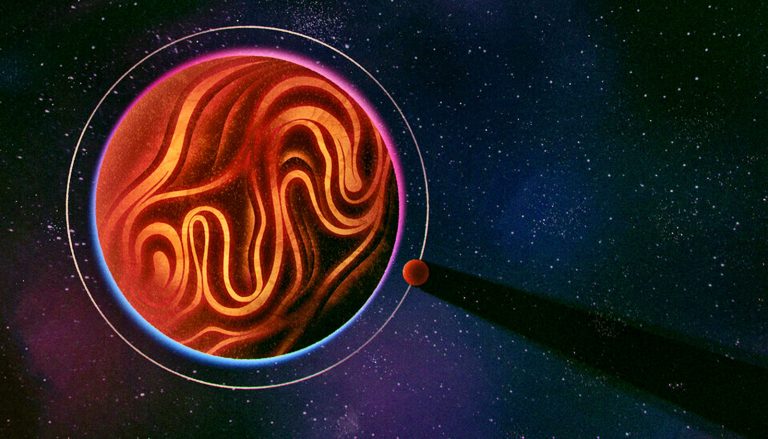
An artist’s impression of the planet 55 Cnc e (smaller, dark orange circle) blocking the light from its rotating host star. (Credit: Maggie Chiang/Simons Foundation)

New technology has helped astronomers follow the fiery trail of the so-called “hell planet.”

It’s an exoplanet located 40 light years from Earth and nicknamed for its extremely close orbit to its sun.

Debra Fischer, a professor of astronomy at Yale University, developed the instrument that enabled the work, which is housed at the Lowell Observatory’s Lowell Discovery Telescope in Arizona.

The EXtreme PREcision Spectrometer (EXPRES), has captured ultra-precise measurements of the starlight from the distant planet’s sun. Astronomers have now analyzed those measurements to determine the orbit of planet 55 Cnc e.

55 Cnc e, which was discovered in 2004, is so hot (roughly 3,600 degrees Fahrenheit) that its surface is an ocean of lava.

“While the Earth completes one orbit around our sun in 365 days, the planet studied here orbits once every 17.5 hours, hugging its host star, 55 Cnc,” says Fischer senior author of the study in Nature Astronomy.

“Astronomers expect that this planet formed much farther away and then spiraled into its current orbit,” Fischer says. “That journey could have kicked the planet out of the equatorial plane of the star, but this result shows the planet held on tight.”

Lily Zhao, a research fellow at the Flatiron Institute’s Center for Computational Astrophysics in New York and a former Yale graduate student who worked with Fischer on EXPRES, is the study’s lead author.

“This result uses data from EXPRES to determine the spin-orbit alignment of 55 Cnc e, which is an ultra-short period super-Earth exoplanet in a five-planet system,” Zhao says. “Our measurement places interesting constraints on the dynamical history of this system and how planets migrate so close-in to their host stars. This is the smallest such measurement to date.”

The primary mission of EXPRES is finding Earth-like planets based on the slight gravitational influence they have on their stars.

EXPRES does this by using the Doppler effect. When a light source moves toward you, the wavelength of the light you see is shorter and more blue. When the light source moves away, the wavelength is wider and more red. EXPRES was designed to measure shifts in wavelength with unprecedented precision.

In the new study, the researchers learned that 55 Cnc e orbits 55 Cnc along the star’s equator—unlike the other four planets in the system, which are on much different orbital paths.

This implies that the planet may have formed in a relatively cooler orbit farther out and slowly fell toward its sun over time. As the planet moved closer, the stronger gravitational pull from the sun’s thicker, equatorial middle altered the planet’s orbit.

The findings may help researchers better understand how planets form and move over time, Zhao and Fischer say. Such information is critical to finding out how common it is for an Earth-like environment to exist elsewhere in the universe.

“Our precision with EXPRES today is more than 1,000 times better than what we had 25 years ago when I started working as a planet hunter,” Fischer says. “Improving measurement precision was the primary goal of my career because it allows us to detect smaller planets as we search for Earth analogs.”

Additional coauthors are from the Lowell Observatory, San Francisco State University, MIT, the University of Maryland, NASA’s Goddard Space Flight Center, and Yale.

Source: Yale University

Original Study DOI: 10.1038/s41550-022-01837-2

By Jim Shelton-Yale
Source Futurity

Pioneer 10 Flies By Jupiter

0

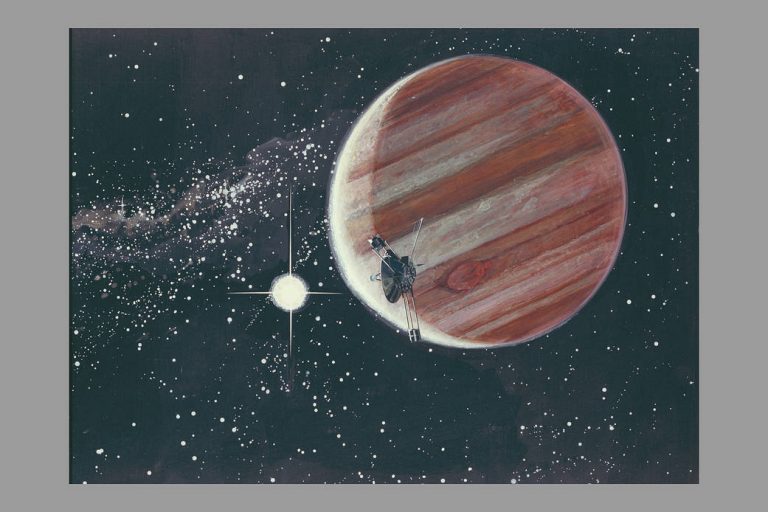
In this illustration by Rick Giudice from August 1973, the Pioneer 10 spacecraft passes by the gas giant planet Jupiter. The spacecraft’s primary goal was to explore Jupiter, its satellites, its magnetic field, and trapped radiation belts. Pioneer 10 was the first satellite to pass through an asteroid belt and the first spacecraft to obtain detailed images of Jupiter and its moons. Between 1972 and 1974, the Deep Space Network ground stations tracked the Pioneer 10 for over 21,000 hours. Pioneer 10 fell silent on its 30-year anniversary in 2002.

Learn more about the Pioneer missions.

Image Credit: NASA

By Monika Luabeya
Source NASA

Next Ariane 5 Mission To Orbit Three Geostationary Satellites

0
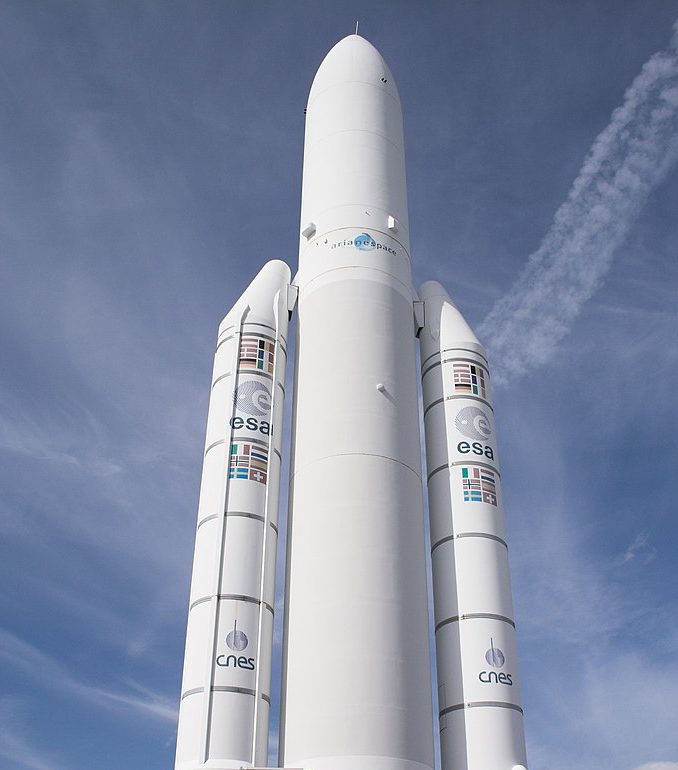
Flight VA259 will orbit three satellites: MTG-I1, the new generation meteorological satellite of EUMETSAT, developed in cooperation with the European Space Agency (ESA) and manufactured by Thales Alenia Space, and Galaxy 35 and Galaxy 36, two geostationary communications satellites, manufactured by Maxar for Intelsat.

On Tuesday, December 13, 2022 at 5:30 p.m. local time (8:30 p.m. UTC), Arianespace’s next Ariane 5 mission will lift off from Europe’s Spaceport, French Guiana, with MTG-I1 meteorological satellite and Galaxy 35 and Galaxy 36 telecommunications satellites. The mission duration will be 34 minutes and 37 seconds.

The satellites will be launched for two major companies and long-standing Arianespace customers: the European Organization for the Exploitation of Meteorological Satellites EUMETSAT and the multinational satellite services and communication provider Intelsat.

The Meteosat Third Generation (MTG) system will help meteorologists meet one of their main challenges – the rapid detection and forecasting of severe weather events – so that timely warnings can be given to citizens, civil authorities and first responders. The data from MTG-I1 (I stands for Imager) will have a wide range of uses, from enabling aircraft to avoid storms and for earlier alerts of flooding, through to more precise monitoring of fires and fog. It will help to protect lives, property and infrastructure and bring economic benefits to Europe and Africa. The MTG satellites are developed and procured in cooperation with the European Space Agency by an industrial consortium led by Thales Alenia Space in cooperation with OHB. The satellites are developed according to the requirements defined by EUMETSAT after consultation with the users of its meteorological data.

Galaxy 35 and Galaxy 36 are the next satellites in Intelsat’s comprehensive Galaxy fleet refresh plan, a new generation of spacecraft that will provide Intelsat Media customers in North America with high-performance media distribution capabilities and unmatched penetration of cable headends. These two satellites will bring C-band contribution capacity to support high-profile events, such as collegiate and professional football, auto racing, baseball, golf, boxing and professional wrestling. The satellites also offer in-orbit protection for select customers in the broadcast arc serving North America.

The launch at a glance: 

  • 343rd launch for the Arianespace launcher family (306th launch from CSG).
  • Galaxy 35, Galaxy 36 and MTG-I1 will be the 1146th, 1147th and 1148th satellites launched by Arianespace.
  • 115th launch of Ariane 5 overall.

About Arianespace

Arianespace uses Space to make life better on Earth by providing launch services for all types of satellites into all orbits. It has orbited over 1,100 satellites since 1980. Arianespace is responsible for operating the new-generation Ariane 6 and Vega C launchers, developed by ESA, with respectively ArianeGroup and Avio as industrial primes. Arianespace is headquartered in Evry, near Paris, and has a technical facility at the Guiana Space Center in French Guiana, plus local offices in Washington, D.C., Tokyo and Singapore. Arianespace is a subsidiary of ArianeGroup, which holds 74% of its share capital, with the balance held by 15 other shareholders from the Ariane and Vega European launcher industry, and ESA and CNES as censors.

NASA Taps Collins Aerospace To Develop New Space Station Spacesuits

0
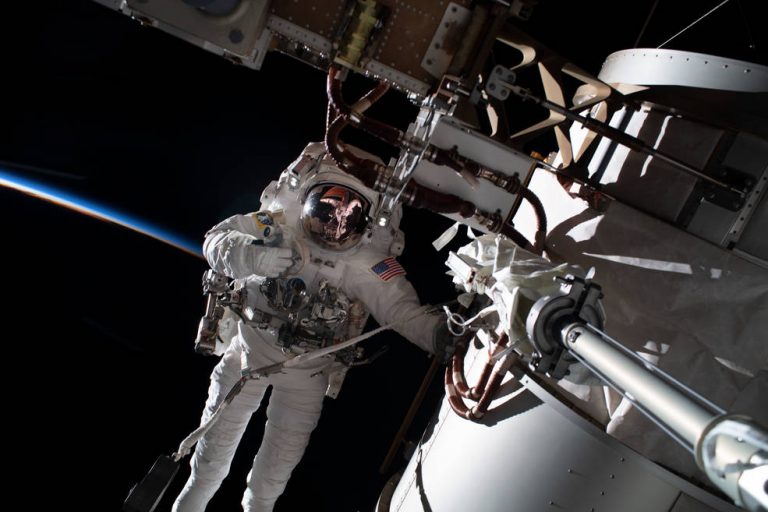
NASA Astronaut Frank Rubio conducts a spacewalk during EVA-81 on Nov. 15 to prepare for installation of an International Space Station Roll-Out Solar Array on the Space Station. Credits: NASA

NASA has awarded a task order to Collins Aerospace to deliver a spacewalking system for potential use outside the International Space Station.

This award – the second under NASA’s Exploration EVA Services contract – is for design and development of a next-generation spacesuit and support systems. The task order has a base value of $97.2 million.

Collins Aerospace will complete a critical design review and demonstrate use of the suit on Earth in a simulated space environment by January 2024. NASA will have the option to extend the contract for a demonstration with agency crew members outside the space station by April 2026.

With this second award for a new suit and system, NASA is another step closer to a replacement for the current design used by NASA astronauts for decades during space shuttle and space station missions. The new suit will support continued station maintenance and operations as NASA and its international partners continue to perform scientific research that benefit humanity and is crucial to future Artemis missions to the Moon in preparation for Mars.

“We look forward to obtaining another much-needed service under our contract,” said Lara Kearney, manager of the Extravehicular Activity and Human Surface Mobility Program at NASA’s Johnson Space Center in Houston, which manages the spacesuit contract. “By working with industry, NASA is able to continue its over 22-year legacy of maintaining a presence in low-Earth orbit.”

Under the indefinite delivery, indefinite quantity contract, both Collins Aerospace, as well as Axiom, which was awarded an initial task order award for Artemis suits, provided proposals to meet both station and Artemis requirements. Both vendors will continue to compete for future task orders which include recurring services for station spacewalks and moonwalks beyond Artemis III.

Collins will be responsible for the design, development, qualification, certification, and production of its station spacesuits and support equipment to meet NASA’s key requirements. The agency will continue to maintain the authority to manage astronaut training, spacewalk planning, and approval of the service systems.

Learn more about spacewalking at: https://www.nasa.gov/suitup

Kiana Raines
Headquarters, Washington
202-358-1100
[email protected]

Rebecca Wickes
Johnson Space Center, Houston
281-244-9465
[email protected]

By Roxana Bardan
Source NASA

NASA’s Webb Indicates Several Stars ‘Stirred Up’ Southern Ring Nebula

0

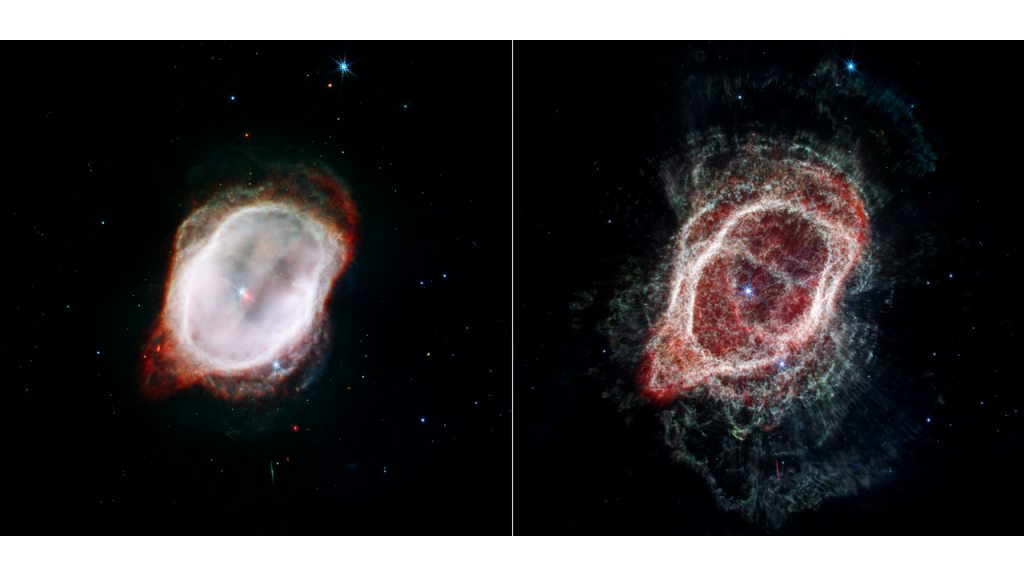
Researchers reconstructed the scene, finding up to three unseen stellar companions that may have shaped the planetary nebula’s layers of gas and dust.

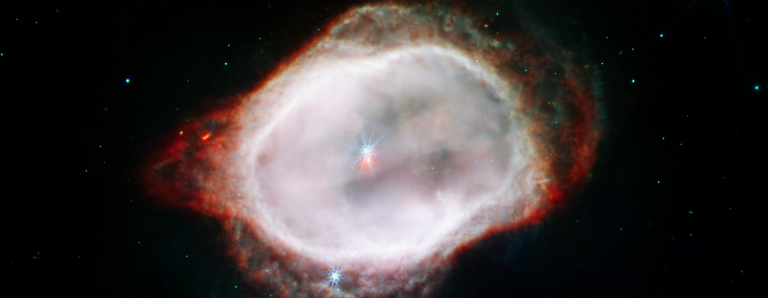
Wait, how many stars were at this party? It’s likely there were up to five – but only two appear now! A research team recently began digging into Webb’s highly detailed images of the Southern Ring Nebula to reconstruct the scene. It’s possible more than one star interacted with the dimmer of the two central stars, which appears red in this image, before it created this jaw-dropping planetary nebula. The first star that “danced” with the party’s host created a light show, sending out jets of material in opposite directions. Before retiring, it gave the dim star a cloak of dust. Now much smaller, the same dancer might have merged with the dying star – or is now hidden in its glare.

A third partygoer may have gotten close to the central star multiple times. That star stirred up the jets ejected by the first companion, which helped create the wavy shapes we see today at the edges of the gas and dust. Not to be left out, a fourth star with an orbit projected to be much wider, also contributed to the celebration. It circled the scene, further stirring up the gas and dust, and generating the enormous system of rings seen outside the nebula. The fifth star is the best known – it’s the bright white-blue star visible in the images that continues to orbit predictably and calmly.

The final showstopping finding is an accurate measurement of the mass that the central star had before it ejected its layers of gas and dust. Researchers estimate the star was about three times the mass of the Sun before it created this planetary nebula – and about 60 percent of the mass of the Sun after. It’s still early days – this is some of the first published research about some of Webb’s first images to be released, so plenty more details are sure to come.

Full Article

Some of the first data from NASA’s James Webb Space Telescope has shown there were at least two, and possibly three, more unseen stars that crafted the oblong, curvy shapes of the Southern Ring Nebula. Plus, for the first time, by pairing Webb’s infrared images with existing data from ESA’s (European Space Agency’s) Gaia observatory, researchers were able to precisely pinpoint the mass of the central star before it created the nebula. A team of almost 70 researchers led by Orsola De Marco of Macquarie University in Sydney, Australia, analyzed Webb’s 10 highly detailed exposures of this dying star to produce these results.

Their calculations show the central star was nearly three times the mass of the Sun before it ejected its layers of gas and dust. After those ejections, it now measures about 60 percent of the mass of the Sun. Knowing the initial mass is a critical piece of evidence that helped the team reconstruct the scene and project how the shapes in this nebula may have been created.

Let’s start with the top-tier celebrity of this particular “party,” the star that sloughed off its layers of gas and dust over thousands of years. It appears red in the image on the left because it is surrounded by an orbiting, dusty disk similar in size to our solar system’s Kuiper Belt. While some stars expel their layers as solo acts “on stage,” researchers propose that there were a few companions with front row seats – and at least one that may have joined the central star before it began to create the Southern Ring Nebula. “With Webb, it’s like we were handed a microscope to examine the universe,” De Marco said. “There is so much detail in its images. We approached our analysis much like forensic scientists to rebuild the scene.”

It’s common for small groups of stars, spanning a range of masses, to form together and continue to orbit one another as they age. The team used this principle to step back in time, by thousands of years, to determine what might explain the shapes of the colorful clouds of gas and dust.

First, they focused on the aging star that cast off its layers and is still surrounded by a dusty red “cloak” of dust. Extensive research about these types of aging stars shows that dusty cloaks like these must take the form of dusty disks that orbit the star. A quick dive into the data revealed the disk. “This star is now smaller and hotter, but is surrounded by cool dust,” said Joel Kastner, another team member, from the Rochester Institute of Technology in New York. “We think all that gas and dust we see thrown all over the place must have come from that one star, but it was tossed in very specific directions by the companion stars.”

Before the dying star shed its layers, the team proposes that it interacted with one or even two smaller companion stars. During this intimate “dance,” the interacting stars may have launched two-sided jets, which appeared later as roughly paired projections that are now observed at the edges of the nebula. “This is much more hypothetical, but if two companions were interacting with the dying star, they would launch toppling jets that could explain these opposing bumps,” De Marco explained. The dusty cloak around the dying star points to these interactions.

Where are those companions now? They are either dim enough to hide, camouflaged by the bright lights of the two central stars, or have merged with the dying star.

The complex shapes of the Southern Ring Nebula are more evidence of additional unseen companions – its ejections are thinner in some areas and thicker in others. A third closely interacting star may have agitated the jets, skewing the evenly balanced ejections like spin art. In addition, a fourth star with a slightly wider orbit might have also “stirred the pot” of ejections, like a spatula running through batter in the same direction each time, generating the enormous set of rings in the outer reaches of the nebula.

What about the very bright blue-white star in Webb’s images? Think of the fifth star like the most responsible party guest that continues to orbit the dying star slowly, predictably, and calmly.

The two images shown here each combine near-infrared and mid-infrared data to isolate different components of the nebula. The image at left highlights the very hot gas that surrounds the central stars. The image at right traces the star’s scattered molecular outflows that have reached farther into the cosmos.

The team’s paper, entitled ” The messy death of a multiple star system and the resulting planetary nebula as observed by JWST,” will be published in Nature Astronomy on December 8.

The James Webb Space Telescope is the world’s premier space science observatory. Webb will solve mysteries in our solar system, look beyond to distant worlds around other stars, and probe the mysterious structures and origins of our universe and our place in it. Webb is an international program led by NASA with its partners, ESA (European Space Agency) and CSA (Canadian Space Agency).

MEDIA CONTACT:

Claire Blome
Space Telescope Science Institute, Baltimore, Maryland

Christine Pulliam
Space Telescope Science Institute, Baltimore, Maryland

Webb Telescope Reveals Distant Planet’s Atmosphere

0
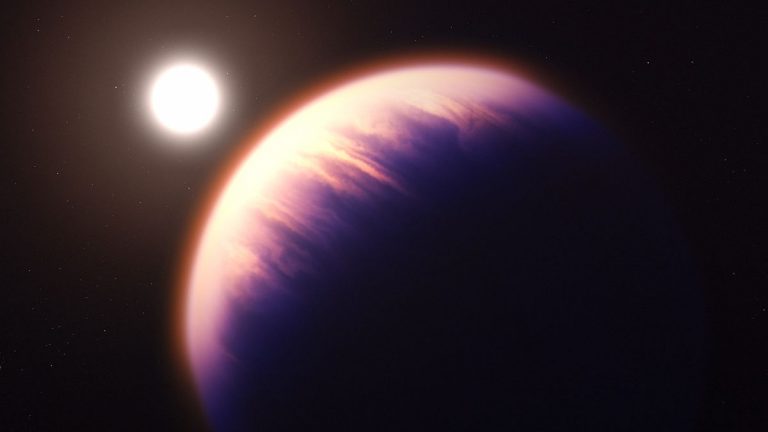
This illustration shows what exoplanet WASP-39 b could look like, based on current understanding of the planet. WASP-39 b is a hot, puffy gas giant with a mass 0.28 times Jupiter (0.94 times Saturn) and a diameter 1.3 times greater than Jupiter, orbiting just 0.0486 astronomical units (4,500,000 miles) from its star. (Credit: NASA, ESA, CSA, Joseph Olmsted (STScI))

NASA’s James Webb Space Telescope has scored another first in its release of stunning images: a molecular and chemical portrait of a distant world’s skies.

The telescope’s array of highly sensitive instruments was trained on the atmosphere of a “hot Saturn,” a planet about as massive as Saturn orbiting a star some 700 light-years away, known as WASP-39 b.

While JWST and other space telescopes, including Hubble and Spitzer, previously have revealed isolated ingredients of this broiling planet’s atmosphere, the new readings provide a full menu of atoms, molecules, and even signs of active chemistry and clouds.

The latest data also give a hint of how these clouds might look up close: broken up rather than a single, uniform blanket over the planet.

The findings bode well for the capability of JWST’s instruments to conduct the broad range of investigations of exoplanets—planets around other stars—hoped for by the science community. That includes probing the atmospheres of smaller, rocky planets like those in the TRAPPIST-1 system.

The suite of discoveries is detailed in a set of five new scientific papers set for publication and available on the preprint server Arxiv (onetwothreefourfive).

‘WOW’ MOMENT

Among the unprecedented revelations is the first detection in an exoplanet atmosphere of sulfur dioxide, a molecule produced from chemical reactions triggered by high-energy light from the planet’s parent star. On Earth, the protective ozone layer in the upper atmosphere is created in a similar way.

“We now have the first indisputable evidence that photochemical reactions are occurring in the upper atmospheres of hot giant planets around other stars. The detection of sulfur dioxide was an absolute ‘wow!’ moment, as from the second we saw the first JWST data there was a small ‘bump’ that we didn’t know how to explain,” says Ryan MacDonald, University of Michigan astronomer and coauthor of the paper examining sulfur dioxide in the atmosphere of WASP-39 b.

“But when we observed WASP-39 b multiple times with JWST, this pesky mystery signal just wouldn’t go away. Once we saw it with multiple different instruments, then we knew we had found something real and something special.”

This led to another first: scientists applying computer models of photochemistry to data that requires such higher level physics to be fully explained.

“This is the first time we see concrete evidence of photochemistry—chemical reactions initialized by energetic stellar light—on exoplanets. I see this as a really promising outlook for advancing our understanding of exoplanet atmospheres with JWST,” says Shang-Min Tsai, a researcher at the University of Oxford in the United Kingdom and lead author of the paper explaining the origin of sulfur dioxide in WASP-39 b’s atmosphere.

SEARCHING FOR LIFE

The resulting improvements in modeling will help build the technological know-how to interpret potential signs of life in the future. At an estimated temperature of 1,600 degrees Fahrenheit (900 degrees Celsius) and an atmosphere made mostly of hydrogen, WASP-39 b is not believed to be habitable. But the new work points the way to finding evidence of potential life on a habitable planet.

The planet’s proximity to its host star—eight times closer than Mercury is to our sun—also makes it a laboratory for studying the effects of radiation from host stars on exoplanets. Better knowledge of the star-planet connection should bring a deeper understanding of how these processes create the diversity of planets observed in the galaxy.

Other atmospheric constituents detected by JWST include sodium, potassium, and water vapor, confirming previous space and ground-based telescope observations as well as finding additional water features at longer wavelengths that haven’t been seen before.

JWST also saw carbon dioxide at higher resolution, providing twice as much data as reported from its previous observations. Meanwhile, carbon monoxide was detected, but obvious signatures of both methane and hydrogen sulfide were absent from the JWST data. If present, these molecules occur at very low levels, a significant finding for scientists making inventories of exoplanet chemistry in order to better understand the formation and development of these distant worlds.

“Since SO2 is an important molecule on rocky planets (and is commonly produced by volcanoes on Earth), learning how to detect it in the atmospheres of giant exoplanets is preparing us to search for this molecule on terrestrial planets—such as lava worlds—in the years to come,” says MacDonald, also a NASA Sagan Fellow in the University of Michigan’s astronomy department.

Capturing such a broad spectrum of WASP-39 b’s atmosphere resulted from an international team numbering in the hundreds independently analyzing data from four of JWST’s finely calibrated instrument modes. They then made detailed inter-comparisons of their findings, yielding yet more scientifically nuanced results. MacDonald participated in the atmospheric modeling of WASP-39 b, independently concluding that the mystery signal was sulfur dioxide. Once he unblinded his results, he saw that they agreed with other researchers on the team.

BEYOND HUMAN EYES

JWST views the universe in infrared light, on the red end of the light spectrum beyond what human eyes can see; that allows the telescope to pick up chemical fingerprints that can’t be detected in visible light.

To see light from WASP-39 b, JWST tracked the planet as it passed in front of its star, allowing some of the star’s light to filter through the planet’s atmosphere. Different types of chemicals in the atmosphere absorb different colors of the starlight spectrum, so the colors that are missing tell astronomers which molecules are present.

Having such a complete roster of chemical ingredients in an exoplanet atmosphere also gives scientists a glimpse of the abundance of different elements in relation to each other, such as carbon-to-oxygen or potassium-to-oxygen ratios. That, in turn, provides insight into how this planet—and perhaps others—formed out of the disk of gas and dust surrounding the parent star in its younger years.

WASP-39 b’s chemical inventory suggests a history of smashups and mergers of smaller bodies called planetesimals to create an eventual goliath of a planet. By so precisely parsing an exoplanet atmosphere, JWST’s instruments performed well beyond scientists’ expectations—and promise a new phase of exploration among the broad variety of exoplanets in the galaxy.

“This suite of papers observationally proves a long-standing theoretical prediction that closely orbiting gas giant exoplanets experience exotic chemical reactions, driven by UV light, in their upper atmospheres,” MacDonald says. “Seeing a sulfur-bearing gas for the first time ever in an exoplanet atmosphere on our very first try with JWST demonstrates that this new observatory is poised to rewrite all the textbooks on planets around other stars.”

Source: University of Michigan

Original Study DOI: 10.48550/arXiv.2211.10488

By Morgan Sherburne-Michigan
Source Futurity

Apollo 17 Astronauts Capture Iconic Blue Marble 50 Years Ago

0

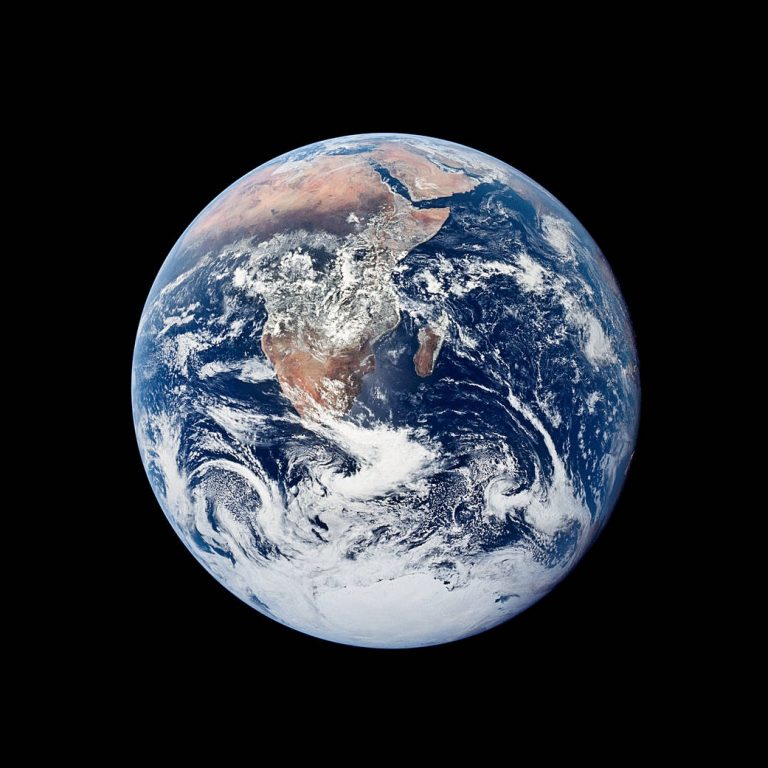
This classic photograph of the Earth was taken on Dec. 7, 1972, by the crew of the final Apollo mission, Apollo 17, as they traveled toward the moon on their lunar landing mission. For the first time, the Apollo trajectory made it possible to photograph the south polar ice cap, shown here along with heavy cloud cover in the Southern Hemisphere.

The Apollo 17 crew consisted of astronauts Eugene A. Cernan, mission commander; Ronald E. Evans, command module pilot; and Harrison H. Schmitt, lunar module pilot. While astronauts Cernan and Schmitt descended in the lunar module to explore the moon, astronaut Evans remained with the command and service modules in lunar orbit.

Read about the Apollo 17 launch.

Image Credit: NASA

By Monika Luabeya
Source NASA

Hubble Detects Ghostly Glow Surrounding Our Solar System 

0

EXHAUST FROM INFALLING COMETS MAKES SPACE A DUSTY PLACE

Imagine walking into a room at night, turning out all the lights and closing the shades. Yet an eerie glow comes from the walls, ceiling, and floor. The faint light is barely enough to see your hands before your face, but it persists.

Sounds like a scene out of “Ghost Hunters?” No, for astronomers this is the real deal. But looking for something that’s close to nothing is not easy. Astronomers searched through 200,000 archival images from Hubble Space Telescope and made tens of thousands of measurements on these images to look for any residual background glow in the sky. Like turning out the lights in a room, they subtracted the light from stars, galaxies, planets and the zodiacal light. Surprisingly, a ghostly, feeble glow was left over. It’s equivalent to the steady light of ten fireflies spread across the entire sky.

Where’s that coming from?

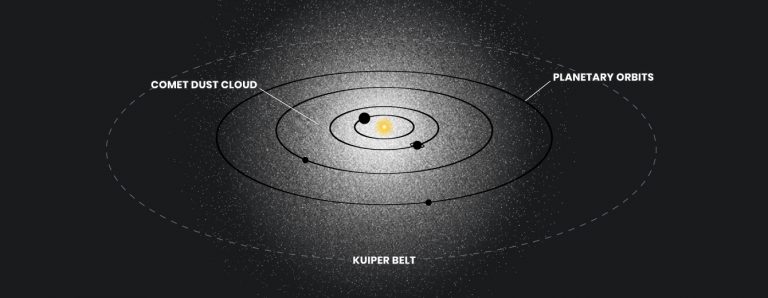
One possible explanation is that a shell of dust envelops our solar system all the way out to Pluto, and is reflecting sunlight. Seeing airborne dust caught in sunbeams is no surprise when cleaning the house. But this must have a more exotic origin. Because the glow is so smoothy distributed, the likely source is innumerable comets – free-flying dusty snowballs of ice. They fall in toward the Sun from all different directions, spewing out an exhaust of dust as the ices sublimate due to heat from the Sun. If real, this would be a newly discovered architectural element of the solar system. It has remained invisible until very imaginative and curious astronomers, and the power of Hubble, came along.

SKYSURF illustration

FULL ARTICLE

Aside from a tapestry of glittering stars, and the glow of the waxing and waning Moon, the nighttime sky looks inky black to the casual observer. But how dark is dark?

To find out, astronomers decided to sort through 200,000 images from NASA’s Hubble Space Telescope and made tens of thousands of measurements on these images to look for any residual background glow in the sky, in an ambitious project called SKYSURF. This would be any leftover light after subtracting the glow from planets, stars, galaxies, and from dust in the plane of our solar system (called zodiacal light).

When researchers completed this inventory, they found an exceedingly tiny excess of light, equivalent to the steady glow of 10 fireflies spread across the entire sky. That’s like turning out all the lights in a shuttered room and still finding an eerie glow coming from the walls, ceiling, and floor.

The researchers say that one possible explanation for this residual glow is that our inner solar system contains a tenuous sphere of dust from comets that are falling into the solar system from all directions, and that the glow is sunlight reflecting off this dust. If real, this dust shell could be a new addition to the known architecture of the solar system.

This idea is bolstered by the fact that in 2021 another team of astronomers used data from NASA’s New Horizons spacecraft to also measure the sky background. New Horizons flew by Pluto in 2015, and a small Kuiper belt object in 2018, and is now heading into interstellar space. The New Horizons measurements were done at a distance of 4 billion to 5 billion miles from the Sun. This is well outside the realm of the planets and asteroids where there is no contamination from interplanetary dust.

New Horizons detected something a bit fainter that is apparently from a more distant source than Hubble detected. The source of the background light seen by New Horizons also remains unexplained. There are numerous theories ranging from the decay of dark matter to a huge unseen population of remote galaxies.

“If our analysis is correct there’s another dust component between us and the distance where New Horizons made measurements. That means this is some kind of extra light coming from inside our solar system,” said Tim Carleton, of Arizona State University (ASU).

“Because our measurement of residual light is higher than New Horizons we think it is a local phenomenon that is not from far outside the solar system. It may be a new element to the contents of the solar system that has been hypothesized but not quantitatively measured until now,” said Carleton.

Hubble veteran astronomer Rogier Windhorst, also of ASU, first got the idea to assemble Hubble data to go looking for any “ghost light.” “More than 95% of the photons in the images from Hubble’s archive come from distances less than 3 billion miles from Earth. Since Hubble’s very early days, most Hubble users have discarded these sky-photons, as they are interested in the faint discrete objects in Hubble’s images such as stars and galaxies,” said Windhorst. “But these sky-photons contain important information which can be extracted thanks to Hubble’s unique ability to measure faint brightness levels to high precision over its three decades of lifetime.”

A number of graduate and undergraduate students contributed to project SKYSURF, including Rosalia O’Brien, Delondrae Carter and Darby Kramer at ASU, Scott Tompkins at the University of Western Australia, Sarah Caddy at Macquarie University in Australia, and many others.

The team’s research papers are published in The Astronomical Journal and The Astrophysical Journal Letters.

The Hubble Space Telescope is a project of international cooperation between NASA and ESA. NASA’s Goddard Space Flight Center in Greenbelt, Maryland, manages the telescope. The Space Telescope Science Institute (STScI) in Baltimore, Maryland, conducts Hubble and Webb science operations. STScI is operated for NASA by the Association of Universities for Research in Astronomy, in Washington, D.C.

ABOUT THIS RELEASE

Credits

RELEASE: NASA, ESA, STScI

MEDIA CONTACT:

Ray Villard
Space Telescope Science Institute, Baltimore, Maryland

SCIENCE CONTACT:

Timothy Carleton
Arizona State University, Tempe, Arizona

Rogier Windhorst
Arizona State University, Tempe, Arizona

Source HubbleSite

Kilonova Discovery Challenges Our Understanding Of Gamma-ray Bursts

0
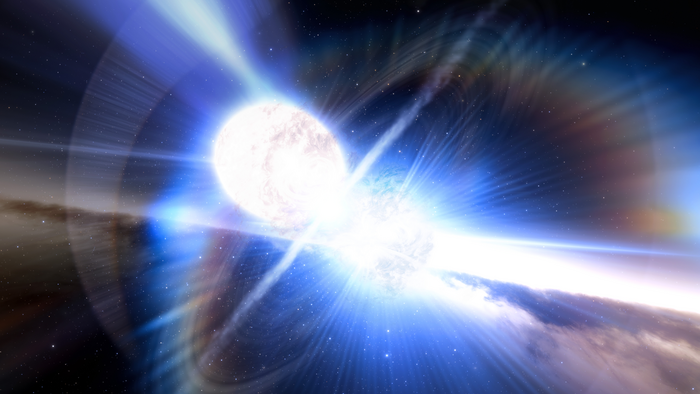
This artist’s impression shows a kilonova produced by two colliding neutron stars. While studying the aftermath of a long gamma-ray burst (GRB), two independent teams of astronomers using a host of telescopes in space and on Earth, including the Gemini North telescope on Hawai‘i and the Gemini South telescope in Chile, have uncovered the unexpected hallmarks of a kilonova, the colossal explosion triggered by colliding neutron stars. CREDIT NOIRLab/NSF/AURA/J. da Silva/Spaceengine

While studying the aftermath of a long gamma-ray burst (GRB), two independent teams of astronomers using a host of telescopes in space and on Earth, including the Gemini North telescope on Hawai‘i and the Gemini South telescope in Chile, have uncovered the unexpected hallmarks of a kilonova, the colossal explosion triggered by colliding neutron stars.

This discovery challenges the prevailing theory that long GRBs exclusively come from supernovae, the end-of-life explosions of massive stars.

Gamma-ray bursts (GRBs) — the most energetic explosions in the Universe — come in two varieties, long and short. Long GRBs, which last a couple of seconds to one minute, form when a star at least 10 times the mass of our Sun explodes as a supernova. Short GRBs, which last less than two seconds, occur when two compact objects, like two neutron stars or a neutron star and a black hole, collide to form a kilonova.

While observing the aftermath of a long GRB detected in 2021, two independent teams of astronomers found the surprising signs of a neutron-star merger rather than the expected signal of a supernova. This surprising result marks the first time that a kilonova has been associated with a long GRB and challenges our understanding of these phenomenally powerful explosions.

The first team to announce this discovery was led by Jillian Rastinejad, a PhD student at Northwestern University. Rastinejad and her colleagues made this startling discovery with the help of Gemini North, part of the International Gemini Observatory, which is operated by NSF’s NOIRLab. The Gemini North observations revealed a telltale near-infrared afterglow at the precise location of the GRB, providing the first compelling evidence of a kilonova associated with this event [1]. Rastinejad’s team promptly reported their Gemini detection in a Gamma-ray Coordinates Network (GCN) Circular.

Astronomers around the world were first alerted to this burst, named GRB 211211A, when a powerful flash of gamma rays was picked up by NASA’s Neil Gehrels Swift Observatory and Fermi Gamma-ray Space Telescope. Initial observations revealed that the GRB was uncommonly nearby, a mere one billion light-years from Earth.

Most GRBs originate in the distant, early Universe. Typically, these objects are so ancient and far flung that their light would have had to travel for more than six billion years to reach Earth. Light from the most-distant GRB ever recorded traveled for nearly 13 billion years before being detected here on Earth [2]. The relative proximity of this newly discovered GRB enabled astronomers to make remarkably detailed follow-up studies with a variety of ground- and space-based telescopes.

“Astronomers usually investigate short GRBs when hunting for kilonovae,” said Rastinejad. “We were drawn to this longer-duration burst because it was so close that we could study it in detail. Its gamma rays also resembled those of a previous, mysterious supernova-less long GRB.”

A unique observational signature of kilonovae is their brightness at near-infrared wavelengths compared to their brightness in visible light. This difference in brightness is due to the heavy elements ejected by the kilonova, which effectively block visible light but allow the longer-wavelength infrared light to pass unimpeded. Observing in the near-infrared, however, is technically challenging and only a handful of telescopes on Earth, like the twin Gemini telescopes, are sensitive enough to detect this kilonova at these wavelengths.

“Thanks to its sensitivity and our rapid-response, Gemini was the first to detect this kilonova in the near-infrared, convincing us that we were observing a neutron-star merger,” said Rastinejad. “Gemini’s nimble capabilities and variety of instruments let us tailor each night’s observing plan based on the previous night’s results, allowing us to make the most of every minute that our target was observable.”

Another team, led by Eleonora Troja, an astronomer at the University of Rome Tor Vergata, independently studied the afterglow using a different and a different series of observations, including the Gemini Southtelescope in Chile, [3] and independently concluded that the long GRB came from a kilonova.

”We were able to observe this event only because it was so close to us,” said Troja. “It is very rare that we observe such powerful explosions in our cosmic backyard, and every time we do we learn about the most extreme objects in the Universe.”

The fact that two different teams of scientists working with independent datasets both arrived at the same conclusion about the kilonova nature of this GRB provides confidence in this interpretation.

“The kilonova interpretation was so far off from everything we knew about long GRBs that we could not believe our own eyes and spent months testing all the other possibilities,” said Troja. “It is only after ruling out everything else that we realized our decade-long paradigm had to be revised.”

As well as contributing to our understanding of kilonovae and GRBs, this discovery provides astronomers with a new way to study the formation of gold and other heavy elements in the Universe. The extreme physical conditions in kilonovae produce heavy elements such as gold, platinum, and thorium. Astronomers can now identify the sites that are creating heavy elements by searching for the signature of a kilonova following a long-duration gamma-ray burst.

“This discovery is a clear reminder that the Universe is never fully figured out,” said Rastinejad. “Astronomers often take it for granted that the origins of GRBs can be identified by how long the GRBs are, but this discovery shows us there’s still much more to understand about these amazing events.”

“NSF congratulates the science teams for this new and exciting discovery, opening a new window onto cosmic evolution,” said National Science Foundation Director Sethuraman Panchanathan. “The International Gemini Observatory continues to deliver powerful and nimble resources open to the whole scientific community through innovation and partnership.”

The International Gemini Observatory is operated by a partnership of six countries, including the United States through the National Science Foundation, Canada through the National Research Council of Canada, Chile through the Agencia Nacional de Investigación y Desarrollo, Brazil through the Ministério da Ciência, Tecnologia e Inovações, Argentina through the Ministerio de Ciencia, Tecnología e Innovación, and Korea through the Korea Astronomy and Space Science Institute. These Participants and the University of Hawaii, which has regular access to Gemini, each maintain a National Gemini Office to support their local users.

Notes

[1] Rastinejad and her colleagues made initial follow-up observations of the burst using the Nordic Optical Telescope. Following the critical Gemini North observations, they continued their observations of the fading kilonova with the Karl G. Jansky Very Large Array, the Calar Alto Observatory, and the MMT Observatory, and obtained later observations with the Large Binocular Telescope, the Gran Telescopio Canarias, and the NASA/ESA Hubble Space Telescope.

[2] Light that has traveled nearly 13 billion years to reach Earth would have a redshift (z) of about 7. Due to the accelerating expansion of the Universe, that would roughly equate to a distance of 24.5 billion light-years today. When talking about large redshifts, those greater than 1, and cosmically distant objects, it is more accurate to state how many billions of years the light has traveled rather than a distance in light-years.

[3] Troja and her colleagues initially observed the afterglow of this event with the Devasthal Optical Telescope, the Multicolor Imaging Telescopes for Survey and Monstrous Explosions, and the Calar Alto Observatory. They obtained observations of the host galaxy with the NASA/ESA Hubble Space Telescope.

More information

Rastinejad, J., Gompertz, B., Levan, A., & Fong, W., et al. (2022). “A kilonova following a long-duration gamma-ray burst at 350 Mpc.” Published in the journal Nature. DOI: 10.1038/s41586-022-05390-w

Troja, E., Fryer, C.L., O’Connor, B., & Ryan, G., et al. (2022). “A nearby long gamma-ray burst from a merger of compact objects.” Published in the journal Nature. DOI: 10.1038/s41586-022-05327-3

NSF’s NOIRLab (National Optical-Infrared Astronomy Research Laboratory), the US center for ground-based optical-infrared astronomy, operates the international Gemini Observatory (a facility of NSF, NRC–Canada, ANID–Chile, MCTIC–Brazil, MINCyT–Argentina, and KASI–Republic of Korea), Kitt Peak National Observatory (KPNO), Cerro Tololo Inter-American Observatory (CTIO), the Community Science and Data Center (CSDC), and Vera C. Rubin Observatory (operated in cooperation with the Department of Energy’s SLAC National Accelerator Laboratory). It is managed by the Association of Universities for Research in Astronomy (AURA) under a cooperative agreement with NSF and is headquartered in Tucson, Arizona. The astronomical community is honored to have the opportunity to conduct astronomical research on Iolkam Du’ag (Kitt Peak) in Arizona, on Maunakea in Hawai‘i, and on Cerro Tololo and Cerro Pachón in Chile. We recognize and acknowledge the very significant cultural role and reverence that these sites have to the Tohono O’odham Nation, to the Native Hawaiian community, and to the local communities in Chile, respectively.

By Keith Cowing
Source SpaceRef