
Home Blog Page 41

NASA Clocks July 2023 As Hottest Month On Record Ever Since 1880

0

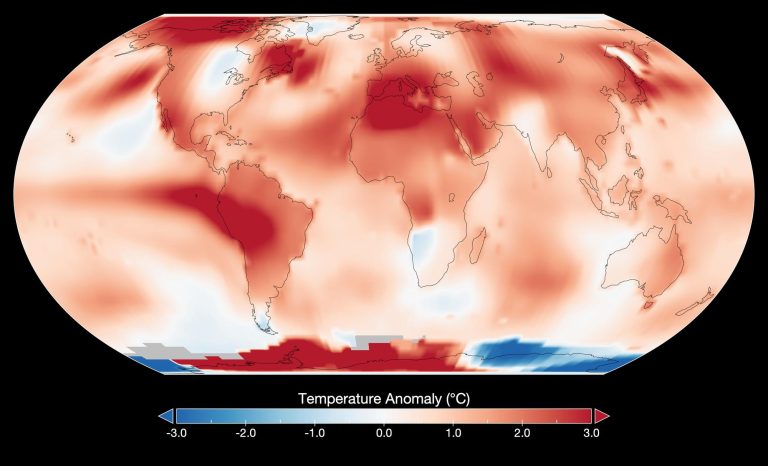
This map shows global temperature anomalies for July 2023 according to the GISTEMP analysis by scientists at NASA’s Goddard Institute for Space Studies. Temperature anomalies reflect how July 2023 compared to the average July temperature from 1951-1980.
Credits: NASA’s Goddard Institute for Space Studies

Editor’s Note: This release has been updated to add additional graphics, captions, and to spell out the words degrees Fahrenheit and Celsius, as well as a link to the Spanish-language version of the release. A photo credit line has been corrected.

Lee esta nota de prensa en español aquí. (https://www.nasa.gov/nasa.gov/press-release/julio-de-2023-fue-el-mes-mas-caluroso-registrado)

According to scientists at NASA’s Goddard Institute for Space Studies (GISS) in New York, July 2023 was hotter than any other month in the global temperature record.

“Since day one, President Biden has treated the climate crisis as the existential threat of our time,” said Ali Zaidi, White House National Climate Advisor. Against the backdrop of record high temperatures, wildfires, and floods, NASA’s analysis puts into context the urgency of President Biden’s unprecedented climate leadership. From securing the Inflation Reduction Act, the largest climate investment in history, to invoking the Defense Production Act to supercharge domestic clean energy manufacturing, to strengthening climate resilience in communities nationwide, President Biden is delivering on the most ambitious climate agenda in history.”

Overall, July 2023 was 0.43 degrees Fahrenheit (F) (0.24 degrees Celsius (C)) warmer than any other July in NASA’s record, and it was 2.1 F (1.18 C) warmer than the average July between 1951 and 1980. The primary focus of the GISS analysis are long-term temperature changes over many decades and centuries, and a fixed base period yields anomalies that are consistent over time. Temperature “normals” are defined by several decades or more – typically 30 years.

“NASA data confirms what billions around the world literally felt: temperatures in July 2023 made it the hottest month on record. In every corner of the country, Americans are right now experiencing firsthand the effects of the climate crisis, underscoring the urgency of President Biden’s historic climate agenda,” said NASA Administrator Bill Nelson. “The science is clear. We must act now to protect our communities and planet; it’s the only one we have.”
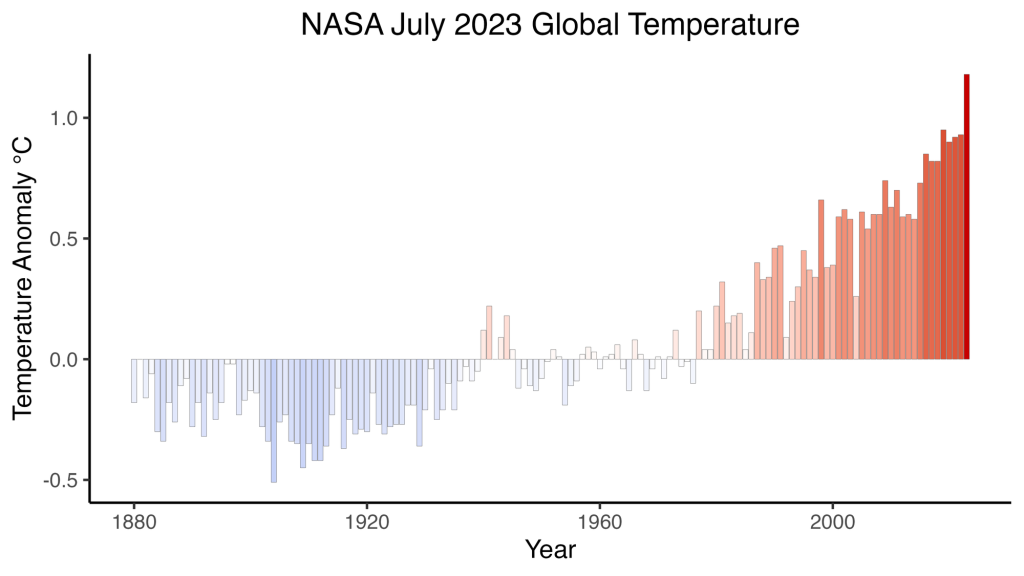
This chart shows global temperature anomalies for every July since the 1880s, based on NASA’s GISTEMP analysis. Anomalies reflect how much the global temperature was above or below the 1951-1980 norm for July.
Credits: NASA’s Goddard Institute for Space Studies

Parts of South America, North Africa, North America, and the Antarctic Peninsula were especially hot, experiencing temperatures increases around 7.2 F (4 C) above average. Overall, extreme heat this summer put tens of millions of people under heat warnings and was linked to hundreds of heat-related illnesses and deaths. The record-breaking July continues a long-term trend of human-driven warming driven primarily by greenhouse gas emissions that has become evident over the past four decades. According to NASA data, the five hottest Julys since 1880 have all happened in the past five years.

“Climate change is impacting people and ecosystems around the world, and we expect many of these impacts to escalate with continued warming,” said Katherine Calvin, chief scientist and senior climate advisor at NASA Headquarters in Washington. “Our agency observes climate change, its impacts, and its drivers, like greenhouse gases, and we are committed providing this information to help people plan for the future.”

NASA assembles its temperature record from surface air temperature data from tens of thousands of metrological stations, as well as sea surface temperature data acquired by ship- and buoy-based instruments. This raw data is analyzed using methods that account for the varied spacing of temperature stations around the globe and for urban heating effects that could skew the calculations.

“This July was not just warmer than any previous July – it was the warmest month in our record, which goes back to 1880,” said GISS Director Gavin Schmidt. “The science is clear this isn’t normal. Alarming warming around the world is driven primarily by human-caused greenhouse gas emissions. And that rise in average temperatures is fueling dangerous extreme heat that people are experiencing here at home and worldwide.”

High sea surface temperatures contributed to July’s record warmth. NASA’s analysis shows especially warm ocean temperatures in the eastern tropical Pacific, evidence of the El Niño that began developing in May 2023. Phenomena such as El Niño or La Niña, which warm or cool the tropical Pacific Ocean, can contribute a small amount of year-to-year variability in global temperatures. But these contributions are not typically felt when El Niño starts developing in Northern Hemisphere summer. NASA expects to see the biggest impacts of El Niño in February, March, and April 2024.

For more information on NASA’s global temperature record, visit:

https://www.nasa.gov/feature/2023/climate-media-resources

-end-

Jackie McGuinness / Katherine Rohloff
Headquarters, Washington
202-358-1600
[email protected] / [email protected] 
NASA Announces Launch Service For Arctic Warming Experiment

0
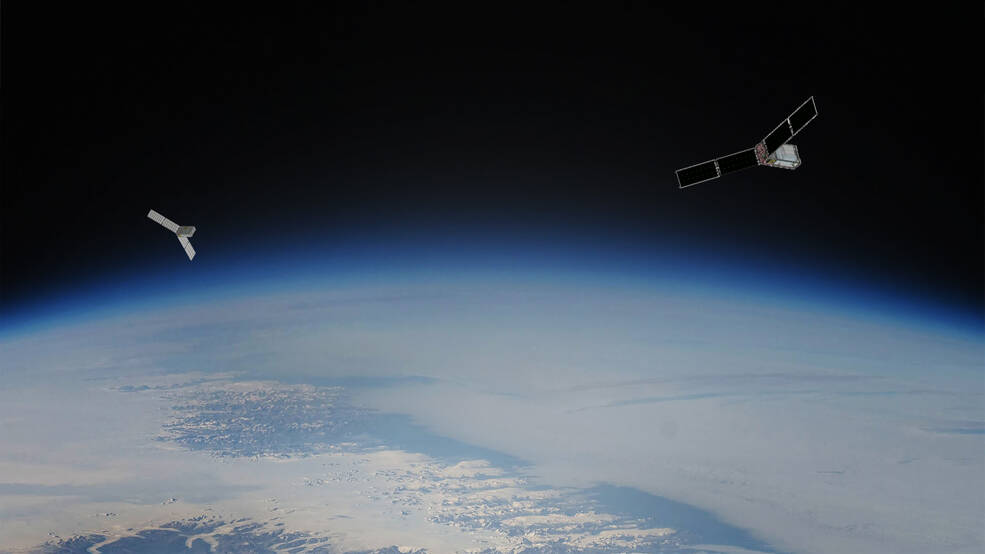
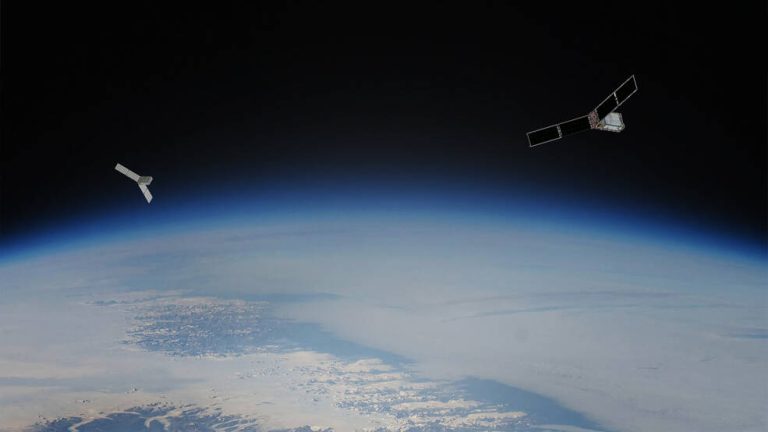
Artist’s concept of PREFIRE CubeSats in space. Credits: NASA JPL

NASA has selected Rocket Lab USA Inc. of Long Beach, California, to provide the launch service for the agency’s PREFIRE (Polar Radiant Energy in the Far-InfraRed Experiment) mission, which aims to give researchers a more accurate picture of the energy entering and leaving Earth.

The PREFIRE mission will help close a gap in our understanding of how much of Earth’s heat is lost to space, especially from the Arctic and Antarctica. Analysis of PREFIRE measurements will inform climate and ice models, providing better projections of how a warming world will affect sea ice loss, ice sheet melt, and sea level rise. Improving climate models can ultimately help to provide more accurate projections on the impacts of storm severity and frequency, as well as coastal erosion and flooding.

The mission consists of two, 6U CubeSats with a baseline mission length of 10 months and is jointly developed by NASA and the University of Wisconsin-Madison. NASA’s Jet Propulsion Laboratory in Southern California manages the mission for the agency’s Science Mission Directorate and is providing the instruments. Blue Canyon Technologies is building the CubeSats, and the University of Wisconsin-Madison will process the data collected by the instruments. The science team includes members from JPL and the Universities of Wisconsin, Michigan, and Colorado.

NASA’s Launch Services Program, based out of the agency’s Kennedy Space Center in Florida, in partnership with NASA’s Earth System Science Pathfinder office, is announcing the launch service as part of the agency’s VADR (Venture-class Acquisition of Dedicated and Rideshare) launch services contract.

-end-

Joshua Finch
Headquarters, Washington
202-358-1100
[email protected]
Leejay Lockhart
Kennedy Space Center, Florida
321-747-8310
[email protected]
Simple Things That Are Good To Know In Google Spreadsheets

0

Google Spreadsheet has been with us for a long time. Here are some simple things that might help you in building your next spreadsheet.

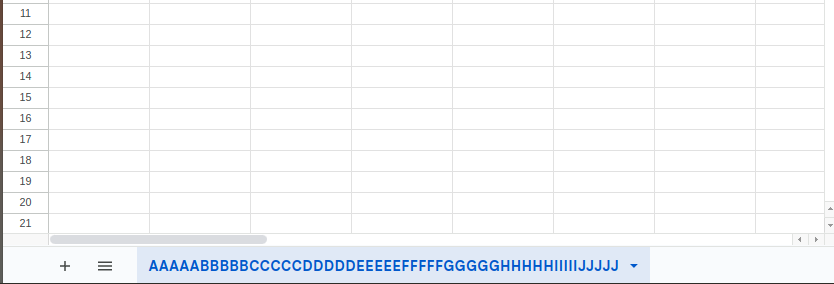
1. The maximum number of characters to name a sheet is 50 

Sheet name max limit is 50 characters

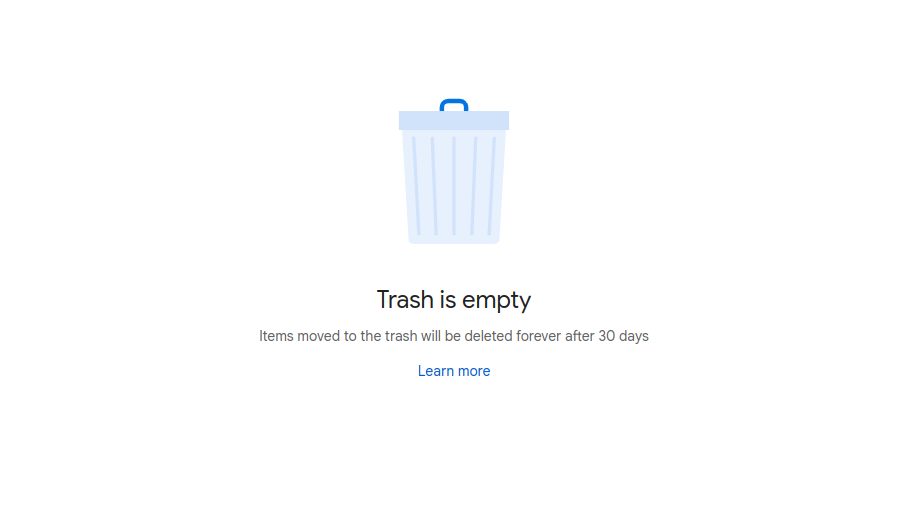
2. Items in the Trash or Bin will be deleted forever after 30 days.

Items moved to the trash will be deleted forever after 30 days

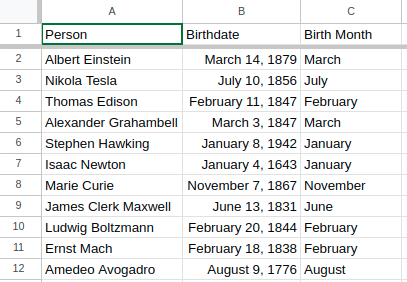
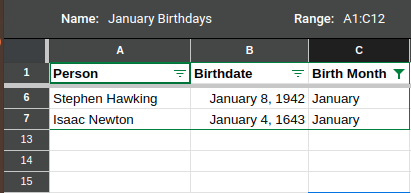
3. Filter Views are an excellent way of creating quick filtered records without having to edit the Filters for everybody else.

Default view:

Sample data of scientists and birth dates

Filtered view:

Filter view of January birth dates

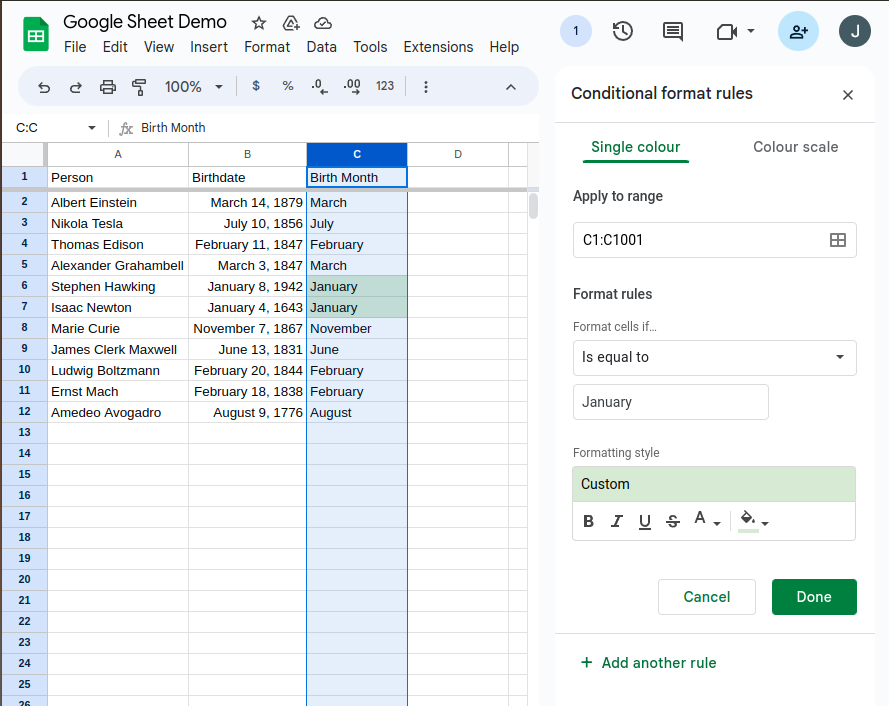
4. Utilizing conditional formatting provides a faster way to know patterns or status

Conditional formatting example

In this simple example, we just colored the background to green if the value is “January”.

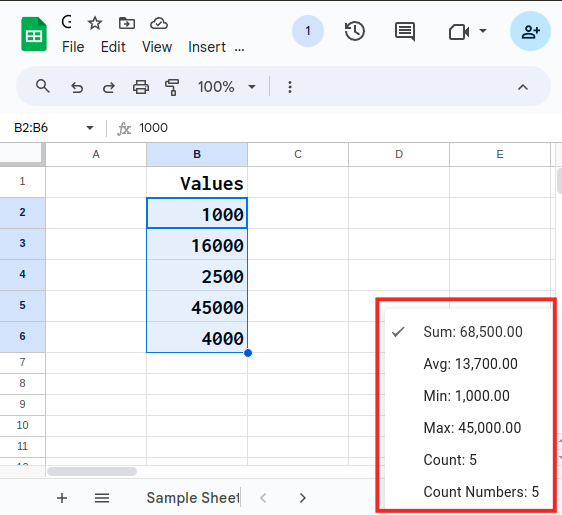
5. Quick calculations can be viewed in the lower right corner.

Including Sum, there are Average, Min, Max, Count and Count numbers.

Quick calculations
Quick calculations

Increase Productivity With These Simple Tips

0

Avoid distractions

These might come in different shapes and sizes. If you are working from home, it might be the sense of urgency to fix or clean stuff at your house. Or this could be a website, a game on your phone, a book you’ve been itching to read. You should try and avoid this. 

If working at home, create a space in your house that is solely dedicated to working. If there is none, you might add dividers like curtains to avoid seeing through or being seen.

Set Targets

Set daily targets. If you can plan up to Weekly and Monthly, the better. But do not be constrained on these targets. If your project, company or teammates have more pressing matters or emergencies, you will need to adjust. Make sure to add some buffers to avoid cramming. 

When objectives are set for you, this will be your guidepost. The worst thing you can do is do whatever you want. You might be doing something productive, but if it does not align with the goal of the project or company. It will become wasted effort.

Maximise the use of productivity tools

Equipment or tools are important. From physical tools and equipment, such as your laptop, keyboard, monitor, mouse, chair. The other are non-physical tools like software. There are various free software available, but there are also paid that have the edge in terms of feature and support. You should make time to canvass your tools.

Try to be in “The Zone”

As you work, you will begin to notice that there will be a time you will be the most productive. It might be after you drink coffee, had a power nap, early in the morning, or late in the evening. Take note of this time. Assign the most important task during this time slot. Another way to look at it, is to assign mindless tasks or less important tasks during a less productive state. I call this “zombies” task, like copying certain texts to another document, or of similar effort that requires less brain power.

Take breaks

Take meaningful breaks, but plan for it. There is a Japanese way called “Pomodoro Technique”, which lets you work in sprints. An example is to put in 25 minutes of intense work, then go for a short 5-minute break. The break could be anything, from playing games, reading a book, watching a funny video clip, playing chess, or munching on some snacks.  You can read more on how to overcome laziness here.

The Last Bastion Of Innovation In The UK, Is Not In The UK

0

The United Kingdom, upon a study an inch deep into innovations, technology, and science in the last few decades or centuries, follows a deeply unacademic, unscientific, and unprovable common sense lifecycle. Mind you, we speak not of a reckless odyssey into the abyss of history or archives, just a cursory glance and relaxed wading beneath the surface.

After the Industrial Revolution accident and a few spatterings of supported-only-in-the-end pioneers in electromagnetic communications, it seemed all downhill. Or ramps built by innovators, falling into the abyss; rinse; repeat. Space industry and the British Interplanetary Society. The internet. The world wide web. The early big and common computing industry. Energy, fusion. Quantum Computing. RISC, arm. Etc. Even the stalwarts and stewards of global finance and innovations, elsewhere first.

It almost always starts with wits and smarts, of one or a few good folks: dreaming but with intelligence and capability, perhaps with a willful naivete of human politics and power dynamics. Sheer determination and perhaps a bountiful but limited amount of inspiration and goodwill becomes the proxy for lack of capital, or benefectors, or patrons, or state who can almost always match and beat immense amounts of persistence with a force more powerful than dreams: the status quo — of power, of politics, of budget allocations, of bickering, of bigotry, of twists, of pandering, and … They say political will is always lacking. This too is wrong. For the will to resist the will of good in protection of themselves, their vested interests, and the status quo is most definitely not lacking.

Start here. Startup. Upstart. Levelling Up. 1800s. 1900s. 2000s.

Ramp up against the tide. Migrants. Migrant locals. Local migrants.

Apathy and entitlement from everyone. Locals.

Apathy from the only people or groups who can make an outsized difference.

Tried. Tried. tried. tried. tired…..

Someone else, somewhere else, picks it up.

UK says it has always been good at X.Y.Z., already a leader in A.B.C…. BUTs in fine prints, a few paragraphs later. Excuses…

BUT.

We will build and catch up. Of course with miniscule resources and commitments.

1B for AI. For 10 Years! Barbie Celebrates!!!

Too late. Too late. Too late.

It wastes. And wastes. And wastes. And justifies current failures as success and wisdom of the past to have not started at all.

Soft Power. Brand. We are great. We can “coordinate” and “show” force and commitment.

Decline. Decline. decline

Curse the fates. We are great.

Someday. Maybe.

Or the wiser ones, just go somewhere else.

Rue the day, when the true wisdom is not the idea. But to not depend and not start in an environment of pretense, of privilege, of entitlement.

But money is here! More start up capital “invested” in startups here. Of course they are stuck in the funds and banks of investors. Not employed. Not ROI. ROCE.

America. Canada. China. Germany. Even Italy whom they say is the precursor and cautionary tale to UK’s decline retains its immense manufacturing clusters to some relevant degree. India. Vietnam. South East Asia. South America. Switzerland.

Any location which, by and large, still represents enterprise, hard graft, and meeting inspiration and intellect with a bit of luck.

Luck. That is what is left. Luck of heritage. Luck of inheritance and wealth unearned now. In the bank. In “real” property. Rent. Rent. Rent. Tourist. Squeeze the living hell out of students, instead of keeping the world’s brightest, savviest, most persevering, and daring — bleed them dry and throw them into the bin.

What now. At least you know, AI did not write this. A human did. A human who followed the the wisdom of the AI, and found an egress point elsewhere; not in the constipated, stifling, parasitic, and reckless circumstances called the “United” Kingdom of “Great” Britain and “Northern” Ireland (with double standards).

By: Edward Holloway

The Teachers Must-Have Bundle For Back-To-School 2023

0

These are some of the essential items that teacher should have. While it may be vary from place, like schools and institutions, these are also some of the common supplies and equipment that any teaching profession will need.

01. Whiteboard Maker from EXPO

Whiteboard Marker - Expo
Whiteboard Marker – Expo

While technology is advancing at a rapid rate, the whiteboard marker is still one of the most writing medium when it comes to teaching a class when you need to show something quickly.

02. Pencils from Amazon Basics

Pencil - Amazon Basics
Pencil – Amazon Basics

Pencils are still a must. Writing, drawing and solving math problems still requires the use of a pencil. 

03. Black, Blue and Red Ballpens from Bic

Ballpen - Bic
Ballpen – Bic

Same with pencil, the ballpoint pen are needed to make writing and even grading student submissions. This pack contains Black, Blue and Red colors.

04. Highlighter from SHARPIE

Highlighter - Sharpie
Highlighter – Sharpie

In order to give focus to specific text in a document you would need a highligther. It’s also useful for correcting answers to test and provide additional feedback to the students.

05. Teacher Planner from Maalbok

Teacher Planner
Teacher Planner

While schools and institutions provide syllabus even before the school year start. Teachers would still have to organize the specific activities and tasks for the students. What better way to do it than with a yearly planner. 

06. Laptop from Acer

Acer Laptop
Acer Laptop

A reliable laptop is an essential for every teacher. From creating exams, presentations, reports, to video conference the laptop should be able to do all these.  This laptop has 14 inches screen, Intel Core I3, 128 GB Hard Disk and 8GB of memory. It is both powerful in specs and lightweight. It also include a protective sleeve.

07. Travel Laptop Bag from MATEIN

MATEIN Backpack
MATEIN Backpack

With all the items above, you’d need a bag to carry them all. This travel bag supports laptop with screen size up to 15.6. It rear padded to provide additional comfort specially when bringing a laptop.


Student life is busy enough without hassles like paying for shipping. That’s why Amazon Prime Student is a must-have for you. For just $14.99 $7.49/month, Prime Student gets you free two-day shipping on over 100 million items, unlimited photo storage, exclusive deals, and more. Better still, it comes with a six-month free trial so you can make sure Prime Student fits your lifestyle. Join today to take advantage of membership benefits and perks tailored specifically for students! Click here to sign up now: https://amzn.to/47wkx6f

NASA Seeks Student Ideas For 2024 Human Exploration Rover Challenge

0

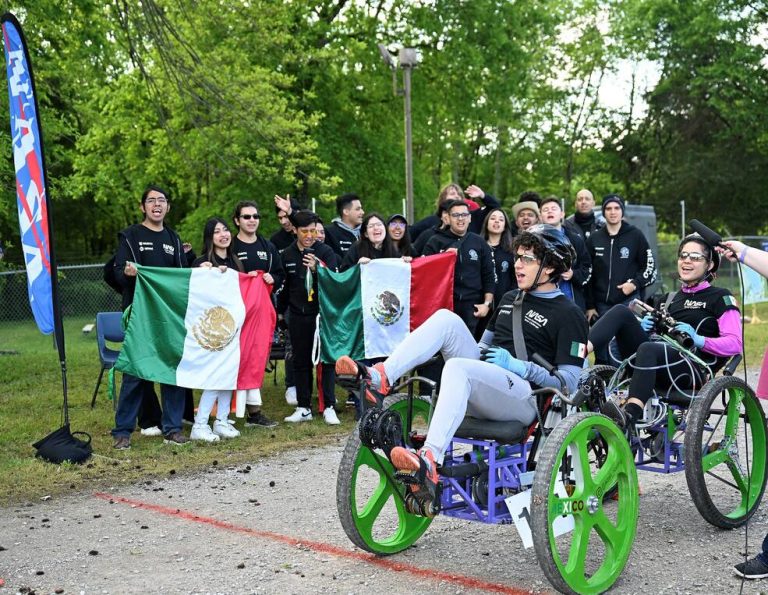
Students from the Tecnológico de Monterrey, Cuernavaca, Mexico, cheer for their teammates during the 2023 competition. NASA is accepting proposals for the 2024 season until Sept. 21, 2023.
Credits: NASA

Students interested in designing, developing, building, and testing rovers for Moon and Mars exploration are invited to submit their proposals to NASA through Thursday, Sept. 21.

The complete details on how to participate in NASA’s Human Exploration Rover Challenge are available online. To learn more, challenge experts are hosting two webinars at 10 a.m. EDT, and again at 6 p.m., on Thursday, Aug. 24. The virtual sessions will outline the proposal processes, and requires pre-registration.

“Our Human Exploration Rover Challenge will focus on an immersive story based on proposed NASA-use cases for crewed and uncrewed rovers during upcoming Artemis missions, including exploring permanently shadowed regions, positioning to recharge batteries, power and data exchange with other surface assets, and storing collected samples,” said Vemitra Alexander, challenge activity lead for NASA’s Office of STEM Engagement. “Students must determine why an autonomous rover exploring the shadowed regions has gone out of contact and, if possible, attempt to repair the robotic rover.”

By participating in this challenge, NASA hopes students will develop a deeper understanding of content and enhance their communication, collaboration, inquiry, problem-solving, and flexibility skills that will benefit them throughout their academic and professional lives. Interested teams should review the handbook for proposal guidelines and new task challenges.

In October, NASA will announce which teams are invited to the U.S. Space & Rocket Center in Huntsville, Alabama, near NASA’s Marshall Space Flight Center, in April 2024 to showcase their submissions.

Celebrating its 30th anniversary, the Human Exploration Rover Challenge tasks high school, college, and university students from around the world to design, build, and test lightweight, human-powered rovers on an obstacle course simulating lunar and Martian terrain, all while completing mission-focused science tasks. Once selected, students are required to complete months of design and safety reviews mirroring the engineering design process used by NASA engineers and scientists.

This challenge provides students a chance to engage with NASA’s Artemis program, which includes putting the first woman and first person of color on the Moon. NASA and event sponsors continue to encourage students to push the limits of innovation.

The challenge is managed by NASA’s Southeast Regional Office of STEM Engagement at Marshall and is one of eight Artemis Student Challenges. NASA’s Office of STEM Engagement uses challenges and competitions to further the agency’s goal of encouraging students to pursue degrees and careers in science, technology, engineering, and mathematics.

To learn more, visit:

https://www.nasa.gov/roverchallenge/home/index.html

-end-

Katherine Brown
Headquarters, Washington
202-358-1288
[email protected]

Christopher Blair
Marshall Space Flight Center, Huntsville, Alabama
256.544.0034 
[email protected]

The Essential Skills Every Machine Learning Engineer Should Learn

0

Machine learning has exploded in popularity and applicability over the last decade. As more companies rush to integrate ML into their products and services, demand for skilled talent is skyrocketing. So what does it take to thrive as a machine learning engineer today? Specific foundational skills are crucial. Let’s review the top 10 abilities for succeeding in this dynamic field.

Strong Mathematical Chops

Machine learning is heavily interdisciplinary, combining advanced statistics, calculus, linear algebra and probability. Having a solid grasp of the underlying math allows ML engineers to understand model optimisation, regularisation, feature selection and more. Whether implementing neural networks, debugging models or developing novel architectures, mathematical maturity is a must-have.

Algorithms and Data Structures Know-How

Being fluent in fundamental algorithms and data structures provides a mental framework for handling machine learning tasks programmatically. For example, understanding how decision trees, search algorithms and graph theory works allows for clearer ML coding. Grasping algorithmic complexity also enables optimising systems to scale. Overall, algorithmic thinking nurtures stronger engineering instincts.

OOP Competence

Most ML workflows involve object-oriented programming (OOP). Fluency with OOP principles like inheritance, encapsulation and polymorphism enables cleaner system design and code reuse. In languages like Python and Java, OOP skills allow crafting more modular, maintainable programs. This makes development and collaboration more efficient at scale.

At Least One Programming Language

While Python has become a lingua franca, being versatile in languages like R, Java, C++ or Scala is invaluable. Each language has strengths for different goals. R excels at statistical analysis while Scala blends OOP and functional programming for big data. Having exposure to more languages provides flexibility and a bigger toolkit. Even basic SQL skills help with data tasks.

Big Data Familiarity

Real-world ML relies heavily on distributed big data systems and frameworks. Experience with tools like Apache Spark, Kafka and Hadoop allows pre-processing of large datasets for model training and deployment. Cloud platforms like AWS also enter the mix. Knowing how to handle data at scale, including querying, accessing and cleansing is pivotal.

ML Algorithms and Models

Of course, a deep understanding of supervised and unsupervised machine learning algorithms and models is mandatory. Key categories like regression, classification, clustering, reinforcement learning and deep neural networks each require dedicated expertise. Knowing how to select, train, tune and productize the right algorithms for a problem determines outcomes.

Data Mining and Modelling Savvy

Raw data rarely comes ready for training models. ML engineers must know techniques like feature engineering, selection, extraction and dimensionality reduction to shape datasets. Domain knowledge helps with creative feature crafting. Additionally, expertise in modelling methods like regression, time series and ensemble modelling is vital for shaping ML pipelines.

Clean Code and Habits

With complex systems, clean coding practices are critical. Using modularity, proper documentation, descriptive naming, right data structures and other habits optimize development and maintenance. Clean habits also aid collaboration, debugging and reproducibility. Plus, employing version control and testing minimises risks.

Communication Chops

Since ML engineering is team-driven, articulate communication is essential at every stage. Conveying complex ideas, providing progress updates, explaining technical details, resolving ambiguities and describing models/architectures to non-experts are all common needs. Strong writing and speaking skills make cooperation smoother.

Insatiable Curiosity

Finally, intellectual curiosity is a core driver. With machine learning advancing so rapidly, learning never stops. Eagerness to absorb emerging techniques and stay on top of new research is crucial. A lifelong appetite for knowledge empowers engaging with innovations confidently.

There we have it – a toolkit for mastering the multifaceted sphere of machine learning. While individual strengths vary, developing competence across these dimensions positions ML professionals to excel. With both creative and technical acumen required, it’s an intensely rewarding pursuit at the cutting edge of technology. For those with the right skills, it’s an exciting time to push ML frontiers.

Heat-Resistant Drones To Support Firefighters

0

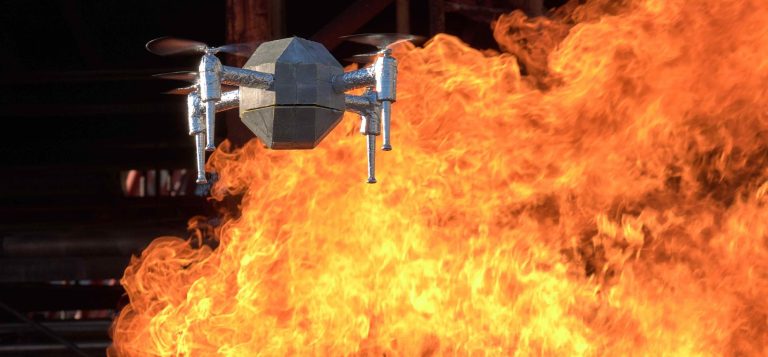
A new heat-resistant drone could support firefighters and minimise the risk of dangerous operations by analysing the source of danger at close range during a fire.

Swiss fire brigades were called out more than 15,000 times last year to fight fires. Because temperatures in a burning building can reach a deadly 1,000 degrees Celsius, any unnecessary risk must be avoided. A new flying robot could help in such operations: experts from Empa and Imperial College London are currently developing a heat-resistant drone that can provide initial data from the source of danger.

Minimising risk during operations

In such situations, drones equipped with cameras and CO2 sensors could provide important information about the distribution of fire sources, as well as unexpected hazards or trapped people. With the information gained in this way, emergency teams could better adapt their strategy to the situation before entering a burning building, say the creators of the new drone in a press release.

Before entering the danger zone, the firefighters don’t know exactly what to expect and what difficulties they will encounter.

Mirko Kovac, head of Empa’s Sustainability Robotics Laboratory and the Aerial Robotics Lab at Imperial College London

Drones are already being used to fight fires, to take aerial photos of fires, to lift fire hoses onto skyscrapers or to drop extinguishing agents in remote areas, for example to contain the spread of forest fires. However, all this is currently only possible if the drone is far enough away from the source of the fire. Because if flames are too close, the frame melts and the electronics give up.

Inspiration for new isolation material from nature

The Swiss researchers therefore set out to find an insulation material that does not melt even at high temperatures. They found inspiration for this in nature, in animals such as the penguin and arctic fox, whose habitats are characterised by extreme temperatures. They all have corresponding layers of fat, fur or the body’s own protective layers of thermoregulating material, which the animals produce themselves and which enable them to survive under extreme conditions.

They found what they were looking for in an aerogel, an ultralight material that consists almost entirely of air-filled pores enclosed in a hint of polymer substance. As Empa writes in its press release, polyimide aerogels are also being researched by NASA, among other things as insulation for space suits.

First test flights show excellent results

The prototype of the FireDrone, which is around 50 centimetres tall, was convincing in initial tests in Empa’s flight arena in Dübendorf and succeeded in tests under real conditions. The flight characteristics and controllability are excellent, even with an aerogel insulation jacket and an additional built-in cooling system as well as an aluminium covering that reflects the heat, according to the press release.

According to Empa, the FireDrone can also be used in extremely cold environments, such as in polar regions and on glaciers. The team has already tested the drone in a glacier tunnel in Switzerland to find out how the system behaves at very low temperatures. Talks are under way with potential industrial partners to further develop the prototype.

Originally published from Swisstech

UK Space Agency adds three more stops to Space for Everyone tour

0

The UK Space Agency has extended its nationwide Space for Everyone tour with three extra locations following its success around the country so far.

Having engaged tens of thousands of people over the first six of its 10 original stops, the event is now set to visit Wrexham (14-18 September) and Glasgow (21-25 September) before ending its three-month, 13 location tour of the UK in Plymouth (28 September to 2 October). 

This exciting initiative aims to captivate and educate the next generation about space, showcasing the UK’s flourishing space industry and the diverse career opportunities available.

Key space organisations and STEAM partners, including Space Hub Yorkshire, North East Space Cluster, Space Wales, Orbex, Skyrora, and the World Wide Fund for Nature, have supported the tour across the regions, highlighting the thriving space industry in the UK and its impact on our daily lives. 

The Space for Everyone tour is serving as a beacon of inspiration, shedding light on the pivotal role that space plays in enhancing life on Earth. Visitors, including children, families, and teachers, will have the unique opportunity to witness first-hand how space technologies benefit our daily lives and gain insights into the continuous efforts to explore the great unknown.

Matt Archer, Launch Director at the UK Space Agency, said:

The Space for Everyone Tour has been an enormous success, with families, schools and young people having the opportunity not only to see a rocket up close but learn about the role space has in our daily lives.

The UK space sector is world-leading and we require people from all backgrounds and skill sets to work in it. By showcasing the sector and the variety of exciting career pathways available,we can help inspire  the next generation of homegrown space talent.

Space for Everyone promises an immersive experience, incorporating state-of-the-art virtual reality headsets to provide unparalleled insights into what a launch from the UK looks like and the job roles involved in making it happen. Visitors can also explore various interactive areas, learning about the crucial role of satellites and discovering the diverse career paths available within the UK space industry.

For further information about the Space for Everyone tour, please visit https://spaceperson.co.uk/rocket-tour/ or follow @spacegovuk on social media.

The Space for Everyone tour schedule includes the following locations.

  • Newcastle – Times Square: 10-14 August
  • Hull – Queen Victoria Square: 17-21 August
  • Great Yarmouth – Sea Life Gardens: 24-28 August
  • Hastings – Hastings Pier: 31 August – 4 September
  • Wrexham – Queens Square: 14-18 September
  • Glasgow – George Square: 21-25 September
  • Plymouth – Piazza: 28 September – 2 October