Home Blog Page 38

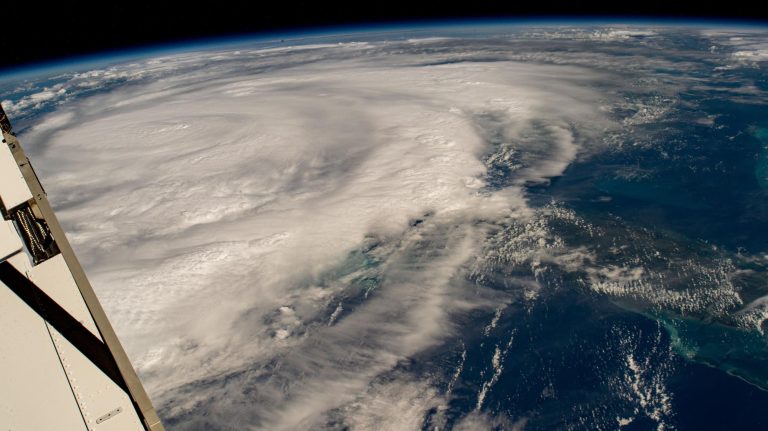
Hurricane Idalia In The Gulf Of Mexico

0

As the International Space Station orbited 261 miles above Earth on Aug. 29, 2023, one of the space station’s external high-definition cameras captured Hurricane Idalia in the Gulf of Mexico. Hurricane Idalia made landfall over the Big Bend region of Florida on the morning of Aug. 30, 2023, as a category 3 storm. Winds measured 205 kilometers (125 miles) per hour as the storm reached land. Watch an animation of the storm’s wind field.

Image Credit: NASA

By: Mark Garcia
Originally published at NASA

NASA’s SpaceX Crew-6 Safely Returns to Earth Near Florida Coast

0

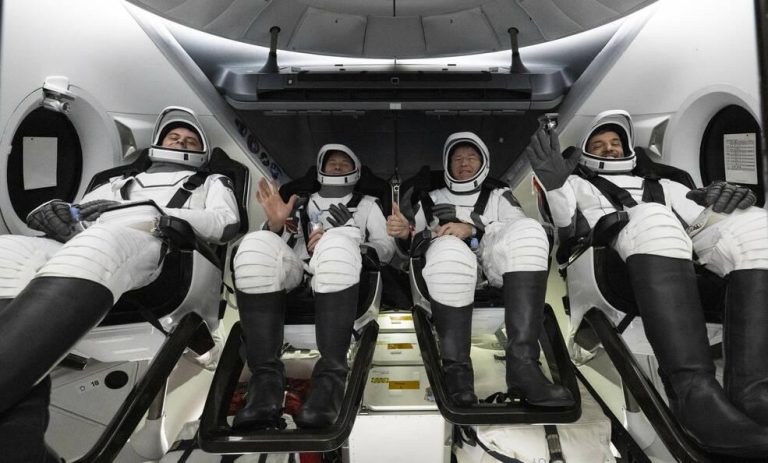
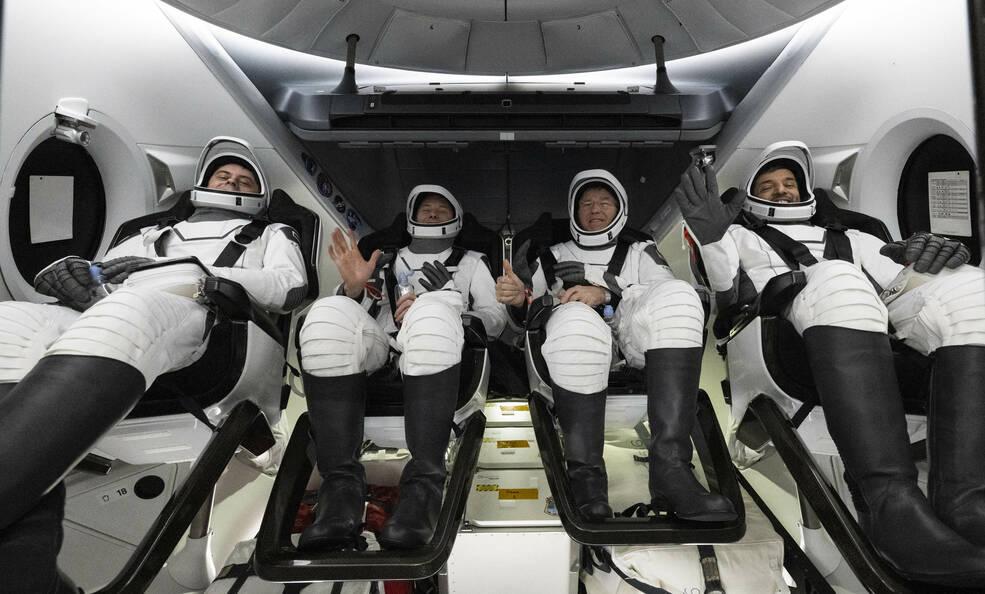
After splashing down safely in a SpaceX Dragon spacecraft off the coast of Jacksonville, Florida early Monday morning, NASA’s SpaceX Crew-6 completed the agency’s sixth commercial crew rotation mission to the International Space Station. The international crew of four spent 186 days in orbit.

Roscosmos cosmonaut Andrey Fedyaev, left, NASA astronaut Warren “Woody” Hoburg, second from left, NASA astronaut Stephen Bowen, second from right, and UAE (United Arab Emirates) astronaut Sultan Alneyadi, right, are seen inside the SpaceX Dragon Endeavour spacecraft onboard the SpaceX recovery ship MEGAN shortly after having landed in the Atlantic Ocean off the coast of Jacksonville, Florida, Monday, Sept. 4, 2023. Bowen, Hoburg, Alneyadi, and Fedyaev are returning after nearly six-months in space as part of Expedition 69 aboard the International Space Station. Credits: NASA/Joel Kowsky

NASA astronauts Stephen Bowen and Woody Hoburg, as well as UAE (United Arab Emirates) astronaut Sultan Alneyadi and Roscosmos cosmonaut Andrey Fedyaev, returned to Earth at 12:17 a.m. EDT. Teams aboard SpaceX recovery vessels retrieved the spacecraft and its crew. After returning to shore, the crew will fly to NASA’s Johnson Space Center in Houston.

“After spending six months aboard the International Space Station, logging nearly 79 million miles during their mission, and completing hundreds of scientific experiments for the benefit of all humanity, NASA’s SpaceX Crew-6 has returned home to planet Earth,” said Administrator Bill Nelson. “This international crew represented three nations, but together they demonstrated humanity’s shared ambition to reach new cosmic shores. The contributions of Crew-6 will help prepare NASA to return to the Moon under Artemis, continue onward to Mars, and improve life here on Earth.”

The Crew-6 mission lifted off at 12:34 a.m. EST March 2, 2023, on a SpaceX Falcon 9 rocket from NASA’s Kennedy Space Center in Florida. About 25 hours later, Dragon docked to the Harmony module’s space-facing port. On May 6, the crew completed a port relocation maneuver to the Earth-facing port ahead of the arrival of a SpaceX Dragon cargo spacecraft carrying new solar arrays, science investigations, and supplies to the orbiting laboratory. The crew undocked from the space station at 7:05 a.m. Sunday, to begin the trip home.

Bowen, Hoburg, Alneyadi, and Fedyaev traveled 78,875,292 miles during their mission, spent 184 days aboard the space station, and completed 2,976 orbits around Earth. The Crew-6 mission was the first spaceflight for Hoburg, Alneyadi, and Fedyaev. Bowen has logged 227 days in space over four flights.

Throughout their mission, the Crew-6 members contributed to a host of science and maintenance activities and technology demonstrations. Bowen conducted three spacewalks, joined by Hoburg for two, and Alneyadi for one, preparing the station for and installing two new IROSAs (International Space Station Roll-Out Solar Arrays) to augment power generation for the station.

The crew contributed to hundreds of experiments and technology demonstrations, including assisting a student robotic challenge, studying plant genetic adaptations to space, and monitoring human health in microgravity to prepare for exploration beyond low Earth orbit and to benefit life on Earth. The astronauts released Saskatchewan’s first satellite which tests a new radiation detection and protection system derived from melanin, found in many organisms, including humans.

This was the fourth flight of the Dragon spacecraft, which was named Endeavour by retired NASA astronauts Bob Behnken and Doug Hurley on its first voyage for the agency’s SpaceX Demonstration Mission 2. The spacecraft will return to Florida for inspection and processing at SpaceX’s refurbishing facility at Cape Canaveral Space Force Station, where teams will inspect the spacecraft, analyze data on its performance, and prepare it for its next flight.

The Crew-6 mission is part of NASA’s Commercial Crew Program, and its return to Earth follows on the launch of NASA’s SpaceX Crew-7, which docked to the station Aug. 27, beginning another long-duration science expedition.

The goal of NASA’s Commercial Crew Program is safe, reliable, and cost-effective transportation to and from the International Space Station and low Earth orbit, which maximizes research time and increases opportunities for discovery aboard humanity’s microgravity laboratory and testbed for exploration, including helping NASA prepare for human exploration of the Moon and Mars.

Learn more about NASA’s Commercial Crew program at:

https://www.nasa.gov/commercialcrew

-end-

Joshua Finch / Lora Bleacher
Headquarters, Washington
202-358-1100 
[email protected] / [email protected]

Steve Siceloff
Kennedy Space Center, Florida
321-867-2468
[email protected]

Leah Cheshier
Johnson Space Center, Houston
281-483-5111
[email protected]

Coverage Set As NASA’s SpaceX Crew-6 Prepares For Splashdown

0

NASA will provide coverage of the agency’s SpaceX Crew-6 mission return to Earth from the International Space Station, beginning with hatch closure coverage live at 5 a.m. EDT on Sunday, Sept. 3. The SpaceX Dragon spacecraft is scheduled to undock from the space station no earlier than 7:05 a.m., to begin the journey home.

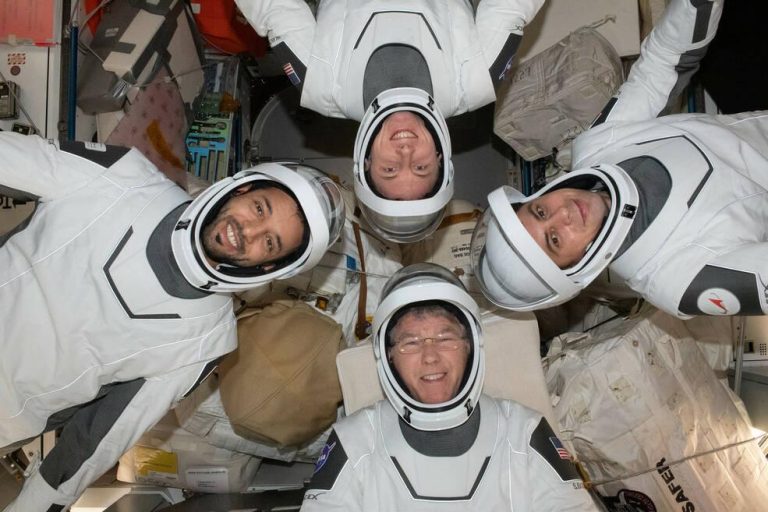
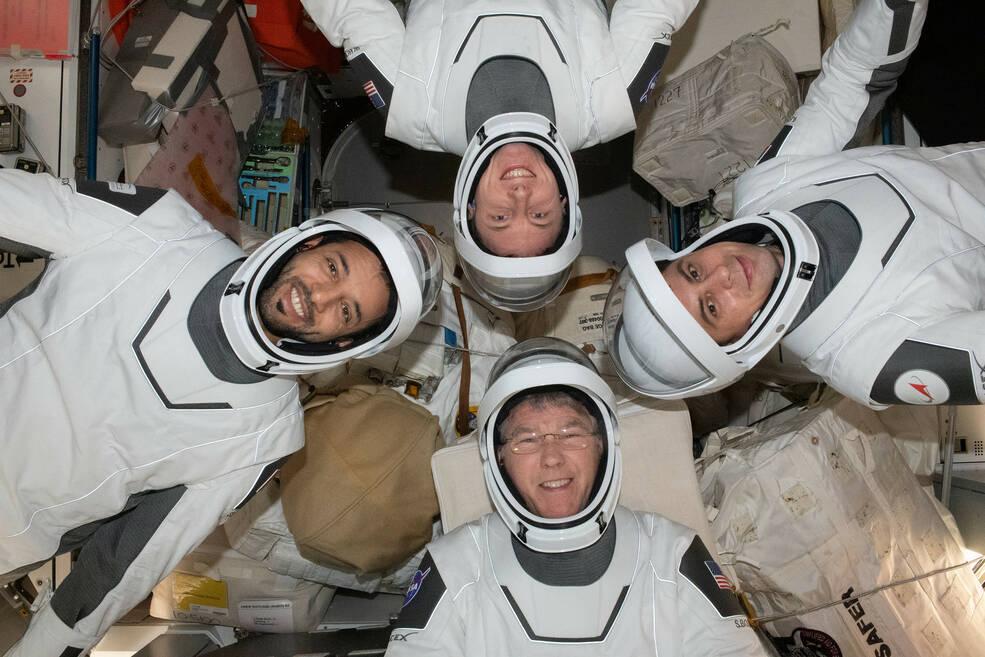
Four Expedition 69 flight engineers aboard the International Space Station pose for a portrait in the pressure suits they will wear when they relocate the SpaceX Dragon Endeavour crew ship from the Harmony module’s space-facing port to Harmony’s forward port on Saturday May 6, 2023. Credits: NASA

The return and related activities will stream live on NASA Television, the NASA app, and the agency’s website at:

https://www.nasa.gov/live

NASA and SpaceX are targeting 12:17 a.m. on Monday, Sept. 4, for a splashdown that will wrap up a nearly six-month science mission for NASA astronauts Stephen Bowen and Woody Hoburg, UAE (United Arab Emirates) astronaut Sultan Alneyadi, and Roscosmos cosmonaut Andrey Fedyaev.

Following the conclusion of Dragon’s departure from the station, NASA coverage of Crew-6’s return will continue audio only, and full coverage on NASA TV will resume at the start of the splashdown broadcast. Real-time audio between Crew-6 and flight controllers on NASA’s Mission Audio stream will remain available. 

The Dragon spacecraft, named Endeavour, will undock, depart the space station, and return important and time-sensitive research to Earth. The spacecraft will splash down at one of seven targeted landing zones in the Atlantic Ocean or Gulf of Mexico off the coast of Florida.

NASA’s SpaceX Crew-6 return coverage is as follows (all times Eastern and subject to change due to weather and station operations):

Sunday, Sept. 3

5 a.m. – Hatch closure coverage begins for 5:20 a.m. hatch closing

6:45 a.m. – Undocking coverage begins for 7:05 a.m. undocking

11 p.m. – Coverage begins for deorbit burn, entry, and splashdown off the coast of Florida

Monday, Sept. 4

12:17 a.m. – Splashdown

2 a.m. – Return to Earth media teleconference from NASA’s Kennedy Space Center in Florida with the following participants:

  • Steve Stich, manager, Commercial Crew Program, NASA Kennedy
  • Joel Montalbano, manager, International Space Station, NASA’s Johnson Space Center in Houston
  • Benji Reed, senior director, Human Spaceflight Programs, SpaceX
  • Adnan Alrais, assistant director general space operations and exploration sector, Mission Manager, UAE Astronaut Programme

To participate, media must RSVP by 1 a.m., Sept. 4, to the NASA Kennedy newsroom at: [email protected].

See full mission coverage, NASA’s commercial crew blog, and more information about the mission at:

https://www.nasa.gov/commercialcrew

-end-

Joshua Finch
Headquarters, Washington
202-358-1100
[email protected]

Steve Siceloff
Kennedy Space Center, Fla.
321-867-2468
[email protected]

Leah Cheshier
Johnson Space Center, Houston
281-483-5111
[email protected]

Newly Discovered Planet Has Longest Orbit Yet Detected By The TESS Mission

0

The frosty gas giant was discovered in a system that also hosts a warm Jupiter.

Jennifer Chu | MIT News

Of the more than 5,000 planets known to exist beyond our solar system, most orbit their stars at surprisingly close range. More than 80 percent of confirmed exoplanets have orbits shorter than 50 days, placing these toasty worlds at least twice as close to their star as Mercury is to our sun — and some, even closer than that.

Astronomers are starting to get a general picture of these planets’ formation, evolution, and composition. But the picture is much fuzzier for planets with longer orbital periods. Far-out worlds, with months- to years-long orbits, are more difficult to detect, and their properties have therefore been trickier to discern.

Now, the list of long-period planets has gained two entries. Astronomers at MIT, the University of New Mexico, and elsewhere have discovered a rare system containing two long-period planets orbiting TOI-4600, a nearby star that is 815 light years from Earth.

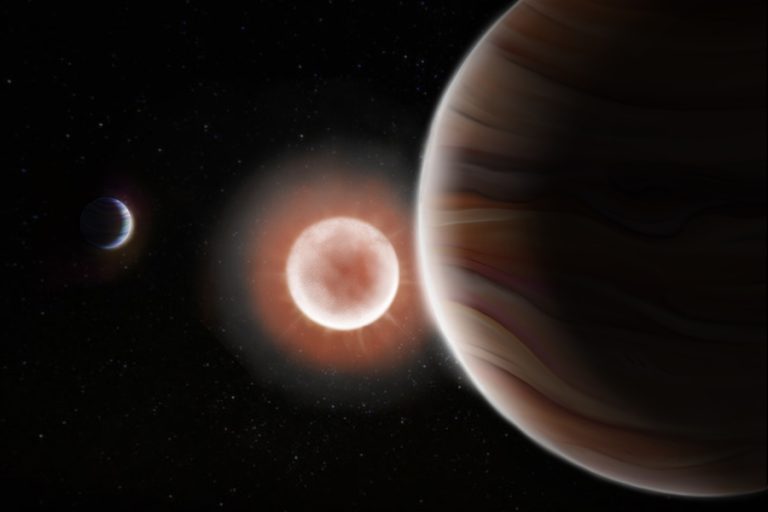
The team discovered that the star hosts an inner planet with an orbit of 82 days, similar to that of Mercury, while a second outer planet circles every 482 days, placing it somewhere between the orbits of Earth and Mars.

The discovery was made using data from NASA’s Transiting Exoplanet Survey Satellite, or TESS — an MIT-led mission that monitors the nearest stars for signs of exoplanets. The new, farther planet has the longest period that TESS has detected to date. It is also one of the coldest, at about -117 degrees Fahrenheit, while the inner planet is a more temperate 170 degrees Fahrenheit.

Both planets are likely gas giants, similar to Jupiter and Saturn, though the composition of the inner planet may be more of a mix of gas and ice. The two planets bridge the gap between “hot Jupiters” — the toasty, short-orbit planets that make up the majority of exoplanet discoveries — and the much colder, longer-period gas giants in our solar system.

“These longer-period systems are a comparatively unexplored range,” says team member Katharine Hesse, a technical staff member at MIT’s Kavli Institute for Astrophysics and Space Research. “As we’re trying to see where our solar system falls in comparison to the other systems we’ve found out there, we really need these more edge-case examples to better understand that comparison. Because a lot of systems we have found don’t look anything like our solar system.”

Hesse and her colleagues, including lead author Ismael Mireles, a graduate student at the University of New Mexico (UNM), have published their results today in Astrophysical Journal Letters.

Patch work

TESS monitors the nearest stars for signs of exoplanets by pointing at a patch of the sky and continuously measuring the brightness of stars in that sector for 30 days, before swiveling to the next patch. Scientists use “pipelines,” or algorithmic searches, to comb through the measurements for dips in brightness that could have been caused by a planet passing in front of its star.

In 2020, one pipeline picked up a possible transit from a star in the northern sky, close to the constellation Draco. The star was categorized as TOI-4600 (a TESS Object of Interest). The initial transit was studied in detail by the TESS Single Transit Planet Candidate Working Group, a team of scientists at MIT, UNM, and elsewhere who look for signs of longer-period planets in single-transit events.

“For missions like TESS, where it only looks at each region of the sky for 30 days, you really need to stack up the number of observations to be able to get enough data to find planets with orbits longer than a month,” Hesse notes.

The group looked for the star in other sectors of TESS data and eventually identified three more transits, similar to the first. From these four events, the scientists were able to determine that the source was a planet — TOI-4600b — with a relatively long 82-day orbit. The team also picked up a fifth transit, though it was out of sync with the other signals. They wondered: Could the transit be from another star temporarily eclipsing the first? Or could it be a second orbiting planet?

Giants in the sky

In 2021, when Mireles joined the group, he took up where the team left off, looking for more observations from TESS that would explain the last, puzzling transit.

“With each sector of data that came down, I would look to see if there was a second transit, and in the first five sectors, there wasn’t,” Mireles recalls. “Then, in July of last year, we saw something.”

Actually, they saw two things: one transit that appeared in the same 82-day cycle, which further confirmed the existence of a long-orbiting planet; and a second transit, which was detected 964 days after the previous, out-of-sync transit. These last two transits were similar in depth, or the amount of light that was dimmed, suggesting that both were produced by a single object that was orbiting the star, either every 964 days, or every 482 days. After all, the team reasoned, TESS simply could have not been looking in the star’s direction to catch the planet crossing at the 482-day mark. The team used a model to simulate what a planet would look like with both orbital periods, and concluded that the 482-day orbit was more likely.

To further confirm they had identified two long-period planets, the researchers focused in on the star using multiple ground-based telescopes. These observations helped the team rule out false-positive scenarios, such as a second star eclipsing the main star. In the end, they concluded that the star indeed hosts two long-period planets: TOI-4600b, a warm, Jupiter-like giant; and TOI-4600c, a frosty, icier giant, and the longest-period planet detected by TESS to date.

“It’s relatively rare that we see two giant planets in a system,” Hesse offers. “We’re used to seeing hot Jupiters that are close in to their stars, and we usually don’t find companions to them, let alone giant companions. This system is a more unique configuration.”

The distance between the two planets, which is about the same as the space between Mercury and Mars, implies there could be other planets in the system.

“We want to see if there’s evidence for more planets,” Mireles says. “There’s definitely a lot of room for potential planets, either closer in, or further out. And we show that TESS is capable of finding both warm and cold Jupiters.”

 This research was supported, in part, by NASA.

Reprinted with permission of MIT News (http://news.mit.edu/)

Guy Bluford, the First African American in Space

0

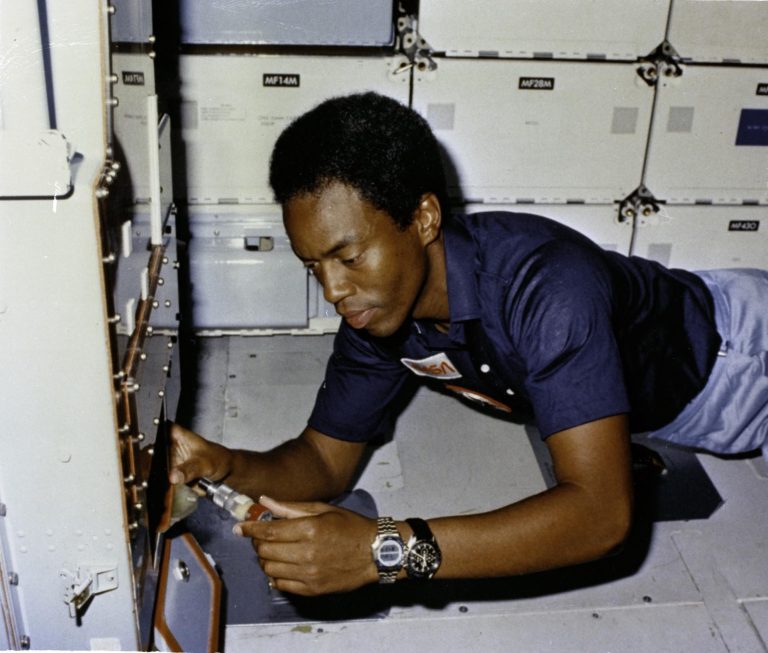
In this image from Sept. 5, 1983, Guion “Guy” Bluford checks out the sample pump on the continuous flow electrophoresis system (CFES) experiment in the middeck of the Earth-orbiting space shuttle Challenger.

Forty years ago today, he launched from NASA’s Kennedy Space Center in Florida, becoming the first African American to fly in space. Bluford was a member of NASA’s “Thirty-Five New Guys” – the 1978 astronaut class, which had the first African American, the first Asian American, and the first women astronauts.

During the STS-8 mission, the crew deployed the Indian National Satellite INSAT-1B, operated the Canadian-built Remote Manipulator System with the Payload Flight Test Article, operated the CFES, conducted medical measurements to understand biophysiological effects of spaceflight, and activated four “Getaway Special” canisters. STS-8 completed 98 orbits of the Earth in 145 hours before landing at Edwards Air Force Base, California, on Sept. 5, 1983.

Image Credit: NASA

By: Monika Luabeya
Originally published at NASA

Back-To-School Essentials – “All Aboard The Hogwarts Express” Edition

0

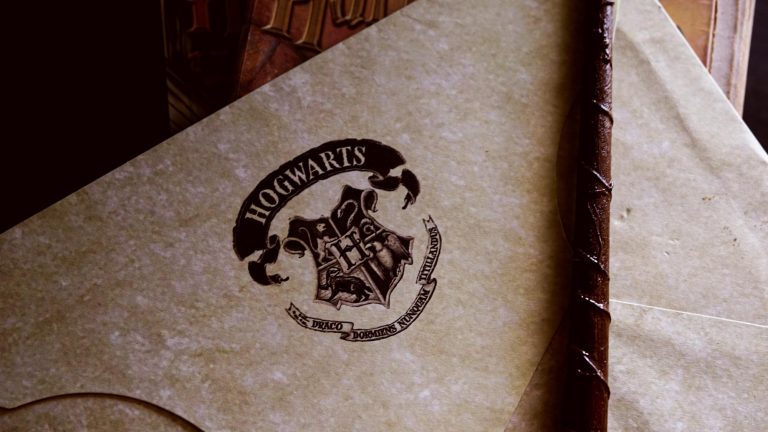
September has arrived, and it’s time to go back to school. Hopefully everybody received their invitation to Hogwarts school of witchcraft and wizardry. But if by some unfortunate event that you didn’t, how about settling for school supply themed from the famous world of Harry Potter.

Notebook by Insight Editions

Notebook

This 120-page ruled notebook has a clip that tells you where you writing or reading before. 

Pen from Harry Potter

Pen

The longing to be chosen by a wand is a wish no more. As this wand chooses you to be its owner.

Journal and Pen by Insight Editions

Journal and Pen

It’s not Toms diary for sure, but it’s a surely magical one. This one comes together with an Elder Wand pen.

Pencil by Unique Store

Pencil

An assortment of pencil, design with the 4 houses of hogwarts.

Ruler by Graphics & More

Ruler

While Hogwarts school did not require the use of a ruler. They certainly did allow the design to be put into one.

Water Bottle by Leado

Water Bottle

Now you can practice your Aguamenti spell to refill this bottle when you want to hydrate yourself.

Mug from Morphing Mugs

Mug

The magic of this mug revolves around showing you a different imagery when it’s hot and cold. Let’s just hope that you won’t be seeing Barty Crouch Jr when drinking your hot coffee.

Backpack Bag from Bioworld

Backpack Bag

Only a true Gryffindor can pull a laptop out of this bag. 


Student life is busy enough without hassles like paying for shipping. That’s why Amazon Prime Student is a must-have for you. For just $14.99 $7.49/month, Prime Student gets you free two-day shipping on over 100 million items, unlimited photo storage, exclusive deals, and more. Better still, it comes with a six-month free trial so you can make sure Prime Student fits your lifestyle. Join today to take advantage of membership benefits and perks tailored specifically for students! Click here to sign up now: https://amzn.to/47wkx6f

India Has Landed On The Moon: Here’s What The Political And Economic Gains Are

0

Christopher Newman, Northumbria University, Newcastle

From the early days of human space activity in the 1960s, missions to the Moon have attracted significant global attention. India’s recent success in landing the Chandrayaan-3 spacecraft on the Moon was technically demanding and occurred in a previously unexplored part of the Moon.

As well as the scientific benefits, India has already enjoyed the significant attention that still accompanies high profile space missions, gaining news coverage across the globe.

There are always considerable demands upon government spending. So why do some countries continue to put substantial resources into space activity? And does this type of success produce tangible national and international benefits beyond a few days in the media spotlight?

Though it sounds inordinately expensive to outsiders, getting a nation into space is no longer necessarily as costly as it used to be. Access to space is getting cheaper, especially for nations who have access to their own launch vehicles.

This is illustrated by the relatively low cost of the Chandrayaan-3 mission. Initially, the budget was a relatively modest US$70m (£55m). Although the final cost has not publicly disclosed, it is believed to rival the lowest cost lunar lander missions currently under development in the US.

Lowering the cost of space missions has meant a dramatic increase in the number of countries looking to have a presence in space. India has now produced at least 140 commercial space companies registered with the Indian Ministry of Corporate Affairs, that, between them, have attracted US$120 million in investment at a rate that is doubling on an annual basis.

Jobs and development

The US Apollo programme has shown that space exploration can drive technological innovation. These innovations have applications in various industries including telecommunications, remote sensing and the creation of new, useful materials.

The success of Chandrayaan-3 will bring more of the high-skilled jobs that every economy – developed and developing – depends on for further growth. In addition to those scientific and technical workers, support and administrative roles will also be created.

The development of a space industry within a country can have significant benefits to growing the economy, beyond the money initially invested. Along with the scientific discoveries that Chanrayaan-3 may make, these are obvious benefits for any nation looking to showcase itself on the global stage.

Building international ties

Working as a member of the global scientific community enables countries to use space exploration as a way to foster closer ties. As part of this, there can be a pooling of expertise as well as technology transfer programmes, which lead to applications moving from space tech to other parts of society, such as fire-retardant clothing being used in other industries.

It is possible for deeper diplomatic and economic relations to emerge from these bespoke scientific and technical arrangements. India already has close collaborative ties with the US.

The success of the Chandrayaan-3 mission will not only help develop these ties but will help illustrate the value of India signing the Artemis Accords, an agreement fostering international cooperation to expand space exploration to Mars, and becoming a fully-fledged partner in the US programme to establish a permanent human presence on the Moon.

Given that Russia had tried and failed to land the probe, Luna 25, on the Moon a few days earlier, India’s success was significant. The Russian failure has been viewed as an indication of its decline as a space power. It is prudent for ambitious governments with an eye on space to remember that prestige can cut both ways.

The national security dimension of space activity cannot be ignored. If, as the adage goes, “all politics is local politics” then the achievement of India in space will not have been lost on its neighbours, Pakistan and China. China, the dominant superpower in the region, will see it as competition to its own lunar programme and space ambitions.

More broadly, it will also recognise the threat posed by closer Indian relations with the US. That success in space could seem threatening to India’s neighbours. Such an advantage carries the implicit warning that such technology could also be used for military and defence purposes in future.

Modi’s global image

It was fortuitous for India’s prime minister Narendra Modi that the space landing was announced while he was at the Brics summit of fast-growing economies. The perception that under his leadership India is standing on the world stage because of its scientific and technical prowess will also play well domestically.

Yet, the boost to Indian prestige and confidence brought about by the success of the Chandrayaan-3 mission is ultimately more than an attempt by an ambitious nation trying to gain a place on the world stage. India already has the attention of the world and is seen by many as a crucial counterbalance by the US to the threat posed by China. Ultimately, this was a mission of scientific exploration, built on sustainable economic foundations.

Space exploration in the 2020s is dramatically different to that of the first lunar space race between the US and the Soviet Union. Nonetheless, the international prestige that a successful lunar programme can bring is still a very attractive option for governments who are looking to boost their image both domestically and internationally, as well as providing an economic lift.The Conversation

Christopher Newman, Professor of Space Law and Policy, Northumbria University, Newcastle

This article is republished from The Conversation under a Creative Commons license. Read the original article (https://theconversation.com/india-has-landed-on-the-moon-heres-what-the-political-and-economic-gains-are-212313).

Thomas Henning receives the Karl Schwarzschild Medal

0

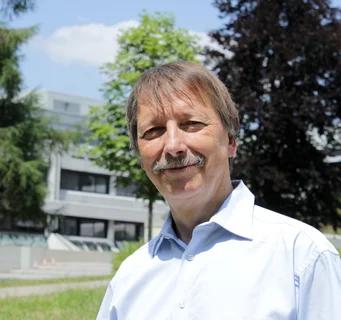
Prof. Dr. Thomas Henning, Director of the Planet and Star Formation (PSF) Department at the Max Planck Institute for Astronomy (MPIA) in Heidelberg, Germany, will receive the prestigious Karl Schwarzschild Medal of the German Astronomical Society (AG). The important award will be presented to him on September 12, 2023, during the annual meeting of the German Astronomical Society in Berlin.

Prof. Dr. Thomas Henning © K. Jäger/MPIA

The Karl Schwarzschild Medal of the German Astronomical Society is considered one of the highest awards for astronomy in Germany. It is named after the famous astronomer Karl Schwarzschild (1873-1916), who is one of the pioneers of modern astrophysics.   With the Karl Schwarzschild Medal, the AG has been honoring high-ranking scientists from all over the world since 1959, who have sustainably enriched and influenced research in astronomy and astrophysics. The award winners list includes such prominent names as Maarten Schmidt, Jan Oort, Martin Rees, Fred Hoyle, or Jocelyn Bell Burnell.

The German Astronomical Society´s press release and tribute published today states:

“Professor Thomas Henning, director at the Max Planck Institute for Astronomy (MPIA) in Heidelberg, receives the most prestigious award of the German Astronomical Society, the Karl Schwarzschild Medal, for his outstanding contributions in the field of star and planet formation. His broad research profile is reflected in his theoretical work, laboratory experiments, observational studies, and numerous collaborations. Furthermore, he uniquely combined studies of dust formation in the interstellar medium with laboratory experiments. With his team, he built instruments for Earth-based telescopes and infrared instruments for space, including JWST. His achievements range from impressive observations of protoplanetary disks and their structure to the discovery of young planets in the disks around stars”.


Thomas Henning has been director at the Max Planck Institute for Astronomy in Heidelberg since 2001, where he heads the Planet and Star Formation (PSF) department. In addition, he leads a laboratory astrophysics group in Jena – the place where he also received his PhD and was later director of the Astrophysical Institute and the University Observatory before he received the call of the Max Planck Society (MPG) to Heidelberg.

In addition to the focus of his work around the formation of massive stars, planet-forming disks, exoplanets, the interstellar medium, and instrument development already indicated in the AG’s appreciation, Thomas Henning also launched the Heidelberg Initiative for the Origins of Life (HIFOL) in 2014. This initiative seeks to understand one of humanity’s most fundamental questions: How did life arise on Earth and does life exist elsewhere in the universe? In the context of this research, Thomas Henning has recently also started up new research laboratories at the MPIA in Heidelberg.

With the Karl Schwarzschild Medal, Thomas Henning is not only honored by one of the oldest astronomical associations in the European area. Since the AG was founded in Heidelberg in 1863, its most important award also returns once again to the place where the AG was founded.

Crew-7 Lifts Off

0

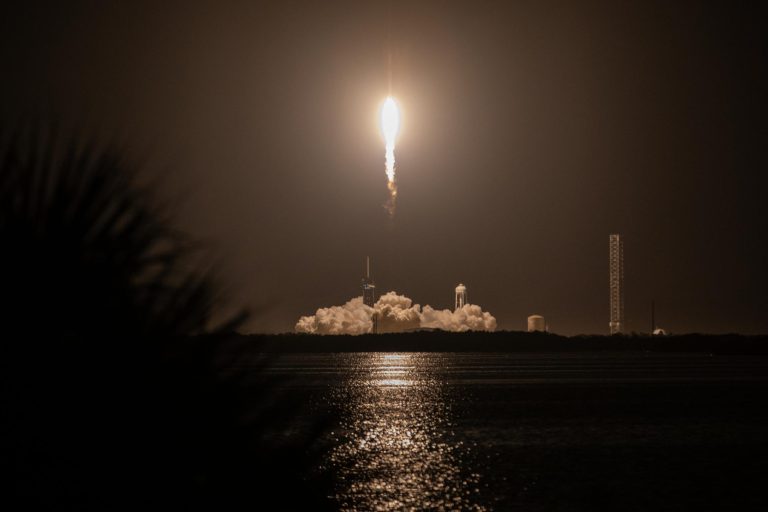
At 3:27 a.m. EDT on Saturday, Aug. 26, NASA’s SpaceX Crew-7 crew members launched from NASA’s Kennedy Space Center in Florida. A SpaceX Falcon 9 rocket carried NASA astronaut Jasmin Moghbeli, European Space Agency astronaut Andreas Mogensen, Japan Aerospace Exploration Agency astronaut Satoshi Furukawa, and Roscosmos cosmonaut Konstantin Borisov aboard SpaceX’s Dragon spacecraft. They docked to the International Space Station and joined the current space station crew on Sunday, Aug. 27.

While on the orbiting laboratory, Crew-7 will conduct new scientific research to benefit humanity on Earth and prepare for human exploration beyond low Earth orbit, including the collection of microbial samples from the exterior of the space station, the first study of human response to different spaceflight durations, and an investigation of the physiological aspects of astronauts’ sleep.

Learn more about station activities by following the space station blog.

Image Credit: NASA/Kim Shiflett

The Prescription for Happy Medical Students – Great Gift Ideas

0

Medical profession, like any other educational pursuit, takes a lot of hard work. If you know someone who is taking courses involving healthcare or is already practicing it, you might want to give them a gift. Here are some of what they might want, but they are thrifty to buy it themselves. 

01. Coffee Maker from Mr. Coffee

Coffee maker

A coffee maker is a lot of money saver when compared to buying at a coffee shop. The convenience of having it is also a bug plus. Creating your own coffee is both satisfying and fun. 

02. Tea from Tea Bunch

Tea bags

If the person you were planning to give the coffee maker was actually a Tea type of person. Then this would be the next best thing, a variety of tea. If you don’t know what flavor they would like this offers 12 unique taste to try.

03. Pocket Protector from Aidunmis

Pocket protector

The usual pocket is usually not enough to keep the pen in place. The big plus of this pocket protector not only keep them in place, but protect their clothes from getting ink leak. Not to mention the slick design.

04. Book Stand from Wishacc

Book holder

This not only functions for books, but also for tablet or smart phone. It is made of high quality bamboo and can be folded nicely for easier carry.

05. Water Bottle from Hyrdo Flask

Water bottle

Hydroflask is known for product quality. The TempShield insulation keeps beverages cold up to 24 hours and hot up to 12 hours.

06. Notebook from Amazon Basics

Notebook

A standard notebook. You can never have too many notebook.

07. Laptop IdeaPad Flex 5i from Lenovo

Laptop

An essential gift, specially if the student does not have a laptop. It functions as both a laptop and tablet. This Chromebook has a Core i3 processor, 8GB of memory, and 128GB of hard disk. 


Student life is busy enough without hassles like paying for shipping. That’s why Amazon Prime Student is a must-have for you. For just $14.99 $7.49/month, Prime Student gets you free two-day shipping on over 100 million items, unlimited photo storage, exclusive deals, and more. Better still, it comes with a six-month free trial so you can make sure Prime Student fits your lifestyle. Join today to take advantage of membership benefits and perks tailored specifically for students! Click here to sign up now: https://amzn.to/47wkx6f