
Home Blog Page 36

NASA’s Mars Rovers Could Inspire A More Ethical Future For AI

0
Rather than using AI to replace workers, companies can build teams that ethically integrate the technology.

Janet Vertesi, Princeton University

Since ChatGPT’s release in late 2022, many news outlets have reported on the ethical threats posed by artificial intelligence. Tech pundits have issued warnings of killer robots bent on human extinction, while the World Economic Forum predicted that machines will take away jobs.

The tech sector is slashing its workforce even as it invests in AI-enhanced productivity tools. Writers and actors in Hollywood are on strike to protect their jobs and their likenesses. And scholars continue to show how these systems heighten existing biases or create meaningless jobs – amid myriad other problems.

There is a better way to bring artificial intelligence into workplaces. I know, because I’ve seen it, as a sociologist who works with NASA’s robotic spacecraft teams.

The scientists and engineers I study are busy exploring the surface of Mars with the help of AI-equipped rovers. But their job is no science fiction fantasy. It’s an example of the power of weaving machine and human intelligence together, in service of a common goal.
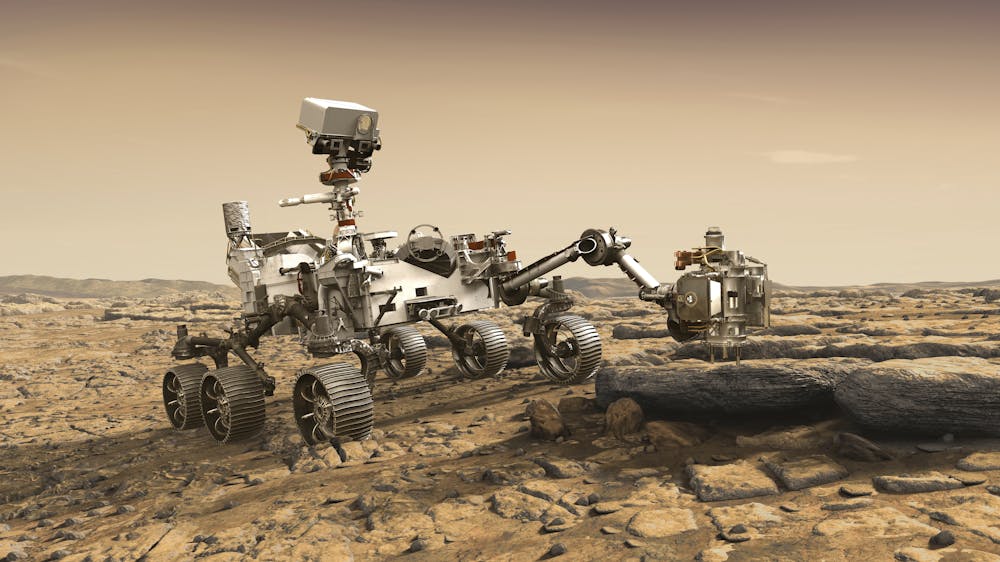
An artist's rendition of the Perseverence rover, make of metal with six small wheels, a camera and a robotic arm.

Mars rovers act as an important part of NASA’s team, even while operating millions of miles away from their scientist teammates.
NASA/JPL-Caltech via AP

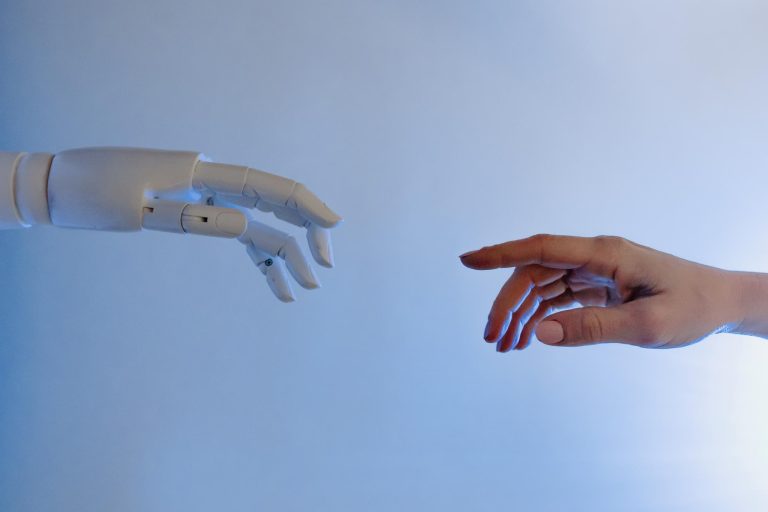
Instead of replacing humans, these robots partner with us to extend and complement human qualities. Along the way, they avoid common ethical pitfalls and chart a humane path for working with AI.

The replacement myth in AI

Stories of killer robots and job losses illustrate how a “replacement myth” dominates the way people think about AI. In this view, humans can and will be replaced by automated machines.

Amid the existential threat is the promise of business boons like greater efficiency, improved profit margins and more leisure time.

Empirical evidence shows that automation does not cut costs. Instead, it increases inequality by cutting out low-status workers and increasing the salary cost for high-status workers who remain. Meanwhile, today’s productivity tools inspire employees to work more for their employers, not less.

Alternatives to straight-out replacement are “mixed autonomy” systems, where people and robots work together. For example, self-driving cars must be programmed to operate in traffic alongside human drivers. Autonomy is “mixed” because both humans and robots operate in the same system, and their actions influence each other.
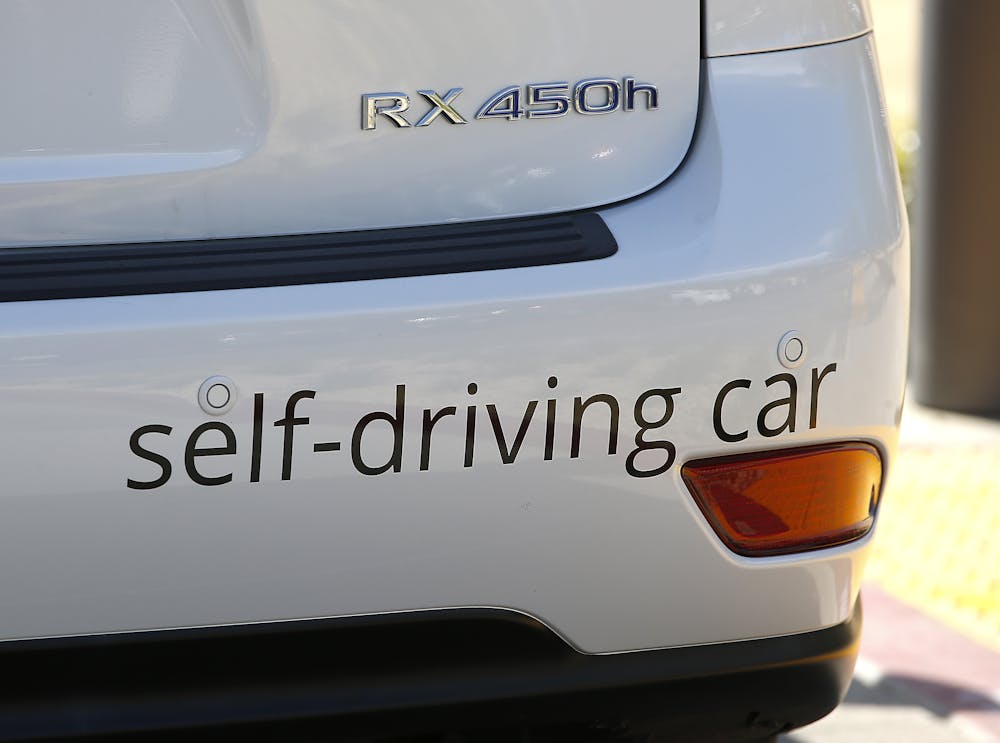
A zoomed in shot of a white car with a bumper sticker reading 'self-driving car'

Self-driving cars, while operating without human intervention, still require training from human engineers and data collected by humans.
AP Photo/Tony Avelar

However, mixed autonomy is often seen as a step along the way to replacement. And it can lead to systems where humans merely feed, curate or teach AI tools. This saddles humans with “ghost work” – mindless, piecemeal tasks that programmers hope machine learning will soon render obsolete.

Replacement raises red flags for AI ethics. Work like tagging content to train AI or scrubbing Facebook posts typically features traumatic tasks and a poorly paid workforce spread across the Global South. And legions of autonomous vehicle designers are obsessed with “the trolley problem” – determining when or whether it is ethical to run over pedestrians.

But my research with robotic spacecraft teams at NASA shows that when companies reject the replacement myth and opt for building human-robot teams instead, many of the ethical issues with AI vanish.

Extending rather than replacing

Strong human-robot teams work best when they extend and augment human capabilities instead of replacing them. Engineers craft machines that can do work that humans cannot. Then, they weave machine and human labor together intelligently, working toward a shared goal.

Often, this teamwork means sending robots to do jobs that are physically dangerous for humans. Minesweeping, search-and-rescue, spacewalks and deep-sea robots are all real-world examples.

Teamwork also means leveraging the combined strengths of both robotic and human senses or intelligences. After all, there are many capabilities that robots have that humans do not – and vice versa.

For instance, human eyes on Mars can only see dimly lit, dusty red terrain stretching to the horizon. So engineers outfit Mars rovers with camera filters to “see” wavelengths of light that humans can’t see in the infrared, returning pictures in brilliant false colors.
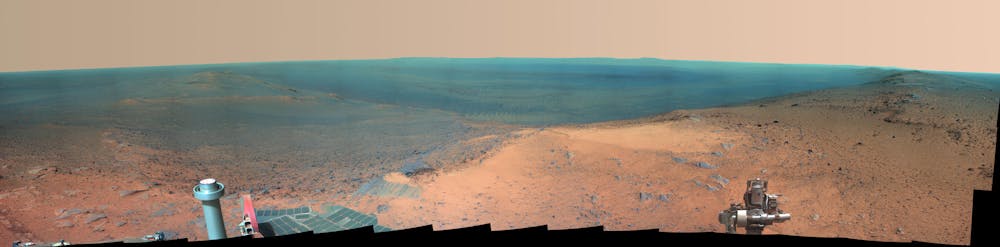
A false-color photo from the point of view of a rover standing at the cliff overlooking a brown, sandy desert-like area that looks blue in the distance.

Mars rovers capture images in near infrared to show what Martian soil is made of.
NASA/JPL-Caltech/Cornell Univ./Arizona State Univ

Meanwhile, the rovers’ onboard AI cannot generate scientific findings. It is only by combining colorful sensor results with expert discussion that scientists can use these robotic eyes to uncover new truths about Mars.

Respectful data

Another ethical challenge to AI is how data is harvested and used. Generative AI is trained on artists’ and writers’ work without their consent, commercial datasets are rife with bias, and ChatGPT “hallucinates” answers to questions.

The real-world consequences of this data use in AI range from lawsuits to racial profiling.

Robots on Mars also rely on data, processing power and machine learning techniques to do their jobs. But the data they need is visual and distance information to generate driveable pathways or suggest cool new images.

By focusing on the world around them instead of our social worlds, these robotic systems avoid the questions around surveillance, bias and exploitation that plague today’s AI.

The ethics of care

Robots can unite the groups that work with them by eliciting human emotions when integrated seamlessly. For example, seasoned soldiers mourn broken drones on the battlefield, and families give names and personalities to their Roombas.

I saw NASA engineers break down in anxious tears when the rovers Spirit and Opportunity were threatened by Martian dust storms.
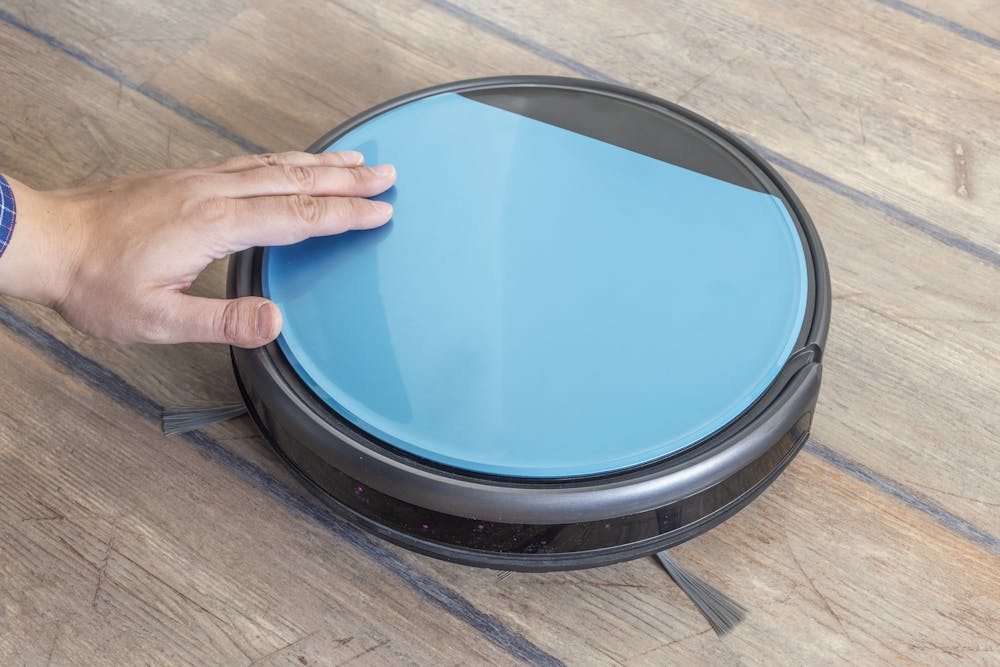
A hand petting a light blue, circular Roomba vacuum.

Some people feel a connection to their robot vacuums, similar to the connection NASA engineers feel to Mars rovers.
nikolay100/iStock / Getty Images Plus via Getty Images

Unlike anthropomorphism – projecting human characteristics onto a machine – this feeling is born from a sense of care for the machine. It is developed through daily interactions, mutual accomplishments and shared responsibility.

When machines inspire a sense of care, they can underline – not undermine – the qualities that make people human.

A better AI is possible

In industries where AI could be used to replace workers, technology experts might consider how clever human-machine partnerships could enhance human capabilities instead of detracting from them.

Script-writing teams may appreciate an artificial agent that can look up dialog or cross-reference on the fly. Artists could write or curate their own algorithms to fuel creativity and retain credit for their work. Bots to support software teams might improve meeting communication and find errors that emerge from compiling code.

Of course, rejecting replacement does not eliminate all ethical concerns with AI. But many problems associated with human livelihood, agency and bias shift when replacement is no longer the goal.

The replacement fantasy is just one of many possible futures for AI and society. After all, no one would watch “Star Wars” if the ‘droids replaced all the protagonists. For a more ethical vision of humans’ future with AI, you can look to the human-machine teams that are already alive and well, in space and on Earth.The Conversation

Janet Vertesi, Associate Professor of Sociology, Princeton University

This article is republished from The Conversation (https://theconversation.com) under a Creative Commons license. Read the original article (https://theconversation.com/nasas-mars-rovers-could-inspire-a-more-ethical-future-for-ai-211162).

Source: cyberpogo.com
Record-Setting NASA Astronaut Soon Returns to Earth; Watch Live

0

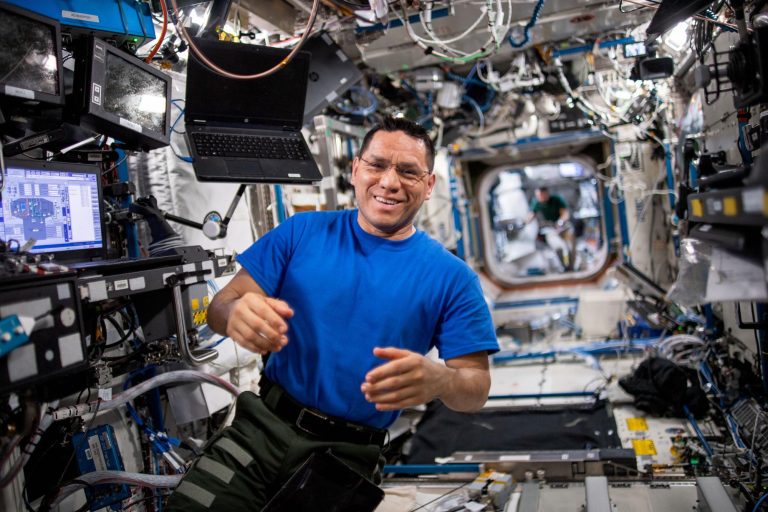
Now the record-holder for the longest single spaceflight by an American, NASA astronaut Frank Rubio is scheduled to depart the International Space Station and return to Earth Wednesday, Sept. 27. The agency will provide full coverage from hatch closing through landing.

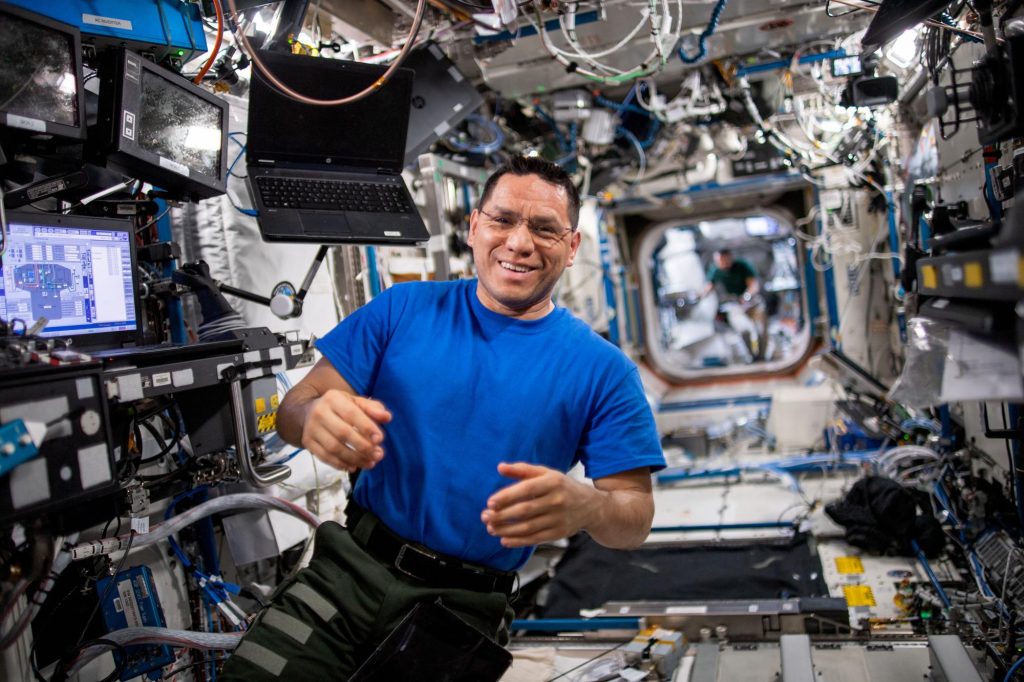
NASA astronaut and Expedition 69 Flight Engineer Frank Rubio poses for a portrait while working inside the International Space Station’s Destiny laboratory module. Credits: NASA

Coverage will begin at 12 a.m. EDT and will stream live on NASA Television, the NASA app, and the agency’s website. Watch online at:

https://www.nasa.gov/live

Rubio and Roscosmos cosmonauts Sergey Prokopyev and Dmitri Petelin will undock their Soyuz MS-23 spacecraft from the station’s Prichal module at 3:55 a.m. EDT. The trio will return after 371 days in space and a mission spanning 157.4 million miles and 5,963 orbits of the Earth. After undocking, the crew will head for a landing on the steppe of Kazakhstan, southeast of the town of Dzhezkazgan, at 7:17 a.m. (5:14 p.m. Kazakhstan time).

After landing, Rubio, Prokopyev and Petelin will be flown from the landing site to Karaganda, Kazakhstan. Rubio will then board a NASA plane back to Houston.

Rubio, who launched Sept. 21, 2022, became the new record holder for the longest single United States spaceflight on Sept. 11, after he surpassed the former record of 355 days held by NASA astronaut Mark Vande Hei.

The crewmates were originally scheduled to return to Earth in March, but the Soyuz MS-22 spacecraft they launched on experienced a coolant leak that resulted in an extension of their mission.

Mission coverage is as follows (all times Eastern):

12 a.m. – Farewells and hatch closing coverage begins (hatch closing scheduled at 12:20 a.m.)

3:30 a.m. – Undocking coverage begins (undocking scheduled at 3:55 a.m.)

6 a.m. – Deorbit burn and landing coverage begins (deorbit burn scheduled at 6:24 a.m.; landing scheduled at 7:17 a.m.)

Keep up with the International Space Station, its research, and crew at:

https://www.nasa.gov/station

-end-

Lora Bleacher /Julian Coltre
Headquarters, Washington
202-358-1100
[email protected] / [email protected]

Courtney Beasley
Johnson Space Center, Houston
281-483-5111
[email protected]

NASA Report Finds No Evidence That UFOs Are Extraterrestrial

0
NASA’s UAP study team and newly appointed director of UAP research represent growing efforts to study and declassify UFO-related data.

Chris Impey, University of Arizona

NASA’s independent study team released its highly anticipated report on UFOs on Sept. 14, 2023.

In part to move beyond the stigma often attached to UFOs, where military pilots fear ridicule or job sanctions if they report them, UFOs are now characterized by the U.S. government as UAPs, or unidentified anomalous phenomena.

Bottom line: The study team found no evidence that reported UAP observations are extraterrestrial.

I’m a professor of astronomy who has written extensively on astrobiology and the scientists who search for life in the universe. I have long been skeptical of the claim that UFOs represent visits by aliens to Earth.

From sensationalism to science

During a press briefing, NASA Administrator Bill Nelson noted that NASA has scientific programs to search for traces of life on Mars and the imprints of biology in the atmospheres of exoplanets. He said he wanted to shift the UAP conversation from sensationalism to one of science.

With this statement, Nelson was alluding to some of the more outlandish claims about UAPs and UFOs. At a congressional hearing in July, former Pentagon intelligence officer David Grusch testified that the American government has been hiding evidence of crashed UAPs and alien biological specimens. Sean Kirkpatrick, head of the Pentagon office charged with investigating UAPs, has denied these claims.

And the same week NASA’s report came out, Mexican lawmakers were shown by journalist Jaime Maussan two tiny, 1,000-year-old bodies that he claimed were the remains of “non-human” beings. Scientists have called this claim fraudulent and say the mummies may have been looted from gravesites in Peru.

A controversial journalist presented the Mexican government with 1,000-year-old bodies that he claimed were aliens.

Conclusions from the report

The NASA study team report sheds little light on whether some UAPs are extraterrestrial. In his comments, the chair of the study team, astronomer David Spergel stated that the team had seen “no evidence to suggest that UAPs are extraterrestrial in origin.”

Of the more than 800 unclassified sightings collected by the Department of Defense’s All-domain Anomaly Resolution Office and reported at the NASA panel’s first public meeting back in May 2023, only “a small handful cannot be immediately identified as known human-made or natural phenomena,” according to the report.

Many of the recent sightings can be attributed to weather balloons and airborne clutter. Historically, most UFOs are astronomical objects such as meteors, fireballs and the planet Venus.

Some sightings represent surveillance operations by foreign powers, which is why the U.S. military considers this a national security issue.

The report does offer recommendations to NASA on how to move these investigations forward.

Most of the UAP data considered by the study team comes from U.S. military aircraft. Analysis of this data is “hampered by poor sensor calibration, the lack of multiple measurements, the lack of sensor metadata, and the lack of baseline data.” The ideal set of measurements would include optical imaging, infrared imaging, and radar data, but very few reports have all these.

The NASA study team described in the report the types of data that can shed more light on UAPs. The authors note the importance of reducing the stigma that can cause both military and commercial pilots to feel that they cannot freely report sightings. The stigma stems from decades of conspiracy theories tied to UFOs.

The NASA study team suggests gathering sightings by commercial pilots using the Federal Aviation Administration and combining these with classified sightings not included in the report. Team members did not have security clearance, so they could look only at the subset of military sightings that were unclassified. At the moment, there is no anonymous nationwide UAP reporting mechanism for commercial pilots.

With access to these classified sightings and a structured mechanism for commercial pilots to report sightings, the All-domain Anomaly Resolution Office – the military office charged with leading the analysis effort – could have the most data.

NASA also announced the appointment of a new director of research on UAPs. This position will oversee the creation of a database with resources to evaluate UAP sightings.

Looking for a needle in a haystack

Parts of the briefing resembled a primer on the scientific method. Using analogies, officials described the analysis process as looking for a needle in a haystack, or separating the wheat from the chaff. The officials said they needed a consistent and rigorous methodology for characterizing sightings, as a way of homing in on something truly anomalous.

Spergel said the study team’s goal was to characterize the hay – or the mundane phenomena – and subtract it to find the needle, or the potentially exciting discovery. He noted that artificial intelligence can help researchers comb through massive datasets to find rare, anomalous phenomena. AI is already being used this way in many areas of astronomy research.

The speakers noted the importance of transparency. Transparency is important because UFOs have long been associated with conspiracy theories and government cover-ups. Similarly, much of the discussion during the congressional UAP hearing in July focused on a need for transparency. All scientific data that NASA gathers is made public on various websites, and officials said they intend to do the same with the nonclassified UAP data.

At the beginning of the briefing, Nelson gave his opinion that there were perhaps a trillion instances of life beyond Earth. So, it’s plausible that there is intelligent life out there. But the report says that when it comes to UAPs, extraterrestrial life must be the hypothesis of last resort. It quotes Thomas Jefferson: “Extraordinary claims require extraordinary evidence.” That evidence does not yet exist.The Conversation

Chris Impey, University Distinguished Professor of Astronomy, University of Arizona

This article is republished from The Conversation under a Creative Commons license. Read the original article (https://theconversation.com/nasa-report-finds-no-evidence-that-ufos-are-extraterrestrial-213528).

NASA Finalizes Coverage For First US Asteroid Sample Landing

0

The first asteroid sample collected in space by NASA will arrive on Earth Sunday, Sept. 24, and there are multiple events leading up to its landing.

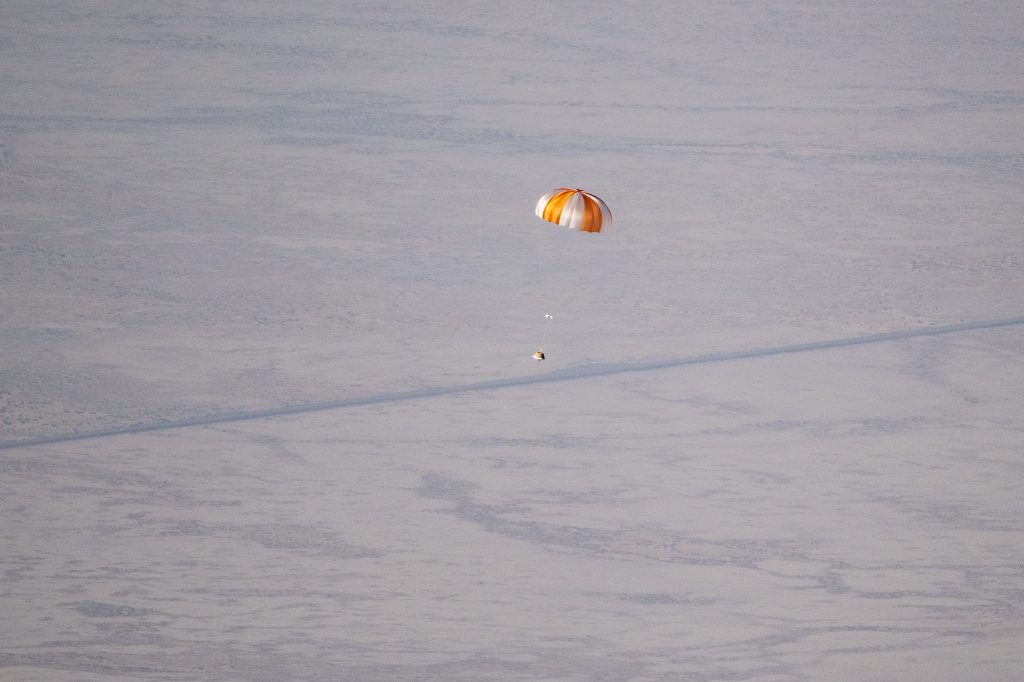
A training model of the OSIRIS-REx sample return capsule is seen during a drop test on Aug. 30, 2023, at the Department of Defense’s Utah Test and Training Range in preparation for the retrieval of the actual capsule on Sept. 24. Credits: NASA/Keegan Barber

NASA’s live coverage of the OSIRIS-REx (Origins, Spectral Interpretation, Resource Identification and Security – Regolith Explorer) capsule landing starts at 10 a.m. EDT (8 a.m. MDT) and will air on NASA TV, the NASA app, and the agency’s website. Watch online at:

https://www.nasa.gov/live

In addition to the English broadcast, NASA will stream coverage of the landing beginning at 10 a.m. EDT (8 a.m. MDT) in Spanish on X, Facebook, and YouTube.

Postlanding news conference

A post-landing news conference will occur about 5 p.m. EDT (3 p.m. MDT), when the sample capsule arrives at a temporary clean room on the military range. Coverage will air on NASA TV, the NASA app, and the agency’s website.

To submit questions during the briefing, media must send their full name, affiliation, email address, and phone number no later than two hours before the start of the call to Alana Johnson at: [email protected].

Prelanding media call

Prior to landing, the agency also will host a media call to provide a status update at 3 p.m. EDT (1 p.m. MDT) on Friday, Sept. 22.

To successfully deliver a sample from the near-Earth asteroid Bennu, spacecraft operators need to ensure OSIRIS-REx travels at the right speed and direction to release the sample capsule into the atmosphere, landing it on the U.S. Department of Defense’s Utah Test and Training Range. Mission leadership will discuss the results of the spacecraft’s final trajectory maneuvers, and expectations for the capsule’s entry, descent, and landing, and plans for recovery operations in Utah’s western desert.

Audio of the call will stream live on NASA’s website.

Participants include:

  • Lori Glaze, director, Planetary Sciences Division, NASA Headquarters, Washington
  • Rich Burns, OSIRIS-REx project manager, NASA’s Goddard Space Flight Center, Greenbelt, Maryland
  • Sandra Freund, OSIRIS-REx program manager, Lockheed Martin
  • Nicole Lunning, OSIRIS-REx curation lead, NASA’s Johnson Space Center, Houston
  • Dante Lauretta, OSIRIS-REx principal investigator, University of Arizona

To participate in the teleconference, members of the media must send their full name, affiliation, email address, and phone number no later than two hours before the start of the call to Alana Johnson at [email protected].

Two more OSIRIS-REx activities happening Sept. 22 include:

  • Remote interviews: NASA will offer live and taped interviews to reporters with members of the OSIRIS-REx team and subject matter experts. Interviews will be conducted remotely using video chat programs, primarily Zoom, in nine-minute time slots beginning at 6 a.m. EDT (4 a.m. MDT). Media can request interviews online.
  • Stamp first day of issue ceremony: The U.S. Postal Service will hold a first day of issue ceremony for a stamp featuring OSIRIS-REx at Clark Planetarium in Salt Lake City at 11 a.m. MDT. The USPS news release provides more information about the event, which media are invited to attend.

NASA’s Goddard Space Flight Center in Greenbelt, Maryland, provides overall mission management, systems engineering, and the safety and mission assurance for OSIRIS-REx. Dante Lauretta of the University of Arizona, Tucson, is the principal investigator. The university leads the science team and the mission’s science observation planning and data processing. Lockheed Martin Space in Littleton, Colorado, built the spacecraft and provides flight operations. Goddard and KinetX Aerospace are responsible for navigating the OSIRIS-REx spacecraft. Curation for OSIRIS-REx, including processing the sample when it arrives on Earth, will take place at NASA’s Johnson Space Center in Houston. International partnerships on this mission include the OSIRIS-REx Laser Altimeter instrument from CSA (Canadian Space Agency) and asteroid sample science collaboration with JAXA’s (Japan Aerospace Exploration Agency) Hayabusa2 mission.

OSIRIS-REx is the third mission in NASA’s New Frontiers Program, managed by NASA’s Marshall Space Flight Center in Huntsville, Alabama, for the agency’s Science Mission Directorate in Washington.

To learn more about the asteroid sample recovery mission visit:

https://www.nasa.gov/osiris-rex

-end-

Karen Fox / Alana Johnson
Headquarters, Washington
202-358-1275 / 202-358-1501
[email protected] / [email protected]

Rani Gran / Rob Garner
NASA’s Goddard Space Flight Center, Greenbelt, Md.
301-332-6975 / 301-286-5687
[email protected] / [email protected]

Accelerated Ice Breakup In Hudson Bay

0

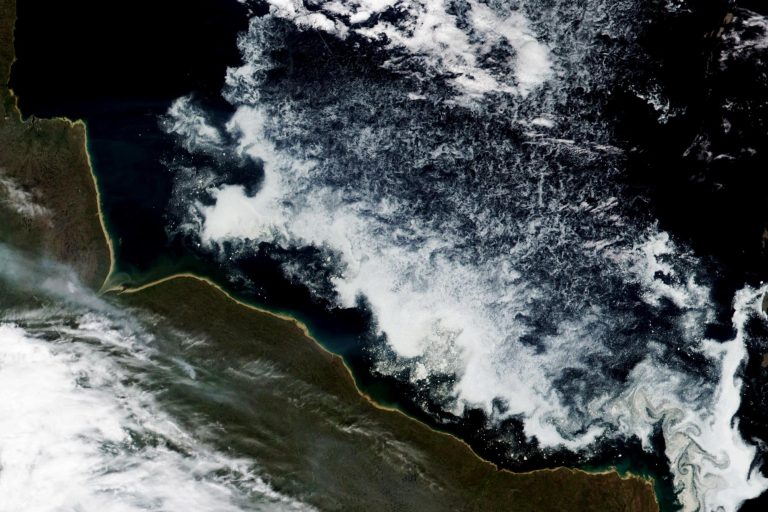
The Visible Infrared Imaging Radiometer Suite on the National Oceanic and Atmospheric Administration’s NOAA-20 satellite captured this image of fragmented ice in Hudson Bay on June 28, 2023. The sea ice typically melts away between June and August, and the bay begins to freeze over again in late October or November.

The ebb and flow of ice and its distribution play a vital role in the lives of many animals, especially polar bears. When there is ice in the bay, polar bears head out to hunt for ringed seals and other prey. When the ice melts, the bears retreat to shore, where they fast or feed on whatever bits of food they can find until the ice returns.

Warm weather in early June 2023 accelerated Hudson Bay’s ice breakup, according to data from the Canadian Ice Service. This left much of the bay with less ice than usual by the end of the month, especially in the western and central parts of the bay.

Image Credit: NASA/Wanmei Liang; NOAA

By: Monika Luabeya
Originally published at NASA

DROID 2 Captures The Wind

0

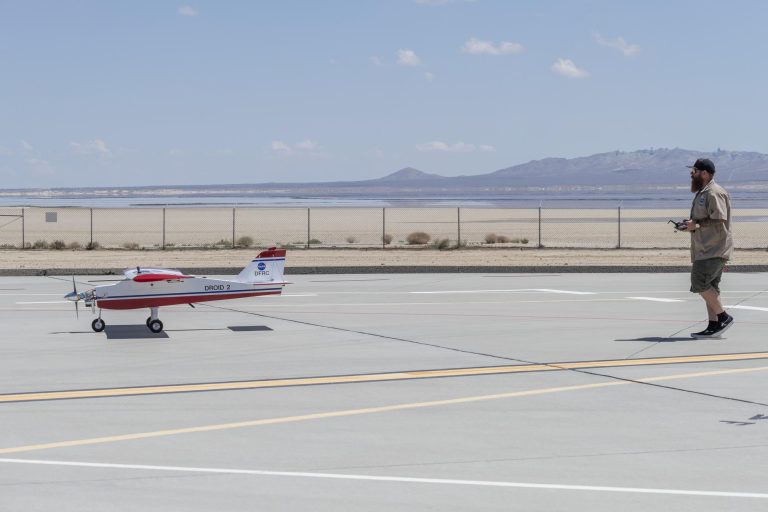
Justin Hall lands the Dryden Remotely Operated Integrated Drone 2 (DROID 2) aircraft at NASA’s Armstrong Flight Research Center in Edwards, California, on Aug. 22, 2023, as part of the Advanced Exploration of Reliable Operation at Low Altitudes: Meteorology, Simulation and Technology campaign. The data gathered by studying wind from the ground to 2,000 feet could improve the safety of takeoff and landing for future air taxis and improve weather forecasts.

DROID 2, a fixed wing aircraft, acted as a wind sensor during the study. The remotely piloted drone, with its 10-foot wingspan, flew repeated passes at different predetermined altitudes. It completed the last flights for the campaign on Aug. 31.

See more photos from the wind study (https://images.nasa.gov/search?q=AFRC2023-0119&page=1&media=image&yearStart=1920&yearEnd=2023).

Image Credit: NASA/Steve Freeman

By: Monika Luabeya
Originally published at NASA

UK Space Sector Has Sights Set On Artificial Intelligence And Machine Learning Professionals

0

New recruits with skills in AI and machine learning are in high demand to harness the benefits of emerging technologies in the UK space sector.

New recruits with skills in artificial intelligence (AI) and machine learning are in high demand to harness the benefits of emerging technologies in the UK space sector, according to a new survey.

The latest research into space skills across businesses, government and academia shows that nearly all space organisations experience some skills-related issues (95%), well over a third (37%) are missing expertise in software and data analysis, and nearly a quarter (21%) are expressing the need for AI and machine learning specifically, higher than any other technical area.

According to the UK Space Agency’s Space Sector Skills Survey 2023 – developed in partnership with the Space Skills Alliance and know.space – software and data analysis accounted for half of all vacancies across the sector.

As set out in the ‘National Space Strategy in Action’ the space sector needs a strong pipeline of talent, but the supply of skilled and experienced professionals has not kept pace with such a fast-growing industry, which has more than doubled in income over the last decade (from £8.3 billion in 2009 to £17.5 billion in 2021).

That’s why the UK Space Agency plans to invest £15 million in education, skills and outreach over the next two years, a near fivefold increase in support for these activities.

Professor Anu Ojha, Director for Championing Space at the UK Space Agency, said:

Our rapidly evolving space sector is home to ambitious organisations pursuing cutting edge science and technology, and generating significant investment opportunities. We’re committed to catalysing this growth and ensuring a strong pipeline of highly skilled professionals into the sector.

The UK Space Agency is investing £15 million through our Inspiration Programme to deliver education, skills, and outreach interventions over the next two years as part of its commitment to delivering a skilled, diverse, and sustainable space sector workforce now and in the future.

The valuable information from this report strengthens this work by helping us build a clear picture of the skills landscape across the board, so we know where to focus our support.

The survey found that, while more larger organisations report experiencing skills gaps than smaller companies (65% and 52%, respectively), this is lower compared to their equivalent organisations across all other business sectors (86%).

However, while the need for AI and machine learning, as well as data analysis, has risen over the last three years, the demand for software and radio frequency engineering experts has decreased.

This is due to both successful recruitment and upskilling within organisations – 72% have provided training in the last year – combined with changing priorities.

Following the rapid advances of AI tools such as ChatGPT, space sector leaders anticipate a shift in skills needs over the next three years, with even higher demand for software and data specialists predicted by almost 41% of organisations.

What does this mean for the future?

When asked about the future, half of respondents expect their space skills needs to change over the next three years, with 70% expecting continued need for AI and machine learning skills, followed by 58% predicting a need for stronger strategy and leadership skills.

In some areas, leaders anticipate a higher demand for certain skills than they are currently experiencing. For instance, nearly a third (30%) foresee a need for stronger cyber security expertise in their workforce in the next three years, compared to the 15% feeling this gap now.

What are the challenges for recruiting these skills?

The study shows that skills gaps are linked to challenges in recruiting, with three quarters (76%) saying they struggle to recruit staff with necessary skills.

Most said that competition from other sectors is the biggest challenge (68%), followed by competition from other space companies (45%).

Retention issues have increased from 52% of large and medium organisations who reported this in 2020 compared to 61% (large) and 71% (medium) reporting this year. This is mostly due to staff poaching (57%) and lower pay levels compared to some other sectors (48%).

How is the space sector addressing this challenge?

Most large space organisations (87%) provide training to help upskill their workforce and are increasing the number of apprenticeships on offer (30% this year compared to 20% in 2020).

Looking across the board of organisation size, almost three quarters (72%) provide training, compared with the average 48% rate across all sectors.

Provisions mostly take the form of on-the-job formal (92%) and informal (84%) learning, with 54% offering external training and 30% offering sponsorship for further study (apprenticeships or degrees).

The UK Space Agency is supporting the growth of the national space workforce by committing £15 million across programmes designed to inspire young people from all backgrounds to pursue STEM careers, empower teachers to include engaging space learning experiences in the classroom, and help space sector employers open pathways for more people taking their first steps into the industry.

Originally published at UK Space Agency (https://www.gov.uk/government/news/uk-space-sector-has-sights-set-on-artificial-intelligence-and-machine-learning-professionals)

Source: cyberpogo.com

NASA Shares Unidentified Anomalous Phenomena Independent Study Report

0

In response to a recommendation by an independent study team for NASA to play a more prominent role in understanding Unidentified Anomalous Phenomena (UAP), the agency announced Thursday it is appointing a director of UAP research.

The study team’s full report, which includes a foreword from NASA noting the new role, is available on the agency’s website:

https://go.nasa.gov/3PED0qv

NASA commissioned the independent study to better understand how the agency can contribute to ongoing government efforts to further the study observations of events in the sky that cannot be identified as balloons, aircraft, or as known natural phenomena from a scientific perspective.

“At NASA, it’s in our DNA to explore – and to ask why things are the way they are. I want to thank the Independent Study Team for providing insight on how NASA can better study and analyze UAP in the future,” said NASA Administrator Bill Nelson. “NASA’s new Director of UAP Research will develop and oversee the implementation of NASA’s scientific vision for UAP research, including using NASA’s expertise to work with other agencies to analyze UAP and applying artificial intelligence and machine learning to search the skies for anomalies. NASA will do this work transparently for the benefit of humanity.”

The report contains the external study team’s findings and recommendations which aim to inform NASA on what possible data is available to be collected and how the agency can help shed light on the origin and nature of future UAP. The report is not a review or assessment of previous UAP incidents.

While NASA is still evaluating the report and assessing the independent study team’s findings and recommendations, the agency is committed to contributing to the federal government’s unified UAP effort by appointing a director of UAP research.

A NASA liaison to the Department of Defense previously covered limited UAP activities for the agency, and the director role will centralize communications, resources, and data analytical capabilities to establish a robust database for the evaluation of future UAP. The director also will leverage NASA’s expertise in artificial intelligence, machine learning, and space-based observation tools to support and enhance the broader government initiative on UAP.

The independent study team’s overall recommendation for NASA from its report is that the agency can play a prominent role in the government’s effort to understand UAP by furthering the study and data collection of UAP. The external study recommends that NASA use its open-source resources, extensive technological expertise, data analysis techniques, federal and commercial partnerships, and Earth-observing assets to curate a better and robust dataset for understanding future UAP.

NASA also will advance citizen reporting by engaging with the public and commercial pilots to build a broader, more reliable UAP dataset to use to identify future UAP incidents as well as destigmatize the study of UAP.

“Data is the critical lifeblood needed to advance scientific exploration, and we thank the independent study team members for lending NASA their expertise towards identifying what available data is possible to understand the nature and origin of future UAP,” said Nicola Fox, associate administrator, Science Mission Directorate at NASA Headquarters in Washington. “The director of UAP Research is a pivotal addition to NASA’s team and will provide leadership, guidance and operational coordination for the agency and the federal government to use as a pipeline to help identify the seemingly unidentifiable.”

The independent study team, set up outside of NASA, used unclassified data from civilian government entities, commercial data, and data from other sources to inform their findings and recommendations in the report. There are currently a limited number of high-quality observations of UAP, which currently make it impossible to draw firm scientific conclusions about their nature.

“Using unclassified data was essential for our team’s fact-finding, open-communication collaboration, and for upholding scientific rigor to produce this report for NASA,” said David Spergel, president of the Simons Foundation and chair of the UAP independent study team. “The team wrote the report in conjunction with NASA’s pillars of transparency, openness and scientific integrity to help the agency shed light on the nature of future UAP incidents. We found that NASA can help the whole-of-government UAP effort through systematic data calibration, multiple measurements and ensuring thorough sensor metadata to create a data set that is both reliable and extensive for future UAP study.”

The UAP independent study team is a counsel of 16 community experts across diverse areas on matters relevant to potential methods of study for unidentified anomalous phenomena. NASA commissioned the study to examine UAP from a scientific perspective and create a roadmap for how to use data and the tools of science to move our understanding of UAP forward.

For more information about NASA’s UAP work:

https://science.nasa.gov/uap/

-end-

Katherine Rohloff
Headquarters, Washington
202-358-1600
[email protected]

Image credits: NASA

Bristol Set To Host UK’s Most Powerful Supercomputer To Turbocharge AI Innovation

0

A new supercomputer set is to be built in Bristol, in a move to drive pioneering AI research and innovation in the UK.

  • UK AI Research Resource dubbed Isambard-AI will be one of Europe’s most powerful supercomputers
  • new facility will serve as national resource for researchers and industry experts spearheading AI innovation and scientific discovery
  • plans for the supercomputer backed by £900 million investment announced in March to transform UK’s computing capacity

A new supercomputer set to be one the most powerful in Europe is to be built in Bristol, in a move to drive pioneering AI research and innovation in the UK.

The UK government has confirmed the University of Bristol will host the new AI Research Resource (AIRR), which will serve as a national facility to help researchers maximise the potential of AI and support critical work into the potential and safe use of the technology.

The world-class AIRR cluster will vastly increase the UK’s compute capacity – essential to achieving the UK’s AI ambitions and securing its place as a world-leader in harnessing the rapidly developing technology. The cluster, which will be made up of thousands of state-of-the-art graphics processing units, or GPUs, will be able to train the large language models that are at the forefront of AI research and development today.

Compute refers to the systems assembled at scale to process complicated tasks, and is integral not just to the science and technology ecosystem but to the running of modern economies. This new national facility will help to underpin the UK’s next-generation compute infrastructure, in line with the recommendations of the independent Future of Compute Review.

The new AIRR will be dubbed Isambard-AI after Isambard Kingdom Brunel, the engineer whose groundbreaking creations – including Bristol’s famous Suspension Bridge – transformed Britain and revolutionised transport and construction.

Science, Innovation and Technology Secretary Michelle Donelan said:

We are backing the future of British innovation, investing in a world-leading AI Research Resource in Bristol that will catalyse scientific discovery and keep the UK at the forefront of AI development.

The Isambard-AI cluster will be one of the most powerful supercomputers in Europe, and will help industry experts and researchers harness the game-changing potential of AI, including through the mission-critical work of our Frontier AI Taskforce.

Plans for the AIRR were announced in March, backed by a £900 million investment to transform the UK’s computing capacity and establish a dedicated AI Research Resource.

Bristol already plays host to cutting-edge computing technology, with the Isambard 3 supercomputer due to be installed later this year to support research in AI and machine learning, while the University of Bristol is home to the UKRI Centre for Doctoral Training in Interactive Artificial intelligence. Both Isambard 3 and Isambard-AI will be based at the National Composites Centre, in collaboration with the GW4 group of universities – an alliance made up of the Universities of Bath, Bristol, Cardiff and Exeter.

Simon McIntosh-Smith, Professor of High Performance Computing at the University of Bristol and project lead, said:

We’re delighted to be chosen as the site to host the UK’s first ever Artificial Intelligence Research Resource.

Isambard-AI will be one of the world’s first, large-scale, open AI supercomputers, and builds on our expertise designing and operating cutting-edge computational facilities, such as the incoming Isambard 3.

Professor Phil Taylor, Pro Vice-Chancellor for Research and Enterprise at the University of Bristol, said:

AI is expected to be as important as the steam age, with ramifications across almost every area of academia and industry. Bristol’s proud to be at the forefront of this revolution.

To be selected to host a new national AI supercomputer speaks to the University’s cutting-edge research into AI and machine learning.

We have unique expertise in rapidly building and deploying large-scale research computing infrastructure and we’re excited to play an integral part in establishing the UK as an international hub for AI.

The UK will host the world’s first AI Safety Summit on 1 and 2 November, bringing together leading countries, technology organisations, academic and civil society to discuss the risks created or exacerbated by the most powerful AI systems, and how to address and mitigate them. The Summit will also look at how the benefits of safe AI can be unlocked to improve lives.

Source: cyberpogo.com

Apple unveils Apple Watch Ultra 2

0

12 September 2023

PRESS RELEASE

Apple unveils Apple Watch Ultra 2

Apple’s most rugged and capable watch is now even better with performance updates, a new double tap gesture, and carbon neutral options

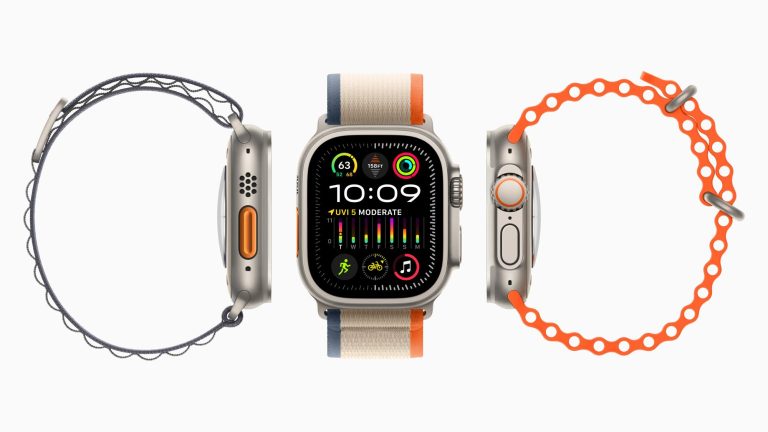
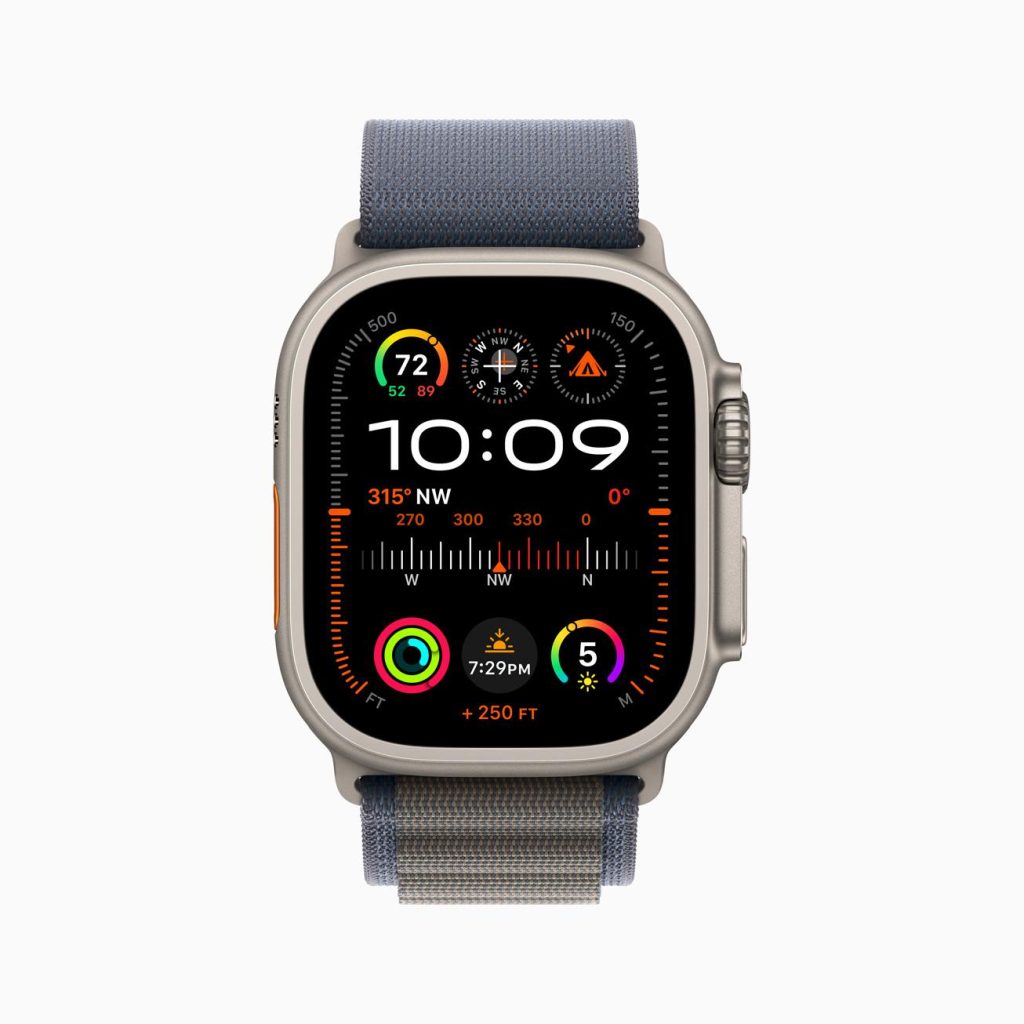
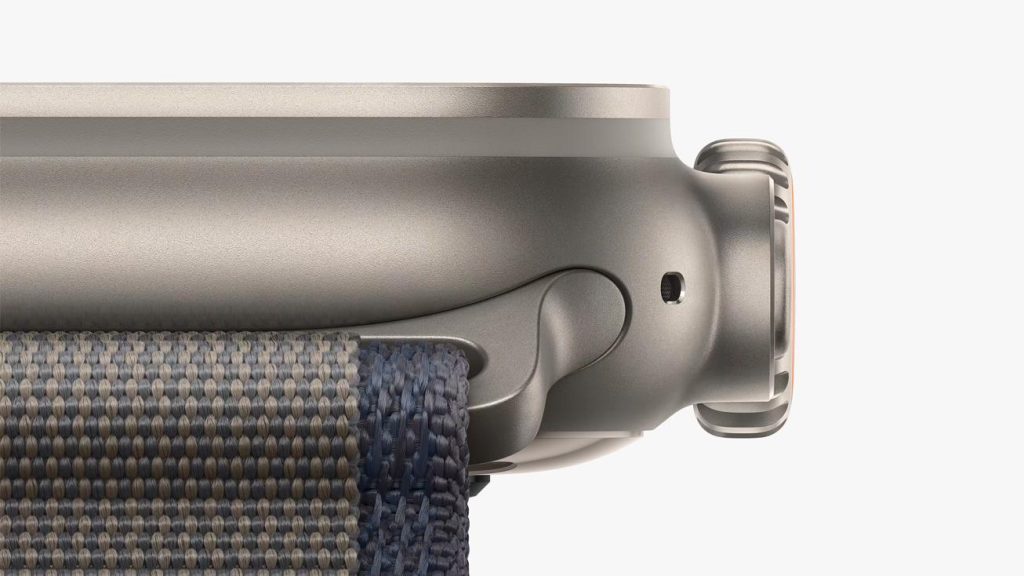
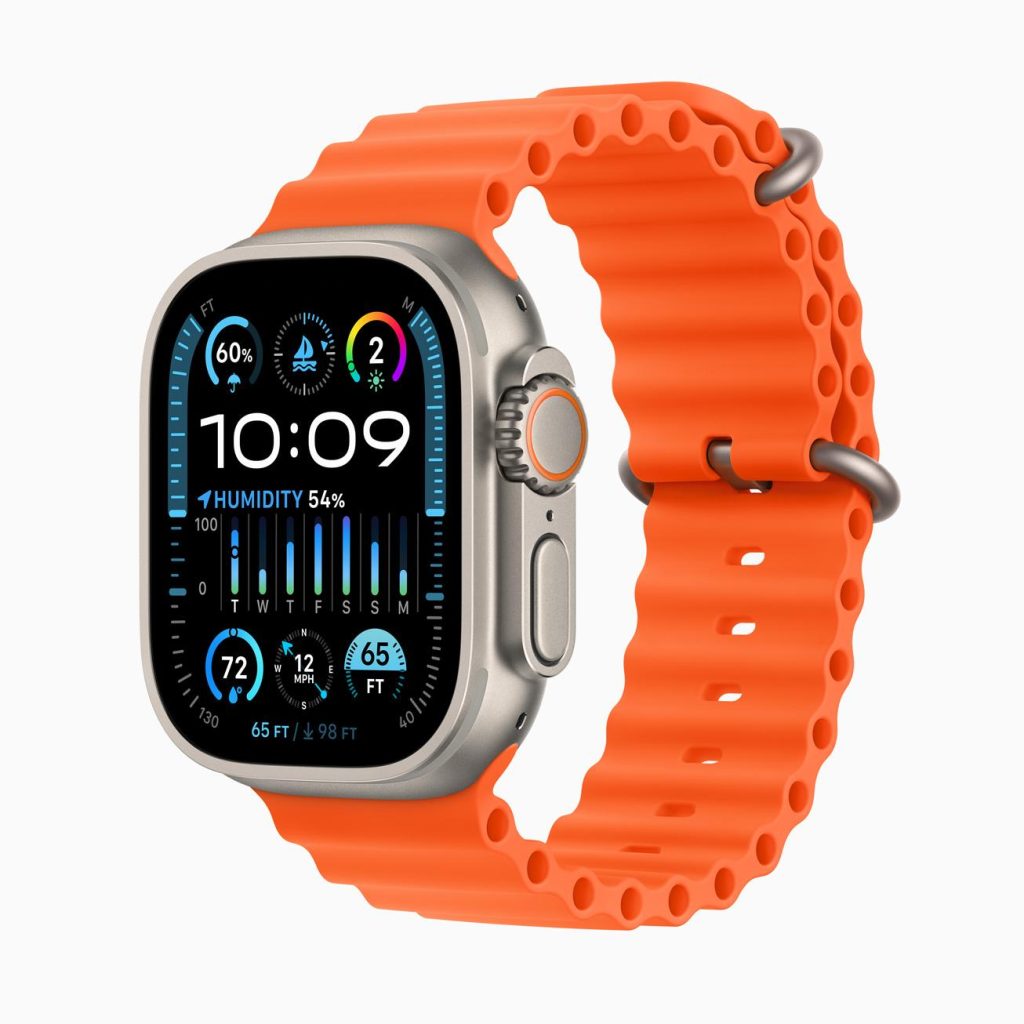
CUPERTINO, CALIFORNIA Apple today introduced Apple Watch Ultra 2, bringing new features to Apple’s most capable and rugged smartwatch, and achieving a significant environmental milestone. Apple Watch Ultra 2 offers all of the features users love about Ultra, plus the powerful new S9 SiP, a magical new double tap gesture, Apple’s brightest display ever, expanded altitude range, on-device Siri, Precision Finding for iPhone, and advanced capabilities for water adventures. Apple Watch Ultra 2 runs watchOS 10, which delivers redesigned apps, the new Smart Stack, new cycling experiences, features to help explore the outdoors, and a new watch face — Modular Ultra. With all the new advancements, Apple Watch Ultra 2 has the same 36-hour battery life with regular use and up to 72 hours in Low Power Mode.

For the first time, customers can choose a carbon neutral option of any Apple Watch, representing a significant milestone toward Apple 2030: Apple’s plan to be carbon neutral across its entire business, manufacturing supply chain, and product life cycle by 2030.

Apple Watch Ultra 2 can be ordered today, with availability beginning Friday, September 22.

Apple Watch Ultra 2 offers an expanded altitude range and on-device Siri, and features in watchOS 10 offer new cycling experiences and help users explore the outdoors.

“This year we’ve made our most rugged and capable Apple Watch even better,” said Jeff Williams, Apple’s chief operating officer. “Apple Watch Ultra 2 is our most advanced Apple Watch, with great performance and feature updates. It’s perfect for anyone who wants our biggest, brightest display, longest battery life, and best GPS of any Apple Watch, all in a stunning design.”

Powerful New S9 SiP

Apple Watch Ultra 2 is powered by custom Apple silicon in the all-new S9 SiP. Apple’s most powerful watch chip yet delivers systemwide improvements and brand-new features, including a new double tap gesture and on-device Siri with the ability to access and log health data privately and securely. Apple Watch Ultra 2 also has a new 4-core Neural Engine that can process machine learning tasks up to twice as fast as the original Apple Watch Ultra.

Double Tap Gesture

Innovations such as the Digital Crown and Taptic Engine — along with gestures like tap, swipe, wrist raise, and cover to mute — make Apple Watch simple and intuitive to use. With a new double tap gesture, users can easily control Apple Watch Ultra 2 using just one hand and without touching the display. Users can tap the index finger and thumb of their watch hand together twice to quickly and conveniently perform many of the most common actions on Apple Watch Ultra 2. Double tap will also open the Smart Stack from the watch face, and another double tap will scroll through widgets in the stack.

By tapping the index finger and thumb of the watch hand together twice, users can perform many of the most common actions on Apple Watch Ultra 2.

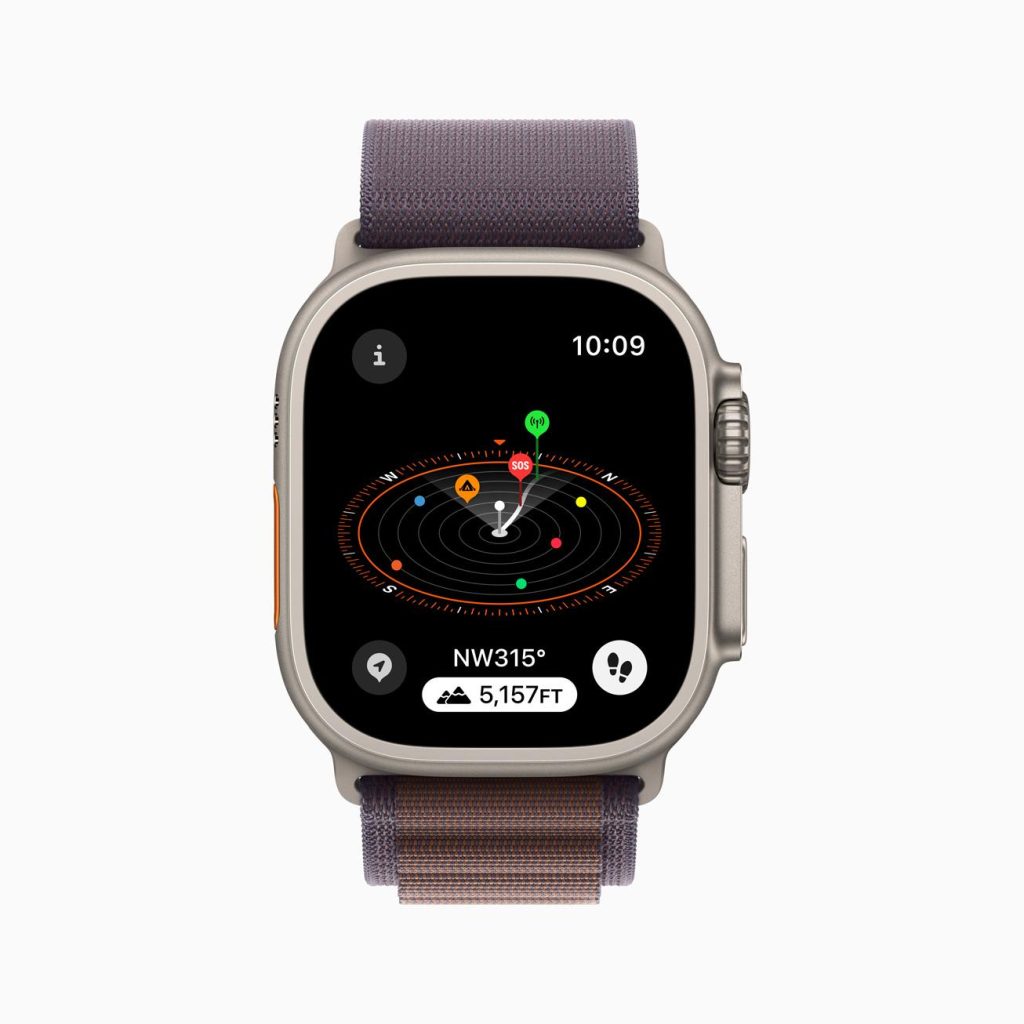
Double tap controls the primary button in an app so it can be used to stop a timer, play and pause music, or snooze an alarm. The gesture can be used to answer and end a phone call, take a photo with the Camera Remote on Apple Watch, or even switch to the new Elevation view in the Compass app to see the relative elevation of saved waypoints.

The new double tap gesture is enabled by the faster Neural Engine in Apple Watch Ultra 2, which processes data from the accelerometer, gyroscope, and optical heart sensor with a new machine learning algorithm. The algorithm detects the unique signature of tiny wrist movements and changes in blood flow when the index finger and thumb perform a double tap. The double tap gesture will be available in a software update next month.

Double tap controls the primary button in an app, so it can be used to play and pause music, pick up a phone call, or stop a timer.

Brighter Display

A new advanced display architecture pushes the maximum brightness of Apple Watch Ultra 2 to 3000 nits — 50 percent brighter than the first generation of Apple Watch Ultra and the brightest display Apple has ever designed — for greater readability in harsh sunlight. For dark rooms or early mornings, the display can also lower to just one nit so as not to disturb people close by. Flashlight also benefits from the new display architecture; rotating the Digital Crown temporarily doubles the brightness to better light the way.

A new advanced display architecture pushes the maximum brightness of Apple Watch Ultra 2 to 3000 nits for greater readability in harsh sunlight.

Modular Ultra Watch Face

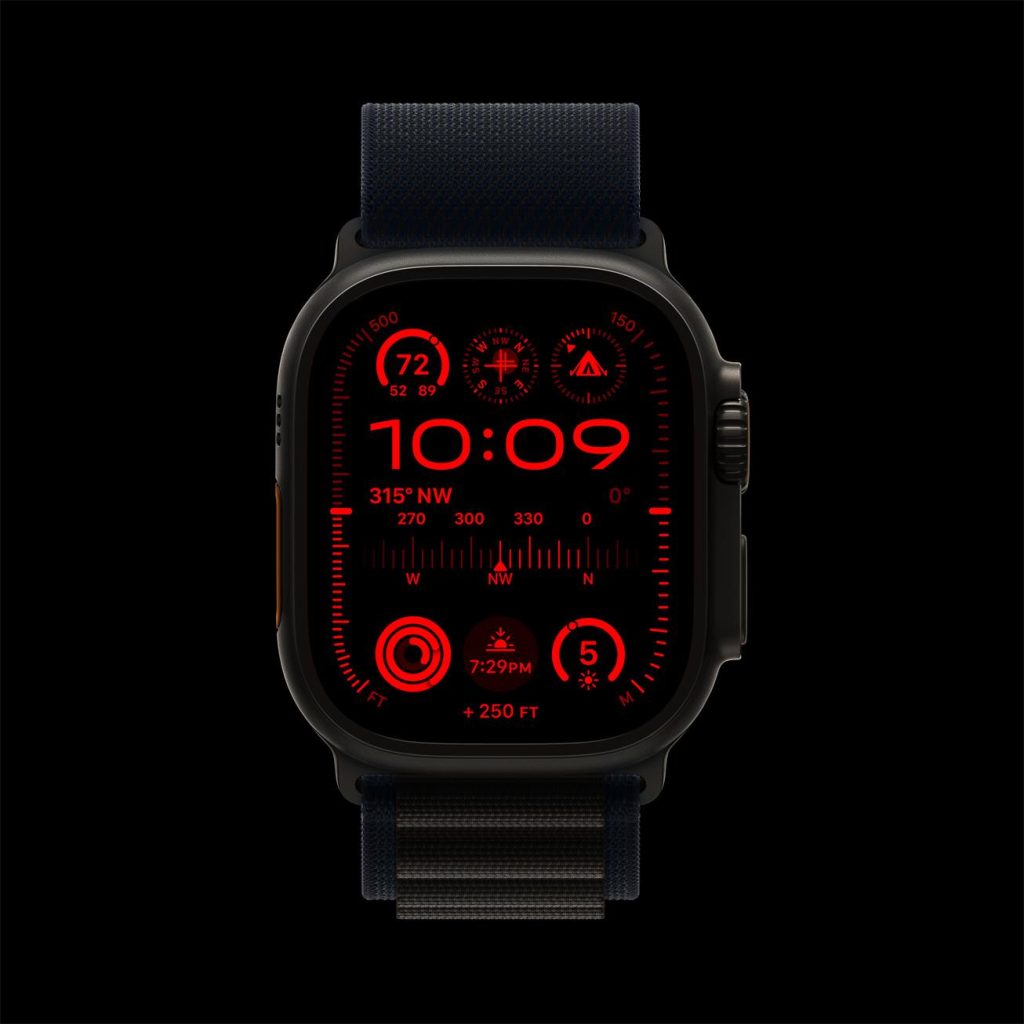
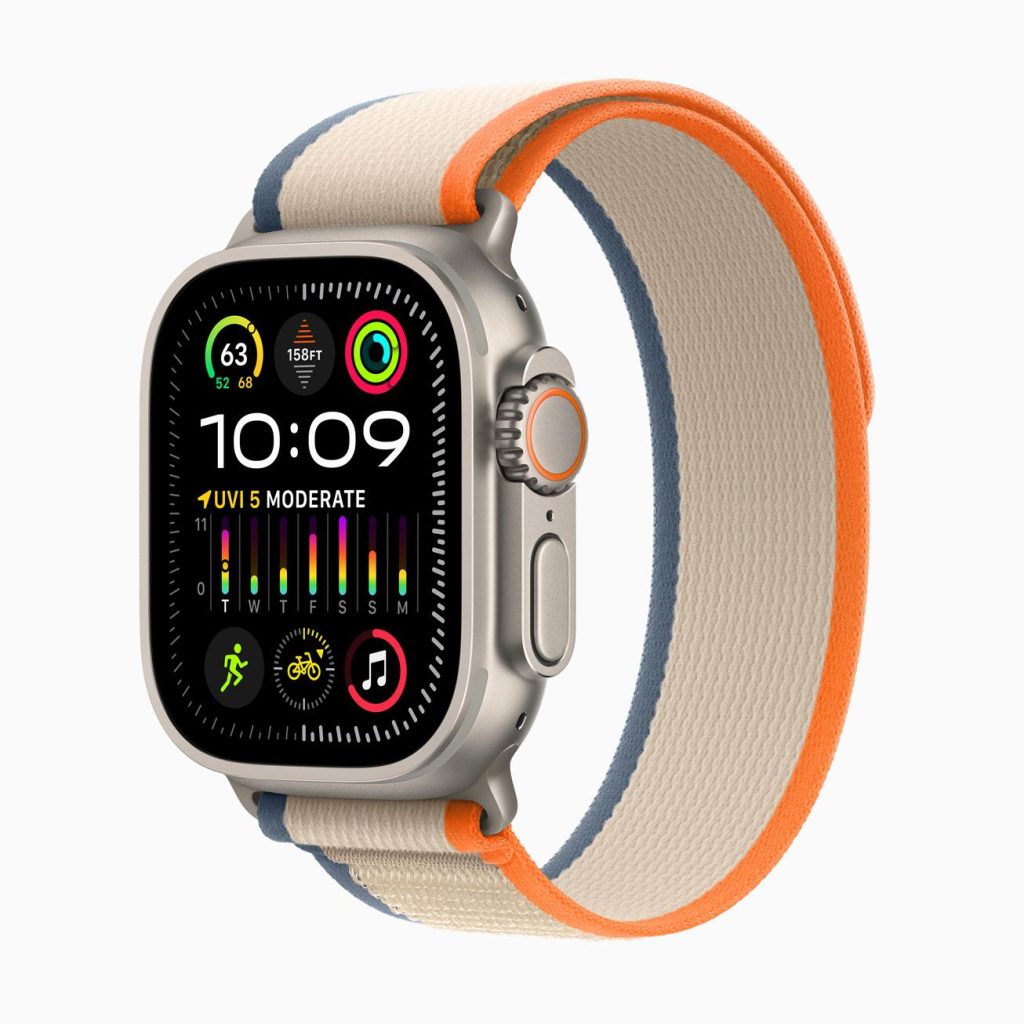
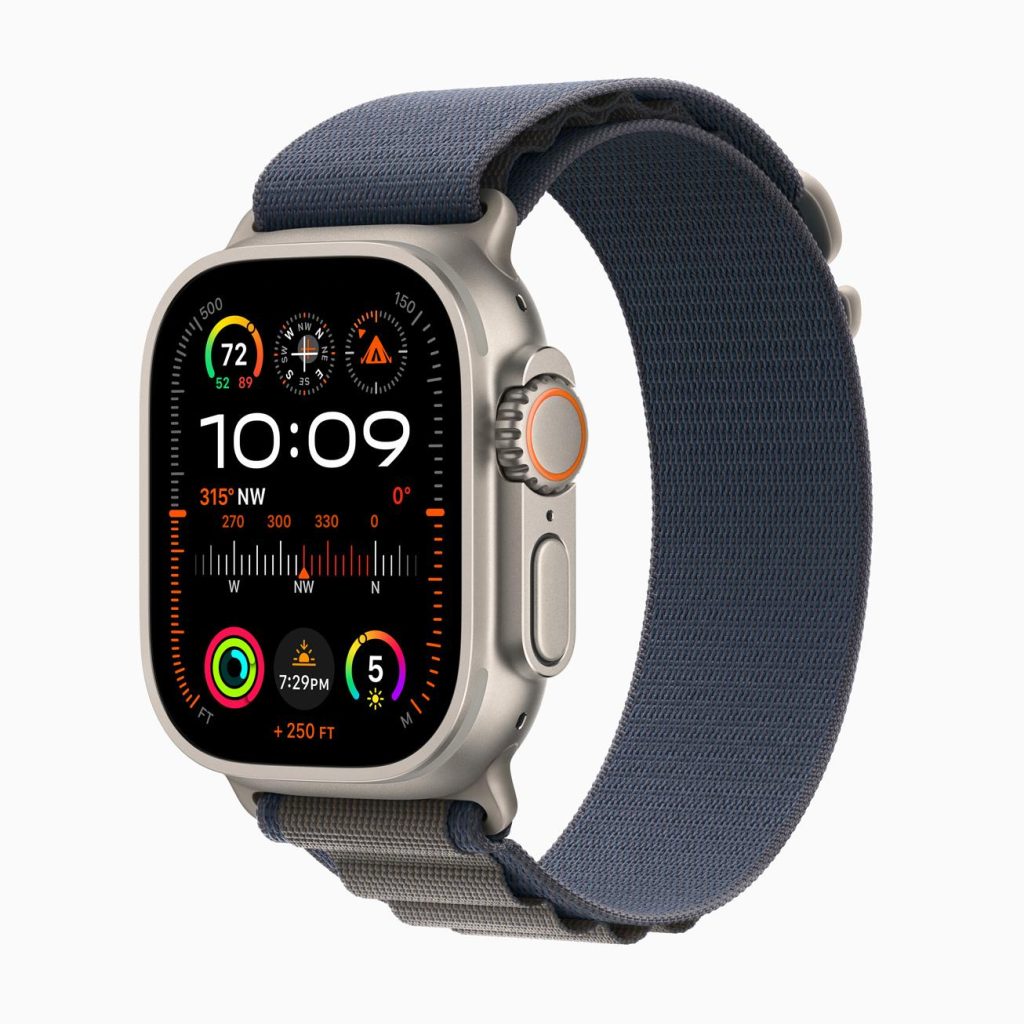
A new watch face designed for Apple Watch Ultra — Modular Ultra — takes advantage of the large display, using the outermost edge to present real-time data, including seconds, altitude, or depth. It offers the most complications of any Apple digital watch face to customise for sports, outdoor adventures, and ocean and water activities.

Tested for Extremes

Apple Watch Ultra 2 is designed for extremes and has been tested for use across the largest range of altitudes for any Apple product, from 500 meters below sea level to explore the lowest valleys, and up to 9,000 meters to ascend the world’s tallest peaks.

Recreational Scuba Diving and Freediving

Apple Watch Ultra is perfect for water sports, including extreme activities like kitesurfing and wakeboarding, along with recreational scuba diving to 40 meters — and now freediving — with the updated Oceanic+ app from Huish Outdoors.1

The built-in Depth app now saves a log of each session so users can review the most recent sessions on Apple Watch Ultra or view the complete history of all dives with a GPS entry point in the Fitness app on iPhone.

The built-in Depth app now saves a log of each session so users can review the most recent sessions on Apple Watch Ultra.

During a freedive with the Oceanic+ app, users will see critical data like depth and elapsed time, and receive target depth alerts, all in big, bold, glanceable text. Between dives, heart rate zones help users monitor and lower their heart rate, and preset alarms like surface time and elapsed session time guide users through each training session. The detailed logbook provides a full profile, including descent and ascent speeds.

During a freedive with the Oceanic+ app, users will see critical data like depth and elapsed time, and receive target depth alerts, all in big, bold, glanceable text.

On-Device Siri with Ability to Access and Log Health Data

For the first time on Apple Watch, Siri requests can be processed on device. For requests that do not require information from the internet, like starting a workout or setting a timer, Siri does not rely on Wi-Fi or cellular networks, resulting in quicker and more reliable responses. The powerful Neural Engine also makes dictation up to 25 percent more accurate.

On-device processing is private and secure, and now Siri can be used to access data from the Health app for health- and fitness-related queries. For example, a user can ask how many hours of sleep they had the previous night, for progress on closing their Activity rings, to start an outdoor run or cycling workout, or make requests like setting a waypoint with just their voice, even with no connectivity. Users can also make Siri requests on Apple Watch Ultra 2 to log health data such as their weight, body temperature, period, or medications taken.2

Precision Finding

The ability to use Apple Watch to find iPhone is a favourite user feature. Now, the S9 SiP includes a second-generation Ultra Wideband chip to enable Precision Finding for the iPhone 15 family, which has the same chip. Precision Finding provides distance and direction, as well as visual, haptic, and audio guidance to a misplaced iPhone, even if it’s in a different room or a user doesn’t remember where it’s been stowed after a dive, for example.

The S9 SiP features second-generation Ultra Wideband to enable Precision Finding, providing distance and direction, as well as visual, haptic, and audio guidance to a misplaced iPhone.

Featuring watchOS 10

Apple Watch Ultra 2 runs watchOS 10, a milestone update that includes:

  • A fresh approach to quickly view information with redesigned apps and a new Smart Stack to show relevant widgets right when they’re needed.
  • Delightful new watch faces in addition to the new Modular Ultra face: Snoopy, Palette, Solar Analog, and Nike Globe.
  • Night Mode now uses the ambient light sensor to automatically activate in the dark.
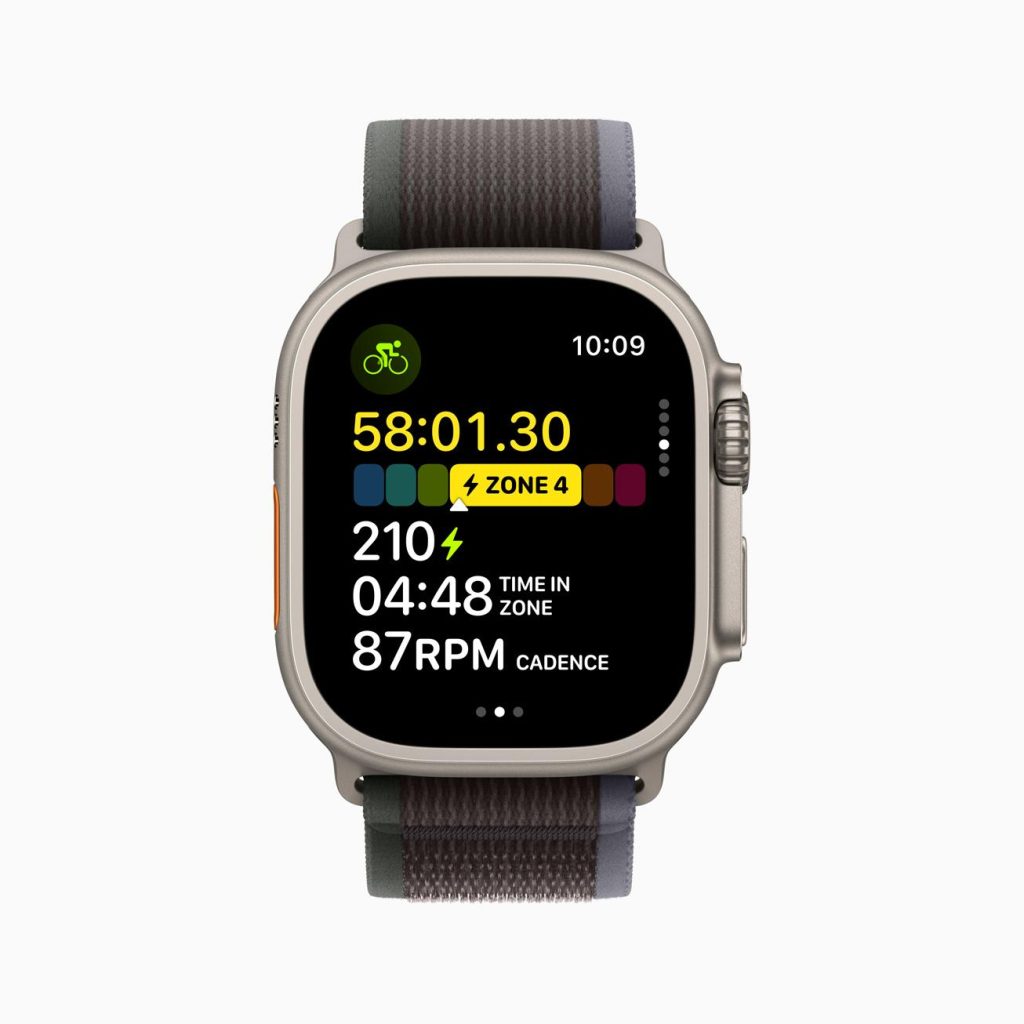
  • Bluetooth connectivity for power meters, speed sensors, and cadence sensors arrives for cyclists, unlocking new metrics and Workout Views, and cycling workouts. Power Zones help users get the most out of training.
  • Cycling workouts can automatically show up as a Live Activity on iPhone and can utilise the full screen when tapped.
  • The updated Compass app displays current elevation in real time and includes a 3D view of waypoints showing relative elevation.
  • New topographic maps in the Maps app show important details like points of interest and trailheads, and provide helpful details such as hill shading, contour lines, elevation, and cellular and Emergency SOS waypoints.
  • Additional tools to support mental health with state of mind logging in the Mindfulness app.
  • The ability to measure time spent in daylight using the ambient light sensor to help reduce the risk of myopia.

Carbon Neutral Models

Select case and band combinations of Apple Watch Ultra 2, Apple Watch SE, and the new Apple Watch Series 9 are Apple’s first-ever carbon neutral products. As part of Apple 2030, the carbon footprint of Apple Watch Ultra 2 has been significantly decreased. Emissions were reduced from the three biggest sources of greenhouse gases — materials, electricity, and transportation. The small amount of emissions remaining are offset with high-quality carbon credits from nature-based projects. Apple Watch Ultra 2 paired with an Alpine Loop or Trail Loop features 95 percent recycled titanium, compared with no recycled titanium in the first Apple Watch Ultra.3 A new logo on Apple Watch Ultra 2 packaging indicates models that are carbon neutral.

Lineup

  • Apple Watch Ultra 2 is available in 49 mm, and is carbon neutral when paired with a new Trail Loop or Alpine Loop.
  • New band colours are available for the Alpine Loop (blue, indigo, olive), Trail Loop (orange/beige, green/gray, blue/black), and Ocean Band (blue, orange).
  • All new Apple Watch Trail Loop and Alpine Loop bands are carbon neutral and contain over 30 percent recycled content.

Pricing and Availability

  • Customers in Australia, Canada, France, Germany, India, Japan, the UAE, the U.K., the U.S., and more than 40 other countries and regions can order Apple Watch Ultra 2 today, with availability in stores beginning Friday, September 22.
  • Apple Watch Ultra 2 is £799 .
  • watchOS 10 will be available for Apple Watch Series 4 and later on Monday, September 18, and requires iPhone Xs or later running iOS 17. Not all features are available on all devices and in all regions.
  • Three months of Apple Fitness+ are included for customers who purchase Apple Watch Series 9, Apple Watch SE, Apple Watch Ultra 2, or a new Apple Watch Series 4 or later.
  • For more information on Apple 2030, visit apple.com/uk/2030.

About Apple Apple revolutionised personal technology with the introduction of the Macintosh in 1984. Today, Apple leads the world in innovation with iPhone, iPad, Mac, Apple Watch, and Apple TV. Apple’s five software platforms — iOS, iPadOS, macOS, watchOS, and tvOS — provide seamless experiences across all Apple devices and empower people with breakthrough services including the App Store, Apple Music, Apple Pay, and iCloud. Apple’s more than 100,000 employees are dedicated to making the best products on earth, and to leaving the world better than we found it.

  1. The Oceanic+ app requires a subscription.
  2. These capabilities will be available in a software update later this year, starting in English and Mandarin; they require the download of speech models.
  3. This applies to Apple Watch Ultra 2 paired with a Trail Loop or Alpine Loop.

Press Contacts

Aileen Tappin

Apple

[email protected]

020 3284 6333