For those who are on gift-giving exchange that ranges up to maximum budget of a 100 bucks, these are some of the deals we found that will meet that criteria. Some are even discounted, be sure to check it out before the promo ends.
“Get the most out of your shopping with an Amazon Prime membership! Sign up now to enjoy free one-day delivery, unlimited streaming, exclusive deals, membership perks and more. Sign up today to enjoy a 30-day free trial and if you’re a student enjoy up to 6 months free trial. Click here to signup now! 👉 https://amzn.to/46Jm3AX”
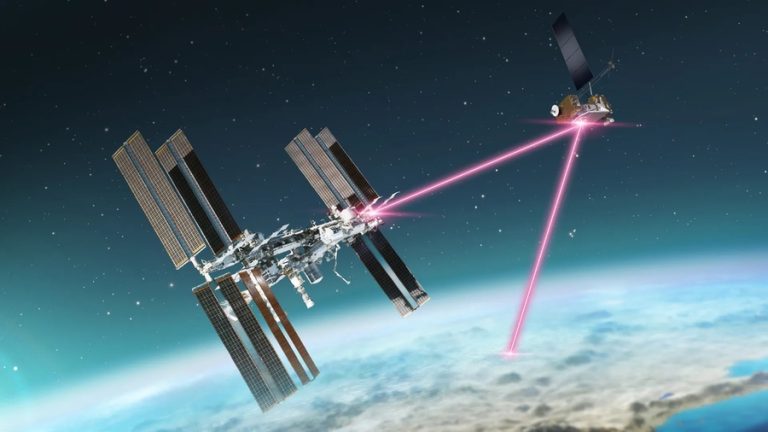
This laser communications terminal, developed at Lincoln Laboratory, aims to transmit data at high rates from the ISS to ground stations via NASA’s first two-way laser communications relay system.
Ariana Tantillo | MIT Lincoln Laboratory MIT News (https://news.mit.edu/2023/illuma-t-launches-international-space-station-1113)
Lincoln Laboratory’s ILLUMA-T, deployed on the International Space Station (large structure), communicates through laser signals with NASA’s Laser Communications Relay Demonstration satellite, which relays the data to Earth.
Credits:
Image: Dave Ryan/NASA Prior to launch, the ILLUMA-T payload, approximately the size of a standard refrigerator, sits in a cleanroom at NASA Goddard Space Flight Center.
Credits:
Photo: Dennis Henry/NASA The gimbal (top box) of the MAScOT optical module points the telescope, through which laser light is emitted and received. The backend optical assembly (bottom box) couples this light to optical fibers.
Credits:
Photo: Steven Gillmer/MIT Lincoln Laboratory
On Nov. 9, a Lincoln Laboratory–developed laser communications terminal integrated on a NASA-built payload was launched aboard a SpaceX Falcon 9 vehicle. Cameras inside the launch vehicle enabled the laboratory and a NASA Goddard Space Flight Center team to watch as the payload headed for the International Space Station (ISS), a football-field-sized research platform orbiting Earth about 250 miles above its surface, an altitude known as low Earth orbit (LEO).
On the ISS, the terminal — called ILLUMA-T (for Integrated Laser Communications Relay Demonstration LEO User Modem and Amplifier Terminal) — will participate in a technology demonstration to showcase the advantages of laser communications for missions in LEO. The team seeks to demonstrate that ILLUMA-T can enable high data-transmission rates from the ISS to NASA’s Laser Communications Relay Demonstration (LCRD) satellite in geosynchronous orbit (GEO) and ultimately to ground stations on Earth, and also from the ground back up to the ISS.
“We’re excited for ILLUMA-T and LCRD to demonstrate NASA’s first LEO-GEO optical communications relay,” says Bryan Robinson, an associate leader of the laboratory’s Optical and Quantum Communication Technology Group. “Our close collaboration with Goddard on engineering development and operations was critical to this mission.”
Artist’s rendition of ILLUMA-T being removed from the SpaceX trunk and installed on the Japanese Experiment Module. Video: MAGIK Robotic analysis team
Lighting the way for future space communication
Most space-based missions today use radio frequencies (RF) for communication. But infrared laser light (owing to its shorter wavelength) can transmit data at rates 10 to 100 times faster. This speedup means missions can send more data — for example, images, videos, sensor outputs, and command-and-control information — to and from space in much less time. Laser communications systems also require less volume, weight, and power than their RF counterparts, translating to lower mission costs.
NASA first performed two-way space communication with laser light instead of RF in 2013 with the Lunar Laser Communications Demonstration (LLCD), for which the laboratory designed and built the space and ground terminals. That year, LLCD made history by transmitting data at record-breaking download and upload rates over the 239,000 miles between the moon and Earth (more specifically, to a laboratory-built ground station in New Mexico). As LLCD was winding down, NASA embarked on another laser communications development effort: LCRD. Goddard built the two laser communications terminals for LCRD based on the LLCD design. Since launching into GEO 22,000 miles above Earth’s surface in 2021, LCRD has been relaying data between ground stations in Hawaii (built by the laboratory) and in California (built by Caltech’s Jet Propulsion Laboratory), with NASA conducting experiments and assessing system performance.
“The next question NASA asked as they finished LLCD and invested in LCRD was whether the LLCD terminal design could be put onto a LEO spacecraft,” Robinson says. “The ISS was always the target for that demonstration.”
Redesigning the terminal
The design of the LLCD terminal was constrained in some ways that made its transfer onto a LEO satellite difficult. The biggest constraint was related to its field of regard, or the directions in which the terminal can point when LCRD is within sight of the LEO satellite. As a LEO satellite orbits the Earth (about once every 90 minutes), the laser beam must be moved quickly to stay pointing toward a GEO satellite over all angles. However, the original terminal design was limited to about 20-degrees motion in both the vertical and horizontal directions.
“That range of motion works great in GEO because the satellite is in a fixed position; it’s not moving relative to the Earth, and the extent of Earth is within those 20 degrees,” Robinson explains. “So, you can point anywhere on Earth and you don’t have to move very fast.”
The laboratory team started reworking the terminal design after the LLCD program completed operations in 2014. They added a two-axis gimbal (pivoted support that allows an object to rotate about an axis) capable of pointing anywhere in the hemisphere of directions as the satellite moves through LEO. The gimbal can quickly pivot to track a GEO satellite.
In addition to making the terminal design more functional, the team made it more manufacturable. While coming up with and testing initial concepts, they sought input from industry partners and tailored several aspects of the design accordingly. For example, they incorporated all the fine-pointing mechanisms — such as light-focusing lenses, tracking sensors, and fast-steering mirrors — in a backend optical assembly. In this new design, the mechanisms are slightly larger and easier to align. Such alignment is necessary to precisely point the laser beam in the desired direction for communication, and the team incorporated additional pointing-correction mechanisms to relax the alignment tolerance requirements. The assembly is separated from the telescope, which is exposed to more-extreme space environments, enabling better control of the temperature and pointing stability of the optics.
NASA then initiated an effort to put this terminal, called MAScOT (for Modular, Agile, Scalable Optical Terminal), on the ISS. ILLUMA-T is now bringing MAScOT into space for the very first time.
Embarking on a six-month mission
Over the next two weeks, ILLUMA-T, packaged in an enclosure compatible with ISS interfaces, will be installed on an external module of the ISS, the Japanese Experiment Module – Exposed Facility. Two separate cranes will lift the ILLUMA-T payload into its designated space. Thanks to cameras stationed on the ISS, the team will be able to follow the installation process, unlike previous laser communications missions like LLCD, in which the payload was launched and never seen again.
Once installation is complete, the team will power on ILLUMA-T and perform in-orbit checkouts. Following this one-month commissioning phase, they will attempt to attain first light — that is, when ILLUMA-T transmits its first beam of laser light through its optical telescope to LCRD.
After achieving this critical milestone, the team will begin laser communications experiments to send data from ILLUMA-T on the ISS to LCRD to the ground (return direction) and vice versa (forward direction). They plan to demonstrate a return rate of 1.2 gigabits per second (Gbps) and a forward rate of 51 megabits per second (Mbps), with additional modes operating up to 155 Mbps. These return and forward rates are considerably higher (about two and six times higher, respectively) than those currently provided by radio systems on the ISS and are achieved with a terminal much smaller than the RF terminal.
“High data rates are useful when astronauts are involved in the mission,” says Farzana Khatri, senior staff in the laboratory’s Optical and Quantum Communication Technology Group. “A reliable data link from the ground to space is important for streaming internet and staying connected with the astronauts to perform telehealth, for example. Also, on the ISS are many computers, all of which need to be regularly updated and patched.”
ILLUMA-T, composed of the MAScOT optical module and a modem, is connected via Ethernet to the ISS local area network, which computers and other experiments plug into. So, ILLUMA-T can send various kinds of data from the ISS, such as scientific measurements and system health and status indicators.
“Our goal during the experiments is to ensure the optical links work as expected and provide the defined data rates,” Robinson says.
Employing the terminal design in future missions
The experiments will span five months, after which ILLUMA-T is anticipated to de-orbit from the ISS, with another system taking its place. But ILLUMA-T only represents the initial use of MAScOT. The same terminal design will be employed in the Orion Artemis II Optical Communications System (O2O). Scheduled to launch aboard NASA’s Orion spacecraft in November 2024, O2O will bring laser communications to the moon for the human-crewed Artemis II mission. The four Artemis II astronauts will be the first humans since 1972 to take the trip to the moon. The laboratory team has already built and delivered the optical terminal for O2O to Kennedy Space Center, where it has been installed on Orion and is undergoing testing.
The team is now exploring how MAScOT could be integrated with a high-rate optical modem to support the Event Horizon Explorer (EHE), which requires data link rates of more than 200 Gbps. The Event Horizon Telescope (EHT) captured the first-ever image of a black hole in 2019; the EHE seeks to extend the ground-based EHT with a space-based node in GEO to capture even sharper images, revealing intricate details such as halos of light formed by particles orbiting a black hole. One possibility for the high-rate optical modem is that used for the laboratory-developed TeraByte Infrared Delivery (TBIRD) laser communications payload launched into LEO in 2022. While ILLUMA-T uses a 1.2 Gbps industry-produced modem specifically designed to operate in space and work with the signaling used by the LCRD spacecraft, TBIRD uses an augmented 100 Gbps commercial modem designed for terrestrial fiber-optic networks — the ones that power internet, telephone, and television services across the globe today. TBIRD demonstrated a successful link from LEO to the ground with a very small telescope. However, for EHE and other GEO missions, closing the much-longer link (about 100 times longer) from GEO to the ground with a high-rate commercial modem will require a larger telescope, like that of MAScOT, and higher transmit powers.
“We developed MAScOT to be more flexible than the terminals for LLCD and LCRD,” says Robinson. “Many missions now and in the future are expected to benefit from this new design.”
The ILLUMA-T payload is managed by NASA Goddard. The ISS program office at NASA’s Johnson Space Center is a partner. ILLUMA-T is funded by the Space Communications and Navigation (SCaN) program at NASA Headquarters in Washington.
Reprinted with permission of MIT News (http://news.mit.edu/)
Our state-of-the-art model delivers 10-day weather predictions at unprecedented accuracy in under one minute
The weather affects us all, in ways big and small. It can dictate how we dress in the morning, provide us with green energy and, in the worst cases, create storms that can devastate communities. In a world of increasingly extreme weather, fast and accurate forecasts have never been more important.
In a paper published in Science, we introduce GraphCast, a state-of-the-art AI model able to make medium-range weather forecasts with unprecedented accuracy. GraphCast predicts weather conditions up to 10 days in advance more accurately and much faster than the industry gold-standard weather simulation system – the High Resolution Forecast (HRES), produced by the European Centre for Medium-Range Weather Forecasts (ECMWF).
GraphCast can also offer earlier warnings of extreme weather events. It can predict the tracks of cyclones with great accuracy further into the future, identifies atmospheric rivers associated with flood risk, and predicts the onset of extreme temperatures. This ability has the potential to save lives through greater preparedness.
GraphCast takes a significant step forward in AI for weather prediction, offering more accurate and efficient forecasts, and opening paths to support decision-making critical to the needs of our industries and societies. And, by open sourcing the model code for GraphCast, we are enabling scientists and forecasters around the world to benefit billions of people in their everyday lives. GraphCast is already being used by weather agencies, including ECMWF, which is running a live experiment of our model’s forecasts on its website.
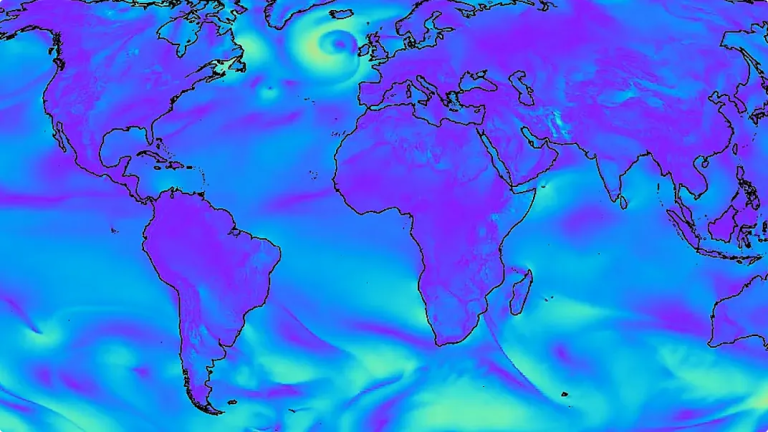
A selection of GraphCast’s predictions rolling across 10 days showing specific humidity at 700 hectopascals (about 3 km above surface), surface temperature, and surface wind speed.
The challenge of global weather forecasting
Weather prediction is one of the oldest and most challenging–scientific endeavours. Medium range predictions are important to support key decision-making across sectors, from renewable energy to event logistics, but are difficult to do accurately and efficiently.
Forecasts typically rely on Numerical Weather Prediction (NWP), which begins with carefully defined physics equations, which are then translated into computer algorithms run on supercomputers. While this traditional approach has been a triumph of science and engineering, designing the equations and algorithms is time-consuming and requires deep expertise, as well as costly compute resources to make accurate predictions.
Deep learning offers a different approach: using data instead of physical equations to create a weather forecast system. GraphCast is trained on decades of historical weather data to learn a model of the cause and effect relationships that govern how Earth’s weather evolves, from the present into the future.
Crucially, GraphCast and traditional approaches go hand-in-hand: we trained GraphCast on four decades of weather reanalysis data, from the ECMWF’s ERA5 dataset. This trove is based on historical weather observations such as satellite images, radar, and weather stations using a traditional NWP to ‘fill in the blanks’ where the observations are incomplete, to reconstruct a rich record of global historical weather.
GraphCast: An AI model for weather prediction
GraphCast is a weather forecasting system based on machine learning and Graph Neural Networks (GNNs), which are a particularly useful architecture for processing spatially structured data.
GraphCast makes forecasts at the high resolution of 0.25 degrees longitude/latitude (28km x 28km at the equator). That’s more than a million grid points covering the entire Earth’s surface. At each grid point the model predicts five Earth-surface variables – including temperature, wind speed and direction, and mean sea-level pressure – and six atmospheric variables at each of 37 levels of altitude, including specific humidity, wind speed and direction, and temperature.
While GraphCast’s training was computationally intensive, the resulting forecasting model is highly efficient. Making 10-day forecasts with GraphCast takes less than a minute on a single Google TPU v4 machine. For comparison, a 10-day forecast using a conventional approach, such as HRES, can take hours of computation in a supercomputer with hundreds of machines.
In a comprehensive performance evaluation against the gold-standard deterministic system, HRES, GraphCast provided more accurate predictions on more than 90% of 1380 test variables and forecast lead times (see our Science paper for details). When we limited the evaluation to the troposphere, the 6-20 kilometer high region of the atmosphere nearest to Earth’s surface where accurate forecasting is most important, our model outperformed HRES on 99.7% of the test variables for future weather.
For inputs, GraphCast requires just two sets of data: the state of the weather 6 hours ago, and the current state of the weather. The model then predicts the weather 6 hours in the future. This process can then be rolled forward in 6-hour increments to provide state-of-the-art forecasts up to 10 days in advance.
Better warnings for extreme weather events
Our analyses revealed that GraphCast can also identify severe weather events earlier than traditional forecasting models, despite not having been trained to look for them. This is a prime example of how GraphCast could help with preparedness to save lives and reduce the impact of storms and extreme weather on communities.
By applying a simple cyclone tracker directly onto GraphCast forecasts, we could predict cyclone movement more accurately than the HRES model. In September, a live version of our publicly available GraphCast model, deployed on the ECMWF website, accurately predicted about nine days in advance that Hurricane Lee would make landfall in Nova Scotia. By contrast, traditional forecasts had greater variability in where and when landfall would occur, and only locked in on Nova Scotia about six days in advance.
GraphCast can also characterize atmospheric rivers – narrow regions of the atmosphere that transfer most of the water vapour outside of the tropics. The intensity of an atmospheric river can indicate whether it will bring beneficial rain or a flood-inducing deluge. GraphCast forecasts can help characterize atmospheric rivers, which could help planning emergency responses together with AI models to forecast floods.
Finally, predicting extreme temperatures is of growing importance in our warming world. GraphCast can characterize when the heat is set to rise above the historical top temperatures for any given location on Earth. This is particularly useful in anticipating heat waves, disruptive and dangerous events that are becoming increasingly common.
Severe-event prediction – how GraphCast and HRES compare.
Left: Cyclone tracking performances. As the lead time for predicting cyclone movements grows, GraphCast maintains greater accuracy than HRES.
Right: Atmospheric river prediction. GraphCast’s prediction errors are markedly lower than HRES’s for the entirety of their 10-day predictions
The future of AI for weather
GraphCast is now the most accurate 10-day global weather forecasting system in the world, and can predict extreme weather events further into the future than was previously possible. As the weather patterns evolve in a changing climate, GraphCast will evolve and improve as higher quality data becomes available.
To make AI-powered weather forecasting more accessible, we’ve open sourced our model’s code. ECMWF is already experimenting with GraphCast’s 10-day forecasts and we’re excited to see the possibilities it unlocks for researchers – from tailoring the model for particular weather phenomena to optimizing it for different parts of the world.
GraphCast joins other state-of-the-art weather prediction systems from Google DeepMind and Google Research, including a regional Nowcasting model that produces forecasts up to 90 minutes ahead, and MetNet-3, a regional weather forecasting model already in operation across the US and Europe that produces more accurate 24-hour forecasts than any other system.
Pioneering the use of AI in weather forecasting will benefit billions of people in their everyday lives. But our wider research is not just about anticipating weather – it’s about understanding the broader patterns of our climate. By developing new tools and accelerating research, we hope AI can empower the global community to tackle our greatest environmental challenges.
By: Remi Lam on behalf of the GraphCast team Originally published at: Google DeepMind
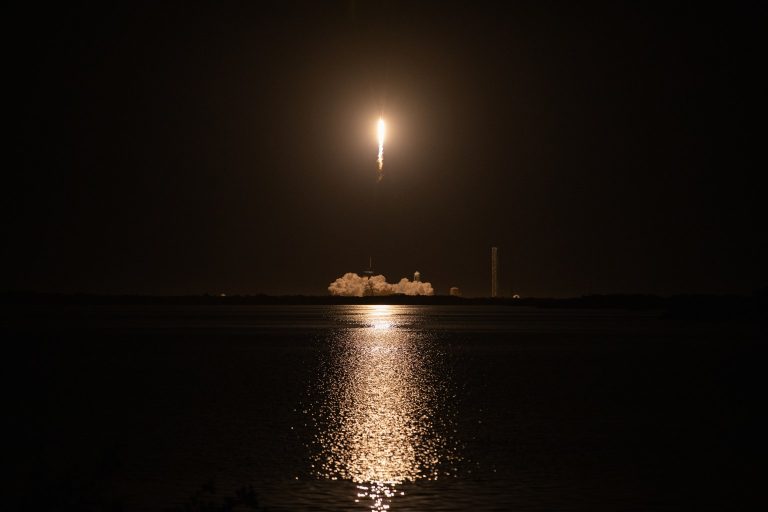
In this photo from Nov. 9, 2023, a SpaceX Falcon 9 rocket illuminates the water as it launches at night from NASA’s Kennedy Space Center in Florida. The 29th commercial resupply mission of the Cargo Dragon spacecraft brought new scientific research, technology demonstrations, crew supplies, and hardware to the International Space Station, including NASA’s Integrated Laser Communications Relay Demonstration Low Earth Orbit User Modem and Amplifier Terminal (ILLUMA-T) and Atmospheric Waves Experiment (AWE).
Magnetic damping device will ensure satellites remain more stable to improve future active debris removal
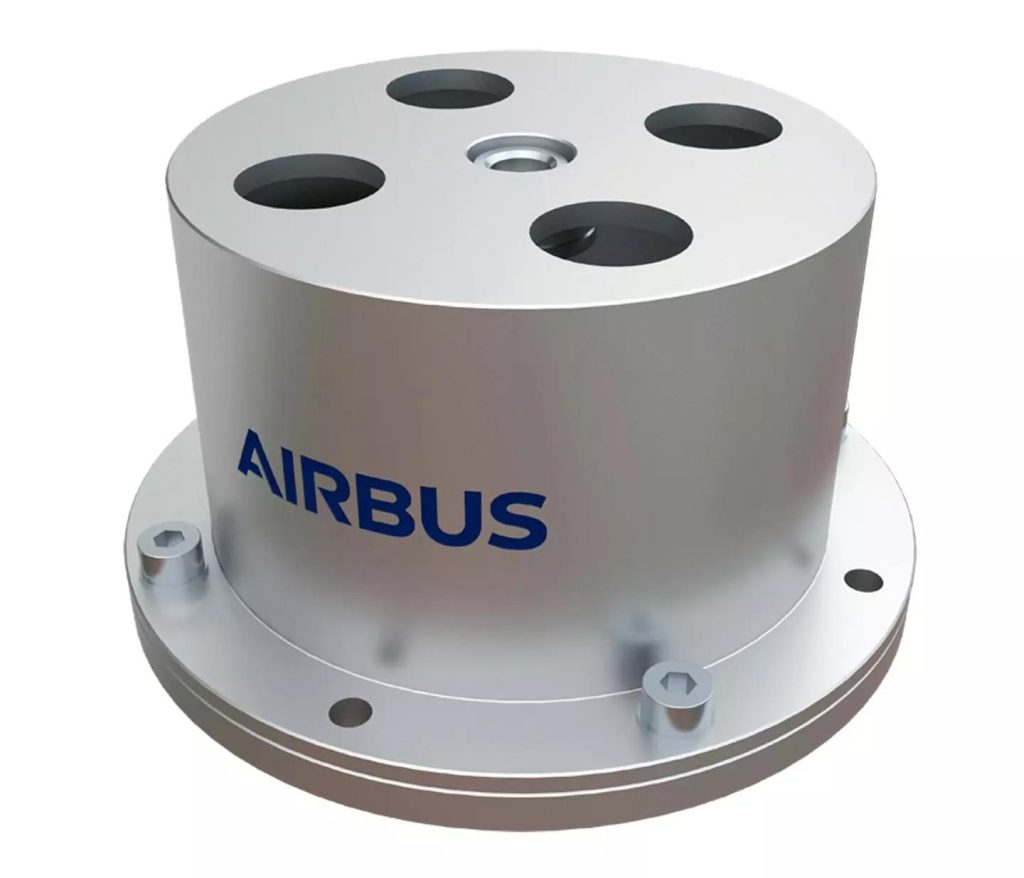
Airbus’ patented Detumbler device designed to prevent satellites at the end of their lives from tumbling, was launched on Saturday 11 November and will be tested in space on the mission in association with Exotrail and EnduroSat early in 2024.
Developed in 2021 by Airbus, and supported by the French Space Agency CNES under their Tech4SpaceCare initiative, the Detumbler is a magnetic damping device that would be attached to a satellite. The Detumbler includes a central rotor wheel and magnets that interact with the Earth’s magnetic field. When the satellite is flying normally the rotor acts like a compass following the magnetic field, but should the spacecraft begin to tumble the rotor movement induces eddy currents acting like a friction torque thus damping the motion.
CAD view of the reference design. The design involves the stator housing, with its bottom plate and top cover, and the rotor comprising the central axle, the rotor wheel and the magnets.
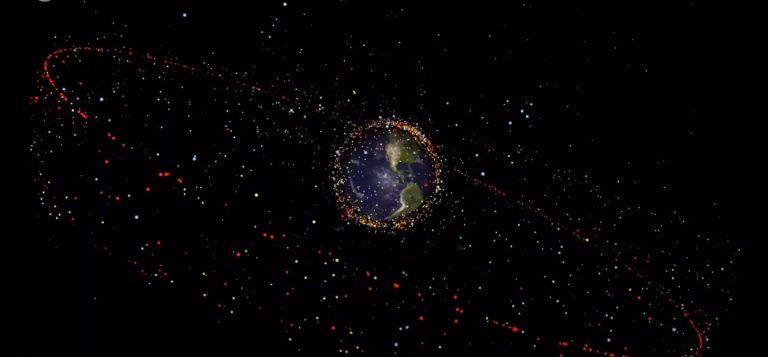
Dead satellites, especially in low Earth orbit (LEO), often end up tumbling which is natural behaviour due to orbital flight dynamics. Future active debris removal missions will face a greater challenge if spacecraft are tumbling. The Airbus Detumbler – weighing in at around 100g – could therefore be a useful tool for future missions to prevent satellites tumbling after their end of life, making them easier to capture on debris clearing missions.
The in-orbit demonstration of the Detumbler is scheduled for early 2024 on a mission from Exotrail (SpaceVan) which will include the Exo-0 nanosatellite from EnduroSat. Dedicated detumbling tests will take place to verify the ability of the Detumbler to dampen movement.
@AirbusSpace @CNES @exotrail @EnduroSat
Your contact
Ralph Heinrich Head of External Communications – Airbus Space Systems Phone: +49 171 304 9751 [email protected]
Jeremy Close External Communications – Airbus Space Systems, UK Phone: +44 776 653 6572 [email protected]
Guilhem Boltz External Communications – Airbus Space Systems, France Phone: +33 6 34 78 14 08 [email protected]
Francisco Lechón External Communications – Airbus Space Systems, Spain Phone: +34 630 196 993 [email protected]
Unprecedented Test of Softgoods Structure is a Significant Milestone in the Development of World’s First Commercial Space Station, Orbital Reef
Low-Volume Launches Become High-Volume Space Stations on Orbit
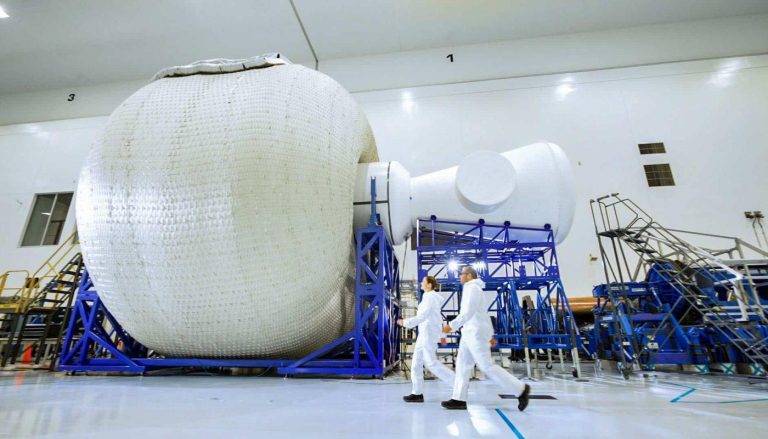
LOUISVILLE, Colo. – Nov. 13, 2023– Sierra Space, a leading pureplay commercial space company building the first end-to-end business and technology platform in space, announced today that it is on the brink of a historic moment as the company prepares for its biggest-ever “burst test” of Sierra Space’s inflatable, expandable space station technology.
This groundbreaking endeavor marks a critical step in Sierra Space’s co-development of Orbital Reef with Blue Origin, as the company plans to stress test – for the first time in history – a full-scale version of its LIFE™ habitat structure and bring the unit to failure under pressure. LIFE is constructed of high-strength “softgoods” materials, which are sewn and woven fabrics – primarily Vectran – that become rigid structures when pressurized on orbit. To date, Sierra Space has conducted five stress tests on subscale test articles; this next one will be 18x larger – nearly 300 m³ of pressurized volume.
Scheduled for December 2023 at the NASA Marshall Space Flight Center in Huntsville, Ala., the Ultimate Burst Pressure (UBP) test is expected to provide Sierra Space and the Orbital Reef program team with critical data in support of NASA’s softgoods certification guidelines. The over-pressurization to failure during the test will not only demonstrate the habitat’s capabilities but also open avenues for structural enhancements.
Sierra Space’s expandable space station module technology is highly scalable and flexible to all existing and planned launch vehicle fairing sizes. The softgoods structures launch packed inside conventional rocket fairings – 5m, 7m, 9m and beyond – inflating to capacity on orbit. Low-volume launches become high-volume space stations. The module volume will always be the square of its expansion diameter. For example, with a 2.5x expandable configuration, the volume would be 6.25x of a rocket fairing.
“Sierra Space’s inflatable space station module technology offers the absolute largest in-space pressured volume, the best unit economics per on-orbit volume and lowest launch and total operating costs,” said Sierra Space CEO Tom Vice. “Having the best unit economics positions Sierra Space as the category leader in microgravity research and product development – providing customers with the most attractive return on their investment.”
Key Dimensions:
Full scale LIFE habitat with a height of 20.5 feet (Total height with ground support equipment: 29.5 feet)
Diameter: 27 feet
Volume: 10,000 cubic feet (283.17 m3)
Current Progress:
All components and ground support equipment are in the integration phase at NASA Marshall Space Flight Center
Upcoming Steps:
Softgoods integration into the test stand will be followed by transportation, utilizing the legendary NASA KAMAG transporter tractor, to the historic testing location adjacent to the flame trench of the Saturn 1/1B test stand — where NASA tested rockets for the Apollo program
Setup and calibration of sensors and cameras, alongside operational run-throughs, will prepare for the full-scale UBP test in December 2023
Objectives and Lessons Learned:
The recent successes of subscale burst tests have emboldened Sierra Space to undertake the full-scale burst test with confidence
Sierra Space aims to further refine its technical approach to safety factors and structural integrity through this test
Insights from previous tests contribute to technical maturation in support of higher-fidelity manufacturing processes
Core Materials and Blanking Plates:
The restraint layer for LIFE is constructed of high-strength “softgoods” materials, which are sewn and woven fabrics – primarily Vectran – that become rigid structures when pressurized
Under normal operating pressure, the Vectran softgoods materials become 5x stronger than steel, exceeding station lifetime performance safety factors
The restraint layer is complemented by a bladder allowing controlled inflation and pressurization to ultimate burst pressure test failure
Two metallic blanking plates are strategically inserted into the restraint layer, designed for seamless integration into the structural shell with minimal performance degradation or knockdown; blanking plates are metal placeholders for integrating windows, airlocks, robotic arms and other features, into the softgoods layer
About Sierra Space
Sierra Space is a leading, pureplay commercial space company at the forefront of innovation and the commercialization of space in the Orbital Age™, building an end-to-end business and technology platform in space to benefit life on Earth. With more than 30 years and 500 missions of space flight heritage, the company is enabling the future of space transportation with Dream Chaser®, the world’s only commercial spaceplane, and is bringing LIFE™ (Large Integrated Flexible Environment) to low-Earth orbit with its modular, three-story commercial habitation and science platform. Both Dream Chaser and LIFE are central components to Orbital Reef, a mixed-use business park in LEO being developed by principal partners Sierra Space and Blue Origin, which is expected to be operational by the end of the decade. Sierra Space also builds and delivers a host of systems and subsystems across solar power, mechanics and motion control, environmental control, life support, propulsion and thermal control, offering myriad space-as-a-service solutions for the new space economy.
###
MEDIA CONTACTS: Alex Walker, Sierra Space (303) 803-2297 | [email protected]
The team’s new algorithm finds failures and fixes in all sorts of autonomous systems, from drone teams to power grids.
Jennifer Chu | MIT News MIT News (https://news.mit.edu/2023/mit-engineers-failure-finding-algorithm-1109)
MIT engineers have developed a new approach that can be paired with any autonomous system, to quickly identify a range of potential failures in that system. What’s more, the approach can find fixes to the failures, and suggest repairs to avoid system breakdowns. Credits:Image: iStock
From vehicle collision avoidance to airline scheduling systems to power supply grids, many of the services we rely on are managed by computers. As these autonomous systems grow in complexity and ubiquity, so too could the ways in which they fail.
Now, MIT engineers have developed an approach that can be paired with any autonomous system, to quickly identify a range of potential failures in that system before they are deployed in the real world. What’s more, the approach can find fixes to the failures, and suggest repairs to avoid system breakdowns.
The team has shown that the approach can root out failures in a variety of simulated autonomous systems, including a small and large power grid network, an aircraft collision avoidance system, a team of rescue drones, and a robotic manipulator. In each of the systems, the new approach, in the form of an automated sampling algorithm, quickly identifies a range of likely failures as well as repairs to avoid those failures.
The new algorithm takes a different tack from other automated searches, which are designed to spot the most severe failures in a system. These approaches, the team says, could miss subtler though significant vulnerabilities that the new algorithm can catch.
“In reality, there’s a whole range of messiness that could happen for these more complex systems,” says Charles Dawson, a graduate student in MIT’s Department of Aeronautics and Astronautics. “We want to be able to trust these systems to drive us around, or fly an aircraft, or manage a power grid. It’s really important to know their limits and in what cases they’re likely to fail.”
Dawson and Chuchu Fan, assistant professor of aeronautics and astronautics at MIT, are presenting their work this week at the Conference on Robotic Learning.
Sensitivity over adversaries
In 2021, a major system meltdown in Texas got Fan and Dawson thinking. In February of that year, winter storms rolled through the state, bringing unexpectedly frigid temperatures that set off failures across the power grid. The crisis left more than 4.5 million homes and businesses without power for multiple days. The system-wide breakdown made for the worst energy crisis in Texas’ history.
“That was a pretty major failure that made me wonder whether we could have predicted it beforehand,” Dawson says. “Could we use our knowledge of the physics of the electricity grid to understand where its weak points could be, and then target upgrades and software fixes to strengthen those vulnerabilities before something catastrophic happened?”
Dawson and Fan’s work focuses on robotic systems and finding ways to make them more resilient in their environment. Prompted in part by the Texas power crisis, they set out to expand their scope, to spot and fix failures in other more complex, large-scale autonomous systems. To do so, they realized they would have to shift the conventional approach to finding failures.
Designers often test the safety of autonomous systems by identifying their most likely, most severe failures. They start with a computer simulation of the system that represents its underlying physics and all the variables that might affect the system’s behavior. They then run the simulation with a type of algorithm that carries out “adversarial optimization” — an approach that automatically optimizes for the worst-case scenario by making small changes to the system, over and over, until it can narrow in on those changes that are associated with the most severe failures.
“By condensing all these changes into the most severe or likely failure, you lose a lot of complexity of behaviors that you could see,” Dawson notes. “Instead, we wanted to prioritize identifying a diversity of failures.”
To do so, the team took a more “sensitive” approach. They developed an algorithm that automatically generates random changes within a system and assesses the sensitivity, or potential failure of the system, in response to those changes. The more sensitive a system is to a certain change, the more likely that change is associated with a possible failure.
The approach enables the team to route out a wider range of possible failures. By this method, the algorithm also allows researchers to identify fixes by backtracking through the chain of changes that led to a particular failure.
“We recognize there’s really a duality to the problem,” Fan says. “There are two sides to the coin. If you can predict a failure, you should be able to predict what to do to avoid that failure. Our method is now closing that loop.”
Hidden failures
The team tested the new approach on a variety of simulated autonomous systems, including a small and large power grid. In those cases, the researchers paired their algorithm with a simulation of generalized, regional-scale electricity networks. They showed that, while conventional approaches zeroed in on a single power line as the most vulnerable to fail, the team’s algorithm found that, if combined with a failure of a second line, a complete blackout could occur.
“Our method can discover hidden correlations in the system,” Dawson says. “Because we’re doing a better job of exploring the space of failures, we can find all sorts of failures, which sometimes includes even more severe failures than existing methods can find.”
The researchers showed similarly diverse results in other autonomous systems, including a simulation of avoiding aircraft collisions, and coordinating rescue drones. To see whether their failure predictions in simulation would bear out in reality, they also demonstrated the approach on a robotic manipulator — a robotic arm that is designed to push and pick up objects.
The team first ran their algorithm on a simulation of a robot that was directed to push a bottle out of the way without knocking it over. When they ran the same scenario in the lab with the actual robot, they found that it failed in the way that the algorithm predicted — for instance, knocking it over or not quite reaching the bottle. When they applied the algorithm’s suggested fix, the robot successfully pushed the bottle away.
“This shows that, in reality, this system fails when we predict it will, and succeeds when we expect it to,” Dawson says.
In principle, the team’s approach could find and fix failures in any autonomous system as long as it comes with an accurate simulation of its behavior. Dawson envisions one day that the approach could be made into an app that designers and engineers can download and apply to tune and tighten their own systems before testing in the real world.
“As we increase the amount that we rely on these automated decision-making systems, I think the flavor of failures is going to shift,” Dawson says. “Rather than mechanical failures within a system, we’re going to see more failures driven by the interaction of automated decision-making and the physical world. We’re trying to account for that shift by identifying different types of failures, and addressing them now.”
This research is supported, in part, by NASA, the National Science Foundation, and the U.S. Air Force Office of Scientific Research.
Reprinted with permission of MIT News (http://news.mit.edu/)
We bet everyone couldn’t wait for Cyber Monday or your just like us and want to plan things ahead. Truth be told, we also don’t want to be in a rush during that time of the year. Well, you are simply in luck, as there are deals available here and there.
To find the best deals we have selected items that not only have multiple purpose and big discount, but also those that are well-loved by many. Here are our top picks for gifts to others or if you are rewarding yourself for the coming holidays.
Republic of Gaming commonly knowns as ROG made by ASUS was made with the goal of creating world’s most powerful and versatile gaming laptops. They currently have 3 series of laptops: Flow, Zephyrus and Strix. The G16 is part of the Strix series. Just released earlier this year, it is powered by Intel® Core™ i9 and boasting 16GB memory.
While you may think that this is only for gaming, nothing is stopping you to use it for work or watching cat videos on YouTube. While the default hardware setup is powerful enough to get you through. As with any modern laptop it can be upgraded for additional RAM or video card. This can be an option for those intending to use it for intensive operations such as 3D scanning.
While this also made by ASUS, this is a different series called TUF, short for The Ultimate Force. These are built for affordability that are low to mid range specifications (When compared to the ROG series). If you are leaning towards AMD CPUs this laptop might be for you. It can also be upgraded up to Ryzen™9 7940HS.
If you are not going to use this for gaming or any other resource-intensive workload. It does have two powerful Dolby Atmos speakers that has a Two-way AI Noise cancellation. Which is excellent for watching movies on Netflix, Amazon Prime or any other streaming services you can think of.
Pros
Cheaper than the ASUS ROG Strix G16 (2023)
Upgradable hardware
Cons
Battery life
Not a mechanical keyboard (Might not be an issue for those that doesn’t mind)
There are different things to consider when buying SD Cards. One of course is the brand, which determines a lot of things. From reliability, durability and even warranty. While storage is almost always the attribute that makes us think on what to get, read and write speed is second.
First and foremost, check what your intended device can support. If it’s maximum size is not even 256GB, then this is certainly not for you. It should be able to support 256GB. The speed of this is classified as Class 10, which is able to read at 180 MB/s and write up to 130MB/s.
A storage device is always a good option for giving as a gift or you are upgrading your own device. Specially if you are playing a lot of games with your Nintendo Switch or Smartphone.
Pros:
Performance and reliability from the worlds #1 brand for Flash memory
High capacity Micro SDXC
10-year limited warranty
Cons:
Smaller in size when compared to its 512GB counterpart. But that is not on sale right now.
Electrical sensor to measure skin conductance (cEDA) for body response tracking
Multipurpose electrical sensors compatible with ECG app & EDA app. ECG not available in all countries.
Red and infrared sensors for oxygen saturation (SpO2) monitoring
Gyroscope
Altimeter
3-axis accelerometer
Skin temperature sensor
Ambient light sensor
WiFi (deactivated, cannot be turned on)
NFC
Built-in GPS + GLONASS
Vibration motor
Speaker (75dB SPL @10cm)
Microphone
Fitbit, even before being acquired by Google has been one of the most advanced health and fitness monitor. And with Google now owning them, the compatibility with Android device have been widely supported. That means that if you have an Android device, then this is one of the best option as your fitness watch.
Having a smart watch with fitness monitoring is like having a simulation game. Only the character that you have take care of is now yourself. The handy way that it monitors your heart rate is already a big plus for those who might have heart condition. Also excellent when going for a workout.
Pros
Has a variety of health monitors.
Integration with Android device
A great gift for anyone who does not currently have a fitness watch. You could easily tell also if someone doesn’t have it yet.
Cons
ECG is not available in all countries
Sleep profile and sleep score requires Fitbit premium
“Get the most out of your shopping with an Amazon Prime membership! Sign up now to enjoy free one-day delivery, unlimited streaming, exclusive deals, membership perks and more. Sign up today to enjoy a 30-day free trial and if you’re a student enjoy up to 6 months free trial. Click here to signup now! 👉 https://amzn.to/46Jm3AX”
Another November 11th is upon us, bringing with it familiar rituals that exalt peace while honouring the fallen. But as we pause to remember past conflicts, ongoing global violence serves as a sobering reminder that remembrance alone cannot break the repetitive cycle of bloodshed imprinted upon human history.
From solemn cenotaphs commemorating the world wars to emerging memorials for those killed in Iraq, Afghanistan, Syria and beyond, each monument stands testament to lives lost under the banner of securing peace. Yet despite refrains of “never again”, the drums of war continue to beat relentlessly.
This Remembrance Day arrives amidst Russia’s brutal war in Ukraine claiming thousands of innocent lives. It comes as humanitarian disasters unfold in Yemen, South Sudan and Myanmar. As the Israeli-Palestinian conflict remains locked in a perpetual death grip and extremism sows chaos across Africa.
The majestic monuments littering our landscape are now tributes to a species doomed to repeat past sins, unable to escape endless cycles of conflict. The recited poems ring with melancholy beauty, the ceremonies executed with gravitas. But orations and wreaths only do so much. The wars rage on, and more memorials accumulate atop the ashes of calamities past.
The refrain “lest we forget” rings hollow, as we seem cursed to perpetually forget the lessons these memorials represent. Our remembrance is superficial, our remorse fleeting.
What more will it take before we learn the futility of armed aggression? How many more lives lost and towns reduced to rubble? A century of Remembrance Days has failed to instil a longing for enduring peace, raising despair about our capacity to retain history’s lessons.
On this day of sombre reflection, let us not just pay tribute to the fallen, but also commit to a future where their sacrifice was not in vain. We must advocate diplomacy over aggression, foster global cooperation, and make the pursuit of peace paramount. Only then may “lest we forget” become a pledge to build a world free from war’s horror.
We owe it to past, present and future generations to break the cycle of violence haunting human civilisation. As the melancholy strains of wartime laments fill the November air this Remembrance Day, our shared responsibility is to move beyond hollow platitudes and truly work towards making these ceremonies obsolete.
True remembrance lies not in wreaths and monuments, but in action to break free from the cycles that necessitated them. We owe that much to those who made the ultimate sacrifice.
The SpaceX-29 commercial resupply spacecraft will deliver numerous physical sciences and space biology experiments, along with other cargo, to the International Space Station. The research aboard this resupply services mission will help researchers learn how humans, and the plants needed to sustain them, can thrive in deep space.
The biological and physical sciences investigations headed to the Space Station are:
Plant Water Management-5 and 6 (PWM-5 and 6)
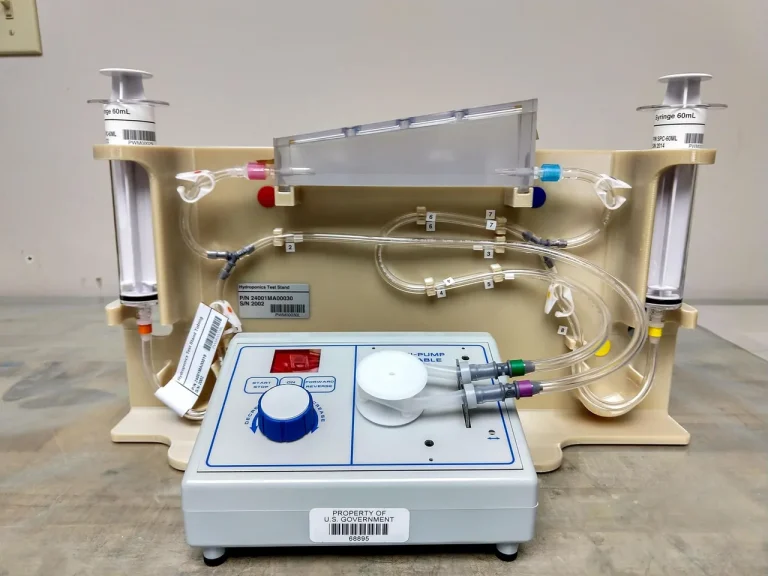
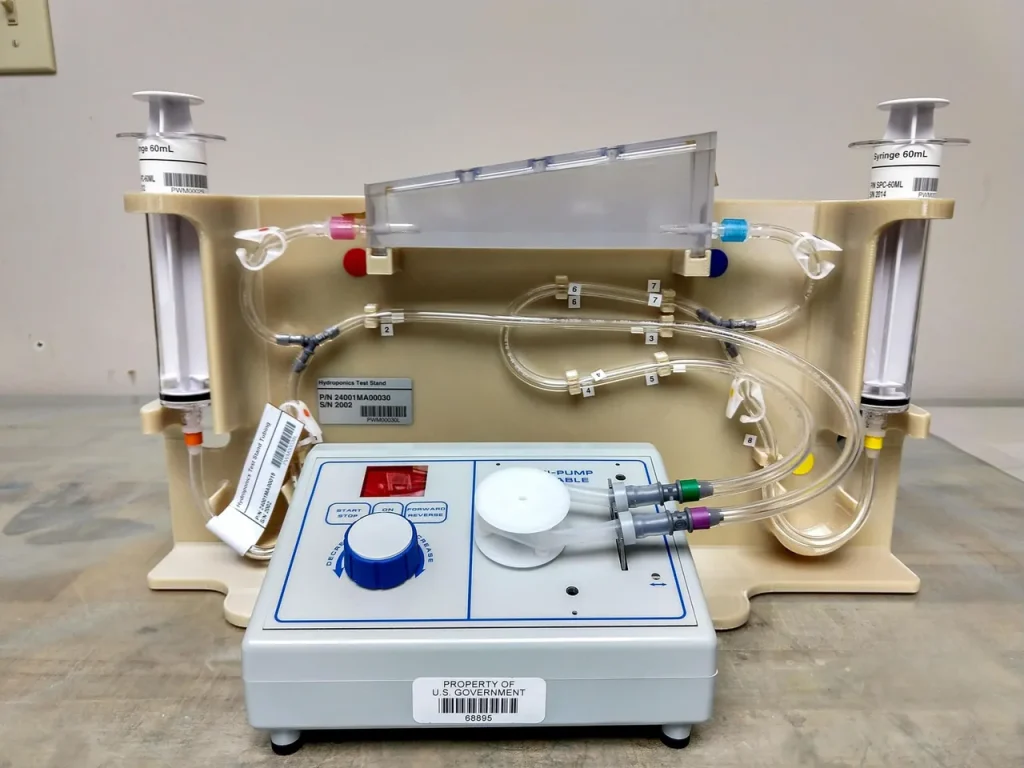
NASA has grown plants on the Space Station even without the help of gravity. But microgravity does present challenges and affects Space Station plants’ ability to receive adequate hydration and nutrition. The Plant Water Management-5 and 6 (PWM-5 and 6) investigation uses the physical properties of fluids, such as surface tension and wetting, as a mechanism to provide hydration and aeration for plants. Results could advance understanding of the physical aspects of fluid flow and inform designs of fluid delivery systems for reduced gravity environments.
Plant Water Management (PWM) Harness and Soil Test Article.
NASA
Plant Habitat-06 (PH-06)
Plant Habitat-06 investigates whether the spaceflight environment affects the ability of tomato plants to defend themselves against disease-causing microorganisms. The study will investigate whether a hormone called salicylic acid is involved in processes that regulate plant immune system function in microgravity. Results could support the development of strategies to minimize crop loss and low produce quality in future space agricultural settings caused by harmful microbes.
Rodent Research-20 (RR-20)
Extended missions to the Moon and Mars require a critical understanding on the impact of spaceflight to reproductive health for female astronauts. Throughout the course of three shuttle missions, alterations in ovarian function were detected in female mice that could potentially lead to fertility issues. This latest mission to the International Space Station (RR-20) will further probe whether space-flown female mice have temporary or permanent alterations to their reproductive capability and whether dysfunctional hormone signaling is linked with bone loss.
Bacterial Adhesion and Corrosion (BAC)
Polymicrobial Biofilm Growth and Control during Spaceflight, Bacterial Adhesion and Corrosion (BAC) is a joint space biology and physical sciences payload that explores conditions of multi-species biofilms in microgravity. Microorganisms in biofilms can become resistant to traditional cleaning chemicals, leading to contamination of water treatment systems and potential health risks to astronauts. This investigation identifies bacterial genes used during biofilm growth and examines whether these biofilms can corrode stainless steel, in addition to evaluating the effectiveness of silver-based disinfectants.