

Home Blog Page 24

How Universities Can Play A Pivotal Role In Building Economic Resilience

0
  • Our connected world makes us vulnerable to the impact of climate change, supply chain disruptions and cybersecurity challenges.
  • Universities can play a highly important role in addressing such challenges by helping transfer knowledge to society as a whole.
  • Here are three emerging technologies that are being developed by Swiss universities to combat the climate crisis and help build an economically-resilient future.

We are all vulnerable to the impacts of climate change, supply chain disruptions, cybersecurity lapses, and armed conflict in an interdependent world.

While I am not a politician, a Fortune 500 CEO or even an economist, as a scientist and president of one of the world’s top universities I can offer my insight into emerging technologies and the valuable role universities play in transferring knowledge to society.

With their international knowledge networks, universities are in an ideal position to help hedge against the tempests and shape economic resilience.

Here are three emerging technologies developed by Swiss universities that are already in play towards building an economically-resilient future.

Green energy and storage technologies that bolster supply chains

As countries around the world strive to attain net zero by 2050, energy systems and climate impacts will inevitably reach a critical point disrupting global supply chains and our very way of life.

We need to build smart grids and make use of data and artificial intelligence (AI)-based tools to decarbonize the economy. In this context, universities play a pivotal role in collaborating with industry on technological solutions for decentralized low-carbon energy conversion and storage.

In Switzerland, researchers and policy-makers are working towards energy resilience by scaling climate-neutral and flexible energy systems to bolster energy supply chains for the country.

Pumped-storage hydroelectricity, new types of batteries and heat storage systems, and synthetic fuels and gases offer promising opportunities for storing, transporting and trading inexpensive electricity from renewable sources such as photovoltaic plants.

Achieving net zero, however, requires more than just an expansion of renewable energies and energy saving measures. It will also take a wide range of initiatives to include removing carbon dioxide (CO₂) from the atmosphere.

In a recent feasibility study called DemoUpCARMA, researchers at ETH Zurich explored two potential solutions involving the capture of CO₂ from the atmosphere and permanent storage in recycled concrete aggregate or in geological reservoirs in Iceland. While research is ongoing in the area of CO₂ management, their findings indicate both technical feasibility and a positive carbon footprint.

Nevertheless, resilience relies on the ability to scale innovative technologies, therefore, two of Switzerland’s top universities – ETH Zurich and EPFL – recently forged the Coalition for Green Energy and Storage.

The coalition, unveiled at the Swiss Economic Forum, consists of more than 450 scientists who specialize in energy and thirty industry partners, including four successful research spin-​offs active in carbon capture and energy storage.

Their aim is to accelerate the adoption and industrial scaling of existing technologies for capturing CO₂, producing carbon-​neutral gases and fossil fuels and permanently storing CO₂.

‘Clean slate’ for secure, trustworthy global networks

AI applications are sweeping the world like a tsunami. This presents us with a major challenge in determining how to use this disruptive cross-sectional technology sensibly and in the service of society, while at the same time preventing its misuse.

There is a consensus that rules and regulation are needed, but these should not stifle innovation and technical progress. With this in mind, ETH Zurich and EPFL recently launched a Swiss AI research initiative for the development of trustworthy AI systems.

Knowledge transfer is not only the currency of universities, but can it can also offer society a “clean slate” for digital transformation. Today’s internet architecture, for instance, was not designed to meet the rigorous security and high-​availability demands of a global and digital economy.

The SCION internet protocol, developed at ETH Zurich, solves the challenges of working within an antiquated system by offering a clean-slate design that fundamentally improves security.

By providing route control, failure isolation, and explicit trust information for end-to-end communication, it ensures reliable and secure transport of data throughout global networks. The Swiss National Bank and Swiss financial industry have implemented SCION to secure its data communication.

Global AI monitoring for sustainability and conflict

Secure reliable data is essential for real-time policy making and programming at the scale necessary to reach United Nations’ (UN) Sustainable Development Goals (SDGs) or to respond to armed conflicts in the world.

Currently, critical information is missing to accurately measure global progress towards the SDGs. “We cannot achieve what we cannot accurately measure,” report the researchers of the study, Pulse of Progress: The State of Global SDG Data in 2023.

Fortunately, public-private partnerships are now enabling new applications that leverage the rapid development of AI for monitoring international progress towards SDGs and anticipating conflict.

The SDG Monitor, also developed at ETH Zurich, is the first comprehensive tool to systematically identify data gaps and relevant stakeholders and provides policy-makers with access to customized, relevant, and actionable insights to close data gaps, drive accountability and transparency.

Meanwhile, GainForest, founded by a researcher at ETH Zurich, leverages AI and blockchain technologies to monitor and incentivize investment in the protection of the environment. The remote sensing technology works on satellite, drone and field data, as well as citizen science efforts.

The company is a non-profit recipient of Microsoft’s AI for Earth programme. GainForest Founder David Dao also contributes technology to team BiodivX – a finalist in the $10m XPrize Rainforest challenge.

Finally, researchers at ETH Zurich are collaborating with partners from the International Committee of the Red Cross (ICRC) and the American Association for the Advancement of Science (AAAS) on a project for remote monitoring of armed conflicts.

The project team is developing an automated monitoring tool that combines deep learning with open-source satellite images. The tool will enable the ICRC to monitor entire conflict areas in near-real time and identify a wide range of types of damage at country-scale. Once this crucial technology is in place, its real-time data could aid in negotiations or mitigation of the effects of armed conflict.

Resilience is a collaborative endeavour

Resilience is as much a global endeavour as it is a personal one – a familiar dynamic in academia. Innovation rarely occurs in a void and it takes a collaborative and often multi-disciplinary research team to realize scientific and technological breakthroughs.

Such innovations do not happen overnight. The technology advancements that humanity enjoys today took decades, even generations, of incremental scientific achievements to come to light.

Such work is driven by researchers with a genuine curiosity to understand nature and to better the world. When research finally transfers from the lab to society, it can be game changer – to the benefit of everyone.

By: Joël Mesot (President, ETH Zürich)
Originally published at: World Economic Forum

3 Ways Companies Can Mitigate The Risk Of AI In The Workplace

0

Around 84% of workers who use generative AI in the workplace said they publicly exposed company data in the last three months.

  • The rapid use of generative artificial intelligence (AI) and its use in the workplace presents new efficiencies and opportunities but also raises concerns.
  • Nearly a third of chief executive and chief financial officers are redesigning work to reduce their dependency on people, according to a recent Mercer survey.
  • Employers can ease the disruption of AI in the workplace by upskilling employees, dispensing clear guidelines on generative AI use and ensuring job security.

The rapid proliferation of generative artificial intelligence (AI) use means companies must quickly gain pace with the rate of adoption among their employees.

When ChatGPT launched in November 2022, it set off a frenzy, presenting new efficiencies and opportunities for companies while significantly increasing risks that could limit generative AI’s ultimate potential. Simply put, generative AI is spreading faster than many companies can install the necessary guardrails. That sparks enormous concerns.

Some 84% of workers who use generative AI at work said they have publicly exposed their company’s data in the last three months, according to a new 16-country study of more than 15,000 adults by the Oliver Wyman Forum.

At the same time, 71% of employees said automation will significantly change how their work is done, and nearly a third of chief executive and chief financial officers are redesigning work to reduce their dependency on people, according to a recent Mercer survey.

As generative AI technology boosts productivity (albeit not always safely), it also exposes skill gaps and erodes morale. Businesses need to act quickly not only to limit employee misuse but also to address worker concerns.

The AI allure

The number of weekly users of generative AI jumped from 10% to 60% among our survey respondents in June 2023 and, depending on the industry, to 35% to 75% in October. More than half of workers said they use generative AI at least once a week, and about one in five said they use it daily. It is especially popular among younger workers and in countries with developing economies, such as India and Indonesia.

Part of the appeal is that tools like ChatGPT are easy to use and provide fast feedback, exponentially democratizing access to AI through natural language instead of code. AI is often characterized as a “work buddy” that helps employees start a project and get more done; almost two-thirds of white-collar users said it improved their productivity.

“For me, it’s something like a sounding board,” said a 28-year-old customer support manager at a London fintech company. “A lot of the things you ask ChatGPT, you’d be able to bounce off your colleagues, but you can’t always do that.”

Growing risk

Many organizations are underprepared for generative AI, lacking the expertise or speed to manage its growing risks quickly. With over four in five employees saying they have exposed employer data via public generative AI tools, from analyzing company data to writing emails with coworkers’ names, companies need to catch up.

While many employees said their organizations already have generative AI guidelines, these alone may not be enough to mitigate this risk: 92% of generative AI users who said their employers have AI data guidelines also said they have leaked company data.

Leakage isn’t the only risk. Many leaders and employees aren’t clear on when generative AI should substitute for human decision-making and when AI should merely augment it. More than 40% of employees said they have seen incorrect generative AI outputs and almost half said they use generative AI-provided facts or recommendations to make decisions without the review of others. In addition, one in 10 employees acknowledged using generative AI behind their employer’s back and 47% of all users said they would keep using it even if their boss prohibited it.

Creeping anxiety

Despite the promise, the technology is also lowering morale. While blue-collar jobs have long been impacted by automation, 60% of white-collar workers now fear that AI will make their jobs redundant. The World Economic Forum estimates nearly a quarter of all jobs (23%) globally will change in the next five years, with a structural job growth of 69 million jobs and a decline of 83 million jobs. This corresponds to a net decrease of 14 million jobs, or 2% of current employment.

Concerns about job loss are persuading employees to find new positions. Almost a third of job-seekers surveyed said they seek new positions because of the expected disruption of generative AI in the workplace. Countries with the highest percentage of such job seekers include India, at 45%; the United Arab Emirates, at 41%; and the United States, at 29%.

Employees say they feel added pressure to perform better and faster in the age of AI. Some 26% said AI tools increased expectations that they could do more work and more quickly, whether or not it was possible. At the same time, workers worried about AI are 57% more likely to feel their productivity is declining and 40% more likely to feel ineffective at work, according to recent data from the American Psychological Association.

Employers can ease the disruption wrought by generative AI in three ways:

  • Providing high-quality training.
  • Dispensing clear guidelines on generative AI use.
  • Improving messaging about job security.

Easing disruption of AI in the workplace

1. Upskilling workers

Employees recognize the flaws and the benefits of generative AI. From the survey, 95% of workers said they believe they should be upskilled over the next five years due to AI disruption. Most said they want upskilling directly from their employers – 80% of white-collar workers, 76% of blue collars and 74% of pink collars.

Almost one in three respondents said they are actively pursuing learning opportunities in response to AI disruption; more than half said the company training on generative AI was inadequate. More than two in five white-collar and blue-collar workers said they had witnessed generative AI mistakes in the workplace.

2. Making guidelines clear

Having guidelines is one thing; thoughtfully implementing them is another.

While almost two-thirds of workers said their employers have some form of AI guidelines, workers still need to know how to use appropriate queries, identify bias and avoid sharing company information publicly. They also need to check for plagiarism.

3. Addressing the elephant in the room

To discourage workers from fleeing unnecessarily, business leaders need to communicate clearly and regularly with workers about how generative AI will affect work, which activities will be substituted, augmented or transformed and the potential implications for jobs. Some businesses have already limited hiring for positions in the wake of disruptive technology. One major tech company, for example, chose not to fill 5,000 jobs because it expected they would be eliminated in the next five years by generative AI.

Another option is to create pathways to alternative or redesigned jobs. A major furniture business, for example, is training call centre workers to become interior design advisers. Its AI bot can handle run-of-the-mill customer queries while employees can help people with more home improvement services.

Business leaders and employees are on a new journey with generative AI in the workplace. By providing ongoing upskilling, issuing clear protocols, creating opportunities for collaboration and feedback, and focusing on transparency, companies can help ensure this technology results in more productivity and less harm.

By: Ana Kreacic (Chief Operating Officer of the Oliver Wyman Forum and Chief Knowledge Officer, Oliver Wyman), Ravin Jesuthasan (Senior Partner and Global Leader for Transformation Services, Mercer (MMC)) and John Romeo
(Managing Partner and Chief Executive Officer, Oliver Wyman Forum, Oliver Wyman (MMC))
Originally published at: World Economic Forum

Drug Resistance: Could Global Goals Be The Answer To This Worldwide Health Crisis?

0
  • This year will be critical in combatting the global health threat of drug-resistant infections.
  • Drug resistance has dropped off the global agenda, and commitments and reports have had limited impact so far.
  • Tangible targets and accountability are needed to drive progress and prevent losing the advances of modern medicine.

When thinking about the top 10 global public health threats, your first thoughts might include viruses with pandemic potential, climate change, or poverty. Drug-resistant infections might not immediately jump to mind.

But drug-resistant infections, caused by antimicrobial resistance (AMR), are a huge global issue. Research published in The Lancet in 2022, unveiled the very real human cost of this crisis – causing 1.27 million deaths in 2019 alone, and associated with an additional 3.7 million deaths (which is more than deaths caused by HIV/AIDs and malaria combined).

This is not a new crisis, but it is one that requires urgent action to avoid a world where a common medical procedure poses a high risk of infection and lengthy hospital stays, with fewer, if any, effective treatments for drug-resistant infections.

What action has been taken to combat drug resistance?

This year marks a decade since the beginning of the landmark Review on Antimicrobial Resistance led by economist Lord Jim O’Neill, which provided the bigger picture of the scale of the problem, elevating this global health threat up the global agenda and offering solutions for governments and industries to prevent it from growing.

In the 10 years since the review there have been a raft of global reports and political commitments, including the World Health Organization’s (WHO) global action plan on AMR, a High Level Meeting on AMR at the UN General Assembly in 2016, and the 2022 Muscat Ministerial Manifesto on AMR. But these have delivered limited impacts, and we have seen little concrete action to address this issue.

For too long drug resistance has not been seen as a high priority for decision makers, despite the risk it poses to modern medicine and potential cost to economies. And on the rare occasion it does feature on the global agenda, the spotlight is focused on building capacity and understanding. While both are essential, we are still missing ways to measure progress, setting evidence-based goals and ensuring action is taken to fill the gaps so global efforts are kept on track.

Establishing bold clear targets – like the 1.5C target for climate change – is the key to incentivise and galvanise support for action against drug resistance. With achievable but ambitious targets and mechanisms to track progress against them, we can drive progress through global collaboration to develop new novel antibiotics and engage with communities most affected in low-and middle-income countries.

By: Jeremy Knox (Head of Policy for Infectious Disease, Wellcome) and Steffen Pierini Lüders (Senior Vice-President, Corporate Affairs, Novo Nordisk Foundation)
Originally published at: World Economic Forum

This Is The One Skill We All Need In The Age Of AI

0
  • Artificial Intelligence is as significant for humanity as the invention of the steam engine, according to experts.
  • All our jobs will be affected – and there are critical skills we will need.
  • The Annual Meeting of the World Economic Forum, takes place from 15–19 January in Davos, Switzerland.

There is no longer much doubt about the scale of the impact that Artificial Intelligence (AI) will have on our societies and economies. From the creation of new art to the bolstering of cyber security, the technology will soon be ubiquitous — and the moment is historic.

AI has been compared to the printing press or the steam engine — two technologies that brought about once-in-a-generation advances and fundamental changes in how we operate.

Speakers on panel at the World Economic Forum’s Annual Meeting unanimously agreed with the premise of the session: Generative AI: Steam Engine of the Fourth Industrial Revolution.

And they had words of advice for all of us on surviving and thriving in the new age of AI:

“If you embrace Artificial Intelligence, you will be complete. If you do not and you’re late, you’ll be finished. And if you reject it altogether, you will be completely finished,” said Omar Sultan Al Olama, United Arab Emirates Minister of State for Artificial Intelligence.

IBM Chairman and CEO Arvind Krishna said generative AI’s impact on jobs would be huge.

“It is the first technology that goes after the white collar work or what I will call the lower half of cognitive work … It doesn’t matter whether you’re a physicist, mathematician, a computer scientist, a doctor, a writer,” he said.

So what will be the one key skill we all will need to thrive in the age of AI?

“If the lower half of cognitive work gets taken over by genAI, it implies that you’ve got to learn critical thinking. That means critical thinking, regardless of which domain you’re in, becomes the skill that is far, far more needed,” Krishna said.

Accenture Chair and CEO Julie Sweet said the ability to keep learning was key, and that was something Accenture demanded of all its employees, even at the interview stage:

“We ask one question to every person, regardless of whether you’re a coder or you’re a strategist or you’re a doctor or you’re working in HR. We ask one interview question to everyone. We say: what have you learned in the last six months?

“We don’t care if it’s how to bake a cake, but we have to have people who like to learn. And that question is incredibly insightful, you have to have people who want to learn and build a learning culture,” she said.

The World Economic Forum’s most recent Future of Jobs report said: “Analytical thinking and creative thinking remain the most important skills for workers … Analytical thinking is considered a core skill by more companies than any other skill.

Continuous learning

All the panelists in Davos stressed the need to adapt education to the coming changes.

“We actually deployed AI education within our schooling,” the UAE’s Omar Sultan Al Olama said.

“So from grade five onwards, people learn how to code. From grade nine onwards, kids in schools actually learn what artificial intelligence is, what are the ethics of it, and they also understand, whatever their career path is going to be, how AI is going to affect it.”

Beyond school, we need to keep learning, said IBM’s Krishna.

“Continuous learning, I think, is a hallmark,” he said.

“A statistic: The half-life of skills used to be 30 years. It’s now seven years. So if you think about that, that means that an average career, you’re going to change five times your overall skills.”

Accenture’s Sweet told the Davos audience: “AI will create a lot of new jobs, but you won’t be able to take the current people and put them in the jobs unless you partner together — governments and companies — on reskilling.”

Accenture has already prioritized a minimum level of digital literacy across the board — their staff must understand concepts like cloud technology, for example, at a minimum — giving the company an advantage when it comes to building an AI-ready workforce.

It’s not just businesses that can bring their people along in the AI revolution. For Al Olama, “the only constant is change — we need to build a populace that is able to adapt to change.”

Full session:

Watch the full Generative AI: Steam Engine of the Fourth Industrial Revolution? session here:

https://cdn.jwplayer.com/players/V2GkQPuV-ncRE1zO6.html

Host:

Zanny Minton Beddoes, Editor-in-Chief, The Economist.

Panelists:

Omar Sultan Al Olama, Minister of State for Artificial Intelligence, Digital Economy and Remote Work Applications, Office of the Prime Minister of the United Arab Emirates

Mike Rounds, Senator from South Dakota (R), United States Senate

Julie Sweet, CEO, Accenture

Cristiano Amon, CEO, President and Chief Executive Officer, Qualcomm Incorporated

Arvind Krishna, Chairman and Chief Executive Officer, IBM Corporation

By: Robin Pomeroy (Podcast Editor, World Economic Forum) and Chris Hamill-Stewart (Writer, Forum Agenda)
Originally published at: World Economic Forum

Data To Watch In 2024, From Digital Jobs To Climate Change And Health

0
  • AI’s impact, digital jobs, healthcare system transformation, geopolitical risks, and climate change are just some of the key issues for 2024.
  • The World Economic Forum’s Annual Meeting in Davos, 15-19 January, aims to revitalize cooperation on these issues to advance resilience, growth and security.
  • Here we delve into the data behind the themes for discussion at Davos 2024 that will shape the year ahead.

66% of risk analysts surveyed say extreme weather is an immediate risk. 56% of chief economists expect a weaker global economy in 2024. 40% of potential global digital jobs are in accounting, legal and finance. $12.5 trillion could be the cost of lost global productivity and GDP as a result of climate health impacts.

These are just some of the metrics and insights coming out of World Economic Forum data that will inform discussions at Davos 2024 and will shape the year ahead.

While Leaders must try to end conflict and limit the worst impacts of climate change, artificial intelligence (AI) and digital technologies present opportunities to enhance services like healthcare and education – and to redesign the world of work.

Here we delve into that data and highlight the key metrics you need to know in 2024.

A testing time for the global economy

It’s difficult to find much in the way of positive news on the global economy. Yes, the rampant inflation that has defined the last year shows signs of easing but, overall, the outlook can be summarized as weak and uncertain.

The January 2024 edition of the World Economic Forum’s Chief Economist’s Outlook predicts a period of “protracted weakness in global economic conditions and widening regional divergence”.

Our survey of chief economists sees expectations in negative territory.

56%

Of chief economists expect a weaker global economy in 2024

4.8%

The predicted rate of global inflation, down from 9.2% in 2022

2.9%

The IMF has downgraded its forecast for global growth in 2024

Economists predict wide regional divergence for the global economy. Image: World Economic Forum

Chief economists predict the strongest economic performance will be found in South Asia, the report finds. Some 93% and 86% of respondents are expecting moderate or stronger in the region. China is a notable exception, as weak consumption and production limit growth.

Perhaps the starkest outlook is for Europe, where 77% of chief economists – double the number from the last survey – are now predicting weak, or very weak growth.

Is this the year digital jobs go global?

The acronym WFH was born during the pandemic and millions of workers continue to work from home, either full-time or on a hybrid basis. A white paper, published by the World Economic Forum, in partnership with Capgemini, is shedding light on jobs that could be filled by digital nomads working anywhere in the world.

The Rise of Global Digital Jobs analyzed thousands of jobs and the tasks involved, to determine how many roles could become truly global digital jobs.

73m

The number of workers whose jobs can be done from anywhere

218

Job types, out of 5,400 analyzed, could become global roles

40%

Of potential global digital jobs are in accounting, legal and finance. roles.

It found that higher-earning professionals in developed countries are more likely to benefit from the rise in global digital jobs.

The distribution of potentially digital global jobs in 2030. Image: World Economic Forum/Capgemini

The report concludes that when properly managed, the rise of global digital jobs is a net positive for workers and employers, alike: “Global digital work presents an opportunity to utilize talent around the world, enabling employers to broaden their recruitment pools and countries to enhance their output, whether through capitalizing on demographic dividends or widening accessibility to good jobs.”

These are the biggest global risks of 2024

Every year we ask around 1,500 global experts what they consider to be the most severe risks facing people and planet.

The Global Risks Report 2024 takes the short- and long-term view, looking at immediate threats and those that will dominate the risk landscape 10 years from now. With conflict, climate change and economic crises afflicting the world, this is how respondents ranked the most serious immediate risks.

66%

Extreme weather

53%

AI-generated misinformation and disinformation

46%

Social and/or political polarization

42%

Cost-of-living crisis

39%

Cyberattacks

The threat from misinformation and disinformation is amplified in 2024 with multiple elections in leading economies, including the United States and the United Kingdom. These countries and others are also impacted by the third-ranked risk, societal polarization. Divisive issues including immigration and border control will be a major campaigning point during election campaigns.

The 10-year risk outlook is dominated by climate-related threats. This comes as little surprise given the slow progress the world is making on effort to limit global warming. At the closing of the COP28 climate summit in December 2023, the United Nations warned world leaders they had failed to signal an end to the era of fossil fuels.

The global outlook of risks for the next 2 and 10 years. Image: World Economic Forum

Limiting the health impacts of climate change

Climate change impacts are most frequently viewed through a lens focused on the environment or biodiversity loss. However, the warming global climate is having a profound impact on our health.

Quantifying the Impact of Climate Change on Human Health warns of millions of climate-related deaths and a related economic cost that runs into trillions of dollars. This new report, a partnership between the World Economic Forum and management consulting firm Oliver Wyman, makes a number of sobering predictions for 2050 in the event we fail to control rising global temperatures.

14.5m

Climate-related deaths by 2050

$1.1t

The cost of healthcare for climate-related conditions

$12.5t

Lost global productivity and GDP as a result of climate health impacts

Projection of health outcomes triggered by climate events. Image: World Economic Forum/Oliver Wyman

The report breaks down the projections for climate-related deaths, looking at the type of incidents most likely to lead to loss of life. Without mitigation, 8.5 million people will perish in floods by 2025, it suggests. The Asia-Pacific region is most at risk from flooding.

Droughts pose the second-highest threat, with an estimated total of 3.2 million deaths.

Heatwaves will prove to be another major killer, according to the report. It projects the loss of 1.6 million lives by 2050, with people above the age of 65 most at risk. Reduced work capacity during extreme heat events means they are likely to result in the highest economic cost of all events studied.

AI, data and digital are transforming healthcare systems

The potential for digital technology to improve the health of entire populations has been recognized for many years. However, delivering on that potential requires a new approach to global healthcare systems.

In collaboration with Boston Consulting Group, the World Economic Forum has published a new study: Transforming Healthcare: Navigating Digital Health with a Value-Driven Approach.

The report finds no shortage of digital innovation in healthcare systems, but concludes that progress towards better health outcomes for millions of people is being stifled by a lack of collaboration among stakeholders across the public and private sectors.

With more collaboration and use of digital technology, including AI, the report envisions a world of quality healthcare for all. The statistics below demonstrate how the digitization of healthcare is already bringing benefits.

50%

Faster treatment for in-patients via the use of digital health sensors

2,500

Hard-to-reach communities gain access to healthcare via digital tools

73%

Reduced time to intervention with alerts provided by digital health tech

Digital applications are already having an impact on healthcare systems. Image: World Economic Forum/Boston Consulting Group

These early successes show how just how beneficial the digitization of healthcare could be for patients and providers.

The report concludes that digitization and collaboration is “an opportunity for governments and healthcare system leaders to invest in the health of their population, with improvements in healthcare clearly delivering value to all aspects of society. Digital health also presents an opportunity for the private sector to invest in and build businesses, which leads to better health. But to succeed, public and private stakeholders must collaborate and focus on catalyzing change over the long term and at the system-wide level”.

Cybersecurity leaders fear AI hands advantage to attackers

As we head into 2024, an increasingly polarized geopolitical landscape is driving up the risk of cyberattacks and a related in investment in cyber defences.

The 2024 edition of the World Economic Forum’s Global Cybersecurity Outlook, published in partnership with Accenture, finds organizations are struggling to overcome a double threat – emerging technology, including generative AI, and a wide disparity in the ability to mount adequate protections.

56%

Of leaders believe generative AI hands an advantage to cyberattackers

31%

The decline in organizations able to mount viable cyber defences

52%

The number of public organizations citing skills and resource gaps as a barrier to cybersecurity

The cyber skills and talent shortage continues to widen at an alarming rate. Image: World Economic Forum/Accenture

These and many other pressing global issues are currently under discussion at the Forum’s 54th Annual Meeting in Davos, 15-19 January. This year’s event brings together over 100 governments, all major international organizations, 1,000 of the Forum’s Partners, as well as civil society leaders, experts, youth representatives, social entrepreneurs, and media outlets. 

The path to improved energy efficiency

Energy shocks and rising prices have put into sharp focus energy use, demand and efficiency in the last two years. Indeed, at COP28, more than 120 countries committed to doubling the pace of energy efficiency improvement.

In a new publication, the World Economic Forum explores how businesses and countries can boost energy management and efficiency and reduce carbon intensity.

Reducing our energy demand could see significant energy savings. Image: World Economic Forum

Reducing our energy demand could see significant energy savings. Image: World Economic Forum

With rising demand, and a growing global population, policies and collaboration will be essential to the careful management of energy consumption and to reducing our carbon intensity.

The five pillars of global collaboration

The start of 2024 once again comes against the backdrop of a complex geopolitical picture.

This challenging environment raises the question of how to better understand and foster collaboration. The World Economic Forum’s Global Cooperation Barometer is a tool for leaders to do just this, and breaks cooperation down into five pillars – trade and capital flows, innovation and technology, climate and natural capital, health and wellness, and peace and security.

The five pillars. Image: World Economic Forum

The five pillars. Image: World Economic Forum

This knowledge and understanding will enable leaders in business and government to help build a more prosperous and sustainable world, both this year and beyond.

By: Gayle Markovitz (Lead Editor, World Economic Forum) and Simon Torkington (Senior Writer, Forum Agenda)
Originally published at: World Economic Forum

On-Device AI Would Democratise GenAI And Ensure Inclusive Participation In The Economy

0
  • Generative artificial intelligence (GenAI) is era-defining and could benefit the economy to the tune of $2.6-4.4 trillion annually.
  • To realize the full potential of GenAI, it will be distributed across the cloud and edge devices such as smartphones, personal computers, vehicles and the industrial Internet of Things.
  • Intelligent computing everywhere fosters greater opportunities for participation in the digital economy.

The generative AI (GenAI) revolution is here. The pace of innovation and development in GenAI, as well as its adoption, is unprecedented and its impact will be transformative as GenAI applications become indispensable companions and business enablers.

Over 93% of employers expect to use GenAI within the next five years to increase innovation and creativity, automate repetitive tasks and boost learning. According to McKinsey, the technology’s total economic benefit could add $2.6 to $4.4 trillion annually across more than 60 use cases – by comparison, the United Kingdom’s gross domestic product in 2021 was $3.1 trillion.

While the majority of GenAI development has been focused in the cloud – and the cloud will continue to play an indispensable role – it is quickly evolving to run directly on devices, including smartphones, personal computers (PCs), vehicles, mixed reality and internet of things (IoT) devices, Wi-Fi access points and more. This will be key to realizing GenAI’s potential to accelerate digital transformation.

Starting this year, we expect dramatic growth in a new generation of affordable devices that can run GenAI models locally, including smartphones, PCs, vehicles, mixed reality, IoT devices and network equipment. Devices have a unique role, as executing GenAI on device allows for increased responsiveness, more precise personalization, greater reliability and enhanced privacy.

The devices’ performance and efficient AI capabilities will also allow GenAI to run pervasively and operate proactively. Users can have digital assistants anticipating their needs rather than just reacting to requests through clicks and taps. Applications are on the way to use these capabilities – enabling entirely new experiences and applications focused on productivity, content creation, education, research and development, enterprise applications and more.

More personalized experience

With on-device and edge AI, applications can run continuously, enabling them to learn about the user, their preferences and behaviours and utilize complementary external data. This invaluable context and content can enable more relevant, specialized and individualized responses to users, including for key topics such as education and healthcare.

Also, since computations are performed locally, on-device AI avoids the potential for latency while increasing reliability by being able to execute a query anywhere and anytime. This quicker response is crucial for applications requiring fast decision-making, such as voice assistants, augmented reality and gaming.

Increased privacy

As generative AI is adopted, it will be vital for confidential and personal information to remain private. A key benefit of on-device and edge AI is that queries and personal and proprietary information can remain on device or on premise using private edge clouds. This enhanced privacy and security is essential for wide-scale trust and adoption across consumer and enterprise applications.

It also helps address the requirement to comply with privacy regulations, such as the European Union’s General Data Protection Regulation. Certainly, careful implementation will be required to balance benefits with protecting user data.

Intelligent computing everywhere

GenAI is one of the biggest transformations in computing – from cloud to devices. The cloud and devices will work together to elevate human capacity.

In a hybrid AI approach, workloads are distributed and coordinated among cloud and edge devices to provide optimal performance and efficiency across use cases. When the cloud and device use the same GenAI model, the device can give the cloud a head start. The data on the device also enables the AI application to be more precise because it has real-time context about the user.

Making use of distributed computing and processing more AI on device or in a hybrid approach will help manage costs associated with data centres.

Reduced infrastructure and environmental costs

On-device and edge AI reduces the burden of the data centres’ infrastructure and environmental costs. The annual global AI data centre cost could top $76 billion by 2028. However, according to Tirias Research, if 20% of GenAI processing workloads could be offloaded by running on the device or through hybrid processing, the global AI data centre cost would decline by $15 billion.

Further, a study found that one AI-generated image created in the cloud can require as much power as charging a smartphone. To illustrate the energy efficiency of running AI on mobile devices, we tested a commercial smartphone and were able to generate more than 400 images on a single battery charge using an optimized AI model.

Enabling GenAI globally

As a new generation of always connected, smarter and more capable devices scale at the edge, working collaboratively with the cloud, they will help communities drive sustainable growth and innovation, unlock efficiencies, increase productivity and enable new business models.

The widespread availability of smartphones, PCs, smart vehicles and other devices represents a significant opportunity for individuals, enterprises and nations to take part in the benefits of GenAI. Enabling intelligent computing everywhere fosters greater opportunities for participation in the digital economy.

By: Cristiano Amon (President and Chief Executive Officer, Qualcomm) and Aleeza Lawson (Chief of Staff, Office of the Chief Executive Officer, Qualcomm)
Originally published at: World Economic Forum

The Rise Of Green-Collar Jobs – And 6 Other Predictions For 2024’s Labour Market

0
  • The jobs market may assume a new equilibrium in 2024 after the turbulence of the post-COVID years.
  • Skills are the key to workers in all industries and at every level asserting a new sway in their relationship with employers.
  • As business seeks growth, investments in industry cannot succeed without equivalent investment in people.

Balance is always a hot topic in January for New Year’s resolutions. Whether seeking to find more balance between work and home, or in our health, many of us set out to achieve the perfect equilibrium. The last few years have seen labour markets off-balance – with the deep lows of COVID and the swinging highs of the recovery as employers hired at speed to bring their workforce back.

As we look ahead to 2024, we need some calm after the storm: for hiring to moderate; for the delicate balance between workers and employers to be reset; and for the new era of work to emerge.

Each day, ManpowerGroup tracks employment data in real-time, scanning millions of job postings to identify the trends that are shaping the future of work and the future of workers. We also speak with thousands of candidates and employers – to understand what makes workers tick and the skills employers are looking for. Looking ahead to 2024 and beyond, these are my seven predictions for how this new era of work will emerge:

1. Concentrated demand

Right now, US employers are laser-focused on hiring in the following three main areas. The hot hiring we were seeing post-pandemic is becoming a thing of the past, and measured hiring for in-demand skills is our new normal:

  • Jobs that help people. Medical hiring remains high, with registered nurses still being the most in-demand role in our country, and social assistance, radiologists and medical assistants all in the top 20. New roles are emerging in medicine, too: demand for medical data scientists is up more than 300% year-on-year. This focus on health and well-being is not going away, with those with medical skills in line to be in high demand for the long term.
  • Jobs that meet the needs and wallets of consumers. The value of experiences and treating ourselves and those we love only strengthens in tough economic times, with the emphasis on wallet-friendly options. We will continue to see robust demand for hospitality, especially in services that support both in real life and online – think Amazon, Pizza Hut, and food delivery company Doordash as top employers for the year ahead.
  • Jobs that transform companies – because every business is a tech company. App developers are holding strong as the number two most in-demand role. Companies are still working out the talent they will need to drive AI; this hiring will be across the board. The top employers for AI/machine learning specialists today include Walmart and Doordash.

2. Skills remain key

Looking ahead, it still costs employers more to hire new talent than upskill those they have: Job changers now see 8% pay growth, stayers 5%. We expect to see much greater focus on talent mobility – moving people to new roles within the organization, betting on potential vs. past performance. With 77% of employers struggling to find the skills they need, helping build the agility of the workforce you have, so people can move laterally, is critical.

3. Females fuel the future

When the pandemic hit, millions of women left the workforce, an exodus many feared would take decades to recover from. However, in just three years, employment levels for women are back to where they were pre-pandemic.

Among 25-54-year-old women, the labour-force participation rate has hit record highs. As a mother of three daughters, I am delighted this next generation has jumpstarted brand new careers, advocated for better pay and benefits, and taken advantage of remote opportunities. Now, let’s make sure they are not left behind as the green and tech transformations accelerate – women need to be represented in growth jobs that will surge in 2024 and beyond.

4. Green-collar is the new blue-collar

Along with the implementation of generative AI, the transition to green will be the next great labour market revolution. From finance to manufacturing, roles will be transformed. Our own data shows while many people are optimistic about their role in this green future, many are not. As employers, we need to continue to bring people along during times of momentous change – showing workers what the future will look like, guiding them to upskill and reskill, and ensuring green jobs are attractive to all generations and collars.

5. The rise of the cooperation (vs. the corporation)

As the balance of power levels out between workers and employers, we will see more of a partnership between the two instead of full control in either party’s hands. From the traditional “corporation” where employers held power, we are seeing the emergence of “cooperation” in which workers have an influence and covetable skills, and employers must hear their voices to retain key talent.

6. Big could be the new small

2023 was the year of Main Street, as small and mid-size employers scooped up the talent that had been laid off as Fortune 500 companies resized following the post-pandemic hiring boom. Many large employers have been in a holding pattern as they pause on spending. As we go into earnings season, we’ll begin to see who will take the lead in David vs. Goliath for 2024.

7. Productivity solved

Work doesn’t need to happen in the corporate building for people to be productive. Hybrid is emerging as the new normal, and remote vs. in-office is balancing out. White-collar employers are seeing productivity gains as investments in tech, data quality and employee well-being pay off. The challenge now is for manufacturers to see the same harmony – balancing investments in tech with quality jobs, skills development and work-life balance to attract and retain.

I have been passionate about the topic of the “consumption of work” for some time now – a trend that is truly coming to the fore as people seek to be consumers in their work life, looking for employment on their terms. Following the disruption of the pandemic, people in every industry and at every level are looking to work in ways that suit their needs and their lifestyles.

This new age of adaptability and balance is upon us – let’s hope for a smoother ride for the labour market this year, for even more balance and resilience for workers, and for skills development and adaptable workforces to take centre-stage.

By: Becky Frankiewicz (Chief Commercial Officer and President, North America, ManpowerGroup)
Originally published at: World Economic Forum

Apple Previews New Entertainment Experiences Launching With Apple Vision Pro

0

January 16, 2024
PRESS RELEASE

Apple previews new entertainment experiences launching with Apple Vision Pro

Users can turn any space into a personal theater, enjoy more than 150 3D movies, and experience the future of entertainment with Apple Immersive Video

CUPERTINO, CALIFORNIA Apple today announced a series of groundbreaking entertainment experiences that will be available on Apple Vision Pro beginning Friday, February 2. With more pixels than a 4K TV for each eye, combined with an advanced Spatial Audio system, Vision Pro enables users to watch new shows and films from top streaming services including Apple Originals from Apple TV+, transport themselves to stunning landscapes with Environments, and enjoy all-new spatial experiences that were never possible before, like Encounter Dinosaurs.

“Apple Vision Pro is the ultimate entertainment device,” said Greg Joswiak, Apple’s senior vice president of Worldwide Marketing. “Users can turn any place into the best seat in the house, enjoy personal concerts and adventures with Apple Immersive Video, interact with lifelike prehistoric creatures in Encounter Dinosaurs, and even land on the surface of the moon using Environments. It’s unlike anything users have ever seen before and we can’t wait for them to experience it for themselves.”

“At Disney, we’re constantly searching for new ways to entertain, inform, and inspire by combining exceptional creativity with groundbreaking technology to create truly remarkable experiences,” said Bob Iger, The Walt Disney Company’s CEO. “Apple Vision Pro is a revolutionary platform that will bring our fans closer to the characters and stories they love while immersing them more deeply in all that Disney has to offer. We’re proud to once again be partnering with Apple to bring extraordinary new Disney experiences to people around the world.”

Breakthrough Technologies Power the Ultimate Entertainment Device

To provide an immersive viewing experience with brilliant color and extraordinary clarity, Apple Vision Pro features a pair of ultra-high-resolution micro-OLED displays that pack a combined 23 million pixels with wide color, high dynamic range, and Dolby Vision. The brand-new R1 chip streams images to each display every 12 milliseconds — 8x faster than the blink of an eye — while the M2 chip delivers breakthrough, power-efficient performance across its CPU, GPU, Neural Engine, and other custom technologies. Vision Pro supports two hours of general use, up to 2.5 hours for video playback, and all-day use when the external battery is connected to power with a USB-C charging cable.

Apple Vision Pro sounds as good as it looks with an advanced Spatial Audio system that provides rich sound. Dual-driver audio pods beam Personalized Spatial Audio to each ear1 — with support for Dolby Atmos and Lossless Audio — while also allowing listeners to hear what’s happening around them. Audio ray tracing analyzes the acoustic properties of a user’s surroundings to optimize sound for their space. For listeners who want to use headphones with Vision Pro, AirPods Pro (2nd generation) with USB‑C offer the perfect experience, featuring Lossless Audio with ultra-low latency.

Dynamic Apps and Environments in visionOS

visionOS seamlessly blends digital content with a user’s physical space to provide an infinite canvas for apps, games, and other spatial experiences. Apps in visionOS can be placed anywhere within a user’s space and scaled to the perfect size. Users can also transform their space with Environments: beautiful, dynamic vistas with realistic soundscapes that can automatically evolve based on the time of day. Users can open apps within Environments, so they can stream music, audiobooks, or podcasts as they look up at a starry night sky from Yosemite, surf the web from Haleakalā, or settle in for a movie during a storm on Mount Hood. Users can adjust the immersion of an Environment, including the volume of the ambient sounds, by rotating the Digital Crown on Apple Vision Pro.

Apple Vision Pro users can transform their space with Environments — beautiful, dynamic vistas with realistic soundscapes that can automatically evolve based on the time of day.

Apple Vision Pro users can transform their space with Environments — beautiful, dynamic vistas with realistic soundscapes that can automatically evolve based on the time of day.

Apple Vision Pro users can transform their space with Environments — beautiful, dynamic vistas with realistic soundscapes that can automatically evolve based on the time of day.

visionOS supports several technologies unique to the Apple ecosystem to provide a seamless entertainment experience on Apple Vision Pro. With SharePlay, Vision Pro users can watch TV shows and movies, listen to music on Apple Music, and play games from the App Store and Apple Arcade with users on other Apple devices, including iPhone, iPad, Mac, and Apple TV. visionOS also introduces several new features and technologies unique to Vision Pro: Users can enable Travel Mode to stabilize visuals for use on planes,2 and Guest User to share specific apps and experiences with family and friends,3 such as Photos or Safari.

The viewing experience on Apple Vision Pro is unparalleled: When a user begins watching a video, the lights around them automatically dim as the content moves closer to them. Videos can be positioned anywhere in their space or placed in an Environment for the most cinematic experience. With Environments, users can scale videos beyond the dimensions of their room, so the screen feels 100 feet wide, all while preserving the frame rate and aspect ratio. And there is no need for a remote: Users simply invoke controls with their eyes, hands, or voice.

A Personal Theater for TV Shows, Films, Sports, and More

With the Apple TV app, Apple Vision Pro users can watch all award-winning Apple Originals from Apple TV+, including Golden Globe winner Killers of the Flower Moon, the Emmy Award-winning STILL: A Michael J. Fox Movie, and the new, critically acclaimed limited series, Masters of the Air. Users can also access MLS Season Pass, home of Major League Soccer, and much more from popular streaming apps and channels. The Apple TV app also features the Cinema Environment, enabling viewers to transform any space into their personal theater. Users can even choose their favorite seat from the floor or balcony, and the front, middle, or back row.

With the Apple TV app, Apple Vision Pro users can watch every award-winning Apple Original series and film from Apple TV+.

With the Apple TV app, Apple Vision Pro users can watch every award-winning Apple Original series and film from Apple TV+.

Users will also be able to download and stream TV shows, films, sports, and more with apps from top streaming services, including Disney+,4 ESPN, NBA, MLB, PGA Tour, Max, Discovery+, Amazon Prime Video, Paramount+, Peacock, Pluto TV, Tubi, Fubo, Crunchyroll, Red Bull TV, IMAX, TikTok, and the 2023 App Store Award-winning MUBI. Users can also watch popular online and streaming video using Safari and other browsers.

With visionOS, developers can leverage the powerful and unique capabilities of Apple Vision Pro to transform the user’s space, making the viewing experiences within their apps even more immersive. With Disney+, subscribers can watch thousands of TV shows and films from four iconic environments with vivid details: the Disney+ Theater, inspired by the historic El Capitan Theatre in Hollywood; the Scare Floor from Pixar’s Monsters Inc.; Marvel’s Avengers Tower overlooking downtown Manhattan; and the cockpit of Luke Skywalker’s landspeeder, facing a binary sunset on the planet Tatooine from the Star Wars galaxy.

Apple Vision Pro users will also be able to download and stream TV shows, films, sports, and more with apps from top streaming services, including Disney+.

3D Movies Like Never Before

At launch, Apple Vision Pro users can watch more than 150 3D movies from the world’s top studios with remarkable depth wherever they are, including all-time favorites and recent releases, such as Avatar: The Way of Water, Dune, Spider-Man: Into the Spider-Verse, and The Super Mario Bros. Movie.

At launch, Apple Vision Pro users can watch more than 150 3D movies from the world’s top studios with remarkable depth and clarity.

Users can access 3D versions of eligible movies when they become available to rent or purchase from the Apple TV app, and users who own or purchase movies with a 3D edition will be able to access that version on Apple Vision Pro at no additional cost. Several streaming apps, including Disney+, will offer 3D versions of their latest and most popular movies on Vision Pro at launch, and will debut new 3D editions alongside or shortly following standard 2D releases. Users can watch both 2D and 3D movies with Spatial Audio and in an Environment to make the experience even more immersive.

All-New Immersive Entertainment Experiences

With Apple Vision Pro, users can experience Apple Immersive Video, a remarkable new entertainment format pioneered by Apple. Apple Immersive Video features 180-degree 3D 8K recordings captured with Spatial Audio to transport viewers to the center of a place, moment, or story. At launch, users can enjoy a curated selection of immersive films and series on the Apple TV app at no additional cost:

  • Alicia Keys: Rehearsal Roomoffers a rare glimpse into the Grammy winner’s creative process with this intimate rehearsal session featuring renditions of her hits “No One,” “If I Ain’t Got You,” and “You Don’t Know My Name.” Users can also access these performances as a special EP exclusively on Apple Music when it debuts.
  • Adventure follows pioneering athletes as they take on awe-inspiring challenges in some of the world’s most sensational locations. In the first episode, Highlining, viewers step into thin air with highliner Faith Dickey as she takes on her highest challenge yet: a daring traverse 3,000 feet above Norway’s breathtaking fjords.
  • Wild Life takes viewers up close and personal with some of the most charismatic creatures on the planet to uncover what makes them unique, featuring the experts who know them best. The first episode brings viewers into the world’s largest rhinoceros sanctuary where a former police captain has dedicated her life to rescuing, raising, and rewilding these gentle giants.
  • Prehistoric Planet Immersive: The award-winning Apple Original docuseries from Jon Favreau and the producers of Planet Earth returns with an immersive film that transports viewers into the daily lives of dinosaurs, and follows the struggles and triumphs of these majestic animals amid spectacular scenery. Prehistoric Planet Immersive whisks viewers along a rugged ocean coast where a pterosaur colony settles in for an afternoon nap, which proves to be anything but restful.

Apple Immersive Video is a remarkable new entertainment format pioneered by Apple that transports viewers to the center of the action. Alicia Keys: Rehearsal Room offers a rare glimpse into the GRAMMY winner’s creative process with this intimate rehearsal session.
Adventure follows pioneering athletes as they take on awe-inspiring challenges in some of the world’s most sensational locations.
Wild Life takes viewers up close and personal with some of the most charismatic creatures on the planet to uncover what makes them unique, featuring the experts who know them best.
The award-winning Prehistoric Planet from Jon Favreau is reimagined with Apple Immersive Video. Prehistoric Planet Immersive whisks viewers along a rugged ocean coast where a pterosaur colony settles in for an afternoon nap, which proves to be anything but restful.

Even More on the App Store and Apple Arcade

Along with all-new immersive experiences, users can enjoy cutting-edge interactive entertainment exclusive to Apple Vision Pro. With Encounter Dinosaurs, a new free app developed by Apple and Fairview Portals that ships with Vision Pro, users can peer into the Cretaceous, a period more than 66 million years old, where dinosaurs roamed the earth and Mother Nature reigned supreme. Executive produced by Jon Favreau and inspired by his award-winning work with Prehistoric Planet, Encounter Dinosaurs makes it possible for users to interact with giant, three-dimensional reptiles as if they are bursting through their own physical space.

With even more to discover on the brand-new App Store — featuring more than 1 million apps, over 250 fun games on Apple Arcade, and brand-new spatial experiences built for visionOS — users will enjoy a world of entertainment on Apple Vision Pro.

About Apple
Apple revolutionized personal technology with the introduction of the Macintosh in 1984. Today, Apple leads the world in innovation with iPhone, iPad, Mac, Apple Watch, and Apple TV. Apple’s five software platforms — iOS, iPadOS, macOS, watchOS, and tvOS — provide seamless experiences across all Apple devices and empower people with breakthrough services including the App Store, Apple Music, Apple Pay, and iCloud. Apple’s more than 100,000 employees are dedicated to making the best products on earth, and to leaving the world better than we found it.

  1. Personalized Spatial Audio requires an iPhone with a TrueDepth camera to create a personal profile.
  2. Apple Vision Pro should not be used while operating a moving vehicle.
  3. When Settings is open, guests may access some app content, such as large photo attachments, in Messages. A user’s Apple ID settings, Optic ID, passcode, passwords, Apple Pay, Persona, and health data will be restricted while Guest User is enabled.
  4. With access to Hulu content for eligible Disney Bundle subscribers. A Disney+ subscription is required.

Press Contacts

Zach Kahn
Apple
[email protected]

Apple Media Helpline
[email protected]

Farming Leaders On How To Scale-Up Adoption Of Sustainable Agriculture Practices

0

We need to move towards sustainable agriculture practices.

  • The entire food ecosystem needs to provide sustainable, nutritious food for a growing population.
  • Technology, finance and public-private partnerships can support the adoption of sustainable farming.
  • We asked three farming leaders what’s needed to unlock resilience across food systems.

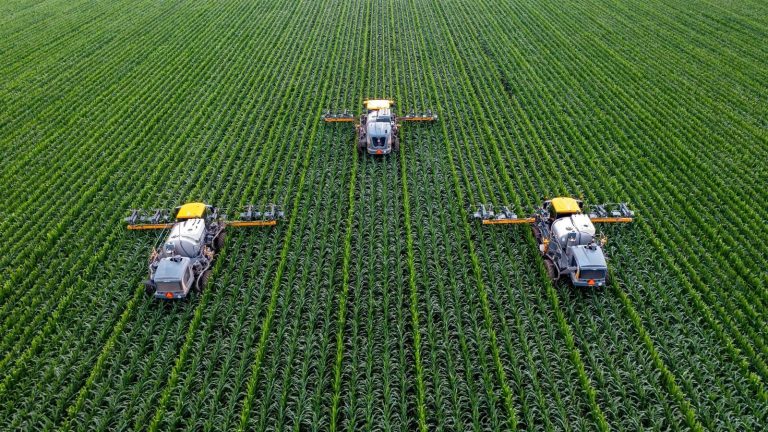
We have a leadership imperative and a responsibility to build resilient and equitable food systems that can nutritiously feed the growing population within planetary boundaries. Farmers as stewards of our food systems are leading this shift towards producing food that is more sustainable, nutritious, and accessible, leaving no one behind. The entire food ecosystem needs to work together to secure these transitions. This means fit-for-purpose innovation, coordinated capital and incentives, agile and multisectoral partnerships which together create solutions that are co-designed for practical at scale adoption by the whole value-chain.

A new report by the 100 Million Farmers initiative, Breakthrough Models for Financing a Sustainable Transition, outlines how to support and work alongside farmers, with a specific focus on speeding up the adoption of regenerative agriculture pathways. The model suggests de-risking transitions by aggregating capital from public and private sources to overcome initial financing costs, thus contributing to the key question of how we unlock resilience across the complexities of the food systems.

We asked three farming leaders to share their thoughts on their greatest worries and most hopeful solutions.

Top challenges for sustainable agriculture?

Megan Miller, Agronomy Manager, Illinois Soybean Association (ISA), USA

The lack of alignment along the agricultural value chain creates marked challenges for farmers in the transition to conservation agriculture, which often results in reduced/changed inputs, complicating production and profitability. Further, each stakeholder in the value chain places a different value on sustainably produced grain. Being in the middle of the value chain, farmers are squeezed by the demands before (land and input costs) and after (grain pricing and practice requirements), while still maintaining their profitability and ability to farm. Rising labour costs and shrinking rural populations also hamper the introduction to new farming methods while maintaining scale of operation.

Betty Chinyamunyamu, Deputy Chief Executive Officer, The National Smallholder Farmers’ Association of Malawi (NASFAM), Malawi

Farmers, including smallholders in Malawi, like farmers across African countries, see transitioning to sustainable agriculture as an immediate necessity. The risk of not transitioning is loss of livelihood in an economy that does not offer many alternative sources.

However, extension training is limited, coupled with lack of access and awareness of appropriate technologies and innovations. Further, these innovations are expensive, leading to low adoption. This is more evident for female farmers whose access is significantly lower. In addition, smallholder farmers are risk-averse, affecting willingness to adopt new practices.

In Malawi, where the farmers depend on one growing season through rainfed production, with limited access to crop and weather risk insurance, the hesitancy to change farming practices is due to fear of loss of crop, high costs and no hope of recovering through winter/irrigation farming.

Arnold Puech D’Alissac, President, World Farmers Organisation (WFO)

The top challenge for the farmers engaged in the transition is the need to maintain socioeconomic profitability while producing sufficient food, fibre and energy. This requires the adoption of practices that embed investments in knowledge, technology and production models.

According to the WFO Global Producers Consultation report Climate-Smart Agriculture from the AgMission™ initiative, the lack of efficient multistakeholder approaches is one of the biggest barriers to the adoption and retention of climate-smart agriculture practices. This is reflected in the limited access to financial resources and technological innovation where farmers are facing the impacts of climate change and taking responsibility for the transition. There is a need to: enhance farmers’ capacity to access funds for investments at the farm gate; and establish financial mechanisms tailored to the farming cycle structures and income models.

A truly just transition must: enhance farmers’ ability to face the threats of climate change; facilitate the intergenerational transition and/or create attractiveness in farming for young generations; ensure a fair income; and preserve the community’s well-being while sustainably feeding a growing global population.

What partnerships and investments might mitigate transition risks?

Megan Miller, Agronomy Manager, Illinois Soybean Association (ISA), USA

Currently, disparate incentive programmes exist across the value chain, from input companies, elevators to consumer goods and the benefits of conservation agriculture do not reach the farmers. Enrolling in a programme managed by one player in the value chain often excludes the farmer from enrolling in another. Programmes aligning the entire value chain through science-based standards and definitions for conservation outcomes, as well as lowering burden and securing data sharing would help mitigate transition risks for farmers.

Research that maps ecosystem services and the measurement, monitoring, reporting, and verification (MMRV) methods is needed. Many groups are working to monetize ecosystem services such as carbon sequestration, water quality, or biodiversity. While carbon credit markets have the most technical infrastructure for quantification and monetization, continued research funding is needed to quantify and understand these benefits on a global scale.

Funding for the development of third-party, in-field technical assistance is also needed. Programmes that allow for the trial of new practices with the aid of local experts will lead to a community that values food security and environmental outcomes.

Betty Chinyamunyamu, Deputy Chief Executive Officer, The National Smallholder Farmers’ Association of Malawi (NASFAM), Malawi

Farmers need partnerships with research institutions, development agencies, NGOs and innovation hubs to deploy appropriate technologies and understand benefits, making adoption easier. Technologies are often inaccessible due to cost or expertise. Partnerships must be allowed adequate time to bear results as farmers normally adopt a “wait and see” attitude.

These partnerships must fully engage farmers throughout the process of developing sustainable technologies, implementing, and monitoring impacts. Adoption of practices is easier with an involvement during design and not just implementation.

It is important to acknowledge the role that farmer organizations play in bridging gaps between the farmers and stakeholders. These organizations offer the best opportunity of engaging with a more empowered, informed and objective group of farmers.

Arnold Puech D’Alissac, President, World Farmers Organisation (WFO)

Farmers alone cannot bear the cost of a societal change on imagining the future food systems. As stated in the Food Producers’ Declaration for the United Nations 2021 Food Systems Summit, “We are in this together, and only together we will succeed.”, Farmers are keen to engage with other actors to ensure policies tailored to their needs. Their involvement in decision-making processes, research and innovation design is a pre-requisite to achieve these ambitious goals, along with the investment in the identification and scale-up of effective climate solutions. This approach goes hand in hand with a decentralization of power in the food value chain where farmers should be treated as equal partners in contract farming.

Agriculture is a sector that simultaneously can adapt to and mitigate climate change while also providing carbon sequestration services. This role belongs to the farmers and must be recognized by the other actors of the value chain, policy-makers and society.

All this is possible through the reinforcement of farmers’ organizations and cooperatives that can partner with the other actors in food systems to facilitate and accompany the full commitment of farmers to the transition.

What are you most hopeful for in the future?

Megan Miller, Agronomy Manager, Illinois Soybean Association (ISA), USA

The increased acknowledgement that we can work with farmers to address climate change while still working to ensure food security for the world’s population is leading to opportunities for alignment along the supply chain. I’m thankful to work for the board at the Illinois Soybean Association (ISA). We work with research partners such as the University of Illinois to understand and quantify the benefits and trade-offs of conservation practices on water quality and carbon sequestration by combining remotely sensed data with science.

Helping to scale conservation finance programmes by partnering with Illinois Corn on the Precision Conservation Management Program and the Iowa Soybean Association on the Soil and Water Outcomes Fund is allowing our farmers to understand how they can work as leaders in aligning the value chain. These efforts are now expanded to a state-level cover crop adoption, incentives, and training opportunities for technical assistance providers. There is also an opportunity to partner with other stakeholders to provide online and in-field technical assistance aimed at helping farmers overcome barriers to adoption.

Betty Chinyamunyamu, Deputy Chief Executive Officer, The National Smallholder Farmers’ Association of Malawi (NASFAM), Malawi

Smallholder farmers in Malawi are resilient and keen on the transition. I am hopeful that stakeholders will put smallholder farmers at the heart of sustainable agriculture and in developing solutions. I am hopeful for greater coordination and collaboration so that contradictions in approaches are minimized.

I am hopeful that smallholder farmers will be properly and adequately supported so that they are able to produce the quantity and quality of food that the world requires. I am hopeful that all farmers (from large to small) will be able to produce more, with less; be more resilient and manage a transition to sustainable farming.

Food is at the centre of all livelihoods. The responsibilities of having food and nutrition security are on all of us. We cannot allow farming to collapse into a global crisis and the need for transition is now. I am hopeful that the plight of farmers in a challenging climatic environment will become clear to all actors and push them to the right actions to support all farmers.

Arnold Puech D’Alissac, President, World Farmers Organisation (WFO)

We are hopeful that the international community will understand the urgency to act and the need for a shift of paradigm from having farmers at the receiving end of decisions to putting us at the front and centre of the transition.

The geopolitical situation and global economy are among the main variables of a stable business environment for farmers. We all remember the high fluctuation of prices of agriculture inputs and products in recent years, either due to political instability or speculation. Farmers, especially family farmers, are already facing the challenges linked with the impacts of climate change and increased natural disasters, compounded by a fragmented sector and geopolitical turmoil. Hence, we are hopeful for political stability and market predictability, that can only have a positive effect on the farmer resilience.

Farmers are ready to sit with other actors to address the decisions needed to make the transition. Our main hope is that the others; governments, the private sector, NGOs and civil society, multilateral organizations, and the research institutions are ready too to sit with the farmers and consider us as strategic allies to enable the transition.

Only accepting this shift in paradigm can lead to a more fair and transparent distribution of power, responsibilities, and new business opportunities.

By: Tania Strauss (Head, Food and Water, World Economic Forum)
Originally published at: World Economic Forum

Skunk Works® Rolls Out X-59, NASA’s Newest X-Plane

0

PALMDALE, Calif., Jan. 12, 2024 /PRNewswire/ — Lockheed Martin Skunk Works® (NYSE: LMT) rolled out the X-59, a unique experimental aircraft designed to quiet the sonic boom, at a ceremony in Palmdale, California. The ceremony marked a significant milestone in Lockheed Martin’s and NASA’s decades-long journey to solve one of the most persistent challenges of supersonic flight – the sonic boom.

“We’re thrilled to take on this challenge alongside NASA, whose quiet supersonic technology mission will have lasting, transformational impacts for people around the world,” said John Clark, vice president and general manager, Lockheed Martin Skunk Works. “This project is just one example of the broader ingenuity of our industry as we continually strive to push the envelope of what’s possible.”

Rollout ceremonies are a long-standing aviation tradition, and in the case of the X-59, it celebrated technical advancements, collaboration and innovation that stemmed from years of research, development and production of a one-of-a-kind technology demonstrator aircraft that will reduce the loudness of sonic booms to a gentle thump.

“The entire X-59 team leaned into the expertise of both legendary organizations, NASA and Lockheed Martin, to ensure success for this program. I am extremely proud of everyone who made this historic moment possible,” said Greg Ulmer, executive vice president, Lockheed Martin Aeronautics.

Lockheed Martin, NASA and government leaders attended the ceremony to include:

  • Greg Ulmer, executive vice president, Lockheed Martin Aeronautics
  • John Clark, vice president and general manager, Lockheed Martin Skunk Works
  • Pam Melroy, NASA Deputy Administrator
  • Jim Free, NASA Associate Administrator
  • Bob Pearce, NASA Associate Administrator
  • Dee Dee Myers, California’s Senior Economic Advisor to the Governor

An X-59 media kit containing photo and video from the ceremony and more is available here.

Next, the aircraft will complete ground tests including engine-run and taxi tests before its next major milestone, first flight, later this year. After the aircraft is validated in initial flight tests, it will move into the acoustic testing phase. This phase will include flights over populated areas to provide U.S. and international regulators with statistically valid data required to help approve new rules that could allow quiet commercial supersonic flight over land. This would cut commercial flight times to half of what they are today, transforming travel for people around the world.

For additional information, visit our website: https://www.lockheedmartin.com/en-us/products/x-59-quiet-supersonic/x-59-rollout-event.html

About Lockheed Martin

Headquartered in Bethesda, Maryland, Lockheed Martin Corporation is a global security and aerospace company that employs approximately 116,000 people worldwide and is principally engaged in the research, design, development, manufacture, integration and sustainment of advanced technology systems, products and services.

Please follow @LMNews on X for the latest announcements and news across the corporation.

SOURCE Lockheed Martin Aeronautics