
Home Blog Page 105

Two Exoplanets May Be Mostly Water, NASA’s Hubble And Spitzer Find

0
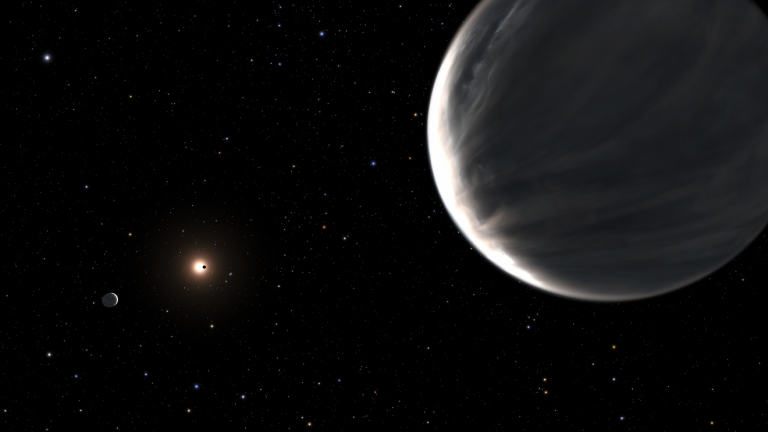
In this illustration, exoplanet Kepler-138 d is in the foreground and Kepler-138 c is on the left. In the background, Kepler 138 b is passing in front of its parent star. The low densities of Kepler-138 c and Kepler-138 d indicate that they must be composed largely of water. Credit: NASA, ESA, Leah Hustak (STScI)

Though the telescopes can’t directly observe the planets’ surfaces, their densities indicate they’re lighter than rock worlds but heavier than gas-dominated ones.

A team led by of researchers at the University of Montreal has found evidence that two exoplanets orbiting a red dwarf star are “water worlds,” where water makes up a large fraction of the entire planet. These worlds, located in a planetary system 218 light-years away in the constellation Lyra, are unlike any planets found in our solar system.

The team, led by Caroline Piaulet of the Institute for Research on Exoplanets (iREx) at the University of Montreal, published a detailed study of this planetary system, known as Kepler-138, in the journal Nature Astronomy today.

Piaulet and colleagues observed exoplanets Kepler-138c and Kepler-138d with NASA’s Hubble and the retired Spitzer space telescopes and discovered that the planets could be composed largely of water. These two planets and a smaller planetary companion closer to the star, Kepler-138b, had been discovered previously by NASA’s Kepler Space Telescope. The new study found evidence for a fourth planet, too.

Water wasn’t directly detected at Kepler-138c and d, but by comparing the sizes and masses of the planets to models, astronomers conclude that a significant fraction of their volume – up to half of it – should be made of materials that are lighter than rock but heavier than hydrogen or helium (which constitute the bulk of gas giant planets like Jupiter). The most common of these candidate materials is water.

“We previously thought that planets that were a bit larger than Earth were big balls of metal and rock, like scaled-up versions of Earth, and that’s why we called them super-Earths,” explained Björn Benneke, study co-author and professor of astrophysics at the University of Montreal. “However, we have now shown that these two planets, Kepler-138c and d, are quite different in nature and that a big fraction of their entire volume is likely composed of water. It is the best evidence yet for water worlds, a type of planet that was theorized by astronomers to exist for a long time.”

This illustration shows cross-sections of the Earth and the exoplanet Kepler-138d. Measurements of Kepler-138d’s density suggest it could have a water layer that makes up more than 50% of its volume, to a depth of about 1,243 miles (2,000 kilometers).  Credit: Benoit Gougeon (University of Montreal)

With volumes more than three times that of Earth and masses twice as big, planets c and d have much lower densities than Earth. This is surprising because most of the planets just slightly bigger than Earth that have been studied in detail so far all seemed to be rocky worlds like ours. The closest comparison, say researchers, would be some of the icy moons in the outer solar system that are also largely composed of water surrounding a rocky core.

“Imagine larger versions of Europa or Enceladus, the water-rich moons orbiting Jupiter and Saturn, but brought much closer to their star,” explained Piaulet. “Instead of an icy surface, they would harbor large water-vapor envelopes.”

Researchers caution the planets may not have oceans like those on Earth directly at the planet’s surface. “The temperature in Kepler-138d’s atmosphere is likely above the boiling point of water, and we expect a thick, dense atmosphere made of steam on this planet. Only, under that steam atmosphere there could potentially be liquid water at high pressure, or even water in another phase that occurs at high pressures, called a supercritical fluid,” Piaulet said.

In 2014, data from NASA’s Kepler Space Telescope allowed astronomers to announce the detection of three planets orbiting Kepler-138. This was based on a measurable dip in starlight as the planet momentarily passed in from of their star.

Benneke and his colleague Diana Dragomir, from the University of New Mexico, came up with the idea of re-observing the planetary system with the Hubble and Spitzer space telescopes between 2014 and 2016 to catch more transits of Kepler-138d, the third planet in the system, in order to study its atmosphere.

A new exoplanet in the system

The two possible water worlds, Kepler-138c and d, are not located in the habitable zone, the area around a star where temperatures would allow liquid water on the surface of a rocky planet. But in the Hubble and Spitzer data, researchers additionally found evidence for a new planet in the system, Kepler-138e, in the habitable zone.

This newly found planet is small and farther from its star than the three others, taking 38 days to complete an orbit. The nature of this additional planet, however, remains an open question because it does not seem to transit its host star. Observing the exoplanet’s transit would have allowed astronomers to determine its size.

With Kepler-138e now in the picture, the masses of the previously known planets were measured again via the transit timing-variation method, which consists of tracking small variations in the precise moments of the planets’ transits in front of their star caused by the gravitational pull of other nearby planets.

The researchers had another surprise: They found that the two water worlds Kepler-138c and are “twin” planets, with virtually the same size and mass, while they were previously thought to be drastically different. The closer-in planet, Kepler-138b, on the other hand, is confirmed to be a small Mars-mass planet, one of the smallest exoplanets known to date.

“As our instruments and techniques become sensitive enough to find and study planets that are farther from their stars, we might start finding a lot more of these water worlds,” Benneke concluded.

More About the Mission

The entire body of scientific data collected by Spitzer during its lifetime is available to the public via the Spitzer data archive, housed at the Infrared Science Archive at IPAC at Caltech in Pasadena, California. NASA’s Jet Propulsion Laboratory, a division of Caltech, managed Spitzer mission operations for the agency’s Science Mission Directorate in Washington. Science operations were conducted at the Spitzer Science Center at IPAC at Caltech. Spacecraft operations were based at Lockheed Martin Space in Littleton, Colorado.

For more information about NASA’s Spitzer mission, go to:

https://www.jpl.nasa.gov/missions/spitzer-space-telescope

News Media Contact

Calla Cofield

Jet Propulsion Laboratory, Pasadena, Calif.

626-808-2469
[email protected]

Hubble Captures Majestic Barred Spiral

0

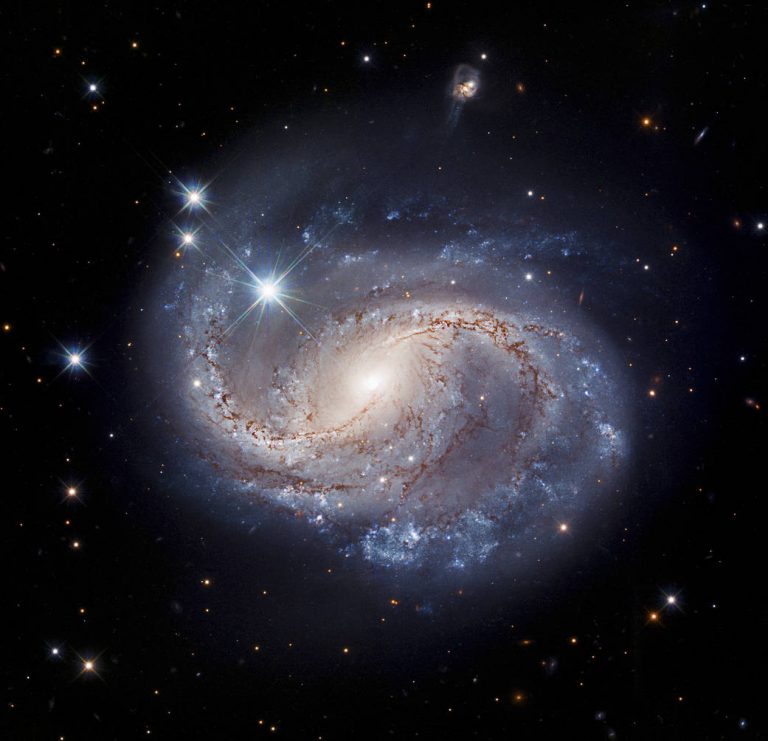
Against an inky black backdrop, the blue swirls of spiral galaxy NGC 6956 stand out radiantly. NGC 6956 is a barred spiral galaxy, a common type of spiral galaxy with a bar-shaped structure of stars in its center. This galaxy exists 214 million light-years away in the constellation Delphinus.

Scientists used NASA’s Hubble Space Telescope to image NGC 6956 to study its Cepheid variable stars, which are stars that brighten and dim at regular periods. Since the period of Cepheid variable stars is a function of their brightness, scientists can measure how bright these stars appear from Earth and compare it to their actual brightness to calculate their distance. As a result, these stars are extremely useful in determining the distance of cosmic objects, which is one of the hardest pieces of information to measure for extragalactic objects.

This galaxy also contains a Type Ia supernova, which is the explosion of a white dwarf star that was gradually accreting matter from a companion star. Like Cepheid variable stars, the brightness of these types of supernovae and how fast they dim over time enables scientists to calculate their distance. Scientists can use the measurements gleaned from Cepheid variable stars and Type Ia supernovae to refine our understanding of the rate of expansion of the universe, also known as the Hubble Constant.

Image Credit: NASA, ESA, and D. Jones (University of California – Santa Cruz); Processing: Gladys Kober (NASA/Catholic University of America)

Media Contact:

Claire Andreoli
NASA’s Goddard Space Flight CenterGreenbelt, MD
301-286-1940

By Andrea Gianopoulos
Source Hubble

Chandra Sees Stellar X-rays Exceeding Safety Limits

0
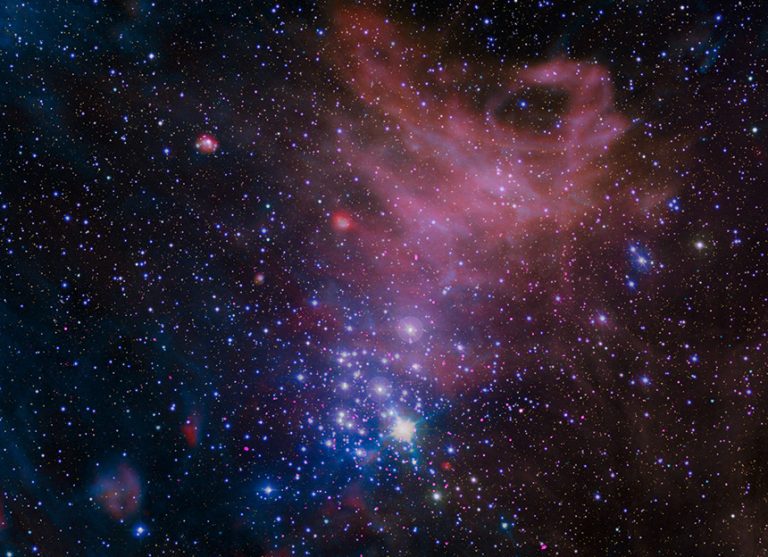
NGC 3293. NASA.

Astronomers have made the most extensive study yet of how magnetically active stars are when they are young.

This gives scientists a window into how X-rays from stars like the Sun, but billions of years younger, could partially or completely evaporate the atmospheres of planets orbiting them.

Many stars begin their lives in “open clusters,” loosely packed groups of stars with up to a few thousand members, all formed roughly at the same time. This makes open clusters valuable for astronomers investigating the evolution of stars and planets, because they allow the study of many stars of similar ages forged in the same environment.

A team of astronomers led by Konstantin Getman of Penn State University studied a sample of over 6,000 stars in 10 different open clusters with ages between 7 million and 25 million years. One of the goals of this study was to learn how the magnetic activity levels of stars like our Sun change during the first tens of millions of years after they form. Getman and his colleagues used NASA’s Chandra X-ray Observatory for this study because stars that have more activity linked to magnetic fields are brighter in X-rays.

This composite image shows one of those clusters, NGC 3293, which is 11 million years old and is located about 8,300 light-years from Earth in the Milky Way galaxy. The image contains X-rays from Chandra (purple) as well as infrared data from ESA’s Herschel Space Observatory (red), longer-wavelength infrared data from NASA’s retired Spitzer Space Telescope (blue and white), and optical data from the MPG/ESO 2.2-meter telescope at ESO’s La Silla Observatory in Chile appearing as red, white and blue.

The researchers combined the Chandra data of the stars’ activity with data from ESA’s Gaia satellite — not shown in the new composite image — to determine which stars are in the open clusters and which ones are in the foreground or background. The team identified nearly a thousand members of the cluster.

They combined their results for the open clusters with previously published Chandra studies of stars as young as 500,000 years old. The team found that the X-ray brightness of young, Sun-like stars is roughly constant for the first few million years, and then fades from 7 to 25 million years of age. This decrease happens more quickly for heftier stars.

To explain this decline in activity, Getman’s team used astronomers’ understanding of the interior of the Sun and Sun-like stars. Magnetic fields in such stars are generated by a dynamo, a process involving the rotation of the star as well as convection, the rising and falling of hot gas in the star’s interior.

Around the age of NGC 3293, the dynamos of Sun-like stars become much less efficient because their convection zones become smaller as they age. For stars with masses smaller than that of the Sun, this is a relatively gradual process. For more massive stars, a dynamo dies away because the convection zone of the stars disappears.

How active a star is directly affects the formation processes of planets in the disk of gas and dust that surrounds all nascent stars. The most boisterous, magnetically active young stars quickly clear away their disks, halting the growth of planets.

This activity, measured in X-rays, also affects the potential habitability of the planets that emerge after the disk has disappeared. If a star is extremely active, as with many NGC 3293 stars in the Chandra data, then scientists predict it will blast planets in its system with energetic X-rays and ultraviolet light. In some cases, this high-energy barrage could cause an Earth-sized rocky planet to lose much of its original, hydrogen-rich atmosphere through evaporation within a few million years. It might also strip away a carbon dioxide-rich atmosphere that forms later, unless it is protected by a magnetic field. Our planet possesses its own magnetic field that prevented such an outcome for Earth.

A paper describing these results was published in the August issue of The Astrophysical Journal and is available online. Coauthors of the paper are Eric D. Feigelson and Patrick S. Broos from Penn State University, Gordon P. Garmire from the Huntingdon Institute for X-ray Astronomy, Michael A. Kuhn from the University of Hertsfordshire, Thomas Preibisch from Ludwig-Maximilians-Universitat, and Vladimir S. Airapetian from NASA’s Goddard Space Flight Center.

NASA’s Marshall Space Flight Center manages the Chandra program. The Smithsonian Astrophysical Observatory’s Chandra X-ray Center controls science operations from Cambridge, Massachusetts, and flight operations from Burlington, Massachusetts.

Larger images

Contacts:

Molly Porter
NASA
Marshall Space Flight Center, Huntsville, Ala.

+1 256-424-5158

[email protected]


Megan Watzke
Chandra X-ray Center, Cambridge, Mass.
+1 617-496-7998
[email protected]

By Keith Cowing
Source SpaceRef

NASA’s Webb Unveils Young Stars In Early Stages Of Formation

0

Webb’s Infrared Capabilities Pierce Through Dust Clouds to Make Rare Find

Searching for buried treasure can be a painstaking, even frustrating, process. Sifting through the proverbial sand for hours and hours, to rarely hit the jackpot, is common. However, with NASA’s James Webb Space Telescope, researchers are getting a taste of these often elusive bounties.

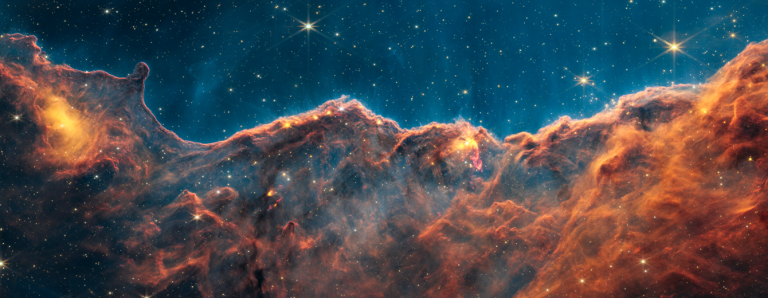
A “deep dive” for buried treasure into one of Webb’s iconic First Images, the Cosmic Cliffs, has revealed a hotbed of young stars in a particularly elusive stage of development. Close analysis of data from a specific wavelength of light, only captured by Webb, is now opening new doors to intriguing finds.

Full Article

Scientists taking a “deep dive” into one of Webb’s iconic first images have discovered dozens of energetic jets and outflows from young stars previously hidden by dust clouds. The discovery marks the beginning of a new era of investigating how stars like our Sun form, and how the radiation from nearby massive stars might affect the development of planets.

The Cosmic Cliffs, a region at the edge of a gigantic, gaseous cavity within the star cluster NGC 3324, has long intrigued astronomers as a hotbed for star formation. While well-studied by the Hubble Space Telescope, many details of star formation in NGC 3324 remain hidden at visible-light wavelengths. Webb is perfectly primed to tease out these long-sought-after details since it is built to detect jets and outflows seen only in the infrared at high resolution. Webb’s capabilities also allow researchers to track the movement of other features previously captured by Hubble. 

Recently, by analyzing data from a specific wavelength of infrared light (4.7 microns), astronomers discovered two dozen previously unknown outflows from extremely young stars revealed by molecular hydrogen. Webb’s observations uncovered a gallery of objects ranging from small fountains to burbling behemoths that extend light-years from the forming stars. Many of these protostars are poised to become low mass stars, like our Sun. 

“What Webb gives us is a snapshot in time to see just how much star formation is going on in what may be a more typical corner of the universe that we haven’t been able to see before,” said astronomer Megan Reiter of Rice University in Houston, Texas, who led the study.

Molecular hydrogen is a vital ingredient for making new stars and an excellent tracer of the early stages of their formation. As young stars gather material from the gas and dust that surround them, most also eject a fraction of that material back out again from their polar regions in jets and outflows. These jets then act like a snowplow, bulldozing into the surrounding environment. Visible in Webb’s observations is the molecular hydrogen getting swept up and excited by these jets.

“Jets like these are signposts for the most exciting part of the star formation process. We only see them during a brief window of time when the protostar is actively accreting,” explained co-author Nathan Smith of the University of Arizona in Tucson. 

Previous observations of jets and outflows looked mostly at nearby regions and more evolved objects that are already detectable in the visual wavelengths seen by Hubble. The unparalleled sensitivity of Webb allows observations of more distant regions, while its infrared optimization probes into the dust-sampling younger stages. Together this provides astronomers with an unprecedented view into environments that resemble the birthplace of our solar system. 

“It opens the door for what’s going to be possible in terms of looking at these populations of newborn stars in fairly typical environments of the universe that have been invisible up until the James Webb Space Telescope,” added Reiter. “Now we know where to look next to explore what variables are important for the formation of Sun-like stars.”

This period of very early star formation is especially difficult to capture because, for each individual star, it’s a relatively fleeting event – just a few thousand to 10,000 years amid a multi-million-year process of star formation.

“In the image first released in July, you see hints of this activity, but these jets are only visible when you embark on that deep dive – dissecting data from each of the different filters and analyzing each area alone,” shared team member Jon Morse of the California Institute of Technology in Pasadena. “It’s like finding buried treasure.”

In analyzing the new Webb observations, astronomers are also gaining insights into how active these star-forming regions are, even in a relatively short time span. By comparing the position of previously known outflows in this region caught by Webb, to archival data by Hubble from 16 years ago, the scientists were able to track the speed and direction in which the jets are moving.

This science was conducted on observations collected as part of Webb’s Early Release Observations Program. The paper was published in the Monthly Notices of the Royal Astronomical Society in December 2022.

The James Webb Space Telescope is the world’s premier space science observatory. Webb will solve mysteries in our solar system, look beyond to distant worlds around other stars, and probe the mysterious structures and origins of our universe and our place in it. Webb is an international program led by NASA with its partners, ESA (European Space Agency), and CSA (Canadian Space Agency).

Credits

NASA, ESA, CSA, STScI

MEDIA CONTACT:

Hannah Braun
Space Telescope Science Institute, Baltimore, Maryland

Christine Pulliam
Space Telescope Science Institute, Baltimore, Maryland

SCIENCE CONTACT:

Megan Reiter
Rice University, Houston, Texas

Source Webb Space Telescope

Artemis I Update: Orion Offloaded From USS Portland In Preparation For Transport To Kennedy Space Center

0
Team members with NASA’s Exploration Ground Systems program successfully removed the Artemis I Orion spacecraft from the USS Portland Dec. 14, after the ship arrived at U.S. Naval Base San Diego.

Team members with NASA’s Exploration Ground Systems program successfully removed the Artemis I Orion spacecraft from the USS Portland Dec. 14, after the ship arrived at U.S. Naval Base San Diego a day earlier. The spacecraft successfully splashed down Dec. 11 in the Pacific Ocean west of Baja California after completing a 1.4 million-mile journey beyond the Moon and back, and was recovered by NASA’s Landing and Recovery team and personnel from the Department of Defense. 

Engineers will conduct inspections around the spacecraft’s windows before installing hard covers and deflating the five airbags on the crew module uprighting system in preparation for the final leg of Orion’s journey over land. It will be loaded on a truck and transported back to the agency’s Kennedy Space Center in Florida for post-flight analysis.  

Before its departure, teams will open Orion’s hatch as part of preparations for the trip to Kennedy and remove the Biology Experiment-1 payload which flew onboard Orion. The experiment involves using plant seeds, fungi, yeast, and algae to study the effects of space radiation before sending humans to the Moon and, eventually, to Mars. Removing the payload prior to Orion’s return to Kennedy allows scientists to begin their analysis before the samples begin to degrade.  

Once it arrives to Kennedy, Orion will be delivered to the Multi-Payload Processing Facility where additional payloads will be taken out, its heat shield and other elements will be removed for analysis, and remaining hazards will be offloaded.

By Tiffany Fairley
Source NASA

NASA’s Juno Exploring Jovian Moons During Extended Mission

0
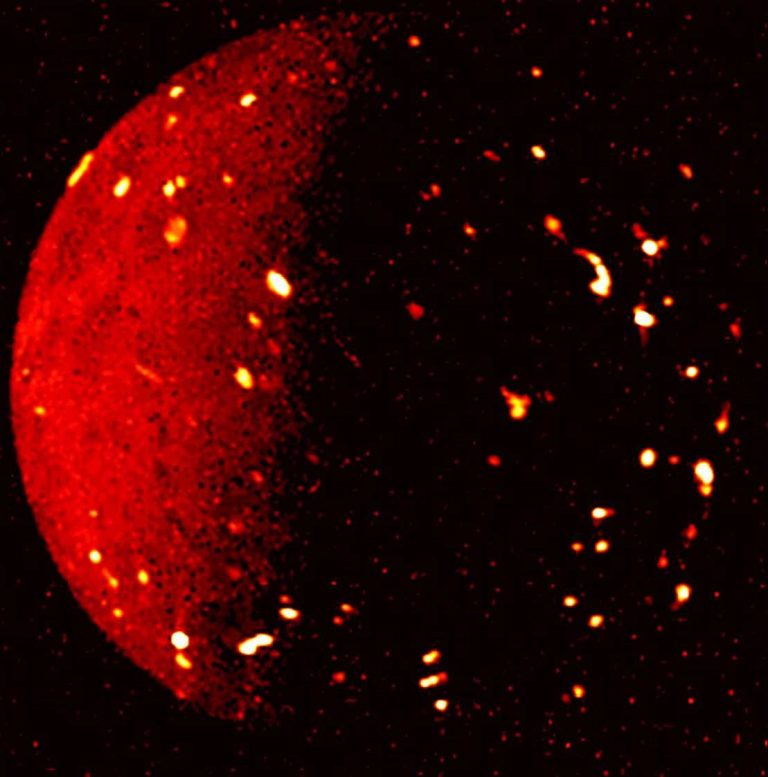
NASA’s Juno mission captured this infrared view of Jupiter’s volcanic moon Io on July 5, 2022, when the spacecraft was about 50,000 miles (80,000 kilometers) away. This infrared image was derived from data collected by the Jovian Infrared Auroral Mapper (JIRAM) instrument aboard Juno. In this image, the brighter the color the higher the temperature recorded by JIRAM. Credit: NASA/JPL-Caltech/SwRI/ASI/INAF/JIRAM Full Image Details

After revealing a trove of details about the moons Ganymede and Europa, the mission to Jupiter is setting its sights on sister moon Io.

NASA’s Juno mission is scheduled to obtain images of the Jovian moon Io on Dec. 15 as part of its continuing exploration of Jupiter’s inner moons. Now in the second year of its extended mission to investigate the interior of Jupiter, the solar-powered spacecraft performed a close flyby of Ganymede in 2021 and of Europa earlier this year.

“The team is really excited to have Juno’s extended mission include the study of Jupiter’s moons. With each close flyby, we have been able to obtain a wealth of new information,” said Juno Principal Investigator Scott Bolton of the Southwest Research Institute in San Antonio. “Juno sensors are designed to study Jupiter, but we’ve been thrilled at how well they can perform double duty by observing Jupiter’s moons.”

This animation illustrates how the magnetic field surrounding Jupiter’s moon Ganymede (represented by the blue lines) interacts with and disrupts the magnetic field surrounding Jupiter (represented by the orange lines).
 Credit: NASA/JPL-Caltech/SwRI/Duling

Several papers based on the June 7, 2021, Ganymede flyby were recently published in the Journal of Geophysical Research and Geophysical Research Letters. They include findings on the moon’s interior, surface composition, and ionosphere, along with its interaction with Jupiter’s magnetosphere, from data obtained during the flyby. Preliminary results from Juno’s Sept. 9 flyby of Europa include the first 3D observations of Europa’s ice shell.

Below the Ice

During the flybys, Juno’s Microwave Radiometer (MWR) added a third dimension to the mission’s Jovian moon exploration: It provided a groundbreaking look beneath the water-ice crust of Ganymede and Europa to obtain data on its structure, purity, and temperature down to as deep as about 15 miles (24 kilometers) below the surface.

Visible-light imagery obtained by the spacecraft’s JunoCam, as well as by previous missions to Jupiter, indicates Ganymede’s surface is characterized by a mixture of older dark terrain, younger bright terrain, and bright craters, as well as linear features that are potentially associated with tectonic activity.

“When we combined the MWR data with the surface images, we found the differences between these various terrain types are not just skin deep,” said Bolton. “Young, bright terrain appears colder than dark terrain, with the coldest region sampled being the city-sized impact crater Tros. Initial analysis by the science team suggests Ganymede’s conductive ice shell may have an average thickness of approximately 30 miles or more, with the possibility that the ice may be significantly thicker in certain regions.”

Magnetospheric Fireworks

During the spacecraft’s June 2021 close approach to Ganymede, Juno’s Magnetic Field (MAG) and Jovian Auroral Distributions Experiment (JADE) instruments recorded data showing evidence of the breaking and reforming of magnetic field connections between Jupiter and Ganymede. Juno’s ultraviolet spectrograph (UVS) has been observing similar events with the moon’s ultraviolet auroral emissions, organized into two ovals that wrap around Ganymede.

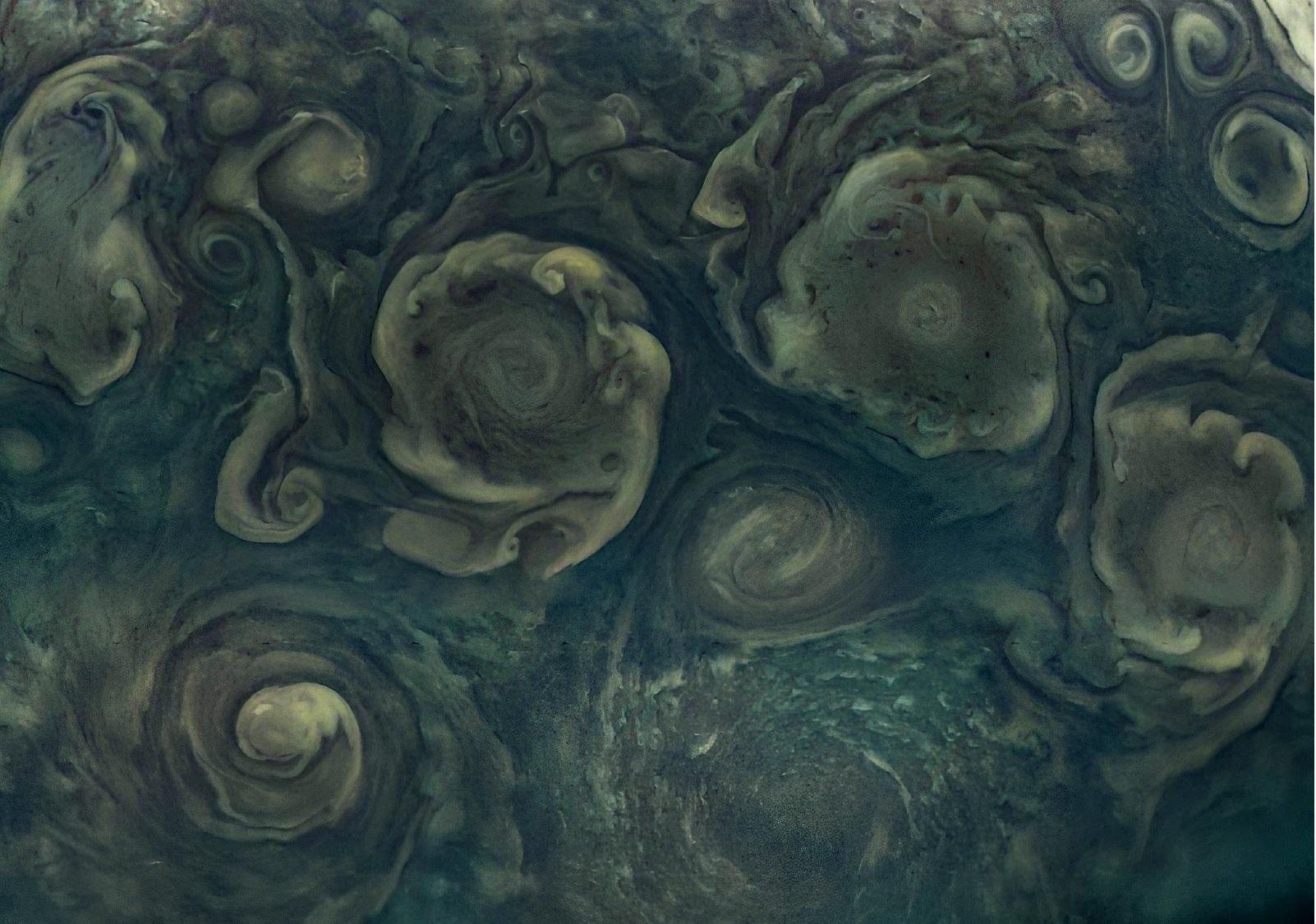
JunoCam took this image of Jupiter's northernmost cyclone (visible to the right along the bottom edge of image) on September 29, 2022.
JunoCam took this image of Jupiter’s northernmost cyclone (visible to the right along the bottom edge of image) on September 29, 2022. 
Credit: Image data: NASA/JPL-Caltech/SwRI/MSSSImage processing by Navaneeth Krishnan S CC BY 3.0 
Full Image Details

“Nothing is easy – or small – when you have the biggest planet in the solar system as your neighbor,” said Thomas Greathouse, a Juno scientist from SwRI. “This was the first measurement of this complicated interaction at Ganymede. This gives us a very early tantalizing taste of the information we expect to learn from the JUICE” – the ESA (European Space Agency) JUpiter ICy moons Explorer – “and NASA’s Europa Clipper missions.”

Volcanic Future

Jupiter’s moon Io, the most volcanic place in the solar system, will remain an object of the Juno team’s attention for the next year and a half. Their Dec. 15 exploration of the moon will be the first of nine flybys – two of them from just 930 miles (1,500 kilometers) away. Juno scientists will use those flybys to perform the first high-resolution monitoring campaign on the magma-encrusted moon, studying Io’s volcanoes and how volcanic eruptions interact with Jupiter’s powerful magnetosphere and aurora.

With three giant blades stretching out some 66 feet (20 meters) from its cylindrical, six-sided body, the Juno spacecraft is a dynamic engineering marvel, spinning to keep itself stable as it makes oval-shaped orbits around Jupiter. View the full interactive experience at Eyes on the Solar System.

More About the Mission

NASA’s Jet Propulsion Laboratory, a division of Caltech in Pasadena, California, manages the Juno mission for the principal investigator, Scott J. Bolton, of the Southwest Research Institute in San Antonio. Juno is part of NASA’s New Frontiers Program, which is managed at NASA’s Marshall Space Flight Center in Huntsville, Alabama, for the agency’s Science Mission Directorate in Washington. Lockheed Martin Space in Denver built and operates the spacecraft.

More information about Juno is available at: https://www.nasa.gov/juno and https://www.missionjuno.swri.edu

News Media Contact

DC Agle
Jet Propulsion Laboratory, Pasadena, Calif.
818-393-9011
[email protected]

Karen Fox / Alana Johnson
NASA Headquarters, Washington
301-286-6284 / 202-358-1501
[email protected] / [email protected]

Deb Schmid
Southwest Research Institute, San Antonio
210-522-2254
[email protected]

NASA Sensors To Help Detect Methane Emitted By Landfills

0
Methane from the waste sector makes up about 20% of human-caused methane emissions. A new project from a nonprofit group, Carbon Mapper, will use NASA instruments and data to measure emissions from landfills around the globe.

A nonprofit group, Carbon Mapper, will use data from NASA’s EMIT mission, plus current airborne and future satellite instruments, to survey waste sites for methane emissions.

Observations from the Earth Surface Mineral Dust Source Investigation (EMIT) and other NASA science instruments will be part of a global survey of point-source emissions of methane from solid waste sites such as landfills. The multiyear effort is being developed and conducted by the nonprofit Carbon Mapper organization.

Methane is a potent greenhouse gas, the source of roughly a quarter to a third of global warming caused by humans. The aim of the new initiative is to establish a baseline assessment of global waste sites that emit methane at high rates. This information can support decision-makers as they work to reduce the concentration of the gas in the atmosphere and limit climate change.

Methane produced by the waste sector contributes an estimated 20% of human-caused methane emissions. Ton for ton, methane is more than 80 times more potent than carbon dioxide in trapping heat in the atmosphere. But where carbon dioxide remains in the air for centuries, methane has an atmospheric lifetime of only about a decade or two. That means some immediate slowing of atmospheric warming could be achieved if methane emissions were significantly reduced.

“Currently, there is limited actionable information about methane emissions from the global waste sector. A comprehensive understanding of high-emission point sources from waste sites is a critical step to mitigating them,” said Carbon Mapper CEO Riley Duren. “New technological capabilities that are making these emissions visible – and therefore actionable – have the potential to change the game, elevating our collective understanding of near-term opportunities in this often overlooked sector.”

Carbon Mapper received a grant from the Grantham Foundation for the Protection of the Environment to support its operations related to the waste-site initiative, including potential funding to cover airborne methane surveys using NASA airborne assets. The project will entail conducting an initial remote-sensing survey in 2023 of more than 1,000 managed landfills across the United States and Canada, and in key locations in Latin America, Africa, and Asia. To collect data from these regions, researchers will use aircraft-based sensors, including the Airborne Visible/Infrared Imaging Spectrometer-Next Generation (AVIRIS-NG), which was developed at NASA’s Jet Propulsion Laboratory in Southern California. In addition, they will use Arizona State University’s Global Airborne Observatory from the Center of Global Discovery and Conservation Science, which uses another JPL-built imaging spectrometer.

As part of the Carbon Mapper project, researchers will analyze methane data from EMIT as well. The JPL-managed imaging spectrometer was installed on the International Space Station in July 2022 to measure the mineral content at the surface of Earth’s major dust-producing regions.

In October, scientists demonstrated that EMIT can also identify methane plumes from “super-emitters.” In so doing, the team added another tool to help with NASA’s broader efforts to monitor greenhouse gases.

“NASA JPL has a decadelong track record of using airborne imaging spectrometers to make high-quality observations of methane point-source emissions,” said Robert Green, EMIT’s principal investigator at JPL. “With EMIT we have employed the same technology in a spaceborne instrument, enabling us to collect information on localized methane sources from orbit.”

After the first year of the Carbon Mapper project, researchers will conduct a broader survey of more than 10,000 landfills around the world using two satellites in the Carbon Mapper satellite program. The pair of spacecraft will be equipped with imaging spectrometer technology developed at JPL. The team is targeting a launch in late 2023 in coordination with Planet Labs PBC, among other partners.

Data from the project will be accessible at the Carbon Mapper Data Portal.

For additional details about EMIT, visit: https://earth.jpl.nasa.gov/emit/

More About the Missions

EMIT was selected from the Earth Venture Instrument-4 solicitation under the Earth Science Division of NASA’s Science Mission Directorate and was developed at NASA’s Jet Propulsion Laboratory, which is managed for the agency by Caltech in Pasadena, California. The instrument’s data will be delivered to the NASA Land Processes Distributed Active Archive Center (DAAC) for use by other researchers and the public.

The Airborne Visible/Infrared Imaging Spectrometer-Next Generation (AVIRIS-NG) was built at JPL and designed to measure wavelengths of light from 380 to 2,510 nanometers. It has flown numerous missions, studying phenomena such as plant ecology, mineralogy, snow and ice hydrology, and environmental hazards.

Carbon Mapper is a nonprofit organization focused on facilitating timely action to mitigate greenhouse gas emissions. Its mission is to fill gaps in the emerging global ecosystem of methane and carbon dioxide monitoring systems by delivering data at facility scale that is precise, timely, and accessible to empower science-based decision making and action. The organization is leading the development of the Carbon Mapper constellation of satellites supported by a public-private partnership composed of Planet Labs PBC, JPL, the California Air Resources Board, the University of Arizona, Arizona State University, and RMI, with funding from High Tide Foundation, Bloomberg Philanthropies, Grantham Foundation for the Protection of the Environment, and other philanthropic donors.

Turning Science Fiction Into Science Fact: Space Solar Power Beaming

0
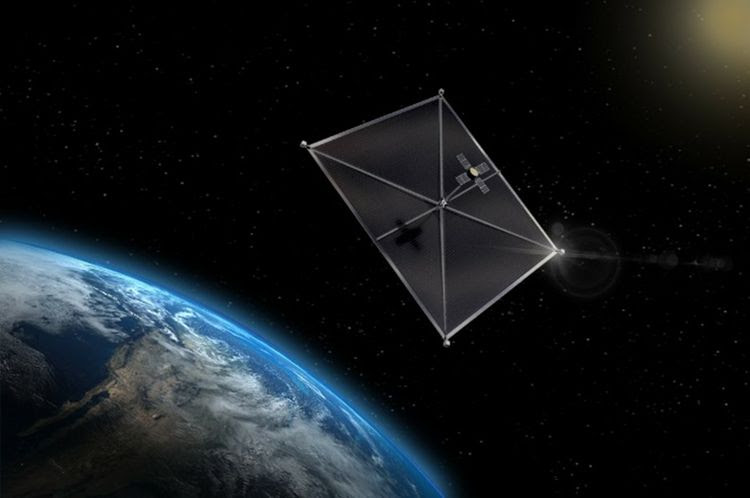
An artistic rendering showing the concept of collecting solar energy in space and beaming converted RF energy to a terrestrial rectenna. Credit: Northrop Grumman.

In the 1940s, science fiction author Isaac Asimov theorized the concept of collecting the sun’s energy in space, then beaming that energy down to Earth.

Today, Northrop Grumman’s Space Solar Power Incremental Demonstrations and Research (SSPIDR) Project team is making that science fiction a reality with steady progress towards transmitting solar energy from space to anywhere on Earth. SSPIDR technology can be especially useful in forward operating and contested areas where warfighters need steady power to maintain mission operations.

Harnessing solar power for use on Earth has enormous potential for communities where energy is scarce. For example, when military personnel establish a forward operating base one of the most dangerous parts of the ground operation is getting power. Convoys and supply lines, which are major targets for adversaries, are the usual methods to supply power. However, solar-powered beaming energy technology can provide constant, consistent and logistically agile power to expeditionary forces operating in hard-to-reach areas – assuring power is transmitted via radio frequency (RF) from space and reducing reliance on fuel convoys and other energy generation methods.

Utilizing one of the company’s test chambers specifically designed for RF at its Baltimore manufacturing and test campus, the SSPIDR team successfully demonstrated the transmission of directed RF energy to a ground-based rectifying antenna (rectenna) – a critical milestone in the development of this pioneering technology. In this demonstration, engineers steered RF energy to rectenna hardware, energizing a series of lights that indicated successful formation of an energy beam and conversion to useful electrical current.

As part of this laboratory demonstration, engineers also showcased the ability to beam RF energy to multiple fixed points by electronically steering and controlling the power beam using Active Electronically Scanned Array (AESA) capabilities.

“Space solar power beaming has the potential to provide energy anywhere on Earth at any time, making consistent and reliable energy available to remote locations when its needed most,” said Tara Theret, SSPIDR program director, Northrop Grumman. “With this demonstration, we are one step closer to taking this technology out of the lab and putting it on orbit.”

As ambitious as it is revolutionary, the SSPIDR Project which is under contracted development partnership with the U.S. Air Force Research Laboratory (AFRL) will utilize on-orbit, highly-efficient photovoltaic cells to collect solar energy. This solar energy will then be converted into RF energy and beamed to a receiving station on Earth — like a power plant, but for space solar energy — where it would be converted to usable energy.

Having successfully demonstrated the conversion of solar energy to transmittable RF energy and wireless beaming capabilities in a laboratory environment, engineers are continuing to fine-tune the array to strengthen beam steering capabilities.

What has for decades been a science fiction concept will soon be on its way to space-based demonstration with AFRL’s anticipated mission launch in 2025.

By Keith Cowing
Source SpaceRef

Materials Derived From Cells May Be An Exercise Alternative For Astronauts

0
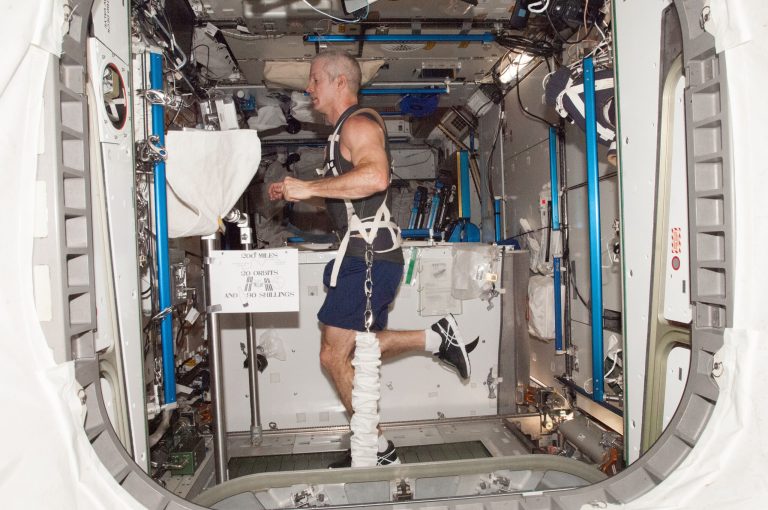
Astronaut Exercise. NASA

Exercise looks a little different en route to the Red Planet, so Professor Marni Boppart got creative.

Boppart and her colleagues at the Beckman Institute for Advanced Science and Technology received $1 million from the Translational Research Institute for Space Health, a NASA-funded institute, to explore the regenerative power of cells in space. Their research will help protect human health aboard Orion, the spacecraft destined to ferry astronauts from the Earth to the moon and Mars.

Because of the Earth’s mass, our daily movement is generally sufficient to keep our muscles in fine working order. Astronauts soaring through space are not afforded the luxury of gravitational pull.

“Astronauts can lose up to 20% of muscle mass after just two weeks, and 1-2% of bone mineral density every month. The longer the space travel, the greater the deterioration of tissues and physiological systems in the human body,” said Boppart, a professor of kinesiology and community health studying the science of exercise at the University of Illinois Urbana-Champaign.

Before joining the university, Boppart specialized in high-altitude health hazards as an officer and aerospace physiologist in the U.S. Air Force. Her current research in the College of Applied Health Sciences focuses on the molecular underpinning of muscle loss and gain. She hopes to develop cell-inspired strategies for recovering strength in circumstances — like spaceflight — when movement and mobility are limited.

When TRISH invited researchers to explore new ways to protect astronaut health and performance by enhancing the human body’s own maintenance and cellular repair abilities, Boppart seized the opportunity. Her project reimagines interstellar fitness with a cellular flair. The institute was scouting for strategies to protect astronaut health during long-duration space exploration missions, including NASA’s ongoing Artemis program, which will set up a sustainable presence on the Moon and prepare for future missions to Mars.

The Artemis program’s chosen vessel is the spacecraft Orion, which launched unmanned from the Kennedy Space Center in November. At the top of the vessel’s formidable to-do list is ferrying the first woman and first person of color from the Earth to the moon, followed closely by establishing humanity’s first long-term lunar presence and eventually trekking to the Red Planet.

Square footage is limited on Orion, which assumes the trifold identities of dormitory, dining hall, and control room all in one. The spacecraft is understandably bereft of the specialized resistance and endurance equipment that astronauts have access to on the International Space Station.

“But even the most intense [exercise] protocols performed in space are not sufficient to overcome the negative impacts of microgravity,” said Boppart. “Alternatives to traditional exercise, ideally based on exercise principles, are required.”

With an approach fit for space travel, Boppart’s proposal turns our traditional understanding of exercise on its head — or rather, inside out. Instead of defining exercise by heavy footfalls or flailing limbs, she’s focusing squarely on the cellular relay underway within our muscles.

Honed by relentless evolution, our cells have yet to catch on to the concept of exercising for fun. When we lift heavy weights or engage in rigorous activities, our cells react with a well-intentioned stress response, deploying a battalion of chemicals into the bloodstream to boost our body’s ability to survive future threats. If a weight that once seemed too heavy becomes manageable with time and training, you have your overprotective, stressed-out cells to thank.

These chemical payloads don’t navigate the bloodstream’s harsh terrain on their own. Some are wrapped in a protective lipid layer called an extracellular vesicle, named for its pickup and delivery routes that transfer restorative chemicals from cell to cell.

Boppart believes that the extracellular vesicles our bodies generate after exercising, and the chemicals they contain, can trigger the restorative effects of exercise — even when no exercise has taken place.

“When we exercise, it’s not only our muscles that benefit, but all tissues, including the brain and skin. Our TRISH-sponsored work will directly test the ability of extracellular vesicles released after exercise to protect human health in space,” Boppart said.

The broad aim of Boppart’s study is to use extracellular vesicles generated naturally by volunteers on Earth, or even artificially, to replicate the restorative effect of exercise in astronauts, essentially enabling their muscles to engage in post-exercise recovery without ever having to lift a space-suited finger.

“Astronauts are the target population for this funded study, but the result could potentially be used to prevent, maintain, or treat a variety of conditions associated with inactivity and disuse, including aging, disability, or even disease, which would be exceptionally fulfilling,” Boppart said.

Her interdisciplinary collaborators at the Beckman Institute include: Justin Rhodes, a professor of psychology; Taher Saif, a professor of mechanical science and engineering; Jonathan Sweedler, a professor of chemistry; and Hyunjoon Kong, a professor of chemical and biomolecular engineering. UIUC professor of kinesiology and community health Nicholas Burd is also a co-investigator.

Research for the project titled “Design of an extracellular vesicle approach to protect human health in space” is expected to begin in October 2023. The $1 million award will be dispersed over two years. This study is funded by the Translational Research Institute for Space Health at Baylor College of Medicine. TRISH is funded by the NASA Human Research Program. The award was administered through the TRISH Biomedical Research Advances for Space Health solicitation.

About Beckman: The Beckman Institute for Advanced Science and Technology is an interdisciplinary research institute located on the University of Illinois Urbana-Champaign campus. Founded in 1989 by philanthropist and inventor Arnold O. Beckman, the institute supports research across disciplines among University of Illinois faculty members to foster scientific advances that would not be possible elsewhere. Researchers at the Beckman Institute develop imaging tools, study the origins of intelligence, and harness molecules to create better drugs and materials.

Media contact: Jenna Kurtzweil at [email protected]

By Keith Cowing
Source SpaceRef

Gemini-VII And Gemini-VI-A Meet At Last

0
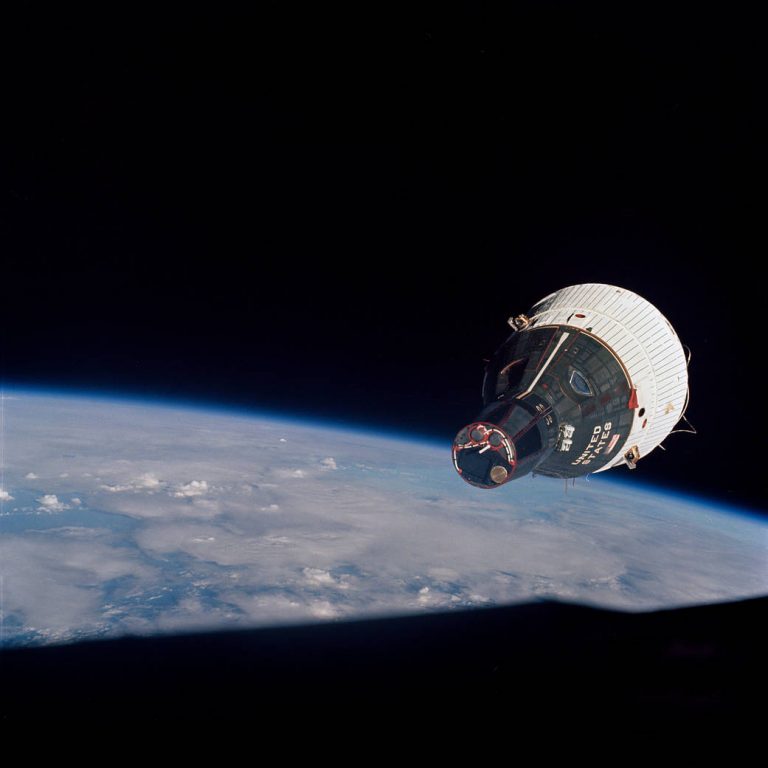
In this photo from Dec. 15, 1965, the Gemini-VII spacecraft is seen from the Gemini-VI-A spacecraft during their rendezvous mission in space. The two spacecraft are approximately 43 feet apart.

Astronauts Jim Lovell and Frank Borman launched on Gemini-VII on Dec. 4, 1965, and eventually spent two weeks in orbit, the longest-duration flight at that time.

Just as Orion and the International Space Station are helping NASA learn how to go to Mars, the Gemini program defined and tested the skills NASA would need to go to the Moon in the 1960s and 1970s. Gemini had four main goals: to test an astronaut’s ability to fly long-duration missions (up to two weeks in space); to understand how spacecraft could rendezvous and dock in orbit around the Earth and the Moon; to perfect re-entry and landing methods; and to further understand the effects of longer space flights on astronauts.

Image Credit: NASA

By Monika Luabeya
Source NASA