
Home Blog Page 77

NASA’s Webb Spots Swirling, Gritty Clouds On Remote Planet

0
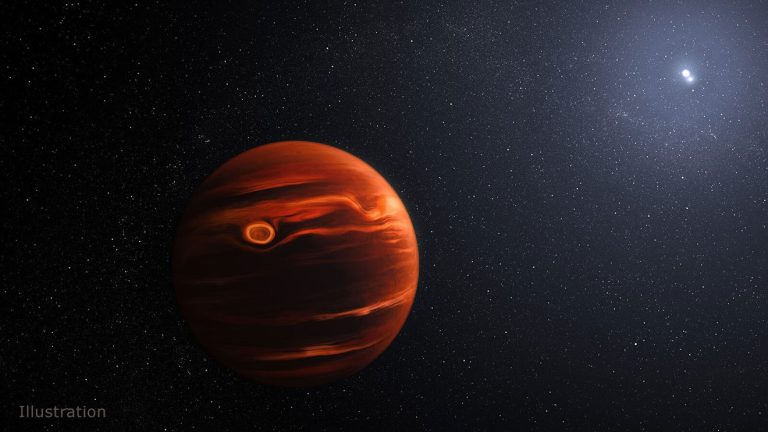
This illustration shows the swirling clouds identified by the James Webb Space Telescope in the atmosphere of exoplanet VHS 1256 b. The planet is about 40 light-years away and orbits two stars. The planet’s clouds, which are filled with silicate dust, are constantly rising, mixing, and moving. Credit: NASA, ESA, CSA, Joseph Olmsted (STScI) Full Image Details

In just a few hours of observations, the space telescope revealed a dynamic atmosphere on a planet 40 light-years from Earth.

Researchers observing with NASA’s James Webb Space Telescope have pinpointed silicate cloud features in a distant planet’s atmosphere. The atmosphere is constantly rising, mixing, and moving during its 22-hour day, bringing hotter material up and pushing colder material down. The resulting brightness changes are so dramatic that it is the most variable planetary-mass object known to date. The team, led by Brittany Miles of the University of Arizona, also made extraordinarily clear detections of water, methane, and carbon monoxide with Webb’s data, and found evidence of carbon dioxide. This is the largest number of molecules ever identified all at once on a planet outside our solar system.

Cataloged as VHS 1256 b, the planet is about 40 light-years away and orbits not one, but two stars over a 10,000-year period. “VHS 1256 b is about four times farther from its stars than Pluto is from our Sun, which makes it a great target for Webb,” Miles said. “That means the planet’s light is not mixed with light from its stars.” Higher up in its atmosphere, where the silicate clouds are churning, temperatures reach a scorching 1,500 degrees Fahrenheit (830 degrees Celsius).

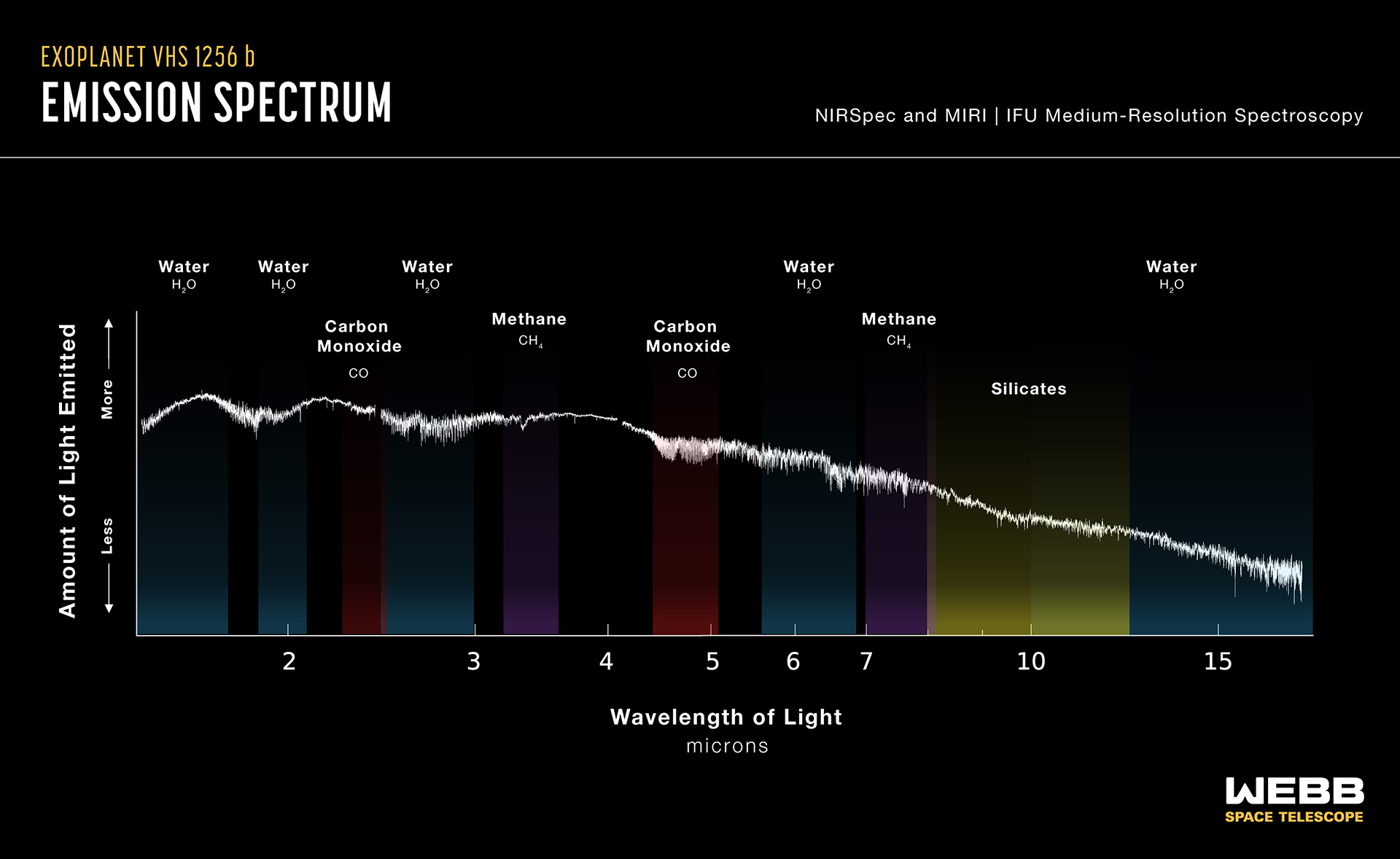
Graphic titled “Exoplanet VHS 1256 b Emission Spectrum.” The label at top right reads “NIRSpec and MIRI, IFU Medium-Resolution Spectroscopy.” The spectrum is plotted on a graph.
Instruments aboard the James Webb Space Telescope known as spectrographs, one on its Near Infrared Spectrograph (NIRSpec) and another on its Mid-Infrared Instrument (MIRI), observed planet VHS 1256 b. The resulting spectrum shows signatures of silicate clouds, water, methane, and carbon monoxide. 

Credit: NASA, ESA, CSA, J. Olmsted (STScI); Science: Brittany Miles (University of Arizona), Sasha Hinkley (University of Exeter), Beth Biller (University of Edinburgh), Andrew Skemer (University of California, Santa Cruz)

Within those clouds, Webb detected both larger and smaller silicate dust grains, which are shown on a spectrum. “The finer silicate grains in its atmosphere may be more like tiny particles in smoke,” noted co-author Beth Biller of the University of Edinburgh in Scotland. “The larger grains might be more like very hot, very small sand particles.”

VHS 1256 b has low gravity compared to more massive brown dwarfs, which means that its silicate clouds can appear and remain higher in its atmosphere where Webb can detect them. Another reason its skies are so turbulent is the planet’s age. In astronomical terms, it’s quite young. Only 150 million years have passed since it formed – and it will continue to change and cool over billions of years.

In many ways, the team considers these findings to be the first “coins” pulled out of a spectrum that researchers view as a treasure chest of data. They’ve only begun identifying its contents. “We’ve identified silicates, but better understanding which grain sizes and shapes match specific types of clouds is going to take a lot of additional work,” Miles said. “This is not the final word on this planet – it is the beginning of a large-scale modeling effort to fit Webb’s complex data.”

Although all of the features the team observed have been spotted on other planets elsewhere in the Milky Way by other telescopes, other research teams typically identified only one at a time. “No other telescope has identified so many features at once for a single target,” said co-author Andrew Skemer of the University of California, Santa Cruz. “We’re seeing a lot of molecules in a single spectrum from Webb that detail the planet’s dynamic cloud and weather systems.”

The team came to these conclusions by analyzing data known as spectra gathered by two instruments aboard Webb, the Near-Infrared Spectrograph (NIRSpec) and the Mid-Infrared Instrument (MIRI). Since the planet orbits at such a great distance from its stars, the researchers were able to observe it directly, rather than using the transit technique or a coronagraph to take this data.

There will be plenty more to learn about VHS 1256 b in the months and years to come as this team – and others – continue to sift through Webb’s high-resolution infrared data. “There’s a huge return on a very modest amount of telescope time,” Biller added. “With only a few hours of observations, we have what feels like unending potential for additional discoveries.”

What might become of this planet billions of years from now? Since it’s so far from its stars, it will become colder over time, and its skies may transition from cloudy to clear.

The researchers observed VHS 1256 b as part of Webb’s Early Release Science program, which is designed to help transform the astronomical community’s ability to characterize planets and the disks where they form.

The team’s paper, entitled “The JWST Early Release Science Program for Direct Observations of Exoplanetary Systems II: A 1 to 20 Micron Spectrum of the Planetary-Mass Companion VHS 1256-1257 b,” will be published in The Astrophysical Journal Letters on March 22.

More About the Mission

The James Webb Space Telescope is the world’s premier space science observatory. Webb will solve mysteries in our solar system, look beyond to distant worlds around other stars, and probe the mysterious structures and origins of our universe and our place in it. Webb is an international program led by NASA with its partners, ESA (European Space Agency), and CSA (Canadian Space Agency).

MIRI was developed through a 50-50 partnership between NASA and ESA. NASA’s Jet Propulsion Laboratory led the U.S. efforts for MIRI, and a multinational consortium of European astronomical institutes contributes for ESA. George Rieke with the University of Arizona is the MIRI science team lead. Gillian Wright is the MIRI European principal investigator. Alistair Glasse with UK ATC is the MIRI instrument scientist, and Michael Ressler is the U.S. project scientist at JPL. Laszlo Tamas with UK ATC manages the European Consortium. The MIRI cryocooler development was led and managed by JPL, in collaboration with Northrop Grumman in Redondo Beach, California, and NASA’s Goddard Space Flight Center in Greenbelt, Maryland. Caltech manages JPL for NASA.

For more information about the Webb mission, visit: https://www.nasa.gov/webb

News Media Contact

Laura Betz
Goddard Space Flight Center, Greenbelt, Md.
[email protected]

Claire Blome / Christine Pulliam
Space Telescope Science Institute, Baltimore, Md.
[email protected] / [email protected]

Calla Cofield
Jet Propulsion Laboratory, Pasadena, Calif.
626-808-2469
[email protected]
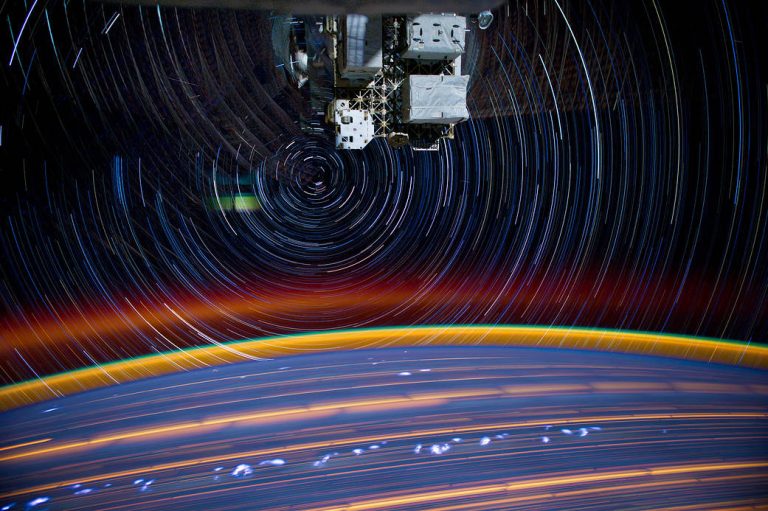
Space Station Star Trail

0

Stars leave streaks of light in concentric circles in this March 16, 2012, view from the International Space Station. To create this composite long exposure, NASA astronaut Don Pettit combined multiple 30-second exposures from a mounted camera on the space station into one image.

The orbiting laboratory travels 5 miles per second, traveling around our planet every 90 minutes.

Image Credit: NASA/Don Pettit

By Monika Luabeya
Source NASA

SOFIA Reveals Map Of Moon’s Water Near Its South Pole Artemis Landing Sites

0
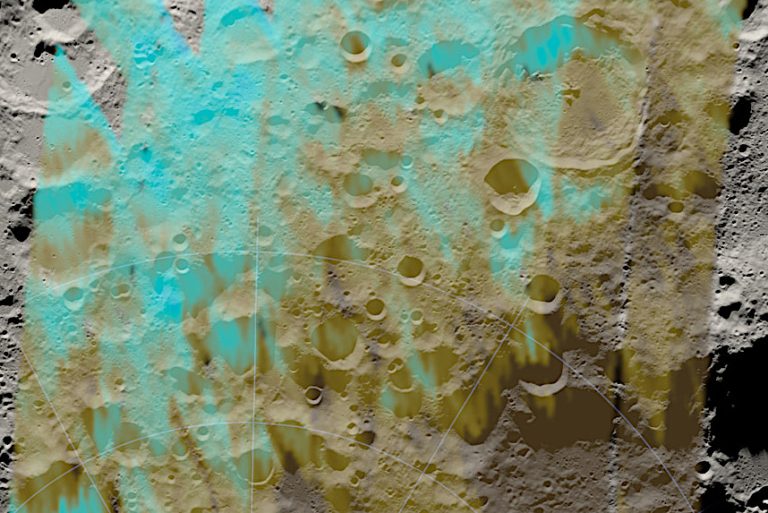
A still image of the Moon and the southern portion of the SOFIA data. NASA

A new study using NASA’s and DLR’s now-retired Stratospheric Observatory for Infrared Astronomy (SOFIA) has pieced together the first detailed, wide-area map of water distribution on the Moon.

With clear, identifiable lunar features marked out by the water data, the study provides hints about how water may be moving across the Moon’s surface, particularly near its South Pole — an important area for space exploration. The results were presented at a press conference at the 2023 Lunar and Planetary Society Conference in Houston, TX today.

The new map covers about one-quarter of the Earth-facing side of the lunar surface, below 60 degrees latitude and extends to the Moon’s South Pole. Given the large region covered, the researchers could easily identify how water relates to surface features on the Moon, staying away from sunlight and favoring cold areas.

“When looking at the water data, we can actually see crater rims, we see the individual mountains, and we can even see differences between the day and night sides of the mountains, thanks to the higher concentration of water in these places,” said Bill Reach, lead author of the paper and director at Universities Space Research Association and director of the SOFIA Science Center at NASA’s Ames Research Center in California’s Silicon Valley.

This finding, along with two previous SOFIA results about the amount and distribution of water on the Moon’s sunlit surface, tracks a unique light signature of water. Other missions observing wide areas of the lunar surface have studied different wavelengths of light, which can’t distinguish water from similar molecules, such as hydroxyl. The Moon’s water is present in the soil and might be found as ice crystals, or as water molecules chemically bound to other materials.

Instead of determining the absolute quantity of water in the region, the researchers compared the data obtained around the Moon’s South Pole to a relatively dry reference region near the Moon’s equator to see how its abundance changes. The water was found in greater concentrations on the shadowed sides of craters and mountains, similar to the way skiers on Earth know the slopes receiving less direct sun retain snow longer. This suggests the Moon’s local geography plays an important role in the amount of water present.

In late 2024, NASA’s Volatiles Investigating Polar Exploration Rover (VIPER) will land in the region studied by SOFIA, atop Mons Mouton, to conduct the first resource mapping mission beyond Earth. The flat-topped lunar mountain will be a region of emphasis in the next paper from the team that led the current study of SOFIA data.

And, as NASA prepares to send astronauts back to the Moon under Artemis, the agency has identified 13 candidate landing regions near the lunar South Pole. Through Artemis, NASA will land the first woman and the first person of color on the Moon, and lunar water will be a critical resource for establishing a long-term human presence.

“With this map of SOFIA data, and others to come, we are looking at how water is concentrated under different lunar environmental conditions,” said Casey Honniball, a visiting assistant research scientist and VIPER science team member at NASA’s Goddard Space Flight Center, in Greenbelt, Maryland, who was involved in the work. “This map will provide valuable information for the Artemis program on potential prospecting areas but also provides regional context for future missions, like VIPER.”

In addition to the southern region for which the new map results were created, SOFIA observations of sites relevant to other missions are in the archive and now being analyzed. NASA Artemis-related missions will target both polar and non-polar regions, including Lunar Trailblazer, which will orbit the Moon to map its hydroxyl and water.

Where the Moon’s water may be coming from — whether it exists inherently in the Moon’s minerals or is exclusively delivered by comets and solar wind, and whether it is migrating along the Moon’s surface — is another important question left open by the SOFIA observations. VIPER will aim to better understand this distinction, which is important in determining if the water is widespread and deep within the surface, or only scattered at or near the surface.

It’s clear, however, that even at its lowest limit, the Moon contains much more water than we once believed.

“Our common knowledge from the Apollo era that the Moon is bone dry was wrong,” said Paul Lucey, a professor at the University of Hawaii at Mānoa and co-author on the paper. “We already know it’s wrong, but the question is by how much.”

SOFIA was a joint project of NASA and the German Space Agency at DLR. DLR provided the telescope, scheduled aircraft maintenance, and other support for the mission. NASA’s Ames Research Center in California’s Silicon Valley managed the SOFIA program, science, and mission operations in cooperation with the Universities Space Research Association, headquartered in Columbia, Maryland, and the German SOFIA Institute at the University of Stuttgart. The aircraft was maintained and operated by NASA’s Armstrong Flight Research Center Building 703, in Palmdale, California. SOFIA achieved full operational capability in 2014 and concluded its final science flight on Sept. 29, 2022.

About SOFIA

SOFIA was a joint project of NASA and the German Space Agency at DLR. DLR provided the telescope, scheduled aircraft maintenance, and other support for the mission. NASA’s Ames Research Center in California’s Silicon Valley managed the SOFIA program, science, and mission operations in cooperation with the Universities Space Research Association, headquartered in Columbia, Maryland, and the German SOFIA Institute at the University of Stuttgart. The aircraft was maintained and operated by NASA’s Armstrong Flight Research Center Building 703, in Palmdale, California. SOFIA achieved full operational capability in 2014 and concluded its final science flight on Sept. 29, 2022.

About USRA

Founded in 1969, under the auspices of the National Academy of Sciences at the request of the U.S. Government, the Universities Space Research Association (USRA) is a nonprofit corporation chartered to advance space-related science, technology and engineering. USRA operates scientific institutes and facilities, and conducts other major research and educational programs. USRA engages the university community and employs in-house scientific leadership, innovative research and development, and project management expertise. More information about USRA is available at www.usra.edu

More imagery

By Keith Cowing
Source SpaceRef

StarCrete – Concrete Made From Martian Regolith

0
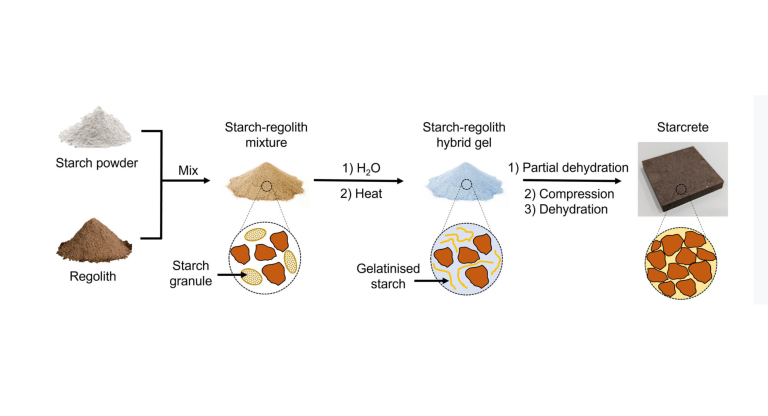
Scheme depicting the steps taken to produce StarCrete

Manchester scientists have created a new material, dubbed ‘StarCrete’ which is made from extra-terrestrial dust, potato starch, and a pinch of salt and could be used to build homes on Mars.

Building infrastructure in space is currently prohibitively expensive and difficult to achieve. Future space construction will need to rely on simple materials that are easily available to astronauts, StarCrete offers one possible solution. The scientists behind the invention used simulated Martian soil mixed with potato starch and a pinch of salt to create the material that is twice as strong as ordinary concrete and is perfectly suited for construction work in extra-terrestrial environments.

In an article published in the journal Open Engineering[EB1] , the research team demonstrated that ordinary potato starch can act as a binder when mixed with simulated Mars dust to produce a concrete-like material. When tested, StarCrete had a compressive strength of 72 Megapascals (MPa), which is over twice as strong as the 32 MPa seen in ordinary concrete. Starcrete made from moon dust was even stronger at over 91 MPa.

This work improves on previous work from the same team where they used astronauts’ blood and urine as a binding agent. While the resulting material had a compressive strength of around 40 MPa, which is better than normal concrete, the process had the drawback of requiring blood on a regular basis. When operating in an environment as hostile as space, this option was seen as less feasible than using potato starch.

“Since we will be producing starch as food for astronauts, it made sense to look at that as a binding agent rather than human blood. Also, current building technologies still need many years of development and require considerable energy and additional heavy processing equipment which all adds cost and complexity to a mission. StarCrete doesn’t need any of this and so it simplifies the mission and makes it cheaper and more feasible.

“And anyway, astronauts probably don’t want to be living in houses made from scabs and urine!” Dr Aled Roberts, Research Fellow at the Future Biomanufacturing Research Hub, and lead researcher for this project.

The team calculate that a sack (25 Kg) of dehydrated potatoes (crisps) contain enough starch to produce almost half a tonne of StarCrete, which is equivalent to over 213 brick’s worth of material. For comparison, a 3-bedroom house takes roughly 7,500 bricks to build. Additionally, they discovered that a common salt, magnesium chloride, obtainable from the Martian surface or from the tears of astronauts, significantly improved the strength of StarCrete.

The next stages of this project are to translate StarCrete from the lab to application. Dr Roberts and his team have recently launched a start-up company, DeakinBio, which is exploring ways to improve StarCrete so that it could also be used in a terrestrial setting.

If used on earth, StarCrete could offer a greener alternative to traditional concrete. Cement and concrete account for about 8% of global CO2 emissions as the process by which they are made requires very high firing temperatures and amounts of energy. StarCrete, on the other hand, can be made in an ordinary oven or microwave at normal ‘home baking’ temperatures, therefore offering reduced energy costs for production.

StarCrete: A starch-based biocomposite for off-world construction, Open Engineering (open access)

By Keith Cowing
Source SpaceRef

Louisiana’s Rice Fields

0

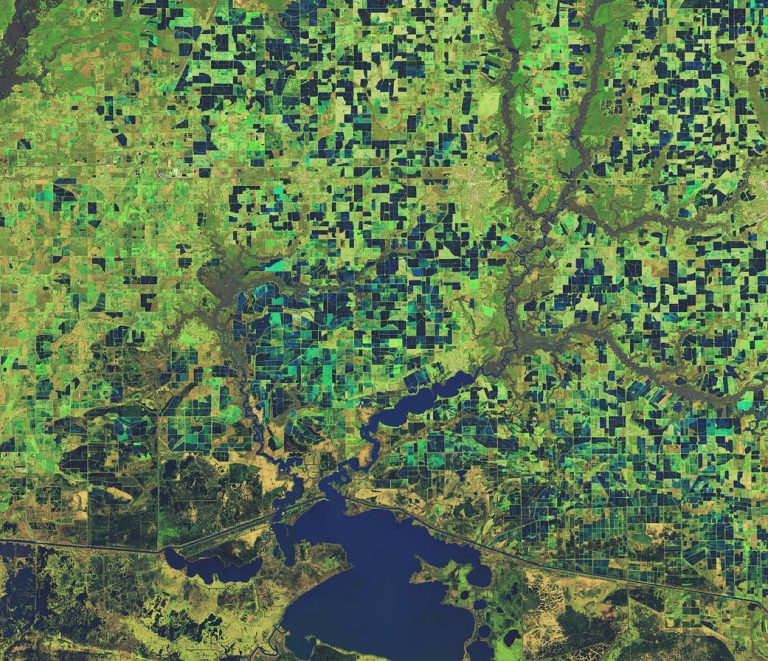
This Feb 3, 2023, enhanced-color image from Landsat 9 highlights a green and blue patchwork pattern in flooded rice fields in southwestern Louisiana. Raised levees used for water management form the grid pattern between the fields, which appear dark blue.

As it flowed through several southern states over tens of thousands of years, the Mississippi River left a valuable layer of fertile soil in its wake. This low-lying floodplain and the flat coastal prairies of Louisiana and Texas are now home to most of the rice farms in the United States. In 2021, Arkansas, Louisiana, Mississippi, and Texas—collectively known as the Rice Belt—produced about 73 percent of all rice in the United States. 

Image Credit: NASA

By Monika Luabeya
Source NASA

NASA Seeks Student Solutions For Managing Moon Landing Dust Cloud

0

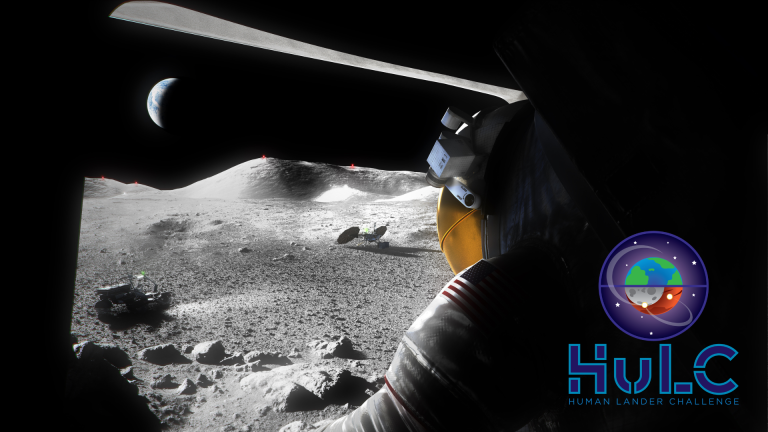
Human Lander Challenge logo overlaid on an artist’s illustration of an Artemis astronaut looking out at the lunar surface.
Credits: NASA

As NASA and industry partners develop new human landing systems to transport astronauts from lunar orbit to the Moon’s surface and back as part of Artemis, the agency is asking university students to investigate solutions to one particularly dusty aspect of landing spacecraft on the lunar surface.

NASA’s new Human Lander Challenge invites college students to explore ways to manage or prevent the cloud of dust a spacecraft stirs up when using rocket engines to land on unprepared surfaces like the Moon. This effect is called plume surface interaction and can increase risks caused by lunar dust on future human missions.

“The Moon is covered with granular, rocky material called regolith, which can be lifted from the surface by rocket engines during landing and ascent. Understanding and reducing these effects are key challenges for NASA to overcome for safe lunar surface access,” said Ashley Korzun, principal investigator for plume surface interaction, NASA’s Langley Research Center in Hampton, Virginia. “Besides creating a more challenging landing environment, disturbed lunar dust also can damage other assets NASA plans to establish on the Moon’s surface, like habitats, mobility systems, scientific experiments, and other critical infrastructure.”

To establish a long-term human presence on and around the Moon for the benefit of humanity, NASA must address the challenges lunar dust presents to these complex missions. This is where the Artemis Generation of problem solvers may be able to help.

For the challenge, NASA is asking undergraduate and graduate students from accredited colleges and universities in the United States to help tackle the challenges of plumes and lunar dust by seeking innovative, systems-level solutions to minimize and manage the impacts on future lunar exploration systems. Potential solutions might include development of dust shields, creating flight instrumentation dedicated to managing plume surface interactions, finding ways to see through the dust cloud during landing, or tracking dust during ascent and descent.

NASA will select up to 12 teams to compete at the inaugural Human Lander Challenge Forum in June 2024 in Huntsville, Alabama. Each team will receive a $7,000 stipend to produce a technical paper and any associated design models or prototypes to present in a competitive design review to a panel of NASA and industry subject matter experts. The top three teams will share a total prize of $18,000, with the first-place team receiving $10,000, the second-place team receiving $5,000, and the third-place team receiving $3,000.

“It is our mission to have a lunar landing capability that allows astronauts to travel to the surface of the Moon and back safely on a regular basis,” said Lisa Watson-Morgan, manager, Human Landing Systems, NASA’s Marshall Space Flight Center in Huntsville, Alabama. “The challenge of managing the dust stirred up by lunar landers is a top priority, so this is a great opportunity for students to work with NASA in advancing humanity’s exploration of the Moon’s South Pole region under Artemis. We look forward to seeing what these teams come up with.”

Teams interested in participating in the challenge should review competition guidelines and eligibility requirements. Teams are encouraged to submit a non-binding notice of intent by Oct. 22.  Proposals are due March 4.

The Human Lander Challenge is sponsored by NASA’s Human Landing System Program and managed by the National Institute of Aerospace.

Through Artemis, NASA will land the first woman and the first person of color on the Moon, paving the way for a long-term, sustainable lunar presence to explore more of the lunar surface than ever before and prepare for future astronaut missions to Mars.

For full competition details, visit the Human Lander Challenge website: https://hulc.nianet.org/

-end-

Kathryn Hambleton
Headquarters, Washington
202-358-1100
[email protected]

Jena Rowe
Marshall Space Flight Center, Huntsville, Ala.
256-425-7245
[email protected]

By: Roxana Bardan
Originally published at NASA

Sierra Space Advances Future Of Space Habitation In Low-Earth Orbit And Deep Space With LIFE™ Test

0

Recent testing demonstrates company’s leadership in building inflatable structures for extended human-rated space missions

Space Act Agreement expands collaboration opportunities with NASA’s Marshall Space Flight Center to further advance LIFE Habitat

LOUISVILLE, Colo. – March 23, 2023  Sierra Space, a leading, pureplay commercial space company building the first end-to-end business and technology platform in space, announced today it continues to make critical strides in the development of its softgoods inflatable technology — LIFE™ habitat (Large Integrated Flexible Environment) – solidifying its lead in the industry.

The company’s LIFE testing campaign, a combined effort with NASA test engineers, passed another milestone on the path to building a full-scale habitat product line with various architectures to enable human missions to low-Earth orbit, the moon and deep space. This milestone affirms Sierra Space’s position as the industry leader in inflatable space habitats and the only active commercial company to build human-rated structures.

The company also announced that it signed a new Space Act Agreement for an expanded partnership with NASA’s Marshall Space Flight Center (MSFC), which will further accelerate LIFE development.

Another successful test

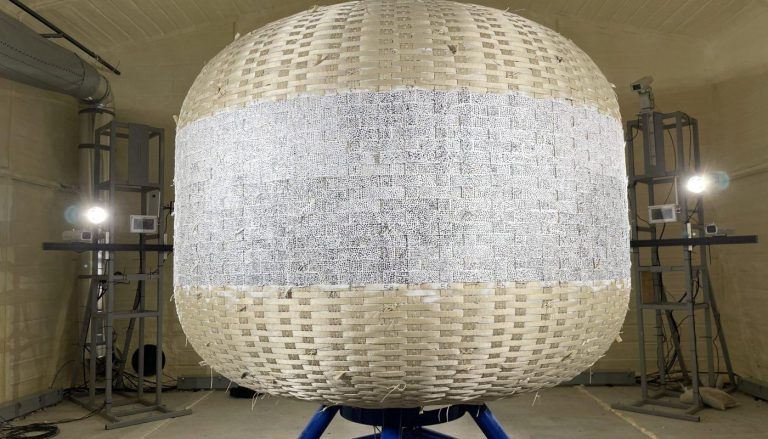
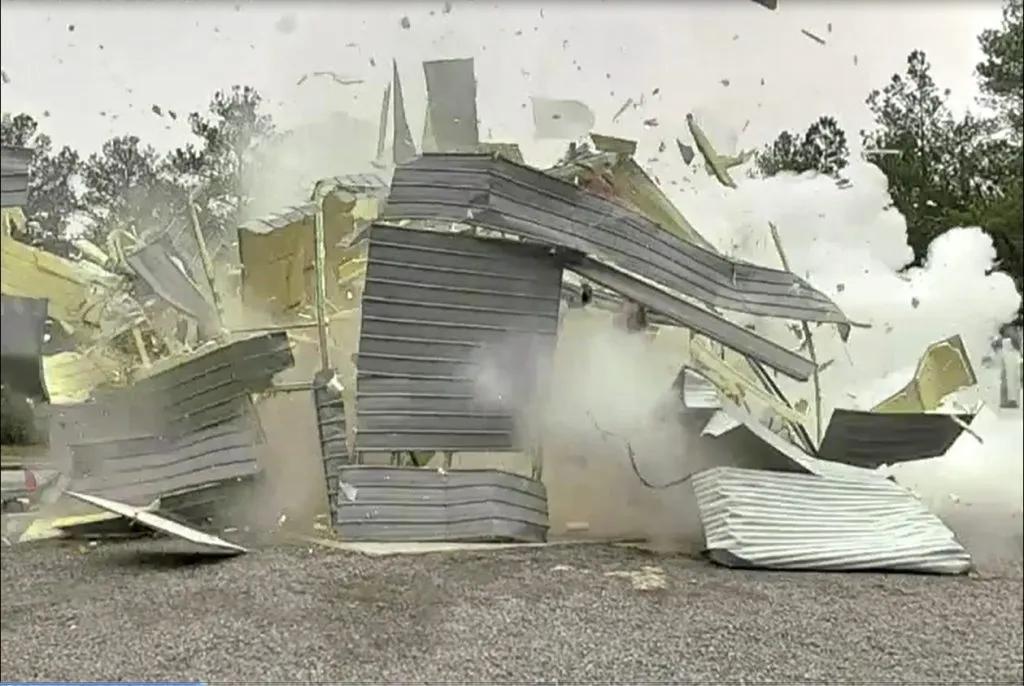
In February, Sierra Space performed a month-long Accelerated Systematic Creep (ASC) test on LIFE – the first milestone in its 2023 testing campaign. Engineers loaded a one-third-scale version of the inflatable habitat with a sustained amount of pressure over an extended period until it failed. Per NASA’s recommended guidelines for inflatable softgoods certification, the test reached its goal of generating an additional data point – pressure and time to burst – which can be used to estimate the life of the primary pressure shell structure. View video here.

“Our testing campaign has demonstrated that our LIFE habitat pressure shell design has a predicted life of far greater than 60 years – or 525,600 hours – based on Sierra Space’s 15-year on-orbit life requirement and the applied 4x safety factor,” said Sierra Space Chief Engineer for LIFE, Shawn Buckley. “We are obviously simulating pressures well in excess of the norm. Test after (extreme) test, we continue to exceed our program requirements, validating that LIFE’s design, manufacturing, and assembly methods are consistent and repeatable.”

The next series of one-third-scale LIFE certification tests will focus on inserting hard structures into the pressure shell and correlating the results to previous tests. Sierra Space anticipates moving toward full-scale LIFE habitat tests later this year.

Expanded presence in Huntsville, Ala.

Thanks to a recently signed Space Act Agreement with NASA, Sierra Space will expand its collaborative environment with Marshall Space Flight Center (MSFC), in Huntsville, Ala., to continue critical work on LIFE. The agreement supports ongoing design and development of LIFE test articles; a full-scale engineering mockup – the size of a three-story apartment building – will move to MSFC from NASA’s Kennedy Space Center. Alabama is the seventh location across the nation where Sierra Space operates facilities, joining Colorado, Florida, North Carolina, Texas, Wisconsin and Washington, D.C.

Sierra Space, NASA and ILC Dover subject matter experts performed the recent ASC test inside a specially built, climate-controlled building at MSFC, adjacent to the flame trench of the Saturn 1/1B test stand — where NASA tested rockets for the Apollo program. This location is optimum for softgoods inflatable destructive testing in both performance and observation. ILC Dover is Sierra Space’s softgoods provider.

“NASA’s Marshall Space Flight Center (MFSC) has a rich history in leading highly-complex testing for innovative systems and technologies,” said Sierra Space CEO Tom Vice. “Under this new Space Act Agreement, we’re expanding our collaboration activities with MFSC, where we will be able to tap into that wealth of expertise, talent and facility capabilities at a much deeper level.”

Sierra Space’s LIFE is a key component of the company’s in-space destinations technology portfolio. The inflatable module is a three-story commercial habitation, science and bio pharma platform designed to allow humans to live and work comfortably in low-Earth orbit and beyond. LIFE will serve as both the habitation and payload element for the Orbital Reef commercial space station, a collaboration between Sierra Space and Blue Origin. This test marks another key step forward in Orbital Reef’s progress for NASA’s Commercial Destinations-Free Flyer (CD-FF) program.

About Sierra Space

Sierra Space (www.sierraspace.com) is a leading, pureplay commercial space company at the forefront of innovation and the commercialization of space in the Orbital Age™, building an end-to-end business and technology platform in space to benefit life on Earth. With more than 30 years and 500 missions of space flight heritage, the company is enabling the future of space transportation with Dream Chaser®, the world’s only commercial spaceplane, and is bringing LIFE™ to low-Earth orbit with its modular, three-story commercial habitation and science platform. Both Dream Chaser and LIFE are central components to Orbital Reef, a mixed-use business park in LEO being developed by principal partners Sierra Space and Blue Origin, which is expected to be operational by the end of the decade. Sierra Space also builds and delivers a host of systems and subsystems across solar power, mechanics and motion control, environmental control, life support, propulsion and thermal control, offering myriad space-as-a-service solutions for the new space economy.

###

MEDIA CONTACTS:

Alex Walker
Sierra Space
(303) 803-2297
[email protected]

Allison Gregg
Griffin Communications Group
(256) 520-3985
[email protected]

L.A. Youth Robotics Competition Leaves Student Teams Energized

0
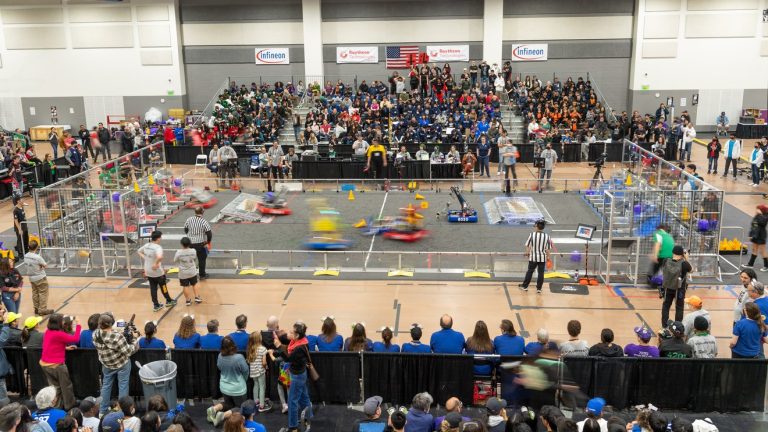
In a blur of motion, wheeled robots race across the “playing field” at the FIRST Robotics Competition Los Angeles Regional at the Da Vinci Schools campus in El Segundo. The annual student robotics event is supported by NASA’s Jet Propulsion Laboratory with volunteers and team mentors. Credit: NASA/JPL-Caltech

Supported by volunteers from JPL and the aerospace industry, the annual regional FIRST Robotics event makes an impact on young competitors and adult mentors alike.

After two days of fast-paced competition complete with team uniforms, cheerleaders, pounding music, and blaring horns, multiple teams of high schoolers came out victorious at the 23rd annual FIRST Robotics Competition Los Angeles Regional over the weekend. Next, they’ll be headed to an international championship tournament where their 125-pound inventions will compete for robotics glory.

NASA’s Jet Propulsion Laboratory sponsored several of the 44 competing teams and supported the event, held at the Da Vinci Schools campus in El Segundo, by coordinating about 100 volunteers. “It’s always gratifying to see these kids compete with such determination and passion, but it’s also wonderful to witness the joy they bring to the adults who come together for this event,” said Kim Lievense, who manages JPL’s Public Services Office and coordinated volunteers at the competition.

Energy and Community

The event is one of many taking place across the country under the umbrella of FIRST (For Inspiration and Recognition of Science and Technology). The nonprofit organization pairs students with STEM professionals for hands-on engineering experience and practice with problem-solving, team building, fundraising, and promotion, among other skills. Teams in the FIRST Robotics Competition receive technical specifications and game rules in January and have just weeks to design, build, and test their wheeled robots.

Students from Da Vinci Schools Team 4201 (“Vitruvian Bots”) react in the stands during the 2023 FIRST Robotics Competition Los Angeles Regional.
Students from Da Vinci Schools Team 4201 (“Vitruvian Bots”) react in the stands during the 2023 FIRST Robotics Competition Los Angeles Regional. The two-day competition can be an emotional roller coaster for student participants.  Credit: NASA/JPL-Caltech

This year’s game, dubbed “Charged Up,” is themed around the future of sustainable energy. Two alliances of three teams compete on a “playing field” that’s about 26 by 54 feet. In each 2 ½-minute round, the teams’ robots must retrieve rubber cones and inflatable cubes that represent electrical power from “substations” and place them into a “grid.” Robots also race to roll up onto a wobbling “charge station” for extra points.

Students put in long hours preparing their robots. It all paid off in the case of Brianna Adewinmbi, a junior at the California Academy of Mathematics and Science in Carson. Her Team 687 (aka the “Nerd Herd”) came out on top, and she was one of two students selected as a finalist for the nationwide FIRST Dean’s List Award (inventor Dean Kamen founded FIRST) recognizing student leadership and dedication. Wearing a colorful propeller hat and fielding high-fives from fellow students, she said the team had been working after school till 10 p.m. for many days.

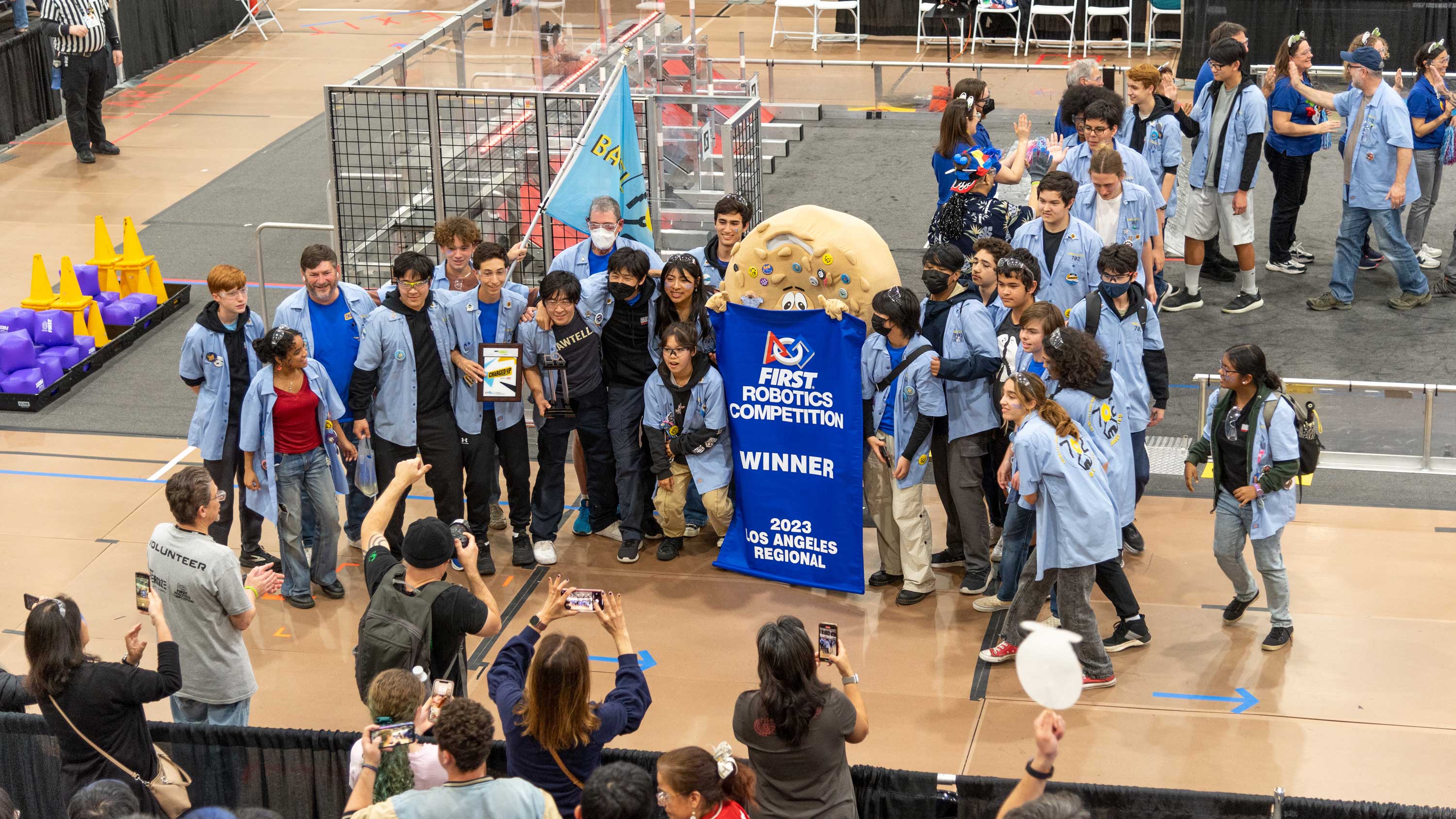
Part of the winning alliance, JPL-sponsored Team 702 (“Bagel Bytes”) from Culver City High School gathers beside their banner and a mascot in a bagel costume
Part of the winning alliance, JPL-sponsored Team 702 (“Bagel Bytes”) from Culver City High School gathers beside their banner and a mascot in a bagel costume at the 2023 FIRST Robotics Competition Los Angeles Regional. Credit: NASA/JPL-Caltech

“It’s insane. I just keep thinking, It was all worth it, all the time that we spent,” Adewinmbi said.

Adewinmbi’s team will be joined at the FIRST Championship in Houston next month by the two other California teams from the winning alliance: Team 5199 (“Robot Dolphins From Outer Space”) from Dana Point and and Team 702 (“Bagel Bytes”) from Culver City. Team 6833 (“Phoenix Robotics”) from Arizona, which had subbed in for the Culver City team to play in the winning alliance, is on the priority waitlist to attend. Two award-winners, Team 5089 (“Robo-Nerds”) from Benjamin Franklin Senior High School in Los Angeles and Team 4201 (“Vitruvian Bots”) from Da Vinci Schools, will also head to Houston.

Volunteering Brings Rewards

For about two decades, NASA’s Robotics Alliance Project has supported youth robotics teams through agency centers across the country and at JPL, aiming to inspire students to pursue careers in aerospace while helping them build the skills they’ll need to succeed.

“We all do it for the same reason: It’s really to help get kids inspired in science, engineering, and technology,” said JPL’s Dave Brinza, assistant mission assurance manager for NASA’s Europa Clipper mission. Brinza started mentoring Team 980 (“ThunderBots”), now at Burbank High School, in 2003. “We often say the real trophies aren’t the blue banners and the things you put on a shelf, it’s the kids who go on and have successful careers.”

Source JPL

Could ‘Terminator Zones’ On Far Off Planets Harbor Life?

0
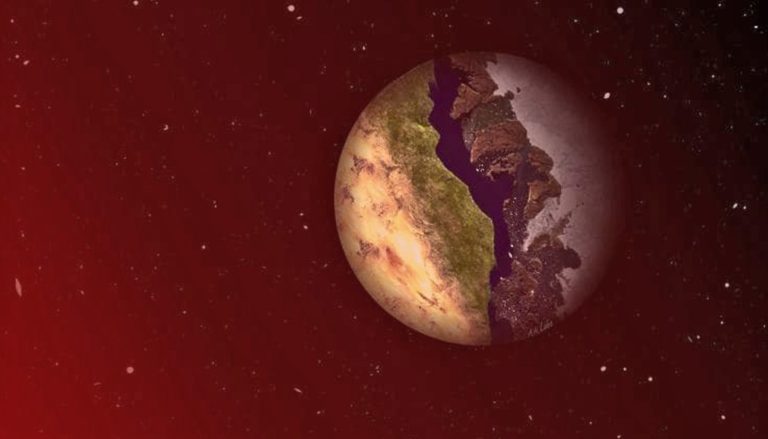
Some exoplanets have one side permanently facing their star while the other side is in perpetual darkness. The ring-shaped border between these permanent day and night regions is called a “terminator zone.” In a new paper, researchers say this area has the potential to support extraterrestrial life. (Credit: Ana Lobo/UC Irvine)

Extraterrestrial life has the potential to exist on distant exoplanets inside special areas called “terminator zones,” according to a new study.

The terminator zone is a ring on planets that have one side that always faces its star and one side that is always dark.

“These planets have a permanent day side and a permanent night side,” says lead author Ana Lobo, a postdoctoral researcher in the physics and astronomy department at the University of California, Irvine.

Such planets are particularly common because they exist around stars that make up about 70% of the stars seen in the night sky—so-called M-dwarf stars, which are relatively dimmer than our sun, Lobo says.

The terminator is the dividing line between the day and night sides of the planet. Terminator zones could exist in that “just right” temperature zone between too hot and too cold.

“You want a planet that’s in the sweet spot of just the right temperature for having liquid water,” says Lobo, because liquid water, as far as scientists know, is an essential ingredient for life.

On the dark sides of terminator planets, perpetual night would yield plummeting temperatures that could cause any water to be frozen in ice. The side of the planet always facing its star could be too hot for water to remain in the open for long.

“THESE NEW AND EXOTIC HABITABILITY STATES OUR TEAM IS UNCOVERING ARE NO LONGER THE STUFF OF SCIENCE FICTION.”

“This is a planet where the dayside can be scorching hot, well beyond habitability, and the night side is going to be freezing, potentially covered in ice. You could have large glaciers on the night side,” Lobo says.

For the study, which appears in The Astrophysical Journal, Lobo and Aomawa Shields, an associate professor of physics and astronomy, modeled the climate of terminator planets using software typically used to model our own planet’s climate, but with a few adjustments, including slowing down planetary rotation.

It’s believed to be the first time astronomers have been able to show that such planets can sustain habitable climates confined to this terminator region.

Historically, researchers have mostly studied ocean-covered exoplanets in their search for candidates for habitability. But now that Lobo and her team have shown that terminator planets are also viable refuges for life, it increases the options life-hunting astronomers have to choose from.

“We are trying to draw attention to more water-limited planets, which despite not having widespread oceans, could have lakes or other smaller bodies of liquid water, and these climates could actually be very promising,” Lobo says.

One key to the finding, Lobo adds, was pinpointing exactly what kind of terminator zone planet can retain liquid water. If the planet is mostly covered in water, then the water facing the star, the team found, would likely evaporate and cover the entire planet in a thick layer of vapor.

But if there’s land, this effect shouldn’t occur.

“Ana has shown if there’s a lot of land on the planet, the scenario we call ‘terminator habitability’ can exist a lot more easily,” says Shields. “These new and exotic habitability states our team is uncovering are no longer the stuff of science fiction—Ana has done the work to show that such states can be climatically stable.”

Recognizing terminator zones as potential harbors for life also means that astronomers will need to adjust the way they study exoplanet climates for signs of life, because the biosignatures life creates may only be present in specific parts of the planet’s atmosphere.

The work will also help inform future efforts by teams using telescopes like the James Webb Space Telescope or the Large Ultraviolet Optical Infrared Surveyor telescope currently in development at NASA as they search for planets that may host extraterrestrial life.

“By exploring these exotic climate states, we increase our chances of finding and properly identifying a habitable planet in the near future,” says Lobo.

Source: UC Irvine
Original Study DOI: 10.3847/1538-4357/aca970

By Lucas Van Wyk Joel-UC Irvine
Source Futurity

Galactic Giants Titan And Saturn

0

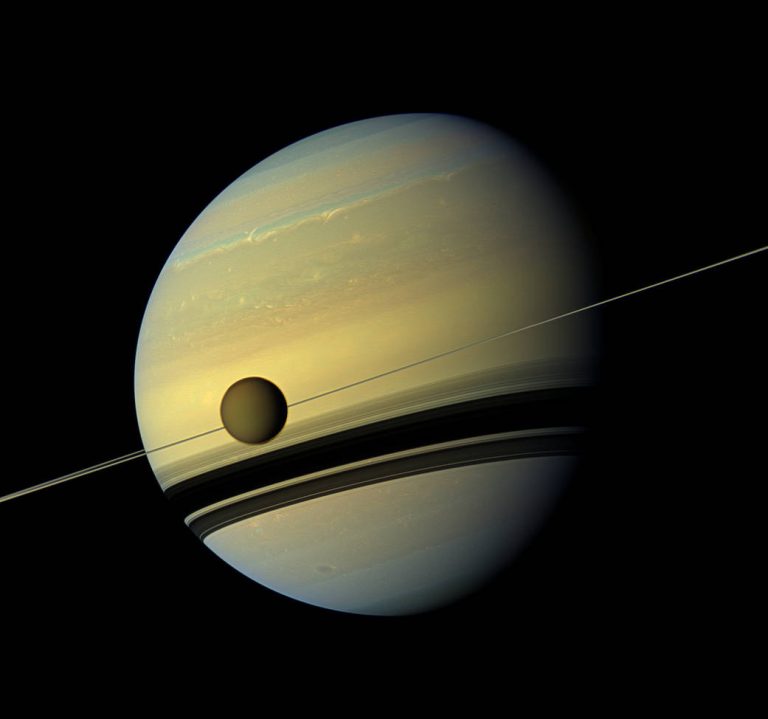
Titan, Saturn’s largest moon, looks quite small in comparison to the giant planet behind it in this natural color view from the Cassini-Huygens spacecraft. This image from Aug. 29, 2012, also shows seasonal changes occurring on Saturn; as spring comes to the northern Saturnian hemisphere, the azure blue seen fades, while winter in the south adds a bluish hue. This phenomenon is likely due to shifts in the intensity of ultraviolet light and the haze it produces.

Image Credit: NASA/JPL-Caltech/Space Science Institute

By Monika Luabeya
Source NASA