Home Blog Page 112

Using Satellites For Faster Flood Information

0
Using Satellites For Faster Flood Information
Map of inundated western Brisbane suburbs on 28 February 2022 derived from PlanetScope (purple) and Capella (pink) satellite data. CREDIT The University of Queensland

Researchers at The University of Queensland have used satellites with radar imaging sensors to see through clouds and map flooding and say the technique could provide faster, more detailed information to keep communities safe.

Professor Noam Levin from UQ’s School of Earth and Environmental Sciences said the project combined images from optical satellites with information from imaging radar satellites.

“Monitoring floods in towns and cities is challenging, with flood waters often rising and then receding in a few days,” Professor Levin said.

“While large satellites in the past provided images every 7-14 days, now groups of small satellites can collect several images a day over the same location.

“Radar imaging sensors can provide images at night or on days with thick cloud cover – a huge advantage in stormy conditions.

“They use a flash, like on a camera, and the light is sent at wavelengths between 1mm and 1.0m, which can pass through clouds and smoke.”

During Brisbane’s February 2022 floods, researchers combined satellite day-time pictures showing the extent of the flood with imaging radar and optical night-time data of the lights associated with human activity.

“We could see which areas became dark as the flood waters encroached,” Professor Levin said.

“We matched this with data from river gauges operated by the Bureau of Meteorology, and with changes in electricity loads reported by Energex, the power supplier.”

Professor Stuart Phinn said the technique could play a vital role in protecting Australians during future flooding events.

“In combination with existing flood monitoring and modelling technologies, satellites could change the way we monitor major flood events, understand how they occur, and direct emergency and other responses,” Professor Phinn said.

“With faster update times – at least twice a day – and more accurate and timely data, agencies monitoring the floods can assess changes and alert people in at-risk areas.

“This technique can also be used post-disaster to assess the extent of damage, direct recovery efforts and for the assessment of insurance claims.”

The team used optical satellites from Planet Inc. and from NASA’s VIIRS, as well as imaging radar satellites from Capella.

By Keith Cowing
Source SpaceRef

Artemis I – Flight Day 12: Orion Star Trackers, Reaction Control Thrusters Tested 

0
A spacecraft is seen in space with the Moon in the distance
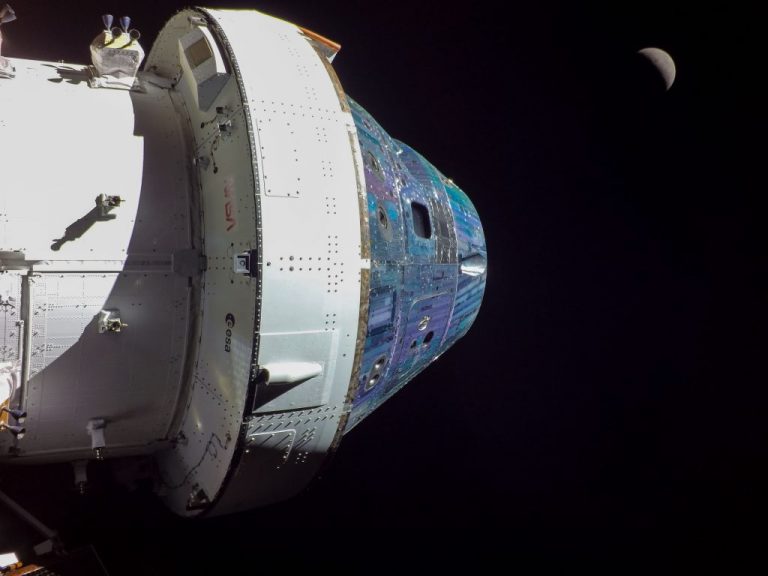
art001e000479 (Nov. 24, 2022) – On flight day 9, NASA’s Orion spacecraft captured imagery looking back at the Moon from a camera mounted on one of its solar arrays. The spacecraft is enroute to a distant retrograde orbit around the Moon.

On the 12th day of the Artemis I mission, team members conducted another planned test of the star trackers aboard Orion as it continued along a distant retrograde orbit of the Moon, and began another reaction control thruster flight test. 

Engineers hope to characterize the alignment between the star trackers and the Orion inertial measurements units, both of which are part of the guidance, navigation and control system, by exposing different areas of the spacecraft to the Sun and activating the star trackers in different thermal states. Star trackers are navigation tools that measure the positions of stars to help the spacecraft determine its orientation. The inertial measurement units contain three devices, called gyros, used to measure spacecraft body rotation rates, and three accelerometers used to measure spacecraft accelerations.  

Together, the star tracker and inertial measurement unit data are used by Orion’s vehicle management computers to compute spacecraft position, velocity, and attitude. The measurements will help engineers understand how thermal states affect the accuracy of the navigation state, which ultimately affects the amount of propellant needed for spacecraft maneuvers. Read more about Orion’s guidance, navigation, and control system in the Artemis I reference guide

Engineers began a development flight test objective today that changed the minimum jet firing time for the reaction control thrusters over a period of 24 hours. This test objective is designed to exercise the reaction control system jets in a different configuration to model how thruster jets will be used for the crewed Artemis II mission. 

Teams also activated and interacted with the Callisto payload, a technology demonstration from Lockheed Martin in collaboration with Amazon and Cisco. Callisto is located in the Orion cabin and will test voice activated and video technology in the deep space environment. 

Monday, Nov. 28, Orion will reach its farthest distance from Earth when it is nearly 270,000 miles from our home planet. 

As of 4:30 p.m. CST, Orion was over 264,000  miles from Earth and 45,600  miles from the Moon, cruising at 1,750 miles per hour. 

To follow the mission real-time, you can track Orion during its mission around the Moon and back, and check the NASA TV schedule for updates on the next televised events. The latest imagery and videos can be found on the Johnson Space Center Flickr. 

By Sandra Jones
Source NASA

Moon Microscope, Solar Arrays Launch On NASA’s SpaceX Cargo Ship

0

SpaceX’s 26th commercial resupply mission for NASA is on its way to the International Space Station.

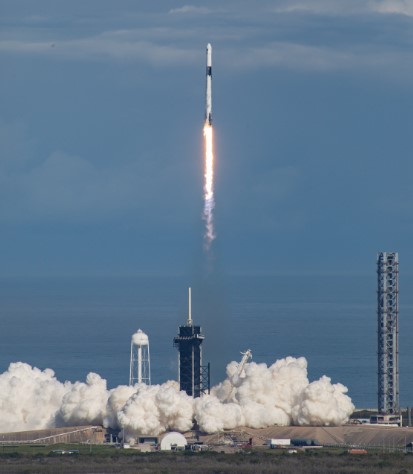
Carrying more than 7,700 pounds of science experiments, crew supplies, and other cargo, the SpaceX Dragon spacecraft launched on the Falcon 9 rocket at 2:20 p.m. EST Saturday from NASA’s Kennedy Space Center in Florida.

The cargo spacecraft is scheduled to autonomously dock at the space station around 7:30 a.m. Sunday, Nov. 27, and remain at the station for about 45 days. Coverage of arrival will begin at 6 a.m. on NASA Television, the agency’s website, and the NASA app.

Among the science experiments Dragon is delivering to the space station are:

Picture of Health

Moon Microscope tests a kit for in-flight medical diagnosis that includes a portable hand-held microscope and a small self-contained blood sample staining device. An astronaut collects and stains a blood sample, obtains images with the microscope, and transmits images to the ground, where flight surgeons use them to diagnose illness and prescribe treatment.

The kit could provide diagnostic capabilities for crew members in space or on the surface of the Moon or Mars, as well as the ability to test water, food, and surfaces for contamination. The hardware also may enable improved medical monitoring on upcoming Artemis missions.

Adding Solar Power

Two International Space Station Roll-Out Solar Arrays, or iROSAs, launched aboard SpaceX’s 22nd commercial resupply mission for the agency and were installed in 2021. These solar panels, which roll out using stored kinetic energy, expand the energy-production capabilities of the space station. The second set launching in the Dragon’s trunk, once installed, will be a part of the plan to provide a 20% to 30% increase in power for space station research and operations.

These arrays, the second of three packages, will complete the upgrade of half the station’s power channels. iROSA technology was first tested on the space station in 2017. Roll-out solar array technology was used on NASA’s Double Asteroid Redirection Test mission and is planned for use on Gateway, a future lunar space station and vital component of NASA’s Artemis program. The iROSA upgrades use the space station as a proving ground for the technology and research needed to explore farther into space.

The SpaceX Falcon 9 rocket carrying the Dragon cargo spacecraft lifts off from Launch Complex 39A at NASA’s Kennedy Space Center in Florida on Nov. 26, 2022.
The SpaceX Falcon 9 rocket carrying the Dragon cargo spacecraft lifts off from Launch Complex 39A at NASA’s Kennedy Space Center in Florida on Nov. 26, 2022, on the company’s 26th commercial resupply services mission for the agency to the International Space Station. Liftoff was at 2:20 p.m. EST. Dragon will deliver more than 7,700 pounds of cargo, including a variety of NASA investigations, supplies, and equipment to the crew aboard the space station, including the next pair of ISS Roll Out Solar Arrays (iROSAs). The spacecraft is expected to spend about a month attached to the orbiting outpost before it returns to Earth with research and return cargo, splashing down off the coast of Florida.
Credits: NASA/Kim Shiflett

Big Hopes for Small Tomatoes

A continuous source of nutritious food is essential for long-duration exploration missions, and the typical pre-packaged astronaut diet may need to be supplemented by fresh foods produced in space. Researchers have been testing a plant growth unit on station known as Veggie and have successfully grown a variety of leafy greens. Veg-05, the next step in that work, focuses on growing dwarf tomatoes.

Building Bigger Structures

On Earth, gravity deforms large objects such as the beams used in large-scale construction. Microgravity enables fabrication of longer and thinner structures without this deformation. Extrusion demonstrates a technology using liquid resin to create shapes and forms that cannot be created on Earth. Photocurable resin, which uses light to harden the material into its final form, is injected into pre-made flexible forms and a camera captures footage of the process. The capability for using these forms could enable in-space construction of structures such as space stations, solar arrays, and equipment.

The Space Exploration Initiative supports a range of microgravity and lunar research across science, engineering, art, and design. The experiment is packed inside a Nanoracks Black Box with several other experiments from the Massachusetts Institute of Technology Media Lab and is sponsored by the ISS National Lab.

On-Demand Nutrients

Supplying adequate nutrition is a major challenge to maintaining crew health on future long-duration space missions. Many vitamins, nutrients, and pharmaceuticals have limited shelf-life, and the ability to make such compounds on-demand could help maintain crew health and well-being. BioNutrients-2 tests a system for producing key nutrients from yogurt, a fermented milk product known as kefir, and a yeast-based beverage.

The investigation kicks off phase two of the five-year BioNutrients program, headed by NASA’s Ames Research Center and managed by Game Changing Development in NASA’s Space Technology Mission Directorate. The program began with the launch of BioNutrients-1 in 2019. BioNutrients-2 employs a smaller system with a heated incubator that promotes growth of beneficial organisms.

The researchers also are working to find efficient ways to use local resources to make bulk products such as plastics, construction binders, and feedstock chemicals. Such technologies are designed to reduce launch costs and increase self-sufficiency, extending the horizons of human exploration.

Easing Gravity Transitions

Travelers to space all face the transition from one gravity field to another. On future exploration missions, astronauts may encounter three different gravity fields: weightlessness while traveling in space, the gravity of another planet, and Earth’s gravity when they return. These transitions can affect spatial orientation, head-eye and hand-eye coordination, balance, and locomotion, and cause some crew members to experience space motion sickness.

The Falcon Goggles hardware captures high-speed video of a subject’s eyes, providing precise data on ocular alignment and balance.

These are just a few of the hundreds of investigations currently conducted aboard the orbiting laboratory in the areas of biology and biotechnology, physical sciences, and Earth and space science. Advances in these areas will help keep astronauts healthy during long-duration space travel and demonstrate technologies for future human and robotic exploration beyond low-Earth orbit to the Moon and Mars.

Get breaking news, images and features from the space station on InstagramFacebook, and Twitter.

Subscribe and get the latest NASA news on this mission and many others with a weekly update in your inbox:

https://www.nasa.gov/subscribe

Kiana Raines
Headquarters, Washington
202-358-1100
[email protected]

Sandra Jones
Johnson Space Center, Houston
281-483-5111
[email protected]

Editor: Sean Potter

A Young Gas Giant Exoplanet Has Astronomers Puzzled

0

A team of astronomers led by Olga Zakhozhay from the MPIA discovered a giant exoplanet around the Sun-like star HD 114082. With an age of only 15 million years, this super-Jupiter is the youngest exoplanet of its kind for which astronomers managed to determine its radius and mass. While its size matches Jupiter’s diameter, the mass of HD 114082 b amounts to eight times Jupiter’s value. Combining these quantities is hard to reconcile with the widely accepted models of planet formation. A possible solution to this riddle may require an update of the formation models to allow for an unusually large solid planetary core. The results appear as a Letter to the Editor in the journal Astronomy & Astrophysics.

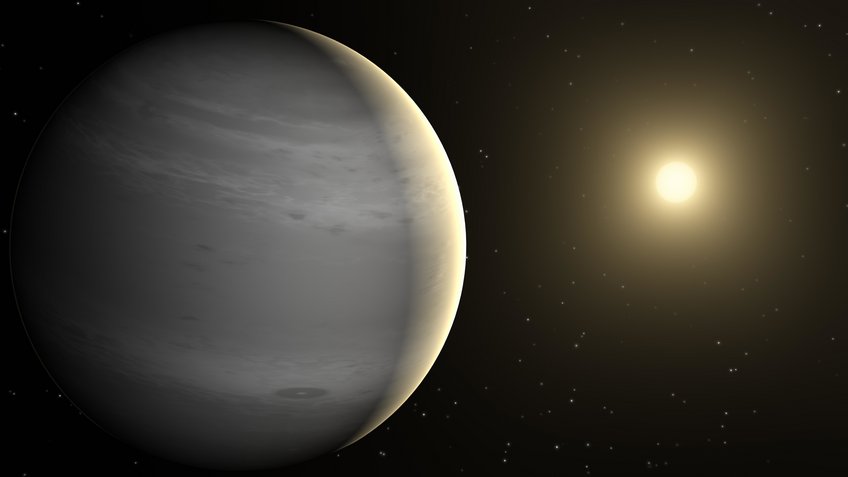
In the background: a black surface with isolated bright small dots representing stars.
In the foreground: the left half of the image consists of a grey sphere with various shades and stripes, illuminated from a distance by a yellow light source.
Artist’s conception of a gas giant exoplanet orbiting around a Sun-like star. The young exoplanet HD 114082 b revolves… [more]© NASA/JPL-Caltech

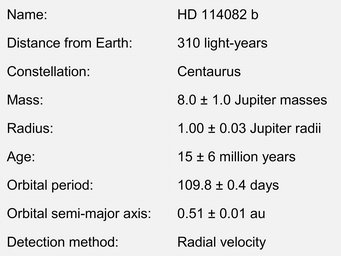
Astronomers have discovered more than 5000 exoplanets, of which about 15% are gas giants with masses of at least that of Jupiter. Now a group of astronomers led by Olga Zakhozhay (Max Planck Institute for Astronomy, Heidelberg, Germany and Main Astronomical Observatory, National Academy of Sciences of Ukraine, Kyiv, Ukraine) discovered an exoplanet named HD 114082 b with a peculiar set of properties that lets scientists scratch their heads.

Name:	HD 114082 b
Distance from Earth:	310 light-years
Constellation:	Centaurus
Mass:	8.0 ± 1.0 Jupiter masses
Radius:	1.00 ± 0.03 Jupiter radii
Age:	15 ± 6 million years
Orbital period:	109.8 ± 0.4 days
Orbital semi-major axis:	0.51 ± 0.01 au
Detection method:	Radial velocity
Properties of the exoplanet HD 114082 b.

The planet is about as big as Jupiter, but its mass reaches eight Jupiter masses. “Compared to currently accepted models, HD 114082 b is about two to three times too dense for a young gas giant with only 15 million years of age,” says Olga Zakhozhay, the principal author of the study. The resulting mean density of that gas planet amounts to twice that of Earth – which is truly remarkable. After all, Earth is a rocky planet with an iron-nickel core, and not made of hydrogen and helium, the lightest elements in the Universe that make up Jupiter almost entirely.

HD 114082 b is currently the youngest known gas giant planet with an established mass and radius,” Zakhozhay points out. As a result, it promises to teach astronomers something about the formation of gas giants in general.

Two different mechanisms of planet formation

We think that giant planets can form in two possible ways,” Ralf Launhardt, a co-author from MPIA, says. “Both occur inside a protoplanetary disk of gas and dust distributed around a young central star.” The first process, known as “core accretion”, involves in a first stage, accumulating a solid core of rocky material. Once it attains a critical mass, its gravitational force attracts the surrounding gas, leading to the accretion of hydrogen and helium in a runaway process to form a giant planet. The second mode, named “disk instability”, features gravitationally unstable parcels of dense gas that collapse directly to grow into a giant planet without a rocky core.

Depending on the assumptions made for those two scenarios, the gas should cool down at different rates, determining the temperature of young gas giant planets. Hence, the new planets may experience a “cold start” or a “hot start”, leading to observable differences that can potentially distinguish between those models, especially at a young age.

The preferred models don’t fit

Currently, astronomers prefer a core accretion scenario with a hot start for giant planets sich as HD 114082 b. Since hot gas encompasses a larger volume than cold gas, one should measure notable differences in the sizes of the observed planets. This contrast in size is more pronounced for young planets. However, it becomes less pronounced during the initial hundreds of millions of years of cooling after formation.

At face value, HD 114082 b defies the astronomers’ expectations. Its combination of mass and size is incompatible with the hot start picture. Instead, it seems to match the cold-start scenario better. Interestingly, other, slightly older candidates cited in other studies show the same behaviour. “It’s much too early to abandon the notion of a hot start,” Ralf Launhardt explains. “All we can say is that we still don’t understand the formation of giant planets very well.” It is clear that compared to the current models, HD 114082 b is too small for its mass. Either it has an unusually large solid core, or the models are incorrect and underestimate the rate by which those gas giants can cool – or both.

The benefit of long-term projects

HD 114082 b’s discovery results from an extensive observational program named RVSPY (Radial Velocity Survey for Planets around Young stars). Currently, it consists of 775 hours of observing time with the MPIA-operated ESO/MPG 2.2-metre telescope at the European Southern Observatory’s (ESO) La Silla site in Chile, spread out across 4.5 years. RVSPY is a good example of high-yield astronomical research carried out at telescopes with sustained access over a long period. Such studies would hardly be possible with the latest telescopes, as the observation time per project is severely limited due to the high demand.

RVSPY aims to uncover the population of (hot, warm, and cold) giant planets around young stars. To do this, the astronomers obtain time series of spectra of 111 young stars, meaning splitting the starlight into its fundamental colour components, similar to what we see in a rainbow. Tiny periodic shifts in the stellar spectra may indicate a tumbling movement of the observed star caused by the gravitational pull of an orbiting planet. In principle, the stars’ activity, like pulsations or flares, may compromise the measurements, particularly in young stars like HD 114082. However, the RVSPY data quality is good enough to detect the signal from the wobbling star beyond any doubt. The team also included older archival data from other telescopes to extend the coverage into the past.

A transit event completes the analysis

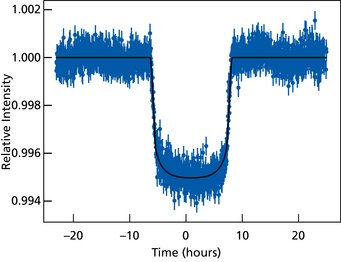
Diagram with horizontal (time in hours, from -20 to +20) and vertical axis (relative intensity, from 0.994 to 1.002). A black curve runs from left to right, starting and ending at the value 1.000 and dropping to the value 0.995 in the middle. Blue dots with short vertical lines (data points) are arranged around the curve.
Light curve of the exoplanet’s transit across its parent star. It shows the relative reduction in stellar intensity due… [more]© Zakhozhay et al. (2022) / MPIA

While astronomers apply this so-called radial velocity (RV) method to infer a planet’s mass and duration of one revolution around its central star, the orbital period, they must rely on a different technique to determine its size. Suppose that the planetary orbit is oriented in such a way to us that, by chance, it crosses the central star. Astronomers call such an event a “transit”. When that happens, the periodic tiny reduction in the received light during transits can be directly translated into the planet’s radius and helps refine its orbital period.

We already suspected a nearly edge-on configuration of the planetary orbit from a ring of dust around HD 114082 discovered several years ago,” says Olga Zakhozhay. “Still, we felt lucky to find an observation in the TESS data with a beautiful transit light curve that improved our analysis.” TESS (Transiting Exoplanet Survey Satellite) is a NASA space probe searching for exoplanets around stars relatively close to Earth.

Combining these measurements, Zakhozhay and her colleagues found HD 114082 b to orbit its Sun-like parent star within 110 days at a distance of approximately 0.5 astronomical units. One astronomical unit is the mean distance between the Sun and Earth. It thus resembles the orbit of Mercury around our sun.

In need of better models

HD 114082 b is one of only three young giant planets with ages up to 30 million years with known masses and sizes. And all of them are probably inconsistent with the most commonly adopted hot-start models. Although the astronomers are looking at low-number statistics with three out of three, it seems unlikely those planets are all outliers. “While more such planets are needed to confirm this trend, we believe that theorists should begin re-evaluating their calculations,” Zakhozhay points out. “It’s exciting how our observational results feed back into planet formation theory. They help improve our knowledge about how these giant planets grow and tell us where the gaps of our understanding lie.

Background information

The MPIA researchers involved in this study are Olga V. Zakhozhay (also Main Astronomical Observatory, National Academy of Sciences of Ukraine, Kyiv, Ukraine), Ralf Launhardt, Trifon Trifonov, Martin Kürster, Thomas Henning, and Gabriel-Dominique Marleau (also University Duisburg-Essen, Germany; Tübingen University, Germany; Bern University, Switzerland).

Dr. Markus Nielbock

Press and public relations officer +49 6221 528-134 pr@…
Markus Nielbock / MPIA
Max Planck Institute for Astronomy, Heidelberg

Dr. Olga V. Zakhozhay

+49 6221 528-292 zakhozhay@…
Max Planck Institute for Astronomy, Heidelberg

Hubble Captures Three Faces Of Evolving Supernova In Early Universe

0

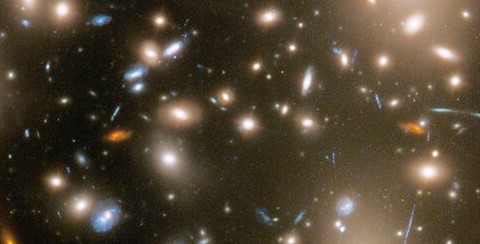
Three different moments in a far-off supernova explosion were captured in a single snapshot by the NASA/ESA Hubble Space Telescope. The progenitor star exploded more than 11 billion years ago, when the Universe was less than a fifth of its current age of 13.8 billion years.

This is the first detailed look at a supernova at such an early time in the Universe’s evolution. The data could help scientists learn more about the formation of stars and galaxies in the early Universe.

This observation was possible thanks to the phenomenon called gravitational lensing, as first predicted by Einstein’s general theory of relativity. In this case, the light took three different paths through the cosmic lens of the massive galaxy cluster Abell 370, bending and magnifying the light from the more distant supernova located behind the cluster. The three paths were of three different lengths, so when the light arrived at Hubble (on the same day in December 2010), the supernova appeared at three different stages of evolution.

The Hubble exposure also captured the fading supernova’s rapid change of colour, which indicates its changing temperature. The bluer the colour, the hotter the supernova is. The earliest phase captured appears blue. As the supernova cooled its light turned redder.

This is also the first time astronomers have been able to measure the size of a dying star in the early Universe. They did this by observing the supernova’s brightness and rate of cooling, both of which depend on the size of the progenitor star. Hubble’s observations show that the red supergiant whose supernova explosion the researchers discovered had a radius about 500 times larger than the Sun.

An international team of astronomers found this supernova by sifting through the Hubble data archives, looking for transient events. The team also has time planned for the NASA/ESA/CSA James Webb Space Telescope to observe even more distant supernovae. They hope to contribute to a catalogue of very far-off supernovae to help astronomers understand if the stars that existed many billions of years ago are different from those in the nearby Universe. The team’s paper, entitled “Shock cooling of a red-supergiant supernova at redshift 3 in lensed images,” will be published in Nature on 10 November.

More information

The Hubble Space Telescope is a project of international cooperation between ESA and NASA.

This image was taken as part of the Hubble observation programme GO-11591 (PI J.-P. Kneib).

The associated science results were also supported by the Hubble Cycle 27 Archival Research programme, as well as by Hubble observation programmes GO-15936 and GO-16278.

Image credit: NASA, ESA, STScI, Wenlei Chen (UMN), Patrick Kelly (UMN), Hubble Frontier Fields

Links

Contacts

Bethany Downer
ESA/Hubble Chief Science Communications Officer
Email: [email protected]

Missouri Batteries Power NASA’s Artemis-I Mission

0

NASA just launched the Artemis-I, and it was powered by Missouri-made batteries. This is the first in a series of increasingly complex missions that will enable human exploration to the Moon and Mars.

Eight different types of batteries from EaglePicher, an energy manufacturing company based in Joplin, Missouri, are on board the spacecraft, providing power at crucial times during the mission.

EaglePicher batteries are on almost every component of the Artemis-I, including the solid rocket boosters, the rocket itself, and the vehicle that will fly around the moon and return to earth.

“Two are actually on the booster and two are actually on the rocket and they’re flight termination system batteries, and then we also have the four main batteries on the Orion Crew Exploration Vehicle,” said Jackie Kennedy, Senior Program Director at EaglePicher.

Missouri has a long history of powering NASA’s space program including the InSight Lander and Perseverance rover, which are currently on the surface of Mars, NASA’s OSIRIS-Rex spacecraft and the International Space Station. And Missouri has been a key part of the U.S. space program since the 1950s driving the development of the Mercury and Gemini space programs and the CST-100 Starliner.

About Missouri Partnership

Missouri Partnership is a public-private economic development organization focused on attracting new jobs and investment to the state and promoting Missouri’s business strengths. Since 2008, Missouri Partnership has worked with partners statewide to attract companies that have created 31,000+ new jobs, $1.6 billion+ in new annual payroll, and $6 billion+ in new capital investment. Some recent successful projects that led to major investment in Missouri include Accenture Federal Services LLC, American Foods Group, Casey’s, Chewy, Inc., James Hardie, Meta, Square, Swift Prepared Foods, USDA, and Veterans United.

Media Contact: Janelle Higgins | 314.541.4911 | [email protected] Partnership

Artemis I – Flight Day Nine: Orion One Day Away From Distant Retrograde Insertion

0

On Flight Day 8, NASA’s Orion spacecraft remains two days away from reaching its distant retrograde orbit. The Moon is in view as Orion snaps a selfie using a camera mounted on one of its solar array at 10:57 p.m. EST..

Orion is now about one day away from entering into a distant retrograde orbit around the Moon. The orbit is “distant” in the sense that it’s at a high altitude approximately 50,000 miles from the surface of the Moon. Due to the distance, the orbit is so large that it will take the spacecraft six days to complete half of a revolution around the Moon before exiting the orbit for the return journey back to Earth.

During the last day in the transit to distant retrograde orbit, flight controllers performed a third in a series of planned star tracker development flight tests relative to the Sun, with a fourth planned for tomorrow. Star trackers are a navigation tool that measure the positions of stars to help the spacecraft determine its orientation. In the first three flight days, engineers evaluated initial data to understand star tracker readings correlated to thruster firings.

The spacecraft completed its sixth outbound trajectory correction burn at 3:52 p.m. CST, firing the European Service Module’s auxiliary engines for 17 seconds to propel the spacecraft at 8.9 feet per second. This is the final trajectory correction before entering distant retrograde orbit. When in lunar orbit, Orion will perform three orbital maintenance burns to keep the spacecraft on course.

Overnight, engineers will begin a 24-hour test of the reaction control system engines to evaluate engine performance for standard and non-standard thruster configurations. This test will provide data to inform procedures and ensure that the reaction control thrusters can control Orion’s orientation in an alternate configuration if there is an issue with the primary configuration.

Just after 1:42 p.m. CST on Nov. 24, Orion was traveling 222,993 miles from Earth and 55,819 miles from the Moon, cruising at 2,610 miles per hour.

NASA Television coverage of the distant retrograde orbit insertion burn, scheduled for 4:30 p.m. EST on Friday, Nov. 25. The burn is scheduled to take place at 4:52 p.m.

Images are sent down to Earth, and uploaded to NASA’s Johnson Space Center Flickr account and Image and Video Library. When bandwidth allows, views of the mission will be available in real-time via video stream.

ABOUT

Artemis is the first step in the next era of human exploration. Together with commercial and international partners, NASA will establish a sustainable presence on the Moon to prepare for missions to Mars.

This blog will be a source of information on Artemis launch and exploration progress, covering updates across our science, technology and human exploration programs. Once we’re ready to fly, check out this blog for launch updates and other mission operations.

Learn more about Artemis

Snoopy Hitches Ride To Space Aboard Artemis I

0

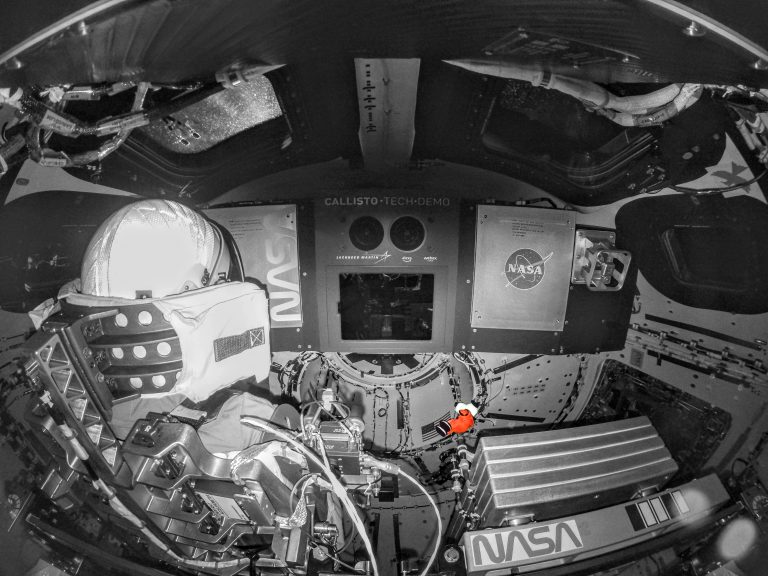
Snoopy, the zero-gravity indicator for NASA’s Artemis I flight test, floats in space on Nov. 20, 2022, while attached to his tether in the Orion spacecraft. In this enhanced image, Snoopy stands out in a custom orange spacesuit, while Orion’s interior has been shaded black and white for contrast. The character’s spacesuit is modeled after the suit astronauts will wear during launch and reentry in Orion on future missions to the Moon. NASA has shared an association with Charles M. Schulz and Snoopy since the Apollo missions and the relationship continues under Artemis. Snoopy was selected as the zero-gravity indicator for the flight because of the inspiration and excitement the character has provided for human spaceflight for more than 50 years.

Image Credit: NASA

By Monika Luabeya
Source NASA

NASA’s Europa Clipper Gets Its Wheels For Traveling In Deep Space

0

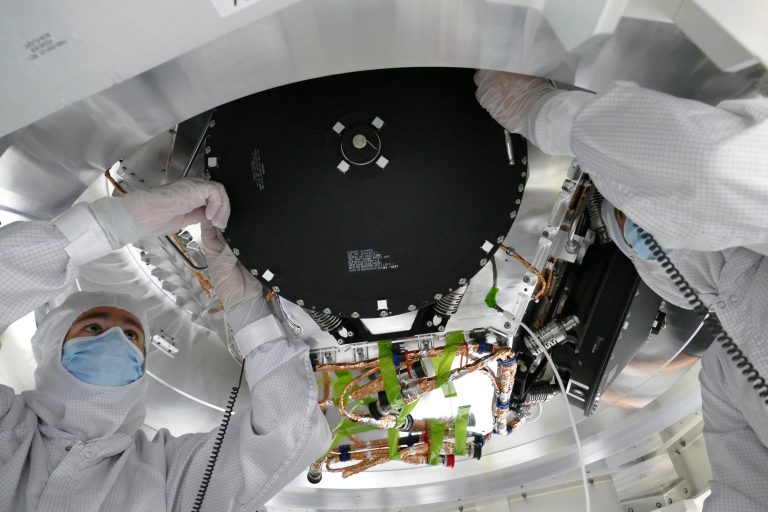

Engineers install 2 foot-wide reaction wheels onto the main body of NASA’s Europa Clipper spacecraft. The orbiter is in its assembly, test, and launch operations phase in preparation for a 2024 launch. NAS/JPL-Calltech

Just as NASA’s Mars rovers rely on robust wheels to roam the Red Planet and conduct science, some orbiters rely on wheels, too – in this case, reaction wheels – to stay pointed in the right direction. Engineers and technicians at NASA’s Jet Propulsion Laboratory in Southern California recently installed four reaction wheels on Europa Clipper, which will rely on them during its journey at Jupiter’s icy moon Europa.

When NASA’s spacecraft heads through deep space, slips into orbit around Jupiter, and collects science observations while flying dozens of times by Europa, the wheels rotate the orbiter so that its antennas can communicate with Earth and its science instruments, including cameras, can stay oriented.

Engineers and technicians work together to install reaction wheels on the underside of the main body of NASA's Europa Clipper spacecraft, which is in its assembly, test, and launch operations phase.
Engineers and technicians work together to install reaction wheels on the underside of the main body of NASA’s Europa Clipper spacecraft, which is in its assembly, test, and launch operations phase. 
Credit: NASA/JPL-Caltech 
Full Image Details

Two feet wide and made of steel, aluminum, and titanium, the wheels spin rapidly to create torque that causes the orbiter to rotate in the opposite direction. Isaac Newton’s third law of motion also applies in deep space and explains the underlying phenomenon: For every action, there is an equal and opposite reaction. The reaction wheels cause the spacecraft to react to the spinning action of the wheels.

Here’s one way to visualize how reaction wheels work: Imagine you are sitting in a swivel chair and lift your feet off the floor so that you are free to rotate. If you jerk your torso one direction, the chair and your legs will rotate the opposite direction. The reaction wheels work the same way: As the reaction wheel’s motor accelerates the metal wheel in one direction, the spacecraft experiences an acceleration in the opposite direction.

Without those reaction wheels, Europa Clipper wouldn’t be able to do its science investigations when it arrives at the Jupiter system in 2030 after its 2024 launch. Scientists believe Europa harbors a vast internal ocean that may have conditions suitable for supporting life. The spacecraft will gather data on the moon’s atmosphere, surface, and interior – information that will help scientists learn more about the ocean, the ice crust, and potential plumes that may be venting subsurface water into space.

During its orbits around Jupiter, Europa Clipper will rely on reaction wheels to help it perform thousands of turns, or “slews.” Although the spacecraft could perform some of those maneuvers with thrusters, its thrusters need fuel – a finite resource aboard the orbiter. The reaction wheels will run on electricity provided by the spacecraft’s vast solar arrays.

Watch live: Europa Clipper being built in the clean room

See more images of Europa Clipper coming together

The trade-off is that the reaction wheels work slowly. Europa Clipper’s reaction wheels will take about 90 minutes to rotate the craft 180 degrees – a movement so gradual that, from a distance, it would be imperceptible to the human eye. The rotation of the spacecraft will be three times slower than the minute hand on a clock.

Also, they can wear out over time. It happened on NASA’s Dawn spacecraft, requiring engineers to figure out how to rotate using thrusters with the available fuel. To address this, engineers have installed four wheels on Europa Clipper even though only three are needed to maneuver. They alternate which three wheels are in operation to even the wear. That leaves them with a “spare” wheel if one of the others fails.

Installing the wheels was one of the most recent steps of the phase known as assembly, test, and launch operations. Science instruments continue to arrive at JPL to be added to the spacecraft. Next, a variety of tests will be conducted, as the spacecraft moves toward its October 2024 launch period. After traveling over 1.8 billion miles (2.9 billion kilometers), Europa Clipper will be set to begin unlocking the secrets of this icy world.

More About the Mission

Missions such as Europa Clipper contribute to the field of astrobiology, the interdisciplinary research field that studies the conditions of distant worlds that could harbor life as we know it. While Europa Clipper is not a life-detection mission, it will conduct a detailed exploration of Europa and investigate whether the icy moon, with its subsurface ocean, has the capability to support life. Understanding Europa’s habitability will help scientists better understand how life developed on Earth and the potential for finding life beyond our planet.

Managed by Caltech in Pasadena, California, JPL leads the development of the Europa Clipper mission in partnership with the Johns Hopkins Applied Physics Laboratory (APL), in Laurel, Maryland, for NASA’s Science Mission Directorate in Washington. APL designed the main spacecraft body in collaboration with JPL and NASA’s Goddard Space Flight Center in Greenbelt, Maryland. The Planetary Missions Program Office at NASA’s Marshall Space Flight Center in Huntsville, Alabama, executes program management of the Europa Clipper mission.

More information about Europa can be found here:

europa.nasa.gov

Method For Decoding Asteroid Interiors Could Help Aim Asteroid-Deflecting Missions

0

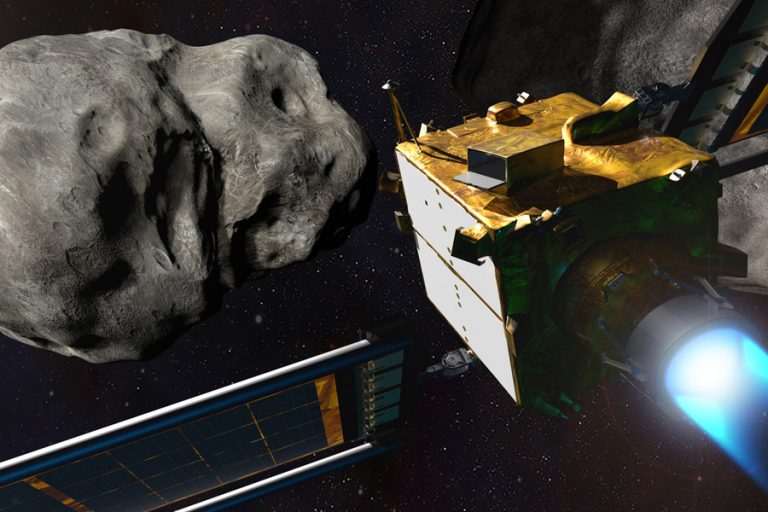
MIT astronomers have found a way to determine an asteroid’s interior structure based on how its spin changes during a close encounter with Earth. The tool may improve the aim of future asteroid-targeting missions like the recent DART mission. Credit: NASA/Johns Hopkins APL

NASA hit a bullseye in late September with DART, the Double Asteroid Redirection Test, which flew a spacecraft straight at the heart of a nearby asteroid. The one-way kamikaze mission smashed into the stadium-sized space rock and successfully reset the asteroid’s orbit. DART was the first test of a planetary defense strategy, demonstrating that scientists could potentially deflect an asteroid headed for Earth.

Now MIT researchers have a tool that may improve the aim of future asteroid-targeting missions. The team has developed a method to map an asteroid’s interior structure, or density distribution, based on how the asteroid’s spin changes as it makes a close encounter with more massive objects like the Earth.

Knowing how the density is distributed inside an asteroid could help scientists plan the most effective defense. For instance, if an asteroid were made of relatively light and uniform matter, a DART-like spacecraft could be aimed differently than if it were deflecting an asteroid with a denser, less balanced interior.

“If you know the density distribution of the asteroid, you could hit it at just the right spot so it actually moves away,” says Jack Dinsmore ’22, who developed the new asteroid-mapping technique as an MIT undergraduate majoring in physics.  

The team is eager to apply the method to Apophis, a near-Earth asteroid that is estimated to pose a significant hazard if it were to make impact. Scientists have ruled out the likelihood of a collision during Apophis’ next flybys for at least a century. Beyond that, their forecasts grow fuzzy.   

“Apophis will miss Earth in 2029, and scientists have cleared it for its next few encounters, but we can’t clear it forever,” says Dinsmore, who is now a graduate student at Stanford University. “So, it’s good to understand the nature of this particular asteroid, because if we ever need to redirect it, it’s important to understand what it’s made of.”

Dinsmore and Julien de Wit, assistant professor in MIT’s Department of Earth, Atmospheric and Planetary Sciences (EAPS), detail their new method in a study appearing today in the Monthly Notices of the Royal Astronomical Society. The unedited version is also available on arXiv.org.

Spinning boiled versus raw

The seeds of the team’s asteroid-mapping method grew out of an MIT class Dinsmore took last year, taught by de Wit. The class, 12.401 (Essentials of Planetary Sciences), introduces the basic principles and formation mechanisms of planets, asteroids, and other objects in the solar system. As a final project, Dinsmore explored how an asteroid behaves during a close encounter.

In class, he wrote a code to simulate various shapes and sizes of asteroids as well as how their orbital and spin dynamics change when influenced by the gravitational pull of a more massive object like the Earth.

“I initially just tried to ask, what happens when an asteroid passes by Earth? Does it respond at all? Because I wasn’t sure,” Dinsmore recalls. “And the answer is, it does, in a way that depends very strongly on the shape and physical properties of the asteroid.”

That initial realization prompted another question: Could the dynamics of an asteroid’s close encounter be used to predict not just its shape and size, but also its internal makeup? To get at an answer, Dinsmore continued the project with de Wit, through the MIT Undergraduate Research Opportunities Program (UROP), which enables students to perform original research with a faculty member.

He and de Wit took a deeper dive into the dynamics of a close encounter, writing out a more complex code, which they used to simulate a zoo of different asteroids, each with a different size, shape, and internal composition, or distribution of density. They then ran the simulation forward to see how each asteroid’s spin should wobble or shift as it passes close to an object of a certain mass and gravitational pull.  

“It’s similar to how you can tell the difference between a raw and boiled egg,” de Wit offers. “If you spin the egg, the egg responds and spins differently depending on its interior properties. The same goes for an asteroid during a close encounter: You can get a grasp of what’s happening on the inside just by looking on how it responds to the strong gravitational forces it experiences during a flyby.”

A close match

The team is presenting their results in a new software “toolkit,” which they name AIME, for Asteroid Interior Mapping from Encounters (the acronym also translates as “love” in French). The software can be used to reconstruct the internal density distribution of an asteroid, from observations of its spin change during a close encounter.

The researchers say that, if scientists can take more detailed measurements of asteroids and their spin dynamics during close encounters, these measurements could be used to improve AIME’s reconstructions of asteroid interiors.

Their best chance, they say, may come with Apophis. During its forthcoming close encounters, de Wit and Dinsmore hope astronomers will point their telescopes at the space rock to measure its size, shape, and spin evolution as it streaks past. They could then feed these measurements into AIME to find a match — a simulated asteroid with the same size, shape, and spin dynamics as Apophis, that also relates to a particular interior density distribution.

“Then, with AIME, you could publish a density map that most likely represents Apophis’ interior,” Dinsmore says.

“Understanding the interior properties of asteroids helps us understand the extent to which close encounters could be of concern, and how to deal with them, as well as where they formed and how they got here,” de Wit adds. “Now with this framework, there’s a new way of getting a look inside an asteroid.”

This research was supported, in part, by the MIT UROP office.

Reprinted with permission of MIT News
By Jennifer Chu | MIT News Office
Source MIT News