
Home Blog Page 102

Watch The Latest Water Satellite Unfold Itself In Space

0

Cameras on the Surface Water and Ocean Topography spacecraft captured the antennas for its main science instrument unfurling in orbit.

Two cameras aboard the Surface Water and Ocean Topography (SWOT) satellite captured the large mast and antenna panels of the spacecraft’s main science instrument deploying over four days, a process that was completed on Dec. 22, 2022. The masts, which unfold from opposite sides of the spacecraft, can be seen extending out from the spacecraft and locking in place, but the cameras stopped short of capturing the antennas at the ends of the masts being fully deployed (a milestone the team confirmed with telemetry data). This video places the two camera views side by side.
Credit: NASA/JPL-Caltech/CNES

The Surface Water and Ocean Topography (SWOT) satellite launched into Earth orbit on Friday, Dec. 16, from Vandenberg Space Force Base in central California, and engineers are working to prepare the mission to begin measuring the height of water on over 90% of Earth’s surface, providing a high-definition survey of our planet’s water for the first time.

But before it can do that, the satellite would need to unfold its large mast and antenna panels (see above) after successfully deploying the solar panel arrays that power the spacecraft. The mission monitors and controls the satellite using telemetry data, but it also equipped spacecraft with four customized commercial cameras to record the action.

The solar arrays fully deployed shortly after launch, taking about 10 minutes.

This series of images shows the deployment of the solar arrays that power the international Surface Water and Ocean Topography (SWOT) satellite. The mission, led by NASA and the French space agency Centre National d’Études Spatiales (CNES), captured the roughly 10-minute process with two of the four commercial cameras aboard the satellite (the same type used to capture NASA’s Perseverance rover landing on Mars). SWOT launched Dec. 16, 2022, at 3:46 a.m. PST from Vandenberg Space Force Base in California, and the arrays started their deployment at 5:01 a.m. PST.

 Credit: NASA/JPL-Caltech/CNES

The antennas successfully deployed over four days, a process that was completed on Dec. 22. The two cameras focused on the KaRIn antennas captured the mast extending out from the spacecraft and locking in place but stopped short of capturing the antennas being fully deployed (a milestone the team confirmed with telemetry data.)

Thirty-three feet (10 meters) apart, at either end of the mast, the two antennas belong to the groundbreaking Ka-band Radar Interferometer (KaRIn) instrument. Designed to capture precise measurements of the height of water in Earth’s freshwater bodies and the ocean, KaRIn will see eddies, currents, and other ocean features less than 13 miles (20 kilometers) across. It will also collect data on lakes and reservoirs larger than 15 acres (62,500 square meters) and rivers wider than 330 feet (100 meters) across.

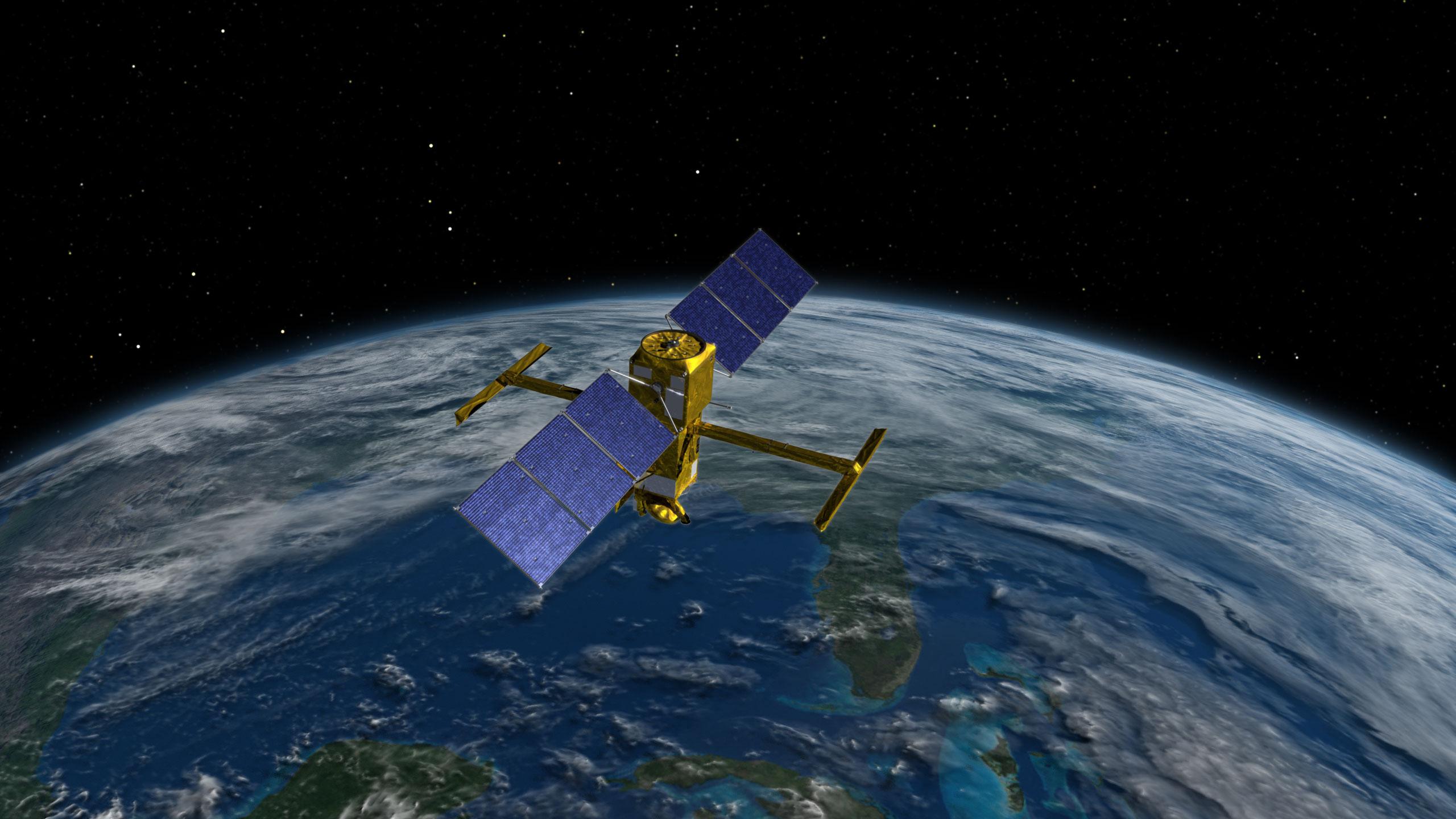
This illustration shows the SWOT satellite, which will use the Ka-band Radar Interferometer (KaRIn) instrument to measure the height of water in lakes, rivers, reservoirs, and ocean.
This illustration shows the SWOT spacecraft with its antenna mast and solar arrays fully deployed.
 Credit: NASA/JPL-Caltech 
Full Image Details

KaRIn will do this by bouncing radar pulses off the surface of water on Earth and receiving the signals with both of those antennas, collecting data along a swath that’s 30 miles (50 kilometers) wide on either side of the satellite.

The data SWOT provides will help researchers and decision-makers address some of the most pressing climate questions of our time and help communities prepare for a warming world.

More About the Mission

SWOT was jointly developed by NASA and the French space agency Centre National d’Études Spatiales (CNES), with contributions from the Canadian Space Agency (CSA) and the UK Space Agency. JPL, which is managed for NASA by Caltech in Pasadena, California, leads the U.S. component of the project. For the flight system payload, NASA is providing the Ka-band Radar Interferometer (KaRIn) instrument, a GPS science receiver, a laser retroreflector, a two-beam microwave radiometer, and NASA instrument operations. CNES is providing the Doppler Orbitography and Radioposition Integrated by Satellite (DORIS) system, the dual frequency Poseidon altimeter (developed by Thales Alenia Space), the KaRIn radio-frequency subsystem (together with Thales Alenia Space and with support from the UK Space Agency), the satellite platform, and ground operations. CSA is providing the KaRIn high-power transmitter assembly. NASA is providing the launch vehicle and the agency’s Launch Services Program, based at Kennedy Space Center, is managing the associated launch services.

To learn more about SWOT, visit: https://swot.jpl.nasa.gov/
Hubble Captures Dual Views Of An Unusual Star Cluster

0
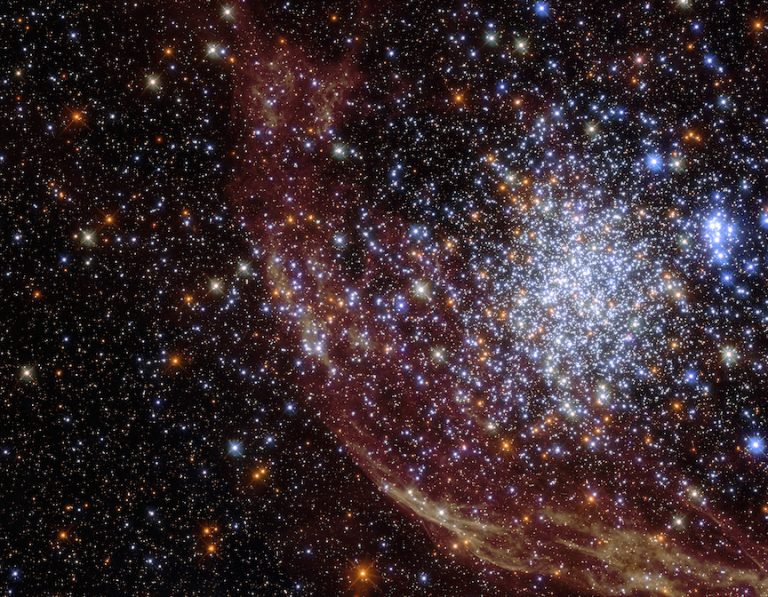
This Hubble image shows the star cluster NGC 1850, located about 160,000 light-years away. For this image, five filters were used with the camera to gather data. Two of the filters were at near-ultraviolet wavelengths, two more at visible light wavelengths, and the final one was in the near-infrared. The data gathered through the two ultraviolet filters is violet and blue. The data from the two visible light filters is green and orange. The color red denotes near-infrared data. The image follows chromatic order, which means the shortest wavelength in the image is blue while the longest wavelength is red. Chromatic order allows us to visualize wavelengths of light beyond our eye’s sensitivity in a way that is familiar to us. Credits: NASA, ESA and N. Bastian (Donostia International Physics Center); Processing: Gladys Kober (NASA/Catholic University of America)

While these two images may look dazzlingly different, they are actually pictures of the same cosmic object: NGC 1850.

Although the same Hubble instrument took both images, different filters with different assigned colors were used to study particular wavelengths of light emanating from these objects. The image with blue nebulosity includes some near-infrared light along with visible light (what our human eyes can detect), whereas the image with red nebulosity (also a different “pointing” at the same object) covers a much broader range from the near-ultraviolet to the beginnings of the infrared spectrum. Ultraviolet observations are ideal for detecting the light from the hottest and youngest stars, as seen in this luminous, starry view.

This 100 million-year-old globular cluster is located in the Large Magellanic Cloud, a satellite galaxy of the Milky Way and a birthplace for billions of stars. The cluster is approximately 160,000 light-years away in the constellation Dorado. Typical of globular clusters, it is a spherical collection of densely packed stars held together by mutual gravitational attraction. Unlike most globular clusters, however, the stars of NGC 1850 are relatively young. Globular clusters with young stars such as NGC 1850 are not present in our own Milky Way galaxy.

Astrophysicists theorize that when the first generation of stars in NGC 1850 was born, the stars ejected matter like dust and gas into the surrounding cosmos. The density of the newly formed star cluster was so high that this ejected matter could not escape the cluster’s gravitational pull, causing it to stay nearby. The intense gravity of the cluster also pulled in hydrogen and helium gas from its surroundings. These two sources of gas combined to form a second generation of stars, increasing the density and size of this globular cluster.

In 2021, scientists detected the presence of a black hole in NGC 1850. They have also detected many brighter blue stars (seen on the right of the second image) that burn hotter and die younger than red stars. Also present are around 200 red giants, stars that have run out of hydrogen in their centers and are fusing hydrogen further from their core, causing the outer layers to expand, cool, and glow red (seen throughout the second image). Surrounding the cluster is a pattern of nebulosity, diffuse dust and gas theorized to come from supernova blasts (the blue veil-like structures on the first image and the red ones on the second image).

NGC 1850 is approximately 63,000 times the mass of the Sun, and its core is roughly 20 light-years in diameter. Astronomers used Hubble Space Telescope observations at a wide range of wavelengths to image this large star cluster and learn more about star formation.

additional imagery


By Keith Cowing
Source SpaceRef

Construction Begins On NEO Surveyor

0
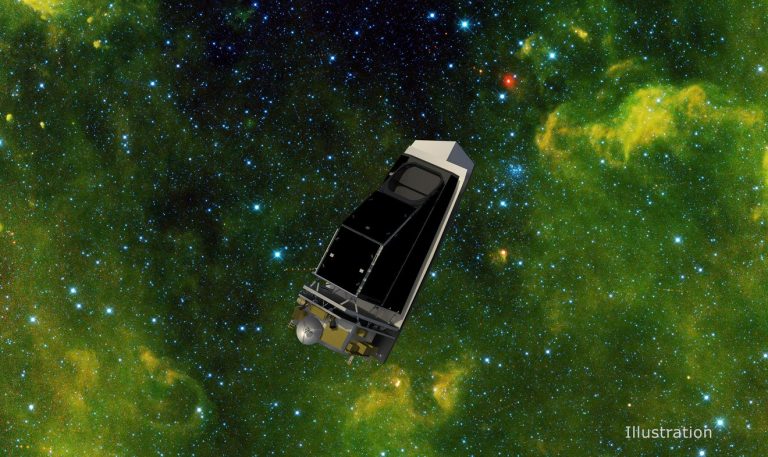
NEO Surveyor

NEO Surveyor is the first purpose-built space telescope that will advance NASA’s planetary defense efforts by finding and tracking hazardous near-Earth objects.

A space telescope designed to search for the hardest-to-find asteroids and comets that stray into Earth’s orbital neighborhood, NASA’s Near-Earth Object Surveyor (NEO Surveyor) recently passed a rigorous technical and programmatic review. Now the mission is transitioning into the final design-and-fabrication phase and establishing its technical, cost, and schedule baseline.

The mission supports the objectives of NASA’s Planetary Defense Coordination Office (PDCO) at NASA Headquarters in Washington. The NASA Authorization Act of 2005 directed NASA to discover and characterize at least 90% of the near-Earth objects more than 140 meters (460 feet) across that come within 30 million miles (48 million kilometers) of our planet’s orbit. Objects of this size are capable of causing significant regional damage, or worse, should they impact the Earth.

“NEO Surveyor represents the next generation for NASA’s ability to quickly detect, track, and characterize potentially hazardous near-Earth objects,” said Lindley Johnson, NASA’s Planetary Defense Officer at PDCO. “Ground-based telescopes remain essential for us to continually watch the skies, but a space-based infrared observatory is the ultimate high ground that will enable NASA’s planetary defense strategy.”

Find Them First

Managed by NASA’s Jet Propulsion Laboratory in Southern California, NEO Surveyor will journey a million miles to a region of gravitational stability – called the L1 Lagrange point – between Earth and the Sun, where the spacecraft will orbit during its five-year primary mission.

From this location, the NEO Surveyor will view the solar system in infrared wavelengths – light that is invisible to the human eye. Because those wavelengths are mostly blocked by Earth’s atmosphere, larger ground-based observatories may miss near-Earth objects that this space telescope will be able to spot by using its modest light-collecting aperture of nearly 20 inches (50 centimeters).

NEO Surveyor’s cutting-edge detectors are designed to observe two heat-sensitive infrared bands that were chosen specifically so the spacecraft can track the most challenging-to-find near-Earth objects, such as dark asteroids and comets that don’t reflect much visible light. In the infrared wavelengths to which NEO Surveyor is sensitive, these objects glow because they are heated by sunlight.

In addition, NEO Surveyor will be able to find asteroids that approach Earth from the direction of the Sun, as well as those that lead and trail our planet’s orbit, where they are typically obscured by the glare of sunlight – objects known as Earth Trojans.

“For the first time in our planet’s history, Earth’s inhabitants are developing methods to protect Earth by deflecting hazardous asteroids,” said Amy Mainzer, the mission’s survey director at the University of Arizona in Tucson. “But before we can deflect them, we first need to find them. NEO Surveyor will be a game-changer in that effort.”

The mission will also help to characterize the composition, shape, rotation, and orbit of near-Earth objects. While the mission’s primary focus is on planetary defense, this information can be used to better understand the origins and evolution of asteroids and comets, which formed the ancient building blocks of our solar system.

When it launches, NEO Surveyor will build upon the successes of its predecessor, the Near-Earth Object Wide-field Infrared Survey Explorer (NEOWISE). Repurposed from the WISE space telescope after that mission ended in 2011, NEOWISE proved highly effective at detecting and characterizing near-Earth objects, but NEO Surveyor is the first space mission built specifically to find large numbers of these hazardous asteroids and comets.

Already in the Works

After that the mission passed this milestone on Nov. 29, key instrument development got under way. For instance, the large radiators that will allow the system to be passively cooled are being fabricated. To detect the faint infrared glow of asteroids and comets, the instrument’s infrared detectors need to be much cooler than the spacecraft’s electronics. The radiators will perform that important task, eliminating the need for complex active cooling systems.

Additionally, construction of the composite struts that will separate the telescope’s instrumentation from the spacecraft has begun. Designed to be poor heat conductors, the struts will isolate the cold instrument from the warm spacecraft and sunshield, the latter of which will block sunlight that might otherwise obscure the telescope’s view of near-Earth objects and heat up the instrument.

Progress has also been made developing the instrument’s infrared detectors, beam splitters, filters, electronics, and enclosure. And work has begun on the space telescope’s mirror, which will be formed from a solid block of aluminum and shaped by a custom-built diamond-turning machine.

“The project team, including all of our institutional and industrial collaborators, is already very busy designing and fabricating components that will ultimately become flight hardware,” said Tom Hoffman, NEO Surveyor project manager at JPL. “As the mission enters this new phase, we’re excited to be working on this unique space telescope and are already looking forward to our launch and the start of our important mission.”

More About the Mission

The mission is tasked by NASA’s Planetary Science Division within the Science Mission Directorate; program oversight is provided by the PDCO, which was established in 2016 to manage the agency’s ongoing efforts in planetary defense. NASA’s Planetary Missions Program Office at Marshall Space Flight Center provides program management for NEO Surveyor.

The project is being developed by JPL and is led by survey director Amy Mainzer at the University of Arizona. Established aerospace and engineering companies have been contracted to build the spacecraft and its instrumentation, including Ball Aerospace , Space Dynamics Laboratory, and Teledyne. The Laboratory for Atmospheric and Space Physics at the University of Colorado, Boulder will support operations, and IPAC-Caltech in Pasadena, California, is responsible for processing survey data and producing the mission’s data products. Caltech manages JPL for NASA.

More information about NEO Surveyor is available at:
https://solarsystem.nasa.gov/missions/neo-surveyor


By Keith Cowing
Source SpaceRef

NASA Explores A Winter Wonderland On Mars

0
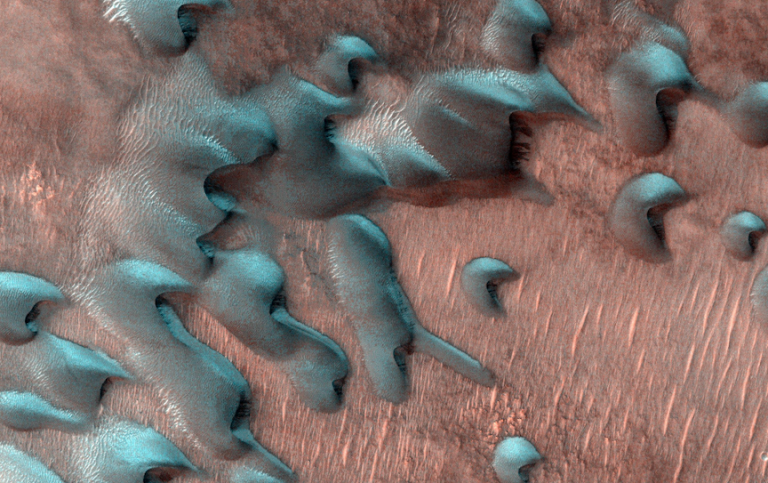
This image acquired on July 22, 2022 by NASA’s Mars Reconnaissance Orbiter shows sand dunes moving across the landscape. Winter frost covers the colder, north-facing half of each dune. Credit: NASA/JPL-Caltech/University of Arizona

Cube-shaped snow, icy landscapes, and frost are all part of the Red Planet’s coldest season. When winter comes to Mars, the surface is transformed into a truly otherworldly holiday scene.

Snow, ice, and frost accompany the season’s sub-zero temperatures. Some of the coldest of these occur at the planet’s poles, where it gets as low as minus 190 degrees Fahrenheit (minus 123 degrees Celsius).

Cold as it is, don’t expect snow drifts worthy of the Rocky Mountains. No region of Mars gets more than a few feet of snow, most of which falls over extremely flat areas. And the Red Planet’s elliptical orbit means it takes many more months for winter to come around: a single Mars year is around two Earth years.

Snow falls and ice and frost form on Mars, too. NASA’s spacecraft on and orbiting the Red Planet reveal the similarities to and differences from how we experience winter on Earth. Mars scientist Sylvain Piqueux of JPL explains in this video. Credit: NASA/JPL-Caltech

Still, the planet offers unique winter phenomena that scientists have been able to study, thanks to NASA’s robotic Mars explorers. Here are a few of the things they’ve discovered:

Two Kinds of Snow

Martian snow comes in two varieties: water ice and carbon dioxide, or dry ice. Because Martian air is so thin and the temperatures so cold, water-ice snow sublimates, or becomes a gas, before it even touches the ground. Dry-ice snow actually does reach the ground.

“Enough falls that you could snowshoe across it,” said Sylvain Piqueux, a Mars scientist at NASA’s Jet Propulsion Laboratory in Southern California whose research includes a variety of winter phenomena. “If you were looking for skiing, though, you’d have to go into a crater or cliffside, where snow could build up on a sloped surface.”

How We Know It Snows

Snow occurs only at the coldest extremes of Mars: at the poles, under cloud cover, and at night. Cameras on orbiting spacecraft can’t see through those clouds, and surface missions can’t survive in the extreme cold. As a result, no images of falling snow have ever been captured. But scientists know it happens, thanks to a few special science instruments.

NASA’s Mars Reconnaissance Orbiter can peer through cloud cover using its Mars Climate Sounder instrument, which detects light in wavelengths imperceptible to the human eye. That ability has allowed scientists to detect carbon dioxide snow falling to the ground. And in 2008, NASA sent the Phoenix lander within 1,000 miles (about 1,600 kilometers) of Mars’ north pole, where it used a laser instrument to detect water-ice snow falling to the surface.

Cubic Snowflakes

Because of how water molecules bond together when they freeze, snowflakes on Earth have six sides. The same principle applies to all crystals: The way in which atoms arrange themselves determines a crystal’s shape. In the case of carbon dioxide, molecules in dry ice always bond in forms of four when frozen.

“Because carbon dioxide ice has a symmetry of four, we know dry-ice snowflakes would be cube-shaped,” Piqueux said. “Thanks to the Mars Climate Sounder, we can tell these snowflakes would be smaller than the width of a human hair.”

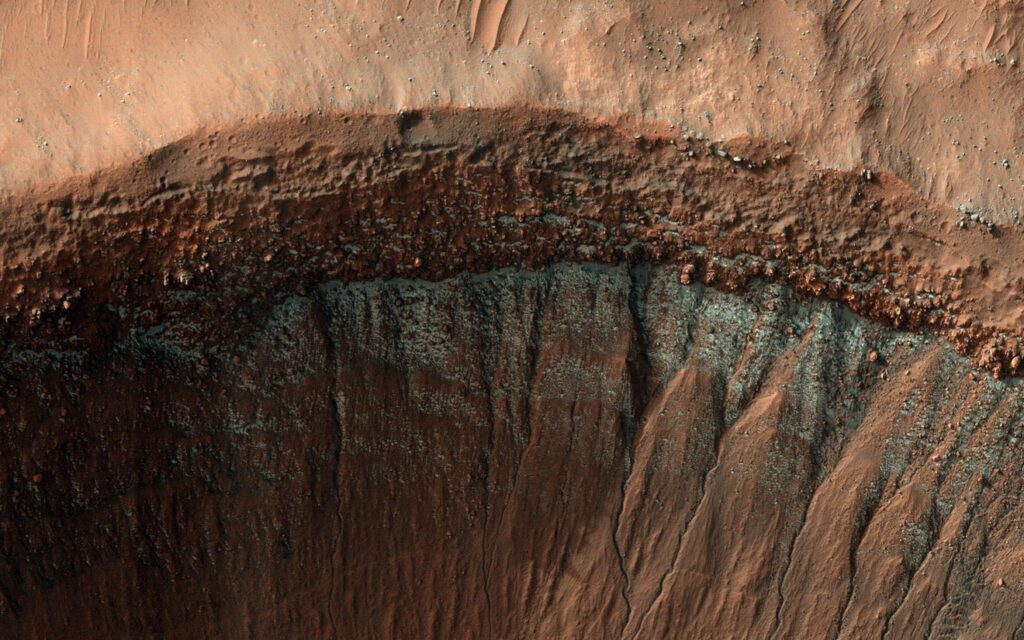
The HiRISE camera captured this image of the edge of a crater in the middle of winter. The south-facing slope of the crater, which receives less sunlight, has formed patchy, bright frost, seen in blue in this enhanced-color image. Credit: NASA/JPL-Caltech/University of Arizona

Jack Frost Nipping at Your Rover

Water and carbon dioxide can each form frost on Mars, and both types of frost appear far more widely across the planet than snow does. The Viking landers saw water frost when they studied Mars in the 1970s, while NASA’s Odyssey orbiter has observed frost forming and sublimating away in the morning Sun.

HiRISE captured this spring scene, when water ice frozen in the soil had split the ground into polygons. Translucent carbon dioxide ice allows sunlight to shine through and heat gases that escape through vents, releasing fans of darker material onto the surface (shown as blue in this enhanced-color image). Credit: NASA/JPL-Caltech/University of Arizona

Winter’s Wondrous End

Perhaps the most fabulous discovery comes at the end of winter, when all the ice that built up begins to “thaw” and sublimate into the atmosphere. As it does so, this ice takes on bizarre and beautiful shapes that have reminded scientists of spiders, Dalmatian spots, fried eggs, and Swiss cheese.

This “thawing” also causes geysers to erupt: Translucent ice allows sunlight to heat up gas underneath it, and that gas eventually bursts out, sending fans of dust onto the surface. Scientists have actually begun to study these fans as a way to learn more about which way Martian winds are blowing.

By Keith Cowing
Source SpaceRef

Hubble Captures Majestic Barred Spiral

0
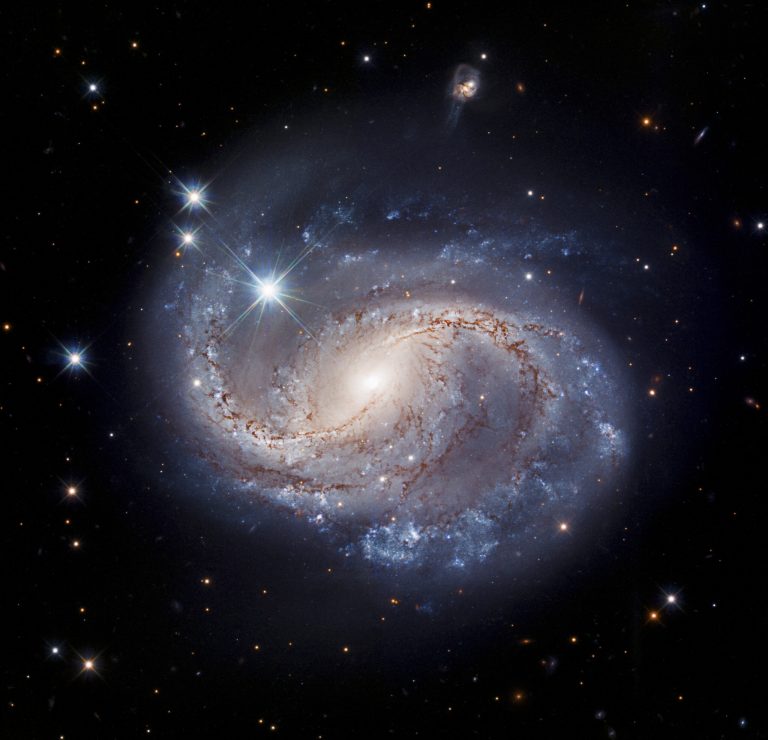
NGC 6956. NASA

Against an inky black backdrop, the blue swirls of spiral galaxy NGC 6956 stand out radiantly.

NGC 6956 is a barred spiral galaxy, a common type of spiral galaxy with a bar-shaped structure of stars in its center. This galaxy exists 214 million light-years away in the constellation Delphinus.

Scientists used NASA’s Hubble Space Telescope to image NGC 6956 to study its Cepheid variable stars, which are stars that brighten and dim at regular periods. Since the period of Cepheid variable stars is a function of their brightness, scientists can measure how bright these stars appear from Earth and compare it to their actual brightness to calculate their distance. As a result, these stars are extremely useful in determining the distance of cosmic objects, which is one of the hardest pieces of information to measure for extragalactic objects.

This galaxy also contains a Type Ia supernova, which is the explosion of a white dwarf star that was gradually accreting matter from a companion star. Like Cepheid variable stars, the brightness of these types of supernovae and how fast they dim over time enables scientists to calculate their distance. Scientists can use the measurements gleaned from Cepheid variable stars and Type Ia supernovae to refine our understanding of the rate of expansion of the universe, also known as the Hubble Constant.

Image Credit: NASA, ESA, and D. Jones (University of California – Santa Cruz); Processing: Gladys Kober (NASA/Catholic University of America)
Larger image

By Keith Cowing
Source SpaceRef

Assembly Begins On Roman Space Telescope Coronagraph Instrument Color Filter Assembly To Study Exoplanets

0
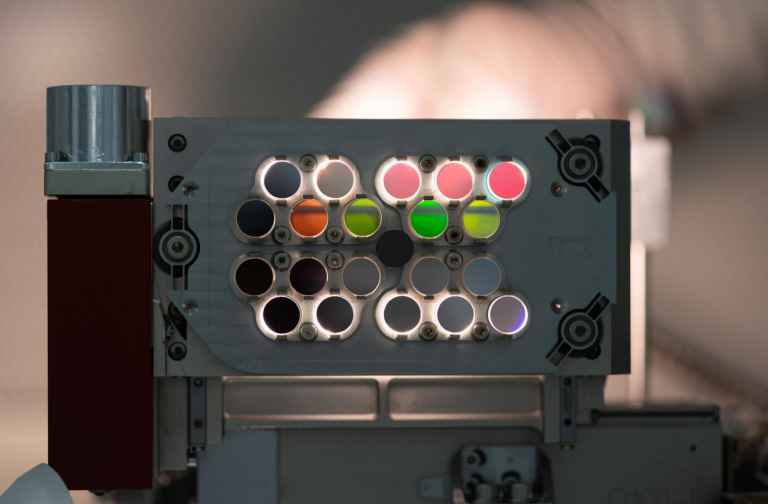
The filters on NASA’s Roman Space Telescope Coronagraph Instrument’s Color Filter Assembly each block all but a specific color, or wavelength, of light. Many of the filters appear dark in this photo because they are transparent only to infrared light, which is invisible to the human eye. Credit: NASA/JPL-Caltech

The Coronagraph Instrument on NASA’s Nancy Grace Roman Space Telescope will study planets around other stars. Putting it together will require a highly choreographed dance.

Scientists have discovered more than 5,000 exoplanets, or planets outside our solar system. As technologies for studying these worlds continue to advance, researchers may someday be able to search for signs of life on exoplanets that are similar in size, composition, and temperature to Earth. But to do that they’ll need new tools, like those being tested on the Coronagraph Instrument on NASA’s Nancy Grace Roman Space Telescope. The science instrument will block the light from each distant star it observes so that scientists can better see the planets around the star, and it will demonstrate technologies needed to eventually study potentially habitable planets with future missions.

The Coronagraph Instrument team has already designed the cutting-edge instrument and built the components. Now they have to put the pieces together and run tests to make sure they operate as intended. “It’s like all the separate tributaries are finally coming together to form the river,” said Jeff Oseas, product delivery manager for the Coronagraph Instrument’s optical subsystem at NASA’s Jet Propulsion Laboratory in Southern California.

The process kicked off recently at JPL and will take more than a year. Once complete, the Coronagraph Instrument will be shipped to the agency’s Goddard Space Flight Center in Greenbelt, Maryland, and incorporated into the Roman observatory.

JPL engineer Gasia Bedrosian leads the assembly and testing process as the instrument’s integration and test product delivery manager. She likes to say that while integration and testing are technically the last steps in building an instrument, they’re actually part of the process from the beginning.

In 2018, Bedrosian started working on a set of assembly plans for something that’s never been built before. She and her team then spent another two years collaborating with various subject matter experts and project members to review and adjust the plan, ensuring all the pieces would come together on time and in the right order. The process will resemble a well-choreographed ballet that involves heavy duty cranes, lasers, and vacuum chambers the size of buses.

Roughly the size and shape of a baby grand piano, the Coronagraph Instrument is composed of two main sections that will stack on top of each another: the optical bench and the instrument electronics pallet.
The more delicate of the two is the optical bench, which contains 64 elements, such as mirrors and filters, designed to remove as much starlight as possible without suppressing the light from planets. This approach to finding and studying exoplanets is called direct imaging, and it is expected to be the best way to study the atmospheres and surface features of rocky worlds similar to Earth. Some of the optical components on the Coronagraph Instrument are so small they’re barely visible to the naked eye.

The pallet, or bottom layer, houses the electronics that receive instructions from the Roman spacecraft and return the Coronagraph Instrument’s scientific data. The electronics also control the mechanical components on the optical bench as well as the instrument heaters. The optical bench will be stacked by crane atop the electronics pallet. Because the two layers have to be aligned with each other to within a fraction of a millimeter, the team will use lasers to get them positioned just right over the course of four days.

Eye for Detail

Integration and testing teams will often use digital 3D models of the instrument to help make their plans, but nothing can compare to seeing the object in a real space. That’s why the coronagraph team made use of an augmented reality headset that lets users see a virtual projection of a 3D object and the world around them. The headset is also used by the Mars Curiosity rover team to see in 3D the Martian terrain that the rover drives over.

“We learned a lot from that exercise,” said Bedrosian. “We could get a sense of how tight the access would be at certain points of integration by literally laying on the floor and getting visuals of under the instrument. It showed us when it would be beneficial to lift the entire instrument with a crane, or if we were going to need a specialized tool to do our work at that angle. It helped make a lot of our plans safer and simpler.”

Once assembled, the Coronagraph Instrument will undergo a series of tests, including almost a month of dynamical testing to simulate the rocket ride into space. It will then be put in a vacuum chamber that replicates the space environment to check that the hardware remains aligned and operating correctly.
“It’s exciting to finally start putting all the pieces together,” said Bedrosian. “It’s definitely a delayed gratification, because we’ve spent so long preparing. But now that we’re here and my team members are talking about the hardware arriving, I can hear the excitement in their voices.”

More About the Mission

The Nancy Grace Roman Space Telescope is managed at NASA’s Goddard Space Flight Center in Greenbelt, Maryland, with participation by JPL and Caltech/IPAC in Southern California, the Space Telescope Science Institute in Baltimore, and a science team comprising scientists from various research institutions. The primary industrial partners are Ball Aerospace & Technologies Corp. in Boulder, Colorado; L3Harris Technologies in Melbourne, Florida; and Teledyne Scientific & Imaging in Thousand Oaks, California.

The Roman Coronagraph Instrument was designed and is being built at JPL, which manages the instrument for NASA. Contributions were made by ESA (the European Space Agency), the Japanese Aerospace Exploration Agency (JAXA), the French space agency Centre National d’Études Spatiales (CNES), and the Max Planck Institute for Astronomy (MPIA) in Germany. Caltech, in Pasadena, California, manages JPL for NASA.

For more information about the Roman telescope, visit: https://roman.gsfc.nasa.gov/

By Keith Cowing
Source SpaceRef

The Freezing Snowy Nightmare Before Christmas

0
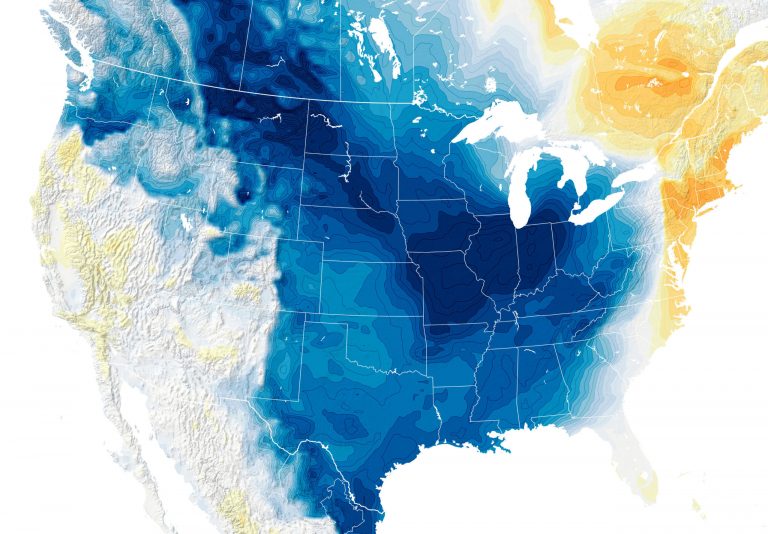
Temperature Forecast for 23 December 2022

Santa Claus better bundle and buckle up. Forecasters are warning that a blast of Arctic air will bring dangerously cold conditions to parts of Canada and the central and eastern U.S. in the days before Christmas 2022.

The map above shows the surface air temperature anomalies forecasted for December 23, 2022. It was produced by combining satellite observations with temperatures predicted by a version of the Goddard Earth Observing System (GEOS) global model, which uses mathematical equations to represent physical processes in the atmosphere. The darkest blue areas indicate where surface temperatures are expected to drop at least 25 degrees below average as the front arrives.

“The initial surge of frigid air will plunge rapidly south from Canada into Texas on December 22 and trigger an impressive winter system along its boundary, with much warmer and moister air flowing northward from the Gulf of Mexico,” explained Gary Partyka, an atmospheric scientist with the Global Modeling and Assimilation Office at NASA’s Goddard Space Flight Center. “This system will produce blizzard conditions for large parts of the Midwest, Ohio Valley, and Great Lakes. The extremely cold airmass will then progress toward the eastern third of the U.S.” The winter storm will bring fierce winds, whiteout conditions, and several inches of snow.

Accounting for wind chill could push temperatures to -7°F in Dallas, -14°F in Memphis, and -32°F in Kansas City, and -45°F in Sioux Falls, The Washington Post reported. The National Weather Service in Cheyenne warned that temperatures could fall to as low as -70°F in eastern Wyoming. “The wind chill forecast features some of the most extreme values you will ever see,” the Cheyenne office cautioned. “Check on the elderly and vulnerable, protect pets, shelter livestock, cover exposed skin!”

While official forecasts from the National Weather Service are based on weather models maintained by the National Weather Service, the weather forecasting capabilities of the GEOS model at Goddard are mostly used for research purposes and to support specific NASA satellite missions and field campaigns. In 2022, the model was used to support near real-time atmospheric weather and chemistry forecasts for 10 NASA field campaigns—the largest number since 2017.

Among them were Blue Carbon Prototype Products for Mangrove Methane and Carbon Dioxide Fluxes (Blueflux), Dynamics and Chemistry Of The Summer Stratosphere (DCOTSS), and Low-Earth Orbit Flight Test of an Inflatable Decelerator (LOFTID)—missions to study carbon flux from mangrove swamps in Florida, the chemistry of the summer stratosphere, and a new type of inflatable heat shield.

NASA Earth Observatory image by Joshua Stevens, using GEOS-5 data from the Global Modeling and Assimilation Office at NASA GSFC. Story by Adam Voiland.

More imagery and links

By Keith Cowing
Source SpaceRef

Apollo 8 Astronaut Bill Anders Captures Earthrise

0

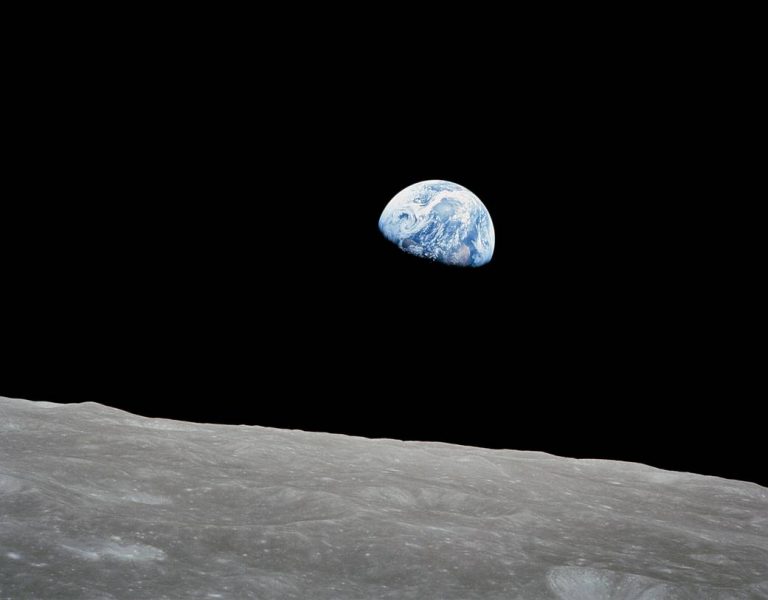
On Dec. 24, 1968, Apollo 8 astronauts Frank Borman, Jim Lovell, and Bill Anders became the first humans to orbit the Moon, and the first to witness the magnificent sight called “Earthrise.” As the spacecraft was in the process of rotating, Anders took this iconic picture showing Earth rising over the Moon’s horizon. In 2018, the International Astronomical Union commemorated the event by naming a 25 mile diameter crater “Anders’ Earthrise.”

Relive the astronauts’ experience.

Image Credit: NASA

By Monika Luabeya
Source NASA

UNOOSA And United Kingdom Strengthen Cooperation On Space Sustainability 

0
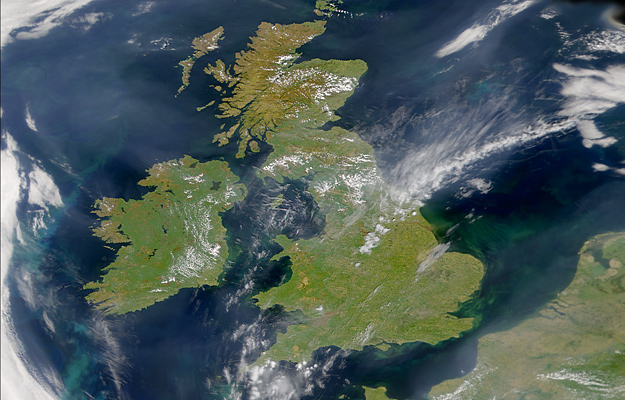
UK from space. UNOOSA

The United Nations Office for Outer Space Affairs (UNOOSA) and the Government of the United Kingdom are strengthening their partnership with a new project to bolster space sustainability.

Efforts will focus on raising awareness and building capacity related to the implementation of the Guidelines for the Long-term Sustainability of Outer Space Activities.

The project, which started in 2021, is now in its third phase. With funding support provided by the United Kingdom, UNOOSA will create an open access e-learning tool to help facilitate and improve understanding about the Guidelines, adopted by the Committee on the Peaceful uses of Outer Space, as well as improve their implementation. A series of virtual events will also be held to connect diverse stakeholders and promote international cooperation and capacity-building on safe and sustainable space operations.

Through the Guidelines, Member States of the United Nations have agreed on the importance of maintaining safe and sustainable conduct of space activities indefinitely into the future. Activities should be conducted to ensure equitable access to the benefits of the exploration and use of outer space for peaceful purposes by present generations while preserving the outer space environment for future generations.

Acting Director of UNOOSA, Niklas Hedman, said: “The benefits of space technology are invaluable for our daily lives and sustainable development at large. We must jointly ensure that the steps we take today bring prosperity to both current and future generations. Partnering with the UK Government has been instrumental in raising awareness about the importance of sustainable space activities, and we are thrilled to advance these efforts together.”

UK Minister for Science, Research and Innovation George Freeman said: “The exciting growth in the space and satellite sector is driving an increasingly urgent need to tackle the growing problem of debris, and to demonstrate our commitment to wider space sustainability. Just as the expansion in shipping, rail and the motor car industry required international standards in previous centuries, often headquartered here in London, so too does Space. The UK is deeply committed to the clean space mission, and leading global partnerships in setting sustainable Space standards. That is why I announced earlier this year our plan to amend the UK Space regulations to start to create an industry kite mark for sustainable space, with improved licensing & insurance terms. We need to reward best practice and harness the market to drive up international standards in Space sustainability.”

Dr Paul Bate, Chief Executive of the UK Space Agency, said: “Humanity relies on the benefits of space to keep us safe, connected, and able to tackle the climate emergency. Supporting the development and delivery of tools that raise awareness of the Long-Term Sustainability Guidelines is an important step in championing space sustainability. We are proud to be working with UNOOSA on this initiative to advance knowledge-sharing with other countries and helping to develop capabilities in nations that are starting out on their journey to space.”

More information about the project is available at: https://spacesustainability.unoosa.org/

For more information, please contact:
Martin Stasko
United Nations Office for Outer Space Affairs (UNOOSA)
Email: martin.stasko[at]un.org

By Keith Cowing
Source SpaceRef

Virgin Orbit Receives U.K.’s First Orbital Launch License; All LauncherOne Systems Green For Upcoming Mission

0
Virgin Orbit

The U.K. Civil Aviation Authority has issued launch and range control licenses to Virgin Orbit (Nasdaq: VORB) to undertake the first satellite launch from UK soil.

The granting of these licenses represents a major step forward for the historic Start Me Up mission, and reflects the CAA’s concurrence that all reasonable steps have been taken by Virgin Orbit to ensure the desired safety, security, and environmental stewardship of what is expected to be the first orbital launch ever conducted from western Europe.

Virgin Orbit’s LauncherOne system is currently at Spaceport Cornwall in the U.K. and preparing to roll out to mate to its 747-400 carrier aircraft for final launch rehearsals and, ultimately, for the Start Me Up mission itself. In the past week, Virgin Orbit’s engineering and technician team has re-established and verified the system’s health and readiness for spaceflight. Working with the mission’s payload customers, batteries onboard several satellites were re-charged late last week, keeping the nine satellites on the manifest in good condition to launch to orbit and begin operations.

With these licenses in hand, Virgin Orbit is now working in close collaboration across all mission stakeholders with the aim of opening the first orbital launch window in western European history, targeting a window start date in the coming weeks.

In the words of our CEO, Dan Hart, “Receiving Virgin Orbit’s range and launch licenses takes us one step closer to the first satellite launch take-off from U.K. soil. This is a major milestone for the CAA, and represents the successful completion of an enormous effort, which has included the construction of new regulations, new processes, and new teams.

“At this time, all of Virgin Orbit’s systems are green for launch. Our team is laser-focused on execution of final checkouts, launch rehearsal, and ultimately launch, and we will continue working with our friends and partners across agencies and governments to be ready to light this candle once a launch window is finalized.”

ABOUT VIRGIN ORBIT

Virgin Orbit Holdings, Inc (Nasdaq: VORB) operates one of the most flexible and responsive space launch systems ever built. Founded by Sir Richard Branson in 2017, the Company began commercial service in 2021, and has already delivered commercial, civil, national security, and international satellites into orbit. Virgin Orbit’s LauncherOne rockets are designed and manufactured in Long Beach, California, and are air-launched from a modified 747-400 carrier aircraft that allows Virgin Orbit Holdings, Inc to operate from locations all over the world in order to best serve each customer’s needs. Learn more at www.virginorbit.com and visit us on LinkedIn, on Twitter @virginorbit, and on Instagram @virgin.orbit.

CAUTIONARY STATEMENT REGARDING FORWARD-LOOKING STATEMENTS

This press release contains certain forward-looking statements within the meaning of the federal securities laws. These forward-looking statements generally are identified by the words “believe,” “project,” “expect,” “anticipate,” “estimate,” “intend,” “strategy,” “future,” “opportunity,” “plan,” “may,” “should,” “will,” “would,” “will be,” “will continue,” “will likely result,” and similar expressions. Forward-looking statements are predictions, projections and other statements about future events that are based on current expectations and assumptions and, as a result, are subject to risks and uncertainties. Many factors could cause actual future events to differ materially from the forward-looking statements in this press release, including but not limited to the Company’s ability to access sources of capital; its ability to grow market share in the developing space economy; market acceptance of its current and planned products and services and ability to achieve sufficient production volumes, as well as the factors, risks and uncertainties included in the Company’s Quarterly Report on Form 10-Q for the period ended September 30, 2022, as well as in the Company’s subsequent filings with the Securities and Exchange Commission (the “SEC”), accessible on the SEC’s website at www.sec.gov and the Investor Information section of the Company’s website at www.virginorbit.com. Forward-looking statements speak only as of the date they are made. Readers are cautioned not to put undue reliance on forward-looking statements, and Virgin Orbit Holdings, Inc assumes no obligation and does not intend to update or revise these forward-looking statements, whether as a result of new information, future events, or otherwise. Virgin Orbit Holdings, Inc gives no assurance that it will achieve its expectations.

Contacts
MEDIA ENQUIRIES:
Alison Patch
Sr. Dir. of Communications, Virgin Orbit
+1-949-616-2504
[email protected]

Matt Shelnutt
PR Specialist, 4media
+1- 479-236-3468
[email protected]


By Keith Cowing
Source SpaceRef